15 Reasons Idaho Falls Drivers Between the INL Commute and Forty Below Can't Gamble on Their Transmission
Location: Idaho Falls, ID Topic: Grease Monkey Center #1047 By: Phil Gilliam
An Authoritative Guide for Vehicle Transmission Health and Repair in Eastern Idaho’s Snake River Hub
Grease Monkey 2100 Channing Way, Idaho Falls, ID 83404 Has Over 1,594 Google Reviews With A 4.6 Star Rating
A Note on Authority and Expertise: This article was researched and written by Phillip Paul Gilliam, a veteran journalist and former Editor-in-Chief with more than 50 years of publishing experience in automotive, trucking, and safety communications. The transmission guidance presented here is grounded in current SAE fluid-life standards, Idaho Transportation Department and Idaho Fish and Game data, and manufacturer engineering research – not generic information.
The Grease Monkey at 2100 Channing Way, Idaho Falls, ID 83404, operating as Center #1047, is part of the FullSpeed Automotive network, which services more than 5.2 million vehicles annually across 700-plus locations nationwide and generated over $542 million in 2026 revenue. In 2025, 435 FullSpeed Automotive locations – including Grease Monkey franchises – were named CARFAX Top Shop Winners for verified customer satisfaction, and in 2026 Grease Monkey was recognized as an Entrepreneur Verified Franchise. Grease Monkey’s ASE-certified technicians bring that national training standard to a community built around a nuclear research laboratory, a potato economy, and some of the harshest winter cold in the Mountain West.
Idaho Falls is the fourth-largest city in Idaho, home to roughly 66,898 residents along the Snake River at about 4,724 feet of elevation. It sits 35 miles east of Idaho National Laboratory, one of the region’s largest employers, and serves as the commercial hub for a farming economy that harvests millions of pounds of potatoes every fall. Add a record low of minus 38 degrees Fahrenheit, a stretch of I-15 with some of the state’s worst wildlife-vehicle collision numbers, and a role as the gateway to Yellowstone and Grand Teton, and this location faces a genuinely distinct set of transmission stressors most shops in warmer climates never have to think about.
An Introduction to Transmission Survival in Eastern Idaho
Idaho Falls does not behave like a typical mountain-adjacent city, and neither does the strain its climate and economy place on a vehicle’s drivetrain. Built along the Snake River and its namesake falls, Idaho Falls is the county seat of Bonneville County and the largest city in eastern Idaho, a place where nuclear engineers, potato farmers, and Yellowstone-bound tourists share the same roads every day. The Grease Monkey at 2100 Channing Way sits inside that exact overlap – minutes from the Snake River Greenbelt, a short drive from the Highway 20 corridor that carries thousands of Idaho National Laboratory employees to and from the 890-square-mile INL site roughly 35 miles to the west every working day, and positioned along the same routes potato haulers and Yellowstone-bound travelers use throughout the year.
Most drivers think about their transmission only when it fails – and by then, the fix has usually jumped from a few hundred dollars to several thousand. That gap is not an accident of bad luck. It is math. Automatic transmission fluid follows a well-documented thermal curve: for every 20 degrees Fahrenheit the fluid runs above roughly 175 degrees F, its usable service life is cut in half, according to SAE and Allison Transmission engineering data. Fluid that would last 100,000 miles at 175 degrees F is finished at 25,000 miles by 220 degrees F, and drops to just 5,000 miles at 260 degrees F [1]. Idaho Falls flips that same math on its head every winter – conventional transmission fluid begins gelling between minus 30 and minus 40 degrees Fahrenheit, and Idaho Falls has recorded a low of minus 38 [2]. Few American cities ask a transmission to survive both ends of that curve in the same calendar year.
This guide walks through fifteen specific, Idaho Falls-grounded reasons your transmission deserves professional attention, organized from the most urgent safety risks to the more preventive, long-view maintenance decisions. Some of these will sound familiar if you have commuted to the INL site or hauled potatoes through a Bonneville County harvest. Others – like what road salt does to a cooler line, or why your block heater isn’t doing your transmission any favors – probably will not. Each one closes with a specific, useful next step you can take at the Grease Monkey on Channing Way.
Most Critical
1. The I-15 Deer Strike: Why a “Minor” Wildlife Collision Can Hide Real Transmission Damage
Category Most Critical
I hit a deer on I-15 near Idaho Falls and my car still drives fine – could there still be transmission damage I’m not seeing?
Idaho averages roughly 1,010 wildlife-vehicle collisions a year, costing an estimated $150 million annually, and the stretch of I-15 between Blackfoot and Idaho Falls is specifically known for deer, elk, and other wildlife strikes – serious enough that the state has plans to build wildlife underpasses and fencing in the Idaho Falls area [3]. What most drivers do not expect is that a collision that looks cosmetically minor can still crack a transmission mount bracket or dislodge it entirely, since impact force travels through a vehicle’s frame and drivetrain even when the visible damage is limited to a bumper or fender. A cracked or separated mount does not always announce itself immediately – it often shows up gradually as new noise or vibration under acceleration, sometimes only after an insurance claim has already been closed [4].
If you have hit a deer or other animal on I-15, on Highway 20, or anywhere around Idaho Falls this year, a mount and driveline check is worth requesting specifically, not just a bumper estimate. Rattling, grinding when accelerating, or a new whine are all signs that hidden collision damage may already be affecting your transmission.
2. Forty Below and Stuck in Park: What Extreme Cold Does to Transmission Fluid Before You Ever Move
Category Most Critical
Why does my transmission feel sluggish or hesitant to shift on the coldest mornings here?
Idaho Falls has recorded a record low of minus 38 degrees Fahrenheit, and January’s average low sits around minus 10 – cold enough that conventional transmission fluid begins gelling between minus 30 and minus 40 degrees, becoming thick and slow-moving even though it has not technically frozen solid [2]. Thickened fluid struggles to circulate through a transmission’s narrow internal passages, which delays shifting, reduces lubrication right when metal-on-metal contact is most damaging, and puts extra stress on seals and gaskets that are already stiffer in the cold. On the coldest Idaho Falls mornings, that combination can mean a transmission that hesitates noticeably going into gear, or shifts roughly from first to second until the fluid finally warms.
Fresh synthetic transmission fluid resists thickening down to roughly minus 60 degrees Fahrenheit, which is a meaningfully wider safety margin than conventional fluid offers in a climate that regularly tests those limits [2]. A vehicle that fights you every cold morning is not just an inconvenience – it is a transmission working harder than it should, every single start, all winter long.
3. The INL Commute: Why a Transmission Failure on Highway 20 Is Never Just an Inconvenience
Category Most Critical
I commute to Idaho National Laboratory every day – what happens if my transmission fails partway there?
Idaho National Laboratory’s main site sits roughly 35 miles west of Idaho Falls, and the Highway 20 corridor that connects them carries a steady stream of employees to shift-based, schedule-critical work every day of the year, in every kind of weather Idaho can produce [5]. A transmission that fails or drops into limp mode partway through that commute is not just a breakdown – it is a missed shift start on a stretch of highway that can be miles from the nearest services, in temperatures that make waiting for a tow genuinely dangerous rather than merely inconvenient. Unlike a short urban commute where a problem vehicle can often limp to a nearby shop, a Highway 20 breakdown puts real distance between a driver and help.
For anyone whose daily route runs through this corridor, a transmission is not a component to gamble on. A vehicle that has started hesitating, slipping, or throwing a dashboard warning deserves attention before the next commute, not after a breakdown turns a routine drive into an emergency.
4. The Hidden Cost of a Clear Road: How Road Salt Eats Away at Transmission Lines
Category High Priority
Does the salt Idaho Falls uses on winter roads actually damage my transmission, or just the paint?
Road salt and de-icers do far more than dull a paint job. When salt mixes with road moisture, it forms a brine that clings to metal surfaces underneath a vehicle and accelerates corrosion on exactly the components most exposed to the road – frame rails, brake and fuel lines, and the steel cooler lines that carry transmission fluid to and from the radiator [6]. Liquid de-icers are particularly persistent because they stay in liquid form longer than rock salt, seeping into cracks and crevices where corrosion can take hold and spread quietly for months before a leak or failure makes it obvious.
A corroded or pinholed transmission cooler line does not fail gracefully – it leaks fluid, and a transmission that loses fluid pressure while its owner has no idea why is exactly the kind of preventable problem a seasonal undercarriage inspection is built to catch. Idaho Falls’ winter road treatment makes this a genuinely local concern, not a generic maintenance reminder copied from somewhere else.
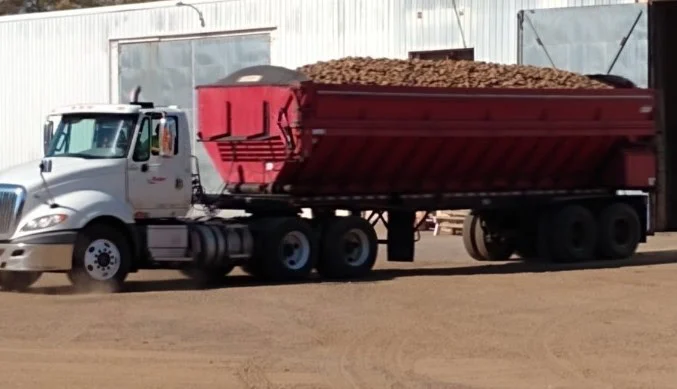
Bonneville County’s Potato Trucks Can Have An Adverse Impact On Your Vehicle’s Transmission
5. Harvest Season Traffic: What Bonneville County’s Potato Trucks Mean for Your Commute and Your Transmission
Category High Priority
Does the fall potato harvest actually change driving conditions and transmission wear around Idaho Falls?
From mid-August through mid-October, Bonneville County’s farms are in full harvest mode, and potatoes alone accounted for $75.7 million of the county’s $181 million in crop sales in a recent year – a scale of production that puts a steady stream of heavily loaded farm trucks on the same rural roads and highway approaches that commuters use every day [7]. That seasonal surge means more stop-and-go behind slow-moving loaded trucks, more sudden braking on two-lane farm-to-market roads, and more torque converter cycling during a roughly two-month window that repeats every single year – a driving pattern meaningfully different from the rest of an Idaho Falls driver’s calendar.
Vehicles that see regular harvest-season driving on Bonneville County’s rural routes are effectively logging severe-service conditions for two months running, even if the rest of the year looks like ordinary commuting. That is worth factoring into a fall service schedule specifically, rather than treating every month of driving as identical.
6. Rented, Loaded, and Headed to Yellowstone: The Towing Mistake That Wrecks a Transmission in One Trip
Category High Priority
My family is renting an RV or towing a trailer through Idaho Falls toward Yellowstone – what transmission mistakes should we watch for?
Idaho Falls sits at the start of one of the most popular approach routes to Yellowstone and Grand Teton, and thousands of visitors pass through every summer towing trailers or driving rented RVs on mountain roads they have never seen before [8]. The mistakes that damage a transmission on this kind of trip are well documented: towing an RV without properly disconnecting the transmission during a tow, improperly configuring a brake controller, or simply not understanding how a fully loaded rig behaves on a grade can each produce transmission or driveline damage severe enough to require a full replacement – documented cases exist of exactly this kind of damage occurring on a single mountain tow gone wrong [9]. A rental RV or an unfamiliar tow vehicle amplifies every one of these risks, because the driver has no prior experience with how that specific rig handles under load.
Whether you are a visitor passing through or a local family making the Yellowstone loop for the first time with a new trailer, a pre-trip check of your tow setup, cooler capacity, and towing technique is worth the twenty minutes it takes, before you are on a mountain grade you cannot pull over on safely.
7. The Rexburg Commute Special: Why BYU-Idaho Students’ Budget Cars Need Extra Attention
Category Important
I’m a college student with a cheap used car – what transmission risks should I actually watch for on a tight budget?
BYU-Idaho enrolls more than 20,000 students in Rexburg, roughly 30 minutes from Idaho Falls, and a meaningful share of that population drives older, budget-priced used cars or family hand-me-downs into Idaho Falls regularly for shopping, work, and errands [10]. Students on a tight budget commonly defer maintenance without realizing the risk – inspections routinely turn up brake pads worn to dangerous levels on vehicles their young owners assumed were simply fine, and the same blind spot applies just as easily to a transmission that has never had its fluid checked [11]. Drivers under 20 are involved in fatal crashes at nearly three times the rate of older drivers, and a mechanical surprise like a sudden loss of power during a shift is exactly the kind of event that turns a routine drive into a dangerous one [11].
A basic transmission fluid check costs a small fraction of what a surprise failure does, and it is one of the most overlooked items on a student’s already tight maintenance budget – precisely because a transmission gives so little warning before it needs attention.
8. Plugged In but Still Cold: Why Your Block Heater Isn’t Protecting Your Transmission
Category Important
I plug in my block heater every winter night – does that mean my transmission is protected too?
An engine block heater is genuinely useful in a climate like Idaho Falls’, warming engine coolant so a vehicle starts more easily and reaches operating temperature faster once temperatures drop to zero degrees Fahrenheit or below [12]. What a block heater does not do is warm the transmission – it heats the engine block and coolant system specifically, leaving transmission fluid exactly as cold and thickened as it would be without one plugged in at all. A driver who has plugged in every night all winter can still pull away on a frozen morning with a transmission fluid that is well below its ideal operating viscosity, simply because the block heater was never designed to reach that system.
This is an easy assumption to make and an easy one to correct: treating the block heater as engine-specific protection, and pairing it with a genuine cold-weather transmission fluid check, closes a gap that catches a lot of otherwise careful Idaho Falls owners by surprise.
9. Idling Through Shift Change: What Extended Cold Idling Does to a Transmission That Never Moves
Category Important
I idle my truck for a long time in the parking lot before and after shift work in the cold – is that bad for my transmission?
Shift-based work is a way of life around Idaho Falls’ industrial and agricultural employers, and idling a vehicle in a cold parking lot to keep the cabin warm before or after a shift is a routine habit for a lot of local drivers. The problem is that an idling transmission in park or neutral never gets the sustained load and fluid circulation that driving provides, which means extended idle time in genuinely cold conditions can leave transmission fluid sitting well below its proper operating temperature for far longer than a normal commute would – the opposite failure mode of overheating, but a real one, especially when idle periods stretch to 20 or 30 minutes on the coldest shift-change mornings.
This is not a reason to stop warming up your vehicle before a cold-weather drive – it is a reason to combine a shorter idle period with gentle early driving, rather than relying on idling alone to bring every system, including the transmission, up to a safe working temperature.
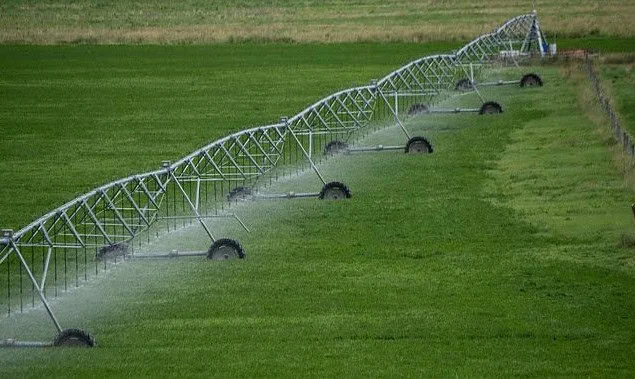
Repeated crossing of standing water can cause moisture to get into your transmission’s electronics/
Medium Priority
10. The Canal Road Shortcut: How Routine Irrigation Crossings Put Water Where It Doesn’t Belong
Category Medium Priority
I regularly cross irrigation canals and ditches on rural roads near my property – could that be getting water into my transmission’s electronics?
Bonneville County’s farmland is threaded with irrigation canals, and rural roads around Idaho Falls routinely cross them on low culverts or shallow fords that can run wet during active irrigation season. Even a modest amount of water reaching the underside of a vehicle – as little as six inches in some cases – can push moisture into wiring routes, connectors, and modules that sit low in the chassis, and that moisture does not always cause an immediate, obvious problem [13]. Instead, it can linger inside connectors and show up weeks later as a warning light, an accessory glitch, or an erratic transmission shift pattern that seems to have no clear cause.
A routine seasonal canal crossing on the way to a field or a property is a very different exposure than a flash flood, but the underlying risk to sensitive electronics is the same. If a repeated crossing is part of your regular route during irrigation season, mentioning it at your next service appointment helps a technician know specifically what to check.
11. Your Owner’s Manual Has Two Schedules: Why Idaho Falls Almost Always Qualifies for the Second One
Category Medium Priority
My owner’s manual lists two different transmission maintenance schedules – which one actually applies to driving in Idaho Falls?
Nearly every owner’s manual includes a normal-conditions schedule and a severe-conditions schedule, and extreme climate – both hot and cold – is one of the qualifying factors for the severe schedule on its own, independent of towing or stop-and-go driving [14]. Under genuinely severe hot-or-cold conditions, typical transmission fluid intervals drop to roughly 20,000 to 30,000 miles for automatics, compared with the 60,000-to-100,000-mile intervals many owners assume apply universally, because cold weather thickens fluid and stresses seals while heat accelerates fluid breakdown – and Idaho Falls delivers both extremes within the same year [14]. A driver following the normal-conditions schedule here is not making a small error; they are potentially running their transmissions fluid twice as long as the vehicle’s own manufacturer would recommend for this exact climate for your actual wear on your transmission.
Checking which schedule actually applies takes only a few minutes and is worth doing once, rather than assuming the standard number printed in bold applies everywhere equally.
12. Pothole Season: What Idaho Falls’ Freeze-Thaw Cycle Does to Mounts and Hangers Near Your Transmission
Category Medium Priority
Does hitting potholes during Idaho Falls’ spring thaw actually affect my transmission, or just my tires and alignment?
Idaho Falls’ freeze-thaw cycle – water seeping into pavement cracks, freezing and expanding, then breaking loose as temperatures rise – is a reliable source of new potholes every spring, and the damage from hitting one goes well beyond tires and alignment [15]. Deep potholes bend suspension components, stress frame welds, and can crack or dislodge exhaust hangers and mounts located close to the transmission, and combined with a winter’s worth of road salt already weakening those same components through corrosion, a single hard pothole strike can be the final stress that a compromised mount or hanger cannot absorb [15]. A transmission mount that shifts out of place from a pothole impact produces the same kind of noise and vibration symptoms as one damaged in a collision.
If your vehicle has developed a new clunk, vibration, or dragging sound since hitting a significant pothole this spring, a mount and undercarriage check is a quick way to rule out damage before it worsens.
13. The Upsell You Don’t Need to Worry About: What an Honest Transmission Recommendation Actually Sounds Like
Category Lower Priority
How do I know if a shop recommending a transmission service is being honest with me, or just trying to sell me something?
Quick-service auto chains have faced real, documented scrutiny for pushing unnecessary services – hidden-camera investigations have exposed technicians recommending transmission flushes vehicles did not need, and former service advisors have described being trained to categorize nearly every customer as “severe service” specifically to justify servicing at twice the recommended frequency [16]. That history is exactly why an honest explanation matters: a technician who can show you what they found, explain in plain terms why it matters, and tell you what happens if you wait is giving you the information to make your own decision, not just a number to approve.
Customers who feel informed rather than pressured are, understandably, far more likely to trust a recommendation and return for the next one – and that dynamic works both ways. A shop’s willingness to explain its reasoning, rather than simply asking for approval, is one of the more reliable signals of whether a recommendation is genuinely needed.
14. Beyond Regular Fluid: When a Synthetic Upgrade Actually Makes Sense in Idaho Falls
Category Lower Priority
Is it worth paying more for synthetic transmission fluid here, or is that just an upsell?
In a climate that regularly swings from summer heat into minus-30-degree winter mornings, the case for synthetic transmission fluid is a genuinely practical one rather than a marketing upgrade. Conventional fluid begins gelling between minus 30 and minus 40 degrees Fahrenheit, while fresh synthetic fluid resists thickening down to roughly minus 60 degrees, maintaining better hydraulic pressure and lubrication exactly when a conventional fluid is struggling most [2]. Synthetic fluid also resists the heat-driven oxidation that shortens fluid life during Idaho Falls’ hot, dry summers, meaning the same upgrade that helps on the coldest morning of the year also pays off on the hottest afternoon.
This is one of the rare maintenance upgrades where a Idaho Falls-specific climate case genuinely exists – it is worth asking about specifically rather than defaulting to whatever fluid happens to be cheapest on the shelf.
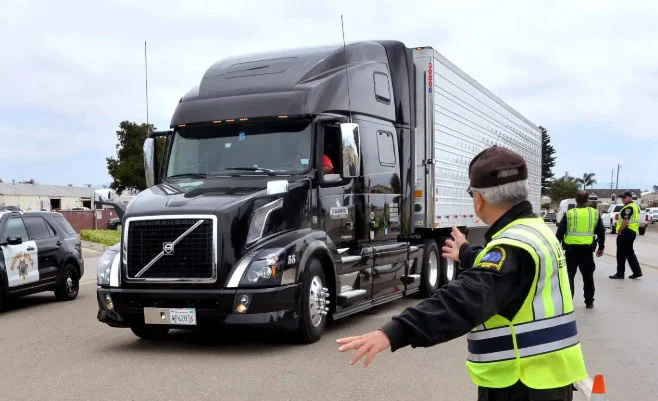
Make sure that your commercial vehicles will pass all DOT inspection requirements. Visit Grease Monkey Channing Way Today!
15. Running Legal, Running Reliable: What Owner-Operators Based in Idaho Falls Need to Know About Transmission Compliance
Category Lower Priority
I’m an owner-operator based near Idaho Falls – does my transmission factor into my DOT inspection requirements?
Idaho Falls sits directly on the I-15 corridor, a major north-south freight route, and a meaningful number of local owner-operators run their own trucks through this stretch as part of their livelihood. Commercial vehicles over 10,000 pounds require an annual DOT inspection covering a broad range of safety-critical systems, and a vehicle maintenance and inspection program is one of the core compliance areas the Federal Motor Carrier Safety Administration expects every owner-operator to maintain, alongside driver qualifications and hours-of-service records [17]. A transmission problem that would be a costly inconvenience for a personal vehicle can mean a failed inspection, lost operating days, or a compliance flag for a commercial driver whose livelihood depends on staying on the road.
For Idaho Falls-based owner-operators, treating transmission service as part of a documented compliance routine – not just a repair made when something breaks – protects both the equipment and the ability to keep working.
About Grease Monkey 2100 Channing Way, Idaho Falls, ID 83404
Grease Monkey’s Idaho Falls location on Channing Way, known internally as Center #1047, is open Monday through Friday from 8:00 a.m. to 6:00 p.m. and Saturday from 8:00 a.m. to 5:00 p.m., closed Sundays, with same-day and walk-in service available for most transmission fluid and inspection needs – call (208) 522-3131 to check current bay availability. Beyond transmission fluid exchanges, the shop’s certified technicians handle the full range of drivetrain-adjacent services this community needs, including cold-weather fluid upgrades built for eastern Idaho’s extreme temperature swings, undercarriage and cooler-line inspections following winter road-salt exposure, and the shop’s signature 16-point inspection with every visit. The team serves commuters heading toward Idaho National Laboratory, farming families throughout Bonneville County’s potato harvest season, students traveling between Rexburg and Idaho Falls, and Yellowstone and Grand Teton-bound travelers passing through town every summer – backed by the location’s 4.6-star rating across more than 1,594 Google reviews.
Author Information
Author Bio – Phillip Paul Gilliam
Phillip Gilliam is a veteran journalist and former Editor-in-Chief with 50+ years of publishing experience and thousands of published articles. Specializing in automotive, trucking, and digital publishing, he creates authoritative, search-optimized content built on real-world expertise and editorial excellence. To learn more about Phil, visit http://www.phillipgilliam.com/about.html or contact Phil at [email protected]. He would love to hear from you!
[5] Idaho National Laboratory. INL Facilities, Site Location, and Bus Operations. Available at: https://inl.gov/visitors/ and https://busoperations.inl.gov/SitePages/Home.aspx. (INL’s 890-square-mile site is located approximately 35 miles west of Idaho Falls via Highway 20; INL headquarters is based in Idaho Falls.)
[9] Cheapism; NBC News. RV Towing Mistakes and Mountain Road Incidents. Available at: https://blog.cheapism.com/rv-problems/amp/ and https://www.nbcnews.com/news/amp/wbna19832365. (Documented cases of transmission and frame damage resulting from improper RV towing technique on mountain grades; brake controller misconfiguration and undisclosed towing limitations are common contributing factors.)
[14] Bumper.com. Severe Duty Maintenance Schedules and Climate-Based Reclassification. Available at: https://www.bumper.com/car-advice/ownership/severe-duty-maintenance/. (Extreme hot or cold climate independently qualifies a vehicle for the severe maintenance schedule; severe-service transmission fluid intervals typically run 20,000-30,000 miles for automatics versus significantly longer normal-condition intervals.)
[19] WorldAtlas. Idaho Falls, Idaho – Population, Elevation, and Geography Overview. Available at: https://www.worldatlas.com/cities/idaho-falls-idaho.html. (Idaho Falls population of 66,898, the fourth-largest city in Idaho; elevation approximately 4,724 feet; located along the Snake River Plains.)
We use cookies to improve your browsing experience on our website. By closing this banner or interacting with our site, you acknowledge and agree to our privacy policy.