6 Reasons Idaho Falls Truck Owners Should Rethink Their Engine Air Filter Before the Next Upgrade – Knockoff Filters, Black Smoke, Thin Air, and Cottonwood Snow off Channing Way
Location: Idaho Falls, ID Topic: Grease Monkey Center #1047 By: Phil Gilliam
An Authoritative Guide for Engine Air Filter Choices in the Snake River City Where Diesels, Turbos, and Upgrades Rule
Grease Monkey, 2100 Channing Way, Idaho Falls, ID 83404. Has Over 2,760 Google Reviews With A 4.6 Star Rating.
A Note on Authority and Expertise: This article was researched and written by Phillip Paul Gilliam, a veteran journalist and former Editor-in-Chief with more than 50 years of publishing experience in automotive, trucking, and safety communications.
Truck owners love an upgrade, and the aftermarket loves to sell one. After five decades of writing about both, the most useful thing a journalist can do is separate the measurable from the marketing. This guide does that with federal counterfeit-parts enforcement data, turbocharger engineering from Garrett Motion and Cummins, dynamometer comparisons of stock and aftermarket air filters, a California Air Resources Board exemption order, peer-reviewed engine wear research, and university extension guidance. Where the honest answer is a small number, this guide says so.
The shop at 2100 Channing Way is Grease Monkey Center #1047, managed by Stettson James and operated by Threshold Automotive as part of the FullSpeed Automotive family [1]. Grease Monkey opened its first center in 1978 and is based in Denver [2]. FullSpeed, led since November 2025 by CEO Brian Maciak, reported more than 900 franchised and company-owned locations and signed 36 new franchise agreements in 2025 [3]. CARFAX named 435 FullSpeed Automotive centers 2025 Top Shop winners [4].
Idaho Falls sits at roughly 4,700 feet on the Snake River, with winters the store describes as reaching 20 below and summers that climb into the 90s [1]. The trucks that come through this shop off 17th Street and Hitt Road include plenty of diesels, turbocharged half-tons, and modified rigs headed for the Palisades Reservoir, the mountain passes, and Idaho National Laboratory [1]. That mix makes the engine air filter less of a maintenance item here and more of an engineering decision.
An Introduction to Engine Air Filters on Channing Way and Across the Snake River Valley
Spend a morning in the parking lot of almost any parts store in Idaho Falls and you will hear the same conversations. Somebody found an engine air filter online for half the price of the one on the shelf. Somebody else wants a performance filter, or a full cold air intake, because a video promised more horsepower. A diesel owner is wondering why the truck puffs black smoke when it pulls out of the intersection. And every June, someone opens the hood to find the grille and air inlet packed with cottonwood fluff.
All of those are engine air filter questions, and most of them come down to the same few principles: where the air comes from, how much of it the engine needs, what the filter does to stop dirt, and what happens when something about that path changes. Idaho Falls adds its own variables, including thin air at altitude, plenty of turbocharged diesels, and a river corridor lined with cottonwoods.
This guide answers six questions Idaho Falls drivers ask about the engine air filter, starting with the one that can do the most damage for the least money saved and finishing with the seasonal nuisance that drifts in every June. Each answer opens with a short, direct reply, then lays out the engineering, the evidence, and what it means on Channing Way, on the interstate, and up the canyon.
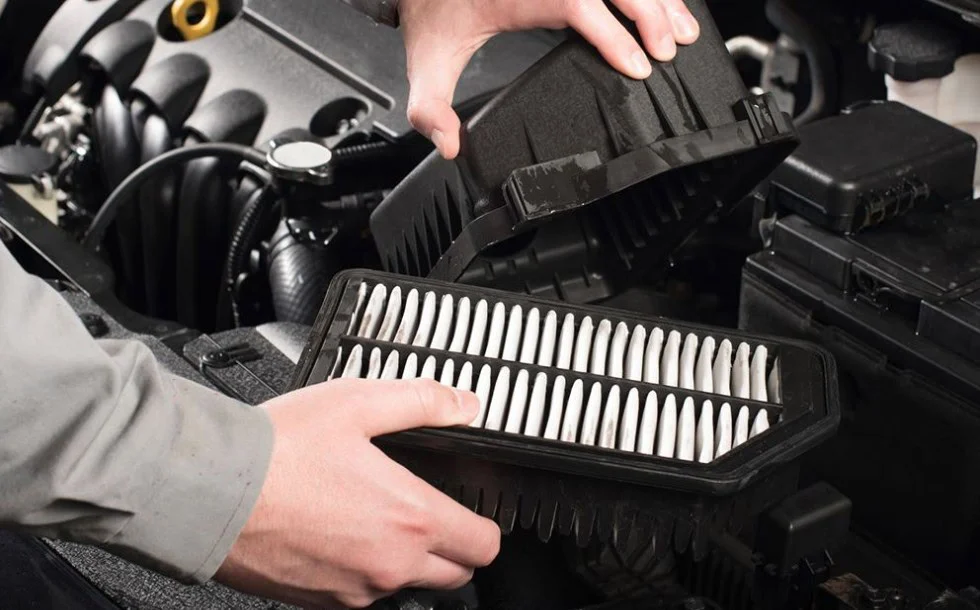
The crew at Grease Monkey on Channing Way replaces engine, cabin, and fuel filters, handles diesel and truck oil changes, and checks the engine air filter during the 16-point inspection that comes with every oil change [1]. Here is what to know before you buy, upgrade, or ignore yours.
Do you really want to trust just any old engine air filter with your vehicle’s engine?!?!
1. That Bargain Engine Air Filter From an Online Marketplace Might Not Be What the Box Says
Is it safe to buy a cheap engine air filter online, and how can I tell if it is counterfeit?
Quick Answer: Be careful. Counterfeit and poorly made engine air filters are sold online under trusted brand names, and a knockoff can have weak media or bad seals that let dust into the engine. Buy from reputable sellers, compare it against a genuine part, and be suspicious of prices that seem too good.
Counterfeit auto parts are no longer a back-alley problem. A 2025 InvestigateTV report found that U.S. Customs and Border Protection seized more than 839,000 counterfeit auto parts over five years, with a retail value above $60 million, and that seizures of counterfeit parts at U.S. ports nearly doubled between 2023 and 2024 [5]. Oil filters were among the parts named, and federal investigators said counterfeiters are cashing in on trusted brand names [5]. Filters are an easy target: they are cheap to copy, sold by part number, and almost never inspected by the person who buys them.
An engine air filter is especially easy to fake well enough to fool a buyer. It is folded paper in a frame with a rubber edge. What a knockoff cannot easily copy is the engineering inside. A retailer that specializes in parts for Ram diesel trucks documented knockoff filters sold online, warned of questionable filtration ratings, and quoted a Fleetguard representative saying there is no good way to verify a filter’s authenticity until it arrives and that knockoffs have not been engineered or validated [6]. One reader who inspected counterfeits described gaps and air bubbles in the adhesive that bonds the media to the end caps, which compromise the seal [6].
That matters because quality differences in engine air filters are large even among legitimate products. Donaldson’s published comparison shows standard media at up to 99.9 percent efficiency and typical will-fit standard media at up to 99.0 percent, and estimates that a will-fit filter can pass up to about 100 times more dirt than its best media in typical medium-dust conditions [7]. A counterfeit engine air filter with no engineering behind it has no published number at all.
The warning signs are practical. Retail-level guidance and the investigators’ advice line up: be suspicious of prices far below the usual range, misspellings or blurry printing on the box, odd logo proportions, missing part information, sellers that advertise only that they ship from the U.S., and dimensions that are slightly off from the original part [5][6]. When the new engine air filter arrives, set it next to the old engine air filter. If it is lighter, has fewer or shallower pleats, a thin or uneven rubber seal, or does not fit the housing snugly, do not install it.
For a diesel or turbocharged truck that moves a large volume of air, the stakes are higher than the few dollars saved. The safest route is an engine air filter bought through a reputable shop or parts counter, with the part number confirmed for the vehicle.
2. Black Smoke at the Light on 17th Street? Your Diesel May Be Gasping Through Its Engine Air Filter
Can a dirty engine air filter make my diesel truck blow black smoke?
Quick Answer: Yes, it can be one cause. Black smoke means the engine is burning more fuel than it has air for, and a restricted engine air filter starves the engine of air, especially under load. Injectors, sensors, turbo, and EGR problems can also cause it, so check the engine air filter first and then diagnose.
A healthy modern diesel should not puff black smoke. Black smoke is soot, unburned carbon from fuel that did not find enough oxygen to burn completely. Universal Technical Institute’s diesel training blog puts it simply: black smoke points to a rich fuel-to-air ratio, and a clogged engine air filter is one of the common causes because restricted airflow leaves too little air for the fuel [8]. The same list includes faulty injectors that deliver too much fuel, a faulty airflow sensor, carbon buildup, and a clogged EGR valve [8].
Turbocharger engineers agree on the air side. Cummins Turbo Technologies lists a dirty air cleaner and intake system restriction among the causes of excess smoke and lack of power in its turbocharger failure diagnosis guidance [9]. A diesel pulling away from a stop with a trailer behind it asks for fuel immediately, and the turbo needs a moment to build boost. If the engine air filter is also restricted, the air shortfall in that moment is larger, and the result is a dark puff at the light.
It helps to know what a dirty engine air filter usually does not do. Oak Ridge National Laboratory’s testing of three late-model turbo-diesels found no measurable fuel economy loss from clogged filters, but did measure slower acceleration at wide-open throttle on the two vehicles tested that way [10]. In other words, a restricted engine air filter on a diesel shows up under hard acceleration and heavy load, which is exactly when black smoke appears, rather than at the fuel pump.
That makes the engine air filter the logical first stop when a diesel starts smoking. It is fast and cheap to check. If the filter is loaded, replace it and see whether the smoke stops. If the filter is fine and the truck still smokes, the cause is somewhere more expensive, and it should be diagnosed rather than masked. Black smoke from a truck that has been tuned for more fuel is a different conversation, but even then, a restricted engine air filter makes it worse.
Idaho Falls diesels see the conditions that load filters quickly: dusty roads to the reservoirs, trailers up the canyon, and long hauls across the desert. A smoke puff at a light on 17th Street is worth a look before it becomes a habit.
3. At 4,700 Feet, Your Turbo Has to Pull More Air Through the Same Engine Air Filter
Does living at high altitude like Idaho Falls make my turbocharged engine work its engine air filter harder?
Quick Answer: Yes. Thinner air at altitude means a turbocharged engine must move a larger volume of air to make the same power, so more air rushes through the engine air filter, raising restriction and bringing more dust per mile. A loaded engine air filter costs more power up here than at sea level.
Air gets thinner as elevation rises. Garrett Motion, one of the largest turbocharger makers, explains that a naturally aspirated engine loses roughly 3 percent of its power for every 1,000 feet of elevation, so an engine making 100 horsepower at sea level makes about 85 at 5,000 feet [11]. Idaho Falls sits at roughly 4,700 feet [1], close enough to that example to feel it on every grade.
Turbochargers fight back by compressing the thin air. Garrett notes that to hold power at altitude, the engine control system raises boost, and the turbo must handle a larger air volume at higher shaft speeds than it would at sea level [11]. All of that extra air volume has to come through the engine air filter first.
That is where the physics of filtration enters. The resistance an engine air filter puts up depends heavily on how fast air moves through its media. Filtration engineers at Cummins Filtration cite a widely used model in which pressure drop across a dust-loaded filter rises with the square of air velocity [12]. Push more volume through the same filter and its restriction climbs faster than the flow itself. A partly loaded engine air filter that would be fine at sea level can be the bottleneck on a turbocharged truck climbing toward the Palisades.
Altitude also changes the dust math. Because the engine is pulling a larger volume of air to get the oxygen it needs, it is also pulling a larger volume of whatever dust that air carries. Per mile, a turbocharged engine working hard at altitude can load its engine air filter faster than the same engine at sea level.
None of this means the engine air filter needs to be replaced on a stricter calendar by default. Donaldson’s guidance is to let restriction, not appearance or habit, decide when a filter is done [7]. It does mean a turbo truck in Idaho Falls gets more benefit from a clean, correctly sized engine air filter, and less tolerance for one that is nearly worn out.
Know all of the facts before you think about adding a cold air intake to your vehicle
4. Thinking About a Cold Air Intake? Know Where It Moves Your Engine Air Filter First
Is a cold air intake kit a good idea, and what does it change about how my engine air filter works?
Quick Answer: It depends on the design. A cold air intake replaces the factory air box and usually relocates the engine air filter as an exposed element lower or closer to the fender, which can mean hotter air if unshielded, more dust and water exposure, and different airflow readings. Choose a sealed, tested kit.
A factory air box is an engineered system. It is shaped to draw air from a specific spot, shield the engine air filter from engine heat and road spray, smooth the airflow past the airflow sensor, and seal tightly at every joint. A cold air intake kit replaces much of that with a tube and an open-element engine air filter, often relocated to the fender well or the front corner of the engine bay.
Done well, that can help a little on some engines. Done poorly, it can hurt. In dynamometer comparisons summarized by Jalopnik, one intake that ran without its heat shield lost performance because it was drawing hot engine-bay air [13]. Hot air is less dense, so an unshielded open filter can cost the engine the very power the kit promised.
Relocation also changes what the engine air filter sees. A filter mounted low in a fender well is closer to road dust, slush, and splash, and it can be more exposed to water. Hydrolock, the engine damage that happens when water is pulled into a cylinder, is a known risk of low-mounted intakes [14]. Open-element filters also lack the sealed lid of a factory box, so the clamp and the coupler become the only things standing between the engine and unfiltered air.
Emissions rules are another reason to choose carefully. In some states, aftermarket intakes need an Air Resources Board exemption order before they can be used on the street. One such order, for an S&B Filters cold air intake on several Chevrolet and GMC diesel pickups, found the system did not reduce the effectiveness of the pollution controls, applied only to the listed vehicles, and stayed valid only if the installation instructions did not call for retuning the engine [15]. Even outside California, that kind of order is a useful sign that a kit was tested on your specific vehicle.
For an Idaho Falls truck that sees dirt roads, winter slush, and summer heat, the questions to ask before buying are simple: Is the engine air filter shielded from engine heat? Is it protected from water and road spray? Does the kit fit your exact vehicle and engine? And is it sealed at every joint from the filter to the throttle body?
5. Will a Performance Engine Air Filter Really Add Horsepower? What the Dyno Says
Does a performance engine air filter add horsepower, and is a reusable oiled engine air filter worth it?
Quick Answer: Usually not much. Dyno tests of performance engine air filters on modern cars show gains from none to about 4 to 6 horsepower on some small turbo engines. Reusable oiled engine air filters can last a long time but must be cleaned and oiled correctly, because excess oil can foul the airflow sensor.
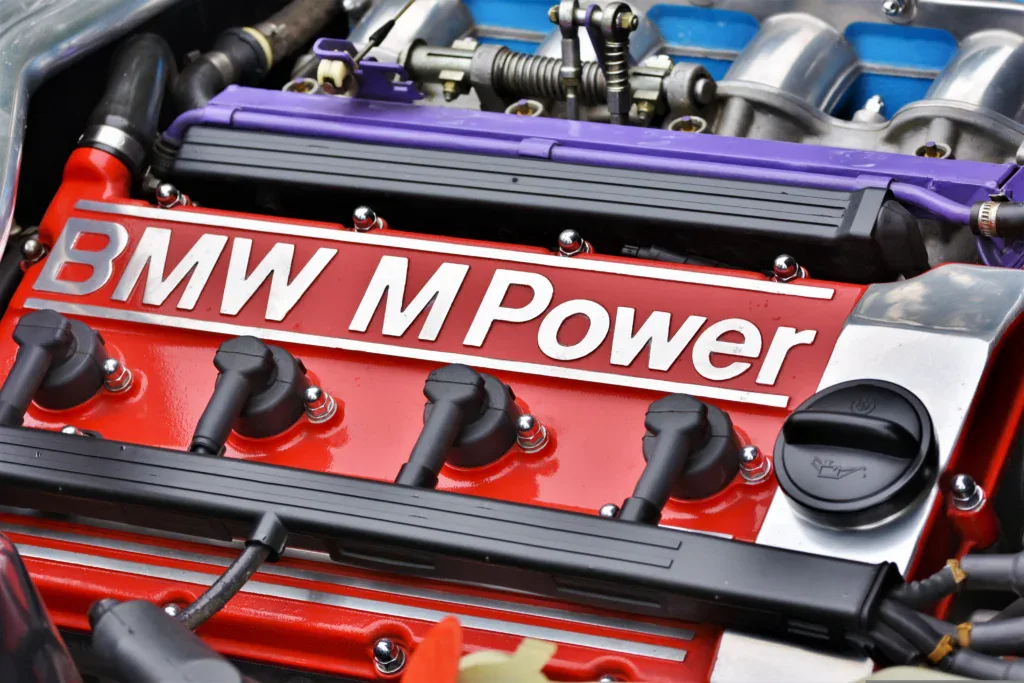
Performance engine air filters are marketed on airflow, and airflow does matter at full throttle. But the real-world numbers are modest. Jalopnik gathered results from independent dynamometer tests: on a BMW with a naturally aspirated V8, the stock air cleaner performed best and aftermarket filters gave no benefit, while on a Skoda with a 2.0-liter turbocharged four-cylinder, aftermarket air cleaners added roughly 4 to 6 horsepower [13]. Another test by Engineering Explained found a performance filter added about 4 horsepower, and a clean stock filter versus a dirty one differed by about 2 horsepower at most [13].
That pattern makes sense. On most engines, a clean factory engine air filter is not the main restriction in the intake. Swapping it for a freer-flowing filter helps only if the engine was actually limited by the filter, which is more likely on small turbocharged engines and highly modified trucks than on a stock commuter. For most drivers, a fresh factory-spec engine air filter recovers more performance than any aftermarket upgrade, because it removes whatever loss the old, loaded filter was causing.
Reusable oiled cotton filters bring a second consideration: maintenance. They use a light film of oil to help trap fine dust, and they are designed to be washed and re-oiled with the maker’s kit. The risk is too much oil. Oil that migrates off the filter can coat the mass airflow sensor, and laboratory testing described in a 2022 review found that a layer of dust and oil on an airflow meter’s sensing element cut its output signal by 46.7 percent [16]. A sensor reading that far off can set warning lights and make the engine run poorly.
Filtration is the other trade-off to ask about. Any engine air filter, factory or aftermarket, is a balance between how freely it flows, how much dust it can hold, and how well it stops fine particles. A filter that flows a little more freely may hold or stop dust differently, so a buyer who drives dusty Idaho roads should ask for real test data rather than horsepower claims alone.
For an Idaho Falls truck, the best performance upgrade for the engine air filter is often the least exciting one: the correct filter, changed when restriction says it is time, sealed perfectly in its housing. If you choose a reusable filter, follow the cleaning and oiling instructions exactly.
6. Cottonwood Snow in June: Why the Fluff Along the Snake River Ends Up in Your Engine Air Intake
Can cottonwood fluff clog my engine air filter or air intake, and what should I do about it?
Quick Answer: It can. In early summer, cottonwood seed fluff drifts in thick mats that collect on grilles, inlet screens, and the face of the engine air filter, restricting airflow. It is too large to pass through the engine air filter, but heavy buildup should be cleared, and a matted engine air filter checked.
Anyone who has lived near the Snake River knows the early-summer flurries. Female cottonwood trees release seeds attached to fibrous white strands that ride the wind, and in heavy years the cotton appears everywhere [17]. The South Fork of the Snake near Idaho Falls is lined with cottonwood forest that depends on the river’s water [18], and the trees along the river through the valley put out the same June snowfall.
For engines and equipment, the problem is mechanical. Ohio State University’s extension specialists note that large amounts of cottonwood fluff can clog air conditioners, car radiators, and pool filters [17]. A maker of intake screens for commercial cooling equipment reports that a single cottonwood can produce up to 48 million seeds a year and that the fluff can clog intake vents and coat coils during peak season [19]. A vehicle’s front end is a big intake vent: the grille, the radiator, and the opening that feeds the engine air filter all sit right where the drifting cotton collects.
The good news is that cottonwood fluff is large compared with the dust an engine air filter is designed to stop, so it is caught at the surface instead of reaching the engine. The trouble is volume. Fluff that mats across an inlet screen or the face of the engine air filter blocks airflow the way a sheet of felt would, and when it gets wet it packs down even harder. A truck that spent an evening parked under the cottonwoods at a river access, or drove a dirt road through a stand of them, can come home with a surprising wad of it in the air box.
The fix is simple and seasonal. In June, glance at the grille and the air inlet after drives near the river, and pull out any mats you can reach. During an oil change, have the air box opened and the engine air filter checked for fluff matted into the pleats. Do not try to vacuum or blow fluff out of a paper engine air filter, since that can damage the media; if it is heavily matted, replace it.
Cottonwood season is short, but it arrives right before summer towing season. Clearing the fluff keeps the engine air filter breathing freely for the trips that need it most.
About Grease Monkey, 2100 Channing Way, Idaho Falls, ID 83404
Grease Monkey Center #1047 is open Monday through Friday from 7:00 AM to 6:00 PM and Saturday from 8:00 AM to 5:00 PM, and is closed Sunday. Most services need no appointment, and the shop can be reached at (208) 248-3381. Manager Stettson James leads the team [1].
The menu here includes conventional, synthetic blend, full synthetic, and premium oil changes, diesel and truck oil changes, engine, cabin, and fuel filter replacement, transmission and power steering fluid exchanges, brakes, tires, wheel balancing and alignment, batteries, A/C, headlights, wipers, and tune-ups, with a 16-point inspection on every oil change. Services and products carry a limited warranty of three months or 3,000 miles [1].
Fleets of 3 to 3,000 vehicles get centralized billing, monthly invoices, and maintenance records across the FullSpeed network. Discounts are offered for first responders, law enforcement, military, seniors, and rideshare drivers, and the lobby offers free Wi-Fi, cable TV, a coffee station, and a window into the service bay. Customers have given this Channing Way location a 4.6-star rating across more than 2,760 Google reviews [1].
Author Information
Author Bio – Phillip Paul Gilliam
Phillip Gilliam is a veteran journalist and former Editor-in-Chief with 50+ years of publishing experience and thousands of published articles. Specializing in automotive, trucking, and digital publishing, he creates authoritative, search-optimized content built on real-world expertise and editorial excellence. To learn more about Phil, visit http://www.phillipgilliam.com/about.html or contact Phil at [email protected]. He would love to hear from you!
Full Citation List
[1] Grease Monkey. Oil Change & Auto Repair, 2100 Channing Way, Idaho Falls, ID. Grease Monkey. Available at: https://www.greasemonkey.com/locations/id/idaho-falls/2100-channing-way/. (Center #1047; manager Stettson James; operated by Threshold Automotive dba Grease Monkey, part of the FullSpeed Automotive family; address, phone, hours; engine, cabin, and fuel filter replacement; diesel and truck oil changes; 16-point inspection; fleet program; 3-month/3,000-mile limited warranty; local references to 17th Street, Hitt Road, the Snake River, Palisades Reservoir, and Idaho National Laboratory; elevation of about 4,700 feet, winters near -20 degrees F, and summers in the 90s; current Google rating of 4.6 stars from 2,767 reviews, checked October 10, 2026.)
[5] Molina, D., and DePompa, R., InvestigateTV. 'Taking Advantage of That Trusted Brand': Counterfeit Auto Parts Pose Serious Risks to Drivers. WCAX, February 3, 2025. Available at: https://www.wcax.com/2025/02/03/taking-advantage-that-trusted-brand-counterfeit-auto-parts-pose-serious-risks-drivers/. (CBP seized more than 839,000 counterfeit auto parts worth over $60 million over five years; counterfeit parts seized at U.S. ports nearly doubled between 2023 and 2024; oil filters among parts named; buy from reputable sources, inspect markings, and be wary of deals that seem too good to be true.)
[6] Geno's Garage. Counterfeit Filters – Buyers, Beware. Shop Talk blog, May 18, 2026. Available at: https://blog.genosgarage.com/2026/05/knock-off-filters-buyers-beware/. (Knockoff filters for Ram Turbo Diesel trucks sold online; questionable filtration ratings; a Fleetguard representative said there is no good way to verify authenticity before delivery and knockoffs are not engineered or validated; warning signs include unusually low prices, misspellings, poor print quality, missing label information, and slightly off dimensions; a reader described voids in the media-to-end-cap bond that compromise the seal.)
[7] Donaldson Company. How Well Does an Engine Air Filter Clean Incoming Dirty Air? Air Filter Efficiency Explained. Donaldson technical article. Available at: https://www.donaldson.com/en/resources/technical-articles/air-filter-efficiency-explained/. (Standard media up to 99.9 percent efficiency and will-fit standard media up to 99.0 percent; will-fit filters can pass up to about 100 times more dirt than Ultra-Web media in typical medium-dust conditions; restriction, not appearance, should determine replacement.)
[8] Ratner, C. Black Smoke From a Diesel Engine. Universal Technical Institute blog, March 19, 2024. Available at: https://uti.edu/blog/diesel/black-smoke-from-diesel-engine. (Black smoke indicates a rich fuel-to-air ratio and incomplete combustion; causes include a clogged air filter, faulty injectors, a faulty mass airflow sensor, carbon deposits, and a clogged EGR valve.)
[9] Cummins Turbo Technologies. Turbocharger Failure Diagnosis Guidelines (Bulletin 5544148). Cummins Inc. Available at: https://www.cummins.com/sites/default/files/2019-04/5544148_0718.pdf. (A dirty air cleaner and air intake system restriction are listed causes of excess smoke and lack of power.)
[10] Thomas, J.F., West, B.H., and Huff, S.P., Oak Ridge National Laboratory. Effect of Air Filter Condition on Diesel Vehicle Fuel Economy. SAE Technical Paper 2013-01-0311, 2013. Available at: https://www.fueleconomy.gov/feg/pdfs/2013-01-0311_Diesel_AirFilter.pdf. (No measurable fuel economy change from clogged filters on three late-model turbo-diesels; the two sedans tested at wide-open throttle accelerated measurably slower with clogged filters.)
[11] Garrett Motion. How to Turbocharge at Elevation: Counteracting Lower Air Density. Garrett Motion Newsroom, August 15, 2019. Available at: https://www.garrettmotion.com/news/newsroom/article/how-to-turbocharge-at-elevation-counteracting-lower-air-density/. (A naturally aspirated engine loses about 3 percent of power per 1,000 feet of elevation, e.g., about 85 hp at 5,000 feet from 100 hp at sea level; turbo systems raise boost at altitude and must handle larger air volume and higher shaft speed.)
[13] Torchinsky, J. Here Are Some Real Tests to See if Changing Your Air Filter Gives You More Power. Jalopnik, October 29, 2020. Available at: https://jalopnik.com/here-are-some-real-tests-to-see-if-changing-your-air-fi-1845520832. (Dyno tests: on a naturally aspirated BMW V8, the stock setup performed best; on a 2.0-liter turbo Skoda, aftermarket air cleaners added about 4 to 6 hp; one intake without its heat shield lost performance by drawing hot engine-bay air; Engineering Explained found about 4 hp from a K&N filter and about 2 hp at most between clean and dirty stock filters.)
[14] Wikipedia contributors. Hydrolock. Wikipedia. Available at: https://en.wikipedia.org/wiki/Hydrolock. (Water drawn through the air intake can bend or break connecting rods; low-mounted aftermarket intakes increase the risk.)
[15] California Air Resources Board. Executive Order D-590-23: S&B Filters, Inc. Cold Air Intake System. August 2019. Available at: https://ww2.arb.ca.gov/sites/default/files/aftermarket/devices/eo/d-590-23.pdf. (Exempts the listed cold air intake for specified 2016-2019 Chevrolet and GMC diesel pickups from Vehicle Code Section 27156 after finding it does not reduce the effectiveness of pollution controls; valid only if installation instructions do not recommend retuning; does not endorse performance claims.)
[16] Dziubak, T., and Dziubak, S.D. A Study on the Effect of Inlet Air Pollution on the Engine Component Wear and Operation. Energies 15(3), 1182, 2022. Available at: https://www.mdpi.com/1996-1073/15/3/1182. (A layer of mineral dust and oil on an airflow meter's sensing element reduced its output signal by 46.7 percent in laboratory testing.)
[17] Ohio State University Extension. Cottonwoods Are Living Up to Their Name in Ohio. Buckeye Yard and Garden onLine. Available at: https://bygl.osu.edu/node/2158. (Female cottonwoods release seeds on fibrous white strands carried by the wind; large amounts can clog air conditioners, car radiators, and pool filters.)
[19] Permatron. The Other White Stuff. Permatron blog, 2013, updated 2018. Available at: https://permatron.com/?p=9737. (A single cottonwood can produce up to 48 million seeds per year; seeds enter rooftop air handler and cooling tower intakes, clogging vents and coating coils. Manufacturer content.)
We use cookies to improve your browsing experience on our website. By closing this banner or interacting with our site, you acknowledge and agree to our privacy policy.