6 Reasons Life in the City Above the Clouds Tests Your Engine Air Filter on U.S. 24 – The Ute Pass Climb, the High-Altitude Filter Myth, Spring Sand, Sun-Baked Rubber, Burn Scars, and Mine Dust
Location: Woodland Park, CO Topic: Grease Monkey Center #1513 By: Phil Gilliam
An Authoritative Guide for Engine Air Filter Care at 8,481 Feet in Teller County
Grease Monkey, 1027 U.S. 24, Woodland Park, CO 80863. Has Over 160 Google Reviews With A 4.6 Star Rating.
A Note on Authority and Expertise: This article was researched and written by Phillip Paul Gilliam, a veteran journalist and former Editor-in-Chief with more than 50 years of publishing experience in automotive, trucking, and safety communications.
Woodland Park drivers live higher than almost anyone in this series, and their cars feel it. This guide ties each engine air filter question to evidence: a Colorado Department of Transportation study of winter road sanding, the U.S. Environmental Protection Agency's figures on ultraviolet exposure at elevation, rubber engineering guidance on sunlight and ozone, records of the Hayman Fire and the Waldo Canyon burn-scar floods, a 2026 economic report on the Cripple Creek and Victor Gold Mine, an independent filter test, and technical references on how engines measure air. Where the evidence is limited, this guide says so.
The shop at 1027 U.S. 24 is Grease Monkey Center #1513, managed by Noah Erickson and operated by Threshold Automotive, with FullSpeed Automotive as parent company [1]. Grease Monkey was founded in 1978 and is headquartered in Denver [2]. FullSpeed, led since November 2025 by CEO Brian Maciak, reported more than 900 franchised and company-owned locations in January 2026 [3], and when the company was sold in 2020 it was already described as the fourth largest quick lube operator in the United States [4].
Woodland Park, the self-described City Above the Clouds, sits at 8,481 feet in Teller County where U.S. 24 meets State Highway 67, with 7,920 residents at the 2020 census and an estimated 8,043 in 2024 [5]. Its alpine subarctic climate brings cool summer nights, and the arid climate dries surrounding forests enough that fire restrictions are common [5]. The store page describes thin air, steep grades, upslope storms, road salt, some of the widest temperature swings in the state, and winter lows that can reach 30 below [1]. Every one of those conditions reaches the engine air filter.
An Introduction to Engine Air Filters on U.S. 24 and Across Teller County
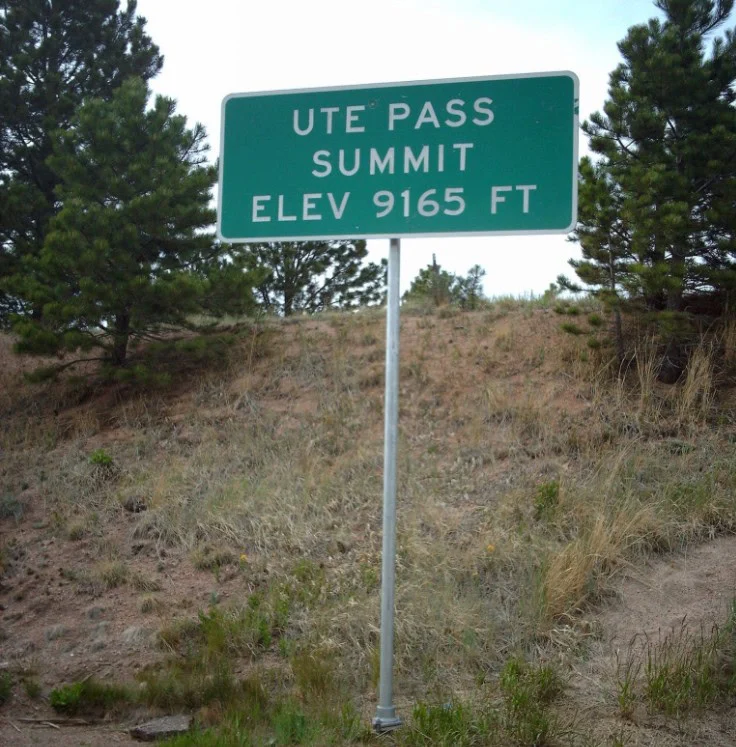
Every trip down Ute Pass to Colorado Springs is a descent of more than 2,000 feet, and every trip home is a climb back up. Woodland Park drivers make that climb so often they stop noticing it. Their engines do not. At 8,481 feet, an engine is already working with thin air before the engine air filter adds a single bit of restriction.
Teller County adds conditions found almost nowhere else in this series. Winter traction sand turns to grit in spring. High-altitude sun bakes the rubber parts around the air box. Burn scars from past wildfires still shape the landscape and the roads. And the county's biggest employer is an open-pit gold mine whose workers drive to and from it every day.
This guide answers six questions Woodland Park drivers ask about the engine air filter. It starts with the daily climb and a common myth about special high-altitude filters, then turns to spring sand, sun-damaged rubber, burn scars, and mine dust. Each answer begins with a short, direct reply, then explains the evidence and what it means on U.S. 24, on Highway 67, and in neighborhoods from Tamarac Lakes to Divide.
The crew at Grease Monkey on U.S. 24 checks both the engine air filter and the cabin air filter, offers a free engine check scan, and is open seven days a week, with most oil changes done in about 15 minutes and walk-ins welcome [1]. Here is what is worth knowing.
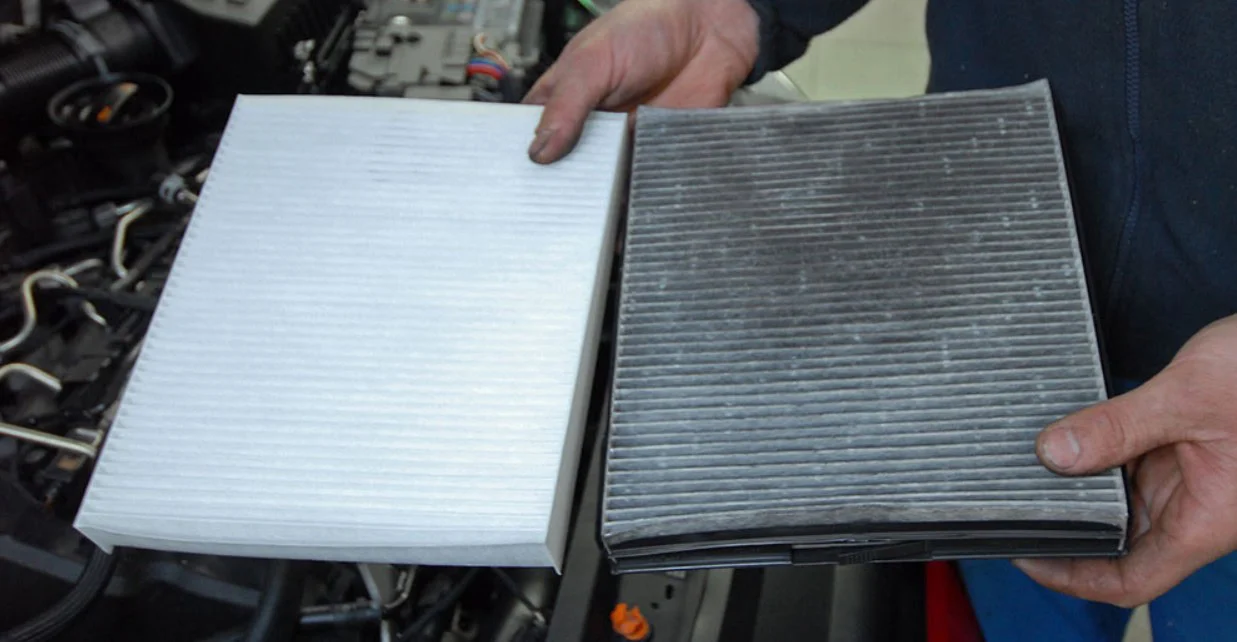
When it comes to needing your engine air filter to be totally clean, this picture says it all… and so does the article below!
1. Climbing Ute Pass Home Every Day? Your Engine Air Filter Is Working Its Hardest on the Last 2,000 Feet
Why does the engine air filter matter so much on the daily climb up Ute Pass to Woodland Park?
Quick Answer: Because the climb asks for sustained power while the air keeps thinning. A non-turbo engine at Woodland Park’s 8,481 feet has already lost roughly a quarter of its sea-level power, and a loaded engine air filter adds restriction just when the engine needs every breath. Keep the engine air filter clean.
U.S. 24 up Ute Pass is one of the busiest mountain commutes in Colorado. Colorado Springs sits at about 6,000 feet [6], and Woodland Park sits at 8,481 feet [5], so every evening drive home means climbing well over 2,000 feet on a steady grade. The store page names thin air and steep grades among the conditions local cars face [1].
Two things happen on that climb. First, the engine works near full throttle for minutes at a time, especially in a loaded SUV or a pickup towing a trailer. At wide-open throttle the throttle plate is out of the way, and the engine air filter becomes the narrowest point in the air path. Second, the air keeps thinning. A common rule of thumb is that a naturally aspirated engine loses about 3 percent of its power for every 1,000 feet of elevation gain [7]. By that measure, a non-turbo engine arriving in Woodland Park has given up roughly a quarter of the power it would make at sea level.
A clean engine air filter does not change that altitude loss, but a loaded one makes it worse. Restriction costs acceleration, and on a grade that shows up as a downshift that comes sooner, a slower climb behind a truck, or less reserve when merging at the top of the pass. Turbocharged engines hide the altitude loss better, but they still have to pull more volume through the engine air filter to do it.
Sustained climbing also means sustained airflow. A commuter who climbs Ute Pass twice a day moves a lot of air through the engine air filter, and mountain roads bring their own dust from sanded shoulders, construction zones, and dirt pullouts. Those miles load the filter faster than flat highway miles would.
The habit is simple: have the engine air filter checked at every oil change, replace it when it is loaded rather than waiting for the maximum interval, and pay attention if the car starts to feel weaker on the climb than it used to. On Ute Pass, that feeling is often the first sign.
2. Do You Need a Special ‘High-Altitude’ Engine Air Filter at 8,481 Feet? Why the Answer Is No – and What Actually Helps
Should I buy a special high-flow or high-altitude engine air filter to get power back in Woodland Park?
Quick Answer: No. Modern engines measure incoming air and adjust fuel for altitude automatically, and no engine air filter can add oxygen to thin air. Testing has shown high-flow filters gain very little power. The best altitude engine air filter is a clean, correctly sealed one that meets your vehicle maker’s specification.
New Woodland Park residents notice it quickly: the car that felt lively at lower elevation feels flat at 8,481 feet. A common reaction is to look for a part that will fix it, and the engine air filter is an easy target. Ads for high-flow and performance filters seem to promise exactly that. It is worth knowing what a filter can and cannot do up here.
First, the engine already knows it is at altitude. Engine management systems measure the air coming in rather than assuming a fixed amount. As a technical reference on mass airflow sensors explains, air density varies with temperature, altitude, and forced induction, and the engine computer uses sensor inputs to account for that density and set fuel delivery accordingly [8]. That is why a modern fuel-injected car runs smoothly at 8,481 feet without any adjustment. It simply makes less power, because there is less oxygen in every breath.
Second, a filter cannot add oxygen. The power lost to altitude comes from thin air, not from the engine air filter. A higher-flowing filter removes a little restriction, but the gains are small. An Autoblog summary of an independent ISO 5011 test found that a popular high-flow oiled filter had about half the restriction of a factory-style paper filter, a difference worth roughly half a percent of engine power, while the paper filter trapped dust far better [9]. Half a percent does not offset a quarter of your sea-level power.
Third, some high-flow choices create new problems. The same mass airflow reference notes that oiled air filters can coat the airflow sensor with excess oil and skew its readings [8], and a sensor that misreads air will not help the engine adapt to altitude. Removing the engine air filter entirely is worse still, because it lets mountain dust straight into the engine.
What actually helps at altitude is keeping the engine breathing as freely as its design allows: a clean engine air filter that meets the vehicle maker’s specification, a housing that seals completely, and an intake path with no leaks. If you want real altitude performance, a turbocharged engine is the factory answer, not an aftermarket filter.
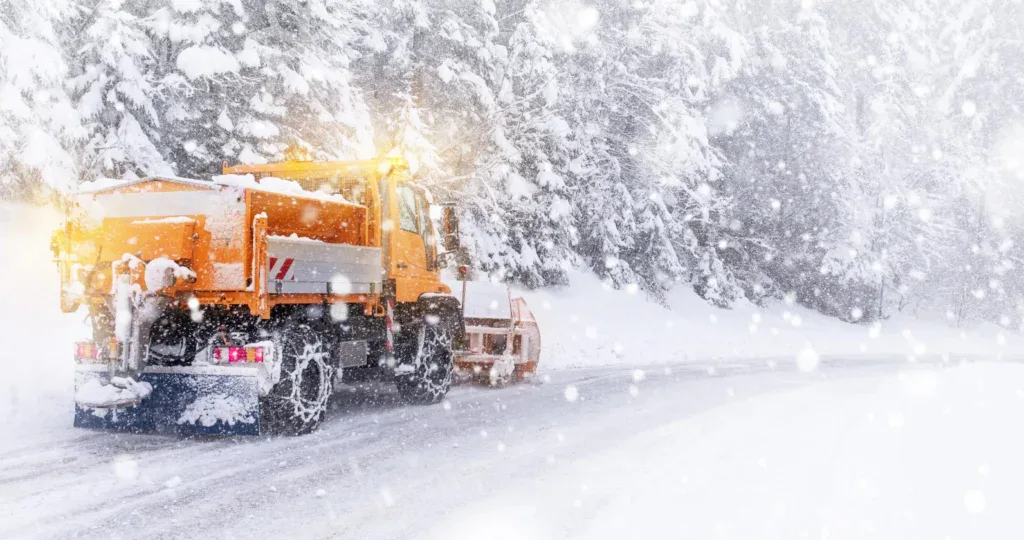
The sand spread on roads in Woodland Park DOES clog up your engine air filter.
3. Last Winter’s Traction Sand Becomes This Spring’s Grit – Why April and May Are Hard on Your Engine Air Filter
Does the sand spread on Woodland Park roads in winter end up in my engine air filter in spring?
Quick Answer: Yes. Traffic grinds winter traction sand into fine dust, and when roads dry in spring that dust becomes airborne at bumper height. Colorado transportation research links sanding to fine airborne particles. Have the engine air filter checked after the spring thaw, when sanded roads dry out.
Mountain towns depend on traction sand. On the steep streets and grades around Woodland Park, sand gives tires something to grip when snow and ice will not melt for days. The store page lists road salt among local conditions [1], and where salt alone will not do the job, sand provides the grip. It keeps cars on the road in January. In April, it becomes something else.
A Colorado Department of Transportation study of the cost of winter sanding explained the problem plainly: vehicles grind the sand, and that grinding allows fine particulate matter to become airborne when dry [10]. The report noted that airborne fine particles from sanding were one of the major reasons for the Denver area’s winter brown cloud, that some ski towns experienced similar air quality problems, and that switching to liquid deicers helped reduce the need for sweeping up sand [10].
For an engine air filter, sanding dust is about as unfriendly as dust gets. It starts as crushed rock, so it is hard, mineral, and abrasive. Months of tires grinding it on the pavement break it into finer and finer particles. Then spring arrives, the snowbanks melt, the roads dry, and every passing car stirs that fine grit into the air near the ground, close to where many vehicles draw their intake air. Wind on dry spring afternoons keeps it moving.
The timing matters. The heaviest exposure often comes in the weeks after the last big storm, before street sweepers have cleared the shoulders and gutters. A car that sails through winter with a clean engine air filter can load it noticeably in a dusty April and May, especially if it follows other traffic on sanded mountain roads.
Make the spring check part of the calendar. After the roads dry and the sand starts to fly, have the engine air filter inspected and replaced if it is loaded, and wash the sand out of the wheel wells and from around the grille. That way the engine air filter starts summer with its full capacity instead of a winter’s worth of grit.
4. High-Altitude Sun Bakes Rubber – Why the Ducts and Seals Around Your Engine Air Filter Crack Sooner in Woodland Park
Can strong high-altitude sun and big temperature swings crack the rubber ducts and seals around my engine air filter?
Quick Answer: Yes. UV radiation rises with elevation, and sunlight and ozone are leading causes of rubber cracking. Add Woodland Park’s wide temperature swings, and intake ducts and engine air filter seals can harden and crack sooner. A crack after the engine air filter lets unfiltered air reach the engine.
Woodland Park residents know to wear sunscreen even on cool days. The Environmental Protection Agency figure cited by KOAA is that ultraviolet radiation increases about 2 percent for every 1,000 feet of elevation gain, putting Colorado Springs roughly 12 percent above sea level and the summit of Pikes Peak close to 30 percent [11]. At 8,481 feet, Woodland Park sits well above the Springs on that scale. Your car gets the same extra dose.
Rubber does not like it. A rubber manufacturer’s engineering blog states that ultraviolet radiation from the sun is a primary cause of cracking, and that ozone, which UV light helps generate, further attacks the chemical compounds in rubber [12]. Under a hood, those parts also face heat from the engine, and in Woodland Park they face some of the widest temperature swings in the state and winter lows as cold as 30 below [1]. Each swing makes rubber expand, contract, and stiffen.
The parts at risk are the ones that keep air honest: the rubber or plastic intake boot between the engine air filter housing and the throttle body, the clamps that hold it, and the seal on the engine air filter itself. Diagnostic writer Vlad Samarin notes that a cracked intake boot is a common cause of the lean code P0171 and suggests checking the boot for cracks and confirming the air filter box is closed [13].
A crack before the engine air filter is a nuisance. A crack after it is a real problem, because air that enters there skips the filter entirely and carries mountain dust straight into the engine. It can also bypass the airflow sensor and confuse the engine computer. Older vehicles that have spent years parked in Woodland Park sun are the most likely to have brittle boots.
Ask for the whole air path to be inspected, not just the engine air filter. Have the technician flex the intake boot to look for cracks in its folds, check the clamps, and confirm the new filter’s seal is soft and evenly seated. Parking in a garage or facing the grille away from the afternoon sun helps the rubber last.
5. Long After the Flames, Burn Scars Keep Shedding Ash and Mud – What Teller County’s Fire History Means for Your Engine Air Filter
How do old wildfire burn scars around Woodland Park affect my engine air filter years after the fire?
Quick Answer: Burn scars stay bare and erodible for years. Wind lifts ash and fine soil, and summer storms send mud and debris onto roads, where it dries into dust. Driving near burn areas loads the engine air filter faster. Check the engine air filter after windy, dry spells and after cleanup of flood debris.
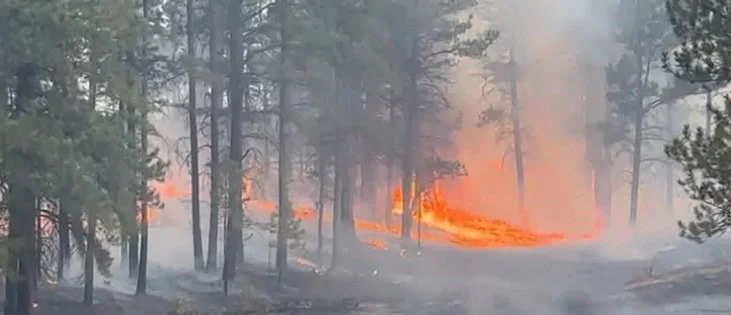
Teller County lives with wildfire history. The Hayman Fire, which began on June 8, 2002, burned 138,114 acres across Douglas, Jefferson, Park, and Teller counties and was the largest wildfire in Colorado’s recorded history for nearly two decades [14]. Woodland Park’s own climate summary notes that the arid climate dries the surrounding forests, creating a significant fire threat [5].
The damage does not end when the fire is out. After the Hayman Fire, flooding increased in the burn area and washed out roads and bridges, including State Highway 67, and runoff deposited sediment in a reservoir that supplies Denver, which cost $25 million to remove [14]. Down Ute Pass, a flash flood from the Waldo Canyon burn scar in August 2013 buried part of U.S. 24 in debris and closed the highway and Ute Pass [15].
Those events show what burn scars do: they leave ground stripped of vegetation and covered in ash and loose soil. When it rains hard, that material moves as mud and debris onto roads and into drainages. When it dries, the ash and fine sediment left behind can blow around on windy days and get kicked up by traffic. Ash is light and fine, and the soil beneath it is loose mineral dust, so both load an engine air filter quickly, often faster than the mileage on the engine air filter would suggest.
Drivers near burn areas, on roads that carried flood debris, or behind cleanup equipment are pulling more of that material through the engine air filter than ordinary mountain dust would deliver. A car parked near a recently burned area can also collect ash in the air inlet and on the dirty side of the housing.
After a nearby fire, a windy dry spell over a burn scar, or a flood cleanup on your route, have the engine air filter checked and replaced if it shows gray ash or fine sediment. Clear any ash from the air inlet as well. It is a small step that keeps the aftermath of a fire from becoming wear inside your engine.
Fire season leaves a long tail. When the smoke clears and the wind picks up over the burn scars, bring your car to Grease Monkey, 1027 U.S. 24, Woodland Park, CO, for an ash-check on your engine air filter: https://www.greasemonkey.com/locations/co/woodland-park/1027-u-s-24/.
6. Commuting to the Gold Mine? Mine-Site Dust Is Crushed Rock, and Your Engine Air Filter Treats It as Enemy Number One
If I work at the Cripple Creek and Victor Gold Mine, how should I care for my engine air filter?
Quick Answer: Check it far more often than a town commuter. An open-pit mine crushes and moves rock, and the fine mineral dust around haul roads and parking areas is highly abrasive. Workers’ vehicles parked on site breathe it daily. Inspect the engine air filter at every oil change and replace it on condition.
The Cripple Creek and Victor Gold Mine is Colorado’s only active gold mine and one of the economic engines of Teller County. A 2026 report described by High Plains Public Radio and The Colorado Sun found the mine employs 438 people, that more than half of them live in Teller County, and that the mine accounts for more than half of the county’s gross domestic product [16]. Many of those workers drive Highway 67 between Woodland Park and the mining district every day.
The mine is an open-pit surface operation, and its gold is recovered by heap leaching on a pad described as one of the biggest in the world [17]. Open-pit mining means blasting, crushing, hauling, and placing large volumes of rock. The same 2026 report noted that residents have raised air quality concerns, particularly around blasting, and that the current owner added continuous air monitors [16].
For an engine air filter, rock dust is the hardest kind of dust there is. It is mineral, angular, and abrasive, and when it gets past a filter it wears rings, cylinders, and bearings. Personal vehicles that park near a mine site, drive gravel access roads, or follow haul traffic pull that dust through their intakes every shift, on top of the mountain dust and sanding grit of an ordinary Teller County commute.
The mine’s own heavy equipment uses industrial filtration and maintenance programs. Workers’ pickups and SUVs depend on the same engine air filter a town car uses, but they live in conditions closer to those of a work truck. That makes regular engine air filter inspection and a perfect seal especially important.
If your commute ends at a mine, quarry, or gravel operation, treat your vehicle as a severe-service vehicle. Have the engine air filter checked at every oil change, replace it when it is loaded instead of waiting for the mileage, make sure the housing clips and duct clamps stay tight on rough roads, and wash the dust off the grille and wheel wells regularly.
About Grease Monkey, 1027 U.S. 24, Woodland Park, CO 80863
Grease Monkey Center #1513 is open Monday through Friday from 8:00 AM to 6:00 PM, Saturday from 8:00 AM to 5:00 PM, and Sunday from 9:00 AM to 4:00 PM. The shop can be reached at (719) 356-3648, and manager Noah Erickson leads the team [1].
The menu covers conventional, high-mileage, synthetic blend, and full synthetic oil changes with a 16-point inspection that includes the engine air filter and cabin air filter, a free engine check scan and battery check, brake, battery, engine, transmission, power steering, A/C, and headlight services, fluid exchanges, tires, wiper blades, tune-ups, wheel balancing, serpentine belts, radiator services, pre-purchase inspections, and fleet services. Services and products carry a limited warranty of three months or 3,000 miles [1].
Walk-ins are welcome and most oil changes take about 15 minutes. The shop lists discounts for military, clergy, first responders, law enforcement, seniors, students, and Uber and Lyft drivers, and the lobby offers cable TV, a coffee station, a kids play area, and a putting course. Customers have given this U.S. 24 location a 4.6-star rating across more than 160 Google reviews [1].
Author Information
Author Bio – Phillip Paul Gilliam
Phillip Gilliam is a veteran journalist and former Editor-in-Chief with 50+ years of publishing experience and thousands of published articles. Specializing in automotive, trucking, and digital publishing, he creates authoritative, search-optimized content built on real-world expertise and editorial excellence. To learn more about Phil, visit http://www.phillipgilliam.com/about.html or contact Phil at [email protected]. He would love to hear from you!
Full Citation List
[1] Grease Monkey. Oil Change & Auto Repair, 1027 U.S. 24, Woodland Park, CO. Grease Monkey. Available at: https://www.greasemonkey.com/locations/co/woodland-park/1027-u-s-24/. (Center #1513; manager Noah Erickson; operated by Threshold Automotive dba Grease Monkey, FullSpeed Automotive parent; address, phone, hours including Sunday; checks engine and cabin air filters; free engine check scan; oil changes in about 15 minutes; walk-ins welcome; 3-month/3,000-mile limited warranty; nearly 8,500 feet; thin air, steep grades, upslope storms, road salt, wide temperature swings, lows to -30 degrees F; current Google rating of 4.6 stars from 167 reviews, checked October 11, 2026.)
[5] Wikipedia contributors. Woodland Park, Colorado. Wikipedia. Available at: https://en.wikipedia.org/wiki/Woodland_Park,_Colorado. (Elevation 8,481 feet; 7,920 residents at the 2020 census, 2024 estimate 8,043; Teller County; junction of US 24 and SH 67; motto The City Above the Clouds; alpine subarctic climate; arid climate dries forests, creating significant fire threat.)
[7] THE SHOP Staff. Turbocharging at Elevation. THE SHOP magazine, December 17, 2019. Available at: https://theshopmag.com/news/turbocharging-elevation/. (As a general rule, a naturally aspirated engine loses about 3 percent of its power for every 1,000 feet of elevation gain.)
[8] Wikipedia contributors. Mass Flow Sensor. Wikipedia. Available at: https://en.wikipedia.org/wiki/Mass_flow_sensor. (Air density varies with ambient temperature, altitude, and forced induction; the ECU calculates air density and sets fuel delivery accordingly; oiled air filters can coat the MAF sensor with excess oil and skew readings.)
[9] Autoblog. How Well Do K&N Air Filters Work? Autoblog, September 7, 2005. Available at: https://www.autoblog.com/2005/09/07/how-well-do-k-n-air-filters-work/. (Independent ISO 5011 testing; high-flow oiled filter had about 50 percent less restriction than paper, worth roughly 0.5 percent power; paper filter far superior in filtering.)
[10] Chang, N.-Y., and Brady, B., University of Colorado at Denver. Cost of Sanding. Colorado Department of Transportation Report CDOT-DTD-R-2002-5, June 2002. Available at: https://www.codot.gov/programs/research/reports/2002/sanding.pdf. (Vehicle grinding of sand allows fine particulate matter to become airborne when dry; airborne PM-10 a major reason for the winter brown cloud; some ski towns experienced similar air quality problems; liquid deicers reduced sand sweeping.)
[11] KOAA News 5. How Colorado's Elevation Impacts the UV Index. KOAA, April 7, 2025. Available at: https://www.koaa.com/weather/weather-science/how-colorados-elevation-impacts-the-uv-index. (Citing EPA: UV radiation increases 2 percent for every 1,000 feet of elevation gain; Colorado Springs roughly 12 percent more UV than sea level; Pikes Peak summit close to 30 percent.)
[12] Apple Rubber. Avoiding Rubber Cracking in Sunlight. Official Apple Rubber Blog, February 3, 2026. Available at: https://www.applerubber.com/blog/?p=7057. (UV radiation from the sun is a primary cause of cracking; degradation is enhanced by ozone generated by UV light, which further affects rubber compounds.)
[13] Samarin, V. Code P0171 – System Too Lean: Symptoms, Causes, Common Problems, Diagnostic. Samarins.com, updated July 10, 2021. Available at: https://www.samarins.com/diagnose/p0171.html. (A cracked or ripped intake boot is a common reason for P0171; check the intake boot for cracks and confirm the air filter box is closed.)
[14] Wikipedia contributors. Hayman Fire. Wikipedia. Available at: https://en.wikipedia.org/wiki/Hayman_Fire. (Started June 8, 2002; 138,114 acres in Douglas, Jefferson, Park, and Teller counties; 133 homes destroyed; largest wildfire in Colorado's recorded history for nearly two decades; burn-area flooding washed out roads and bridges including SH 67; reservoir sediment removal cost $25 million.)
[15] Chalfin, A. Flooding in Manitou Springs. Colorado Public Radio, August 9, 2013. Available at: https://www.cpr.org/2013/08/09/flooding-in-manitou-springs. (Flash flood warning over the Waldo Canyon burn scar; significant debris in the westbound lanes of US 24; US 24 and Ute Pass closed.)
[16] Prentzel, O. Colorado's Only Active Gold Mine Generated $830 Million in Economic Activity Last Year, Report Finds. High Plains Public Radio (from The Colorado Sun), October 1, 2026. Available at: https://www.hppr.org/hppr-news/2026-10-01/colorados-only-active-gold-mine-generated-830-million-in-economic-activity-last-year-report-finds. (Cripple Creek and Victor Gold Mine, Colorado's only active gold mine; 438 employees, more than half living in Teller County; more than half of Teller County GDP; residents raised air quality concerns around blasting; owner added continuous monitors.)
[17] Wikipedia contributors. Cripple Creek & Victor Gold Mine. Wikipedia. Available at: https://en.wikipedia.org/wiki/Cripple_Creek_%26_Victor_Gold_Mine. (Open pit surface operation near Victor in Teller County; gold recovered by heap leaching on one of the biggest heap leach pads in the world; owned by SSR Mining.)
We use cookies to improve your browsing experience on our website. By closing this banner or interacting with our site, you acknowledge and agree to our privacy policy.