15 Reasons to Replace Your Cabin Air Filter in Woodland Park, Colorado – What Wildfire Country, Ute Pass, and 8,481 Feet Do to Your Car's Cabin Air Filter
Location: Woodland Park, CO Topic: Grease Monkey Center #1513 By: Phil Gilliam
An Authoritative Guide for Cabin Air Filter Care Above the Clouds on US-24 in Teller County
Grease Monkey, 1027 U.S. 24, Woodland Park, CO 80863. Has Over 166 Google Reviews With A 4.6 Star Rating.
A Note on Authority and Expertise: This article was researched and written by Phillip Paul Gilliam, a veteran journalist and former Editor-in-Chief with more than 50 years of publishing experience in automotive, trucking, and safety communications.
Fifty-plus years in automotive and safety publishing comes down to one habit above all others: check it before it goes to print. This is the fifteenth and final stop in this series, and the Hayman Fire acreage, the Ute Pass rockfall mitigation schedule, and the Eleven Mile elk herd population figures cited below were all verified against current, named sources specifically for this US-24 location, not carried over from this series’ earlier Colorado Springs, Aurora, or Littleton stops even though all four sit within a short drive of one another.
This Woodland Park location, Grease Monkey Center #1513 at 1027 U.S. 24, is managed by Noah Erickson and has built a 4.6-star rating across more than 166 Google reviews [1]. It operates as part of the FullSpeed Automotive network, which has grown past 900 franchised and company-owned locations nationwide as of mid-2026, and was recognized alongside 435 other FullSpeed Automotive centers as a 2025 CARFAX Top Shop winner for verified customer satisfaction [7][8].
Woodland Park sits at 8,481 feet in Teller County, more than 2,400 feet higher than downtown Colorado Springs and the highest elevation this series has reached in Colorado, earning the town’s official motto, the city above the clouds [2]. Ringed by the one-million-acre Pike National Forest and connected to Colorado Springs by a single winding canyon highway, Woodland Park puts a genuinely different set of demands on a cabin air filter than any of this series’ other Front Range stops [2][3].
An Introduction to Cabin Air Filters at 8,481 Feet in Woodland Park, Colorado
Teller County has already lived through Colorado’s benchmark wildfire. The Hayman Fire burned 138,114 acres across Teller, Park, Jefferson, and Douglas counties in the summer of 2002, forced the evacuation of roughly 5,340 residents, and held the record as the largest wildfire in state history for nearly two decades [4]. Woodland Park sits inside the same dry, lightning-prone pine and spruce forest that burned then, a direct, standing wildfire risk this series has not covered at its lower-elevation Colorado stops.
Getting in or out of town means a single two-lane canyon highway, US-24 through Ute Pass, currently under active rockfall mitigation work by the Colorado Department of Transportation, and getting used to a herd of wild elk that migrates directly off Pikes Peak into the area’s private land and roadsides every fall [3][5]. Add the 37-million-year-old volcanic ash beds at Florissant, the 55 miles of trails at Mueller State Park, and a climate cool enough at night to earn the nickname the city above the clouds, and Woodland Park puts a genuinely distinct set of demands on a cabin air filter [2][6][10].
This guide walks through fifteen reasons Woodland Park drivers, from longtime Teller County residents to Colorado Springs commuters, should treat their cabin air filter as a genuine piece of safety and health equipment rather than a line item on an oil-change ticket. Every reason here is grounded in a real technical fact about how the filter works, not local color and geography alone.
This store, Grease Monkey at 1027 U.S. 24, sits in this corridor and replaces cabin air filters as part of its standard service menu [1].
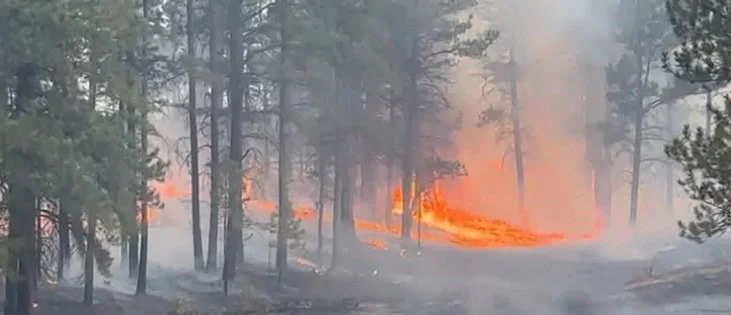
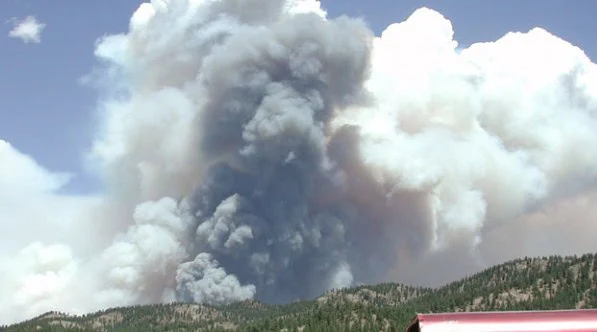
Your vehicle’s cabin air filter is greatly impacted by wildfires!
Most Critical
1. Teller County Already Lived Through Colorado’s Benchmark Wildfire
Category Most Critical
Does Woodland Park sit close enough to Colorado’s historic Hayman Fire footprint that wildfire smoke is a genuine, standing cabin air filter filtration risk rather than a hypothetical one?
The Hayman Fire burned 138,114 acres across Teller, Park, Jefferson, and Douglas counties between June and July 2002, destroyed 600 structures including 133 homes, forced roughly 5,340 evacuations, and held the record as Colorado’s largest wildfire for nearly two decades before being surpassed in 2020 [4]. Woodland Park sits inside the same dense, dry pine and spruce forest, on the same kind of steep, lightning-prone terrain that fed that fire, a standing wildfire risk this series has not documented at its lower-elevation, grassland Front Range stops.
A cabin air filter is a vehicle’s primary defense against wildfire smoke and ash during an active fire season, and a filter that is already loaded with ordinary dust and pollen has less spare capacity to handle a sudden smoke event than a fresh one. In a town built inside this kind of high-risk forest, keeping that reserve capacity available is not optional local color; it is a genuine, standing safety consideration.
2. The Only Road Down the Mountain Is Currently Under Active Rockfall Mitigation
Category Most Critical
Does the ongoing rockfall mitigation work on US-24 through Ute Pass Canyon add a genuine, documented source of construction dust and stop-and-go idling to your cabin air filter?
The Colorado Department of Transportation has scheduled rockfall mitigation work on the eastbound lanes of US-24 through Ute Pass Canyon between mile points 293 and 298, with eastbound traffic diverted into the westbound lane for single-lane, head-to-head travel and speeds cut to 35 miles per hour through the work zone [3]. Ute Pass Canyon is the primary route connecting Woodland Park to Colorado Springs, so this is not a detour around town; it is the only practical way down the mountain for most drivers.
Rockfall mitigation work of this kind loosens surface material on canyon walls above an active roadway and forces traffic into a slower, more congested single-lane pattern, both of which mean more idling exhaust and loose mineral dust reaching a vehicle’s air intake then going through your cabin air filter than a normal drive through the canyon would produce. A filter serving a daily Ute Pass commute works through a genuinely heavier load while this project is active.
3. At 8,481 Feet, a Cabin Blower Has to Work Harder to Move the Same Amount of Air
Category Most Critical
Does Woodland Park’s elevation change how hard a vehicle’s HVAC blower motor has to work to push air through a cabin air filter, separate from any cold-weather effect?
Woodland Park sits at 8,481 feet in Teller County, more than 2,400 feet higher than downtown Colorado Springs and the highest elevation any of this series’ Colorado stops has reached [2]. Air at that altitude is measurably thinner, meaning a given blower fan speed moves less air mass per rotation than the same fan would at sea level, so a vehicle’s HVAC system has to spin its blower faster, or run at a higher duty cycle, to deliver the same effective airflow into the cabin.
That increased fan speed pulls air through the filter media itself at a higher velocity for a given air-mass target, which both draws in more particulate over the same driving time and stresses the cabin air filter media differently than a lower-elevation commute would. This is a distinct mechanical effect from cold-start fuel enrichment; it is about how hard the blower motor works, not the engine.
4. A Documented Elk Herd Migrates Off Pikes Peak Directly Into Local Roads and Yards
Category High Priority
Is the elk migration around Woodland Park a real, wildlife-agency-tracked event, and does it add a genuine traffic and roadside cabin air filter contamination?
Colorado Parks and Wildlife manages the Eleven Mile elk herd, Data Analysis Unit E-23, across game management units spanning El Paso, Teller, and Fremont counties, with the herd estimated at roughly 3,530 animals after the 2023 hunt, above its population objective of 2,700 to 3,300 [5]. Wildlife managers note that public-land elk still drop off Pikes Peak toward private ground as rifle season starts each fall, a documented, recurring movement pattern rather than an occasional sighting.
An elk herd crossing a roadway forces sudden braking, idling, and stopped traffic while animals clear the road, and roadside pastures grazed by a herd this size see more disturbed soil and vegetation debris kicked into the air than an ungrazed shoulder would. A cabin air filter serving a route through this migration corridor works through a real, seasonal traffic and dust pattern tied directly to the herd’s movement.
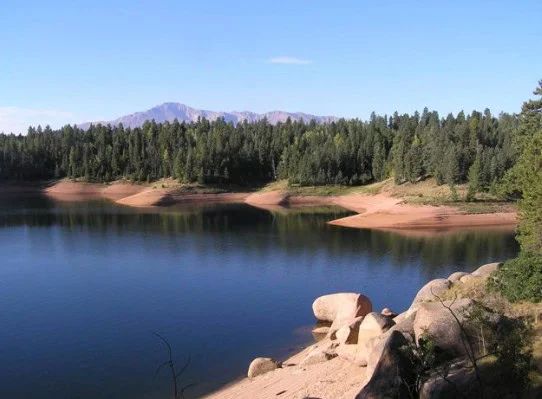
Rampart Reservoir is beautiful and fun to visit but the unpaved roads to take a toll on your cabin air filter
5. Rampart Reservoir Draws Recreation Traffic Onto Unpaved Forest Roads
Category High Priority
Does the drive to Rampart Reservoir Recreation Area expose a vehicle’s cabin air filter to a different kind of dust than paved-road driving in town?
Rampart Reservoir Recreation Area sits roughly 10 miles east of Woodland Park within the one-million-acre Pike National Forest, offering year-round fishing, hiking, and camping reached largely by unpaved forest roads rather than paved highway [10]. An unpaved forest road generates a heavier, more continuous dust cloud behind a moving vehicle than a paved road does, since there is no sealed surface to keep loose soil and gravel from being kicked up by tires.
Vehicles making this trip regularly, especially on dry summer weekends when recreation traffic peaks, pull that unpaved-road dust into their intake system at a higher rate than a Woodland Park driver who sticks to paved in-town roads. A cabin air filter serving a vehicle that regularly makes the Rampart Reservoir drive works through a genuinely different exposure pattern than one confined to town.
6. Woodland Park Has Become a Mountain Bedroom Community, and That Commute Has a Real Elevation Change
Category High Priority
Does commuting from Woodland Park into Colorado Springs put a cabin air filter through a genuinely different daily cycle than a flat-ground bedroom-community commute?
Woodland Park has grown from an independent tourist town into a bedroom community for the Colorado Springs metropolitan area, with most working residents commuting down Ute Pass for their jobs [2]. Unlike the flat exurban commutes this series has covered at other Front Range stops, this one carries a genuine elevation change, roughly 2,400 feet of descent from Woodland Park to Colorado Springs and the same climb back each evening.
That daily elevation swing means a commuter’s cabin air system cycles between two meaningfully different air densities and, often, two different temperature bands in the same round trip, on top of the canyon traffic and dust covered elsewhere in this guide. A cabin air filter serving this specific commute works through a genuinely different daily pattern than a same-elevation commute would produce.
7. The Region’s Soil Is Built From 37-Million-Year-Old Volcanic Ash
Category Important
Does the ancient volcanic geology preserved at nearby Florissant Fossil Beds mean the soil around Woodland Park carries a genuinely different mineral composition than sandstone country that can impact my cabin air filter?
Florissant Fossil Beds National Monument, roughly 15 miles from Woodland Park, preserves the site of a volcanic caldera collapse around 37 million years ago that blanketed the valley in ash, followed by mudflows that buried an ancient redwood forest and, later, a lakebed that accumulated thin layers of ash and clay into what geologists call paper shale [6]. That is a fundamentally different soil origin than the sedimentary sandstone this series has covered at other Colorado stops; it is fine, ash-derived mineral material rather than eroded rock.
Ash-derived soil tends to break down into finer, lighter particulate than coarser sandstone or granite grit, meaning it can stay airborne longer and penetrate filter media more readily than heavier mineral dust does. A vehicle’s cabin air filter regularly driving the roads around this geologically distinctive part of Teller County works through a genuinely different mineral dust profile than the rest of this series has documented.
8. Mueller State Park’s 55 Miles of Trails Bring Seasonal Camper Traffic Through Town
Category Important
Does Mueller State Park add its own seasonal camper and trail-user traffic pattern that impacts my cabin air filter separate from Rampart Reservoir’s day-use crowd?
Mueller State Park sits roughly 11 miles from Woodland Park and offers 55 miles of trails alongside more than 100 campsites, a genuinely larger overnight-camping draw than the day-use recreation this series has covered at other Colorado stops [10]. Unlike a day-trip destination, a state park with over 100 campsites brings vehicles towing trailers and camping gear through Woodland Park on both ends of a multi-day stay, concentrating heavily on summer weekends.
That towing traffic tends to move slower and idle longer at intersections and fuel stops than an unloaded commuter vehicle, adding more sustained exhaust exposure near the routes leading toward the park during peak camping season. A cabin air filter serving a vehicle that regularly makes this trip, or a Woodland Park resident driving near this traffic pattern, works through a distinctly seasonal, weekend-heavy exposure.
9. Cool Nights Even in Midsummer Mean the HVAC System Rarely Sits Still
Category Important
Does Woodland Park’s alpine subarctic climate, with cool nights year-round, force a vehicle’s heating and air conditioning systems to cycle more often than a milder climate would, putting additional strain on my cabin air filter?
Woodland Park’s climate averages roughly 74.5 degrees Fahrenheit in July, its warmest month, but drops back into the mid-40s most summer nights, and averages closer to 34.7 degrees in January, a wide daily swing that holds true across most of the year at this elevation [2]. A commuter leaving before sunrise and returning after sunset can reasonably run the heater on both ends of a summer day and the air conditioning in the afternoon, a three-mode cycle that a milder, more stable climate would not require.
Each switch between heating and cooling modes changes how air moves through the cabin’s ventilation system, and a system that cycles modes more often during a single day pulls a more variable airflow through the cabin air filter than a system set to one mode for hours at a time. Woodland Park’s daily temperature swing is a genuine, if often overlooked, contributor to how a filter here actually gets used.
10. A Family-Favorite Dinosaur Museum Sits Right on the Same US-24 Corridor
Category Medium Priority
Does a local dinosaur museum add a small but genuine layer of stop-and-go tourist traffic to the US-24 corridor impacting my cabin air filter?
The Dinosaur Resource Center operates in Woodland Park as a family-oriented paleontology museum and fossil-preparation lab, one of the town’s steadier tourist draws along the US-24 corridor [10]. Family attractions like this one tend to generate short, frequent stops rather than a single traffic surge, with parents pulling in and out of parking areas throughout the day rather than all at once.
That kind of frequent, low-speed, stop-and-go traffic idles longer per trip than a straight highway pass-through would, adding a modest but real layer of exhaust exposure to the immediate corridor. It is a smaller contributor to contamination of your cabin air filter than this guide’s fire, elevation, or Ute Pass entries, but a genuinely local one worth noting for a store sitting on the same stretch of road.
11. Summer in Woodland Park Means a Steady Run of Festival Weekends Downtown
Category Medium Priority
Does Woodland Park’s summer festival calendar concentrate enough downtown traffic to matter for a cabin air filter?
Woodland Park’s summer calendar includes a Farmer’s Market running from June through September, the Symphony Above the Clouds concert in July, and the Mountain Arts Festival in August, each drawing crowds into the town’s compact downtown core [10]. Unlike a single mega-event, this is a recurring pattern that concentrates parking, idling, and stop-and-go downtown traffic across most of the summer rather than one weekend.
Vehicles circling for downtown parking during any of these events idle longer and move slower than normal in-town driving, adding a modest but repeated layer of exhaust exposure through the warmer months to your cabin air filter when pollen and dust are already elevated. It is a genuine, if secondary, seasonal traffic pattern specific to Woodland Park’s identity as a small mountain arts town.
12. The Town Was Originally Called Manitou Park, Before the Trees Renamed It
Category Medium Priority
Does Woodland Park’s founding history as a lumber town have any real bearing on a modern cabin air filter?
Woodland Park was established in 1887 as Manitou Park, briefly known as Belmont, before taking its current name for the abundance of pine and spruce trees covering the area, and was formally incorporated on June 6, 1891 [2]. Early economic development centered on lumber production and mining-related industries before ranching and tourism took over, a history that still shapes why this town sits inside such dense timber today.
Honestly, this founding history does not add a distinct cabin air filter filtration mechanism the way Woodland Park’s fire risk, elevation, or Ute Pass traffic do; it is a fact of local heritage rather than a live source of particulate today. It is included here because a hyper-local guide to Woodland Park would be incomplete without acknowledging that the same trees which gave the town its name are also why wildfire risk, covered earlier in this guide, is a standing local concern.
13. This Store’s Waiting Room Has a Putting Course, Which Says Something About How Long Owners Actually Sit There
Category Lower Priority
Does an amenity like an in-store putting course change anything about how a cabin air filter gets treated during a visit, or is it purely a customer-experience detail?
Alongside a customer lobby, cable TV, a coffee station, and a kids’ play area, this Woodland Park location includes a putting course for customers waiting on their service, a specific amenity this series has not documented at any other stop [1]. It does not change anything mechanical about how the shop’s technicians inspect or replace a cabin air filter, but it does reflect a shop built around customers staying on-site through a full 16-point inspection rather than dropping a vehicle off and leaving.
This is a minor, purely customer-experience detail rather than a cabin air filter filtration factor, and it is included here mainly because a hyper-local guide to this specific address would be incomplete without mentioning the one amenity that makes this particular Grease Monkey waiting room stand out from the rest of this series.
14. More Than 50 Neighborhoods Around Woodland Park Actively Clear Wildfire Fuel Year-Round
Category Lower Priority
Does Woodland Park’s large number of Firewise-certified neighborhoods add an ongoing, small-scale source of wood particulate contamination to a cabin air filter separate from the wildfire risk covered elsewhere in this guide?
More than 50 Firewise USA certified communities operate in the greater Woodland Park area, each carrying out ongoing defensible-space work such as clearing excess brush and thinning trees around homes, coordinated through the Colorado State Forest Service’s local field office [11]. Unlike a single large mitigation project, this is a steady, neighborhood-by-neighborhood activity happening across dozens of subdivisions throughout the year rather than concentrated into one construction zone.
Brush clearing and tree thinning generate fine wood particulate and sawdust, whether hauled away or chipped on-site, adding a small, diffuse source of organic debris to residential roads near any of these 50-plus neighborhoods. It is a modest contributor compared to a vehicle’s cabin air filter covered in this guide’s wildfire, elevation, or Ute Pass entries, but a genuinely local one tied directly to how seriously this specific community takes fire prevention.
15. Beyond Its Own Traffic, Woodland Park Is Also the Last Town Before the High Country
Category Lower Priority
Separate from its own local traffic, does Woodland Park’s position as a gateway to Cripple Creek, Divide, and the rest of the Teller County high country add its own pass-through traffic layer of cabin air filter contamination?
Beyond the commuter and recreation traffic covered elsewhere in this guide, Woodland Park also sits as the last town of any size before US-24 and nearby routes continue on toward Divide, Cripple Creek, and the rest of Teller County’s high country, meaning a steady stream of RVs, campers, and travelers pass through town on their way somewhere else entirely. This kind of pass-through tourist traffic is a smaller contributor than the town’s own commuter base or its recreation-driven traffic.
Honestly, this adds only a modest, background layer of unfamiliar out-of-town vehicles to Woodland Park’s roads rather than a major cabin air filter filtration factor on its own. It is included here mainly for completeness, since a genuinely hyper-local guide to a gateway town like Woodland Park should acknowledge the traffic that simply passes through on its way further into the mountains.
About Grease Monkey, 1027 U.S. 24, Woodland Park, CO 80863
This Woodland Park location is open Monday through Friday from 8:00 a.m. to 6:00 p.m., Saturday from 8:00 a.m. to 5:00 p.m., and Sunday from 9:00 a.m. to 4:00 p.m. [1]. The shop offers oil changes and auto repair including brake service, fluid exchanges, filter replacements, battery service, tire rotation, air conditioning work, and transmission service, backed by a thorough 16-point inspection with every oil change and a limited warranty covering three months or 3,000 miles, whichever comes first [1].
The location has built a 4.6-star rating across more than 166 Google reviews under manager Noah Erickson, and operates within the FullSpeed Automotive network, which passed 900 franchised and company-owned locations nationwide in the first half of 2026 and had 435 of its centers named CARFAX Top Shop winners in 2025 for verified customer satisfaction [1][7][8].
Author Information
Author Bio – Phillip Paul Gilliam
Phillip Gilliam is a veteran journalist and former Editor-in-Chief with 50+ years of publishing experience and thousands of published articles. Specializing in automotive, trucking, and digital publishing, he creates authoritative, search-optimized content built on real-world expertise and editorial excellence. To learn more about Phil, visit http://www.phillipgilliam.com/about.html or contact Phil at [email protected]. He would love to hear from you!
Full Citation List
[1] Grease Monkey. Oil Change & Auto Repair, 1027 U.S. 24, Woodland Park, CO. Grease Monkey. Available at: https://www.greasemonkey.com/locations/co/woodland-park/1027-u-s-24/. (Store address, hours, manager name, services, amenities, and current Google review count and rating.)
[2] Wikipedia contributors. Woodland Park, Colorado. Wikipedia. Available at: https://en.wikipedia.org/wiki/Woodland_Park,_Colorado. (Population, elevation, climate, founding history, name changes, incorporation date, economy, and bedroom-community status.)
[6] National Park Service. Florissant Fossil Beds National Monument. NPS.gov. Available at: https://www.nps.gov/flfo/index.htm. (Volcanic caldera collapse date, ash deposition, petrified redwoods, and ancient lakebed paper shale geology.)
[10] Uncover Colorado. Woodland Park, Colorado, Teller County. Uncover Colorado. Available at: https://www.uncovercolorado.com/towns/woodland-park/. (Rampart Reservoir Recreation Area, Mueller State Park, Dinosaur Resource Center, and local festival calendar.)
[11] Colorado State Forest Service, Colorado State University. Woodland Park Field Office, Wildfire Mitigation and Education. CSFS.Colostate.edu. Available at: https://csfs.colostate.edu/woodland-park/wp-wildfire-mitigation-education/. (Firewise USA certified community count and defensible-space fuel-reduction programs in the Woodland Park area.)
(c) 2026 Copyright Grease Monkey, Written by Phillip Paul Gilliam. All rights reserved. Published in partnership with Grease Monkey, 1027 U.S. 24, Woodland Park, CO 80863. Content is for informational purposes and reflects current industry research and local geographic conditions. Cabin air filter replacement intervals may vary by individual vehicle, usage pattern, and conditions. Consult a certified professional for specific advice about your vehicle’s cabin air filtration system.
Stop by today.
Grease Monkey Center #1513 Address: 1027 U.S. 24, Woodland Park, CO, 80863
We use cookies to improve your browsing experience on our website. By closing this banner or interacting with our site, you acknowledge and agree to our privacy policy.