6 Reasons Elizabeth Ranch Country Works Your Engine Air Filter Harder on East Kiowa Avenue – 1,100 Miles of Gravel, Horse Barns, the Ranch Calendar, Diesel Appetites, 'Lifetime' Promises, and the Side-by-Side
Location: Elizabeth, CO Topic: Grease Monkey Center #1497 By: Phil Gilliam
An Authoritative Guide for Engine Air Filter Care on the Palmer Divide and Across Elbert County
Grease Monkey, 712 East Kiowa Avenue, Elizabeth, CO 80107. Has Over 150 Google Reviews With A 4.6 Star Rating.
A Note on Authority and Expertise: This article was researched and written by Phillip Paul Gilliam, a veteran journalist and former Editor-in-Chief with more than 50 years of publishing experience in automotive, trucking, and safety communications.
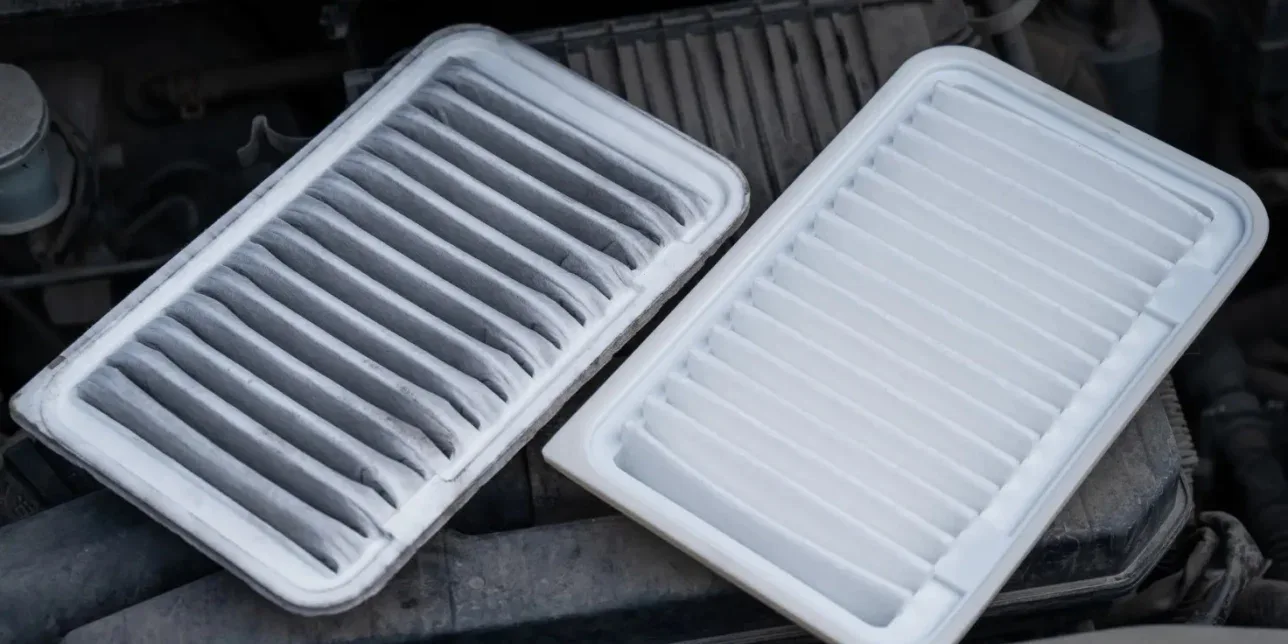
Elizabeth is truck country, and truck country is hard on air. This guide ties each engine air filter question to evidence: Elbert County Road and Bridge figures, the U.S. Environmental Protection Agency's AP-42 method for estimating dust from unpaved roads, equine extension research on dust around horse properties, USDA hay market reports, engine airflow formulas from lubrication and diesel engineering sources, a filter maker's published product claims, and powersports service guidance. Where the evidence is limited, this guide says so.
The shop at 712 East Kiowa Avenue is Grease Monkey Center #1497, managed by Harrison Mueller and part of the FullSpeed Automotive family [1]. Grease Monkey was founded in 1978 and is headquartered in Denver [2]. FullSpeed, led since November 2025 by CEO Brian Maciak, reported more than 900 franchised and company-owned locations in January 2026 [3], and when the company was sold in 2020 it was already described as the fourth largest quick lube operator in the United States [4].
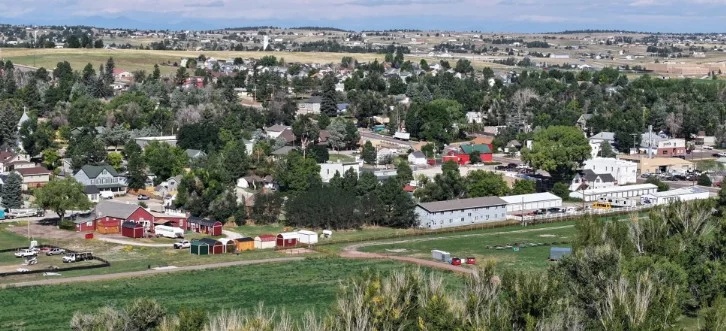
Elizabeth is the most populous town in Elbert County, with 1,675 residents at the 2020 census, a 23 percent jump from 2010, and sits at about 6,477 feet; State Highway 86 runs through town, seven miles east to Kiowa and fifteen miles west to Castle Rock [5]. Elbert County maintains about 1,480 miles of county roads, and about 1,100 of those miles are gravel [6]. The store page describes dirt and gravel roads, dust and wind, horses, hay hauling, horse trailers, ranch trucks, upslope snow, and wildfire smoke [1]. All of it reaches the engine air filter.
An Introduction to Engine Air Filters on East Kiowa Avenue and Across Elbert County
Drive a few miles out of Elizabeth in any direction and the pavement gives way to gravel, pasture, and horse property. The store page calls it truck country, and it is: ranch pickups, horse trailers, hay haulers, and families whose daily commute starts with a mile of dirt before it ever reaches Highway 86 [1]. That mile of dirt, repeated twice a day, is where the engine air filter earns its keep.
Elbert County life also brings questions that town drivers never ask. How much dust does a gravel road really make? Does the barn and arena add to the load? When in the ranch year should the engine air filter be checked? Why does a diesel pickup's filter cost so much? Can a lifetime filter really last a lifetime on these roads? And what about the side-by-side parked next to the truck?
This guide answers those six questions about the engine air filter. Each answer begins with a short, direct reply, then explains the evidence and what it means on Kiowa Avenue, on Highway 86, and on the county roads between Elizabeth, Kiowa, and Elbert.
The crew at Grease Monkey on East Kiowa Avenue checks both the engine air filter and the cabin air filter, handles engine, cabin, and fuel filter replacement, and offers free engine diagnostic scans, with walk-ins welcome and most oil changes done in about 15 minutes [1]. Here is what is worth knowing.
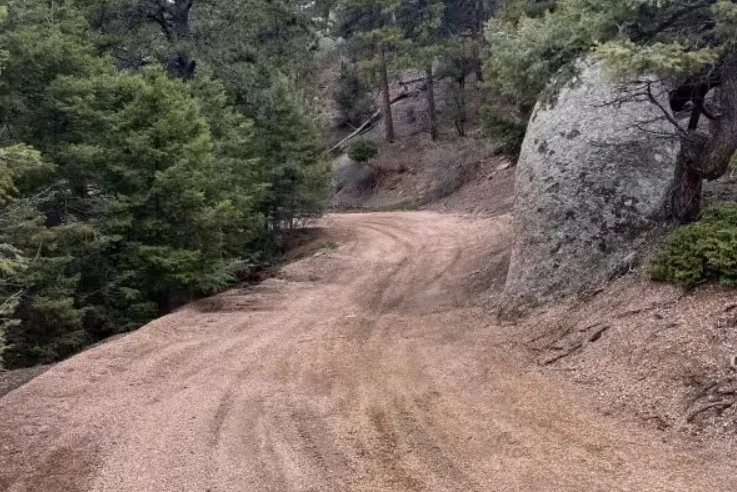
Back roads in Elbert County CO are beautiful but they are hard on your engine air filters!
1. Elbert County Has About 1,100 Miles of Gravel Road – Here Is How Speed, Weight, and Following Distance Decide What Your Engine Air Filter Eats
How much do Elbert County gravel roads load my engine air filter, and can driving differently reduce it?
Quick Answer: A lot, and yes. EPA research shows unpaved road dust rises with silt content, vehicle weight, and speed, and the dust cloud lingers behind each vehicle. Slowing down, hanging back from the truck ahead, and checking the engine air filter at every oil change all reduce what reaches the engine.
In Elbert County, gravel is the norm, not the exception. The county’s Road and Bridge department maintains about 1,480 miles of roads, roughly 1,100 miles gravel and 380 miles asphalt [6]. For many Elizabeth families, every trip to town begins and ends on dirt, and the store page even mentions following tractors down county roads [1]. That is a daily dust exposure that most suburban engine air filters never see.
The U.S. Environmental Protection Agency has studied exactly how gravel roads make dust, because it needs to estimate that dust for air quality planning. Its AP-42 guidance explains that the force of the wheels pulverizes surface material, and that the turbulent wake behind a vehicle keeps acting on the road surface after the vehicle has passed [7]. Dust emissions vary directly with the fraction of silt, the finest part of the road surface, and the agency’s estimating equations include vehicle weight, surface moisture, and mean vehicle speed [7]. It lists lowering mean vehicle speed among the ways to limit dust [7].
Translated into driving advice, that means three things for your engine air filter. First, speed matters: a vehicle moving faster churns up more dust, for itself and for whoever follows. Second, weight matters: a loaded ranch truck or a pickup pulling a horse trailer makes more dust than a car. Third, the wake lingers: the worst place on a gravel road is right behind another vehicle, where your intake is pulling air through the cloud it left.
Moisture changes the picture for the engine air filter, too. EPA notes that rain provides natural mitigation and that watering works by binding particles so they are less likely to become airborne [7]. That is why the first dry, windy days after a wet spell can be the dustiest of the year, as the surface dries and traffic grinds it into fine silt again.
The practical habits are simple. Slow down on gravel, especially when meeting or following other vehicles, and leave extra distance behind trucks and tractors. Keep windows up and use recirculation in heavy dust. And have the engine air filter checked at every oil change rather than waiting for the mileage in the owner’s manual, because those intervals assume pavement.
2. Parking by the Barn and the Arena? Horse-Property Dust Is Finer and Fuzzier Than Road Dust – and Your Engine Air Filter Catches It Too
Does dust from horse barns, arenas, hay, and dried manure affect my engine air filter on an Elizabeth horse property?
Quick Answer: Yes. Horse properties produce a mix of fine organic dust from dried manure, hay, and bedding plus sandy arena dust, and trucks parked or idling nearby breathe it all. Organic fibers can mat on the engine air filter’s face. Check the engine air filter more often if your truck lives at the barn.
Elizabeth is horse country. The store page talks about horses, ranch chores, 4-H, hay hauling, and horse trailers [1], and many families keep a truck parked by the barn, the round pen, or the arena gate. That truck is breathing a different kind of dust from the one it meets on the county road.
Equine researchers have studied that dust closely, mostly for the sake of horse and human lungs. An article on TheHorse.com explains that dried manure becomes fine organic dust when it is churned up, that horses are exposed to more dust in stables than in arenas, mainly from hay and bedding, and that overhead hay storage is particularly dusty [8]. It adds that arena footing built on sand breaks down into finer particles over time, and that finer sand needs more frequent watering to keep dust down [8].
For an engine air filter, that mix behaves differently from plain mineral dust. Sandy arena dust is abrasive and dense, like road dust. Hay leaves, chaff, and dried manure are light, fibrous, and organic. Instead of filling the depth of the media evenly, fibrous material can form a felt-like mat on the face of the engine air filter that restricts airflow faster than its weight would suggest. Add humid summer mornings or a spring storm, and that mat can turn into a sticky layer.
The most exposed vehicles are the ones that work around the barn: the pickup that idles while hay is loaded, the truck that pulls the arena drag, and the tow vehicle that sits beside the trailer while horses are loaded at a dusty show grounds. All of them pull air from right where the dust is made.
If your truck spends much of its life at the barn, check the engine air filter more often than a town vehicle would need, look for hay and chaff in the inlet, and park upwind of the arena and hay storage when you can. The same habits TheHorse.com recommends for horse health, such as watering arena footing and storing hay away from where you work, help your engine air filter too [8].
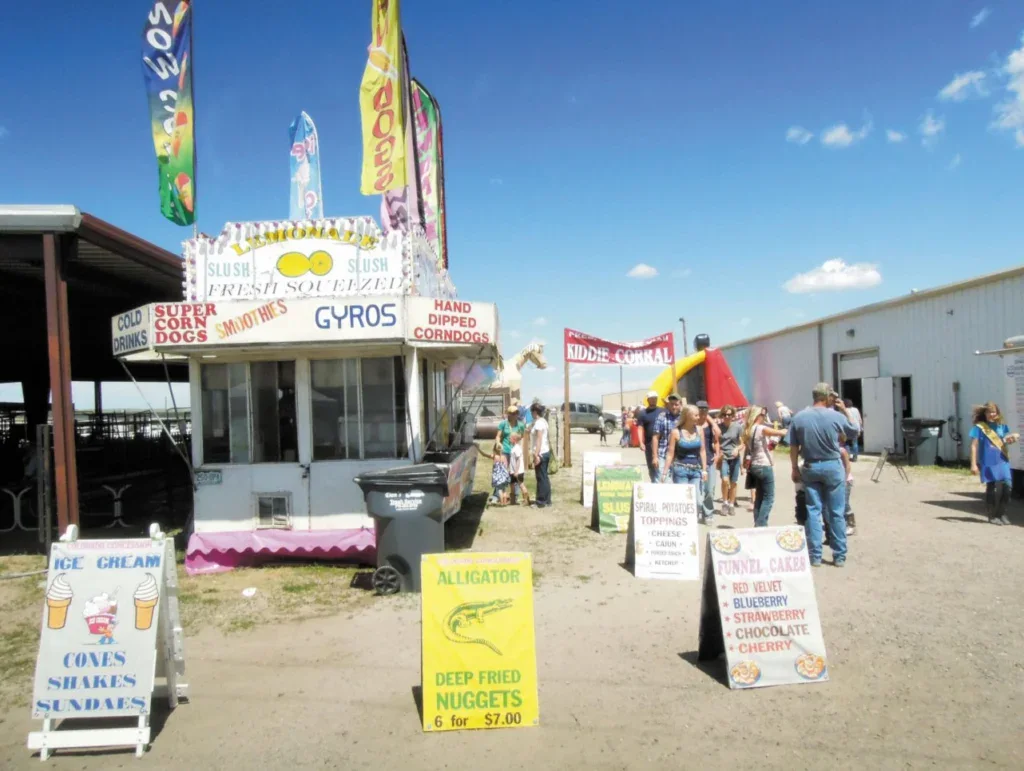
If you are hauling to the Elbert County Fair it is time to check your engine air filter!
3. Haying, Fair Season, Fall Hauling, Winter Feeding – Time Your Engine Air Filter Checks to the Ranch Calendar, Not Just the Odometer
When during the ranch year should Elizabeth drivers check or replace the engine air filter?
Quick Answer: Tie engine air filter checks to the dustiest stretches of your year. In Elbert County that usually means after first-cutting hay in June, after summer fair and rodeo season, and before winter feeding. A quick engine air filter inspection at each turn of the ranch calendar beats waiting for the odometer.
Ranch work is seasonal, and so is the dust that comes with it. A manufacturer’s maintenance schedule counts miles and months. A ranch family’s year counts cuttings, shows, shipping days, and feeding season. The engine air filter in a ranch truck often wears out on the second calendar, not the first.
Hay season is the big one. USDA market reports summarized by the High Plains Journal show that first-cutting alfalfa harvest in Colorado is typically underway in early June, with 12 percent harvested statewide by the first week of June in 2024 [9]. Cutting, raking, baling, and hauling put trucks in dry fields and on dusty field roads for weeks at a time, often with chaff blowing off loaded trailers onto the vehicles behind them. That is a heavy few weeks for any engine air filter.
Summer brings fair and rodeo season, with 4-H projects, horse trailers, and dusty show grounds and parking areas, all of which the store page connects to local life [1]. Fall brings cattle work and long hauls with heavy trailers, which raises airflow demand. Winter feeding means daily low-speed trips across frozen pastures and around hay yards, often with the engine idling while bales are loaded.
Each of those seasons loads the engine air filter differently, so it makes sense to check it at the transitions: after haying wraps up, after the last show of the summer, and before winter feeding begins. A filter that comes through haying heavily loaded should be replaced before it heads into fall hauling, when the engine needs every bit of air to pull a loaded trailer up the grades around the Palmer Divide.
A simple way to keep track is to write the date and mileage on the engine air filter’s edge or in a notebook in the glove box each time it is replaced, and to schedule an oil change around each big season. Walk-ins are welcome on East Kiowa Avenue [1], so a quick stop between chores is easy.
4. Why Your Diesel Ranch Truck’s Engine Air Filter Is So Big and So Pricey – It Moves Several Times More Air Than a Car
Why is the engine air filter on my diesel pickup so much larger and more expensive than the one on a car?
Quick Answer: Because a turbocharged diesel moves far more air. Engine airflow rises with displacement, engine speed, and how hard a turbo packs air in, so a big diesel can pull several times a small car’s volume. Its engine air filter needs more media to clean all that air and still hold dust.
Ranch truck owners in Elizabeth know the moment at the parts counter: the engine air filter for a three-quarter-ton diesel can be several times the size, and price, of the one for the family car. It is not a markup. It reflects how much air a diesel pickup really moves, and Elbert County gravel makes that difference matter more.
Engineers estimate engine airflow with a simple formula. Lubrication engineering firm Widman International explains that for a four-stroke engine you multiply displacement in cubic inches by engine speed, divide by 3,456, and multiply by volumetric efficiency, noting that diesels typically run about 0.90 without a turbo and that a turbo can raise the effective figure to between 1.5 and 3.0 [10]. Diesel World uses the same formula in its guide to turbo sizing [11].
Run the numbers and the gap is obvious. A 408-cubic-inch diesel at 3,000 rpm works out to about 354 cubic feet per minute at 100 percent efficiency, and roughly twice that or more with a turbo pushing it. A 122-cubic-inch four-cylinder car at the same engine speed works out to about 106 cubic feet per minute. The diesel engine air filter has to clean several times as much air, which is why it needs so much more pleated media. Diesel World’s rule of thumb that roughly one pound of air per minute supports about 8 horsepower at the wheels shows why that air is so valuable [11].
More air means more dust, too. Every cubic foot of air pulled off a gravel road carries its share of grit, so a diesel pickup on Elbert County roads collects dust in its engine air filter faster than a car on the same road. A large filter has more capacity, but it also has more to do, especially when the truck is pulling a loaded stock trailer and the turbo is working hard.
Treat the diesel engine air filter as the investment it is. Use a filter that meets the engine maker’s specification, check it at every oil change, watch any restriction indicator the truck has, and replace it when it is loaded rather than when the price feels right. Compared with the cost of a turbo or an engine, it is still the cheapest protection on the truck.
5. A ‘Lifetime’ Engine Air Filter Still Needs Cleaning – and the Advertised Interval Assumes Highway Driving, Not Elbert County Gravel
Will a lifetime or washable engine air filter really last on Elizabeth’s dirt roads without regular service?
Quick Answer: Not without service. One leading reusable filter is advertised as needing cleaning every 75,000 miles under normal highway driving conditions, and gravel roads are not highway conditions. A lifetime engine air filter can last for years, but on dirt roads it still needs frequent inspection and cleaning.
Reusable engine air filters are often sold with the word lifetime attached, and the appeal is real for ranch families who would rather not buy a new filter every season. It is worth reading the fine print, because the claims describe a filter that lasts, not a filter that never needs attention.
Take one of the best-known products as an example. K&N’s listing for a reusable engine air filter for full-size Chevrolet and GMC pickups describes washable, reusable oiled cotton media that is engineered to last for the entire lifespan of your vehicle, backed by a lifetime limited warranty with limitations, and states that the filter only needs cleaning every 75,000 miles under normal highway driving conditions [12]. The key phrase is normal highway driving conditions.
Elizabeth driving is not that. With about 1,100 miles of gravel county roads in Elbert County [6] and the dust that comes with them, a truck here can load an engine air filter many times faster than a highway commuter. Powersports service writers who work with vehicles in heavy dust put it bluntly: there is no universal mileage rule, and machines ridden in dusty group conditions may need air filter service after every weekend [13]. A lifetime filter on a ranch truck may need cleaning far more often than the advertised highway interval.
Lifetime also describes the frame and media, not the seal or the service. Every cleaning involves washing, drying, and, for oiled filters, re-oiling the media, and every installation compresses the seal again. Done carefully, that works. Done hastily, it can leave a filter over-oiled, under-dried, or poorly seated, which hurts filtration on exactly the roads where filtration matters most.
If you choose a reusable engine air filter, inspect it as often as you would a paper filter, clean it when it is loaded rather than when the mileage says so, follow the maker’s cleaning steps exactly, and check the seal every time. If you would rather not service a filter in the barn, a quality disposable engine air filter replaced on condition is the simpler choice.
6. Your Side-by-Side Has an Engine Air Filter That Works Harder Than Your Truck’s – Borrow This White-Glove Test for Both
How often should I check the engine air filter on my UTV or side-by-side, and how can I tell if dust is getting past it?
Quick Answer: Far more often than a truck’s. In dusty group riding, a side-by-side engine air filter may need service after every weekend. To check for bypass, wipe the clean side of the intake with a white glove; any film of fine dust means air is getting around the engine air filter.
On many Elizabeth properties, the ranch truck has a partner: a side-by-side or ATV that does the fence checks, feeding runs, and pasture work. Those machines spend their whole lives in the dustiest air on the place, often riding in the dust cloud of another vehicle, and their engine air filters work harder than the truck’s ever will.
Powersports service guidance is clear about the difference. A UTV and ATV parts specialist advises against relying on a calendar date and says there is no universal mileage rule; riding in tight groups on dusty trails may call for air filter service after every weekend ride, while solo riding in damp conditions may only need an inspection every 50 hours or 500 miles [13]. The symptoms of a clogged filter will sound familiar to truck owners: gradual power loss, slow throttle response, rough idle, dark smoke, and higher fuel use [13].
The same guide describes a test worth borrowing for every engine on the ranch. After removing the filter, wipe the inside of the intake boot, the clean side downstream of the filter, with a clean white-gloved finger. If you find even a light film of fine dust, the filter has failed, been bypassed, or was installed incorrectly [13]. It also recommends checking the airbox lid seal and intake boot clamps, since leaks there let unfiltered air in, and warns that dust getting past the filter acts like liquid sandpaper, wearing rings, cylinder walls, and valve seats [13].
That white-glove test works on a pickup’s engine air filter housing too. The clean side of the housing and the duct leading to the engine should be clean. Dust there means the engine air filter is not sealing, the lid is not latched evenly, or a duct or clamp has loosened on washboard roads.
Make it a ranch routine: check the side-by-side’s engine air filter after every dusty week and the truck’s at every oil change, and do the white-glove test on both whenever the filter comes out. For extreme dust, the powersports guide notes that a fine-mesh pre-filter sleeve can catch heavy silt before it reaches the pleats, as an add-on to regular service, not a substitute [13].
The side-by-side stays home with its own filter routine, but the truck can come to us. Bring your ranch pickup to Grease Monkey, 712 East Kiowa Avenue, Elizabeth, CO, and ask the crew to run the white-glove test on its engine air filter housing: https://www.greasemonkey.com/locations/co/elizabeth/712-east-kiowa-avenue/.
About Grease Monkey, 712 East Kiowa Avenue, Elizabeth, CO 80107
Grease Monkey Center #1497 is open Monday through Friday from 8:00 AM to 6:00 PM and Saturday from 8:00 AM to 5:00 PM, and is closed Sunday. The shop can be reached at (720) 776-1854, and manager Harrison Mueller leads the team [1].
The menu covers conventional, high-mileage, synthetic blend, full synthetic, diesel, and truck oil changes with a 16-point inspection, engine, cabin, and fuel filter replacement, free engine diagnostic scans and battery tests, battery, brake, tire, A/C, headlight, power steering, and transmission services, fluid exchanges, cooling system pressure testing, timing belt and chain inspection, wiper replacement, car washes, pre-purchase inspections, and fleet services. Services and products carry a limited warranty of three months or 3,000 miles [1].
Walk-ins are welcome, most oil changes take about 15 minutes, and appointments can be booked online. The shop lists discounts for military, clergy, first responders, law enforcement, seniors, students, and Uber and Lyft drivers, and the lobby offers a coffee station, free Wi-Fi, and a window into the service bay. Customers have given this East Kiowa Avenue location a 4.6-star rating across more than 150 Google reviews [1].
Author Information
Author Bio – Phillip Paul Gilliam
Phillip Gilliam is a veteran journalist and former Editor-in-Chief with 50+ years of publishing experience and thousands of published articles. Specializing in automotive, trucking, and digital publishing, he creates authoritative, search-optimized content built on real-world expertise and editorial excellence. To learn more about Phil, visit http://www.phillipgilliam.com/about.html or contact Phil at [email protected]. He would love to hear from you!
Full Citation List
[1] Grease Monkey. Oil Change & Auto Repair, 712 East Kiowa Avenue, Elizabeth, CO. Grease Monkey. Available at: https://www.greasemonkey.com/locations/co/elizabeth/712-east-kiowa-avenue/. (Center #1497; manager Harrison Mueller; part of the FullSpeed Automotive family; address, phone, hours; checks engine and cabin air filters; engine, cabin, and fuel filter replacement; free engine diagnostic scans; walk-ins welcome; oil changes in about 15 minutes; 3-month/3,000-mile limited warranty; elevation about 6,476 feet on the Palmer Divide; dirt and gravel roads, following tractors, horses, ranch chores, 4-H, hay hauling, horse trailers, ranch trucks, dust and wind, upslope snow, wildfire smoke; current Google rating of 4.6 stars from 155 reviews, checked October 11, 2026.)
[5] Wikipedia contributors. Elizabeth, Colorado. Wikipedia. Available at: https://en.wikipedia.org/wiki/Elizabeth,_Colorado. (Most populous municipality in Elbert County; 1,675 residents at the 2020 census, up 23.34 percent from 2010; elevation 6,477 feet; State Highway 86 runs 7 miles east to Kiowa and 15 miles west to Castle Rock.)
[6] Elbert County, Colorado. Road and Bridge. Elbert County government. Available at: https://elbertcounty-co.gov/621/Road-Bridge. (The county maintains about 1,480 miles of roads: 1,100 miles gravel and 380 miles asphalt.)
[7] U.S. Environmental Protection Agency. AP-42, Section 13.2.2: Unpaved Roads. November 2006. Available at: https://www.epa.gov/sites/default/files/2020-10/documents/13.2.2_unpaved_roads.pdf. (Wheels pulverize surface material and the turbulent wake keeps acting on the road after the vehicle passes; emissions vary directly with silt fraction; equation variables include vehicle weight, surface moisture, and mean vehicle speed; controls include lowering mean vehicle speed, watering, and chemical suppressants; rainfall provides natural mitigation.)
[8] Blickle, A. Controlling Dust on Horse Properties. TheHorse.com, November 2, 2022. Available at: https://thehorse.com/?p=8830. (Dried manure becomes fine organic dust; horses are exposed to more dust in stables than arenas, mainly from hay and bedding; overhead hay storage is particularly dusty; arena sand breaks down over time and finer sand needs more watering; store hay separately and water footing.)
[9] High Plains Journal, with USDA Market News. State-by-State Hay Summary. High Plains Journal, June 11, 2024. Available at: https://hpj.com/2024/06/11/state-by-state-hay-summary-june-8/. (Colorado first-cutting alfalfa underway, 12 percent harvested as of the week ending June 2, 2024, per NASS Colorado Crop Progress.)
[10] Widman International SRL. Air Flow Calculation (CFM). Widman International, updated September 8, 2022. Available at: https://widman.biz/English/Calculators/CFM.html. (Four-stroke airflow: cubic inches times maximum rpm divided by 3,456, times volumetric efficiency; non-turbo diesels about 0.90; a turbo can raise the figure to 1.5-3.0.)
[11] Sands, J. Sizing Turbos for Diesel Engines. Diesel World, December 21, 2020. Available at: https://www.dieselworldmag.com/?p=32806. (Airflow formula cubic inches times rpm divided by 3,456; roughly one pound per minute of air equals about 8 rear-wheel horsepower.)
[12] K&N Engineering. High-Flow Original Lifetime Engine Air Filter, Chevy/GMC Full-Size Pickup (E-1796). K&N. Available at: https://www.knfilters.com/air-filters/cars-and-trucks/e-1796-replacement-air-filter. (Washable, reusable layered oiled cotton media; engineered to last for the entire lifespan of your vehicle; no-hassle lifetime limited warranty, limitations apply; only needs cleaning every 75,000 miles under normal highway driving conditions.)
[13] Witchdoctors. UTV and ATV Air Filter Symptoms. Witchdoctors blog, August 31, 2026. Available at: https://buywitchdoctors.com/blogs/news/utv-atv-air-filter-symptoms. (No universal mileage rule; dusty group riding may need service after every weekend, solo damp riding every 50 hours or 500 miles; clogged-filter symptoms; white-glove wipe of the intake boot reveals bypass; check airbox lid seal and boot clamps; bypassed dust acts like liquid sandpaper; fine-mesh pre-filter sleeve for extreme dust.)
We use cookies to improve your browsing experience on our website. By closing this banner or interacting with our site, you acknowledge and agree to our privacy policy.