15 Reasons to Replace Your Cabin Air Filter in Elizabeth, Colorado – What the Stampede, the Airpark, and the Eastern Plains Do to Your Car
Location: Elizabeth, CO Topic: Grease Monkey Center #1497 By: Phil Gilliam
An Authoritative Guide for Cabin Air Filter Care on Highway 86 in Rural Elbert County
Grease Monkey, 712 East Kiowa Avenue, Elizabeth, CO 80107. Has Over 153 Google Reviews With A 4.7 Star Rating.
A Note on Authority and Expertise: This article was researched and written by Phillip Paul Gilliam, a veteran journalist and former Editor-in-Chief with more than 50 years of publishing experience in automotive, trucking, and safety communications.
Fifty-plus years in automotive and safety publishing comes down to one habit above all others: check it before it goes to print. The Elbert County wildfire acreage, the Elizabeth Stampede attendance figures, and the county population growth cited below were all verified against current, named sources specifically for this rural Kiowa Avenue location, not carried over from research done for this series’ Aurora, Littleton, or Colorado Springs stops, even though all four sit within the greater Denver-Aurora metropolitan area on paper.
This Elizabeth location, Grease Monkey Center #1497 at 712 East Kiowa Avenue, is managed by Harrison Mueller and has built a 4.7-star rating across more than 153 Google reviews [1]. It offers 15-minute oil changes with no appointment necessary, a complimentary car wash with service, and digital service history tracking with maintenance reminders, and operates as part of the FullSpeed Automotive network, which has grown past 900 franchised and company-owned locations nationwide as of mid-2026 [1][7].
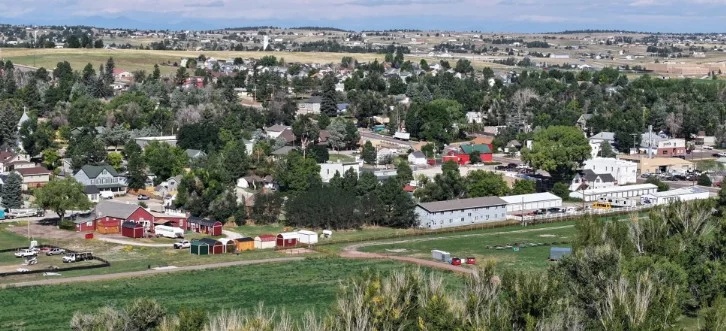
Elizabeth is a small town of 1,675 residents in western Elbert County, Colorado, sitting at 6,477 feet where State Highway 86 bisects town, with the entire county classified as 100 percent rural even though it falls within the Denver-Aurora-Lakewood metropolitan statistical area [2][3]. That combination, genuinely rural land use inside a fast-growing metro-area county, puts a very different set of demands on a cabin air filter than any of this series’ more urban or suburban Colorado stops.
An Introduction to Cabin Air Filters on Highway 86 in Rural Elbert County
In February 2026, wind-driven wildfires burned an estimated 5,000 to 10,000 acres across Elbert and Lincoln counties, forcing evacuation orders for roughly 24 homes before firefighters reached full containment the same day [4]. That is a direct grass and rangeland fire in Elizabeth’s own county, a different and more immediate wildfire exposure than the mountain-smoke drift this series covered at its Aurora stop.
Elizabeth is also home to the Elizabeth Stampede, a rodeo with a 56-year history that sold out all four performances of its 2,200-seat grandstand in a single recent year, a crowd worth more than five times the town’s entire population converging on Elizabeth for one weekend [5]. Add a private fly-in airpark community, three unmarked turf airstrips, and a county that has grown from 3,708 residents in 1960 to more than 30,000 today, and Elizabeth puts a genuinely distinct set of demands on a cabin air filter [2][3].
This guide walks through fifteen reasons Elizabeth drivers, from longtime ranching families to new exurban commuters, should treat their cabin air filter as a genuine piece of safety and health equipment rather than a line item on an oil-change ticket. Every reason here is grounded in a real technical fact about how the filter works, not local color and geography alone.
This store, Grease Monkey at 712 East Kiowa Avenue, sits on Highway 86 in this corridor and replaces cabin air filters as part of its standard service menu [1].
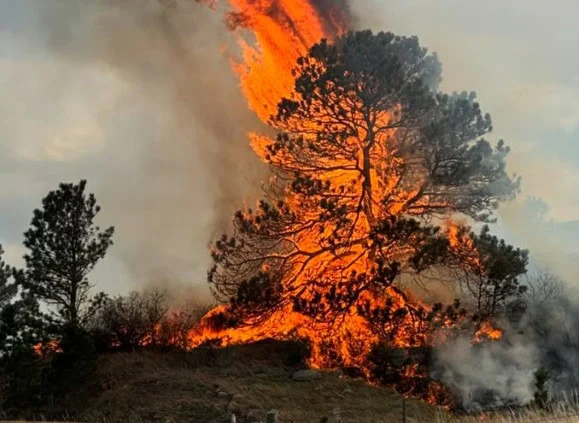
Wildfires, as we experienced here in the Elizabeth, Colorado, area, can quickly coat your cabin air filter, reducing its efficiency.
Most Critical
1. A 2026 Wildfire Burned Up to 10,000 Acres in This Store’s Own County
Category Most Critical
Does a direct grass and rangeland wildfire in Elbert County itself expose a cabin air filter to something different than the mountain wildfire smoke covered elsewhere in this series?
In February 2026, wind-driven wildfires burned an estimated 5,000 to 10,000 acres across Elbert and Lincoln counties, spreading so fast that officials described it as jumping roads, and prompting evacuation orders for roughly 24 homes before full containment was reached the same day [4]. Unlike the mountain wildfire smoke that drifts into the Denver metro from fires fifty or a hundred miles away, covered at this series’ Aurora stop, this was a direct grass and rangeland fire burning inside Elizabeth’s own county.
A nearby grass fire produces a different particulate mix than distant forest-fire smoke: coarser ash and charred plant material alongside fine smoke particulate, arriving suddenly rather than settling in gradually over days. A cabin air filter caught downwind of an event like this absorbs a concentrated, short-duration dose of that mixed debris rather than the steadier, lower-level smoke exposure a more distant fire produces.
2. The Elizabeth Stampede Draws More People Than the Entire Town in One Weekend
Category Most Critical
Is my cabin air filter really impacted by a single annual rodeo that create a measurable traffic event in a town this small?
The Elizabeth Stampede, a rodeo with a 56-year history, sold out all four performances of its 2,200-seat grandstand in a single recent year, a total attendance several times larger than Elizabeth’s entire population of 1,675 [5]. A traffic event of that scale, concentrated into a single weekend on the town’s two-lane state highway, is a completely different order of magnitude than anything a town this size sees on an ordinary day.
That kind of compressed, high-volume event traffic produces extended idling and stop-and-go congestion on Highway 86 far beyond what Elizabeth’s infrastructure handles the rest of the year, since a small town’s roads are not built for a crowd multiple times its own population arriving over just a few days. A cabin air filter serving a vehicle that regularly drives through Elizabeth during Stampede weekend works through a genuinely outsized traffic event relative to the town’s normal size.
3. This Is a 100 Percent Rural County Inside the Denver Metro Area
Category Most Critical
Does living in a fully rural county that is technically part of the Denver metro area create an unusually long daily commute pattern, creating more strain on my cabin air filter?
Elbert County is classified as 100 percent rural, with zero percent of its population living in what the Census Bureau defines as an urban area, yet the county is included in the Denver-Aurora-Lakewood metropolitan statistical area, roughly 40 miles from downtown Denver and about equidistant to Colorado Springs [2][3]. That combination means a meaningful share of Elizabeth-area residents commute genuinely long highway distances for metro-area jobs while living in a landscape with none of a suburb’s own infrastructure.
A long highway commute, especially one crossing from rural county roads onto a state highway and then a metro-area freeway, exposes a vehicle to a wider range of road and traffic conditions in a single trip than a short suburban commute would, from open-range dust on the county road to dense urban exhaust near the destination. A cabin air filter serving this kind of commute works through more varied conditions per trip than this series’ more purely urban or purely rural stops.
4. A Private Fly-In Ranch Community Adds Small-Aircraft Exhaust to the Mix
Category High Priority
Does living near a residential airpark expose vehicles to a kind of exhaust that is hard on my cabin air filter?
Elizabeth is home to Flyin’ B Ranch Airport, a private residential airpark where homeowners keep small general-aviation aircraft on their own property with direct runway access, part of a broader pattern of aviation-focused rural communities in this part of Colorado. Small piston-engine aircraft burn aviation gasoline, a different fuel formulation than the jet fuel this series covered at its Buckley Space Force Base stop, and taxi and run-up activity on residential airstrips happens at ground level, much closer to nearby homes and roads than a commercial airport’s operations. This has a definite effect on your cabin air filter.
Vehicles parked or driven near this kind of private airpark are exposed to a genuinely different small-scale aviation exhaust source, arriving in short bursts tied to individual pilots’ schedules rather than a base’s larger, more predictable flight operations. It is a niche but real contributor specific to this part of Elbert County.
5. A Two-Lane State Highway Carries All of Elizabeth’s Through Traffic
Category High Priority
Does my cabin air filter experience a higher level of dust and contaminants seeing that the town’s only major road be a two-lane state highway, rather than a multi-lane arterial, change how a vehicle is exposed to traffic here?
Colorado State Highway 86 bisects Elizabeth, serving as the town’s primary route for both local traffic and travelers passing through between other parts of Elbert County, a genuinely different road configuration than the multi-lane commercial strips this series has covered at its larger Colorado stops. A two-lane highway has no dedicated turn lanes or frontage roads to absorb local traffic separately from through-traffic, so both share the same narrow roadway.
That shared configuration means local vehicles pulling out of driveways or businesses regularly merge directly into through-traffic moving at highway speed, producing more sudden acceleration events and closer-following exhaust exposure than a wider road with separated lanes would. A cabin air filter serving a vehicle that regularly uses Highway 86 through town works through a traffic pattern genuinely different from this series’ stops with more modern road infrastructure.
Elizabeth Colorado One Of The Fastest Growing Cities In The United States!
6. Elbert County Has Grown Nearly Tenfold Since 1960, Bringing a Lot of New Vehicles
Category High Priority
Does the county’s dramatic population growth mean an unusually high share of local vehicles have an unknown cabin air filter history?
Elbert County grew from just 3,708 residents in 1960 to a 2020 population of 26,062, with an estimated 30,534 residents by 2025, a growth rate far outpacing most of this series’ other stops [3]. Unlike the military PCS turnover covered at this series’ Aurora stop, this is civilian exurban migration, families relocating from other parts of the Denver metro or from out of state to a more rural setting, often bringing a vehicle whose maintenance history was set somewhere else entirely not allowing us to determine the condition of these vehicle’s cabin air filters.
A county growing this fast has a correspondingly high share of recently arrived vehicles whose local driving conditions, gravel roads, open range dust, and long highway commutes, are new to both the vehicle and its owner. A cabin air filter that was adequate for its previous home may be poorly matched to Elbert County’s specific demands, making a fresh check a reasonable step for any newly arrived household.
7. The Two Creeks Bracketing Elizabeth Run Low Enough to Turn Into Dust Sources
Category Important
Do Gold Creek and Box Elder Creek, the waterways framing Elizabeth, add anything to a cabin air filter’s workload when they run low?
Elizabeth sits between Gold Creek and Box Elder Creek, two waterways typical of the Colorado high plains that can run seasonally low or nearly dry during summer and fall dry spells [2]. Unlike a river corridor that stays reliably wet, as this series covered at its Littleton stop, a seasonal creek bed that dries out exposes loose, fine sediment that would otherwise stay wet and settled, and wind can lift that exposed creek-bed material more easily than it can undisturbed grassland soil.
This creates a distinct, season-dependent dust source tied to the creeks’ water levels rather than a constant humidity effect, most active in the driest parts of the year rather than being an issue year-round. A vehicle regularly crossing near either creek during a dry stretch is exposed to this specific kind of fine sediment dust in a way a vehicle driving Elizabeth’s open range or highway corridor would not be and has a definite impact on your cabin air filter.
8. Elizabeth Started as a Sawmill Camp, a Quiet Layer Beneath Today’s Rodeo Town
Category Important
Does Elizabeth’s founding as a 19th-century sawmill camp have any real bearing on a modern cabin air filter?
Elizabeth began as a sawmill camp before its post office opened in 1882 and the town incorporated in 1890, named for a family member of territorial governor John Evans [2]. That timber-camp origin predates the ranching and rodeo culture that defines Elizabeth’s identity today, a quieter historical layer beneath the town’s current character as an exurban ranching and aviation community.
Honestly, this founding history does not add a distinct filtration mechanism the way the county’s wildfire risk, growth rate, or highway configuration do; it is a fact of local heritage rather than a live source of particulate today. It is included here because a hyper-local guide to Elizabeth would be incomplete without acknowledging where the town actually came from, even though that history does not significantly change the practical cabin air filter math.
9. Elizabeth Sits Right at the Seam Between the High Plains and the Foothills
Category Important
Does Elizabeth’s position at the transition between open plains and the mountain foothills create a mixed dust exposure effecting a vehicle’s cabin air filter that a purely plains or purely mountain town would not have?
At 6,477 feet, Elizabeth sits in a transition zone where the flat, open high plains give way to the rising foothills toward Pike National Forest to the west and south, a genuinely different geographic seam than this series’ purely plains stops in Idaho or its purely mountain stops in Wyoming [2]. Wind moving through this kind of transition zone can carry both fine plains soil and coarser foothill mineral grit in the same gust, depending on which direction it is blowing from which definitely impacts your cabin air filter.
A filter serving a vehicle in this kind of mixed transition zone works through a more variable mineral profile over the course of a season than a filter in a more geographically uniform location, since a west wind off the foothills and an east wind off the plains deposit genuinely different material. That variability is a specific feature of Elizabeth’s exact position on the map rather than something a nearby purely-plains or purely-mountain town would share.
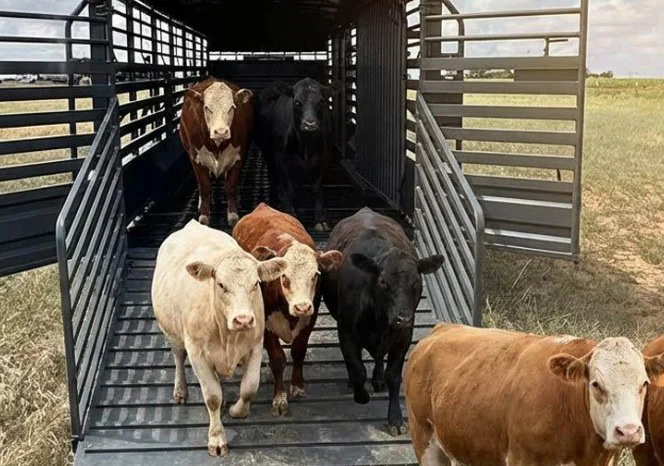
Trucks towing livestock trailers create their very own impact on cabin air filter life
Medium Priority
10. Livestock Trailers on Highway 86 Add Their Own Braking and Odor Profile
Category Medium Priority
Does regular livestock trailer traffic through a ranching town add a distinct exposure to vehicle cabin aire filters beyond ordinary towing traffic?
Elbert County’s ranching economy means Highway 86 through Elizabeth regularly carries livestock trailers moving cattle and horses between ranches, sale barns, and the Stampede grounds, a different kind of towing traffic than the boat and camping trailers this series covered at its Littleton stop. A loaded livestock trailer is typically heavier and slower to accelerate than a recreational trailer, producing more sustained engine and brake load on Highway 86’s grades.
Livestock trailers also carry their own distinct odor and organic particulate profile from bedding material and animal waste, which can be noticeable to a following vehicle at close range in a way that boat or camping trailer traffic is not. A filter serving a vehicle that regularly shares the road with this kind of traffic works through both the mechanical load and the organic particulate exposure together impacting cabin air filters.
11. Elizabeth Is the Hometown of a Nationally Touring Comedian
Category Medium Priority
Does a small town’s claim to a notable former resident have any real bearing on a cabin air filter?
Elizabeth is the hometown of comedian and author Sam Tallent, a small point of cultural notability for a town of under 2,000 people [2]. It is the kind of fact that comes up in a hyper-local guide to any small town, alongside the rodeo, the ranching economy, and the airpark community already covered in this guide.
Honestly, this has no bearing on a cabin air filter whatsoever; it is included here purely for completeness, since a genuinely thorough hyper-local guide to Elizabeth should acknowledge the town’s full character, not just the parts that happen to generate road dust.
12. Elizabeth Has No Public Transit, So Every Trip Depends on a Personal Vehicle
Category Medium Priority
Does the total absence of public transportation in a small town like Elizabeth change how much a household actually relies on its vehicles, creating greater strain on cabin air filters?
Elizabeth has no public transportation of any kind, meaning every errand, school run, and commute in town depends entirely on a personal vehicle, a genuine contrast with this series’ stops that had at least a light rail or bus option available [2]. In a town this size, served only by the locally owned Meadowlark Herald newspaper rather than any larger regional outlet, that car-dependency is simply a fact of daily life rather than one option among several.
Total car-dependency means a typical Elizabeth household’s vehicles accumulate mileage from every single trip rather than offloading some errands to transit, a steady, all-purpose usage pattern with no lighter-traffic alternative to fall back on. A cabin air filter serving a vehicle in this kind of household works through the full range of the family’s transportation needs rather than just a portion of them.
13. Three More Unmarked Turf Airstrips Sit Just Southeast of Town
Category Lower Priority
Beyond the named private airpark covered elsewhere in this guide, do Elizabeth’s additional unmarked airstrips add additional strain on cabin air filters?
Beyond Flyin’ B Ranch Airport already covered in this guide, three additional unmarked turf airstrips sit southeast of Elizabeth, none of them offering commercial service, reflecting just how embedded small-aircraft aviation is in this particular part of Elbert County [2]. These strips see occasional, low-volume use by local pilots rather than the steady traffic of even a small public airport.
This adds only a minor, occasional layer of small-aircraft activity beyond what the named airpark community already contributes, worth mentioning for a complete picture of Elizabeth’s aviation character but not a significant independent factor in local cabin air filter wear. It is included here mainly for completeness rather than as a major contributor on its own.
14. A Cabin Air Filter Change Matters More When the Next Shop Is a Long Drive Away
Category Lower Priority
Does this Grease Monkey store’s specific service speed and record-keeping matter more in a rural town than it would in a dense suburb?
This Grease Monkey location offers 15-minute oil changes and cabin air filter service with no appointment necessary, along with digital service history tracking and maintenance reminders, features that matter more in a rural town like Elizabeth than in a dense suburb with a service shop on every corner [1]. In a town this size, a fast, no-appointment visit and a digital record that does not depend on a paper sticker or memory are genuinely practical conveniences rather than just nice extras.
For a household managing long highway commutes and unpredictable ranch or airpark schedules, a reliable digital record of when a cabin air filter was last changed removes the guesswork that this series has covered as a problem at other stops, particularly for newly arrived Elbert County residents covered earlier in this guide.
15. This Grease Monkey Store’s Complimentary Car Wash Makes More Sense in a Dust-Heavy Rural Town
Category Lower Priority
Does this Grease Monkey location’s complimentary car wash amenity help cabin air filter life and carry more practical value here than it would in a cleaner urban setting?
This location includes a complimentary car wash with service, an amenity that carries more practical weight in a rural, gravel-road-adjacent town like Elizabeth than it might in a cleaner urban setting, given the open-range dust, seasonal creek-bed sediment, and highway grit covered elsewhere in this guide [1]. A vehicle that regularly drives Elizabeth’s mix of paved highway and unpaved county roads accumulates visible exterior dust faster than one confined to city streets.
While exterior washing does not directly affect the cabin air filter’s own condition, it is a genuinely useful pairing for a household already stopping in for a filter check, since both address the same underlying dust exposure this guide has covered from several different angles. It is a small, practical convenience worth knowing about for anyone new to the area.
About Grease Monkey, 712 East Kiowa Avenue, Elizabeth, CO 80107
This Elizabeth location is open Monday through Friday from 8:00 a.m. to 6:00 p.m. and Saturday from 8:00 a.m. to 5:00 p.m., closed Sundays [1]. The shop offers oil changes, fluid exchanges, battery services, brake services, tire services, air conditioning, engine services, filter replacements, transmission services, headlight services, power steering service, wiper replacement, and pre-purchase inspections, with 15-minute oil changes and no appointment necessary [1].
Amenities include a coffee station, free WiFi, a customer lobby, a complimentary car wash, courtesy fluid top-off, a diaper changing station, a service bay viewing window, and nearby restaurants, along with digital service history tracking and maintenance reminders [1]. The location has built a 4.7-star rating across more than 153 Google reviews under manager Harrison Mueller, and operates within the FullSpeed Automotive network, which passed 900 franchised and company-owned locations nationwide in the first half of 2026 and had 435 of its centers named CARFAX Top Shop winners in 2025 for verified customer satisfaction [1][7][8].
Author Information
Author Bio – Phillip Paul Gilliam
Phillip Gilliam is a veteran journalist and former Editor-in-Chief with 50+ years of publishing experience and thousands of published articles. Specializing in automotive, trucking, and digital publishing, he creates authoritative, search-optimized content built on real-world expertise and editorial excellence. To learn more about Phil, visit http://www.phillipgilliam.com/about.html or contact Phil at [email protected]. He would love to hear from you!
[2] Wikipedia contributors. Elizabeth, Colorado. Wikipedia. Available at: https://en.wikipedia.org/wiki/Elizabeth,_Colorado. (Population, elevation, geography, founding history, and notable residents.)
[3] Wikipedia contributors. Elbert County, Colorado. Wikipedia. Available at: https://en.wikipedia.org/wiki/Elbert_County,_Colorado. (County population figures, growth rate, rural classification, and metropolitan statistical area status.)
(c) 2026 Copyright Grease Monkey, Written by Phillip Paul Gilliam. All rights reserved. Published in partnership with Grease Monkey, 712 East Kiowa Avenue, Elizabeth, CO 80107. Content is for informational purposes and reflects current industry research and local geographic conditions. Cabin air filter replacement intervals may vary by individual vehicle, usage pattern, and conditions. Consult a certified professional for specific advice about your vehicle’s cabin air filtration system.
Stop by today.
Grease Monkey Center #1497 Address: 712 East Kiowa Avenue, Elizabeth, CO, 80107
We use cookies to improve your browsing experience on our website. By closing this banner or interacting with our site, you acknowledge and agree to our privacy policy.