Top 15 Reasons to Have Your Vehicle's Brake System Serviced Regularly in Idaho Falls, Idaho
An Authoritative Guide for Drivers, Families, Commuters, and Visitors in “The Gateway to Yellowstone”
EEAT Authority Statement
Our Grease Monkey 2100 Channing Way, Idaho Falls, ID 83404, has over 2,400 Google Reviews With a 4.6-star rating!
This article is researched and written by Phillip Paul Gilliam, a veteran journalist with 50+ years of publishing experience specializing in automotive safety, digital publishing, and regional content strategy. All technical claims are grounded in current research from the National Highway Traffic Safety Administration (NHTSA), the Insurance Institute for Highway Safety (IIHS), the Federal Highway Administration (FHWA), AAA, the Federal Motor Carrier Safety Administration (FMCSA), and the Idaho Transportation Department. The business featured in this article — Grease Monkey at 2100 Channing Way, Idaho Falls, ID 83404 — is part of the FullSpeed Automotive network of 700+ locations across the United States, with 435 FullSpeed Automotive locations recognized as 2025 CARFAX Top Shop Winners. Grease Monkey technicians hold ASE certifications and are trained to industry-leading standards through FullSpeed Automotive’s national program. Idaho Falls’s unique geography — sitting at 4,744 feet on the Snake River Plain at the convergence of Interstate 15 and U.S. Route 20, serving as the primary gateway to Yellowstone and Grand Teton National Parks, anchoring the Idaho National Laboratory research corridor, and providing access to the Caribou-Targhee National Forest via US-26 — creates brake service demands that are specific, measurable, and urgently important for residents, commuters, business owners, and visitors alike.
Introduction
There is no better vantage point from which to understand why brakes matter than the junction of Interstate 15 and U.S. Route 20 in Idaho Falls, Idaho. At that intersection, the daily rhythms of a high-altitude western city converge with one of North America’s most demanding driving environments: summer-swollen highway traffic heading northeast for Yellowstone, long-haul freight trucks pushing south through the Snake River Plain, Idaho National Laboratory scientists and engineers peeling off toward the desert at speed, and local families navigating a city that has grown faster than its roads were ever designed to handle. Idaho Falls is a place that tests brakes — hard, routinely, and in ways that don’t always announce themselves until a driver needs maximum stopping performance on a road that offers very little room for error.
The city itself sits at 4,744 feet [13] on the eastern edge of the Snake River Plain, where the Snake River cuts through downtown and multiple bridges cross the water connecting the commercial zones on both banks. The Idaho Falls Temple of The Church of Jesus Christ of Latter-day Saints stands as an iconic landmark on the eastern riverbank, visible from nearly every approach into the city center. The five-mile Snake River Greenbelt winds beneath it along both shores, drawing cyclists, joggers, families with strollers, and pedestrians into the path of turning vehicles year-round. Tautphaus Park — sixty-plus acres of gardens, recreation areas, and the region’s beloved zoo — pulls neighborhood traffic from across the south side of the city, while the Museum of Idaho and the waterfall amphitheater at Freeman Park attract visitors into the urban core. And all of it — the beauty, the recreation, the commerce along Channing Way and Yellowstone Avenue and Holmes Avenue — happens under the constant physical pressure of a climate that swings from sub-zero winters to summer highs above 90°F, with ice fog, Snake River flooding, and spring snowmelt remaking road surfaces multiple times each year.
According to the National Highway Traffic Safety Administration, brake-related defects are among the most common mechanical contributors to vehicle crashes in the United States, with over 150,000 accidents occurring annually on icy roads alone [6]. For Idaho Falls drivers, the stakes carry additional local weight: the Idaho Transportation Department reported that commercial vehicle crashes killed 50 people and injured 994 others across the state in 2024 [12]. Many of those incidents share a common thread — brakes that were overworked, undermaintained, or simply ill-matched to the conditions they encountered. In a city positioned at the crossroads of interstate freight, national park tourism, federal research commuting, and year-round outdoor recreation, that thread is not abstract. It runs through every road in Idaho Falls every day.
This article presents 15 specific, locally grounded, research-backed reasons why every Idaho Falls driver — commuters, families, business owners, seniors, visitors, and outdoor enthusiasts — should make regular brake system inspection and service a non-negotiable element of vehicle ownership. Each reason is rooted in the physical and social reality of driving in and around Idaho Falls. And each one can be addressed with a single appointment at Grease Monkey, 2100 Channing Way, Idaho Falls, ID 83404.
1. I-15 Interstate Truck Traffic and Emergency High-Speed Stopping
Category: Most Critical – Is Interstate Driving Hard On My Braking System?
Interstate highways impose a category of braking demand that no city street, construction zone, or rural road can fully replicate. At highway speeds of 65 to 75 mph, the stopping distance for a passenger vehicle with healthy, well-maintained brakes already exceeds 300 feet in dry conditions — and that distance expands dramatically when brake components are worn, fluid is contaminated, or rotors have developed thermal hot spots from neglected service. For commercial vehicles sharing those lanes, the physics are even less forgiving. Under Federal Motor Vehicle Safety Standard No. 121, a fully loaded heavy truck tractor must stop from 60 mph in no more than 250 feet — but that standard assumes a properly maintained system under test conditions [9]. In real-world operation with degraded brakes, heavily loaded semi-trucks routinely require two to three times that distance. When a passenger vehicle’s brakes are simultaneously compromised, the margin between an emergency stop and a catastrophic rear-end collision can disappear in a fraction of a second.
Idaho Falls sits directly on I-15, one of the western United States’ primary north-south freight corridors connecting Salt Lake City to Missoula, Montana. Through the Idaho Falls interchange, I-15 carries a heavy daily load of long-haul freight trucks — many of them potato and agricultural product haulers serving eastern Idaho’s food economy — alongside military and government transport, RVs staged for national park visits, and passenger vehicles at full highway speed. The I-15/US-20 interchange is among the most heavily used junction points in southeastern Idaho, with sudden deceleration demands arising regularly from lane merges, debris, blown tires, and the abrupt speed changes caused by weather transitions on open plain. The Idaho Transportation Department reported 994 injuries from commercial vehicle crashes in Idaho in 2024 [12]. Those numbers represent a statewide average — but the Idaho Falls interchange, with its concentrated traffic volumes and multiple entry and exit points, produces local conditions that concentrate risk well above that baseline.
If you travel I-15 through Idaho Falls — for work, for errands, for travel north to Pocatello or south to Blackfoot — your brakes are your last line of defense when the unexpected happens at speed. Don’t find out they’re compromised at 70 mph. The ASE-certified technicians at Grease Monkey, 2100 Channing Way, Idaho Falls, ID 83404 perform comprehensive brake system inspections that evaluate pads, rotors, calipers, and hydraulic components — the complete stopping system you depend on every time you merge onto the interstate.
2. Snake River Bridge Deck Freeze: Idaho Falls’s Hidden Winter Icing Hazard
Category: Most Critical – How Is My Braking Impacted By Freezing Bridges?
Of all the ice hazards drivers encounter in winter, bridge deck freeze is among the most dangerous precisely because it is invisible and localized. Bridges lose heat from both the top surface and the underside, unlike road surfaces that retain residual geothermal warmth from the earth below them. This dual-surface cooling causes bridge decks to reach freezing temperature significantly earlier than the surrounding pavement — often while the approach road still feels dry and fully navigable. According to NOAA, black ice forms most readily on bridges and other elevated surfaces where moisture freezes rapidly on cold, exposed structural materials with no warning to approaching drivers [6]. At highway or arterial speeds, even a brake system in good condition will be severely challenged trying to stop on bridge deck ice, because the coefficient of friction drops to near zero without any perceptible warning. A system with worn pads, a partially seized caliper, or moisture-contaminated brake fluid is incapable of managing that friction loss at all.
Idaho Falls is built across the Snake River, and the crossings that connect the city’s east and west zones — the Broadway Bridge, the Dike Road approaches, the crossings near the LDS Temple, and the river-adjacent corridors along the Greenbelt — create multiple bridge deck ice zones during the 120-plus nights each year when temperatures drop below 32°F. The same Greenbelt walks and recreation areas that draw thousands of Bonneville County residents in spring and fall become frozen hazard corridors in winter, with vehicles approaching bridge approaches from Channing Way, Woodruff Avenue, or Memorial Drive at speeds that assume road surface conditions are consistent with what they left behind a block earlier. When ABS wheel speed sensors have corroded from road salt exposure, when caliper function is impaired, or when brake fluid has absorbed moisture over a humid summer season, the system’s ability to modulate force on a near-zero-friction surface — the only scenario where that modulation might save the vehicle — is already compromised before the crisis begins. The IIHS found that sudden braking events in winter lead to 40% more rear-end collisions than in comparable dry conditions [7], an increase driven almost entirely by the interaction between degraded brake response and low-friction surfaces.
Bridges freeze before roads — and they freeze first in the stretches where your brakes are already committed to a stop. Don’t rely on luck between the banks of the Snake. Schedule your brake system inspection at Grease Monkey, 2100 Channing Way, Idaho Falls, ID 83404 before Idaho’s winter sets in, and give your vehicle its best chance of crossing every Snake River bridge safely.
3. Yellowstone and Grand Teton Tourist Surge: Out-of-State Brakes on Idaho Falls Roads
Category: Most Critical – How Worried Should I Be About Out-of-Town Drivers Not Being Required To Have Their Brakes Inspected By Their State?
Idaho Falls is the primary gateway city for visitors traveling to both Yellowstone National Park and Grand Teton National Park. Yellowstone alone attracted 4,762,988 visitors in 2025 — the second-highest total in the park’s recorded history — and a significant portion of those visitors stage their trips from Idaho Falls, using the city as a lodging base, fuel stop, and supply hub before heading northeast on US-20 toward the West Yellowstone entrance or east on US-26 toward the South Teton corridor [1]. That tourism surge begins in late May and runs through Labor Day, flooding Idaho Falls roads with out-of-state vehicles that have driven hundreds or thousands of miles from their home states — vehicles that may not have received a brake inspection at any point during that journey. AAA’s roadway safety research consistently finds that a measurable percentage of vehicles on extended summer road trips carry safety deficiencies, with brake system components among the most commonly identified issues [10].
For Idaho Falls residents, the tourist surge creates a layered risk environment. Visitors unfamiliar with Idaho Falls traffic patterns merge, stop, and turn unpredictably — particularly on the commercial corridors along Yellowstone Avenue, Broadway, and the Channing Way zone where Grease Monkey is located. Many of these visitors are driving loaded SUVs, full-size pickup trucks with trailers, or Class A and Class C motorhomes — heavier vehicles with longer stopping distances even under ideal brake conditions, and proportionally longer stopping distances still when brake components are worn or heat-stressed from a long highway transit. A tourist vehicle with degraded pads and heat-fatigued rotors arriving into Idaho Falls’s stop-and-go commercial traffic after a 500-mile drive represents a hazard to every other driver in the vicinity. The interaction between well-maintained local vehicles and unprepared out-of-state vehicles produces rear-end collisions that would have been entirely avoidable if either system had been properly serviced.
When more than four and a half million park visitors send their vehicles through your roads each summer, your brakes need to be ready for anything they bring. Protect yourself from the unexpected this tourist season. The team at Grease Monkey, 2100 Channing Way, Idaho Falls, ID 83404 will ensure your brake system is performing at its peak — so the only thing slowing you down is your choice of which direction to point the camera.
4. Interstate Long-Distance Commuter Brake Thermal Cycling on US-20
Category: High Priority – Is Brake Stress Different On Long-Distance Drives Versus Urban Driving?
Extended high-speed highway driving creates a specific brake stress pattern that differs fundamentally from both urban stop-and-go wear and mountain descent fade. On a long open-road commute, brakes are applied infrequently but from high speeds — generating high-energy thermal events spaced across a journey rather than the accumulated heat of repeated short stops. Each of those high-speed-to-lower-speed events deposits a concentrated pulse of kinetic energy into the brake rotors and pads as heat. The recovery interval at sustained highway cruise is long enough to allow partial cooling, but not full thermal normalization. Over time, this repeated thermal cycling causes rotor micro-cracking, brake pad compound glazing, and bedding layer degradation that reduces friction coefficient without producing the obvious grinding or squealing of worn-out urban pads. By the time a driver notices diminished performance, the system may already be significantly compromised at maximum-demand moments.
The Idaho National Laboratory complex sits approximately 45 miles west of Idaho Falls along US-20 — a high-speed desert highway with long straightaways, sparse cross traffic, and open terrain that invites cruise speeds of 70 to 80 mph [5]. Thousands of INL employees, researchers, engineers, and federal contractors make this commute daily, generating two full-speed transit events per day, five or more days per week. The US-20 westbound run terminates at the INL site in open desert; the return leg ends in a full deceleration sequence into Idaho Falls urban traffic at Lincoln Road, Woodruff Avenue, and the city’s arterial grid. That daily 45-mile transition from open desert highway to stop-signal urban flow creates a predictable, repetitive thermal event on every brake system making this run. In winter, when US-20 can coat suddenly with blowing snow and the highway transitions between ice-free and snow-packed without warning, the braking demand spikes dramatically — and a system already fatigued from months of thermal cycling is asked for maximum performance at exactly the wrong time.Your commute out to the desert and back is doing things to your brakes you may not be able to feel — yet. The ASE-certified technicians at Grease Monkey, 2100 Channing Way, Idaho Falls, ID 83404 can assess thermal cycling fatigue and restore your brake system’s stopping performance before the daily US-20 run becomes a daily liability.
5. Spring Snake River Flooding and Waterlogged Road Surface Braking
Category: High Priority – How Does Water On The Road Surface Impact Brake Systems?
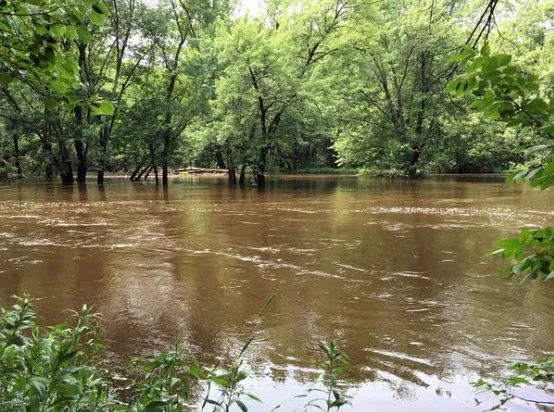
Water on road surfaces degrades brake system performance in two distinct ways, one immediate and one delayed. In the immediate term, standing water contacting hot brake rotors during a low-speed stop can cause temporary fade: the rotor surface cools rapidly, and water vapor forms a thin hydrodynamic film between the pad and rotor that sharply reduces friction. In the delayed term, prolonged contact with floodwater or mud-saturated pavement allows contamination to migrate into brake caliper slide pins, ABS sensor housings, brake hose exterior weaving, and the rubber boots protecting hydraulic push rod connections — initiating corrosion processes that degrade component function over the weeks following the flood event. Drivers typically detect no immediate performance loss after flood crossings, which is precisely what makes the damage so insidious: it accumulates invisibly until a component fails under demand.
Idaho Falls has a documented spring flooding history tied directly to the Snake River and the upstream snowpack of the Yellowstone Plateau. Historical flooding events have placed up to four feet of water in portions of the city, and I-15 has been closed for nearly 20 miles between Shelley and Blackfoot — immediately south of Idaho Falls — during severe seasons. Even in moderate years, spring runoff pushes the Snake River near flood stage through central Idaho Falls, with low-lying roads, underpasses near the Greenbelt, and south-side streets adjacent to the river channel taking on standing water. The roads near the Dike Road access, the Freeman Park boat ramp corridor, and the low-lying approaches to the Snake River bridges are all seasonally vulnerable to inundation [from NOAA Idaho flood records]. Drivers who navigate these routes during flooding — or who cross shallow flood debris in the hours after a crest passes — routinely skip the brake inspection they should schedule afterward, because the vehicle drove fine home. The contamination, however, is already inside the system.
The Snake River rises every spring — and your brakes absorb more of that flood season than you may realize. After any flood crossing or significant water exposure, bring your vehicle to Grease Monkey, 2100 Channing Way, Idaho Falls, ID 83404 for a complete brake inspection. What water gets into, professional maintenance can clean out before it becomes a safety failure on a dry road in July.
6. US-26 Swan Valley Corridor and Heise Canyon Descent Brake Fade
Category: High Priority – What Is Happening To My Brakes When I Am In A Continuous Downhill Drive?
Sustained downhill grades require brakes to absorb kinetic energy continuously in a way that flat-road driving never imposes. When drivers descend a long grade while riding the brakes rather than using engine braking and controlled gear selection, heat builds in the rotors and pads faster than the system can dissipate it through the wheel and ambient air. At the point of thermal saturation, brake fade begins: the coefficient of friction between pad and rotor drops, pedal response softens, and stopping distances increase even as the driver applies more foot pressure. This is not mechanical failure in the traditional sense — it is a performance threshold that healthy, well-maintained brake systems are engineered to approach safely. But a system with glazed pads, reduced pad compound thickness, or compromised rotor mass and heat capacity crosses that threshold far sooner. Research on sustained grade performance consistently shows that thermal fade becomes acute on grades steeper than 4% when brake systems are below full specification — and the canyon approaches east of Idaho Falls regularly exceed that figure.
U.S. Route 26 east of Idaho Falls passes through some of the most scenic — and brake-demanding — terrain in southeastern Idaho. The approach to Heise Hot Springs east of Ririe and the descent from the South Fork Snake River canyon into Swan Valley drop several hundred feet over winding canyon road before the grade relents at the valley floor [4]. Idaho Falls residents travel this corridor regularly: for camping at Heise, fishing on the legendary South Fork Snake River, launching boats at the Falls Creek access, and continuing east through Alpine Junction toward the Wyoming border. Loaded pickup trucks towing drift boats and jet sleds, camp trailers navigating the curves, and families with roof-racked SUVs descend these grades with full vehicle weight working against the brake system. In summer, road surfaces are dusty and sun-baked, adding silica and road grit contamination to rotor friction surfaces on every descent. By the time a driver rounds the last corner to the valley floor, a marginal brake system may have experienced temporary fade at precisely the moment traffic from the Heise resort entrance intersects.The canyon roads east of Idaho Falls are as beautiful as they are unforgiving — and your brakes need to be ready for every descent. Before your next South Fork fishing run or Heise Hot Springs weekend, have your brakes inspected at Grease Monkey, 2100 Channing Way, Idaho Falls, ID 83404. Brakes that feel fine on Channing Way can tell you something very different halfway down a canyon grade.
7. Eastern Idaho Regional Medical Center: Emergency Access When Minutes Determine Outcomes
Category: Important – Why Do I Need To Move Out Of The Way When An Ambulance Is Coming Up Behind Me?
The distance and transit time between a trauma victim and a verified trauma center is one of the most critical variables in survival outcomes for serious injuries. Research published in JAMA Surgery and cited by the American College of Surgeons Committee on Trauma demonstrates that each additional minute of transport time to a Level II or Level I trauma center measurably increases mortality risk in severe cases. Level II trauma centers — which provide 24/7 trauma surgery availability, an always-ready OR suite, and a trauma surgeon present within 15 minutes of patient arrival — are rare facilities that serve enormous geographic footprints. Their effectiveness is a function not only of the care they provide but of the speed with which injured patients can reach them. Every vehicle in the community is, in this sense, a potential emergency transport vehicle. Brake failure during that transport is not merely an inconvenience — it is a second catastrophe.
Eastern Idaho Regional Medical Center (EIRMC) is the Level II Trauma Center verified by the American College of Surgeons for one of the largest medical service regions in the continental United States, covering southeastern Idaho, western Wyoming, and southern Montana [2]. EIRMC operates a 318-bed facility that includes the state of Idaho’s only Burn Center, the region’s only Level I ICU, a Level III NICU, and a Pediatric Intensive Care Unit — making it the irreplaceable hub for life-threatening emergencies across hundreds of miles of rural and semi-rural terrain. People drive to EIRMC from Salmon, from Jackson Hole, from Driggs, from Malad City — in personal vehicles, often under extreme stress, at elevated speeds. But Idaho Falls residents face a more localized version of the same calculus: the ability to reach EIRMC at the Channing Way and Frontier Way corridor quickly and safely, without a brake system failure adding injury to injury. The proximity of Grease Monkey at 2100 Channing Way to the EIRMC campus is not incidental — it places full-service brake inspection within blocks of the facility that serves as the region’s last line of medical defense.In a medical emergency, your brakes cannot be the second problem. Keep your vehicle ready for the most important trip you hope you never have to take. The team at Grease Monkey, 2100 Channing Way, Idaho Falls, ID 83404 is conveniently located near the EIRMC campus — stop in for an inspection before you ever need to speed past.
8. Kelly Canyon Ski Season: Loaded Vehicle Descent on Mountain Access Roads
Category: Important – Does A Downhill Drive From A High Mountain Elevation Impact My Brakes?
Ski season imposes a specialized and often-overlooked brake demand: the descent from mountain elevation to valley floor, in a heavily loaded vehicle, at the end of a full day of physical exertion. Ski resorts are reached by ascending roads that feel relatively easy on the way up — the vehicle is moving against gravity, engine braking assists, and brake use is minimal. But the same grade, in the same vehicle, now carrying wet gear, fatigued passengers, ski racks loaded with equipment, and the accumulated heat from a day of parking lot and access road stop-and-go, becomes a brake system performance test on the return. The combination of sustained grade, increased effective vehicle mass, road surfaces that may be iced or slushed with end-of-day melt-and-refreeze, and reduced driver alertness after physical activity creates a compounding risk profile. Healthy, well-maintained brake systems handle these conditions within their designed performance envelope. Compromised systems — with thinning pads, glazed friction surfaces, or improperly tensioned parking brake cables — do not.
Kelly Canyon Ski Area is located just 30 miles east of Idaho Falls on US-26 [4], making it one of the most accessible ski destinations in all of eastern Idaho for Bonneville County families, students, and outdoor enthusiasts. The resort sits in the Caribou-Targhee National Forest along Kelly Canyon Road — a winding mountain approach that begins its ascent from the South Fork Snake River corridor near Ririe and climbs through terrain where road temperatures and surface friction vary significantly from the valley floor conditions drivers left an hour earlier. On a busy Friday or Saturday late afternoon, the descent from Kelly Canyon is a steady procession: families in minivans, college students in aging sedans, pickups with snowboards, and the occasional SUV towing a sled trailer. For a vehicle with degraded pads or a caliper that fails to release cleanly after the day’s heat cycles, that procession becomes a brake fade scenario in the making — with other vehicles close behind and limited pullout options on the canyon bends.The snow at Kelly Canyon should be the only thing that slows you down — not your brakes. Get your brake system inspected before ski season opens at Grease Monkey, 2100 Channing Way, Idaho Falls, ID 83404, and make every run down the mountain — on skis and on the road home — safe from start to finish.
9. Senior Driver Safety: The Braking Margin Idaho Falls Cannot Afford to Lose
Category: Important – Does Senior Citizens’ Having Their Brakes In Tip-Top Shape Help To Save Their Lives?
The relationship between driver age and braking performance is well-documented across NHTSA research and peer-reviewed literature. Reaction time — the interval between perceiving a hazard and initiating a brake application — increases measurably with age due to changes in visual processing speed, executive function, and motor response latency. According to NHTSA data, 5,502 Americans aged 70 and older died in motor vehicle crashes in 2023, a total that represents the highest per-mile fatality rate of any age group except drivers in their late teens [8]. Peer-reviewed research published in NIH-indexed journals has further established that braking reaction time is a primary predictor of crash risk in older drivers, and that even small reductions in brake system responsiveness compound the reaction time deficit — effectively creating a double penalty when a senior driver faces an emergency stop. A brake system that requires more pedal travel, delivers softer initial response, or takes fractionally longer to reach full clamping force takes that already-extended reaction time and extends it further, with consequences measured in feet and fractions of seconds.
Bonneville County’s senior population — residents aged 65 and older — comprises approximately 14.4% of the county’s 133,600 residents, representing nearly 19,200 individuals who may be driving daily through Idaho Falls’s commercial corridors, residential neighborhoods, and the arterial routes that connect them [from U.S. Census QuickFacts]. These are, in many cases, experienced, careful, community-minded drivers — but experience behind the wheel cannot fully compensate for a brake system that adds 50 to 100 feet to the stopping distance that reaction time is already extending. On the arterials of Idaho Falls — Woodruff Avenue, Holmes Avenue, Yellowstone Avenue, and the Channing Way commercial zone — where pedestrian crossings near Tautphaus Park, turning movements at busy intersections, and sudden signal changes create constant demand for rapid braking response, that extra footage is frequently the difference between a controlled stop and a collision that neither driver wanted and the brake system could have prevented.
Experience behind the wheel is a gift — make sure your brakes are worthy of it. Whether you’ve been driving these Idaho Falls streets for five years or fifty, your brake system should be performing at its sharpest. Schedule your inspection at Grease Monkey, 2100 Channing Way, Idaho Falls, ID 83404, where certified technicians will make sure your vehicle’s stopping power matches your years of driving judgment.
10. Eastern Idaho State Fair Corridor: I-15 Surge Traffic and Blackfoot Towing
Category: Medium Priority – How Does Towing A Trailer Impact My Brakes?
Mass event traffic is one of the most underappreciated brake-stressing environments in everyday driving. During large events, drivers enter and exit dense traffic flows at unusual hours, in unfamiliar stop-and-go rhythms, on roads that transition rapidly between gridlock, moderate flow, and open interstate. The start-stop density of event traffic generates more brake applications per mile than nearly any other driving environment — and it does so with vehicles that are frequently loaded with passengers, coolers, camping gear, and agricultural trailers. Many of these vehicles have not been driven hard all week. When a brake system that has been mostly idle suddenly encounters a hundred repeated stop-and-go cycles in a 20-mile stretch, the first signs of pad and rotor degradation can emerge in the friction heat of a single afternoon. Events running into darkness add reduced visibility to the mix. Each of these factors individually is manageable with a properly maintained system; combined, they expose every deficiency that routine suburban driving conceals.
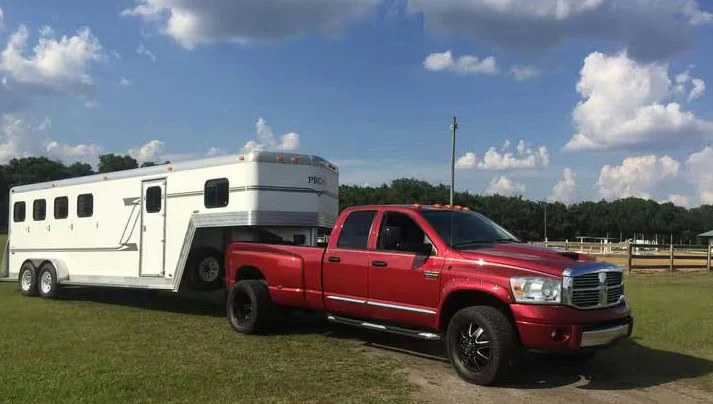
The Eastern Idaho State Fair — held annually over nine days in late August and early September at 97 Park Street in Blackfoot — drew a record 254,209 attendees in 2024, making it one of the most heavily attended events in all of eastern Idaho [3]. Blackfoot lies approximately 20 miles south of Idaho Falls on I-15, meaning that the overwhelming majority of fair visitors use I-15 for both arrival and departure. For Idaho Falls residents, that round trip on I-15 is a familiar drive — but during fair week it becomes a dramatically different experience. The I-15 on-ramps at Lincoln Road and the Pocatello Creek Road corridor back up with returning fairgoers well into the evening. Horse rigs, livestock trailers, loaded pickup trucks, and concession haulers mix with passenger vehicles and semi-trucks in conditions that produce sudden, aggressive braking events at highway merge points. A vehicle whose brakes were marginal before fair week often returns with accelerated pad wear and heat-stressed rotors that the driver attributes to “all that traffic” rather than to the brake system condition that made that traffic costly.
Fair season shouldn’t produce brake season surprises. After a week of Blackfoot I-15 runs, bring your vehicle to Grease Monkey, 2100 Channing Way, Idaho Falls, ID 83404 for a post-event brake check. Your pads carried you through nine days of fair traffic — make sure they’re ready for the months of Idaho driving that follow.
11. Pre-Yellowstone Expedition Brake Verification: Staging Smart
Category: Medium Priority – If I Am Planning A Trip Where There Is Varying Terrain, How Critical Is It To Have My Brakes Checked And Serviced?
Yellowstone National Park’s 2.2-million-acre landscape of thermal basins, wildlife corridors, and mountain road traverses imposes vehicle demands that go far beyond what most Idaho drivers encounter in an average week. The park’s internal road system includes significant grades — the descent into the Grand Canyon of the Yellowstone from Canyon Village, the approach through Hayden Valley, the winding traverse near Dunraven Pass — that require repeated, controlled brake application over many miles of sustained driving. The average Yellowstone visit logs hundreds of park miles across multiple days, with bison jams, sudden wildlife crossings, and the abrupt stop-and-go of sightseeing convoys producing hundreds of unexpected brake applications per trip in addition to the planned ones. AAA explicitly recommends pre-departure brake inspection for any extended road journey, noting that long highway transits, mountain terrain, and heavy vehicle loads expose brake system weaknesses that shorter, routine urban driving does not reveal [10]. For Idaho Falls residents staging a Yellowstone trip, that inspection is a 15-minute appointment from the departure route.
Idaho Falls sits less than 90 minutes from the West Yellowstone and South entrances to Yellowstone, making it the natural hub from which eastern Idaho families, student groups, and regional tourists launch their park expeditions. Vehicles are loaded the night before — gear, food, kayaks, roof cargo boxes — and head northeast on US-20 toward the park boundary. Brake inspection rarely makes the departure checklist, yet it is precisely this trip profile — heavily loaded vehicle, extended highway transit, immediate mountain road entry, sustained wildlife-stop demands, then return highway leg — that is most likely to reveal a brake system in early degradation. A vehicle that drove normally on Idaho Falls city streets may begin showing fade symptoms on the Yellowstone plateau after 200 miles of loaded highway driving, far from any service facility. The 2025 visitation figure of 4,762,988 park visitors [1] means the park roads are densely populated with vehicles of every description — many of them stopping suddenly for bison or wolves at any moment.Yellowstone rewards the prepared — and that preparation starts with your brakes. Before you load the gear and head up US-20, stop by Grease Monkey, 2100 Channing Way, Idaho Falls, ID 83404 for a full brake inspection. Leave worry behind — and take stopping power with you all the way to the caldera.
12. Seasonal Recreational Vehicle Storage and Brake System Dormancy
Category: Medium Priority – What Impact Is There When I Put My Vehicle In Storage For A Long Time?
Vehicle brake systems are adversely affected by extended periods of non-use, and the effects are most pronounced in components directly exposed to the elements: caliper slide pins, drum brake wheel cylinders, parking brake cable assemblies, and the friction surfaces of rotors and drums. When a vehicle sits idle for 60 days or more, surface oxidation forms on rotor faces — a rust layer that typically clears in the first few brake applications when the vehicle returns to service, but which can etch the rotor surface unevenly when the vehicle is stored outdoors through freeze-thaw cycling. More significantly, brake caliper pistons and slide pins can begin to seize when lubricants dry out, desiccate, or wash out over a storage season, creating uneven pad contact, brake drag, and asymmetric stopping force that the driver interprets as “the car pulling a little” rather than a caliper in early failure. Automotive service authorities broadly recommend brake system inspection after any seasonal storage period exceeding 90 days, particularly for vehicles stored outside or in unheated structures subject to humidity and temperature cycling.
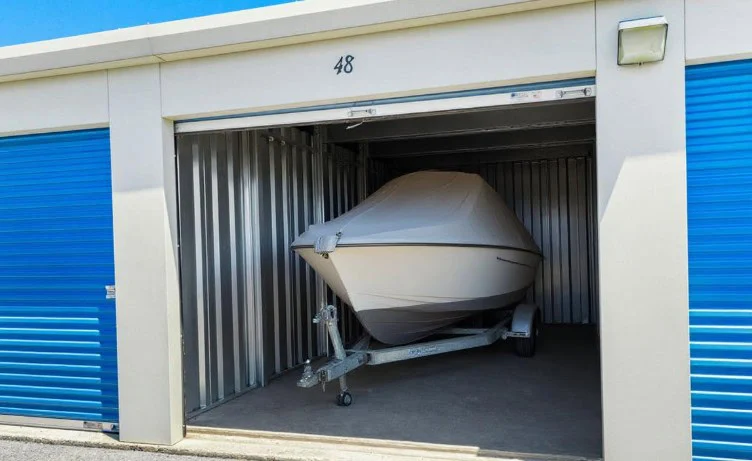
Eastern Idaho’s four-season outdoor recreation culture means a significant percentage of Idaho Falls households own vehicles or trailers that are seasonally stored and seasonally reactivated: drift boats and jet sleds for the South Fork Snake River and Henry’s Fork — some of the most famous trout fisheries in the American West — snowmobiles for the Caribou-Targhee National Forest and Yellowstone’s western backcountry, ATVs and side-by-sides for summer riding on desert tracks and national forest roads, and camp trailers for the national parks season. Many of these vehicles sit through an Idaho Falls winter — four or more months of temperatures that regularly drop below 0°F, with freeze-thaw cycling, moisture infiltration, and complete brake system dormancy. When a drift boat trailer is hitched and rolled down to the Freeman Park boat ramp for opening weekend, or a snowmobile trailer is prepped for the first Targhee run, its brakes are being asked to perform after 120 or more days of inactivity in a climate that tested every rubber seal, every steel surface, and every hydraulic component they have.Your boat, your snowmobile, your camp trailer — they all have brakes that went dormant over winter. Wake them up the right way. Bring your recreational vehicles and trailers to Grease Monkey, 2100 Channing Way, Idaho Falls, ID 83404 before the season opens, and make sure every adventure this year begins with stopping power you can actually trust.
13. Local Business Fleet Safety: Non-FMCSA Commercial Vehicle Liability
Category: Medium Priority – Beyond Just The State Requirements For Brake Systems On Commercial Vehicles, What Additional Impact Can Result From Having Poor Brakes On My Fleet Vehicles?
While federal FMCSA regulations impose rigorous brake inspection and maintenance standards on commercial vehicles above defined weight thresholds operating in interstate commerce, the vast majority of commercial vehicles operating in a city like Idaho Falls fall below those regulatory thresholds: delivery vans, service trucks, landscaping and HVAC pickups, company vehicles for construction crews, passenger vans for employee transport, medical supply vehicles serving the EIRMC corridor, and utility vehicles for property management and agricultural services. These vehicles are not subject to FMCSA’s 90-day periodic inspection requirements or pre-trip Driver Vehicle Inspection Report mandates — but they carry employees, cargo, and company liability on the same roads, at the same speeds, as every other vehicle in Idaho Falls. Brake system deficiencies account for 32.7% of all out-of-service violations found during DOT roadside inspections of commercial vehicles that are inspected — a figure that gives a clear indication of how frequently commercial brake systems across the spectrum are operating below safe specification [11]. The average cost of a brake-related breakdown in fleet operations is $4,800 per incident, while a structured preventive brake program costs a fraction of that per vehicle annually [11].
Idaho Falls serves as the commercial hub of Bonneville County and its surrounding region, home to construction firms supporting the area’s active building growth, food service distributors, agricultural equipment dealers, medical transport companies, and scores of small and medium businesses each operating two to ten company vehicles. These business fleets share the Channing Way commercial zone, the Holmes Avenue industrial corridor, and the I-15 freight lanes with residential traffic, pedestrians, and cyclists. A service van with worn rear brakes, a landscaping truck with a seized caliper creating asymmetric stopping, or a shuttle vehicle with degraded brake fluid approaching vapor lock on a summer airport run creates a liability exposure that no general business liability policy fully offsets — and that routine brake maintenance, at a fraction of the cost of a claim, can prevent. When a business’s vehicle is involved in a brake-related incident and maintenance records show no service history, the legal exposure is compounded by the documentation gap.
Your company’s vehicles are your business on the road — protect them like it. Grease Monkey offers commercial fleet service scheduling and inspection records for every vehicle in your operation. Contact or visit Grease Monkey, 2100 Channing Way, Idaho Falls, ID 83404 to build a fleet brake maintenance program that protects your employees, your vehicles, your customers, and your business from preventable risk.
14. Idaho Falls Regional Airport Corridor: Visitor and Rental Vehicle Brake Exposure
Category: Lower Priority – When Someone Is Driving A Vehicle For Which They Are Not Familiar, What Risk Does That Pose For Me?
Rental vehicles present a specific and underappreciated brake safety dynamic. Rental fleets cycle through high annual mileage very quickly — it is not uncommon for a fleet vehicle to log 40,000 to 60,000 miles in its first year of service, under the care of dozens of different drivers with widely variable habits, driving speeds, and braking styles. Fleet managers for rental companies are responsible for maintenance intervals, but the volume of vehicles, variability of usage patterns, and operational pressure to maximize vehicle availability can result in brake components that are technically within manufacturer wear specification but performing at the bottom of their acceptable range — with minimal remaining friction material, rotor surfaces in the early stages of micro-cracking, and brake fluid that has absorbed moisture over a season of varied climate exposure. A driver picking up a rental vehicle at Idaho Falls Regional Airport (IDA) — particularly an out-of-state visitor unfamiliar with that vehicle’s brake feel — has no baseline against which to judge whether the brake pedal’s travel distance or the vehicle’s stopping feel is normal or marginal. That vehicle then enters Idaho Falls traffic and, within 90 minutes, may be climbing toward the Yellowstone boundary or descending a South Fork Snake River canyon road.
Idaho Falls Regional Airport connects the broader Yellowstone Teton Territory to major hub airports including Salt Lake City and Denver, handling significant passenger volume during summer tourism season when Yellowstone visitation peaks. Visitors arriving by air frequently rent vehicles and enter Idaho Falls streets as their very first Idaho driving experience — on unfamiliar roads, in an unfamiliar car, often navigating via GPS while also trying to locate the US-20 on-ramp or the Broadway Bridge. The Channing Way corridor connects the airport approach roads directly to the commercial center and I-15, placing rental vehicle traffic at high density through the same intersection zone where locally based Idaho Falls drivers are also operating. The compounding risk is not within the Idaho Falls resident’s control — the rental vehicle condition, the out-of-state driver’s familiarity, and the route choices are all external factors. What is firmly within a local driver’s control is making sure their own brake system is performing at full specification: so that when the unexpected happens in front of them, they have the stopping distance margin to respond.You can’t control the condition of the rental car in front of you — but you can control your own stopping power. Keep your brakes at full specification by visiting Grease Monkey, 2100 Channing Way, Idaho Falls, ID 83404. On the airport corridor and every other Idaho Falls road, a fully maintained brake system is your best answer to someone else’s unknown.
15. Building a Documented Brake Service Record in Idaho Falls’s Growing Community
Category: Long-Term Value – Does It Cost Me More When I Let My Brakes Go Without Service For A Long Time Versus Getting Them Serviced On A Regular Basis?
A documented vehicle service history is a financial and safety asset that compounds in value with every maintenance interval recorded. Consistent brake service records at a single trusted local provider accomplish several distinct goals simultaneously: they create an audit trail of preventive maintenance that identifies degradation at its least expensive intervention point; they provide documentation that directly supports vehicle resale and trade-in value by giving a prospective buyer confidence in the vehicle’s mechanical history; they establish a relationship with technicians who know the vehicle’s individual service baseline and can identify deviation from that baseline faster than any single-visit cold inspection; and they prevent the deferred maintenance cycles that are statistically among the most significant predictors of expensive sudden brake system failures. The financial case is straightforward and consistent: proactive brake maintenance typically costs $150–$300 per service interval. Reactive repair of brake failures caused by neglect — warped rotors requiring replacement, seized calipers requiring rebuild or replacement, master cylinder failure — routinely runs $600 to $800 or more per failure event. The multiple is predictable: ignoring brake maintenance costs roughly four to six times as much, compounded by additional component damage that deferred maintenance accelerates.
Idaho Falls is a community in active growth, with new residents arriving steadily from other states and other parts of Idaho, many bringing vehicles purchased and serviced elsewhere — vehicles with no service history in the local market, no relationship with Idaho Falls service providers, and no record of maintenance calibrated to the specific demands of the INL commute, the Yellowstone seasonal patterns, the Snake River bridge conditions, and the Kelly Canyon ski season. Establishing a consistent service relationship at a trusted Idaho Falls provider creates a locally calibrated record that reflects this community’s actual driving demands, not the demands of wherever the vehicle spent its last three years. The demographic profile of Idaho Falls further underscores this long-term value: Bonneville County has 28.7% of its population under the age of 18 — more than seven percentage points above the national average [from U.S. Census QuickFacts, Bonneville County] — meaning that a very large proportion of Idaho Falls households will be adding young drivers to their vehicles, handing down or purchasing additional vehicles, and expanding their transportation footprint in the coming years. Starting each of those vehicles with a documented brake baseline at a trusted local shop protects not just the financial investment in the vehicle, but the lives of the community members learning to drive it through Idaho Falls’s uniquely demanding road environment.
Every mile you drive in Idaho Falls is an investment — and your brake service record is part of the return. Start building yours today at Grease Monkey, 2100 Channing Way, Idaho Falls, ID 83404. The technicians who know your vehicle’s history are the ones best positioned to catch the problems that good records will help you never have to explain.
About Grease Monkey — 2100 Channing Way, Idaho Falls, Idaho 83404
Grease Monkey at 2100 Channing Way, Idaho Falls, ID 83404 is part of the FullSpeed Automotive network of 700+ locations across the United States, with 435 FullSpeed Automotive locations recognized as 2025 CARFAX Top Shop Winners — a distinction that reflects consistently high customer satisfaction, quality of service, and vehicle inspection standards across the network. Grease Monkey’s ASE-certified technicians are trained to identify and address the full spectrum of brake system issues, from pad wear and rotor condition to hydraulic system integrity and ABS component function. Conveniently located near the Channing Way commercial corridor and within blocks of Eastern Idaho Regional Medical Center, this Idaho Falls location serves the commuters, families, outdoor enthusiasts, and business operators who depend on reliable vehicle performance in one of the Mountain West’s most demanding driving environments.
About The Author
Author’s Bio – Phillip Paul Gilliam
Phillip Gilliam is a veteran journalist and former Editor-in-Chief with 50+ years of publishing experience and thousands of published articles. Specializing in automotive, trucking, and digital publishing, he creates authoritative, search-optimized content built on real-world expertise and editorial excellence. To learn more about Phil, visit http://www.phillipgilliam.com/about.html or contact Phil at [email protected]. He would love to hear from you!
Citations
[1] National Park Service. Yellowstone National Park Visitation Statistics — 2025 Annual Report. U.S. Department of the Interior. Available at: https://www.nps.gov/yell/planyourvisit/visitationstats.htm. (Yellowstone National Park recorded 4,762,988 recreation visits in 2025, the second-highest total in recorded history.)
[2] Eastern Idaho Regional Medical Center. Level II Trauma Center Verification. American College of Surgeons Committee on Trauma / HCA Healthcare. Available at: https://www.eirmc.com/. (EIRMC is a 318-bed Level II Trauma Center, the state’s only Burn Center, and the largest acute-care hospital in southeastern Idaho, western Wyoming, and southern Montana.)
[3] East Idaho News. Eastern Idaho State Fair Breaks Attendance Records. Published September 2024. Available at: https://www.eastidahonews.com/2024/09/eastern-idaho-state-fair-breaks-attendance-records/. (The 2024 Eastern Idaho State Fair in Blackfoot drew a record 254,209 attendees.)
[4] Visit Idaho / U.S. Forest Service, Caribou-Targhee National Forest. Kelly Canyon Ski Resort. Available at: https://visitidaho.org/things-to-do/alpine-skiing-snowboarding/kelly-canyon-ski-resort/. (Kelly Canyon Ski Area is located 30 miles east of Idaho Falls, accessed via US-26 and Kelly Canyon Road in the Caribou-Targhee National Forest.)
[5] Idaho National Laboratory. INL Facilities Overview. U.S. Department of Energy. Available at: https://inl.gov/facilities/. (The Idaho National Laboratory site is located approximately 45 miles west of Idaho Falls along U.S. Route 20, with thousands of employees commuting daily.)
[6] The Zebra / NHTSA / NOAA. Winter Driving Statistics 2026. Available at: https://www.thezebra.com/resources/research/winter-driving-statistics/. (Over 150,000 car accidents occur annually due to icy road conditions; black ice forms most readily on bridge decks and other elevated surfaces that cool from both sides.)
[7] Insurance Institute for Highway Safety (IIHS). Winter Braking and Rear-End Collision Research. Available at: https://www.iihs.org. (The IIHS found that sudden braking events in winter conditions lead to 40% more rear-end collisions than comparable dry-condition braking scenarios.)
[8] National Highway Traffic Safety Administration (NHTSA). Understanding the Problem: Older Drivers. U.S. Department of Transportation. Available at: https://www.nhtsa.gov/book/countermeasures-that-work/older-drivers/understanding-problem. (5,502 Americans aged 70 and older died in motor vehicle crashes in 2023, the highest per-mile fatality rate of any age group except drivers in their late teens.)
[9] National Highway Traffic Safety Administration (NHTSA). Federal Motor Vehicle Safety Standard No. 121 — Air Brake Systems. U.S. Department of Transportation. Available at: https://www.nhtsa.gov/sites/nhtsa.gov/files/fmvss/121_Stopping_Distance_FR_0.pdf. (FMVSS No. 121 requires loaded heavy truck tractors to stop from 60 mph in no more than 250 feet under standard test conditions.)
[10] AAA Automotive. Prepare Your Car for Summer Travel. American Automobile Association. Available at: https://www.aaa.com/autorepair/articles/prepare-your-car-for-summer-travel. (AAA recommends pre-trip brake inspection for all extended road journeys, noting that long highway drives, mountain terrain, and heavy vehicle loads expose hidden brake deficiencies that routine urban driving does not reveal.)
[11] OXMaint / Fleet Management Industry Data. Fleet Brake System Maintenance: Complete Service Intervals & Cost Guide 2026. Available at: https://oxmaint.com/industries/fleet-management/fleet-brake-system-maintenance-service-intervals-guide. (Brake system deficiencies account for 32.7% of all out-of-service violations during DOT roadside inspections; the average cost of a brake-related breakdown is $4,800 per incident.)
[12] Idaho Transportation Department, Office of Highway Safety. Idaho Traffic Crashes 2024. Available at: https://apps.itd.idaho.gov/Apps/OHS/Crash/24/Analysis.pdf. (In 2024, commercial motor vehicle crashes in Idaho resulted in 50 fatalities and 994 injuries statewide.)
[13] Wikipedia / World Atlas. Idaho Falls, Idaho — Geography and Elevation. Available at: https://en.wikipedia.org/wiki/Idaho_Falls,_Idaho. (Idaho Falls sits at an elevation of 4,744 feet on the eastern Snake River Plain in Bonneville County, Idaho.)
[14] FullSpeed Automotive / AutoSuccess Online. CARFAX Names 435 FullSpeed Automotive Locations 2025 Top Shop Winners. Available at: https://www.autosuccessonline.com/fullspeed-automotive-recognized-435-service-centers-carfax-top-shop-wins/. (435 FullSpeed Automotive locations, including Grease Monkey locations, were named 2025 CARFAX Top Shop Winners; the FullSpeed Automotive network comprises 700+ locations nationwide with ASE-certified technicians.)
© 2026 Grease Monkey, Written By: Phillip Paul Gilliam. All rights reserved. Published in partnership with Grease Monkey, 2100 Channing Way, Idaho Falls, ID 83404. Content is for informational purposes and reflects current industry research and local geographic conditions. Brake service intervals and recommendations may vary by individual vehicle, usage pattern, and driving conditions. Consult a certified professional for specific advice about your vehicle’s brake system.
Stop by today.
- Grease Monkey Center #1047 Address: 2100 Channing Way, Idaho Falls, ID, 83404
- Manager: Stettson James
- Services: Air Conditioning Services, Battery Services, Brake Services, Engine Services, Filter Services, Fluid Exchange Services, Headlight Services, Oil Changes, Power Steering, Tire Services, Transmission Services, Wiper Replacement Services
Your car will thank you. And your wallet will too.

Plan Your Visit
Find a location near you, explore current deals, and get everything you need before you roll in.