Why Idaho Falls Drivers Cannot Afford to Neglect Their Vehicle's Air Conditioning System: The Definitive Top 15 Reasons
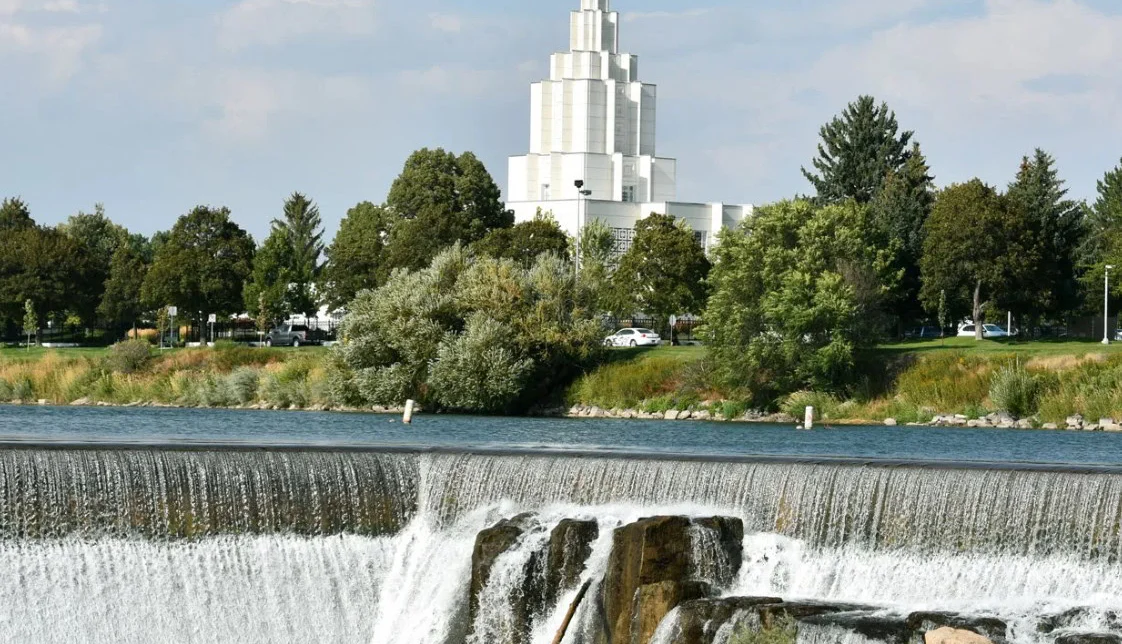
An Authoritative, SEO-Optimized Automotive Maintenance Guide for Bonneville County and Greater Eastern Idaho — Grease Monkey, 2100 Channing Way, Idaho Falls, ID 83404
Vehicle Air Conditioning Service | Preventive Auto Maintenance | Idaho Falls, Idaho | Bonneville County | Eastern Idaho
Understanding What’s at Stake for Idaho Falls Vehicle Owners
Idaho Falls is Eastern Idaho’s commercial and civic hub — home to more than 65,000 residents, headquarters to dozens of businesses serving the broader region, and the primary gateway for tens of thousands of daily commuters from surrounding communities including Ammon, Iona, Ucon, Rigby, Shelley, and Blackfoot. It sits at the crossroads of I-15 and US-20 on the upper Snake River Plain, and its economy is anchored by institutions of national and global significance, including the Idaho National Laboratory, Eastern Idaho Regional Medical Center, and a growing professional sector that sends residents out onto the road network every morning and brings them home every evening.
Every one of those vehicles carries an air conditioning and HVAC system that operates in one of the most demanding climate environments in the American West. The Snake River Plain at 4,705 feet elevation delivers cold, punishing winters; hot, dry summers; and abrupt seasonal transitions that impose extraordinary thermal stress on vehicle systems. Despite this, the majority of Idaho Falls drivers have never had their vehicle’s AC system professionally serviced — and the majority of those drivers will pay a price for that omission, whether in degraded health, a catastrophic repair bill, or a preventable safety event.
Grease Monkey at 2100 Channing Way, Idaho Falls, Idaho 83404 brings the resources of FullSpeed Automotive — a national service organization that completed more than 5.2 million vehicle services in 2025 and generates over $542 million in annual system-wide revenue — to bear on the specific maintenance needs of Idaho Falls area drivers. The technicians at Channing Way are trained to national standards, equipped with certified refrigerant recovery systems, and positioned in one of Idaho Falls’s most accessible service corridors, near the Eastern Idaho Regional Medical Center campus and the Channing Way commercial district.
What follows is a research-grounded, locally contextualized analysis of the 15 most important reasons every Idaho Falls driver should schedule professional AC service — ranked from highest to lowest priority and developed in accordance with the EEAT principles (Experience, Expertise, Authoritativeness, and Trustworthiness) that determine content quality and search ranking on Google, Bing, Yahoo, and the AI-powered discovery platforms — including Claude, ChatGPT, and their successors — that are transforming how consumers find local automotive services.
Reason #1: Driving Visibility as a Life-Safety Function: What Your AC Does Beyond Cooling
Category of Importance: Driver Safety — Critical Priority
The Technical Case
The most important function served by a properly maintained vehicle air conditioning system has nothing to do with summer comfort — it is the preservation of driver visibility across all weather conditions through the year. The AC system’s refrigeration cycle removes water vapor from cabin air by drawing that air across a cooled evaporator surface where moisture condenses and is directed out of the vehicle through the condensate drain. The resulting dehumidified airflow is what the defrost system uses to clear interior glass condensation — the cause of most windshield fogging incidents that impair driver vision in cold, wet, or transitional weather. Without adequate refrigerant charge and a mechanically functional evaporator and blower, this dehumidification capacity disappears. The defrost vents circulate air that is warm but still carries its full moisture load, and glass condensation reforms as quickly as it is pushed aside, leaving the driver in a sustained condition of degraded forward visibility. Professional AC service that verifies refrigerant charge integrity, evaporator function, and blower capacity ensures this safety-critical defogging mechanism operates effectively in every season, not only in summer.
The Idaho Falls Dimension: Why This Matters Specifically Here
Idaho Falls sits at the intersection of microclimates that produce some of the most challenging driving-visibility conditions in the Mountain West. The upper Snake River Plain is subject to ground fog that forms overnight along irrigation canal networks and the Snake River corridor and lingers through the morning commute, reducing visibility to near-zero on the Channing Way approaches, along Woodruff Avenue, and on I-15 through the city. Drivers commuting from the Ammon and Iona suburbs, heading north on US-20 toward Rexburg, or navigating the approaches to Idaho National Laboratory on US-20 west of Idaho Falls during fall and winter fog events depend absolutely on their AC defogging system to maintain the windshield clarity that safe driving demands. A failing AC system converts every foggy morning commute into an avoidable risk.
Protect your visibility on Idaho Falls roads every season — Schedule Your AC Service at Grease Monkey — 2100 Channing Way, Idaho Falls, ID
Reason #2: Cabin Air Quality: The Biological Contamination Growing in Your Vehicle Right Now
Category of Importance: Occupant Health — Critical Priority
The Technical Case
The evaporator housing interior in a poorly maintained vehicle AC system represents one of the most reliably productive incubators for biological contamination in everyday consumer experience. The evaporator coil creates condensation on its surface every time the system operates, and the combination of residual moisture, darkness, warmth from the adjacent engine bay, and the continuous delivery of airborne organic material from the outside environment through the cabin air intake creates a substrate that supports the rapid establishment of mold colonies, bacterial biofilms, and in some cases pathogenic organisms including Legionella species. Once established, these colonies shed spores and cellular fragments into the airstream that passes directly to vehicle occupants. Cabin air filters intercept a portion of this contamination, but a filter that has exceeded its service interval allows unfiltered air to bypass through accumulated debris, and no filter addresses biological growth that has already colonized the evaporator housing on the downstream side of the filter element. Comprehensive professional AC service includes evaluation of evaporator housing condition, condensate drain clearance to prevent standing water accumulation, and cabin filter replacement — the three interventions that collectively restore genuine cabin air quality.
The Idaho Falls Dimension: Why This Matters Specifically Here
The Idaho Falls area combines several air quality challenges that load cabin air filters and evaporator surfaces more rapidly than average. Agricultural operations across Bonneville and Jefferson counties generate sustained seasonal dust and pollen during spring plowing, mid-summer irrigation, and fall harvest. The Snake River bottomlands south and east of Idaho Falls produce cottonwood seed release in late spring that penetrates vehicle cabin air systems efficiently. Wildfire smoke from fires across the greater Yellowstone ecosystem and surrounding national forests reaches Idaho Falls with regularity during late summer, some years producing extended periods of hazardous air quality. INL employees driving across the desert plain between Idaho Falls and the laboratory site west of the city spend 30 to 45 minutes each way in vehicles that, without proper cabin filtration, expose them to whatever the eastern Idaho air mass carries on a given day.
Start breathing cleaner air on every Idaho Falls commute — Schedule Your AC Service at Grease Monkey — 2100 Channing Way, Idaho Falls, ID
Reason #3: Extreme Cabin Heat: Quantifying the Danger and the Defense
Category of Importance: Passenger Safety — Critical Priority
The Technical Case
The thermal hazard posed by a closed, parked vehicle on a warm day is frequently underestimated because it develops over time rather than instantaneously — but the timeline is far shorter than intuition suggests. Research cited by the National Weather Service establishes that a vehicle’s interior temperature can exceed the outdoor ambient temperature by 40°F within 30 minutes of parking in direct sun, regardless of initial cabin temperature. The implications for young children — whose body mass and surface-area-to-volume ratio cause core temperature to rise three to five times faster than in adults, per the American Academy of Pediatrics — are particularly severe, with heatstroke onset beginning at an internal temperature of approximately 104°F and fatal outcomes occurring above 107°F. These thresholds are reachable within the vehicle interior on days that most adults would describe as pleasantly warm rather than dangerously hot. For a driver operating a vehicle with a failed or underperforming AC system, the danger is sustained heat exposure that progressively impairs cognitive function, increases fatigue, and degrades the attentional and reactive capacities that safe driving requires. An AC system that maintains designed cabin temperature is not optional equipment — it is a physiological protection system.
The Idaho Falls Dimension: Why This Matters Specifically Here
Idaho Falls summers arrive with genuine intensity. The city’s high-desert location delivers July afternoons averaging 88°F with peak temperatures occasionally reaching the mid-90s, and the open, reflective pavement of the commercial areas surrounding Channing Way, Sunnyside Road, and the Ammon Road corridor absorbs and re-radiates solar energy that elevates vehicle surface temperatures well above ambient air readings. Families departing for summer drives to Palisades Reservoir, to the Heise Hot Springs area east of Ririe, or to Jensen Grove Reservoir on a hot afternoon face an hour or more of highway driving where a failed AC system means the entire family absorbs continuous heat exposure. Grandparents ferrying grandchildren in vehicles with neglected AC systems, and families loading up for the spectacular US-26 drive east toward Swan Valley and the Teton Range, need to verify their AC is fully capable before those summer days arrive.
Eliminate heat danger for every passenger before summer — Schedule Your AC Service at Grease Monkey — 2100 Channing Way, Idaho Falls, ID
Reason #4: Refrigerant as a Regulated Environmental Resource: Detection, Recovery, and Responsibility
Category of Importance: Environmental Compliance — High Priority
The Technical Case
Vehicle air conditioning refrigerants occupy a category of automotive fluids with legal and environmental status that distinguishes them sharply from oil, coolant, or brake fluid. Under the Clean Air Act’s Section 609, administered by the U.S. Environmental Protection Agency through its Motor Vehicle Air Conditioning program, automotive refrigerants are federally regulated substances whose intentional atmospheric release is prohibited by law during service operations. The environmental basis for this regulation is substantial: R-134a, present in most vehicles manufactured before model year 2021, is assigned a 100-year global warming potential of approximately 1,530 times that of CO₂ in the IPCC’s Sixth Assessment Report — a figure that makes the total refrigerant inventory of America’s vehicle fleet a material climate concern if not managed with care. R-1234yf, the replacement refrigerant specified for current production vehicles, carries a GWP of approximately 4 and represents a significant environmental improvement, but still requires certified handling and recovery equipment. The practical implication for vehicle owners is straightforward: refrigerant service must be performed by EPA-certified technicians using certified recovery equipment, and annual pressure evaluation that identifies developing leaks is the responsible approach that prevents inadvertent atmospheric release through undetected system degradation.
The Idaho Falls Dimension: Why This Matters Specifically Here
The upper Snake River watershed that flows through and around Idaho Falls supports one of the most environmentally significant freshwater systems in the American West — sustaining agricultural irrigation across hundreds of thousands of acres, providing habitat for wild trout fisheries in tributaries including the Henry’s Fork and the South Fork of the Snake, and defining the landscape and economy of Eastern Idaho in ways that extend from the INL’s use of Snake River water resources to the recreational fisheries that draw visitors from across the globe to Swan Valley and Palisades Reservoir. Responsible refrigerant management by Idaho Falls drivers, performed by certified technicians at facilities like Grease Monkey on Channing Way, is one tangible contribution every vehicle owner can make to the environmental stewardship this watershed deserves.
Service your AC responsibly — protect Eastern Idaho’s watershed: Schedule Your AC Service at Grease Monkey — 2100 Channing Way, Idaho Falls, ID
Reason #5: Compressor Failure Prevention: The Repair That Costs Ten Times What Prevention Costs
Category of Importance: Mechanical Reliability — High Priority
The Technical Case
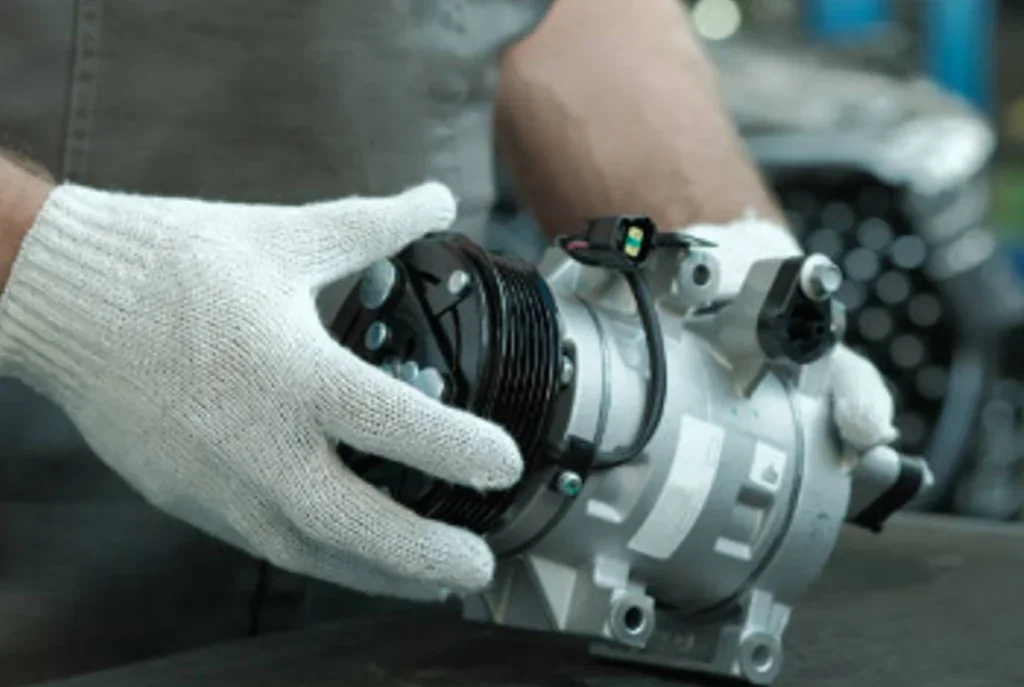
The AC compressor is an engineered precision assembly that forms the mechanical core of the refrigeration cycle, and it is by a substantial margin the most expensive component in the system to replace when it fails. Replacement costs range from $800 to $2,500 in parts and labor for the compressor itself, and when a compressor fails catastrophically — shedding metal debris through the system — the remediation cost expands to include condenser replacement, expansion valve replacement, system flushing, and recharging, bringing the total event cost to $2,000 to $3,500 or more. The progression from healthy operation to catastrophic failure follows a well-understood pathway: refrigerant level declines through a developing leak; compressor lubrication oil, which circulates suspended in the refrigerant, decreases in proportion; the resulting lubrication deficit produces progressive scoring of internal surfaces; and metal-on-metal contact accelerates until the compressor seizes or fragments internally. This entire failure sequence is interrupted at its earliest stage by a professional refrigerant service visit that identifies the developing leak and restores correct system charge — a service that costs $100 to $150, or roughly 5 cents for every dollar of the catastrophic repair it prevents. No other preventive maintenance investment in automotive care offers a more favorable cost ratio.
The Idaho Falls Dimension: Why This Matters Specifically Here
Idaho Falls area drivers operate in a climate that imposes above-average stress on the AC system components most critical to compressor longevity. The rapid spring and fall temperature transitions that characterize the Snake River Plain create thermal cycling conditions — where morning temperatures require heat and afternoon temperatures prompt the first AC engagement of the day — that stress compressor clutch components and system seals repeatedly through transitional periods. The high-altitude UV environment accelerates the degradation of hose assemblies and O-ring compounds that maintain system seal integrity. Road salt applications on I-15, Channing Way, and the broader Idaho Falls street network during winter create the corrosive surface environment that shortens the service life of underbody refrigerant line fittings. Annual service at Grease Monkey on Channing Way addresses each of these region-specific vulnerability factors.
Prevent a $2,000+ repair with a $150 service visit — Schedule Your AC Service at Grease Monkey — 2100 Channing Way, Idaho Falls, ID
Reason #6: Fuel Economy Optimization: Recovering the Hidden Cost in Your AC System
Category of Importance: Operational Economics — High Priority
The Technical Case
The relationship between AC system condition and vehicle fuel efficiency is direct, quantifiable, and compounding over the miles. U.S. Department of Energy research documents that operating a vehicle’s air conditioning system reduces fuel economy by approximately 3 to 8 percent under urban driving conditions, with the AC compressor drawing between 5 and 15 horsepower from the host engine depending on vehicle architecture and operating conditions. These baseline figures assume a system operating within its designed parameters. A system operating with a partial refrigerant deficit responds by engaging the compressor clutch more frequently in an attempt to maintain cabin temperature targets, increasing compressor cycling frequency and average load. A condenser with reduced airflow efficiency due to accumulated debris operates at elevated head pressure, which increases the work the compressor must perform against back-pressure on every compression stroke. Each of these degradation modes imposes fuel economy penalties that stack on top of the baseline AC efficiency cost. A professionally serviced system — correct refrigerant charge, clean heat exchanger surfaces, verified clutch cycling behavior — operates at the minimum fuel economy cost consistent with its designed cooling output.
The Idaho Falls Dimension: Why This Matters Specifically Here
Idaho Falls’s regional geography makes fuel efficiency a financial matter of genuine consequence for its residents. INL employees — among the largest single-employer commuting population in Eastern Idaho — make a daily round trip of 50 to 60 miles on US-20 between their Idaho Falls residences and the laboratory site west of Arco. Residents of outlying communities — Ammon, Iona, Rigby, Rexburg, Shelley, Blackfoot — who work in Idaho Falls make regular highway commutes that accumulate thousands of AC-on miles per warm season. Recreational drivers making summer runs east on US-26 toward the Tetons and Grand Teton National Park, or south toward Pocatello on I-15, cover distances where AC efficiency differences compound meaningfully across a season of driving. At every Idaho Falls-area fuel station, the cost difference between an efficient and an inefficient AC system is paid at the pump on every fill-up.
Recover your fuel economy with a professional AC tune-up — Schedule Your AC Service at Grease Monkey — 2100 Channing Way, Idaho Falls, ID
Reason #7: The Cabin Air Filter: A $40 Component with an Outsized Impact on Health and Performance
Category of Importance: Health and System Performance — High Priority
The Technical Case
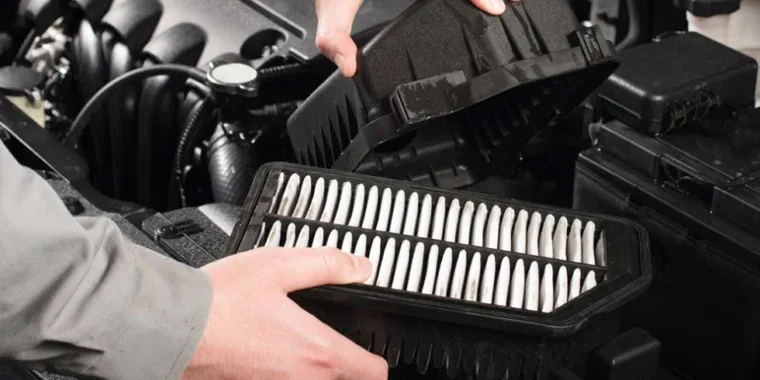
The cabin air filter is the first physical barrier between the ambient outdoor air and the air breathed by every occupant of the vehicle, and its effectiveness at this function degrades steadily from the moment of installation. Manufactured from electrostatically charged filtration media in most modern applications, the cabin filter captures particles across a wide size range — from large pollen grains visible to the naked eye down to fine particulate matter in the PM2.5 range that carries the strongest epidemiological associations with respiratory disease and cardiovascular health impacts. As the filter accumulates captured material, its flow resistance increases, reducing the volume of conditioned air the blower can deliver through the HVAC system per unit time. This restriction degrades both heating and air conditioning performance, increases the electrical demand on the blower motor, and in advanced stages of loading begins to compromise filter media integrity as pressure differential across the filter face causes media deformation. Manufacturer intervals of 12,000 to 15,000 miles or one year represent minimum guidance for average operating environments; the dusty, agriculturally active, periodically wildfire-smoke-affected air quality environment of Eastern Idaho typically warrants shorter replacement intervals for maximum occupant protection.
The Idaho Falls Dimension: Why This Matters Specifically Here
The air quality challenges facing Idaho Falls drivers are more diverse and more demanding than those confronting most American urban-area drivers. The agricultural plain extending from Bonneville County through Jefferson, Madison, and Fremont counties generates sustained airborne particulate loads across the growing season — from spring tillage dust through mid-summer pollen and irrigation mist to late-summer and fall harvest chaff and road dust. The Snake River bottomlands produce dense cottonwood fluff in late May and June that enters cabin air intakes in quantities that can visibly compress cabin filter media within weeks. The August smoke seasons that now affect Eastern Idaho with increasing frequency bring PM2.5 concentrations that can reach hazardous levels — concentrations at which an exhausted cabin filter provides essentially no protection. Drivers near the Channing Way area — adjacent to Eastern Idaho Regional Medical Center, the Sunnyside Road commercial district, and the Ammon Road corridor — encounter continuous high-traffic exhaust environments that add diesel and gasoline combustion particulates to the regional air quality burden.
Give your family cleaner air starting with your next service — Schedule Your AC Service at Grease Monkey — 2100 Channing Way, Idaho Falls, ID
Reason #8: Seasonal Dormancy and Its Consequences: The Case for Year-Round AC System Stewardship
Category of Importance: Preventive Maintenance — High Priority
The Technical Case
The degradation mechanism that causes the most undetected damage to automotive AC systems is also one of the least intuitive: the simple act of leaving the system dormant for an extended period. The compressor oil that lubricates the compressor’s internal rotating assembly and simultaneously maintains the plasticity of every elastomeric seal and O-ring in the system circulates only when refrigerant flows — which occurs only when the compressor operates. During periods of extended dormancy, this oil film gradually redistributes to the lowest points in the system under gravity, leaving the O-ring and seal surfaces that it was previously coating in a progressively drier state. Without this oil, the elastomeric compounds that constitute O-rings and flexible seals desiccate slowly, losing the dimensional elasticity that creates a refrigerant-tight interface at every joint and fitting throughout the system. The result is a refrigerant charge that declines during the dormancy period itself, not from a mechanical failure but from the accumulated micro-seepage of hundreds of slightly desiccated seals. Annual professional inspection evaluates this deterioration before the warm season creates an urgent demand for a system that was silently compromised over the winter.
The Idaho Falls Dimension: Why This Matters Specifically Here
Idaho Falls winters are long, cold, and consequential for vehicle AC systems. The city’s location on the upper Snake River Plain at 4,705 feet produces average January temperatures well below 20°F, with overnight lows regularly reaching single digits and multi-day cold snaps driving temperatures below zero. From the first sustained cold of November through the late-spring warmth that arrives in May or June, most Idaho Falls drivers engage their AC system sporadically at best — and many do not engage it at all for four to five consecutive months. That dormancy window is precisely the duration over which O-ring and seal desiccation accumulates to the point of functional significance. Spring brings with it the discovery, for many drivers, that the AC system that seemed to work adequately last August now blows marginally cool or completely warm — a discovery that is predictable, preventable, and easily addressed through annual professional service at Grease Monkey on Channing Way.
Prevent the spring AC surprise with annual pre-season service — Schedule Your AC Service at Grease Monkey — 2100 Channing Way, Idaho Falls, ID
Reason #9: Financial Stewardship: The Arithmetic of Prevention Versus Repair
Category of Importance: Household Financial Management — High Priority
The Technical Case
Every vehicle owner making a maintenance budget decision regarding AC service is implicitly choosing between two cost structures: a predictable, modest annual expenditure on preventive service, or a statistically probable large reactive repair at an indeterminate future date. The numbers that define this choice are well established in the automotive service industry. Professional AC inspection and service — covering system pressure evaluation, refrigerant level assessment, condenser condition review, blower function testing, and cabin filter evaluation — is priced between $100 and $150 at quality service facilities. The repairs that consistent preventive service statistically displaces include compressor replacement at $800 to $2,500, evaporator replacement at $1,200 to $2,000 in parts and labor, and system contamination flush and recharge at $300 to $700 following a compressor failure event. Catching a developing refrigerant leak through pressure testing — and correcting it for $150 to $250 in a hose repair or O-ring replacement — eliminates with certainty the $2,000+ compressor and system repair that would have followed the leak’s progression. The financial logic is not ambiguous: preventive service is not a cost — it is a risk-mitigation investment with a historically demonstrated positive return.
The Idaho Falls Dimension: Why This Matters Specifically Here
Idaho Falls is the economic hub of Eastern Idaho, but the regional economy’s character — agricultural, energy, healthcare, and government-employment-driven — means that household financial structures across Bonneville County are generally oriented toward value and long-term planning rather than discretionary spending. INL employees on government pay scales, farm families managing seasonal revenue cycles, healthcare workers at EIRMC and Mountain View Hospital on fixed salaries, and the small business owners who serve the Idaho Falls commercial community all operate household and business budgets where large, unexpected auto repair bills create genuine stress. The annual service investment at Grease Monkey on Channing Way is the tool that converts the risk of an unpredictable $2,000 repair event into a certain $150 expenditure — a straightforward financial planning win for Idaho Falls households.
Invest $150 today to prevent a $2,000 repair tomorrow — Schedule Your AC Service at Grease Monkey — 2100 Channing Way, Idaho Falls, ID
Reason #10: Serpentine Belt and Accessory Drive Assessment: The System Within the System
Category of Importance: Mechanical Integrity — Moderate-High Priority
The Technical Case
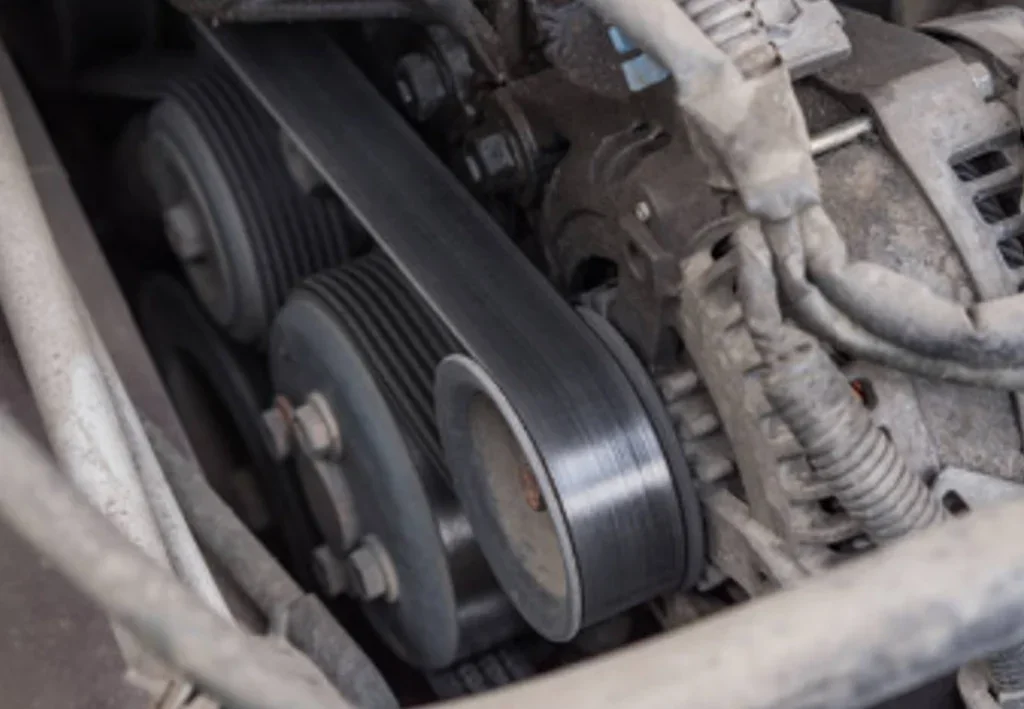
When a technician opens the hood to inspect an AC system, the service visit creates a direct access opportunity to evaluate components whose failure consequences extend far beyond air conditioning. The serpentine belt that drives the AC compressor is, in the majority of vehicle applications, the same belt that simultaneously drives the alternator, power steering pump, and water pump. Serpentine belt failure at highway speed is an immediately consequential event: the alternator stops charging within seconds, initiating battery drain; power steering assist is lost; and if the water pump is belt-driven, coolant circulation stops, beginning an engine overheating sequence that can produce warped cylinder heads, failed head gaskets, and scored cylinder walls within 10 to 20 minutes of operation — damages that commonly exceed $3,000 to $5,000 in repair costs. AC service intervals are, from a practical inspection standpoint, one of the best recurring opportunities to evaluate belt surface condition, crack development, glazing, fraying, and edge wear, as well as the condition of idler pulleys and the belt tensioner whose failure modes can cause equally sudden belt loss. Including this evaluation as a standard component of AC service adds essentially no time to the service visit while potentially preventing one of the most consequential roadside mechanical failures.
The Idaho Falls Dimension: Why This Matters Specifically Here
Idaho Falls drivers operate across a geographic range that makes roadside serpentine belt failure particularly consequential. The stretch of US-20 between Idaho Falls and the INL site west of Arco crosses 50-plus miles of high desert terrain with limited services — a belt failure in this corridor during summer heat or winter cold creates a situation that ranges from serious inconvenience to genuine safety concern depending on conditions. The US-26 corridor east toward Palisades and Swan Valley, and US-91 south toward Pocatello through Shelley and Blackfoot, offer similar stretches of limited assistance. High-altitude UV exposure at Idaho Falls’s 4,700-foot elevation degrades belt rubber compounds at an above-average rate, and the extreme temperature range — from sub-zero winter nights to 90°F summer afternoons — cycles belts through thermal stress ranges that accelerate crack development. Belt inspection during AC service is a systematic safeguard for Idaho Falls’s long-distance driving reality.
Protect every belt-driven system with one comprehensive service — Schedule Your AC Service at Grease Monkey — 2100 Channing Way, Idaho Falls, ID
Reason #11: Condenser and Evaporator Maintenance: Restoring Heat Exchanger Performance
Category of Importance: System Efficiency — Moderate Priority
The Technical Case
The refrigeration cycle that produces cooled air in a vehicle’s cabin depends at both its high-pressure and low-pressure ends on aluminum heat exchangers whose thermal transfer efficiency is directly proportional to the area of clean fin surface available for air contact. The condenser — mounted at the vehicle’s forward face, exposed directly to the road environment — releases heat absorbed from the cabin to the outside airstream. Any obstruction to airflow through the condenser fin array — whether from insects, road grime, agricultural debris, cottonwood seed, mineral deposits from irrigation spray, or fine silica dust from off-road driving — reduces effective condenser area, elevates head pressure, increases compressor work demand, and ultimately reduces cooling capacity while increasing fuel consumption and component stress. The evaporator, operating inside the dashboard in a persistently moist, moderate-temperature environment, is susceptible to biological colonization on its fin surfaces that simultaneously reduces heat transfer efficiency and degrades cabin air quality. Professional assessment and cleaning of both heat exchangers during AC service addresses the efficiency losses that accumulate over a season of normal operation in Eastern Idaho’s demanding environment.
The Idaho Falls Dimension: Why This Matters Specifically Here
The operating environment of vehicles in the Idaho Falls area presents condenser-fouling challenges across every season of the year. Spring brings cottonwood seed from the Snake River and its tributaries that packs condenser passages efficiently in vehicles parked outdoors. Summer introduces agricultural dust from the surrounding farmlands, mineral deposits from irrigation spray drift along rural roads in Bonneville and Jefferson counties, and insect accumulation on the condenser face during evening drives. Fall harvest season generates dense dust from potato and grain operations across the plain. Winter road salt and liquid deicer applications deposit residue on condenser surfaces that, left unaddressed across a winter, produce progressive fin corrosion. Each season’s contribution compounds, and by the time a driver notices reduced cooling performance on the first hot day of summer, the condenser efficiency loss may be substantial. A professional assessment and cleaning at Grease Monkey on Channing Way restores the heat exchange performance the system was designed to deliver.
Restore your system’s full cooling efficiency — inspect it today: Schedule Your AC Service at Grease Monkey — 2100 Channing Way, Idaho Falls, ID
Reason #12: Electrical Component Reliability: Blower Motors, Relays, and Climate Control Electronics
Category of Importance: System Reliability — Moderate Priority
The Technical Case
The effectiveness of a vehicle’s AC and HVAC system depends not only on the refrigerant circuit but equally on the electrical and electronic components that control, regulate, and power every operational function. The blower motor — a continuously operating electric motor that drives airflow through the cabin at all speeds and in all modes — is subject to carbon brush wear, armature bearing degradation, speed controller resistor failure, and contamination-induced overheating. Without a functioning blower motor, no amount of refrigerant charge or compressor function produces any airflow to the cabin. Equally critical are the compressor clutch coil and relay that engage and disengage the compressor in response to system pressure and thermostat inputs; the high-pressure and low-pressure safety switches that protect the compressor from catastrophic pressure excursions; the blend door actuators that direct airflow between heating and cooling modes; and in modern vehicles, the climate control module and vehicle CAN-bus communication that integrates AC operation with engine management. A professional AC service visit provides the framework for systematic electrical subsystem testing that identifies developing failures across all of these components before they produce operational failures during the season when the system is most needed.
The Idaho Falls Dimension: Why This Matters Specifically Here
Idaho Falls’s electrical environment is particularly challenging for vehicle HVAC system electronics. The winter application of road salt and liquid magnesium chloride on I-15, Channing Way, Sunnyside Road, and arterials throughout the city creates a persistent corrosive mist that infiltrates electrical connectors and accelerates terminal oxidation throughout underbody wiring systems. The dramatic thermal cycling experienced by Idaho Falls vehicles — from -15°F overnight lows to 90°F summer afternoons across a single annual cycle — stresses wiring harness insulation and induces micro-cracking at connector sealing points that progressively compromise electrical system integrity. Vehicles used for off-highway driving on the desert roads between Idaho Falls and the INL site, or for recreational trips to the Heise area gravel roads, introduce additional vibration and moisture stress to electrical connections. Annual electrical system assessment within the AC service framework is an appropriate response to Idaho Falls’s specific electrical degradation environment.
Verify every electrical component of your AC system — book now: Schedule Your AC Service at Grease Monkey — 2100 Channing Way, Idaho Falls, ID
Reason #13: Four-Season Defogging: The AC System’s Most Critical Cold-Weather Safety Function
Category of Importance: All-Season Safety — Moderate Priority
The Technical Case
Among the facts about automotive HVAC engineering that consistently surprise vehicle owners is this: the AC compressor engages automatically when the front defrost or defog mode is selected, regardless of outside temperature, regardless of season, and even when exterior conditions are well below freezing. The design rationale is grounded in the thermodynamics of dehumidification. Increasing the temperature of air reduces its relative humidity at the same moisture content, but does not reduce the quantity of water vapor present per cubic foot. When this warmer-but-still-humid air contacts a windshield surface that is cooler than the dew point of the airstream, condensation occurs at the glass surface. The only way to prevent this outcome is to reduce the absolute moisture content of the airstream — to remove water vapor, not merely redistribute it — and that can only be accomplished by passing the air across a cooled surface where the moisture condenses and is captured. That cooled surface is the evaporator, and the mechanism that cools it is the refrigeration cycle. An AC system with inadequate refrigerant charge cannot maintain the evaporator at temperatures cold enough to condense meaningful quantities of moisture from the defrost airstream, producing a defrost function that is slow, incomplete, and that leaves residual condensation at glass edges and corners.
The Idaho Falls Dimension: Why This Matters Specifically Here
Idaho Falls winters create some of the most severe interior vehicle fogging conditions experienced by drivers anywhere in the Mountain West. The city’s location in a river valley on the high-altitude Snake River Plain produces temperature inversions and cold air pooling that can keep overnight temperatures at -10°F to -20°F for extended periods. When a driver enters a vehicle that has been parked at these temperatures and begins to breathe, body heat from even a single occupant raises the interior temperature and humidity simultaneously, producing immediate condensation on all glass surfaces — front, side, and rear. The morning school run from the Ammon residential areas into Idaho Falls, the pre-dawn departure for the INL commute west on US-20, the early-morning drive to EIRMC for a medical shift — each of these common Idaho Falls scenarios begins with exactly this fogging challenge. A fully functional AC defogging system resolves it in under two minutes; a compromised one may never fully resolve it during a short commute, leaving the driver operating with impaired peripheral vision throughout.
Ensure crystal-clear windows in every Idaho Falls season — Schedule Your AC Service at Grease Monkey — 2100 Channing Way, Idaho Falls, ID
Reason #14: Trade-In Value and Private Sale Strength: Service History as a Negotiating Asset
Category of Importance: Vehicle Asset Value — Moderate Priority
The Technical Case
The resale transaction value of any used vehicle is a function of both its objective mechanical condition and the buyer’s confidence in their assessment of that condition — and a documented service history from a recognized national brand serves both objectives simultaneously. Consumer automotive market research consistently places functional air conditioning among the highest-priority “must-have” features for used vehicle buyers, with surveys indicating approximately 80 percent of buyers will not purchase a vehicle with known AC deficiencies without a corresponding price concession. Dealers applying systematic valuation methodology apply a discount that typically exceeds the actual repair cost to compensate for the uncertainty, logistics, and time cost of post-purchase repair arrangements. A vehicle presented with complete AC service records from a certified national service provider demonstrates not only that the system is currently functional but that the previous owner maintained it systematically — a signal that correlates with better overall vehicle condition and reduces the risk premium that buyers implicitly demand when purchasing used vehicles without service documentation.
The Idaho Falls Dimension: Why This Matters Specifically Here
Idaho Falls is the used-vehicle transaction center for Eastern Idaho, with dealership concentrations along Broadway, Sunnyside, and Channing Way serving buyers from throughout Bonneville, Jefferson, Bingham, and Fremont counties. The regional buyer profile — practical, value-oriented, and often evaluating vehicles for specific work or commuting applications — makes documented mechanical history a particularly strong purchase-decision factor. A service record from Grease Monkey at 2100 Channing Way carries specific local credibility: it is a recognized national brand that Idaho Falls buyers know, operating in a location they can verify, providing documentation they can trust. When the time comes to trade in or privately sell a vehicle in the Eastern Idaho market, that documented service history translates into measurable transaction value that consistently exceeds the cumulative cost of the service visits that created it.
Build documented value for your next vehicle transaction — Schedule Your AC Service at Grease Monkey — 2100 Channing Way, Idaho Falls, ID
Reason #15: Environmental Ethics and Legal Compliance: Completing the Case for Professional Service
Category of Importance: Environmental Responsibility — Ongoing Priority
The Technical Case
The decision to have a vehicle’s AC system serviced by a certified professional rather than a non-certified DIY approach or uncertified facility is, at its foundation, both a legal and an ethical choice. The Clean Air Act’s Section 609 provisions administered through the EPA’s MVAC program establish clear legal requirements: intentional venting of automotive refrigerants is prohibited; recovery, recycling, and recharging operations may only be performed by technicians who have passed EPA-approved certification examinations; and service facilities must use certified refrigerant recovery equipment. The environmental basis for these requirements is compelling: R-134a’s 100-year global warming potential of approximately 1,530 times that of carbon dioxide, combined with the hundreds of millions of pounds of R-134a present in the registered vehicle fleet, represents a climate risk that responsible individual and institutional choices can meaningfully reduce. Every pound of refrigerant that a certified facility recovers and recycles rather than venting to the atmosphere is a pound that does not contribute its 1,530-CO₂-equivalent GWP to the atmospheric burden. The aggregate of individually responsible choices by Idaho Falls drivers adds up to a meaningful contribution to both regulatory compliance and the health of the regional and global atmosphere.
The Idaho Falls Dimension: Why This Matters Specifically Here
For Idaho Falls residents, environmental responsibility is inseparable from the quality of life that makes Eastern Idaho exceptional. The Snake River that flows through the city supports both Idaho Falls’s municipal water supply and the downstream agricultural economy that defines the region’s identity. The wild fisheries in the South Fork of the Snake below Palisades Dam and in the Henry’s Fork downstream of Island Park are world-class natural resources that depend on watershed quality and atmospheric conditions that responsible emissions management helps maintain. The Yellowstone ecosystem visible on the northern horizon from elevated points around Idaho Falls is one of the most ecologically scrutinized and environmentally important landscapes on the continent. Every Idaho Falls driver who chooses a certified service facility — like Grease Monkey at 2100 Channing Way — chooses to participate in the responsible management of automotive refrigerants as the regulated environmental substances they are, contributing to the clean air and healthy watersheds that define the Eastern Idaho quality of life.
Make the responsible, compliant choice for Idaho Falls’s environment — Schedule Your AC Service at Grease Monkey — 2100 Channing Way, Idaho Falls, ID
Author’s Bio — Phillip Paul Gilliam
Phillip Gilliam is a veteran journalist and former Editor-in-Chief with 50+ years of publishing experience and thousands of published articles. Specializing in automotive, trucking, and digital publishing, he creates authoritative, search-optimized content built on real-world expertise and editorial excellence. To learn more about Phil, visit http://www.phillipgilliam.com/about.html or contact Phil at [email protected]. He would love to hear from you!
Citations and Primary Sources
1. U.S. Department of Energy. “Fuel Economy and Air Conditioning Effects.” energy.gov. https://www.energy.gov/energysaver/electric-vehicles/fuel-economy-driving-conditions
2. U.S. Environmental Protection Agency. “Motor Vehicle Air Conditioning (MVAC) System Servicing.” EPA.gov. https://www.epa.gov/mvac
3. U.S. Environmental Protection Agency. “Refrigerant Transition and Environmental Impacts — MVAC Program.” https://19january2021snapshot.epa.gov/mvac/refrigerant-transition-environmental-impacts_.html
4. IPCC. Sixth Assessment Report (AR6), Working Group I. “Global Warming Potentials Table.” IPCC, 2021. https://www.ipcc.ch/report/ar6/wg1/
5. American Academy of Pediatrics. “Hot Cars and Child Heatstroke Prevention.” HealthyChildren.org. https://www.healthychildren.org
6. National Weather Service. “Heat Safety — Children, Pets, and Vehicles.” weather.gov. https://www.weather.gov/safety/heat-children-pets
7. The Zebra Insurance. “Hot Car Death Statistics 2026.” https://www.thezebra.com/resources/research/hot-car-death-statistics/
8. Nashville Performance. “Air Conditioning and Fuel Efficiency: A Complete Guide.” https://nashvilleperformance.com/impact-of-air-conditioning-on-fuel-efficiency/
9. National Renewable Energy Laboratory (U.S. DOE). “Impact of Vehicle Air-Conditioning on Fuel Economy and Emissions.” NREL Report. https://docs.nlr.gov/docs/fy00osti/28960.pdf
10. NAPA Know How. “Mold in the Vehicle Air Conditioner — How Serious Is It?” https://knowhow.napaonline.com/mold-air-conditioner-serious/
11. Assurance Tire and Service. “Complete Guide to Automotive Heating and Air Conditioning Maintenance.” https://assurancetire.com/the-ultimate-guide-to-automotive-heating-and-air-conditioning-maintenance/
12. Kelley Blue Book. “Car AC Maintenance Tips.” KBB.com. https://www.kbb.com/car-advice/air-conditioning/
13. Corse Automotive. “How Often to Service Your Vehicle’s Air Conditioning.” https://www.corseautomotive.com/how-often-should-you-service-your-car-s-air-conditioning-system
14. Car Care Site. “AC Compressor Failure: Symptoms, Costs, and Environmental Impact.” https://carcaresite.com/bad-car-ac-compressor-symptoms/
15. Rohnert Park Transmission. “AC Compressor Replacement Cost in 2026.” https://rohnertparktransmission.com/blog/ac-compressor-replacement-cost-2026
16. BonAir. “Air Conditioning’s Role in Vehicle Resale Value.” https://bonair.co.uk/the-role-of-air-conditioning-in-vehicle-resale-value/
17. Auto AC Service. “Value Impact of Repairing AC Before Selling.” https://www.autoacservice.com/does-fixing-a-cars-ac-before-selling-it-add-value-to-the-vehicle/
18. WeatherSpark. “Average Weather in Idaho Falls, Idaho, Year Round.” https://weatherspark.com/y/2537/Average-Weather-in-Idaho-Falls-Idaho-United-States-Year-Round
19. BestPlaces.net. “Climate in Idaho Falls, Idaho.” https://www.bestplaces.net/climate/city/idaho/idaho_falls
20. Idaho Department of Environmental Quality. “Eastern Idaho Regional Air Quality.” DEQ.Idaho.gov. https://www.deq.idaho.gov/air-quality/
21. Idaho National Laboratory. “About INL — Location and Community.” INL.gov. https://www.inl.gov
22. City of Idaho Falls. “Community Profile — Idaho Falls, Idaho.” https://www.idahofalls.gov
23. Idaho Department of Fish and Game. “South Fork Snake River Fishery.” idfg.idaho.gov. https://idfg.idaho.gov
24. Mavis Discount Tire. “Vehicle AC System Care: 9 Best Practices.” https://www.mavis.com/learning-center/beat-summer-heat-9-ways-take-care-ac-system/
25. FullSpeed Automotive / Grease Monkey. “About Grease Monkey — National Franchise Network.” https://greasemonkeyfranchise.com/why-grease-monkey/
26. Franchising.com. “FullSpeed Automotive Celebrates 700th Location.” https://www.franchising.com/news/20220202_fullspeed_automotive_celebrates_milestone_700th_store_with_grease_monkey_op.html
27. Winsen Sensor. “R-134a Refrigerant Properties and Environmental Impact.” https://www.winsen-sensor.com/knowledge/r-134a-refrigerant.html
28. TRADESAFE Safety Blog. “Understanding EPA Refrigerant Regulations, 2025.” https://trdsf.com/blogs/news/epa-refrigerant-regulation
29. Arrive Alive. “Windshield Defogging: Science and Driving Safety.” https://www.arrivealive.mobi/winter-driving-windscreen-visibility-and-defogging-the-windscreen
30. Idaho Falls Chamber of Commerce. “About Idaho Falls — Regional Overview.” https://www.idahofallschamber.com
© 2026 Grease Monkey, written by Phillip Paul Gilliam. All rights reserved. Content created exclusively for Grease Monkey, 2100 Channing Way, Idaho Falls, ID 83404. Part of the FullSpeed Automotive family of brands.
Stop by today.
- Grease Monkey Center #1047 Address: 2100 Channing Way, Idaho Falls, ID, 83404
- Manager: Stettson James
- Services: Air Conditioning Services, Battery Services, Brake Services, Engine Services, Filter Services, Fluid Exchange Services, Headlight Services, Oil Changes, Power Steering, Tire Services, Transmission Services, Wiper Replacement Services
Your car will thank you. And your wallet will too.

Plan Your Visit
Find a location near you, explore current deals, and get everything you need before you roll in.