Top 15 Reasons to Get Your Brakes Inspected and Serviced in Laramie, Wyoming
An Authoritative Guide for Vehicle Owners and Drivers in “The Gem City of the Plains”
Grease Monkey 225 Wister Dr, Laramie, WY 82070 Has Over 630 Google Reviews With A 4.4 Star Rating
Editorial Authority Statement: This article was researched and written by Phillip Paul Gilliam, a veteran journalist and former Editor-in-Chief with 50+ years of professional publishing experience in automotive, trucking, and technical media. The brake service recommendations cited here are supported by current data from NHTSA, WYDOT, peer-reviewed Wyoming crash studies, and federal safety agencies. The Grease Monkey location in Laramie at 225 Wister Dr is operated under the FullSpeed Automotive banner — one of North America’s largest automotive service networks with more than 900 locations, 435 CARFAX 2025 Top Shop winners, and ASE-certified technicians at every service bay. Laramie’s combination of extreme elevation, violent seasonal winds, severe subzero temperatures, and the highest-elevation university in Division I athletics makes professional brake maintenance not optional — it is an operational requirement for survival on Wyoming’s most demanding roads.
Introduction
There is no city in the continental United States that sits quite like Laramie. Perched on Wyoming’s high Laramie Plains at 7,220 feet above sea level — the same elevation as the University of Wyoming, the highest Division I institution in the nation — Laramie is hemmed to the east by the Sherman Hill summit on Interstate 80, which crests at 8,640 feet and ranks among the most dangerous and frequently closed stretches of interstate highway in the American West. To the west, Wyoming Highway 130 climbs to 10,847 feet over Snowy Range Pass, making it the second-highest paved road in Wyoming. To the north and south, US-287 cuts through open range ranchland where cattle crossings require zero warning and stopping distances must be flawless. Laramie is a city whose geography demands more from a vehicle’s brake system than nearly any other urban area in the country — before a driver even adds winter ice, 70-mile-per-hour crosswinds, or a University of Wyoming football Saturday to the equation.
The stakes here are specific and well-documented. A 2022 peer-reviewed study published in the Journal of Safety Research analyzed ten years of Wyoming crash data (2010–2019) and found that vehicles 15 years old or older were 1.8 times more likely to be involved in a brake failure crash resulting in injury or death on mountainous Wyoming roadways than newer vehicles. Laramie’s student population, drawn from all 50 states, contributes a disproportionate share of older, high-mileage, deferred-maintenance vehicles to Albany County roads — and those vehicles face some of the steepest grades and most volatile wind conditions in the country the moment they roll onto I-80. Meanwhile, Ivinson Memorial Hospital, Laramie’s primary hospital, carries a Trauma Receiving Facility designation — not a full trauma center — meaning the most severe brake-failure crash outcomes may require a patient transfer to Cheyenne Regional Medical Center (Level III, 49 miles southeast) or Wyoming Medical Center in Casper (Level II, 152 miles north). Prevention, in every practical sense, is the only acceptable brake strategy in Laramie.
This guide examines 15 distinct, research-supported reasons why brake inspection and service is an urgent priority for Laramie vehicle owners, organized from the most immediately life-threatening to the long-term value of a documented service record. Whether you commute on Grand Avenue to the UW campus, haul a trailer down Snowy Range Road toward Centennial, or drive the I-80 corridor toward Cheyenne for work, these reasons apply directly to your roads, your community, and your safety. The Grease Monkey at 225 Wister Dr is Laramie’s trusted resource for the full-spectrum brake service that Albany County roads require — and this article will explain, in plain technical and community-specific terms, exactly why that service matters.
1. Sherman Hill: The I-80 Grade Where Brake Failures Become Federal Statistics
Category: Most Critical – How does sustained descent down hills and mountains affect my brake system, especially when driving on I-80?
Every extended downhill grade places the same physical demand on a vehicle’s brake system: the kinetic energy of a moving mass must be converted to heat through friction, and the system must manage that heat without allowing brake fade, fluid boil, or pad glazing to reduce stopping power. On grades longer than two miles, this demand intensifies exponentially. Federal Motor Carrier Safety Administration data shows that brake-system defects are the single most cited critical vehicle factor in large-truck crashes, and NHTSA data from the National Motor Vehicle Crash Causation Survey found that nearly 22% of vehicle defect-related crashes — approximately 264,000 accidents per year — involve defective brakes. The geometry of a sustained descent does not forgive marginal brake components: heat builds faster than it can dissipate, fluid absorbs moisture and loses boiling resistance, and worn pads deliver a fraction of their rated stopping force. [1][2]
The Sherman Hill section of Interstate 80 between Laramie and Cheyenne is exactly this kind of descent, played out on one of the most heavily trafficked freight corridors in the United States. The summit crests at 8,640 feet — visible from Laramie’s eastern city limits — and the grade drops toward Cheyenne over a sustained stretch that has earned its own chapter in Wyoming history: the Wyoming State Historical Society published Snow Chi Minh Trail: The History of Interstate 80 Between Laramie and Walcott Junction specifically because the difficulty of this corridor is historic and documented. WYDOT routinely closes the Sherman Hill segment for crashes, high winds, and ice, and multi-vehicle pileups on this grade — including rolling closures triggered by incidents at mile marker 259 eastbound involving 20 or more vehicles — appear in the news cycle several times each winter. For anyone driving east from Laramie, the first miles of I-80 are a direct brake performance test at altitude, in frequently compromised weather, with commercial truck traffic running alongside. [3][4] Sherman Hill doesn’t forgive passengers. If you drive east on I-80 from Laramie — whether for a Cheyenne errand, a Denver airport run, or a commute to work on the Front Range — you are committing your brake system to one of Wyoming’s most demanding descents every single trip. The Grease Monkey at 225 Wister Dr, Laramie, WY 82070 performs comprehensive brake inspections that specifically assess the condition of brake fluid moisture content, pad thickness, and rotor health — the exact factors that determine whether your vehicle handles Sherman Hill safely or becomes a roadside statistic. Book your inspection at https://www.greasemonkey.com/locations/wy/laramie/225-wister-dr/ before your next eastbound trip.
2. Wyoming’s Horizontal Gale Events: How 70+ mph I-80 Crosswinds Turn Brake Control Into a Survival Decision
Category: Most Critical – How do Laramie’s severe wind events impact my emergency braking?
Crosswind forces acting on a moving vehicle transfer lateral load between tires, altering the effective weight distribution at each contact patch — the precise footprint of rubber that determines braking grip. When a sudden gust strikes at highway speed, the driver instinctively steers into the gust and may simultaneously brake. But in that microsecond, the vehicle’s weight has shifted: the upwind tires carry less load, the downwind tires carry more, and braking force is applied unevenly across a platform that is no longer in balanced contact with the road. For vehicles with worn, glazed, or mismatched brake components — the kind of incremental degradation that often goes unnoticed until a crisis — this combination of crosswind and emergency braking can generate a yaw or spin that no amount of driver skill can fully recover. WYDOT implemented a weight-based wind closure system in 2023 specifically because wind-related blow-overs of light, high-profile vehicles on I-80 were occurring at a rate that demanded structured regulatory intervention. [5]
Laramie sits at the junction of conditions that produce some of the most severe recorded wind events in the continental United States. On March 12, 2026, the Laramie Regional Airport recorded an 81-mile-per-hour gust — tied for the fourth-highest wind reading ever at that station — and a personal weather station roughly halfway between Laramie and Centennial measured 109 miles per hour. The all-time airport record stands at 90 miles per hour, set June 27, 2017. The Laramie Plains offer no topographic break — no ridgeline, no forest, no urban density — to slow the rotor winds that pour down from the Medicine Bow Mountains or race across the open Wyoming plateau. The I-80 approach corridors east of Laramie and the stretch of US-30 Business through town are among the most wind-exposed urban driving environments anywhere in the Mountain West. [6] When a 90-mile-per-hour gust hits the side of your vehicle on the exposed plains east of Laramie, brake system condition becomes the margin between a controlled stop and a rollover. The Grease Monkey team at 225 Wister Dr, Laramie, WY 82070 checks brake balance, pad uniformity, and hydraulic line integrity — the components that determine whether your system responds predictably when you need an emergency stop during a crosswind event. Don’t wait for the wind to find the weak link. Schedule your service at https://www.greasemonkey.com/locations/wy/laramie/225-wister-dr/ today.
3. University of Wyoming’s 12,000 Students: Out-of-State Vehicles at 7,220 Feet and Wyoming’s Most Concentrated Deferred-Maintenance Risk
Category: Most Critical – Does deferred maintenance on other people’s vehicles affect my driving when I am driving at 7,220 feet above sea level in Laramie?
The relationship between vehicle age and brake failure risk is not theoretical — it is measurable and significant. The 2022 peer-reviewed Wyoming study published in the Journal of Safety Research found that vehicles 15 years old or older were 1.8 times more likely than newer vehicles to be involved in a brake failure crash resulting in serious injury or death on Wyoming mountain roads. College student vehicle fleets skew older and higher-mileage by economic necessity: students drive the paid-off family hand-me-down, the $4,000 used car, or the decade-old truck purchased between semesters. These vehicles frequently carry deferred maintenance histories — last brake inspection unknown, fluid never flushed, pads worn close to the wear indicator — because students are managing tuition, rent, and food costs ahead of automotive service. NHTSA’s brake defect data, which links nearly 264,000 annual crashes to defective brakes, captures a demographic that disproportionately includes young, economically constrained drivers in older vehicles. [1][2]
The University of Wyoming enrolls approximately 12,000 students drawn from all 50 states and more than 80 countries, most of whom arrive in Laramie — at 7,220 feet, the highest Division I campus in the country — in vehicles conditioned to lower-elevation environments. Those vehicles immediately face altitude-adjusted braking dynamics: thinner air affects engine braking efficiency, temperature swings between sun-warmed campus streets and the exposed I-80 on-ramps stress brake fluid, and the concentration of student parking on the Hill, near Ivinson Avenue, and along Grand Avenue means heavy stop-and-go cycling daily. On football Saturdays, this student-vehicle density is multiplied by visiting fans pouring in from Cheyenne, Denver, and Casper, many of whom also bring vehicles that have never been serviced for high-altitude or winter-grade Wyoming conditions. Albany County sees the full spectrum of vehicle maintenance neglect concentrated into a student population that uses brakes hard, on demanding roads, far from their home mechanics. [7]
Arriving at UW shouldn’t mean arriving with your brake service clock already ticking. The Grease Monkey at 225 Wister Dr, Laramie, WY 82070 is positioned to serve the UW community with fast, professional brake inspections that catch worn pads, moisture-saturated fluid, and failing calipers before a night drive down Sherman Hill exposes the problem. Parents sending students back to Laramie after a semester break should schedule a brake check alongside every oil change. Visit https://www.greasemonkey.com/locations/wy/laramie/225-wister-dr/ to set up an appointment before the fall semester begins.
4. Snowy Range Pass at 10,847 Feet: Wyoming’s Highest Open Road and the Unsupported Mountain Descent That Begins and Ends in Laramie
Category: High Priority – What impact does high mountain pass descents of over 10,000 feet above sea level have on my brakes?
Mountain pass descents impose a specific and compounding stress on brake systems called brake fade — the progressive loss of stopping power that occurs when braking heat accumulates faster than it can be dissipated from rotors, pads, and fluid. Brake fade operates on a clear physical progression: pad material begins to gas at high temperatures, creating a thin vapor layer between pad and rotor; fluid boils, introducing compressible gas bubbles into the hydraulic circuit; and rotors warp as uneven heat cycling deforms the steel surface. Federal safety guidelines recommend engine braking — using lower gears to slow descent speed — specifically because brake fade on mountain passes is predictable and preventable only when the friction system is not overloaded. A vehicle with compromised brake components enters a mountain descent with a reduced heat threshold, meaning fade begins sooner, recovers more slowly, and is more severe than on a properly maintained system. The higher the pass, the longer and steeper the descent, and the less margin a degraded brake system has before it reaches a danger threshold. [8]
Wyoming Highway 130, the Snowy Range Scenic Byway, rises from Laramie’s western edge through lodgepole pine forests and alpine tundra to a summit of 10,847 feet at Snowy Range Pass — the second-highest paved road in Wyoming, open only from around Memorial Day through October before seasonal snowpack closes it until the following spring. The byway is 29 miles of technical mountain driving, with the upper sections reaching grades that require attentive speed management in both directions. Laramie drivers headed to Centennial, Saratoga, or the Medicine Bow-Routt National Forest access points use WY-130 regularly during summer months, and recreational visitors come from as far as Denver and Casper to drive the route, camp at Battle Lake and Lake Marie, and hike the high-country trails. There is no commercial vehicle support or emergency brake ramp on the upper section of the Snowy Range Byway — if a driver’s brakes fail on the western descent toward Saratoga, the next services are miles away on an unpaved shoulder with dramatic drop-offs. [9]
The Snowy Range is Wyoming’s reward for Laramie drivers — and it demands full payment from your brake system. Before heading up WY-130 for a summer weekend at Battle Lake or a fall foliage drive through the Medicine Bow, have your brakes inspected by the ASE-certified technicians at Grease Monkey, 225 Wister Dr, Laramie, WY 82070. A brake check before a mountain drive is not extra caution — it’s basic due diligence. Schedule at https://www.greasemonkey.com/locations/wy/laramie/225-wister-dr/.
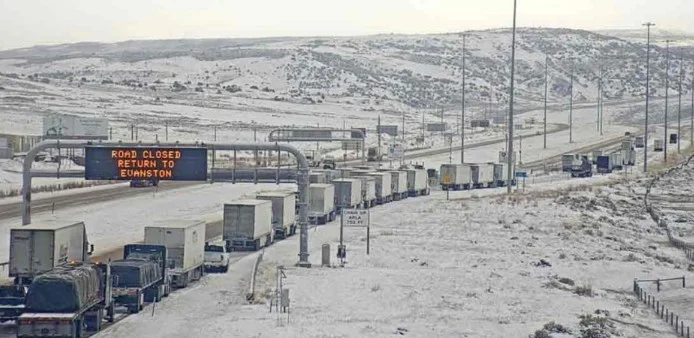
5. I-80 Closure Cascade: When WYDOT Shuts the Interstate and Semi-Trucks Route Through Laramie’s Residential Grid
Category: High Priority – Are interstate shut-downs a risk for me if my brakes are not serviced regularly?
When a major interstate closes unexpectedly, commercial traffic does not wait. Trucking operations on tight delivery windows immediately seek alternate routing — and on I-80 between Laramie and Cheyenne, that routing runs directly through Laramie’s surface streets: Grand Avenue, Snowy Range Road, Garfield Street, and 3rd Street become impromptu truck corridors within minutes of a closure announcement. This routing shift is not hypothetical; it is a documented pattern that occurs multiple times each winter season on one of the nation’s most closure-prone interstate segments. The weight and braking characteristics of an 80,000-pound loaded semi-truck on a surface street designed for passenger cars create brake-demand scenarios for local drivers that are rarely encountered in normal conditions: sudden stops as trucks negotiate tight turns, merge conflicts as hundreds of vehicles simultaneously exit I-80, and chain-reaction braking in slow-moving traffic that stress brake systems far beyond the steady-speed highway driving that preceded the closure. [3][4]
Laramie’s grid is not designed to absorb I-80 overflow traffic gracefully. Grand Avenue, the city’s main commercial corridor running from the university’s east end toward the I-80 interchanges, narrows at key intersections near the Albany County Fairgrounds and the Carbon Trail subdivision. Snowy Range Road, which connects the west side residential neighborhoods to I-80, becomes a backup corridor as eastbound drivers seek surface alternatives. The intersections at 30th Street, Grand Avenue and Garfield Street, and the College Drive interchange become congestion pinch points where braking events multiply — and where a vehicle with worn rotors, a sticking caliper, or low brake fluid is most likely to experience a rear-end collision it cannot prevent. WYDOT’s rolling closure protocols, triggered by crashes and wind events as frequently as several times per month during winter months, make Laramie’s residential streets a regular overflow corridor for the nation’s primary east-west freight route. [5]
When I-80 closes and Laramie’s streets absorb the cascade, your brake system gets tested by the kind of sudden, repeated braking that exposing wear the fastest. The Grease Monkey at 225 Wister Dr, Laramie, WY 82070 — conveniently located near the I-80 corridor — can identify calipers that drag, pads that are near their wear limit, and fluid that’s absorbed too much moisture to be reliable in emergency stops. One inspection before winter could mean the difference between stopping in time and not. Book at https://www.greasemonkey.com/locations/wy/laramie/225-wister-dr/.
6. Albany County Medical Isolation: When Brake Failure on US-287 Means a Long Road to the Nearest Trauma Center
Category: High Priority – When driving on rural roads, how concerned should I be about getting to a Trauma Receiving Facility in a timely manner, and what impacts delays in getting medical treatment?
Rural and semi-rural medical access gaps transform vehicle safety from a personal inconvenience into a community health crisis. When brake failure causes a serious crash in an urban area with Level I or Level II trauma centers, the window between injury and definitive surgical care is measured in minutes. In rural areas, it is measured in hours — and outcomes in traumatic injury care are directly tied to time-to-intervention. The “golden hour” concept, documented extensively in emergency medicine research, establishes that survival rates and long-term outcomes for severe trauma drop significantly when definitive care is delayed beyond 60 minutes. In counties where the nearest trauma-capable hospital is a Trauma Receiving Facility — a category that includes small rural clinics and hospitals without surgical coverage — patients requiring operative intervention must be stabilized and transferred before any surgical care begins, adding 30 to 90 minutes or more to the critical time window. [10]
Ivinson Memorial Hospital, Laramie’s primary hospital, holds a Trauma Receiving Facility designation — the entry-level tier in Wyoming’s trauma system, which provides initial stabilization and transfer when cases exceed local surgical capacity. The nearest Level III trauma center with neurosurgery capability is Cheyenne Regional Medical Center, 49 miles east via I-80 — a road that may itself be closed during the exact weather events that cause brake-related crashes. The nearest Level II trauma center is Wyoming Medical Center in Casper, 152 miles north on I-25 — a drive of approximately two hours and 24 minutes under good conditions. For a driver whose brakes fail on US-287 north of Laramie near Bosler Junction, or on the two-lane approach roads through Centennial toward the Snowy Range, the path to definitive trauma care is long, uncertain, and weather-dependent. Prevention is not a slogan in Albany County — it is the only trauma strategy that reliably works. [10][11]
Laramie’s isolation from high-level trauma care means that brake failure here carries consequences that brake failure in Denver, Cheyenne, or Casper simply does not. The ASE-certified technicians at Grease Monkey, 225 Wister Dr, Laramie, WY 82070, perform the brake inspections that intercept failure before it happens — checking hydraulic systems, pad depth, rotor condition, and caliper function with the thoroughness that Albany County’s medical geography demands. Don’t let geography dictate your outcome. Schedule your inspection at https://www.greasemonkey.com/locations/wy/laramie/225-wister-dr/.
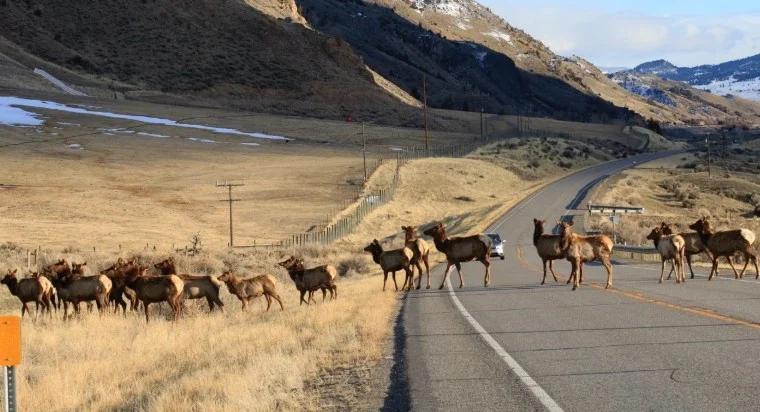
7. US-287 Open Range Livestock Corridor: Sudden Cattle And Wildlife Crossings and the Brake System Demands of Wyoming’s Rural Agricultural Highway
Category: Important – How serious is the issue of open range livestock cattle crossings and the demands that puts on my vehicle’s brakes?
A 1,500-pound Angus steer or a huge buck deer entering a roadway is not a statistic — it is a physics problem. At 65 miles per hour, a vehicle covers 95 feet per second. A deer takes four-fifths of a second to cross a lane; a cow or horse takes longer, moves less predictably, and is large enough to destroy a vehicle’s passenger compartment on impact. The only variable a driver controls in a livestock encounter is stopping distance — and stopping distance is entirely a function of brake system condition. NHTSA data shows that 22% of vehicle defect-related crashes involve defective brakes; in rural open-range states, where livestock encounters are unannounced and common, that deficiency rate becomes life-threatening in a category of collision that urban safety data often underrepresents. The FMCSA has long recognized livestock presence as a distinct hazard category for commercial drivers specifically because the brake demands of a sudden large-animal stop exceed normal highway braking by a significant margin. [1][5]
Wyoming is a “fence out” state under its open range doctrine — one of the last in the continental United States where the law does not require livestock owners to prevent cattle from wandering onto public highways in designated open range areas. Wyoming statute places responsibility on the motorist in open range zones: courts have consistently found that drivers who collide with loose livestock in open range areas may have no legal recourse against animal owners. US-287 north of Laramie through the Bosler Junction area and the ranch corridor toward Medicine Bow passes through active open range lands where Hereford and Black Angus cattle graze unfenced pastures that abut the highway right-of-way. At dawn, dusk, and night — the periods when livestock are most likely to move toward roads — visibility is reduced exactly when brake response time matters most. Ranchers along this corridor have grazed these pastures for generations; cattle crossings are a known condition, not an anomaly. [12]
The first time your brakes are tested on US-287 north of Laramie may be the only warning you get. The Grease Monkey at 225 Wister Dr, Laramie, WY 82070 can verify that your brake system delivers the maximum stopping power your vehicle is capable of — before a cattle encounter on a dark stretch of highway north of Bosler turns a close call into a collision. Rural driving in Albany County requires ranch-grade brake performance. Schedule your check at https://www.greasemonkey.com/locations/wy/laramie/225-wister-dr/.
8. Extended Subzero Parking: How Laramie’s Multi-Day Deep Freeze Events Compress Hydraulic Seals and Create Brake Pressure Loss on First-Drive Mornings
Category: Important – How does extremely low temperature affect micro-leaks in my vehicle’s braking system, especially if my vehicle is parked for a long time?
Hydraulic brake systems rely on elastomeric seals — rubber compounds engineered to maintain a precise compression fit inside caliper pistons, master cylinders, and wheel cylinders — to prevent fluid loss and maintain operating pressure. These seals are rated for a specific temperature range, and when ambient temperatures drop significantly below that range, the physics are straightforward: rubber hardens and contracts. A seal that maintains perfect compression at 40°F can develop micro-leaks at -10°F, and a seal already aged or slightly deformed by normal use reaches its compression failure point sooner. Research on hydraulic seals in extreme cold confirms that water inside brake fluid can freeze in severe cold events, increasing pedal stiffness and reducing hydraulic response — and that constant thermal cycling between extreme cold and operating heat accelerates stress fractures in both metal and elastomer brake components. The first brake application after an extended overnight or multi-day freeze is the highest-risk moment in a cold-climate vehicle’s daily cycle. [13]
Laramie regularly experiences multi-day stretches of subzero temperatures — not the brief overnight dips familiar to Front Range Colorado or the Denver metro, but sustained cold events where temperatures stay below zero Fahrenheit for 48 to 72 hours or longer without the daytime warming that allows systems to recover. The UW campus, the residential grid along Corthell Road and Custer Street, and the student apartment complexes near 30th Street see entire vehicle fleets sitting overnight and through weekends in conditions that stress every rubber component in the brake system. A student returning to a car that has sat for three days in a -15°F parking lot on Boulder Drive or at the Corbett Pool lot faces exactly the conditions where aged seals fail silently — the pedal feels slightly spongy, the first stop feels sluggish, and by the time the vehicle has warmed up and the driver has noticed, they are already on University Avenue approaching the Hill traffic. [14]
Don’t let a Laramie deep freeze turn your first stop of the morning into a brake system surprise. The Grease Monkey at 225 Wister Dr, Laramie, WY 82070 checks seal integrity, master cylinder condition, and brake fluid quality — the exact variables that determine whether your brake system survives Wyoming winters in full working order. A fluid flush and seal inspection before winter saves the moment that matters most: the first pedal press on a -20°F morning. Book your winter prep appointment at https://www.greasemonkey.com/locations/wy/laramie/225-wister-dr/.
9. UW Cowboys Game Day Traffic: When 29,000 Fans Converge on a City of 30,000 and Stadium Approach Roads Become Brake Endurance Tests
Category: Important – What exactly happens to my vehicle’s braking system during constant stop-and-go traffic before and after games at the War Memorial Stadium?
Stop-and-go traffic is the most thermally and mechanically demanding routine driving condition a brake system faces — more demanding, per mile, than highway driving and more unpredictable than mountain descents. In stop-and-go conditions, brakes are applied repeatedly from low speeds, which means rotors never achieve the airflow-assisted cooling that highway driving provides. Heat accumulates incrementally, pad material makes thousands of low-energy contact cycles instead of fewer high-energy ones, and any caliper that is slightly sticky or any pad that is slightly glazed delivers measurably less friction per cycle than a fully serviced component. AAA estimates that brake-related repairs cost American drivers an average of $300 to $1,000 per axle, but the cost of a brake failure event in congested game-day traffic — where vehicles are stopped closely together at low speed — is the rear-end collision that brake wear makes possible on the most crowded streets in the community. [15]
War Memorial Stadium — Jonah Field at War Memorial Stadium — holds approximately 29,181 fans and sits at 7,222 feet above sea level, making it the highest FBS football stadium in the country. On home game days, that attendance figure approaches Laramie’s entire population of approximately 30,000 — transforming the city, as the Visit Laramie website notes, into effectively the second-largest city in Wyoming for the duration of the event. The stadium approach corridors — Willett Drive, Sorority Row, Lewis Street, and the 9th Street corridor from I-80 — experience concentrated stop-and-go cycling before and after games, with vehicles from Cheyenne, Casper, Denver, and Colorado’s Front Range mixing with campus traffic in grids that are simply not designed for the volume. Tailgate entry and exit on the Hill, the Prexy’s Pasture lots, and the east campus surface lots generate exactly the kind of repetitive, low-speed braking that surfaces worn pads, sticking calipers, and degraded fluid pressure before the driver reaches the I-80 on-ramp for the drive home. [16]
Cowboys football in Laramie is one of Wyoming’s great traditions — and the brake system that got you there safely needs to get you home. The Grease Monkey team at 225 Wister Dr, Laramie, WY 82070 keeps game-day driving from becoming a brake-wear revelation in the worst possible context. Don’t wait for the post-game backup on Willett Drive to tell you what a pre-season brake check would have said months earlier. Schedule your service at https://www.greasemonkey.com/locations/wy/laramie/225-wister-dr/.
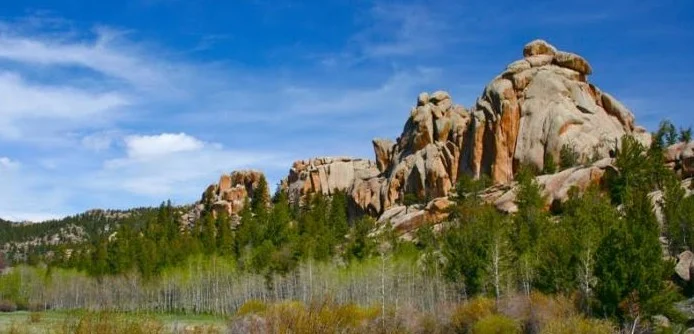
10. Vedauwoo Recreation Area: Post-Off-Road Brake Contamination at Laramie’s World-Class Rock-Climbing Destination
Category: Medium Priority – Does driving in dust and granite particulate degrade my vehicle’s brakes faster than standard road driving?
Rock dust, granite particulate, and fine mineral debris introduced to brake components through off-road and trail-adjacent driving cause a specific and underappreciated degradation pathway: abrasive contamination between pad and rotor surfaces. Unlike the gradual wear of normal road driving, abrasive contamination introduces high-hardness particles — in the case of Sherman Granite, one of the hardest rock formations in North America — that score rotor surfaces, embed in pad material, and reduce the coefficient of friction that the brake system depends on for rated stopping performance. Studies on brake contamination from off-road environments consistently show that post-trail brake performance is measurably degraded versus pre-trail baselines, with rotor scoring and pad surface hardening being the primary mechanisms. Vehicles that regularly access unimproved forest roads, parking areas, and trailheads accumulate contamination cycles across dozens of trips before the cumulative effect becomes visible in stopping distance tests. [17]
Vedauwoo Recreation Area sits just 10 minutes east of Laramie along I-80, at the base of the Pole Mountain unit of the Medicine Bow-Routt National Forest, at an elevation of approximately 8,200 feet. The area’s 1.4-billion-year-old Sherman Granite formations — the same granite that comprises the Sherman Hill bedrock — draw climbers from across North America and internationally to more than 900 established climbing routes, making Vedauwoo one of the most significant crack-climbing destinations in the Mountain West. The access roads into Vedauwoo from the I-80 exit ramp are unpaved in sections, and the parking areas and campground loops raise granite dust, small rock fragments, and fine mineral debris with every vehicle movement. Laramie climbers, hikers, mountain bikers, and campers make the Vedauwoo run dozens of times per season — and each trip deposits abrasive Sherman Granite particulate into brake components that will be used to stop on Grand Avenue, 30th Street, and the Sherman Hill descent on the return. [18]
Vedauwoo is Laramie’s backyard — but every trip back down the mountain carries a little of that granite home with you. The Grease Monkey team at 225 Wister Dr, Laramie, WY 82070 performs brake component inspections that identify contamination buildup, rotor scoring, and pad surface degradation before they affect your stopping distance on the highway. Regular brake service is the cost of admission to Laramie’s extraordinary outdoor recreation. Book your post-season brake check at https://www.greasemonkey.com/locations/wy/laramie/225-wister-dr/.
11. I-80 Long-Haul Truck Proximity: Driving Alongside America’s Busiest East-West Freight Corridor
Category: Medium Priority – Sharing the road with huge semi-trucks is scary. What impact does it have on my braking capabilities?
Sharing road space with commercial semi-trucks fundamentally changes the braking calculus for passenger vehicles. An 80,000-pound loaded tractor-trailer traveling at 65 miles per hour requires approximately 525 feet to stop under normal conditions — more than 10 car lengths longer than a typical passenger vehicle at the same speed. FMCSA data shows that brake defects are the most commonly cited mechanical factor in commercial vehicle crashes, and when a passenger car driver is in close proximity to a truck that stops shorter or longer than expected, the margin for brake system error in the passenger vehicle drops to near zero. Following distance recommendations for interstate driving near commercial trucks assume both vehicles have fully functional brake systems; when either vehicle has degraded brake performance, the safe following distance must increase substantially — but most drivers do not adjust. The brake demand of I-80 driving in commercial truck traffic is categorically different from city or rural surface road driving. [1][5]
I-80 through Laramie carries some of the heaviest freight volumes in the American West. As one of the nation’s two primary east-west interstate freight corridors, I-80 moves a significant share of transcontinental container and dry goods traffic, and the Laramie segment — between the Sherman Hill summit and the Medicine Bow plateau to the west — is a daily transit route for hundreds of commercial vehicles. Laramie residents accessing I-80 at the Snowy Range Road interchange, the Curtis Street interchange, or the Grand Avenue on-ramp routinely merge into lanes immediately adjacent to 18-wheelers navigating the same elevation changes, crosswinds, and winter ice that challenge passenger vehicles. The eastbound approach to the Sherman Hill summit from Laramie means climbing to 8,640 feet with truck traffic before the long descent toward Cheyenne — and the consequences of a brake problem at that altitude, with a semi-truck in the adjacent lane, are categorically severe. [3] Driving on I-80 with Laramie’s commercial truck mix requires a brake system with no tolerance for wear. The Grease Monkey at 225 Wister Dr, Laramie, WY 82070 keeps your passenger vehicle’s brake performance at its rated best — the minimum acceptable standard for daily I-80 operation alongside the nation’s freight fleet. Schedule your I-80 readiness check at https://www.greasemonkey.com/locations/wy/laramie/225-wister-dr/.
12. Wyoming’s Traction Laws and Seasonal Tire Transitions: How Chain Requirements Alter Braking Characteristics on I-80 and US-287
Category: Medium Priority – What difference does having tire chains make on my ability to brake during heavy snow?
Tire chains and all-season tires change the dynamics of vehicle braking in ways that even experienced drivers often underestimate. When chains are installed on drive wheels, the vehicle’s braking force distribution shifts: the chained axle delivers more traction for acceleration but also more resistance on deceleration, while the unchained axle must compensate with its conventional tire-to-road contact. Anti-lock brake systems calibrated for standard tire performance can behave unexpectedly with chains installed — pulsing differently, requiring longer pedal pressure modulation, and in some cases triggering ABS cycles that feel unfamiliar to the driver. More critically, the seasonal transition between summer tires and winter tires, and between winter tires and chains, creates multiple periods of altered brake response within a single season — and any brake system deficiency that was masked by summer tire performance may surface acutely when traction conditions change. Vehicle brake systems must be in optimal condition before any traction device transition to ensure predictable response across the full winter operating spectrum. [19]
Wyoming’s traction law establishes Level 1 and Level 2 restrictions that WYDOT can impose on specific highway segments when weather warrants. Under Level 1, commercial vehicles must have chains, adequate snow tires, or all-wheel drive. Under Level 2, chains or AWD with M+S-rated tires are required, and violations carry fines of $250 — rising to $750 if the violation results in a highway closure. The I-80 corridor east of Laramie toward the Sherman Hill summit and the Three Sisters section to the west are both subject to chain law activation multiple times per season; US-287 through the open range north corridor can ice without warning from ground blizzards that precede any visible storm system. For Laramie drivers making the seasonal transition — pulling chains out of the garage in October, swapping all-seasons for dedicated winter tires in November, and then reversing the process in April — each transition is an opportunity to assess brake system condition alongside the tire change, and each missed opportunity is a season of accumulated risk. [19][5]
Traction law season is brake check season in Laramie. The Grease Monkey team at 225 Wister Dr, Laramie, WY 82070 pairs seasonal tire and chain service with comprehensive brake inspections — the intelligent approach to Wyoming winter readiness. Don’t transition your tires without transitioning your attention to the brake system that those tires depend on. Book your seasonal service at https://www.greasemonkey.com/locations/wy/laramie/225-wister-dr/.
13. Wyoming’s Prairie Aridity: How the Continental US’s Driest Sustained Conditions Accelerate Rubber Brake Component Degradation
Category: Lower Priority – Does extremely dry air result in quicker vehicle brake degradation?
Rubber brake components — including caliper piston boots, brake hose outer jackets, dust seals, and flexible brake lines — are engineered to maintain flexibility and sealing integrity across a service life measured in years under moderate environmental conditions. Aridity accelerates degradation: without the ambient humidity that keeps elastomer compounds pliable, rubber oxidizes faster, develops surface cracking earlier, and loses tensile strength at a rate proportional to the dryness and UV exposure of the operating environment. Research on elastomer performance in arid environments shows that the combination of low relative humidity and high UV index — the precise conditions that define Wyoming’s high-altitude plateau climate — produces rubber aging rates significantly higher than those observed in the temperate, moderate-humidity climates where most vehicle manufacturers conduct component lifecycle testing. A caliper piston boot that lasts eight years in Ohio or Virginia may show advanced cracking and failure at five years in Laramie. [13][20]
Wyoming’s Laramie Plains receive approximately 12 inches of annual precipitation — in the range of the driest sustained conditions in the continental United States outside of the Sonoran Desert — and the high-altitude UV exposure at 7,220 feet is substantially more intense than at sea level, accelerating the photodegradation of rubber compounds exposed to sunlight. A vehicle parked outside on East Garfield Street, in the Walmart lot on East Grand Avenue, or at the trailhead parking for Happy Jack Recreation Area accumulates UV and dryness stress on every exposed rubber brake component continuously. The flexible brake hoses that snake through the suspension on every corner of a vehicle are particularly vulnerable: they flex with suspension travel, accumulate UV damage on their outer jackets, and can develop internal delamination that collapses under hard braking pressure without any visible exterior sign of damage. In Laramie’s arid, high-altitude environment, flexible brake hose inspection is not a once-per-100,000-mile recommendation — it is an annual necessity. [14]
Wyoming’s dry air is invisible but it is working on your brake system every day your vehicle sits outside. The Grease Monkey at 225 Wister Dr, Laramie, WY 82070 inspects rubber brake components as part of a comprehensive brake service — catching cracked boots, degraded hoses, and failing dust seals before they allow brake fluid loss or caliper seizure on Laramie’s exposed roads. Schedule your aridity-aware brake inspection at https://www.greasemonkey.com/locations/wy/laramie/225-wister-dr/.
14. Cheyenne Frontier Days Overflow Traffic on US-287: How Wyoming’s Biggest Annual Event Routes Visitors Through Albany County
Category: Lower Priority – Does higher event-day traffic cause me to have a greater chance of an accident, and how does the condition of my brakes impact my safety?
Major regional events generate traffic volumes that exceed the capacity of primary event corridors, routing visitors onto secondary highways in patterns that significantly increase braking frequency and collision risk on roads not designed for event-level traffic. Research on event-day traffic patterns consistently shows elevated rear-end collision rates on approach and departure corridors for major events, with the mechanism being simple: vehicles unfamiliar with local road geometry and distracted by navigation, passenger conversations, or event excitement follow too closely, brake later than regular commuters, and occupy an extended deceleration envelope that normal residents clear without incident. The brake demands of event-day traffic are not the demands of normal driving — they are condensed, high-frequency, and concentrated into the approach and departure windows where fatigue, distraction, and unfamiliarity all peak simultaneously. [15]
Cheyenne Frontier Days — held annually during the ten days centered around the last full week of July — drew 550,000 attendees in 2024, making it second only to Yellowstone and Grand Teton National Parks as a Wyoming visitor attraction. Cheyenne lies 49 miles southeast of Laramie on I-80, and when I-80 itself reaches capacity or experiences event-related congestion, US-287 — which runs north from Cheyenne through Laramie toward Rawlins — becomes a prominent alternate routing corridor for visitors approaching from the north. Campgrounds and RV parks along US-287 in Albany County fill during Frontier Days week, and recreational vehicles, pickup trucks with horse trailers, and out-of-state visitors navigating unfamiliar Wyoming roads travel through Laramie’s surface street network on their way to and from one of the nation’s oldest and largest rodeos. A vehicle towing a horse trailer with marginal trailer brakes or a motorhome driver unfamiliar with the grades near the Laramie River crossing presents exactly the brake-performance challenge that Laramie’s local drivers encounter in traffic during a week that most would not associate with elevated brake risk. [21]
Frontier Days season is a reminder that US-287 is a regional connector, not just a local road — and the traffic it carries in late July can stress your brake system in ways a normal summer day does not. The Grease Monkey team at 225 Wister Dr, Laramie, WY 82070 ensures your vehicle is ready for the braking demands that event traffic creates, including checking trailer brake controller wiring and brake system output for towing vehicles. Schedule a pre-summer inspection at https://www.greasemonkey.com/locations/wy/laramie/225-wister-dr/.
15. Building a Brake Service Record in Laramie: Long-Term Value for Wyoming’s University Community and the UW Four-Year Vehicle Cycle
Category: Long-Term Value – How important is it to have a timeline of my vehicle’s brake maintenance when I am trying to sell my car in the future?
A documented vehicle service record is one of the most financially significant assets a car owner can accumulate — and one of the most consistently undervalued. NADA data shows that vehicles with documented service histories sell for measurably more than equivalent vehicles without records, with service history adding between $500 and $1,500 to resale value depending on vehicle age, mileage, and completeness of documentation. For brake systems specifically, documented service records provide two distinct benefits: they establish a maintenance timeline that allows the owner and technician to project forward service intervals accurately, and they constitute evidence — in the event of a sale, a lease return, or an insurance dispute — that the vehicle was maintained to manufacturer standards. In a community where vehicle turnover is high, as it is in any university town, a documented brake service record is a meaningful differentiator for resale and transfer. [22]
The University of Wyoming creates a specific vehicle lifecycle dynamic in Laramie that does not exist in most cities of comparable size. Students arrive as freshmen with vehicles, drive them intensively for four or five years on Sherman Hill, Snowy Range Road, and US-287 under Wyoming’s demanding conditions, and then either sell locally — to other students, to Laramie permanent residents, or to departing graduates — or drive them back to their home states with Wyoming winter miles and high-altitude brake wear embedded in the service history. A brake service record maintained at the Grease Monkey on Wister Drive documents the full Wyoming chapter of that vehicle’s life: each pad replacement, each fluid flush, each rotor inspection under the conditions that define Laramie driving. A student who graduates and sells their Subaru or pickup locally transfers a vehicle whose brake condition is known, documented, and professionally verified — a significant advantage in a community that has excellent reason to ask hard questions about a vehicle’s brake history before buying it. [7][16]
Four years in Laramie is four years of Sherman Hill, Snowy Range Pass, and open-range US-287. Build a brake service record that tells the full story — and starts your next vehicle chapter with documentation that adds real value. The Grease Monkey at 225 Wister Dr, Laramie, WY 82070 maintains your service records, schedules future service intervals, and provides the professional verification of brake system condition that makes your vehicle worth more at resale and performs better every mile in between. Start your Laramie brake record today at https://www.greasemonkey.com/locations/wy/laramie/225-wister-dr/.
About Grease Monkey — 225 Wister Dr, Laramie, Wyoming 82070
Grease Monkey at 225 Wister Dr, Laramie, WY 82070 (https://www.greasemonkey.com/locations/wy/laramie/225-wister-dr/) is part of the FullSpeed Automotive family — one of North America’s largest automotive service networks, with more than 900 locations nationwide, 435 CARFAX 2025 Top Shop winners, and ASE-certified technicians at every service bay. Serving the University of Wyoming community, Laramie residents, and Albany County drivers navigating Sherman Hill, Snowy Range Pass, and the US-287 open range corridor, this location provides the professional-grade brake inspection and service that Wyoming’s most demanding roads demand.
Author Information
Author Bio – Phillip Paul Gilliam
Phillip Gilliam is a veteran journalist and former Editor-in-Chief with 50+ years of publishing experience and thousands of published articles. Specializing in automotive, trucking, and digital publishing, he creates authoritative, search-optimized content built on real-world expertise and editorial excellence. To learn more about Phil, visit http://www.phillipgilliam.com/about.html or contact Phil at [email protected]. He would love to hear from you!
Full Citation List
[1] National Highway Traffic Safety Administration (NHTSA). National Motor Vehicle Crash Causation Survey (NMVCCS). U.S. Department of Transportation. Available at: https://crashstats.nhtsa.dot.gov/. (22% of vehicle defect-related crashes, approximately 264,000 annual accidents, involve defective brakes.)
[2] Automotive Fleet. Over 20% of Collisions Linked to Bad Brakes. Available at: https://www.automotive-fleet.com/news/over-20-of-collisions-linked-to-bad-brakes. (More than 20% of fleet collisions are linked to brake deficiencies.)
[3] County 10. I-80 Between Laramie and Cheyenne Closed Early Tuesday Due to Crashes. Available at: https://county10.com/i-80-between-laramie-and-cheyenne-closed-early-tuesday-due-to-crashes/. (Frequent I-80 closures between Laramie and Cheyenne due to winter crashes.)
[4] TheTrucker.com. Multiple Crashes, Weather Prompts ‘Rolling Closure’ of I-80 in Wyoming. Available at: https://www.thetrucker.com/trucking-news/the-nation/multiple-crashes-weather-prompts-rolling-closure-of-i-80-in-wyoming. (Rolling closure from multiple vehicle crashes at mile marker 259 eastbound, approximately 20 vehicles, with helicopter evacuations.)
[5] Wyoming Department of Transportation (WYDOT). Wyoming Wind Travel Restrictions. Available at: https://www.dot.state.wy.us/home/travel/wyoming-wind.html. (WYDOT’s weight-based wind closure system, implemented 2023, closes I-80 segments to light high-profile vehicles during extreme crosswind events.)
[6] Laramie Reporter. Laramie’s Near-Record Dust Storm Winds Hit 81 mph. Available at: https://laramiereporter.substack.com/p/laramies-near-record-dust-storm-winds. (81 mph gust recorded March 12, 2026 at Laramie Regional Airport; all-time record 90 mph June 27, 2017; nearby personal station recorded 109 mph.)
[7] University of Wyoming. About Laramie. Available at: https://www.uwyo.edu/uw/aboutuw/about-laramie.html. (UW campus at 7,220 feet elevation, highest Division I institution in the country; ~12,000 students from all 50 states and 80+ countries; Laramie population approximately 30,000.)
[8] Wyoming Highway Patrol. Mountain Road Information. Available at: https://whp.wyo.gov/commercial-carrier/mountain-road-information. (Wyoming state guidance on mountain road descents, engine braking requirements, and brake fade risk on high-elevation grades.)
[9] U.S. Forest Service / USDA. Snowy Range Scenic Byway. Available at: https://www.fs.usda.gov/wildflowers/regions/Rocky_Mountain/SnowyRangeByway/index.shtml. (Wyoming Highway 130 Snowy Range Scenic Byway: 29-mile stretch, second-highest mountain pass in Wyoming at 10,847 feet, open Memorial Day through October.)
[10] Wyoming Department of Health. Trauma Center Designation. Available at: https://health.wyo.gov/publichealth/ems/wyoming-trauma-program/trauma-center-designation-2/. (Ivinson Memorial Hospital, Laramie: Trauma Receiving Facility designation. Cheyenne Regional Medical Center: Level III. Wyoming Medical Center, Casper: Level II, 152 miles from Laramie.)
[11] TravelMath. Driving Distance from Laramie, WY to Casper, WY. Available at: https://www.travelmath.com/drive-distance/from/Laramie,+WY/to/Casper,+WY. (152-mile driving distance, approximately 2 hours 24 minutes, Laramie to Wyoming Medical Center in Casper.)
[12] Animal of Things. Open Range Laws in Wyoming: What Livestock Owners and Landowners Must Know. Available at: https://animalofthings.com/open-range-laws-in-wyoming/. (Wyoming fence-out state: motorists in open range areas may have no legal recourse against livestock owners for collision damages; livestock owners not required to prevent animals from entering public highways in designated open range zones.)
[13] Parjet Seals. Hydraulic Seal Under Extreme Temperatures: What You Should Know. Available at: https://www.parjetseals.com/en-US/newsc114-hydraulic-seal-under-extreme-temperatures-what-you-should-know. (Elastomer seals shrink and harden below rated temperature range; water in brake fluid can freeze in extreme cold, increasing pedal stiffness and reducing hydraulic response.)
[14] AllRotors.com. Winter Braking: What Cold Weather Does to Pads, Rotors, and Fluid. Available at: https://www.allrotors.com/blog-174-winter-braking-what-cold-weather-does-to-pads-rotors-and-fluid. (Cold temperature effects on brake fluid viscosity, pad stiffness, and rotor behavior during multi-day subzero parking events.)
[15] AAA. Brake Repair Costs and Vehicle Maintenance. (AAA data on brake repair costs: $300–$1,000 per axle for brake-related repairs; stop-and-go traffic is primary cause of accelerated brake wear and caliper sticking.)
[16] Visit Laramie / University of Wyoming Athletics. Jonah Field at War Memorial Stadium. Available at: https://gowyo.com/facilities/jonah-field-at-war-memorial-stadium/1. (War Memorial Stadium capacity: 29,181; elevation 7,222 feet, highest FBS stadium in the nation; on home game days, Laramie becomes the second-largest city in Wyoming by population.)
[17] ScienceDirect / Journal of Safety Research. An Investigation of Brake Failure Related Crashes and Injury Severity on Mountainous Roadways in Wyoming. Available at: https://www.sciencedirect.com/science/article/abs/pii/S0022437522001566. (2022 peer-reviewed study: vehicles 15+ years old are 1.8× more likely to be involved in brake failure crashes resulting in injury or death on Wyoming mountain roads; analysis of 2010–2019 Wyoming crash data.)
[18] U.S. Forest Service / USDA. Vedauwoo Recreation Area on Pole Mountain. Available at: https://www.fs.usda.gov/wildflowers/regions/Rocky_Mountain/VedauwooRecAreaPoleMtn/index.shtml. (Vedauwoo: 10 minutes east of Laramie, 8,200 feet elevation, 1.4-billion-year-old Sherman Granite, 900+ established climbing routes, international rock climbing destination.)
[19] Wyoming Department of Transportation (WYDOT). Wyoming Chain Law. Available at: https://www.dot.state.wy.us/home/travel/winter/chain_law.html. (Level 1 and Level 2 traction law requirements; fines of $250 for violations, $750 if violation causes closure; chain law applies on I-80 and US-287 segments during severe winter conditions.)
[20] SSP Seals. How Does Extreme Temperature Impact Rubber Seals? Available at: https://www.sspseals.com/blog/how-temperature-extremities-affects-rubber-seals. (UV exposure combined with low humidity accelerates rubber seal oxidation, surface cracking, and loss of tensile strength; high-altitude arid environments accelerate seal aging beyond manufacturer lifecycle estimates.)
[21] Cheyenne Frontier Days. Report to Our Community Released. Available at: https://cfdrodeo.com/2025/02/report-to-our-community-released/. (Frontier Days 2024: 550,000 attendees over 10 days, $50.4 million economic impact in Laramie County; second largest Wyoming visitor attraction after Yellowstone and Grand Teton parks.)
[22] National Automobile Dealers Association (NADA). Vehicle Service History and Resale Value. (NADA data: documented service history adds $500–$1,500 to resale value of used vehicles; brake service records are among the most sought documentation in private vehicle transactions.)
© 2026 Grease Monkey Written By, Phillip Paul Gilliam. All rights reserved. Published in partnership with Grease Monkey, 225 Wister Dr, Laramie, Wyoming 82070. Content is for informational purposes and reflects current industry research and local geographic conditions. Brake service intervals and recommendations may vary by individual situation. Consult a certified professional for specific advice.
Stop by today.
- Grease Monkey Center #791 Address: 225 Wister Dr, Laramie, WY, 82070
- Services: Brake Services, Car Wash Services, Fluid Exchange Services, Headlight Services, Oil Changes, Power Steering
Your car will thank you. And your wallet will too.

Plan Your Visit
Find a location near you, explore current deals, and get everything you need before you roll in.