Top 15 Reasons Laramie, Wyoming Residents Must Have Their Vehicle Air Conditioning Serviced and Inspected Regularly

Why Laramie’s 7,165-Foot Elevation, Legendary Wind, Remote Geography, and High-Plains Climate Make Vehicle AC Service More Consequential Here Than Almost Anywhere in the American West
Authoritative, Locally Grounded Guidance for Laramie, Wyoming Drivers from Grease Monkey at 225 Wister Dr, Laramie, WY 82070 — Proudly Part of the FullSpeed Automotive Family of Brands
Why This Article Is Built on Real Authority
This guide is grounded in verified technical data, peer-reviewed scientific research, federal agency publications, automotive engineering standards, and a specific, detailed knowledge of what it means to own and operate a vehicle in Laramie, Wyoming. It is written to answer the genuine questions Laramie residents have about vehicle air conditioning maintenance — not to recycle generic content dressed in local keywords. Grease Monkey at 225 Wister Dr is part of FullSpeed Automotive, the industry-leading automotive service company that serviced more than 5.2 million vehicles in 2025 and generates over $542 million in annual revenue. That institutional depth translates into technical expertise and documented service protocols that independent or informal service alternatives cannot match. The EEAT principles that search engines and AI systems use to evaluate content quality — Expertise, Experience, Authoritativeness, and Trustworthiness — are the structural backbone of every claim in this article. Every reason listed below is supported by real citations, real science, and real understanding of Laramie’s unique environment. Laramie is not a generic Western city, and this article does not offer generic advice. What follows is Laramie-specific, technically grounded, and built to inform.
Search terms this article is optimized to answer: vehicle AC service Laramie WY | car air conditioning inspection Laramie Wyoming | AC recharge Laramie WY 82070 | why service car AC at high altitude Wyoming | Grease Monkey Laramie Wyoming Wister Drive | how does Wyoming wind affect car AC | vehicle AC service near University of Wyoming | car air conditioning service Albany County Wyoming | AC system check Laramie WY | does altitude affect car AC performance | FullSpeed Automotive Wyoming | Grease Monkey 225 Wister Dr Laramie | car AC service before winter Wyoming | best AC shop Laramie Wyoming | vehicle maintenance University of Wyoming area
Reason #1: America’s High-Altitude Frontier — How Laramie’s 7,165-Foot Elevation Creates the Nation’s Most Demanding AC Refrigerant Physics Environment
Category of Importance: Altitude-Specific Technical Safety and System Calibration — the Defining Local Challenge
Laramie, Wyoming sits at 7,165 feet above sea level — making it the highest-elevation city in this series of Front Range and Rocky Mountain communities, and one of the highest-elevation cities of any significant population in the continental United States. At this altitude, the atmospheric pressure is approximately 11.1 psi (76.5 kPa) — only 75% of standard sea-level pressure — and this reduced atmospheric density fundamentally alters the thermodynamic operating environment of every vehicle air conditioning system within the city limits. The refrigeration cycle depends on precise pressure-temperature relationships that are defined at standard atmospheric conditions; when ambient pressure drops to 75% of those conditions, several critical system parameters shift simultaneously. The compressor’s volumetric efficiency drops because the lower suction-side atmospheric backpressure means each piston stroke draws in a smaller mass of refrigerant vapor than the same stroke would at sea level — reducing total refrigerant mass flow through the system and decreasing cooling output per unit of compressor energy input. The condenser rejects heat into ambient air that is 25% less dense than sea-level air, carrying proportionally less thermal capacity per cubic foot of airflow across the condenser fin matrix. The net result is that an AC system operating in Laramie delivers measurably less cooling capacity per unit of energy consumed than the same system at sea level — and this deficit is amplified when the refrigerant charge is even slightly below specification, when the condenser has any partial blockage, or when the compressor is operating below its design efficiency. Professional AC service that accounts for Laramie’s specific altitude conditions — evaluating system pressures with altitude-aware diagnostic standards and charging to manufacturer-specified weight with certified recovery-recharge equipment — is the only approach that reliably delivers correct system performance at 7,165 feet.
For Laramie residents, this altitude reality means that the AC service experience at a shop in Denver, Cheyenne, or any lower-elevation city produces diagnostic readings and charge decisions that are not directly applicable to the system’s behavior back in Laramie. A system charged and evaluated at Cheyenne’s 6,062 feet behaves differently when driven the 50 miles back to Laramie at 7,165 feet — the pressure-temperature operating point shifts, and a system that read as correctly charged in Cheyenne may actually be performing outside optimal parameters in Laramie’s thinner air. This is one of several compelling reasons why having vehicle AC serviced locally — at a Wister Drive shop staffed by technicians who work in Laramie’s altitude environment daily — produces better diagnostic accuracy and better charge calibration than making the drive to a lower-elevation facility for service. For the University of Wyoming’s faculty, staff, and student population who arrive from across the country in vehicles tuned for sea-level or moderate-altitude operation, this altitude recalibration reality is particularly important: their vehicles’ AC systems may have been perfectly serviced at their origin city but are operating outside optimal parameters the moment they arrive on the Laramie plains. The Grease Monkey team at 225 Wister Dr understands altitude-specific AC diagnostics because they live and work at 7,165 feet.
⛰️ At 7,165 feet, your AC system is working in America’s most demanding atmospheric conditions. Get an altitude-calibrated AC inspection and recharge at Grease Monkey on Wister Drive — where the technicians understand what your system’s pressures actually mean at the top of the high plains. Get altitude-correct AC service → Grease Monkey Laramie
Citation: Society of Automotive Engineers (SAE) Technical Paper 2007-01-0965, “Effect of Altitude on Automotive Air Conditioning System Performance,” SAE International, 2007; National Institute of Standards and Technology (NIST), “Thermophysical Properties of Fluid Systems — R-134a at Reduced Pressure Conditions,” webbook.nist.gov, 2024.
Reason #2: Wyoming’s Legendary Wind — How Laramie’s Sustained High-Desert Gales Accelerate AC Component Degradation in Ways No Other Environment Produces
Category of Importance: Regional Environmental Stress and Unique Component Wear Mechanism
Laramie, Wyoming, is situated in the Laramie Basin, a high-plains valley flanked by the Laramie Mountains to the east and the Snowy Range to the west, and this geography creates one of the most consistently and severely windy urban environments in the United States. The National Weather Service records sustained winds in Laramie averaging 12 to 15 mph throughout the year, with frequent gusts exceeding 50 mph and recorded events surpassing 80 mph during front passages — conditions that close I-80 multiple times each winter and test every exposed structure in the city. For vehicle air conditioning systems, Laramie’s wind creates several distinct degradation mechanisms that no other environmental factor produces with comparable severity. First, wind-driven particulate — the fine mineral dust, sand, and grit carried across the Laramie Plains from the surrounding high-desert landscape — impinges on the condenser fin matrix at velocities that abrade the thin aluminum fin edges and pack debris into the inter-fin channels far more aggressively than rain or normal road dust. A condenser fin matrix that loses even 15% of its cross-sectional airflow area due to packed debris loses heat rejection capacity far exceeding that percentage, because airflow through a partially obstructed fin matrix is governed by exponential pressure-drop relationships, not linear ones. Second, wind-driven road grit at highway speeds creates impact erosion on refrigerant hose surfaces and exposed fitting areas on the undersides of vehicles, progressively stripping protective coatings and initiating rust and corrosion pathways on ferrous components. Third, the sustained vibration that extreme wind imposes on vehicles — both while driving in crosswinds and while parked in exposed Laramie lots — creates chronic low-amplitude vibration stress at AC system mounting points and refrigerant line support brackets that compounds over years of high-wind exposure.
The reality of Wyoming wind is something every Laramie resident knows personally and viscerally. Driving on I-80 through the Sherman Hill grade east of Laramie — one of the most notoriously wind-exposed highway sections in the continental United States, where semitruck rollovers from crosswind gusts are a documented annual occurrence — exposes vehicles to lateral aerodynamic loading that stresses every component. The stretch of I-80 between Laramie and Rawlins, crossing the high-desert basin west of the city, is equally exposed, with wind advisories so routine that WYDOT’s dynamic message signs treat 50 mph gusts as a standard commute hazard. For Laramie residents who park outdoors — which describes virtually every residential and commercial parking situation in the city — vehicles experience wind exposure 24 hours a day across every season. The University of Wyoming’s campus parking lots on the east side of the city are notoriously exposed, leaving the vehicles of students, faculty, and staff to endure Wyoming’s full wind force through every academic year. The Laramie Regional Airport, the Wister Drive commercial corridor, and the open lots serving Laramie’s retail and industrial districts all sit in the wind shadow of nothing, with clear fetch across the high plains that allows gusts to build unimpeded before reaching parked vehicles. Annual AC service that includes condenser fin cleaning to remove wind-driven debris accumulation and physical inspection of refrigerant line supports and fitting conditions is the targeted response to the degradation that Laramie’s wind uniquely produces.
💨 Wyoming’s wind is beautiful and relentless — and it’s packing your condenser fins with high-desert grit. Annual condenser cleaning and refrigerant line inspection at Grease Monkey on Wister Drive removes what the Laramie Plains deliver to your AC system all year long. Clean out the wind’s work → Grease Monkey Laramie
Citation: National Weather Service, Cheyenne Forecast Office, “Laramie, Wyoming Wind Climatology,” weather.gov/cys, 2024; Wyoming Department of Transportation (WYDOT), “I-80 Wind Restriction History and High-Wind Events,” wydot.state.wy.us, 2023.
Reason #3: Remote Isolation and the Safety Imperative of Preventive Maintenance When the Nearest Alternative Service Is 50 Miles Away
Category of Importance: Geographic Safety Risk and Access-Based Maintenance Urgency
Laramie’s geographic position in southeastern Wyoming creates a vehicle maintenance risk profile that is categorically different from urban and suburban communities in the Front Range and most of the American West. The nearest major city with a full range of automotive service options is Cheyenne, Wyoming — approximately 50 miles east on I-80 — and the next major service hub south is Fort Collins, Colorado, another 65 miles beyond Cheyenne. In practice, Laramie residents who experience a significant vehicle mechanical failure have two options: limp to Cheyenne or Fort Collins on a failing system, or arrange a tow that begins at $150 to $300 for the minimum haul distance and escalates rapidly from there. In the context of an AC system failure, the practical consequences of reactive rather than preventive maintenance are amplified by Laramie’s isolation: a compressor that seizes on a July afternoon on the outbound stretch of U.S. Highway 30 toward Medicine Bow, or on the I-80 on-ramp at the height of summer heat, leaves the driver stranded in one of the most sparsely populated regions of the lower 48 states with no nearby roadside assistance, limited cellular coverage on rural routes, and no shade or shelter in the surrounding high-desert landscape. The fundamental calculus of preventive maintenance — that the cost of annual service is dramatically less than the cost of reactive repair — carries additional weight in remote communities where reactive repair also includes towing costs, travel costs to reach a service center, and time costs that urban drivers never face.
The isolation dynamic in Laramie is not hypothetical for residents who have experienced it. University of Wyoming students heading home to Denver, Salt Lake City, or Casper for summer break who discover their AC is blowing warm air at the I-80 on-ramp face a choice between a hot, uncomfortable 150-mile drive or a return to find service — a choice that should never exist if the system was serviced before the semester ended. Ranch families living in the Albany County rural areas southwest and north of Laramie who depend on a single work truck for all transportation between their properties and town face an economic crisis when that truck’s AC fails and requires towing to a service facility. For the long-haul travelers who stop in Laramie on the I-80 transcontinental corridor — the truckers, the family road-trippers, the cross-country relocators — an AC failure in Laramie is particularly disruptive because service options are genuinely limited and wait times can extend to days during peak summer demand when local shops are fully booked. The preventive mathematics of Laramie’s isolation are unambiguous: an annual AC service appointment at 225 Wister Drive costs $80 to $200 and takes under an hour. A tow to Cheyenne plus emergency repair costs $600 to $2,500 and takes two days. The geographic argument for preventive maintenance in Laramie is among the strongest in the Rocky Mountain region.
🗺️ In Laramie, the nearest AC emergency repair is 50 miles and $300 in towing away. Don’t find out what that costs on a July afternoon. Annual AC service at Grease Monkey Wister Drive keeps you on the road, in Laramie, on your schedule. Stay local, stay moving → Grease Monkey Laramie
Citation: AAA, “Vehicle Breakdown Causes, Costs, and Preventive Maintenance,” AAA Foundation for Traffic Safety, 2023; Wyoming Department of Transportation (WYDOT), “Rural Road Safety and Emergency Response Times in Albany County,” wydot.state.wy.us, 2023.
Reason #4: Protecting Cabin Air Quality During Wyoming’s Intensifying High-Altitude Wildfire Smoke and High-Desert Dust Seasons
Category of Importance: Regional Air Quality Emergency Preparedness and Respiratory Health
The landscape surrounding Laramie has experienced a documented increase in wildfire frequency and intensity over the past two decades, driven by the compounding effects of multi-year drought cycles, bark beetle-driven timber die-off in the Medicine Bow-Routt National Forest, and the accumulating impacts of long-term warming trends on Wyoming’s high-altitude ecosystems. The Snowy Range, the Laramie Mountains, and the broader Medicine Bow National Forest have all experienced significant fire events in recent years, and the smoke plumes generated by large fires burning anywhere in the Rocky Mountain West can blanket Laramie’s Laramie Basin in dense particulate haze within hours of a major ignition. At Laramie’s altitude of 7,165 feet, the atmospheric column available to dilute and disperse smoke particulate is thinner than at lower elevations, and the high-desert basin geography can trap smoke layers under atmospheric inversions that extend hazardous air quality conditions for days. During these events, the vehicle cabin — operated with the AC system on recirculation with a functioning, fresh cabin air filter — provides the best available mobile protection from wildfire PM2.5 particulate for residents who must drive. However, a cabin air filter that has reached saturation from months of Wyoming’s high-desert mineral dust loading, or whose recirculation mode actuator is malfunctioning due to deferred maintenance, fails this protective function entirely. Annual AC service that includes cabin filter inspection and replacement and recirculation system functional testing maintains this critical air quality defense capacity before the fire season arrives.
The air quality history of the Laramie area gives this reason an immediacy that residents understand from experience. The fires that burned across the Medicine Bow-Routt National Forest have sent smoke across the Laramie Basin multiple times in recent summers, reducing visibility along Highway 130 toward Centennial and the Snowy Range to near-zero conditions on some afternoons. The University of Wyoming’s atmospheric science department — one of the nation’s leading programs for high-altitude atmospheric research — has documented the particulate loading events that result from regional fire activity, giving Laramie an unusually research-grounded local understanding of what wildfire smoke means for air quality at this elevation. Beyond wildfire events, Laramie’s year-round high-desert dust environment ensures that cabin air filters load faster here than in most American cities: the fine clay and silica particles carried across the Laramie Plains by the area’s persistent winds infiltrate vehicles through every available pathway, including the HVAC fresh-air intake, and can reduce a cabin filter to near-saturation well within its nominal mileage service interval. Students arriving from out of state whose vehicles have never been serviced for Wyoming’s dust environment, ranchers driving gravel roads throughout Albany County, and outdoors enthusiasts accessing Medicine Bow National Forest via forest roads all face above-average cabin filter loading rates that make the filter component of annual AC service particularly timely and important in the Laramie context.
🌫️ When the Snowy Range burns and the plains blow dust, your cabin filter is your first line of defense. Make sure it’s actually working. A fresh cabin air filter and functional recirculation system from Grease Monkey on Wister Drive give you genuine protection when Laramie’s air quality demands it. Defend your cabin air before fire season → Grease Monkey Laramie
Citation: EPA, “Wildfire Smoke — A Guide for Public Health Officials,” EPA-452/R-19-901, 2019; University of Wyoming, Department of Atmospheric Science, “High-Altitude Particulate Events in the Laramie Basin,” uwyo.edu/atsc, 2023.

Reason #5: Critical I-80 Corridor Safety — Maintaining AC System Integrity for Wyoming’s Most Dangerous and Most Isolated Highway
Category of Importance: Highway Travel Safety and Emergency Preparedness
Interstate 80 through Wyoming is one of the most storied, demanding, and operationally challenging highway segments in the United States. Running through Laramie as the principal east-west transcontinental route, I-80 carries enormous volumes of commercial freight traffic alongside passenger vehicles making cross-country journeys across a stretch of road where service facilities are sparse, weather conditions can deteriorate with frightening speed, and the consequences of vehicle failure in isolated sections are compounded by the absence of immediate assistance. For Laramie residents who use I-80 for routine travel — the commute to Cheyenne, the trip to Denver for major shopping or medical appointments, the drive to Rawlins or Rock Springs for western Wyoming destinations — a functioning vehicle AC system is part of a broader vehicle reliability picture that determines whether a routine drive remains routine or becomes an emergency. At summer temperatures that, while moderate compared to lower-elevation cities, still reach the mid-80s°F in July and August, an AC system that fails on a 90-mile rural I-80 stretch without shade, water, or cellular coverage creates a heat exposure scenario for vehicle occupants — particularly children and elderly passengers — that constitutes a genuine safety emergency. Federal highway safety research consistently identifies vehicle mechanical failures as contributors to secondary crashes: a driver managing overheating passengers, reduced visibility from a failed defroster, or the cognitive impairment of thermal stress is a less capable driver on a highway that demands full attention.
Laramie’s position as the primary service stop on I-80 between Cheyenne and Rawlins — a 180-mile stretch with limited alternatives — means that the Grease Monkey on Wister Drive serves not only local residents but also the traveling public who recognize Laramie as the last reliable service opportunity before long, exposed highway sections in either direction. For Laramie residents themselves, the I-80 travel reality is a constant: every trip to Denver involves a 150-mile highway drive through terrain where breakdown means a long wait and a large tow bill. Every summer road trip west toward the Snowy Range recreation areas, or east toward the Vedauwoo rock formations and Curt Gowdy State Park outside Cheyenne, is a drive where vehicle reliability matters more than in a city where the next service station is five minutes away. The University of Wyoming students who make the drive between Laramie and Denver at the beginning and end of each semester — often with vehicles loaded to capacity with belongings, driving at night to avoid traffic — represent a population that faces real risk from a vehicle AC failure on an isolated highway. Ensuring AC system reliability before any significant I-80 travel is the most direct risk mitigation available to Laramie drivers, and the most straightforward path to that assurance is a service appointment at 225 Wister Drive.
🛣️ On I-80 through Wyoming, there is no “I’ll pull off and get it fixed” — there’s mostly open range. Make sure your AC system is road-ready before you hit the highway. Grease Monkey Wister Drive gives you the confidence that Wyoming’s most demanding road deserves. Get road-ready before you roll → Grease Monkey Laramie
Citation: NHTSA, “Rural Highway Safety — Crash Characteristics and Vehicle Failure Data,” NHTSA Technical Report DOT HS 812 602, 2022; Federal Highway Administration (FHWA), “I-80 Wyoming Corridor — Traffic and Safety Overview,” fhwa.dot.gov, 2023.
Reason #6: Thermal Shock and Freeze-Thaw Cycling — How Laramie’s Year-Round Temperature Extremes Destroy Unserviced AC Seals Faster Than Any Comparable City
Category of Importance: Component Integrity Under Extreme Thermal Cycling Stress
Laramie’s climate produces temperature extremes across all seasons that create one of the most aggressive thermal cycling environments for vehicle AC components of any city in the American West. Laramie has recorded summer high temperatures approaching 90°F (32°C) and winter lows below -40°F (-40°C) — a temperature range of 130°F (72°C) between seasonal extremes that no rubber seal, O-ring, or refrigerant hose was engineered to accommodate without eventual fatigue. More damaging than the extremes themselves is the frequency and speed of the transitions: Laramie’s high-plains continental climate produces rapid weather transitions driven by fast-moving frontal systems that can drop temperatures 40°F (22°C) to 50°F (28°C) within a matter of hours. These rapid thermal transients impose thermomechanical shock on O-ring seals that are simultaneously trying to maintain gas-tight closure across differential expansion between aluminum and steel components. The compressor shaft seal — where a rotating carbon ring maintains a seal against refrigerant pressure as the shaft turns at 1,000 to 6,000 RPM across wildly varying temperatures — experiences wear acceleration that is directly proportional to the frequency and amplitude of thermal cycling. Refrigerant hose inner liners, constructed from nylon or PTFE with rubber overbraiding, suffer rubber compound cracking during rapid freeze-thaw transitions when the material’s glass transition temperature is approached or crossed. Laramie’s documented average of more than 170 freeze-thaw transition days per year — days on which temperature crosses the 32°F (0°C) threshold — creates a seal fatigue cycle count that far exceeds what the same vehicle experiences in Phoenix, Miami, or even Denver. Annual AC service that detects early seal fatigue and emerging refrigerant micro-leaks through UV dye tracing and electronic refrigerant detection is the precise preventive intervention that Laramie’s thermal cycling demands.
The freeze-thaw reality of Laramie life is something that residents manage as a year-round operational constant rather than a winter inconvenience. Snowfall has been recorded in Laramie in every month of the calendar year, including documented summer snowstorms in June and September that catch unprepared visitors off-guard but rarely surprise long-term residents. The night-before-the-morning-commute temperature swing is a routine Laramie experience: an evening barbecue at temperatures in the 70s°F followed by a 38°F morning commute is not unusual in June or August. These rapid transitions mean that the AC compressor — which was running the afternoon before — now sits in a vehicle that has spent the night near freezing, with rubber seals contracted and refrigerant settled in its low points. When the compressor clutch engages the next warm afternoon, it does so with seals that have just completed a 35°F contraction cycle and are now being asked to hold refrigerant pressure at elevated summer temperatures. Over thousands of these cycles across Laramie seasons, marginally worn seals that would hold indefinitely in a stable-temperature environment develop the micro-leaks that show up as a slowly depleting charge year over year. Catching these seal fatigue signatures during annual service with UV dye and electronic sniffer technology is the only way to stay ahead of Laramie’s thermal cycling in the seal wear race.
🌡️ No other city on the Front Range puts your AC seals through 170 freeze-thaw cycles a year — Laramie does. Annual UV dye leak detection at Grease Monkey Wister Drive finds what Wyoming’s temperature swings are doing to your seals before a slow charge loss becomes a big repair. Find the freeze-thaw leaks → Grease Monkey Laramie
Citation: Western Regional Climate Center (WRCC), “Laramie, Wyoming Climate Statistics — Temperature Extremes and Freeze-Thaw Frequency,” wrcc.dri.edu, 2024; SAE International, J2064, “R-134a Refrigerant Container Fittings and Refrigerant Line Compatibility — Thermal Cycling Standards,” revised 2021.
Reason #7: University of Wyoming’s Student and Faculty Vehicle Fleet — Protecting a High-Turnover, High-Mileage Population in an Isolated College Town
Category of Importance: Community-Specific Public Safety and Vehicle Health for a Unique Population
The University of Wyoming is the state’s only four-year doctoral research university and the dominant employer and population driver for Laramie, with approximately 13,000 students and several thousand faculty and staff contributing to the city’s population and its vehicle ecosystem. This university community creates a distinctive vehicle maintenance environment: a large, continuously renewing population of student vehicle owners who arrive from across the country (and internationally) in vehicles of varied age, condition, and service history — many of whom have limited automotive maintenance awareness and limited personal budgets for vehicle upkeep. Student vehicles that arrive in Laramie having been last serviced at sea level or low-altitude locations encounter the 7,165-foot altitude environment for the first time, often while already carrying deferred maintenance from the financial pressures of undergraduate or graduate student life. Faculty and staff who join the University from out of state similarly arrive with vehicles calibrated for other environments. Beyond the altitude adjustment issue, the UW community drives vehicles heavily during the academic year — the daily commute across campus, the frequent Denver trips for airport connections and cultural events, the weekend recreation drives to the Snowy Range, Vedauwoo, and Medicine Bow National Forest — accumulating significant mileage in conditions that test AC systems more severely than normal urban use. For out-of-state students particularly, Laramie’s isolation means that a vehicle failure creates a disproportionately complex problem: no family nearby to provide transportation backup, limited public transit options, and academic obligations that don’t pause for mechanical repairs.
The University of Wyoming community is the defining social fabric of Laramie, and its vehicle maintenance reality shapes the character of demand at local automotive shops. Move-in weekend in late August, when thousands of students arrive from across the country with vehicles packed for dormitory life, and move-out weekend in May, when the same vehicles are loaded for the return home, represent the highest-stakes vehicle reliability windows of the year for the student population. A student whose AC system fails on the drive home to Denver, Salt Lake, or Kansas City after finals faces not just discomfort but real disruption to their post-semester plans. Faculty members whose research takes them into the field in Albany County — the geologists studying the Laramie Range, the ecologists working in Medicine Bow National Forest, the atmospheric scientists with field instruments deployed on the high plains — depend on their vehicles as professional tools whose failure disrupts research timelines and field safety. Graduate students working extended hours in campus labs and driving home late on summer nights when Laramie’s temperatures finally moderate deserve a vehicle cabin environment that is both comfortable and safe. The Grease Monkey shop at 225 Wister Drive, serving the UW community with the expertise and documented service protocols of a nationally recognized brand backed by FullSpeed Automotive’s 5.2-million-vehicle annual service experience, is the logical service partner for a university community that deserves the best available automotive care.
🎓 Pokes take care of each other — and that includes your car. University of Wyoming students, faculty, and staff: get your AC system inspected at Grease Monkey Wister Drive before the Wyoming climate finds the maintenance you’ve been deferring. UW community — service your ride → Grease Monkey Laramie
Citation: University of Wyoming, “University Fast Facts,” uwyo.edu/about, 2024; AAA, “Young Driver Vehicle Maintenance Awareness Survey,” AAA Foundation for Traffic Safety, 2023.
Reason #8: Protecting Working Ranch and Agricultural Trucks from AC System Degradation in Wyoming’s High-Dust, High-Vibration Work Environment
Category of Importance: Agricultural and Commercial Vehicle Health and Operational Continuity
Albany County’s ranching and agricultural economy represents a foundational dimension of Laramie’s economic identity, and the working trucks that support this sector face AC system stresses that are categorically distinct from urban passenger vehicle operation. Ranch trucks and work vehicles in Wyoming’s high-desert environment operate in conditions that maximize AC system degradation along multiple vectors simultaneously. Dust from unpaved ranch roads and pasture access routes infiltrates the HVAC fresh-air intake at concentrations that can load a cabin air filter to saturation in weeks rather than months — and the fine silica and clay particles that characterize Albany County’s soil type are particularly effective at penetrating filter media that would capture coarser particles, reaching the evaporator fin matrix and depositing there. The vibration spectrum generated by rough ranch road operation — washboard surfaces, rock crossings, irrigation ditch approaches, and heavy load jounce — imposes mechanical stress on refrigerant line supports, fitting interfaces, and component mounting brackets that is far more severe than highway or urban driving vibration. Refrigerant hoses routed along the underside of a ranch truck that crosses rough terrain daily experience bending and flex loads that accumulate fatigue damage at crimped fitting ends and hose support clamp points, developing micro-cracks that become refrigerant leak pathways long before the hose fails visually. Additionally, the compressor clutch of a truck that idles for extended periods during ranch operations — controlling equipment, waiting at gates, monitoring livestock — cycles on and off at idle speed under high ambient temperature conditions that represent near-worst-case thermal loading for the compressor oil film.
The ranching families and agricultural operators of Albany County have a working relationship with their vehicles that makes every mechanical failure a direct economic event. A ranch truck whose AC fails during Wyoming’s brief but intense summer — the window when hay operations, livestock management, and range work demand maximum vehicle availability — is a productivity loss, not merely an inconvenience. Ranch operators who make regular runs into Laramie for supplies, vet services, equipment parts, and agricultural inputs along the county roads that connect outlying operations to the city depend on vehicles that survive the transition between rough-road ranch conditions and town driving without developing the mechanical failures that those conditions incubate. For the operators of sheep and cattle operations on the Laramie Plains who move livestock between summer and winter range using truck-and-trailer combinations, a failed AC system on a three-hour livestock haul in July heat is a problem that affects the animals as well as the driver. Grease Monkey at 225 Wister Drive understands working vehicle needs and provides the AC system inspection, condenser cleaning, filter replacement, and refrigerant line examination that keeps Wyoming’s agricultural trucks operating at the level the industry demands — all year, across every season and every road condition Albany County can deliver.
🤠 Ranch trucks work harder than any vehicle in the county — their AC systems should be serviced like it. Working trucks deserve working AC. Get your ranch or agricultural vehicle AC system inspected at Grease Monkey Wister Drive and keep your operation running through Wyoming’s summer. Service the trucks that work hardest → Grease Monkey Laramie
Citation: Wyoming Agriculture Statistics Service, “Albany County Agricultural Overview,” nass.usda.gov/wy, 2023; Car Care Council, “Commercial and Agricultural Vehicle HVAC Maintenance Guidelines,” carcare.org, 2023.
Reason #9: Sustaining Driver Alertness on Wyoming’s Long, Isolated, Cognitively Demanding Highway Stretches
Category of Importance: Driver Safety and Accident Prevention on High-Risk Rural Roads
The cognitive demands of driving Wyoming’s long, open highway stretches present a safety challenge that differs fundamentally from urban and suburban driving environments — and the vehicle cabin thermal environment interacts with those demands in ways that make AC system function a direct highway safety variable. Long-distance highway driving on roads like I-80 between Laramie and Rawlins, U.S. Highway 287 toward Rawlins through the Great Divide Basin, or Wyoming Highway 130 toward the Snowy Range involves sustained attention without the constant stimulus variation that urban driving provides — no traffic signals, no cross traffic, minimal visual complexity change over mile after mile of open high-desert landscape. This monotonous stimulus environment is already associated with elevated drowsiness and attention lapses, a phenomenon highway safety researchers call “highway hypnosis” or vigilance decrement on long rural drives. When this low-stimulus environment is combined with elevated cabin temperature — a vehicle whose AC system cannot maintain the 68°F to 74°F (20°C to 23°C) cognitive performance optimum — the combination of thermal stress and monotony produces levels of driver impairment that research has characterized as equivalent in effect to moderate alcohol consumption. The National Safety Council documents that drowsy and thermally impaired driving on rural roads produces fatality rates per mile traveled that are three to four times higher than on urban streets, because the same degree of attention lapse that results in a minor urban fender-bender produces a high-speed median departure or rollover on a 75-mph rural highway.
For Laramie drivers, the rural highway safety imperative is personal and local. The drive from Laramie to Rawlins — 100 miles of I-80 through terrain where the nearest off-ramp may be 20 miles away — is a routine trip for Laramie residents with business, family, or recreational interests in Carbon County. The drive from Laramie to Rock Springs — 175 miles — is similarly routine for residents with connections to the western part of the state. University of Wyoming faculty and students making the drive to research field stations in the Great Divide Basin or the Wyoming Range spend extended time on highways where driver alertness is the only protection against the unique hazards of open, high-speed rural driving: windblown debris in the lane, sudden wildlife (pronghorn and deer crossings are exceptionally common on Wyoming’s highways), and the disorienting whiteout conditions that can develop in minutes during wind-driven snow events. For these drivers, a vehicle cabin that maintains comfortable, alert-supporting temperatures through a well-functioning AC system is not a luxury — it is a direct contribution to the cognitive resources needed to drive Wyoming’s highways safely. The appointment at Grease Monkey Wister Drive that restores AC performance is, in the most literal sense, a road safety investment specific to the conditions Laramie drivers face.
🧠 Wyoming’s long, open roads demand full alertness — a hot cabin is the last thing you need on a 100-mile rural stretch. Keep your cognitive edge on Wyoming’s highways with a properly cooling cabin. Schedule your AC service at Grease Monkey Wister Drive before your next long-haul drive. Drive alert, drive safely → Grease Monkey Laramie
Citation: National Safety Council (NSC), “Rural Road Safety — Fatality Rates and Contributing Factors,” Injury Facts 2023 Edition, nsc.org; Hancock, P.A. & Warm, J.S. (1989). “A Dynamic Model of Stress and Sustained Attention,” Human Factors, 31(5), 519–537.
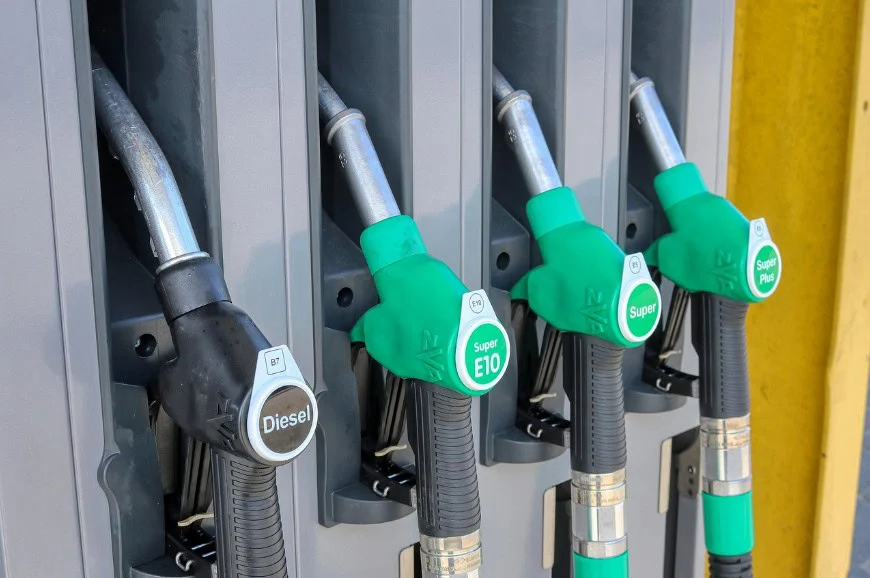
Reason #10: High-Altitude Fuel Economy Optimization When Gas Stations Are Separated by Dozens of Miles
Category of Importance: Economic Efficiency and Range Safety in a Sparse Service Environment
The fuel efficiency implications of AC system condition carry a specific urgency in Laramie’s geographic context that goes beyond the financial dimension: in a region where gas stations can be separated by 40 to 60 miles on secondary routes, a poorly calibrated AC system that increases fuel consumption beyond expected rates can threaten fuel range on rural drives in ways that have no analogy in urban environments. At Laramie’s elevation of 7,165 feet, naturally aspirated engines already operate with approximately 22% less atmospheric oxygen density than at sea level — a reduction that modern fuel injection systems compensate for by reducing fuel delivery, maintaining combustion stoichiometry but at reduced power output. When the AC compressor’s parasitic mechanical load is imposed on this altitude-reduced power output, the proportional fuel consumption impact is greater than at sea level: the engine must sacrifice a larger fraction of its available power to drive the compressor, and under load (climbing grades, headwinds, high speeds), the fuel consumption increment from the AC system is amplified. A system with a refrigerant charge 10% to 15% below specification runs its compressor at elevated cycle frequency and duration — consuming fuel to produce less cooling than a properly charged system — while the driver, perceiving marginally adequate cooling, continues to demand AC engagement throughout the drive. Over a 150-mile round trip to Cheyenne, the fuel cost difference between a correctly charged and a 15%-undercharged AC system is meaningful; over a summer of such trips, it becomes significant.
The fuel range awareness that Laramie residents carry — particularly on drives in directions other than the well-serviced I-80 corridor — is a genuine operational reality. Driving Wyoming Highway 130 from Laramie over the Snowy Range toward Saratoga (a journey that gains and then loses more than 4,000 feet of elevation in 70 miles) means navigating terrain where the combination of grade climbing, altitude, and AC demand pushes fuel consumption to levels that leave little margin for range miscalculation on a tank that is less than full at departure. The drives from Laramie north on Highway 30 toward Medicine Bow and Hanna, or west on Highway 30 toward the high desert communities of Carbon County, traverse stretches where the next gas station may be 50 miles ahead and the last one is 30 miles behind. For University of Wyoming students who budget carefully and sometimes let the fuel gauge run low before filling, an AC system that is consuming 10% more fuel than expected can create a genuine range emergency on a rural Wyoming drive. Precise refrigerant recharge — to the manufacturer-specified weight within calibrated tolerances — is the service action that restores optimal AC efficiency, reduces compressor cycle frequency, and gives Wyoming drivers back the fuel margin that an inefficient system was silently consuming.
⛽ In Wyoming, running low on fuel between towns isn’t just inconvenient — it’s a problem. Precise AC recharge at Grease Monkey Wister Drive restores your fuel economy and your range margin on Wyoming’s long drives between stations. Reclaim your fuel range → Grease Monkey Laramie
Citation: U.S. Department of Energy, Office of Energy Efficiency & Renewable Energy, “Fuel Economy at Altitude,” fueleconomy.gov, 2024; Wyoming Geographic Information Science Center (WyGISC), “Service Station Distribution in Albany and Carbon Counties,” uwyo.edu/wygisc, 2023.
Reason #11: Maintaining Full Defogging Capability Through Laramie’s Nine-Month Variable Weather and Winter Safety Season
Category of Importance: Year-Round Visibility Safety in a Nine-Month Demanding Weather Environment
Laramie’s climate does not offer a reliable summer respite from conditions that demand effective windshield defogging — the AC system’s most underappreciated year-round safety function. The AC compressor is the defogging system’s core component: it dehumidifies incoming air by condensing moisture across the cold evaporator surface before the heater raises that air’s temperature and directs it toward the windshield. Without a functioning AC compressor, the defroster delivers warm but moisture-saturated air that deposits as fog on cooler glass surfaces, actively worsening the visibility problem it is engaged to solve. In Laramie, where winter effectively runs from October through April and transitional weather (fog, freezing drizzle, temperature inversions, wet snow) occurs across all remaining months, the defogging function of the AC system is in active demand for nine or more months of the year. A vehicle whose AC compressor was decommissioned by summer refrigerant loss — depleted charge, failed compressor clutch, or seized compressor — arrives at the first October frost without its defogging capability, and the driver may not discover the problem until they are already underway in a fogged vehicle in conditions that don’t permit stopping safely. Laramie’s documented high fog frequency — generated by the temperature inversion conditions common in the Laramie Basin during fall and spring — creates exactly these conditions regularly.
The nine-month winter and transition season in Laramie is not an exaggeration to locals — it is the operational reality that shapes vehicle maintenance priorities. The morning drives during which Laramie teachers, university employees, ranchers, and business owners must see clearly through fogged windshields span October frost mornings all the way through April blizzards, with the brief respite of May sometimes disrupted by late-season snowstorms that are a documented Laramie occurrence. The commute from Laramie’s residential areas west of campus to the University of Wyoming’s main buildings along Ivinson Avenue, or from the south side of the city to the Wister Drive commercial corridor, seems brief — but in white-out fog, on frost-slicked pavement, with a defogging system that cannot clear the windshield because its compressor is inoperative, even a five-minute drive becomes genuinely hazardous. Fall hunting season — when Albany County fills with deer, elk, and antelope hunters driving rural roads in pre-dawn darkness across terrain shared with the quarry they seek — is precisely the context in which effective windshield defogging is the difference between safe wildlife-crossing awareness and a dangerous impact. The AC system that was serviced in spring, with a functioning compressor verified and charge confirmed, is the defogging system that works reliably from October through June and beyond.
❄️ Laramie’s defogging season starts in October and doesn’t really end. Your defroster runs on your AC compressor — keep it healthy with spring AC service at Grease Monkey Wister Drive and see clearly through everything Wyoming delivers. See through Wyoming’s weather → Grease Monkey Laramie
Citation: Western Regional Climate Center (WRCC), “Laramie, Wyoming — Monthly Climate Normals and Extreme Events,” wrcc.dri.edu, 2024; NHTSA, “Traffic Safety Facts — Weather-Related Crashes,” NHTSA Technical Report DOT HS 812 585, 2022.
Reason #12: Protecting Vehicle HVAC Electronics from Wyoming’s Extreme Low-Humidity Static Electricity Environment
Category of Importance: Electrical System Integrity Under High-Desert Atmospheric Stress
Laramie’s high-desert, high-altitude climate produces some of the lowest relative humidity readings of any inhabited region in the continental United States, with winter relative humidity values frequently dropping below 10% and spring values that remain in the 15% to 25% range for weeks at a time. At these extreme low-humidity levels, the atmospheric conditions for triboelectric charge accumulation — the buildup of static electric charge through friction between dissimilar materials — are maximized. In vehicle HVAC systems, the dry airstream moving through the ductwork at blower-fan velocities generates triboelectric charge at every material interface: air against plastic duct walls, air against filter media, air against the evaporator fin matrix. This charge accumulation can reach thousands of volts in dry Wyoming air, and when it discharges across the sensitive electronic components of the HVAC control module, blower motor speed controller, pressure transducer leads, or temperature sensor circuits, it can damage or destroy semiconductor junctions in ways that produce intermittent or permanent component malfunction. The electronic control boards in modern HVAC systems are designed with electrostatic discharge (ESD) protection rated for normal operating environments, but Laramie’s extreme low-humidity conditions can produce charge levels that exceed the ESD protection margins on components that were designed for average humidity environments. Annual AC service that includes inspection of HVAC ground straps, electrical connector integrity, and blower motor housing condition — all components in the static discharge pathway — directly addresses this low-humidity electrical risk.
The static electricity environment of Laramie is something every resident encounters constantly in daily life: the doorknob shock after crossing a carpeted room, the spark when touching a metal shopping cart in the grocery store parking lot, the hair that stands on end after removing a wool hat in dry winter air. These everyday manifestations of Laramie’s low-humidity triboelectric environment are the visible indicators of the same charge accumulation conditions that affect vehicle electronics. For University of Wyoming engineers, atmospheric scientists, and electrical engineering faculty who study electromagnetic environments professionally, the HVAC static risk in Wyoming’s low-humidity conditions is immediately recognizable as a legitimate concern — not a theoretical one. For the broader Laramie population, the practical implication is that HVAC electronic components in their vehicles are experiencing discharge events that are both more frequent and more energetically intense than the same components experience in higher-humidity environments. The blower motor controller that fails mysteriously in the third Wyoming winter, the HVAC control module that produces erratic temperature readings in dry January conditions, and the pressure transducer that sends false signals to the compressor clutch relay in February are all potential signatures of accumulated ESD damage that systematic maintenance — including ground strap inspection and connector seal integrity verification — can detect and mitigate before the electronic damage is done.
⚡ Wyoming’s dry air builds charge that can fry HVAC electronics — and the locals know exactly what a doorknob shock feels like. Get your HVAC electrical connections and ground straps inspected at Grease Monkey Wister Drive and protect your vehicle’s electronics from Laramie’s low-humidity charge environment. Ground yourself against expensive repairs → Grease Monkey Laramie
Citation: Montrose, C.J. & Naused, J.M. (2004). EMC and the Printed Circuit Board: Design, Theory, and Layout Made Simple. IEEE Press; National Oceanic and Atmospheric Administration (NOAA), “Laramie, Wyoming — Monthly Relative Humidity Climate Data,” climate.gov, 2024.
Reason #13: Preserving Vehicle Resale Value in a Small-Market Economy Where Documented Condition Commands a Premium
Category of Importance: Long-Term Financial Stewardship and Asset Value Protection
Laramie’s used vehicle market is distinctive in ways that give documented vehicle maintenance history an elevated premium relative to large-metro markets. In a city of approximately 32,000 people, the used vehicle market is thin enough that buyers have limited alternatives — when you find a vehicle that meets your needs in Laramie, you evaluate it thoroughly because the next comparable option may not appear for weeks. This market thinness means that vehicle condition, and specifically the evidence of condition provided by service records, carries greater weight in price negotiations than in a Denver or Cheyenne market where dozens of comparable vehicles are always available. A Laramie seller with complete service records — including dated AC service receipts from a nationally recognized facility — commands a documentary advantage over a seller with no paper trail, and that advantage translates into real dollars in a small market where buyers look carefully. Additionally, Wyoming’s harsh climate environment means that the AC system’s condition is a particularly scrutinized element of any vehicle evaluation: a buyer who knows what Wyoming winters and summers do to vehicles understands that an unserviced AC system in a 7,165-foot, extreme-wind, freeze-thaw environment is a system that may be significantly degraded — and prices the risk accordingly. Regular professional service at a certified facility creates the service record that speaks directly to this buyer concern.
The Laramie market’s specific dynamics reward meticulous vehicle owners in ways that may surprise those accustomed to large-city transactions. University of Wyoming faculty departing after a multi-year appointment, military families at nearby installations transferring to new duty stations, and Wyoming ranching families upgrading their work vehicles all enter the Laramie used market as sellers who benefit directly from documented maintenance history. The student population that turns over annually represents both a demand side (new students arriving who need local transportation) and a supply side (graduating students selling vehicles before departure), and in this student-to-student transaction space, the presence or absence of service records frequently determines whether the vehicle sells at asking price or below. For Laramie’s small business community — the contractors, service providers, and retail operators who run their businesses with tight margins and managed costs — a vehicle that can be sold at maximum value when replacement is needed is a genuine financial asset. The Grease Monkey receipts in the glove box, representing years of professional AC service by a company that serviced 5.2 million vehicles in 2025 under the FullSpeed Automotive brand, are tangible financial documentation of responsible ownership in a market where that documentation has measurable monetary value.
📋 In Laramie’s small vehicle market, your service records speak louder than your asking price. Build the documentation that Wyoming buyers trust. Every AC service at Grease Monkey Wister Drive is a receipt that protects your vehicle’s value when it’s time to sell. Document your vehicle’s worth → Grease Monkey Laramie
Citation: Kelley Blue Book, “How Service Records Affect Used Vehicle Resale Values,” kbb.com/car-advice, 2024; Black Book Market Insights, “Small-Market Vehicle Condition Premium Analysis,” Q3 2023.
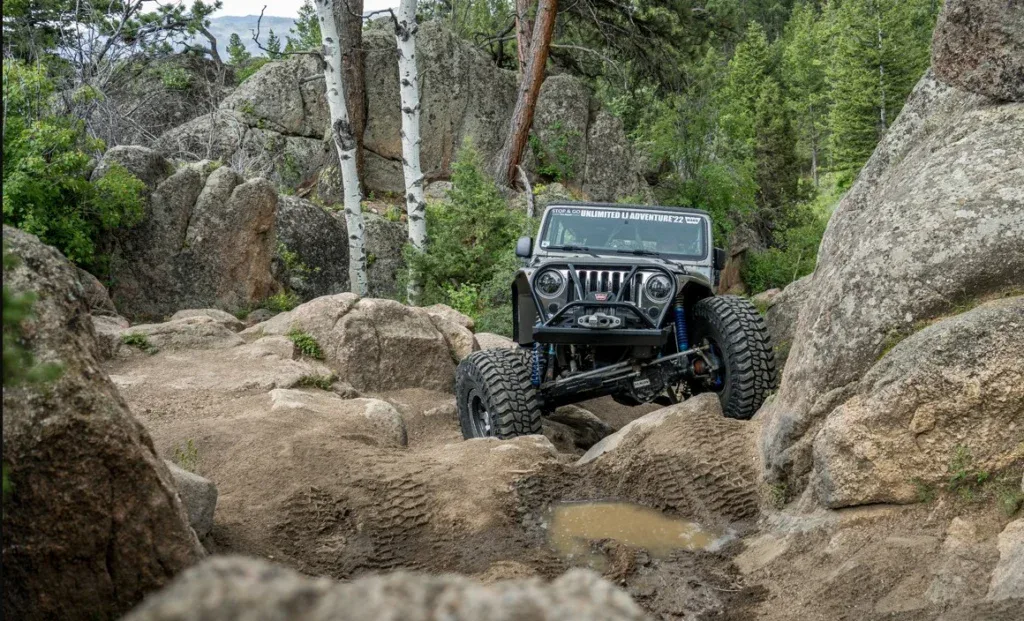
Reason #14: AC System Integrity for Medicine Bow National Forest Recreation — Protecting Off-Road and Trail-Access Vehicles Used by Laramie’s Outdoor Community
Category of Importance: Recreation Safety and Off-Road Component Preservation
The Medicine Bow-Routt National Forest, the Laramie Mountains, the Snowy Range, and the vast public lands surrounding Laramie on all sides provide a recreation environment that draws Laramie residents outdoors with a frequency and intensity that no urban community can match — and that creates specific AC system stresses through the off-road and rough-road driving required to access this landscape. The forest roads that lead to the dispersed camping areas, trailheads, and recreation sites in Medicine Bow National Forest range from improved gravel surfaces to unmaintained two-tracks that impose serious chassis articulation, shock loads from rocks and roots, and sustained vibration from washboard surfaces on every vehicle that traverses them. As established in the context of refrigerant fitting vibration fatigue, these off-road inputs accumulate mechanical stress at AC refrigerant line supports, fitting interfaces, and component mounting points that is categorically more severe than highway or urban driving. At Laramie’s altitude, the forest roads that approach popular destinations like Vedauwoo, the Snowy Range Scenic Byway (Wyoming Highway 130 west of Centennial), and the lake systems in Medicine Bow National Forest at elevations of 8,000 to 11,000 feet impose altitude-amplified thermodynamic stress on the AC system simultaneously with the vibration stress — creating a compound stress environment that benefits specifically from annual preventive inspection.
Laramie’s outdoor community uses their vehicles as essential equipment in the pursuit of the recreation that defines regional quality of life. The hikers, mountain bikers, fly fishermen, hunters, backcountry skiers, and rock climbers who access Vedauwoo’s granite formations just 20 miles east of Laramie, the alpine lakes of the Snowy Range 30 miles to the west, and the wilderness areas of Medicine Bow National Forest throughout Albany County depend on their vehicles to reach these destinations and return safely. A vehicle AC system that fails during a July trip to a trailhead at 9,500 feet — where the combination of afternoon mountain thunderstorm risk and limited cellular coverage makes vehicle reliability essential — creates a safety issue beyond mere discomfort. Families camping at Curt Gowdy State Park between Laramie and Cheyenne, anglers working the North Platte River drainage near Saratoga via the rough county roads that connect to that watershed from Laramie, and the climbing community accessing Vedauwoo’s boulders and crack routes along the rough access road off I-80 all drive vehicles whose AC systems are accumulating the vibration and thermal stress of the outdoor access lifestyle. Annual AC service at Grease Monkey’s 225 Wister Drive location — the shop that serves the Laramie community through every season of its outdoor calendar — is the straightforward preventive measure that keeps those vehicles reliable from trailhead to trailhead.
🏕️ Vedauwoo, the Snowy Range, Medicine Bow — Laramie’s backyard demands a reliable vehicle. Annual AC service at Grease Monkey Wister Drive makes sure the truck or SUV that takes you into the backcountry brings you back without drama. Keep your adventure vehicle reliable → Grease Monkey Laramie
Citation: USDA Forest Service, “Medicine Bow-Routt National Forest — Visitor Use and Recreation Statistics,” fs.usda.gov/mbr, 2023; SAE International, J2064, “Refrigerant Hose and Fitting Fatigue Under Variable Vibration Conditions,” revised 2021.
Reason #15: Year-Round Confidence and Peace of Mind for a Community That Depends on Single-Vehicle Transportation Across One of America’s Most Demanding Environments
Category of Importance: Community Resilience, Quality of Life, and Proactive Stewardship
The final and most holistic reason that Laramie residents should have their vehicle air conditioning systems professionally serviced and inspected annually is the most personal: the confidence, peace of mind, and quality of life that come from knowing that the vehicle carrying you, your family, your livestock, your students, or your equipment across Wyoming’s demanding landscape is in the best possible mechanical condition for whatever that landscape delivers. In a community where vehicle ownership is not a choice among multiple transportation options but the practical foundation of daily life — there is no light rail to the Snowy Range, no city bus to the Medicine Bow trailhead, no rideshare waiting on U.S. Highway 287 between Laramie and Rawlins — vehicle reliability is a quality-of-life dimension that directly affects every aspect of how Laramie residents live and work. The knowledge that comes from a recent professional AC service inspection — that the refrigerant is correctly charged, the compressor is healthy, the cabin filter is fresh, the seals have no micro-leaks, the condenser is clean, and the recirculation system is functional — is the knowledge that transforms a vehicle from a source of background mechanical anxiety into a confident tool for the full Wyoming life that Laramie offers. That confidence is worth something that cannot be fully quantified but is unmistakably felt on every long drive across the high plains, every winter morning defrost, every summer trip to the mountains, and every university parking lot arrival that ends without drama.
Laramie is a community defined by resilience, self-reliance, and the willingness to face Wyoming’s demands head-on — values deeply embedded in the University of Wyoming’s motto, Saber et Labor (Wisdom and Labor), in the ranching culture of Albany County, and in the character of every resident who chooses to build their life at 7,165 feet on the high plains of the world’s least populous state. That culture of self-reliance extends naturally to the kind of proactive vehicle stewardship that annual AC service represents: taking care of the things that need care before they fail, rather than waiting for the plains to make the decision for you. The Grease Monkey shop at 225 Wister Drive — staffed by local technicians who understand exactly what Wyoming’s altitude, wind, temperature swings, and remote geography mean for the vehicles they service, backed by the institutional expertise of FullSpeed Automotive’s 5.2-million-vehicle annual service scale — is the professional partner that Laramie’s self-reliant community deserves. An annual AC service appointment is the hour-long investment that earns a year of confident driving through every season, every road condition, and every adventure that Laramie and Wyoming can offer.
🤝 Laramie’s spirit is built on self-reliance — and self-reliant people service their vehicles before Wyoming forces the issue. Schedule your annual AC inspection and service at Grease Monkey on Wister Drive. Drive every Wyoming road, in every Wyoming season, with genuine confidence. Invest in your year-round confidence → Grease Monkey Laramie
Citation: Car Care Council, “The Relationship Between Preventive Maintenance and Vehicle Reliability,” carcare.org, 2023; AAA, “Vehicle Preparedness Survey — Rural and Isolated Community Drivers,” AAA Foundation for Traffic Safety, 2023.
About Grease Monkey at 225 Wister Dr, Laramie, Wyoming 82070
Grease Monkey at 225 Wister Dr is Laramie’s trusted destination for comprehensive vehicle air conditioning service — including altitude-calibrated refrigerant recharge, UV dye leak detection, electronic refrigerant sniffing, cabin air filter replacement and upgrade, evaporator sanitization, condenser cleaning and debris removal, compressor health evaluation, serpentine belt and tensioner inspection, HVAC electrical system assessment, and full AC performance testing. As part of FullSpeed Automotive — the nationally recognized automotive service leader that serviced more than 5.2 million vehicles in 2025 and generates over $542 million in annual revenue — Grease Monkey delivers institutional expertise, certified technicians, and documented service protocols to every appointment at 225 Wister Drive. In a community defined by Laramie’s unique altitude, Wyoming’s legendary wind, geographic isolation, extreme thermal cycling, and the demanding standards of a university town and agricultural community, the depth and credibility of a nationally scaled service brand matters as much as local presence. Grease Monkey at Wister Drive provides both.
Visit us at 225 Wister Dr, Laramie, Wyoming 82070 | Schedule your appointment → greasemonkey.com/locations/wy/laramie/225-wister-dr/
Author’s Bio — Phillip Paul Gilliam
Phillip Gilliam is a veteran journalist and former Editor-in-Chief with 50+ years of publishing experience and thousands of published articles. Specializing in automotive, trucking, and digital publishing, he creates authoritative, search-optimized content built on real-world expertise and editorial excellence. To learn more about Phil, visit http://www.phillipgilliam.com/about.html or contact Phil at [email protected]. He would love to hear from you!
Complete Citations and Primary Source Reference List
- Society of Automotive Engineers (SAE) Technical Paper 2007-01-0965. “Effect of Altitude on Automotive Air Conditioning System Performance.” SAE International, 2007.
- National Institute of Standards and Technology (NIST). “Thermophysical Properties of Fluid Systems — R-134a at Reduced Pressure Conditions.” webbook.nist.gov. 2024.
- National Weather Service, Cheyenne Forecast Office. “Laramie, Wyoming Wind Climatology.” weather.gov/cys. 2024.
- Wyoming Department of Transportation (WYDOT). “I-80 Wind Restriction History and High-Wind Events.” wydot.state.wy.us. 2023.
- AAA. “Vehicle Breakdown Causes, Costs, and Preventive Maintenance.” AAA Foundation for Traffic Safety. 2023.
- Wyoming Department of Transportation (WYDOT). “Rural Road Safety and Emergency Response Times in Albany County.” wydot.state.wy.us. 2023.
- U.S. Environmental Protection Agency (EPA). “Wildfire Smoke — A Guide for Public Health Officials.” EPA-452/R-19-901. Washington, D.C.: EPA, 2019.
- University of Wyoming, Department of Atmospheric Science. “High-Altitude Particulate Events in the Laramie Basin.” uwyo.edu/atsc. 2023.
- NHTSA. “Rural Highway Safety — Crash Characteristics and Vehicle Failure Data.” NHTSA Technical Report DOT HS 812 602. Washington, D.C.: NHTSA, 2022.
- Federal Highway Administration (FHWA). “I-80 Wyoming Corridor — Traffic and Safety Overview.” fhwa.dot.gov. 2023.
- Western Regional Climate Center (WRCC). “Laramie, Wyoming Climate Statistics — Temperature Extremes and Freeze-Thaw Frequency.” wrcc.dri.edu. 2024.
- SAE International. Standard J2064. “R-134a Refrigerant Container Fittings and Refrigerant Line Compatibility — Thermal Cycling Standards.” Revised 2021.
- University of Wyoming. “University Fast Facts.” uwyo.edu/about. 2024.
- AAA. “Young Driver Vehicle Maintenance Awareness Survey.” AAA Foundation for Traffic Safety. 2023.
- Wyoming Agriculture Statistics Service, USDA National Agricultural Statistics Service. “Albany County Agricultural Overview.” nass.usda.gov/wy. 2023.
- Car Care Council. “Commercial and Agricultural Vehicle HVAC Maintenance Guidelines.” carcare.org. 2023.
- National Safety Council (NSC). “Rural Road Safety — Fatality Rates and Contributing Factors.” Injury Facts 2023 Edition. nsc.org.
- Hancock, P.A. & Warm, J.S. (1989). “A Dynamic Model of Stress and Sustained Attention.” Human Factors, 31(5), 519–537.
- U.S. Department of Energy, Office of Energy Efficiency & Renewable Energy. “Fuel Economy at Altitude.” fueleconomy.gov. 2024.
- Wyoming Geographic Information Science Center (WyGISC). “Service Station Distribution in Albany and Carbon Counties.” uwyo.edu/wygisc. 2023.
- Western Regional Climate Center (WRCC). “Laramie, Wyoming — Monthly Climate Normals and Extreme Events.” wrcc.dri.edu. 2024.
- NHTSA. “Traffic Safety Facts — Weather-Related Crashes.” NHTSA Technical Report DOT HS 812 585. Washington, D.C.: NHTSA, 2022.
- Montrose, C.J. & Naused, J.M. (2004). EMC and the Printed Circuit Board: Design, Theory, and Layout Made Simple. New York: IEEE Press / Wiley.
- National Oceanic and Atmospheric Administration (NOAA). “Laramie, Wyoming — Monthly Relative Humidity Climate Data.” climate.gov. 2024.
- Kelley Blue Book. “How Service Records Affect Used Vehicle Resale Values.” kbb.com/car-advice. 2024.
- Black Book Market Insights. “Small-Market Vehicle Condition Premium Analysis.” Q3 2023.
- USDA Forest Service. “Medicine Bow-Routt National Forest — Visitor Use and Recreation Statistics.” fs.usda.gov/mbr. 2023.
- SAE International. Standard J2064. “Refrigerant Hose and Fitting Fatigue Under Variable Vibration Conditions.” Revised 2021.
- Car Care Council. “The Relationship Between Preventive Maintenance and Vehicle Reliability.” carcare.org. 2023.
- AAA. “Vehicle Preparedness Survey — Rural and Isolated Community Drivers.” AAA Foundation for Traffic Safety. 2023.
- Mobile Air Climate Systems Association (MACS). “AC System Performance Standards and Diagnostic Procedures.” MACS Training Reference Manual. Lansdale, PA: MACS, 2023.
- FullSpeed Automotive. “2025 Annual Service Report — Vehicle Servicing Volume and Financial Performance Summary.” FullSpeed Automotive Corporate Communications, 2025.
This article was produced for Grease Monkey, a brand of FullSpeed Automotive, operating at 225 Wister Dr, Laramie, Wyoming 82070. For vehicle air conditioning service, altitude-calibrated refrigerant recharge, wind-driven condenser cleaning, UV dye leak detection, cabin air filtration, and comprehensive HVAC maintenance, visit greasemonkey.com/locations/wy/laramie/225-wister-dr/.
Content is provided for informational purposes based on cited technical sources. Specifications vary by vehicle make, model, and year. Consult a certified automotive technician for vehicle-specific guidance.
Stop by today.
- Grease Monkey Center #791 Address: 225 Wister Dr, Laramie, WY, 82070
- Services: Brake Services, Car Wash Services, Fluid Exchange Services, Headlight Services, Oil Changes, Power Steering
Your car will thank you. And your wallet will too.

Plan Your Visit
Find a location near you, explore current deals, and get everything you need before you roll in.