15 Real Transmission Warning Signs Laramie Drivers Actually Ask About
Location: Laramie, WY Topic: Grease Monkey Center #791 By: Phil Gilliam
An Authoritative Guide for Vehicle Transmission Health and Repair at 7,200 Feet on the Wyoming High Plains
Grease Monkey 225 Wister Dr, Laramie, WY 82070 Has Over 631 Google Reviews With A 4.4 Star Rating
A Note on Authority and Expertise: This article was researched and written by Phillip Paul Gilliam, a veteran journalist and former Editor-in-Chief with more than 50 years of publishing experience in automotive, trucking, and safety communications. The transmission guidance presented here is grounded in current SAE fluid-life standards, ASE-recognized diagnostic practices, and manufacturer engineering research – not generic information.
The Grease Monkey at 225 Wister Dr, Laramie, WY 82070, is part of the FullSpeed Automotive network, which services more than 5.2 million vehicles annually across 700-plus locations nationwide and generated over $542 million in 2026 revenue. In 2025, 435 FullSpeed Automotive locations – including Grease Monkey franchises – were named CARFAX Top Shop Winners for verified customer satisfaction, and in 2026 Grease Monkey was recognized as an Entrepreneur Verified Franchise. Grease Monkey’s ASE-certified technicians bring that national training standard to the first Wyoming stop in this series – a city sitting at 7,200 feet on Wyoming’s high plains.
Laramie sits at 7,200 feet, making the University of Wyoming the highest-altitude university in the United States, and the city grew up around the 1868 arrival of the Union Pacific Railroad [3]. Twenty-five miles north, the Rock Creek Wind Project spreads turbines across 32,000-plus acres; ranch roads across Albany County still run cattle feed routes every winter regardless of conditions.
An Introduction to Real Transmission Problems at Altitude
Most drivers only think about their transmission when something already feels wrong – reduced power on a climb, a shifter that won’t budge, a rocking sensation on acceleration. By the time it becomes impossible to ignore, the repair bill has usually jumped from a few hundred dollars to several thousand. That gap is not bad luck. It is math. Automatic transmission fluid follows a well-documented thermal curve: for every 20 degrees Fahrenheit the fluid runs above roughly 175 degrees F, its usable service life is cut in half, according to SAE and Allison Transmission engineering data. Fluid that would last 100,000 miles at 175 degrees F is finished at 25,000 miles by 220 degrees F, and drops to just 5,000 miles at 260 degrees F [1].
Laramie drivers run into real transmission questions shaped by genuine elevation physics: thinner air that changes how hard an engine works and how well a cooling system performs, a shifter that won’t release the same way it does at sea level, a winter feed route that combines heavy load with snow-packed ranch roads. This guide walks through fifteen real transmission symptoms and questions – the kind a driver actually types into a search bar or asks a technician face to face – organized from the most urgent safety concerns to the more preventive, long-view maintenance decisions.
Each one explains what is actually happening inside the transmission, not just where it happens. And each one closes with a specific next step you can take at the Grease Monkey on Wister Drive.
Most Critical
1. Thin Air, Harder Pull: Why Your Transmission Downshifts More at 7,200 Feet
Category Most Critical
My truck seems to downshift and work harder at Laramie’s elevation than it did at lower elevation – is that actually related to altitude?
Thinner air at altitude means less available oxygen for combustion, and engines typically lose 15 to 20 percent of their power output around Laramie’s elevation compared to sea level, with even greater losses climbing toward mountain passes [1]. To compensate, many modern transmissions use altitude-aware programming that deliberately holds lower gears longer and downshifts more readily to keep the engine in its usable power range – meaning more frequent gear changes and more time spent in lower gears is a genuinely expected, engineered response to altitude, not a malfunction.
Because this altitude compensation is normal and by design, the real question worth asking a technician isn’t whether your transmission downshifts more here – it does – but whether your specific fluid and cooling setup is keeping up with the extra shift cycles that come with it.
Notice your transmission working harder and shifting more at Laramie’s elevation? Have Grease Monkey, 225 Wister Dr, Laramie, WY 82070, confirm your fluid is keeping pace with altitude demands – schedule at https://www.greasemonkey.com/locations/wy/laramie/225-wister-dr/.
2. Thin Air, Warm Fluid: What 7,200 Feet Does to Your Cooling System’s Efficiency
Category Most Critical
Does Laramie’s high elevation actually make it harder for a transmission cooler to do its job, or does altitude only affect the engine?
A radiator or transmission cooler works by transferring heat to passing air, and at Laramie’s 7,200-foot elevation, that air is meaningfully thinner and less dense than the air a cooling system was likely engineered around at lower elevations – meaning the same airflow across the same cooler simply carries away less heat per minute than it would at sea level. That reduced cooling efficiency compounds with any other heat-generating condition a Laramie vehicle already faces – a loaded trip, stop-and-go traffic, a summer afternoon – pushing fluid temperature higher, faster, than the same conditions would produce somewhere lower.
Because this effect is constant and invisible rather than tied to a single obvious event, a fluid check that specifically accounts for Laramie’s elevation – not just mileage – helps catch a cooling efficiency gap before it becomes a bigger problem.
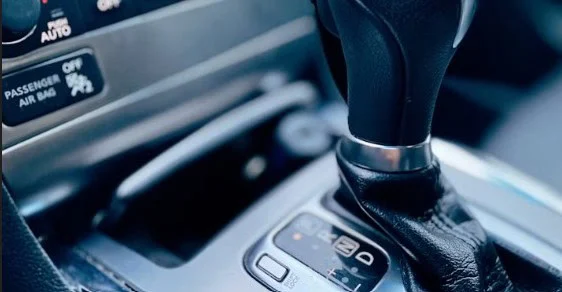
3. Stuck in Park: What It Means When Your Shifter Won’t Release
Category Most Critical
My shifter won’t move out of Park at all, even with the brake pedal pressed all the way down – what’s actually wrong?
Since 2010, federal safety rules have required a brake-shift interlock on automatic transmissions – a system that physically won’t let the shifter leave Park unless it detects the brake pedal being pressed, specifically to prevent theft and rollaway accidents [3]. When that system fails, the most common culprit is a bad brake light switch that isn’t correctly signaling “brake applied” to the interlock, followed by a failed shift interlock solenoid itself, a dead battery, or a faulty ignition switch not sending the signal the interlock needs to release.
Nearly every vehicle with this system includes a manual override – a small access panel near the shifter where a key or screwdriver can physically release the interlock in an emergency – which is worth knowing the location of before you actually need it on a cold Laramie morning.
4. The Sun Works Harder Up Here: What High-Altitude UV Does to Rubber Seals
Category High Priority
Does Laramie’s elevation actually mean more sun damage to my vehicle’s seals and hoses, or is that overstated?
UV radiation intensity increases measurably with elevation – NOAA estimates roughly 4 to 5 percent more UV exposure for every 1,000 feet of elevation gain – meaning a vehicle parked outside in Laramie at 7,200 feet absorbs meaningfully more ultraviolet exposure over a year than the same vehicle would at sea level [11]. Rubber components throughout a vehicle’s drivetrain, including external hoses, seals, and gaskets exposed to sunlight, degrade faster under sustained UV exposure than they would in a lower-elevation climate, and that accelerated aging does not announce itself the way a sudden leak does – it simply shortens the working life of components most owners never think to inspect proactively.
Vehicles that spend most of their time parked outside at Laramie’s elevation benefit from more frequent visual inspection of exposed rubber components than the same vehicle would need at a lower elevation.
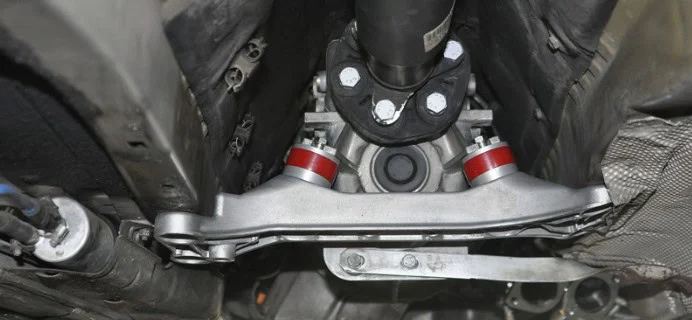
You need to know what a failing transmission mount actually feels like.
5. Rocking on the Gas: What a Failing Transmission Mount Actually Feels Like
Category High Priority
I feel a distinct rocking or lurching sensation through the cabin every time I accelerate hard – could that actually be my transmission mount?
The transmission mount is what holds the transmission firmly in place against the chassis, and as its rubber elastomer core deteriorates with age, the transmission gains unwanted freedom to move under load – producing a noticeable vibration or lurch felt through the pedal, the shifter, or the whole cabin specifically during hard acceleration or when shifting into gear [5]. In more advanced cases, a badly worn mount lets the transmission move far enough to strike the frame or nearby components, producing a distinct clunk or bang on top of the rocking sensation.
A simple visual check confirms this quickly: with the vehicle safely parked and the engine running, watching the transmission from underneath while someone gently shifts from Park to Drive shows a healthy mount holding steady and a failing one rocking visibly.
6. Locked Out of Overdrive: What a Stuck Lockout Switch Actually Means
Category High Priority
My overdrive won’t engage no matter what I do with the switch – is that actually a transmission problem or just the switch?
Many trucks and older vehicles include a dedicated overdrive lockout switch that lets a driver manually disable the transmission’s highest gear – useful for towing or engine braking on a grade – and when that switch, its wiring, or its connector fails, overdrive can get stuck disabled even after the switch is pressed repeatedly [6]. The transmission itself is often working exactly as designed in this scenario; it’s simply still receiving the “stay out of overdrive” signal from a switch or circuit that’s no longer functioning correctly.
Because the switch, a blown fuse, frayed wiring near the shift lever, and the connector at the shifter arm are all plausible culprits, a proper diagnosis traces the actual electrical signal rather than assuming the transmission itself has failed.
7. Popping Out on Its Own: What It Means When a Manual Won’t Stay in Gear
Category Important
My manual transmission pops itself out of gear while I’m driving, without me touching the shifter – what would cause that?
A manual transmission popping out of gear on its own points toward one of several specific, real mechanical causes: worn shift linkage or bushings creating too much play for the gear to stay fully engaged, a weakened or broken detent spring inside the shift rail that’s supposed to hold the shifter in position, or synchronizer rings worn enough that they can no longer keep the gear reliably seated [7]. Low or contaminated fluid is also a common contributing factor, since proper lubrication is part of what keeps these components engaging and holding correctly.
Because several genuinely different components can produce this same symptom, a hands-on inspection of the linkage, shift rail, and fluid condition – rather than guessing which one it is – is what actually narrows down the fix.
8. Ninety-Eight Turbines, One Long Commute: What Servicing the Rock Creek Wind Project Really Involves
Category Important
I do maintenance work for the wind farm north of Laramie – does that specific kind of commute actually matter differently for my vehicle?
The Rock Creek Wind Project, a roughly 590-megawatt facility with turbines spread across 32,000-plus acres about twenty-five miles north of Laramie, requires technicians and support vehicles to travel well beyond pavement’s end to reach individual turbine sites scattered across open rangeland [8]. That combination of a genuine highway commute followed by sustained unpaved, often rutted access-road driving – repeated daily, in every season Wyoming offers – puts real, compounding demand on a transmission that a standard in-town commute never would.
If your work takes you out to wind energy sites regularly, describing that specific highway-plus-unpaved-access duty cycle at your next service visit helps a technician recommend an interval that actually matches what your vehicle handles every day.
Work maintenance or support for the Rock Creek Wind Project? Have Grease Monkey, 225 Wister Dr, Laramie, WY 82070, evaluate your transmission for long-distance unpaved access driving – schedule at https://www.greasemonkey.com/locations/wy/laramie/225-wister-dr/.
9. Spongy Clutch Pedal: What Air in Your Hydraulic Line Actually Does
Category Important
My manual transmission’s clutch pedal feels spongy and the engagement point keeps changing – what’s actually causing that?
A manual transmission’s hydraulic clutch relies on fluid, not compressible air, to transfer the force from your pedal to the clutch fork – so when air gets trapped in the line, that air compresses instead of the fluid moving consistently, producing exactly the soft, unpredictable pedal feel and shifting engagement point drivers describe [9]. In more pronounced cases, trapped air can prevent the clutch from fully disengaging at all, making it difficult to shift smoothly or causing the vehicle to creep forward even with the pedal fully pressed.
This is a genuinely fixable problem: bleeding the hydraulic system to remove the trapped air typically restores a firm, consistent pedal feel, though a system that keeps re-introducing air points to a leak somewhere in the line that needs to be found first.
Winter takes a toll on your transmission. Know how to care for it during harsh weather
Medium Priority
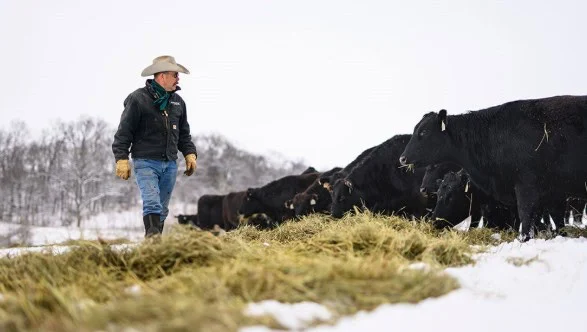
10. Feeding Cattle in a Whiteout: What a Winter Ranch Run Really Demands From a Transmission
Category Medium Priority
I run daily winter feed routes on ranch roads around Laramie – does that specific combination of heavy loads and snow actually matter more than either one alone?
Winter feed runs on Albany County ranch roads combine a genuinely heavy, consistent load – hay, feed, or equipment – with snow-packed or muddy unpaved roads that offer far less consistent traction than a plowed county highway, and that combination repeats daily throughout the winter regardless of conditions, because livestock still need to be fed. A transmission working under sustained heavy load while also fighting for traction on a snow-packed ranch road is absorbing two demanding conditions simultaneously, day after day, in a way that neither a light winter commute nor a heavy-load summer haul would replicate on its own.
If winter feed runs are part of your daily routine, that specific combined-load, low-traction duty cycle deserves its own conversation at a service visit, separate from how the same vehicle is used the rest of the year.
11. Stuck After the Tow Strap: How Getting Pulled Out Wrong Can Cost You a Transmission
Category Medium Priority
My truck got stuck in mud on a ranch road and a neighbor pulled me out with a tow strap while my truck was in gear – could that have actually damaged my transmission?
Recovering a stuck vehicle with the engine off, or towing it with the drive wheels on the ground for any real distance, spins the transmission’s internal components without the engine running the fluid pump that lubricates them – generating friction heat that can warp gears or burn out clutches within minutes rather than miles [10]. Being pulled out while parked in gear, rather than in Neutral, can also lock the transmission against the recovery force, putting sudden, concentrated stress on internal components that a proper recovery method avoids entirely.
For a stuck vehicle, the safe method is straightforward: engine running (if possible), transmission in Neutral, and a controlled pull – not a snatch-strap yank with the vehicle in gear and the engine off.
12. Does Elevation Change What Fluid You Need? Separating Fact From Assumption
Category Medium Priority
Since Laramie sits so high up, does my transmission actually need a different, thinner fluid than it would at sea level?
Altitude itself does not change the viscosity grade your manufacturer specifies – the fluid your owner’s manual calls for is still the correct fluid at 7,200 feet, and there is no separate “high-altitude” viscosity standard to switch to. What altitude does change is the thermal load your fluid experiences, since thinner air reduces cooling efficiency and a harder-working engine can generate more transmission heat overall – meaning a higher-quality synthetic fluid and a somewhat shorter service interval are often worth considering here, not because the viscosity number itself should change, but because the fluid you have is working under tougher conditions than the same fluid would face at sea level.
The distinction matters practically: don’t let anyone sell you a “special high-altitude fluid” that isn’t what your manufacturer specifies, but do take altitude seriously as a reason to stay ahead of your service interval rather than stretch it.
Wondering whether Laramie’s elevation changes what fluid your vehicle needs? Have Grease Monkey, 225 Wister Dr, Laramie, WY 82070, confirm the right fluid and interval for your vehicle – schedule at https://www.greasemonkey.com/locations/wy/laramie/225-wister-dr/.
Lower Priority
13. Backing Out, Then Pulling Forward: Is Skipping the Full Stop Actually a Problem?
Category Lower Priority
I sometimes shift straight from Reverse to Drive while still rolling slightly, backing a trailer into position on the ranch – is that actually hard on my transmission?
Modern transmissions built since roughly the 1990s include a reverse inhibitor that simply won’t allow the transmission to engage Reverse while the vehicle is moving forward at any real speed, which provides real built-in protection against the most damaging version of this habit [12]. At genuinely low speeds – creeping along at a mile or two per hour while maneuvering a trailer, for example – shifting between Reverse and Drive causes minimal stress; the concern grows specifically with speed, since shifting directions at 5 mph or more asks the transmission and engine to absorb real, unnecessary stress absorbing that direction change.
Coming to a genuine, complete stop before changing direction remains the best practice for protecting your drivetrain over the long run – but the occasional low-speed direction change while carefully maneuvering, like backing a trailer, is not the transmission emergency it’s sometimes made out to be.
14. Downhill to Cheyenne: What the Descent Off Wyoming’s High Plains Actually Involves
Category Lower Priority
Is the drive from Laramie down to Cheyenne on I-80 actually a significant descent, or does it just feel that way because of the wind?
The stretch of I-80 between Laramie and Cheyenne crosses the Gangplank – the geological ramp connecting the Great Plains to the Rockies – reaching 8,640 feet near the Lincoln Monument before descending through Telephone Canyon down into Laramie, a genuine and sustained elevation change along a route many area drivers treat as a routine commute rather than a mountain drive [13]. That sustained descent asks a transmission to manage engine braking and gear selection over real elevation loss, even though the drive rarely feels like “mountain driving” the way a marked pass or canyon road would.
Treating the Laramie-to-Cheyenne corridor with the same grade-awareness you would give any mountain descent – rather than assuming it is just another stretch of interstate – protects a transmission that is working harder on this drive than it looks.
Know what types of roadways impact your transmission. When is cruise control best to use for your vehicle
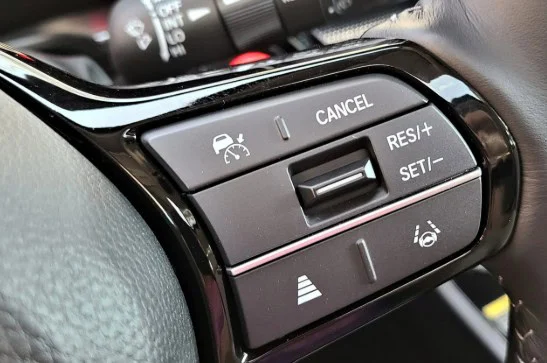
15. Set It and Forget It? What Cruise Control Actually Does to Your Transmission
Category Lower Priority
I use cruise control for most of my long highway drives – is that actually harder on my transmission than just controlling the throttle myself?
On genuinely flat highway stretches, cruise control holding a steady speed is not harder on a transmission – if anything, the smooth, consistent throttle input it provides means less wear than the small, constant speed corrections a human foot naturally makes over a long drive [14]. The real caveat is terrain: on rolling or hilly roads, cruise control can force more frequent downshifts than a driver anticipating the grade with their own throttle input would choose, since the system reacts to maintain speed rather than anticipating the hill ahead.
On Laramie’s flatter stretches of I-80, cruise control is a reasonable, low-wear choice; on the rolling grades toward Cheyenne or the mountain routes nearby, manually managing your throttle on the climbs and descents gives the transmission a smoother, more predictable workload.
About Grease Monkey 225 Wister Dr, Laramie, WY 82070
Grease Monkey’s Wister Drive location, visible from I-80 at Exit 316, is open Monday through Friday from 8:00 a.m. to 6:00 p.m. and Saturday from 8:00 a.m. to 5:00 p.m., closed Sundays – call (307) 271-9116 to check current bay availability. Beyond transmission fluid exchanges, the shop’s ASE-certified technicians handle altitude-related cooling and fluid evaluations, transmission mount and clutch hydraulic diagnostics, and the shop’s signature 16-point inspection with every visit, alongside electric vehicle maintenance services. The team serves University of Wyoming’s campus community, Rock Creek Wind Project technicians, and longtime Albany County ranch families – backed by the location’s 4.4-star rating across more than 631 Google reviews.
Author Information
Author Bio – Phillip Paul Gilliam
Phillip Gilliam is a veteran journalist and former Editor-in-Chief with 50+ years of publishing experience and thousands of published articles. Specializing in automotive, trucking, and digital publishing, he creates authoritative, search-optimized content built on real-world expertise and editorial excellence. To learn more about Phil, visit http://www.phillipgilliam.com/about.html or contact Phil at [email protected]. He would love to hear from you!
[4] Mechanic Base. Brake Shift Interlock Failure Causes. Available at: https://mechanicbase.com/troubleshooting/car-wont-shift-out-of-park/. (Common causes of a shifter stuck in Park include a faulty brake light switch, failed shift interlock solenoid, dead battery, or faulty ignition switch; most vehicles include a manual override near the shifter.)
[13] Wikipedia. Wyoming Highway 210 (Happy Jack Road) and the Gangplank. Available at: https://en.wikipedia.org/wiki/Wyoming_Highway_210. (The Laramie-to-Cheyenne corridor crosses the Gangplank, reaching 8,640 feet near the Lincoln Monument before descending through Telephone Canyon – a sustained elevation change along I-80.)
We use cookies to improve your browsing experience on our website. By closing this banner or interacting with our site, you acknowledge and agree to our privacy policy.