Top 15 Reasons to Have Your Vehicle's Brake System Serviced Regularly in Twin Falls, Idaho
An Authoritative Guide for Drivers, Commuters, and New Residents in “The City of Waterfalls”
Grease Monkey 1552 Sun W Wy, Twin Falls, ID 83301 Over 140 Google Reviews With A 4.6 Star Rating
Authority Statement: This article was researched and written by Phillip Paul Gilliam, a veteran journalist and former Editor-in-Chief with more than 50 years of experience in automotive, trucking, and digital publishing. The brake service recommendations in this guide are backed by data from the National Highway Traffic Safety Administration (NHTSA), the Insurance Institute for Highway Safety (IIHS), the Commercial Vehicle Safety Alliance (CVSA), and other named federal and industry sources. Grease Monkey in Twin Falls is operated under the FullSpeed Automotive umbrella — a 700-plus-location national network whose ASE-certified technicians have serviced more than 5.2 million vehicles. In 2025, 435 FullSpeed Automotive service centers were named CARFAX Top Shop Winners, a distinction earned through verified customer satisfaction and documented service quality [1]. Twin Falls’s explosive growth, its role as Magic Valley’s regional hub, and its dramatic Snake River Canyon geography combine to make brake system health a daily safety matter — not a once-a-year afterthought — for every driver in the area.
Introduction
Twin Falls, Idaho, is one of the most visually dramatic cities in the American West. Drive north on Blue Lakes Boulevard and the land simply vanishes — a 486-foot cliff drops into the Snake River Canyon, and the Perrine Bridge carries 34,000 vehicles a day across that void [2]. Shoshone Falls thunders nearby. Rock Creek cuts a hidden canyon inside the city limits. BASE jumpers leap off the Perrine Bridge on any given Tuesday afternoon, drawing tourists who park, gawk, and brake hard. This is not a city where driving is routine.
It is also not a small town anymore. Twin Falls has grown to an estimated 57,077 residents in 2026, up from 51,807 at the 2020 census — a growth rate of 1.53 percent annually, with 90 percent of that growth driven by in-migration [3]. Roughly 58 percent of Idaho’s newcomers arrive from California [4], bringing vehicles maintained on coastal service schedules that were never designed for Magic Valley’s high-desert temperature swings, canyon approach grades, or Idaho winters. On the northwest side of the city, 11,000 acres of farmland have been converted to housing over the past 20 years, and new roundabouts, widened arterials, and Interstate 84 expansion projects are actively reshaping how Twin Falls drivers move through their own city [5][6].
All of that growth, all of that geography, and all of that traffic converges on one physical system that most drivers check far less often than they check their oil: the brake system. NHTSA data indicates that brake-related issues are a contributing factor in approximately 22 percent of vehicle crashes involving mechanical failure [7]. Worn pads at or below 3 mm of material add 20 to 30 percent to stopping distance compared to new pads [8]. In a city where the Perrine Bridge approach, the Blue Lakes Boulevard corridor, Pole Line Road’s medical campus, and active construction zones all demand immediate, reliable brake response, those extra feet are not theoretical — they are the difference between a controlled stop and a collision.
This guide presents 15 genuinely distinct reasons why Twin Falls drivers should prioritize regular brake service. Each reason is grounded in current research, tied to specific Twin Falls geography and institutions, and escalates from the most safety-critical concerns to the long-term financial and community value of consistent brake maintenance. Whether you commute on US-93, shop at Magic Valley Mall, or make emergency runs to St. Luke’s Medical Center, your brake system is the one component you cannot afford to discover in poor condition.
1. Perrine Bridge Approach on US-93: Pedestrian and BASE Jumper Spectator Conflicts at the World’s Only Unpermitted Urban Jump Site
Category: Most Critical – If a person is only going 35 miles per hour, what is the average distance they drive after the driver sees something before braking?
The Perrine Bridge in Twin Falls is the only man-made structure in the United States where BASE jumping is permitted year-round without a permit. On any given day, jumpers, their crews, and spectators gather at the north canyon rim to watch 486-foot free-falls into the Snake River below [2]. The result is an unpredictable mix of pedestrians — some watching the sky, some filming, some crossing the road without looking — in the approach zone to one of Twin Falls’s most heavily trafficked bridges. Research from NHTSA shows that drivers require an average of 1.5 seconds of perception-reaction time before initiating braking; at 35 mph, a vehicle travels 77 feet before the brakes even engage [7]. When a brake system is degraded, those first engaged feet take even longer to produce deceleration.
For Twin Falls drivers heading northbound on US-93 toward the Perrine Bridge, the approach zone from the south side is not a casual cruise. Canyon Springs Road and the approaches near Visitors Center Drive see constant pedestrian activity from tourists who did not plan for vehicle traffic at that speed. Local drivers familiar with the area know to watch, but even experienced Twin Falls residents encounter sudden stops when a spectator steps off a curb or a filming crew blocks a lane. A vehicle with worn pads at 3 mm of material — approaching the legal minimum but still on the road — needs 20 to 30 percent more distance to stop than one with healthy pads [8]. On a 35-mph approach to the canyon rim, that extra distance can be the length of a crosswalk.
If you drive US-93 into the Perrine Bridge zone regularly — whether you are commuting, visiting the Twin Falls Visitor Center, or just taking the scenic route — your brake system is operating in one of the most unpredictable pedestrian environments in southern Idaho. Grease Monkey at 1552 Sunwest Way, Twin Falls, ID 83301, https://www.greasemonkey.com/locations/id/twin-falls/1552-sunwest-way/ will measure your pad thickness and inspect your full system — because the approach to the world’s most famous urban jump site is not the place to be guessing about stopping distance.
2. Blue Lakes Boulevard: Daily Brake Endurance on Twin Falls’s Most-Traveled Commercial Corridor
Category: Most Critical – If a person goes to work in a busy area with constant stop-and-go traffic 5 days per week, does this stress on their vehicle’s brakes exceed the average vehicle’s expected braking cycles?
Commercial corridor driving is one of the most brake-intensive environments a daily driver faces. Stop-and-go patterns at signalized intersections, left-turn conflicts, parking lot ingress and egress, and speed zone transitions cycle the brake system repeatedly in short time windows. Research from the Society of Automotive Engineers has documented that urban stop-and-go driving produces brake temperatures significantly higher than highway cruising, accelerating pad wear, fluid heat absorption, and rotor surface stress [9]. The cumulative effect of daily commercial corridor driving is measured not just in miles but in heat cycles — and heat cycles are what degrade a brake system.
Blue Lakes Boulevard is Twin Falls’s main north-south commercial artery, and approximately 34,000 vehicles per day cross the Perrine Bridge and funnel onto this corridor [2]. The strip runs from the canyon rim south through the Magic Valley Mall area and beyond, passing major retailers, restaurants, medical offices, and the Twin Falls branch of the College of Southern Idaho. Every signal, every mall entrance, every parking lot exit is another brake cycle. For a driver who commutes through Blue Lakes Boulevard five days a week, the annual brake cycle count on this one road alone far exceeds what a mileage-based service interval anticipates. Mileage was calculated for average conditions — Blue Lakes Boulevard is above average in every brake-relevant metric. Your Blue Lakes Boulevard brake system is working harder than you think — and it is doing it every day. Grease Monkey at 1552 Sunwest Way, Twin Falls, ID 83301, https://www.greasemonkey.com/locations/id/twin-falls/1552-sunwest-way/ is a short distance off the corridor — stop by and have your pads, rotors, and brake fluid inspected. The technicians there know Magic Valley roads, and they will give you an honest, measurement-based read on where your system actually stands.
3. I-84 Widening and Twin Falls Interchange Reconstruction: Brake Demands in an Actively Rebuilding Interstate Corridor
Category: Most Critical – How many lives are lost per year on average from roadway work zones?
Active highway construction zones are among the most dangerous driving environments documented by traffic safety research. NHTSA data shows that work zone crashes claimed 857 lives in the United States in 2020, and lane shifts, reduced speed limits, new pavement transitions, and construction equipment exits create stopping scenarios that do not exist on a finished highway [7]. The specific danger is asymmetric: drivers unfamiliar with the lane configuration brake harder and later than experienced zone drivers, while construction vehicles enter and exit at unpredictable angles. A brake system operating below its design performance in this environment narrows the margin of error to nearly nothing.
The Idaho Transportation Department’s I-84 Jerome to Twin Falls project is widening the interstate to three lanes in each direction, replacing the roadway with new concrete surface, and reconstructing the bridges at 400 South Road [5]. The corridor directly south of Twin Falls — Exit 173 and the approaches feeding Blue Lakes Boulevard — has been in active reconfiguration, with updated traffic patterns expected through 2026. For the thousands of Twin Falls drivers who use I-84 daily to reach the commercial district, this means routine exposure to temporary lane shifts, new concrete-to-asphalt transitions, and speed zone changes that test brake responsiveness in exactly the conditions where degraded pads and worn rotors show their limits. The I-84 corridor is being rebuilt for the next generation of Twin Falls traffic. Make sure your brake system is ready for it. Grease Monkey at 1552 Sunwest Way, Twin Falls, ID 83301, https://www.greasemonkey.com/locations/id/twin-falls/1552-sunwest-way/ can verify your stopping margin before you navigate the next stretch of orange cones. Don’t let an unfinished interstate catch a brake system that is also unfinished.
4. California-Transplant Vehicle Maintenance Gap: When 58% of New Magic Valley Residents Arrive With the Wrong Service Calendar
Category: High Priority – Many Californians are moving to Magic Valley. Are their car braking systems designed for the harsh weather we have here in Twin Valley?
Vehicle maintenance schedules are not universal. Automakers calibrate recommended service intervals to average driving conditions — average temperatures, average road grades, average precipitation. For a vehicle maintained in California’s Central Valley or coastal communities, “average” means mild winters, minimal road salt, no canyon grades, and year-round moderate temperatures. Those conditions produce a service interval calendar that is simply inadequate for Idaho’s high-desert environment, with its sub-zero winters, summer heat above 90°F, canyon approach grades, basalt dust, and road de-icing chemicals. Brake fluid absorbs moisture over time regardless of mileage; brake pads harden or wear depending on temperature cycling, not just miles driven; caliper slides corrode in climates with road salt even on low-mileage vehicles.
Approximately 58 percent of Idaho’s in-migrants arrive from California [4], and Twin Falls County has seen 90 percent of its growth driven by newcomers since the 2020 census [3]. That means a substantial share of Twin Falls vehicles on Blue Lakes Boulevard, Pole Line Road, and the approaches to St. Luke’s Medical Center were maintained under a service calendar built for a different state. Many new Twin Falls residents have no reason to question their existing brake service history — it has always worked before. What changes is the environment: the first Magic Valley winter, the first Perrine Bridge approach in an ice event, the first summer day at 93°F with three passes through a construction zone.
If you moved to Twin Falls from California or another mild-climate state, your vehicle’s brake history deserves a fresh look from a technician who knows what Idaho roads actually demand. Grease Monkey at 1552 Sunwest Way, Twin Falls, ID 83301, https://www.greasemonkey.com/locations/id/twin-falls/1552-sunwest-way/ offers a complete brake system inspection that gives new Magic Valley residents a baseline built for Twin Falls conditions — not for where they came from.
5. St. Luke’s Magic Valley Medical Center: Twin Falls as the Eight-County Regional Emergency Destination
Category: High Priority – What percentage of accidents are due to poor brakes?
Emergency access route reliability is a life-safety variable that most drivers never factor into their vehicle maintenance decisions. When a driver or passenger needs emergency medical care, the road between their vehicle and the hospital is not abstract — it is a specific sequence of roads, intersections, and stops. If a brake system fails, fades, or responds unpredictably during that drive, the vehicle becomes a hazard on the very road that connects the community to its emergency services. NHTSA’s analysis of crash contributing factors identifies brake-related deficiencies in approximately 22 percent of mechanically involved crashes [7] — and those crashes happen on the same roads that ambulances and private vehicles use to reach care.
St. Luke’s Magic Valley Medical Center is a Level III Trauma Center with 218 licensed beds serving 8 southern Idaho counties and portions of northern Nevada [10]. Pole Line Road, the primary access corridor to St. Luke’s in Twin Falls, sees a constant flow of medical staff, visitors, emergency vehicles, and civilians navigating the same intersections. When the Twin Falls area has a serious accident on US-93 or the canyon rim roads, patients travel by ambulance or private vehicle through this corridor. The population that St. Luke’s serves — eight counties across a wide geographic swath — means that drivers from Gooding, Lincoln, Minidoka, Cassia, and Twin Falls Counties all converge on Twin Falls roads en route to care, often in unfamiliar vehicles and under significant stress. Pole Line Road should not be the place where a driver discovers their brakes are soft. Grease Monkey at 1552 Sunwest Way, Twin Falls, ID 83301, https://www.greasemonkey.com/locations/id/twin-falls/1552-sunwest-way/ is minutes from the St. Luke’s corridor. An inspection today ensures your vehicle can make that drive reliably — whether it is a routine appointment or an emergency. Your brake system should never be the weakest link in a medical emergency chain.
6. Brake Rotor Minimum Thickness Specification: The Measurable Safety Threshold Most Twin Falls Drivers Have Never Checked
Category: High Priority – Can I just look at my brake rotors and tell if they are safe?
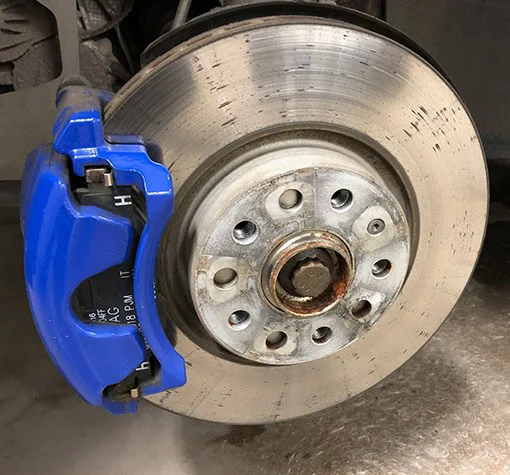
Every brake rotor manufactured for use on a passenger or commercial vehicle carries a minimum thickness specification stamped or cast directly onto the rotor face. This number — measured in millimeters — represents the engineering minimum at which the rotor can safely dissipate the heat generated by repeated braking. Below that threshold, a rotor loses its designed heat absorption capacity. It overheats faster, warps under thermal stress, and in severe cases can crack during hard stops. The distinction between “still has material left” and “above minimum thickness spec” is not visible to a naked eye — it requires a micrometer measurement to determine [8]. A rotor can look intact and still be below its safe operating threshold.
In Twin Falls, the combination of high-desert summer heat and Blue Lakes Boulevard stop-and-go cycling creates thermal conditions that accelerate rotor wear beyond what national average driving patterns would predict. Drivers who regularly descend Canyon Springs Road from the rim area, navigate the Kimberly Road corridor, or brake repeatedly through the commercial zone between the Perrine Bridge and Magic Valley Mall are cycling their rotors through heat ranges that wear material faster than highway miles suggest. A rotor that passed a visual inspection at the last oil change may already be below minimum spec — particularly on vehicles that arrived from warmer climates without recent rotor measurement.
Most brake shops rely on visual inspection for rotors; measurement-based assessment requires the extra step of a micrometer check. Grease Monkey at 1552 Sunwest Way, Twin Falls, ID 83301, https://www.greasemonkey.com/locations/id/twin-falls/1552-sunwest-way/ performs the complete evaluation — including rotor thickness measurement against your vehicle’s specific spec. If your rotors are below minimum, you’ll know it before the canyon, not after.
In Twin Falls, the combination of high-desert summer heat and Blue Lakes Boulevard stop-and-go cycling creates thermal conditions that accelerate rotor wear beyond what national average driving patterns would predict. Drivers who regularly descend Canyon Springs Road from the rim area, navigate the Kimberly Road corridor, or brake repeatedly through the commercial zone between the Perrine Bridge and Magic Valley Mall are cycling their rotors through heat ranges that wear material faster than highway miles suggest. A rotor that passed a visual inspection at the last oil change may already be below minimum spec — particularly on vehicles that arrived from warmer climates without recent rotor measurement.
7. Rock Creek Canyon Within Twin Falls City Limits: Brake Demands on the Hidden Urban Recreation Descent
Category: Important – Do thin brake pads impact braking capability when going down a grade?
Vehicle brake fade during repeated downhill braking is a well-documented thermal phenomenon. When brakes are applied repeatedly on a sustained descent, pad and rotor temperatures climb sharply. As temperature rises, braking efficiency decreases — a condition known as brake fade. The National Safety Council’s guidelines on mountain and canyon driving specifically identify sustained downhill grades as conditions requiring lower gears and minimal brake use to prevent fade, because brake components have limited capacity to shed heat before the next demand arrives [11]. In urban areas, where drivers expect city-grade roads rather than canyon grades, the transition from flat streets to a descent is rarely anticipated.
Rock Creek Park, established in 1973, anchors a recreation area inside Twin Falls’s city limits along Rock Creek Canyon — a hidden natural feature that many residents visit on weekends for hiking, biking, and trail access [12]. The roads leading into and out of the Rock Creek Canyon area involve grade changes that Twin Falls drivers navigate in the same vehicles they use for flat urban errands. These are not mountain-pass roads, and drivers do not approach them with mountain-driving discipline. Yet the grades are real, and a brake system that is already worn — pads below 4 mm, rotors near minimum spec — will show the difference on the descent back to city roads. The brake system does not know the difference between a canyon descent in the wilderness and one inside city limits.
The canyon is inside the city, but the brake demands are not. Grease Monkey at 1552 Sunwest Way, Twin Falls, ID 83301, https://www.greasemonkey.com/locations/id/twin-falls/1552-sunwest-way/ can check your brake system before Rock Creek Park season kicks into full swing. Urban canyons deserve the same brake attention as rural ones — and a quick inspection now keeps your weekend recreational driving safe.
8. The Metal-on-Metal Damage Cascade: What Happens When Twin Falls Drivers Postpone Brake Squeal for 500 Miles
Category: Important – My brakes are squealing. How long can I drive before I do too much damage to my braking system?
Brake pads are engineered with a small metal wear indicator tab that contacts the rotor when the pad material is nearly exhausted. This produces the characteristic high-pitched squeal that signals imminent pad replacement. The system is effective — when drivers respond to it. When they do not, the consequences escalate rapidly. Once pad material is fully consumed, the metal backing plate contacts the rotor face directly. Within 500 to 1,000 miles of metal-on-metal contact, a pad-and-rotor replacement that costs $149 to $220 per axle escalates to a repair exceeding $400 per axle due to rotor scoring, potential caliper piston damage, and bracket wear [13]. Braking effectiveness drops 30 to 40 percent in the metal-on-metal phase, and at 60 mph, stopping distance increases by 15 to 25 feet beyond the already-extended distance of worn pads [13].
In Twin Falls, the temptation to delay after the squeal starts is understandable — the calendar is full, the shop requires an appointment, and the noise comes and goes. But the physics does not pause for scheduling conflicts. Every trip down Blue Lakes Boulevard, every stop at the Crossroads Mall intersection, every canyon approach from Canyon Springs Road cycles the unprotected rotor face through direct metal contact. Twin Falls’s current construction environment — I-84 lane shifts, the new west-end roundabout construction zone at Martin Street and Filer Avenue — adds emergency braking scenarios to a daily routine that already places high demands on the system.
The squeal is not a quirk — it is an engineering signal with a countdown. When you hear it in Twin Falls, bring your vehicle to Grease Monkey at 1552 Sunwest Way, Twin Falls, ID 83301, https://www.greasemonkey.com/locations/id/twin-falls/1552-sunwest-way/ before the $220 repair becomes a $400-plus cascade. A squeal ignored is money destroyed — and that’s before considering the safety margin you’ve lost.
9. Twin Falls’s New Roundabouts: Unfamiliar Traffic Infrastructure and the Brake Pattern Demands of a Rapidly Growing City
Category: Important – With all our new roundabouts in Twin Falls, does that put more stress on my brakes?
Roundabouts require a different brake application pattern than traditional signalized intersections. At a standard signal, drivers brake to a full stop and hold. At a roundabout, the required deceleration is controlled and variable — slow enough to yield to circulating traffic, fast enough to stop for a pedestrian crossing, and modulated precisely enough to enter and exit smoothly without abrupt input. Research from the Insurance Institute for Highway Safety has documented that roundabouts reduce fatal crashes by 82 percent compared to signalized intersections in equivalent traffic conditions [14] — but that safety advantage depends on drivers who have learned the brake patterns roundabouts require. Drivers encountering a new roundabout for the first time often over-brake on entry or under-brake on exit, applying the brake system in irregular patterns that add stress.
Twin Falls is actively expanding its roundabout infrastructure to manage the city’s rapid growth. The city has proposed and is building a second roundabout on the west side — a distinctive bean-shaped design that will connect Martin Street, Filer Avenue, and Wendell Street, in a neighborhood that has seen enormous residential development over the past two decades [6]. For the thousands of Twin Falls drivers who have not regularly encountered roundabouts, the new infrastructure represents a genuine adjustment period, during which brake inputs will be less precise, more frequent, and more varied than routine stop-sign or signal driving. New infrastructure deserves a fully functional brake system. Get your brakes inspected at Grease Monkey at 1552 Sunwest Way, Twin Falls, ID 83301, https://www.greasemonkey.com/locations/id/twin-falls/1552-sunwest-way/ before the new roundabout at Martin and Filer opens to full traffic. When everyone on the road is still learning, your vehicle’s brake response should be one thing you are not learning about for the first time.
10. Magic Valley Mall’s Eight-County Draw: Regional Visitor Traffic and Unfamiliar-Driver Brake Exposure on Blue Lakes Boulevard
Category: Medium Priority – When I am driving on unfamiliar roads, does that increase the possibility of me having an accident?
Traffic safety research consistently identifies unfamiliar road environments as a risk multiplier. Drivers who do not know where intersections appear, where speed zones change, or where pedestrians cross react to these events later than local drivers — adding reaction time to an already fixed brake performance window. The AAA Foundation for Traffic Safety has documented that unfamiliar road environments increase crash risk by measurable margins, particularly at intersections and in parking lot transitions [15]. When a regional shopping destination draws large numbers of visitors from outside the immediate area, it concentrates unfamiliar drivers in the highest-brake-demand zone of the local road network.
Magic Valley Mall draws shoppers from across 8 southern Idaho counties — Twin Falls, Jerome, Gooding, Minidoka, Lincoln, Blaine, Cassia, and Camas Counties — making it the dominant regional retail destination for a population spread across a wide geography [16]. On weekends and during back-to-school and holiday seasons, drivers from Burley, Rupert, Shoshone, Hailey, and Wendell all converge on Twin Falls, navigating Blue Lakes Boulevard for the first time or only occasionally. Their vehicles may carry unknown brake service histories, and their familiarity with Twin Falls traffic patterns — the Mall’s multi-entry parking system, the merge points at Falls Avenue, the pedestrian crossings near Walmart and Target — is limited. These are exactly the drivers most likely to brake hard and late.
Local Twin Falls drivers cannot control the condition of the vehicles around them on Blue Lakes Boulevard. They can control their own. Grease Monkey at 1552 Sunwest Way, Twin Falls, ID 83301, https://www.greasemonkey.com/locations/id/twin-falls/1552-sunwest-way/ ensures that when the regional traffic converges on your road, you have the stopping margin to respond — even when the driver in front of you doesn’t.
11. Parking Lot Micro-Stop Cycling at Blue Lakes Commercial Centers: The High-Frequency Brake Wear Most Drivers Never Count
Category: Medium Priority – My vehicle manual recommends having my brakes checked after so many miles, but if I make a whole lot of stops while shopping, should I have them checked sooner?
Brake wear is commonly discussed in the context of highway stops, emergency braking, or canyon descents. Parking lot driving is rarely mentioned — and yet it may be the most frequent brake-application environment most drivers experience daily. Studies of urban driving patterns show that parking lot operation involves stops every 50 to 100 feet at low speeds in a continuous loop, producing dozens of brake applications in a single shopping trip [9]. The speed is low, but the frequency is extreme, and it is precisely the kind of repetitive low-heat cycling that gradually compresses and glazes brake pads, reducing their friction coefficient without producing the high-temperature warning signs that alert drivers to pad degradation.
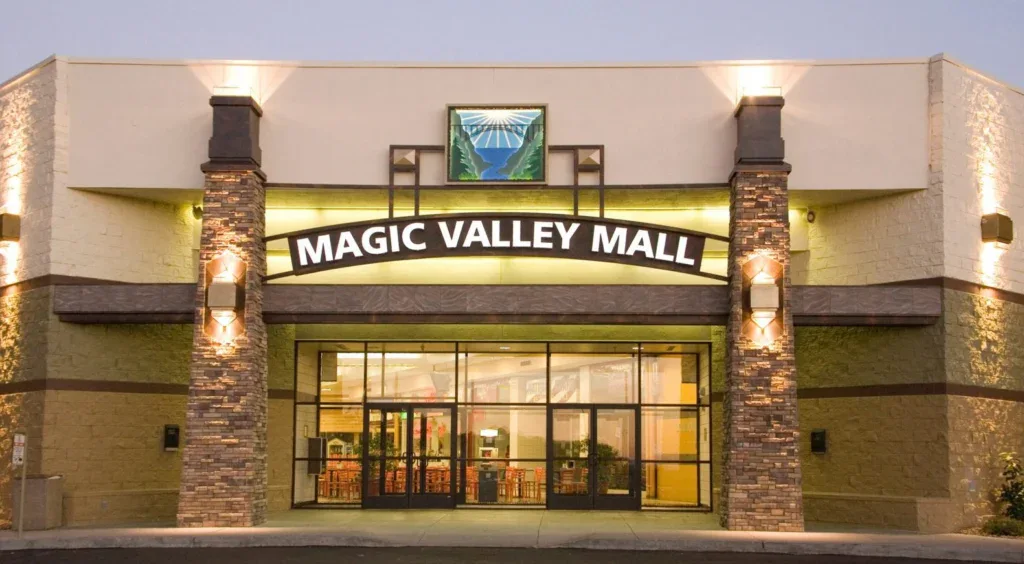
Magic Valley Mall’s parking lot alone covers acres of driving surface, with access roads, internal lanes, fire lanes, and pedestrian crossings that require constant braking. For a Twin Falls driver who visits Blue Lakes commercial centers two or three times per week — combining grocery runs to Walmart, retail visits to Magic Valley Mall, and service appointments near the Pole Line Road medical corridor — parking lot brake cycles accumulate at a rate that is invisible in the odometer reading but very real in pad wear. A vehicle that appears to have “low-mileage highway brake wear” can have significantly compressed pads from urban parking lot cycling.
Don’t let your odometer mislead you about your brake pad life. Grease Monkey at 1552 Sunwest Way, Twin Falls, ID 83301, https://www.greasemonkey.com/locations/id/twin-falls/1552-sunwest-way/ measures actual pad thickness — the only number that tells the real story regardless of how your miles were driven. For Twin Falls’s high-frequency parking lot drivers, measurement-based inspection is the only honest assessment.
12. Measurement-Based Pad Service: Why Twin Falls Drivers Need Actual Thickness Data, Not Mileage Estimates
Category: Medium Priority – Can I estimate my brake service requirements by mileage like I do my oil changes?
Brake service intervals published in vehicle owner’s manuals are statistical estimates built on average driving conditions. They are derived from fleet data across varied terrains, climates, and usage patterns — averaged out to a number that is correct for no specific driver and approximately right for a hypothetical middle case. The actual wear rate of any given vehicle’s brake pads is determined by local terrain, braking frequency, pad compound, vehicle weight, and climate — none of which are uniform. A new pad starts at approximately 10 to 12 mm of material; replacement is recommended at 3 mm; the legally worn threshold in most states is 1.6 mm [8]. The gap between “recommended replacement” and “legal minimum” is itself a 20 to 30 percent stopping distance difference. Mileage-based service estimates cannot reliably place a vehicle within that gap.
In Twin Falls, the combination of Blue Lakes Boulevard stop-and-go cycling, canyon approach grades, Magic Valley Mall parking lot frequency, and winter road salt exposure means that brake pads can reach the 3 mm replacement threshold well before the manual’s mileage estimate suggests. A driver following the owner’s manual interval who also does a weekly Blue Lakes run, a monthly canyon rim excursion, and winter commuting on salt-treated roads is almost certainly on a faster wear curve than the manual anticipated. Without a micrometer measurement, there is no reliable way to know. Measurement is not optional — it is the only method that accurately accounts for actual Twin Falls driving conditions. Mileage is a proxy. Measurement is the truth. Grease Monkey at 1552 Sunwest Way, Twin Falls, ID 83301, https://www.greasemonkey.com/locations/id/twin-falls/1552-sunwest-way/ provides measurement-based brake assessment, not mileage guesswork. Schedule an appointment and get the actual number — because in Twin Falls, “about time” and “right now” are not the same brake interval.
13. Twin Falls Canyon Rim Drive and Trail Parking: Brake Demands at the Edge of a 486-Foot Drop
Category: Lower Priority – When I am parked on a steep hill, does that put more stress on my brakes and how do I know how to park safely?
Parking on grade is an often-overlooked demand on the brake system. When vehicles park on inclined or uneven surfaces, the parking brake engages to prevent movement — but before that, the service brakes must bring the vehicle to a complete stop on the grade itself. On canyon rim roads, where the parking surface transitions from pavement to gravel shoulder, the combined demands of braking on loose material, stopping on a grade, and engaging the parking brake before the vehicle settles create a sequence that stresses both the hydraulic brake circuit and the parking brake mechanism. The Idaho Transportation Department and the Idaho Department of Parks and Recreation both include grade parking guidance in their recreational driving recommendations for canyon-adjacent areas.
Twin Falls’s Canyon Rim Trail runs approximately 10 miles along the south rim of the Snake River Canyon, and Rim Drive and its associated pullouts and parking areas are used daily by Twin Falls residents, trail runners, cyclists, dog walkers, and canyon photographers [12]. These pullouts sit immediately adjacent to an unfenced 486-foot drop. The parking surfaces vary in condition, and the grade at several pullouts is measurable. For vehicles with worn parking brake cables — a common deferred maintenance item — or with brake fluid that has absorbed enough moisture to compromise hydraulic pressure on a sustained hold, the rim drive parking experience involves more risk than it appears. This is not a high-elevation mountain pass scenario; it is a city-adjacent recreational road that demands the same brake reliability. The view from Twin Falls’s canyon rim is worth the drive — but the parking should not be an adventure in brake performance. Grease Monkey at 1552 Sunwest Way, Twin Falls, ID 83301, https://www.greasemonkey.com/locations/id/twin-falls/1552-sunwest-way/ checks the full system — parking brake cable tension, hydraulic integrity, and pad wear — so that the most dramatic vista in Magic Valley is enjoyed safely from outside the vehicle, not from inside a rolling one.

14. Teen and New Driver Brake Habits in Twin Falls’s Rapidly Changing Road Environment
Category: Lower BUT Important Priority – What is the leading cause of teenage deaths in the United States?
New drivers operate with a documented reaction-time disadvantage relative to experienced drivers. Teen drivers — whose prefrontal cortex development is incomplete until the mid-twenties — process hazard recognition more slowly than adult drivers, adding critical fractions of a second to the perception-reaction sequence that precedes braking [17]. NHTSA data shows that motor vehicle crashes are the leading cause of death for teenagers in the United States, and brake response time deficits are a contributing factor in rear-end collisions involving young drivers [7]. These are physiological realities that apply regardless of driving environment — but driving environment determines how often and how urgently those brakes are called upon.
Twin Falls’s rapid growth has produced a road environment that challenges experienced drivers, let alone new ones. The new bean-shaped roundabout under construction at Martin Street, Filer Avenue, and Wendell Street introduces an unfamiliar traffic pattern into the west side of Twin Falls [6]. The I-84 corridor south of town is being actively reconfigured. Blue Lakes Boulevard’s continuous commercial development adds new driveway conflicts and pedestrian crossings regularly. Teen drivers learning to navigate Twin Falls today are learning on a road network that looks meaningfully different from the one that existed five years ago — and that will look different again five years from now. For these drivers, a vehicle with a known, healthy brake system is the margin of error that the road environment cannot always provide. Twin Falls’s new drivers deserve the best brake margin the vehicle can offer. Grease Monkey at 1552 Sunwest Way, Twin Falls, ID 83301, https://www.greasemonkey.com/locations/id/twin-falls/1552-sunwest-way/ is the right place to bring a teen’s first car for a full brake inspection — before they learn Twin Falls’s new roundabouts, not while they are still figuring them out.
15. Twin Falls as Magic Valley’s Automotive Service Capital: The Long-Term Value of Building Your Brake Record in the Region’s Largest City
Category: Long-Term Value – Will I be more likely to sell my older car more quickly if I maintain service records throughout my ownership?
A consistent brake service history, maintained at a single verifiable location, serves as a documented asset that accompanies the vehicle throughout its service life. Vehicle buyers who can review a complete service history — including brake inspection dates, pad measurements at each service, rotor thickness readings, and fluid exchange records — make faster purchase decisions, negotiate from a position of informed confidence, and absorb less financial risk than buyers who receive a vehicle with an unknown brake history. This is not a marginal consideration: in a used vehicle transaction, documented brake service is a specific line item that affects both market value and buyer willingness [18]. In a high-turnover vehicle market, that documentation is the difference between a quick sale and a hesitant negotiation.
Twin Falls is the largest city in the Magic Valley region and the automotive service hub for the eight-county area that depends on it for goods, services, and employment. The Grease Monkey at 1552 Sunwest Way sits at the center of a growing city whose population is projected to continue expanding — which means more vehicles, more registered owners, and a more active used vehicle market in the years ahead. Establishing a brake service record at a national-network shop with CARFAX integration means that every future inspection, pad replacement, and fluid exchange is logged in a system that a future buyer — or a future lender, insurer, or fleet manager — can verify. In a growing city, that paper trail is worth more with every year it extends.
The best time to start a brake service record in Twin Falls was when you bought the vehicle. The second-best time is today. Grease Monkey at 1552 Sunwest Way, Twin Falls, ID 83301, https://www.greasemonkey.com/locations/id/twin-falls/1552-sunwest-way/ is backed by FullSpeed Automotive’s 700-plus-location national infrastructure — which means your Twin Falls brake record is not a local file in a local drawer, but part of a verifiable national service history that adds long-term value to every mile you drive in Magic Valley.
About Grease Monkey — Twin Falls, Idaho
Grease Monkey at 1552 Sunwest Way, Twin Falls, Idaho 83301, is operated under the FullSpeed Automotive umbrella — a national network of 700-plus service centers whose ASE-certified technicians have serviced more than 5.2 million vehicles and whose locations have earned 435 CARFAX Top Shop awards in 2025 alone [1]. The Twin Falls location serves Magic Valley drivers navigating the full spectrum of this region’s demanding driving conditions — from Blue Lakes Boulevard’s daily commercial traffic to the Snake River Canyon approaches — with the diagnostic depth and service transparency of a national-standard operation and the accessibility of a local Twin Falls shop. Visit online at https://www.greasemonkey.com/locations/id/twin-falls/1552-sunwest-way/.
Author Information
Author Bio – Phillip Paul Gilliam
Phillip Gilliam is a veteran journalist and former Editor-in-Chief with 50+ years of publishing experience and thousands of published articles. Specializing in automotive, trucking, and digital publishing, he creates authoritative, search-optimized content built on real-world expertise and editorial excellence. To learn more about Phil, visit http://www.phillipgilliam.com/about.html or contact Phil at [email protected]. He would love to hear from you!
Full Citation List
[1] AutoSuccess Online. FullSpeed Automotive Recognized as 435 Service Centers Earn CARFAX Top Shop Wins. AutoSuccess Online. Available at: https://www.autosuccessonline.com/fullspeed-automotive-recognized-435-service-centers-carfax-top-shop-wins/. (435 FullSpeed Automotive locations named 2025 CARFAX Top Shop Winners; 700-plus locations nationwide; ASE-certified technicians; 5.2 million vehicles serviced.)
[2] City of Twin Falls, Idaho / Twin Falls Visitor Information. Perrine Bridge. Twin Falls Visitor Center. (Perrine Bridge: 486-foot deck height above Snake River; 993-foot main span; only man-made US structure where BASE jumping is permitted year-round without a permit; approximately 34,000 vehicles cross daily via Blue Lakes Boulevard approach.)
[3] U.S. Census Bureau. QuickFacts: Twin Falls County, Idaho. United States Census Bureau. Available at: https://www.census.gov/quickfacts/twinfallscountytidaho. (Twin Falls population approximately 57,077 in 2026, up from 51,807 at 2020 Census; 1.53% annual growth rate; 90% of Twin Falls County growth from in-migration.)
[4] Idaho Department of Labor. Idaho Population Growth and Migration Patterns. Idaho Department of Labor. (Approximately 58% of Idaho in-migrants arrive from California; Twin Falls County among fastest-growing regions in the state.)
[5] Idaho Transportation Department. I-84 Jerome to Twin Falls Project. ITD. Available at: https://itd.idaho.gov/project/84jerometowinfalls/. (I-84 widening to three lanes each direction; new concrete surface; 400 South Road bridge reconstruction; expected completion 2026; Exit 173 reconfiguration.)
[6] KMVT / KIVI-TV News. Twin Falls roundabout construction, expect delays; Twin Falls to get second roundabout to ease west-end traffic congestion. KMVT Magic Valley. Available at: https://www.kmvt.com/2026/02/02/twin-falls-roundabout-construction-expect-delays/ and https://www.kivitv.com/news/magic-valley/twin-falls-to-get-second-roundabout-to-ease-west-end-traffic-congestion. (Twin Falls building second roundabout, bean-shaped design connecting Martin Street, Filer Avenue, and Wendell Street; 11,000 acres of northwest Twin Falls farmland converted to housing in past 20 years.)
[7] National Highway Traffic Safety Administration (NHTSA). Traffic Safety Facts: Brake-Related Crash Statistics; Work Zone Safety; Teen Driver Data. U.S. Department of Transportation. Available at: https://www.nhtsa.gov/. (Brake-related issues contributing factor in approximately 22% of crashes involving mechanical failure; perception-reaction time averages 1.5 seconds; at 35 mph a vehicle travels approximately 77 feet before braking initiates; work zone crashes claimed 857 lives in 2020; motor vehicle crashes leading cause of teen death.)
[8] Brake Manufacturers Council / Automotive Aftermarket Industry Association. Brake Pad and Rotor Service Standards. AAIA. (New brake pads approximately 10–12 mm; replacement recommended at 3 mm; legal minimum approximately 1.6 mm; worn pads at 3 mm increase stopping distance 20–30% versus new pads; rotors below minimum thickness specification lose engineered heat dissipation capacity and risk warping, cracking, or fade under stress; requires micrometer measurement to assess.)
[9] Society of Automotive Engineers (SAE). Brake Thermal Performance in Urban Stop-and-Go Driving Cycles. SAE International. Available at: https://www.sae.org/. (Urban stop-and-go driving produces brake temperatures significantly higher than highway cruising; parking lot operation produces brake application every 50–100 feet; repetitive low-speed cycling glazes pads without triggering heat warnings.)
[10] St. Luke’s Health System. St. Luke’s Magic Valley Medical Center. St. Luke’s. Available at: https://www.stlukesonline.org/communities-and-locations/facilities/hospitals-and-medical-centers/st-lukes-magic-valley-medical-center. (St. Luke’s Magic Valley Medical Center: Level III Trauma Center; 218 licensed beds, 186 operational; serves 8 southern Idaho counties and portions of northern Nevada; located on Pole Line Road, Twin Falls.)
[11] National Safety Council. Mountain and Canyon Driving Safety Guidelines. NSC. Available at: https://www.nsc.org/. (Sustained downhill grades require lower gears and minimal brake use to prevent thermal fade; brake components have limited heat-shedding capacity before next demand arrives; urban canyon grades present same thermal risk as rural mountain grades.)
[12] City of Twin Falls Parks and Recreation. Rock Creek Park and Canyon Rim Trail. City of Twin Falls. Available at: https://www.tfid.org/. (Rock Creek Park established 1973; Canyon Rim Trail approximately 10 miles along south rim of Snake River Canyon; Rim Drive and associated pullouts used daily by residents for recreation; several pullouts on grade immediately adjacent to 486-foot canyon drop.)
[13] Turbo Brakes / Rice Tire / CarsYMP. Metal-on-Metal Brake Damage: Cost and Safety Impact. Multiple automotive service references. Available at: https://ricetire.com/2026/06/09/can-bad-brakes-damage-rotors/ and https://carsymp.com/car-noise-diagnosis/grinding-noise-when-braking/rotor-scoring-severity-and-fixes/. (Within 500–1,000 miles of metal-on-metal contact, a $149–$220 per-axle pad-and-rotor repair escalates to $400-plus; braking effectiveness drops 30–40%; at 60 mph, stopping distance increases 15–25 feet beyond worn-pad baseline; rotor scoring, caliper piston damage, and bracket wear accumulate rapidly.)
[14] Insurance Institute for Highway Safety (IIHS). Roundabouts: Crash Statistics vs. Signalized Intersections. IIHS. Available at: https://www.iihs.org/topics/roundabouts. (Roundabouts reduce fatal crashes by 82% compared to signalized intersections in equivalent traffic conditions; safety advantage depends on driver familiarity with roundabout entry and exit brake patterns.)
[15] AAA Foundation for Traffic Safety. Unfamiliar Road Environments and Driver Risk. AAA Foundation. Available at: https://aaafoundation.org/. (Unfamiliar road environments increase crash risk at intersections and parking lot transitions; regional visitors to commercial destinations demonstrate higher braking urgency than local drivers.)
[16] Magic Valley Mall / Twin Falls Chamber of Commerce. Magic Valley Mall Regional Draw. Twin Falls Chamber. (Magic Valley Mall serves shoppers from 8 southern Idaho counties; Twin Falls functions as primary retail destination for regional population including Jerome, Gooding, Minidoka, Lincoln, Blaine, Cassia, and Camas Counties.)
[17] National Institutes of Health / NHTSA. Teen Driver Cognitive Development and Reaction Time. NIH / NHTSA. Available at: https://www.nhtsa.gov/road-safety/teen-driving. (Prefrontal cortex development incomplete until mid-twenties; teen drivers process hazard recognition more slowly than adult drivers; motor vehicle crashes leading cause of teen death in the United States; reaction time deficits contributing factor in teen rear-end collisions.)
[18] Autotrader / CarGurus. How Service History Affects Used Vehicle Resale Value. Autotrader. Available at: https://www.autotrader.com/. (Documented brake service history accelerates used vehicle sales and supports higher transaction prices; buyers with verifiable maintenance records negotiate from informed position; service documentation functions as long-term asset in high-turnover vehicle markets.)
© 2026 Grease Monkey, Written by, Phillip Paul Gilliam. All rights reserved. Published in partnership with Grease Monkey, 1552 Sunwest Way, Twin Falls, Idaho 83301. Content is for informational purposes and reflects current industry research and local geographic conditions. Brake service intervals and recommendations may vary by individual vehicle, usage pattern, and driving conditions. Consult a certified professional for specific advice about your vehicle’s brake system.
Stop by today.
- Grease Monkey Center #1511 Address: 1552 Sunwest Way, Twin Falls, ID, 83301
- Services: Air Conditioning Services, Battery Services, Engine Services, Filter Services, Fluid Exchange Services, Headlight Services, Oil Changes, State Inspection Services, Tire Services, Transmission Services
Your car will thank you. And your wallet will too.

Plan Your Visit
Find a location near you, explore current deals, and get everything you need before you roll in.