6 Reasons Twin Falls Soil, Growth, and Time Test Your Engine Air Filter on Sunwest Way – Canyon-Rim Silt, New-Construction Dust, the Little-Driven Car, and What the Box Really Promises
Location: Twin Falls, ID Topic: Grease Monkey Center #1511 By: Phil Gilliam
An Authoritative Guide for Engine Air Filter Care on the Rim of the Snake River Canyon
Grease Monkey, 1552 Sunwest Way, Twin Falls, ID 83301. Has Over 160 Google Reviews With A 4.6 Star Rating.
A Note on Authority and Expertise: This article was researched and written by Phillip Paul Gilliam, a veteran journalist and former Editor-in-Chief with more than 50 years of publishing experience in automotive, trucking, and safety communications.
Good automotive journalism starts with the ground under the tires, and in Twin Falls that ground is unusual. This guide connects engine air filter questions to evidence: a University of Idaho soil survey of the Kimberly research center, federal workplace-safety guidance on construction dust, Redfin housing-permit data, factory maintenance schedules, a Ford engineering patent and BASF emissions research on the intake system, the ISO standard used to test air cleaners, and a Bureau of Land Management equipment note on oil-bath cleaners. Where the evidence is thin, this guide says so.
The shop at 1552 Sunwest Way is Grease Monkey Center #1511, managed by Chevy Duff and operated by Threshold Automotive as part of the FullSpeed Automotive family [1]. Grease Monkey was founded in 1978 and is headquartered in Denver [2]. FullSpeed, led since November 2025 by CEO Brian Maciak, reported more than 900 franchised and company-owned locations in January 2026 [3], and when the company was sold in 2020 it was already described as the fourth largest quick lube operator in the United States [4].
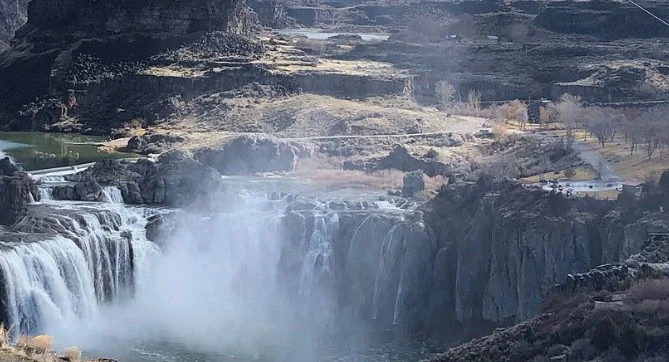
Twin Falls sits on the rim of the Snake River Canyon, within sight of the Perrine Bridge and a short drive from Shoshone Falls, with winter lows below zero, summer highs from 90 to past 100 degrees, and daily temperature swings of up to 50 degrees [1]. The city is growing, with 647 new housing units permitted in 2025 [5], and it sits on deep, silty farm soil [6]. Commuters on Blue Lakes Boulevard and Pole Line Road, retirees who drive a few miles a week, and farm families with old equipment in the shed all depend on an engine air filter that deals with all of it.
An Introduction to Engine Air Filters on Sunwest Way and Across the Canyon Rim
Stand at the canyon rim on a windy afternoon and look back toward town. The haze over the fields is not smoke. It is soil, some of the finest-textured farm ground in Idaho, lifted by the wind and carried across Blue Lakes Boulevard, new subdivisions, and every parking lot in between. That haze is what the engine air filters on Sunwest Way spend their lives catching.
Twin Falls adds a few twists to the usual engine air filter story. The soil itself is unusually fine. Construction keeps turning fresh ground. Many drivers put very few miles on their cars, which raises the question of whether time ages a filter as well as miles. Older equipment around the county still uses air cleaners that work on a completely different principle. And the air box on a modern car may hold more than a filter, while the filter box itself makes promises that are worth decoding.
This guide answers six questions Twin Falls drivers ask about the engine air filter, starting with the one that matters most to engine wear and ending with what the numbers on the box really mean. Each answer begins with a short, direct reply, then explains the engineering and the evidence and what it means on the canyon rim, in new neighborhoods, and on the farm roads around town.
The crew at Grease Monkey on Sunwest Way replaces engine, cabin, and fuel filters and checks the engine air filter as part of the 16-point inspection that comes with every oil change [1]. Here is what is worth knowing.
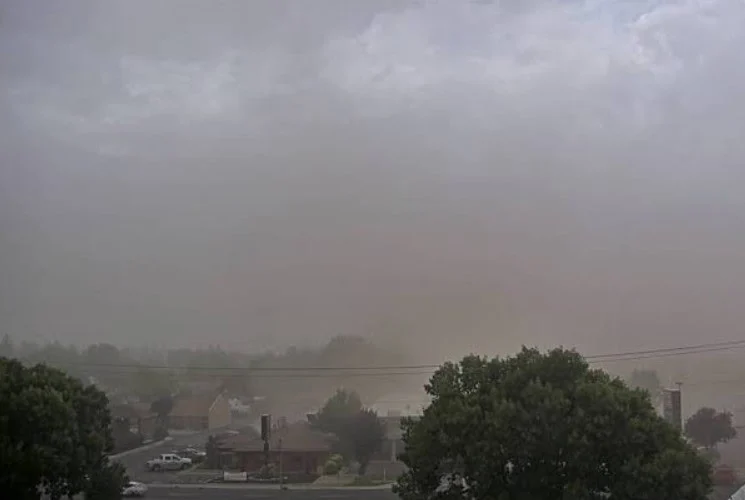
Twin Falls does everything in a big way… including dust storms!
1. Twin Falls Silt Is Fine Enough to Slip Through Gaps a Coarser Dust Would Never Find – and Your Engine Air Filter Knows It
Why does the fine silty soil around Twin Falls matter so much for my engine air filter and engine?
Quick Answer: Because it is mostly silt-sized particles, the same size range that does the most abrasive engine wear. A sealed, healthy engine air filter catches it, but fine silt exploits any small gap, tear, or loose clamp. In Twin Falls, a perfect engine air filter seal matters as much as the filter itself.
Not all dust is the same, and the dust around Twin Falls is unusually fine. A University of Idaho soil survey of the research and extension center at Kimberly found that its most extensive soil, Portneuf silt loam, is silt loam throughout and often approaches pure silt, with more than 80 percent silt-sized particles. The silty parent material ranges from a few feet to more than 100 feet deep, and the most commonly accepted explanation is that the wind deposited it [6]. The same kind of soil covers much of the farm ground around the city.
Silt is the in-between size of soil: finer than sand, coarser than clay. That happens to overlap with the size of dust that does the most damage inside an engine. A 2022 review of engine wear research found that hard mineral grains of about 5 to 20 micrometers are the ones most often responsible for abrasive wear, because they are close to the thickness of the oil films between moving parts [7]. Sand-sized grains are too big to slip into those films. Silt-sized grains fit.
A good engine air filter handles silt well. It is designed and tested to capture fine dust, and its efficiency improves as a layer of dust builds up on the media. The weak points are everywhere else. Fine silt rides the air through any opening that is not a filter: a gasket that did not seat, a corner of the filter crushed during installation, a crack in the rubber intake boot, or a clamp that loosened over a winter of temperature swings. Coarse dust would pile up at those gaps. Silt flows through them.
That is why the seal deserves extra attention in Twin Falls. A technician checking the engine air filter should look at the rubber edge for cracks or flattening, confirm the filter fills the housing edge to edge, make sure every lid clip latches evenly, and look at the clean side of the housing and the intake duct for any fine dust that should not be there. Dust on the clean side means something other than the media is letting air in.
Silt also loads an engine air filter steadily rather than dramatically. Because the particles are fine, they can build a dense layer that raises restriction without making the filter look caked. That is one more reason to judge the engine air filter by inspection and restriction rather than by looks alone.
2. Living Next to a New Subdivision? Construction Dust Is Hard on Your Engine Air Filter in Ways Field Dust Is Not
Does driving through construction zones and new subdivisions in Twin Falls load my engine air filter faster?
Quick Answer: Yes. Freshly graded lots, cutting concrete, and mud tracked onto roads put dense, fine mineral dust into the air, often right at bumper height. Drivers who live or work near active construction should have their engine air filter checked more often than the mileage schedule suggests.
Twin Falls is building. Redfin data compiled by Stacker show 647 new housing units permitted in the city in 2025, with the busiest months in the first half of the year [5]. Each new home starts with a scraped lot, trenches, driveways, and concrete, and each phase puts a different kind of dust into the air that nearby drivers breathe through their engine air filters.
Construction dust has a few traits that make it worth singling out. Grading strips away the vegetation and crust that normally hold Twin Falls silt in place, so the fine soil described in reason one is exposed and loose. Concrete work adds its own fine mineral dust. Federal workplace-safety regulators note that cutting, sawing, and grinding materials such as concrete, stone, brick, and block creates crystalline silica dust [8], one of the hardest and most abrasive mineral dusts there is. And trucks leaving job sites track mud onto streets, where it dries and turns back into dust every time a car drives over it.
Unlike a passing dust storm, construction is a daily exposure. A commuter whose route passes a new subdivision, a family that lives next to a block of homes going up, or a contractor whose pickup spends every day on job sites may be pulling dusty air through the engine air filter for months at a time. Much of that dust is generated right at ground level by equipment and tires, close to where many vehicles draw their intake air.
The engine air filter handles it the way it handles any dust: by catching it and gradually building restriction. The practical difference is timing. A vehicle with daily construction exposure can reach its engine air filter’s restriction limit well before a vehicle that drives only finished, paved streets. And because concrete and silica dust are so abrasive, any gap at the filter seal matters even more.
If your daily drive or your driveway borders active construction, ask for an engine air filter check at every oil change rather than every other, and keep windows of extra attention around the busiest phases of nearby work. Washing the truck after a muddy week also helps, because dried mud in the wheel wells and on the bumpers is just more dust waiting to be stirred up near the air inlet.
New neighborhoods are great; new-neighborhood dust is not. Bring your daily driver to Grease Monkey, 1552 Sunwest Way, Twin Falls, ID, and let the crew see how much of the construction zone your engine air filter has been catching: https://www.greasemonkey.com/locations/id/twin-falls/1552-sunwest-way/.
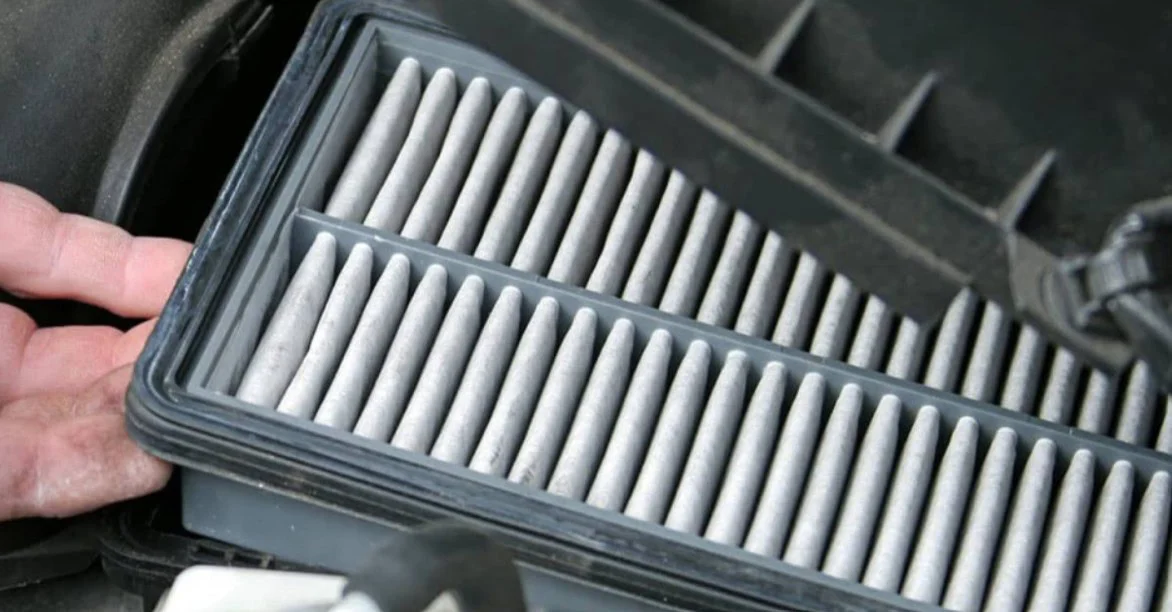
Just because you don’t drive your cars very much doesn’t mean that your engine air filters won’t go bad over time.
3. The Car That Barely Leaves the Garage Still Needs an Engine Air Filter Change – Here Is Why Time Counts
If I only drive a few thousand miles a year, do I still need to replace my engine air filter?
Quick Answer: Yes, eventually. Engine air filters age with time as well as miles: seals harden, media can absorb moisture, and debris or pests can find their way in. Many manufacturers set a time limit alongside the mileage. For low-mileage cars, have the engine air filter inspected at least once a year.
Twin Falls has plenty of cars that live easy lives: the retiree’s sedan that goes to church and the grocery store, the second car that waits in the garage, the convertible that only comes out in summer. Their owners sometimes assume that an engine air filter that has seen only a few thousand miles must still be like new. Mileage is only half of the story.
Factory schedules recognize that. Toyota’s maintenance schedule for the 2007 Sienna, for example, calls for replacing the engine air filter every 30,000 miles or 36 months, whichever comes first [9]. Mechanic Rick Muscoplat notes that mileage alone does not tell the whole story and recommends replacing the filter about once a year for vehicles driven infrequently, while also advising owners to judge the filter by looking deep into the pleats rather than by its color [10].
Time affects an engine air filter in a few ways. The rubber or urethane seal ages. Filter distributors note that elastomer seals harden over time, and that heat, humidity, and repeated expansion and contraction all speed that aging [11]. A hardened seal no longer presses evenly against the housing, which can open a gap for the fine silt described in reason one. The paper media can absorb moisture through seasons of temperature swings, and Twin Falls can move 50 degrees in a single day [1]. And a car that sits in a garage or carport can collect leaves, nesting material, or insects in the air box.
Low-mileage cars have one more quirk: they often run in short trips. Short trips are hard on oil and exhaust systems, but they are relatively easy on the engine air filter’s dust load, because the engine moves little air. That is why the inspection matters. The right answer for a low-mileage car is not a new engine air filter every few months, and not the same engine air filter for a decade.
A sensible routine is to have the engine air filter checked at each annual service, replace it when it shows loading, damage, water staining, or a stiff seal, and respect the manufacturer’s time limit even if the miles are low.
4. Grandpa’s Tractor Uses an Oil-Bath Air Cleaner Instead of a Paper Engine Air Filter – Here Is How to Keep It Working
How does an oil-bath air cleaner on an older tractor or truck work compared with a paper engine air filter, and how should it be serviced?
Quick Answer: An oil-bath air cleaner forces incoming air across a pool of oil and through oil-wetted mesh, trapping dust instead of filtering it through paper like a modern engine air filter. It works only with the right oil at the right level and frequent cleaning, often daily in dusty work.
Drive the back roads around Twin Falls and you will still see older tractors, farm trucks, and classic equipment at work or on display. Many of them breathe through an oil-bath air cleaner, the technology that came before the dry paper engine air filter. It is still recognized today: the current international test standard for engine air cleaners, ISO 5011, updated in 2025, includes a measurement of oil carry-over specifically for oil-bath cleaners [12].
The principle is different from a paper engine air filter. As described in an article contributed to the Yesterday’s Tractors enthusiast site, engine vacuum pulls incoming air down a center tube toward a cup of oil at the bottom of the canister. Heavy particles are thrown into the oil, and the air then rises through a pack of metal mesh that the oil wets, where finer particles stick before clean air leaves the top [13]. The oil and the mesh do the work that paper media does in a modern engine air filter.
That design makes the oil the critical part. The same article warns that oil that is too light can be drawn past the cleaner into the engine, oil that is too heavy will not rise far enough to wet the mesh, and oil that looks clean can still carry trapped dirt back up into the mesh, where it can sludge up after a few hours of work [13]. A 1969 Bureau of Land Management equipment note on oil-bath cleaners for diesel graders and tractors called for daily service in most manuals, shorter intervals in abnormally dusty conditions, and refilling the reservoir to the prescribed level with the specified oil, and it warned that a neglected cleaner leaves the engine losing power and running rough [14].
In practice, that means a daily check in dusty work: look at the oil level and condition, clean the cup and refill it to the mark when sludge builds up, and clean the mesh and intake pipe on the schedule the manual sets. Never overfill, because oil above the mark can be pulled into the engine, and never run the cup low, because dry mesh barely filters.
Some owners convert old equipment to a modern dry engine air filter, which needs less daily attention. Others keep the original oil bath for authenticity. Either can protect the engine if it is maintained, but an oil-bath cleaner that is serviced like a paper engine air filter – once in a while – will not.
Old iron deserves careful breathing. Whether your equipment runs an oil bath or a modern engine air filter, stop by Grease Monkey, 1552 Sunwest Way, Twin Falls, ID, for the oil and filter know-how to keep it working: https://www.greasemonkey.com/locations/id/twin-falls/1552-sunwest-way/.
5. That Black Pad or Honeycomb in Your Air Box Is Not a Second Engine Air Filter – Do Not Throw It Away
What is the black carbon pad or honeycomb insert I found in my engine air filter housing, and can I remove it?
Quick Answer: It is likely a hydrocarbon trap, an emissions part that catches fuel vapor escaping backward through the intake after the engine shuts off. It is not part of the engine air filter and should not be removed or replaced with the filter. Leave it in place unless it is damaged.
Open the air box on some newer cars and you may find something unexpected: a black pad of carbon-coated material, a honeycomb insert, or a coated panel on the clean side of the housing. Many owners assume it is a second filter and either throw it away or try to replace it along with the engine air filter. It has a different job.
When an engine shuts off, fuel left in the intake can evaporate, and those vapors can drift backward out through the air intake into the outside air. A Ford engineering patent explains that fuel sprayed into the intake can remain on the walls after shutdown and escape as vapor through the intake, raising evaporative emissions, in some cases beyond government limits, and it describes a hydrocarbon trap that captures those vapors, including designs placed in an air box with an air filter [15]. Emissions engineers developed these traps as standards tightened. When California’s LEV III rules arrived, chemical maker BASF introduced a hydrocarbon trap applied directly to the surface of the intake box, noting that older solutions used an activated carbon honeycomb or filter in the box [16].
Twin Falls summers make the idea easy to picture. With highs that can top 100 degrees [1], a hot engine parked in a sunny lot has plenty of heat to evaporate fuel. The hydrocarbon trap holds those vapors so they do not escape through the engine air filter and inlet.
For maintenance, the key points are simple. The hydrocarbon trap is part of the emissions system, not the engine air filter, so it is not replaced on the filter schedule. It should stay in place and undamaged. If it is torn, loose, or soaked with oil or water, ask the technician whether it needs attention, because a loose insert can shift in the housing. Do not wash it, blow it out, or remove it to improve airflow.
If a parts store sells you an engine air filter that seems to be missing a piece compared with what came out, compare carefully. The hydrocarbon trap usually stays with the housing, while the engine air filter is the pleated element that gets replaced.
6. Micron Claims, Efficiency Percentages, and ‘Lasts Longer’ Promises: Reading an Engine Air Filter Box Like an Engineer
What do the efficiency and capacity claims on an engine air filter box actually mean, and how can I compare them?
Quick Answer: Look for results from ISO 5011, the international test for engine air cleaners, which measures airflow restriction, dust-capture efficiency, and dust capacity using standard test dusts. Single ‘micron’ claims without test conditions are hard to compare. Choose an engine air filter that meets your vehicle maker’s specification.
Engine air filter packaging can read like a spec sheet: percentages, microns, capacity, and promises of longer life. Some of those numbers are meaningful. Some are marketing. The way to tell them apart is to ask what test produced them.
The recognized test is ISO 5011. Its 2025 edition sets uniform test procedures, conditions, equipment, and a performance report for inlet air cleaners used on internal combustion engines and compressors, and it measures airflow restriction, dust-collection efficiency, dust capacity, and oil carry-over for oil-bath cleaners [12]. The point of the standard is comparability: labs following it should produce results that can be compared across laboratories and over time [12]. The older U.S. test, SAE J726, which used standard fine and coarse test dusts, has been cancelled, and SAE has adopted ISO 5011 [17].
Each ISO 5011 result answers a different question. Efficiency is the share of test dust the filter keeps. Capacity is how much dust it holds before reaching a set restriction limit. Restriction is how hard the engine must pull to get air through it. Donaldson’s published comparison shows why small-looking differences matter: standard media at up to 99.9 percent efficiency, its nanofiber media at up to 99.99 percent, and typical will-fit standard media at up to 99.0 percent, which means roughly ten times as much dust passing at each step down [18].
Single-number ‘micron ratings’ are harder to interpret. A filter does not have one hole size, and its efficiency changes with particle size and with dust loading. Without the test method, dust type, and airflow rate, a micron claim cannot be compared with another brand’s. A claim of longer life is similar: it may mean higher capacity under test, or it may simply mean the filter lets more dust through and therefore clogs more slowly.
For Twin Falls drivers, the practical approach is simple. Start with an engine air filter that meets your vehicle maker’s specification and fits the housing exactly. If you are comparing premium options, ask for ISO 5011 data showing efficiency, capacity, and restriction together. And remember that no rating on the box matters if the engine air filter does not seal.
About Grease Monkey, 1552 Sunwest Way, Twin Falls, ID 83301
Grease Monkey Center #1511 is open Monday through Friday from 8:00 AM to 6:00 PM and Saturday from 8:00 AM to 5:00 PM, and is closed Sunday. The shop can be reached at (208) 980-2381, and manager Chevy Duff leads the team [1].
The menu covers conventional, synthetic, and premium synthetic oil changes with a 16-point inspection, engine, cabin, and fuel filter replacement, tune-ups, wipers, wheel balancing, transfer case service, tires, serpentine belts, radiator service and fluid exchange, battery, brake, A/C, headlight, and transmission services, and pre-purchase inspections. Services and products carry a limited warranty of three months or 3,000 miles [1].
Fleet services are available, and the lobby offers free Wi-Fi, a coffee station, refreshments, and a window into the service bay. Customers have given this Sunwest Way location a 4.6-star rating across more than 160 Google reviews [1].
Author Information
Author Bio – Phillip Paul Gilliam
Phillip Gilliam is a veteran journalist and former Editor-in-Chief with 50+ years of publishing experience and thousands of published articles. Specializing in automotive, trucking, and digital publishing, he creates authoritative, search-optimized content built on real-world expertise and editorial excellence. To learn more about Phil, visit http://www.phillipgilliam.com/about.html or contact Phil at [email protected]. He would love to hear from you!
Full Citation List
[1] Grease Monkey. Oil Change & Auto Repair, 1552 Sunwest Way, Twin Falls, ID. Grease Monkey. Available at: https://www.greasemonkey.com/locations/id/twin-falls/1552-sunwest-way/. (Center #1511; manager Chevy Duff; operated by Threshold Automotive dba Grease Monkey, part of the FullSpeed Automotive family; address, phone, hours; engine, cabin, and fuel filter services; 16-point inspection; fleet services; winter lows below zero, summer highs of 90 to 100+ degrees F, daily swings up to 50 degrees, dust and wind; Snake River Canyon, Perrine Bridge, Shoshone Falls, Blue Lakes Blvd, Pole Line Rd; 3-month/3,000-mile limited warranty; current Google rating of 4.6 stars from 164 reviews, checked October 10, 2026.)
[6] McDole, R.E., and Maxwell, H.B. Soil Survey: University of Idaho Research and Extension Center, Kimberly, and USDA Snake River Conservation Research Center. Idaho Agricultural Experiment Station Bulletin 656, March 1987. Available at: https://objects.lib.uidaho.edu/uiext/uiext22792.pdf. (Portneuf silt loam, the most extensive mapping unit, is silt loam throughout and often approaches silt, with over 80 percent silt-sized particles; silty parent materials range from a few feet to more than 100 feet thick; the most commonly accepted theory is wind deposition.)
[7] Dziubak, T., and Dziubak, S.D. A Study on the Effect of Inlet Air Pollution on the Engine Component Wear and Operation. Energies 15(3), 1182, 2022. Available at: https://www.mdpi.com/1996-1073/15/3/1182. (Hard mineral dust grains of about 5-20 micrometers most often cause abrasive wear.)
[8] U.S. Occupational Safety and Health Administration. Silica, Crystalline – Construction. OSHA. Available at: https://www.osha.gov/silica-crystalline/construction. (Cutting, sawing, and grinding materials such as concrete, stone, brick, and block creates crystalline silica dust.)
[10] Muscoplat, R. Engine Air Filter Replacement: When Is It Really Necessary? Rick's Free Auto Repair Advice, May 14, 2023. Available at: https://ricksfreeautorepairadvice.com/engine-air-filter-replacement-when-is-it-really-necessary/. (Mileage alone does not tell the whole story; replace about once a year for infrequently driven vehicles; judge by dirt depth in the pleats rather than color; replace for tears, cracked seals, water damage, or oil contamination.)
[11] Boarparts. How to Properly Store Spare Filters to Ensure Longevity and Reliability. Boar B.V., March 29, 2026. Available at: https://boarparts.com/blog/filters/how-to-properly-store-spare-filters-52w675n8/. (Elastomer seals harden over time; heat, humidity, and repeated expansion and contraction accelerate aging.)
[12] American National Standards Institute. ISO 5011:2025 – Inlet Air Cleaning Equipment for Internal Combustion Engines and Compressors. ANSI Blog, October 14, 2025. Available at: https://blog.ansi.org/ansi/iso-5011-2025-inlet-air-cleaning-equipment/. (ISO 5011:2025 specifies uniform test procedures for inlet air cleaners on engines and compressors, measuring airflow restriction, dust collection efficiency, dust capacity, and oil carry-over for oil-bath cleaners, so results can be compared across labs and over time.)
[13] Yesterday's Tractors. Oil Bath Air Filters. Contributed article. Available at: https://forums.yesterdaystractors.com/pages/artint6/. (Air is drawn down a center pipe toward an oil cup, heavy particles drop into the oil, and finer particles stick to oil-wetted metal packing; oil too light can be drawn into the engine and oil too heavy will not rise enough; oil can look clean but carry dirt that sludges the packing; manuals recommend daily attention, more in dust.)
[14] U.S. Bureau of Land Management. Air Cleaner – Oil Bath Type, Diesel Engines. Portland Service Center equipment note P-401, June 1969. Internet Archive. Available at: https://archive.org/download/aircleaneroilbat12bure/aircleaneroilbat12bure.pdf. (Most service manuals call for daily air cleaner service, shortened in abnormally dusty conditions; refill the reservoir to the prescribed level with the specified oil; a neglected cleaner causes power loss and rough running.)
[15] Ford Global Technologies LLC. Induction System Including a Passive-Adsorption Hydrocarbon Trap. U.S. Patent 9,581,115, February 28, 2017. Available at: https://patents.google.com/patent/US9581115. (Fuel left on intake walls after shutdown can escape as vapor through the intake, raising evaporative emissions, in some cases beyond government requirements; a hydrocarbon trap captures these vapors and may be placed in an air box containing an air filter.)
[16] DieselNet. BASF Introduces Hydrocarbon Trap for Air Intake Systems. DieselNet, January 14, 2014. Available at: https://dieselnet.com/news/2014/01basf.php. (BASF's trap is applied to the air intake box surface to adsorb hydrocarbons that leak through the intake when the engine is off, helping meet California LEV III evaporative standards; traditional solutions used an activated carbon honeycomb or filter in the intake box.)
[17] Powder Technology Inc. Filtration Standards. Available at: https://www.powdertechnologyinc.com/?p=1875. (SAE J726 Air Cleaner Test Code required A2 Fine and A4 Coarse test dusts; SAE J726 is cancelled and ISO 5011 has been adopted by SAE.)
[18] Donaldson Company. How Well Does an Engine Air Filter Clean Incoming Dirty Air? Air Filter Efficiency Explained. Donaldson technical article. Available at: https://www.donaldson.com/en/resources/technical-articles/air-filter-efficiency-explained/. (Standard media up to 99.9 percent, Ultra-Web up to 99.99 percent, will-fit standard media up to 99.0 percent efficiency.)
We use cookies to improve your browsing experience on our website. By closing this banner or interacting with our site, you acknowledge and agree to our privacy policy.