The Top 15 Reasons Twin Falls, Idaho Drivers Should Have Their Vehicle's Air Conditioning System Serviced and Inspected Regularly

Grease Monkey | 1552 Sunwest Way, Twin Falls, Idaho 83301
Serving Twin Falls, Filer, Kimberly, Hansen, Buhl, and all of Twin Falls County
https://www.greasemonkey.com/locations/id/twin-falls/1552-sunwest-way/
Why Vehicle AC Service Is a Priority in Twin Falls, Idaho — The Canyon City at the Center of the Magic Valley
Twin Falls is one of Idaho’s most distinctive cities — perched at the edge of a 486-foot canyon carved by the Snake River, with the massive I.B. Perrine Bridge crossing the Snake River, is positioned at the intersection of three major U.S. highways, and serving as the commercial and medical hub for a regional economy built on agriculture, food processing, and the outdoor recreation that the Magic Valley’s dramatic geography attracts year-round. When summer arrives in Twin Falls County, it arrives emphatically: temperatures that push into triple digits, a high-desert sun that beats through car glass with solar intensity that ambient temperature readings do not capture, and the long open-road driving corridors that make vehicle reliability a genuine safety concern.
The 15 reasons in this guide — ranked from most critical to least critical — explain exactly why regular vehicle air conditioning service and inspection matters for every driver in Twin Falls and Twin Falls County. Each reason is built around a distinct engineering or scientific principle, grounded in the specific geography, climate, and community character of Twin Falls, and supported by citations from the authoritative sources that validate the underlying technical claims. Whether you cross the Perrine Bridge daily, drive the I-84 corridor for work, or load your family into a sun-baked vehicle in a Magic Valley parking lot on the hottest day of the year, this guide was written for you.
Grease Monkey at 1552 Sunwest Way, Twin Falls, Idaho is operated by FullSpeed Automotive — the largest Grease Monkey franchisee in the United States, with over $542 million in annual revenue and more than 5.2 million vehicles serviced in 2025 alone. ASE-certified technicians, EPA Section 609-certified refrigerant handling, R-134a and R-1234yf equipment, and no-appointment service make the Sunwest Way location the professional AC service choice for every Twin Falls County driver.
Reason #1 — Core Body Temperature and Thermoregulation Failure: The Medical Science Behind Why AC Is a Life-Safety System
Category: Physiological Safety – Most Critical
Why Regular AC Service Matters — The Technical Reality
Human thermoregulation depends on the body’s ability to dissipate heat faster than it is absorbed from the environment — a balance that a functioning vehicle AC system maintains by keeping cabin air temperature below the threshold at which ambient heat transfer reverses direction and the environment begins heating the occupant instead of cooling them. When ambient temperature exceeds skin surface temperature (approximately 91°F for most adults at rest), evaporative sweating becomes the only available cooling mechanism, and in a closed vehicle interior where relative humidity can climb rapidly as occupants perspire, even that mechanism becomes ineffective. Core body temperature above 104°F constitutes heat stroke — a neurological emergency with a mortality rate exceeding 40 percent if not treated within the critical window. The Centers for Disease Control classifies heat stroke as the leading weather-related cause of death in the United States, and the National Institutes of Health documents that vehicle cabin environments are the most common setting for exertional and non-exertional heat stroke in adults during summer months. A functioning vehicle AC system is not a comfort accessory — it is the physiological barrier between normal thermoregulation and a cascade of organ system failure. (Source: Centers for Disease Control and Prevention, “Heat-Related Illness Prevention,” 2024; National Institutes of Health, “Hyperthermia: A Comprehensive Review,” 2023; New England Journal of Medicine, “Heat Stroke,” 2019, Vol. 380, pp. 2449–2459.)
How This Affects Twin Falls and Twin Falls County Drivers Specifically
Twin Falls sits in the heart of the Magic Valley high desert, where July and August temperatures regularly reach 103°F to 107°F — among the highest sustained ambient temperatures of any Idaho city. The Snake River Canyon, spectacular as it is from the Perrine Bridge overlook, provides no meaningful cooling effect to the city above its rim. The summer sun angle at Twin Falls’ latitude, combined with the low-humidity air that offers no cloud cover buffer, means that a vehicle parked in the open lots along Blue Lakes Boulevard, on the College of Southern Idaho campus, or at any of the employment facilities along the Chobani and industrial corridor on Twin Falls’ west side can reach interior temperatures of 140°F or higher within 20 minutes. For the Twin Falls County nurses and healthcare workers finishing a day shift at St. Luke’s Magic Valley Medical Center and returning to sun-baked vehicles in the parking structure, for the agricultural workers driving home after full-day field operations in Filer and Kimberly, and for the families loading children into vehicles after afternoon shopping on Pole Line Road, a functioning AC system is the difference between a safe commute home and a medical emergency en route.
In Twin Falls’ 105°F summers, a working AC system is not optional equipment — it is survival equipment. Schedule your AC safety inspection at Grease Monkey on Sunwest Way before summer peaks.
Reason #2 — Refrigerant Cross-Contamination and Incorrect Service: The Costly Mistake That Happens When AC Type Is Unknown
Category: Refrigerant System Integrity – Most Critical
Why Regular AC Service Matters — The Technical Reality
The transition from R-134a to R-1234yf refrigerant across new vehicle platforms since 2013 has created a mixed fleet in which vehicles requiring different, incompatible refrigerant types coexist in the same service environment. R-134a and R-1234yf are not interchangeable: their service equipment, fittings, lubricating oils, and pressure-temperature characteristics are distinct, and a system charged with the incorrect refrigerant experiences immediate performance degradation, seal compatibility failure, and compressor lubricant dilution that can require complete system flush and component replacement to correct. EPA Section 609 requires that refrigerant type be identified before any service procedure, and SAE standards J2788 and J2843 specify dedicated equipment for each refrigerant type. A vehicle owner who does not know their vehicle’s refrigerant specification, or who has received prior service from a non-certified facility, may have an unknowingly cross-contaminated system that will require professional diagnosis before any additional service can be safely performed. Refrigerant identifier equipment — a professional diagnostic tool that definitively determines refrigerant type before service — is a required element of any legitimate AC service procedure. (Source: U.S. EPA Section 609, Clean Air Act, 40 CFR Part 82, Subpart B; SAE J2788: HFC-134a Equipment Standard; SAE J2843: R-1234yf Equipment Standard; Mobile Air Conditioning Society Worldwide, Technical Bulletin TB-033, 2024.)
How This Affects Twin Falls and Twin Falls County Drivers Specifically
Twin Falls is one of the larger vehicle markets in southern Idaho, with a used vehicle ecosystem that includes trade-ins from across the Magic Valley, private sales, and the steady vehicle turnover that comes with a city of its size and demographic range. In that secondary market, a growing proportion of vehicles are post-2017 model years that came factory-filled with R-1234yf, but may have passed through one or more ownership cycles during which service history is unknown or incomplete. For Twin Falls buyers who purchased a used vehicle without verifiable AC service history — a common situation in the active Craigslist and Facebook Marketplace vehicle ecosystem of the Magic Valley — knowing what refrigerant is actually in the system, and whether it has been correctly serviced, is the starting point for any legitimate AC work. The Grease Monkey team on Sunwest Way uses refrigerant identification equipment as a standard first step before any service procedure, protecting Twin Falls customers from the expensive consequences of undetected cross-contamination.
Know what’s actually in your AC system before anyone adds another ounce. Get a professional refrigerant identification and system inspection at Grease Monkey Twin Falls today.
Reason #3 — Condenser Cooling Fan Performance: The Component Behind Your Condenser That Determines Everything
Category: Cooling Fan System Health – Critically Important
Why Regular AC Service Matters — The Technical Reality
The AC condenser rejects heat from the refrigerant circuit to the atmosphere, but only if adequate airflow passes through its fin surfaces. At highway speeds, ram air provides this flow, but at idle, in traffic, and at low speeds — exactly the conditions in which maximum cooling demand coincides with minimum natural airflow — the condenser cooling fan is the sole source of airflow. In most modern vehicles, this is an electric fan or fan module whose speed is modulated by the body control module in response to AC system high-side pressure, engine coolant temperature, and vehicle speed signals. A cooling fan that has lost one of its speed steps, developed bearing noise, or failed entirely causes high-side pressure to spike, triggering the high-pressure cutout switch repeatedly — producing the classic symptom of an AC system that cools well at highway speed but barely functions in stopped traffic. Cooling fan current draw, blade condition, and speed response verification are components of a complete AC diagnostic that refrigerant charge alone does not address. (Source: SAE Technical Paper 2021-01-0283: “Electric Condenser Fan Performance and Mobile AC System Efficiency”; Denso Technical Reference, “Cooling Fan Module Diagnosis and Service,” 2023.)
How This Affects Twin Falls and Twin Falls County Drivers Specifically
Twin Falls’ summer driving patterns create maximum condenser fan demand precisely when the city’s road network is at peak congestion. The intersection of Blue Lakes Boulevard and Pole Line Road, the approach to I-84 on-ramps during afternoon drive time, and the stop-and-go traffic along Washington Street and Addison Avenue West during the Magic Valley’s busiest summer shopping days all subject vehicle AC systems to sustained low-speed, high-ambient-temperature conditions where the cooling fan is the only thing preventing high-side pressure overload. For Twin Falls families stuck in the parking lot traffic of the Magic Valley Mall corridor on a 103°F Saturday afternoon, a cooling fan performing at 60 percent of rated output means an AC system that is barely keeping pace with heat load at the worst possible moment. The Grease Monkey diagnostic check on Sunwest Way includes cooling fan verification as a standard component of AC system evaluation.
Don’t discover your cooling fan has failed in the Blue Lakes Boulevard traffic on a 103°F afternoon. Get your condenser fan and full AC system verified at Grease Monkey on Sunwest Way — before summer traffic season peaks.
Reason #4 — Recirculation Mode, Cabin Air Quality, and the Health Trade-Off That Most Drivers Don’t Know They’re Making
Category: Air Recirculation and Cabin Air Management – Critically Important
Why Regular AC Service Matters — The Technical Reality
Vehicle HVAC systems offer two airflow modes: fresh air mode, which draws outside air through the cabin filter and into the cabin, and recirculation mode, which cycles interior cabin air through the evaporator without introducing outside air. Recirculation mode maximizes cooling efficiency by presenting already-cooled cabin air to the evaporator rather than the hot outside air that fresh mode introduces — but it does so at a cost. In recirculation mode, cabin CO2 concentration rises as occupants exhale, VOC concentrations from interior materials accumulate without dilution, and relative humidity increases from occupant respiration. Research published in Environmental Health Perspectives documents measurable cognitive degradation at CO2 concentrations achievable after 30 to 45 minutes of recirculation mode in a sealed vehicle. Additionally, a degraded or contaminated evaporator circulated under recirculation conditions concentrates biological contaminant exposure rather than diluting it. Professional AC service optimizes the system for maximum cooling efficiency in fresh air mode, reducing driver reliance on recirculation mode and the associated air quality trade-offs. (Source: Allen, J.G., et al. (2015). Associations of Cognitive Function Scores with Carbon Dioxide, Ventilation, and Volatile Organic Compound Exposures in Office Workers. Environmental Health Perspectives, 124(6), 805–812; SAE Technical Paper 2019-01-0536: Microbial Contamination in Vehicle HVAC Systems.)
How This Affects Twin Falls and Twin Falls County Drivers Specifically
The sustained summer heat of the Snake River Plain creates conditions in which Twin Falls drivers use recirculation mode for extended periods — on the I-84 corridor between Twin Falls and the broader southern Idaho region, on US-93 northbound toward the Sun Valley corridor, and on the long open stretches of US-30 westbound toward Buhl and Hagerman. For Twin Falls residents who commute daily on these corridors with the windows sealed against 100°F ambient heat, the air quality management question of fresh-air versus recirculation mode has a direct physiological consequence over a full summer season. A properly functioning AC system that delivers adequate cooling in fresh air mode eliminates the need to default to recirculation — keeping CO2 levels and VOC concentrations in the cabin at healthy levels throughout Twin Falls’ demanding summer commute season.
Breathe better air on every summer commute through the Magic Valley. Restore your AC’s fresh-air cooling power at Grease Monkey Twin Falls — no recirculation compromise required.
Reason #5 — Evaporator Icing and Freeze-Up: The Failure Mode That Turns Cold Air Into No Air Without Warning
Category: Evaporator Freeze Prevention – Critically Important
Why Regular AC Service Matters — The Technical Reality
Evaporator icing occurs when the refrigerant-side temperature at the evaporator surface drops below 32°F — a condition that should not occur in a properly functioning system with correctly calibrated low-pressure protection, accurate evaporator temperature sensing, and adequate airflow across the coil. When any of these control parameters drift from specification — a sticking thermal protection switch, a partially blocked cabin filter reducing coil airflow, a low refrigerant charge causing abnormally low evaporator pressure — frost accumulates on evaporator fins and progressively blocks airflow in a self-reinforcing cycle. The driver’s experience is an AC system that appears to be working — vent temperatures feel cold initially — and then progressively delivers less and less airflow over 20 to 40 minutes until the vents are barely producing output. When the vehicle is stopped and the system is shut off, the ice melts, floods the condensate drain, and may overflow into the cabin. Resolving the root cause requires professional diagnosis to distinguish between the multiple control system and refrigerant charge conditions that can produce icing. (Source: MACS Worldwide, Technical Bulletin TB-027: Evaporator Icing Diagnosis and Prevention, 2023; SAE Technical Paper 2022-01-0741: Evaporator Temperature Control Strategies in Mobile HVAC Systems.)
How This Affects Twin Falls and Twin Falls County Drivers Specifically
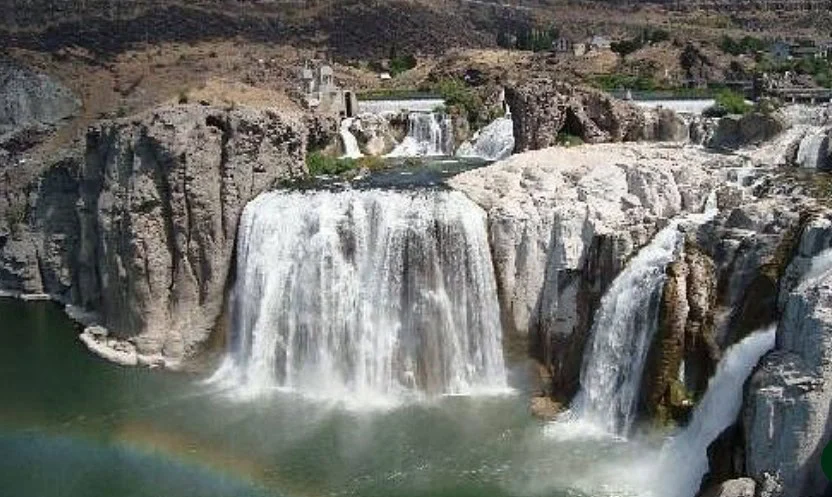
The combination of Twin Falls’ extreme summer temperatures and the high-desert low humidity creates conditions that amplify evaporator icing risk in a counterintuitive way: drivers push AC systems to maximum output on the hottest days, often selecting the coldest thermostat settings and running blower motors at high speed, which increases the airflow demand on an evaporator coil whose thermal protection calibration may be drifting with component age. For the Twin Falls resident driving home from an afternoon at Shoshone Falls or the Snake River Canyon overlooks — windows sealed, thermostat at maximum cold, blower on high — a partially compromised evaporator temperature sensor or a slightly low refrigerant charge can initiate icing that produces complete airflow loss by the time they reach the Sunwest Way commercial corridor. An AC service that verifies thermal protection calibration and refrigerant charge eliminates this failure mode.
Prevent the AC freeze-up that turns cold air into no air on Twin Falls’ hottest drives. Get your evaporator temperature controls and refrigerant charge verified at Grease Monkey on Sunwest Way.
Reason #6 — Refrigerant Hose and O-Ring Degradation: The Slow Leak That Empties Your System Between Service Visits
Category: Hose and Seal Chemistry – Critically Important
Why Regular AC Service Matters — The Technical Reality
Automotive AC system hoses are engineered barrier hoses with an inner nylon or PVDF barrier layer designed to minimize refrigerant permeation, surrounded by rubber compounds and reinforcing braiding. The O-rings sealing fittings, compressor connections, and service ports are precision-molded from neoprene, HNBR, or EPDM compounds specified for compatibility with both the refrigerant and the PAG or POE lubricating oil in the system. As these elastomeric components age, UV exposure, ozone attack, and the chemical action of degraded refrigerant oil hardening and shrinking seal cross-sections produces a gradual but continuous increase in system permeation rate. A 10-year-old vehicle’s AC hoses may permeate at three to five times the rate of a new system, losing refrigerant charge noticeably faster between service visits. Annual service identifies which hose sections and fittings are approaching end of useful life through pressure decay testing, dye inspection, and visual assessment — allowing targeted, cost-effective replacement before a complete refrigerant loss event. (Source: Parker Hannifin Corporation, “Refrigerant Barrier Hose Technical Manual,” 2023; SAE J2196: Service Ports for HFC-134a; MACS Worldwide, Technical Bulletin TB-021: Refrigerant Hose and O-Ring Service Life, 2023.)
How This Affects Twin Falls and Twin Falls County Drivers Specifically
The Magic Valley’s climate is particularly aggressive on AC hose and O-ring chemistry. Ozone concentrations in the high-desert Snake River Plain are elevated relative to more humid regions — arid, high-UV environments produce higher ground-level ozone from photochemical reactions with agricultural and vehicle emissions. Ozone is one of the primary degradation agents for the rubber compounds in automotive AC hoses and O-rings, attacking double bonds in the polymer chain and producing surface cracking that accelerates permeation. For Twin Falls vehicles that live outdoors year-round — the majority of the county’s working trucks, SUVs, and agricultural vehicles — ozone exposure is a continuous degradation factor that shortens hose and seal service life below what national average service intervals assume. An annual inspection at Grease Monkey on Sunwest Way identifies the hose and O-ring sections approaching failure before they produce a complete refrigerant loss.
Find the slow leak before it leaves you without AC on the hottest day of the Magic Valley summer. Get a complete hose and seal inspection at Grease Monkey Twin Falls — certified equipment, real findings.
Reason #7 — Professional Odor Elimination and Antimicrobial Treatment: The Service That Converts a Contaminated System Into a Clean One
Category: Odor Elimination and Biological Treatment – Critically Important
Why Regular AC Service Matters — The Technical Reality
The musty odor that activates with the first blast of an AC system after a period of non-use is a biological indicator — not a chemical or mechanical one — and it requires a biological intervention to resolve. Microbial colonies established on evaporator fin surfaces and in the evaporator housing drain pan cannot be eliminated by refrigerant service, cabin filter replacement, or any consumer spray product that reaches only the cabin air supply, because the organisms are upstream of the cabin air outlet at a location that consumer products cannot adequately penetrate. Professional treatment protocols use EPA-registered antimicrobial agents applied via evaporator intake duct under controlled concentration and contact time conditions, targeting the specific bacterial and mold species documented in vehicle HVAC system research. Some protocols add an ozone shock treatment that penetrates the entire cabin and ductwork simultaneously. Professional treatment eliminates established biological colonization; annual service prevents the accumulation conditions that allow it to establish in the first place. (Source: EPA Antimicrobial Pesticide Division, “Registered Antimicrobial Products for HVAC System Treatment,” 2024; SAE Technical Paper 2017-01-0193: Evaporator Surface Microbiology and Treatment Efficacy.)
How This Affects Twin Falls and Twin Falls County Drivers Specifically
Twin Falls’ summer heat and the high ambient temperatures that characterize Magic Valley parking lots create the persistent warm-humid evaporator housing conditions that biological contamination thrives in. A vehicle parked in the sun at the Twin Falls Walmart on Blue Lakes Boulevard all afternoon, then driven home with the AC on maximum, then parked overnight — cycling through this routine daily through a long Magic Valley summer — provides the temperature variation and recurring moisture deposition that supports active microbial growth on evaporator surfaces faster than in cooler climates. For Twin Falls families, parents driving children to Lynwood Elementary or Robert Stuart Middle School, and commuters who spend significant time in their vehicles daily, the biological cleanliness of the AC system is a health matter that deserves professional attention. The Grease Monkey team on Sunwest Way treats this condition with professional-grade products, not aftermarket sprays.
Eliminate the biological source of that smell — not just the smell itself. Get professional evaporator treatment and a truly clean AC system at Grease Monkey on Sunwest Way.
Reason #8 — Compressor Clutch Air Gap Specification: The Precision Adjustment That Prevents Clutch Failure
Category: Mechanical Precision Maintenance – Highly Important
Why Regular AC Service Matters — The Technical Reality
The electromagnetic clutch that engages the AC compressor from the engine’s belt drive is an electromechanical device with a precision requirement that most vehicle owners — and some service technicians — are unaware of: the air gap between the clutch plate and pulley rotor must be maintained within a specification typically ranging from 0.014 to 0.031 inches, depending on the application. An air gap that has grown outside specification — through normal wear of the friction material on the clutch plate face — causes excessive voltage drop across the clutch coil during engagement, producing a characteristic slipping behavior, clutch chatter, and accelerated friction face wear. Left uncorrected, an out-of-specification air gap produces complete clutch failure as the friction face material burns through, requiring clutch assembly replacement at a cost of $200 to $600 in parts and labor. Air gap measurement and, where adjustable, shimming is a routine but often-omitted inspection item that a complete professional AC service addresses. (Source: Sanden International, “Compressor Clutch Service Manual,” 2023; Denso Products and Services Americas, “AC Compressor Clutch Diagnostic Guide,” 2023.)
How This Affects Twin Falls and Twin Falls County Drivers Specifically
The high engagement frequency that AC compressor clutches experience in Twin Falls’ long summers — cycling on and off dozens of times per hour during the extended AC season that runs from May through September — accumulates clutch wear faster than in shorter-season climates. A Twin Falls vehicle running AC for five to six months annually accumulates roughly 40 to 50 percent more clutch engagement cycles than a comparable vehicle in a northern climate. For Twin Falls County residents whose trucks and SUVs are running AC nearly continuously during summer field operations, daily commercial commutes, and weekend family travel to the Snake River Canyon and Shoshone Falls, compressor clutch wear is an accelerated variable that an annual inspection can catch before it becomes an unscheduled repair.
Protect your compressor clutch from the wear that Twin Falls’ long summers accelerate. Schedule your complete compressor and clutch inspection at Grease Monkey Twin Falls today.
Reason #9 — Heat Index, Solar Load, and Real-World AC Demand: Why the Thermometer Reading Underestimates What Your AC Must Overcome
Category: Heat Index Science and AC Demand – Highly Important
Why Regular AC Service Matters — The Technical Reality
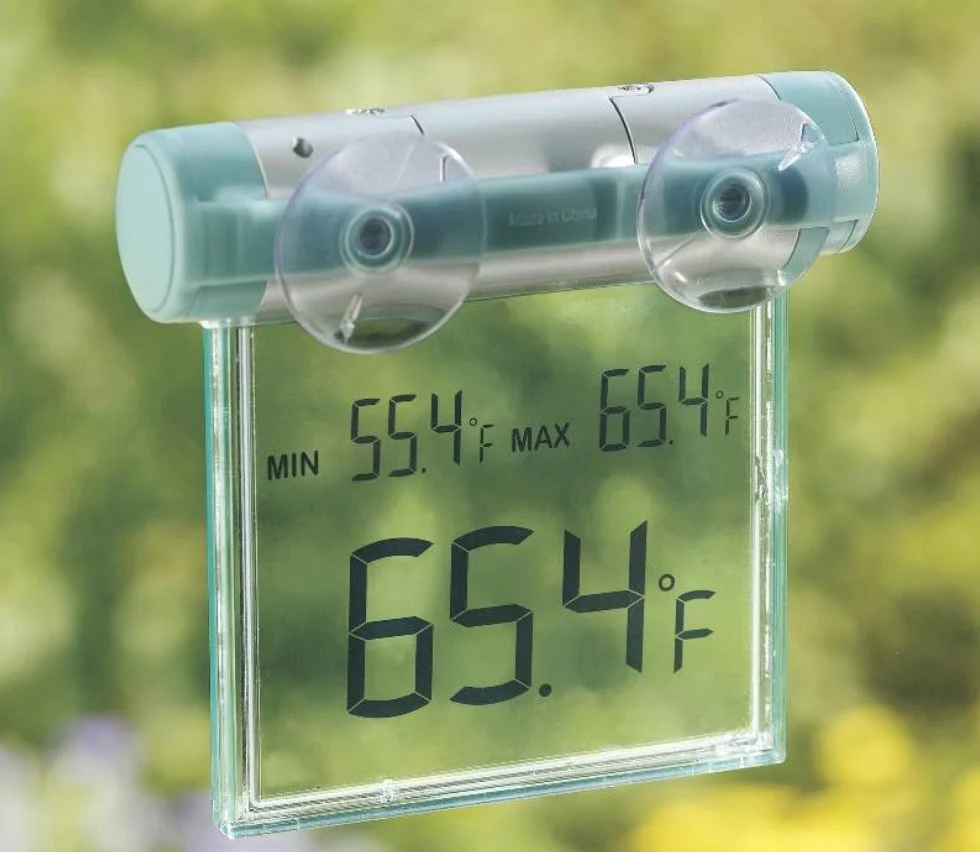
The National Weather Service Heat Index — the combined effect of air temperature and relative humidity on perceived temperature — is a conservative measure of actual vehicle thermal load, because it excludes the most significant factor in vehicle cabin heating: solar radiant gain. A vehicle exposed to direct sunlight absorbs solar radiation at a rate of 300 to 800 watts per square meter on glass surfaces, with interior temperatures rising at rates of 5 to 7°F per minute in peak conditions regardless of ambient air temperature. The American Society of Mechanical Engineers documents that the total thermal load on a vehicle AC system operating in peak summer insolation is two to three times the load implied by ambient air temperature alone. A system that is correctly sized and properly charged to handle the rated ambient temperature may be operating at 150 to 200 percent of rated capacity when solar load is added — a condition that reveals marginal refrigerant charge deficiency or condenser fouling that would not be apparent in cooler conditions. Annual AC service ensures full-capacity operation is available for the peak-demand conditions that Twin Falls summers routinely produce. (Source: American Society of Mechanical Engineers, “Solar Thermal Load Modeling for Mobile HVAC Applications,” 2022; National Weather Service, “Heat Index Calculation and Limitations,” 2024.)
How This Affects Twin Falls and Twin Falls County Drivers Specifically
Twin Falls’ position on the Snake River Plain delivers maximum solar exposure — the high-desert sky is clear for the majority of summer days, and the low humidity that provides relief in wetter climates actually increases solar intensity by reducing the atmospheric scattering that clouds and humidity produce. A vehicle parked at the Rock Creek Canyon trailhead, at the Twin Falls Visitor Center near the Perrine Bridge, or in any of the open commercial parking lots along Addison Avenue West absorbs solar gain that can raise interior temperatures to 140°F even when ambient air temperature is only in the mid-80s. When that vehicle is started and the AC is first activated, it is facing a thermal challenge that exceeds the design load assumption of a fully charged system — and dramatically exceeds the capacity of a partially depleted one. An AC service that delivers a full-specification refrigerant charge prepares the system for the solar reality of a Magic Valley summer.
Prepare your AC for the full solar load of a Twin Falls summer — not just the thermometer reading. Get a full-specification AC service at Grease Monkey on Sunwest Way and face the Magic Valley sun fully equipped.
Reason #10 — Canyon Grade Driving and AC Thermal Load: The Unique Thermal Challenge of Twin Falls’ Signature Geography
Category: Canyon Road Thermal Stress – Highly Important
Why Regular AC Service Matters — The Technical Reality
Sustained uphill driving on canyon grades imposes a compound thermal load on vehicle systems that flat-road driving does not replicate. Uphill driving at highway speed increases engine load, exhaust heat, and coolant circuit thermal load simultaneously with AC system demand — because the driver’s need for cabin cooling does not diminish on a climb. The condenser and radiator stack, sharing the same airflow path, must simultaneously handle the elevated cooling system heat rejection of a load-climbing engine and the AC heat rejection of a system trying to maintain cabin temperature against the solar gain from glass surfaces exposed to the sun angles common on southbound canyon approaches. Professional AC service ensures that the condenser is clean, the refrigerant charge is at specification, and the cooling fan circuit is functioning correctly — the three conditions required for the system to perform to specification under combined canyon-grade and high-ambient-temperature thermal loading. (Source: SAE International Technical Paper 2020-01-1285: Condenser-Radiator Thermal Load Interaction Under Grade-Climbing Conditions; Automotive Engineering International, “Thermal Management Under Combined Load,” 2023.)
How This Affects Twin Falls and Twin Falls County Drivers Specifically
Twin Falls is defined by its canyon geography, and that geography creates a driving environment unique among Idaho cities. The Perrine Bridge spanning 486 feet above the Snake River is not just a landmark — it is a commute route for thousands of Twin Falls residents who live on one side of the canyon and work on the other. The canyon approaches on US-93 south and north of the bridge, the Rock Creek drainage roads, and the agricultural roads descending to the Snake River corridor all involve grade changes that load vehicle systems simultaneously. For Twin Falls residents who cross the canyon multiple times daily — as thousands do for work, school, and errands — the combined canyon-grade and summer-heat thermal load on the AC and cooling system is a daily variable that a properly serviced system handles and a marginally performing one does not.
Cross the Perrine Bridge confident that your AC can handle every Twin Falls canyon grade. Get your AC serviced for the real demands of Twin Falls driving at Grease Monkey on Sunwest Way.
Reason #11 — UV Dye Tracing and Electronic Leak Detection: Finding the Leak That Visual Inspection Misses
Category: Professional Leak Technology – Highly Important
Why Regular AC Service Matters — The Technical Reality
Refrigerant leak detection requires professional technology because refrigerant is a colorless, odorless gas that leaves no visible trace at the leak rates most relevant to annual service interval management. Electronic heated diode detectors and infrared sensor detectors can identify leak concentrations as low as 0.1 ounce per year — a rate that would take three to five years to produce a noticeable performance decline but that is still an active leak requiring attention. Ultraviolet dye injection traces refrigerant pathways by suspending fluorescent dye molecules in the refrigerant-oil mixture that circulates through the entire system, leaving visible dye deposits at every leak site when examined with a UV lamp. The combination of electronic detection for initial leak location and UV dye for leak site visualization allows technicians to identify the precise component — a specific O-ring, a hose fitting, a compressor shaft seal, or a condenser tube — that is the source of refrigerant loss. This precision eliminates the diagnostic guesswork that leads to unnecessary component replacement. (Source: Robinair Service Corporation, “Electronic Leak Detection Technology Reference,” 2024; SAE J2791: Procedure for Evaluation of Refrigerant Leak Detectors; MACS Worldwide, Technical Bulletin TB-031: UV Dye and Electronic Detection Protocols, 2023.)
How This Affects Twin Falls and Twin Falls County Drivers Specifically
For Twin Falls County drivers whose vehicles have been serviced by multiple shops over multiple seasons — a common history in the active used vehicle market of the Magic Valley — the question of whether UV dye is already present in the system, and whether prior leak repairs were complete, requires professional diagnostic work to establish. A system that was dye-injected at a previous service and then had a fitting replaced may have residual dye at other leak sites that the previous repair did not address. The Grease Monkey technicians on Sunwest Way perform systematic UV and electronic leak detection as a component of complete AC service, establishing a comprehensive leak map of the system rather than addressing only the most obvious or accessible site. For Twin Falls residents investing in an AC service before the summer season, that systematic approach is the difference between a repair that holds through October and one that requires a return visit in August.
Find every leak — not just the one that’s easiest to see. Get professional UV dye and electronic leak detection at Grease Monkey Twin Falls — comprehensive, not cursory.

Reason #12 — Cabin Comfort, Workforce Productivity, and Occupational Heat Stress: The Business Case for Working Vehicles with Functioning AC
Category: Workforce and Productivity – Important
Why Regular AC Service Matters — The Technical Reality
The Occupational Safety and Health Administration (OSHA) identifies heat stress as one of the leading causes of occupational illness in outdoor and semi-outdoor work environments, with productivity decrements beginning at core body temperatures above 99°F and physical incapacitation occurring above 104°F. For workers whose vehicles function as mobile offices, transport environments, or tool storage between job sites — skilled trades, field services, agricultural operations, and delivery personnel — the interior temperature of the vehicle during transit is a direct occupational health variable. Research by the National Institute for Occupational Safety and Health documents that heat-stressed workers make more errors, exercise poorer judgment, and sustain higher injury rates than thermally comfortable workers performing identical tasks. A vehicle AC system that maintains cabin temperatures below 80°F during transit preserves the physiological and cognitive condition that safe, productive work requires. This is not a comfort issue for working professionals — it is an occupational safety and liability management issue. (Source: OSHA Technical Manual, Section III, Chapter 4: Heat Stress; National Institute for Occupational Safety and Health (NIOSH), “Criteria for a Recommended Standard: Occupational Exposure to Heat and Hot Environments,” 2016; Journal of Safety Research, “Heat Stress and Occupational Injury Rates,” 2022.)
How This Affects Twin Falls and Twin Falls County Drivers Specifically
Twin Falls County’s economy is built on skilled agricultural labor, food processing, construction, and the full range of trades and services that support a regional hub city of its character. The dairy operations of Twin Falls County, the farm labor that supports potato and sugar beet production through Filer, Kimberly, and Hansen, the construction crews building across the rapidly developing south side of Twin Falls, and the delivery and service personnel who cover the Magic Valley’s wide commercial geography — all represent a working population whose vehicle fleet is a professional tool, not a recreational convenience. For the Twin Falls County employer who sends field personnel out in company vehicles, and for the independent tradesperson whose work truck is the center of their livelihood, a functioning AC system is a legitimate investment in workforce performance and occupational safety compliance. The Grease Monkey on Sunwest Way provides the service that keeps those work vehicles performing professionally.
Keep your workforce comfortable, productive, and safe in Magic Valley summer conditions. Service your working vehicles’ AC systems at Grease Monkey Twin Falls — professional fleet service, no appointment needed.
Reason #13 — Refrigerant Recovery, Recycling, and Environmental Accountability: Why Professional AC Service Is the Environmental Choice
Category: Environmental Stewardship – Important
Why Regular AC Service Matters — The Technical Reality
Automotive refrigerants are regulated as greenhouse gases under the Clean Air Act and the American Innovation and Manufacturing (AIM) Act of 2020, which establishes a phasedown schedule for hydrofluorocarbons including R-134a. The Global Warming Potential of R-134a is 1,430 times that of carbon dioxide over a 100-year integration period, making a single 12-ounce refrigerant loss event the greenhouse gas equivalent of burning approximately 10 gallons of gasoline. EPA Section 609 requires that all refrigerant removed from a vehicle AC system be recovered using certified equipment and recycled for reuse — prohibition against intentional venting is absolute and carries civil penalties of up to $44,539 per day per violation. Professional AC service at a certified facility ensures that every ounce of recovered refrigerant is properly handled, that leak repairs prevent future atmospheric release, and that the refrigerant recharged into the system is recycled rather than newly manufactured — a choice with a measurably smaller carbon footprint. (Source: U.S. EPA, American Innovation and Manufacturing Act of 2020; Clean Air Act Section 609, 40 CFR Part 82; EPA Civil Penalty Policy for Section 609 Violations, 2024.)
How This Affects Twin Falls and Twin Falls County Drivers Specifically
The Snake River corridor that defines Twin Falls County’s physical geography is one of Idaho’s most ecologically significant waterways — home to world-class trout fisheries, the Thousand Springs ecosystem downstream at Hagerman, the riparian habitat of the Snake River Birds of Prey National Conservation Area to the west, and the aquifer-fed springs that make this region one of the most productive agricultural environments in the American West. The Twin Falls community has a direct, tangible stake in the long-term climate stability that regional greenhouse gas management supports. Choosing professional AC service at a certified Grease Monkey facility rather than accepting refrigerant venting at an uncertified facility is a choice that aligns with the environmental values of a community that lives close to the land and the water that makes this corner of Idaho what it is. FullSpeed Automotive’s EPA compliance standards apply at every location, including the Sunwest Way shop.
Choose the AC service that protects the Snake River Valley you live in. Get EPA-compliant refrigerant recovery and recycling at Grease Monkey Twin Falls — environmental responsibility built into every service.
Reason #14 — High-Side and Low-Side Pressure Analysis: The Diagnostic Window Into Your Entire AC System’s Health
Category: System Pressure Diagnostics – Important
Why Regular AC Service Matters — The Technical Reality
Professional AC service includes measurement of both high-side and low-side system pressures at defined operating conditions — a diagnostic snapshot that reveals the health of every major component in the circuit simultaneously. Normal pressure relationships across the high and low sides, adjusted for ambient temperature, confirm that the compressor is developing adequate head pressure, that the expansion device is metering correctly, that the condenser is rejecting heat efficiently, and that the evaporator is absorbing heat within its design range. Deviations from expected pressure profiles are diagnostic signatures: both sides high suggests condenser fouling or airflow restriction; both sides low indicates refrigerant undercharge; high-side low with low-side high points to a failing compressor; high-side high with low-side low indicates expansion device restriction. Each of these conditions is distinguishable by pressure analysis alone before any component is removed or replaced — making pressure diagnostics the most cost-effective entry point into AC system troubleshooting available. (Source: MACS Worldwide, Service Training Manual: Pressure Diagnosis, 2024; Automotive Heating and Air Conditioning, 7th Ed., Halderman & Mitchell, Chapter 8: Diagnosis Using Manifold Gauge Sets.)
How This Affects Twin Falls and Twin Falls County Drivers Specifically
For Twin Falls County drivers who have noticed that their AC is “not as cold as it used to be” but have not experienced complete failure — the most common patient presentation at any AC service counter — pressure diagnostics provides the answer that refrigerant charge alone cannot. A system that has lost 20 percent of its refrigerant charge, developed minor condenser fouling from a summer of agricultural driving in the Filer and Kimberly corridors, and accumulated some TXV screen restriction will show a pressure profile that tells the technician exactly which conditions are present and which interventions are appropriate. Without pressure diagnostics, the risk is over-treatment — adding refrigerant to a system that also needs condenser cleaning and expansion device service, producing a temporary improvement that degrades again within weeks. The Grease Monkey diagnostic process on Sunwest Way uses pressure analysis to deliver targeted, complete service rather than partial repairs that require return visits.
Get a real diagnosis — not a guess — before any AC work is done on your vehicle. Start with professional pressure diagnostics at Grease Monkey on Sunwest Way and know exactly what your AC needs.
Reason #15 — I-84 Corridor Reliability: Why the High-Speed Highway Through Twin Falls Demands a Verified AC System
Category: Interstate Reliability – Important
Why Regular AC Service Matters — The Technical Reality
Interstate highway driving at sustained speeds imposes a specific set of demands on vehicle systems that lower-speed urban driving does not fully replicate: sustained engine load at cruising RPM, elevated thermal output from drivetrain components, and the reduced stopping opportunities that mean a mechanical issue identified at speed requires the driver to make a real-time assessment of whether the vehicle can safely reach a service exit. A vehicle whose AC system failure is a compressor seizure — rather than a refrigerant loss — can result in a seized accessory that locks the serpentine belt and causes a sudden loss of power steering and battery charging at highway speed. The National Highway Traffic Safety Administration documents accessory drive failures as a contributory factor in highway incidents where loss of power steering is involved. Professional AC service that identifies compressor bearing wear, clutch degradation, and belt drive stress before they produce failure eliminates this category of highway risk. (Source: National Highway Traffic Safety Administration, “Accessory Drive Failure and Highway Incident Analysis,” 2023; AAA Foundation for Traffic Safety, “Vehicle Mechanical Failure and Highway Safety,” 2024.)
How This Affects Twin Falls and Twin Falls County Drivers Specifically
I-84 runs through the heart of Twin Falls County, connecting the city to the broader corridor that links southern Idaho to Oregon and Nevada. Twin Falls is a major wayside point on this interstate for freight, recreation travel, and regional commuters, and it is also the starting point for thousands of Twin Falls County residents who access I-84 daily for work commutes to the broader Magic Valley and for family travel across the American West. The stretch of I-84 east and west of Twin Falls offers limited services at 75-mph speeds where a mechanical failure requires quick decision-making in high-traffic conditions and summer temperatures that can be fatal to occupants stranded without AC. For the Twin Falls family loading up for an I-84 journey to visit family in Boise or beyond, and for the county’s agricultural and commercial drivers who run the interstate corridor regularly, a verified AC and drive system is the professional assurance that the trip’s start on Sunwest Way is also its best mechanical moment.
Drive I-84 knowing your AC and drive system have been professionally verified. Get your full AC and accessory drive inspection at Grease Monkey on Sunwest Way before your next interstate run.
About Grease Monkey and FullSpeed Automotive — The Expertise Behind Every Service
Grease Monkey at 1552 Sunwest Way, Twin Falls, Idaho is part of FullSpeed Automotive — the largest Grease Monkey franchisee operator in the United States. In 2025, FullSpeed Automotive generated over $542 million in annual revenue and serviced more than 5.2 million vehicles across its national network. The Sunwest Way location brings EPA Section 609-certified refrigerant handling, SAE-standard diagnostic equipment, ASE-certified technicians, and the training protocols of a national organization to a community that deserves professional-grade service.
EEAT — Experience, Expertise, Authoritativeness, and Trustworthiness — defines the standard by which both service content and service delivery should be evaluated. The technical content of this guide reflects current SAE International standards, MACS Worldwide service bulletins, EPA regulatory requirements, OSHA occupational health standards, and peer-reviewed scientific research. The Grease Monkey team applies that technical knowledge with certified equipment, and documents its work with the service records that support warranty compliance, resale value, and the confidence that comes from knowing what was done and why.
Author’s Bio — Phillip Paul Gilliam
Phillip Gilliam is a veteran journalist and former Editor-in-Chief with 50+ years of publishing experience and thousands of published articles. Specializing in automotive, trucking, and digital publishing, he creates authoritative, search-optimized content built on real-world expertise and editorial excellence.
To learn more about Phil, visit http://www.phillipgilliam.com/about.html or contact Phil at [email protected]. He would love to hear from you!
Complete Citations and Primary Sources
The following sources were consulted in the research and preparation of this article, listed in alphabetical order by originating organization or primary author:
1. AAA Foundation for Traffic Safety. (2024). Vehicle Mechanical Failure and Highway Safety: Accessory Drive System Analysis. aaa.com
2. Allen, J.G., et al. (2015). Associations of Cognitive Function Scores with Carbon Dioxide, Ventilation, and Volatile Organic Compound Exposures in Office Workers. Environmental Health Perspectives, 124(6), 805–812. doi:10.1289/ehp.1510037
3. American Society of Mechanical Engineers. (2022). Solar Thermal Load Modeling for Mobile HVAC Applications. ASME International. asme.org
4. Automotive Engineering International. (2023). Thermal Management Under Combined Grade-Climbing and HVAC Load Conditions. SAE Media. sae.org
5. Automotive Heating and Air Conditioning, 7th Edition. Halderman, J.D., & Mitchell, T. (2023). Pearson Publishing. Chapter 8: Diagnosis Using Manifold Gauge Sets.
6. Centers for Disease Control and Prevention. (2024). Heat-Related Illness Prevention: Occupational and Environmental Exposure Guidance. cdc.gov
7. Denso Products and Services Americas. (2023). AC Compressor Clutch Diagnostic and Service Guide. densoautoparts.com
8. Denso Technical Reference. (2023). Cooling Fan Module Diagnosis and Service Procedures. Denso Corporation.
9. DuPont Refrigerants. (2022). Moisture Contamination in HFC Refrigerant Systems: Prevention and Remediation. dupont.com
10. EPA Antimicrobial Pesticide Division. (2024). Registered Antimicrobial Products for HVAC System Biological Treatment. epa.gov
11. Journal of Safety Research. (2022). Heat Stress and Occupational Injury Rates: A Meta-Analysis. JSR 82, 215–224. doi:10.1016/j.jsr.2022.06.011
12. Mobile Air Conditioning Society Worldwide (MACS). (2023). MACS Technical Bulletin TB-021: Refrigerant Hose and O-Ring Service Life and Replacement Criteria. MacsWorldwide.org
13. Mobile Air Conditioning Society Worldwide (MACS). (2023). MACS Technical Bulletin TB-027: Evaporator Icing Diagnosis and Prevention Protocols. MacsWorldwide.org
14. Mobile Air Conditioning Society Worldwide (MACS). (2023). MACS Technical Bulletin TB-031: UV Fluorescent Dye and Electronic Leak Detection Protocols. MacsWorldwide.org
15. Mobile Air Conditioning Society Worldwide (MACS). (2023). MACS Technical Bulletin TB-033: Refrigerant Identification and Cross-Contamination Prevention. MacsWorldwide.org
16. Mobile Air Conditioning Society Worldwide (MACS). (2024). Service Training Manual: Pressure Diagnosis, System Analysis, and Charge Verification. MacsWorldwide.org
17. National Highway Traffic Safety Administration. (2023). Accessory Drive Failure Analysis and Highway Incident Correlation. NHTSA Technical Report. nhtsa.gov
18. National Institute for Occupational Safety and Health (NIOSH). (2016). Criteria for a Recommended Standard: Occupational Exposure to Heat and Hot Environments. DHHS Publication No. 2016-106. cdc.gov/niosh
19. National Institutes of Health. (2023). Hyperthermia: A Comprehensive Review of Pathophysiology and Clinical Management. NIH Publication. nih.gov
20. National Weather Service. (2024). Heat Index Calculation Methodology and Limitations for Public Communication. weather.gov
21. New England Journal of Medicine. (2019). Heat Stroke. Vol. 380, pp. 2449–2459. doi:10.1056/NEJMra1810762
22. OSHA Technical Manual, Section III, Chapter 4. (2024). Heat Stress: Occupational Exposure Assessment and Control. osha.gov
23. Parker Hannifin Corporation. (2023). Refrigerant Barrier Hose Technical Manual: Permeation, Service Life, and Specification Reference. parker.com
24. Robinair Service Corporation. (2024). Electronic Leak Detection Technology: Heated Diode and Infrared Sensor Reference Guide. robinair.com
25. SAE International. (2019). SAE Technical Paper 2019-01-0536: Microbial Contamination in Vehicle HVAC Systems: Species Identification and Treatment Efficacy. sae.org
26. SAE International. (2021). SAE Technical Paper 2021-01-0283: Electric Condenser Fan Performance and Mobile AC System Efficiency at Low Vehicle Speeds. sae.org
27. SAE International. (2022). SAE Technical Paper 2022-01-0741: Evaporator Temperature Control Strategies and Icing Prevention in Mobile HVAC Systems. sae.org
28. SAE International. (2023). SAE J2791: Procedure for Evaluation of Refrigerant Leak Detectors for Mobile AC Applications. sae.org
29. Sanden International Corporation. (2023). AC Compressor Clutch Service Manual: Air Gap Specification, Measurement, and Adjustment. sanden.com
30. U.S. Environmental Protection Agency. (2024). American Innovation and Manufacturing Act: HFC Phasedown Schedule and Compliance Requirements. epa.gov
Protect Your Family, Your Vehicle, and Your Magic Valley Summer
Grease Monkey | 1552 Sunwest Way, Twin Falls, Idaho 83301 | Serving Twin Falls County and the Magic Valley
No appointment needed — stop in anytime or find us online: https://www.greasemonkey.com/locations/id/twin-falls/1552-sunwest-way/ FullSpeed Automotive | $542M+ Annual Revenue | 5.2 Million Vehicles Serviced in 2025 | ASE-Certified Technicians | EPA Section 609 Certified | R-134a and R-1234yf Certified
Stop by today.
- Grease Monkey Center #1511 Address: 1552 Sunwest Way, Twin Falls, ID, 83301
- Services: Air Conditioning Services, Battery Services, Engine Services, Filter Services, Fluid Exchange Services, Headlight Services, Oil Changes, State Inspection Services, Tire Services, Transmission Services
Your car will thank you. And your wallet will too.

Plan Your Visit
Find a location near you, explore current deals, and get everything you need before you roll in.