15 Real Transmission Warning Signs Rexburg's 2nd East Drivers Really Care About
Location: Rexburg, ID Topic: Grease Monkey Center #658 By: Phil Gilliam
An Authoritative Guide for Vehicle Transmission Health and Repair on Rexburg’s Original Main Corridor
Grease Monkey 582 North 2nd East, Rexburg, ID 83440 Has Over 2,555 Google Reviews With A 4.7 Star Rating
A Note on Authority and Expertise: This article was researched and written by Phillip Paul Gilliam, a veteran journalist and former Editor-in-Chief with more than 50 years of publishing experience in automotive, trucking, and safety communications. The transmission guidance presented here is grounded in current SAE fluid-life standards, ASE-recognized diagnostic practices, and manufacturer engineering research – not generic information.
The Grease Monkey at 582 North 2nd East, Rexburg, ID 83440, is part of the FullSpeed Automotive network, which services more than 5.2 million vehicles annually across 700-plus locations nationwide and generated over $542 million in 2026 revenue. In 2025, 435 FullSpeed Automotive locations – including Grease Monkey franchises – were named CARFAX Top Shop Winners for verified customer satisfaction, and in 2026 Grease Monkey was recognized as an Entrepreneur Verified Franchise. This is Rexburg’s original Grease Monkey – Store #658 – and its 2,555 Google reviews reflect years of service on the busiest stretch of road in town, not a grand opening.
North 2nd East is not just another Rexburg street – it is Idaho State Highway 33, and the stretch running past this store carries an average of 23,000 vehicles a day, making it the busiest segment of the entire Rexburg-Sugar City business loop [2]. That road crosses the South Fork of the Teton River just blocks from the shop and connects directly to a diverging diamond interchange with US-20 [3][10].
An Introduction to Real Transmission Problems on Rexburg’s Original Main Corridor
Most drivers only think about their transmission when something already feels wrong – a jerk at a stoplight, a noise that wasn’t there last week, a hesitation when they need power. By the time it becomes impossible to ignore, the repair bill has usually jumped from a few hundred dollars to several thousand. That gap is not bad luck. It is math. Automatic transmission fluid follows a well-documented thermal curve: for every 20 degrees Fahrenheit the fluid runs above roughly 175 degrees F, its usable service life is cut in half, according to SAE and Allison Transmission engineering data. Fluid that would last 100,000 miles at 175 degrees F is finished at 25,000 miles by 220 degrees F, and drops to just 5,000 miles at 260 degrees F [1].
Drivers on 2nd East run into that curve in specific, recognizable ways: 23,000 vehicles a day means real time spent idling in gear at a dead stop, a jolt crossing the South Fork Teton River bridge during maintenance work, a first-time trip through the diverging diamond interchange at US-20. This guide walks through fifteen real transmission symptoms and questions – the kind a driver actually types into a search bar or asks a technician face to face – organized from the most urgent safety concerns to the more preventive, long-view maintenance decisions.
Each one explains what is actually happening inside the transmission, not just where it happens. And each one closes with a specific next step you can take at the Grease Monkey on North 2nd East.
Most Critical
1. The Light Turns Red on Highway 33: What a Transmission Temperature Warning Means While You’re Sitting Still
Category Most Critical
My transmission temperature warning light came on while I was sitting in stop-and-go traffic on 2nd East – what should I actually do right then?
At a dead stop with the engine idling in Drive, the torque converter is still slipping to keep the engine from stalling, and that slip generates heat with none of the airflow a moving vehicle would provide to help the cooling system keep up [3]. On a road carrying 23,000 vehicles a day like 2nd East, extended time spent idling in gear at lights and in backups is exactly the condition that pushes fluid temperature past what the cooler can dissipate – and once that happens repeatedly, the fluid begins to permanently break down.
If the warning light comes on while you’re stopped, shifting to Neutral (with your foot firmly on the brake) removes the torque converter’s slip and lets the engine idle without adding more heat, buying time until you can safely reach a service bay. Continuing to sit in Drive with the light on risks pushing already-hot fluid past the point it can recover.
2. The Jerk at the Light: Why Some Cars Lurch Right as They Come to a Stop
Category Most Critical
My car jerks or lurches right as I come to a stop at a light on 2nd East – what’s causing that?
The torque converter clutch (TCC) locks the engine directly to the transmission at cruising speed for efficiency, then is supposed to release smoothly as you slow toward a stop so the engine can idle normally without stalling [2]. When the TCC solenoid sticks and fails to release that lock-up cleanly, the sudden mechanical disconnect can produce a genuine jerk or lurch right at the moment of stopping – a specific, recognizable pattern that repeats at nearly every light on a stop-and-go corridor like 2nd East, rather than happening once and going away.
A TCC that occasionally fails to release cleanly today can begin causing the engine to stall at stops as the problem worsens, so a jerk at the stop is worth diagnosing before it escalates from an annoyance to a stall risk.
3. The Bridge That Sometimes Narrows: Could an Uneven Deck Plate Actually Damage Your Transmission?
Category Most Critical
I hit an uneven expansion joint crossing the Teton River bridge on 2nd East and I’m a little worried – could that have damaged my transmission?
The South Fork Teton River Bridge on 2nd East periodically undergoes resurfacing and structural maintenance that can introduce temporary steel deck plates and altered expansion joints, and a hard, unexpected impact from an uneven joint or plate can strike a vehicle’s lowest-hanging components directly – including the transmission pan [3][4]. A pothole-force impact can dent or crack a transmission pan or loosen its seal, and even a small crack starts a fluid leak that leads to overheating, poor shifting, and eventual transmission failure if it goes unnoticed.
After any hard, unexpected impact crossing an uneven bridge deck, checking the ground under the vehicle for fresh fluid and glancing at the transmission fluid level are the two fastest ways to know whether that jolt did real damage.
4. The Passing Pause: Why Some Cars Hesitate Before They Actually Speed Up on Highway 33
Category High Priority
I press the gas to pass someone on 2nd East and there’s a noticeable pause before the car actually speeds up – why?
Fully depressing the accelerator is supposed to trigger a “kickdown” – the transmission dropping to a lower gear to deliver maximum torque for passing power – and that kickdown is normally controlled by a dedicated solenoid regulating fluid pressure the instant you floor it [12]. When that solenoid is failing, when fluid is low or degraded, or when the transmission control module is getting bad sensor signals, the kickdown can lag a full one to three seconds before the gear actually engages, which is exactly the window where a driver on a busy highway like 2nd East needs that power immediately, not a few seconds later.
A kickdown delay that shows up occasionally today tends to get longer and more consistent as the underlying cause – usually the solenoid or the fluid – continues to degrade, so it’s worth diagnosing while it’s still occasional.
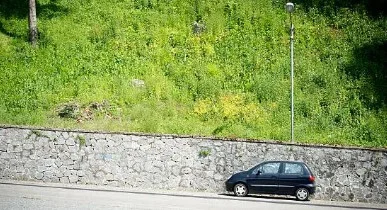
Does your car give a little “lurch” when you park it on a hill?
5. Rolling Before It Catches: What That Little Lurch in Park Near Campus Is Actually Telling You
Category High Priority
My car rolls a little before catching when I park it on a slope near campus – is that normal, or something to worry about?
A small roll of an inch or so before the shifter locks into Park is often completely normal – the parking pawl’s teeth sometimes land on a high spot on the output shaft, and the car has to roll slightly for the teeth to line up before it clicks into place [5]. But if the vehicle rolls more than a couple of inches, rolls freely, or makes a grinding or catching noise when you shift into Park, the pawl itself may be worn or cracked – and consistently parking on slopes, or shifting into Park before the vehicle has fully stopped, is exactly what accelerates that wear.
The parking pawl is the only thing holding an automatic transmission vehicle in place on a hill once you walk away from it, which makes this one of the few “small” symptoms worth treating as a real safety question rather than a curiosity.
6. Warbirds Overhead, Engine Idling Below: What Sitting in Queued Airshow Traffic Does to a Transmission
Category High Priority
I sat in long, queued traffic near the airport during the Legacy Flight Museum airshow with my car in Drive the whole time – is idling in gear for that long actually hard on a transmission?
The Legacy Flight Museum’s biennial airshow at Rexburg-Madison County Airport draws crowds large enough that organizers explicitly warn attendees to expect heavy, slow-moving traffic [6]. Sitting in Drive for extended periods without moving keeps the torque converter slipping continuously, and without the airflow a moving vehicle generates, that heat has nowhere to go – fluid temperature climbs the longer the vehicle sits stopped-but-running, and once it’s been overheated enough times, the fluid breaks down permanently and needs replacing regardless of mileage.
If you know you’re heading into long queued traffic – an airshow, a construction backup, anything with extended stop-and-crawl idling – shifting to Neutral while fully stopped, rather than sitting in Drive the entire time, meaningfully reduces how much heat builds up.
7. Just One Gear: Why a Single Rough Shift Between 1st and 2nd Doesn’t Mean the Whole Transmission Is Failing
Category Important
My transmission shifts hard specifically from 1st to 2nd gear, but every other shift feels completely normal – what would cause just that one shift to be rough?
Each gear change in an automatic transmission is controlled by its own dedicated shift solenoid directing fluid to a specific clutch pack, so a problem isolated to one particular shift – rather than every shift – usually points to that one solenoid or clutch pack rather than a transmission-wide failure [7]. A failing solenoid can cause a harsh shift, a delayed shift, or even getting briefly stuck in one gear, and pinning down which specific gear change is affected is exactly the information a technician needs to narrow the diagnosis to that one component instead of guessing at the whole unit.
Catching a single-gear problem early, while the rest of the transmission is shifting normally, is meaningfully cheaper than waiting until a stuck solenoid damages the clutch pack it controls.
8. The Noise That Disappears in Gear: What Growling Only in Park or Neutral Actually Means
Category Important
There’s a growling or grinding noise when my car is sitting in Park or Neutral, but it goes away completely once I shift into gear – what is that?
A noise that’s present only in Park or Neutral and vanishes the moment you shift into Drive or Reverse points toward the transmission’s internal pump or a torque converter bearing rather than anything related to the road or your driving [8]. In Park or Neutral, the torque converter’s shell and turbine spin at different speeds relative to each other, which is exactly when a worn bearing between them would be most audible; once you’re in gear, they lock together and that relative motion – and the noise it was causing – disappears.
This pattern is specific enough to be genuinely useful information for a technician: a noise that appears only at rest and vanishes in gear is a very different diagnostic starting point than a noise that appears only while driving.
9. Hot or Cold: Which Transmission Dipstick Reading Should You Actually Trust?
Category Important
I checked my transmission fluid on a cold morning and it looked low, but I’ve heard you’re supposed to check it hot – which reading is actually right?
Unlike engine oil, transmission fluid expands measurably as it heats up, and most manufacturers’ dipsticks are calibrated around a “Hot” reading taken after the engine has run long enough for the fluid to reach normal operating temperature – a cold reading can look low even when the fluid is at a perfectly correct level once warmed up [9]. Adding fluid to bring a cold reading up to the “Full” mark is one of the more common overfilling mistakes, and an overfilled transmission can foam its fluid and cause real internal damage – a mistake made trying to fix a problem that didn’t actually exist.
The safest routine is to check fluid level after the engine has been running long enough to reach operating temperature – a short drive or several minutes of idling – rather than first thing on a cold morning.
Does your car speedometer and shifting both go crazy at the same time? Better check your transmission
Medium Priority
10. When the Speedometer and the Shifting Both Go Strange at Once
Category Medium Priority
My speedometer glitches or jumps around at the same time my transmission starts shifting oddly – are those two things actually connected?
The transmission’s output speed sensor tracks how fast the output shaft is spinning and feeds that data both to the speedometer and to the transmission control module, which uses it to decide exactly when to shift [11]. When that single sensor starts failing, both symptoms can show up together for the same underlying reason: the speedometer reads erratically because it’s getting bad data, and the transmission shifts hesitantly, harshly, or in the wrong gear entirely because the control module is making decisions based on the same bad data.
Reporting both symptoms together – rather than mentioning only the speedometer or only the shifting – gives a technician the exact clue needed to check the output speed sensor first, rather than working through less likely causes one at a time.
11. Won’t Start Unless It’s Exactly in Park: What a Finicky Shifter Position Is Really Telling You
Category Medium Priority
My car won’t start unless the shifter is in exactly the right spot in Park, and sometimes I have to wiggle it – what’s going on?
The neutral safety switch is the electrical component that only allows the engine to start when the transmission is genuinely in Park or Neutral, and it relies on the shifter linkage lining up precisely with that position [13]. Shift cables stretch gradually over years of normal use, and once there’s enough slop in the linkage, the shifter inside the cabin can read “Park” on the indicator while the actual lever at the transmission sits just short of the true Park position – close enough that wiggling the shifter sometimes finds it, but not reliably.
A finicky start isn’t just an inconvenience; a switch that’s failing to read Park correctly is also the same system responsible for confirming the vehicle is actually locked in Park before you walk away from it, which is worth having adjusted rather than worked around.
12. The Steady 20: Why Some Cars Buck or Surge at One Specific Speed Downtown
Category Medium Priority
My car bucks or surges slightly at a steady 20 miles an hour driving through downtown Rexburg, but feels totally normal at higher speeds – why just that speed?
A surge or buck that appears at one specific, narrow speed range and disappears outside of it often points to the torque converter clutch cycling on and off right around that speed – engaging, feeling the load change, disengaging, and repeating – rather than a general fluid or shifting problem that would show up across a wider range of speeds. Downtown Rexburg’s slower posted speeds and frequent stop-and-go around the historic grid put a vehicle right in that narrow band consistently, which is why the pattern becomes noticeable on a regular downtown route in a way it might not on a steady highway drive.
Because this kind of speed-specific surge can stem from a solenoid, a sensor, or software calibration rather than mechanical wear, a scan tool reading live data during a test drive at that exact speed is what actually pins down the cause.
13. Only Going Backward: What a Clunk Specifically Shifting From Reverse to Drive Is Telling You
Category Lower Priority
My car clunks specifically when I shift from Reverse into Drive, but not on other shifts – what would cause just that one?
A clunk tied specifically to the Reverse-to-Drive transition often comes down to worn engine or transmission mounts – torque moves through the drivetrain in the opposite direction in Reverse than it does in every forward gear, and a mount with some play that’s invisible during normal forward driving can produce a distinct clunk the moment that load direction reverses. Worn U-joints, a driveshaft, or a differential with accumulated slack can produce a similar direction-dependent clunk, and low or aging transmission fluid making the pump slower to build pressure can add a harder-than-normal engagement on top of either.
Because a mount, a driveline component, and fluid condition can all contribute to the same symptom, mentioning that it happens specifically on the Reverse-to-Drive shift – and not on other shifts – helps a technician narrow it down faster than a general “clunking” description would.
14. Bad Gas, Good Transmission? Sorting Out What Fuel Quality Actually Touches
Category Lower Priority
I’ve heard that bad gas can mess up your transmission – is that actually true, or is that strictly an engine problem?
Fuel never physically enters the transmission – it stays entirely within the engine and fuel system – so low-quality or contaminated gas doesn’t directly damage transmission components the way it can affect fuel injectors or engine sensors. What bad fuel can do is cause rough running, misfires, and poor engine performance broadly enough that a driver perceives the whole vehicle as feeling “off,” including shift quality, even though the transmission itself is mechanically unaffected.
Knowing this distinction matters practically: rough shifting that shows up at the same time as a rough-running engine after a bad fill-up is worth having diagnosed as a fuel or engine issue first, rather than assuming the transmission needs service.
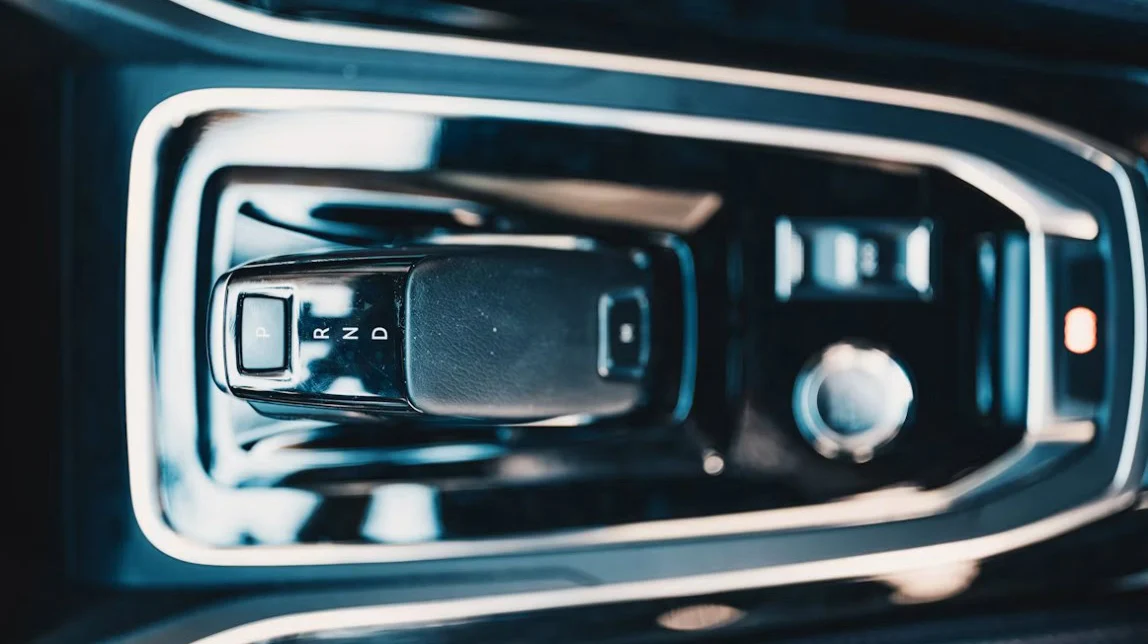
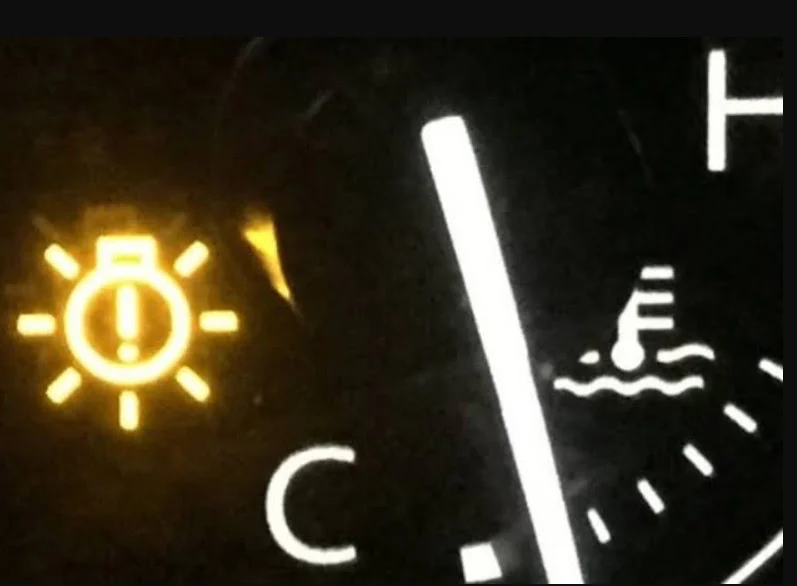
It is REALLY scary when that little transmission light come on!
15. The Light’s On, But It’s Shifting Fine: Does a Stored Transmission Code Always Mean a Symptom You’d Notice?
Category Lower Priority
My check engine light is on and the code that came up is transmission-related, but my car seems to be shifting completely normally – could it really still be a transmission issue?
A stored transmission code doesn’t always correspond to a symptom a driver can feel behind the wheel – a speed sensor circuit code, for example, can be logged well before it causes any noticeable shift problem, and a fluid temperature sensor giving slightly inaccurate readings can trigger a code long before it affects how the car actually drives. The transmission control module is often designed to flag a developing issue – a sensor drifting out of its normal range, a solenoid drawing slightly abnormal current – before that issue becomes severe enough to change how the transmission behaves.
A code with no noticeable symptom yet is precisely the situation where catching it early is most valuable: it’s the difference between replacing a sensor now and replacing a transmission later, once the developing problem the code was warning about finally does affect shifting.
About Grease Monkey 582 North 2nd East, Rexburg, ID 83440
Grease Monkey’s original Rexburg location – Store #658 – is open Monday through Friday from 7:00 a.m. to 7:00 p.m. and Saturday from 8:00 a.m. to 5:00 p.m., closed Sundays – call (208) 369-9318 to check current bay availability. The shop’s ASE-certified technicians complete a full-service oil change and signature 16-point inspection, transmission fluid included, in about 15 to 20 minutes, built around years of practiced experience on Rexburg’s busiest corridor. Beyond fluid exchanges, the team handles transmission pan inspections after undercarriage impacts, solenoid and sensor diagnostics, parking pawl checks, and fluid-level verification done the correct way – hot, not cold. The team serves Sugar City commuters, BYU-Idaho’s campus community, downtown Rexburg regulars, and everyone crossing the South Fork Teton River on 2nd East – backed by the location’s 4.7-star rating across more than 2,555 Google reviews.
Author Information
Author Bio – Phillip Paul Gilliam
Phillip Gilliam is a veteran journalist and former Editor-in-Chief with 50+ years of publishing experience and thousands of published articles. Specializing in automotive, trucking, and digital publishing, he creates authoritative, search-optimized content built on real-world expertise and editorial excellence. To learn more about Phil, visit http://www.phillipgilliam.com/about.html or contact Phil at [email protected]. He would love to hear from you!
[2] Idaho Transportation Department; CarParts.com (torque converter clutch data). Idaho State Highway 33 Corridor Traffic Data and Torque Converter Clutch Function. Available at: https://apps.itd.idaho.gov/apps/d6/Idaho33Corridors.pdf and https://www.carparts.com/blog/why-your-car-jerks-when-stopped/amp/. (2nd East in Rexburg is designated Idaho State Highway 33, carrying an average of 23,000 vehicles daily; a torque converter clutch that fails to release cleanly when slowing to a stop can cause jerking or stalling.)
[6] City of Rexburg; Rexburg Air Show. Legacy Flight Museum Airshow Schedule and Traffic Guidance. Available at: https://www.rexburg.org/o/legacyflight/page/air-show and https://rexburgairshow.com/. (The Legacy Flight Museum airshow at Rexburg-Madison County Airport is held on even years over Father’s Day weekend; organizers warn of heavy, slow-moving traffic.)
[10] WSDOT; Traffic Safety Resource Center. Diverging Diamond Interchange Design. Available at: https://wsdot.wa.gov/travel/traffic-safety-methods/diverging-diamond-interchange. (The interchange where Highway 33 meets US-20 near Rexburg is a diverging diamond design, routing traffic to briefly cross to the opposite side of the road between ramps.)
[14] TrumpetRatings; Yelp. Grease Monkey North 2nd East Rexburg – Reviews and Service Time. Available at: https://www.trumpetratings.com/business/6980/grease-monkey and https://www.yelp.com/biz/grease-monkey-rexburg. (Grease Monkey’s North 2nd East, Rexburg location has accumulated 2,555 Google reviews at a 4.7-star rating; standard service includes a full-service oil change and 16-point inspection completed in approximately 15-20 minutes.)
We use cookies to improve your browsing experience on our website. By closing this banner or interacting with our site, you acknowledge and agree to our privacy policy.