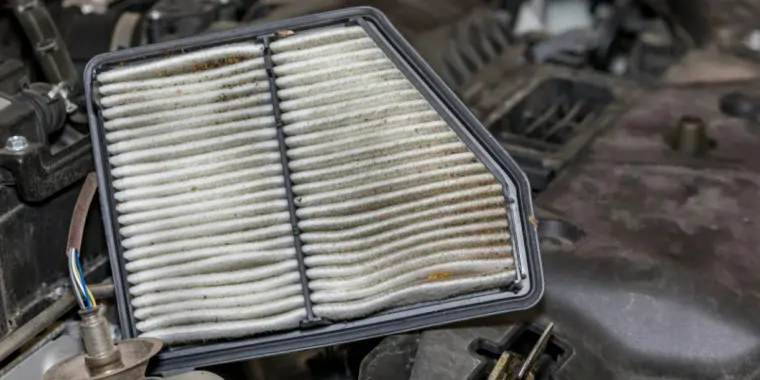
15 Reasons to Replace Your Cabin Air Filter on Pocatello's West Side, Idaho – What Highway 30's Air Is Doing to Your Car
Location: Pocatello, ID Topic: Grease Monkey Center #544 By: Phil Gilliam
An Authoritative Guide for Cabin Air Filter Care Along Pocatello’s Highway 30 Corridor
Grease Monkey, 710 West Quinn Rd, Pocatello, ID 83201. Has Over 2,236 Google Reviews With A 4.6 Star Rating.
A Note on Authority and Expertise: This article was researched and written by Phillip Paul Gilliam, a veteran journalist and former Editor-in-Chief with more than 50 years of publishing experience in automotive, trucking, and safety communications.
Five decades in automotive and safety publishing leaves a habit that does not go away: nothing gets printed until it has been checked against a current, named source. The industrial-emissions history along Highway 30, the cabin CO2 data behind the recirculation guidance below, and the specific service details for this Quinn Road location were all verified fresh for this piece rather than pulled from a prior article in this series, even one written for the same company just weeks earlier.
This location operates as part of the Threshold Automotive family within the larger FullSpeed Automotive network, which has grown past 900 franchised and company-owned service centers nationwide as of mid-2026 [11]. In 2025, CARFAX named 435 FullSpeed Automotive locations, including Grease Monkey centers, as CARFAX Top Shop winners based on independently verified customer reviews and service records, and Grease Monkey technicians train to ASE-aligned standards network-wide. The Quinn Road location itself has built a 4.6-star rating across more than 2,236 Google reviews, a volume of verified customer feedback most independent shops never approach [12].
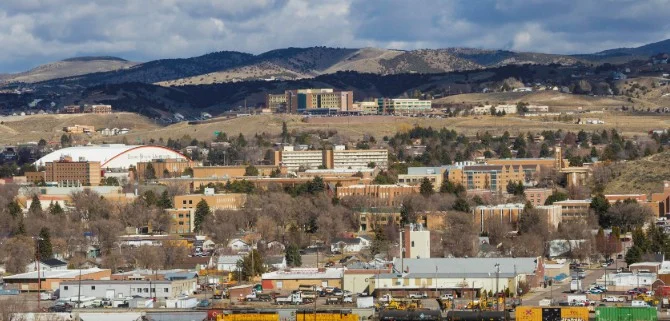
Pocatello’s west side, where Quinn Road sits just off the Highway 30 corridor, carries its own specific air-quality history: this stretch of town is home to J.R. Simplot’s sulfuric acid and fertilizer processing complex, the subject of a federal Clean Air Act settlement requiring an estimated 2,540 tons per year reduction in sulfur dioxide emissions across the company’s plants once new pollution controls are fully in place [6]. Add the neighborhood’s cluster of rehabilitation and therapy clinics serving older and medically vulnerable residents, and Pocatello’s west side asks more of a vehicle’s cabin air filter than a purely residential part of town would.
An Introduction to Cabin Air Filters on Pocatello’s Highway 30 Corridor
Turn off Interstate 15 onto Highway 30 heading toward Pocatello’s west side and the character of the drive changes fast: rail spurs, processing plants, and the long industrial footprint of J.R. Simplot’s sulfuric acid and fertilizer operation line the corridor before the road settles into the quieter subdivisions and medical offices around Quinn Road. Federal regulators have spent real effort on this stretch of Pocatello, reaching a Clean Air Act settlement with Simplot specifically over sulfur dioxide and fine particulate emissions from its sulfuric acid plants [6]. Whatever rolls off that corridor on a given afternoon does not stay outside a car’s windows.
It gets pulled straight into the cabin through the same small filter every other vehicle in Pocatello relies on. Research on vehicle ventilation shows just how directly that filter’s condition affects what a driver actually breathes: a cabin sealed up on full recirculation can see its internal carbon dioxide climb to roughly 3,000 parts per million, a level associated with impaired alertness, while introducing just a quarter of fresh air through a working filter cuts that back to around 1,000 ppm without giving up much particulate protection [2]. On a corridor like Highway 30, that balance between keeping industrial particulate out and keeping the driver alert is not an abstract engineering trade-off. It is a daily commute.
This guide walks through fifteen reasons Pocatello’s west side drivers, and anyone regularly running Quinn Road, Highway 30, or the neighborhoods around the Quinn Meadows and Meadowland Therapy clinics, should treat their cabin air filter as more than a line item on an oil-change receipt. Every reason here is a genuine, technical fact about how this filter works and what can go wrong with it, not local trivia dressed up to look like car advice. Several of these are new angles this series has not covered anywhere else, because west Pocatello’s air, its older housing stock, and its mix of farm, work, and daily-driver vehicles put different stress on a cabin filter than the Yellowstone Avenue side of town does.
Grease Monkey’s Quinn Road location, part of the Threshold Automotive family within FullSpeed Automotive, has built a 4.6-star reputation across more than 2,236 Google reviews handling exactly this kind of service for west-side drivers [12]. What follows is the technical and local case for getting your cabin air filter checked before your next oil change.
There is a reason your vehicle’s air conditioning is suddenly blowing warmer.
Most Critical
1. Why Does Your AC Suddenly Blow Warm Near Quinn Road After Weeks of Working Fine?
Category Most Critical
Can a severely clogged cabin air filter actually cause your car’s AC to freeze up and stop cooling entirely, rather than just blowing weaker?
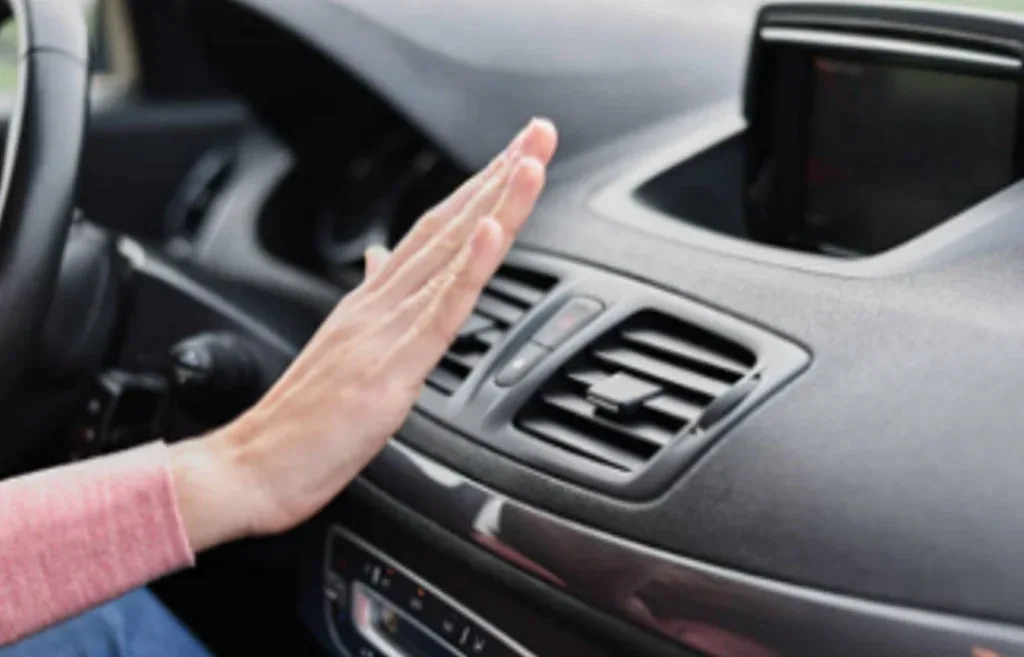
Yes, and it is one of the more dramatic failure points tied to a neglected cabin air filter. A clogged filter’s main effect is reduced airflow volume, not warmer air, so cooling simply feels weaker at first while the air itself stays cold [1]. In severe cases, though, restricted airflow across the evaporator coil lets moisture on that coil freeze into a sheet of ice instead of draining away normally. That ice then blocks airflow almost completely, and a system that was cooling fine a week earlier suddenly blows warm, weak air until the ice fully thaws out [1].
This is a mechanical chain reaction, not a refrigerant problem, which is exactly why drivers on Quinn Road and the surrounding west-side neighborhoods sometimes assume their AC compressor has failed when the real cause is a cabin air filter that reached its breaking point. Because the fix for frozen-over ice is time and a new filter, not a refrigerant recharge, a driver who pays for a recharge without addressing the filter often sees the same warm-air symptom return within days.
2. Could Something Be Nesting in Your Cabin Air Filter Behind Quinn Meadows?
Category Most Critical
Is it actually common for mice or other rodents to nest inside a cabin air filter housing, and can that create a real health risk, not just a bad smell?
It is more common than most drivers realize, and the risk goes well beyond odor. A cabin air filter housing offers rodents everything they look for: engine-bay warmth after a drive, a dark and secluded space, shelter from predators, and filter media that shreds easily into nesting material [4]. Vehicles parked for stretches near open lots, farm fields, or landscaped medical campuses like those around Quinn Meadows and the west side’s therapy clinics are prime candidates, since rodents move indoors, and into the nearest warm engine bay, as outdoor temperatures drop.
Beyond gnawed wiring and vacuum lines, which can turn into expensive repairs on their own, a rodent-compromised cabin air filter can push dried droppings, urine, and nesting debris directly into the passenger cabin through the HVAC system. Engineers who specialize in this exact failure point flag Hantavirus Pulmonary Syndrome specifically, a disease spread by breathing in aerosolized particles from dried rodent waste, as a genuine health concern tied to a contaminated cabin air filter, not a hypothetical one [4].
3. Is Your Cabin Air Filter Setup Making You Sleepy on the Highway 30 Commute?
Category Most Critical
Does running your car’s air on full recirculation, with your cabin air filter doing all the work, actually raise carbon dioxide levels enough to make a driver drowsy?
It does, and the numbers are more dramatic than most drivers expect. Vehicle cabin air quality research measured carbon dioxide climbing to roughly 3,000 parts per million inside a sealed cabin running full recirculation, a concentration linked to reduced alertness and impaired decision-making, all while the cabin air filter itself keeps working normally [2]. The same research found that introducing just 25 percent fresh air through the cabin air filter, rather than sealing the cabin completely, dropped CO2 back to around 1,000 ppm while still holding particle counts to roughly 1,000 particles per cubic centimeter, keeping most of the filtration benefit without the drowsiness risk [2].
For a west-side commuter running Highway 30 past the Simplot corridor, the instinct to seal the cabin on full recirculation to block industrial odor and particulate is understandable, but doing it for a long, steady highway stretch is exactly the condition that lets CO2 climb the highest. Researchers specifically recommend a 50 to 75 percent recirculation fraction as the practical middle ground, filtering out most of what a corridor like this puts into the air while still venting enough to keep a driver alert [2].
4. Is Unfiltered Air Sneaking Past Your Cabin Air Filter Without You Knowing?
Category High Priority
If a cabin air filter doesn’t fit its housing perfectly, can unfiltered air actually bypass it around the edges instead of passing through the media?
It can, and this is a distinct problem from the filter simply being dirty. A filter that fits its housing loosely, whether from a warped frame, a worn housing seal, or a budget aftermarket part that is not an exact match for the vehicle, leaves small gaps around its edges. Air naturally follows the path of least resistance, and once a gap opens up, incoming air bypasses the filter media entirely rather than being forced through it, arriving in the cabin completely unfiltered even though a technically functional filter sits right there [5].
This matters most for anyone whose main reason for using a cabin air filter is to filter out industrial particulate or sulfur odor from the Highway 30 corridor, since a bypassing filter provides essentially no protection against exactly the pollutants a driver installed it to block. Filterbuy’s own comparison of OEM and aftermarket options notes that premium aftermarket filters can match factory fitment closely, while some budget alternatives are more prone to this kind of gap [5].
Getting the correct cabin air filter is critical to proper airflow and performance
5. OEM or Aftermarket: Which Cabin Air Filter Actually Handles West Pocatello’s Air Better?
Category High Priority
Is an OEM cabin air filter really worth the extra cost over an aftermarket option, or does a quality aftermarket cabin air filter perform just as well?
The honest answer depends on which aftermarket filter you are comparing against. OEM cabin air filters are engineered specifically for a given vehicle, prioritizing a precise fit and balanced airflow, and they do a solid job trapping ordinary dust, but factory parts are not always built for advanced filtration beyond the basics [5]. Premium aftermarket options, by contrast, often match OEM fitment closely while adding HEPA-certified media capable of trapping 99.97 percent of airborne particles down to about 0.3 microns, a meaningfully higher bar than most factory-standard filters [3][5].
Budget aftermarket cabin air filters are where the real risk lives: options that skimp on fitment or media quality can restrict airflow, reduce HVAC efficiency, and, as covered above, leave gaps that let air bypass the filter entirely [5]. For a west-side driver dealing with Highway 30’s industrial particulate load, the choice is less OEM-versus-aftermarket and more a question of whether a given filter, factory or aftermarket, is actually built for the fine-particulate and odor-control job this corridor demands.
6. Did a DIY Cabin Air Filter Swap Near Fort Hall Go in Backwards?
Category High Priority
If someone installs a cabin air filter backwards, does it stop working entirely, or does a reversed cabin air filter cause a more subtle problem?
It is more subtle than a total failure, which is exactly why the mistake often goes unnoticed. A cabin air filter’s media is built in layers, each positioned to do a specific job in sequence: a coarse layer meant to catch large debris first, a finer layer downstream meant to stay open longer, and in combination filters, a carbon layer positioned to adsorb gases only after particles have already been removed [3]. Installed backwards, that sequence runs in reverse. The fine layer clogs first instead of last, and any carbon layer ends up handling raw debris rather than gases, losing much of its odor-control ability in the process [3].
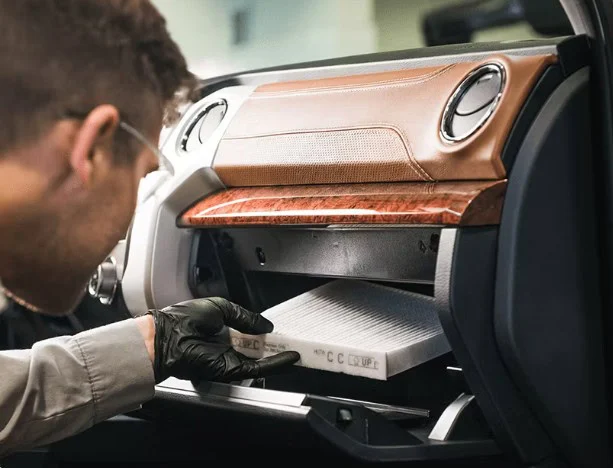
The result is a cabin air filter that still filters, technically, but reaches capacity earlier than it should and quietly loses odor-blocking performance, all without triggering any warning light or obvious sign of failure [3]. A DIY cabin air filter swap done at home, whether ahead of a trip toward Fort Hall or just a routine weekend job, is worth double-checking against the airflow arrow printed on the filter frame before the glovebox panel goes back on.
7. Can a Cabin Air Filter Actually Handle Highway 30’s Sulfur and Particulate Load?
Category Important
Given the sulfuric acid and fertilizer processing along Highway 30, can a standard cabin air filter meaningfully reduce the sulfur dioxide and particulate matter drivers are exposed to on that corridor?
A standard particulate cabin air filter helps with the particulate half of that equation but does little for sulfur dioxide gas on its own; gas-phase pollutants like SO2 pass through a purely particulate filter, which is why an activated-carbon layer, not just particulate media, matters specifically on this corridor. J.R. Simplot’s Pocatello sulfuric acid plants are covered under a federal Clean Air Act settlement requiring emission-control upgrades aimed at an estimated 2,540 tons per year reduction in SO2 emissions across the company’s plants nationwide once fully implemented, alongside limits on sulfuric acid mist and fine particulate matter [6].
For the particulate side, a HEPA-grade cabin air filter capturing 99.97 percent of particles down to 0.3 microns handles the fine particulate matter that a facility like this can put into the local air, while an activated-carbon layer adds the gas-adsorption capability needed for sulfur-based odors [3]. Drivers running Highway 30 regularly, whether commuting to the Quinn Road area or just passing through, are exposed to a genuinely different pollutant mix than drivers on the Yellowstone Avenue side of town, and their cabin air filter choice should reflect that.
8. Does Your Cabin Air Filter Wear Out Even If Your West-Side Car Barely Leaves the Garage?
Category Important
Can a cabin air filter degrade from age alone, even on a low-mileage vehicle, or does it only wear out based on miles driven?
Filter media degrades on a calendar, not just an odometer. Manufacturer guidance generally points to replacement around every 12 months or 12,000 miles, whichever comes first, precisely because filter media loses structural integrity and adsorption capacity over time even when accumulated mileage is low [1]. Heat cycling in a parked engine bay, humidity swings, and simple material fatigue all work on a filter whether or not the car is being driven, which matters for a west-side household with a second vehicle, a farm truck, or a car that mostly sits during the week.
A cabin air filter that looks lightly used because the vehicle has low mileage can still be past its structural service life, with weakened media that tears more easily or carbon layers that have lost much of their gas-adsorption capacity simply from time and temperature exposure. Checking a cabin air filter by the calendar, not only by the odometer, catches this category of failure before it shows up as a sudden loss of filtration.
9. Can Your Cabin Air Filter Handle That New-Car Smell From a West Pocatello Dealer Lot?
Category Important
Does a cabin air filter with activated carbon actually help reduce the volatile organic compounds behind that strong new-car smell, or does it only filter dust and pollen?
A standard particulate-only cabin air filter does essentially nothing for volatile organic compounds, the gas-phase chemicals released by new upholstery, adhesives, and interior plastics that produce the familiar new-car smell; particulate media is built to trap solid particles, not adsorb gases [3]. An activated-carbon layer is the component actually built for that job, chemically adsorbing VOC molecules rather than physically straining them out the way particulate media handles dust and pollen.
For a driver picking up a new or recently detailed vehicle from a west Pocatello dealer lot, that off-gassing is often strongest in the first weeks of ownership, right when a factory-standard cabin air filter without a carbon layer is least equipped to handle it. Upgrading to a carbon-combination cabin air filter early in ownership addresses both the new-car VOC load and the ongoing Highway 30 particulate and odor exposure in one step.
If your farm truck sits for long periods without being started, it can have an effect on your cabin air filter
Medium Priority
10. Does a Cabin Air Filter Degrade Faster on a Farm Truck Parked All Winter Near Quinn Road?
Category Medium Priority
If a vehicle sits stored for months, like a second car or farm truck common on Pocatello’s west side, does the cabin air filter actually degrade faster than it would in daily use?
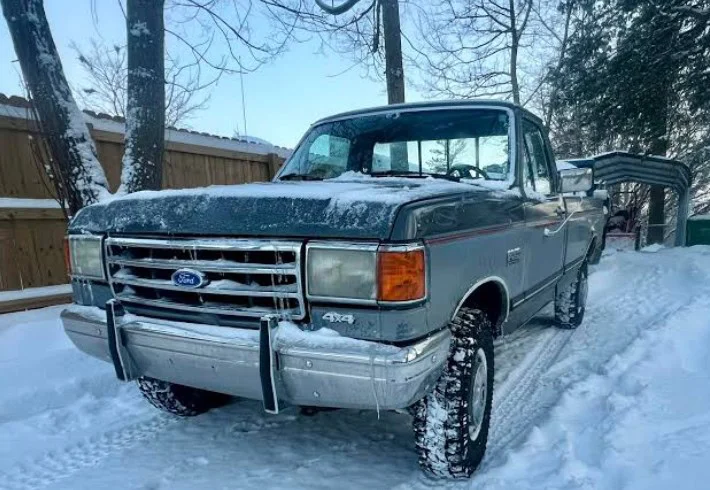
In some ways, yes. A parked vehicle’s cabin air filter is not moving air, but it is still sitting in a sealed, often humid engine bay or firewall cavity, and filter media that stays damp without the periodic dry-out that regular driving and blower use provide is more prone to mold and mildew growth than one in daily service [1]. Pocatello’s share of nearly 93 precipitation days a year and a cold, damp spring snowmelt season give a stored vehicle’s filter plenty of moisture exposure without the airflow that would normally help it dry [9].
West Pocatello’s mix of farm equipment, work trucks, and seasonal second vehicles common around the Quinn Road area means a fair number of local cabin air filters spend months doing nothing but sitting in a damp, dark housing, exactly the conditions that favor microbial growth over simple dust accumulation. A filter due for replacement by the calendar should not get a pass just because the vehicle itself was parked rather than driven.
11. Should Your Cabin Air Filter Check Just Ride Along With Your Next Oil Change?
Category Medium Priority
Does it actually make sense to have your cabin air filter checked every time you get an oil change, or does that check belong on its own separate schedule?
Bundling the two makes practical sense for most drivers, even though the two components run on different clocks. Cabin air filter replacement generally falls in the 12-month or 12,000-mile range, close enough to a typical oil-change cadence that checking it at the same visit rarely means checking it too early or too late [1]. The bigger benefit is behavioral: a filter that has its own separate reminder schedule is a filter easy to forget entirely, while one bundled into an already-routine oil change visit gets looked at automatically.
For west-side drivers already stopping in for service near Quinn Road, asking the technician to glance at the cabin air filter during every oil change closes the gap between the filter’s actual replacement need and how often most people remember to think about it.
12. Do Scented Cabin Air Filters Actually Filter as Well as Plain Ones?
Category Medium Priority
Do fragrance-infused aftermarket cabin air filters sacrifice any actual filtration performance in exchange for the added scent?
It depends entirely on how the fragrance is delivered. A quality scented cabin air filter typically adds fragrance through a separate impregnated layer or a scent strip alongside standard particulate and, sometimes, carbon media, meaning the filtration layers themselves are unchanged and perform the same as their unscented counterpart [5]. A poorly made version, though, can substitute fragrance-carrying material for genuine filtration media, or coat the media in a way that partially blocks airflow through it, trading real filtration capacity for a pleasant smell.
The practical test is straightforward: a scented cabin air filter worth buying should list the same particle-size or MERV-equivalent filtration claims as its unscented version, not simply advertise fragrance instead of filtration specifications. Absent that information, treating a scented filter as a novelty add-on rather than a filtration upgrade is the safer assumption.
13. Is Your Dog’s Ride to the Quinn Road Dog Park Clogging Your Cabin Air Filter Faster?
Category Lower Priority
Does regularly driving with pets in the car actually load a cabin air filter with dander and hair fast enough to shorten its replacement interval?
It can, and pet dander behaves somewhat differently than the dust and pollen a cabin air filter more commonly handles. Pet dander consists of microscopic skin flakes small enough to stay airborne and work deep into filter media, while shed hair adds a coarser load that can mat against the filter’s intake face and restrict airflow before the media itself is technically saturated [3]. A vehicle that regularly carries a dog to appointments, parks, or errands around the west side accumulates this combined load on top of whatever road dust and Highway 30 particulate the filter is already managing.
For households with pets riding along often, a cabin air filter can reach reduced effectiveness meaningfully sooner than the standard 12-month or 12,000-mile guideline assumes, simply because dander and hair add a load that guideline was not written around [1].
14. Can an Older West-Side Work Truck Get a Cabin Air Filter It Was Never Built With?
Category Lower Priority
If an older vehicle never came from the factory with a cabin air filter at all, is it actually possible to retrofit one, or is that vehicle stuck without filtration?
Cabin air filters became common factory equipment mostly from the late 1990s onward, which leaves a real population of older work trucks, farm vehicles, and classic cars on Pocatello’s west side with no factory filter housing at all. Retrofitting one is often possible but is highly vehicle-specific: some models can accept an aftermarket housing kit designed for that exact make and model, while others would require modifying the HVAC intake path in a way that is rarely cost-effective compared to the vehicle’s value.
For a west-side driver running an older farm or work truck regularly on Highway 30 without any cabin filtration at all, a technician familiar with that specific model can say definitively whether a retrofit kit exists, versus whether the honest answer is that unfiltered intake is simply a limitation of that particular vehicle.
15. Could a DIY Cabin Air Filter Swap on Quinn Road Damage More Than Just the Filter?
Category Lower Priority
Is there real risk of damaging something else in the process of swapping a cabin air filter yourself, or is it a genuinely low-risk DIY job?
For most vehicles it is a low-risk job, but not a zero-risk one. Reaching a cabin air filter behind the glove box typically means releasing plastic retaining tabs and glove box stops that were designed for occasional access, not repeated flexing, and tabs that are old or already brittle from age and temperature cycling can snap under a slightly too-forceful pull. On models where the filter housing sits under the hood near the windshield base instead, the surrounding trim clips and drainage channels carry their own smaller risk of cracking if handled without knowing the specific release sequence for that vehicle.
None of this makes a DIY cabin air filter swap a bad idea, but it does mean a five-minute job can turn into a rattling glove box or a cracked trim clip if the specific mechanism for that model is not already familiar, a real consideration for anyone tackling it for the first time on a vehicle they plan to keep for years.
About Grease Monkey, 710 West Quinn Rd, Pocatello, ID 83201
Grease Monkey’s Quinn Road location, part of the Threshold Automotive family within the FullSpeed Automotive network, sits at 710 West Quinn Rd, Pocatello, ID 83201, open Monday through Friday from 7:00 AM to 6:00 PM and Saturday from 8:00 AM to 5:00 PM, closed Sundays [12]. The location’s service menu covers conventional, synthetic-blend, and full-synthetic oil changes, battery service, fluid exchanges, filter replacement, brake service, air conditioning service, engine service, tire service, transmission service, headlight service, power steering service, wiper replacement, car wash, fuel system cleaning, radiator service, and rock chip window repair, backed by a 16-point inspection with every oil change [12].
The location has built a 4.6-star rating across more than 2,236 Google reviews, one of the larger review counts in the FullSpeed Automotive network locally, giving west-side drivers a substantial track record to check before their visit [12]. Serving the neighborhoods around Quinn Road, the Highway 30 corridor, and the medical and therapy campuses nearby, the shop draws on FullSpeed Automotive’s brand-wide ASE-aligned training standards while functioning as a local shop that understands what this specific stretch of Pocatello asks of a vehicle’s cabin air system.
Author Information
Author Bio – Phillip Paul Gilliam
Phillip Gilliam is a veteran journalist and former Editor-in-Chief with 50+ years of publishing experience and thousands of published articles. Specializing in automotive, trucking, and digital publishing, he creates authoritative, search-optimized content built on real-world expertise and editorial excellence. To learn more about Phil, visit http://www.phillipgilliam.com/about.html or contact Phil at [email protected]. He would love to hear from you!
[2] Centers for Disease Control and Prevention (NIOSH). Simultaneously Reducing CO2 and Particulate Exposures via Fractional Recirculation of Vehicle Cabin Air. CDC Stacks. Available at: https://stacks.cdc.gov/view/cdc/228417. (CO2 rising to roughly 3,000 ppm under full recirculation versus roughly 1,000 ppm with 25 percent fresh air; recommended 50-75 percent recirculation fraction.)
[3] Filterbuy. Cabin Air Filter Airflow Arrow: Which Way Does It Go? Filterbuy. Available at: https://filterbuy.com/resources/cabin-air-filters/cabin-air-filter-airflow-direction/. (Layered filter media design, consequences of reversed installation, and carbon-layer gas adsorption function; also referenced for HEPA filtration standard of 99.97 percent at 0.3 microns.)
[4] EngineerFix. How to Keep Mice Out of a Cabin Air Filter. EngineerFix. Available at: https://engineerfix.com/how-to-keep-mice-out-of-a-cabin-air-filter/. (Why rodents nest in cabin air filter housings, resulting wiring and airflow damage, and Hantavirus Pulmonary Syndrome as a health risk from contaminated filters.)
[6] U.S. Environmental Protection Agency. J.R. Simplot Company Clean Air Act (CAA) Settlement. EPA. Available at: https://www.epa.gov/enforcement/jr-simplot-company-clean-air-act-caa-settlement. (Pocatello sulfuric acid plants covered under the settlement; estimated 2,540 tons per year SO2 emission reduction across Simplot plants; sulfuric acid mist and PM2.5 limits.)
[12] Grease Monkey. Oil Change & Auto Repair, 710 West Quinn Rd, Pocatello, ID. Grease Monkey. Available at: https://www.greasemonkey.com/locations/id/pocatello/710-west-quinn-rd/. (Store address, hours, service menu, Threshold Automotive affiliation, and current Google review count and rating.)
We use cookies to improve your browsing experience on our website. By closing this banner or interacting with our site, you acknowledge and agree to our privacy policy.