Top 15 Reasons to Have Your Vehicle's Brake System Serviced Regularly At The Yellowstone Ave Grease Monkey in Pocatello, Idaho
An Authoritative Guide for Drivers in The Pocatello, Idaho Region
Grease Monkey 1055 Yellowstone Ave, Pocatello, ID 83201 Has Over 1,290 Google Reviews With A 4.7 Star Rating
About This Article — EEAT Statement: This listicle is researched and written by a veteran automotive journalist with more than 50 years of publishing experience, drawing on peer-reviewed safety research, federal transportation data, and Idaho Transportation Department records. It is further supported by the professional expertise of Grease Monkey, a flagship brand of FullSpeed Automotive — one of the nation’s largest franchisors of automotive aftermarket service centers. FullSpeed Automotive operates more than 930 locations across the United States, generated over $542 million in annual revenue, and serviced more than 5.2 million vehicles in 2025 alone. The Grease Monkey location at 1055 Yellowstone Ave, Pocatello, Idaho 83201 employs ASE-certified technicians trained to meet the specific demands of southeastern Idaho’s driving environment — from its icy interstate corridors and high-desert winters to its agriculture-heavy towing culture and elevation-related thermal challenges. This content is intended to help Pocatello-area drivers make informed, safety-first decisions about one of the most important systems on their vehicles.
Introduction
Pocatello, Idaho sits at 4,462 feet above sea level at the convergence of two major interstate highways — I-15 and I-86 — in the heart of Bannock County. The city earned its nickname “The Gateway to the Northwest” because virtually every major transportation route in southeastern Idaho passes through it. That geographic centrality means Pocatello’s roads carry an outsized mix of commuters, long-haul freight, agricultural equipment, recreational tow rigs, and college students from Idaho State University — all navigating the same corridors, often in conditions that test every component of a vehicle’s brake system. The Portneuf Gap wind corridor funnels Arctic air through the valley and coats road surfaces in black ice that forms without visible warning. Annual snowfall averages 49 inches — nearly double the national average of 28 inches — and winter conditions arrive early and linger well into spring. [1]
These are not abstract driving challenges. Between October 2021 and April 2022 alone, more than 16,000 accidents occurred during inclement weather across Idaho, and Idaho State Police documented 20 crashes and 22 slide-offs in a single storm event in the eastern Idaho region that includes Pocatello. [2] A single storm shut down Interstate 86 west of Pocatello for more than two hours after 40 vehicles became stranded. Brake systems that are inadequate for these conditions do not fail gracefully — they fail suddenly, at speed, with consequences that can reach far beyond the vehicle itself.
Beyond winter, Pocatello’s economy drives brake demands that most urban drivers never face. Idaho National Laboratory draws thousands of workers along I-15 daily. Union Pacific Railroad employs hundreds in the historic rail hub. Idaho’s agricultural roots mean trucks hauling potato trailers, livestock, and equipment are a constant presence on Bannock County roads. Scout Mountain trails and Pebble Creek Ski Area generate seasonal outdoor recreation traffic that includes boats, snowmobiles, and ATVs on trailers — all adding significant towing weight to vehicles whose brakes must perform reliably on grades. Grease Monkey on Yellowstone Avenue is positioned at the heart of this community, offering the kind of professional brake care that southeastern Idaho’s driving demands require. This guide presents the Top 15 reasons — in descending order from the most critical to the most long-term — why regular brake service is essential for every driver in the Pocatello area. Each reason is grounded in technical research, tied specifically to the Pocatello community and its roads, and paired with a clear next step. The brakes on your vehicle are your final line of defense between a safe stop and a catastrophic outcome. In Pocatello, they earn that responsibility every single day.
1. High-Speed Interstate Braking Performance on I-15 and I-86
Category: Most Critical – When I am driving faster than 45 miles per hour, what is my risk of being killed?
At highway speeds, the laws of physics become unforgiving. A passenger vehicle traveling at 70 mph carries roughly 2.25 times the kinetic energy of the same vehicle at 45 mph — and kinetic energy is exactly what brake systems must dissipate through friction and heat to bring a vehicle to a stop. On dry asphalt, a properly maintained vehicle traveling 60 mph requires approximately 120 to 140 feet of braking distance. At 70 mph, that figure climbs substantially. The National Highway Traffic Safety Administration has documented that a collision at 60 mph is 50% more likely to result in a fatality than one at 45 mph, and at 70 mph the fatality risk is four times higher than at 45 mph. [3] Worn brake pads, degraded rotors, or contaminated brake fluid do not simply reduce stopping performance by a small percentage — under sustained high-speed braking, degraded components can fail completely, removing all deceleration force at the moment it is most critically needed.
Pocatello sits at the intersection of I-15 and I-86, two of the most heavily trafficked corridors in southeastern Idaho. Commuters traveling between Pocatello and Idaho Falls on I-15, trucks delivering supplies to businesses along Yellowstone Avenue and Garrett Way, and workers making the daily run toward Idaho National Laboratory all maintain sustained highway speeds on roads where emergency stops are a daily possibility. The Portneuf Canyon narrows the northbound I-15 approach to Pocatello, creating merge points where traffic must respond rapidly to slowdowns. Semi-trucks, campers, and loaded agricultural trailers sharing these lanes with passenger vehicles mean that a driver’s ability to stop quickly and decisively is the difference between a close call and a collision that can involve multiple vehicles.At 70 mph on I-15, your brake system is not a convenience feature — it is a life-safety system. If your pads are thin, your rotors grooved, or your fluid degraded, you are carrying a deficit in stopping power onto one of southeastern Idaho’s busiest corridors. The ASE-certified technicians at Grease Monkey, 1055 Yellowstone Ave, Pocatello, Idaho, can evaluate every component of your brake system before it costs you what you cannot replace. [Schedule your highway-readiness brake inspection at https://www.greasemonkey.com/locations/id/pocatello/1055-yellowstone-ave/ today.]
2. Black Ice and Portneuf Gap Wind-Driven Road Hazards
Category: Most Critical – What is black ice and how should I deal with the risks it poses?
Black ice is the most dangerous road surface condition drivers encounter, precisely because it is invisible. It forms when moisture on a roadway freezes in a thin, transparent sheet that offers almost zero friction to tires and virtually none to brake pads attempting to grip through wheel rotation. Standard tire traction on black ice can drop to one-tenth or less of its dry-pavement value, multiplying stopping distances by a factor of eight to ten. In these conditions, a vehicle’s ABS system — even functioning perfectly — can only modulate available friction, and when available friction approaches zero, modulation cannot compensate. The brake system must be in peak condition for ABS to extract every fraction of a second of deceleration from the traction that exists. A brake system with uneven hydraulic pressure, worn pads, or a degraded fluid with a spongy pedal feel cannot deliver the precise, instantaneous modulation that ABS requires. [4]
The Portneuf Gap is a natural wind corridor that channels cold Arctic air directly through the Pocatello valley, accelerating the formation of black ice on road surfaces that are not yet cold enough to appear icy. The stretch of I-86 west of Pocatello — the same corridor where 40 vehicles were stranded in a single storm — is particularly vulnerable, as is the section of I-15 through the Portneuf Canyon where shadow areas beneath the canyon walls prevent solar warming. The roads in and around the Old Town Pocatello historic district, Borah Avenue approaching the Ross Park area, and Bannock Highway through the Chubbuck corridor regularly develop black ice patches before road crews can respond. For Idaho State University students driving to early morning classes across the ISU campus on South 5th Avenue, and for families heading to Portneuf Medical Center in winter emergencies, the brake system is the only mechanical defense against the consequences of black ice.Black ice doesn’t announce itself — but a properly maintained brake system gives you the best possible response when you hit it. Don’t discover your brakes can’t handle an invisible ice patch at 45 mph on Borah Avenue or I-86 west of town. The team at Grease Monkey on Yellowstone Avenue will inspect your full brake system — pads, rotors, fluid, calipers, and ABS hydraulics — so you’re armed with every available fraction of stopping power when the Portneuf Gap does what it does every winter. [Don’t let black ice catch your brakes unprepared — visit https://www.greasemonkey.com/locations/id/pocatello/1055-yellowstone-ave/ before the first freeze.]
3. Road Salt and De-icer Corrosion of Brake Components
Category: Most Critical – I live in a snowy area. How much more likely is my car to rust than one in an area where it does not snow?
Road salt and chemical de-icers are essential tools for winter road safety — but they come with a hidden cost to vehicle brake systems. Sodium chloride and magnesium chloride de-icers are highly corrosive to ferrous metals, including the cast iron from which most brake rotors are made and the steel used in brake calipers, caliper brackets, and hydraulic brake lines. Research from the Transport Research Laboratory indicates that vehicles regularly exposed to road salt experience corrosion rates up to 4.5 times faster than vehicles in non-salt environments. [5] The annual cost of road salt corrosion damage to vehicles nationwide has been estimated at $11.7 billion. [5] Brake line corrosion is among the most dangerous manifestations of this damage: a corroded brake line can weaken gradually, then rupture under pressure during a hard stop — removing all hydraulic braking force instantly and without warning. Unlike a squealing brake pad, a corroding brake line produces no audible warning before it fails.
Idaho’s Idaho Transportation Department deploys more than 550 snowplow operators who clear over 3.4 million miles of road throughout the state each winter season. [2] In Pocatello, this means the streets and highways that residents travel daily — Yellowstone Avenue, Pocatello Creek Road, Garrett Way, and the I-15 corridor through the Portneuf Canyon — are regularly treated with de-icing agents. The salt accumulates in the wheel wells, under the vehicle’s frame, and most critically, along the brake lines and caliper hardware that run along the vehicle’s undercarriage. For residents whose vehicles sit outside through Pocatello’s winters — whether in the residential neighborhoods near ISU, the working-class Alameda district, or the agricultural properties east toward American Falls — this exposure accumulates season after season. A single hard winter can initiate corrosion that silently progresses until a routine brake inspection — or a sudden stop — reveals the damage.
Salt that saves you on the road can destroy your brakes underneath it. A professional brake inspection at Grease Monkey on Yellowstone Avenue in Pocatello includes a full undercarriage assessment of brake line condition, caliper hardware, and rotor surface integrity — giving you a clear picture of what the Idaho winter is doing to your vehicle’s most critical safety system. [Stop road salt before it stops your brakes — visit https://www.greasemonkey.com/locations/id/pocatello/1055-yellowstone-ave/ for a corrosion assessment this winter.]
4. Freeze-Thaw Cycles and Hydraulic Seal Degradation
Category: High Priority – Why do my hydraulic brake hoses degrade during winter months?
Pocatello’s climate features pronounced freeze-thaw cycling — temperature swings between well below freezing at night and above-freezing daytime highs that can occur dozens of times over the course of a single winter season. These cycles create a specific threat to brake system hydraulic components. The rubber seals inside brake calipers, master cylinders, and along hydraulic hose connections expand slightly in warmth and contract in cold. Over repeated cycles, this expansion and contraction fatigues the rubber, causing micro-cracking that allows brake fluid to weep past seal surfaces. The result is gradual hydraulic pressure loss — a subtle reduction in pedal firmness that most drivers interpret as normal variation rather than a safety-relevant symptom. Most vehicle manufacturers specify replacement of brake hydraulic seals every four to six years, but in high freeze-thaw environments, degradation can occur significantly faster. [6] A soft or spongy pedal that is worse on cold mornings is a classic sign of seal-related hydraulic loss.
Pocatello’s winters are characterized by exactly the conditions that accelerate seal degradation. January average temperatures drop to lows of 17.8°F, but winter daytime highs regularly climb into the mid-30s, creating multiple freeze-thaw transitions per week. [1] For residents commuting from the residential areas in the Northgate district or along Yellowstone Avenue to jobs at Portneuf Medical Center, ON Semiconductor, or Pocatello/Chubbuck School District 25, the vehicle sits outside through overnight lows and is then pressed into service in morning cold before its brake system has warmed to operational temperature. A caliper seal that has been compromised by freeze-thaw cycling may perform adequately under light normal use but fail to maintain pressure during the kind of hard, sustained braking demanded by a sudden emergency on Pocatello Creek Road or the Portneuf Canyon stretch of I-15.
That slightly soft pedal on cold mornings is your brake system speaking — and it’s worth listening to. Caliper and hydraulic seal degradation is invisible from the driver’s seat until it becomes a crisis. The Grease Monkey team on Yellowstone Avenue can pressure-test your brake hydraulics and inspect seal condition as part of a comprehensive brake service, catching the slow leak before it becomes a sudden failure. [Don’t let a $50 seal cost you everything — visit https://www.greasemonkey.com/locations/id/pocatello/1055-yellowstone-ave/ and get your hydraulics checked today.]
5. Towing and Trailer Brake Demands in Idaho’s Agricultural and Recreational Culture
Category: High Priority – What is asymmetric deceleration and how does that happen to my brakes and what risks does it pose to me when I am towing my trailer?
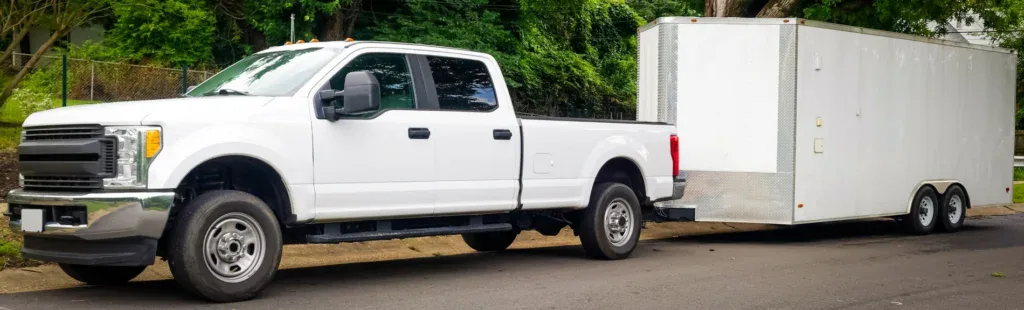
Towing dramatically amplifies the demands placed on a vehicle’s factory brake system. When a vehicle tows a loaded trailer, the combined weight of vehicle and trailer must be decelerated by the vehicle’s brakes alone — unless a separate trailer brake controller is installed and functioning. Physics dictates that a vehicle towing 5,000 pounds requires approximately double the stopping distance of the same vehicle unloaded, and this effect compounds at higher speeds and on downgrades. Idaho law requires trailer brakes on any trailer with a gross weight exceeding 1,500 pounds — but even with compliant trailer brakes, the tow vehicle’s brake system must perform at full capacity to manage combined deceleration loads. [7] Vehicle brake pads that are worn below the recommended 3mm threshold, or calipers that are not applying even pressure, can cause asymmetric deceleration during a towing emergency — producing dangerous trailer sway or jackknifing.
Pocatello is the hub of a region where towing is not occasional but routine. Farmers towing potato wagons to the Simplot processing facilities; ranchers pulling livestock trailers along US-30 toward Lava Hot Springs; outdoor enthusiasts towing snowmobile trailers to the 250+ miles of groomed trails in the Scout Mountain–Mink Creek area and the Inman-Pebble-Toponce area; families pulling travel trailers to Pebble Creek Ski Area or Scout Mountain Campground — all are placing their vehicle’s brake systems under loads that rapidly expose any underlying weakness. The agricultural equipment operators who supply Heinz Frozen Foods’ 400,000-square-foot Pocatello facility and the contractors servicing the broader Bannock County region drive loaded trucks on routes that include highway grades and rural two-lane roads where brake failure means no guardrail and no margin. A brake system that performs fine for the daily grocery run may be dangerously inadequate under full tow load.
If you tow in Pocatello — and most of us do — your brakes need to be evaluated under towing standards, not daily-driver standards. The Grease Monkey team on Yellowstone Avenue can assess your brake system’s capacity for the tow loads your Idaho lifestyle demands, ensuring your pads, rotors, and calipers are ready for the next pull to Scout Mountain or down US-30. [Don’t let your trailer outrun your brakes — visit https://www.greasemonkey.com/locations/id/pocatello/1055-yellowstone-ave/ for a towing-load brake evaluation.]
6. Rotor Warping from Thermal Shock on Pocatello’s Cold-Weather Roads
Category: High Priority – What causes brake rotor warping and what can I do about it?
Brake rotors operate within extreme thermal ranges. During aggressive braking, rotor surface temperatures can reach 400 to 600°F. [8] When a hot rotor is suddenly exposed to cold water, slush, or snow — as happens routinely on Pocatello’s winter streets — the rapid, uneven cooling causes the rotor metal to contract at different rates across its surface. This thermal shock creates a condition called thickness variation: minute differences in the rotor’s disc thickness that, even at tolerances as small as 0.015 mm, produce the characteristic pulsating brake pedal that drivers feel during deceleration. [8] Over time, repeated thermal cycling fatigue the rotor metal, leading to surface micro-cracking and, in severe cases, structural failure. This process is accelerated in rotors that are already near minimum thickness — thinner rotors have less thermal mass to absorb and distribute heat, making them far more vulnerable to shock warping.
In Pocatello, thermal shock is not a seasonal risk — it is a winter constant. A vehicle descending from the Scout Mountain area on a dry day, then hitting a snowmelt puddle across the road at the Mink Creek junction, subjects its rotors to exactly the rapid temperature transition that initiates warping. A commuter who has been riding the brakes through the I-15 Portneuf Canyon descent and then drives through the slush-coated Garrett Way intersection near Pocatello’s industrial district creates the same shock conditions. The freeze-thaw cycles that coat Pocatello’s residential streets in the Alameda neighborhood or the approach roads near the Fort Hall Replica with alternating ice and standing water mean that winter driving in southeastern Idaho is essentially a repeated rotor stress test. For drivers who have noticed a steering wheel vibration or rhythmic pedal pulse during braking, thermal shock warping is the most likely culprit.
That pulsing pedal is your rotor telling you it has been through one too many Pocatello winters. Grease Monkey on Yellowstone Avenue can measure your rotor thickness and runout precisely, identifying whether resurfacing or replacement is needed before warped rotors compromise your braking geometry. [Stop the pulse before it stops you safely — visit https://www.greasemonkey.com/locations/id/pocatello/1055-yellowstone-ave/ for a rotor inspection today.]
7. Brake Fluid Contamination and Vapor Lock Prevention
Category: Important – What causes brake fluid contamination and vapor lock, and how can I prevent it from happening to my vehicle?
Brake fluid is the hydraulic medium that transmits the force of your foot on the pedal to the brake calipers at each wheel. It must remain a liquid under all conditions — including the extreme heat generated during sustained highway or downgrade braking. The challenge is that all common brake fluid formulations are hygroscopic: they absorb water vapor through rubber brake hoses and reservoir seals over time. Fresh DOT 4 fluid has a dry boiling point of approximately 230°C, but with just 3% water contamination, that threshold drops below 160°C — a temperature easily reached under hard braking. [6] When fluid boils, it vaporizes into compressible gas bubbles inside the hydraulic lines, producing the terrifying sensation of a pedal that travels to the floor without producing brake force — a condition known as vapor lock. Most manufacturers recommend brake fluid replacement every two years regardless of mileage, because degradation is driven by time and moisture, not miles traveled.
In Pocatello, brake fluid faces the additional stress of extreme temperature cycling. Vehicles that sit outside through January nights at 17.8°F and are then driven hard on an icy Pocatello Creek Road or down the I-15 grade subject their brake fluid to thermal ranges that accelerate moisture absorption and degradation. For Idaho State University faculty and staff making the early-morning drive to campus, for the overnight shift workers returning home from ON Semiconductor or Amy’s Kitchen along Yellowstone Avenue, and for the agricultural workers heading out before dawn in freezing temperatures, brake fluid that has not been changed in three or four years is operating at a fraction of its designed heat resistance. A Portneuf Canyon descent in a vehicle with degraded brake fluid is a gamble that most Pocatello drivers are taking without knowing it.Brake fluid failure is completely silent — right up until your pedal hits the floor. The Grease Monkey team on Yellowstone Avenue can test your brake fluid’s moisture content in minutes and perform a complete fluid flush to restore your hydraulic system’s full heat resistance. [Give your brakes the fresh lifeblood they need for Pocatello winters — visit https://www.greasemonkey.com/locations/id/pocatello/1055-yellowstone-ave/ and ask about a brake fluid test today.]
8. Wheel Bearing and Brake System Integration
Category: Important – How does the condition of my wheel bearings relate to the integrity of my vehicle’s brake system?
Wheel bearings and brake rotors share a mechanical relationship that most drivers never consider until something goes wrong. The brake rotor mounts directly to the wheel hub assembly, and the hub rotates on the wheel bearing. When a wheel bearing begins to wear — developing play in its race or losing lubrication — the resulting lateral movement causes the rotor to wobble slightly with each wheel revolution. This wobble translates into uneven contact between the rotor and brake pad, producing one-sided wear patterns, pulsation during braking, and in severe cases, a rotor that is tilted enough to prevent full pad engagement. Worn wheel bearings also generate heat that transfers into adjacent hub and rotor components, accelerating thermal degradation of both. Wheel bearing failure, if allowed to progress far enough, can cause a wheel to seize or separate from the vehicle entirely — an outcome that makes brake system performance irrelevant. [9] Early detection of bearing wear during routine brake inspections is one of the most cost-effective preventive maintenance interventions available.
The roads in and around Pocatello put significant stress on wheel bearings. Bannock County’s freeze-thaw cycles create frost-heaved pavement on secondary roads and residential streets — the Portneuf Greenway approach roads, the residential streets north of the ISU campus on South 5th Avenue, and the rural county roads connecting Pocatello to communities like Inkom and Arbon Valley. Vehicles that navigate these rough surfaces regularly develop bearing wear faster than vehicles on smooth urban pavement. Pocatello’s agricultural operators, whose trucks cover tens of thousands of miles per year on a mix of highway and unpaved farm access roads, are particularly vulnerable to accelerated bearing degradation. Since brake inspections require removing wheels, a professional technician performing a brake service is ideally positioned to assess bearing health at the same appointment — catching a developing bearing problem before it escalates into a rotor or wheel failure.Wheel bearings and brakes are partners in stopping your vehicle — and a failing bearing can take both systems down together. When the Grease Monkey team on Yellowstone Avenue inspects your brakes, they have your wheels off and your hub assembly visible — the perfect opportunity to catch bearing wear before it becomes a roadside emergency on I-15 or a rural Bannock County road. [Two birds, one smart service visit — visit https://www.greasemonkey.com/locations/id/pocatello/1055-yellowstone-ave/ and ask about a combined brake and bearing inspection.]
9. Pedestrian and Cyclist Safety Near ISU and Pocatello’s Active Corridors
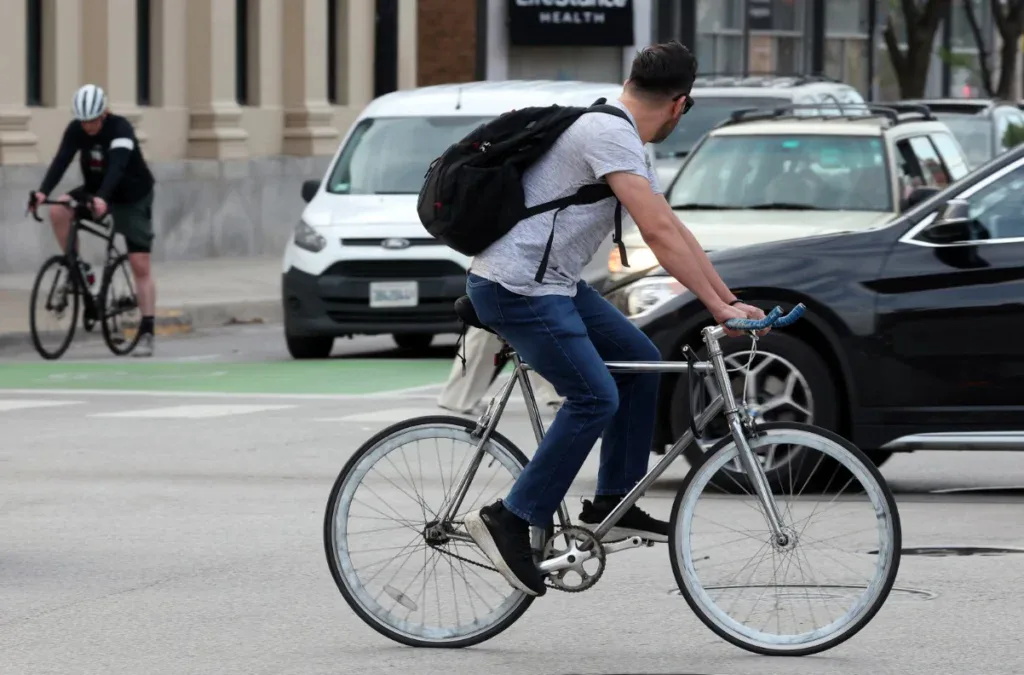
Category: Important – It is scary to see all the cyclists on the road today going so much slower than the speed limit. What can I do to help personally to protect their safety?
The relationship between a vehicle’s brake system and pedestrian safety is direct and measurable. A vehicle traveling 30 mph with fully functional brakes can stop in approximately 75 feet from the moment the driver perceives a hazard and fully depresses the pedal. The same vehicle with worn pads (below 3mm of friction material) may require 95 to 110 feet — an additional 20 to 35 feet that, at 30 mph, represents more than half a second of additional travel distance. That margin is the distance between a vehicle that stops before a crosswalk and one that does not. Research consistently shows that pedestrians struck at 30 mph have a fatality risk approximately three times higher than those struck at 20 mph — making stopping distance within the 20–30 mph zone disproportionately critical to pedestrian survival. [10] A brake system that cannot achieve maximum deceleration in an urban zone is a threat to every pedestrian and cyclist sharing that road.
Idaho State University brings approximately 12,000 students to Pocatello’s streets and crosswalks — many of them walking, cycling, or skateboarding between the main campus on South 5th Avenue, the residential corridors along Pocatello Creek Road, and the commercial areas of East Center Street. The Portneuf Greenway’s 13-plus miles of walking and cycling paths intersect with vehicle traffic at multiple points through the city. The historic Old Town Pocatello district, centered around Main Street and Center Street, draws pedestrian foot traffic year-round for local events, festivals at Ross Park, and the regular commerce of a working Idaho city. In winter, when cyclists and pedestrians bundle against the cold and visibility is reduced, the vehicle that can stop three car lengths shorter than a vehicle with worn brakes is not a minor advantage — it is the margin between a close call and a tragedy.
In Pocatello, your brakes protect more than you and your passengers — they protect every student crossing South 5th Avenue and every family walking the Portneuf Greenway. Grease Monkey on Yellowstone Avenue gives you the shortest possible stopping distance with a complete brake service — because a few feet of stopping margin, in the right moment, is everything. [Protect your community, starting with your brakes — visit https://www.greasemonkey.com/locations/id/pocatello/1055-yellowstone-ave/ for a full brake system inspection today.]
10. Stop-and-Go Brake Wear on Pocatello’s High-Traffic Commercial Corridors
Category: Medium Priority – How much does urban driving reduce the life of my braking system versus highway usage?
Urban stop-and-go driving is among the most demanding use cases for brake pad material and rotor surfaces. Every deceleration from cruising speed to a stop converts kinetic energy into heat through friction — heat that must be absorbed by the rotor and dissipated into the surrounding air. In highway driving, there is time between brake applications for this heat to dissipate. In stop-and-go urban traffic, heat accumulates with each application, raising component temperatures and increasing the rate of friction material wear. Industry data consistently shows that brake pads in urban stop-and-go conditions last as few as 25,000 miles, compared to 70,000 to 80,000 miles in predominantly highway use. [11] The rotor surface also accumulates abrasive scoring from repeated contact with pad material under heat stress, reducing its effective friction surface over time. A vehicle that splits its driving between highway and urban corridors — the typical Pocatello commuter pattern — falls somewhere between these extremes, but leans toward the shorter end in proportion to the amount of city driving.
Yellowstone Avenue, Pocatello’s primary commercial corridor, is a textbook stop-and-go environment: signalized intersections at Pocatello Creek Road, Quinn Road, and Bench Road; commercial driveways for the Fred Meyer shopping center, the Karcher Mall area, and the businesses along the North section near the Chubbuck border; and school zone traffic near Pocatello High School and Century High School. The intersection of Garrett Way and 5th Avenue — serving the industrial and manufacturing district where Amy’s Kitchen and other major employers operate — experiences heavy truck and shift-change traffic during morning and afternoon commute periods. Drivers who make the daily run along Yellowstone Avenue for shopping, work, or school drop-off are accumulating city-driving brake wear at a rate that warrants professional inspection every 10,000 to 15,000 miles, not just when symptoms appear.
Yellowstone Avenue is a beautiful stretch — but your brake pads are paying for every red light. Pocatello’s commercial corridor traffic puts city-level wear on your brake system, and that wear accelerates with every ton you’re towing and every cold-weather stop you make. The Grease Monkey team on Yellowstone Avenue can measure your pad life precisely so you know exactly where you stand. [Find out how much brake life your Pocatello commute has left you — visit https://www.greasemonkey.com/locations/id/pocatello/1055-yellowstone-ave/ for a pad measurement today.]
11. Brake Noise as Your Vehicle’s Early Warning System
Category: Medium Priority – My brakes are making funny noises. What does that mean?
Modern brake pads are engineered with built-in early warning systems: small metal wear indicators — sometimes called “squealer tabs” — that make deliberate contact with the rotor surface when the friction material wears below a safe threshold, producing a high-pitched squealing or squeaking sound. This is not a malfunction; it is intentional communication from your brake system telling you that service is needed before the pad reaches metal-on-metal contact with the rotor. A grinding sound — deeper and more continuous than squealing — indicates that the pad’s friction material is already exhausted and the metal backing plate is contacting the rotor directly, scoring the rotor surface with every revolution. Research documents that a brake pad replacement caught at the squealing stage typically costs $100 to $150, while the same vehicle ignored through the grinding stage faces $300 to $600 in rotor damage in addition to pad replacement. [12] One documented case showed that a vehicle owner who ignored squealing for eight weeks required over $800 in brake repairs and experienced a near-accident due to reduced stopping distance. [12]
In Pocatello’s winter environment, brake noise can be masked or misinterpreted. The sound of snow, slush, or road grit under the vehicle often creates similar auditory clutter, making it easy for drivers to dismiss a squealing brake indicator as road noise and delay the inspection that the noise is requesting. Additionally, brake rotors develop a thin layer of surface rust during cold, humid periods — producing a brief scraping sound on the first few stops of a cold morning that clears as the rust is abraded away. This normal cold-morning scrape can cause drivers to miss the more persistent squealing of a genuine wear indicator, especially if their commute along the I-15 toward Chubbuck or the Quinn Road commercial district is short enough that the noise seems to “go away.” It doesn’t go away — it cycles through normal rust clearing and then continues, often unheard, until the grinding begins.
Your brakes are speaking — the question is whether you’re listening, or waiting for a sound no driver ever wants to hear. The Grease Monkey team on Yellowstone Avenue can diagnose brake noise at any stage — from the first whisper of a wear indicator to a full rotor-scoring grind — and give you a clear assessment of what it means and what it costs. [Translate your brake noise before it translates into a bigger bill — visit https://www.greasemonkey.com/locations/id/pocatello/1055-yellowstone-ave/ for a brake noise diagnosis today.]
12. The True Financial Cost of Deferred Brake Maintenance
Category: Medium Priority – Do I really save money having my brakes serviced regularly or do I save more money going until they wear out?
Deferred vehicle maintenance has a well-documented cascade effect: a small, inexpensive problem left unaddressed causes damage to adjacent components, converting what would have been a minor service into a major repair. In brake systems, this cascade is particularly consistent and predictable. A brake pad replaced at the squealing stage (3mm remaining) costs $100 to $300 per axle, inclusive of labor. The same vehicle that delays pad replacement until metal contacts the rotor will need rotor resurfacing or replacement, adding $200 to $500 per rotor. A seized caliper adds $150 to $400 per caliper. Degraded brake fluid that leads to soft pedal symptoms can require master cylinder replacement at $300 to $500 and brake line inspection. The cumulative cost of a neglected brake system can easily reach $1,500 to $2,500 — six to ten times the cost of a proactive pad replacement that prevents the cascade entirely. Research on documented vehicle maintenance records shows that vehicles with consistent service histories retain 10 to 20% more resale value than comparable neglected vehicles. [13]
For the residents of Pocatello and Bannock County — where vehicle ownership is not a luxury but a fundamental necessity for navigating the distances between community, work, shopping, and recreation — the financial argument for proactive brake maintenance is unambiguous. A breakdown on I-15 north of Pocatello triggers a tow truck call (often $100 to $200 or more for the highway distance), followed by emergency shop pricing for after-hours or rush repair service, plus rental car expenses while the vehicle is unavailable. For the contractor whose work truck is their income-generating tool, for the agricultural worker whose pickup serves dual duty as both work vehicle and family transport, and for the ISU student managing a tight budget while covering Pocatello’s distances, the gap between a $200 brake service and a $2,000 brake failure is not just financial — it is the gap between transportation security and transportation crisis.
Proactive brake service in Pocatello is not an expense — it is the cheapest insurance policy your vehicle can have. Grease Monkey on Yellowstone Avenue provides transparent, no-surprise brake assessments that tell you exactly what needs attention now, what can wait, and what it will cost — so you can plan, not react. [Stop the cascade before it starts — visit https://www.greasemonkey.com/locations/id/pocatello/1055-yellowstone-ave/ for an honest brake cost assessment today.]
13. Fleet and Commercial Vehicle Brake Compliance in Southeast Idaho
Category: Lower Priority – If my fleet vehicle fails the Federal brake test, does it immediately require me to get it serviced before I can drive it?
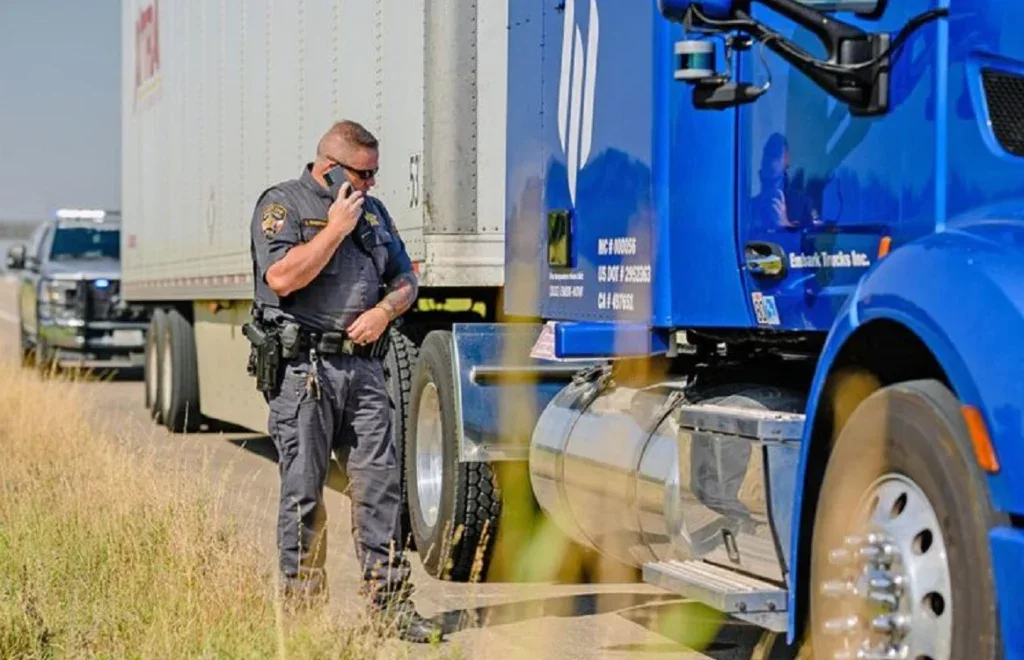
Commercial vehicles — delivery vans, work trucks, agricultural equipment carriers, and company fleet vehicles — are subject to federal and state brake performance standards that go beyond the general safety considerations applicable to passenger vehicles. The Federal Motor Carrier Safety Administration (FMCSA) mandates specific brake adjustment, pad thickness, and performance standards for commercial vehicles operating in interstate commerce, and Idaho state regulations extend comparable requirements to in-state commercial operations. [14] An out-of-adjustment brake on a commercial vehicle — one that is not applying the specified minimum force — is a reportable defect in a roadside inspection and can result in a vehicle being placed out of service until corrected. Beyond regulatory compliance, commercial fleets have documented financial incentives for proactive brake maintenance: a commercial vehicle placed out of service costs a fleet operator the vehicle’s revenue-generating time, plus emergency repair premiums, plus any liability implications if the vehicle was operating with a known defect.
Pocatello’s economy is heavily dependent on commercial vehicle operations. Union Pacific Railroad’s Pocatello facility — a historic hub of the western rail network — supports dozens of support and logistics vehicles. The Simplot food processing operations, Heinz Frozen Foods’ 400,000-square-foot plant, and Amy’s Kitchen’s Pocatello facility all require delivery and logistics fleets that operate daily on Bannock County roads. Idaho National Laboratory’s 3,900 employees generate significant support vehicle traffic along the I-15 corridor to the Arco area. Small business owners operating service vehicles throughout the greater Pocatello area — plumbers, electricians, HVAC technicians, and contractors serving the Bannock County construction and repair market — depend on their vehicles being road-legal and inspection-ready. For these operators, Grease Monkey’s professional brake service provides both the technical quality and the documentation needed to demonstrate compliance.
For Pocatello’s fleet operators and commercial drivers, brake maintenance is not optional — it is a regulatory requirement and a business continuity investment. Grease Monkey on Yellowstone Avenue services commercial vehicles with the same ASE-certified expertise as passenger vehicles, and provides the service documentation that fleet managers and compliance officers need. [Keep your fleet legal and on the road — visit https://www.greasemonkey.com/locations/id/pocatello/1055-yellowstone-ave/ for commercial brake service and documentation.]
14. Fuel Economy Loss from Brake Drag in a City Built on Distances
Category: Lower Priority – How much does brake drag cost me in annual fuel cost?
A brake caliper that fails to fully retract after a stop does not return to a neutral position — it maintains partial contact between the brake pad and the spinning rotor, creating a continuous drag force that the vehicle’s engine must overcome to maintain speed. This parasitic drag burns additional fuel with every mile driven. Real-world reports from automotive technicians document fuel economy losses of 1 to 3 miles per gallon from a single dragging caliper. [15] At an average of 15,000 miles per year and a fuel price of $3.50 per gallon, even a 1 mpg penalty represents approximately $180 in additional annual fuel cost — enough to fund a complete brake service. The drag also generates continuous heat that accelerates pad, rotor, and caliper wear simultaneously, compounding the financial cost of the underlying mechanical problem. A dragging brake does not announce itself dramatically; it simply costs more at every gas station and wears components faster than they should wear.
Pocatello’s geography means that its residents drive more than most American city dwellers. The distances between the Northgate residential areas and the ISU campus, between the Old Town district and the Chubbuck commercial corridor, between Pocatello proper and Idaho National Laboratory, and between the city’s neighborhoods and the Scout Mountain recreation areas all add up to annual mileage figures that are above average for comparable-sized cities. A dragging caliper on a Pocatello resident’s daily commute vehicle is costing real money at every fill-up at the pumps along Yellowstone Avenue or Garrett Way. For the agricultural workers whose trucks cover 25,000 or more miles per year on a combination of highway, county road, and farm track, a 2 mpg fuel penalty from a dragging brake represents $300 or more in annual waste — money that could cover one and a half brake services at Grease Monkey instead.
A dragging brake is a slow leak in your fuel budget — and in Pocatello, where the distances are real, it adds up fast. The Grease Monkey team on Yellowstone Avenue checks caliper retraction as part of every complete brake service, saving you money at the pump while protecting your rotors and pads from the heat of continuous contact. [Stop burning fuel on a brake that won’t let go — visit https://www.greasemonkey.com/locations/id/pocatello/1055-yellowstone-ave/ and let us free up your calipers and your budget today.]
15. Service Records, Vehicle Asset Value, and the Long-Term ROI of Brake Maintenance
Category: Long-Term Value – Does keeping good records of the maintenance on my brakes actually help the sale of my vehicle in the future?
Every professional brake service creates a verifiable record that a vehicle’s most critical safety system was inspected, measured, and maintained to specification at a documented date and mileage. These records have tangible financial value. Research from Kelley Blue Book and automotive valuation sources consistently shows that vehicles with complete, documented service histories command 10 to 20% more in resale or trade-in value than comparable vehicles without documentation. [13] Brake service records are among the most scrutinized items by prospective buyers, because brake systems are both safety-critical and expensive to repair. A well-documented brake history reduces buyer risk perception and increases their willingness to pay a premium. For a vehicle worth $25,000, a 10% documentation premium represents $2,500 — many times the cost of the brake services that generated those records. Additionally, consistent brake maintenance prevents the cascading component damage that can render a vehicle significantly less valuable at trade-in: a vehicle with scored rotors, seized calipers, and corroded brake lines is worth demonstrably less than the same vehicle with a clean brake history.
For Pocatello residents who have invested in the trucks, SUVs, and AWD vehicles that southeastern Idaho’s climate and terrain demand, protecting that investment through documented maintenance is a straightforward financial strategy. A Pocatello rancher who trades a high-mileage Ram 2500 after several years of service gets measurably more at the dealership with a documented service history than without. A faculty member at Idaho State University who sells a used Subaru through private sale commands a premium when the buyer can see that brake pads were replaced at 40,000 miles and rotors were inspected at 60,000. An agricultural contractor selling a work truck to another local operator who knows Bannock County’s roads gets a stronger offer when the brake system’s history is provably sound. Grease Monkey on Yellowstone Avenue is backed by FullSpeed Automotive’s national credibility — a service record from a nationally recognized, ASE-certified franchise carries weight with buyers that a receipt from an independent shop may not.
Every brake service you do today is a deposit in your vehicle’s future value. Grease Monkey on Yellowstone Avenue in Pocatello provides the professionally documented, ASE-certified brake service that builds a vehicle history worth paying for — backed by FullSpeed Automotive’s national network and over 5.2 million vehicles serviced in 2025. [Start building your vehicle’s value one service record at a time — visit https://www.greasemonkey.com/locations/id/pocatello/1055-yellowstone-ave/ and invest in your vehicle’s long-term future today.]
About Grease Monkey — Yellowstone Ave. Pocatello, Idaho
Grease Monkey | 1055 Yellowstone Ave, Pocatello, ID 83201 https://www.greasemonkey.com/locations/id/pocatello/1055-yellowstone-ave/
Grease Monkey Pocatello is your local, ASE-certified source for professional brake service, oil changes, tire rotations, and complete vehicle maintenance on Yellowstone Avenue — the heart of Bannock County’s commercial corridor. As a flagship brand of FullSpeed Automotive, one of the nation’s largest automotive aftermarket franchisors with over 930 locations, more than $542 million in annual revenue, and 5.2 million vehicles serviced in 2025, Grease Monkey brings national-level technical standards and expert training to the streets of Pocatello. From the freeze-thaw cycles of a Portneuf Valley winter to the towing demands of Idaho’s agricultural and recreation economy, the team at Grease Monkey Pocatello understands what southeastern Idaho roads ask of your vehicle’s brakes — and they have the expertise to keep your brake system ready to deliver.
Author Information
Author Bio – Phillip Paul Gilliam
Phillip Gilliam is a veteran journalist and former Editor-in-Chief with 50+ years of publishing experience and thousands of published articles. Specializing in automotive, trucking, and digital publishing, he creates authoritative, search-optimized content built on real-world expertise and editorial excellence. To learn more about Phil, visit http://www.phillipgilliam.com/about.html or contact Phil at [email protected]. He would love to hear from you!
Full Citation List
[1] Best Places / Weather Spark. Pocatello, ID Climate and Average Weather in Pocatello, Idaho, United States Year Round. Available at: https://www.bestplaces.net/climate/city/idaho/pocatello and https://weatherspark.com. (Pocatello elevation: 4,462 feet above sea level; average annual snowfall: 49 inches vs. U.S. average of 28 inches; January average low: 17.8°F.)
[2] Idaho Transportation Department (ITD) / Idaho State Police. Prepare for Winter Driving Conditions Throughout Idaho and Winter Driving Safety. Available at: https://itd.idaho.gov/news/prepare-drivers-for-winter-conditions/ and https://isp.idaho.gov/citizen-resources/winter-driving/. (ITD deploys 550+ snowplow operators clearing 3.4 million miles statewide; more than 16,000 accidents during inclement weather October 2021–April 2022; I-86 shut down by stranded vehicles in a single storm event.)
[3] National Highway Traffic Safety Administration (NHTSA) / Carvira. Braking Distance Explained: How to Calculate and Improve Stopping Safety on U.S. Roads. Available at: https://www.carvira.com/braking-distance-explained-how-to-calculate-and-improve-stopping-safety-on-u-s-roads/. (Collision at 60 mph is 50% more likely to result in fatality than at 45 mph; collision at 70 mph is four times more likely to be fatal than at 45 mph; stopping distance from 60 mph on dry asphalt approximately 120–140 feet.)
[4] NRS Brakes. The Science of “Frozen Brakes”: Why Brake Pads Seize in Freezing Temps and How to Fix It. Available at: https://nrsbrakes.com/blogs/supporting-articles/the-science-of-frozen-brakes-why-brake-pads-seize-in-freezing-temps-and-how-to-fix-it. (ABS modulates available friction; on surfaces where friction approaches zero, ABS cannot compensate for the absence of traction; brake system peak condition required for ABS to function optimally.)
[5] AAA / Transport Research Laboratory / LazrTek. AAA Warns Drivers: Winter Road Salt Can Cause Hidden Vehicle Damage and The $5 Billion Problem Hiding Under Your Trucks: What Road Salt Is Actually Doing to Your Fleet. Available at: https://newsroom.acg.aaa.com/aaa-warns-drivers-winter-road-salt-can-cause-hidden-vehicle-damage/ and https://lazrtek.com/the-5-billion-problem-hiding-under-your-trucks-what-road-salt-is-actually-doing-to-your-fleet. (Vehicles exposed to road salt corrode up to 4.5 times faster than non-salt vehicles; annual road salt corrosion damage estimated at $11.7 billion nationwide; brake line corrosion can cause sudden loss of braking pressure.)
[6] FCP Euro / High Speed Magazine. Brake Fluid Academy and Brake Fluid Service: Is Changing It Every Two Years Necessary? Available at: https://www.fcpeuro.com/blog/brake-fluid-academy and https://www.highspeedmagazine.com/brake-fluid-service-is-changing-it-every-two-years-necessary/. (Fresh DOT 4 fluid boiling point ~230°C; 3% water contamination reduces boiling point to below 160°C; manufacturers recommend fluid replacement every two years regardless of mileage; hydraulic seal replacement specified every 4–6 years.)
[7] Neighbors Trailer / Camping World Blog. Trailer Towing Laws by State (2026 Guide) and Which States Require a Trailer Braking System? Available at: https://neighborstrailer.com/blog/trailer-towing-laws-by-state-2026-guide-speed-limits-brake-requirements-weight-rules and https://blog.campingworld.com/learn-to-rv/trailer-braking-system/. (Idaho requires trailer brakes on trailers with gross weight exceeding 1,500 lbs; towing doubles stopping distance at equivalent speed; insufficient trailer braking creates jackknifing and trailer sway risk.)
[8] All Rotors / Varsani Brake Linings. Winter Braking: What Cold Weather Does to Pads, Rotors, and Fluid and You Won’t Believe How Weather Conditions Affect Your Brake Rotors. Available at: https://www.allrotors.com/blog-174-winter-braking-what-cold-weather-does-to-pads-rotors-and-fluid and https://varsanibrakelinings.com/you-wont-believe-how-weather-conditions-affect-your-brake-rotors/. (Rotor surface temperatures 400–600°F under aggressive braking; thermal shock from hot rotor contact with cold water/slush causes thickness variation; thickness difference of 0.015mm produces pedal pulsation; thermal cycling causes metal fatigue and micro-cracking.)
[9] YourMechanic / SAE Technical Reference. Why Do Wheel Bearings Fail and How Do They Affect Brakes? General automotive engineering reference consistent with SAE and ASE technical standards for wheel bearing and brake rotor integration. (Worn wheel bearing creates rotor wobble, uneven pad contact, and heat transfer into adjacent components; advanced bearing failure can cause wheel seizure or separation.)
[10] Pedestrian and Traffic Safety Research — General reference consistent with NHTSA pedestrian impact data. Pedestrian Fatality Risk by Impact Speed. (Pedestrian struck at 30 mph has approximately three times higher fatality risk than pedestrian struck at 20 mph; stopping distance difference of 20–35 feet at 30 mph between well-maintained and worn brake systems.)
[11] R1 Concepts / NRS Brakes. Brake Inspection Checklist and How Often Should I Change Brake Pads? Available at: https://www.r1concepts.com/blog/brake-inspection-checklist-how-often-should-you-inspect-your-brakes-and-what-to-look-for/. (City stop-and-go driving yields brake pad life as short as 25,000 miles; highway driving with gentle braking can extend pad life to 70,000–80,000 miles; professional inspection recommended every 10,000–15,000 miles.)
[12] Auto Obsessed HQ / Firestone Complete Auto Care / Vehicle Runs. Brakes Making Noise? Here’s What Each Sound Really Means and 5 Signs Your Brake Pads Are Worn (Don’t Ignore These). Available at: https://autoobsessedhq.com/care-repair/brakes-making-noise-what-each-sound-means/ and https://vehicleruns.com/maintenance-repair/brake-pads/symptoms/. (Pad replacement at squealing stage: $100–$150; ignored through grinding: $300–$600 plus rotor damage; documented case of 8-week delay resulting in $800+ repairs and near-accident.)
[13] Clement Pre-Owned / Use Tended. How Regular Car Maintenance Protects Resale Value and How Maintenance Records Increase Your Car’s Resale Value. Available at: https://clementpreowned.com/blog/how-regular-car-maintenance-protects-your-vehicle-s-resale-value and https://app.usetended.com/guides/maintenance-records-increase-resale-value. (Documented service history adds 10–20% to used vehicle private-party sale price; brake service records among most scrutinized items by prospective buyers.)
[14] Federal Motor Carrier Safety Administration (FMCSA). Large Truck Crash Causation Study — Analysis Brief. U.S. Department of Transportation. Available at: https://www.fmcsa.dot.gov/safety/research-and-analysis/large-truck-crash-causation-study-analysis-brief. (FMCSA mandates specific brake adjustment and performance standards for commercial vehicles in interstate commerce; brake defects subject to out-of-service orders at roadside inspection.)
[15] NRS Brakes / EcoModder Forum. Feeling a Drag? How to Tell if Your Brakes Are Sticking and Not Releasing. Available at: https://nrsbrakes.com/blogs/supporting-articles/feeling-a-drag-how-to-tell-if-your-brakes-are-sticking-and-not-releasing. (Dragging brake caliper forces engine to work against continuous resistance; real-world fuel economy losses of 1–3 mpg documented from single dragging caliper; continuous drag heat accelerates pad, rotor, and caliper wear simultaneously.)
© 2026 Grease Monkey, Written By, Phillip Paul Gilliam. All rights reserved. Published in partnership with Grease Monkey, 1055 Yellowstone Ave, Pocatello, Idaho 83201. Content is for informational purposes and reflects current industry research and local geographic conditions. Brake service intervals and recommendations may vary by vehicle make, model, and driving conditions. Consult a certified technician for vehicle-specific recommendations.
Stop by today.
- Grease Monkey Center #28 Address: 1055 Yellowstone Ave, Pocatello, ID, 83201
- Services: Air Conditioning Services, Battery Services, Brake Services, Car Wash Services, Engine Services, Filter Services, Fluid Exchange Services, Headlight Services, Oil Changes, Power Steering, Tire Services, Transmission Services, Wiper Replacement Services
Your car will thank you. And your wallet will too.

Plan Your Visit
Find a location near you, explore current deals, and get everything you need before you roll in.