Vehicle Air Conditioning Service in Kimberly, Idaho: 15 Reasons the Magic Valley's Drivers Cannot Afford to Wait
A Comprehensive, SEO-Optimized Automotive Maintenance Resource for Twin Falls County, Jerome County, and the Greater Magic Valley — Grease Monkey, 1550 Main St N, Kimberly, ID 83341
Vehicle AC Service | Magic Valley Automotive Maintenance | Kimberly, Idaho | Twin Falls County | Southern Idaho
The Magic Valley Context: Why Kimberly Drivers Have Unique AC Service Needs
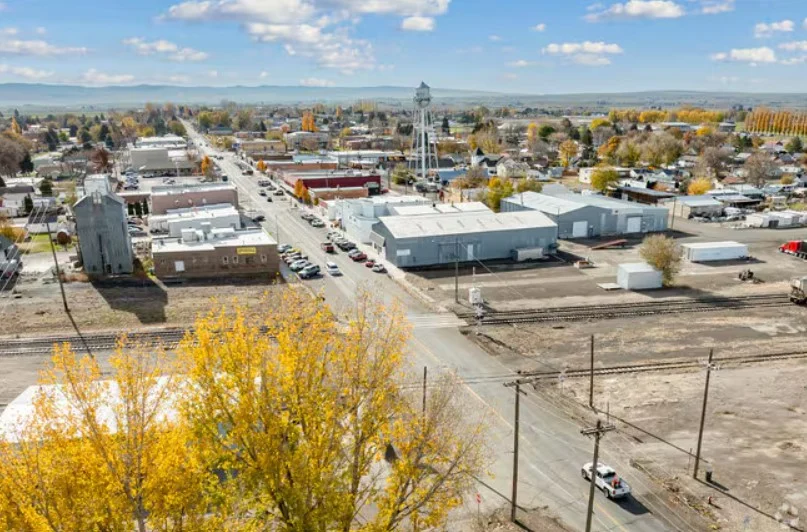
Kimberly, Idaho occupies a distinctive place in the Magic Valley’s community fabric. Positioned along Main Street on the south side of the Snake River Canyon in Twin Falls County, near the I.B. Perrine Bridge, with it massive trusses that spans the Snake River Canyon, carrying U.S. Highway 93 (Featured Image Above), Kimberly is a community where agricultural heritage and contemporary growth intersect — a city of working families, farm operators, dairy industry employees, and professionals who commute daily to Twin Falls’s medical, educational, and commercial centers just a few miles to the west. It is a community that takes care of practical things, that values function over flash, and that knows the cost of a system failure at the wrong time.
The Magic Valley’s climate is demanding in ways that distinguish it from the rest of Idaho. The Snake River Plain between Twin Falls and Burley sits at approximately 3,700 feet elevation — lower than Eastern Idaho’s high plains, but fully exposed to the high-desert extremes that characterize Southern Idaho summers and winters. Summer temperatures in the Twin Falls area regularly reach the mid-90s. Winter inversions settle over the canyon and surrounding plain with cold air that tests every rubber seal and elastomeric gasket in a vehicle’s AC system. Wind — a near-constant presence on the Magic Valley plain — carries the agricultural dust of one of America’s most productive farming regions into every vehicle’s cabin air intake with relentless efficiency.
Against this backdrop, the majority of Kimberly-area vehicles carry air conditioning systems that have never received professional service — systems that are silently losing refrigerant charge, accumulating biological contamination in their evaporator housings, and loading cabin air filters with the combined particulates of dairy operations, sugar beet processing, potato agriculture, and Magic Valley’s famous spring winds. The consequences range from degraded health to catastrophic mechanical failure, and every one of them is preventable.
Grease Monkey at 1550 Main St N, Kimberly, ID 83341 brings the full depth of FullSpeed Automotive’s national resources to the Magic Valley’s Main Street. FullSpeed Automotive completed over 5.2 million vehicle services in 2025 and generates more than $542 million in annual system-wide revenue — institutional scale that means certified technicians, compliant refrigerant handling equipment, and service protocols developed across hundreds of locations, delivered by a team that serves this community specifically. The 15 reasons that follow are ranked from highest to lowest priority, grounded in authoritative research, and examined through the specific lens of life in Kimberly and the broader Magic Valley. This content is developed to the EEAT standard — Experience, Expertise, Authoritativeness, and Trustworthiness — that Google, Bing, Yahoo, and AI-powered search platforms including Claude and ChatGPT use to determine which content earns top placement in both conventional and long-tail search results.
Reason #1: Road Safety Through Glass Clarity: The AC System’s Most Critical Function
Importance Category: Driver Safety — Critical Priority
The Technical Foundation
Among the properties of a properly maintained automotive AC system, none carries greater direct safety consequence than its capacity to prevent and eliminate window fogging. Condensation forms on vehicle glass whenever the temperature of the inner glass surface drops below the dew point of the cabin air — a condition produced reliably by cold starts, rain, humidity changes, and the dramatic temperature differentials common in high-desert climates with significant day-to-night temperature swings. A fogged windshield does not merely reduce visibility partially; it can eliminate forward visibility almost instantaneously, creating a sudden and severe driving hazard with no advance warning. The vehicle’s defrost mode addresses this through dehumidification: cabin air passes across the chilled evaporator surface of the AC system, water vapor condenses and drains away, and the resulting low-humidity air is directed to the glass surfaces. This dehumidification function depends entirely on the AC system maintaining sufficient refrigerant charge and evaporator temperature to condense meaningful moisture quantities from the airstream. A system with degraded refrigerant charge or a failing compressor delivers warm, still-humid air to the defroster vents — air that redistributes moisture on the windshield rather than removing it. Professional AC service that verifies charge integrity, evaporator function, and blower performance is the prerequisite for a defrost system that works when road conditions demand it most.
What This Means for Kimberly and the Magic Valley
The Magic Valley’s weather patterns produce windshield-fogging conditions that drivers on Main Street in Kimberly encounter across every season of the year. Spring and fall mornings along the Snake River Canyon south rim — where Kimberly sits — frequently bring dense ground fog that forms overnight in the canyon and adjacent terrain and drifts across the Kimberly plateau in the early hours. Drivers departing from Kimberly’s residential neighborhoods for the commute west on Addison Avenue East toward Twin Falls, or heading north on the Pole Line Road approaches toward the Snake River Canyon rim, need a windshield that clears instantly and completely. The famously variable weather that accompanies Magic Valley cold fronts — rapid drops from afternoon warmth to near-freezing within hours — creates the sudden interior fogging events that catch unprepared drivers without a functional defogging system.
Never drive with a fogged windshield — verify your AC defogging capability: Schedule Your AC Service at Grease Monkey — 1550 Main St N, Kimberly, ID
Reason #2: What’s Growing in Your Vents: The Biological Case for AC Maintenance
Importance Category: Occupant Health — Critical Priority
The Technical Foundation
The interior of a vehicle’s evaporator housing is, from a microbiological perspective, one of the most hospitable environments in the vehicle for the establishment of mold, mildew, and bacterial contamination. The evaporator coil creates a wet surface through condensation during operation and a warm, enclosed environment during dormancy — the combination that most reliably supports rapid microbial colonization once ambient spores settle on the available substrate. Unlike contamination in other parts of the vehicle, evaporator housing colonization is especially harmful because the HVAC blower discharges the contaminated airstream directly into the passenger compartment without any downstream filtration barrier. The cabin air filter, positioned upstream of the evaporator in the fresh-air intake path, captures incoming ambient particles — but it cannot address biological material originating from colonization on the downstream side of the filter element. Mold exposure in vehicle cabins is clinically associated with upper and lower respiratory tract symptoms, new-onset or worsened allergic responses, sinus congestion, fatigue syndromes, and headache patterns consistent with mycotoxin exposure. Complete professional AC service addresses this problem directly: it evaluates the evaporator housing environment, clears the condensate drain that prevents standing water accumulation, and replaces the cabin filter as a standard element of a comprehensive service visit.
What This Means for Kimberly and the Magic Valley
The Magic Valley’s agricultural intensity creates a biologically active air environment that is significantly more demanding than that of urban regions, and one that loads cabin filters and fouls evaporator surfaces at rates that standard manufacturer service intervals underestimate. The Kimberly area is surrounded by some of the most productive farmland in Southern Idaho — potato operations, sugar beet cultivation, dairy operations whose organic aerosols carry biological material into the ambient air mass, and grain production that generates dust and pollen across the spring and fall growing cycle. Workers employed at Chobani’s Twin Falls yogurt manufacturing facility, at the Magic Valley’s dairy operations east of Kimberly toward Hansen and Murtaugh, or at the Twin Falls County farms north of the Snake River Canyon, spend daily commute time inside vehicles whose cabin air quality reflects directly the maintenance state of the AC system.
Protect your respiratory health — eliminate the biological contamination in your AC: Schedule Your AC Service at Grease Monkey — 1550 Main St N, Kimberly, ID
Reason #3: Heat Accumulation in a Parked Vehicle: Southern Idaho’s Summer Temperature Reality
Importance Category: Passenger Safety — Highest Priority
The Technical Foundation
The rate at which a closed vehicle accumulates heat from solar radiation on a warm day is one of the most consequential yet consistently underestimated phenomena in everyday transportation safety. Scientific data published by the National Weather Service and corroborated across automotive thermal research demonstrate that a closed vehicle parked in direct sunlight can achieve an interior air temperature 40°F or more above the outdoor ambient within 30 minutes of parking, regardless of the vehicle’s initial interior temperature. Interior surface temperatures — dashboard, door panels, steering wheel — can exceed air temperature by additional significant margins through direct solar radiation absorption and re-radiation. The life-safety implications for vulnerable occupants are direct and time-critical: children’s core temperatures rise three to five times faster than adults in equivalent thermal environments according to the American Academy of Pediatrics, and heatstroke with associated brain damage risk begins at an internal body temperature of approximately 104°F. For the vehicle’s driver and adult passengers, sustained exposure to cabin temperatures significantly above ambient impairs cognitive performance, reduces reaction time, accelerates physical fatigue, and initiates the physiological processes that precede heat exhaustion — each of which degrades the attentional and reactive performance that accident-free driving requires. An AC system maintaining correct refrigerant charge, functional compressor output, and unobstructed heat exchanger performance is the only practical mechanism for controlling cabin temperature on a hot day.
What This Means for Kimberly and the Magic Valley
Southern Idaho summers are genuinely hot, and the Magic Valley’s position on the Snake River Plain at approximately 3,700 feet elevation does not moderate this heat the way higher-altitude locations experience. Twin Falls County records summer afternoon highs that regularly reach the low-to-mid 90s, and the black asphalt and commercial surfaces surrounding Kimberly’s Main Street area amplify radiant heat to the point where vehicles parked in unshaded lots accumulate cabin temperatures well beyond ambient air readings. Families heading out from Kimberly for summer recreation — day trips to Dierkes Lake in Twin Falls Canyon, visits to the Centennial Waterfront Park along the Snake River, or drives south on US-93 toward the City of Rocks National Reserve — face hours of highway driving in summer heat where a failed AC system converts a planned day of recreation into a physical ordeal.
Protect every passenger from Magic Valley’s summer heat — verify your AC today: Schedule Your AC Service at Grease Monkey — 1550 Main St N, Kimberly, ID
Reason #4: Refrigerant Integrity: The Science, the Law, and the Mechanical Necessity
Importance Category: Environmental and Legal Compliance — High Priority
The Technical Foundation
Automotive refrigerant management occupies a legally and environmentally distinct category within vehicle maintenance. Under the Clean Air Act’s Section 609 and the EPA’s Motor Vehicle Air Conditioning program, automotive refrigerants are federally regulated substances whose intentional atmospheric venting during service operations is prohibited by law, and whose recovery, recycling, and recharging must be performed exclusively by technicians who have passed an EPA-approved certification examination using certified recovery equipment. The environmental basis for this regulatory framework is scientifically grounded: R-134a, present in most vehicles manufactured before model year 2021, is assigned a 100-year global warming potential of approximately 1,530 times that of carbon dioxide in the IPCC’s Sixth Assessment Report, making each pound of vented refrigerant the atmospheric equivalent of over three-quarters of a metric ton of CO₂. R-1234yf, the replacement refrigerant now specified in current-production vehicles, carries a GWP of approximately 4 — a substantial environmental improvement — but still requires certified handling to prevent inadvertent release. Beyond the legal and environmental dimensions, refrigerant level directly governs compressor lubrication oil circulation and, by extension, compressor longevity: annual professional pressure testing identifies the developing leaks that will eventually produce compressor failure if left unaddressed, at the stage when a simple component repair resolves the issue for a fraction of the eventual failure cost.
What This Means for Kimberly and the Magic Valley
The Magic Valley’s natural environment gives environmental stewardship local meaning that residents of Kimberly and Twin Falls County experience directly and daily. The Snake River, whose spectacular canyon defines the landscape north of Kimberly and hosts the famous Shoshone Falls — the “Niagara of the West” — and the world-renowned BASE jumping venue at the Perrine Bridge, supports critical fisheries, agricultural irrigation infrastructure, and recreational resources that are central to the Magic Valley’s identity and economy. The aquifer systems beneath the Snake River Plain that supply municipal and agricultural water across Twin Falls, Jerome, and Gooding counties are part of an interconnected water resource that the entire community has a stake in protecting. Responsible refrigerant handling at certified facilities like Grease Monkey on Main Street in Kimberly is one of the concrete ways each driver participates in that stewardship.
Service responsibly — protect the Snake River watershed and comply with federal law: Schedule Your AC Service at Grease Monkey — 1550 Main St N, Kimberly, ID
Reason #5: The Compressor: Why Its Failure Is Always Expensive and Always Preventable
Importance Category: Mechanical Reliability — High Priority
The Technical Foundation
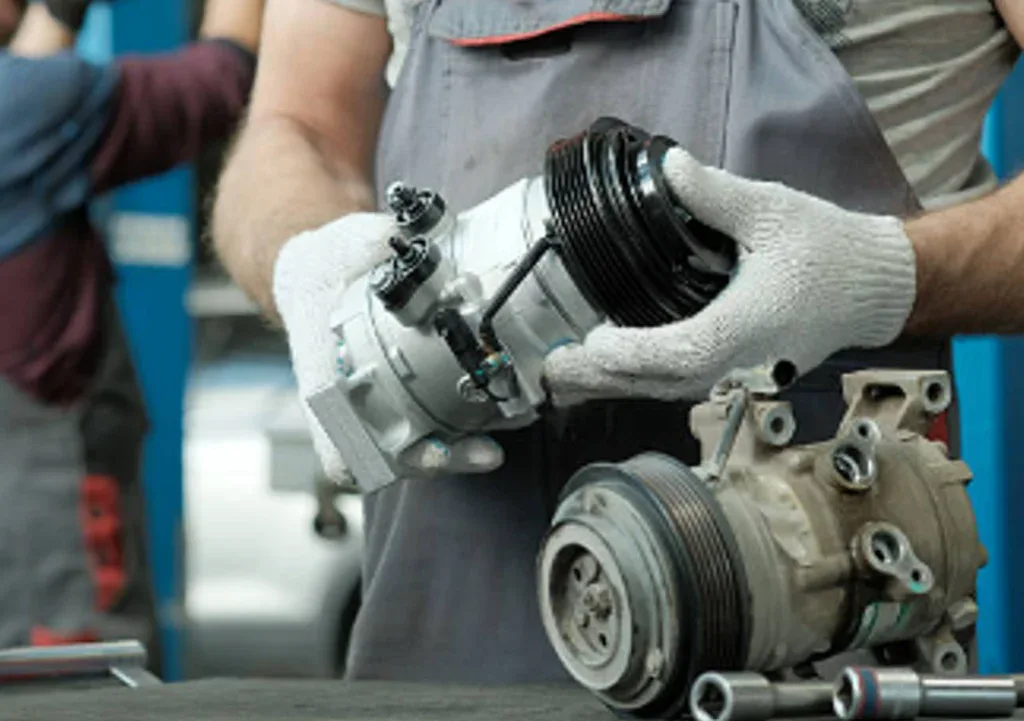
The AC compressor is the rotating mechanical heart of the refrigeration cycle and the most costly component within it to replace. Its internal assembly — whether piston, scroll, or rotary vane depending on application — operates at engine-driven speeds against refrigerant pressures that can reach several hundred PSI on the high side, with dimensional tolerances between moving parts maintained in the thousandths of an inch range by a lubrication film of compressor oil that circulates suspended within the refrigerant charge. The dependency is absolute: as refrigerant level declines through a developing leak, the compressor oil it carries declines proportionally, and the protective film between precision internal surfaces thins until metal-to-metal contact produces progressive scoring and abrasion. The metal debris produced by a scoring compressor circulates through the condenser, expansion device, and evaporator — contaminating the entire refrigerant circuit and requiring system-wide remediation that routinely costs $2,000 to $3,500 in parts and labor. This failure chain is interrupted at its very beginning by annual professional refrigerant pressure testing, which identifies developing leaks while the refrigerant loss is still small enough to address with an inexpensive hose or O-ring repair. No other single automotive preventive maintenance action offers a more favorable ratio of service cost to failure cost avoided.
What This Means for Kimberly and the Magic Valley
The climate and terrain surrounding Kimberly impose AC system seal stress that makes annual refrigerant leak testing particularly important for Magic Valley drivers. Twin Falls County’s high-desert environment produces sustained UV radiation that degrades rubber hose assemblies and O-ring compounds at rates above those experienced at lower elevations or in more humid climates. The temperature range experienced by vehicles in the Kimberly area — from sub-zero overnight lows in January to 95°F July afternoons — subjects every elastomeric seal in the AC system to thermal cycling that cumulatively produces dimensional changes and micro-permeability. Agricultural operators running working pickups across farm roads between Kimberly, Hansen, and Murtaugh; dairy industry workers commuting to facilities east of the Snake River Canyon; and families driving I-84 west toward Bliss and Hagerman all have one thing in common: they need a compressor that works when they need it, not one that has silently failed because a $20 O-ring was never checked.
Prevent the compressor failure your next leak test would catch — book now: Schedule Your AC Service at Grease Monkey — 1550 Main St N, Kimberly, ID
Reason #6: Fuel Consumption and AC Efficiency: Recovering the Hidden Cost Per Tank
Importance Category: Operational Economy — High Priority
The Technical Foundation
The fuel economy impact of operating a vehicle’s air conditioning is a matter of quantified engineering reality rather than speculation. U.S. Department of Energy research documents the fuel economy penalty at approximately 3 to 8 percent under urban driving cycles, with the compressor imposing a parasitic load of 5 to 15 horsepower on the host engine depending on vehicle configuration and operating conditions. These figures represent a well-maintained system operating within its designed parameters. A system in degraded condition amplifies this baseline cost through several mechanisms: reduced refrigerant charge causes the compressor clutch to cycle at abnormally high frequency as the system attempts to maintain setpoint temperatures with insufficient working fluid, increasing average compressor load; condenser surface fouling from agricultural dust, insects, and road debris elevates system head pressure, increasing the compression work the compressor performs on each stroke; a failing compressor bearing introduces continuous mechanical drag. Each of these inefficiency modes is additive, and their combined effect over a season of warm-weather driving adds up to measurable fuel expenditure above what a properly maintained system would require. Professional service that restores correct refrigerant charge, verifies condenser condition, and confirms normal compressor clutch cycling returns the system to its designed efficiency baseline.
What This Means for Kimberly and the Magic Valley
Magic Valley drivers log the kind of mileage that makes fuel efficiency a genuine budget consideration. The I-84 corridor connecting Kimberly and Twin Falls to Boise — 120 miles to the west — is a heavily traveled commute and commercial route that many Kimberly-area residents and workers navigate regularly. Agricultural operators running equipment transporters and working pickups between Kimberly’s farm operations and the larger commercial infrastructure of Twin Falls accumulate significant fuel expenditure per week across warm-season months. Families making the summer drive north on US-93 over the Perrine Bridge and on toward Sun Valley and the Wood River Valley cover distance where AC efficiency differences compound over a full tank of fuel. At every pump along US-30, US-93, and I-84 in the Magic Valley, a properly maintained AC system costs less to operate than a degraded one — every day, every mile, every fill-up.
Cut your fuel costs by restoring your AC to peak efficiency — Schedule Your AC Service at Grease Monkey — 1550 Main St N, Kimberly, ID
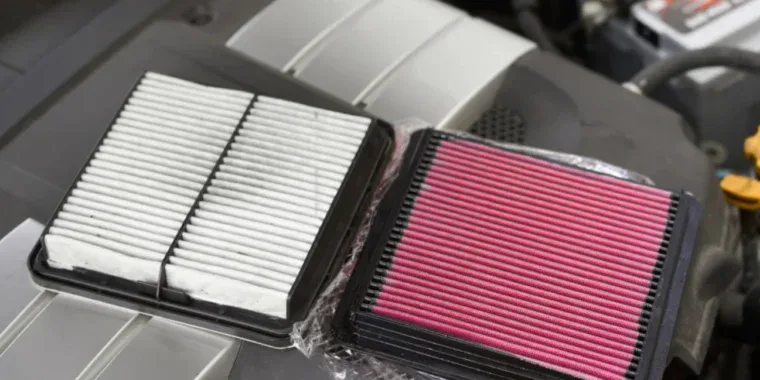
Reason #7: Cabin Air Filtration: The Kimberly Driver’s First Defense Against Magic Valley Air
Importance Category: Respiratory Health — High Priority
The Technical Foundation
The cabin air filter performs one of the most consequential functions in the vehicle: it stands between the ambient outside air and the air breathed by every occupant during every mile of driving. Its electrostatically charged filtration media intercept airborne particles across a wide size range — from large visible pollen grains and dust particles through the respirable PM10 and PM2.5 fine particulate fractions that carry the greatest documented associations with respiratory inflammation, reduced lung function, and cardiovascular disease in epidemiological literature. The filter’s effectiveness diminishes continuously as captured material accumulates, increasing flow restriction and eventually compromising filter media integrity under the pressure differential between the fouled face and the clean side. Manufacturer replacement intervals of 12,000 to 15,000 miles or one year represent guidance calibrated for average operating environments; the combination of agricultural dust, dairy operation aerosols, seasonal pollen, wildfire smoke, and processing plant emissions that characterizes Southern Idaho’s air environment warrants significantly more frequent replacement to maintain meaningful filtration protection. A severely loaded cabin filter does not merely degrade air quality — it restricts system airflow sufficiently to impair both heating and cooling performance, force the blower motor to operate beyond design parameters, and in advanced cases contribute to premature motor failure.
What This Means for Kimberly and the Magic Valley
The air quality environment surrounding Kimberly is, from a cabin filter loading perspective, among the most demanding in Idaho. The Magic Valley’s identity as one of the most productive agricultural regions in the American West — encompassing dairy operations whose organic aerosols, silage dust, and feed lot particulates enter the ambient air mass year-round; potato and sugar beet operations whose cultivation generates sustained dust loads in spring and fall; and wheat and barley production whose harvest chaff loads the late-summer air — creates an airborne particulate environment that exhausts cabin filter capacity well within standard replacement intervals. Kimberly’s position just south of the Snake River Canyon means residents also experience the canyon wind effects that the canyon rim generates — particularly during spring, when south winds from the desert plain south of Twin Falls County carry fine silica dust and agricultural particulates northward across the Kimberly plateau.
Defend your family’s lungs against Magic Valley’s air — replace your cabin filter: Schedule Your AC Service at Grease Monkey — 1550 Main St N, Kimberly, ID
Reason #8: The Problem With Parking It All Winter: How Dormancy Damages Your AC System
Importance Category: Year-Round Preventive Maintenance — High Priority
The Technical Foundation
The deterioration mechanism that causes the most widespread, most undetected damage to automotive AC systems is not a dramatic component failure but a quiet, cumulative process that unfolds during extended periods of complete system dormancy. The compressor oil that lubricates the compressor’s precision internal components and simultaneously maintains the elastomeric health of every O-ring, seal, and flexible hose assembly in the system circulates throughout those components only when refrigerant flows — which requires the compressor to be running. During dormant periods, this oil drains by gravity to the system’s low points, progressively abandoning the O-ring and seal surfaces it previously coated. The elastomeric materials in these seals, deprived of the plasticizing effect of the oil film, begin to desiccate and undergo dimensional changes — hardening, shrinking slightly at sealing interfaces, and developing the micro-permeability through which refrigerant slowly escapes. The result is a refrigerant charge that is measurably lower at the end of a long winter than it was at the end of the previous summer, through no mechanical failure other than normal seal aging accelerated by dormancy. Running the AC system for 10 to 15 minutes monthly throughout the year — including in winter — and scheduling annual professional inspection before warm-season demand peaks are the two practices that most effectively counter this deterioration pattern.
What This Means for Kimberly and the Magic Valley
Twin Falls County winters are cold, sustained, and followed by the kind of sudden spring warmth that sends Magic Valley families out for drives to Shoshone Falls at its peak flow, to the fishing accesses along the South Fork of the Snake, or to the Rock Creek area canyon roads south of Hansen — often on the very first warm weekend of the year, when a vehicle’s AC is suddenly and urgently needed for the first time in months. Kimberly winters regularly deliver extended cold periods with overnight lows in the single digits Fahrenheit, and the open Snake River Plain south and east of Twin Falls County funnels cold air from the surrounding mountains without the moderating effect of topographic protection. Six months of AC dormancy under these conditions produces exactly the seal desiccation and refrigerant seepage that leaves a Magic Valley driver with no AC on the first day they genuinely need it.
Get ahead of dormancy damage before Magic Valley’s warm season arrives — Schedule Your AC Service at Grease Monkey — 1550 Main St N, Kimberly, ID
Reason #9: Maintenance Budgeting: Why $150 Today Eliminates a $2,000 Problem Tomorrow
Importance Category: Financial Household Management — High Priority
The Technical Foundation
The financial logic of preventive vehicle AC maintenance is among the most straightforward in all of consumer household economics: it converts a probabilistic large expense into a certain small one, at a ratio that strongly favors the preventive choice. The professional AC service visit — covering refrigerant pressure evaluation, charge level assessment, condenser condition review, evaporator drain verification, blower motor function testing, and cabin filter inspection — is priced at most quality service facilities between $100 and $150. The repairs that consistent preventive service statistically displaces include compressor replacement at $800 to $2,500 in parts and labor; evaporator replacement requiring dashboard access at $1,200 to $2,000; and full system contamination flush and recharge following a compressor failure event at $300 to $700 in addition to the failed component’s replacement cost. Catching a developing refrigerant leak at the pressure-testing stage and correcting it with a $150 to $250 hose or O-ring repair terminates the failure chain that would otherwise have concluded with a $2,000+ compressor and system remediation event. The ratio of prevention cost to failure cost is between 1:10 and 1:15 on average, and the timing of the failure — which always occurs at the least convenient moment, on the hottest day, at the start of a planned trip — makes the financial case for prevention even more compelling when time cost and disruption are included.
What This Means for Kimberly and the Magic Valley
The working-family financial profile of Kimberly and Twin Falls County makes the case for preventive AC maintenance particularly direct. Agricultural families managing the cost structures of farm operations in Twin Falls and Minidoka counties, dairy workers on fixed wages, construction tradespeople serving the Magic Valley’s growth economy, and small business owners on Kimberly’s Main Street commercial corridor all operate household budgets where a $2,000 unexpected auto repair creates genuine disruption. The summer timing of most AC compressor failures — precisely when the system is working hardest — compounds the financial impact by limiting the flexibility to shop competing repair quotes under the urgency of a non-functional AC in July heat. An annual $100 to $150 service visit to Grease Monkey at 1550 Main St N replaces that scenario with a predictable, budget-able preventive expenditure that eliminates the risk entirely.
Replace unpredictable repair risk with a $150 annual investment — Schedule Your AC Service at Grease Monkey — 1550 Main St N, Kimberly, ID
Reason #10: Belt and Pulley System: The Multi-System Safety Check Embedded in AC Service
Importance Category: Mechanical Safety — Moderate-High Priority
The Technical Foundation
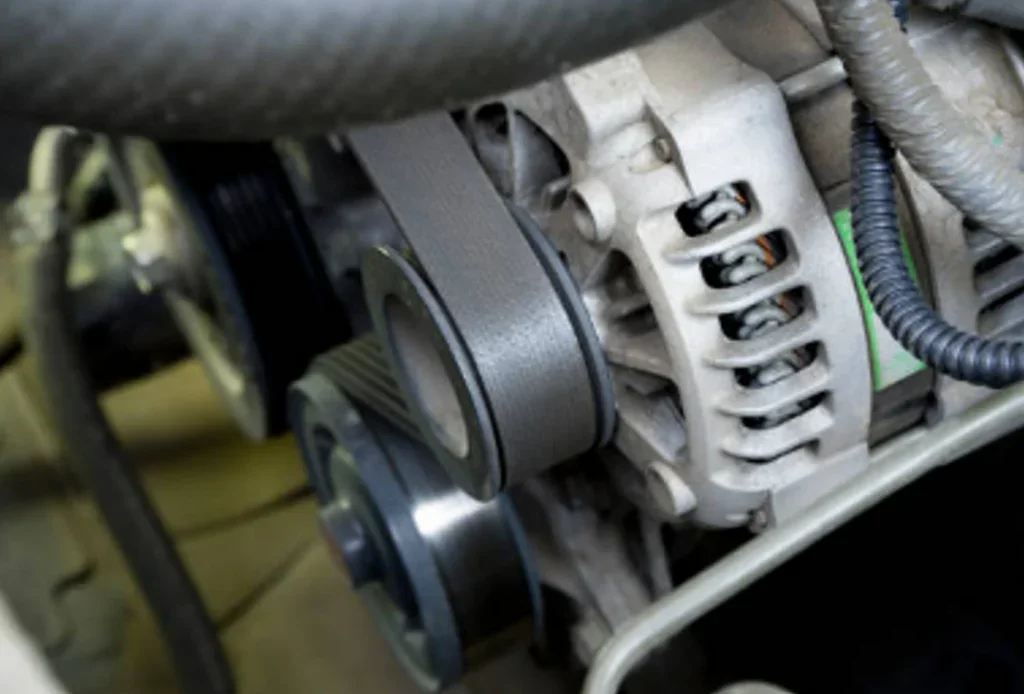
The professional AC service visit creates technician access to a component whose failure consequences reach far beyond the air conditioning system: the serpentine belt that drives the AC compressor. In the majority of vehicle designs, this belt is the same component that simultaneously drives the alternator, power steering pump, and in many applications the water pump. Serpentine belt failure does not merely disable the air conditioning — it disables all belt-driven accessories simultaneously. Electrical generation stops as the alternator decouples; power steering assist disappears; and where the water pump is belt-driven, engine coolant circulation ceases within seconds, initiating an overheating sequence that can produce warped cylinder heads, failed head gaskets, and internal engine damage within 10 to 20 minutes of continued operation at repair costs of $3,000 to $5,000 or more. The AC compressor’s electromagnetic clutch, which engages and disengages the compressor from the belt-driven pulley, can fail in ways that seize the clutch in engagement, imposing catastrophic sustained overload on the serpentine belt. Professional AC service provides direct visual access to belt surface condition, crack depth, edge wear, and glazing; idler pulley and tensioner bearing evaluation; and compressor clutch function testing — all within the framework of a single service visit that requires no additional disassembly.
What This Means for Kimberly and the Magic Valley
The driving patterns of Kimberly and Magic Valley residents make a roadside belt failure particularly consequential. The I-84 corridor west of Twin Falls traverses the open Snake River Plain toward Bliss and Hagerman through stretches where commercial services are minimal and summer heat is unrelenting. US-93 south from Twin Falls toward Jackpot, Nevada crosses the high desert basin of southern Idaho through terrain where a breakdown in July heat represents a genuine safety concern. Agricultural operators driving equipment between Kimberly’s farm operations and processing facilities in Twin Falls, Paul, or Rupert cover distances where mechanical self-reliance matters. The Magic Valley’s high-desert UV environment — the region receives intense solar radiation across most of the year — accelerates surface oxidation and micro-cracking in serpentine belt rubber at rates that make timely inspection especially important. Belt evaluation during AC service at Grease Monkey on Main Street is a systematic safeguard for every one of these scenarios.
Evaluate your belt system while your AC is serviced — double the protection: Schedule Your AC Service at Grease Monkey — 1550 Main St N, Kimberly, ID
Reason #11: Condenser and Evaporator Performance: Restoring What Agriculture and Weather Have Taken
Importance Category: System Efficiency — Moderate Priority
The Technical Foundation
The thermal performance delivered by a vehicle’s AC system is governed at its two heat-exchange boundaries by components whose efficiency degrades with every operating hour in a dirty, high-particulate environment. The condenser — a finned aluminum assembly mounted at the vehicle’s front face, exposed directly to the road and wind environment — rejects heat from the compressed refrigerant to the outside airstream. The physical area of clean fin surface available for air contact determines how efficiently this heat rejection occurs; any material that occupies fin passages and blocks airflow reduces effective condenser area proportionally, driving system head pressure upward and compelling the compressor to perform more work per unit of cooling output. The evaporator, positioned inside the dashboard housing in the warm, moist interior environment downstream of the cabin air filter, is susceptible to biofilm establishment on its fin surfaces — a colonization that simultaneously reduces heat transfer coefficient and degrades the air quality of the airstream passing across it. Both heat exchangers benefit from periodic professional assessment and cleaning to restore the designed thermal performance that operating conditions progressively erode.
What This Means for Kimberly and the Magic Valley
The Magic Valley’s agricultural intensity makes condenser fouling a maintenance priority that is more pressing for Kimberly-area drivers than for residents of urban environments. The combination of dairy operation aerosols, sugar beet processing dust from the Amalgamated Sugar Company’s facilities in the Twin Falls area, potato harvest chaff from autumn field operations, and the Magic Valley’s persistent spring and fall winds that carry fine silt from the Snake River Plain across everything in their path creates a sustained condenser fouling environment unlike any other in Idaho. Vehicles operated on the farm and ranch roads between Kimberly, Hansen, and Castleford accumulate condenser fouling at rates that urban drivers simply do not experience. Snake River Canyon rim drives on the gravel access roads above Shoshone Falls and Dierkes Lake deposit fine canyon dust on condenser surfaces that reduces airflow efficiency measurably. Annual condenser inspection and cleaning at Grease Monkey on Main Street restores the cooling capacity that this environment progressively removes.
Restore your AC’s full heat exchange performance — one service does it: Schedule Your AC Service at Grease Monkey — 1550 Main St N, Kimberly, ID
Reason #12: Electrical System Reliability: The Components That Control Everything Your AC Does
Importance Category: System Reliability — Moderate Priority
The Technical Foundation
The operational effectiveness of a vehicle’s AC system is governed not only by the refrigerant circuit but equally by the electrical and electronic control infrastructure that activates, regulates, and protects every system function. The blower motor — the electric motor responsible for all cabin airflow — operates continuously whenever the HVAC system is active and is subject to bearing wear, armature degradation, brush erosion in applicable designs, and accumulation of debris that impedes cooling of the motor windings. Speed control components — resistor packs in older vehicles, electronic pulse-width modulation controllers in newer ones — are documented high-failure items across many platforms. The compressor clutch coil that engages the compressor on demand, the cycling pressure switches that protect the compressor from pressure excursions, the blend door actuators that direct airflow between heating and cooling modes, and the climate control module’s integration with the vehicle’s engine management system through CAN-bus communication each represent independent failure modes that can render the HVAC system partially or completely non-functional regardless of refrigerant system condition. A systematic professional service visit evaluates blower function across all speed settings, inspects wiring for chafing and connector oxidation, tests relay function, and identifies intermittent electrical behaviors that precede complete failures.
What This Means for Kimberly and the Magic Valley
The electrical environment of vehicles operating in the Kimberly and Twin Falls County area creates specific vulnerabilities that compound normal component wear. The Magic Valley’s alkaline dust — particularly the fine silt carried across the Snake River Plain by seasonal south winds — is mildly corrosive to electrical connector surfaces and terminal interfaces, accelerating the oxidative resistance increases that produce intermittent HVAC function. Farm and ranch roads east of Kimberly toward Hansen, Murtaugh, and the Oakley area expose vehicle underbody electrical harnesses to the vibration and moisture that rural road surfaces produce, stressing connector sealing at points that are difficult to inspect without a deliberate service reason to examine them. The thermal cycling between Magic Valley’s cold winters and hot summers induces micro-cracking in wiring insulation at connector sealing points that introduces moisture pathways not present when the vehicle was new. Annual electrical assessment within the AC service framework is the appropriate response to these Magic Valley-specific degradation factors.
Keep every HVAC electrical component verified and functional — Schedule Your AC Service at Grease Monkey — 1550 Main St N, Kimberly, ID
Reason #13: Defrost and Dehumidification in Every Season: The Year-Round Safety Function
Importance Category: All-Season Safety — Moderate Priority
The Technical Foundation
A piece of automotive engineering that reliably surprises vehicle owners when first explained is the fact that the AC compressor engages automatically whenever the front defrost or defog mode is selected — in January as readily as in July, even when the outside temperature is far below freezing. This design reflects a thermodynamic necessity. Raising the temperature of cabin air reduces its relative humidity at constant absolute moisture content but does not extract water vapor from the airstream. When this heated-but-still-humid air contacts the cooler inner surface of the windshield, condensation continues to occur at the glass interface, perpetuating the fogging that the defrost mode is attempting to eliminate. The physical removal of water vapor from the cabin airstream — the only intervention that actually prevents glass condensation — requires passing the air across a surface cold enough to cause moisture to condense out of the flow and drain away. That surface is the evaporator, and the mechanism that cools it is the refrigeration cycle. A system operating with insufficient refrigerant charge cannot maintain the evaporator at temperatures adequate to condense meaningful quantities of moisture, producing a defrost function that is slow, incomplete, and leaves the driver with compromised peripheral vision throughout conditions where complete clarity is most critical.
What This Means for Kimberly and the Magic Valley
The Magic Valley’s weather produces demanding defrost challenges across a longer season than many drivers anticipate. Autumn fog season along the Snake River Canyon — typically beginning in October and persisting through November — generates dense morning ground fog that travels up from the canyon to the Kimberly plateau, creating interior fogging conditions that demand immediate, complete defroster response from the first minute of operation. Winter drives east on US-30 from Twin Falls toward Burley and Rupert, through the Magic Valley agricultural plain where cold air pools overnight in the low terrain between the Sawtooth foothills and the Snake River Canyon, regularly produce the sudden temperature drops that fog windshields when a vehicle slows from highway speed. Spring fog events near the Thousand Springs area west of Kimberly and along the Snake River corridor below Hagerman bring similar challenges for drivers on US-30 and I-84.
Guarantee year-round windshield clarity with a comprehensive AC service — Schedule Your AC Service at Grease Monkey — 1550 Main St N, Kimberly, ID
Reason #14: Trade-In and Private Sale Value: What Service History Does for Your Transaction
Importance Category: Vehicle Asset Value — Moderate Priority
The Technical Foundation
The condition of a vehicle’s air conditioning system and the presence or absence of documented maintenance history for that system both influence used vehicle transaction values through mechanisms that are well understood by experienced automotive buyers, dealerships, and appraisers. Consumer automotive research consistently identifies working air conditioning as a required feature for approximately 80 percent of vehicle buyers, establishing a market dynamic in which vehicles with known AC deficiencies must be discounted to find buyers from the smaller subset willing to accept a non-functional system — and that discount typically exceeds the cost of repair to account for buyer risk, inconvenience, and the post-purchase logistics of arranging correction. Service records from recognized national brands accomplish a second, distinct function: they provide prospective buyers with documented, verifiable evidence that the vehicle’s previous owner maintained it professionally, reducing the perceived risk of hidden deferred maintenance that represents the primary uncertainty in used vehicle purchases. This risk reduction has measurable transaction value — particularly in markets where buyers have specific functional requirements for their vehicles and evaluate mechanical condition with practical thoroughness.
What This Means for Kimberly and the Magic Valley
The Magic Valley used vehicle market — active at dealerships along Blue Lakes Boulevard in Twin Falls, at Kimberly-area private sales, and at regional auctions serving Gooding, Lincoln, Jerome, and Twin Falls counties — reflects the practical priorities of buyers whose vehicles serve working purposes. Agricultural operators evaluating a used pickup for farm use, families in Kimberly and Filer assessing an SUV for family transportation, and tradespeople shopping for reliable work vehicles all evaluate mechanical condition with specific, functional criteria. A complete service history from Grease Monkey at 1550 Main St N provides documentation from a nationally recognized brand operating on Kimberly’s own Main Street — credible, verifiable, and specific to the local community. That documented service investment pays dividends at the transaction table that consistently exceed its cumulative cost.
Build your vehicle’s documented market value — service your AC today: Schedule Your AC Service at Grease Monkey — 1550 Main St N, Kimberly, ID
Reason #15: Environmental Stewardship Through Certified Service: The Kimberly Community’s Stake
Importance Category: Environmental Responsibility — Ongoing Priority
The Technical Foundation
The selection of a certified service facility for vehicle AC maintenance is simultaneously a legal compliance decision and an expression of environmental responsibility with direct, documented atmospheric consequences. The Clean Air Act’s Section 609, administered through the EPA’s MVAC program, establishes a clear legal framework: intentional atmospheric venting of automotive refrigerants during service is prohibited; recovery, recycling, and recharging may only be performed by EPA-certified technicians using certified equipment. These requirements exist because the refrigerants in automotive AC systems are potent greenhouse gases: R-134a carries a 100-year global warming potential of approximately 1,530 times that of CO₂ per the IPCC’s Sixth Assessment Report, making each pound of atmospheric release the climate equivalent of over three-quarters of a ton of CO₂. R-1234yf in newer vehicles represents a major environmental improvement with a GWP of approximately 4, but still requires certified handling. The aggregate impact of America’s vehicle fleet — hundreds of millions of vehicles, each containing a measurable refrigerant charge — is material in the context of national greenhouse gas inventories, and the responsible management of each vehicle’s refrigerant through certified service facilities is the mechanism by which that aggregate impact is controlled.
What This Means for Kimberly and the Magic Valley
For residents of Kimberly and the Magic Valley, the environment is not a policy abstraction — it is the foundation of the regional economy and the landscape that defines quality of life in Southern Idaho. The Snake River Canyon, whose walls rise dramatically from the agricultural plain just north of Kimberly, hosts one of the most iconic natural features in the American West: Shoshone Falls, whose seasonal flows rival Niagara in volume and visual drama and draw visitors from across the country to the Twin Falls area. The Snake River aquifer system beneath the Magic Valley plain supports the irrigation infrastructure that makes this region one of the most productive agricultural landscapes in North America. The clean skies over the Sawtooth Range, visible to the north from Kimberly on clear days, and the clarity of the Snake River’s flow through the canyon are environmental assets worth protecting through the deliberate choices — including certified refrigerant handling at Grease Monkey on Main Street — that responsible vehicle owners make every service cycle.
Choose certified, responsible service — protect the Magic Valley’s environment: Schedule Your AC Service at Grease Monkey — 1550 Main St N, Kimberly, ID
Author’s Bio — Phillip Paul Gilliam
Phillip Gilliam is a veteran journalist and former Editor-in-Chief with 50+ years of publishing experience and thousands of published articles. Specializing in automotive, trucking, and digital publishing, he creates authoritative, search-optimized content built on real-world expertise and editorial excellence. To learn more about Phil, visit http://www.phillipgilliam.com/about.html or contact Phil at [email protected]. He would love to hear from you!
Citations and Primary Sources
1. U.S. Department of Energy. “Fuel Economy and Vehicle Air Conditioning.” energy.gov. https://www.energy.gov/energysaver/electric-vehicles/fuel-economy-driving-conditions
2. U.S. Environmental Protection Agency. “Motor Vehicle Air Conditioning (MVAC) System Servicing.” EPA.gov. https://www.epa.gov/mvac
3. U.S. Environmental Protection Agency. “Refrigerant Transition and Environmental Impacts — MVAC.” https://19january2021snapshot.epa.gov/mvac/refrigerant-transition-environmental-impacts_.html
4. IPCC. Sixth Assessment Report (AR6), WG1: “Global Warming Potentials — Annex II.” IPCC, 2021. https://www.ipcc.ch/report/ar6/wg1/
5. American Academy of Pediatrics. “Hot Cars and Children: Heatstroke Prevention.” HealthyChildren.org. https://www.healthychildren.org
6. National Weather Service. “The Danger of Hot Cars: Children, Pets, and Vehicles.” weather.gov. https://www.weather.gov/safety/heat-children-pets
7. The Zebra Insurance. “Hot Car Death Statistics 2026.” https://www.thezebra.com/resources/research/hot-car-death-statistics/
8. Nashville Performance. “How Air Conditioning Impacts Your Vehicle’s Fuel Efficiency.” https://nashvilleperformance.com/impact-of-air-conditioning-on-fuel-efficiency/
9. National Renewable Energy Laboratory. “Impact of Vehicle Air-Conditioning on Fuel Economy, Emissions, and Range.” NREL/DOE. https://docs.nlr.gov/docs/fy00osti/28960.pdf
10. NAPA Know How. “Vehicle AC Mold: How Serious Is It and What Should You Do?” https://knowhow.napaonline.com/mold-air-conditioner-serious/
11. Assurance Tire and Service. “Automotive HVAC Maintenance: The Complete Guide.” https://assurancetire.com/the-ultimate-guide-to-automotive-heating-and-air-conditioning-maintenance/
12. Kelley Blue Book. “Car Air Conditioning Tips: Year-Round Maintenance Guide.” KBB.com. https://www.kbb.com/car-advice/air-conditioning/
13. Corse Automotive. “How Often Should You Service Your Vehicle’s AC?” https://www.corseautomotive.com/how-often-should-you-service-your-car-s-air-conditioning-system
14. Car Care Site. “Bad AC Compressor Symptoms, Replacement Costs, and Impact.” https://carcaresite.com/bad-car-ac-compressor-symptoms/
15. Rohnert Park Transmission. “2026 AC Compressor Replacement Cost Guide.” https://rohnertparktransmission.com/blog/ac-compressor-replacement-cost-2026
16. BonAir. “The Connection Between Vehicle AC and Resale Value.” https://bonair.co.uk/the-role-of-air-conditioning-in-vehicle-resale-value/
17. Auto AC Service. “Pre-Sale AC Repair: Vehicle Value and ROI.” https://www.autoacservice.com/does-fixing-a-cars-ac-before-selling-it-add-value-to-the-vehicle/
18. WeatherSpark. “Average Weather in Twin Falls, Idaho, Year Round.” https://weatherspark.com/y/2527/Average-Weather-in-Twin-Falls-Idaho-United-States-Year-Round
19. BestPlaces.net. “Climate in Twin Falls County, Idaho.” https://www.bestplaces.net/climate/city/idaho/twin_falls
20. Idaho Department of Environmental Quality. “Magic Valley Air Quality — Twin Falls Area.” DEQ.Idaho.gov. https://www.deq.idaho.gov/air-quality/
21. Idaho Department of Parks and Recreation. “Shoshone Falls State Park.” https://parksandrecreation.idaho.gov/parks/shoshone-falls/
22. National Park Service. “Hagerman Fossil Beds National Monument.” nps.gov. https://www.nps.gov/hafo
23. Idaho Department of Fish and Game. “Magic Valley Regional Fisheries.” idfg.idaho.gov. https://idfg.idaho.gov
24. Mavis Discount Tire. “Summer AC Care: 9 Ways to Keep Your System Running.” https://www.mavis.com/learning-center/beat-summer-heat-9-ways-take-care-ac-system/
25. FullSpeed Automotive / Grease Monkey. “Why Grease Monkey — National Automotive Service Franchise.” https://greasemonkeyfranchise.com/why-grease-monkey/
26. Franchising.com. “FullSpeed Automotive Reaches 700th Store Milestone.” https://www.franchising.com/news/20220202_fullspeed_automotive_celebrates_milestone_700th_store_with_grease_monkey_op.html
27. Winsen Sensor. “R-134a Refrigerant: Properties, Environmental Impact, and Alternatives.” https://www.winsen-sensor.com/knowledge/r-134a-refrigerant.html
28. TRADESAFE. “EPA Refrigerant Regulations 2025: What Service Technicians Need to Know.” https://trdsf.com/blogs/news/epa-refrigerant-regulation
29. Arrive Alive. “Safe Winter Driving: Windshield Defogging Science and Practice.” https://www.arrivealive.mobi/winter-driving-windscreen-visibility-and-defogging-the-windscreen
30. Twin Falls County, Idaho. “Community Profile — Twin Falls County.” https://www.twinfallscounty.org
© 2026 Grease Monkey written by Phillip Paul Gilliam. All rights reserved. Content created exclusively for Grease Monkey, 1550 Main St N, Kimberly, ID 83341. Part of the FullSpeed Automotive family of brands.
Stop by today.
- Grease Monkey Center #1508 Address: 1550 Main, Kimberly, ID, 83341
- Services: Air Conditioning Services, Battery Services, Car Wash Services, Engine Services, Filter Services, Fluid Exchange Services, Headlight Services, Oil Changes, State Inspection Services, Tire Services, Transmission Services
Your car will thank you. And your wallet will too.

Plan Your Visit
Find a location near you, explore current deals, and get everything you need before you roll in.