6 Reasons Farm-Town Habits Can Fool Your Engine Air Filter in Kimberly, Idaho – Back-Door Dust, the Garden-Hose Wash, Hay Chaff, and the Old Carbureted Pickup in the Shed
Location: Kimberly, ID Topic: Grease Monkey Center #1508 By: Phil Gilliam
An Authoritative Guide for Engine Air Filter Care on Main Street in the Heart of the Magic Valley
Grease Monkey, 1550 Main St N, Kimberly, ID 83341. Has Over 135 Google Reviews With A 4.9 Star Rating.
A Note on Authority and Expertise: This article was researched and written by Phillip Paul Gilliam, a veteran journalist and former Editor-in-Chief with more than 50 years of publishing experience in automotive, trucking, and safety communications.
Farm country runs on habits passed from one generation to the next, and some of the habits around engine air filters are older than the engines they are used on. After fifty years of writing about trucks and equipment, the most useful thing a journalist can do is test those habits against evidence. This guide does that with oil-analysis research from WearCheck engineers, Oak Ridge National Laboratory's tests of clogged filters on a carbureted car, North Dakota State University Extension farm-safety guidance, filtration engineering from Cummins Filtration and Donaldson, a parts distributor's storage guidance, and the 2022 Census of Agriculture.
The shop at 1550 Main St N is Grease Monkey Center #1508, managed by Jared Smith and operated by Threshold Automotive as part of the FullSpeed Automotive family [1]. Grease Monkey was founded in 1978 and is headquartered in Denver [2]. FullSpeed reported more than 900 franchised and company-owned locations in January 2026, and Grease Monkey has made Entrepreneur's Franchise 500 for nine consecutive years [3]. CARFAX named 435 FullSpeed Automotive centers 2025 Top Shop winners [4].
Kimberly sits at roughly 4,000 feet on the Highway 30 side of the Magic Valley, with sub-zero winters and dry, dusty summers [1]. It is surrounded by some of the most productive farm ground in Idaho. Twin Falls County counted 1,169 farms on more than 459,000 acres in the 2022 Census of Agriculture, and its farm products sold for more than $1.1 billion, second in the state [5]. Farm trucks, ranch pickups, and family vehicles here share the same roads, the same dust, and a lot of the same maintenance traditions.
An Introduction to Engine Air Filters on Main Street and Across the Kimberly Farm Country
In a lot of Kimberly shops and machine sheds, there is a shelf of spare filters, a coffee can of clamps, a garden hose, and at least one older pickup that only comes out when the hay needs moving. Engine air filters get changed there the way they always have: when someone remembers, sometimes after a rinse to stretch them a little longer, and often with whatever spare is on the shelf.
Those habits come from good instincts – thrift, self-reliance, and a healthy distrust of selling more parts than a truck needs. But engines and filters have changed, and some of the old shortcuts now cost more than they save. A few of the most important questions about the engine air filter in farm country are not even about the filter itself, but about the other ways dust finds its way into an engine.
This guide answers six of those questions for Kimberly drivers, beginning with the one that matters most to an engine's life and ending with the spare on the shop shelf. Each answer starts with a short, direct reply, then explains the engineering and the evidence and what it means on Main Street, on Highway 30, and on the field roads beyond.
The crew at Grease Monkey on Main Street replaces engine and cabin air filters, offers diesel oil changes, and checks the engine air filter as part of the 16-point inspection that comes with each oil change [1]. Here is what is worth knowing before the next one.
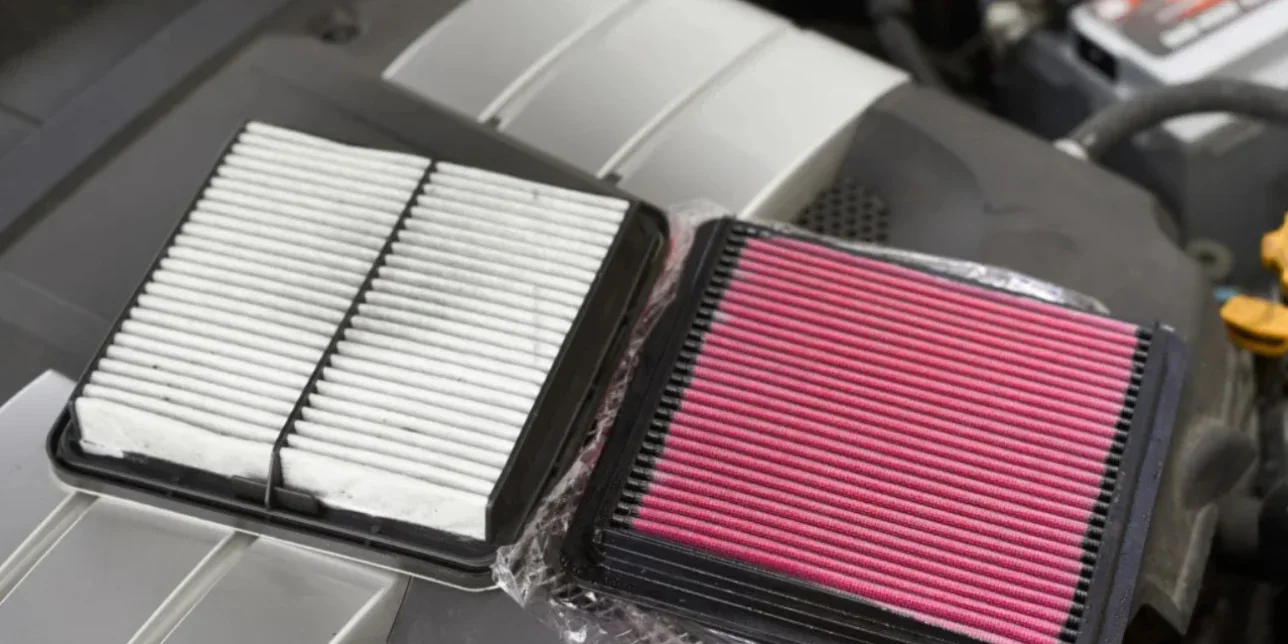
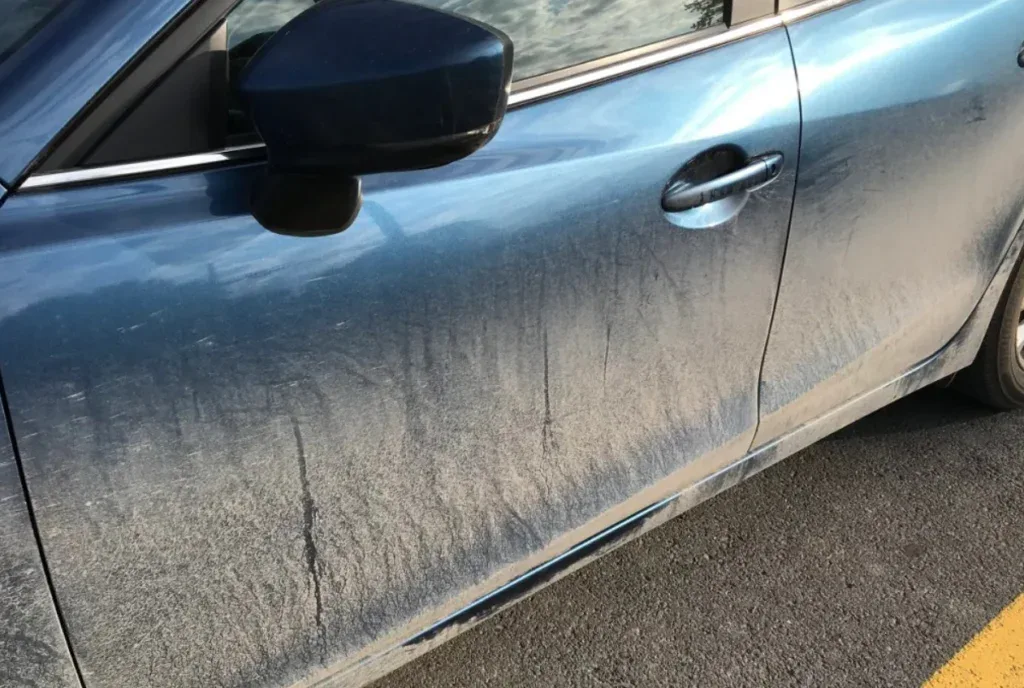
Dust and dirt can get into your engine even with a clear air filter. Know how to deal with dust and dirt to care for your vehicle.
1. Dust Has a Back Door: How Dirt Gets Into an Engine Even With a Good Engine Air Filter
If my engine air filter is new and sealed, can dust still get into my engine some other way?
Quick Answer: Yes. The engine air filter guards the main door, but dust can also enter through a faulty crankcase breather, a damaged oil filler cap or dipstick seal, cracked intake hoses, loose clamps, or dirty oil containers. A good engine air filter protects best when those back doors are closed too.
Most of the dust that threatens an engine arrives through the air intake, and the engine air filter stops nearly all of it. WearCheck engineers John Evans and Gary Blevins note that efficient air filters remove about 99 percent of the dust an engine ingests [6]. Researchers at FPT Industrial describe dirt entering through the air inlet system as the main contamination threat to heavy-duty engines, which aspirate enormous volumes of air [7]. But the intake is not the only way in.
The WearCheck engineers list the other entry points that oil analysis regularly uncovers: crankcase breathers, seals, induction hoses and clamps, intake manifold gaskets, the oil filler cap, the dipstick, dirty storage or top-up containers, and even contaminated new oil [6]. Some of those leaks send dust into the intake air downstream of the engine air filter. Others put dirt directly into the oil, where it circulates through the bearings.
Oil analysis can even tell the difference. When dust enters the combustion area through a defective air cleaner or damaged intake system, labs see rising silicon together with top-end wear metals such as iron, chromium, and aluminum. When dirt gets straight into the oil through a leaking seal, faulty breather, damaged filler cap or dipstick seal, or dirty containers, they see silicon alongside bottom-end metals such as lead, tin, and copper from the bearings [6]. Either way, the engine air filter can be brand new and the engine still be eating dirt.
Farm habits make some of these back doors common. A dipstick pulled and laid on a dusty fender, an oil filler cap left loose after a top-off, a funnel kept in a dusty toolbox, or an open jug of oil stored for months in a dusty shop can all deliver grit straight into the crankcase. Cracked rubber hoses between the engine air filter and the engine let unfiltered air in where no filter can stop it.
The fixes are simple. Keep the oil filler cap and dipstick seals in good shape and fully seated, wipe the dipstick on a clean rag, cap oil containers and keep funnels clean, and have the breather, hoses, and clamps inspected along with the engine air filter. WearCheck also recommends replacing any engine air filter that looks doubtful and using regular oil samples to catch rising silicon early [6].
Lock the back doors, not just the front one. Have the team at Grease Monkey, 1550 Main St N, Kimberly, ID, check your engine air filter, hoses, clamps, and caps in one visit so dust has no way in: https://www.greasemonkey.com/locations/id/kimberly/1550-main/.
2. The Garden-Hose Rinse: Why Washing a Paper Engine Air Filter Ruins It
Can I wash a dirty paper engine air filter with water and reuse it?
Quick Answer: No. Water weakens the fibers and bonding agents in a paper engine air filter, and even after it dries the media will not filter as well as it did. It can also warp, sag, or shrink away from its seal. Paper engine air filters are made to be replaced, not washed.
It is easy to see where the idea comes from. Plenty of farm equipment has used washable foam or oiled elements, and plenty of shop rags, buckets, and boots get hosed off and reused. When a paper engine air filter comes out caked with brown dust, a rinse under the hose and a day in the sun look like a free filter. The problem is what the water does to the paper.
A paper engine air filter is a mat of cellulose fibers held together by bonding agents and formed into pleats. Mechanic Rick Muscoplat explains that water weakens the fiber structure and the bonds between fibers, so the filter will never regain its original filtration capability even after it dries [8]. Wet paper also swells and softens. As it dries, pleats can sag, bunch together, or pull apart, and the frame and gasket can warp, so the filter may no longer press evenly against its seal.
The other common cleaning tricks do not work much better. The same guidance notes that vacuuming removes only loose surface debris while strong suction can distort pleats, and that tapping or smacking a filter against a tire can crack its frame or damage the sealing gasket while leaving the fine, embedded dust in place [8]. Engineers testing engine air filters cleaned with compressed air found that the cleaning damaged the media and let much more dust pass afterward [9].
In Kimberly, the stakes are high because the dust is relentless. A washed engine air filter that looks clean can let fine soil through weakened media or around a warped seal, and that fine soil is exactly what wears an engine. The filter that was supposed to save money ends up costing engine life.
There is a right way to stretch filter budgets on a farm: buy the correct replacement engine air filter in quantity, store it properly, and replace it when inspection shows it is loaded rather than on habit. Filters that are designed to be washed – foam elements and oiled cotton filters – come with their own cleaning instructions and should only be cleaned the way their maker specifies.
3. Hay Chaff and Field Trash Can Choke the Engine Air Filter Inlet Before Dust Ever Gets the Chance
Can hay chaff and crop debris clog my engine air filter or its air intake during harvest?
Quick Answer: Yes. Chaff, leaves, and plant fibers from hay and grain fields are too large to reach the engine, but they can mat across the air inlet, grille, and the face of the engine air filter, cutting airflow. Check and clear the inlet often during harvest, and inspect the engine air filter afterward.
Twin Falls County grows a lot of things that shed. Forage crops such as hay and haylage covered more than 81,000 harvested acres in the 2022 Census of Agriculture, with more than 41,000 acres of corn for silage and more than 35,000 acres of barley [5]. Statewide, Idaho farmers planted about 55,000 acres of dry beans in 2025 [10]. Cutting, baling, chopping, and threshing those crops fills the air around fields and farm lanes with chaff, leaf fragments, and fibers.
That debris behaves differently from dust. It is light and large, so it floats on the air and piles up where air is being pulled in. North Dakota State University Extension’s farm-safety guidance notes that dust, chaff, and plant residue accumulate on harvest machinery and should be cleared daily, and it recommends intake setups that draw air from above the dust cloud rather than through it [11]. Farm pickups and trucks that work beside that equipment collect the same debris at their grilles and air inlets.
For the engine air filter, chaff is mostly an airflow problem. Pieces large enough to see cannot pass through the filter media, but they can coat the inlet screen, plug the opening behind the grille, or mat across the face of the engine air filter, where they act like a blanket over the pleats. Add a little moisture from dew or irrigation, and the mat can pack down even tighter. The result is a truck that feels short of breath on the next loaded climb out of a field.
Chaff also brings a safety concern. NDSU warns that dry crop residue mixed with oil is a common fuel for fires on harvest equipment [11]. Debris packed into an engine compartment near a hot exhaust is worth removing for that reason alone.
During harvest, look at the grille and air inlet each day a vehicle works near the fields, and pull out any mats you can reach once the engine is off and cool. After the season, have the air box opened and the engine air filter checked for chaff worked into the pleats, and replace it if it is matted or loaded.
Let the hay go to the stack, not the air box. When harvest wraps up, bring your farm truck to Grease Monkey, 1550 Main St N, Kimberly, ID, for an inlet cleanout and engine air filter check: https://www.greasemonkey.com/locations/id/kimberly/1550-main/.
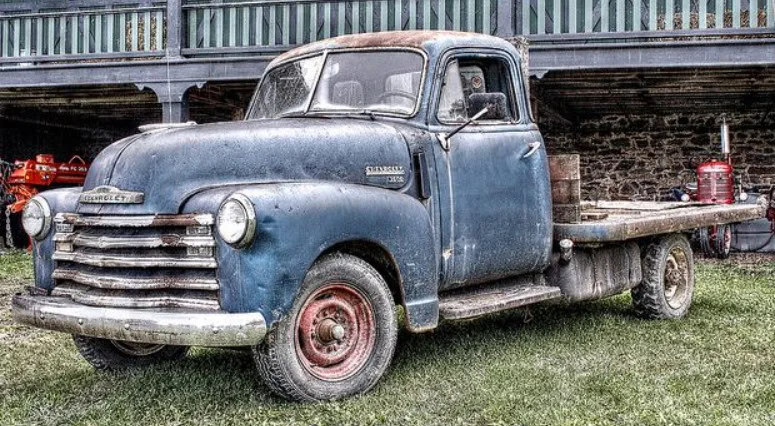
Your old farm truck may be old but you still rely on it all of the time. Keep you engine air filter clean for better mileage.
4. The Old Carbureted Farm Truck Is the One Vehicle Where a Dirty Engine Air Filter Really Burns Gas
Does a dirty engine air filter hurt fuel mileage on an older carbureted truck or tractor-era pickup?
Quick Answer: Yes, on carbureted engines it can. Oak Ridge National Laboratory found that a clogged engine air filter cut fuel economy on a carbureted car, with a new engine air filter improving mileage by 2 to 6 percent under typical clogging, while modern fuel-injected cars showed no significant change.
Many Kimberly farms still keep an older pickup or two that only comes out for hauling hay, feeding, or running irrigation sets. Some of them predate fuel injection. For those trucks, the engine air filter plays a role that it no longer plays on modern vehicles: it can directly affect how much fuel the engine burns.
Oak Ridge National Laboratory tested exactly this. Researchers clogged the engine air filters on three newer fuel-injected cars and a 1972 Pontiac with a carburetor. On the newer cars, the closed-loop engine controls kept the air-fuel ratio on target and fuel economy did not change significantly. On the carbureted Pontiac, fuel economy dropped as restriction increased. Replacing a severely clogged engine air filter improved its fuel economy by as much as 14 percent, and replacing one with a more typical level of clogging improved it by 2 to 6 percent [12]. All of the vehicles accelerated better with a clean filter [12].
The reason is the carburetor itself. A carburetor meters fuel based on the vacuum created by air rushing through it. When the engine air filter restricts that air, the vacuum in the carburetor changes, and the mixture tends to run richer: more fuel for the air that actually arrives. A modern computer would notice and correct. A carburetor simply keeps feeding the rich mixture, which wastes fuel and can foul plugs and build carbon.
For a farm truck that may only run a few hundred miles a year, the fuel cost alone is modest. The bigger issues are the rich running, hard starting, and soot that a restricted engine air filter can cause on an older engine, and the fact that these trucks often work in the dustiest conditions on the farm. Their engine air filters also tend to sit for years between changes, aging even when the truck is not.
If you have one of these trucks, give its engine air filter a look at least once a year, ideally before the season it works hardest, and replace it when it is loaded or brittle. It is one of the few places where a cheap part still pays you back at the pump.
Old trucks deserve fresh air too. Bring the shed queen to Grease Monkey, 1550 Main St N, Kimberly, ID, and let the crew give that carburetor an engine air filter that helps it run clean again: https://www.greasemonkey.com/locations/id/kimberly/1550-main/.
5. The Engine Air Filter That Catches the Most Dirt Is Not Always the One That Lasts the Longest
Why can’t one engine air filter be the best at catching dust, holding dust, and letting air through all at once?
Quick Answer: Because those goals pull against each other. Media that traps finer dust tends to resist airflow more, and a filter’s dust-holding capacity depends on how that dust packs into the media. Good engine air filters balance efficiency, capacity, and restriction for a specific engine and duty.
Shoppers often look for one number on an engine air filter box. Engineers look at three. Efficiency is how much of the dust the filter stops. Capacity is how much dust it can hold before it is done. Restriction is how hard the engine has to work to pull air through it. An engine air filter that maximizes one usually gives up something on another.
Restriction behaves in a way that surprises people. Filtration engineers at Cummins Filtration cite a widely used model in which the pressure drop across a dust-loaded filter rises steadily with time and dust concentration [13]. In other words, every hour in dusty air adds restriction, and dustier air adds it faster. The same research found that how dust is distributed matters: when dust spreads evenly across the media, the cake that forms is thinner and the pressure rises more slowly [13].
Efficiency adds another twist. Donaldson notes that an engine air filter’s efficiency actually improves as dust builds up on its surface, up to the point where restriction reaches the engine’s limit [14]. So a filter is not just a sieve with a fixed hole size. It becomes a better filter as it loads, while also becoming harder to breathe through. The end of its life is set by restriction, not by appearance [14].
That is why engine makers specify an engine air filter by part number, not just by size. The filter is matched to the engine’s airflow, the space in the housing, and the dust it is expected to see. A filter with a lot of pleat area can hold more dust before restriction climbs. A denser media may stop more fine dust but reach its restriction limit sooner in heavy dust. A filter built for a low-dust highway car may wear out quickly on a farm truck.
For Kimberly drivers, the practical lesson is to choose an engine air filter designed for your vehicle and duty, ask about heavy-duty or higher-capacity options when the truck lives in dust, and judge replacement by inspection and restriction rather than by how clean the filter looks.
6. That Spare Engine Air Filter on the Shop Shelf Since 2019 – Is It Still Good?
Does a new engine air filter go bad if it sits on a shelf in my shop or garage for years?
Quick Answer: It can. A boxed engine air filter does not expire like food, but heat, humidity, sunlight, crushing, and dust can harden its seal and damage its media over time. Store spare engine air filters in their original packaging in a cool, dry place, and inspect an old spare before installing it.
Buying engine air filters ahead of time is smart farm practice. When harvest is on and the nearest parts counter is a drive away, a spare on the shelf can keep a truck working. But a spare that has been riding out Kimberly winters and summers in an unheated shop for several years is not necessarily the same part it was when it was new.
Filter distributors draw a line between a filter’s service life and its shelf life. Boarparts, a filter supplier carrying tens of thousands of filter types, explains that manufacturers set shelf-life limits, and that installing a filter past them raises the risk of leaks or restriction problems [15]. The main aging concern is the elastomer seal, which hardens over time [15]. A hard, flattened, or cracked seal cannot press tightly against the housing, and that gap is a direct path for dust.
Storage conditions decide how fast that happens. The same guidance recommends moderate, consistent temperatures to avoid repeated expansion and contraction, notes that high humidity increases moisture absorption while very dry conditions can speed up seal hardening, and warns that direct sunlight degrades plastics and elastomers [15]. It also stresses that the original packaging is part of the filter’s protection, and that engine air filters stored without it can collect dust before they are ever installed, while dropping, stacking, or compressing filters can deform the media or frame [15].
A typical farm shop checks several of those boxes at once: freezing winters, hot summers, dust everywhere, and shelves where boxes get stacked and crushed. Add the occasional mouse, and an old spare deserves a close look before it goes into an engine.
The check is quick. Make sure the box is intact and the filter is clean. Flex the rubber seal to see that it is soft and springs back. Look for crushed pleats, stains, or a warped frame. If anything is doubtful, use the spare for a parts reference and buy a fresh engine air filter. Going forward, keep spares boxed, flat, off the floor, and away from windows and heaters, and use the oldest ones first.
A spare is only a spare if it still seals. Bring your truck to Grease Monkey, 1550 Main St N, Kimberly, ID, for a fresh engine air filter installed right, and save the shelf for something that does not dry out: https://www.greasemonkey.com/locations/id/kimberly/1550-main/.
About Grease Monkey, 1550 Main St N, Kimberly, ID 83341
Grease Monkey Center #1508 is open Monday through Friday from 8:00 AM to 6:00 PM and Saturday from 8:00 AM to 5:00 PM, and is closed Sunday. The shop can be reached at (208) 875-4089, and manager Jared Smith leads the team [1].
Services include conventional, synthetic, and premium oil changes using DuraMax and Royal Purple products, diesel oil changes, engine and cabin air filter replacement, brakes, tires, batteries, wipers, tune-ups, transmission and fluid services, and a 16-point inspection with each oil change. Services and products carry a limited warranty of three months or 3,000 miles [1].
Farms and businesses can use the fleet program, with centralized billing and monthly invoices across the FullSpeed Automotive network of more than 700 locations. Discounts are offered for military, first responders, law enforcement, seniors, students, and rideshare drivers, and the lobby offers free Wi-Fi, a coffee station, and a window into the service bay. Customers have given this Main Street location a 4.9-star rating on Google [1].
Author Information
Author Bio – Phillip Paul Gilliam
Phillip Gilliam is a veteran journalist and former Editor-in-Chief with 50+ years of publishing experience and thousands of published articles. Specializing in automotive, trucking, and digital publishing, he creates authoritative, search-optimized content built on real-world expertise and editorial excellence. To learn more about Phil, visit http://www.phillipgilliam.com/about.html or contact Phil at [email protected]. He would love to hear from you!
Full Citation List
[1] Grease Monkey. Oil Change & Auto Repair, 1550 Main, Kimberly, ID. Grease Monkey. Available at: https://www.greasemonkey.com/locations/id/kimberly/1550-main/. (Center #1508; manager Jared Smith; operated by Threshold Automotive dba Grease Monkey, part of the FullSpeed Automotive family; address, phone, hours; air filter and cabin air filter replacement, diesel oil changes, 16-point inspection, fleet program across 700+ FullSpeed locations; elevation about 4,000 feet, sub-zero winters, dry and dusty conditions, Highway 30, Magic Valley; 3-month/3,000-mile limited warranty; current Google rating of 4.9 stars from 138 reviews, checked October 10, 2026.)
[5] USDA National Agricultural Statistics Service. 2022 Census of Agriculture County Profile: Twin Falls County, Idaho. Available at: https://nass.usda.gov/Publications/AgCensus/2022/Online_Resources/County_Profiles/Idaho/cp16083.pdf. (1,169 farms; 459,167 acres in farms; $1.136 billion in market value of products sold, 2nd in Idaho; forage 81,871 harvested acres, corn for silage 41,145 acres, barley 35,228 acres.)
[6] Evans, J., and Blevins, G., WearCheck. How to Spot the Signs and Symptoms of Silica Contamination. Machinery Lubrication. Available at: https://machinerylubrication.com/Articles/Print/830?id=830. (Efficient air filters remove 99 percent of ingested dust; other entry points include breathers, seals, induction hoses and clamps, inlet manifold gaskets, the oil filler cap, the dipstick, dirty containers, and contaminated new oil; top-end wear with silicon points to a defective air cleaner or induction system, bottom-end wear with silicon points to dirt entering the oil directly; replace doubtful filters and use regular oil sampling.)
[7] Martins, E.L., and Ulhoa, F.C.P., FPT Industrial. Mapping of Dirt Contamination in Heavy Duty Engines Through Oil Monitoring. SAE Technical Paper 2018-36-0268, 2018. Available at: https://saemobilus-test.cld.sae.org/papers/mapping-dirt-contamination-heavy-duty-engines-oil-monitoring-2018-36-0268. (Dirt entering through the air inlet system is the main contamination source; heavy-duty engines are especially vulnerable because they aspirate large volumes of air; oil analysis supports early diagnosis.)
[8] Muscoplat, R. Clean an Air Filter vs. Replace Air Filter: Tips for DIYers. Rick's Free Auto Repair Advice, February 28, 2023. Available at: https://ricksfreeautorepairadvice.com/clean-an-air-filter-vs-replace-air-filter-tips-for-diyers/. (Water weakens a paper filter's fiber structure and bonding agents so it never regains its original filtration capability; vacuuming removes only loose debris and can distort pleats; tapping can crack the frame or damage the gasket.)
[9] Toma, M., Asimopolos, A., Voloaca, S., and Dinca, G. Cleaning Engine Air Intake Filters – Consequences on Filtering. Proceedings in Automotive Engineering (CONAT 2024), Springer, November 2024. Available at: https://trid.trb.org/View/2581412. (Compressed-air cleaning damaged engine air filter media and let much more dust pass in bench tests.)
[11] North Dakota State University Agriculture Communication. Reduce Risk of Combine Fires With Regular Preventative Maintenance. NDSU Extension, August 6, 2026. Available at: https://www.ag.ndsu.edu/news/newsreleases/2026/august/reduce-risk-of-combine-fires-with-regular-preventative-maintenance. (Dust, chaff, and plant residue accumulate on harvest machinery and should be cleared daily; oil mixed with crop dust is a common fire fuel; intake kits that draw air from above the dust cloud are recommended.)
[12] Oak Ridge National Laboratory. Effect of Intake Air Filter Condition on Vehicle Fuel Economy. OSTI.gov record 948545, 2009. Available at: https://www.osti.gov/biblio/948545. (No significant fuel economy change on three newer fuel-injected cars with closed-loop controls; on a carbureted 1972 Pontiac, a new filter improved fuel economy by as much as 14 percent versus a severely clogged one and 2 to 6 percent under typical clogging; all vehicles accelerated better with a clean filter.)
[14] Donaldson Company. How Well Does an Engine Air Filter Clean Incoming Dirty Air? Air Filter Efficiency Explained. Donaldson technical article. Available at: https://www.donaldson.com/en/resources/technical-articles/air-filter-efficiency-explained/. (Efficiency improves as dust builds on the filter surface until maximum restriction; restriction, not appearance, should determine replacement.)
[15] Boarparts. How to Properly Store Spare Filters to Ensure Longevity and Reliability. Boar B.V., March 29, 2026. Available at: https://boarparts.com/blog/filters/how-to-properly-store-spare-filters-52w675n8/. (Manufacturers set shelf-life limits; elastomer seals harden over time; keep moderate, consistent temperatures; high humidity increases moisture absorption and very dry conditions speed seal hardening; sunlight degrades plastics and elastomers; original packaging protects filters; air intake filters stored without packaging can collect dust; avoid dropping, stacking, or compressing filters.)
We use cookies to improve your browsing experience on our website. By closing this banner or interacting with our site, you acknowledge and agree to our privacy policy.