15 Reasons to Replace Your Cabin Air Filter in Kimberly, Idaho – What Beet Season, Canals, and Magic Valley Farming Do to Your Car
Location: Kimberly, ID Topic: Grease Monkey Center #1508 By: Phil Gilliam
An Authoritative Guide for Cabin Air Filter Care in Idaho’s Magic Valley
Grease Monkey, 1550 Main St N, Kimberly, ID 83341. Has Over 140 Google Reviews With A 4.9 Star Rating.
A Note on Authority and Expertise: This article was researched and written by Phillip Paul Gilliam, a veteran journalist and former Editor-in-Chief with more than 50 years of publishing experience in automotive, trucking, and safety communications.
Fifty-plus years in automotive and safety publishing comes down to one habit above all others: check it before it goes to print. The beet-campaign timing, the irrigation-season dates, and the dairy-herd figures cited below were all verified against current, named sources specifically for this Kimberly piece, not carried over from research done for this series’ Rexburg farm-country stop or its Idaho Falls and Pocatello locations.
This Kimberly location, Grease Monkey Center #1508 at 1550 Main St N, is managed by Jared Smith and operates as a preferred CARFAX service provider within the FullSpeed Automotive network, which has grown past 900 franchised and company-owned locations nationwide as of mid-2026 [7]. In 2025, CARFAX named 435 FullSpeed Automotive locations, including Grease Monkey centers, as CARFAX Top Shop winners for verified customer satisfaction [8]. Built around a customer lobby, coffee station, and outdoor seating alongside its service bays, the Kimberly location has built its own 4.9-star rating across more than 140 Google reviews [1].
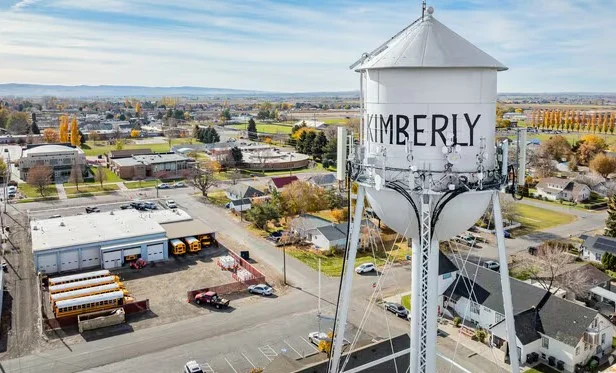
Kimberly sits at 3,914 feet in Idaho’s Magic Valley, a town that grew 41.7 percent between 2010 and 2020, from 3,264 residents to 4,626, ranking it among Idaho’s fastest-growing small cities [2]. Founded in 1905 and named for a financier behind the Milner Dam irrigation project that made the surrounding farmland possible, Kimberly sits inside a working agricultural landscape of irrigation canals, dairy operations, sugar beet fields, and even a federal agricultural research station, putting a genuinely different set of demands on a cabin air filter than the university-town, farm-county, or urban stops this series has already covered [2][4].
An Introduction to Cabin Air Filters in Kimberly and Idaho’s Magic Valley
Every fall, Twin Falls’ century-old sugar factory starts its beet-processing campaign, and drivers around Kimberly, just a few miles away, know the seasonal smell that comes with it. Amalgamated Sugar’s Twin Falls facility, built in 1916 and still the company’s oldest operating plant, runs its beet campaign roughly September through March, turning the local harvest into sugar, molasses, and animal feed byproducts along the way [5]. It’s one of several genuinely local air-quality signatures this small Magic Valley town puts on a cabin air filter.
Kimberly’s identity is agricultural down to its infrastructure: the Twin Falls Canal Company delivers water through 110 miles of major canals and roughly 1,000 miles of laterals across more than 200,000 acres every April through October, then shuts the system down for winter, leaving miles of canal bed to dry out until spring [3]. Idaho’s dairy industry, some 600,000 cows across 437 farms statewide, keeps Magic Valley processing plants running at capacity, and the alfalfa hay that feeds those herds gets cut and baled several times a season across the surrounding farmland [6]. Kimberly is also home to a USDA agricultural research station that studies exactly this kind of local dust and emissions question as its actual day job [4].
This guide walks through fifteen reasons Kimberly drivers, from longtime farm families to residents of the town’s fast-growing newer subdivisions, should treat their cabin air filter as a genuine piece of safety and health equipment rather than a line item on an oil-change ticket. Every reason here is grounded in a real technical fact about how the filter works, not local color wearing a filter-shaped costume, and every one of these fifteen topics is new to this series, distinct from the farm-country angles already covered at Rexburg or the urban and airport-area angles covered at this series’ Idaho Falls and Pocatello stops.
Grease Monkey’s Kimberly location, managed by Jared Smith and recognized as a CARFAX preferred service provider, has built a 4.9-star reputation across more than 140 Google reviews serving exactly this kind of Magic Valley driver [1]. What follows is the technical and local case for getting your cabin air filter checked before beet season, before the canals dry up, or before the next cutting of hay.
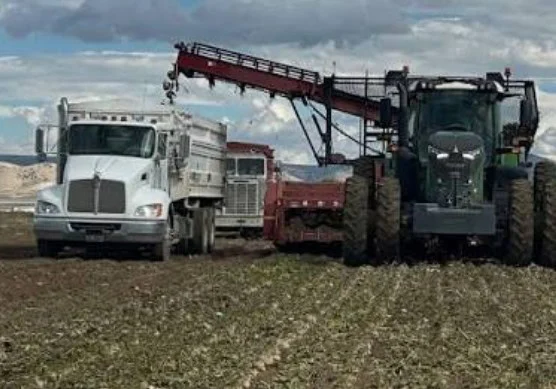
Wow!! That is a WOW LOT of sugar beets! Can sugar beets impact your cabin air filter?
Most Critical
1. Does Amalgamated Sugar’s Fall Beet Campaign Put a Different Smell Through Your Cabin Air Filter?
Category Most Critical
During Twin Falls’ Amalgamated Sugar factory’s fall-to-spring beet processing campaign, does a distinct processing odor actually reach Kimberly drivers, and can a cabin air filter do anything about it?
It does reach the area, and it’s a recognizable seasonal signature. The Twin Falls factory, built in 1916 and still Amalgamated Sugar’s oldest operating facility, runs its beet processing campaign roughly September through March, slicing, cooking, and drying harvested beets into sugar, molasses, and animal feed byproducts along the way, an operation with an earthy, sometimes sulfurous cooking odor that carries on the wind to nearby communities, Kimberly included, just a few miles from the plant [5].
A cabin air filter with an activated-carbon layer works against gas-phase odor molecules the way it does for other airborne odors covered elsewhere in this series, adsorbing much of that smell rather than letting it pass straight through, while a standard particulate-only filter offers little real defense against odor specifically, since odor is a gas, not a solid particle. For Kimberly commuters who notice the campaign smell every fall, filter type, not just filter condition, is the variable that actually matters.
2. When Kimberly’s Irrigation Canals Run Dry Each Fall, Does That Add Dust to Your Cabin Air Filter?
Category Most Critical
After the Twin Falls Canal Company shuts off water for the season, do the exposed, drying canal beds around Kimberly actually raise more dust for a cabin air filter to handle than during the growing season?
They do. The irrigation season for the canal system serving Kimberly and the surrounding farmland runs from April 1 through October 31, moving water across 110 miles of major canals and roughly 1,000 miles of laterals to more than 200,000 acres [3]. Once the system is shut off for winterization each fall, canal beds that were flowing and saturated all summer are left to dry out and sit exposed until the following spring’s refill.
Exposed, dried silt and fine sediment along miles of now-empty canal banks is a genuine seasonal dust source in an agricultural area like this, distinct from ordinary road dust, particularly on windy fall and winter days before snow or spring moisture stabilizes the ground again. A cabin air filter due for replacement heading into the shoulder season between irrigation shutoff and winter’s first real moisture is better positioned for that specific seasonal dust window.
3. Does the USDA’s Own Research Station in Kimberly Confirm Local Farm Dust Is a Real Filtration Concern?
Category Most Critical
With a federal agricultural research station actually located in Kimberly, does its own published research confirm that dust and emissions from local farming activity getting into vehicle cabin air filters and the surrounding areas are a genuine, measurable concern, not just a general assumption?
It does. The USDA’s Northwest Irrigation and Soils Research station sits right in Kimberly, and its published research program specifically includes dust emissions from agricultural activity alongside ammonia and greenhouse gas emissions from concentrated dairy operations, sugar beet disease and yield research, and irrigation water management for the area’s arid growing conditions [4].
Having a federal research facility dedicated to studying exactly these agricultural air-quality questions, right down the road, is a genuine confirmation that the dust and emissions this guide describes are established scientific subjects, not just local color. That doesn’t mean every listicle in this guide draws directly on the station’s own findings, but it does mean the underlying agricultural air-quality questions Kimberly drivers are asking about their cabin air filter are the same ones federal researchers nearby are actively studying.
4. Is Kimberly’s Explosive Growth Adding More Construction Dust for Your Cabin Air Filter to Handle?
Category High Priority
With Kimberly’s population growing more than 41 percent in a single decade, does the resulting construction boom actually add a measurable dust load to a local commuter’s cabin air filter?
It does, and the concentration matters as much as the rate. Kimberly grew from 3,264 residents in 2010 to 4,626 by the 2020 census, a 41.7 percent increase that ranked it among Idaho’s fastest-growing cities, remarkable growth for a town spanning less than two square miles [2]. Growth at that pace, packed into such a small footprint, means a larger share of the town’s roads run past an active building site than in a bigger, more slowly growing city where new construction is spread thin.
Newly graded lots, fresh road cuts, and ongoing subdivision construction all generate fine soil and cut-material dust well beyond what an established, fully built neighborhood produces, and in a town growing this fast, a commuter’s regular route is more likely than not to pass at least one active site. A cabin air filter serving a Kimberly commute deserves the same seasonal attention a much larger, faster-growing city’s filter would.
What impact does the many sugar beet trucks on the road have on Kimberly cabin air filters?
5. Does Fall Beet-Harvest Truck Traffic Put Extra Grit on Kimberly Roads for Your Cabin Air Filter?
Category High Priority
During the fall sugar beet harvest, do the loaded trucks hauling beets to the Twin Falls factory actually leave enough field dirt and debris on Kimberly-area roads to affect a cabin air filter?
They do, in a concentrated seasonal burst. The Twin Falls sugar factory’s processing campaign begins each September, timed to the local beet harvest, which means a heavy run of loaded beet trucks moving from area fields to the factory over a period of weeks rather than spread evenly across the year [5]. Beet trucks hauling straight from freshly harvested fields routinely track field soil and plant debris onto paved roads, a well-known seasonal maintenance issue for agricultural communities during harvest.
That tracked-on field debris gets picked up and pulverized by following traffic into a finer, airborne dust than the same soil sitting undisturbed in a field, adding a real but temporary seasonal spike to the particulate a Kimberly commuter’s cabin air filter handles each fall, on top of whatever load the canal dry-up and construction growth covered elsewhere in this guide are already contributing.
6. Does Baling Alfalfa Hay for Magic Valley Dairies Add Its Own Dust to Your Cabin Air Filter?
Category High Priority
With alfalfa hay grown across the Magic Valley to feed the region’s dairy herds, does the cutting and baling process add its own distinct kind of dust for a cabin air filter to handle?
It does, and it’s a recurring rather than single-season contributor. Idaho’s dairy industry runs roughly 600,000 cows across 437 dairy farms statewide, and feeding that herd requires enormous local alfalfa hay production, cut and baled multiple times each growing season rather than just once at harvest [6]. Cutting, raking, and baling dried hay releases fine plant-fiber and leaf-particle dust into the air, a different texture and source than either soil-based road dust or the beet-processing byproducts covered elsewhere in this guide.
Because alfalfa gets cut several times between spring and fall rather than in one harvest window, this is a recurring dust source for drivers near Magic Valley’s hay ground, not a one-time seasonal event. A cabin air filter in this region is handling a genuinely wider variety of agricultural particulate types across a single growing season than a filter in a less agriculturally diverse area would.
7. Do Kimberly’s Smaller-Town Service Options Mean Cabin Air Filters Get Put Off Longer?
Category Important
In a town of roughly 4,600 people with fewer auto-service options nearby than a larger city, do Kimberly drivers actually end up putting off routine items like a cabin air filter longer than they would elsewhere?
Often, yes. A smaller town naturally has fewer competing service options within a short drive, which can mean more advance planning, and more willingness to let a non-urgent item wait, than a driver in a city with a shop on every other corner. A cabin air filter is exactly the kind of item that’s easy to defer since its symptoms, reduced airflow, a faint odor, are gradual rather than sudden, unlike a warning light or a failed brake.
Bundling a cabin air filter check into a service that’s already routine and already nearby, like an oil change, removes the extra-trip friction that tends to make a smaller-town driver delay a filter swap specifically. For Kimberly drivers, treating the filter as a standard line item on every regular service visit closes that gap without adding a special-purpose errand to an already full schedule.
8. Do Rural School Buses Serving Kimberly Even Have a Cabin Air Filter Like Your Car Does?
Category Important
For the school buses running long rural routes on gravel and farm roads around Kimberly, do those buses actually have the same kind of cabin air filtration a personal vehicle does?
Not always, and it’s a genuinely different setup than most passenger vehicles. Many school buses, particularly older models common in rural district fleets, use simpler heating and ventilation systems that were never designed around a replaceable particulate cabin air filter the way a modern car or truck is, relying instead on basic fresh-air vents and a heater core with little to no filtration in between.
That means kids riding a long rural bus route on dusty gravel roads around Kimberly may be getting meaningfully less filtered air inside the bus than the same kids get in a parent’s personal vehicle equipped with a properly maintained cabin air filter, a genuine but often overlooked gap between how personal and rural fleet vehicles handle the exact same dusty roads.
9. Does Kimberly’s Washboard Gravel Roads Wear Out Your Cabin Air Filter Housing Clips?
Category Important
For vehicles regularly driven on the washboard-textured gravel roads common around Kimberly’s farmland, does that constant vibration actually fatigue or crack the plastic clips holding the cabin air filter housing together?
It can, over time, through a different mechanism than the sun-driven brittleness this series covered at a higher-elevation stop. Washboard gravel, the rippled, corrugated texture that forms on unpaved farm roads under repeated traffic, transmits a rapid, repetitive vibration through a vehicle’s body and undercarriage that’s meaningfully different from the occasional pothole or rough pavement a paved-road commuter encounters, and that repeated vibration cycling can fatigue plastic components over years of regular exposure the same way repeated flexing fatigues any plastic part.
A cabin air filter housing’s plastic retaining clips and tabs, not built primarily to handle sustained vibration, can become more prone to cracking during a routine filter swap on a vehicle that spends significant time on Kimberly’s farm roads, even on a vehicle that’s otherwise well maintained. It’s worth a gentler touch, or a technician’s help, when swapping the filter on a vehicle with heavy gravel-road history.
You probably use your farm truck for more than just around the farm. Does that impact your cabin air filter? Read more below!
Medium Priority
10. Does Using the Farm Truck for Both Field Work and Grocery Runs Double Up Your Cabin Air Filter’s Load?
Category Medium Priority
For a Kimberly household that uses the same truck for both farm field work and everyday errands around town, does that dual use put a different kind of load on the cabin air filter than a vehicle used for just one or the other?
It does, in a fairly direct way. A truck that spends the morning on dusty field roads and the afternoon idling in a grocery store parking lot or town traffic is exposing its cabin air filter to both ends of the particulate spectrum, heavy agricultural dust and fine soil on one hand, ordinary town road grit, exhaust, and parking-lot conditions on the other, within the same day.
That combined exposure can load a cabin air filter faster than either use alone would, even if the vehicle’s total mileage looks modest, since it’s the variety and intensity of what’s passing through the filter, not just distance traveled, that determines how quickly it reaches capacity. A dual-purpose farm-and-town vehicle is a reasonable candidate for a shorter filter-replacement interval than a vehicle used exclusively for one kind of driving.
11. Does Living Near an Active Irrigation Canal Create a Damper Microclimate for Your Cabin Air Filter?
Category Medium Priority
For homes and vehicles parked near one of the many active canals running through Kimberly during the April-to-October irrigation season, does the extra humidity from flowing water actually affect a cabin air filter housing?
It can. With 110 miles of major canals and roughly 1,000 miles of laterals moving water across the area for seven months of the year, a property sitting close to an active lateral can see meaningfully higher local humidity than a similar property farther from moving water, especially on still mornings [3]. A vehicle parked overnight in that slightly damper microclimate can develop more condensation inside its cabin air filter housing than the same vehicle would parked in a drier spot in town.
That extra moisture, condensing and evaporating repeatedly inside an enclosed housing, is one more contributor to the musty odor and occasional mold growth this series has covered elsewhere, meaning a vehicle regularly parked canal-side during irrigation season is a reasonable candidate for slightly more frequent filter inspection than one parked well away from moving water.
12. Does Storing Your Car Next to the Riding Mower and ATV Affect Its Cabin Air Filter?
Category Medium Priority
For a Kimberly household that keeps a car parked in the same garage or shed as gas-powered farm equipment, a riding mower, an ATV, a generator, does fuel and exhaust off-gassing from that equipment actually reach the car’s cabin air filter?
It can, in an enclosed space. Small gas engines and stored fuel containers release low levels of gasoline vapor and residual exhaust compounds even when not running, and in a closed garage or shed shared with a parked vehicle, those vapors have nowhere to disperse the way they would outdoors, building up in the enclosed air the vehicle sits in overnight.
A cabin air filter, particularly one with an activated-carbon layer built to adsorb gas-phase odors and vapors, is doing genuine work filtering that shared-storage air on the vehicle’s next startup, and a household keeping small engines and fuel containers in the same space as a daily-driven vehicle is asking more of that filter than a household with separate parking and equipment storage.
13. Can a Clogged Cabin Air Filter Ever Trigger Your Check Engine Light?
Category Lower Priority
If a dashboard warning light comes on, is it possible the cabin air filter is actually the cause, or is that always a red herring worth ruling out first?
It’s always a red herring, worth ruling out first. A cabin air filter is part of the passenger-compartment HVAC system, entirely separate from the engine, fuel, and emissions-control components that the check engine light and its underlying onboard diagnostic system actually monitor. No cabin air filter condition, however clogged, can trigger that specific warning light, because the two systems don’t share sensors or wiring in a way that would connect them.
A driver troubleshooting a check engine light who also happens to notice reduced airflow from the vents is dealing with two unrelated issues that happened to show up around the same time, not one causing the other, and ruling out the actual engine-related cause remains the priority regardless of what the cabin air filter’s condition happens to be.
14. Inherited the Family Farm Truck? You May Be Inheriting an Unknown Cabin Air Filter, Too.
Category Lower Priority
For a Kimberly family passing a farm truck or car down between generations, is there a reliable way to know how old the cabin air filter actually is if its service history wasn’t tracked?
Not from the filter itself, generally. Unlike some components with a printed date or wear indicator, a cabin air filter typically carries no visible marking showing when it was installed, and a vehicle that changed hands within a family without formal service records leaves a new owner with no reliable way to know whether the filter is a year old or has quietly been in place since long before the handoff.
For a hand-me-down vehicle with an unknown maintenance history, treating the cabin air filter as due for inspection at the next opportunity, rather than assuming it was handled at some point along the way, is the simplest way to establish an actual, known baseline rather than continuing to guess.
15. What Actually Happens to Your Old Cabin Air Filter Once It’s Replaced?
Category Lower Priority
For an agricultural community that cares about land stewardship, is there a responsible way to dispose of or recycle an old cabin air filter instead of just throwing it in the trash?
Most standard cabin air filters combine paper or synthetic pleated media with plastic framing, a mixed-material construction that most curbside recycling programs aren’t set up to separate and process, meaning a typical old cabin air filter does generally go into ordinary household trash rather than a recycling bin.
Some auto parts retailers and service shops participate in take-back or proper-disposal programs for exactly this kind of mixed-material automotive waste, an option worth asking about for anyone who’d rather not simply discard a used filter, and a small but genuine question for a farming community that already thinks carefully about land and resource stewardship in other parts of daily life.
About Grease Monkey, 1550 Main St N, Kimberly, ID 83341
Grease Monkey Center #1508 is managed by Jared Smith and sits at 1550 Main St N, Kimberly, ID 83341, open Monday through Friday from 8:00 AM to 6:00 PM and Saturday from 8:00 AM to 5:00 PM, closed Sundays [1]. The location offers conventional, synthetic-blend, and full-synthetic oil changes, fluid exchanges, battery service, tire service, brake service, air conditioning service, engine service, filter replacement, headlight service, state inspections, transmission service, windshield service, and fleet maintenance, alongside amenities including a coffee station, WiFi, outdoor seating, a service bay window, and courtesy fluid top-off, and holds status as a preferred CARFAX service provider [1].
The location has built a 4.9-star rating across more than 140 Google reviews, serving a driver base spanning longtime Magic Valley farm families, Twin Falls Canal Company water users, and residents of Kimberly’s fast-growing newer neighborhoods [1]. As part of the FullSpeed Automotive network recognized with 435 CARFAX Top Shop honors in 2025, the Kimberly team draws on brand-wide training standards while understanding exactly what beet season, canal cycles, and Magic Valley farming demand from a vehicle’s cabin air system [8].
Author Information
Author Bio – Phillip Paul Gilliam
Phillip Gilliam is a veteran journalist and former Editor-in-Chief with 50+ years of publishing experience and thousands of published articles. Specializing in automotive, trucking, and digital publishing, he creates authoritative, search-optimized content built on real-world expertise and editorial excellence. To learn more about Phil, visit http://www.phillipgilliam.com/about.html or contact Phil at [email protected]. He would love to hear from you!
Full Citation List
[1] Grease Monkey. Oil Change & Auto Repair, 1550 Main St N, Kimberly, ID. Grease Monkey. Available at: https://www.greasemonkey.com/locations/id/kimberly/1550-main/. (Store address, hours, manager name, amenities, service menu, CARFAX preferred provider status, and current Google review count and rating.)
[2] Wikipedia contributors. Kimberly, Idaho. Wikipedia. Available at: https://en.wikipedia.org/wiki/Kimberly,_Idaho. (Elevation 3,914 feet; 2020 census population 4,626, up from 3,264 in 2010, a 41.7 percent increase; city founded 1905, named for Milner Dam financier Peter L. Kimberly.)
[3] Twin Falls Canal Company. System Information. TwinFallsCanal.com. Available at: https://twinfallscanal.com/system-information/. (Irrigation season April 1 through October 31; 110 miles of major canals and roughly 1,000 miles of laterals; approximately 202,691 acres served.)
[4] USDA Agricultural Research Service. Northwest Irrigation and Soils Research, Kimberly, ID. ARS.USDA.gov. Available at: https://www.ars.usda.gov/pacific-west-area/kimberly-id/northwest-irrigation-and-soils-research/. (Research station located in Kimberly studying irrigation water management, sugar beet disease and yield, and dust and ammonia/greenhouse gas emissions from concentrated dairy operations.)
[5] Amalgamated Sugar Company. Twin Falls Factory. AmalgamatedSugar.com. Available at: https://www.amalgamatedsugar.com/twin-falls-factory/. (Twin Falls factory built in 1916, the company’s oldest operating facility; beet processing campaign runs roughly September through March producing sugar, molasses, and feed byproducts.)
We use cookies to improve your browsing experience on our website. By closing this banner or interacting with our site, you acknowledge and agree to our privacy policy.