15 Reasons Kimberly, Idaho's Fastest-Growing Streets Are Quietly Testing Every Transmission
Location: Kimberly, ID Topic: Grease Monkey Center #1508 By: Phil Gilliam
An Authoritative Guide for Vehicle Transmission Health and Repair in Twin Falls County’s Booming Canal Town
Grease Monkey 1550 Main, Kimberly, ID 83341 Has Over 140 Google Reviews With A 4.9 Star Rating
A Note on Authority and Expertise: This article was researched and written by Phillip Paul Gilliam, a veteran journalist and former Editor-in-Chief with more than 50 years of publishing experience in automotive, trucking, and safety communications. The transmission guidance presented here is grounded in current SAE fluid-life standards, ASE-recognized diagnostic practices, and manufacturer engineering research – not generic information.
The Grease Monkey at 1550 Main, Kimberly, ID 83341, is part of the FullSpeed Automotive network, which services more than 5.2 million vehicles annually across 700-plus locations nationwide and generated over $542 million in 2026 revenue. In 2025, 435 FullSpeed Automotive locations – including Grease Monkey franchises – were named CARFAX Top Shop Winners for verified customer satisfaction, and in 2026 Grease Monkey was recognized as an Entrepreneur Verified Franchise. Grease Monkey’s ASE-certified technicians bring that national training standard to a town serving both century-old farm families and new commuters alike.
Kimberly’s population has grown by nearly 30 percent since the 2020 census, a town founded in 1905 around one of Idaho’s most significant gravity-flow irrigation projects fed by Milner Dam [9]. New subdivisions, new drivers, farm trucks, UTVs, and daily commutes into Twin Falls all share the same roads and the same shop on Main Street.
An Introduction to Real Transmission Problems in Kimberly
Most drivers only think about their transmission when something already feels wrong – a car that won’t move at all, a dashboard showing the wrong gear, a whine that only shows up turning the wheel. By the time it becomes impossible to ignore, the repair bill has usually jumped from a few hundred dollars to several thousand. That gap is not bad luck. It is math. Automatic transmission fluid follows a well-documented thermal curve: for every 20 degrees Fahrenheit the fluid runs above roughly 175 degrees F, its usable service life is cut in half, according to SAE and Allison Transmission engineering data. Fluid that would last 100,000 miles at 175 degrees F is finished at 25,000 miles by 220 degrees F, and drops to just 5,000 miles at 260 degrees F [1].
Kimberly drivers run into real transmission questions in specific, recognizable ways: creeping slowly along a canal road behind irrigation equipment, a new teenage driver learning to shift for the first time, a UTV parked next to the family truck with a completely different kind of transmission underneath it. This guide walks through fifteen real transmission symptoms and questions – the kind a driver actually types into a search bar or asks a technician face to face – organized from the most urgent safety concerns to the more preventive, long-view maintenance decisions.
Each one explains what is actually happening inside the transmission, not just where it happens. And each one closes with a specific next step you can take at the Grease Monkey on Main Street.
Most Critical
1. Won’t Move, Any Gear: What a Complete Transmission Failure Actually Means
Category Most Critical
My car won’t move in any gear at all – not just reverse, nothing – what would cause a failure that complete?
A transmission that won’t engage in any gear at all points toward one of a small handful of serious root causes: severely low or completely absent fluid preventing any hydraulic pressure from building, a failed internal pump that can’t circulate fluid regardless of level, a broken or disconnected shift linkage that never actually tells the transmission what gear was selected, or internal damage like seized gears or destroyed clutch packs [2]. Because low fluid is both the most common cause and the easiest to check, confirming the fluid level is always the first step – but if fluid is present and the problem persists, the cause is almost certainly something internal that needs a shop’s diagnosis rather than a driveway fix.
A vehicle that won’t move in any gear should not be driven, towed incorrectly, or repeatedly cranked in an attempt to force it into gear – each of those can turn a repairable problem into a much more expensive one.
2. The Dashboard Doesn’t Match the Gear: What a PRNDL Mismatch Actually Means
Category Most Critical
My dashboard shows I’m in one gear, but the car is clearly behaving like it’s in a different one – is that actually possible?
The transmission range sensor is what tells your vehicle’s computer which gear the shifter has physically selected, and when that sensor fails, drifts out of alignment, or develops a wiring fault, the dashboard’s PRNDL indicator can show the wrong letter entirely, go blank, or flicker – while the transmission itself is actually in a completely different gear than what’s displayed [3]. This is a genuine safety issue, not just a cosmetic glitch: a driver trusting a dashboard that reads “Park” when the transmission is actually still engaged in gear is at real risk of unexpected movement.
If your gear indicator ever doesn’t match what the car is actually doing – lurching forward when the dash reads Reverse, for example – treat that as an immediate, not a someday, problem.
Notice your dashboard gear indicator not matching how the car is actually behaving? Have Grease Monkey, 1550 Main, Kimberly, ID 83341, check your transmission range sensor right away – schedule at https://www.greasemonkey.com/locations/id/kimberly/1550-main/.
3. Following the Sprinkler Line: Why Extended Slow Creeping Isn’t the Same as Idling
Category Most Critical
I creep along at walking pace for a long stretch following irrigation equipment down a canal road – is that actually different from just sitting still idling in traffic?
At a dead stop in Drive, the torque converter slips continuously to keep the engine from stalling – and creeping forward at just a few miles an hour for an extended stretch keeps that same slip going almost as continuously, since the transmission never gets to lock the converter or settle into an efficient cruising gear [3]. Unlike a brief moment of slow creeping, sustained minutes of it – following a slow-moving piece of equipment down a canal road, for example – builds heat in the fluid in essentially the same way extended stopped-traffic idling does, just while the vehicle is technically still moving.
If a slow-moving vehicle or piece of equipment is going to hold you to a crawl for several minutes at a time, there’s often a safe, legal place to pull over and let it get further ahead rather than creeping behind it in gear the entire time.
Regularly find yourself creeping for long stretches behind slow equipment? Have Grease Monkey, 1550 Main, Kimberly, ID 83341, check your fluid condition if this is a frequent pattern – schedule at https://www.greasemonkey.com/locations/id/kimberly/1550-main/.
High Priority
4. Can’t Make Up Its Mind: What It Means When Your Transmission Hunts Between Two Gears
Category High Priority
My transmission seems to hunt back and forth between two gears on flat roads, like it can’t settle on one – what’s happening?
Gear hunting happens when a transmission repeatedly shifts up, then back down, then up again while your speed and throttle position sit right at the boundary between two gears – modern transmissions with many gear ratios are tuned aggressively for fuel economy, pushing into the highest gear possible, then dropping back down the instant slightly more power is requested [4]. A slight incline, a light headwind, or even a small amount of drivetrain slack settling after each shift can be enough to keep triggering the cycle repeatedly on a road that looks perfectly flat.
Occasional hunting on a genuine borderline grade is a known characteristic of many modern transmissions and not necessarily a defect, but hunting that happens constantly, even on truly flat roads at a steady speed, is worth having checked, since it also causes unnecessary extra wear on the entire drivetrain.
Notice your transmission hunting between gears on flat roads? Have Grease Monkey, 1550 Main, Kimberly, ID 83341, check whether that’s normal calibration or a real issue – schedule at https://www.greasemonkey.com/locations/id/kimberly/1550-main/.
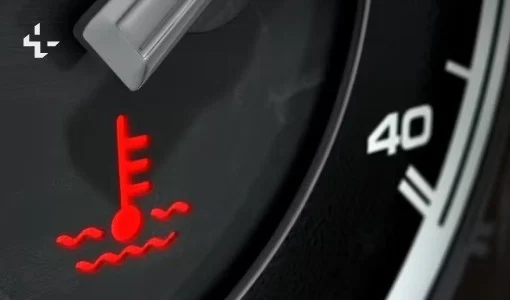
When your transmission is losing fluid, but you don’t see a puddle, you need to get to your Kimberly Grease Monkey right away!
5. Fluid’s Disappearing, But There’s No Puddle: Where Could It Actually Be Going?
Category High Priority
My transmission fluid level keeps dropping but I’ve never seen a puddle or wet spot anywhere under my car – where could it possibly be going?
Unlike engine oil, transmission fluid does not burn off or evaporate over time – any drop in level means fluid is leaving the system somewhere, even without a visible puddle [5]. The most common hidden culprits are an internal seal on the torque converter allowing fluid to seep into the engine, a leak inside the radiator’s built-in transmission cooler that lets fluid escape into the coolant, or an axle seal leaking fluid that gets slung off the moving axle before it ever reaches the ground.
Because these internal leaks don’t leave the obvious clue a pan gasket leak would, a mechanic needs to specifically check the coolant for contamination, inspect the axle seals, and pressure-test the system rather than just looking under the car for a wet spot.
6. Whine That Follows the Wheel: Telling Your Transmission Apart From Your Power Steering
Category High Priority
My car makes a whining noise that gets noticeably worse specifically when I turn the steering wheel – is that my transmission or something else?
A whining noise that changes specifically with steering input – getting louder as you turn the wheel further, especially toward full lock – almost always points to the power steering pump rather than the transmission, since the transmission’s noise pattern typically tracks with vehicle speed or engine RPM, not steering angle [6]. Low power steering fluid, air trapped in the system, or a worn pump are the usual culprits, and checking power steering fluid level is a fast, simple first step before assuming anything transmission-related.
Because the power steering pump and the transmission are both under the hood and both can whine, the specific trigger – steering angle versus vehicle speed – is the single most useful clue for telling them apart before a shop visit.
7. Bigger Tires, Different Shifts: How a Tire Upgrade Can Throw Off Your Transmission
Category Important
I recently put larger tires on my truck – could that actually throw off my transmission’s shift timing?
Your vehicle’s computer determines speed by counting rotations from the wheel speed sensor and multiplying by a pre-programmed value based on your factory tire’s circumference – when you install noticeably larger tires without recalibrating that value, the computer’s speed calculation no longer matches your actual road speed, and shift points calculated from that mismatched data can trigger too early, too late, or trigger gear hunting on the highway [7]. As a rule of thumb, going more than roughly 3 percent larger in overall tire diameter than factory spec starts putting noticeable, avoidable strain on a transmission that’s shifting based on inaccurate speed data.
A transmission or speedometer recalibration – available through a programmer or a shop with the right tools – corrects this by updating the stored tire-size value the computer uses, rather than leaving the transmission to guess with old data.
8. Beyond the Insurance Paperwork: What a New Teen Driver Should Actually Learn About Shifting
Category Important
My teenager just got their license and their first car – beyond checking the oil, what transmission habits should I actually be teaching them?
New drivers develop habits without realizing which ones matter mechanically: shifting into Drive or Reverse before the vehicle has fully stopped stresses the parking pawl and internal clutches, resting a foot lightly on the brake while accelerating (common among new drivers still learning pedal position) causes the transmission to fight against the brakes, and rolling the vehicle in Neutral to save gas is a habit some new drivers pick up that actually removes engine braking control on a downhill grade [8]. None of these are things a new driver would think to ask about, because none of them cause an immediate problem – they’re habits that compound into wear over months and years.
A five-minute conversation about “come to a complete stop before shifting” and “keep your foot fully off the brake when accelerating” costs nothing and heads off years of avoidable wear before it starts.
9. Grinding While Already Rolling: What That Tells You About a Manual’s Synchros
Category Important
My manual transmission grinds shifting into first or second gear, but only when the car is already moving slowly, not from a complete stop – why just then?
Synchronizers are the components inside a manual transmission responsible for matching the speed of the gear you’re shifting into with the speed of the shaft it’s engaging – when they wear out, that matching fails, and the gears collide instead of meshing smoothly, producing the grinding sound [9]. Grinding that shows up specifically while the car is already moving slowly – rather than from a dead stop, where there’s less speed to match in the first place – points toward synchros that are worn enough to struggle with a real speed difference but not yet worn out completely.
Forcing the shifter through a grind, rather than pausing and trying again, accelerates the wear on an already-struggling synchro – a habit worth breaking as soon as the grinding starts, not after it gets worse.
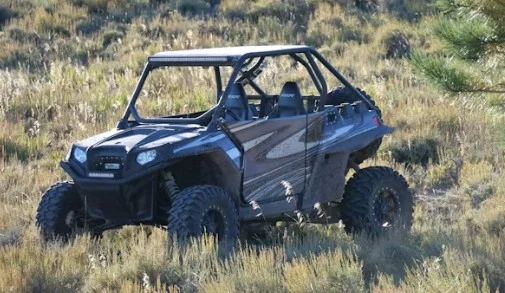
Your UTV’s transmission is different than your truck or car’s transmissions.
Medium Priority
10. Not Your Truck’s Transmission: What a UTV’s CVT Actually Needs
Category Medium Priority
I bought a UTV or side-by-side for the farm – does its transmission need totally different care than my truck’s?
Most UTVs and side-by-sides use a completely different transmission design than a truck – a belt-driven CVT with two clutches that change effective diameter to vary the gear ratio, rather than the fluid-coupled automatic or manual gearbox in a truck [10]. That belt is a wear item in a way a truck’s internal clutch packs simply aren’t – dirt, mud, and debris getting into the CVT housing during off-road use wears the belt faster, and riders who drive aggressively can go through belts as a routine consumable rather than an occasional repair.
Treating a UTV’s transmission like a smaller version of a truck’s transmission misses the actual maintenance it needs – keeping the CVT housing clean and inspecting the belt regularly matters far more here than a fluid change schedule borrowed from your truck.
11. Smells Burnt, Looks Fine: How Both Can Be True About the Same Fluid
Category Medium Priority
My transmission fluid smells burnt, but the color still looks normal red, not brown – can both of those really be true at the same time?
Smell and color are two separate diagnostic signals that don’t always move together: a burnt smell typically develops once fluid has actually been overheated and its friction-modifying additives have started to break down, while color darkens more gradually as the fluid accumulates heat cycles, contamination, and age over time. Fluid can smell noticeably burnt from a recent, intense heat event – a single hard tow, an extended climb – before enough time has passed for that damage to visibly darken the color, meaning a clean-looking dipstick doesn’t rule out a real problem if the smell says otherwise.
Trusting smell over color when the two disagree is the safer instinct, since smell often changes first and color catches up later.
12. What “Transmission Service” Actually Means at a Quick Lube
Category Medium Priority
Is a “transmission service” at a quick lube shop really just a fluid top-off, or is it an actual service?
There’s a real difference between a fluid top-off – simply adding fluid to bring the level up, which does nothing to remove old, degraded fluid – and an actual transmission fluid exchange, which drains a meaningful portion of the old fluid and replaces it with fresh fluid to restore lubrication and friction properties. A top-off alone leaves the majority of aged, heat-cycled fluid still doing the work; a real fluid service is what actually improves how the transmission runs and protects its internal components going forward.
Asking directly what percentage of your old fluid is actually being replaced – not just whether “transmission service” is on the receipt – is the fastest way to know which one you’re getting.
Not sure if your last transmission service was a real fluid change or just a top-off? Have Grease Monkey, 1550 Main, Kimberly, ID 83341, explain exactly what your fluid needs – schedule at https://www.greasemonkey.com/locations/id/kimberly/1550-main/.
Lower Priority
13. The Sticker Says One Thing, the Manual Says Another: Which Interval Actually Applies?
Category Lower Priority
My windshield service sticker says a different transmission fluid interval than what my owner’s manual recommends – which one should I actually follow?
Service reminder stickers are often set to a shop’s general default interval rather than the specific interval your manufacturer actually calls for, and manufacturer intervals themselves frequently depend on whether your driving qualifies as “normal” or “severe” service – a distinction a generic sticker has no way to account for. When the two disagree, your owner’s manual – specifically checking whether your driving pattern meets the severe-service definition – is the more accurate source, since it was written for your specific vehicle rather than a general shop policy.
If you’re not sure which category your driving actually falls into, that’s a genuinely useful question to bring to a service visit rather than defaulting to whichever interval is more convenient.
Sticker and owner’s manual disagree on your transmission interval? Have Grease Monkey, 1550 Main, Kimberly, ID 83341, help you figure out which one actually applies to you – schedule at https://www.greasemonkey.com/locations/id/kimberly/1550-main/.
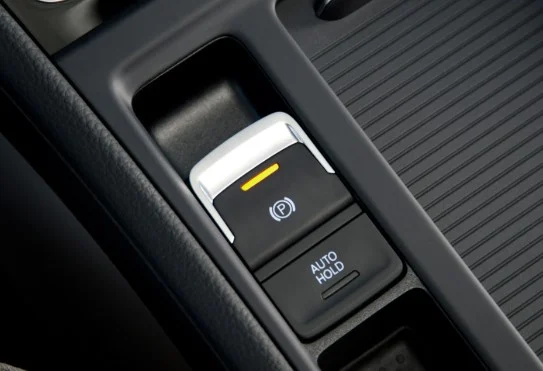
How does push-button parking help my transmission?
14. Push-Button Parking: How an Electronic Parking Brake Actually Protects Your Transmission
Category Lower Priority
My car has an electronic parking brake button instead of a lever – does that change anything about how I should park on a hill?
An electronic parking brake uses small motors to apply the rear brakes when engaged, rather than a mechanical cable pulled by a hand lever, and many electronic systems include automatic engagement that can apply the brake on their own if they detect sudden deceleration or the driver exiting without engaging it manually. That automatic-engagement feature is a genuine safety advantage over a purely manual cable brake – but it doesn’t change the underlying reason to use it at all: the parking brake, not the transmission’s Park position, is still what’s actually designed to hold the vehicle in place on an incline.
Whether your parking brake is a lever or a button, the habit that protects your transmission’s parking pawl is the same one: engage the parking brake first, on every incline, every time.
15. “Universal” on the Bottle: Why That Word Doesn’t Mean What It Sounds Like
Category Lower Priority
My owner’s manual specifies a particular transmission fluid, but the parts store sold me a bottle labeled “universal” – does it actually matter which one I use?
Automatic transmission fluid isn’t just a lubricant – it’s simultaneously a hydraulic fluid, a friction modifier, and a coolant, and manufacturers tune each fluid’s friction characteristics specifically to their own clutch materials and valve-body pressures. A fluid with the wrong friction profile can cause clutches to slip or grab against each other, producing shudder, flared shifts, or harsh engagement, and over months, glazed clutch material and clogged solenoid screens. “Universal” fluids are only genuinely universal within a specific, documented compatibility list – not automatically compatible with every transmission on the shelf next to them.
The safest rule is straightforward: unless a universal fluid’s label or documentation explicitly states it’s approved for your specific transmission, the manufacturer-specified fluid is the one worth paying for.
Grease Monkey’s Main Street location serves both Kimberly’s century-old farm families and its newest residents with a full-service oil change and signature 16-point inspection, transmission fluid included, from ASE-certified technicians. Beyond fluid exchanges, the team handles transmission range sensor diagnostics, fluid and filter service for both trucks and UTVs, tire-size shift recalibration, and manufacturer-correct fluid identification for any make or model. The shop serves longtime canal-side farm families, new subdivision commuters, and everyone in between – backed by a 4.9-star rating across more than 140 Google reviews.
Author Information
Author Bio – Phillip Paul Gilliam
Phillip Gilliam is a veteran journalist and former Editor-in-Chief with 50+ years of publishing experience and thousands of published articles. Specializing in automotive, trucking, and digital publishing, he creates authoritative, search-optimized content built on real-world expertise and editorial excellence. To learn more about Phil, visit http://www.phillipgilliam.com/about.html or contact Phil at [email protected]. He would love to hear from you!
[3] CarParts.com. P0705 Transmission Range Sensor Circuit Malfunction (PRNDL Input). Available at: https://www.carparts.com/blog/p0705-code-transmission-range-sensor-circuit-malfunction-prndl-input/. (A failing transmission range sensor can cause the dashboard gear indicator to show an incorrect gear, go blank, or flicker while the transmission is actually in a different gear than displayed, due to sensor misalignment, wiring faults, or shift cable stretch.)
[4] FN Tuned. Gear Hunting Causes in Modern Automatic Transmissions. Available at: https://www.fntuned.com/blogs/apex/what-is-gear-hunting. (Gear hunting occurs when speed and throttle input sit near a shift threshold, causing repeated upshifts and downshifts; modern transmissions tuned aggressively for fuel economy are especially prone to this on slight grades or light loads.)
[8] MobileCarCare/NCBI young driver risk data (shared reference); general ASE-recognized new-driver transmission habit guidance. New Driver Shifting Habits and Transmission Wear. (Shifting before a complete stop, resting a foot on the brake while accelerating, and coasting in Neutral are common new-driver habits that add avoidable wear to the parking pawl, clutch packs, and engine braking control.)
[12] Mercedes-Benz Owner Resources; Wikipedia. Electronic Parking Brake Function and Automatic Engagement. Available at: https://en.wikipedia.org/wiki/Electronic_parking_brake. (Electronic parking brakes apply rear brakes via electric motors rather than a mechanical cable, and many systems include automatic engagement during sudden deceleration; the parking brake, not the transmission’s Park position, is designed to hold a vehicle on an incline.)
[14] World Population Review; Business View Magazine (shared irrigation/growth data source). Kimberly, Idaho Population Growth and Irrigation History. Available at: https://worldpopulationreview.com/us-cities/idaho/kimberly. (Kimberly’s population has grown significantly since 2020, founded in 1905 around gravity-flow irrigation fed by Milner Dam.)
We use cookies to improve your browsing experience on our website. By closing this banner or interacting with our site, you acknowledge and agree to our privacy policy.