Top 15 Reasons to Have Your Vehicle's Brake System Serviced Regularly in Jerome, Idaho
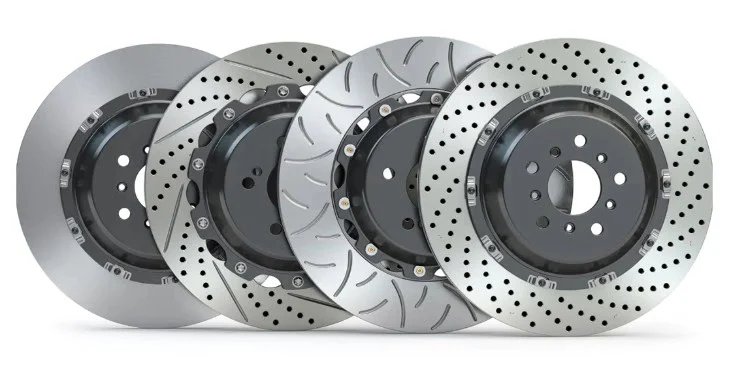
An Authoritative Guide for Drivers and Families in Idaho’s Dairy Capital
Grease Monkey 2703 S Lincoln Ave, Jerome, ID 83338 Has Over 185 Google Reviews With a 4.7-Star Rating
About This Article: This guide was researched and written by Phillip Paul Gilliam, a veteran automotive journalist and former Editor-in-Chief with more than 50 years of professional publishing experience. The brake service and safety information presented here is drawn from federal research conducted by the National Highway Traffic Safety Administration (NHTSA), the Commercial Vehicle Safety Alliance (CVSA), the Federal Motor Carrier Safety Administration (FMCSA), the Insurance Institute for Highway Safety (IIHS), and peer-reviewed engineering literature — then applied directly to the roads, industries, and community realities of Jerome and Jerome County, Idaho.
The brake services described in this article are provided by Grease Monkey at 2703 South Lincoln Ave, Jerome, Idaho 83338, a location backed by FullSpeed Automotive, one of the nation’s most recognized automotive service networks with more than 700 locations nationwide. FullSpeed Automotive earned national recognition in 2025 when 435 of its service centers were named CARFAX Top Shop Winners — one of the automotive industry’s most trusted third-party endorsements of service quality. Every Grease Monkey location employs ASE-certified technicians trained through FullSpeed Automotive’s national program, ensuring that Jerome County drivers receive professional-grade brake care on the same standard as any major market. Jerome, Idaho occupies a unique position in the American agricultural landscape: it is the processing hub of a dairy industry that produces 30 million pounds of milk every single day [3]. Milk tanker trucks, refrigerated delivery vehicles, and heavy processing fleet traffic roll through Jerome’s roads around the clock, year-round — not seasonally, but every day, without pause. The US-93 and I-84 interchange at Crossroads Point, just minutes from Grease Monkey’s South Lincoln Avenue location, sees 56,000 vehicles per day [2], making it one of the highest-traffic rural intersections in the entire state. These conditions create specific, cumulative demands on every vehicle brake system in Jerome County that this article addresses in full.
Introduction
Jerome, Idaho sits at 3,763 feet above sea level in the heart of Magic Valley, a city of roughly 12,349 people whose identity is built around something far more imposing than its population suggests: it is the dairy capital of Idaho, and arguably one of the most agriculturally intensive communities in the American West [8]. Purple mountains rise to the north where the Sawtooth National Forest promises summer recreation via US Highway 93. To the south, the Snake River Canyon forms the county line, its basalt walls dropping up to 500 feet to the river below. And on the flats in between, Jerome County’s more than 400,000 head of dairy cattle convert the Snake River Plain’s irrigation-fed fields into 30 million pounds of milk every single day [3].
That milk doesn’t collect itself. It moves through Jerome on a 24-hours-a-day, seven-days-a-week, 365-days-a-year conveyor of milk tanker trucks, refrigerated delivery vehicles, and processing plant fleet traffic that share South Lincoln Avenue and US-93 with every commuter, parent, CSI student, and fair-bound visitor in the county. The Crossroads Point Business Center at the junction of I-84 and US-93 — the largest planned unit development in Idaho — sees 56,000 vehicles per day [2], a traffic volume that rivals many urban arterial roads in much larger cities. When that volume is concentrated at a single rural interchange, the cumulative daily brake demand on local vehicles adds up fast.
According to the Commercial Vehicle Safety Alliance, 15.1% of all commercial motor vehicles inspected during the 2025 Brake Safety Week had brake-related out-of-service violations — meaning more than one in seven commercial trucks on American roads were unsafe to operate at the point of inspection [4]. Those trucks share Jerome County roads with the families, agricultural workers, and commuters whose vehicles deserve the same level of scrutiny. The difference is that commercial vehicles are subject to mandatory federal inspection — personal vehicles are not, unless a problem becomes impossible to ignore.
This article presents 15 specific, research-backed reasons why Jerome, Idaho drivers should have their vehicle brake systems professionally inspected and maintained on a regular schedule. Each reason is grounded in authoritative safety data and connected directly to the roads, industries, communities, and seasonal rhythms of Jerome County. From the daily milk tanker surge dynamics on South Lincoln Avenue to the gravel farm-to-market roads where ABS systems counterintuitively lengthen stopping distances, this guide covers the brake risks that are unique to life in Idaho’s dairy capital.
1. Liquid Surge Braking: The Unbaffled Milk Tanker Hazard on Jerome County Roads
Category: Most Critical – What is liquid surge braking and why should I be concerned about it?
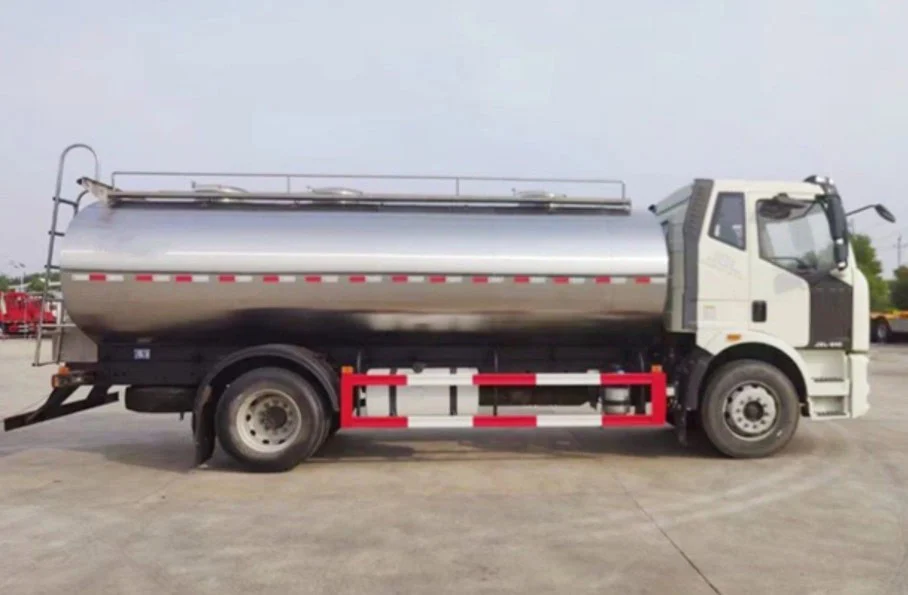
A fully loaded milk tanker truck operates at a gross vehicle weight of up to 80,000 pounds — the federal maximum for highway operation — and carries approximately 6,000 gallons of raw milk weighing around 51,600 pounds [1]. Unlike dry cargo trucks, where the load stays put during braking, milk tankers present a unique physics challenge: raw milk is transported in smooth, unbaffled tanks. Food-grade regulations prohibit internal baffles because they cannot be adequately sanitized, leaving the liquid free to surge forward when the driver decelerates [1]. That surge transfers thousands of pounds of momentum toward the front of the vehicle with no mechanical resistance — extending stopping distance, destabilizing the truck, and dramatically increasing the risk of jackknifing on any surface below ideal dry pavement. Federal studies document fully loaded tankers requiring 450 to 525 feet to stop from highway speed — the length of one and a half football fields [12].
In Jerome County, this is not an edge-case scenario. It is the daily road reality. Jerome’s dairy processors — Darigold, Jerome Cheese, and Idaho Milk Products — collectively handle 16 million pounds of milk per day within the city limits alone [3]. The tanker routes that collect milk from the 400,000+ head of dairy cattle across Jerome County intersect with US-93, South Lincoln Avenue, and the county road network at every hour of the day and night. A driver following one of these 80,000-pound liquid-surge vehicles on Jerome Avenue or approaching the US-93 on-ramp behind a tanker entering highway speed has no margin for error if brake pads are worn, fluid is degraded, or calipers are underperforming. The tanker can slow faster than the driver behind it can respond — and the consequences of that gap are catastrophic. Liquid loads require solid brakes in the vehicles that follow them. If you drive South Lincoln Avenue, US-93, or any Jerome County road that tanker trucks travel — and that means nearly every road in the county — your brake system needs to be operating at full capacity, every stop, every day. Bring your vehicle to Grease Monkey at 2703 South Lincoln Ave, Jerome, ID 83338 for a complete brake inspection before the next time you find yourself following a full milk run. Schedule your appointment at https://www.greasemonkey.com/locations/id/jerome/2703-south-lincoln-avenue/ — because 80,000 pounds of liquid surge doesn’t care how close you were following.
2. Crossroads Point High-Frequency Brake Cycling: Cumulative Daily Wear at Idaho’s Busiest Rural Interchange
Category: Most Critical – How serious is high-frequency brake cycling and how does it affect me?
Brake wear is a function of both force and frequency. Highway driving at constant speed produces minimal pad-to-rotor contact. Stop-and-go urban driving compresses thousands of friction events into every mile. The relationship between high-traffic interchange environments and accelerated brake wear is straightforward: the more frequently a driver brakes, the faster pads wear, rotors groove, and calipers fatigue. A driver who makes the same stop-and-go interchange crossing 250 days a year is accumulating far more pad wear per odometer mile than a highway commuter logging the same total distance at steady speed. Federal data from NHTSA documents that urban and suburban stop-and-go driving produces pad wear rates two to three times higher per mile than highway cruising [12].
The Crossroads Point Business Center at the junction of US-93 and I-84 in Jerome County records more than 56,000 vehicle passages per day — making it one of the highest-traffic rural intersections in Idaho [2]. For Jerome residents, this interchange is not an occasional crossing — it is a daily routine. Commuters heading to Twin Falls, employees of Hilex Poly, WOW Logistics, and the 93 Technology Park, shoppers accessing the Crossroads Point commercial corridor, and through-traffic connecting I-84 to the US-93 corridor toward Shoshone, Hailey, and Sun Valley all merge, decelerate, and re-accelerate through this zone multiple times daily. Every Jerome-area commuter who crosses this interchange is running through dozens of high-friction braking events per week, year after year — events that add up to pad and rotor wear that outpaces the mileage-based service reminders most drivers rely on.
Mileage alone doesn’t tell your brakes’ true story. If your commute includes the US-93/I-84 interchange corridor — and almost every Jerome resident’s does — your brake system is being used harder than your odometer suggests. Let Grease Monkey at 2703 South Lincoln Ave, Jerome, ID 83338 run a complete pad-depth measurement and rotor inspection to give you the real picture. Book your appointment at https://www.greasemonkey.com/locations/id/jerome/2703-south-lincoln-avenue/ — because 56,000 vehicles per day at your interchange means your brakes are working harder than average, whether you know it or not.
3. Sub-5°F Winter Mornings: Brake Pad Friction Deficit on Jerome County’s Coldest Days
Category: Most Critical – What is brake pad friction deficit and how does it impact my vehicle braking?
Brake pad friction compounds are temperature-dependent materials. Their coefficient of friction — the measure of how much grip they generate against the rotor surface — varies significantly with temperature. Research published in peer-reviewed engineering literature and confirmed by industry testing shows that common organic and ceramic brake pad compounds can lose up to 20% of their friction coefficient at temperatures of 5°F (-15°C) compared to their performance at normal 68°F (20°C) operating conditions [6]. This means that on a sub-5°F Jerome County morning, the first several stops a driver makes — before friction heat warms the pads toward their operating range — are occurring with brakes that are measurably weaker than any test or service measurement taken at shop temperature would indicate. In an emergency stop on a frigid morning with cold-stiff pads on cold-glazed rotors, stopping distance increases beyond what any mileage-based estimate predicts.
Jerome County winters are fully capable of delivering those temperatures. The Magic Valley’s semi-arid climate produces cold, dry winters where overnight lows regularly fall below 5°F, with the Snake River Plain’s flat topography providing no geographic buffer against Arctic air masses moving down from the north [7]. A Jerome County family loading up for school on a January morning at 3°F is braking with pads that haven’t yet reached operating temperature. The first hard stop — at the US-93 signal, behind a turning dairy truck on South Lincoln Avenue, or at a Jerome Elementary crosswalk — is happening at reduced brake capacity. When those pads are already at reduced thickness from deferred service, cold-weather friction loss stacks on top of wear-related performance reduction, and the margin disappears. Cold mornings are the wrong time to find out your brakes are underperforming. Before Jerome County’s next winter sets in, have Grease Monkey at 2703 South Lincoln Ave, Jerome, ID 83338 inspect your brake pads for thickness and compound integrity — the factors that determine how well your brakes grip when the temperature drops. Schedule your cold-weather brake readiness check at https://www.greasemonkey.com/locations/id/jerome/2703-south-lincoln-avenue/ — because Jerome County winters do not warm up the roads before you drive on them.
4. The 24/7 Dairy Processing Corridor: Year-Round Industrial Driveway Conflicts on South Lincoln Avenue
Category: High Priority – How serious an impact does rush hour traffic have on my vehicle’s brakes?
Dairy processing is an industry that operates without pause. Milk is a perishable commodity with a narrow processing window — it cannot be stored in tankers overnight or collected on a Monday-through-Friday schedule. Processing plants run 24 hours a day, seven days a week, 365 days a year. This round-the-clock operation means that the driveway entrances to dairy and food processing facilities generate heavy vehicle turn conflicts not just during business hours or shift-change windows, but at 2 AM, 5 AM, and every other hour when most residential communities are quiet. For following drivers, these constant driveway merges represent unscheduled stopping events — moments when a tanker or refrigerated truck decelerates without warning to make a turn, and the vehicle behind it must respond immediately with full brake force [1].
South Lincoln Avenue in Jerome is directly adjacent to some of the most significant food processing infrastructure in the state. Darigold, Idaho Milk Products, Jerome Cheese, and their network of supply and logistics partners generate continuous incoming and outgoing vehicle traffic at all hours. Employees, tanker drivers, and delivery vehicles do not follow the kind of shift-change pattern that creates predictable surge windows — they represent a continuous baseline of driveway conflict activity that Jerome residents encounter every time they drive South Lincoln Avenue at any hour. A driver heading to work at 5:30 AM, returning from a late shift at 11 PM, or making a quick errand run at any point in between faces the same driveway merge hazard with equal frequency. The only variable is whether their brake system is ready to respond. When every hour is rush hour, your brakes cannot afford to be underperforming. If you drive South Lincoln Avenue regularly — whether you’re heading to work, running errands, or commuting through Jerome’s industrial corridor — make sure your brake system is inspected at Grease Monkey, 2703 South Lincoln Ave, Jerome, ID 83338. No appointment needed — their ASE-certified technicians will give you a straight assessment of pad depth, rotor condition, and fluid health. Schedule at https://www.greasemonkey.com/locations/id/jerome/2703-south-lincoln-avenue/ — because the dairy industry never clocks out, and neither should your brake system.
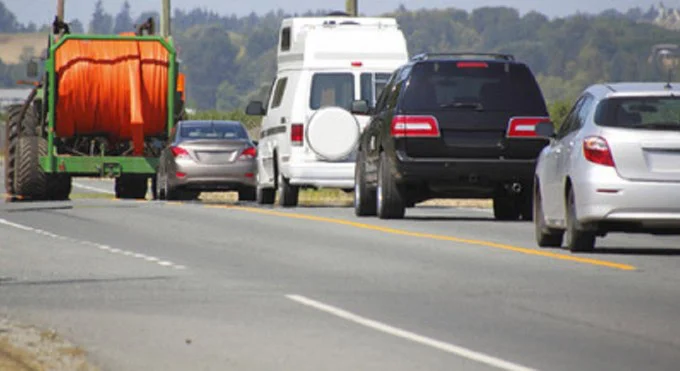
5. US-93: The Sun Valley Corridor Where Jerome’s Dairy Fleet And Agricultural Equipment Meets Idaho’s Mountain Vacationers
Category: High Priority – How critical is speed differential and why does this impact me in Jerome?
Speed differential is the core mechanism in rear-end collision physics. A vehicle traveling at highway speed overtaking a slower vehicle covers the gap between them in seconds. When that overtaking vehicle’s driver perceives the hazard late — due to distraction, following too closely, or unanticipated deceleration — the time available for braking shrinks to nothing. NHTSA data identifies speed differential as one of the most consistent factors in fatal rear-end collisions, particularly on rural highways where traffic flows include a mix of high-speed through traffic and local lower-speed commercial vehicles [12]. On these corridors, the driver traveling fastest has the least time to respond and the most kinetic energy to dissipate if a stop is required.
US-93 through Jerome is precisely this kind of mixed-speed corridor. Heading north from Jerome, US-93 is the primary route to Shoshone, Gooding, Hailey, Ketchum, and Sun Valley — one of America’s premier mountain resort destinations. During summer and ski season alike, this highway carries a steady stream of Sun Valley vacationers traveling at highway speeds through Jerome, while the same road serves as a daily working route for dairy tanker trucks, refrigerated delivery vehicles, feed delivery trucks, and farm equipment operators who are turning in and out of agricultural facilities at every mile. A tourist from the Boise metro pushing 70 mph toward Sun Valley encounters a decelerating dairy tanker turning into Jerome Cheese — and in that moment, every aspect of their brake system’s condition determines what happens next.
Don’t let the scenery on the way to the Sawtooth be the last thing you see because your brakes couldn’t close the gap. Before driving US-93 this season — north toward Sun Valley or south toward Twin Falls — visit Grease Monkey at 2703 South Lincoln Ave, Jerome, ID 83338 for a complete brake system inspection. Their technicians check the full system — fluid, pads, rotors, calipers, and lines — so you can navigate the corridor between dairy country and mountain country with confidence. Book now at https://www.greasemonkey.com/locations/id/jerome/2703-south-lincoln-avenue/ — because US-93 doesn’t slow down just because the view gets spectacular.
6. ABS Performance on Loose Gravel: The Counterintuitive Safety Gap on Jerome County Farm-to-Market Roads
Category: High Priority – Does my ABS anti-lock braking system protect me on gravel roads?
Anti-lock braking systems (ABS) are engineered to prevent wheel lockup during hard braking, maintaining steering control for the driver. On paved surfaces, ABS consistently reduces stopping distance and improves handling. But on loose gravel — the type of surface common to rural farm-to-market roads — ABS produces an unexpected result. An NHTSA-commissioned study testing light vehicles across multiple surfaces found that on loose gravel, ABS-assisted stops resulted in stopping distances 27.2% longer on average than stops made with ABS disabled [5]. The reason is mechanical: locked wheels plow into loose gravel, building a wedge of material that slows the vehicle. ABS-controlled wheels, by preventing lock, roll over that gravel instead of displacing it — resulting in a longer stop. Drivers who understand ABS as a fail-safe may not realize it is actively extending their stopping distance on the gravel roads they drive daily.
Jerome County’s agricultural landscape is threaded with gravel farm-to-market roads that connect dairy farms, feed lots, field equipment storage, and irrigation facilities to the county’s paved road network. Jerome County residents who make daily trips between farm properties, rural homes, and the nearest paved highway are braking on gravel surfaces regularly. At highway speeds, ABS extends their stopping distance by more than a quarter — and if the transition from gravel to pavement happens at speed approaching an intersection, the combined effect of gravel braking physics and worn pads can produce a stopping distance the driver never anticipated. Understanding this phenomenon and having a well-maintained brake system — particularly at or above the pad thickness threshold where consistent pedal pressure is possible — is the only practical mitigation. Your ABS may be making you less safe on the roads you drive most. If you commute on Jerome County gravel roads, or even make regular trips between farm properties and South Lincoln Avenue, talk to the brake technicians at Grease Monkey, 2703 South Lincoln Ave, Jerome, ID 83338 about your brake system’s specific condition on the surfaces you use every day. Understanding your stopping distance on gravel starts with knowing the condition of your pads and rotors. Get the assessment at https://www.greasemonkey.com/locations/id/jerome/2703-south-lincoln-avenue/ — because counterintuitive physics doesn’t give you a warning before it surprises you.
7. Snake River Canyon North Rim Roads: Jerome County’s Unguarded Overlook Approaches
Category: Important – How much more dangerous is driving on canyon rim roads than on regular relatively flat roads?
Canyon rim roads present a specific braking challenge that flat agricultural routes do not: the consequence of brake failure is not a controlled stop on a level surface but a potential departure from a road with no recovery zone. Brake fade — the temporary reduction in brake force caused by heat buildup during sustained use — can occur on any downhill approach to a canyon overlook or river access point. On rim roads without guardrails, brake fade during a descent approach is not a discomfort — it is an existential emergency. Vehicle runaway on an unguarded grade has a single endpoint: the canyon floor. Safety researchers classify these as high-consequence brake failure environments, where the injury and fatality risk from a braking system failure is categorically different from the same failure on a flat highway [12].
The Snake River Canyon defines the entire southern boundary of Jerome County, running for miles between the county’s agricultural plateau and the river 500 feet below. Jerome County’s north-bank rim roads — the county and rural routes that run along the plateau edge parallel to the canyon — provide access to overlooks, fishing spots, recreation areas, and private properties that locals access regularly. Unlike the heavily trafficked Shoshone Falls and Dierkes Lake access roads on the south (Twin Falls County) rim, Jerome County’s north rim routes tend to be lower-volume, lower-signage, and less developed — meaning there is less infrastructure to warn drivers of grade conditions, and fewer emergency facilities nearby. A Jerome County family heading to the canyon for a weekend afternoon may be driving a vehicle that has never been evaluated for its brake performance on a descent approach. The canyon is worth visiting — but only if you can stop before the rim. If you haven’t had your brake system checked recently, have Grease Monkey at 2703 South Lincoln Ave, Jerome, ID 83338 inspect your pad depth, rotor condition, and fluid health before your next canyon trip. Their comprehensive brake service covers everything your system needs to handle a controlled descent on unguarded Jerome County rim approaches. Schedule at https://www.greasemonkey.com/locations/id/jerome/2703-south-lincoln-avenue/ — because the Snake River Canyon is 500 feet deep, and your brake system should be the one thing between you and finding that out the hard way.
8. Spring Tilling Dust Infiltration: Fine Silica Particles and Jerome County’s Seasonal Brake Assembly Contamination
Category: Important – Because Jerome is in agricultural territory, what is the impact of the agricultural dust generated during spring field preparation?
Agricultural dust generated during spring field preparation differs from harvest-time dust in a mechanically significant way: particle size. Tilling and discing operations break down winter-hardened soil into very fine particles — often less than 10 microns in diameter — that remain airborne longer and travel further than the coarser material generated by combine harvesters or beet lifters. These fine silica and basalt-mineral particles can infiltrate brake assemblies at a deeper level than coarser dust, working into the microscopic interface between brake pads and rotors, settling in caliper slide channels, and coating piston seal surfaces. At this scale, the contamination is not visible to the naked eye and produces no audible warning — but it alters the friction coefficient at the pad-rotor interface and accelerates micro-abrasive wear on both surfaces simultaneously [6].
Jerome County’s flat agricultural plain makes it particularly susceptible to spring dust events. With no significant topographic windbreaks between the tilled fields and the county road network, spring tilling dust generated by Jerome County’s extensive dairy-supporting cropland — alfalfa, barley, corn silage, and other feed crops — can blanket roadsides and vehicle undercarriages across multiple square miles during a single dry tilling day. Vehicles parked near fields, driving slowly on rural roads through tilling operations, or simply traveling US-93 with caliper vents exposed to the prevailing wind during April and May are accumulating this contamination. By summer, a Jerome County vehicle that has never had its brake assemblies cleaned and inspected may be running on compromised friction surfaces — with no warning lights, no noise, and no visible indication.
The dust you can’t see is the kind that damages most. After spring tilling season — or if you’ve spent time on Jerome County agricultural roads during planting — schedule a brake assembly inspection at Grease Monkey, 2703 South Lincoln Ave, Jerome, ID 83338. Their technicians can identify fine-particle contamination, clean caliper slides and friction surfaces, and restore your brake system’s designed performance before summer road use accelerates the wear. Book your post-tilling inspection at https://www.greasemonkey.com/locations/id/jerome/2703-south-lincoln-avenue/ — because invisible contamination does visible damage, eventually.
9. Minidoka National Historic Site: Remote Rural Road Brake Reliability in Jerome County’s Eastern Heritage Corridor
Category: Important – Why should I worry about having a brake problem if I am on a rural road?
Remote rural roads present a brake reliability challenge that urban and suburban drivers rarely consider: when a brake system fails in a location with no nearby services, the consequences are compounded by distance, limited cell coverage, and extended emergency response times. A brake failure that on an urban arterial results in a call to a nearby tow truck becomes, on a remote rural road, a stranded vehicle situation with no good options. Emergency medical response times in rural Jerome County can exceed 20 minutes from the nearest station — and brake-related vehicle accidents in remote locations frequently involve more severe outcomes than similar events near populated areas. Having a brake system that is maintained and inspected before entering remote rural road environments is not excessive caution — it is basic risk management [12].
The Minidoka National Historic Site, a National Park Service-designated memorial to the WWII Japanese American incarceration camp, is located in rural Jerome County approximately 20 miles northeast of the city of Jerome via rural county roads. The site draws visitors from across the United States and internationally — educational groups, descendants of the incarcerated, researchers, and families making deeply personal journeys to the site. The access routes cross open agricultural land with minimal services, no roadside assistance facilities for miles, and limited cell coverage in portions of the corridor. For Jerome County residents visiting the site and for out-of-town visitors, the trip requires a vehicle with reliable brakes — not because the road is technically challenging, but because any failure on these routes is difficult, expensive, and potentially dangerous to resolve.
Don’t make a meaningful journey dependent on a brake system you haven’t checked. Whether you’re heading to Minidoka, exploring Jerome County’s eastern rural roads, or simply making sure your vehicle is ready for the unexpected, a brake inspection at Grease Monkey, 2703 South Lincoln Ave, Jerome, ID 83338 is the preparation that makes every drive through Idaho’s rural corridor safer. Schedule before your next remote road trip at https://www.greasemonkey.com/locations/id/jerome/2703-south-lincoln-avenue/ — because history deserves to be visited safely, and so does every quiet road in between.
10. Jerome County Fair Week: August’s Annual Brake Stress Test for 25,000 Visitors
Category: Medium Priority – When Jerome has 25,000 visitors during our County Fair, how does that impact my vehicle’s brake system?
Large community events compress traffic volumes that would normally be spread across weeks into a matter of days. A vehicle whose brakes are performing at marginal adequacy under normal daily conditions will encounter its limits during a high-density event — more frequent stops, higher pedestrian crossing exposure, more vehicles entering and exiting parking areas simultaneously, and more vehicles towing trailers or livestock equipment than on a typical week. Event-week driving is where marginal brake systems fail, because the event creates the extraordinary circumstances that marginal performance cannot meet. Brake pads that are functional at 3mm in daily use may not deliver adequate performance when a vehicle ahead brakes suddenly in a fair week parking queue — and the consequences are felt by everyone involved.
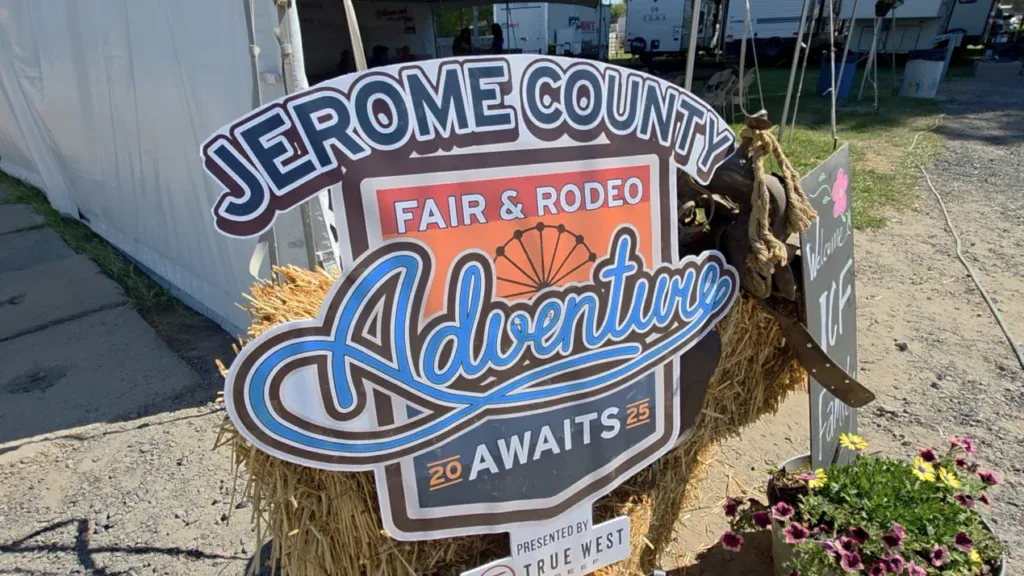
The Jerome County Fair & Rodeo has been a community institution for more than 100 years, drawing over 25,000 visitors to the Jerome County Fairgrounds during its August run [7]. For a city of 12,349 people, that attendance represents a more than doubling of effective road demand during fair week — with the added complexity of livestock trailers, agricultural equipment demonstrations, recreational vehicle parking, and visitor traffic unfamiliar with Jerome’s road layout pouring onto South Lincoln Avenue, US-93, and the surrounding county road network. Jerome County residents who live near the fairgrounds or commute through the area during fair week encounter dramatically increased brake exposure at a time of year when summer heat is also contributing to brake thermal stress. A vehicle with worn pads navigating fair week parking approaches on a 98°F August afternoon is pushing its brake system simultaneously on wear and thermal dimensions. Don’t let the fair catch your brakes off guard. Get your brake system checked before August at Grease Monkey, 2703 South Lincoln Ave, Jerome, ID 83338 — before the 25,000 fair visitors arrive, before the livestock trailers fill Lincoln Avenue, and before the heat makes every stop a thermal event. Schedule your pre-fair brake inspection at https://www.greasemonkey.com/locations/id/jerome/2703-south-lincoln-avenue/ — because the Jerome County Fair is worth celebrating, and so is the drive home.
11. Refrigerated Reefer Truck Brake Demands: Cold-Chain Fleet Weight and Stop-and-Go on Jerome County Roads
Category: Medium Priority – Why do I get an uneven degradation pattern on my brake pads on my Reefer truck?
Refrigerated cargo trucks — known in the industry as “reefer” trucks — carry an additional equipment burden that standard box trucks do not: the refrigeration unit mounted on the front of the trailer. This unit adds 1,500 to 2,500 pounds to the vehicle’s front-loaded configuration, altering weight distribution toward the front axle and affecting how the brake system proportions force between front and rear wheels during deceleration. Front-heavy loading increases front axle brake demand and can accelerate front brake wear at a rate disproportionate to rear brake wear — creating an uneven degradation pattern that a standard pad-depth measurement may not capture unless both axles are specifically evaluated [12]. This front-axle overload phenomenon is well-documented in commercial vehicle brake research, and while reefer trucks are subject to commercial inspection requirements, the passenger vehicles that follow them are not.
Jerome County’s dairy processing economy depends on cold-chain logistics. Darigold, Idaho Milk Products, and Jerome Cheese all ship temperature-controlled dairy products — yogurt, cheese, fluid milk, butter — on refrigerated trucks that make daily rounds from South Lincoln Avenue and US-93 to distribution centers, grocery chain DCs, and regional markets throughout the Pacific Northwest. These trucks make frequent stops at loading docks, traffic signals, and highway intersections throughout Jerome’s commercial corridor. For drivers following these vehicles — which brake harder and more frequently than standard semi-trucks — having a fully functional brake system is not optional. The reefer fleet generates the kind of unpredictable, frequent deceleration events that expose brake deficiencies in the vehicles traveling behind them.
Cold-chain trucks make warm brake pads hotter — and worn pads worse. If you regularly drive behind refrigerated truck traffic on South Lincoln Avenue or US-93 through Jerome, make sure your brake system can keep up. Grease Monkey at 2703 South Lincoln Ave, Jerome, ID 83338 offers a complete brake system evaluation that checks pad wear on all four corners, rotor condition, and fluid quality — the full picture your safety requires. Schedule your inspection at https://www.greasemonkey.com/locations/id/jerome/2703-south-lincoln-avenue/ — because cold-chain trucks stop on their schedule, not yours.
12. — Irrigation Pivot Equipment on Jerome County Roads: The Extra-Wide Emergency Stop No Driver Expects
Category: Medium Priority – How does farm equipment crossing the road or running on the road impact me?
Farm equipment crossing and occupying rural roads is a known stopping hazard, but center-pivot and lateral-move irrigation systems present a category of hazard that differs from tractors and combines in a mechanically specific way. A large center-pivot irrigation system can span a quarter-mile or more and travels at walking speed — typically 0.5 to 3 mph — when being repositioned between fields. When one of these systems is crossing a county road, it blocks the entire roadway width for an extended period, with no warning signs, no flashing lights, and in some cases no operator visible to approaching drivers. At night, during repositioning operations on unlit county roads, the first indication a driver has of the obstruction may be the reflective strips on the pivot structure appearing in headlight range at 200 feet or less — requiring an immediate and complete emergency stop [12].
Jerome County’s agricultural economy is built on irrigation. The pivot systems that water Jerome County’s alfalfa, corn, and grain fields are the mechanical backbone of the dairy feed supply chain. These pivots are repositioned regularly between growing seasons and sometimes mid-season, which means the county road crossings are active throughout the growing year. A Jerome County resident driving a rural road at dusk who encounters a lateral-move pivot crossing their path needs brake response that is both immediate and complete — a system with 3mm pads and slightly warped rotors will not deliver the same stopping performance as a system that has been recently inspected and confirmed at full specification. The difference in stopping distance between those two scenarios can easily span the entire width of an irrigation pivot. Irrigation pivots don’t have brake lights — but your vehicle needs to. If your spring or summer driving includes rural Jerome County roads — and especially if you travel county roads after sunset — make sure your brake system is at full specification at Grease Monkey, 2703 South Lincoln Ave, Jerome, ID 83338. Their no-appointment-needed brake inspection will give you the facts about your stopping capability before the next pivot crossing catches you off guard. Book at https://www.greasemonkey.com/locations/id/jerome/2703-south-lincoln-avenue/ — because the one thing an irrigation pivot and a stopped vehicle have in common is that neither one moves for you.
13. — Dairy Farm Road Year-Round Mud: The 365-Day Brake Wet-Film Hazard in Idaho’s Dairy Capital
Category: Lower Priority – How critical is wet braking and is it always a result of rain?
Wet braking — the temporary reduction in brake friction caused by moisture on rotor surfaces — is typically discussed in the context of weather events: rain, snow, or spring runoff. But in dairy farming communities, a less-discussed source of constant road moisture exists year-round: the operational water discharge from dairy facilities. Milking barns require continuous wash-down operations. Manure management systems produce overflow moisture at lagoon perimeters. Feed lot alleys remain wet from water-heavy silage and feed management throughout the growing season. The vehicles servicing these facilities — including the personal vehicles of dairy workers, veterinary staff, and supply drivers — track this moisture and mud onto county roads and eventually onto highway approaches. Research confirms that wet rotor surfaces reduce pad-to-rotor friction on initial brake application by 30 to 40%, returning to normal only after one or two firm stops generate enough heat to evaporate the film [previous research]. In dairy farming country, the source of that moisture is operational, constant, and present in every season.
Jerome County’s position as Idaho’s dairy center means that farm operation moisture is a year-round feature of its road environment. Unlike the irrigation-season canal crossings that characterize the growing months in other Magic Valley communities, dairy farm moisture is generated continuously: in winter from heated milking barn floors, in spring from soft ground and runoff, in summer from intensive irrigation of feed crop fields adjacent to county roads, and in fall from harvest operations. A vehicle driving from a dairy farm property onto Jerome County Road and then onto US-93 is making a brake wet-film transition at every farm entrance — a transition that is occurring constantly, in every season, because Jerome County’s dairy economy never stops operating.
Year-round mud means year-round brake exposure. If your daily routine includes any Jerome County farm roads — whether you’re a dairy worker, a veterinarian, a supply driver, or a neighbor — make sure your brake pads and rotors are in full-specification condition at Grease Monkey, 2703 South Lincoln Ave, Jerome, ID 83338. Wet-film brake recovery takes one to two firm stops — stops you need to have the pad depth to execute reliably. Schedule your annual check at https://www.greasemonkey.com/locations/id/jerome/2703-south-lincoln-avenue/ — because in dairy country, the mud never truly dries.
14. CVSA Data and Jerome’s Trucking Community: Applying Commercial Standards to Your Personal Vehicle
Category: Lower Priority – The commercial standard applied to commercial vehicles makes our roadways safer, so should I try to do the same for my personal vehicles?
The Commercial Vehicle Safety Alliance conducts an annual Brake Safety Week during which certified inspectors across North America inspect commercial motor vehicles for brake system compliance. The 2025 results were instructive: of 15,175 commercial vehicles inspected, 15.1% — more than one in seven — had brake-related violations serious enough to place the vehicle out of service [4]. These are professional vehicles operated by licensed drivers who are legally required to conduct pre-trip brake inspections and whose vehicles are subject to mandatory federal inspection schedules. If the out-of-service rate for compliant, professionally driven commercial vehicles is 15.1%, the implied rate for personal vehicles with no mandatory inspection requirement, driven by operators with no formal brake inspection training, is almost certainly higher. The regulatory gap between commercial and personal vehicle brake maintenance standards is not a technicality — it is a documented public safety differential.
Jerome County’s economy is built on trucking. The drivers at Darigold, Jerome Cheese, Idaho Milk Products, and WOW Logistics understand brake pre-trip inspections, out-of-service criteria, and federal commercial brake standards — they are required to. Many Jerome County residents who work in commercial trucking or dairy logistics are professionally fluent in commercial vehicle brake safety. But the same rigor they apply to their Class 8 equipment may not carry over to the pickup truck in the driveway, the family minivan, or the farm truck their spouse drives daily. The professional brake standard exists for a reason — and personal vehicles deserve the same scrutiny, even without a legal mandate to provide it. You hold your commercial vehicle to the standard the law requires. Hold your personal vehicle to the standard your family deserves. Grease Monkey at 2703 South Lincoln Ave, Jerome, ID 83338 applies the same professional ASE-certified inspection methodology to personal vehicles that commercial inspectors apply to fleet equipment — and their findings may surprise you. Schedule your personal vehicle brake audit at https://www.greasemonkey.com/locations/id/jerome/2703-south-lincoln-avenue/ — because a 15.1% out-of-service rate among professionals is a strong argument for checking what your own vehicle has been carrying.
15. Jerome County’s Agricultural Economy Depends on Its Trucks: The Business Case for Proactive Brake Maintenance
Category: Long-Term Value – What are the benefits of proactive brake maintenance on fleet vehicles as well as personal vehicles?
In most communities, a vehicle sidelined by brake failure is an inconvenience — a disruption to a commute or a family errand. In Jerome County, it is something more consequential. When a dairy operation’s milk pickup truck is unable to complete its collection round, that milk does not wait. It must be collected by another vehicle, at emergency dispatch rates, or it spoils — an outcome with direct financial consequences for the farm. When a feed delivery truck is sidelined, animals are fed late or not at all. When a field equipment truck fails during planting or harvest, time-sensitive operations fall behind in ways that cannot be recovered. In an agricultural economy, vehicle reliability is not a personal comfort — it is a production input. The cost of a brake failure extends well beyond the repair bill to include the downstream operational disruptions it causes [3][12].
The financial mathematics of proactive brake maintenance are well-established: catching brake problems at the pad replacement stage ($150–$300 per axle) prevents the rotor, caliper, and hydraulic repair costs that deferred maintenance inevitably produces ($600–$1,500 or more per axle). But for Jerome County farm operators, dairy workers, and agricultural logistics professionals, the true ROI calculation includes the operational cost of downtime — the missed milk rounds, the deferred equipment deliveries, the emergency service premiums, and the reputational impact of failing to meet commitments in a community where agricultural relationships are built on reliability. In that context, a $200 brake service appointment is not a maintenance expense — it is an investment in the uninterrupted operation of a business that 30 million pounds of daily milk production depends on.
In Jerome County, reliable vehicles are not a luxury — they are a business requirement. Protect your vehicle’s operational life and your operation’s continuity with a proactive brake inspection at Grease Monkey, 2703 South Lincoln Ave, Jerome, ID 83338. Their ASE-certified technicians provide honest assessments and fast service — no appointment needed, with transparent recommendations so you know exactly what your system needs now and what can wait. Schedule your agricultural fleet vehicle inspection at https://www.greasemonkey.com/locations/id/jerome/2703-south-lincoln-avenue/ — because in Jerome County, the dairy economy runs on trucks, and trucks run on brakes that someone decided to take care of.
About Grease Monkey — 2703 South Lincoln Ave, Jerome, Idaho 83338
Grease Monkey at 2703 South Lincoln Ave, Jerome, Idaho 83338 is part of the FullSpeed Automotive network — one of the nation’s largest multi-brand automotive service organizations with more than 700 locations nationwide. FullSpeed Automotive earned recognition in 2025 when 435 of its service centers were named CARFAX Top Shop Winners [11], a nationally respected third-party endorsement of service quality that Jerome County drivers access right on South Lincoln Avenue. The Jerome location is staffed by ASE-certified technicians and offers brake inspections and service with no appointment needed, making it easy for busy agricultural workers, commuters, and families to get the brake assessment they need on their schedule. To schedule a service or learn more, visit https://www.greasemonkey.com/locations/id/jerome/2703-south-lincoln-avenue/.
Author Information
Author Bio – Phillip Paul Gilliam
Phillip Gilliam is a veteran journalist and former Editor-in-Chief with 50+ years of publishing experience and thousands of published articles. Specializing in automotive, trucking, and digital publishing, he creates authoritative, search-optimized content built on real-world expertise and editorial excellence. To learn more about Phil, visit http://www.phillipgilliam.com/about.html or contact Phil at [email protected]. He would love to hear from you!
Citations
[1] Truck Camper Fanatic / The Law Firm for Truck Safety. “Understanding Milk Tanker Trucks: The Backbone of Dairy Transportation” and “Milk Trucks and Trucking Safety.” TruckCamperFanatic.com / TruckAccidents.com. Available at: https://www.truckcamperfanatic.com/understanding-milk-tanker-trucks-the-backbone-of-dairy-transportation/ and https://truckaccidents.com/blog/milk-trucks-and-trucking-safety/. (Milk tanker trucks carry approximately 6,000 gallons / 51,600 lbs of raw milk; unbaffled tanks — baffles prohibited in food-grade tankers to prevent contamination — allow liquid to surge forward during braking; gross vehicle weight approaches 80,000 lbs federal maximum; liquid surge increases stopping distance and rollover/jackknife risk.)
[2] Crossroads Point Business Center. “Prime Location at the I-84/US-93 Interchange in Southern Idaho.” CrossroadsPoint.com. Available at: https://www.crossroadspoint.com/location.htm. (Over 56,000 vehicles pass by the Crossroads Point location at the US-93/I-84 interchange every day; the interchange is one of the highest-traffic rural intersections in Idaho; Crossroads Point is the largest Planned Unit Development in Idaho.)
[3] City of Jerome, Idaho / Jerome 20/20. “We Have the Available Labor” and “Infrastructure.” CI.Jerome.ID.us / Jerome2020.com. Available at: https://www.ci.jerome.id.us/158/We-Have-the-Available-Labor and https://www.jerome2020.com/site-selection/infrastructure. (Jerome County: over 400,000 head of dairy cattle; 30 million pounds of milk produced in the Magic Valley every day; five milk and cheese processors in the City of Jerome cover 16 million pounds of that daily total; major processors include Jerome Cheese, Darigold, Idaho Milk Products.)
[4] Commercial Vehicle Safety Alliance (CVSA). “CVSA Releases 2025 Brake Safety Week Results.” CVSA.org. Available at: https://cvsa.org/news/2025-bsw-results/. (In 2025, inspectors across 52 North American jurisdictions conducted 15,175 commercial motor vehicle brake inspections; 2,296 vehicles — 15.1% — were placed out of service due to brake-related violations; in the United States specifically, 13,700 inspections yielded 2,035 [14.9%] out-of-service brake violations.)
[5] National Highway Traffic Safety Administration (NHTSA). “A Comprehensive Light Vehicle Antilock Brake System Test Track Performance Evaluation.” SAE Technical Paper / NHTSA.dot.gov. Available at: https://www-nrd.nhtsa.dot.gov/pdf/esv/esv16/98s2p18.pdf. (On loose gravel test surfaces, ABS-assisted stops resulted in stopping distances 27.2% longer on average than stops made with ABS disabled; on most other surfaces, ABS produced shorter stopping distances and better directional control; the loose gravel exception occurs because locked wheels plow into deformable surfaces, generating greater stopping force than rolling ABS-controlled wheels.)
[6] AllRotors.com / Annat Brake. “Winter Braking: What Cold Weather Does to Pads, Rotors, and Fluid” and “Brake Pads Performance and Selection: Best Choices for Hot, Cold and Humid Climates.” AllRotors.com / AnnatBrake.com. Available at: https://www.allrotors.com/blog-174-winter-braking-what-cold-weather-does-to-pads-rotors-and-fluid and https://www.annatbrake.com/news/brake-pads-performance-climate-guide.html. (Organic and ceramic brake pad compounds can lose up to 20% of their friction coefficient at temperatures of 5°F [-15°C] compared to performance at 68°F [20°C]; cold pads take longer to reach optimal operating temperature; on short winter trips, pads may never warm up sufficiently, resulting in extended stopping distances during the first several brake applications.)
[7] Jerome County Fair & Rodeo. Home and Event Information. JeromeCountyFair.com. Available at: https://jeromecountyfair.com/. (The Jerome County Fair & Rodeo has been held annually for more than 100 years; 2026 fair dates: August 10–15; the fair attracts over 25,000 visitors from across the Magic Valley region.)
[8] Wikipedia / U.S. Census Bureau. “Jerome, Idaho” and U.S. Census Bureau QuickFacts: Jerome City, Idaho. Wikipedia.org / Census.gov. Available at: https://en.wikipedia.org/wiki/Jerome,_Idaho and https://www.census.gov/quickfacts/fact/table/jeromecityidaho/POP010210. (Jerome, Idaho: population 12,349 as of 2020 census; elevation 3,763 feet [1,147 m] above sea level; county seat of Jerome County; second largest city in the Magic Valley region, located 10 miles northwest of Twin Falls.)
[9] Idaho Transportation Department (ITD). “I-84 South Jerome Interchange” and related highway projects. ITDProjects.Idaho.gov. Available at: https://itdprojects.idaho.gov/pages/sjeromeic. (US-93 and I-84 interchange in Jerome County handles approximately 50,000–56,000 vehicles per day, making it one of the most heavily trafficked rural interchanges in Idaho; ongoing ITD projects address interchange capacity and safety at this location.)
[10] National Park Service. Minidoka National Historic Site. NPS.gov. Available at: https://www.nps.gov/miin/index.htm. (Minidoka National Historic Site is a National Park Service–designated memorial to the WWII Japanese American incarceration camp located in rural Jerome County, Idaho, approximately 20 miles northeast of the city of Jerome via county roads; the site draws visitors from across the United States and internationally for educational, heritage, and memorial purposes.)
[11] AutoSuccess Online. “FullSpeed Automotive Recognized: 435 Service Centers Earn CARFAX Top Shop Wins.” AutoSuccessOnline.com. Available at: https://www.autosuccessonline.com/fullspeed-automotive-recognized-435-service-centers-carfax-top-shop-wins/. (In 2025, 435 FullSpeed Automotive service centers — including Grease Monkey locations — were named CARFAX Top Shop Winners; FullSpeed Automotive operates more than 700 locations nationwide; all locations employ ASE-certified technicians trained through FullSpeed’s national program.)
[12] Federal Motor Carrier Safety Administration (FMCSA) / National Highway Traffic Safety Administration (NHTSA). Commercial Vehicle Stopping Distance Standards and Passenger Vehicle Brake Performance Data. FMCSA.dot.gov / NHTSA.dot.gov. Available at: https://www.fmcsa.dot.gov/safety/driver-safety/cmv-driving-tips-stop-safely. (Fully loaded tanker trucks at highway speed require 450–525 feet to stop under ideal conditions; standard passenger vehicles require approximately 150–200 feet from 55 mph; speed differential is consistently identified as a primary factor in rear-end fatal collisions on rural highways; brake system condition directly affects stopping distance performance.)
© 2026 Grease Monkey, Written By, Phillip Paul Gilliam. All rights reserved. Published in partnership with Grease Monkey, 2703 South Lincoln Ave, Jerome, Idaho 83338. Content is for informational purposes and reflects current industry research and local geographic conditions. Brake service intervals and recommendations may vary by individual vehicle, usage pattern, and driving conditions. Consult a certified professional for specific advice about your vehicle’s brake system.
Stop by today.
- Grease Monkey Center #1510 Address: 2703 South Lincoln Avenue, Jerome, ID, 83338
- Services: Air Conditioning Services, Battery Services, Engine Services, Filter Services, Fluid Exchange Services, Headlight Services, Oil Changes, State Inspection Services, Tire Services, Transmission Services
Your car will thank you. And your wallet will too.

Plan Your Visit
Find a location near you, explore current deals, and get everything you need before you roll in.