15 Reasons Jerome, Idaho Drivers in the Heart of Dairy Country Can't Ignore Their Transmission
Location: Jerome, ID Topic: Grease Monkey Center #1510 By: Phil Gilliam
An Authoritative Guide for Vehicle Transmission Health and Repair in Idaho’s Magic Valley Dairy Capital
Grease Monkey 2703 South Lincoln Avenue, Jerome, ID 83338 Has Over 193 Google Reviews With A 4.7 Star Rating
A Note on Authority and Expertise: This article was researched and written by Phillip Paul Gilliam, a veteran journalist and former Editor-in-Chief with more than 50 years of publishing experience in automotive, trucking, and safety communications. The transmission guidance presented here is grounded in current SAE fluid-life standards, agricultural safety research, and manufacturer engineering research – not generic information.
The Grease Monkey at 2703 South Lincoln Avenue, Jerome, ID 83338, is part of the FullSpeed Automotive network, which services more than 5.2 million vehicles annually across 700-plus locations nationwide and generated over $542 million in 2026 revenue. In 2025, 435 FullSpeed Automotive locations – including Grease Monkey franchises – were named CARFAX Top Shop Winners for verified customer satisfaction, and in 2026 Grease Monkey was recognized as an Entrepreneur Verified Franchise. Grease Monkey’s ASE-certified technicians bring that national training standard to a community built almost entirely around dairy – a place where milk, not tourism or tech, drives the local economy.
Jerome is the county seat of Jerome County and the second-largest city in Idaho’s Magic Valley region, home to roughly 13,500 residents at 3,753 feet of elevation. It sits at the center of a region with more than 417,000 head of cattle, hosts five dairy food-processing plants that use half the milk produced in the Magic Valley, and connects to Twin Falls across the 486-foot-high Perrine Bridge spanning the Snake River Canyon. That combination of raw milk tankers, dairy processing infrastructure, and a genuinely dramatic canyon commute gives this location a set of transmission stressors most shops never encounter in a single service area.
An Introduction to Transmission Survival in Idaho’s Dairy Capital
Jerome does not behave like most Idaho farm towns, and neither does the strain its economy places on a vehicle’s drivetrain. Two generations ago dairy was a modest local industry here; today it is enormous, with Bettencourt Dairies alone producing more than 3 million pounds of milk a day across operations in Jerome and Gooding counties, and Agropur operating one of North America’s largest whey protein facilities right in town. The Grease Monkey at 2703 South Lincoln Avenue sits inside that working landscape – close to I-84, a short drive from raw milk tanker routes and dairy processing plants, and along the corridor many residents use to cross the Perrine Bridge into Twin Falls for work, school, or medical care.
Most drivers think about their transmission only when it fails – and by then, the fix has usually jumped from a few hundred dollars to several thousand. That gap is not an accident of bad luck. It is math. Automatic transmission fluid follows a well-documented thermal curve: for every 20 degrees Fahrenheit the fluid runs above roughly 175 degrees F, its usable service life is cut in half, according to SAE and Allison Transmission engineering data. Fluid that would last 100,000 miles at 175 degrees F is finished at 25,000 miles by 220 degrees F, and drops to just 5,000 miles at 260 degrees F [1]. Jerome adds its own variables to that curve – corrosive gases near dairy operations, a canyon-bridge crossing prone to sudden crosswinds, and a workforce whose vehicles see genuinely unusual duty cycles tied to the dairy industry itself.
This guide walks through fifteen specific, Jerome-grounded reasons your transmission deserves professional attention, organized from the most urgent safety risks to the more preventive, long-view maintenance decisions. Some of these will sound familiar if you have worked a dairy shift or crossed the Perrine Bridge on a windy afternoon. Others – like what manure lagoon gases can do to exposed metal, or why an auction-bought farm truck is a bigger gamble than an inherited one – probably will not. Each one closes with a specific, useful next step you can take at the Grease Monkey on South Lincoln Avenue.
Most Critical
1. What Dairy Country’s Own Air Does to a Transmission Parked Too Close
Category Most Critical
Could the smell near a dairy operation actually be a sign of something corroding my vehicle’s transmission?
Manure lagoons and dairy waste storage release a mix of corrosion-inducing compounds – ammonia, hydrogen sulfide, sulfates, and chlorides – and when ammonia and hydrogen sulfide combine, they form ammonium bisulfide, a compound documented to be highly corrosive to carbon steel and capable of causing catastrophic failure in exposed metal [2]. These gases also react with ordinary moisture in the air to form acids, which then attack any exposed metal nearby, including undercarriage components, exhaust systems, and any transmission cooler lines routed low and unprotected. Vehicles regularly parked near dairy operations, agitation events, or manure application activity are absorbing a slow, cumulative corrosive exposure that a vehicle’s transmission would never experience in a typical residential neighborhood.
This is not a reason to avoid working in or around Jerome’s dairy operations – it is a reason to treat undercarriage corrosion checks as a real, recurring maintenance item rather than an afterthought, particularly for vehicles that spend significant time on or near dairy properties.
2. The Perrine Bridge Crosswind: Why 486 Feet Above the Canyon Demands Your Full Attention
Category Most Critical
Is crossing the Perrine Bridge into Twin Falls actually more dangerous in windy conditions, and does that affect my transmission in any way?
The Perrine Bridge carries traffic 486 feet above the floor of the Snake River Canyon between Jerome and Twin Falls, and bridges like this amplify crosswind effects by exposing a vehicle to uninterrupted lateral wind with essentially no shielding from surrounding terrain [3]. A sudden gust at that height can push a vehicle sideways enough to require a real steering correction, and the most common mistake drivers make in that moment is overcorrecting – snapping the wheel back too hard, which can cause fishtailing or a loss of control, particularly in high-profile vehicles like trucks, vans, and anything towing a trailer [3]. That kind of sudden, hard steering and braking input also transmits real stress through a vehicle’s transmission and drivetrain and mounts, not just its tires.
If your daily route crosses the Perrine Bridge, easing off your speed during gusty conditions and using gentle, gradual steering corrections protects more than just your peace of mind – it protects the mechanical systems absorbing every sudden input.
3. The Cattle in the Road: Why Rural Jerome County Demands a Different Kind of Alertness
Category Most Critical
How common is it to actually encounter loose livestock on the road around here, and can that have an effect on my transmission?
American drivers face roughly a 1 in 127 chance of hitting an animal in a given year, and rural roads carry disproportionate risk – livestock including cattle can wander onto the roadway in farm country, and collisions involving large animals carry some of the highest fatality rates of any crash type, particularly at night when visibility is reduced [4]. In a county with more cattle than people, an unexpected animal in the road is a real possibility on the rural routes connecting Jerome’s dairy operations, and the emergency stop that follows – hard braking, an abrupt downshift, sometimes a swerve – puts sudden, concentrated stress on a transmission that gentle, gradual driving never does.
A transmission that has been through a genuine panic stop deserves a check even if the vehicle never actually made contact with anything, since the internal stress of a sudden, hard deceleration can reveal a weakness that had been building quietly.
4. Parked by the Plant: What Steam and Humidity From Dairy Processing Do to Vehicle Electronics
Category High Priority
I park near a processing plant for work – could the steam and humidity actually be affecting my vehicle’s transmission electrical systems?
Jerome’s dairy and whey processing plants generate substantial steam and humidity as part of routine operations, and vehicles parked nearby absorb that moisture over time. Excess ambient moisture creates condensation inside a vehicle’s electrical systems, and that trapped moisture leads gradually to corrosion, short circuits, and unreliable connections – problems that tend to develop slowly and show up in subtle, frustrating ways like flickering lights, slow-cranking starters, or intermittent warning lights rather than one dramatic failure [5]. A transmission control module and its wiring harness are not immune to this kind of slow moisture intrusion, particularly on a vehicle that spends shift after shift parked in the same humid, steam-adjacent lot.
If your vehicle is regularly parked near a processing facility for work, periodic connector and wiring inspections are a reasonable preventive step rather than something to address only after a warning light appears.
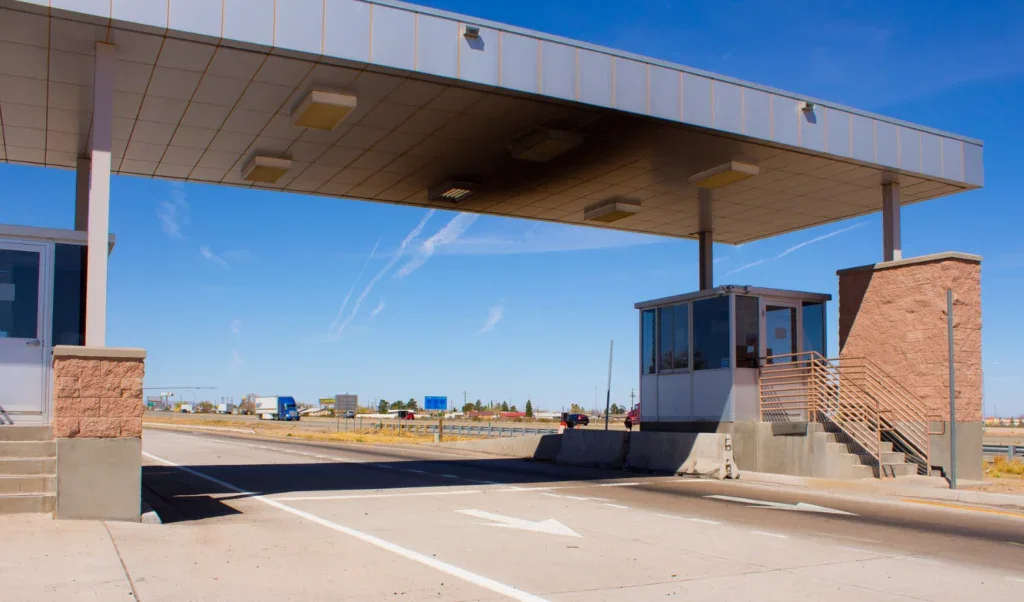
Truck weigh station congestion can really impact everyday Jerome Commuters
5. The I-84 Freight Squeeze: What Weigh Station Congestion Means for Everyday Jerome Commuters
Category High Priority
Does the heavy truck traffic on I-84 near Jerome actually affect regular commuters’ vehicle transmissions, or is that just a trucking industry problem?
Jerome sits directly on I-84, a corridor that carries heavy agricultural and dairy freight traffic in and out of the Magic Valley, and weigh stations along routes like this are a documented source of recurring congestion – stop-and-go conditions cluster on highway segments near these facilities as trucks slow, queue, and merge back into traffic [6]. Commuter vehicles caught in that same stop-and-go pattern, repeated on the same stretch of highway day after day, experience exactly the kind of transmission and torque converter cycling and heat buildup that accelerates transmission wear, even though the underlying cause – truck volume near a weigh station – has nothing to do with their own driving habits.
If your regular commute runs through a section of I-84 known for this kind of recurring truck congestion, that pattern is worth factoring into your service interval the same way stop-and-go city driving would be.
6. Se Habla Transmisiones: Why Clear Communication Is Part of Real Transmission Care
Category High Priority
I’m more comfortable discussing car problems in Spanish – does that actually affect the quality of service I receive when having my transmission serviced?
Approximately 90 percent of Idaho’s dairy workforce is foreign-born and Spanish-speaking, a workforce concentrated heavily in communities like Jerome where dairy is the dominant employer [7]. Language barriers in auto repair have a well-documented cost: when technical terms, repair procedures, and cost estimates are not fully understood, customers often hesitate to approve necessary work, not because they do not trust the diagnosis, but because they cannot fully evaluate it. Industry research on bilingual auto service consistently finds that customers who can discuss their vehicle in their preferred language build faster trust and make more confident, better-informed maintenance decisions [8].
For Jerome’s dairy-industry workforce, being able to describe a transmission symptom clearly – and hear the explanation back clearly – is not a convenience. It is the difference between catching a problem early and deferring it out of uncertainty.
7. Always On Call: Why Biogas and Digester Service Vehicles Can’t Afford Downtime
Category Important
I drive a service vehicle supporting dairy digester or biogas operations – how does that change what my transmission needs?
Idaho’s dairy manure digester facilities represent a growing part of the Magic Valley’s infrastructure, converting dairy waste into usable energy through continuous operations that depend on reliable service and maintenance vehicles arriving on schedule, in every season and every weather condition [9]. A vehicle supporting this kind of continuous industrial operation faces a duty cycle closer to an emergency fleet than a personal commuter car – frequent stops, unpredictable call-outs, and zero tolerance for a breakdown that delays a time-sensitive service visit. Treating a transmission on this kind of vehicle with the same proactive, scheduled-not-reactive standard that emergency fleets use protects both the vehicle and the operation depending on it.
If your work involves supporting continuous agricultural or energy infrastructure, a fixed transmission service schedule – not a wait-and-see approach – matches the reliability your role actually requires.
8. Barn to Barn: What Constant Short Restarts Do to a Farm Utility Vehicle’s Transmission
Category Important
I use a truck for quick trips between barns and buildings all day on the dairy – does that have a different effect on my transmission?
A utility vehicle used for constant short hops between barns, feed storage, and equipment sheds on a dairy operation faces a genuinely different duty cycle than a commuter vehicle making one or two longer trips a day. Roughly 90 percent of an engine’s total mechanical wear happens in the period right after a cold start, and a transmission warms even more slowly than an engine does – meaning a vehicle restarted dozens of times a day for quick, short hops accumulates disproportionate wear compared to its actual mileage [10]. Every one of those short restarts repeats the highest-wear portion of a drive cycle without ever giving the transmission the chance to reach full operating temperature in between.
A farm utility vehicle used this way often needs service sooner than its odometer would suggest, simply because its duty cycle – not its total distance traveled – is what’s driving the wear.
9. Hay Dust in the Air Intake: A Different Kind of Contamination Than Ordinary Road Dirt
Category Important
Does hay and silage dust actually get into my vehicle’s transmission system the way road dust does, or is it a different problem?
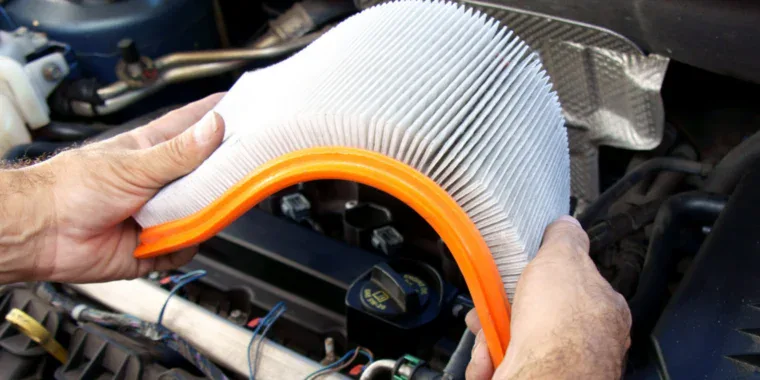
Organic dust from hay, silage, and grain handling behaves differently from ordinary road dirt – it becomes aerosolized around farm equipment and vehicles working near feed operations, and documented agricultural safety research notes that this kind of organic dust is drawn through radiators and entrained into engine airflow, accumulating on components including the exhaust manifold along the way [11]. Unlike mineral road dust, organic dust carries mold spores from stored hay and grain, which introduces both a filtration challenge and, over time, a source of contamination that behaves differently in a vehicle’s air intake and cooling airflow than simple dirt would. This contamination also can really damage your transmission.
Vehicles that spend regular time around feed storage, hay handling, or silage operations benefit from more frequent transmission, air filter and radiator inspections than a typical in-town vehicle needs, specifically because of this organic dust exposure.
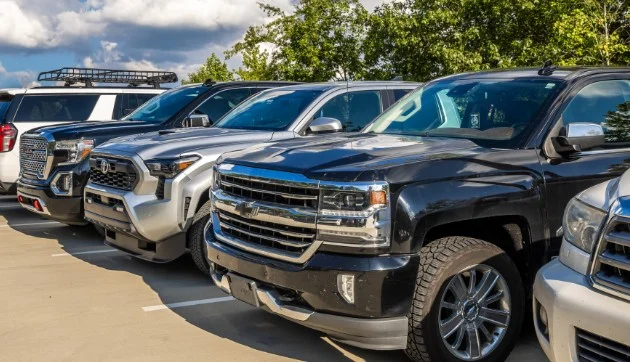
Parking your vehicle in the hot sun all day hurts more than just your interior
Medium Priority
10. Baking in the Lot All Shift: What Extended Sun Exposure Does Beyond the Interior
Category Medium Priority
My truck sits in direct sun for my entire shift at the dairy – does that actually affect anything beyond a hot interior like my transmission?
A vehicle parked in direct sunlight heats up dramatically fast – interior temperatures can climb 20 degrees Fahrenheit in the first 10 minutes and more than 34 degrees within half an hour, with recorded cabin temperatures exceeding 160 degrees Fahrenheit in extreme conditions [12]. That heat does not stay contained to the cabin; components throughout the vehicle, including fluids and seals in systems near the engine bay, absorb elevated ambient heat for the full duration of a parked shift, adding a slow, cumulative thermal stress on top of whatever heat the transmission generates during actual driving. A dairy worker’s vehicle parked in an open lot for an eight-to-twelve-hour shift, day after day through a Magic Valley summer, is absorbing meaningfully more cumulative heat exposure than one parked in a garage or under shade.
Parking in shade when it’s available, or using a reflective windshield shield during long shifts, is a small habit that measurably reduces this cumulative thermal load.
11. Towing the Nurse Tank: What Anhydrous Ammonia Trailers Demand From a Tow Vehicle
Category Medium Priority
I sometimes tow an anhydrous ammonia nurse tank for fertilizer application – are there specific transmission concerns with that kind of towing?
A full 1,000-gallon anhydrous ammonia nurse tank weighs about 7,500 pounds, and a full 1,500-gallon tank weighs roughly 10,600 pounds – substantial weight that safety guidance says should be matched by a tow vehicle at least equal in weight to the loaded tank, specifically to maintain control and minimize incident risk [13]. Nurse tanks are legally restricted to 25 miles per hour when towed, which means this kind of towing happens at low speed but under sustained, heavy load – a combination that keeps a transmission working hard for the tank’s entire trip rather than the brief high-load bursts typical of highway towing. The combination of a hazardous cargo, low-speed sustained load, and required safety equipment like hitch pin safety clips makes this a towing scenario that deserves specific attention to cooler capacity and fluid condition, not general towing advice.
If nurse tank towing is part of your regular fertilizer application routine, confirming your tow vehicle’s cooler and fluid setup specifically for this kind of sustained, low-speed heavy load is worth doing before the season, not during it.
12. The Long Way Between Farms: What Rural Delivery Routes Really Cost a Transmission
Category Medium Priority
I drive a route delivering supplies or picking up equipment between scattered dairy operations – does that unusual mileage pattern matter where my transmission is concerned?
Delivery and service routes connecting scattered dairy operations across Jerome County cover real distance between stops, often on rural roads at higher sustained speeds than in-town driving, punctuated by loading and unloading stops at each farm. That pattern – long highway stretches interrupted by full stops rather than steady urban stop-and-go – creates a duty cycle that does not map cleanly onto either a standard “normal” or “severe” service classification most owner’s manuals describe, because it combines elements of both. A transmission covering this kind of route accumulates real highway heat between stops while also absorbing the wear of frequent full restarts at each farm, a combination worth discussing specifically rather than assuming a generic interval applies.
If your work involves this kind of scattered, farm-to-farm route, describing the actual pattern – not just the total mileage – helps a technician recommend a service interval that fits the real duty cycle.
13. The Auction Gamble: Why a Farm Truck Bought Sight-Unseen Is a Bigger Risk Than an Inherited One
Category Lower Priority
I bought a work truck at auction – should I be more concerned about its transmission than if I’d bought it another way?
Vehicle auctions typically sell “as is,” and unlike buying from a dealership or even a private seller, most auctions do not allow a test drive before bidding – buyers are usually limited to a visual inspection and whatever vehicle history is available, which may be incomplete or entirely absent [14]. That combination – no test drive, limited inspection window, competitive bidding pressure that discourages careful evaluation – means a truck that looks solid on the lot can hide serious transmission problems that only become obvious once it’s driven regularly. This is a meaningfully different risk profile than inheriting a family vehicle, where at least some informal history usually exists even without formal records.
If you have purchased a work truck at auction recently, a full baseline inspection – treating the vehicle as a genuine unknown rather than assuming auction vetting caught any problems – is worth the cost before you put it into daily farm use.
14. Built for the Work: What Daily Dairy Hauling Demands From a Heavy-Duty Diesel Transmission
Category Lower Priority
My diesel pickup handles daily hauling and trailer duty for the dairy – does that change how I should think about its transmission?
Heavy-duty diesel pickups doing daily farm and dairy hauling work face a fundamentally different transmission duty cycle than the same truck model used mainly for commuting – repeated loaded towing, frequent trailer hookups, and sustained torque demands that accumulate real wear even on a transmission engineered specifically for heavy-duty use. These transmissions are built with towing in mind, but “built for the work” does not mean “immune from the work” – a diesel truck logging daily dairy hauling duty still benefits from a service interval that reflects its actual job, not just the manufacturer’s baseline recommendation written for a broader range of uses.
For Jerome’s working diesel trucks, matching your service schedule to your actual daily hauling pattern – rather than a generic mileage number – is the difference between a transmission that lasts the life of the truck and one that needs early attention.
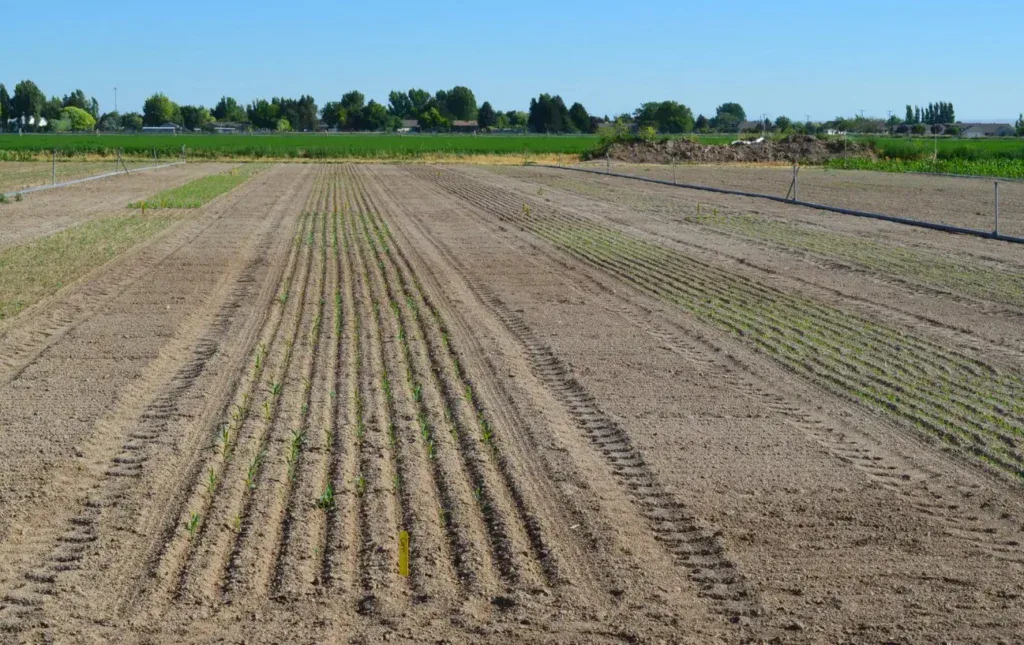
Fine high desert alkaline dust can seriously clog your filters
15. The Fine Stuff You Can’t See: What High Desert Alkaline Dust Does to a Filter
Category Lower Priority
Is the fine dust common around Jerome’s dry farmland actually different from ordinary dirt, or does it matter for my vehicle’s transmission either way?
South-central Idaho’s dry farmland and exposed soil produce a genuinely fine, silty dust that behaves differently from coarser road dirt – fine-grained alkaline and saline dust of this kind is among the finest naturally occurring particulate matter, capable of clogging a filter that would otherwise handle coarser dust without issue [15]. Because the particles are so fine, they penetrate filtration more persistently than typical road grime, meaning a vehicle regularly exposed to Jerome’s dry agricultural dust may need filter changes on a shorter interval than the same vehicle would in a less dusty environment, even if the miles driven look similar because that filter left unattended can possibly allow that fine dirt to get into your engine and your transmission.
This is a low-drama, easy-to-overlook maintenance item – but for a vehicle that spends real time on Jerome’s dry farm roads, it is worth checking more often than the standard interval assumes.
About Grease Monkey 2703 South Lincoln Avenue, Jerome, ID 83338
Grease Monkey’s Jerome location on South Lincoln Avenue is open Monday through Friday from 7:00 a.m. to 7:00 p.m. and Saturday from 8:00 a.m. to 5:00 p.m., closed Sundays, with same-day and walk-in service available for most transmission fluid and inspection needs – call (208) 907-4814 to check current bay availability. Beyond transmission fluid exchanges, the shop’s certified technicians handle the full range of drivetrain-adjacent services this dairy-driven community needs, including undercarriage corrosion checks for vehicles working near dairy operations, cooling system work that supports transmission temperature control on I-84 and the Perrine Bridge commute, and the shop’s signature 16-point inspection with every visit. The team serves dairy industry workers and processing plant employees, drivers commuting across the Perrine Bridge to Twin Falls, and the farm and delivery vehicles that keep Jerome County’s agricultural economy moving – backed by the location’s 4.7-star rating across more than 193 Google reviews.
Author Information
Author Bio – Phillip Paul Gilliam
Phillip Gilliam is a veteran journalist and former Editor-in-Chief with 50+ years of publishing experience and thousands of published articles. Specializing in automotive, trucking, and digital publishing, he creates authoritative, search-optimized content built on real-world expertise and editorial excellence. To learn more about Phil, visit http://www.phillipgilliam.com/about.html or contact Phil at [email protected]. He would love to hear from you!
[11] Penn State Extension; OSHA. Organic Dust Hazards and Engine Contamination in Agricultural Settings. Available at: https://extension.psu.edu/farm-respiratory-hazards and https://www.osha.gov/etools/youth-agriculture/organic-dust. (Organic dust from hay, silage, and grain becomes aerosolized and is drawn through radiators and engine airflow, accumulating on exhaust and intake components; carries mold spores distinct from mineral road dust.)
We use cookies to improve your browsing experience on our website. By closing this banner or interacting with our site, you acknowledge and agree to our privacy policy.