15 Real Transmission Warning Signs Woodland Park's Ute Pass Drivers Actually Ask About
Location: Woodland Park, CO Topic: Grease Monkey Center #1513 By: Phil Gilliam
An Authoritative Guide for Vehicle Transmission Health and Repair in Colorado’s “City Above the Clouds”
Grease Monkey 1027 U.S. 24, Woodland Park, CO 80863 Has Over 165 Google Reviews With A 4.6 Star Rating
A Note on Authority and Expertise: This article was researched and written by Phillip Paul Gilliam, a veteran journalist and former Editor-in-Chief with more than 50 years of publishing experience in automotive, trucking, and safety communications. The transmission guidance presented here is grounded in current SAE fluid-life standards, transportation infrastructure research, and manufacturer engineering research – not generic information.
The Grease Monkey at 1027 U.S. 24, Woodland Park, CO 80863, is part of the FullSpeed Automotive network, which services more than 5.2 million vehicles annually across 700-plus locations nationwide and generated over $542 million in 2026 revenue [1]. In 2025, 435 FullSpeed Automotive locations – including Grease Monkey franchises – were named CARFAX Top Shop Winners for verified customer satisfaction, and in 2026 Grease Monkey was recognized as an Entrepreneur Verified Franchise. Grease Monkey’s ASE-certified technicians bring that national training standard, and a transmission-specific service menu, to a mountain community where a transmission works harder than almost anywhere else in Colorado.
Woodland Park sits at roughly 8,465 feet on the eastern flank of the Rockies, along U.S. Highway 24 – the modern route through Ute Pass, an ancient trail the Ute people used to move salt and trade goods between the plains and the high country long before it became a wagon road, then a railroad grade, then the highway that carries commuters down to Colorado Springs every day [2]. Incorporated in 1891 and home to roughly 8,038 residents today, Woodland Park anchors Teller County and sits surrounded by more than a million acres of Pike National Forest [3]. Thin air, steep grades in both directions, dry forested terrain, and a genuine mix of commuters, pickup trucks, and mountain-town daily errands make this one of the more demanding places in the state for a transmission to do its job.
An Introduction to Transmission Survival in Colorado’s City Above the Clouds
Locals call Woodland Park the “City Above the Clouds,” and the nickname is not just marketing – at 8,465 feet, the town sits high enough that a transmission here spends every single day doing measurably harder work than the same vehicle would at sea level. Every commute down Ute Pass toward Colorado Springs and every drive back up it asks a transmission to manage sustained grade load in one direction and controlled engine braking in the other, on a stretch of Highway 24 that has carried travelers through this exact canyon since long before cars existed [2].
Most drivers think about their transmission only when it fails – and by then, the fix has usually jumped from a few hundred dollars to several thousand. That gap is not an accident of bad luck. It is math. Automatic transmission fluid follows a well-documented thermal curve: for every 20 degrees Fahrenheit the fluid runs above roughly 175 degrees F, its usable service life is cut in half, according to SAE and Allison Transmission engineering data. Fluid that would last 100,000 miles at 175 degrees F is finished at 25,000 miles by 220 degrees F, and drops to just 5,000 miles at 260 degrees F [4]. Woodland Park adds its own local variables to that curve – grade work in both directions on Ute Pass, a dry climate that stresses rubber and hoses, and a mix of daily commuters and heavy-duty trucks that all lean on the same transmission-service bay.
This guide walks through fifteen specific, genuinely transmission-focused reasons your transmission deserves professional attention here, organized from the most urgent warning signs to the more preventive, long-view maintenance decisions. Some of these – a transmission that stalls the engine at a stoplight, a transmission that won’t hold a low gear on the way down the pass, a transmission cooler line spraying fluid onto a hot exhaust in dry forest country – are genuinely urgent. Others are quieter but still real: a transmission whine that turns out to be something else entirely, or a transmission fluid check thrown off by nothing more than a sloped driveway. Each one closes with a specific, useful next step you can take at the Grease Monkey on U.S. Highway 24.
Most Critical
1. Stalling at the Light: What It Means When Your Transmission Won’t Let Go at a Stop
Category Most Critical
My car’s engine stalls out every time I come to a stop on Highway 24 – could my transmission actually be causing that?
Yes, and it is a more common cause than most drivers realize. Inside the torque converter, a lock-up clutch is supposed to release the instant you slow toward a stop, uncoupling the engine from the transmission the same way pressing a clutch pedal does in a manual car – but when the torque converter clutch (TCC) solenoid sticks in the engaged position, that release never happens, and the engine stalls because the transmission is still mechanically locked to wheels that have stopped turning [5]. This exact failure – a transmission stalling the engine specifically at a stop, often alongside a shudder felt between 40 and 50 miles per hour and a check engine light in the P0740-P0744 range – points squarely at the TCC solenoid or its wiring rather than the engine itself.
A transmission that stalls your engine at every single stop sign or red light on Highway 24 is not a quirk to plan around – it is a transmission control problem that gets less predictable, not more, the longer it goes undiagnosed.
2. Won’t Hold the Line: What It Means When Your Transmission Ignores a Manual Downshift on the Way Down the Pass
Category Most Critical
I try to manually downshift my transmission into a lower gear for engine braking on the way down Ute Pass, but it won’t hold that gear – why not, and is that actually dangerous?
Most automatic transmissions include a built-in safeguard that refuses to hold a gear low enough to send the engine past a safe RPM ceiling, which means a transmission can override a manual downshift request specifically to protect the engine from over-revving – a safety feature, not a malfunction, though it can feel alarming on a long descent when you’re counting on the transmission to help control your speed [6]. The practical result on a grade like Ute Pass is that a driver who expects the transmission to simply “stay” in the selected low gear all the way down may instead feel it quietly upshift partway through the descent, shifting more of the speed-control burden onto the brakes than expected.
Understanding that your transmission is protecting the engine, not ignoring you, changes how you should plan a long descent – lower gear selection still helps meaningfully, but it should be paired with brake use, not treated as a full substitute for it.
Notice your transmission won’t hold a low gear all the way down Ute Pass? Have Grease Monkey, 1027 U.S. 24, Woodland Park, CO 80863, confirm your transmission’s downshift behavior is functioning as designed – schedule at https://www.greasemonkey.com/locations/co/woodland-park/1027-u-s-24/.
3. Fluid on Fire Country: Why a Leaking Transmission Cooler Line Is a Bigger Deal Here Than Almost Anywhere
Category Most Critical
I noticed a small leak near my transmission cooler line – does it actually matter that much, or can it wait until my next scheduled service?
A transmission cooler line carries pressurized fluid between the transmission and its cooler, which means a cracked line, a rusted fitting, or a failed seal does not always drip slowly – it can go from a small weep to a spray in a short amount of time, and transmission fluid sprayed onto an exhaust system running between 400 and 1,200 degrees Fahrenheit is genuinely combustible [7]. In a dry, forested mountain community surrounded by more than a million acres of Pike National Forest, a transmission fluid leak landing on a hot exhaust is not just a mechanical problem – it is a real ignition risk in exactly the kind of terrain where a small fire can become a serious one quickly.
A transmission cooler line leak deserves same-week attention everywhere, but in Woodland Park’s dry climate and forested surroundings, it deserves same-day attention.
4. Not Every Whine Is Your Transmission: A Diagnostic Distinction Worth Knowing
Category High Priority
My car has a whining noise that gets louder with engine RPM – how do I know if that’s actually my transmission, or something else entirely?
A whine that rises and falls with engine RPM is genuinely easy to mistake for a transmission problem, but the serpentine belt driving your alternator, power steering pump, and air conditioning compressor is just as likely a source – and belt or pulley noise tends to change immediately with revs, sometimes most obvious right at startup or when you blip the throttle in Park, while a true transmission-internal whine more often changes with load, gear state, or clutch engagement rather than engine speed alone [8]. If the whine specifically gets worse only when your AC is running, the AC compressor clutch or its pulley bearing – not your transmission at all – is the more likely culprit.
Before assuming the worst about your transmission, a quick check under the hood for a cracked, glazed, or fraying belt can save you a diagnostic visit – and if it does turn out to be your transmission, describing exactly when the whine changes helps a technician get to the answer faster.
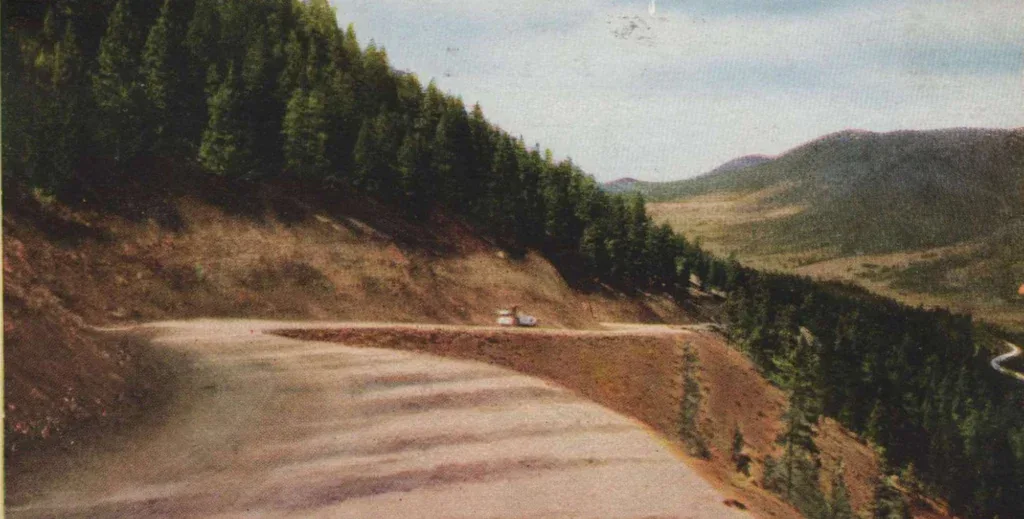
UTE Pass will put an incredible strain on your transmission
5. The Exhaust Brake Problem: Why Diesel Trucks Need Their Transmission’s Torque Converter Locked to Really Slow Down
Category High Priority
I have a diesel truck with an exhaust brake for the drive down Ute Pass, but it doesn’t feel like it’s doing much – could my transmission actually be the reason?
An exhaust brake works best when the torque converter’s lock-up clutch is engaged, because a locked converter transmits nearly all of the engine’s retarding force straight to the wheels – but most stock automatic transmissions provide their lowest hydraulic pressure and the least converter lockup exactly when your foot is off the throttle, which is precisely when an exhaust brake is doing its work coming down a grade like Ute Pass [9]. Without that lockup, the torque converter slips instead of holding firm, which means a meaningful share of your exhaust brake’s retarding force never reaches the ground – and that slippage also generates real heat inside the transmission at the worst possible time, on a long descent when the transmission is already working hard.
A diesel truck’s exhaust brake and its transmission’s torque converter are meant to work as a team, and when one half of that team isn’t cooperating, the whole system underperforms exactly where Woodland Park drivers need it most.
6. Shaking It Off: What Clutch Chatter During a Steep Hillside Launch Actually Means
Category High Priority
My manual transmission’s clutch shudders and chatters specifically when I’m starting from a stop on a steep street here in Woodland Park – what’s causing that?
Clutch chatter during a hill start is most often caused by contamination on the clutch disc’s friction surfaces, worn pressure-plate fingers that have lost even spring tension, or friction material that has become “grabby” after repeated slipping during exactly the kind of prolonged partial engagement a steep hill start demands [10]. Because so many streets in Woodland Park’s hillside neighborhoods require holding a manual transmission’s clutch partially engaged just to keep the car from rolling backward while pulling away, this town produces the exact driving pattern most likely to accelerate that wear – a genuinely different demand on a manual transmission’s clutch than flat-ground starts put on it.
A manual transmission that chatters on every hill start but feels smooth on flat ground is telling you something specific about where the wear is concentrated, which is worth mentioning exactly that way at your next service.
7. The Driveway Trap: Why Checking Your Transmission Fluid at Home Can Lie to You
Category Important
I checked my transmission fluid in my own driveway and it looked low, but a shop later told me it was fine – how could my own check have been so wrong?
Transmission fluid sits in a pan at the bottom of the transmission, and even a mild slope is enough to shift that fluid to one side of the pan – which means a dipstick check performed on an inclined driveway can read low when the level is actually fine, or read full when it is genuinely low, simply because most driveways are graded just enough for water runoff to look flat when they are not [11]. In a hillside town like Woodland Park, where a genuinely level parking spot is harder to find than in a flat-ground city, this is a far more common source of confusing transmission fluid readings than most drivers realize.
Finding a truly flat spot – a level parking lot, or checking with a small level on your door sill – before checking your transmission fluid is a five-minute habit that prevents both an unnecessary top-off and a missed low-fluid warning.
8. The $400 Question Versus the $3,000 One: Solenoid or Full Transmission Rebuild?
Category Important
A shop told me my transmission has a bad solenoid – do I actually need a full transmission rebuild, or does replacing just the solenoid fix the real problem?
A failed shift solenoid can produce hard shifts, slipping, and check-engine codes that look nearly identical to genuine internal transmission damage, but the repair paths are dramatically different in cost: a solenoid or full solenoid pack typically runs $200 to $1,500 depending on the vehicle, while a full transmission rebuild runs $1,500 to $4,000 or more [12]. The distinction usually comes down to what a technician actually finds in the fluid and pan during diagnosis – clean fluid with a solenoid testing bad points toward the cheaper fix, while dark, sludgy fluid with metallic flakes in the pan means the clutch packs are already breaking down and a solenoid swap would only mask a transmission failure that’s coming regardless.
Before authorizing a transmission repair at either price point, ask specifically what was found in the fluid and pan – that detail is usually the real evidence behind the recommendation, not just the code that triggered the check engine light.
Told your transmission needs work but not sure if it’s a solenoid or something bigger? Have Grease Monkey, 1027 U.S. 24, Woodland Park, CO 80863, give you a clear, evidence-based diagnosis – schedule at https://www.greasemonkey.com/locations/co/woodland-park/1027-u-s-24/.
9. Not a Whine, Not a Clunk: What a Clicking Transmission Is Actually Telling You
Category Important
My transmission makes a distinct clicking or clacking sound when it shifts, different from a whine or a clunk – what does that specific sound usually mean?
A clicking or clacking sound during a shift points toward a different set of causes than a whine or a clunk: worn or loose transmission mounts letting the transmission shift position under load, low or incorrect transmission fluid affecting how cleanly components engage, or – especially if the clicking tracks with turning the wheel rather than just shifting – worn CV joints rather than the transmission itself [13]. Because this sound category is genuinely distinct from the whining and clunking symptoms most drivers already know to listen for, a clicking transmission often gets dismissed longer than it should simply because it doesn’t match the more commonly discussed warning signs.
Describing a click specifically as a click – not a whine, not a clunk – and noting whether it happens only during shifts or also while turning, gives a technician real information to narrow down whether your transmission, its mounts, or your CV joints are the actual source.
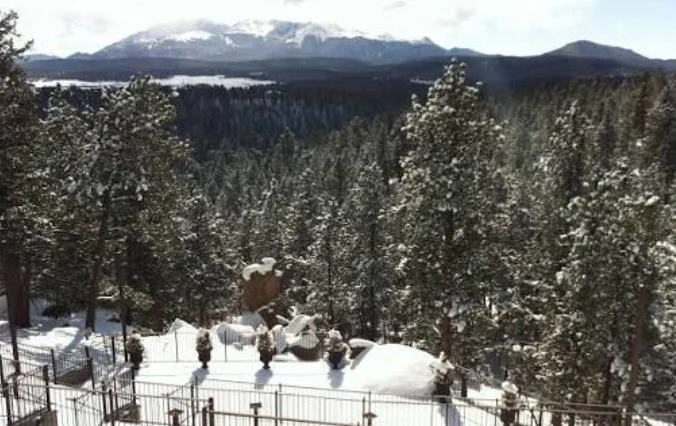
Woodland Park Colorado is beautiful in the winter, but you really need to have your transmission ready for the bitter cold
Medium Priority
10. Stuck Cold: What a Failed Transmission Cooler Thermostat Actually Does
Category Medium Priority
My transmission never seems to fully warm up even after driving for a while in cold weather – could a stuck part actually be preventing that?
Many transmissions use a thermostatic bypass valve that keeps fluid circulating within the transmission itself while it’s cold, routing fluid to the external cooler only once it reaches a proper operating temperature, typically in the 180 to 200 degree Fahrenheit range – but old, varnished fluid or corrosion can leave that valve stuck wide open, continuously routing fluid through the cooler and preventing the transmission from ever reaching the temperature it needs for proper shift quality and seal performance [14]. In Woodland Park’s genuinely cold winters, a transmission fighting a stuck-open bypass valve may never fully warm up even on a longer drive, which can show up as persistently sluggish or imprecise shifting that never quite resolves the way a simple cold-start issue would.
A transmission that stays cold-feeling no matter how long you’ve been driving, especially in winter, is a different and more specific complaint than ordinary cold-start hesitation – and it’s worth describing to a technician exactly that way.
11. Shifting Through Mud: Why a Manual Transmission Feels Thick and Notchy on a Cold Woodland Park Morning
Category Medium Priority
My manual transmission is really hard to shift on cold mornings here but loosens up once I’ve been driving a while – is that normal, or a sign of a real problem?
Manual transmission gear oil thickens significantly in cold weather, and that increased viscosity acts almost like a brake on the synchronizers – the components responsible for matching gear speeds during a shift – which is why a cold transmission often shifts through what feels like mud, most noticeably into first and second gear where the speed difference being matched is greatest [15]. This is expected behavior in a genuinely cold climate like Woodland Park’s, and shift quality should improve noticeably within five to ten minutes of driving as the transmission’s gear oil warms; a manual transmission that stays notchy well beyond that window, or shifts hard even in summer, may be running the wrong viscosity gear oil for the climate rather than simply reflecting normal cold-weather stiffness.
Treating the first ten minutes of a cold-morning drive gently – not forcing shifts before your transmission has had a chance to warm – protects the synchronizers during exactly the window when they’re working against the thickest oil.
Deal with a notchy manual transmission on cold mornings? Ask Grease Monkey, 1027 U.S. 24, Woodland Park, CO 80863, whether your transmission’s gear oil viscosity actually matches our climate – schedule at https://www.greasemonkey.com/locations/co/woodland-park/1027-u-s-24/.
12. The AC Effect: Why Your Transmission Might Shift Differently With the Air Conditioning Running
Category Medium Priority
I’ve noticed my transmission actually shifts a little differently – sometimes smoother, sometimes not – depending on whether my air conditioning is running. Is that actually connected to the transmission itself?
It genuinely can be. Engaging the AC compressor adds real load to the engine, and many vehicles’ computers respond by adjusting idle speed and, in turn, transmission behavior – raising line pressure, modifying shift firmness, or adjusting torque-converter clutch engagement specifically to prevent the transmission from slipping under that added load, which is why some drivers notice smoother shifts with the AC on rather than rougher ones [16]. If instead your transmission shifts worse or your idle drops unevenly the moment the AC compressor engages, that points toward an underlying idle-control issue – a vacuum leak or a dirty throttle body are common causes – rather than a transmission problem on its own, since the transmission is often just responding faithfully to inconsistent engine input it’s being given.
Noticing your transmission’s shift quality change specifically with the AC on or off is a genuinely useful diagnostic detail, not something to write off as your imagination.
13. The Hypermiling Question: Does Shifting Early to Save Gas Actually Hurt an Automatic Transmission?
Category Lower Priority
I try to save fuel by driving gently and letting my automatic transmission shift into higher gears as early as possible – could that habit actually be bad for my transmission?
Genuinely light, early upshifting on its own does not meaningfully damage an automatic transmission – the transmission is simply holding a gear until torque begins to drop off, and shifting to the next gear a bit sooner than aggressive driving would is not inherently harder on the internal clutch packs [17]. The real nuance is in how that upshift happens under very light throttle: some automatic transmissions can produce a noticeably abrupt shift sensation at very low throttle openings, which feels alarming but is a shift-quality characteristic rather than evidence the transmission is being damaged by the eco-driving habit itself.
If your transmission’s early upshifts feel unusually harsh rather than simply prompt, that’s worth mentioning at a service visit – but the habit of driving gently and shifting early is not, on its own, something your transmission needs protecting from.
Curious whether your fuel-saving driving habits are actually affecting your transmission? Ask Grease Monkey, 1027 U.S. 24, Woodland Park, CO 80863, for an honest read on your specific shift quality – schedule at https://www.greasemonkey.com/locations/co/woodland-park/1027-u-s-24/.
14. Three Fluids, One Confusing Bottle: Why Your Transmission, Transfer Case, and Differential Don’t All Take the Same Fluid
Category Lower Priority
My 4WD truck has a transmission, a transfer case, and a differential – do they all actually use the same fluid, or is that a mistake I could be making?
They typically do not, and mixing them up is a genuinely easy mistake for a mountain-town truck owner to make: transmission fluid is usually red and formulated specifically for the clutch packs and hydraulics inside a transmission, transfer case fluid is a separate product – sometimes ATF, sometimes a different gear oil depending on the vehicle – that manages power distribution to the front and rear differentials, and differential fluid is typically a thicker gear oil with extreme-pressure additives that a transmission’s hydraulic system was never designed to handle [18]. Using the wrong fluid in any one of these three systems, including your transmission itself, can mean inadequate protection under load or, in some cases, actual damage to components the fluid was never formulated to lubricate.
Before topping off any drivetrain fluid on a 4WD truck, confirming which specific system you’re actually filling – transmission, transfer case, or differential – protects against a mix-up that’s more common than most owners realize.
Own a 4WD truck and not sure which fluid goes where? Ask Grease Monkey, 1027 U.S. 24, Woodland Park, CO 80863, to confirm your transmission’s correct fluid alongside your transfer case and differential – schedule at https://www.greasemonkey.com/locations/co/woodland-park/1027-u-s-24/.
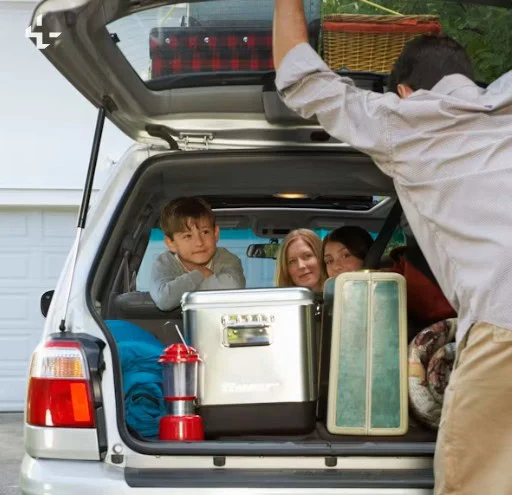
Your transmission works much harder when you have a full load of people and gear
15. Loaded for the Mountains: Why Your Transmission Shifts Differently With a Full Car
Category Lower Priority
My transmission shifts smoothly when my car is empty, but hunts between gears when it’s loaded with passengers and gear for a day trip into the mountains – is that actually normal?
It is, within limits. A heavier load asks a transmission to shift more frequently and hold gears longer to deliver adequate power, and without a dedicated tow/haul mode engaged, a loaded vehicle – even one simply full of passengers and gear rather than towing a trailer – can genuinely “hunt” between two gears on a grade as the transmission repeatedly tries a higher gear, feels the engine strain, and drops back down [19]. This is normal transmission behavior responding correctly to real conditions, not a malfunction, though a transmission that hunts excessively even under a modest load, or continues hunting once you’re back on flat ground, is worth a second look.
Loading up for a Pikes Peak day trip or a weekend in the high country is exactly the kind of driving where noticing how your transmission handles the extra weight – and mentioning it at your next service if the hunting feels excessive – helps keep it running the way it should.
Notice your transmission hunting for gears when your car is loaded for a mountain trip? Ask Grease Monkey, 1027 U.S. 24, Woodland Park, CO 80863, whether that’s normal for your vehicle or worth a closer look – schedule at https://www.greasemonkey.com/locations/co/woodland-park/1027-u-s-24/.
About Grease Monkey 1027 U.S. 24, Woodland Park, CO 80863
Grease Monkey’s Woodland Park location, Center #1513, is open Monday through Friday from 8:00 a.m. to 6:00 p.m., Saturday from 8:00 a.m. to 5:00 p.m., and Sunday from 9:00 a.m. to 4:00 p.m. – call (719) 356-3648 to check current bay availability. Manager Noah Erickson and his ASE-certified crew perform a thorough 16-point inspection with every visit, including full transmission fluid checks alongside coolant, power steering, and brake fluid, and back their work with a three-month or 3,000-mile limited warranty. The shop’s transmission service menu covers fluid exchanges, filter service, and diagnostic work for the daily grade demands Highway 24 puts on local vehicles. The waiting lobby includes a coffee station, refreshments, cable TV, a kids play area, and even a small putting green, and the shop offers discounts for military, law enforcement, first responders, clergy, students, seniors, and rideshare drivers. Backed by a 4.6-star rating across more than 165 Google reviews, the team serves Woodland Park’s year-round residents, daily Ute Pass commuters heading down to Colorado Springs, and the trucks and trailers passing through on the way into the high country.
Author Information
Author Bio – Phillip Paul Gilliam
Phillip Gilliam is a veteran journalist and former Editor-in-Chief with 50+ years of publishing experience and thousands of published articles. Specializing in automotive, trucking, and digital publishing, he creates authoritative, search-optimized content built on real-world expertise and editorial excellence. To learn more about Phil, visit http://www.phillipgilliam.com/about.html or contact Phil at [email protected]. He would love to hear from you!
[3] Wikipedia; World Population Review; TellerLinks. Woodland Park, Colorado Population, Elevation, and Incorporation History. Available at: https://en.wikipedia.org/wiki/Woodland_Park,_Colorado and https://worldpopulationreview.com/us-cities/colorado/woodland-park. (Woodland Park sits at approximately 8,465 feet elevation, was incorporated in 1891, and has an estimated 2026 population of 8,038; the city is surrounded by the more than 1,000,000-acre Pike National Forest and anchors Teller County.)
[6] The Family Handyman. When Should You Downshift Automatic Transmissions?. Available at: https://www.familyhandyman.com/article/downshift-automatic-transmissions/. (Automatic transmissions include built-in protections that prevent holding a gear low enough to over-rev the engine, which can override a manual downshift request on a steep descent as a safety feature rather than a malfunction.)
We use cookies to improve your browsing experience on our website. By closing this banner or interacting with our site, you acknowledge and agree to our privacy policy.