Top 15 Reasons to Get Your Brakes Inspected and Serviced in Littleton, Colorado
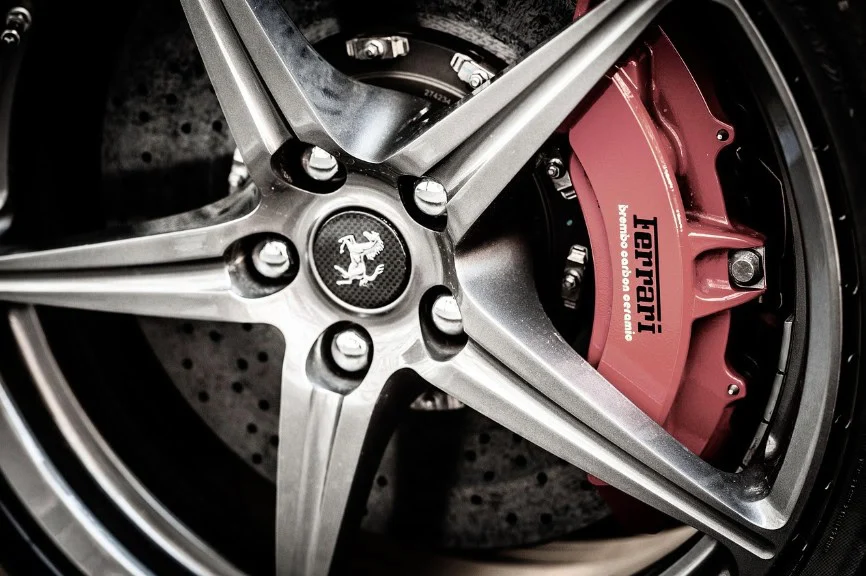
An Authoritative Guide for Vehicle Brake Safety and Maintenance in “The Gateway to Colorado’s Mountain West”
Grease Monkey 6549 S Broadway, Littleton, CO 80121 Has Over 1,490 Google Reviews With A 4.8 Star Rating
A Note on Authority and Expertise: This article was researched and written by Phillip Paul Gilliam, a veteran journalist and former Editor-in-Chief with more than 50 years of publishing experience in automotive, trucking, and safety communications. The brake safety guidance presented here is grounded in current federal research, CDOT traffic data, and peer-reviewed automotive science — not generic information. The Grease Monkey at 6549 South Broadway, Littleton, CO 80121, is part of the FullSpeed Automotive network, which operates more than 900 service centers nationwide. In 2025, 435 FullSpeed Automotive locations — including Grease Monkey franchises — were named CARFAX Top Shop Winners for verified customer satisfaction and service excellence. Grease Monkey’s ASE-certified technicians bring a national training standard to a local community with genuinely unique brake demands. Littleton sits at 5,351 feet of elevation, spans three counties (Arapahoe, Jefferson, and Douglas), and serves as a gateway to some of Colorado’s most heavily traveled mountain recreation corridors. Those factors, combined with the city’s growth, its South Platte River floodplain geography, and Colorado’s #1-in-the-nation EV adoption rate, make brake system health especially critical here.
Introduction
Littleton, Colorado defies easy description. Incorporated in 1890 as one of the state’s earliest municipalities, it has grown from a frontier irrigation community along the South Platte River into a 44,000-resident city that anchors the southwestern edge of the Denver metro — and simultaneously opens the door to some of Colorado’s most dramatic mountain terrain. The Grease Monkey at 6549 South Broadway sits at the intersection of two worlds: the dense commercial grid of the metro’s southern beltway and the foothills that give way, just miles west, to grades, canyons, and recreation highways where brake performance is the difference between a successful trip and a tragedy.
Residents of Littleton navigate a road environment unlike any other in the Denver metro. C-470, the city’s high-speed southern beltway, carries more than 100,000 vehicles per day between Interstate 25 and South Broadway. US-285 — which originates in Littleton’s own backyard — has recorded 22 fatalities on the stretch between C-470 and Bailey in a single five-year period, making it one of the most statistically dangerous recreation corridors in Colorado [5]. Swedish Medical Center’s Level I Trauma Center, located at 501 East Hampden Avenue just across the Englewood-Littleton boundary, is the regional destination for the most severe crash injuries — and the fastest possible route there runs along Hampden Avenue, a corridor that demands fully functional braking every mile of the way [12].
Beyond the headline roads, Littleton’s unique geography creates brake stress in less obvious ways. The city spans all three counties — Arapahoe, Jefferson, and Douglas — meaning a single commute can cross jurisdictional road maintenance boundaries with different de-icing schedules and pavement conditions on the same route [10]. Chatfield State Park and Reservoir, located entirely within Littleton’s service area, draws 1.6 million visitors annually, many of them towing boats down grades to ten launch lanes on the reservoir’s shore [3]. And as the state that led the nation in EV adoption — with 32.4% of Q3 2025 new vehicle sales being electric or plug-in hybrid — Colorado’s suburban drivers increasingly own vehicles whose friction brake systems are going uninspected for years at a time [4].
This guide presents 15 specific, research-grounded reasons why Littleton drivers should prioritize brake inspection and service. Each reason reflects the real roads, real landmarks, real geography, and real community character of this city. Reading this guide won’t make you a brake technician — but it will help you understand, specifically, why the service bay at 6549 South Broadway, Littleton, CO 80121 might be one of the most important stops you make this year.
1. C-470 at 100,000 Daily Vehicles: Emergency Stopping Physics on Littleton’s High-Speed Southern Beltway
Category: Most Critical – What are the physics of stopping on a high-speed beltway like the Southern Beltway?
Physics is unforgiving at highway speed. At 65 miles per hour, a vehicle with fully functional brakes requires approximately 316 feet to come to a complete stop under ideal conditions — that’s longer than a football field. Worn brake pads can add 25 to 40 percent to that distance, pushing the total stopping distance toward 420 feet or beyond [1]. On a congested highway where traffic can compress to bumper-to-bumper spacing during any incident, those extra 100-plus feet represent the difference between a near-miss and a catastrophic multi-vehicle collision. Every percentage of brake degradation matters — and it matters most at the moment a driver least expects it.
Littleton’s C-470 beltway is not a gentle suburban parkway. Between Interstate 25 and South Broadway, the corridor carries more than 100,000 vehicles every day — a volume that rivals some of Colorado’s busiest urban stretches [2]. Drivers use C-470 to connect from I-25 to US-85 (Santa Fe Drive), to reach Chatfield State Park’s main entrance, to access the US-285 westbound on-ramp, and to commute through southwest Jefferson County. Merge zones near the Broadway interchange compress traffic at speed; incidents on the corridor can trigger rapid, unexpected stops. During Colorado’s summer construction season, active lane closures near the Wadsworth and Santa Fe interchanges create the precise conditions — unexpected slowdowns at highway speed — where brake system health becomes a life-or-death variable. Don’t wait for C-470 to teach you what your brake system can’t do. If you drive South Broadway, Wadsworth, or Santa Fe Drive to access the C-470 corridor on a regular basis, schedule a professional brake inspection at Grease Monkey, 6549 South Broadway, Littleton, CO 80121. Their ASE-certified technicians will measure your pad thickness, inspect rotors for heat wear, and assess your full hydraulic system — so when the car ahead of you stops without warning at 65 mph, your vehicle is ready. Visit https://www.greasemonkey.com/locations/co/littleton/6549-south-broadway/ to schedule today.
2. US-285 Mountain Corridor: Littleton as the Last Service Checkpoint Before Colorado’s Deadliest Recreation Highway
Category: Most Critical – What conditions in mountain driving create the most highway fatalities and why is this true?
Mountain highway fatalities follow a consistent pattern in crash research: the approach and descent segments claim disproportionate lives because they combine high speed, steep grades, limited sight lines, and the shock of wildlife or slow-moving vehicles appearing around curves. A CDOT analysis identified a 16-mile stretch of US-285 south of Foxton Road where 75 crashes occurred in a single 11-month period, and the corridor between C-470 and Bailey logged 22 fatalities in just five years [5]. Brake fade — the loss of stopping power when rotors and pads overheat on sustained descents — is among the most cited contributing factors in mountain highway crashes, particularly for drivers who have never verified their brake system’s thermal capacity before entering high-grade terrain.
US-285 departs from Littleton’s southwestern edge and climbs almost immediately into the front range foothills. For residents of Ken Caryl Ranch, Chatfield Estates, and south Littleton, this highway is not a vacation road — it is a daily commute route to Conifer, Evergreen, and Bailey, and the primary path for weekend recreation to South Park, Fairplay, Buena Vista, and Gunnison. It is also one of two mountain corridors serving the entire Denver metro, alongside I-70. Every Friday afternoon and Sunday evening, tens of thousands of vehicles pour onto US-285’s initial grades from the C-470 interchange and Kipling Street, many of them carrying boats, campers, ATVs, and full family loads — extra weight that amplifies the physics of mountain descent and places every fraction of brake system integrity into immediate demand.
Littleton drivers headed west on US-285 should treat the Grease Monkey at 6549 South Broadway as their pre-mountain checkpoint. That’s not hyperbole — it’s geographic logic. You will not find a convenient, fully staffed brake inspection service between Littleton and Fairplay. If your pads are at 3mm, your rotors are below spec, or your brake fluid has absorbed moisture that will boil under sustained descent conditions, Grease Monkey Littleton is your last practical opportunity to know it before the grade does. Schedule that inspection before your next mountain trip.
3. Swedish Medical Center Level I Trauma: Emergency Response on Hampden Avenue Starts With Brakes That Work
Category: Most Critical – How much does getting treatment at a Level I Trauma Center quickly reduce death from serious vehicle accidents and how can I help those injured?
A Level I Trauma Center designation represents the highest tier of emergency medical capability in the United States — it requires the continuous availability of surgical teams, neurosurgeons, orthopedic specialists, and intensive care resources to handle the most severe injuries from crashes, falls, and other major trauma events [12]. The American College of Surgeons reports that patients treated at Level I centers have a 20 to 25 percent higher survival rate for severe traumatic injuries compared to those treated at lower-level facilities. The critical variable connecting that statistic to everyday driving is time. Emergency transport time from a crash site to a Level I center is directly tied to the route’s congestion — and whether the vehicles ahead of the ambulance can stop when they need to.
Swedish Medical Center — now operating as HCA HealthONE Swedish — sits at 501 East Hampden Avenue in Englewood, on the immediate northeastern border of Littleton’s service area. Hampden Avenue (US-285 within the city grid) is the primary east-west arterial connecting Littleton to this Level I Trauma Center, and it runs through some of the most dense commercial and residential traffic in the south Denver metro. Broadway, South Santa Fe Drive, and US-285 all funnel directly into the Hampden corridor. When an emergency occurs anywhere in southwest Littleton — on C-470, on South Broadway, near Chatfield, or in the Ken Caryl community — the emergency response route to Swedish passes through this corridor. The ability of surrounding traffic to respond to flashing lights, to clear lanes, and to execute emergency stops without brake system failure directly affects survival outcomes for crash victims.
When the stakes are this high, brake maintenance isn’t just about your own safety — it’s about your role in the emergency response ecosystem of south Littleton and Englewood. A driver who cannot brake promptly and completely can block an ambulance corridor, cause a secondary incident, or contribute to the kind of chain-reaction event that puts lives at risk blocks away from the original crash. The ASE-certified team at Grease Monkey, 6549 South Broadway, Littleton, CO 80121 can confirm your brake system is ready for whatever Hampden Avenue brings. Schedule your inspection today.
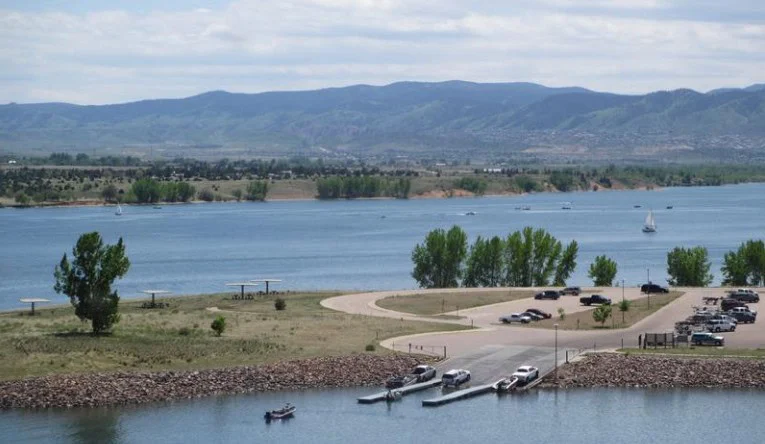
4. Chatfield State Park’s 1.6 Million Visitors and Boat Trailer Brake Demands: The Reservoir Recreation Load Test
Category: High Priority – When I am towing my boat trailer, what things should I be aware of to make my trip safer?
Towing a loaded boat trailer changes the physics of braking in ways that most drivers profoundly underestimate. Adding 3,000 to 6,000 pounds of boat, motor, and trailer to a tow vehicle’s stopping demand does not simply make it “harder to stop” — it fundamentally changes the weight distribution, increases kinetic energy by a factor that scales with mass, and places the tow vehicle’s brake system under sustained thermal stress on every access road approach and departure. Research from the National Highway Traffic Safety Administration confirms that vehicles exceeding their rated towing capacity or towing with degraded brake components face dramatically increased rear instability risk, particularly on downhill grades [1]. The brake system is not doing the same job twice — it is doing a qualitatively harder job, and it must be ready for it.
Chatfield State Park, located at the southwest corner of Littleton at 11500 North Roxborough Park Road, is one of the most popular recreational destinations in Colorado, welcoming 1.6 million visitors annually to a 1,500-acre reservoir surrounded by foothills terrain [3]. The park offers eight boat launch lanes at the north ramp complex and two additional lanes at the south ramp — and during summer weekends, those lanes are in continuous use by powerboats, pontoons, ski boats, and sailboats. The access roads into and out of the park traverse gradual grades that, when combined with a loaded trailer, create exactly the kind of compounding brake demand that separates maintained systems from failing ones. Drivers from Littleton proper, from Ken Caryl Ranch, and from the US-85 corridor arrive via Wadsworth Boulevard and the park’s entry roads, often in peak heat when brake thermal performance is already diminished.
Before you back that boat trailer down the ramp at Chatfield this season, give your brakes a launch-ready inspection. The team at Grease Monkey, 6549 South Broadway, Littleton, CO 80121 will check pad thickness, rotor condition, brake fluid health, and trailer hitch lighting compliance — everything your rig needs before a day on the water. With 1.6 million visitors sharing those access roads with you, a properly functioning brake system is the most important gear you can bring to Chatfield. Schedule your pre-season trailer towing inspection today.
5. Colorado’s #1 EV Adoption Rate and the Friction Brake Service Gap: What Regenerative Braking Cannot Maintain
Category: High Priority – I drive an electric vehicle. How does my regenerative braking system impact my ability to stop and what can it not do because of the regen braking system?
Regenerative braking is a genuine engineering achievement — it converts kinetic energy back into electrical charge and handles a substantial portion of deceleration in most electric and plug-in hybrid vehicles under normal driving conditions. What it does not do is eliminate the friction brake system. Brake calipers, pads, rotors, and hydraulic components remain present in every EV and PHEV on the road. The problem, documented in a Consumer Reports investigation and confirmed by automotive engineers, is that when regenerative braking handles the majority of routine deceleration, the friction system falls into disuse — and caliper pistons begin to corrode and seize in their bores [7]. When a hard stop is finally required — in an emergency, on a mountain descent, or when regen fails — the friction system is called upon and may not respond correctly. In 2025, NHTSA issued an urgent recall affecting select model year 2020–2026 Volvo plug-in hybrid and battery electric vehicles for the potential to completely lose brake capability while going downhill — a direct consequence of regen-friction system integration failure [1].
Colorado led the entire nation in electric vehicle adoption in the third quarter of 2025, with 32.4 percent of all new vehicle sales in the state being EVs or plug-in hybrids [4]. By early 2025, more than 169,000 electric vehicles were already registered on Colorado roads, with the Denver metro — including Littleton’s southwest Arapahoe and Jefferson County neighborhoods — home to the highest density of that fleet. Jeffco and Arapahoe County suburban communities, where Littleton residents live, tend toward affluent EV-adopter demographics. Many of these drivers have not been told — by their dealer or their manufacturer — that their friction brakes still require periodic inspection and service regardless of how little the system “feels” like it is being used. This is one of the fastest-growing brake service gaps in Colorado’s automotive landscape.
If you drive a Tesla, Chevy Bolt, Ford F-150 Lightning, Toyota RAV4 Prime, or any plug-in vehicle in Littleton, your friction brake system still needs professional attention. The ASE-certified technicians at Grease Monkey, 6549 South Broadway, Littleton, CO 80121 have the tools and training to inspect and service EV and hybrid brake systems — including confirming that caliper pistons are moving freely, pads are not glazed from heat cycling without full contact, and rotor surfaces remain within spec. Don’t let regenerative braking lull you into skipping your friction brake service. Book your EV brake inspection today.
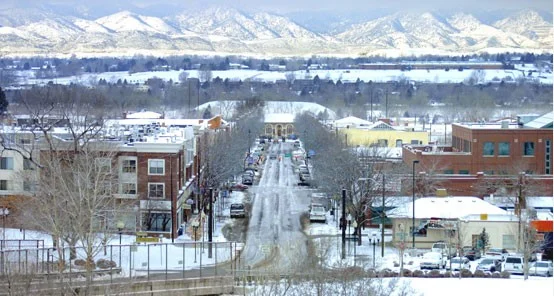
6. The South Platte River Flood Plain: Spring Snowmelt Inundation and Brake Traction on Littleton’s Historic River Corridors
Category: High Priority – It snows frequently here in Littleton. How does melting snow affect my ability to brake safely?
Wet road surfaces reduce the friction coefficient between tire and pavement, increasing stopping distances by 20 to 40 percent under normal braking — and far more when standing water is present and hydroplaning conditions develop [1]. When road surfaces are inundated by flood events or river overflow, an additional hazard emerges: brake wet film, the temporary loss of braking effectiveness caused by water migrating into contact between pad and rotor. Drivers who experience wet film may press the brake pedal and receive significantly reduced response for one to two seconds — long enough, at any speed above 20 mph, for a collision to become unavoidable if no following distance buffer exists.
Littleton’s identity is inseparable from the South Platte River, which runs through and alongside the city from southwest to northeast. The 1965 South Platte River flood — which sent an estimated 20-foot wall of water toward Littleton and resulted in $543 million in property losses across Denver, Englewood, and Littleton (equivalent to more than $4.4 billion in 2019 dollars) — remains the defining environmental event in the city’s history [6]. It was so catastrophic that the U.S. Army Corps of Engineers began construction of Chatfield Dam in 1967, completing it in 1975, specifically to prevent a recurrence. But Chatfield Dam controls the South Platte’s volume, not its corridor’s susceptibility to overland flooding during heavy spring snowmelt from the Front Range. River Road along the South Platte, Platte Canyon Road, sections of South Santa Fe Drive, and the greenway park roads adjacent to Lee Gulch and Little Dry Creek remain vulnerable during high-snowpack runoff years — and Littleton’s location at the confluence zone amplifies that risk.
After any significant rainfall or spring snowmelt event that puts water across Littleton’s South Platte corridor roads, make brake system health a priority inspection item. The ASE-certified technicians at Grease Monkey, 6549 South Broadway, Littleton, CO 80121 can inspect your rotors and pads for evidence of corrosion or contamination resulting from wet-road exposure, verify your ABS wheel speed sensors are reading accurately, and ensure your hydraulic system is sealed against moisture intrusion. Don’t let a wet spring cost you your stopping distance. Schedule your post-snowmelt brake inspection here.
7. Antique Row Stop-and-Go: 100 Dealers and Pedestrian-Heavy Brake Cycling Through South Broadway’s Mile-Long Retail Landmark
Category: Important – What is the thermal ratchet effect and how does that affect my brake system?
Repeated low-speed braking cycles — the hallmark of urban commercial corridor driving — are among the most mechanically demanding patterns a brake system can experience. Each stop-and-go cycle generates friction heat in the rotor and pad; at low speeds and high frequency, the heat does not have time to fully dissipate between applications. This produces a progressive thermal ratchet effect, slowly degrading pad compound and glazing rotor surfaces. NHTSA research on urban brake wear patterns consistently shows that commercial corridor driving in mixed pedestrian-and-vehicle environments accelerates pad wear significantly faster than highway or suburban arterial driving, even when individual speeds remain low [1]. Drivers who primarily commute on commercial corridors often discover their pads have worn to minimum thickness far earlier than expected mileage intervals would suggest.
South Broadway in Littleton and southern Denver is home to one of the most distinctive retail destinations in the Rocky Mountain region: Antique Row, a seven-block stretch of over 100 individual dealers in vintage goods, collectibles, and estate furniture. Anchoring the Littleton end of this corridor is the Colorado Antique Gallery at 5501 South Broadway — the largest antique mall in the Denver metro area, with more than 285 dealers in a 50,000-square-foot showroom [11]. The character of the Antique Row corridor is unlike any ordinary retail strip. Shoppers slow, pull partially into travel lanes while reading signage, execute mid-block U-turns, and make sudden stops in front of storefronts. Pedestrian crossings are frequent and irregular. The mix of this deliberate shopping behavior with commuters using South Broadway as a north-south artery creates an unusually high brake-cycling environment that affects every vehicle traveling this stretch on a daily basis.
If South Broadway between Belleview and Mineral is part of your regular driving pattern — whether you shop at the Colorado Antique Gallery, commute through Antique Row, or simply use South Broadway as a connector — your brake pads may be wearing faster than mileage-based service interval estimates suggest. The team at Grease Monkey, 6549 South Broadway, Littleton, CO 80121 will give you an actual pad thickness measurement, not a mileage guess. Time-based reality, not calendar math, is how Antique Row brake wear works — and that’s how Grease Monkey’s ASE-certified technicians approach it. Get your South Broadway brake check scheduled today.
8. The Hogback Daily Commute: Ken Caryl Ranch Grade Transitions and Brake Stress on Littleton’s Western Foothills Edge
Category: Important – What does a thermal fatigue pattern mean on my vehicle braking system?
Sustained descents on any grade — even modest suburban grades of 4 to 6 percent — create rotor heat accumulation that can trigger brake fade if pads and rotors are near the end of their service life. Unlike mountain highway descent, which is typically episodic for recreational drivers, suburban foothills commute grades are traversed twice daily, five days a week. This creates a compounding thermal fatigue pattern that few drivers recognize as significant. Rotor metallurgy research documents that repeated heat cycling without full cool-down periods — the precise condition of a foothills commuter route — accelerates microscopic fatigue cracking and thickness variation (runout) in cast iron rotors, reducing their effective braking surface area over time [1].
Ken Caryl Ranch is a planned residential community in Jefferson County divided by the north-south trending hogback geological formation, a dramatic rock ridge that separates the Ken Caryl Valley to the west from the plains community to the east [14]. Residents of the Valley access Ken Caryl Avenue to cross the hogback and connect to South Wadsworth Boulevard, which feeds into C-470 and the Littleton grid. This commute involves a daily descent off the hogback grade, with loaded vehicles, often in early morning when brake system temperatures are cold and pad compounds have not yet reached optimal operating temperature. Cold pads at elevated grades — even suburban ones — produce a measurably longer stopping distance than warmed pads at steady operating temperature. Coal Mine Avenue, Shaffer Parkway, and Deer Creek Canyon Road offer similar foothills-to-plains transitions for southwest Jefferson County residents approaching Littleton from the west.
Ken Caryl residents who commute through the hogback daily should treat that repetitive grade-descent cycle as a brake accelerant — which it is. Before the next school year commute season, before summer recreation driving compounds the issue, bring your vehicle to Grease Monkey, 6549 South Broadway, Littleton, CO 80121 for a full brake inspection. An ASE-certified technician will measure rotor thickness variation, check for heat-induced warping, and assess whether your pads have the compound depth to continue handling your daily commute safely. Schedule your foothills commuter brake check here.
9. Brake Proportioning Valve Failure: The Overlooked Component That Controls Front-to-Rear Brake Balance
Category: Important – What is a brake proportioning valve in my vehicle’s braking system and what causes it to fail and when it does how does it impact my brakes?
The brake proportioning valve — sometimes incorporated into a combination valve housing — is the hydraulic component responsible for distributing brake pressure appropriately between the front and rear axles during a stop. Under normal braking, physics causes weight to transfer forward, which increases front traction and reduces rear traction. The proportioning valve compensates by reducing hydraulic pressure to the rear brakes as brake application force increases, preventing rear wheel lockup. When this valve fails, the result is typically excessive rear brake engagement: the rear wheels lock, the vehicle pivots, and directional control is lost in a fraction of a second [8]. Research by YourMechanic and documented in brake system engineering literature confirms that proportioning valve failures manifest as vehicle drift during stops, premature rear pad wear, and unpredictable front-end diving behavior that cannot be corrected by driver skill alone [8].
Unlike pads or rotors — which most drivers have at least heard of — the proportioning valve is rarely mentioned in routine service conversations, despite the fact that it is a wear component subject to spring fatigue and internal seal degradation over time. Because it sits in the hydraulic circuit between the master cylinder and the rear caliper lines, even a partial failure can create a gradual, almost imperceptible change in vehicle behavior that drivers acclimate to rather than identifying as a brake problem. Vehicles that frequently navigate steep grades — such as those used for Ken Caryl Ranch commutes, Chatfield boat-ramp approaches, or US-285 foothills descents — place above-average demand on the proportioning valve as it works to maintain rear brake balance on sustained downhill grades.
A proportioning valve problem will not trigger a check-engine light and will not register in a standard OBD-II scan. It requires a trained brake technician to assess hydraulic pressure distribution and inspect the valve housing for spring fatigue or seal wear. At Grease Monkey, 6549 South Broadway, Littleton, CO 80121, ASE-certified technicians examine the full brake hydraulic circuit — including combination and proportioning valve condition — as part of a comprehensive brake inspection. If your vehicle drifts when you brake, your rear pads are wearing faster than your fronts, or your nose dives sharply on light brake applications, don’t guess: schedule a full hydraulic assessment at greasemonkey.com/locations/co/littleton/6549-south-broadway/ today.
10. Three-County Jurisdiction, Three De-icing Schedules: How Littleton’s Arapahoe-Jefferson-Douglas Boundary Creates Unpredictable Road Conditions
Category: Medium Priority – What is mixed-friction surface braking and how does that affect my braking after a winter snowstorm here in Littleton?
Road surface conditions during winter weather events are not uniform within a single municipality when that municipality spans multiple county jurisdictions. Each county operates its own road maintenance department, procures its own de-icing chemicals, and deploys snowplows and treatment trucks on its own schedule — which means that a driver crossing a county line in Littleton may encounter bare pavement on one side and untreated ice on the other within seconds. This traction discontinuity is particularly dangerous for ABS-equipped vehicles because ABS calibration assumes consistent surface friction: when one axle encounters ice at the moment the system is modulating pressure to achieve a controlled stop, the response may be less effective than on a uniformly treated surface. NHTSA research documents that mixed-friction surface braking is among the highest-risk conditions for loss-of-control events [1].
Littleton is one of the very few Colorado municipalities that spans all three counties: Arapahoe, Jefferson, and Douglas [10]. Arapahoe County Road and Bridge, Jefferson County Road and Bridge, and Douglas County Public Works each maintain distinct sections of streets that appear contiguous to drivers. The boundary between Jefferson County and Arapahoe County runs through the heart of the Littleton city grid, crossing South Wadsworth Boulevard, South Pierce Street, and multiple residential corridors. A morning commute from Ken Caryl Ranch into central Littleton crosses from Jefferson County maintenance responsibility into Arapahoe County maintenance within a few miles — a transition that, during an overnight snow event, may mean the difference between treated and untreated pavement. Douglas County maintains additional road sections in southern Littleton near the Highlands Ranch border. Drivers who live in one county and commute through another may have no idea they are encountering multi-jurisdiction surface variability.
The best mitigation against multi-jurisdiction winter road conditions is a brake system that performs at full specification. The team at Grease Monkey, 6549 South Broadway, Littleton, CO 80121 will verify that your ABS wheel speed sensors are reading accurately, your brake fluid viscosity is within cold-weather spec, and your pad compound retains adequate thickness to provide consistent friction output — regardless of which county’s pavement you’re crossing. Don’t let a jurisdictional line catch your brake system unprepared. Schedule your pre-winter brake inspection at Grease Monkey Littleton.
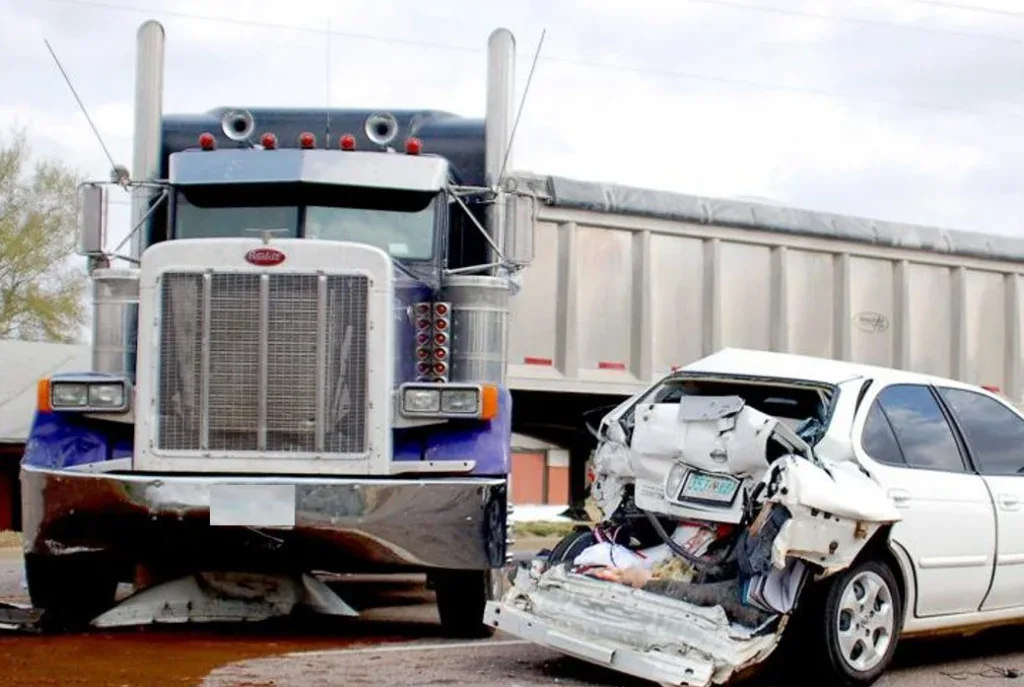
11. Santa Fe Drive Heavy Commercial Corridor: Industrial Truck Proximity and the Brake Demands on Every Personal Vehicle Sharing the Road
Category: Medium Priority – With their super powerful air brakes, can a semi-truck stop as fast as my personal vehicle?
Federal Motor Carrier Safety Administration data documents that heavy commercial vehicles — semi-trucks, flatbeds, tankers, and box trucks — have braking distances that can exceed 40 percent greater than those of personal vehicles at equivalent speeds [1]. This creates an asymmetric hazard: when a personal vehicle ahead of or near a heavy truck must make an emergency stop, the truck may be physically unable to respond in time even with functional brakes — and if the personal vehicle itself has degraded stopping power, the gap between “stopping in time” and “being rear-ended” shrinks rapidly. Understanding heavy truck presence on your regular routes is one of the most actionable ways to calibrate your brake maintenance urgency.
Santa Fe Drive — US-85 — runs north-south through eastern Littleton, connecting the city to the Englewood industrial zone, the South Platte River industrial corridor, and the broader Denver metro commercial freight network. Santa Fe Drive serves as a major surface arterial for industrial and commercial truck traffic moving between the Denver south metro and destinations along the I-25 and US-85 corridors. Commercial zones along South Santa Fe Drive and near the West Mineral Avenue and Belleview interchanges include distribution centers, construction supply businesses, and light industrial operations whose fleet vehicles use Santa Fe Drive as a daily route. Residents traveling Santa Fe Drive to access US-85, Sante Fe Arts District, or the C-470 interchange share lanes with this commercial freight traffic on a daily basis.
Personal vehicles that share road space with heavy commercial truck traffic on Santa Fe Drive need every available margin of braking capability. The ASE-certified technicians at Grease Monkey, 6549 South Broadway, Littleton, CO 80121 understand the brake demands that mixed-traffic commercial corridors place on personal vehicles, and their full brake inspection includes a check of stopping-distance performance components — pad thickness, rotor surface condition, and hydraulic pressure delivery — that determine how your vehicle performs when a truck’s shadow falls across your rear bumper. Book your Santa Fe corridor safety check today.
12. Trailer Brake Controller Calibration: The Electronic Synchronization Gap in Littleton’s Recreation-Ready Tow Vehicle Fleet
Category: Medium Priority – How critical is miscalibration of my proportional brake controller when I am towing a trailer or my boat and what risks does it pose?
Modern tow vehicles — full-size pickups, SUVs, and heavy-duty vans — equipped for trailer towing typically include a proportional brake controller: an electronic module that senses the tow vehicle’s deceleration and sends a proportionally matched braking signal to the trailer’s electric brakes. When the controller is properly calibrated, the trailer brakes engage in sync with the tow vehicle, preventing trailer push (where the trailer’s momentum drives the tow vehicle forward during braking) and reducing overall stopping distance. When the controller is miscalibrated, undersized, or malfunctioning, the trailer may brake earlier than the tow vehicle (increasing the risk of a jackknife) or later (causing push). According to NHTSA and trailer safety research, improperly calibrated or missing trailer brake systems contribute to a significant share of tow-vehicle crash events [1]. This calibration is a specific, serviceable item — and it is among the most frequently overlooked components on otherwise well-maintained tow vehicles.
Littleton’s geographic position makes it one of the metro’s primary tow vehicle communities. Chatfield State Park’s boat ramps generate substantial summer boat trailer traffic on Wadsworth Boulevard and Roxborough Park Road. US-285 carries campers, horse trailers, utility trailers, and fifth-wheel RVs westbound toward Conifer, Evergreen, Kenosha Pass, and South Park. Ken Caryl and Chatfield-area residents commonly own trucks configured for both work hauling during the week and recreation towing on weekends. Trailer brake controller calibration is specific to each tow vehicle-trailer combination: a controller calibrated for a 6,000-pound boat trailer must be recalibrated when the same truck tows a 12,000-pound fifth-wheel. Many Littleton truck owners carry different trailers throughout the year and have never recalibrated their brake controller between trailer swaps. Before you head down Wadsworth to Chatfield’s boat ramp, or west on US-285 toward the mountains with a loaded camper, have your trailer brake controller verified and calibrated by professionals who understand the full brake system. The team at Grease Monkey, 6549 South Broadway, Littleton, CO 80121 can inspect your tow vehicle’s brake system integrity and confirm your stopping capability is ready for recreational and work towing loads. Don’t let a trailer push on Wadsworth be your wake-up call — schedule today.
13. Electric Parking Brake Technology: The Modern Service Protocol That Most Drivers — and Some Shops — Don’t Know About
Category: Lower Priority – Does my electric parking brake on my new vehicle require special servicing compared to my older vehicle’s manual parking brake?
The electric parking brake (EPB) has replaced the traditional hand-lever or foot-pedal mechanical parking brake in the majority of new vehicles produced since 2015. Controlled by a dashboard button rather than a cable, the EPB uses an electric actuator motor to apply and release the rear brake calipers. During rear brake service — pad replacement, caliper removal, or rotor swap — the EPB caliper piston cannot be manually retracted with a standard C-clamp the way a conventional piston can. Attempting to compress an EPB caliper without the correct scan tool and retraction procedure can permanently damage the actuator motor, destroy the caliper, and result in a brake service that is worse than the original problem [8]. Most EPB systems also include service mode software that must be engaged before work can begin and exited properly when complete — a digital step that is invisible to the customer and only visible to a properly equipped technician.
In Littleton’s vehicle market, which skews toward newer-model-year SUVs and crossovers in affluent Arapahoe and Jefferson County zip codes, EPB prevalence is high. Vehicles including the Toyota RAV4, Honda CR-V, Ford Explorer, Subaru Outback, Jeep Grand Cherokee, Chevy Equinox, and virtually every German-brand vehicle now use EPB rear calipers as standard equipment. The proportion of Littleton’s vehicle parc equipped with EPBs has grown dramatically over the last decade, and it will continue to grow as older cable-equipped vehicles age out. A driver who takes a modern EPB-equipped vehicle to a shop without EPB scan tool capability risks receiving brake service that is incomplete, performed with incorrect procedures, or — at worst — performed in a way that damages the very components being serviced.
Not every brake shop is equipped for electric parking brake service — but Grease Monkey’s ASE-certified technicians and FullSpeed Automotive’s national training program ensure that modern brake service protocols, including EPB retraction and software calibration, are part of every full brake service performed at Grease Monkey, 6549 South Broadway, Littleton, CO 80121. If your vehicle was built after 2015, ask your service advisor whether EPB service protocols are on the table — and let their answer tell you everything you need to know about where to bring your car. Book your modern brake service at Grease Monkey Littleton today.
14. Old Town Littleton’s Historic District and Event Season Pedestrian Density: Heritage Corridor Brake Cycling at Colorado’s Front Range Frontier
Category: Lower Priority – What does a low-speed, high-pedestrian-density environment with event-season surges do to my vehicle braking system?
Historic downtown districts create a distinctive brake cycling pattern that is neither pure highway nor pure commercial corridor: a low-speed, high-pedestrian-density environment with event-season surges, unpredictable foot traffic at unmarked crossings, and dense on-street parking that generates door-zone hazards and sudden lateral vehicle intrusions. Research on urban pedestrian safety environments consistently identifies brake system condition as a variable in pedestrian injury outcomes — a vehicle whose brakes can stop in 30 feet versus one requiring 50 feet makes a meaningful difference in a historic district where crosswalks are close-spaced and pedestrian behavior is spontaneous [1]. These environments demand a brake system at full specification, not one that is “good enough for the highway.”
Old Town Littleton — the historic downtown centered on South Prince Street and West Alamo Avenue — is one of the most vibrant and well-preserved historic commercial cores on the Front Range. The area hosts the Littleton Farmers Market, seasonal festivals, gallery walks, and community events that draw thousands of visitors to a walkable grid where vehicle traffic and pedestrian activity share a dense, short-block network. The Littleton Light Rail Station on South Prince Street brings RTD C-Line and D-Line commuters directly into the heart of Old Town, adding transit-connected pedestrian volumes to the district’s event days. Nearby, the Arapahoe Community College campus along West Littleton Boulevard adds student foot traffic that peaks at predictable times but whose individual crossings remain spontaneous and unpredictable for drivers navigating the historic grid.
Old Town deserves brakes that are as well-maintained as its architecture. The same care Littleton’s residents have invested in preserving their historic downtown should be reflected in the brake system of every vehicle entering it. At Grease Monkey, 6549 South Broadway, Littleton, CO 80121, an ASE-certified brake inspection takes less time than an afternoon at the Farmers Market — and it ensures that your vehicle is ready for the precise, low-speed, high-pedestrian-density brake demands of Colorado’s oldest incorporated city. Schedule your Old Town-ready brake inspection today.
15. Littleton as Your Long-Term Brake Service Home: Three-County Community Depth and the Multi-Decade Value of a Consistent Service Record
Category: Long-Term Value – How valuable is having consistent vehicle service records in helping me when selling my car in the future?
Vehicle service records are not merely administrative documents — they are a financial asset that accrues value with every consistent entry. Studies of used-vehicle resale behavior consistently document that verifiable, consistent service records from a named, nationally recognized service provider increase vehicle resale value by a meaningful margin compared with undocumented or self-reported maintenance histories [9]. A brake service record from a CARFAX-participating shop creates a permanent, independently verifiable data point in that vehicle’s history. Every brake inspection that generates a professional report, every fluid exchange documented with mileage and date, every pad replacement that creates a service entry — these are contributions to a vehicle’s documented lifetime that pay dividends at trade-in, private sale, or insurance evaluation.
Littleton’s community character makes it one of the Denver metro’s most natural long-term service communities. Incorporated in 1890, it carries more than 130 years of residential stability — a community where multi-generational families live, where median age (40.9 years) reflects deep roots rather than transient turnover, and where 18.7 percent of residents are 65 or older [13]. Its position as the county seat of Arapahoe County and its three-county geographic reach (Arapahoe, Jefferson, and Douglas) make it a hub not just for city residents but for the surrounding communities of Ken Caryl, Highlands Ranch, Englewood, and the US-285 foothills corridor. The Grease Monkey at 6549 South Broadway is not a drive-through stop — it is a service home for a stable, long-term community whose vehicles deserve a service record that reflects the same consistency. The most cost-effective brake decision is the one made before an emergency forces your hand. CARFAX data shared by AutoSuccess Online confirms that FullSpeed Automotive locations — including Grease Monkey franchises — participate in service record documentation that stays with the vehicle through every ownership transition [9]. Building that record in Littleton, with an ASE-certified team on South Broadway that knows your vehicle, your driving patterns, and your local road environment, is an investment in both safety and long-term vehicle value. Start your Littleton brake service record — or add to the one you already have — at Grease Monkey, 6549 South Broadway, Littleton, CO 80121. Your future self — and future buyer — will thank you.
About Grease Monkey 6549 South Broadway, Littleton, CO 80121
Grease Monkey at 6549 South Broadway, Littleton, CO 80121 (greasemonkey.com/locations/co/littleton/6549-south-broadway/) is part of the FullSpeed Automotive network, which operates more than 900 service centers nationwide and has served drivers for over 40 years. In 2025, 435 FullSpeed Automotive locations were named CARFAX Top Shop Winners for verified customer satisfaction and service transparency — and Grease Monkey’s ASE-certified technicians bring that nationally recognized standard to every brake inspection, fluid service, and safety check performed for Littleton’s three-county community. Whether you live in Old Town, Ken Caryl, or along the C-470 corridor, this South Broadway location is your local link to a brake service network with the credentials, training, and tools to keep you safe on every road Littleton puts in front of you.
Author Information
Author Bio – Phillip Paul Gilliam
Phillip Gilliam is a veteran journalist and former Editor-in-Chief with 50+ years of publishing experience and thousands of published articles. Specializing in automotive, trucking, and digital publishing, he creates authoritative, search-optimized content built on real-world expertise and editorial excellence. To learn more about Phil, visit http://www.phillipgilliam.com/about.html or contact Phil at [email protected]. He would love to hear from you!
Full Citation List
[1] National Highway Traffic Safety Administration (NHTSA). Traffic Safety Facts: Brake-Related Crash Data and Vehicle Safety Standards. U.S. Department of Transportation. Available at: https://www.nhtsa.gov. (Stopping distance increases of 25–40% with worn pads; mixed-friction surface ABS risk; heavy commercial vehicle braking distance differential; urban brake wear patterns; wet road stopping distance increase of 20–40%; trailer brake system safety data.)
[2] Colorado Department of Transportation (CDOT). C-470 Express Lanes Project and Traffic Data. CDOT. Available at: https://www.codot.gov/projects/archives/C470ExpressLanes. (C-470 carries upwards of 100,000 vehicles per day at its busiest section between I-25 and Broadway; 34 percent corridor population growth projected by 2025.)
[3] Colorado Parks and Wildlife. Chatfield State Park — Park Highlights. State of Colorado. Available at: https://cpw.state.co.us/state-parks/chatfield-state-park/chatfield-state-park-park-highlights. (1.6 million annual visitors; 8 north launch lanes and 2 south launch lanes at the 1,500-acre Chatfield Reservoir.)
[4] Colorado Energy Office. Colorado Tops the Country in EV Sales for 3rd Quarter 2025, Setting a National State Record for Highest Percentage Adoption in a Quarter. State of Colorado. Available at: https://energyoffice.colorado.gov/press-releases/colorado-tops-the-country-in-ev-sales-for-3rd-quarter-2025-setting-a-national-state. (32.4% of Q3 2025 new vehicle sales in Colorado were EVs or plug-in hybrids; 169,000+ EVs on Colorado roads by early 2025; one in three new car sales was electric by end of 2024.)
[5] CBS Colorado. Deadly Travel: The Challenges of Highway 285. CBS News Colorado. Available at: https://www.cbsnews.com/colorado/news/highway-285-deadly-travel-colorado-department-of-transportation-crashes/. (22 people killed in crashes on Highway 285 between C-470 and Bailey from 2012–2017; 16-mile stretch south of Foxton Road saw 75 crashes in 11 months.)
[6] Littleton Museum. The 1965 Flood of the South Platte River. City of Littleton. Available at: https://www.museum.littletonco.gov/Research/Littleton-History/Other-Topics/The-1965-Flood-of-the-South-Platte-River. (1965 South Platte flood sent an estimated 20-foot wall of water toward Littleton; $543 million property losses equivalent to more than $4.4 billion in 2019 dollars; 26 bridges destroyed; Chatfield Dam construction begun 1967, completed 1975.)
[7] Consumer Reports. Brake Lights Can Fail to Provide Fair Warning on Some EVs. Consumer Reports. Available at: https://www.consumerreports.org/cars/car-safety/brake-lights-can-fail-to-provide-fair-warning-on-some-evs-a9533519285/. (EV brake lights may not activate during regenerative-only deceleration; caliper pistons seize from friction brake disuse; wheel-speed sensor faults can disable ABS and force friction-only fallback.)
[8] YourMechanic. Symptoms of a Bad or Failing Proportioning/Combination Valve. YourMechanic Advice. Available at: https://www.yourmechanic.com/article/symptoms-of-a-bad-or-failing-proportioning-combination-valve. (Proportioning valve failure causes rear wheel lockup, vehicle drift during stops, excessive front-end dive, and premature rear brake wear; EPB calipers require specialized scan tools for retraction during brake service.)
[9] AutoSuccess Online. CARFAX Names 435 FullSpeed Automotive Locations 2025 Top Shop Winners. AutoSuccess Online. Available at: https://www.autosuccessonline.com/fullspeed-automotive-recognized-435-service-centers-carfax-top-shop-wins/. (435 FullSpeed Automotive locations named 2025 CARFAX Top Shop Winners; FullSpeed operates more than 900 service centers; ASE-certified technicians; CARFAX participation creates verifiable service records attached to vehicle history.)
[10] Uncover Colorado. Littleton, Colorado | Arapahoe, Douglas, and Jefferson County. Uncover Colorado. Available at: https://www.uncovercolorado.com/towns/littleton/. (Littleton city boundaries span Arapahoe, Douglas, and Jefferson counties; Littleton is the county seat of Arapahoe County; population approximately 44,519 as of 2026; elevation 5,351 feet; incorporated 1890.)
[11] Colorado Antique Gallery / Antique Row Denver. South Broadway Antique Row. Available at: https://www.gpsmycity.com/attractions/antique-row-shopping-district-58334.html. (Antique Row spans seven blocks of South Broadway with over 100 individual dealers; Colorado Antique Gallery at 5501 S. Broadway, Littleton — largest antique mall in Denver, 285+ dealers in a 50,000+ square foot showroom.)
[12] HCA HealthONE Swedish. Emergency Care in Englewood, CO. HCA HealthONE. Available at: https://www.healthonecares.com/locations/swedish/specialties/emergency-care. (HCA HealthONE Swedish at 501 E Hampden Ave, Englewood, CO is a Level I Trauma and Burn Center — the highest trauma designation — serving Colorado and the Rocky Mountain region; 504 beds; first Colorado acute care hospital to earn COPPER Advanced certification.)
[13] U.S. Census Bureau. QuickFacts: Littleton City, Colorado. United States Census Bureau. Available at: https://www.census.gov/quickfacts/fact/table/littletoncitycolorado/PST045224. (Littleton population 45,652 at 2020 census; median age 40.9 years; 19.1% under age 18; 18.7% age 65 or older; incorporated as a town in 1890.)
[14] Ken-Caryl Ranch Master Association. History of Ken-Caryl Ranch. Ken-Caryl Ranch. Available at: https://ken-carylranch.org/community-news/history-of-ken-caryl-ranch/. (Ken Caryl Ranch is divided by the north-south hogback geological formation; Ken Caryl Valley is west of the hogback and accessed via Ken Caryl Avenue; community is located in Jefferson County adjacent to Littleton city limits.)
[15] Federal Highway Administration. US 285 Foxton Road to Bailey Case Study. FHWA PlanWorks. Available at: https://fhwaapps.fhwa.dot.gov/planworks/Reference/CaseStudy/6. (US-285 is one of two primary mountain corridors from the Denver metro; the corridor serves as both recreational route and distant residential commute zone; high traffic volume, wildlife, narrow lanes, and limited visibility identified as persistent collision factors.)
© 2026 Grease Monkey, Written by, Phillip Paul Gilliam. All rights reserved. Published in partnership with Grease Monkey, 6549 South Broadway, Littleton, CO 80121. Content is for informational purposes and reflects current industry research and local geographic conditions. Brake service intervals and recommendations may vary by individual vehicle, usage pattern, and driving conditions. Consult a certified professional for specific advice about your vehicle’s brake system.
Stop by today.
- Grease Monkey Center #82 Address: 6549 South Broadway, Littleton, CO, 80121
- Services: Brake Services, Fluid Exchange Services, Headlight Services, Oil Changes, Power Steering
Your car will thank you. And your wallet will too.

Plan Your Visit
Find a location near you, explore current deals, and get everything you need before you roll in.