6 Reasons Littleton's Seasons Put Your Engine Air Filter to Work on South Broadway – Falling Leaves, Magnesium Chloride, Spring Pollen, a Silent Dashboard, Throttle Body Grime, and Cars With Two Filters
Location: Littleton, CO Topic: Grease Monkey Center #82 By: Phil Gilliam
An Authoritative Guide for Engine Air Filter Care Along the South Platte, From Chatfield to Downtown Littleton
Grease Monkey, 6549 South Broadway, Littleton, CO 80121. Has About 1,500 Google Reviews With A 4.8 Star Rating.
A Note on Authority and Expertise: This article was researched and written by Phillip Paul Gilliam, a veteran journalist and former Editor-in-Chief with more than 50 years of publishing experience in automotive, trucking, and safety communications.
Littleton drivers do not just face one kind of air. They face a calendar of it: autumn leaves, a winter of liquid road deicer, spring and summer pollen, and dust from the open ground around Chatfield. This guide ties each engine air filter question to evidence, including Colorado Department of Transportation deicer guidance, a University of Colorado corrosion study written for CDOT, a Denver allergist's pollen calendar, University of Bern pollen research, a Mercedes-Benz technical publication on intake deposits, a technician trade journal on fuel trims, and a Haynes repair guide. Where the evidence is limited, this guide says so.
The shop at 6549 South Broadway is Grease Monkey Center #82, managed by Josh Valverde and operated by Threshold Automotive, with FullSpeed Automotive as parent company [1]. Grease Monkey was founded in 1978 and is headquartered in Denver [2]. FullSpeed, led since November 2025 by CEO Brian Maciak, reported more than 900 franchised and company-owned locations in January 2026 [3], and when the company was sold in 2020 it was already described as the fourth largest quick lube operator in the United States [4].
Littleton is the county seat of Arapahoe County, home to 44,879 people in a 2024 estimate, and sits on the South Platte River at an elevation of about 5,400 feet, with Chatfield Reservoir just to the southwest [5]. The city averages about 16 inches of precipitation and nearly 66 inches of snow a year [5]. The store page describes heavy snow on C-470, dusty summer winds near Chatfield State Park, road salt and magnesium chloride, wildfire smoke, and stop-and-go traffic on Broadway [1]. Every season leaves something in the engine air filter.
An Introduction to Engine Air Filters on South Broadway and Across Littleton
Littleton is an old irrigation town. The High Line Canal, begun in 1879, runs 74 miles across the Front Range, and about ten Littleton-area ditches dug before 1900 still carry water today [6]. Where there is water on the plains, there are trees, and where there are trees, there are leaves, seeds, and pollen drifting across streets and parking lots. Add a long winter of road treatment and summer dust from the open ground near Chatfield, and the engine air filter in a Littleton car sees a different kind of load each season.
This guide answers six questions Littleton drivers ask about the engine air filter, arranged roughly around the calendar. It begins with autumn leaves, because October is when they fall, moves through winter deicer and spring pollen, and then turns to three questions that last all year: why the dashboard never warns you about a clogged engine air filter, how the filter relates to a dirty throttle body, and why some cars have two engine air filters instead of one.
Each answer begins with a short, direct reply, then explains the evidence and what it means on South Broadway, on C-470, and in the neighborhoods from Ken Caryl to Highlands Ranch.
The crew at Grease Monkey on South Broadway replaces engine air filters and cabin filters, offers throttle body cleaning, and checks the engine air filter as part of the 16-point inspection that comes with an oil change, which usually takes about 15 minutes [1]. Here is what is worth knowing.
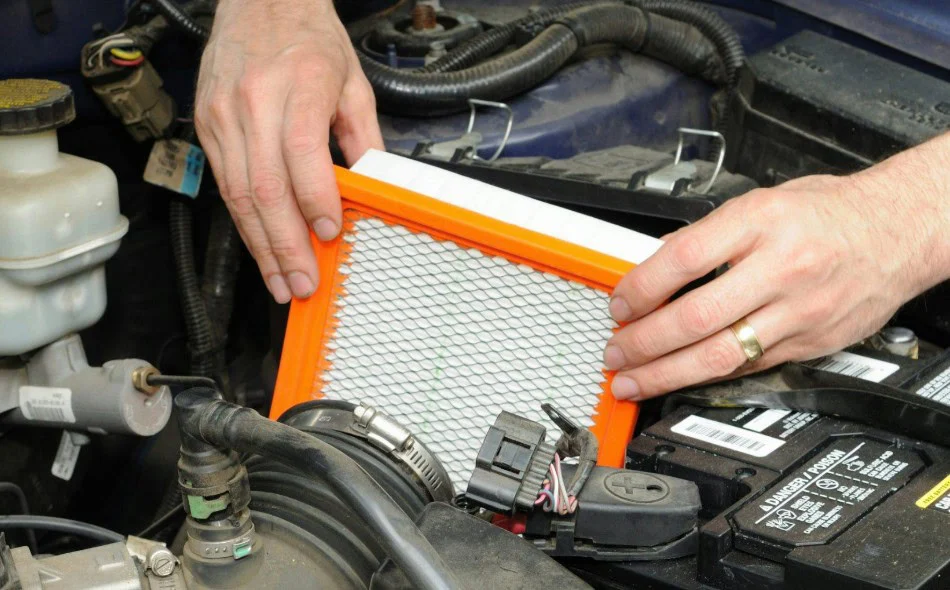
Leaves in your engine air filter air box can cause real problems for your vehicle!
1. October in Littleton Means Leaves in the Air Box – Why Fall Is the Time to Look Inside Your Engine Air Filter Housing
Can fall leaves and tree debris get into my engine air filter housing, and should I check it in autumn?
Quick Answer: Yes. Leaves, seeds, and needles collect around the hood, cowl, and air inlet, and some can be drawn into the air box and onto the engine air filter. Most do little harm, but a packed inlet or soggy debris restricts airflow. An autumn look inside the engine air filter housing catches it.
Drive down a tree-lined street in Littleton in October and you can watch the leaves pile up against curbs and under windshield wipers. Some of that debris does not stay on the outside. Cars parked under trees collect leaves in the gap between the hood and the windshield cowl, along fender openings, and around the inlet that feeds the engine air filter housing.
Automotive writer Peter Nelson of The Drive notes that leaves gather in tight spaces, especially between the hood and the plastic cowling where heating and air conditioning intakes often sit, and he warns that debris can block air filters and radiator fins. Because fall temperatures are cool, he adds, the engine may not show any sign of a blockage, so he recommends checking the grille and air filter for large obstructions [7]. A Kansas City television report made a similar point, warning that decaying leaves can clog a car’s air intakes and that wet leaves trapped under the hood can cause damage over time [8].
For the engine air filter, the concern is mostly about the inlet and the dirty side of the housing. A dry leaf or a few seeds resting on the pleats do not hurt much. A wad of wet leaves packed into the inlet snorkel, or a mat of decaying debris sitting against the media, is different. It blocks part of the filter’s surface, holds moisture against the paper, and can feed mold and odors. Debris in the housing can also attract rodents looking for nesting material as the weather turns cold.
The fix is simple. In late fall, after the trees on your street have dropped their leaves, open the engine air filter housing and look at both the filter and the inlet. Remove any loose debris from the dirty side with a gloved hand or a shop vacuum, never by blowing it deeper into the housing, and check that nothing has slipped past the filter to the clean side. Clear the cowl area at the base of the windshield, too.
If you park under trees every night, make this a seasonal habit. A clean inlet and a clean engine air filter going into winter mean the filter starts the snowy season with its full surface working, instead of part of it buried under last month’s leaves.
2. A Winter of Magnesium Chloride Leaves More Than White Streaks – What Road Deicer Means for Your Engine Air Filter and Air Box
Can the magnesium chloride sprayed on Littleton roads affect my engine air filter or the parts around it?
Quick Answer: Indirectly. Road spray carries deicer residue into the engine bay, where magnesium chloride clings, dries, and turns wet again in humid weather. It is not a major filter clog, but it can dampen the engine air filter’s dirty side and corrode clips and clamps. Inspect the housing after winter.
Colorado drivers know the white film that coats everything after a winter storm. The Colorado Department of Transportation uses magnesium chloride liquids for anti-icing and deicing, including a cold-weather version for pavement temperatures below 16 degrees, along with a solid product that mixes granular salt and magnesium chloride [9]. CDOT says the liquids are generally less corrosive than traditional sodium chloride, but it also advises motorists to wash their vehicles after any snowstorm to remove the residue [9].
Magnesium chloride behaves differently from ordinary salt. A University of Colorado study written for CDOT found that magnesium chloride solution is more viscous and attracts water more strongly than sodium chloride solution. It sticks to metal surfaces and crystallizes when dry, then goes back into solution when the air turns humid, which is why it proved more corrosive than ordinary salt in humid test conditions [10]. In other words, the residue does not simply dry up and blow away.
Where does the engine air filter fit? Every car pulls its intake air from somewhere in the front of the vehicle, and in slushy traffic the air near the road is full of spray. Engineers take that seriously. Ford has said its engineers monitor the air intake during wind tunnel snow testing because snow can choke a vehicle’s engine [11]. Most of the heavy spray stays low, but a fine mist of slush and deicer can reach inlets that sit near the grille or a fender opening, dampening the dirty side of the engine air filter and leaving residue in the housing.
The bigger long-term concern is the hardware around the filter. Metal spring clips, worm-gear hose clamps, and the wire mesh on some engine air filters all sit in that environment. A clip that corrodes and weakens no longer holds the lid evenly, and an uneven lid can let dirty air slip around the edge of the engine air filter when dusty summer winds return near Chatfield.
A sensible routine is a spring inspection after the last snow. Have the engine air filter checked for water staining, crusty residue, or a warped edge, look at the clips and clamps for rust or weakness, and replace anything that no longer seals. Washing the front of the car and the wheel wells through the winter, as CDOT recommends, keeps less residue cycling back into the engine bay.
3. Pollen Season Runs February Through October in the Denver Area – Does It Really Clog Your Engine Air Filter?
Does spring and summer pollen in Littleton clog my engine air filter, or is that just a cabin filter problem?
Quick Answer: Both filters see it, but differently. Pollen grains are large compared with abrasive dust, so a healthy engine air filter catches them easily. Heavy pollen mixed with dust and moisture can form a mat that adds restriction. For the engine air filter, pollen adds to the load rather than being the main threat.
Littleton allergy sufferers know the calendar. Denver allergist William Storms, MD, writes that the area’s allergy season typically begins in February and runs through October, with the most severe allergies peaking from April through September [12]. Cottonwood and aspen release pollen from February through May, elm along damp areas and rivers from February to April, grasses from early May through August, and weeds such as ragweed and tumbleweed from late July into September or October [12]. Along the South Platte and the old irrigation ditches, there are plenty of trees to contribute.
Drivers often assume that the same pollen clogging their sinuses must be clogging the engine air filter. Partly true. Pollen grains are relatively large. University of Bern botanists note that pollen and spores range from about 2 to more than 300 micrometers, with many common grains well above 10 micrometers [13]. Particles that size are among the easiest for a quality engine air filter to capture. Pollen is also soft organic material, not hard mineral grit, so the small amount that a filter might miss is far less abrasive than quartz dust.
Where pollen matters is volume and stickiness. During heavy release, pollen settles in layers on cars, in the cowl, and inside the air inlet, and every grain the engine air filter catches takes up a little surface. The Denver allergist notes that dry conditions put more grains into the air [12]. In Littleton, pollen often arrives mixed with dust, and a spring shower can turn that mix into a paste on the face of the engine air filter that restricts airflow more than dry dust alone.
The cabin filter is a different story. It sits in the heating and air conditioning system and is the filter that protects your nose, so it is the one to think about first if allergies are your concern. The engine air filter’s job is protecting the engine, and pollen is one part of its seasonal load, not the main event.
For most Littleton drivers, the practical answer is to have the engine air filter checked at the end of the heavy spring release, around late May or June, when tree pollen has passed and the dusty summer winds are about to start. If the engine air filter is coated, loaded, or stained, replace it then, and ask about the cabin filter at the same visit.
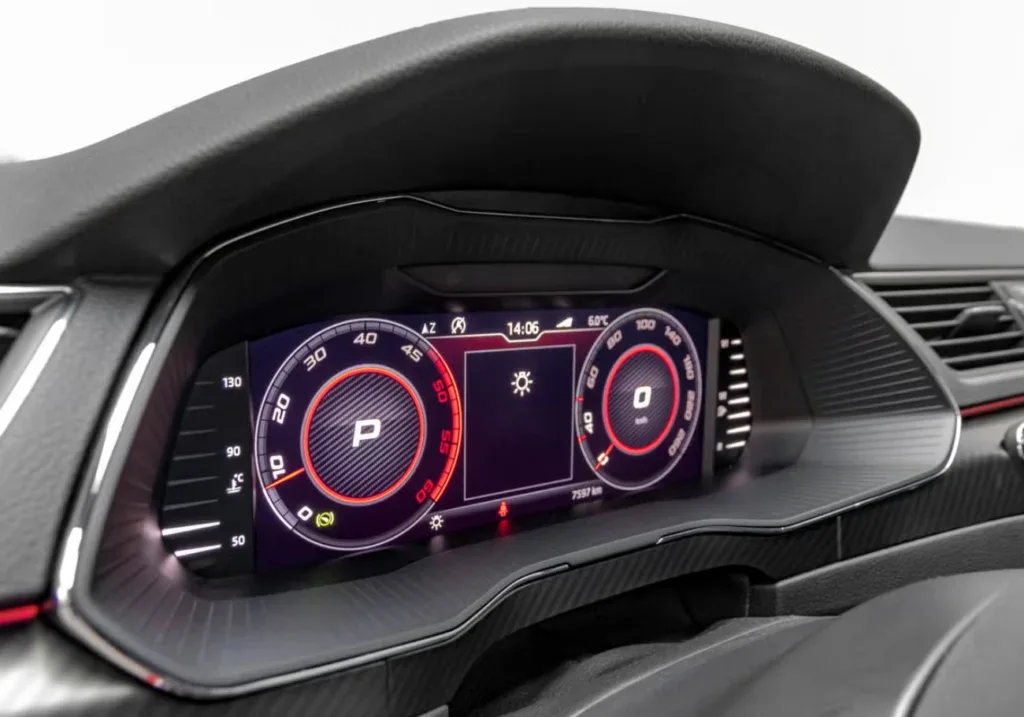
Don’t count on your car dashboard to tell you that your engine air filter is clogged. It won’t let you know so read more below!
4. Your Dashboard Will Never Warn You About a Clogged Engine Air Filter – Here Is Why the Computer Keeps Quiet
Why doesn’t my check engine light come on when my engine air filter is clogged?
Quick Answer: Because the engine computer adjusts fuel to match the air it measures, a gradually clogging engine air filter usually stays within its correction range and sets no code. Performance slips quietly instead. A badly fitted or torn engine air filter that lets dirt reach sensors is more likely to cause trouble.
Modern cars warn drivers about almost everything: low tire pressure, an open door, a loose gas cap. Yet a car can run for tens of thousands of miles on a badly clogged engine air filter without a single light on the dashboard. That is not an oversight. It is a result of how the engine computer manages the air and fuel mixture.
The computer uses readings from the mass airflow sensor and the oxygen sensors to set fuel delivery, and it constantly fine-tunes that mixture with a correction called fuel trim. A technician trade journal, Tomorrow’s Technician, explains that a clogged or restrictive engine air filter shows up as a negative fuel trim value, meaning the computer is pulling fuel back to keep the mixture balanced. The computer can compensate only so long, and codes are set when the trim becomes too rich or too lean, but the journal notes that a restrictive air filter may not set a code even though it still hurts performance [14].
In other words, the engine air filter usually clogs slowly enough that the computer simply keeps adjusting. The driver experiences the result as a gradual loss of response that is easy to blame on age, weather, or altitude. Littleton sits at about 5,400 feet [5], where engines already make less power, so a slow decline is easy to accept as normal.
There are cases where an engine air filter problem does lead to a warning light, but they usually involve dirt or air going where it should not. Filter maker Premium Guard explains that a wrong-size filter can let unfiltered air slip around its edges, and that dirt building up on the mass airflow sensor can keep the engine from judging how much fuel to add, which can trigger the engine light [15]. A torn engine air filter, a loose lid, or a cracked duct can have similar effects.
Since the dashboard will not tell you, the engine air filter has to be checked by eye. Have it inspected at every oil change, replace it on the schedule in your owner’s manual or sooner if it is loaded, and treat a new check engine light after a do-it-yourself filter change as a reason to recheck the fit.
5. Rough Idle and a Grimy Throttle Body? How Your Engine Air Filter Fits Into the Story – and Where It Does Not
Does a dirty engine air filter cause throttle body deposits and rough idle, and should I clean the throttle body when I change it?
Quick Answer: Only partly. Most throttle body and intake grime comes from crankcase vapors, recirculated exhaust, and short-trip driving, though fine dust slipping past a worn engine air filter can add to it. A fresh engine air filter will not clean a dirty throttle body, but checking both together makes sense.
Many drivers in stop-and-go traffic on Broadway eventually notice an idle that feels lumpy or a car that hesitates as it pulls away from a light. Two maintenance items often come up in that conversation: the engine air filter and the throttle body. They sit next to each other in the air path, but they do not fail for the same reasons.
A Mercedes-Benz technical publication on intake tract maintenance explains where intake deposits come from. Blow-by gases from the crankcase ventilation system and evaporative fuel vapors are hydrocarbons, and they can combine with small dust particles that get past the air filter and build up in the intake duct. Recirculated exhaust gases add carbon over time, and short trips, stop-and-go driving, and low engine temperatures make deposits worse [16]. The engine air filter is part of the picture, but it is not the main source.
Those deposits can cause real symptoms. The same publication notes that carbon can hold the exhaust gas recirculation valve open at idle, causing rough idling or even stalling, and that restricted idle airflow forces the engine computer to compensate [16]. On electronic throttles, it warns against spraying cleaning solvent directly on the throttle plate and recommends applying solvent to a clean rag instead [16]. Throttle body cleaning is a hands-on job that should be done carefully.
Where the engine air filter matters is prevention. A filter that seals well and still has capacity keeps fine dust out of the intake, so less grit is available to mix with oily vapors on the throttle plate and sensors. A torn or poorly seated engine air filter lets that dust through. The publication also cautions that aftermarket oil-saturated foam filters need more frequent maintenance and can cause driveability problems [16].
So if your car idles rough, do not expect a new engine air filter alone to smooth it out. Have the engine air filter checked and replaced if needed, ask whether the throttle body shows heavy deposits, and let a technician decide whether cleaning is warranted. Treating the two as a pair, rather than as the same thing, gets the right fix the first time.
6. Some Cars Have Two Engine Air Filters – Here Is How to Know Whether Yours Does Before You Pay for Only One
How do I know if my car has two engine air filters, and do both need to be replaced at the same time?
Quick Answer: Check the owner’s manual or look for two separate air boxes, common on some V8, V10, and V12 engines. Both engine air filters feed the same engine and age together, so inspect and replace them as a pair. Replacing only one engine air filter leaves half the engine breathing old air.
Most cars have one engine air filter in one housing. A surprising number do not. Some larger engines, especially V-type engines in luxury and performance cars, split the intake into two paths, each with its own air box and its own engine air filter. Littleton’s neighborhoods, from Ken Caryl to Highlands Ranch, have plenty of those vehicles in their garages.
The Audi A8 from the 2003 to 2010 model years is a good example. A Haynes repair guide for that car states plainly that there are two separate filters on the vehicle and walks through removing the first housing, replacing the filter, inspecting the air box for debris, and then repeating the process on the second filter [17]. Haynes estimates about 15 minutes for the job [17], which makes it easy to see how a rushed owner might do one side and forget the other.
The two engine air filters on a dual-intake car see the same air, the same miles, and the same dust, so they load at about the same rate. If only one is replaced, the engine is breathing through one clean filter and one tired one. On some designs the two sides are balanced by the engine’s sensors, and a big difference in restriction between them is not what the engineers intended.
How can you tell whether your car has two? The owner’s manual is the authority, and the parts listing for your vehicle will often show a quantity of two. Under the hood, look for two matching air boxes, usually one on each side of the engine, or two intake tubes leading to the throttle. When a shop quotes an engine air filter replacement, it is fair to ask whether the price covers one filter or both.
If your car does have two engine air filters, treat them as a set. Inspect both at every oil change, replace both at the same time, and make sure each lid is fully latched afterward. Two housings mean twice as many seals and clips, and each one needs to close properly for its engine air filter to do its job.
About Grease Monkey, 6549 South Broadway, Littleton, CO 80121
Grease Monkey Center #82 is open Monday through Friday from 8:00 AM to 6:00 PM and Saturday from 8:00 AM to 5:00 PM, and is closed Sunday. The shop can be reached at (720) 999-9228, and manager Josh Valverde leads the team [1].
The menu covers conventional, synthetic blend, full synthetic, high-mileage, diesel, and truck oil changes with a 16-point inspection, engine air filter and cabin filter replacement, throttle body cleaning, fuel filter and PCV valve inspection, tune-ups, wiper blades, wheel balancing, tire services, transfer case service, serpentine belts, radiator service and fluid exchange, and battery, brake, headlight, and power steering services. Services and products carry a limited warranty of three months or 3,000 miles [1].
Walk-ins are welcome, most oil changes take about 15 minutes, and fleet customers need no appointment. The lobby offers cable TV, a coffee station, free Wi-Fi, a diaper changing station, and a window into the service bay. Customers have given this South Broadway location a 4.8-star rating across about 1,500 Google reviews [1].
Author Information
Author Bio – Phillip Paul Gilliam
Phillip Gilliam is a veteran journalist and former Editor-in-Chief with 50+ years of publishing experience and thousands of published articles. Specializing in automotive, trucking, and digital publishing, he creates authoritative, search-optimized content built on real-world expertise and editorial excellence. To learn more about Phil, visit http://www.phillipgilliam.com/about.html or contact Phil at [email protected]. He would love to hear from you!
Full Citation List
[1] Grease Monkey. Oil Change & Auto Repair, 6549 South Broadway, Littleton, CO. Grease Monkey. Available at: https://www.greasemonkey.com/locations/co/littleton/6549-south-broadway/. (Center #82; manager Josh Valverde; operated by Threshold Automotive dba Grease Monkey, FullSpeed Automotive parent; address, phone, hours; engine air filter and cabin filter replacement; throttle body cleaning; 16-point inspection; oil changes in about 15 minutes; walk-ins welcome; 3-month/3,000-mile limited warranty; heavy snow on C-470, dusty summer winds near Chatfield State Park, road salt and magnesium chloride, wildfire smoke, stop-and-go traffic on Broadway; current Google rating of 4.8 stars from about 1,500 reviews, checked October 11, 2026.)
[5] Wikipedia contributors. Littleton, Colorado. Wikipedia. Available at: https://en.wikipedia.org/wiki/Littleton,_Colorado. (County seat of Arapahoe County; 2024 population estimate 44,879; on the South Platte River; elevation 5,397 feet; Chatfield Reservoir immediately southwest; average annual precipitation 16.39 inches and snowfall 65.7 inches.)
[7] Nelson, P. How Autumn Weather Contributes to Your Car's Downfall. The Drive, October 26, 2022. Available at: https://www.thedrive.com/guides-and-gear/how-autumn-weather-contributes-to-your-cars-downfall. (Leaves collect between the hood and the plastic cowling where HVAC intakes often reside; debris can block air filters and radiator fins; cool fall temperatures may mask a blockage; check the grille and air filter periodically.)
[8] Stephenson, S. Why Autumn Leaves Pose a Threat to Your Vehicle. KCTV5, November 18, 2025. Available at: https://www.kctv5.com/2025/11/18/why-autumn-leaves-pose-threat-your-vehicle. (Decaying leaves can clog a car's air intakes and cooling systems; wet leaves trapped under the hood can cause damage.)
[9] Colorado Department of Transportation. Ice and Snow Fact Sheet: Deicers. CDOT Research. Available at: https://www.codot.gov/programs/research/assets/Brochures/DeicerFactSheet.pdf/@@download/file/ICE&SNOW_FactSheet_Revised.pdf. (CDOT uses magnesium chloride liquids for anti-icing and de-icing, cold-temperature magnesium chloride below 16 degrees F pavement temperature, APEX, and Ice Slicer granular salt and magnesium chloride; liquids generally less corrosive than sodium chloride; motorists should wash vehicles after any snowstorm.)
[10] Xi, Y., and Xie, Z., University of Colorado at Boulder. Corrosion Effects of Magnesium Chloride and Sodium Chloride on Automobile Components. Colorado Department of Transportation Report CDOT-DTD-R-2002-4, May 2002. Available at: https://www.codot.gov/programs/research/pdfs/2002/magautocor.pdf/. (MgCl2 solution has higher viscosity and stronger hydrophilicity than NaCl; it sticks and crystallizes when dry and returns to solution when wet; MgCl2 is more corrosive than NaCl under humid conditions.)
[12] Storms, W., MD. Allergies in Denver: Info. Aspire Allergy and Sinus, updated October 17, 2025. Available at: https://www.aspireallergy.com/blog/allergies-in-denver-info. (Denver allergy season typically February through October, most severe April through September; cottonwood and aspen February-May; elm February-April; grasses early May through August; ragweed and tumbleweed late July into October; dry conditions put more grains in the air.)
[13] University of Bern, Institute of Plant Sciences. Pollen Production and Size. Palynology web pages, after Burga and Perret 1998. Available at: https://www.botany.unibe.ch/paleo/pollen_e/production.htm. (Spores and pollen grains range from 2 to over 300 micrometers; stinging nettle about 10 micrometers, silver fir about 200 micrometers.)
[14] Tomorrow's Technician. Air Filters and Fuel Trims. Tomorrow's Technician. Available at: https://www.tomorrowstechnician.com/air-filters-and-fuel-trims/. (A clogged or restrictive filter shows a negative fuel trim; the ECM can compensate only so long; codes set when trim becomes too rich or lean; a restrictive air filter may not set a code but still hurts performance.)
[16] StarTuned (Mercedes-Benz technical publication). Intake Tract Maintenance: Keeping the Coast Clear. Hosted by Automotive Tech Info. Available at: https://automotivetechinfo.com/wp-content/uploads/2007/06/Intake-Tract-Maintenance.pdf. (Blow-by and evaporative hydrocarbons combine with dust that gets past the filter to build deposits; EGR adds carbon; short trips and stop-and-go driving promote deposits; carbon can hold the EGR valve open causing rough idle or stalling; never spray solvent on electronic throttle plates; oil-saturated foam filters can cause driveability problems.)
We use cookies to improve your browsing experience on our website. By closing this banner or interacting with our site, you acknowledge and agree to our privacy policy.