15 Reasons to Replace Your Cabin Air Filter in Littleton, Colorado – What Lockheed Martin, Chatfield, and the Foothills Do to Your Car
Location: Littleton, CO Topic: Grease Monkey Center #82 By: Phil Gilliam
An Authoritative Guide for Cabin Air Filter Care Along South Broadway in Littleton
Grease Monkey, 6549 South Broadway, Littleton, CO 80121. Has Over 1,499 Google Reviews With A 4.8 Star Rating.
A Note on Authority and Expertise: This article was researched and written by Phillip Paul Gilliam, a veteran journalist and former Editor-in-Chief with more than 50 years of publishing experience in automotive, trucking, and safety communications.
Fifty-plus years in automotive and safety publishing comes down to one habit above all others: check it before it goes to print. The Lockheed Martin employment and facility figures, the Chatfield State Park visitor numbers, and the AdventHealth Littleton hospital details cited below were all verified against current, named sources specifically for this South Broadway location, not carried over from research done for this series’ Aurora stop, even though both sit in the same Front Range metro area.
This Littleton location, Grease Monkey Center #82 at 6549 South Broadway, is managed by Josh Valverde and has built a 4.8-star rating across more than 1,499 Google reviews [1]. It operates as part of the FullSpeed Automotive network, which has grown past 900 franchised and company-owned locations nationwide as of mid-2026, and was recognized alongside 435 other FullSpeed Automotive centers as a 2025 CARFAX Top Shop winner for verified customer satisfaction [8][9].
Littleton sits nine miles south of downtown Denver at 5,397 feet of elevation, with a 2020 population of 45,652 along the South Platte River in the Colorado Piedmont region [2]. The city is headquarters to Lockheed Martin Space, sits a mile from the state’s busiest reservoir-based state park, and shares South Broadway itself with a 231-bed Level II trauma center, putting a genuinely different set of demands on a cabin air filter than this series’ Aurora stop just a few miles up the highway [2][4][6].
An Introduction to Cabin Air Filters Along South Broadway in Littleton
Littleton is home to the headquarters of Lockheed Martin Space, a roughly 20,000-employee division of one of the country’s largest aerospace and defense contractors, and in August 2023 the company opened a 20,000 square foot small-satellite factory in the city built to produce up to 180 satellites a year for the U.S. Space Development Agency [3][4]. That gives Littleton a concentrated, highly technical commuter workforce unlike this series’ military-installation stop in Aurora or any of its Idaho farm towns.
A few miles southwest, Chatfield State Park’s 1,423-acre reservoir draws roughly 2.16 million visitors a year, many of them towing boats and trailers through Littleton on their way in and out, while about a mile down this same South Broadway corridor sits AdventHealth Littleton, a 231-bed Level II trauma center that just opened a new $150 million heart and vascular tower in August 2025 [2][5][6]. Add historic Downtown Littleton’s brick-street Main Street district and a light rail line running straight into Denver, and this stretch of Broadway puts a genuinely varied set of demands on a cabin air filter.
This guide walks through fifteen reasons Littleton drivers, from Lockheed Martin commuters to Chatfield-bound weekend travelers, should treat their cabin air filter as a genuine piece of safety and health equipment rather than a line item on an oil-change ticket. Every reason here is grounded in a real technical fact about how the filter works, not local color and geography alone.
This store, Grease Monkey at 6549 South Broadway, sits directly in this corridor and replaces cabin air filters as part of its standard service menu [1].
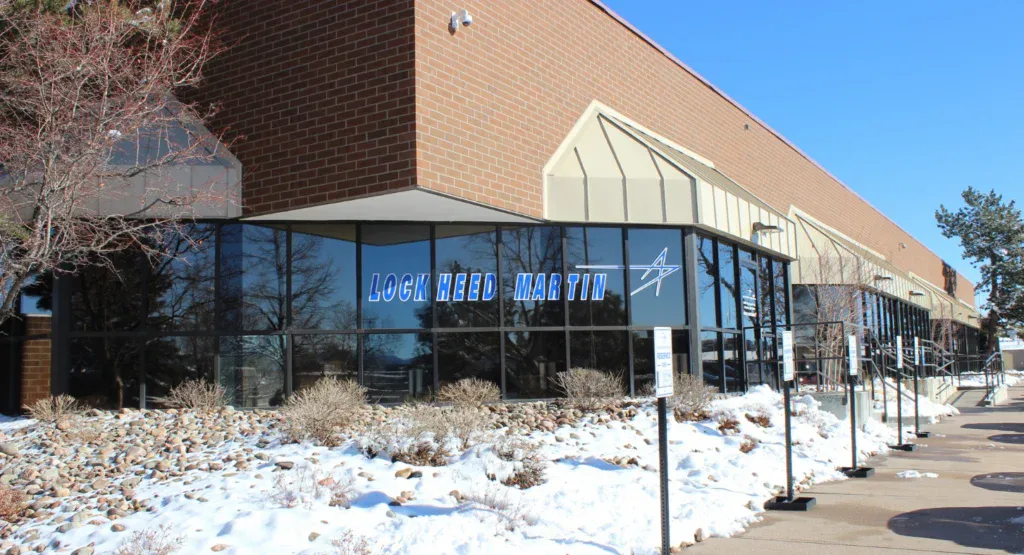
20,000 employees at one location has a major impact on your cabin air filter
Most Critical
1. Littleton Is Headquarters to a 20,000-Employee Aerospace Division
Category Most Critical
Does hosting the headquarters of a major aerospace and defense company change the impact on my cabin air filter due to the daily commuter traffic in Littleton?
Lockheed Martin Space, the aerospace giant’s satellite and spacecraft division, is headquartered in Littleton and employs roughly 20,000 people across its various sites, with a substantial share of that technical and engineering workforce commuting through the city every weekday [4]. That is a concentrated population of white-collar, standard-business-hours commuters layered on top of Littleton’s ordinary residential and retail traffic, a different mix than a farm town or a military base’s round-the-clock shift pattern.
Standard business-hours commuting produces sharp, predictable rush-hour peaks rather than traffic spread evenly across the day, and a vehicle that regularly runs this corridor during those peaks is exposed to a denser, more concentrated dose of exhaust in a shorter window than a vehicle driving the same road at an off-peak hour. A cabin air filter serving a Littleton commuter’s daily rush-hour drive works through that concentrated peak twice a day, every working day.
2. Chatfield Reservoir Pulls 2.16 Million Visitors a Year Through This Area
Category Most Critical
Does a nearby reservoir state park’s visitor volume actually add a distinct kind of vehicle cabin filter exposure compared to ordinary local traffic?
Chatfield State Park’s 1,423-acre reservoir, with Littleton as its nearest city, drew roughly 2.16 million visitors in a single recent year, many arriving towing boats, personal watercraft, or camping trailers through Littleton on summer weekends [2][5]. A vehicle towing a loaded trailer works its engine and brakes harder than one driving unloaded, producing more particulate per mile, especially on the stop-and-go approach roads leading toward the park entrance.
For a vehicle that regularly makes this kind of towing trip, or simply shares the road with a steady stream of other vehicles doing so on summer weekends, that means periodic exposure to a heavier-than-usual mix of brake dust and combustion byproduct concentrated into the reservoir’s peak season. A cabin air filter does not distinguish a towing vehicle’s exhaust from anyone else’s, but the seasonal volume is real and worth planning a filter check around.
3. A 231-Bed Trauma Center Sits About a Mile Down This Same Street
Category Most Critical
Does sharing South Broadway with a Level II trauma center add a distinct traffic and exhaust exposure to this specific stretch of road, impacting my cabin air filter?
AdventHealth Littleton, a 231-bed hospital designated as a Level II trauma center, sits at 7700 South Broadway, about a mile down the same road this store is on [6]. A trauma center of that designation draws a steady flow of ambulance traffic around the clock, and Colorado law generally permits emergency vehicles responding to a call to exceed normal traffic rules, which means harder acceleration and braking events concentrated on this corridor more often than a typical residential street would see.
Diesel-powered ambulances and fire apparatus under hard acceleration produce more particulate per event than a passenger car under normal driving, and a corridor that hosts this kind of emergency traffic on a regular basis accumulates a small but real amount of additional exhaust exposure beyond its ordinary commuter and retail traffic creating greater wear on your cabin air filter. This is not a reason for alarm, simply one more real contributor specific to sharing a street with a major trauma center.
4. A New Satellite Factory Down the Road Runs on Cleanroom-Grade Precision
Category High Priority
Does a small-satellite factory’s cleanroom-adjacent manufacturing process produce a different kind of airborne particulates going through my cabin air filter than an ordinary industrial site?
In August 2023, Lockheed Martin opened a 20,000 square foot small-satellite assembly facility in Littleton, built to produce up to 180 refrigerator-sized satellites a year for the U.S. Space Development Agency’s missile-tracking constellation, using thermal cycle and electromagnetic test chambers alongside automation and digital-twin manufacturing technology [3]. Facilities built around this kind of precision aerospace assembly maintain cleanroom-adjacent conditions to protect sensitive electronics and composite materials, which is a very different manufacturing environment than a typical warehouse or machine shop.
Even with strict internal controls, precision manufacturing sites like this one periodically generate extremely fine particulate from composite material trimming, electronics assembly, and specialized coatings during loading, transport, and facility ventilation cycling, a finer and more uniform particle profile than ordinary industrial or construction dust creating greater wear on your cabin air filter. Vehicles regularly parked near this kind of facility are exposed to a specific, technically distinct dust source that this series has not encountered at any of its farm-town or military-base stops.
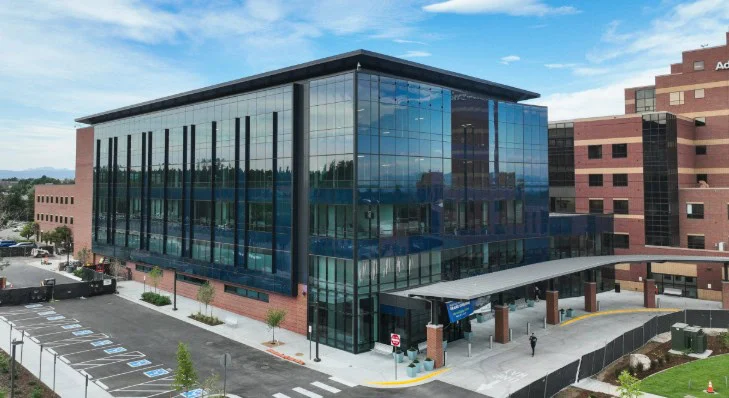
Increased, concentrated traffic at a single location will affect the life of a cabin air filter
5. A New $150 Million Heart Tower Just Finished Construction on This Street
Category High Priority
Does a hospital’s newly completed major expansion still add measurable traffic and dust to the surrounding corridor, affecting my cabin air filter after the ribbon-cutting?
AdventHealth Littleton opened a new $150 million, 143,000 square foot heart and vascular tower on August 27, 2025, adding dedicated cardiac care units and surgical facilities to the hospital’s South Broadway campus [6]. Even after a major construction project like this wraps up, the surrounding area typically sees residual site work, landscaping, and parking reconfiguration traffic for months afterward, along with a genuinely higher patient and visitor volume now that the expanded tower is fully operational.
A newly opened specialty tower of this scale also means more scheduled cardiac procedures drawing patients and family members from across the region to this specific stretch of Broadway, adding delivery trucks, medical supply vehicles, and visitor traffic beyond what the hospital’s original 82-bed footprint generated when it first opened in 1989. That is a steady, recent increase in this corridor’s overall traffic volume worth factoring into a filter schedule.
6. The Dakota Hogback’s Red Rock Formations Add Their Own Mineral Dust
Category High Priority
Does Littleton’s position where the Front Range foothills meet the plains produce a distinct kind of rock and mineral dust that decreases the life of my cabin air filter?
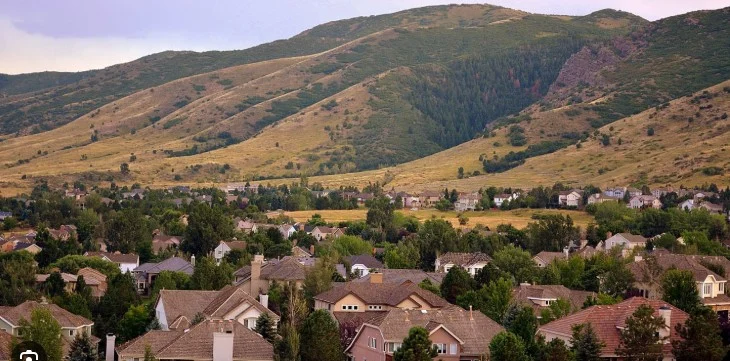
Littleton sits at the edge of the Colorado Piedmont, where the plains give way to the Dakota hogback, a long ridge of tilted sandstone formations running along the base of the Front Range foothills near Chatfield and Deer Creek Canyon. Wind and vehicle traffic crossing this transition zone kick up a distinct mix of sandstone and shale particulate, harder and more angular than the loam-based dust common to open plains or farm fields.
That harder, more angular mineral particle is more abrasive against filter media fibers than typical soil dust, and drivers whose regular routes cross this foothill transition zone toward Chatfield or the mountains pick up a measurably different dust exposure than commuters staying entirely within Littleton’s flatter eastern neighborhoods which does affect the life of your cabin air filter. It is a geologically specific reason a filter serving this kind of mixed-terrain commute may show more wear than the mileage alone would suggest.
7. The Littleton-Downtown Light Rail Station Adds Its Own Park-and-Ride Pattern
Category Important
Does a light rail park-and-ride station change the kind of cabin air filter vehicle exposure Littleton commuters experience compared with driving the whole way to Denver?
The Littleton-Downtown light rail station, served by RTD’s rail lines into central Denver, gives many Littleton residents a park-and-ride option: drive a short distance, park, and finish the commute by train rather than driving the full distance into the city. That short drive to the station is disproportionately made up of cold starts and low-speed parking-lot maneuvering compared with a longer highway commute, since the driving portion of the trip is brief by design.
A vehicle used mainly for this kind of short park-and-ride hop accumulates a higher share of cold-start particulate per mile driven than one used for longer commutes, since the engine spends a larger proportion of its running time in its least efficient, richest-running state. Ironically, a shorter commute enabled by transit can mean more cold-start exposure per mile for the cabin air filter than a longer one would.
8. Historic Downtown Littleton’s Brick Streets Mean More Idle-Heavy Parking
Category Important
Does the narrow, brick-paved layout of Historic Downtown Littleton’s Main Street create a different traffic pattern than a modern commercial strip, impacting the life of my cabin air filter?
Historic Downtown Littleton’s Main Street district retains its original narrow brick streets and diagonal or parallel street parking, laid out decades before modern traffic engineering assumed wider lanes and dedicated parking lots. Finding a spot in this kind of district typically means more circling, backing, and idle time waiting for a space to open than a strip mall’s large open parking field allows.
That extra circling and idling concentrates exhaust in a compact, low-airflow street environment lined by close-set buildings, which can trap exhaust closer to ground level than a wide-open commercial parking lot would. A vehicle regularly parked in this district for shopping or dining absorbs more of its own and neighboring vehicles’ exhaust per visit into your cabin air filter than the same errand would produce in a newer part of town.
9. The South Platte River Corridor Creates a Damper Microclimate Than the Rest of Denver’s Suburbs
Category Important
Does running along the South Platte River give Littleton a distinct humidity pattern that matters for a cabin air filter?
Littleton sits directly on the South Platte River, with Big Dry Creek and Dad Clark Gulch running through it and multiple lakes and reservoirs nearby, giving the immediate river corridor a measurably damper microclimate than Denver’s drier suburbs further from the water [2]. Mornings along this corridor commonly bring heavier dew and lingering humidity in the vehicle’s air intake area than a neighborhood without a river running through it.
A cabin air filter that stays damp for extended periods, rather than fully drying between drives, is more hospitable to mold and mildew growth than one in a consistently dry environment, since organic filter media provides a surface for spores to establish. Drivers who park regularly near the river corridor, rather than elsewhere in Littleton, are dealing with a real, if modest, added mildew risk to your cabin air filter that a drier part of the same city would not present.
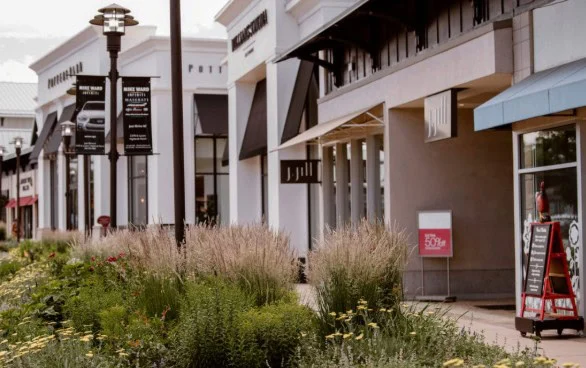
Aspen Grove Shopping Center is so popular it brings in thousands of people every year affecting your cabin air filter
Medium Priority
10. Aspen Grove’s Open-Air Shopping Village Draws Visitors From Well Beyond Littleton
Category Medium Priority
Does a large regional shopping destination like Aspen Grove generate enough traffic to affect my cabin air filter beyond what a typical Littleton retail strip would?
Aspen Grove, an open-air retail village with more than 50 stores and restaurants including Apple, Pottery Barn, and an Alamo Drafthouse Cinema, draws shoppers from well beyond Littleton’s own city limits rather than serving mainly local errands. A destination retail center like this pulls a wider radius of out-of-town vehicles into the area than a neighborhood strip mall would, especially on weekends and during the holiday shopping season.
Out-of-town vehicles making an infrequent destination trip are statistically less likely to be on a local shop’s service reminder schedule, meaning a higher proportion of the traffic passing through Littleton’s retail corridors during peak shopping periods may be running on filters well past due for a check. For Littleton residents, this mostly shows up as background context: more unfamiliar vehicles sharing the road on a weekend shopping trip than a typical Tuesday afternoon.
11. A Large School District Means Real School-Zone Traffic on a Predictable Schedule
Category Medium Priority
Does Littleton Public Schools’ size add a distinct, recurring traffic pattern beyond ordinary neighborhood driving and does waiting in line affect my cabin air filter?
Littleton Public Schools serves a substantial student population across the city with its own dedicated bus fleet, and school-zone drop-off and pickup windows twice a day create sharp, brief surges of stop-and-go traffic and idling around each campus, distinct from the smoother flow of ordinary residential streets. Diesel school buses idling at extended stops during loading produce more particulate per minute than passenger vehicles in normal motion.
A vehicle that regularly drives through a school zone during these windows, whether dropping off a student or simply passing through, picks up a brief but concentrated dose of bus exhaust and idle-heavy traffic twice on every school day causing a vehicle cabin air filter to gum up. Over a full school year, that adds up to a meaningfully different exposure pattern than a similar drive taken outside school hours.
12. At 5,397 Feet, Thinner Air Makes Your Blower Motor Work Harder Than It Would at Sea Level
Category Medium Priority
Does Littleton’s mile-high elevation change how hard a cabin air filter’s blower motor has to work compared with a lower-elevation city?
Littleton sits at 5,397 feet, where the atmosphere is meaningfully thinner and less dense than at sea level [2]. A vehicle’s HVAC blower is designed to move a target volume of air for heating, cooling, and defrost performance, but thinner air carries less mass per cubic foot, so the blower has to move a larger volume of air, spinning faster or running longer, to deliver the same actual heating or cooling effect a driver would get at low elevation.
That higher blower duty cycle means more total air, and whatever particulate is in it, gets pulled through the cabin air filter over the course of a given drive than the same trip would require in a lower-elevation city. It is a subtle, physics-driven reason elevation itself, independent of local dust or pollution sources, can shorten a filter’s effective service life in a mile-high city like Littleton.
13. Littleton’s 1862 Irrigation Ditches Still Shape the City’s Layout Today
Category Lower Priority
Does the city’s founding as an irrigation-engineering settlement in 1862 have any real bearing on a modern cabin air filter?
Littleton was founded in 1862 by Richard Little, an engineer who built the irrigation systems that turned the area into productive farmland, and the city incorporated in 1890 around the historic Rough and Ready Flour Mill, established in 1867 [2]. Traces of that irrigation-era layout still show up in some of Littleton’s older streets and drainage patterns today, a quieter historical layer beneath the aerospace and hospital-driven growth that defines the city now.
Honestly, this founding history does not add a distinct filtration mechanism the way the city’s modern institutions do; the ditches and old mill site are a fact of local heritage rather than a live source of dust or traffic. It is included here because a hyper-local guide to Littleton would be incomplete without acknowledging where the city actually came from, even where that history does not change the practical filter math going into your cabin air filter.
14. Chatfield’s Audubon Center Draws Its Own Small, Seasonal Birding Crowd
Category Lower Priority
Separate from the reservoir’s main recreational traffic, does the Audubon nature center at Chatfield add its own distinct visitor pattern impacting cabin air filter quality?
Beyond the reservoir’s boating and camping crowds already covered in this guide, Chatfield State Park hosts an Audubon Center supporting bird watching for more than 300 recorded species, along with classes, workshops, and lectures that draw a smaller, quieter crowd of visitors during spring and fall migration seasons [5]. This is a modest, seasonal visitor pattern rather than the reservoir’s main summer surge, arriving in smaller vehicles at different times of day.
This adds only a small, occasional amount of additional traffic near the park entrance during migration windows, nowhere near the volume of the reservoir’s main recreational season covered elsewhere in this guide. It is worth knowing about mainly for completeness, not because it meaningfully changes a Littleton driver’s filter schedule on its own so you don’t need to worry that it will significantly impact your cabin air filter.
15. The 1950s Aerospace Boom Left Littleton With Some of Denver’s Longest-Tenured Neighborhoods
Category Lower Priority
Does Littleton’s mid-century population boom, driven by an earlier era of the same aerospace industry, affect the vehicles on its roads today?
Littleton’s population grew 304.7 percent between 1950 and 1960 alone, driven largely by the arrival of Martin Marietta’s aerospace operations, the same lineage of company that is now Lockheed Martin Space’s Littleton headquarters [2]. That boom built out many of Littleton’s older, established neighborhoods, and cities with a higher share of long-tenured, multi-decade residents tend to have a somewhat older average vehicle fleet than a newer, rapidly turning-over suburb.
An older vehicle fleet does not change how a cabin air filter itself works, but it does mean a higher proportion of Littleton’s vehicles may be running on whatever filter came with a routine service years ago, driven by an owner who has not had reason to think about it recently. For a long-time Littleton household, this is a reasonable, low-stakes prompt to check when the filter was actually last replaced.
About Grease Monkey, 6549 South Broadway, Littleton, CO 80121
This Littleton location is open Monday through Friday from 8:00 a.m. to 6:00 p.m. and Saturday from 8:00 a.m. to 5:00 p.m., closed Sundays [1]. The shop offers conventional, synthetic, and full synthetic oil changes alongside brake service, fluid exchanges, battery service, tire rotation, air filter replacement, coolant system checks, and diagnostic inspections, with amenities including cable TV, a coffee station, a customer lobby, courtesy fluid top-offs, a diaper changing station, free WiFi, and a service bay viewing window [1].
The location has built a 4.8-star rating across more than 1,499 Google reviews under manager Josh Valverde, and operates within the FullSpeed Automotive network, which passed 900 franchised and company-owned locations nationwide in the first half of 2026 and had 435 of its centers named CARFAX Top Shop winners in 2025 for verified customer satisfaction [1][8][9].
Author Information
Author Bio – Phillip Paul Gilliam
Phillip Gilliam is a veteran journalist and former Editor-in-Chief with 50+ years of publishing experience and thousands of published articles. Specializing in automotive, trucking, and digital publishing, he creates authoritative, search-optimized content built on real-world expertise and editorial excellence. To learn more about Phil, visit http://www.phillipgilliam.com/about.html or contact Phil at [email protected]. He would love to hear from you!
[2] Wikipedia contributors. Littleton, Colorado. Wikipedia. Available at: https://en.wikipedia.org/wiki/Littleton,_Colorado. (Population, elevation, climate, geography, founding history, and historical Martin Marietta-era population growth.)
[5] Wikipedia contributors. Chatfield State Park. Wikipedia. Available at: https://en.wikipedia.org/wiki/Chatfield_State_Park. (Reservoir size, annual visitor count, and Audubon Center bird-watching program.)
[6] Wikipedia contributors. AdventHealth Littleton. Wikipedia. Available at: https://en.wikipedia.org/wiki/AdventHealth_Littleton. (Hospital address, bed count, trauma center designation, and 2025 heart and vascular tower expansion.)
[7] Aspen Grove. Aspen Grove Shopping Center, Littleton, Colorado. Aspengrovecenter.com. Available at: https://aspengrovecenter.com/. (Shopping center size, store list, and description as an open-air retail village.)
(c) 2026 Copyright Grease Monkey, Written by Phillip Paul Gilliam. All rights reserved. Published in partnership with Grease Monkey, 6549 South Broadway, Littleton, CO 80121. Content is for informational purposes and reflects current industry research and local geographic conditions. Cabin air filter replacement intervals may vary by individual vehicle, usage pattern, and conditions. Consult a certified professional for specific advice about your vehicle’s cabin air filtration system.
Stop by today.
Grease Monkey Center #82 Address: 6549 South Broadway, Littleton, CO, 80121
We use cookies to improve your browsing experience on our website. By closing this banner or interacting with our site, you acknowledge and agree to our privacy policy.