15 Real Transmission Warning Signs Littleton Drivers Actually Ask About
Location: Littleton, CO Topic: Grease Monkey Center #82 By: Phil Gilliam
An Authoritative Guide for Vehicle Transmission Health and Repair in Denver’s Historic South Suburb
Grease Monkey 6549 South Broadway, Littleton, CO 80121 Has Over 162 Google Reviews With A 4.5 Star Rating
A Note on Authority and Expertise: This article was researched and written by Phillip Paul Gilliam, a veteran journalist and former Editor-in-Chief with more than 50 years of publishing experience in automotive, trucking, and safety communications. The transmission guidance presented here is grounded in current SAE fluid-life standards, ASE-recognized diagnostic practices, and manufacturer engineering research – not generic information.
The Grease Monkey at 6549 South Broadway, Littleton, CO 80121, is part of the FullSpeed Automotive network, which services more than 5.2 million vehicles annually across 700-plus locations nationwide and generated over $542 million in 2026 revenue. In 2025, 435 FullSpeed Automotive locations – including Grease Monkey franchises – were named CARFAX Top Shop Winners for verified customer satisfaction, and in 2026 Grease Monkey was recognized as an Entrepreneur Verified Franchise. Grease Monkey’s ASE-certified technicians bring that national training standard to a city where a canyon full of bighorn sheep sits less than twenty minutes from a Fortune 500 aerospace campus.
Littleton was founded in 1859 along the South Platte River during the Pike’s Peak Gold Rush, and that river still defines the city – it feeds Chatfield Reservoir, Colorado’s most-visited state park with 1.6 million annual visitors, and threads past a historic Main Street district added to the National Register of Historic Places in 1998 [11][14]. A few miles south, Waterton Canyon marks the starting point of the 486-mile Colorado Trail, while just north of downtown, Lockheed Martin’s Space Systems headquarters employs roughly 20,000 people commuting daily along Broadway and C-470 [5][10].
An Introduction to Real Transmission Problems in Littleton
Most drivers only think about their transmission when something already feels wrong – a hesitation, a shudder, a smell, a noise that wasn’t there last week. By the time it becomes impossible to ignore, the repair bill has usually jumped from a few hundred dollars to several thousand. That gap is not bad luck. It is math. Automatic transmission fluid follows a well-documented thermal curve: for every 20 degrees Fahrenheit the fluid runs above roughly 175 degrees F, its usable service life is cut in half, according to SAE and Allison Transmission engineering data. Fluid that would last 100,000 miles at 175 degrees F is finished at 25,000 miles by 220 degrees F, and drops to just 5,000 miles at 260 degrees F [1].
Littleton drivers run into that curve in specific, recognizable ways: a boat towed home from Chatfield’s marina on a hot afternoon, a cold Front Range morning that leaves a transmission reluctant to move, a daily C-470 commute to Lockheed Martin’s Space Systems campus where a shudder shows up at the same steady speed every time. This guide walks through fifteen real transmission symptoms and questions – the kind a driver actually types into a search bar or asks a technician face to face – organized from the most urgent safety concerns to the more preventive, long-view maintenance decisions.
Each one explains what is actually happening inside the transmission, not just where it happens. And each one closes with a specific next step you can take at the Grease Monkey on South Broadway.
Most Critical
1. The C-470 On-Ramp Moment: What It Means When the Engine Revs but the Car Won’t Actually Go
Category Most Critical
I press the gas to merge onto C-470 and the engine revs up but the car barely picks up speed – what’s wrong with my transmission?
That sensation – the tachometer climbing toward 3,500 or 4,000 RPM while the vehicle barely accelerates – is called RPM flare, and it means the engine is doing its job while the transmission isn’t transmitting that power to the wheels. Inside an automatic transmission, clutches and bands use hydraulic pressure to hold each gear; as those components wear, or as fluid runs low or degrades, they lose their grip and briefly slip before catching again, which is exactly the wrong moment for it to happen while merging into fast-moving traffic on a road like C-470 [1][2].
Slipping under load generates heat, and heat destroys the friction material inside a transmission faster than normal driving ever would – meaning a flare that happens occasionally today can become one that happens on every acceleration within a few thousand miles if it isn’t diagnosed. This is not a symptom to plan around; it is one that affects whether you can safely complete a merge.
2. The Chatfield Tow Run: Why a Burning Smell After Hauling Your Boat Home Is Not Something to Shrug Off
Category Most Critical
My transmission smells like it’s burning after I tow my boat home from Chatfield’s marina – is that serious?
A burnt-toast or burning-rubber smell after towing is one of the clearest warning signs a transmission gives, and it almost always points to overheated, breaking-down fluid. Chatfield State Park draws roughly 1.6 million visitors a year and its full-service marina puts a genuinely high volume of boat trailers on South Wadsworth Boulevard and Titan Road throughout the season – and towing beyond what a factory cooling system was sized for, especially without an auxiliary transmission cooler, generates far more heat than normal driving [6][12].
Once fluid has actually burned, its lubricating and hydraulic properties are already compromised, and continuing to drive on it risks turning a fluid service into an internal rebuild. A burning smell after a tow is a stop-and-check symptom, not a wait-and-see one.
3. Frozen Out of Reverse: Why Some Front Range Mornings Leave Drivers Stuck in Drive
Category Most Critical
My car won’t go into reverse on cold mornings, but it’s fine once the engine warms up – what’s causing that?
A transmission that struggles specifically with reverse in cold weather – rather than every gear equally – often points to the reverse circuit being more sensitive to low hydraulic pressure than the forward gears, since reverse typically requires more clamping pressure to engage than any other gear. Cold, thickened fluid doesn’t flow through tight valve body passages as readily, and a worn low/reverse band or a marginal seal that “gets by” once the fluid is warm and thin can fail to seal at all when everything is cold and stiff [7].
On a Littleton morning cold enough to leave frost on the windshield, that combination can mean a car that will pull forward out of the driveway but won’t back out of it. It is a genuine, diagnosable mechanical pattern, not just “cars are slow to warm up.”
4. The Broadway Shudder: Why Your Transmission Trembles at a Steady 40 on the Way to Lockheed Martin
Category High Priority
My car shudders or vibrates at a steady speed on my commute, but not every day – what would cause that?
Torque converter shudder typically shows up during light throttle in roughly the 35-to-55-mph range – exactly the steady-cruise speed of a Broadway or C-470 commute toward Lockheed Martin’s Space Systems campus – and it is usually temperature-related, which is why it can feel intermittent at first: a faint buzz through the seat once or twice on a drive, then more often as fluid heats up and degrades further [4]. A torque converter that behaves fine cold but shudders once it reaches full operating temperature is telling you the fluid has thinned past its working range or that internal friction material has already started to glaze.
The early, intermittent stage is the one worth acting on. Caught while it is still occasional, a fluid service can often resolve it; left alone through a daily commute, it tends to progress toward a converter replacement.
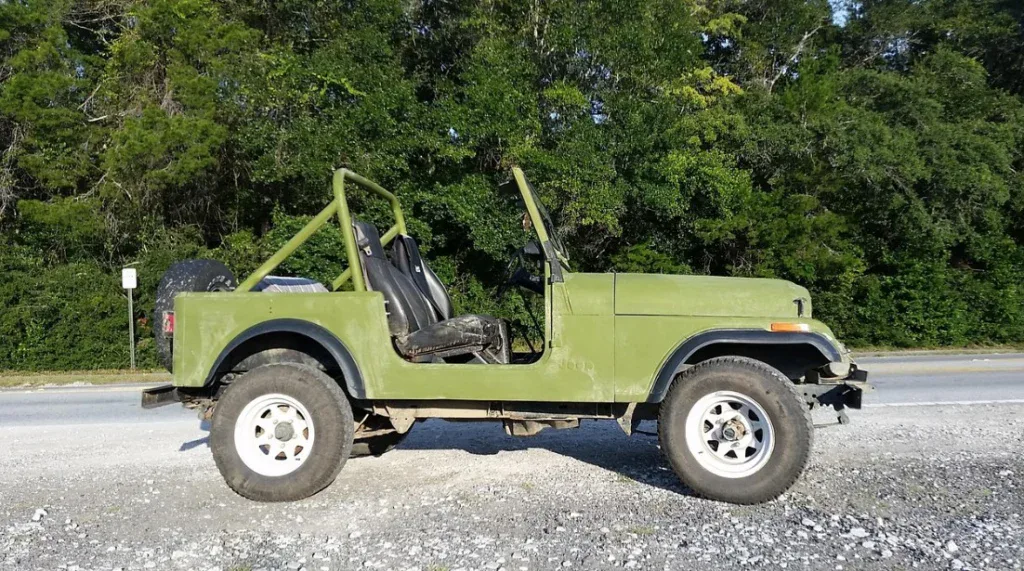
Changing from 2-wheel drive to 4-wheel drive on dry pavement can harm your transmission
5. Waterton’s Paved Approach: Why Locking In 4WD Before the Trailhead Can Grind a Transfer Case
Category High Priority
I sometimes engage 4WD on the paved road out to Waterton Canyon just to feel safer – could that actually damage my vehicle?
On a part-time 4WD system, engaging four-wheel drive on dry, high-traction pavement – like the paved approach road to the Waterton Canyon trailhead – locks the front and rear driveshafts together at the same speed. Because pavement doesn’t let the tires slip the way gravel or snow does, the system can’t compensate for the different distances the front and rear wheels travel through a turn, creating driveline bind that stresses the transfer case, axles, and differentials all at once [3]. A grinding sound while driving, or a binding sensation through tight turns, is often the first sign that the chain or gears inside the transfer case have already taken damage from this kind of dry-pavement engagement.
4WD is built for loose or slick surfaces – gravel, mud, snow – not the paved road leading up to a trailhead. Saving it for when you actually need traction protects a system that is expensive to repair once it starts grinding.
6. The Marina Parking Lot Wait: Why a Weekend of Towing to Chatfield Can Leave Shifting Feeling Rough for Days
Category High Priority
My shifting feels rough for a few days after a weekend of towing to Chatfield – is that actually connected to the towing itself?
Repeated heat cycling from towing – pulling a loaded boat trailer down to the marina, idling at the ramp while loading or unloading, then driving home in traffic – pushes transmission fluid through repeated high-heat, cool-down cycles that accelerate the same fluid breakdown the SAE thermal curve describes [1][6]. Degraded fluid loses viscosity and friction-modifying properties gradually rather than all at once, which is why the shifting doesn’t necessarily fail outright – it just starts feeling a little rougher, a little less crisp, for days after a heavy towing weekend before recovering somewhat as the fluid cools and settles.
That “rough for a few days” pattern is a real signal that the fluid took real thermal damage, even if the transmission still technically works. Regular owners who tow to Chatfield benefit from a shorter fluid-service interval than a vehicle that never tows at all, and an auxiliary cooler measurably reduces how hard each trip is on the fluid [6].
7. The Pause Before the Pull: What That Half-Second Delay Shifting Into Drive Is Telling You
Category Important
There’s a noticeable pause after I shift into Drive before the car actually moves – is that a real transmission problem?
Delayed engagement – a brief pause after moving the shifter into Drive or Reverse, followed by the transmission “catching” with a soft clunk or mild lurch – is one of the more common early transmission complaints, and it is directly tied to clutch pack condition [8]. Worn clutch packs or hardened internal seals leak hydraulic pressure internally, so the clutches take longer to fully engage; every time that delay happens, additional heat builds inside the transmission and wears the friction material a little further, which is why the pause tends to get longer and more noticeable over time rather than staying constant.
Low or contaminated fluid is the single most common cause and the easiest to rule out – which is exactly why a pause like this is worth having checked while it is still just an annoyance rather than a symptom of advancing internal wear.
8. A Whine That Climbs With Your Speed: Separating a Transmission Problem From a Wheel Bearing on Broadway
Category Important
I hear a whining or humming noise that gets louder the faster I go – is that my transmission, or something else?
A noise that changes pitch specifically with vehicle or engine speed – rather than staying constant or changing with road surface – is one of the more reliable clues for narrowing down its source. A whine that rises with engine RPM regardless of gear often points to a failing transmission pump or pump shaft, while a constant whine accompanied by a slight slip as the transmission shifts often points to low fluid, since a starved pump has to push air through the system [9]. A worn internal bearing produces a similar speed-linked whine and is often the first audible sign of wear developing inside an aging transmission, well before any shifting problem shows up.
Because a wheel bearing, a differential, and a transmission pump can all produce a superficially similar whine, road-testing the vehicle under different conditions – accelerating, coasting, turning – is what actually separates them, rather than guessing from the sound alone.
9. The EV in the Driveway: Why a Second Car That Sits for Weeks Still Needs Its Transmission Checked
Category Important
My spouse drives our EV daily and our gas car sits for weeks at a time – is that actually hard on the transmission?
As EV adoption grows in a tech-forward suburb like Littleton, it’s an increasingly common pattern: the household’s electric vehicle handles daily errands, and the older gas-powered car sits in the driveway for weeks between uses. Regular driving keeps transmission fluid circulating and internal seals lubricated; when a vehicle sits for extended stretches, seals that aren’t submerged in fluid can begin to dry out and crack, and short, infrequent trips around the block often don’t run the transmission up to full operating temperature long enough to burn off condensation that builds up inside the case [13]. That combination – drying seals plus trapped moisture – is a genuinely different failure pattern than simple mileage-based wear, and it can show up as a slow leak or a hesitant first shift the next time the car is actually needed.
If your household has shifted most daily driving to an EV, the gas vehicle still benefits from being driven for twenty to thirty minutes at highway speed roughly every two to three weeks – not to add mileage, but to keep fluid circulating and seals from drying out [13].
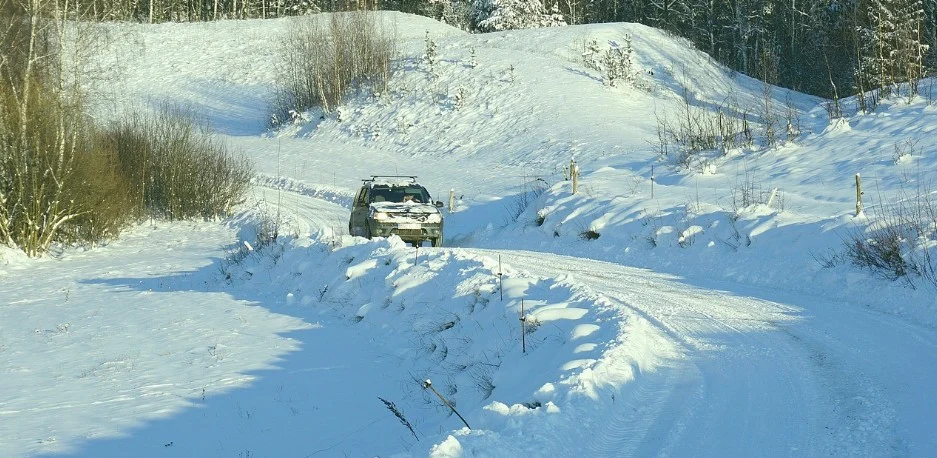
Driving in cold winter conditions has a definite impact on your transmission
Medium Priority
10. Hard Into Second, Then Smooth: What a Cold Front Range Morning Does to Your Valve Body
Category Medium Priority
My car shifts hard into second gear on cold mornings, then shifts smoothly once it’s been driven a few minutes – why?
Transmission fluid is measurably thicker when cold, and a valve body’s internal passages and pistons are sized for fluid at normal operating temperature – so on a cold start, a sticking valve or momentarily insufficient hydraulic pressure can cause a single harsh shift that resolves itself once the fluid thins and pressure normalizes as the engine warms up [15]. This is a genuinely different mechanism than the extreme, sustained cold-gelling problems seen in far colder climates; Littleton’s Front Range mornings are cold enough to trigger it on a single early shift without being cold enough to prevent the transmission from moving at all.
A hard-then-smooth pattern that repeats every cold morning is worth checking rather than dismissing, since it can also signal fluid that has already darkened or thinned past its useful range – in which case the “smooths out” part is fluid finally reaching a viscosity it should have had from the start.
11. Just Add Fluid? Why Topping Off a Low Transmission Never Actually Fixes What’s Wrong
Category Medium Priority
My transmission fluid was low, so I just topped it off – is that enough, or do I need to find out why it was low?
A transmission typically holds only 1.5 to 3 quarts of fluid, compared to 4 to 6 quarts in most engines – meaning the same size drip that would take months to matter in an engine can create real trouble in a transmission within weeks [16]. If the fluid was low, something let it get that way, almost always a leaking seal, gasket, or line; topping it off replaces what was lost but does nothing to stop it from happening again, and every mile spent running low risks the fluid overheating and beginning to glaze the clutch material.
Caught at the leak stage, the fix is usually an inexpensive seal or gasket. Caught after weeks of running low, glazed clutches and heat damage can turn that same leak into a full rebuild – the difference between the two outcomes is almost entirely whether someone found the actual leak or just kept the level topped off.
12. Limp Mode on Broadway: What It Actually Means When Your Car Suddenly Won’t Shift Past Second Gear
Category Medium Priority
My transmission suddenly won’t shift past second or third gear and a warning light came on – what is that, and is it safe to keep driving?
Limp mode is a protective response built into the transmission control module: when it detects a fault serious enough to risk major internal damage – a failed speed sensor, a solenoid or pressure problem, fluid that’s too low or too contaminated – it deliberately restricts the vehicle to a lower gear range and reduced speed so you can get off the road rather than continue driving on a fault that could destroy the transmission [14]. It is not a second life for the transmission and it is not meant for continued driving at highway speed; it is a hard stop-and-diagnose signal, even though the car technically still moves.
An OBD-II scan of the transmission control module gives the exact fault code and is the fastest way to know whether limp mode was triggered by something minor, like a sensor, or something serious, like internal wear – guessing is the one thing not worth doing once the light is on.
13. The Fluid Your Parts Store Doesn’t Stock: What CVT Owners in Littleton Need to Know Before a Fluid Service
Category Lower Priority
My car has a CVT and I’ve heard it needs a special fluid – can I really not just use regular transmission fluid?
A CVT (continuously variable transmission) doesn’t use the clutch packs and gear sets a conventional automatic does – it relies on a steel belt or chain running between two variable-diameter pulleys – and CVT fluid is formulated with entirely different friction characteristics than standard ATF specifically to keep that belt from slipping against the pulleys [17]. Using conventional ATF in a CVT can cause belt slip almost immediately and, over time, catastrophic belt failure, because standard ATF is formulated to reduce friction for clutch packs while CVT fluid is formulated to maintain precise friction between the belt and pulleys – opposite goals for two different designs.
This is one case where “any transmission fluid will do” is actively the wrong instinct. A shop that services your CVT needs to confirm the manufacturer-specified fluid, not substitute a general-purpose ATF because it’s what’s on the shelf.
14. “It’s a Stick, It Never Needs Fluid”: The Manual Transmission Myth That Costs Owners Later
Category Lower Priority
I drive a manual and a friend told me the fluid never needs to be changed – is that actually true?
Manual transmissions genuinely run cooler than automatics, since they don’t generate the hydraulic heat of a torque converter and clutch packs shifting under pressure – which is where the “never needs fluid” myth gets its grain of truth [18]. But most manufacturers still specify a fluid change somewhere between 30,000 and 60,000 miles, and a small number of models with a true manufacturer-designated “lifetime fill” are the exception, not the rule. Treating every manual as maintenance-free because it runs cooler skips a real interval that most manuals actually have.
If you’re not sure whether your specific manual transmission has a genuine lifetime fill or a standard change interval, checking your owner’s manual – or asking a technician to check it for you – is a five-minute question that prevents a much longer, more expensive one later.
Does your car clunk when you turn a corner. You probably have a problem with your transmission.
15. Only When You Turn Left: What a Directional Clunk Near Historic Main Street Is Really Telling You
Category Lower Priority
My car clunks, but only when I turn one direction and not the other – what would cause that?
A clunk or click that only happens turning one direction is a genuinely useful diagnostic clue: because the outer CV joint on the outside of a turn works at the sharpest angle, a clicking noise that’s loudest turning left often points to a worn right-side outer CV joint, and vice versa, while a more pronounced clunk – rather than a click – more often points to a worn inner joint or, less commonly, a differential issue [19]. Tight, low-speed turns and maneuvering – like navigating the narrower streets and angled parking around Littleton’s historic Main Street district – are exactly the conditions that make a marginal CV joint or differential problem most audible, since the sharpest steering angles put the most stress on a joint that’s already wearing.
Because a directional clunk can also overlap with worn engine or transmission mounts or differential backlash, pinning down which one it actually is takes a hands-on inspection rather than a guess from the sound alone – but the directional pattern itself is the single most useful piece of information you can give a technician.
About Grease Monkey 6549 South Broadway, Littleton, CO 80121
Grease Monkey’s South Broadway location is open Monday through Friday from 8:00 a.m. to 6:00 p.m. and Saturday from 8:00 a.m. to 5:00 p.m., closed Sundays – call (720) 999-9228 to check current bay availability. Beyond transmission fluid exchanges, the shop’s ASE-certified technicians handle the full range of drivetrain-adjacent diagnostics this varied corner of the Denver metro needs, including CVT-specific fluid services, cold-weather pressure and seal checks, towing-related fluid evaluations for Chatfield-bound boat owners, and the shop’s signature 16-point inspection with every visit, alongside electric vehicle maintenance services for Littleton’s growing number of mixed EV and gas households. The team serves Lockheed Martin’s daily commuters, historic Main Street regulars, and Waterton Canyon’s recreational community – backed by 162 Google reviews at a 4.5 star rating.
Author Information
Author Bio – Phillip Paul Gilliam
Phillip Gilliam is a veteran journalist and former Editor-in-Chief with 50+ years of publishing experience and thousands of published articles. Specializing in automotive, trucking, and digital publishing, he creates authoritative, search-optimized content built on real-world expertise and editorial excellence. To learn more about Phil, visit http://www.phillipgilliam.com/about.html or contact Phil at [email protected]. He would love to hear from you!
[3] CarTreatments; Joe’s Slinger Service. Transfer Case Damage From Part-Time 4WD Engagement on Dry Pavement. Available at: https://cartreatments.com/bad-transfer-case-symptoms-cost/ and https://www.joesslingerservice.com/what-causes-a-transfer-case-to-fail. (Engaging part-time 4WD on dry pavement causes driveline bind between locked front and rear driveshafts, stressing the transfer case, axles, and differentials; grinding noises indicate worn bearings, a stretched drive chain, or low fluid inside the unit.)
[10] Colorado Department of Transportation. C-470 Express Lanes and Broadway Corridor. Available at: https://www.codot.gov/programs/expresslanes/c470. (C-470 forms part of the Denver metro beltway system connecting to South Broadway near Littleton.)
[11] History Colorado. Littleton Main Street Historic District – National Register of Historic Places. Available at: https://www.historycolorado.org/location/littleton-main-street-historic-district. (The Littleton Main Street Historic District was added to the National Register of Historic Places on April 8, 1998, encompassing brick commercial buildings dating largely to the 1890s and early 1900s, with narrower streets and tighter turning radii than modern commercial districts.)
[12] Loc8NearMe; CARFAX. Grease Monkey South Broadway Littleton – Multi-Platform Review Data. Available at: https://www.loc8nearme.com/colorado/littleton/grease-monkey/. (Grease Monkey’s South Broadway, Littleton location shows a 4.5-star rating across 162 reviews.)
[21] World Population Review; Business View Magazine. Littleton, Colorado Population and Founding History. Available at: https://worldpopulationreview.com/us-cities/colorado/littleton. (Littleton’s 2026 population is estimated near 46,208; the city was founded in 1859 along the South Platte River during the Pike’s Peak Gold Rush and incorporated in 1890.)
We use cookies to improve your browsing experience on our website. By closing this banner or interacting with our site, you acknowledge and agree to our privacy policy.