Top 15 Reasons to Get Your Brakes Inspected and Serviced in Elizabeth, Colorado
An Authoritative Guide for Vehicle Owners and Drivers in “The Heart of Colorado’s Horse Country”
Grease Monkey 712 E Kiowa Ave, Elizabeth, CO 80107 Has Over 145 Google Reviews With A 4.6 Star Rating
Editorial Authority Statement: This article was researched and written by Phillip Paul Gilliam, a veteran journalist and former Editor-in-Chief with 50+ years of professional publishing experience in automotive, trucking, and technical media. The brake service guidance presented here is grounded in data from NHTSA, CDOT, the Colorado Department of Public Health and Environment, peer-reviewed vehicle safety research, and field-verified local geographic and road conditions. The Grease Monkey location at 712 East Kiowa Avenue in Elizabeth serves a community unlike any other in Colorado: a fast-growing exurban town in a county with zero hospitals, 1,100 miles of unpaved roads, the highest horse density in Colorado, and a single two-lane highway as the primary lifeline to Denver. Backed by the FullSpeed Automotive network — 900+ locations nationwide, 435 CARFAX 2025 Top Shop winners, and ASE-certified technicians — Grease Monkey Elizabeth is positioned to deliver the brake system expertise that Elbert County’s uniquely demanding road environment requires.
Introduction
There is a quality to the light in Elizabeth, Colorado that tells you exactly where you are — diffused through ponderosa pines at 6,530 feet, falling on pastures edged with horse fencing, broken only by the two-lane ribbon of Colorado Highway 86 running east toward Kiowa and west toward Castle Rock. Elizabeth is the most populous town in Elbert County, a place where the Denver metro’s exurban growth has pushed outward into Colorado’s horse country, producing a community of ranchettes, hobby farms, and large-lot subdivisions connected by gravel roads, a single state highway, and the daily discipline of a 45-mile commute each way to the city. Elbert County is one of the fastest-growing counties in Colorado by percentage — its population has grown more than 37% since 2010 — and virtually all of that growth funnels through CO-86, a two-lane road that also carries horse trailers, cattle trucks, school buses, recreational vehicles, and the occasional tractor to the same destinations.
What makes brake system health urgent in Elizabeth is not one factor but the convergence of many. Elbert County maintains 1,100 miles of gravel roads — approximately 74% of its entire road network — meaning the average Elizabeth resident transitions from unpaved surface to 65-mph highway and back again multiple times per day, every day, through every season. The county has no hospital: Elbert County is one of the few counties in Colorado with zero hospital facilities, and the nearest emergency room is a 30-minute drive under clear conditions. The county is defined by its horses — Elbert is one of the top equestrian counties in Colorado, with more horses per capita than virtually any other county in the state — and the horse trailer is not a special-occasion vehicle here, it is a weekday reality. The Palmer Divide, on which Elizabeth sits directly, generates its own weather patterns: storms that produce rain in Denver produce ice and snow in Elizabeth, without warning and without mercy.
Against this backdrop, NHTSA data documenting that nearly 264,000 annual crashes involve defective brakes becomes acutely local. A brake system that is merely adequate on Denver metro roads — smooth surfaces, nearby hospitals, gradual speeds — is categorically inadequate for CO-86’s driveway-conflict stop-and-go at highway speed, Elbert County’s ranch roads, and a Palmer Divide black ice event that can form between one commute and the next. This guide presents 15 specific, research-backed reasons why brake inspection is not a periodic suggestion for Elizabeth drivers — it is the primary safety investment available to a community that depends on its vehicles in conditions that few other Colorado towns share. The Grease Monkey at 712 East Kiowa Avenue is Elizabeth’s professional brake service resource, and each of the 15 reasons below connects directly to the roads, the community, and the conditions that make this location matter.
1. CO-86 Two-Lane Speed Corridor: Elizabeth’s Only Primary Route West and the Ranch-Driveway Conflicts That Make Every Highway Mile a Brake Test
Category: Most Critical – When I am driving on CO-86’s Two-Lane Speed Corridor at the posted speed of 65 miles per hour, how many feet per second am I driving, and before I can even react, how many feet do I drive before I put on the brakes?
Two-lane state highways operating at posted speeds of 55 to 65 miles per hour create a specific and well-documented collision category: angle and turning crashes triggered by vehicles making left turns from or into private driveways and side roads. At 65 miles per hour, a vehicle covers 95 feet per second. A left-turning vehicle that misjudges the gap by two seconds has already pulled into the path of an approaching vehicle with approximately 190 feet of closure distance already eliminated before any braking response begins. NHTSA crash causation data consistently identifies vehicle defects — most prominently brake deficiencies — as critical contributing factors when a driver who attempts an emergency stop cannot achieve the braking response their speed requires. The combination of high posted speed, private-access conflicts, and a two-lane format that puts vehicles in opposing lanes during passing maneuvers creates a collision geometry that has zero margin for brake system degradation. [1][2]
Colorado Highway 86 bisects Elizabeth, running 15 miles west to Castle Rock and 7 miles east to Kiowa, and it is not only the primary transportation corridor for the town — it is essentially the only primary transportation corridor. Ranch driveways, farm roads, subdivision entrances for Elbert Road communities, and private gravel lanes intersect CO-86 along its full length through the Elizabeth corridor, many without turn lanes, acceleration/deceleration lanes, or adequate sight distance at speed. CDOT has documented the CO-86 and County Road 13 intersection in Elizabeth as a specific safety project site due to the conflict patterns generated at this crossing. The horse trailers turning into Casey Jones Road, the hay trucks entering from Elbert Road, and the commuters accelerating away from the Kiowa Avenue intersection — all of these mix at highway speed on a two-lane road where the margin between a controlled stop and a collision is exactly equal to your brake system’s remaining capacity. [3][4]
CO-86 doesn’t offer second chances at 65 mph with a horse trailer turning left across your path. The Grease Monkey at 712 East Kiowa Avenue, Elizabeth, CO 80107 performs comprehensive brake inspections that assess pad depth, rotor condition, caliper function, and hydraulic pressure — the full system check that determines whether your vehicle can deliver a maximum-effort stop on a two-lane highway where the need can arise without warning. Schedule your CO-86-readiness inspection at https://www.greasemonkey.com/locations/co/elizabeth/712-east-kiowa-avenue/.
2. Elbert County Has No Hospital: How Zero County Medical Infrastructure Transforms Every Brake Failure Into a High-Stakes Emergency
Category: Most Critical – With Elbert County having no hospital, if I had an accident on one of the rural roads, how long would I have to wait before help arrives?
Emergency medicine research on trauma outcomes is unambiguous: survival rates and neurological outcomes in severe crash injuries decline measurably when time to definitive surgical care exceeds 60 minutes. This is the basis of the trauma system’s “golden hour” framework — not a suggestion, but a clinical observation of what happens to injured patients when operative intervention is delayed. Rural counties across the United States face this challenge chronically, and HRSA data shows that in rural settings, one in ten emergency encounters waits nearly 30 minutes for EMS arrival alone — before transport begins — pushing total time to hospital care toward or beyond the golden hour threshold. Counties with no hospital at all face a gap that is not bridged by any routing choice: every patient requiring hospital-level care must be transported across county lines before any physician-administered care begins. [5][6]
Elbert County is one of those counties. With a 2026 population estimated at more than 31,000 — a community that has grown 37% since 2010 — Elbert County maintains zero hospital facilities within its borders. The nearest emergency services are in Parker (Parker Adventist Hospital, approximately 30 miles northwest of Elizabeth), Castle Rock (AdventHealth Castle Rock, approximately 22 miles west), and Kiowa (Elbert County EMS, which provides stabilization and transport). Elbert County EMS operates two ambulances on 24-hour coverage and additional units during business hours — a resource that serves a county spanning 1,851 square miles of ranch land, rural subdivisions, and mountain-adjacent terrain. When a brake failure on CO-86 east of Elizabeth causes a serious crash, the road to definitive care is measured in miles that matter deeply, in a county where geography cannot be changed but vehicle maintenance can. [6][7]
Elbert County’s medical geography means brake failure here is not the same event it would be in Aurora, Parker, or Castle Rock. The ASE-certified team at Grease Monkey, 712 East Kiowa Avenue, Elizabeth, CO 80107, performs the brake inspections that keep the gap between Elizabeth and the nearest hospital from becoming the most important distance in your life. Book your inspection today at https://www.greasemonkey.com/locations/co/elizabeth/712-east-kiowa-avenue/.
3. Colorado’s Horse Capital and the Live-Load Trailer Physics That No Other Brake Demand Replicates
Category: Most Critical – When I am towing my horse trailer, aside from the additional weight of the horse, how much does their shifting around and moving have on my braking ability?
Horse trailers impose a brake demand that is categorically different from other towing scenarios because the load is alive, mobile, and unpredictably responsive to braking forces. Under normal braking, a static load shifts forward with deceleration, adding tongue weight to the hitch in a predictable manner. A 1,200-pound horse under braking does not behave like a static load: the animal reacts to deceleration by shifting its weight, bracing against partitions, and in some cases scrambling to regain balance — generating dynamic lateral and longitudinal forces that change the effective load distribution on the trailer continuously throughout the stop. The Oregon Horse Council and leading equine transport safety researchers document that even a single horse in a two-horse trailer can generate dynamic weight shifts that destabilize the towing vehicle if trailer brakes are absent, undersized, or poorly adjusted. At 60 miles per hour on a two-lane highway, stopping a loaded two-horse trailer — total towing combination weight easily exceeding 8,000 to 10,000 pounds — requires a distance equivalent to a football field under ideal conditions. Any brake deficiency in either the tow vehicle or the trailer extends that distance by margins that CO-86’s ranch driveway geometry cannot accommodate. [8][9]
Elbert County is one of the premier equestrian counties in Colorado, with more horses per capita than virtually any other Colorado county. The county is home to more than 1,400 horses and draught animals, and the Grease Monkey’s address on East Kiowa Avenue places it at the center of a community where horse trailers are parked in residential driveways, backed into arena lots on Saturday mornings, and loaded for trail rides at Castlewood Canyon and Arapaho National Forest access points throughout the week. Residents of Ponderosa Park, Spring Valley Ranch, and the horse property subdivisions along Elbert Road regularly haul horses to training facilities in Parker, Castle Rock, and Denver — trips that require sustained towing on CO-86 at highway speed, then navigating Denver metro stop-and-go traffic, then returning home through the same range of conditions. Each leg of that trip places different and compounding demands on both the tow vehicle’s brake system and the trailer’s brake controller synchronization. [7][10]
Before you load up and head north on CO-86 with horses aboard, your brake system should be the first thing you check — not the last. The team at Grease Monkey, 712 East Kiowa Avenue, Elizabeth, CO 80107, inspects tow vehicle brake systems and can assess trailer brake controller function to ensure your combination stops as a unit, not as two objects fighting each other. Book your pre-haul inspection at https://www.greasemonkey.com/locations/co/elizabeth/712-east-kiowa-avenue/.
4. Palmer Divide Weather Factory: How Elizabeth’s Divide-Crest Location Creates Colorado’s Most Unpredictable Black Ice and Storm Conditions
Category: High Priority – When I am driving, and I come up to black ice… can I normally see it?
The Palmer Divide is a geographic feature of profound meteorological significance: a caprock escarpment-style ridge running east-west across central Colorado, separating the South Platte River basin to the north from the Arkansas River basin to the south. Its elevation — ranging from approximately 6,000 to 7,887 feet along its length — forces moisture-laden air upward as it crosses the divide, cooling and condensing it into precipitation that can be rain at lower elevations and ice at the divide crest simultaneously. This orographic effect means that a storm system producing a minor rain event in Denver produces black ice and accumulating snow on the Palmer Divide with little or no warning to drivers transitioning between elevations. Black ice forms when supercooled water droplets freeze on contact with road surfaces below 32°F — a condition that produces no visible surface change and is indistinguishable from dry pavement to approaching drivers. CDOT blizzard advisories specifically call out the Palmer Divide and Eastern Plains as zones receiving severe winter conditions distinct from both the mountains and the Denver metro. [11][12]
Elizabeth sits directly on the Palmer Divide at 6,530 feet — not adjacent to it, not near it, but on the divide itself. Towns on the Palmer Divide include Parker, Castle Rock, Elizabeth, and Kiowa, and forecasters specifically track the divide’s tendency to generate localized weather events that do not appear on broader Denver metro forecasts. Morning commuters leaving Elizabeth before sunrise on a clear November or March morning can encounter black ice forming on CO-86 in the shaded cuts east of Singing Hills Road or on the bridge decks over Running Creek tributaries before any advisory has been issued. The fog that descends on the divide during temperature inversions reduces visibility on CO-86 to near zero within minutes. Afternoon storms that arrive from the southwest build over the Rampart Range and drop their heaviest precipitation directly over the Elizabeth corridor before tracking northeast. Elbert County road crews manage snow and ice response across an enormous geographic area, and response times on CO-86 east of town can lag significantly behind events on the ground. [11][12]
Palmer Divide weather doesn’t wait for forecasters to catch up. The Grease Monkey at 712 East Kiowa Avenue, Elizabeth, CO 80107 performs the brake inspections — pad depth, fluid moisture content, rotor integrity, ABS function — that determine whether your vehicle can deliver maximum stopping force on the black ice that CO-86 can present without any advance notice. Schedule your Palmer Divide readiness check at https://www.greasemonkey.com/locations/co/elizabeth/712-east-kiowa-avenue/.
5. Elbert County’s 1,100 Miles of Gravel Roads: The Daily Gravel-to-Highway Transition That Contaminates and Compounds Brake Wear
Category: High Priority – With all of Elbert County’s gravel roads, how much does that impact my vehicle’s braking system?
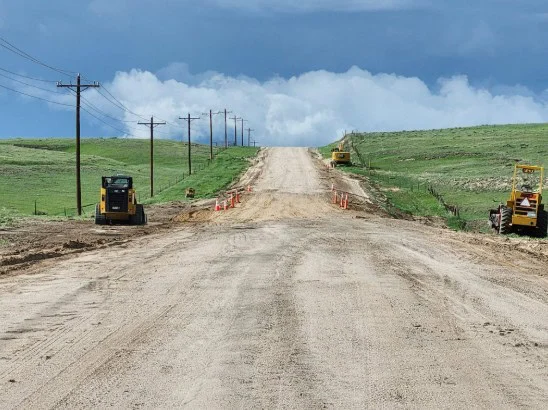
Gravel and unpaved road surfaces impose a specific and cumulative brake system burden that paved-road maintenance schedules do not account for. Abrasive mineral particles — gravel chips, road base material, and fine silica dust — enter brake assemblies through the wheel well opening and embed in pad surfaces, score rotor faces, and contaminate caliper slides. Research on unpaved road brake wear shows that abrasive particle contamination reduces the coefficient of friction between pad and rotor by degrading the surface geometry of both components: scored rotor surfaces reduce contact area, and embedded abrasive in pad material changes the pad’s friction characteristics in ways that are not reflected in simple thickness measurements. For drivers who transition from unpaved surfaces to highway speeds multiple times per day — accelerating from gravel onto CO-86 at 65 mph — the braking system that arrives at highway speed is potentially carrying fresh abrasive contamination from the last gravel segment that will accelerate rotor scoring on the next highway stop. The transition is daily, the contamination is cumulative, and the maintenance intervals designed for urban pavement schedules are systematically inadequate for this usage profile. [13][14]
Elbert County maintains 1,100 miles of gravel roads — approximately 74% of its total maintained road network of roughly 1,480 miles. For the majority of Elizabeth-area residents living in large-lot subdivisions, horse properties, and ranchettes along Elbert Road, County Road 17, Running Creek Road, and the network of rural access roads east of town, the daily routine includes one or more transitions between gravel surface and CO-86. A resident leaving a Ponderosa Park property in the morning drives a gravel access road to the subdivision entrance, enters CO-86, drives 15 miles at highway speed to Castle Rock or I-25, and repeats the sequence in reverse each evening — four gravel-to-paved and paved-to-gravel transitions per day, five days a week, accumulating abrasive contamination in brake assemblies that are also managing the heat of daily highway braking. This is not an occasional off-road trip; it is the baseline operating environment for a substantial portion of Elizabeth’s driving population. [7][14]
Elbert County’s gravel road network is part of what makes Elizabeth the community it is — and it is also the reason your brake service interval should be shorter, not longer. The Grease Monkey at 712 East Kiowa Avenue, Elizabeth, CO 80107 performs brake inspections that assess contamination, rotor scoring, and pad surface condition with the attention that a 74%-gravel-road county demands. Schedule your Elbert County brake check at https://www.greasemonkey.com/locations/co/elizabeth/712-east-kiowa-avenue/.
6. The 45-Mile Denver Exurban Commute: How Elizabeth’s Long-Distance Commuters Build Brake Thermal Profiles That Urban Drivers Never Encounter
Category: High Priority – I live in Elizabeth but commute daily to Denver for work. How does that affect my vehicle’s braking system?
Long-distance commuting creates a brake thermal cycle that is distinct from both urban driving and rural driving individually. In a typical 45-mile commute from Elizabeth to Denver, a driver experiences three distinct brake demand phases: a gravel-road departure segment with low-speed, high-contamination stops; a sustained 55-to-65-mph highway segment on CO-86 and then CO-83 or I-25 with minimal braking but high rotor temperature from aerodynamic heating and occasional traffic deceleration; and a dense urban stop-and-go arrival segment in the Denver metro where braking frequency peaks. This three-phase profile is thermally demanding in a specific way: rotors entering the urban stop-and-go phase already warm from highway driving cool unevenly when subjected to repeated low-speed stops, a condition that can accelerate thermal distortion of rotor faces. Brake fluid, already at elevated temperature from the highway phase, continues to absorb heat during the urban stop-and-go, and a fluid already near its moisture-absorption threshold may reach vapor bubble formation temperature during the urban arrival sequence. Round trips double the exposure, five days a week, 48-plus weeks per year. [1][15]
Elizabeth is approximately 45 miles southeast of downtown Denver, and the commute by most routes takes between 50 and 60 minutes under clear conditions. The primary route — CO-86 west to Castle Rock, then I-25 north to the Denver metro — runs through two distinctly different traffic environments: the open, high-speed rural corridor on CO-86 where ranch traffic and limited signals keep speeds high but stop frequencies low, and the I-25 and C-470 corridor approaching Denver where speeds drop and braking frequency increases sharply. Many Elizabeth commuters also use CO-83 (Parker Road) northward toward Parker and Aurora, passing the Castlewood Canyon approach roads and navigating the increasingly suburban signal grid through Franktown, Parker, and Aurora. The drive home in the evening reverses these phases — urban to highway to gravel — with rotors carrying the full heat load of rush-hour Denver traffic into the highway phase. This commuter brake thermal profile is specific to exurban communities like Elizabeth and is not accounted for in standard maintenance interval recommendations calibrated for pure urban or pure highway driving. [10][16]
Forty-five miles each way is a commute that tests your brake system in ways a standard mileage interval doesn’t capture. The Grease Monkey at 712 East Kiowa Avenue, Elizabeth, CO 80107 provides the brake fluid condition testing and full brake system evaluation that Elbert County commuters need — not the mileage-based guess, but the actual performance assessment. Book your commuter brake check at https://www.greasemonkey.com/locations/co/elizabeth/712-east-kiowa-avenue/.
7. Castlewood Canyon State Park on CO-83: Canyon Approach Grade Brake Demands at Elizabeth’s Doorstep
Category: Important – I normally drive only in the city. If I am going to Castlewood Canyon State Park, are there any special driving conditions I should be aware of?
Canyon road approaches impose a specific and underappreciated brake demand on vehicles that do not tow, do not drive mountain passes, and otherwise operate in low-brake-demand conditions: the descending grade approach to a canyon rim or canyon floor parking area. These access roads, typically short and steep, require braking from highway or near-highway speed down to parking speed over a compressed distance, often with canyon walls, guardrails, or drop-offs as the consequence of a stop that runs long. The demand is distinct from sustained mountain pass descents — it is brief, abrupt, and repeated with each arrival — and it creates a scenario where a marginally worn pad or a slightly sticking caliper that performs adequately on flat roads produces a noticeably longer stop on a canyon approach. AAA research indicates that drivers significantly underestimate the stopping distance required at speeds above 40 mph, and this underestimation is most dangerous on grades where the vehicle’s weight adds to the momentum the brakes must manage. [15][17]
Castlewood Canyon State Park, located on State Highway 83 approximately 5 miles south of Franktown — a 10 to 15-minute drive north of Elizabeth — is one of the Denver metro area’s most accessible canyon recreation destinations, open year-round from sunrise to sunset. The canyon’s east entrance off CO-83 and the interior park road drop from the plateau surface to the canyon trail network over grades that require attentive speed management. The park protects the remains of the Castlewood Canyon Dam, which catastrophically failed in 1933 — a historical detail that makes the canyon geography immediately recognizable and locally significant. Elizabeth residents, Spring Valley Ranch families, and Franktown-area residents use Castlewood Canyon regularly for hiking, rock climbing, nature programs, and wildlife viewing, meaning the CO-83 approach and the park’s interior roads receive regular use from the same vehicles that also navigate CO-86 and Elbert County’s gravel network year-round. [16][17]
Castlewood Canyon’s approaches and park roads are Elbert County driving in concentrated form: abrupt grades, unpaved parking areas, and the kind of stop-and-go that surfaces worn brakes faster than any commute. The Grease Monkey at 712 East Kiowa Avenue, Elizabeth, CO 80107 ensures your vehicle is ready for a canyon run before the ponderosa pines and canyon walls turn a recreational outing into a brake performance test. Schedule your inspection at https://www.greasemonkey.com/locations/co/elizabeth/712-east-kiowa-avenue/.
8. Elizabeth Stampede Rodeo: When the PRCA’s First June Rodeo Packs CO-86 With Horse Trailers and Out-of-Area Visitors
Category: Important – Do I have to be more careful during Stampede time for towing vehicles whose brakes may be marginal, and why is this true?
Major event traffic concentrations increase collision risk on approach corridors for a well-documented reason: unfamiliar drivers navigating unfamiliar roads under time pressure, in vehicles with unknown maintenance histories, make more abrupt lane changes, follow more closely, and brake later than local residents who know the road. Research on event-day crash patterns consistently shows elevated rear-end collision rates on approach and departure corridors, with the mechanism being a compressed following distance envelope created by unfamiliar-driver behavior and high traffic volume on roads designed for lower density. For events that draw significant livestock trailer traffic — where towing combinations add 3,000 to 8,000 pounds to the stopping weight of each vehicle — the brake demand per event-day collision scenario is substantially higher than normal traffic. At highway speeds on CO-86, a towing vehicle whose brake system is marginal and whose driver is unfamiliar with the road has a dramatically longer stopping distance than a local resident with a properly maintained brake system. [2][8]
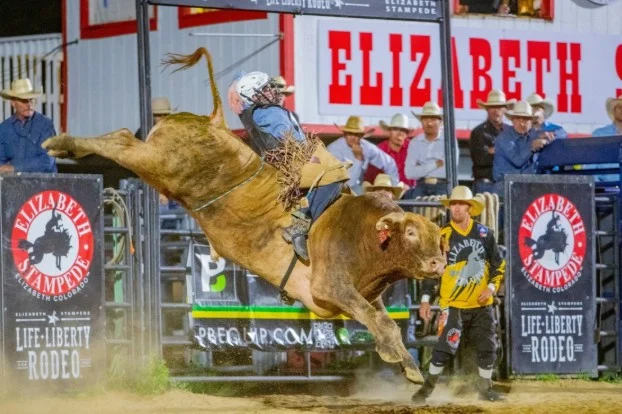
The Elizabeth Stampede Rodeo, held annually the first weekend of June at Casey Jones Park in the heart of Elizabeth, is one of the oldest and most significant rodeos in the Rocky Mountain region — a Professional Rodeo Cowboys Association (PRCA) event traditionally among the first rodeos of the season on the PRCA schedule. The rodeo is staffed by more than 200 volunteers across 17 committees, features three days of PRCA performances and a Thursday night concert, and draws contestants and spectators from across Colorado and neighboring states. Horse trailers from Parker, Castle Rock, Douglas County, and Denver metro communities converge on CO-86 during arrival and departure windows, mixing with the Elizabeth commuter base and the local ranching community’s own trailer traffic on a two-lane highway that does not expand for events. The Grease Monkey on East Kiowa Avenue sits directly in the traffic pattern for Casey Jones Park arrivals and departures. [18]
Stampede weekend on CO-86 is the week to have your brakes in full working order — not because the rodeo is the problem, but because the trailer traffic it generates tests everyone’s brake system within a mile of Elizabeth. Grease Monkey at 712 East Kiowa Avenue, Elizabeth, CO 80107 handles tow vehicle brake inspections year-round so that Stampede weekend is never the moment you discover your caliper has been dragging since February. Book before the season starts at https://www.greasemonkey.com/locations/co/elizabeth/712-east-kiowa-avenue/.
9. Running Creek and Kiowa Creek Flash Flooding: The East CO-86 Flood Zone Where Water Appears on the Highway Without Warning
Category: Important – How critical is flash flooding if I must drive during flood conditions?
Flash flooding is among the most lethal natural hazards for drivers because it combines two conditions that brake systems are not designed to overcome: standing water deep enough to cause hydroplaning (at which point tire-to-road contact is lost entirely and braking force goes to zero), and flowing water with enough velocity to move a vehicle laterally off the roadway before the driver can respond. USGS flash flood research establishes that as little as six inches of moving water can knock a person down and two feet of moving water can carry away a vehicle. On low-water crossings and bridge approaches, the transition from dry pavement to flooded pavement occurs within a single car length, eliminating reaction time and compressing the required stopping distance to near zero. Colorado’s documented flash flood history — more than 530 deaths since 1864 — is concentrated in exactly the geographic conditions that describe Elbert County: dry creek beds adjacent to paved roads, limited upstream gauging, and storm cells that drop intense rainfall over small watersheds faster than downstream drainage can accommodate. [19][20]
Running Creek — a tributary of the broader Kiowa Creek watershed that drains the Elizabeth area — experienced severe flash flooding on June 22, 2023, following intense storms that eroded infrastructure, inundated low-lying properties, and demonstrated the creek’s capacity to impact CO-86 and connecting county roads with little warning. The historical record of the Kiowa Creek watershed includes the catastrophic 1935 Elbert flood, when 24 inches of rain fell in under 6 hours and Kiowa Creek destroyed three-quarters of the town of Elbert and killed nine people. While modern mitigation efforts have reduced the risk of repeat catastrophic events, the watershed’s capacity for rapid, intense response to summer storm cells remains unchanged. The flat-to-gently-rolling terrain of the Elizabeth corridor means that flooded road surfaces can spread laterally across the highway before any visible waterflow indicator warns approaching drivers. The afternoon thunderstorm season — June through August — is the flash flood season, and it coincides exactly with peak recreational and commuter traffic on CO-86. [19][20]
Flash flooding on CO-86 east of Elizabeth is not a once-per-generation anomaly — the 2023 Running Creek event is a reminder that it can happen during an ordinary summer afternoon. The Grease Monkey at 712 East Kiowa Avenue, Elizabeth, CO 80107 provides brake inspections that ensure your system delivers maximum stopping force if you need to abort a flooded crossing at speed. Schedule your pre-summer check at https://www.greasemonkey.com/locations/co/elizabeth/712-east-kiowa-avenue/.
10. Ponderosa Park and Spring Valley Ranch: Subdivision Growth on Roads Built for Rural Density
Category: Medium Priority – Is there a significant increase in vehicle crashes for areas like Ponderosa Park and Spring Valley Ranch, and why is that so?
Residential growth in rural counties without proportionate road infrastructure investment creates a specific and well-documented collision risk: increased traffic volume on roads designed for low-density rural use that lack the turning lanes, acceleration/deceleration lanes, sight-distance improvements, and traffic signals that urban traffic engineering provides. When new subdivision residents — many arriving from urban and suburban environments where road infrastructure anticipates their driving behavior — enter a rural road network where cross traffic has no stop sign, visibility at intersections is limited by vegetation or terrain, and braking must be initiated at longer distances because there are no traffic controls to organize vehicle sequencing, the result is a collision risk profile that increases with every new household added to the subdivision without a corresponding infrastructure upgrade. CDOT data consistently shows that intersection crashes on rural roads with no traffic control are among the most severe in the Colorado highway safety record, precisely because speeds are higher and there is no shared expectation about who has the right of way. [3][11]
Elbert County’s real estate boom has driven population growth of more than 37% since 2010, with the largest concentrations in northwestern Elbert County — Ponderosa Park, Spring Valley Ranch, The Pinery, and the Independence community — all of which use CO-86 and the Elbert Road corridor as primary access. These subdivisions were developed largely in the 1970s through 1990s, and their road connections to CO-86 were designed for the traffic volumes of that era, not the 31,000-person county of 2026 with continued growth projected. New residents arriving from Aurora, Parker, Denver, and Colorado Springs bring driving habits calibrated for signalized intersections, divided highways, and turn lanes — and encounter Elizabeth’s gravel driveways and unsignalized county road junctions daily. The brake demand created by this mismatch is not dramatic; it is incremental, daily, and expressed in the slightly longer stops, the harder pedal applications at unexpected intersections, and the accumulated wear that comes from braking in environments where the road infrastructure does not provide the cues that signal when to brake. [7][10]
Elizabeth’s growth is not slowing — and the road infrastructure is playing catch-up. The Grease Monkey at 712 East Kiowa Avenue, Elizabeth, CO 80107 keeps your brake system performing at its best through every phase of Elbert County’s development, from the gravel access roads of Ponderosa Park to the CO-86 corridor where growth meets a two-lane highway. Schedule your service at https://www.greasemonkey.com/locations/co/elizabeth/712-east-kiowa-avenue/.
11. Elbert County Wildfire Evacuation: CO-86 as the Only Major Western Escape Corridor When Fire Threatens Elizabeth’s Ponderosa Pine Interface
Category: Medium Priority – Since I live in the Elizabeth area, which has conditions favorable to wildfires, does that make it imperative to have my vehicle’s brakes up to standard, and why is this true?
Wildfire evacuation driving imposes brake demands that are categorically different from any other traffic scenario: vehicles moving at maximum safe speed on a road filled with other evacuating vehicles, all under high stress, many towing horses, livestock, or large recreational trailers, with smoke reducing visibility and the psychological urgency of fire proximity driving aggressive speed choices that compress following distances to margins where any brake system deficiency becomes immediately dangerous. NHTSA crash data consistently shows that rear-end collisions increase sharply in reduced-visibility conditions — and evacuation corridors combine reduced visibility (smoke), increased following speed, high emotional stress, and abnormal traffic volume into the highest-density collision risk profile that a rural road system ever experiences. When evacuation orders are issued, the 30 to 60 minutes of peak egress are the most dangerous period on any rural road, and a brake system that was adequate for commuting may be inadequate for the harder, more frequent stops that evacuation traffic requires. [1][2]
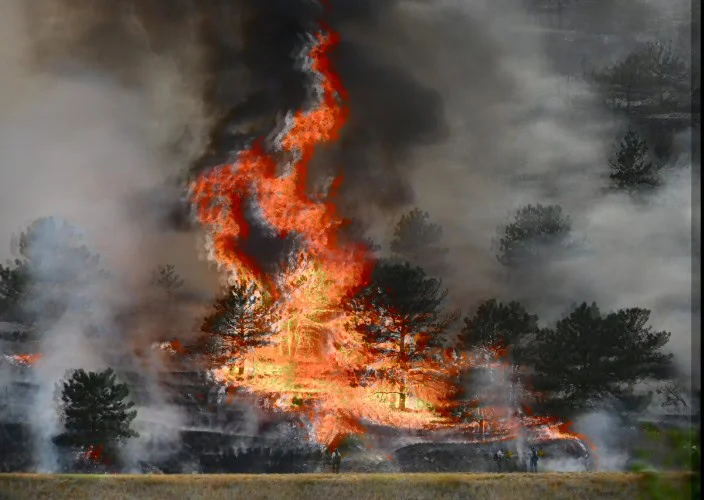
Elizabeth sits in a ponderosa pine and grassland interface that carries genuine wildfire risk. Elbert County experienced significant fire activity along its northern border during the 2013 Black Forest Fire, and the county’s combination of dry grasslands, ponderosa pine stands, and the diurnal wind patterns that flow across the Palmer Divide creates fire behavior conditions recognized by Colorado fire management as high-consequence. The ponderosa pine forest in which Elizabeth is situated — specifically noted in the town’s own description as a defining community feature — creates both the aesthetic character residents value and a fuel load that, under drought conditions, supports rapid-spread fire. CO-86 is Elbert County’s primary western escape corridor: with the exception of Elbert Road and scattered county roads, it is the most practical and highest-capacity route for mass vehicle movement toward the safety of the Castle Rock and I-25 corridor. A major wildfire threatening the Elizabeth area would funnel thousands of vehicles — many towing horse trailers — onto CO-86 simultaneously. [7][21]
Wildfire season and brake service season are the same season in Elbert County. The Grease Monkey team at 712 East Kiowa Avenue, Elizabeth, CO 80107 ensures your vehicle can stop safely under every condition CO-86 can present — including the one where smoke is on the horizon and thousands of vehicles are moving in the same direction. Schedule your pre-fire-season inspection at https://www.greasemonkey.com/locations/co/elizabeth/712-east-kiowa-avenue/.
12. Elbert County’s 4WD Ownership Culture and the Braking Misconception That Gets Trucks Into Trouble on Icy Palmer Divide Roads
Category: Medium Priority – I have a four-wheel drive truck. Does the four-wheel drive give me better braking capability?
Four-wheel drive and all-wheel drive systems improve a vehicle’s ability to transmit engine power to the road for acceleration and low-speed traction — but they have no effect whatsoever on braking distance. Braking performance is determined entirely by the tire-to-road coefficient of friction and the condition of the vehicle’s brake system: the number of driven wheels does not change the physics of a decelerating vehicle, because braking force is applied through the brakes at all four wheels regardless of drivetrain configuration. A 4WD pickup truck with worn brake pads on icy pavement stops in exactly the same distance — or longer, due to greater weight — as a front-wheel-drive car with worn pads on the same surface. Research and safety communications from the Insurance Institute for Highway Safety, AAA, and multiple state DOTs consistently identify the 4WD/AWD braking misconception as a significant contributor to winter crash rates: drivers who believe their drivetrain configuration provides stopping advantage follow more closely, brake later, and enter curves at higher speeds than the brake system can manage. [22][23]
Elbert County has among the highest pickup truck and 4WD vehicle ownership rates in Colorado — a function of its agricultural character, large-lot residential profile, and the genuine utility of 4WD for navigating 1,100 miles of gravel roads and ranch access tracks in all seasons. Ford F-150s, Chevrolet Silverados, Ram 1500s, and Toyota Tundras fill the driveways of Ponderosa Park and the parking lots at Casey Jones Park during Stampede weekend. These are exactly the vehicles whose drivers are most likely to carry the 4WD braking misconception — and they are also, because of their weight, the vehicles with the longest stopping distances in the fleet, particularly when combined with marginal brake pads or worn rotors. On a Palmer Divide black ice event in November or March, a 5,500-pound pickup with worn front pads and a driver who believes his 4WD makes him safer is a rear-end collision looking for a stationary object. [11][22]
4WD gets you moving — your brakes get you stopped. The Grease Monkey at 712 East Kiowa Avenue, Elizabeth, CO 80107 inspects the brake system that is actually responsible for stopping your truck, regardless of what the transfer case is doing. Don’t let a drivetrain myth put your F-250 in a ditch on an icy stretch of CO-86. Schedule your truck brake inspection at https://www.greasemonkey.com/locations/co/elizabeth/712-east-kiowa-avenue/.
13. Elbert County Fair: Late-Summer Livestock Trailer and 4H Traffic on the County Roads Around Elizabeth
Category: Lower Priority – When the county fair is in town, is there a greater risk of accidents during the fair activities?
County fair traffic is a specialized and underappreciated brake demand category for rural communities: the combination of slow-moving livestock trailers, inexperienced young drivers transporting 4H animals, and the full spectrum of recreational and utility vehicles converging on fairground access roads creates an environment of highly variable vehicle speeds, frequent unexpected stops, and a driver population that includes first-time haulers who may not fully understand how a loaded trailer changes their stopping distance. Research on rural road safety identifies intersections near event venues — particularly those without traffic control devices — as significantly elevated risk locations during event periods, with the risk compounded when a meaningful percentage of vehicles are towing trailers whose brake systems have not been recently inspected or verified. The combination of livestock weight, an inexperienced trailer operator, and worn tow vehicle brakes creates exactly the rear-end collision geometry that agricultural community roads experience disproportionately during fair week. [2][8]
The Elbert County Fair is a week-long annual celebration that brings 4H livestock competitions, cattle sales, rodeo events, sport shooting, and archery competitions to the Elizabeth area, drawing participants and spectators from across the county’s 1,851 square miles. Families from the ranch communities east of Elizabeth — along Running Creek Road, Elbert Road, Kiowa Creek Road, and the network of county roads that connect Kiowa, Simla, and Elbert to the county seat corridor — haul their 4H projects and livestock entries to Elizabeth in trailers that have spent most of the year parked. The county roads connecting these rural communities to the fairgrounds traverse the same gravel network that comprises 74% of Elbert County’s roads, and the vehicles and trailers on those roads during fair week represent the full maintenance spectrum: the well-kept ranch truck and the student’s older pickup borrowed for fair transport alike. [7][14]
Elbert County Fair week is community at its best and brake awareness at its most important. The Grease Monkey at 712 East Kiowa Avenue, Elizabeth, CO 80107 serves the working trucks and towing vehicles of Elizabeth’s ranching and 4H community year-round — so fair week is a celebration, not a surprise. Schedule your pre-fair inspection at https://www.greasemonkey.com/locations/co/elizabeth/712-east-kiowa-avenue/.
14. Palmer Divide Holiday Travel: CO-86 Black Ice During Colorado’s Peak Christmas and Thanksgiving Corridor Season
Category: Lower Priority – When my family is coming for the holidays from out of town, what should I warn them about black ice, which is a serious problem in the Elizabeth area, to keep them safe?
Holiday travel periods produce a specific and well-documented combination of elevated crash risk factors: increased traffic volume, higher proportion of out-of-area and unfamiliar drivers, fatigue from extended travel, and — on elevated terrain in Colorado — the Palmer Divide’s tendency to generate winter weather conditions that differ sharply from the Denver metro conditions that most holiday travelers have just left. CDOT winter travel advisories specifically flag the Palmer Divide and Eastern Plains as zones that can experience blizzard conditions, black ice, and near-zero visibility while I-25 in Denver reports dry pavement. Holiday travelers who depart Denver in clear weather and reach the CO-86 corridor near Elizabeth can encounter a road surface that has transitioned from wet to icy over the last five miles, with no visible difference in road appearance. The combination of higher speed, driver fatigue, unfamiliar road geometry, and an unexpected icy surface is the exact scenario that NHTSA identifies as the highest-risk condition for multi-vehicle crashes on rural winter roads. [1][11]
The CO-86 corridor through Elizabeth connects the Denver-Parker-Castle Rock population center to Kiowa and points east — a secondary routing corridor that fills with holiday travel when I-25 congestion pushes vehicles to alternate routes, and a direct path for the substantial population of rural Elbert County residents returning from Denver metro family gatherings. Thanksgiving and Christmas travel periods concentrate the highest annual vehicle volumes on CO-86 into the shortest windows: Thursday and Sunday of Thanksgiving weekend, and the two or three days before and after Christmas. The Palmer Divide’s elevation — 6,530 feet at Elizabeth — means that the evening temperatures during these periods frequently drop below freezing well before departure time, and black ice that forms on the shaded curves of CO-86 between Elizabeth and Singing Hills or on the bridge decks over Running Creek approaches is invisible until a vehicle is already on it. The brake system condition that performed adequately on fall dry pavement may be tested, critically, on its first encounter with black ice during a holiday return trip at 65 mph. [11][12]
The Palmer Divide doesn’t take holidays off. The Grease Monkey at 712 East Kiowa Avenue, Elizabeth, CO 80107 provides pre-winter brake inspections that ensure your holiday travel — to Denver and back, or east to Kiowa for a family gathering — is not the first time your brake system meets an icy CO-86 with worn pads. Schedule your holiday readiness check at https://www.greasemonkey.com/locations/co/elizabeth/712-east-kiowa-avenue/.
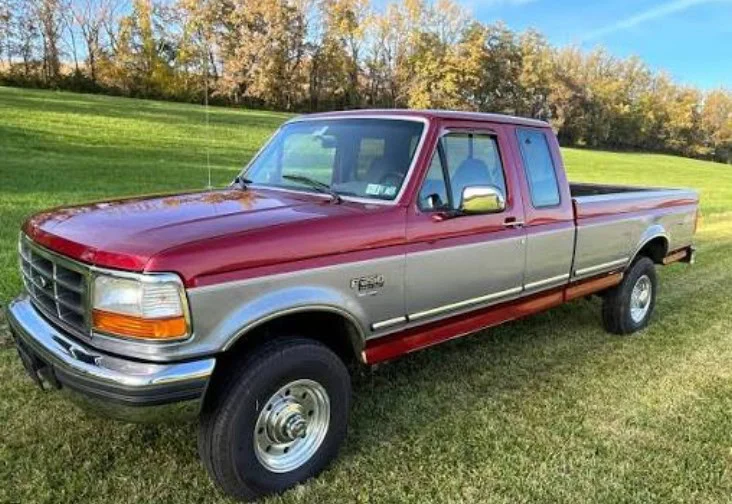
15. Building a Brake Service Record in Elizabeth’s Growing Equestrian-Exurban Community: Long-Term Value for Ranch Vehicles and Elbert County’s Horse Property Lifestyle
Category: Long-Term Value – My ranch truck has gone a lot of miles, and I have serviced it faithfully and have kept good service records. How much more can I expect to receive in dollars for my well-maintained truck?
A documented vehicle service record produces measurable financial value at resale — NADA research shows that vehicles with complete maintenance documentation sell for $500 to $1,500 more than equivalent vehicles without records. For brake service specifically, documentation provides two distinct benefits beyond resale: it establishes a maintenance timeline that allows the owner and technician to project the next service interval with accuracy, and it provides evidence in the event of an insurance dispute or liability question that the vehicle was maintained to a standard of care appropriate to its operating conditions. In communities where vehicles are used for towing, ranch access, and long-distance commuting — conditions that accelerate brake wear significantly beyond urban or highway-only baselines — a brake service record is also a vehicle management tool, helping owners identify wear rates that indicate specific component issues before those issues escalate to failures. [1][24]
Elizabeth’s community creates a specific and high-value service record scenario. Ranch trucks and tow vehicles in Elbert County accumulate brake wear faster than city vehicles of comparable mileage because of the gravel roads, the towing cycles, and the Palmer Divide winter conditions. A resident who buys a used pickup in Elizabeth — whether from a departing family or from someone upgrading their tow vehicle — benefits enormously from a service record that documents how the truck was maintained through Elbert County conditions, including brake inspections noting rotor condition, pad thickness at each service, and fluid flush dates. Equally, a resident who plans to sell a 2018 F-150 after five years of Elbert County horse trailer service can document at the Grease Monkey on Kiowa Avenue that every brake service was performed on schedule, by ASE-certified technicians, to manufacturer specifications — a significant differentiator in a community where buyers know exactly how hard a county road and horse trailer environment is on a vehicle. [7][10]
Your Elbert County service record starts with your next brake inspection. The Grease Monkey at 712 East Kiowa Avenue, Elizabeth, CO 80107 maintains your service documentation, identifies wear trends specific to your towing and road profile, and provides the professional verification that makes your ranch vehicle worth more at every level — at resale, at insurance review, and every day you drive it on CO-86. Start your Elizabeth brake record today at https://www.greasemonkey.com/locations/co/elizabeth/712-east-kiowa-avenue/.
About Grease Monkey — 712 East Kiowa Avenue, Elizabeth, Colorado 80107
Grease Monkey at 712 East Kiowa Avenue, Elizabeth, CO 80107 (https://www.greasemonkey.com/locations/co/elizabeth/712-east-kiowa-avenue/) is part of the FullSpeed Automotive family — one of North America’s largest automotive service networks, with more than 900 locations nationwide, 435 CARFAX 2025 Top Shop winners, and ASE-certified technicians at every service bay. Serving Elizabeth residents, Elbert County ranchers, Denver metro commuters, and the equestrian community of Colorado’s premier horse country, this location provides the professional-grade brake inspection and service that CO-86, Elbert County’s gravel roads, and the Palmer Divide’s demanding conditions require.
Author Information
Author Bio – Phillip Paul Gilliam
Phillip Gilliam is a veteran journalist and former Editor-in-Chief with 50+ years of publishing experience and thousands of published articles. Specializing in automotive, trucking, and digital publishing, he creates authoritative, search-optimized content built on real-world expertise and editorial excellence. To learn more about Phil, visit http://www.phillipgilliam.com/about.html or contact Phil at [email protected]. He would love to hear from you!
Full Citation List
[1] National Highway Traffic Safety Administration (NHTSA). National Motor Vehicle Crash Causation Survey (NMVCCS). U.S. Department of Transportation. Available at: https://crashstats.nhtsa.dot.gov/. (22% of vehicle defect-related crashes, approximately 264,000 annual accidents, involve defective brakes; brake deficiencies identified as critical factor in emergency stop failures.)
[2] Automotive Fleet. Over 20% of Collisions Linked to Bad Brakes. Available at: https://www.automotive-fleet.com/news/over-20-of-collisions-linked-to-bad-brakes. (More than 20% of vehicle collisions are linked to brake deficiencies; event-day and high-traffic-density scenarios increase brake failure collision exposure.)
[3] Colorado Department of Transportation (CDOT). CO 86 & County Road 13 — Elizabeth Intersection Project. Available at: https://www.codot.gov/projects/archived-project-sites/co-86-elizabeth-intersection. (CDOT safety project addressing collision patterns at the CO-86/County Road 13 intersection in Elizabeth.)
[4] Wikipedia. Colorado State Highway 86. Available at: https://en.wikipedia.org/wiki/Colorado_State_Highway_86. (CO-86 bisects Elizabeth, running 15 miles west to Castle Rock and 7 miles east to Kiowa; primary transportation corridor for the town.)
[5] Health Resources and Services Administration (HRSA). Access to Emergency Medical Services in Rural Communities. Available at: https://www.hrsa.gov/sites/default/files/hrsa/advisory-committees/rural/access-to-ems-rural-communities.pdf. (Rural EMS average response time exceeds 14 minutes; nearly 1 in 10 rural encounters waits approximately 30 minutes for EMS arrival.)
[6] Elbert County Emergency Services. EMS Services. Available at: http://www.elbertcoes.org/. (Elbert County EMS operates two ambulances on 24-hour coverage, with additional units during business hours; Elbert County has no hospital within county borders.)
[7] Wikipedia / Town of Elizabeth. Elizabeth, Colorado. Available at: https://en.wikipedia.org/wiki/Elizabeth,_Colorado and https://www.townofelizabeth.org/community/page/welcome-elizabeth. (Population 1,675 per 2020 census; 2026 estimate approximately 3,300 town proper; elevation 6,530 feet; ponderosa pine forested area; CO-86 as primary route; approximately 45 miles southeast of Denver.)
[8] Oregon Horse Council. Horse Trailer Brakes: Going Is Optional. Stopping Is Not. Available at: https://www.oregonhorsecouncil.com/horse-trailer-brakes-going-is-optional-stopping-is-not/. (Horse trailer live-load weight transfer under braking; dynamic load shift from horse movement; stopping distance approximately 302 feet at 60 mph for loaded horse trailer combination.)
[9] TrailMeister. Horse Trailer Brakes: Going Is Optional. Stopping Is Not. Available at: https://www.trailmeister.com/horse-trailer-brakes/. (Loaded horse trailer without functional trailer brakes forces tow vehicle to stop entire combination weight with tow-vehicle brakes only; animals thrown off balance under hard braking.)
[10] Independence Denver. Commuting from Elizabeth, CO to Denver. Available at: https://www.independencedenver.com/community-life/blog/commuting-from-elizabeth-co-to-denver-what-residents-of-independence-need-to-know/. (Elizabeth-to-Denver commute: approximately 40–50 miles, 50–60 minutes under clear conditions; primary routes CO-86 west to Castle Rock, then I-25 north.)
[11] Palmer Divide / CDOT. Blizzard Conditions Expected on the Eastern Plains and Palmer Divide. Colorado Department of Transportation. Available at: https://www.codot.gov/news/2025/march/blizzard-eastern-plains-palmer-divide-heavy-snow-in-mountains. (Palmer Divide elevation range 6,000–7,887 feet; towns on divide include Elizabeth; generates blizzard conditions distinct from Denver metro; black ice forms without warning on divide-crest roads.)
[12] FOX21 News Colorado. What Is the Palmer Divide and How Does It Impact Our Weather? Available at: https://www.fox21news.com/fox21-news-we-are-tri-lakes/we-are-tri-lakes-what-is-the-palmer-divide-and-how-does-it-impact-our-weather/. (Palmer Divide orographic effect: precipitation that falls as rain at lower elevations becomes ice and snow at divide crest; fog, blizzards, and black ice can form without Denver metro warning.)
[13] CDOT Safety Circuit Rider. Unpaved Road Safety for Local Roads in Colorado. Available at: https://www.codot.gov/safety/traffic-safety/assets/safety-circuit-rider/unpaved-road-safety. (Unpaved road brake demands including abrasive contamination, gravel stopping distances, and surface transition hazards for Colorado rural drivers.)
[14] Elbert County Road & Bridge. County Road Network. Available at: https://www.elbertcounty-co.gov/237/Road-Bridge. (Elbert County maintains 1,100 miles of gravel roads and 380 miles of asphalt roads; approximately 74% of the county’s maintained road network is unpaved.)
[15] AAA. Vehicle Braking and Stopping Distance Research. (AAA data: drivers significantly underestimate stopping distance at speeds above 40 mph; brake repair costs average $300–$1,000 per axle; stop-and-go urban driving is primary accelerated brake wear mechanism.)
[16] Uncover Colorado / Colorado Parks and Wildlife. Castlewood Canyon State Park. Available at: https://www.uncovercolorado.com/state-parks/castlewood-canyon/. (Castlewood Canyon State Park located on CO-83 south of Franktown, approximately 10–15 minutes north of Elizabeth; day-use park open year-round; canyon approach grades and park road network.)
[17] Colorado Parks and Wildlife. Castlewood Canyon State Park. Available at: https://cpw.state.co.us/state-parks/castlewood-canyon-state-park. (Park address: 2989 South Hwy 83, Franktown CO 80116; remains of 1933 Castlewood Canyon Dam failure visible; hiking, rock climbing, and nature programs; open sunrise to sunset.)
[18] Elizabeth Stampede Rodeo. About the Stampede. Available at: https://www.elizabethstampede.com/. (PRCA rodeo held first weekend of June at Casey Jones Park, Elizabeth; one of the first rodeos of the PRCA season; 200+ volunteers on 17 committees; three days of performances plus Thursday night concert.)
[19] The Fence Post / Elbert County News. Mader: Kiowa Creek Flood of 1935. Available at: https://www.thefencepost.com/opinion/mader-kiowa-creek-flood-of-1935/. (1935 Kiowa Creek flood: 24 inches of rain in under 6 hours; nine deaths; three-quarters of Elbert destroyed; 5 feet of sand deposited. Running Creek flash flooding June 22, 2023, eroded infrastructure and inundated low-lying properties near Elizabeth.)
[20] USGS / Colorado Flash Flood History. Floods in Colorado. Available at: https://en.wikipedia.org/wiki/Floods_in_Colorado. (Colorado documented flash flood history: more than 530 deaths since 1864; as little as 2 feet of moving water can carry away a vehicle; flash flooding primary hazard on low-water crossings and bridge approaches on rural roads.)
[21] Colorado Encyclopedia / Elbert County. Elbert County. Available at: https://coloradoencyclopedia.org/article/elbert-county. (Elbert County: 1,851 square miles; ponderosa pine and grassland fire interface; population growth 37%+ since 2010; CO-86 as primary western transportation corridor.)
[22] Jalopnik. This Should Settle the 4WD vs. 2WD Winter Braking Debate Once and For All. Available at: https://jalopnik.com/this-should-settle-the-4wd-vs-2wd-winter-braking-debate-1822591648/. (4WD does not shorten braking distance; stopping distance is a function of tire-to-road friction and brake system condition, not drivetrain configuration; 4WD braking misconception is a documented contributor to winter crash rates.)
[23] Harbor Brakes. Common Myths About Brakes Debunked. Available at: https://www.harborbrakes.com/repairs/common-myths-about-brakes-debunked-you-didnt-know-about/. (Brake myths including 4WD/AWD braking misconception; braking force is independent of drivetrain configuration; heavier 4WD trucks require greater stopping distance on equivalent surfaces.)
[24] National Automobile Dealers Association (NADA). Vehicle Service History and Resale Value. (NADA data: documented maintenance history adds $500–$1,500 to resale value; brake service records among the most valued documentation in private vehicle transactions, especially for towing and ranch-use vehicles.)
© 2026 Grease Monkey, Written by, Phillip Paul Gilliam. All rights reserved. Published in partnership with Grease Monkey, 712 East Kiowa Avenue, Elizabeth, Colorado 80107. Content is for informational purposes and reflects current industry research and local geographic conditions. Brake service intervals and recommendations may vary by individual vehicle, usage pattern, and driving conditions. Consult a certified professional for specific advice about your vehicle’s brake system.
Stop by today.
- Grease Monkey Center #1497 Address: 712 East Kiowa Avenue, Elizabeth, CO, 80107
- Services: Air Conditioning Services, Battery Services, Brake Services, Car Wash Services, Engine Services, Filter Services, Fluid Exchange Services, Headlight Services, Oil Changes, Power Steering, Tire Services, Transmission Services, Wiper Replacement Services
Your car will thank you. And your wallet will too.

Plan Your Visit
Find a location near you, explore current deals, and get everything you need before you roll in.