The Top 15 Reasons Aurora, Colorado Residents Should Have Their Vehicle Air Conditioning System Serviced and Checked Regularly
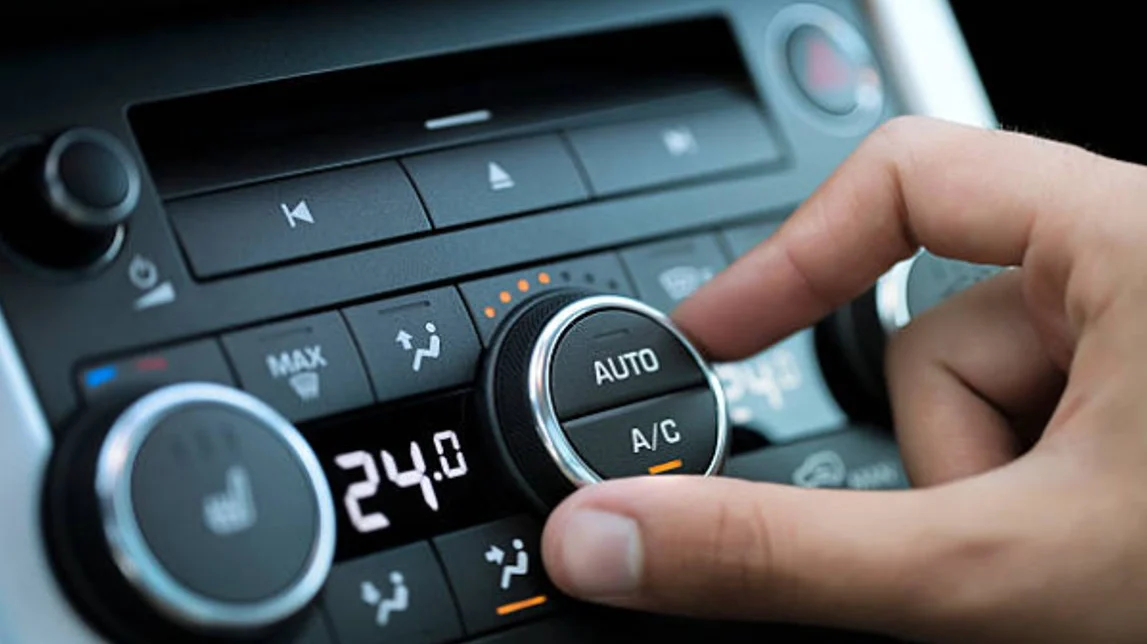
A Complete Guide to Keeping Cool, Safe, and Road-Ready on the Colorado Front Range
Reason #1: Protecting Occupant Health from Microbial Contamination Inside the AC System
Category of Importance: Critical Health & Safety
A vehicle’s air conditioning system is not merely a comfort device — it is a closed-loop biological environment capable of harboring dangerous microbial colonies when left unchecked. The evaporator core, the condensate drain pan, and the ductwork that channels cooled air into a vehicle’s cabin are persistently damp surfaces after each cooling cycle. When moisture lingers without complete evaporation, mold spores, mildew, and bacteria — including Legionella pneumophila, the pathogen responsible for Legionnaires’ disease — can colonize and multiply rapidly. During routine operation, the blower fan aerosolizes these contaminants directly into the breathing zone of every person seated in the vehicle. Regular professional servicing includes thorough evaporator cleaning, microbial treatment with EPA-registered disinfectants, and condensate drain inspection to eliminate standing moisture that feeds these colonies. Without this maintenance, occupants are unknowingly inhaling airborne pathogens with every mile driven. Industry standards from the Society of Automotive Engineers (SAE) and the Automotive Air Conditioning Association (AACA) recommend full system inspection and evaporator sanitization on an annual basis to interrupt the microbial lifecycle before it reaches dangerous concentrations inside the cabin.
Imagine loading the family into the SUV for a summer Saturday at Cherry Creek State Park — one of Aurora’s most beloved outdoor destinations, where roughly four million visitors gather each year to swim, cycle, and enjoy the reservoir. That 20-minute drive to the park along Parker Road in July heat means the AC is running at full blast, recirculating cabin air through an evaporator that may not have been serviced in two or three seasons. Children, elderly passengers, and individuals with asthma or compromised immune systems — a significant population given Aurora’s proximity to UCHealth’s Anschutz Medical Campus and Children’s Hospital Colorado — are especially vulnerable to aerosolized mold and bacterial spores. Aurora’s characteristically dry climate creates a deceptive false sense of security: residents often assume the arid conditions prevent mold growth, but the damp interior of an AC evaporator operates in its own humid microclimate regardless of exterior conditions. The result is that the same vehicle meant to ferry a family safely to the lake can become a mobile incubator for respiratory illness.
🦠 Don’t let invisible hitchhikers take the wheel. Schedule a professional AC evaporator cleaning and microbial treatment with the experts at Grease Monkey in Aurora before your next family outing. Book your AC health inspection today → GreaseMonkey Aurora
Citation: Society of Automotive Engineers (SAE) Technical Paper 2019-01-0882, “Microbial Contamination in Vehicle HVAC Systems”; Centers for Disease Control and Prevention (CDC), “Legionella (Legionnaires’ Disease and Pontiac Fever): Sources,” cdc.gov/legionella, reviewed 2023.
Reason #2: Defending Against Life-Threatening Heat-Related Illness During Peak Summer Temperatures
Category of Importance: Life Safety
Vehicle interior temperatures in direct summer sunlight are among the most underestimated environmental hazards in daily life. Engineering research consistently demonstrates that a vehicle parked in direct sun with windows closed can exceed 130°F to 172°F (54°C to 78°C) within 60 minutes, even on days when ambient outdoor temperatures register only in the mid-80s°F. An air conditioning system operating below peak efficiency — due to low refrigerant charge, a clogged condenser, or a failing compressor — cannot reduce interior cabin temperature to safe levels quickly enough after entry. The result is prolonged heat exposure during the critical first minutes of driving, when core body temperature rises rapidly. Core temperature elevation above 104°F (40°C) triggers heat stroke, a medical emergency with a fatality rate that climbs sharply without immediate intervention. Professional AC service ensures the system reaches maximum cooling capacity — typically measured as the ability to reduce cabin temperature by at least 40°F (22°C) below ambient within the first five minutes of operation — by verifying refrigerant charge, compressor output, condenser airflow, and expansion valve calibration. The National Highway Traffic Safety Administration (NHTSA) directly links impaired vehicle climate systems to driver medical emergencies behind the wheel.
Aurora, Colorado experiences summer heat events that catch residents off guard precisely because the city’s elevation of approximately 5,400 feet above sea level creates the perception of a cooler climate than what ground-level thermometers actually record on exposed asphalt. The parking lots of Southlands Mall on the southeast side of Aurora, the Buckley Space Force Base access roads along Alameda Avenue, and the sun-baked expanse of E-470’s open highway corridor all create radiant heat environments where vehicle interior temperatures can spike dramatically within minutes. Workers commuting along the I-225 corridor from Aurora’s medical district — which includes thousands of healthcare professionals arriving for early morning shifts at Anschutz Medical Campus — are particularly at risk when they return to vehicles that have been baking in uncovered surface parking lots for eight or more hours. If those employees’ AC systems cannot rapidly cool the cabin, they face real heat exposure risk during the commute home at the peak of afternoon heat. For Aurora’s construction workers, outdoor tradespeople, and delivery drivers who move in and out of vehicles dozens of times per shift during July and August, a marginally functioning AC system is not an inconvenience — it is a genuine threat to physical safety.
🌡️ Heat waits for no one — and neither should you. Get your AC performance tested and recharged at Aurora’s Grease Monkey before summer’s peak temperatures arrive. Keep your cabin cool and your family safe → GreaseMonkey AuroraCitation: National Highway Traffic Safety Administration (NHTSA), “Heat-Related Fatalities and Vehicle Climate Systems,” NHTSA Technical Report DOT HS 812 219, 2021; Null, J. (2023). “Heatstroke Deaths of Children in Vehicles,” Department of Meteorology & Climate Science, San Jose State University.
Reason #3: Maintaining Driver Cognitive Performance and Reducing Accident Risk
Category of Importance: Road Safety
The relationship between thermal discomfort and deteriorating driving performance is well-documented in human factors research. When cabin temperatures exceed 77°F (25°C), measurable declines begin in reaction time, sustained attention, hazard detection, and decision-making speed — the precise cognitive functions that separate safe driving from preventable collisions. As temperatures climb above 90°F (32°C), cognitive impairment in a vehicle cabin becomes comparable, in some metrics, to mild alcohol intoxication: response times increase, lane discipline weakens, and the driver’s ability to process multiple stimuli simultaneously degrades. An air conditioning system that delivers cool, low-humidity air to the cabin directly counteracts this thermal impairment by maintaining the cognitive operating environment within the narrow thermal comfort band — generally 68°F to 74°F (20°C to 23°C) — where the human nervous system performs optimally. Regular AC service is, therefore, not simply a comfort upgrade; it is a direct intervention in driving safety outcomes. Technicians performing comprehensive AC service evaluate blower fan speed accuracy, temperature blend door function, vent airflow volume, and zonal distribution to ensure cool air reaches the driver with sufficient velocity and consistency to maintain cognitive alertness throughout the journey.
Consider what driving looks like for the average Aurora resident during summer. The intersection of Havana Street and Colfax Avenue, one of Aurora’s busiest urban crossings, sees dense, complex traffic patterns where split-second judgments matter. The multilane E-470 tollway — where speeds run at 65 mph and merging lanes compress rapidly — demands sustained concentration across sometimes 30-minute-plus commutes. Parents navigating the school drop-off crush near Aurora Hills Middle School or Rangeview High School cannot afford the slowed reaction times that accompany a stifling vehicle cabin. Even the comparatively pleasant weekend drives along Quincy Avenue toward Aurora’s recreational areas present real hazards when a driver is flushed, sweating, and thermally stressed. For the thousands of rideshare and delivery drivers operating out of Aurora — a substantial workforce given the city’s central position within the Denver metro — a degraded AC system means degraded professional judgment during long shifts in summer heat. Keeping the AC serviced is, quite literally, one of the most consequential road-safety investments an Aurora driver can make.
🧠 Sharp driving starts with a cool cabin. Don’t let heat steal your focus on Aurora’s busiest roads — get your AC inspected at Grease Monkey today. Drive sharper, drive safer → GreaseMonkey Aurora
Citation: Ramsey, J.D. & Kwon, Y.G. (1992). “Recommended Alert Limits for Perceptual Motor Loss in Hot Environments,” International Journal of Industrial Ergonomics, 9(3), 245–257; Hancock, P.A. & Warm, J.S. (1989). “A Dynamic Model of Stress and Sustained Attention,” Human Factors, 31(5), 519–537.
Reason #4: Preventing Illegal and Environmentally Damaging Refrigerant Leaks
Category of Importance: Environmental & Legal Compliance
Modern vehicle air conditioning systems operate under charge pressures using HFC-134a (R-134a) or the newer HFO-1234yf refrigerant, both of which are subject to strict federal regulation under Section 608 of the Clean Air Act as administered by the U.S. Environmental Protection Agency (EPA). Refrigerants classified as greenhouse gases carry Global Warming Potential (GWP) values that make atmospheric venting a significant environmental concern: R-134a has a GWP of 1,430 — meaning one pound of R-134a released into the atmosphere is 1,430 times more potent as a greenhouse gas than one pound of carbon dioxide over a 100-year period. Vehicle AC systems develop micro-leaks at hose fittings, O-ring seals, and the compressor shaft seal as components age and thermal cycling stresses connections. These small leaks allow refrigerant to seep into the atmosphere continuously, often without any perceptible loss of cooling performance until the charge drops substantially. Regular professional AC service includes leak detection using electronic refrigerant sniffers and UV dye tracing to identify and repair these points of loss before cumulative emissions reach environmentally significant levels. The EPA requires certified technicians to recover refrigerant before any component replacement, and failure to comply carries civil penalties of up to $44,539 per day per violation under current enforcement guidance.
Colorado’s Front Range has long been a community that takes environmental stewardship seriously — Aurora’s own sustainability initiatives include aggressive municipal commitments to reduce greenhouse gas emissions. Allowing a vehicle’s AC system to vent refrigerant through unrepaired leaks directly contradicts the values of a city that borders the Morrison Nature Center, stewards the Sand Creek Regional Greenway, and hosts community events at the Aurora Reservoir that celebrate the region’s natural beauty. Beyond the environmental dimension, Colorado’s proximity to federal enforcement priorities means that Aurora residents operating commercial vehicles, fleet cars, or any vehicle subject to inspection programs cannot afford the liability of non-compliant refrigerant management. Even for private passenger vehicles, a leaking system that slowly loses its charge will eventually fail completely — leaving the owner with a repair bill that dwarfs the cost of an annual service. Catching and correcting refrigerant leaks during routine maintenance at a qualified shop protects both the atmosphere above the Rocky Mountain Front Range and the vehicle owner’s wallet below it.
🌿 Keep Aurora’s air clean — above the city and inside your car. Let Grease Monkey’s certified technicians find and seal refrigerant leaks before they cost you — and the environment — more than you bargained for. Fix the leak, protect the planet → GreaseMonkey Aurora
Citation: U.S. Environmental Protection Agency (EPA), “Stationary Refrigeration and Air Conditioning — Section 608 of the Clean Air Act,” epa.gov/section608, updated 2024; Intergovernmental Panel on Climate Change (IPCC), “Fifth Assessment Report: Climate Change 2013,” Table AII.1.2, Global Warming Potentials.

Reason #5: Preserving the AC Compressor — the System’s Most Expensive Component
Category of Importance: Major Component Protection
The air conditioning compressor is the mechanical heart of the vehicle cooling system and, by a wide margin, its most costly component. A factory-quality replacement compressor for a typical passenger vehicle or SUV ranges from $400 to over $1,200 for the part alone, with labor bringing total repair costs into the $800 to $2,200 range depending on vehicle type and accessibility. The compressor is driven by a serpentine belt off the engine crankshaft and operates through an electromagnetic clutch that engages when cooling is called for. It pressurizes refrigerant vapor from low-pressure suction to high-pressure discharge, and its internal tolerances depend on a thin film of compressor oil — typically PAG (polyalkylene glycol) oil circulated through the refrigerant — to lubricate its pistons, scrolls, or vanes. When refrigerant charge drops due to a leak, the quantity of oil carried in suspension also drops, starving the compressor of lubrication. The result is accelerated bearing wear, internal scoring, and ultimately catastrophic seizure. Regular AC service maintains the correct refrigerant and oil charge ratio, inspects the clutch assembly, and verifies operating pressures that reveal early compressor fatigue before failure occurs. Catching a compressor in decline is dramatically less expensive than replacing one that has seized solid.
Aurora residents who rely on their vehicles for the long-haul drives common to the metro area — the 45-minute run out to Denver International Airport on E-470, the weekend trip south on Highway 83 toward the Colorado Springs corridor, or the regular Costco run to the Aurora location on South Buckley Road — place sustained demand on their AC compressors throughout summer. A compressor that runs for an hour at highway speed in 95°F weather while oil-starved due to an undetected refrigerant leak is undergoing rapid internal destruction, even if the air coming from the vents still feels marginally cool. By the time an Aurora driver notices reduced cooling, the compressor may already be within weeks of complete failure. The timing is particularly punishing: compressor failures tend to occur during peak summer heat, when repair shops face maximum scheduling pressure and parts availability may be strained. Proactive annual service — the kind that catches a low refrigerant charge in April before June heat arrives — is the most reliable and affordable insurance against losing the most expensive component in the AC system.
⚙️ Don’t wait for that grinding shriek under the hood. Get your AC compressor health checked at Grease Monkey Aurora before summer stress turns a small service into a major repair. Protect your compressor — schedule service now → GreaseMonkey AuroraCitation: National Institute for Automotive Service Excellence (ASE), “A7 Heating and Air Conditioning Study Guide,” ASE Education Foundation, 2022; RepairPal, “Car AC Compressor Replacement Cost,” repairpal.com/estimate/ac-compressor-replacement, accessed 2024.
Reason #6: Ensuring Superior Cabin Air Quality Through Proper Filtration
Category of Importance: Respiratory Health
The cabin air filter — sometimes called the pollen filter, microfilter, or HVAC filter — is positioned in the incoming airstream ahead of the blower fan and evaporator and serves as the primary barrier between outdoor air quality and the occupant breathing zone. Standard cabin filters capture particulate matter including pollen, dust, road grit, and larger biological particles. Premium activated-carbon cabin filters additionally adsorb gaseous pollutants including ozone, nitrogen dioxide, and volatile organic compounds (VOCs). However, a cabin air filter that has exceeded its service life — typically 12,000 to 15,000 miles or 12 months — becomes so laden with captured particles that airflow resistance rises sharply, reducing the volume of air the AC system can deliver, allowing particulates to bypass the filter media along its compressed edges, and potentially releasing previously captured pollutants back into the airstream during high-velocity operation. In regions with elevated pollen counts, wildfire smoke events, or significant road dust, filters can reach saturation well before their mileage interval. Regular AC service includes cabin filter inspection and replacement with a filter appropriate to local air quality conditions, restoring full filtration efficiency and system airflow simultaneously.
Aurora’s air quality profile is more complex than most residents appreciate. The city sits at the eastern edge of Colorado’s Front Range, where prevailing westerly winds carry both the clean mountain air that tourists celebrate and the periodic smoky pall that arrives during Colorado’s increasingly intense wildfire seasons. The summers of recent years have brought smoke events from fires across the Rocky Mountain West that blanket the Denver-Aurora metro for days at a time, pushing Air Quality Index (AQI) readings into unhealthy ranges. For the significant allergy-suffering population of Aurora — springtime tree pollen from the cottonwoods along the Highline Canal Trail and ragweed season in late summer are notorious in the region — a degraded cabin filter means those airborne allergens flow directly into the vehicle cabin. Families transporting children with asthma to their appointments at Children’s Hospital Colorado just up the road in Aurora cannot afford compromised filtration. Even during routine summer driving, the construction activity throughout Aurora’s rapidly growing southeast corridors along Arapahoe Road generates substantial road dust that accelerates cabin filter loading. A fresh filter, installed during regular AC service, is the first and most accessible line of respiratory defense for every Aurora driver.
🌬️ Breathe easier through every Aurora season. Fresh cabin air starts with a fresh filter — ask about filter inspection and upgrade during your next AC service at Grease Monkey Aurora. Filter the bad stuff out → GreaseMonkey Aurora
Citation: American Lung Association, “State of the Air 2024 Report — Denver-Aurora Metro,” lung.org/research/sota; EPA, “Indoor Air Quality in Vehicles,” epa.gov/indoor-air-quality-iaq, 2023.
Reason #7: Restoring Full System Efficiency and Maximum Cooling Output
Category of Importance: Operational Performance
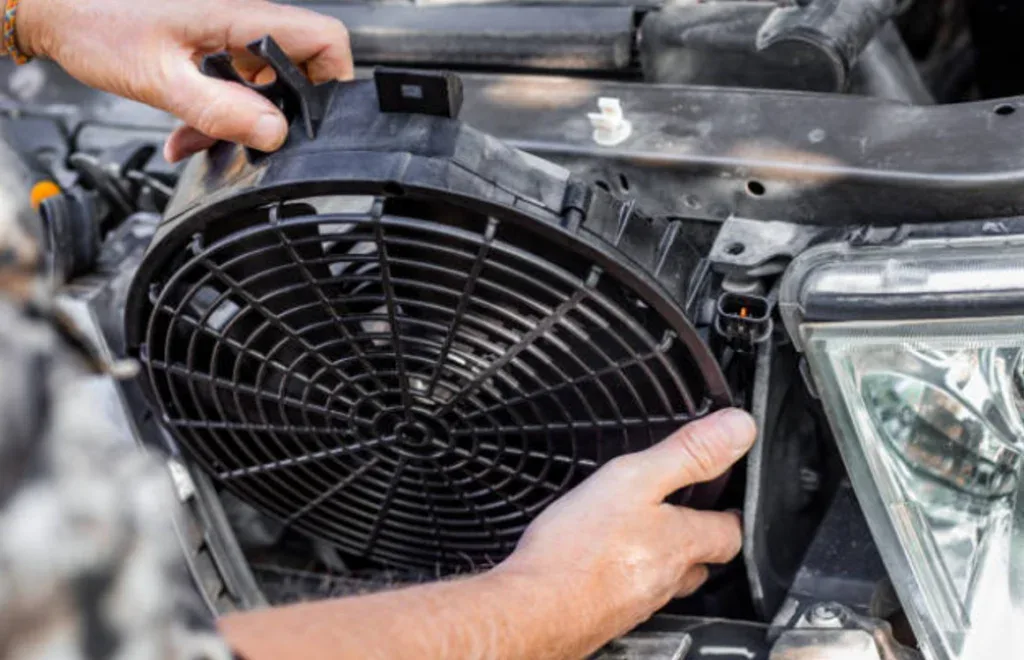
An air conditioning system that appears to be “working” is not necessarily working well, and the gap between marginal operation and peak performance is often invisible until a professional inspection reveals it. A system with a refrigerant charge even 10% below specification may still produce cool air at the vents but will require the compressor to cycle more frequently, will deliver air temperatures several degrees warmer than the system’s design target, and will take significantly longer to reduce cabin temperature after a heat soak. Similarly, a condenser coil partially blocked by road debris — insects, cottonwood seed, compacted dust — loses heat rejection capacity, forcing system pressures upward and degrading the efficiency of the entire refrigeration cycle. Expansion valve drift, caused by thermal fatigue or contamination, alters the refrigerant metering rate and can shift the evaporator’s operating point off its optimal range, simultaneously wasting refrigerant throughput and reducing cooling output. A full AC performance evaluation — measuring high-side and low-side pressures against manufacturer specifications, recording vent air temperature, verifying condenser airflow, and confirming expansion device function — restores the system to its designed efficiency envelope. In a properly serviced system, a technician should be able to achieve maximum vent outlet temperatures of 35°F to 42°F (2°C to 6°C) on a hot day: the benchmark for a fully capable AC system.
For Aurora drivers, optimal system efficiency translates directly into meaningful daily experience. The seasonal demand on Aurora vehicle AC systems is substantial: summer temperatures that routinely reach the upper 80s to low 90s°F — with periodic spikes above 95°F — combined with Colorado’s intense solar radiation at altitude means AC systems are called upon to overcome significant heat loads. Colorado’s high-altitude sunlight is roughly 25% more intense than at sea level, a physical reality that makes vehicle heat soak — the process by which a parked car’s interior absorbs radiant energy — more extreme per unit time than in most of the country. Aurora’s expansive surface parking lots, particularly around the Aurora Town Center, Southlands, and the Fitzsimons Life Science District, expose vehicles to full midday sun without shade relief. A marginally performing AC system battling a 145°F interior never fully catches up during a short lunch break drive. By contrast, a system tuned to peak efficiency reaches comfort temperatures within three to four minutes of departure — a tangible quality-of-life improvement for every Aurora resident who has suffered through a wilting mid-afternoon commute.
❄️ Maximum cool isn’t optional in an Aurora summer. Let Grease Monkey’s technicians tune your AC to its full performance potential — because “sort of cool” doesn’t cut it when it’s 93°F in the parking lot. Get your full cool back → GreaseMonkey Aurora
Citation: Mobile Air Climate Systems Association (MACS), “AC System Performance Standards and Diagnostic Procedures,” MACS Training Reference Manual, 2023; SAE International Standard J639, “Safety Standards for Motor Vehicle Refrigerant Vapor Compression Systems,” revised 2022.
Reason #8: Intercepting Small Problems Before They Become Catastrophic Repair Bills
Category of Importance: Financial Protection
The mathematics of automotive air conditioning maintenance are straightforward and consistently favor the proactive over the reactive. A routine AC service — comprising refrigerant level check, leak detection, filter replacement, belt tension inspection, and compressor clutch evaluation — typically costs between $80 and $200 depending on the vehicle and the shop. This same service, when performed annually, exposes developing problems at their earliest and least costly stage: a failing O-ring seal that costs $15 to replace, a marginally slipping compressor clutch that costs $120 to service, a clogged expansion valve that costs $200 to replace. Left undetected, each of these failures cascades: the O-ring leak depletes refrigerant until the compressor runs oil-starved and seizes; the slipping clutch burns out the compressor electromagnet; the clogged expansion valve floods the compressor with liquid refrigerant causing hydraulic lock and internal destruction. The downstream repair in each scenario runs $800 to $2,500 — representing a 10x to 25x cost multiplier relative to the service that would have caught and corrected the root cause. The Car Care Council consistently finds that the average cost savings from preventive maintenance versus reactive repair exceeds $500 annually per vehicle when all systems are considered; the AC system is among the highest return-on-investment maintenance items given the expense of component replacement.
For Aurora residents managing household budgets against Colorado’s famously rising cost of living, unplanned vehicle repair bills are particularly disruptive. The median household in Aurora carries transportation costs as one of its top three budget line items, and an unexpected $1,500 AC compressor replacement in July — when the repair is both most critical and most in demand — can derail monthly financial plans. Given that Aurora spans a wide spectrum of household incomes, with many families dependent on older, higher-mileage vehicles for daily transportation to jobs across the metro, the financial stakes of deferred AC maintenance are real and immediate. The preventive mathematics are compelling: the cost of a single post-failure compressor replacement could fund eight to ten years of annual AC service. For small business owners in Aurora — the independent contractors, florists making deliveries from the Aurora area’s wholesale district, food truck operators working the Stanley Marketplace, and tradespeople hauling equipment across the metro — an AC system failure that sidelines a work vehicle in summer represents lost revenue far exceeding the cost of prevention.
💸 Small service bills beat big repair shocks every time. Annual AC checkups at Grease Monkey Aurora are the smartest financial decision your vehicle will thank you for all summer long. Spend smart, drive cool → GreaseMonkey Aurora
Citation: Car Care Council, “Vehicle Care Research — The Cost of Deferred Maintenance,” carcare.org, 2023; AAA, “Your Driving Costs: 2024 Edition,” AAA Newsroom, newsroom.aaa.com.
Reason #9: Protecting the Vehicle Interior from Heat and UV Degradation
Category of Importance: Asset Protection
A functioning air conditioning system serves as the primary mechanism for moderating interior cabin temperatures to levels at which dashboard materials, upholstery, leather surfaces, electronic displays, and trim components operate within their design temperature ranges. Vehicle interiors are engineered to withstand normal operating temperatures, but sustained heat exposure well above 130°F — the condition inside a poorly cooled vehicle cabin in direct Colorado summer sun — accelerates the breakdown of virtually every interior material. Dashboard plastic becomes brittle and cracks; leather seating desiccates, surface-crazes, and splits along stress lines; modern touchscreen displays, whose liquid crystal panels have operating temperature maximums often below 140°F, suffer accelerated pixel degradation and backlight failure; adhesive bonds securing trim panels, headliner materials, and door card overlays soften and release; factory window tint delamination accelerates under extreme UV and heat combined. An air conditioning system that cools the cabin promptly and thoroughly after each heat soak event reduces cumulative thermal stress on all of these materials. In vehicles with integrated HVAC systems tied to interior climate sensors — common in late-model premium vehicles — proper AC function is also necessary to activate interior protection modes that run the fan briefly after engine shutdown to exhaust built-up heat.
Aurora’s elevation amplifies interior degradation risk beyond what residents of lower-altitude cities experience. At 5,400 feet, the thinner atmosphere filters less UV radiation, meaning solar energy reaching vehicle surfaces is meaningfully more intense per square foot than at sea level. Combined with Aurora’s status as one of Colorado’s sunniest communities — the greater Denver-Aurora area records over 300 days of sunshine annually, substantially more than Miami, Los Angeles, or Seattle — the cumulative UV and thermal loading on vehicle interiors is among the highest of any major American metro. Owners of newer vehicles with premium leather packages and large touchscreen entertainment systems — precisely the vehicles most sensitive to heat-related interior damage — have a particularly compelling financial reason to ensure their AC systems are cooling the cabin efficiently. The cracked dash that results from repeated unmitigated heat soak is cosmetically damaging and immediately visible during a resale walk-around; the touch display that fails after three summers of high-temperature operation is a $600 to $1,400 infotainment replacement. Protecting these investments through a properly functioning AC system is one of the most underrecognized benefits of routine service.
🛡️ Your interior is worth protecting — don’t let the Colorado sun win. A well-serviced AC is the best shield your dashboard, leather, and touchscreen have. Let Grease Monkey Aurora keep your cabin — and its contents — in excellent condition. Protect what’s inside → GreaseMonkey Aurora
Citation: Society of Automotive Engineers (SAE), J1455, “Environmental Guidelines for Mobile Electronic Systems,” 2021; National Renewable Energy Laboratory (NREL), “Predicting Vehicle Interior Air Temperature Using a Simple Model,” NREL/CP-540-43554, Golden, CO, 2008.
Reason #10: Improving Fuel Economy by Optimizing AC System Efficiency
Category of Importance: Economic Efficiency
The air conditioning compressor imposes a parasitic load on the engine that directly increases fuel consumption — a measurable, quantifiable relationship that becomes significantly more costly when the system is operating inefficiently. Under ideal conditions with a correctly charged and well-maintained AC system, compressor load adds approximately 5% to 8% to fuel consumption at highway speeds and 10% to 15% in urban stop-and-go driving. When the system is undercharged, the compressor cycles more frequently and for longer durations attempting to achieve target cooling; when the condenser is partially blocked, system pressures rise and compressor load increases proportionally. An overcharged system — the result of uninformed refrigerant additions without proper measurement — forces the compressor to work against excessively high head pressures, increasing fuel consumption and risk of compressor damage simultaneously. The Department of Energy (DOE) has documented that an AC system with a refrigerant charge deviating by just 10% from specification can reduce system efficiency by 20% while increasing fuel consumption by up to 4%. Over a summer driving season, the cumulative fuel cost of an inefficient AC system often exceeds the cost of the service that would have corrected it. Technicians performing proper AC service use calibrated refrigerant recovery and recharge equipment to charge systems to the factory-specified weight within ±0.5 oz — precision that matters both for efficiency and component longevity.
At current retail gasoline prices, Aurora drivers fill up vehicles frequently across a commuter landscape that demands real distances. The commute from Aurora’s eastern residential neighborhoods — communities like Saddle Rock, Tallyn’s Reach, and Tollgate Crossing — to employment centers in downtown Denver, the Denver Tech Center (DTC), or the Fitzsimons medical campus can span 20 to 40 minutes each way under normal conditions. For residents commuting daily in pickup trucks, SUVs, and minivans — which carry higher base fuel consumption and greater engine load from their AC compressors — even a 4% efficiency loss from an improperly serviced AC system translates to a tangible real-dollar impact over a 90-day summer season. Colorado gas prices frequently track above the national average, amplifying the financial consequence of inefficiency. For Aurora’s growing fleet of rideshare drivers who run their vehicles eight or more hours daily with the AC engaged continuously to maintain passenger comfort, an optimally efficient AC system is a direct income issue: the difference between a properly charged system and a marginally low one can amount to meaningful fuel cost savings per month.
⛽ Every drop of gas counts — don’t waste it on an inefficient AC. A precision refrigerant recharge at Grease Monkey Aurora keeps your compressor running lean and your fuel economy where it belongs. Charge right, spend less at the pump → GreaseMonkey Aurora
Citation: U.S. Department of Energy, “Keeping Your Car Cool Without Killing Your Fuel Economy,” fueleconomy.gov, updated 2024; Oak Ridge National Laboratory, “Impact of Air Conditioning on Fuel Economy of Current and Future Vehicles,” ORNL/TM-2010/217, 2010.
Reason #11: Safeguarding the Electrical System from AC-Related Strain and Failure
Category of Importance: Mechanical Integrity
Modern vehicle air conditioning systems are far more electrically integrated than their predecessors, incorporating electronic control modules, brushless fan motors, variable-displacement compressors, pressure transducers, ambient temperature sensors, in-cabin temperature sensors, and blend door actuators — all communicating through the vehicle’s CAN bus network. When any of these components begins to malfunction, the AC control module may compensate in ways that increase electrical load or may generate fault codes that disable the system or trigger warning lights. More insidiously, certain AC component failures can impose electrical stress on adjacent systems: a seized compressor clutch pulling excessive amperage through the high-current relay can burn relay contacts and damage the fuse block; a failing blower motor drawing elevated current can overheat wiring harnesses in the HVAC plenum; a malfunctioning AC pressure switch sending erratic signals can confuse the engine control module (ECM) and cause idle instability or even false CEL illumination. Professional AC service includes electrical circuit testing — measuring blower motor draw, relay function, and pressure transducer output — to identify components operating outside normal electrical parameters before they cause cascading failures in the broader vehicle electrical architecture. Ignoring early electrical AC symptoms in modern vehicles is particularly risky given the repair complexity and cost of late-model HVAC control systems.
For Aurora residents driving late-model vehicles equipped with advanced driver assistance systems (ADAS), infotainment integration, and complex HVAC electronics, the interconnected nature of automotive electrical systems means that an ignored AC electrical fault rarely stays isolated. Technicians at the Anschutz-area dealerships and independent shops regularly encounter vehicles where what started as a “minor” AC issue — a blower fan intermittently cutting out, an AC button that stopped responding — has evolved into a broader electrical problem by the time the customer arrives for service. Colorado’s wide diurnal temperature swings — warm days and cool nights are Aurora’s signature climate pattern, with 30°F swings not unusual even in midsummer — create thermal cycling stress on electrical connections, accelerating the failure of marginal components. Wire harness connectors that expand in afternoon heat and contract overnight develop intermittent contact faults that a routine inspection catches through functional testing. For commercial vehicle fleets operating out of Aurora — including the logistics operations serving the warehouse districts along Havana Street and in the Aurora industrial corridors — an electrical failure that takes a vehicle out of service in peak summer demand is a direct operational cost that routine AC servicing prevents.
⚡ Electrical gremlins don’t announce themselves — until it’s expensive. Get your AC electronics tested at Grease Monkey Aurora before a small voltage quirk becomes a full-system headache. Catch electrical issues early → GreaseMonkey Aurora
Citation: ASE (National Institute for Automotive Service Excellence), “A6 Electrical/Electronic Systems Study Guide,” ASE Education Foundation, 2023; Bosch Automotive Handbook, 10th Edition, “Automotive Air Conditioning Systems — Electrical Architecture,” Robert Bosch GmbH, 2022.
Reason #12: Inspecting and Preserving Belt and Drive System Integrity
Category of Importance: Preventive Maintenance
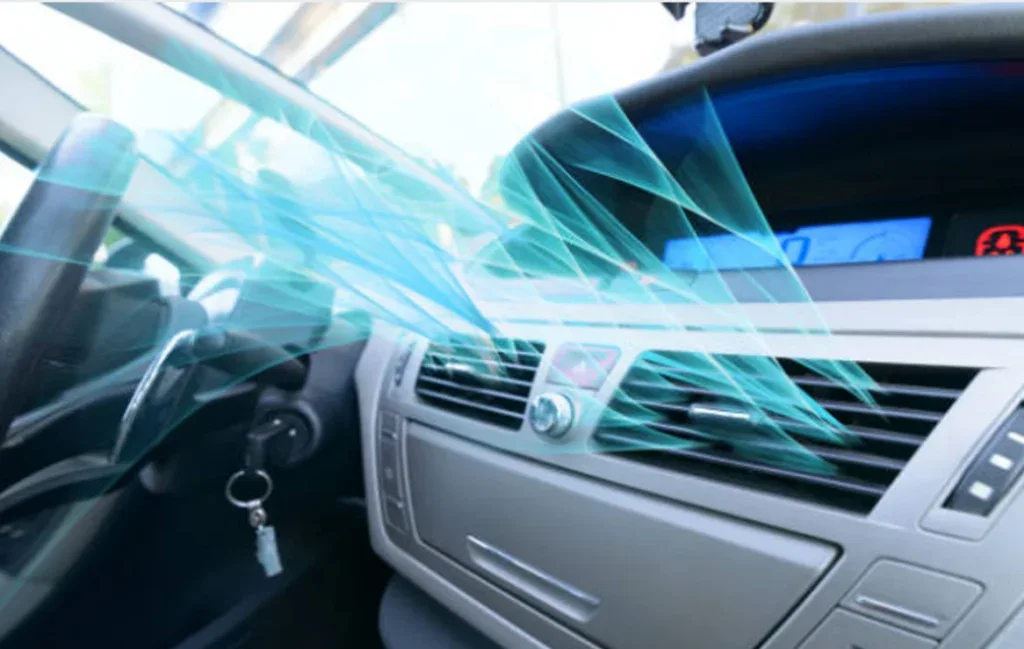
The AC compressor’s connection to engine power flows through the serpentine belt system — a single continuous belt in most modern vehicles that simultaneously drives the alternator, power steering pump, water pump, and AC compressor off the crankshaft pulley. The AC compressor’s electromagnetic clutch engages and disengages repeatedly as the thermostat cycles, creating cyclical shock loading on the belt each time the clutch snaps closed. Over time, this repeated loading — combined with the belt’s exposure to heat, ozone, oil contamination, and normal elongation — degrades belt integrity faster on the AC-drive section than in vehicles with less AC use. Belt degradation manifests as glazing (hardening and slipping), cracking across the rib valleys, fraying at the edges, or delamination between the rib and backing layers. A serpentine belt failure is not merely an AC failure: it immediately disables the alternator, causing the vehicle to run on battery alone until it stops, and often disables the water pump cooling circuit, creating rapid engine overheating risk. AC service appointments provide a natural and efficient opportunity to inspect the serpentine belt and idler/tensioner pulleys for wear, since the compressor and belt are already within the service scope. Catching a belt at 70% wear during an AC service visit avoids the dramatically worse scenario of a belt failure on the road.
The consequences of a serpentine belt failure are particularly unpleasant in the Aurora context. Breaking down on E-470’s elevated sections, on Quincy Avenue’s long stretches between major intersections, or on the arterials connecting Aurora’s southeastern residential sprawl to its commercial corridors means being stranded in summer heat with no cooling, no power steering, and in many cases no power brakes (which rely on vacuum from the engine or an electric pump). Colorado’s summer afternoon thunderstorm season — a near-daily occurrence between June and August, when cells build rapidly over the Front Range and can produce dangerous lightning, hail, and flash flooding — makes a roadside breakdown considerably more hazardous than at other times of year. Hail events in Aurora are frequent and sometimes severe; being stranded with a broken serpentine belt when a storm cell moves through is a genuinely dangerous situation. The same Aurora residents who would never drive on a visibly worn tire should apply the same vigilance to the serpentine belt that keeps their entire engine accessory system functioning. Annual AC service that includes belt inspection is the right time and the right mechanism to catch belt wear before it becomes an emergency.
🔧 Your belt keeps everything spinning — don’t let it snap on the highway. Grease Monkey Aurora’s AC service includes a full belt and tensioner inspection, so you leave knowing your drive system is solid. Keep everything turning → GreaseMonkey Aurora
Citation: Gates Corporation, “Serpentine Belt Application Guide and Service Intervals,” gates.com/resources, 2023; AAA, “Vehicle Breakdown Causes and Preventive Maintenance,” AAA Automotive Research, 2022.
Reason #13: Maintaining Vehicle Resale Value in a Competitive Market
Category of Importance: Long-Term Investment
A vehicle’s resale or trade-in value is determined by the totality of its condition across all systems, and the air conditioning system carries disproportionate weight in that assessment — particularly in warm climates. Used vehicle buyers and dealers performing trade-in appraisals conduct AC operational tests as a standard component of any walk-around inspection. An AC system that blows warm air, produces unusual noises on compressor engagement, or delivers reduced airflow immediately raises broader questions about the vehicle’s maintenance history and flags the vehicle for discounted valuation. Dealers negotiating trade-in values routinely deduct $500 to $1,500 from their offer for a non-functional or marginal AC system, noting it as a required reconditioning cost. Conversely, vehicles with documented service histories — including dated receipts for AC inspections, refrigerant recharges, and filter replacements — command a “well-maintained” premium in private sales and wholesale auctions. Platforms like CarGurus and CarMax explicitly recognize HVAC condition as a value-affecting variable in their pricing algorithms. The investment in regular AC service directly and measurably protects resale value, delivering a financial return at the time of sale that often exceeds the cumulative service cost over the vehicle’s ownership period.
Aurora’s vehicle market is active and competitive. The city’s rapid population growth — Aurora has been among Colorado’s fastest-growing cities for over a decade — sustains a robust used vehicle market where private sellers and dealers alike operate with sophisticated buyers who know what a properly functioning vehicle feels like. Sellers listing vehicles on platforms targeting Aurora buyers — whether on Facebook Marketplace, AutoTrader, or through Aurora-area dealerships along Havana Street and Colfax Avenue — find that buyers ask about AC function consistently and early in the conversation, particularly when listings appear in April through August. For Aurora residents who upgrade vehicles every three to six years — the average Colorado vehicle ownership cycle closely tracks the national average — a documented AC service history represents tangible equity at trade-in. The tight used vehicle market around the Anschutz campus area, where medical residents and graduate students frequently seek reliable commuter vehicles, is one where AC function is particularly scrutinized. A vehicle that breezes through a test drive on a warm May afternoon because its AC blows genuinely cold air simply commands a better price than one that doesn’t.
📈 Protect your investment, maximize your resale. Documented AC service from Grease Monkey Aurora tells the next buyer your vehicle was cared for — and that’s worth real dollars at trade time. Service it now, profit later → GreaseMonkey Aurora
Citation: Kelley Blue Book, “How Maintenance Records Affect Used Car Value,” kbb.com/car-advice, 2024; Black Book Market Insights, “Vehicle Condition and Auction Value Correlation Report,” Q2 2023.
Reason #14: Eliminating Unpleasant Odors and Preventing Microbial Odor Recurrence
Category of Importance: Comfort & Hygiene
The “dirty sock smell” or musty odor that greets drivers and passengers when the AC is first switched on is one of the most universally recognized and frequently complained-about automotive HVAC phenomena. The mechanism behind it is biological: bacterial films — principally from Micrococcus spp., Bacillus spp., and Staphylococcus spp. — establish colonies on the evaporator fin surfaces and condensate drain components during the moisture-rich cooling cycle. As the vehicle sits between drives, these colonies metabolize residual organic matter (pollen, skin cells, road dust) in the moist duct environment, producing volatile sulfurous and nitrogenous byproducts — the odorants responsible for the musty, sour, or locker-room odor experience. Brief cabin air freshener treatments mask this smell temporarily but do not address the biological source; only a thorough professional evaporator treatment with an EPA-registered antimicrobial foaming agent penetrates the fin matrix and drain pan surfaces where colonies reside. Additionally, a technique called “dry-down mode” — running the blower without cooling for several minutes before engine shutdown — reduces evaporator surface moisture and slows colony re-establishment between service visits. Professional AC service teaches and implements these best practices while physically treating the system to eliminate existing odor sources.
For Aurora residents whose vehicles double as social and professional spaces, odor is a comfort and image concern that goes beyond personal annoyance. Parents transporting kids to practices at Aurora’s youth sports complexes along Jewell Avenue, ride-share drivers picking up passengers at Denver International Airport via the E-470 corridor, real estate professionals showing homes across Aurora’s diverse neighborhoods from Stapleton to Horizon Pointe, or shuttle operators serving the Anschutz Medical Campus — all rely on their vehicles to make a positive first impression. A vehicle that smells musty the moment the AC engages communicates neglect to every passenger, regardless of how clean the seats and carpets appear. In Aurora’s warm spring and summer social season, when neighborhoods host block parties, families arrive at Aurora Reservoir for weekends on the water, and the Stanley Marketplace’s outdoor festivals draw crowds who need reliable transportation to and from events, a fresh-smelling, well-functioning vehicle is simply part of presenting well. Eliminating the biological source of AC odors through professional treatment — rather than layering air fresheners over a microbial problem — is the only solution that actually works.
👃 Nobody should have to hold their breath when the AC kicks on. Grease Monkey Aurora’s evaporator treatment eliminates the smell at its source — so your car smells as good as it feels. End the funk, start fresh → GreaseMonkey Aurora
Citation: Aleksandersen, M. et al. (2018). “Bacterial Communities in Automotive HVAC Systems,” Journal of Applied Microbiology, 124(3), 711–722; Car Care Council, “Understanding Vehicle AC Odors and Evaporator Contamination,” carcare.org, 2022.
Reason #15: Achieving Year-Round Readiness and the Irreplaceable Value of Peace of Mind
Category of Importance: Lifestyle & Convenience
The least tangible — but perhaps most personally felt — benefit of regular vehicle AC service is the confidence that comes from knowing the system will perform when it is needed most. Year-round AC system readiness is not about comfort alone: defogging the windshield in winter, managing humidity in spring rain, and cooling the cabin through summer are all functions that a properly maintained AC system delivers on demand. Defogging capability, in particular, depends on the AC compressor removing moisture from cabin air before the heater blows it across the windshield — a function that fails completely when the AC system is inoperative. Vehicles with low or absent refrigerant charge lose their defogging ability in wet or cold conditions, creating a visibility safety hazard that is separate from and in addition to the summer cooling concern. The psychological dimension of confidence is genuine: a driver who knows their AC system was professionally inspected and serviced this season drives without the background anxiety of wondering whether today is the day it finally fails. This peace of mind — the ability to load the family, grab the dog, and drive to any destination in Aurora without worrying about mechanical surprises in summer heat — is a quality-of-life benefit with real, if difficult-to-quantify, value.
For Aurora residents, year-round preparedness resonates across every season of this dynamic Colorado city’s life. In spring, when Cherry Creek State Park reopens its full trail system and families plan their first outdoor weekends, a vehicle with a freshly serviced AC is ready for the warm days that arrive unpredictably in April and May between snowstorms. In summer, when the Aurora Reservoir hosts swimming and boating, when Southlands hosts outdoor events and concerts, and when families navigate the Front Range’s spectacular Colorado landscapes on weekend road trips to Rocky Mountain National Park or Garden of the Gods, the assurance of reliable cooling is part of what makes those experiences enjoyable rather than stressful. In fall, when Aurora’s cottonwood-lined streets turn gold along the Highline Canal Trail and evening temperatures drop fast, a system that can still defog is quietly essential. Year-round readiness is what transforms a vehicle from a source of occasional anxiety into the dependable partner Aurora residents need for everything the city and the broader Front Range have to offer. That readiness begins with a single, straightforward annual appointment.
🏔️ Aurora’s adventures are waiting — make sure your AC is ready for all of them. Start the season with confidence. Let Grease Monkey Aurora give your AC system a complete year-round readiness check, so the only surprise on your next drive is how beautiful Colorado looks through a clear, climate-controlled windshield. Schedule your year-round AC readiness service → GreaseMonkey Aurora
Citation: National Weather Service — Denver/Boulder Office, “Colorado Climate Overview: Front Range Seasonal Temperature Patterns,” weather.gov/bou, 2024; AAA, “Vehicle Preparedness Survey: Year-Round HVAC Maintenance Awareness,” AAA Foundation for Traffic Safety, 2023.
Author’s Bio — Phillip Paul Gilliam
Phillip Gilliam is a veteran journalist and former Editor-in-Chief with 50+ years of publishing experience and thousands of published articles. Specializing in automotive, trucking, and digital publishing, he creates authoritative, search-optimized content built on real-world expertise and editorial excellence.
To learn more about Phil, visit http://www.phillipgilliam.com/about.html or contact Phil at [email protected]. He would love to hear from you!
Complete Citations Reference List
- Society of Automotive Engineers (SAE) Technical Paper 2019-01-0882, “Microbial Contamination in Vehicle HVAC Systems.” SAE International, 2019.
- Centers for Disease Control and Prevention (CDC). “Legionella (Legionnaires’ Disease and Pontiac Fever): Sources.” cdc.gov/legionella. Reviewed 2023.
- National Highway Traffic Safety Administration (NHTSA). “Heat-Related Fatalities and Vehicle Climate Systems.” NHTSA Technical Report DOT HS 812 219. Washington, D.C.: NHTSA, 2021.
- Null, J. (2023). “Heatstroke Deaths of Children in Vehicles.” Department of Meteorology & Climate Science, San Jose State University. noheatstroke.org.
- Ramsey, J.D. & Kwon, Y.G. (1992). “Recommended Alert Limits for Perceptual Motor Loss in Hot Environments.” International Journal of Industrial Ergonomics, 9(3), 245–257.
- Hancock, P.A. & Warm, J.S. (1989). “A Dynamic Model of Stress and Sustained Attention.” Human Factors, 31(5), 519–537.
- U.S. Environmental Protection Agency (EPA). “Stationary Refrigeration and Air Conditioning — Section 608 of the Clean Air Act.” epa.gov/section608. Updated 2024.
- Intergovernmental Panel on Climate Change (IPCC). “Fifth Assessment Report: Climate Change 2013.” Table AII.1.2, Global Warming Potentials. Geneva: IPCC, 2013.
- National Institute for Automotive Service Excellence (ASE). “A7 Heating and Air Conditioning Study Guide.” Leesburg, VA: ASE Education Foundation, 2022.
- RepairPal. “Car AC Compressor Replacement Cost.” repairpal.com/estimate/ac-compressor-replacement. Accessed 2024.
- American Lung Association. “State of the Air 2024 Report — Denver-Aurora Metro.” lung.org/research/sota. 2024.
- U.S. Environmental Protection Agency (EPA). “Indoor Air Quality in Vehicles.” epa.gov/indoor-air-quality-iaq. 2023.
- Mobile Air Climate Systems Association (MACS). “AC System Performance Standards and Diagnostic Procedures.” MACS Training Reference Manual. Lansdale, PA: MACS, 2023.
- SAE International Standard J639. “Safety Standards for Motor Vehicle Refrigerant Vapor Compression Systems.” Revised 2022.
- Car Care Council. “Vehicle Care Research — The Cost of Deferred Maintenance.” carcare.org. 2023.
- AAA. “Your Driving Costs: 2024 Edition.” AAA Newsroom. newsroom.aaa.com. 2024.
- U.S. Department of Energy. “Keeping Your Car Cool Without Killing Your Fuel Economy.” fueleconomy.gov. Updated 2024.
- Oak Ridge National Laboratory. “Impact of Air Conditioning on Fuel Economy of Current and Future Vehicles.” ORNL/TM-2010/217. Oak Ridge, TN: ORNL, 2010.
- National Institute for Automotive Service Excellence (ASE). “A6 Electrical/Electronic Systems Study Guide.” Leesburg, VA: ASE Education Foundation, 2023.
- Bosch Automotive Handbook, 10th Edition. “Automotive Air Conditioning Systems — Electrical Architecture.” Stuttgart: Robert Bosch GmbH, 2022.
- Gates Corporation. “Serpentine Belt Application Guide and Service Intervals.” gates.com/resources. 2023.
- AAA. “Vehicle Breakdown Causes and Preventive Maintenance.” AAA Automotive Research. 2022.
- Kelley Blue Book. “How Maintenance Records Affect Used Car Value.” kbb.com/car-advice. 2024.
- Black Book Market Insights. “Vehicle Condition and Auction Value Correlation Report.” Q2 2023.
- Aleksandersen, M. et al. (2018). “Bacterial Communities in Automotive HVAC Systems.” Journal of Applied Microbiology, 124(3), 711–722.
- Car Care Council. “Understanding Vehicle AC Odors and Evaporator Contamination.” carcare.org. 2022.
- National Weather Service — Denver/Boulder Office. “Colorado Climate Overview: Front Range Seasonal Temperature Patterns.” weather.gov/bou. 2024.
- AAA Foundation for Traffic Safety. “Vehicle Preparedness Survey: Year-Round HVAC Maintenance Awareness.” Washington, D.C.: AAA Foundation, 2023.
- Society of Automotive Engineers (SAE), J1455. “Environmental Guidelines for Mobile Electronic Systems.” SAE International, 2021.
- National Renewable Energy Laboratory (NREL). “Predicting Vehicle Interior Air Temperature Using a Simple Model.” NREL/CP-540-43554. Golden, CO: NREL, 2008.
This article was prepared by Phillip Gilliam for Grease Monkey Aurora, located at 2703 South Lincoln Ave, Aurora, Colorado. For AC service, inspections, refrigerant recharge, and comprehensive vehicle maintenance, visit the Aurora location at greasemonkey.com/locations/co/aurora/1790-south-buckley-rd/.
Stop by today.
- Grease Monkey Center #48 Address: 1790 South Buckley Rd, Aurora, CO, 80017
- Services: Brake Services, Fluid Exchange Services, Headlight Services, Oil Changes, Power Steering
Your car will thank you. And your wallet will too.


Plan Your Visit
Find a location near you, explore current deals, and get everything you need before you roll in.