15 Reasons to Replace Your Cabin Air Filter in Aurora, Colorado – What Buckley Space Force Base and the Front Range Do to Your Car
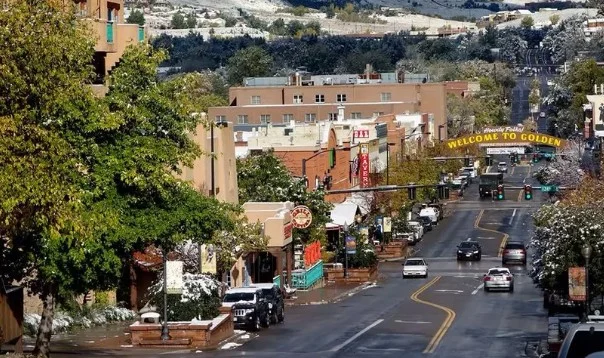
An Authoritative Guide for Cabin Air Filter Care Next to Buckley Space Force Base
Grease Monkey, 1790 South Buckley Rd, Aurora, CO 80017. Has Over 2,875 Google Reviews With A 4.7 Star Rating.
A Note on Authority and Expertise: This article was researched and written by Phillip Paul Gilliam, a veteran journalist and former Editor-in-Chief with more than 50 years of publishing experience in automotive, trucking, and safety communications.
Fifty-plus years in automotive and safety publishing comes down to one habit above all others: check it before it goes to print. This is the first Colorado stop in this series after nine posts in Idaho, and the Buckley Space Force Base personnel figures, the Denver brown cloud mechanics, and the Aurora climate records cited below were all verified against current, named sources specifically for this location rather than assumed to carry over from a genuinely different state and climate.
This Aurora location, Grease Monkey Center #48 at 1790 South Buckley Rd, is managed by Julian Armijo and has built a 4.7-star rating across more than 2,875 Google reviews, among the largest review counts in this series [1]. It operates as part of the FullSpeed Automotive network, which has grown past 900 franchised and company-owned locations nationwide as of mid-2026, and was recognized alongside 435 other FullSpeed Automotive centers as a 2025 CARFAX Top Shop winner for verified customer satisfaction [7][8].
Aurora is Colorado’s third-most-populous city, with a 2020 population of 386,261 that had grown to an estimated 410,053 by 2025, sitting at roughly 5,558 feet of elevation across a semi-arid Front Range landscape [2]. The city shares its eastern edge with Buckley Space Force Base, a roughly 93,000-person military and civilian community that is Aurora’s single largest employer, putting a genuinely different set of demands on a cabin air filter than any of this series’ Idaho stops [2][3].
An Introduction to Cabin Air Filters Next to Buckley Space Force Base in Aurora
Buckley Space Force Base is not a small installation. It supports roughly 93,000 total military, civilian, contractor, retiree, veteran, and family members, including 3,500 active duty members from every branch, 4,000 National Guard and reserve personnel, 2,400 civilians, and 2,500 contractors, all centered on a base whose 140th Wing flies F-16C Fighting Falcons out of Aurora [3]. This store sits on Buckley Road itself, the same road that gives the base its name, putting it closer to that daily flow of personnel and aircraft than almost any other stop in this series is to its own local landmark.
Aurora’s own geography adds to the mix: a semi-arid, mile-high Front Range climate that produces hailstorms depositing one to two-plus feet of ice on streets and parking lots, a Denver-area brown cloud that traps ozone and particulate under winter temperature inversions, and roughly a dozen tornado warnings across an April-to-July severe weather season [2][4]. Add Raytheon Technologies and the Anschutz Medical Campus as major nearby employers, and Aurora puts a genuinely varied, largely urban and defense-industry set of demands on a cabin air filter that this series has not had reason to cover before [2].
This guide walks through fifteen reasons Aurora drivers, from Buckley personnel to Front Range commuters, should treat their cabin air filter as a genuine piece of safety and health equipment rather than a line item on an oil-change ticket. Every reason here is grounded in a real technical fact about how the filter works, not local color and geography alone.
This store, Grease Monkey at 1790 South Buckley Rd, sits directly in this corridor and replaces cabin air filters as part of its standard service menu [1].
Most Critical
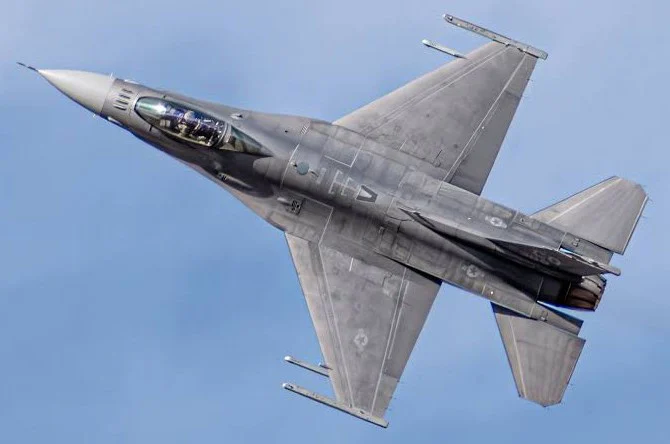
1. F-16 Fighter Jets Flying Out of Buckley Add a Kind of Exhaust This Series Has Not Covered
Category Most Critical
Does living or driving near an active fighter jet base expose a cabin air filter to a different kind of exhaust than ordinary highway traffic?
Buckley Space Force Base is home to the 140th Wing’s 120th Fighter Squadron, which flies F-16C Fighting Falcons on regular training sorties [3]. Jet engines running at high power for takeoff, and especially with afterburner engaged, produce a denser plume of unburned hydrocarbons and fine soot than a car or diesel truck idling on the ground, and that plume settles over a wider area downwind of the runway than most ground-level traffic sources.
For vehicles regularly parked or driven near the base’s flight line, that means periodic exposure to a genuinely different combustion byproduct than typical urban exhaust, one with a different particle size distribution than automotive soot. A cabin air filter cannot distinguish the source, but the practical effect is the same: additional fine particulate loading on flight days beyond what the surrounding neighborhood’s car and truck traffic alone would produce.
If you live or work near the flight line, your filter is doing more work than the odometer alone would suggest; get it checked at https://www.greasemonkey.com/locations/co/aurora/1790-south-buckley-rd/.
2. A 93,000-Person Installation Drives Past This Store on Shift Change
Category Most Critical
Does the sheer size of Buckley Space Force Base’s population change the character of daily traffic on this specific stretch of road impacting my cabin air filter?
Space Base Delta 2 supports approximately 93,000 total military, civilian, contractor, retiree, veteran, and family members, including 3,500 active duty personnel, 4,000 National Guard and reserve members, 2,400 civilians, and 2,500 contractors [3]. Round-the-clock missile-warning and space-surveillance operations mean this population does not commute on a single, predictable nine-to-five schedule the way a typical office park would; shifts rotate through the base at multiple times across the day and night.
That translates into a more sustained volume of commuter traffic on Buckley Road across more hours of the day than a single rush-hour spike, since arriving and departing shifts overlap at different times. A cabin air filter serving a vehicle that regularly travels this corridor is exposed to a steadier, more spread-out dose of commuter exhaust than one on a road with a single clear daily peak.
This store’s technicians see that round-the-clock traffic pattern firsthand; have your filter checked at https://www.greasemonkey.com/locations/co/aurora/1790-south-buckley-rd/.
3. Aurora’s Hailstorms Can Bury a Parking Lot Under Two Feet of Ice
Category Most Critical
Can a Front Range hailstorm actually get debris and meltwater into a vehicle’s cabin air intake, not just dent the body panels?
Aurora’s hailstorms are severe enough to leave streets and parking lots blanketed under one to two-plus feet of accumulated hail, a scale of storm this series has not encountered in its Idaho stops [2]. Beyond the well-known body and windshield damage, a storm of that intensity can drive hail and slush directly into the cowl area at the base of the windshield, the same area where most vehicles draw in outside air for the cabin ventilation system.
Meltwater and fine ice debris that reach the cabin air filter housing during a storm like this can leave the filter media damp, which encourages mold and mildew growth inside the HVAC system days after the storm has passed, well beyond the sound of hail on the roof. A filter exposed to this kind of event benefits from inspection afterward rather than waiting for its normal scheduled replacement.
After a serious hailstorm, a quick filter and cowl-area check is worth the ten minutes; schedule one at https://www.greasemonkey.com/locations/co/aurora/1790-south-buckley-rd/.
High Priority
4. Denver’s Brown Cloud Traps Ozone and Particulate Right Over Aurora
Category High Priority
Does the Denver metro’s well-known winter brown cloud actually reach Aurora, and does it matter to a cabin air filter?
The Front Range’s mountain-adjacent geography frequently traps a visible layer of haze over the Denver metro, made up of vehicle emissions, ozone formed from sunlight reacting with pollutants, and industrial output from facilities like the Suncor refinery in nearby Commerce City, with the region averaging roughly 30 high-ozone days a year [4]. Winter temperature inversions, when warmer air aloft traps cooler, pollutant-laden air at ground level, make this brown cloud particularly persistent during the colder months, and Aurora sits well within the metro area this affects.
A cabin air filter with activated carbon media is specifically designed to adsorb ozone and certain gaseous pollutants in addition to trapping particulate, which makes filter condition more consequential during an inversion event than on a clear, well-ventilated day. A filter that is already saturated with particulate has less remaining carbon capacity to handle an added ozone load when the brown cloud settles in.
Ask this store whether your filter still has activated carbon capacity left before winter inversion season sets in; check at https://www.greasemonkey.com/locations/co/aurora/1790-south-buckley-rd/.
5. Raytheon and Aurora’s Defense-Industry Corridor Add Their Own Commute Pattern
Category High Priority
Does Aurora’s cluster of defense contractors near Buckley impact my cabin air file as well as add a distinct commuter traffic pattern beyond the base itself?
Raytheon Technologies employs roughly 2,430 people in Aurora, one of the city’s largest private-sector employers, drawn by the same defense and aerospace ecosystem that surrounds Buckley Space Force Base [2]. Contractor and defense-industry commuting tends to cluster around standard business hours in a way that overlaps with, but is distinct from, the base’s own round-the-clock shift pattern, adding a second, denser traffic layer during the conventional morning and evening rush.
For a cabin air filter, the practical effect is a corridor with two overlapping commuter populations rather than one, meaning less predictable low-traffic windows across the day than a typical suburban commercial strip would have. A vehicle regularly driven on Buckley Road during standard business hours is picking up exhaust exposure from both the contractor commute and the base’s continuous shift traffic at the same time.
If your daily drive overlaps both commute patterns, your filter is earning its keep; have it checked at https://www.greasemonkey.com/locations/co/aurora/1790-south-buckley-rd/.
6. High Plains Wind Events Carry Semi-Arid Dust Straight Across Aurora
Category High Priority
Does Aurora’s high-plains, semi-arid setting produce a different wind-driven dust exposure than Idaho’s mountain valleys did effecting my cabin air filter?
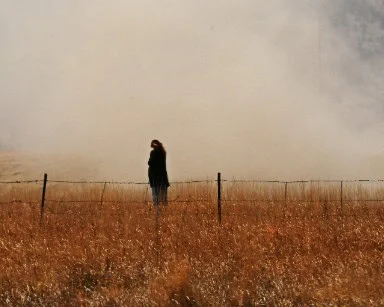
Aurora sits on the high plains at the foot of the Front Range, a semi-arid landscape with modest year-round precipitation, a different wind environment than the mountain-valley settings this series has covered in Idaho [2]. Downslope wind events off the Front Range foothills can pick up loose topsoil from the open, undeveloped land that still borders much of eastern Aurora and carry it well into the city on gusty days, particularly in the drier late-summer and fall months.
This kind of open-plains dust tends to be finer and more widely dispersed than the localized agricultural dust this series has covered elsewhere, since it travels farther on sustained wind rather than being kicked up by a single passing vehicle or field operation. A cabin air filter serving a vehicle regularly parked or driven near Aurora’s remaining open plains land is exposed to this wind-transported dust on a schedule tied to weather fronts rather than to any single nearby land use.
This store’s technicians can tell you how much plains dust your filter has already caught this season; ask at https://www.greasemonkey.com/locations/co/aurora/1790-south-buckley-rd/.
Important
7. Mountain Wildfire Smoke Reaches Aurora Even When the Fire Itself Is Far Away
Category Important
Does wildfire smoke from Colorado’s mountain fires actually travel far enough to affect a cabin air filter in Aurora?
Colorado’s wildfire seasons have grown more severe in recent years, and smoke from mountain and foothill fires routinely drifts east onto the Front Range and settles over the Denver metro, compounding the brown cloud’s existing ozone and particulate load [4]. Unlike a local dust or pollen source, this smoke can affect Aurora even when the fire itself burns fifty or a hundred miles away in the mountains, since fine wildfire particulate travels efficiently on prevailing winds.
Wildfire smoke consists largely of very fine particulate matter, the kind that is hardest for a loaded filter to keep filtering effectively once its media has already accumulated everyday dust and pollen. During an active smoke event, a filter nearing the end of its service life loses capacity for exactly the kind of fine particulate that matters most for cabin air quality, at the moment outside air quality is at its worst.
Going into wildfire season with a fresh filter matters more than most drivers realize; get that done at https://www.greasemonkey.com/locations/co/aurora/1790-south-buckley-rd/.
8. Anschutz Medical Campus Traffic Raises the Stakes on Cabin Air Quality for Some Drivers
Category Important
Does Aurora’s role as home to a major medical campus change what cabin air quality means for some of the vehicles driving through it?
The Anschutz Medical Campus, home to the University of Colorado Hospital and Children’s Hospital Colorado, is one of Aurora’s largest employers and draws patients from across the metro area, some of whom are immunocompromised from treatment and are being driven to and from appointments by family members [2]. For a vehicle regularly used to transport a patient in that situation, cabin air quality is not just a comfort question, it is a more meaningful health consideration than it is for an average commuter.
This does not change how the filter itself works, but it does change how much margin a driver in that situation should want to keep. Waiting until a filter is visibly dirty or an odor appears is a reasonable approach for most drivers, but it leaves less buffer than a household with a genuinely vulnerable passenger may want, since restricted airflow and reduced filtration both develop before those symptoms are obvious.
If you are regularly driving someone with health concerns to appointments, ask this store about a more conservative filter schedule at https://www.greasemonkey.com/locations/co/aurora/1790-south-buckley-rd/.
9. Mile-High UV Exposure Can Make Filter Media Brittle, Not Just the Housing
Category Important
At roughly a mile of elevation, does Colorado’s UV intensity affect the filter material itself rather than just the plastic housing around it?
Aurora sits at approximately 5,558 feet of elevation, with the thinner atmosphere at that height allowing measurably more ultraviolet radiation to reach the ground than at sea level [2]. Most attention to UV exposure in a vehicle focuses on plastic housings and gaskets, but the pleated paper or synthetic media inside the filter itself, sitting just behind the vehicle’s exterior air intake grille, receives its own share of indirect UV exposure over time.
Extended UV exposure gradually breaks down the fibers in filter media, making the material more brittle and prone to small tears or gaps rather than simply losing capacity evenly, a distinct failure mode from ordinary particulate loading. A brittle filter can look adequately clean on visual inspection while already having lost some of its structural integrity, which is a reason not to judge a Colorado filter’s condition by color alone.
A technician who checks media condition, not just color, can catch this before it becomes an air leak; ask at https://www.greasemonkey.com/locations/co/aurora/1790-south-buckley-rd/.
Medium Priority
10. This Store Sits in a Retail Strip With Its Own Stop-and-Go Traffic Pattern
Category Medium Priority
Does this store’s location in the Aurora Highlands Shopping Center add a distinct traffic pattern beyond the Buckley Road corridor itself?
This location operates out of the Aurora Highlands Shopping Center on South Buckley Road, a retail strip with its own entrances, parking aisles, and drive lanes separate from the through-traffic on Buckley Road proper. Vehicles running errands through a shopping center like this one make a series of short stops and restarts, pulling in, parking, and pulling back out, rather than a single continuous drive.
Each of those restarts is a cold or warm start that briefly runs richer and produces more particulate per minute than steady cruising does, and a shopping trip covering several stores in one visit multiplies that effect across a short total distance. A vehicle that regularly runs errands through this shopping center accumulates more start-cycle exposure per mile than one making longer, less interrupted trips elsewhere in Aurora.
If your typical trip here is a multi-stop errand run, that adds up faster than the mileage suggests; check your filter at https://www.greasemonkey.com/locations/co/aurora/1790-south-buckley-rd/.
11. About a Dozen Tornado Warnings a Season Create Sudden Traffic Surges
Category Medium Priority
Do Aurora’s tornado warnings create a distinct, short-lived traffic pattern separate from ordinary severe weather impacting your cabin air filter?
Aurora’s severe weather season, running roughly from April through July, brings an average of about a dozen tornado warnings a year, each one prompting a short but sharp surge of drivers seeking shelter, pulling off the road, or hurrying home within a compressed window of time [2]. That kind of event concentrates a burst of hard acceleration, hard braking, and idling in parking lots or under overpasses into a matter of minutes rather than spreading it across a normal commute.
Vehicles idling stationary during a warning, particularly grouped together under an overpass or in a parking structure, are drawing in a more concentrated dose of surrounding vehicles’ exhaust than they would while moving with normal airflow which causes your cabin air filter to gum up. It is a brief and infrequent event rather than a daily concern, but it is a real, distinctly Front Range contributor to filter wear that this series’ Idaho stops had no equivalent for.
This store can have your filter ready before severe weather season peaks; schedule ahead at https://www.greasemonkey.com/locations/co/aurora/1790-south-buckley-rd/.
12. A Permanent Change of Station Move Often Means an Unknown Filter History
Category Medium Priority
Does a military family’s move to Buckley through a Permanent Change of Station create a specific kind of unknown-filter-history situation?
Buckley Space Force Base’s population turns over continuously as service members arrive and depart through Permanent Change of Station moves, and many of those moves bring a vehicle that was purchased, inherited, or last serviced in a completely different climate, whether humid, coastal, or desert. Unlike a vehicle that has spent its whole life in Colorado, a PCS vehicle’s cabin air filter history is often a genuine unknown to its current driver, since maintenance records do not always transfer smoothly across a cross-country move.
This differs from the kind of unknown-history situation this series has covered in college towns or through hand-me-down family vehicles, because a PCS move typically happens on a fixed timeline with a specific arrival date, which makes it a natural, easy-to-remember moment to have a filter checked regardless of what the vehicle’s prior owner or climate might have done to it.
New to Buckley or Aurora after a PCS move? A quick filter check is a good first stop; visit https://www.greasemonkey.com/locations/co/aurora/1790-south-buckley-rd/.
Lower Priority
13. A Secure National Reconnaissance Office Facility Sits Inside the Base Boundary
Category Lower Priority
Does the presence of a classified intelligence facility on Buckley add anything meaningful to this area’s traffic and air quality picture and if so, does that impact my cabin air filter?
Buckley Space Force Base hosts the Aerospace Data Facility-Colorado, a National Reconnaissance Office satellite ground station, alongside the Joint Overhead Persistent Infrared Center, both operating within the base’s secure boundary [3][5]. These facilities add their own dedicated commuter population of cleared employees and contractors, layered on top of the base’s broader 93,000-person community already covered elsewhere in this guide.
Honestly, from a cabin air filter standpoint, a classified facility’s commute looks like any other shift-based commute once it reaches the surrounding roads, so this does not add a distinct filtration mechanism beyond the base’s general shift-change traffic already discussed. It is included here because a hyper-local guide to this specific stretch of Aurora would be incomplete without acknowledging what actually sits behind the base’s fence line, even where it does not change the practical filter math.
For the traffic that actually affects your filter, this store can build a realistic replacement schedule; ask at https://www.greasemonkey.com/locations/co/aurora/1790-south-buckley-rd/.
14. Shortgrass Prairie Tumbleweeds Can Physically Clog an Intake Vent
Category Lower Priority
Beyond fine dust, can Aurora’s remaining shortgrass prairie land send actual debris into a vehicle’s air intake gumming up my cabin air filter?
The undeveloped shortgrass prairie land that still borders parts of eastern Aurora periodically dries out and breaks free as tumbleweed, particularly on windy fall and winter days, and fragments of that dried vegetation can lodge in a vehicle’s exterior cowl intake vent rather than simply blowing past. This is a mechanical debris problem rather than a fine-particulate one, closer to a leaf or twig getting caught at the base of the windshield than to dust settling into the filter media itself.
A vent partially blocked by tumbleweed fragments restricts airflow before it ever reaches the filter, which can produce the same weak-airflow symptoms as a clogged filter even when the filter itself still has capacity left. It is a minor, occasional nuisance rather than a major filtration concern, but worth knowing about if airflow seems weak on a windy day despite a recently replaced filter.
If your vents seem weak after a windy day, the intake itself may be the culprit; have it checked at https://www.greasemonkey.com/locations/co/aurora/1790-south-buckley-rd/.
15. Why Many Buckley Families Choose to Handle This Off Base Rather Than On It
Category Lower Priority
Is there a practical, non-technical reason so many Buckley-affiliated drivers end up at a civilian shop like this one for something as simple as a filter?
On-base vehicle services at an installation the size of Buckley tend to focus on official and government fleet vehicles rather than routine personal-vehicle maintenance, which leaves most active duty members, guard and reserve personnel, and their families looking off base for something as routine as a cabin air filter change. A walk-in shop directly on Buckley Road, without a scheduled appointment requirement, fits naturally into the unpredictable, shift-based schedule that so many Buckley-affiliated households actually work around.
This is a scheduling and convenience point rather than a technical one, but it is a genuine reason this specific store, sitting where it does, ends up serving such a large share of the base’s surrounding community rather than a shop further from Buckley Road.
No appointment necessary here, which matters when your schedule runs on shifts, not a nine-to-five; find hours at https://www.greasemonkey.com/locations/co/aurora/1790-south-buckley-rd/.
About Grease Monkey, 1790 South Buckley Rd, Aurora, CO 80017
This Aurora location is open Monday through Friday from 8:00 a.m. to 6:00 p.m. and Saturday from 8:00 a.m. to 5:00 p.m., closed Sundays, with no appointment necessary for walk-in service [1]. The shop offers conventional, synthetic, and diesel oil changes alongside brake service, fluid exchanges, cabin and engine air filter replacement, battery service, tire service, headlight service, and power steering fluid service, with every oil change including a 16-point inspection and a three-month or 3,000-mile limited service warranty [1].
The location has built a 4.7-star rating across more than 2,875 Google reviews under manager Julian Armijo, one of the largest review counts in this series, and operates within the FullSpeed Automotive network, which passed 900 franchised and company-owned locations nationwide in the first half of 2026 and had 435 of its centers named CARFAX Top Shop winners in 2025 for verified customer satisfaction, a status this location also holds as a CARFAX preferred partner [1][7][8].
Author Information
Phillip Gilliam is a veteran journalist and former Editor-in-Chief with 50+ years of publishing experience and thousands of published articles. Specializing in automotive, trucking, and digital publishing, he creates authoritative, search-optimized content built on real-world expertise and editorial excellence. To learn more about Phil, visit http://www.phillipgilliam.com/about.html or contact Phil at [email protected]. He would love to hear from you!
Full Citation List
[1] Grease Monkey. Oil Change & Auto Repair, 1790 South Buckley Rd, Aurora, CO. Grease Monkey. Available at: https://www.greasemonkey.com/locations/co/aurora/1790-south-buckley-rd/. (Store address, hours, manager name, services, amenities, walk-in policy, and current Google review count and rating.)
[2] Wikipedia contributors. Aurora, Colorado. Wikipedia. Available at: https://en.wikipedia.org/wiki/Aurora,_Colorado. (Population, elevation, climate, hailstorm and tornado warning statistics, and major employers.)
[3] Wikipedia contributors. Buckley Space Force Base. Wikipedia. Available at: https://en.wikipedia.org/wiki/Buckley_Space_Force_Base. (Base population figures, units stationed, F-16C fighter squadron, and mission.)
[4] Westword. What’s with the Poor Air Quality and Dirty Clouds in Denver? Westword. Available at: https://www.westword.com/news/denver-poor-air-quality-dirty-cloud-40879213/. (Causes of Denver’s brown cloud, temperature inversions, ozone days, and wildfire smoke contribution.)
[5] Wikipedia contributors. Aerospace Data Facility-Colorado. Wikipedia. Available at: https://en.wikipedia.org/wiki/Aerospace_Data_Facility-Colorado. (National Reconnaissance Office satellite ground station located on Buckley Space Force Base.)
[6] Businessyab. Aurora Highlands Shopping Center, 1770 S Buckley Rd, Aurora, CO 80017. Businessyab.com. Available at: https://businessyab.com/explore/united_states/colorado/arapahoe_county/aurora/aurora_highlands/south_buckley_road/1770/aurora_highlands_shopping_center.html. (Shopping center location on South Buckley Road.)
[7] Franchising.com. FullSpeed Automotive Shifts Franchise Growth into High Gear During First Half of 2026. Franchising.com. Available at: https://www.franchising.com/amp/news/20260714_fullspeed_automotive_shifts_franchise_growth_into_high_gear_during_first_half_ha.html. (900-plus FullSpeed Automotive locations nationwide and first-half 2026 expansion activity.)
[8] AutoSuccess. CARFAX Names 435 FullSpeed Automotive Locations 2025 Top Shop Winners. AutoSuccess. Available at: https://www.autosuccessonline.com/fullspeed-automotive-recognized-435-service-centers-carfax-top-shop-wins/. (435 FullSpeed Automotive service centers named CARFAX Top Shop winners for 2025.)
[9] AAA Automotive. The Importance of Cabin Air Filter Replacement for Your Vehicle. AAA. Available at: https://www.aaa.com/autorepair/articles/the-importance-of-cabin-air-filter-replacement-for-your-vehicle. (General cabin air filter replacement guidance, symptoms of a restricted filter, and typical replacement cost range.)
[10] Filterbuy. OEM vs. Aftermarket Cabin Air Filters: What’s the Difference? Filterbuy. Available at: https://filterbuy.com/resources/filters/cabin-oem-vs-aftermarket-cabin-air-filters-difference/. (Fitment, filtration performance, and airflow differences between OEM and aftermarket cabin air filters.)
(c) 2026 Copyright Grease Monkey, Written by Phillip Paul Gilliam. All rights reserved. Published in partnership with Grease Monkey, 1790 South Buckley Rd, Aurora, CO 80017. Content is for informational purposes and reflects current industry research and local geographic conditions. Cabin air filter replacement intervals may vary by individual vehicle, usage pattern, and conditions. Consult a certified professional for specific advice about your vehicle’s cabin air filtration system.
Stop by today.
- Grease Monkey Center #48 Address: 1790 South Buckley Rd, Aurora, CO, 80017
- Services: Brake Services, Fluid Exchange Services, Headlight Services, Oil Changes, Power Steering
Your car will thank you. And your wallet will too.

Plan Your Visit
Find a location near you, explore current deals, and get everything you need before you roll in.