6 Reasons Laramie's High Plains Test Your Engine Air Filter on Wister Drive – Hunting-Season Two-Tracks, Deer Strikes, Winter Mice, Frozen Air Boxes, Old-Truck Heat Stoves, and the Car Wash
Location: Laramie, WY Topic: Grease Monkey Center #791 By: Phil Gilliam
An Authoritative Guide for Engine Air Filter Care at 7,200 Feet on the Laramie Plains
Grease Monkey, 225 Wister Dr, Laramie, WY 82070. Has Over 650 Google Reviews With A 4.4 Star Rating.
A Note on Authority and Expertise: This article was researched and written by Phillip Paul Gilliam, a veteran journalist and former Editor-in-Chief with more than 50 years of publishing experience in automotive, trucking, and safety communications.
Laramie is not a place where generic car advice holds up. The town sits above 7,000 feet, freezes for most of the year, and borders open country where a drive to the deer stand or a run up I-80 can bring its own hazards. This guide ties each engine air filter question to evidence: Wyoming Game and Fish collision figures reported by Cowboy State Daily, engineering patents from filter maker Mann+Hummel and from Ford, University of Maine Cooperative Extension rodent guidance, a collision-repair trade publication, hunting season calendars, and automotive reporting on engine washing. Where the evidence is limited, this guide says so.
The shop at 225 Wister Dr is Grease Monkey Center #791, managed by Chance Kelly and operated by Threshold Automotive as part of the FullSpeed Automotive family [1]. Grease Monkey was founded in 1978 and is headquartered in Denver [2]. FullSpeed, led since November 2025 by CEO Brian Maciak, reported more than 900 franchised and company-owned locations in January 2026 [3], and when the company was sold in 2020 it was already described as the fourth largest quick lube operator in the United States [4].
Laramie is the Albany County seat and home of the University of Wyoming, with 31,407 residents at the 2020 census and about 8,200 students enrolled for in-person classes in fall 2024 [5]. The city sits at about 7,200 feet, has a cold semi-arid climate with long, cold, dry winters, and has recorded a low of 50 degrees below zero; the average freezing window runs from mid-September into early June [5]. The store page describes strong wind, blowing snow, ground blizzards, dusty plains, road salt and sand, and winters running from October to May [1]. Every one of those conditions reaches the engine air filter.
An Introduction to Engine Air Filters on Wister Drive and Across the Laramie Plains
The store page puts it simply: Laramie is 7,220 feet closer to the stars, and the wind never stops [1]. East of town, Interstate 80 climbs to 8,640 feet at the Summit, the highest point on the entire 4,666-mile interstate, where winds can top 100 miles per hour [6]. West and south, gravel roads lead toward the Snowy Range, Woods Landing, and miles of public land. A car in Laramie spends its life between those extremes.
That life puts the engine air filter through more than dust. October brings hunters onto two-track roads and deer onto highways. Winter brings mice looking for warm engines and snow that can melt and refreeze inside the air box. Older ranch trucks still carry heated air intake systems many owners have never heard of. And the car wash that fights road salt can soak the wrong parts if it is done carelessly.
This guide answers six questions Laramie drivers ask about the engine air filter, starting with hunting season, because it is happening now, and moving through the winter that follows. Each answer begins with a short, direct reply, then explains the evidence and what it means on Grand Avenue, on I-80, and on the county roads around town.
The crew at Grease Monkey on Wister Drive replaces air filters, checks the engine air filter and cabin air filter, and offers a free engine diagnostic scan, with most oil changes done in about 15 minutes and no appointment needed [1]. Here is what is worth knowing.
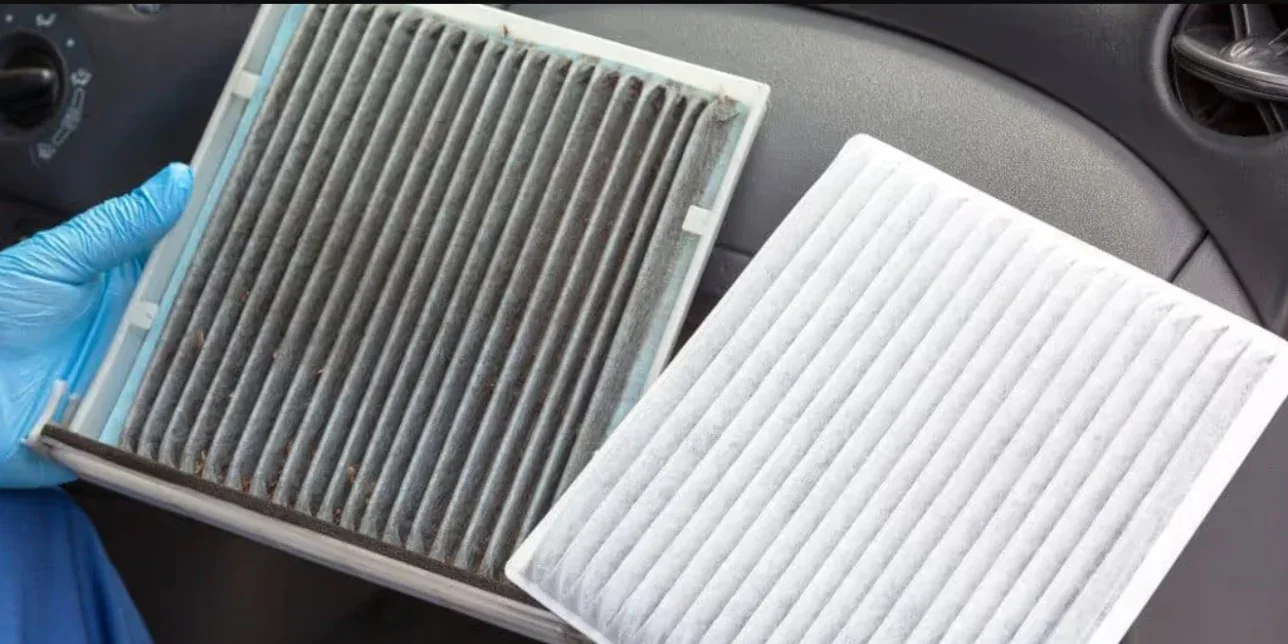
Back from a hunting camp? You REALLY need to check your engine air filter right away!
1. Back From Hunting Camp? A Week on Two-Track Roads Can Load Your Engine Air Filter Like a Year in Town
Should I check my engine air filter after hunting season trips on dusty two-track roads around Laramie?
Quick Answer: Yes. Two-track roads, convoy driving behind other trucks, and dry grass and seeds put far more dust and debris into the intake than town driving. A week of hunting can load an engine air filter heavily. Check the engine air filter and the air box inlet as soon as you get home.
For many Laramie families, fall means hunting season. In Wyoming, antelope rifle season generally runs from mid-September through October, deer rifle season from October into late November, and elk rifle season from October into December, with exact dates varying by hunt area [7]. That puts hundreds of pickups, SUVs, and side-by-sides on two-track roads and ranch trails across the Laramie Plains and into the mountains during the driest part of the year.
Two-track driving is about as hard on an engine air filter as ordinary driving gets. The road surface is loose dirt and powdered soil, the vehicles travel slowly with windows down, and hunters often drive in convoys, which means the second and third trucks are pulling air through the dust cloud of the first. Wind on the open plains keeps that dust moving even after the trucks stop. An engine air filter can collect more dust in a week of this than in months of commuting on paved Laramie streets.
Hunting country adds debris as well as dust. Dry grass, seed heads, and plant fluff collect around grilles, fender openings, and air inlets when a truck drives through tall cover. Some of that material can be drawn into the inlet and pile up on the dirty side of the engine air filter housing, blocking part of the filter face. Mud from a wet day at camp can splash up and dry around the inlet, too.
The physical toll matters as well. Rough two-tracks shake the engine and the air box for hours at a time. Housing clips and duct clamps that were fine in town can loosen, and a lid that shifts even slightly can let dust slip around the edge of the engine air filter instead of through it. That is the worst case, because bypassed dust goes straight to the engine.
The fix is a quick post-season check. When you get back from camp, have the engine air filter inspected, clear any grass and seeds from the inlet and housing, confirm the clips and clamps are tight, and replace the filter if it is loaded. If you hunt every fall, make that check part of the routine, just like cleaning your rifle.
2. Hit a Deer or Pronghorn on the Way Home? Look Beyond the Bumper – Your Engine Air Filter Housing May Be Damaged Too
After a collision with a deer or antelope, should I have my engine air filter housing and intake inspected?
Quick Answer: Yes. Many air inlets and engine air filter housings sit right behind the grille, headlights, or bumper, in the same zone that absorbs an animal strike. A cracked inlet or shifted engine air filter housing can let unfiltered air into the engine. Have the whole air path checked after any front-end hit.
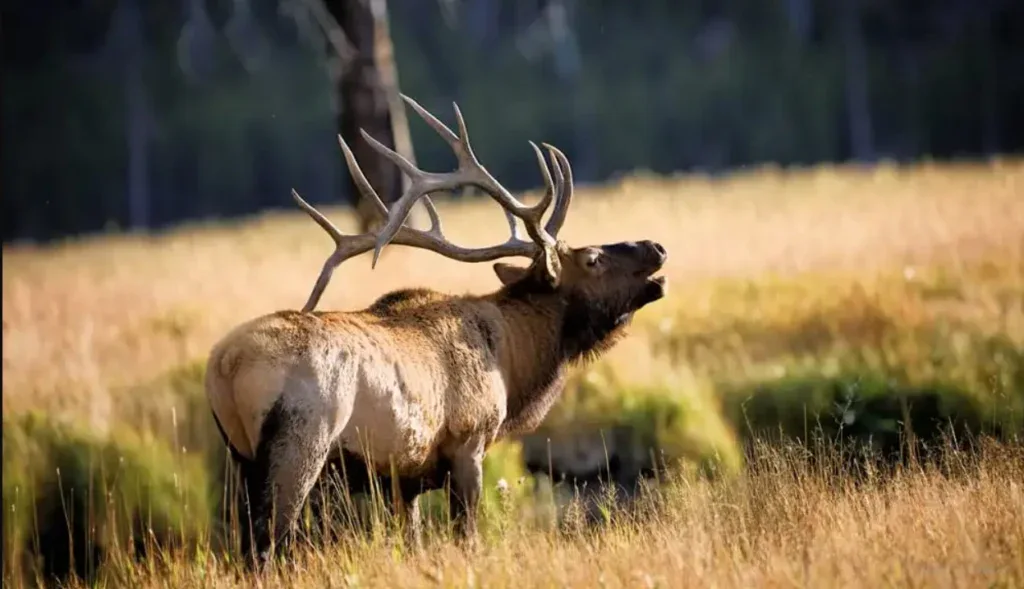
Wildlife collisions are a fact of life on Wyoming roads. Wyoming Game and Fish Department figures reported by Cowboy State Daily put the average at about 6,000 vehicle-wildlife collisions a year statewide, with mule deer involved in roughly 80 to 85 percent of them, and pronghorn, elk, moose, and other animals making up the rest [8]. The department also says collisions are likely under-documented [8]. Fall, when animals move between summer and winter ranges, is a busy time on the highways around Laramie.
After a strike, drivers naturally focus on the bumper, grille, and headlights. Collision repair professionals know the real damage is often hidden. A collision repair trade publication notes that cooling components sit directly behind the impact zone, that even a moderate collision can push one component into another and crack a plastic tank, and that missed damage often surfaces weeks later; it recommends pressure-testing intercoolers on turbocharged vehicles [9].
The same logic applies to the engine air filter’s air path. On many vehicles, the air inlet snorkel draws from behind the grille or a headlight, and the engine air filter housing sits near the front corner of the engine bay. An animal strike can crack the plastic inlet, knock the housing loose from its mounts, break a clip, or shift the duct between the housing and the engine. On a turbocharged vehicle, the intercooler and its piping, which carry the air after it leaves the engine air filter, sit in the same zone.
Any of those problems can let unfiltered air reach the engine. A crack upstream of the engine air filter is less serious, because the filter still cleans the air. A crack or loose joint downstream of the filter lets dusty plains air go straight into the engine and can also confuse the airflow sensor, sometimes setting a check engine light.
If you hit an animal, even if the car seems to drive normally, have the engine air filter housing, inlet, ducts, and clamps inspected along with the cooling system. Ask the technician to check the clean side of the housing for dirt, which is a sign that air has been getting in where it should not.
The deer walked away; make sure your engine air filter housing did not crack trying. After any wildlife strike, stop by Grease Monkey, 225 Wister Dr, Laramie, WY, for an air path inspection and a free engine diagnostic scan: https://www.greasemonkey.com/locations/wy/laramie/225-wister-dr/.
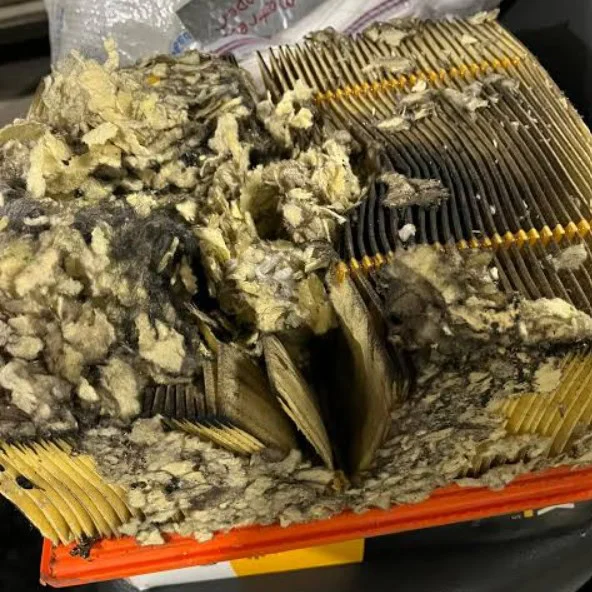
Mice love engine air filters when it gets cold. Just think what this does to your engine. Check your filter regularly for contamination like this.
3. When Laramie Turns Cold, Mice Move Into Warm Engines – and the Engine Air Filter Housing Is a Favorite Spot
Can mice nest in my engine air filter housing during a Laramie winter, even if I drive the car every day?
Quick Answer: Yes. Mice seek warm, sheltered spots as temperatures drop, and a recently driven engine bay is inviting. They can fill the engine air filter housing with nesting material and stored food that blocks airflow. Check the engine air filter housing through the cold months, especially if you park outside.
Laramie’s freezing season is long. On average, freezing temperatures can arrive by mid-September and linger into early June [5]. For field mice on the edge of town, that means a long search for shelter, and a parked car with a warm engine is an easy target. This is not only a problem for cars stored all winter. Daily drivers parked outside overnight are visited too.
University of Maine Cooperative Extension pest management professional Griffin Dill told the Bangor Daily News that mice tend to enter a car looking for shelter from snow and rain, and the article notes that they can squeeze through openings about the width of a pencil [10]. An auto parts store owner in the same report said mice love to get into air filters and clog them up, and that nests or food caches can block airflow and cause performance problems [10]. He recommended regularly inspecting air filters even when using traps or repellents [10].
The engine air filter housing is attractive because it is dark, enclosed, and lined with soft pleated paper. Mice may chew the filter media itself, pack the dirty side with grass and insulation, or store seeds there. A nest that blocks part of the engine air filter restricts airflow. One that chews a hole through the media lets dirt reach the engine. Droppings and debris can also be drawn deeper into the intake when the engine starts.
The warning signs are worth knowing. The Bangor Daily News report lists a persistent odor and nest debris or food blowing from the vents when the heat comes on as signs of rodent activity [10]. Under the hood, look for shredded material, seeds, or droppings around the air inlet. A sudden drop in engine response on a cold morning can also point to a blocked engine air filter.
Prevention helps. Park in a closed garage when possible, keep vehicles away from tall grass and building edges, and have the engine air filter housing opened and checked several times through the cold season, not just at the spring oil change. If you find a nest, replace the engine air filter, clean the housing thoroughly with gloves and a mask, and check for chewed wiring.
Your car should not be the warmest apartment in Albany County. Bring it to Grease Monkey, 225 Wister Dr, Laramie, WY, and let the crew evict any squatters from your engine air filter housing: https://www.greasemonkey.com/locations/wy/laramie/225-wister-dr/.
4. Snow That Melts in the Air Box Can Refreeze Into an Ice Crust – Why a Frozen Engine Air Filter Can Stop a Laramie Start
Can snow or ice freeze inside my engine air filter housing overnight and keep my car from starting or running well?
Quick Answer: It can. Filter engineers describe snow drawn into the air box melting after shutdown, then refreezing into an ice layer on the engine air filter that blocks airflow and can prevent starting. After driving in blowing snow on a frigid Laramie night, check the engine air filter housing for snow and ice.
Blowing snow is part of every Laramie winter, and some of it ends up where it should not. Most drivers know that a snowstorm can pack the air inlet while they drive. Fewer know about what can happen after the engine shuts off, when snow sitting in a warm air box begins to melt and the night temperature drops below zero.
Filter maker Mann+Hummel described that problem in a patent on winter air filter design. The patent explains that snow can be drawn into the air filter with the intake air, accumulate on the filter insert, and clog it, sometimes badly enough to stop the engine. It adds that the snow may then melt and refreeze into a layer of ice that prevents the engine from starting [11]. The company’s solution was an auxiliary inlet with a flap that opens when suction builds, drawing air from a snow-free location [11].
Ford engineers have worked on the same issue. A Ford patent for an air cleaner assembly built for extreme weather notes that in very snowy or dusty conditions the filter may clog prematurely, restricting airflow and degrading performance, and it describes an auxiliary filter that takes over when the main filter clogs so the engine does not stall [12]. Most everyday cars do not have those features, so the engine air filter in a typical Laramie commuter is on its own.
Laramie is a natural place for this to happen. Ground blizzards push fine, dry snow across I-80 and Highway 287, the engine bay warms it after you park, and the temperature can fall far below zero before morning [5]. The result can be an engine air filter with a crust of ice across its face, or a soggy filter that has frozen stiff. Either one restricts the air the engine needs to start and run.
After a drive through blowing snow, especially before a bitter night, open the engine air filter housing and brush out any snow on the dirty side. If the filter is wet, distorted, or iced, replace it rather than hoping it dries. And if the engine struggles to start or runs poorly after a storm, the engine air filter is one of the first places to look.
Ice belongs in the cooler, not the air box. After the next ground blizzard, pull into Grease Monkey, 225 Wister Dr, Laramie, WY, and let the crew make sure your engine air filter is dry and breathing: https://www.greasemonkey.com/locations/wy/laramie/225-wister-dr/.
5. Does Your Old Ranch Truck Have a Flap and a Hose on Its Air Cleaner? That Heated Air Intake Works With Your Engine Air Filter
What is the flap and flexible hose on the air cleaner of my older carbureted truck, and does it affect the engine air filter?
Quick Answer: It is a heated air inlet system. A vacuum-operated flap blends warm air from a stove around the exhaust manifold with outside air until the engine warms, improving cold running and emissions. All that air still passes through the engine air filter, so keep the flap, hose, and engine air filter intact.
Laramie still has plenty of older pickups, ranch trucks, and classic cars on the road and in the barn. Many of them have a large round air cleaner on top of the engine with a snorkel, a small vacuum canister on the snorkel, and a flexible foil hose running down toward the exhaust manifold. Owners sometimes remove those parts as clutter. They have a real job, especially in a town where it can be below zero for weeks.
The system is called a heated air inlet, sometimes a thermostatic air cleaner. As Wikipedia’s summary explains, it draws warm air from around the outside of the exhaust manifold up into the air cleaner, using a thermostatic vacuum switch that senses the air temperature after the air filter element and a vacuum motor that moves a control flap between heated air and cooler outside air [13]. The warm air helps fuel stay suspended in the incoming air instead of condensing on the cold intake manifold, improving mixture consistency and cutting emissions and fuel use during cold starts [13]. It was common on carbureted engines and on many computerized carburetor and throttle body injection systems [13].
The heated air inlet and the engine air filter work as a team. Both the warm air from the stove and the cool air from the snorkel pass through the engine air filter before they reach the carburetor. If the flexible hose is torn or missing, the system may pull unheated air, or air from around the hot exhaust without passing through the stove properly. If the flap sticks, the engine may run cold and rough on a Laramie morning, or run on heated air all summer.
Wikipedia also notes that because the system reduces air density and maximum power, owners often remove it, and that removal increases emissions and can make the vehicle illegal in some jurisdictions [13]. On the Laramie Plains, removal also gives up the cold-weather driveability the system was designed to provide.
When you service an older truck, check the whole air cleaner assembly, not just the engine air filter. Make sure the round element seals evenly at the top and bottom, the snorkel flap moves freely, the vacuum canister holds vacuum, and the stove hose is intact and connected. Replace the engine air filter on schedule, and keep the heated air system working so the filter’s clean air arrives at the right temperature.
Old iron, cold mornings, and a flap that still works. Bring your classic to Grease Monkey, 225 Wister Dr, Laramie, WY, for a fresh engine air filter and a once-over of its heated air intake: https://www.greasemonkey.com/locations/wy/laramie/225-wister-dr/.
6. Washing Off Road Salt Is Smart – Blasting the Engine Bay With a Pressure Wand Can Soak Your Engine Air Filter
Can washing my engine bay at a Laramie car wash get water into my engine air filter?
Quick Answer: Yes. High-pressure spray aimed at the engine bay can drive water into the air inlet and onto the engine air filter, and a soaked engine air filter restricts airflow and can freeze in Laramie cold. Wash the body and underside, but keep pressure wands away from the intake.
Laramie winters coat cars in road salt and sand, which the store page lists among local driving conditions [1]. Washing it off is good maintenance, and the Wister Drive shop even offers a car wash and a free-car-wash discount [1]. The question is where the water goes. A careful wash protects the car. A careless one can put water where the engine air filter does not want it.
SlashGear writer Joe Capraro, explaining the causes of hydrolocked engines, warns that water can end up in the air filter and intake if you spray an engine with a high-pressure hose while washing the car, and that water can also splash onto the intake from underneath, through the grille, or past a damaged hood seal [14]. He notes that vehicles with aftermarket cold air intakes, whose filters sit lower near the bumper, are especially vulnerable, and he recommends cleaning an engine with degreaser and low-pressure water, such as a bucket and sponge or the low-pressure setting at a self-serve bay [14].
A full hydrolock from a car wash is rare. The more common result is a wet engine air filter. Paper media that soaks up water swells, restricts airflow, and can deform or tear as it dries. In Laramie, it may not get the chance to dry: a filter soaked at an afternoon car wash can freeze stiff overnight when temperatures fall below zero [5]. A wet engine air filter can also turn the dust it has already caught into mud that clogs the media.
The safe approach is simple. Wash the body, wheel wells, and underside thoroughly to remove salt, but keep the high-pressure wand away from the grille openings and air inlet, and do not aim it into the engine bay. If you want the engine bay clean, use a degreaser and a gentle rinse, and cover the air inlet first.
If you suspect water reached the engine air filter, open the housing and look. A damp, stained, or warped engine air filter should be replaced, and any standing water in the housing should be wiped out before the next cold night.
Wash away the salt, not your engine air filter’s good health. After your next car wash, ask the crew at Grease Monkey, 225 Wister Dr, Laramie, WY, to make sure the engine air filter stayed dry: https://www.greasemonkey.com/locations/wy/laramie/225-wister-dr/.
About Grease Monkey, 225 Wister Dr, Laramie, WY 82070
Grease Monkey Center #791 is open Monday through Friday from 8:00 AM to 6:00 PM and Saturday from 8:00 AM to 5:00 PM, and is closed Sunday. The shop can be reached at (307) 271-9116, and manager Chance Kelly leads the team [1].
The menu covers conventional, full synthetic, advanced and European synthetic, and premium synthetic oil changes with a 16-point inspection, air filter replacement, a free engine diagnostic scan, throttle body cleaning, PCV valve and fuel filter inspection, battery and brake services, transmission, coolant, power steering, and radiator fluid exchanges, tire rotation and balancing, wiper blades, tune-ups, serpentine belts, transfer case service, headlights, car washes, pre-purchase inspections, and fleet services. Services and products carry a limited warranty of three months or 3,000 miles [1].
No appointment is needed and most oil changes take about 15 minutes. The shop lists discounts for first responders, law enforcement, military, seniors, students, and Uber and Lyft drivers, and the lobby offers cable TV, a coffee station, free Wi-Fi, and outdoor seating. Customers have given this Wister Drive location a 4.4-star rating across more than 650 Google reviews [1].
Author Information
Author Bio – Phillip Paul Gilliam
Phillip Gilliam is a veteran journalist and former Editor-in-Chief with 50+ years of publishing experience and thousands of published articles. Specializing in automotive, trucking, and digital publishing, he creates authoritative, search-optimized content built on real-world expertise and editorial excellence. To learn more about Phil, visit http://www.phillipgilliam.com/about.html or contact Phil at [email protected]. He would love to hear from you!
Full Citation List
[1] Grease Monkey. Oil Change & Auto Repair, 225 Wister Dr, Laramie, WY. Grease Monkey. Available at: https://www.greasemonkey.com/locations/wy/laramie/225-wister-dr/. (Center #791; manager Chance Kelly; operated by Threshold Automotive dba Grease Monkey, part of the FullSpeed Automotive family; address, phone, hours; air filter replacement; checks engine and cabin air filters; free engine diagnostic scan; car wash and free car wash discount; oil changes in about 15 minutes; no appointment needed; 3-month/3,000-mile limited warranty; 7,220 feet; strong wind, blowing snow, ground blizzards, dusty plains, road salt and sand, winters October to May; current Google rating of 4.4 stars from 654 reviews, checked October 11, 2026.)
[5] Wikipedia contributors. Laramie, Wyoming. Wikipedia. Available at: https://en.wikipedia.org/wiki/Laramie,_Wyoming. (Albany County seat; 31,407 residents at the 2020 census; University of Wyoming about 8,200 in-person students fall 2024; elevation about 7,200 feet; cold semi-arid climate with long, cold, dry winters; record low -50 degrees F; average freezing window September 14 through June 6; junction of I-80 and US 287.)
[7] Jekic, J. Wyoming Hunting Seasons. Hunting Locator, February 28, 2026. Available at: https://huntinglocator.com/blog/wyoming-hunting-seasons/. (Antelope rifle September 15-October 31; deer general/rifle October 1-November 30; elk general/rifle October 1-December 31; dates vary by hunt area.)
[8] Heinz, M. More Than 6,000 Vehicle-Wildlife Collisions Happen Every Year in Wyoming. Cowboy State Daily, August 19, 2022. Available at: https://cowboystatedaily.com/2022/08/19/more-than-6000-vehicle-wildlife-collisions-happen-every-year-in-wyoming/. (About 6,000 vehicle-wildlife collisions a year on average, per Wyoming Game and Fish; 80-85 percent mule deer; elk, moose, whitetail, pronghorn, and bighorn also hit; collisions under-documented.)
[10] Bayly, J. Keeping Rodents Out of Your Car. Bangor Daily News, December 3, 2024 (originally 2018). Available at: https://www.bangordailynews.com/2024/12/03/homestead/keeping-rodents-out-of-your-car-joam40zk0w/. (Griffin Dill, University of Maine Cooperative Extension: mice enter cars seeking shelter from snow and rain; openings about the width of a pencil; auto parts owner Kassey Michaud: mice love to get into air filters and clog them; inspect air filters regularly; signs include odor and debris from vents.)
[11] Filterwerk Mann + Hummel GmbH. Air Filter for Internal Combustion Engines. U.S. Patent 5,400,753, March 28, 1995. Available at: https://patents.google.com/patent/US5400753A/en. (Snow aspirated with intake air accumulates on the filter insert and may clog it badly enough to stop the engine; snow may melt and refreeze into a layer of ice that prevents starting; solution is a flap-controlled auxiliary inlet drawing from a snow-free location.)
[12] Ford Global Technologies LLC. Air Cleaner Filter Assembly for Motor Vehicles Operating in Extreme Weather Conditions. U.S. Patent 8,734,556, May 27, 2014. Available at: https://patents.google.com/patent/US8734556. (In very snowy or dusty conditions the filter may clog prematurely, restricting airflow and degrading performance; an auxiliary filter with a flow restrictor supplies air when the main filter clogs to prevent stalling.)
[13] Wikipedia contributors. Heated Air Inlet. Wikipedia. Available at: https://en.wikipedia.org/wiki/Heated_air_inlet. (Warm air from the outside of the exhaust manifold drawn into the air cleaner; thermostatic vacuum switch senses air temperature after the air filter element; vacuum motor moves a control flap; keeps fuel in suspension, improves mixture consistency, cuts emissions and fuel use during cold starts; used on carbureted and many computerized carburetor and TBI systems; owners often remove it, increasing emissions and in some jurisdictions making the vehicle illegal.)
[14] Capraro, J. Common Causes and Signs of a Hydrolocked Engine. SlashGear, July 22, 2024. Available at: https://www.slashgear.com/1624822/hydrolocked-engine-common-causes-signs. (Water can end up in the air filter and intake if you spray the engine with a high-pressure hose; water can splash onto the intake from underneath, through the grille, or past a damaged hood seal; aftermarket cold air intakes especially vulnerable; clean with degreaser and low-pressure water.)
We use cookies to improve your browsing experience on our website. By closing this banner or interacting with our site, you acknowledge and agree to our privacy policy.