15 Reasons to Replace Your Cabin Air Filter in Colorado Springs, Colorado – What the Academy, Pikes Peak, and Fort Carson Do to Your Car
An Authoritative Guide for Cabin Air Filter Care Near Powers and Dublin Boulevards
Grease Monkey, 1702 Dublin Blvd, Colorado Springs, CO 80918. Has Over 715 Google Reviews With A 4.6 Star Rating.
A Note on Authority and Expertise: This article was researched and written by Phillip Paul Gilliam, a veteran journalist and former Editor-in-Chief with more than 50 years of publishing experience in automotive, trucking, and safety communications.
Fifty-plus years in automotive and safety publishing comes down to one habit above all others: check it before it goes to print. The Air Force Academy cadet and graduation-traffic figures, the Pikes Peak Hill Climb history, and the Fort Carson acreage cited below were all verified against current, named sources specifically for this Dublin Boulevard location, not carried over from research done for this series’ Aurora or Littleton stops, even though all three sit along Colorado’s Front Range.
This Colorado Springs location, Grease Monkey Center #685 at 1702 Dublin Blvd, is managed by Austin Thomason and has built a 4.6-star rating across more than 715 Google reviews [1]. It partners directly with CARFAX to maintain and provide access to digital service history records for its customers’ vehicles, and operates as part of the FullSpeed Automotive network, which has grown past 900 franchised and company-owned locations nationwide as of mid-2026 [1][9].
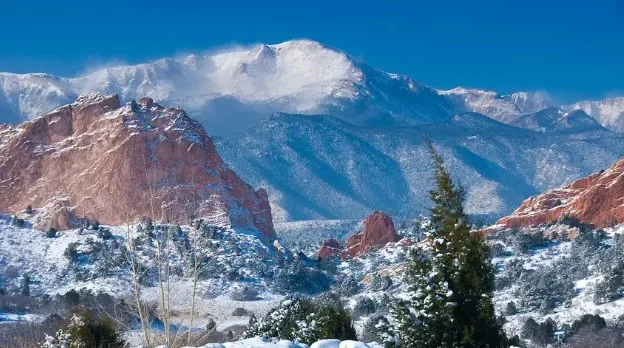
Colorado Springs is Colorado’s second-most populous city, with a 2020 population of 478,961 sitting at 6,011 feet near the base of 14,115-foot Pikes Peak [2]. The city hosts the U.S. Air Force Academy, Fort Carson, Peterson and Schriever Space Force Bases, and the Cheyenne Mountain Complex, with military and defense spending supplying over 40 percent of the regional economy, putting a genuinely different set of demands on a cabin air filter than either of this series’ other two Colorado stops [2].
An Introduction to Cabin Air Filters Near Powers and Dublin Boulevards in Colorado Springs
Colorado Springs is a military town on a scale even this series’ Aurora stop did not quite match. The U.S. Air Force Academy alone occupies 18,500 acres immediately north of the city with roughly 4,094 cadets, Fort Carson is a 135,000-acre Army post to the south, and the hardened granite Cheyenne Mountain Complex sits west of downtown, all while roughly 45,000 active-duty personnel are stationed in the region overall [2][3]. That is a different mix of installations, and a different set of technical demands, than this series’ Aurora stop, which centered on a single Space Force base.
Rising above all of it is Pikes Peak itself, a 14,115-foot summit that has hosted the Pikes Peak International Hill Climb auto race since 1916 and drew renewed attention when its access road was fully paved in 2011 [2][5]. Add Garden of the Gods, a 300-foot red sandstone National Natural Landmark, The Broadmoor’s more than a century as the world’s longest-running Forbes Five-Star resort, and a UCCS campus a few miles from this specific store, and Colorado Springs puts a genuinely varied set of demands on a cabin air filter [2].
This guide walks through fifteen reasons Colorado Springs drivers, from Academy commuters to Pikes Peak-bound tourists, should treat their cabin air filter as a genuine piece of safety and health equipment rather than a line item on an oil-change ticket. Every reason here is grounded in a real technical fact about how the filter works, not local color and geography alone.
This store, Grease Monkey at 1702 Dublin Blvd, sits in this corridor and replaces cabin air filters as part of its standard service menu [1].
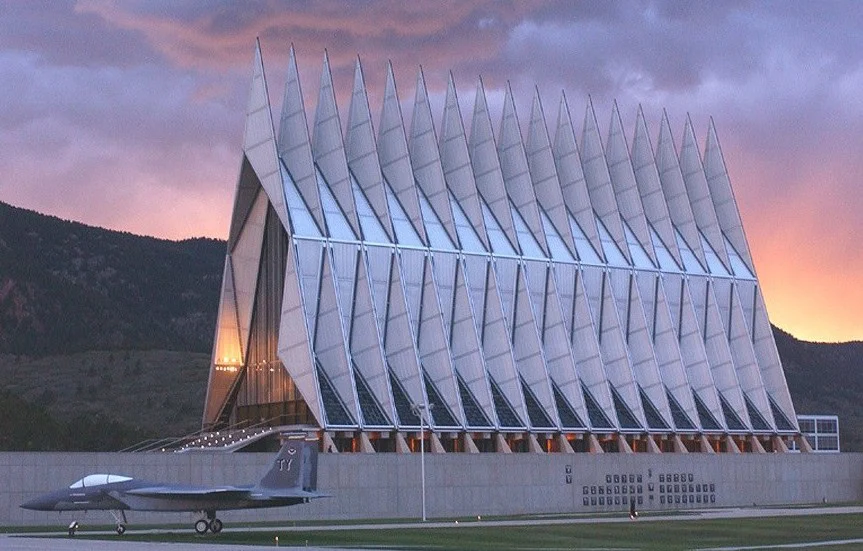
1. Air Force Academy Graduation Can Shut Down I-25 for Hours Without Warning
Category Most Critical
Can a single Air Force Academy commencement ceremony actually gridlock traffic across a large part of Colorado Springs and does that really impact my cabin air filter?
When a sitting president attends U.S. Air Force Academy commencement, the resulting motorcade has shut down Interstate 25 through Colorado Springs along with cross streets including Woodmen, Academy, Briargate, Garden of the Gods, and Filmore, with routes from Peterson Space Force Base closed westward as well [4]. Because the Secret Service does not release closure times in advance for security reasons, commuters have reported normally ten-minute trips stretching past an hour with no warning.
An unplanned, hours-long gridlock event concentrates idling traffic across a wide swath of the city at once, rather than the predictable rush-hour peak a filter and its owner can plan around. A vehicle caught in one of these events, even a driver with no connection to the Academy itself, absorbs a genuinely unusual, city-wide dose of stopped and idling traffic exhaust in a single afternoon which will really gum up your cabin air filter.
If a graduation-week gridlock event catches you off guard, a filter check afterward is a reasonable precaution; visit https://www.greasemonkey.com/locations/co/colorado-springs/1702-dublin-blvd/.
2. Pikes Peak’s 14,115-Foot Descent Is Famous for Overheating Brakes
Category Most Critical
Does driving down from Pikes Peak’s summit expose a vehicle to a distinctly heavier dose of brake dust getting into my cabin air filter than ordinary mountain driving?
Pikes Peak’s summit sits at 14,115 feet, and the drive back down covers roughly 4,720 feet of elevation loss over just over 12 miles of switchbacks, a descent so demanding on brakes that the mountain is famous for cars needing mandatory brake-cooling checks on the way down [2][5]. Riding the brakes continuously on a long, steep descent like this generates far more brake dust in a short period than the same brakes would produce across weeks of ordinary city driving.
That brake dust does not stay on the wheels alone; a portion of it becomes airborne fine particulate that settles over the vehicle and the surrounding road, and any vehicle following closely behind a descending car on this route picks up a concentrated dose of it. A filter serving a vehicle that regularly makes this drive, or that simply shares the road with those that do, works through a brake-dust load unlike almost anywhere else in this series.
After a Pikes Peak trip, this store can check what that descent did to your filter and your brakes both; schedule at https://www.greasemonkey.com/locations/co/colorado-springs/1702-dublin-blvd/.
3. A Hardened Granite Mountain Command Center Adds Its Own Commuter Population
Category Most Critical
Does the Cheyenne Mountain Complex, a hardened facility built inside a mountain, add a distinct kind of commuter traffic separate from a conventional base that can generate higher density of dust in my cabin air filter?
West of downtown Colorado Springs, the Cheyenne Mountain Complex is built inside a granite mountain, originally excavated and hardened against nuclear attack to house NORAD and space-surveillance operations, a fundamentally different kind of facility than an open-air base like this series’ Aurora stop [2]. Employees and support personnel commute daily to a single tunnel entrance rather than spreading across a sprawling base campus, which concentrates that facility’s entire commuter population onto a narrower set of access roads.
That concentration means a smaller number of roads absorb the full commuter load of a major, round-the-clock national security facility, rather than that traffic spreading across a base’s many gates the way it does at a conventional installation. A vehicle regularly using those specific access roads is exposed to a denser, more concentrated commuter traffic pattern than a similarly staffed facility with multiple entry points would produce.
This store’s technicians understand the traffic patterns unique to this region’s military geography; get your filter checked at https://www.greasemonkey.com/locations/co/colorado-springs/1702-dublin-blvd/.
High Priority
4. Fort Carson’s 135,000 Acres Move Armored Vehicles Through the Region
Category High Priority
Does Fort Carson, a large Army post, add a kind of traffic and cabin air filter dust exposure that this series’ Air Force and Space Force stops did not?
Fort Carson, a 135,000-acre Army post on the south side of Colorado Springs, is home to armored and mechanized units whose training exercises periodically require moving tracked and wheeled combat vehicles over public roads between the post and training areas, a different traffic profile than the Air Force cadets, contractors, and space-operations personnel covered elsewhere in this guide [2]. Armored vehicle convoys move at lower speeds and generate more diesel particulate per mile than passenger traffic, and their transit routes are used repeatedly rather than randomly distributed across the city.
A vehicle that regularly shares roads near Fort Carson’s transit routes with this kind of convoy traffic, even infrequently, picks up periodic exposure to a heavier diesel particulate load than a similar drive elsewhere in the city. This is a distinctly Army-post phenomenon, separate from the Air Force cadet traffic or Space Force shift patterns this series has already covered in the region.
If your route crosses Fort Carson’s transit corridors, this store can check what that adds to your filter’s workload at https://www.greasemonkey.com/locations/co/colorado-springs/1702-dublin-blvd/.
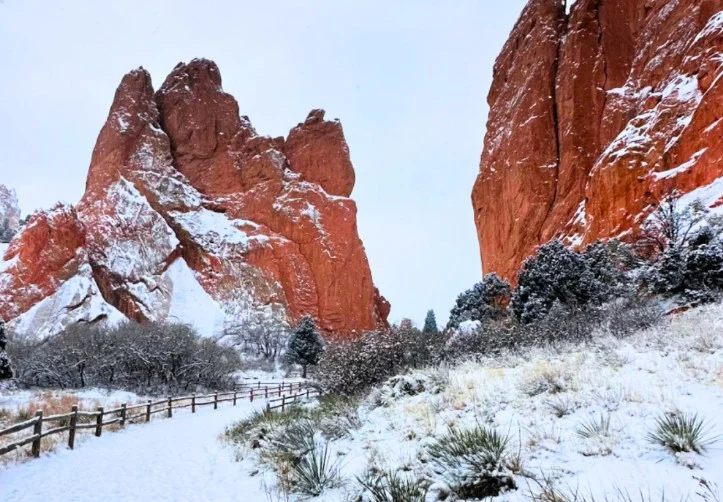
5. Garden of the Gods Draws Millions of Visitors to a Free Park Every Year
Category High Priority
Does a free, world-famous rock formation park add real, measurable visitor traffic dust going into my cabin air filter beyond what a typical city park would generate?
Garden of the Gods, a National Natural Landmark featuring red sandstone formations rising up to 300 feet, is free to enter and draws visitors from across the country, a very different traffic generator than a typical neighborhood park with limited regional draw [2]. Because admission is free and the park sits within city limits, visitor traffic here tends to be denser and more consistent across the calendar year than a ticketed, seasonal attraction would produce.
That steady, year-round stream of out-of-town visitor vehicles converging on nearby roads and parking areas adds a more constant background traffic level to this part of Colorado Springs than a typical residential or retail corridor would see on its own. A cabin air filter serving a vehicle that regularly shares roads near this landmark works through that added visitor volume as a genuine, year-round contributor rather than a rare seasonal spike.
This store’s technicians see what that year-round visitor traffic does to local filters; have yours checked at https://www.greasemonkey.com/locations/co/colorado-springs/1702-dublin-blvd/.
6. Colorado Springs Is One of the Most Lightning-Active Places in the Country
Category High Priority
Does this region’s unusually frequent lightning activity add anything distinct to a cabin air filter’s summer workload?
Colorado Springs ranks among the nation’s most active lightning-strike regions, a byproduct of the intense afternoon thunderstorms that build over the nearby mountains through the summer months [2]. These storms typically begin with strong, gusty outflow winds arriving several minutes ahead of the rain itself, kicking up loose surface dust just before the storm’s own rain would otherwise settle it back down.
That brief dust-before-rain window means a filter can pick up a concentrated burst of wind-driven particulate immediately before getting a dose of humidity from the storm that follows it, a one-two exposure pattern distinct from a steady rain that simply washes dust down without first stirring it up. Across a full Colorado Springs summer of near-daily afternoon storms, that pattern repeats often enough to be a genuine, distinctly local contributor to filter wear.
Summer storm season is hard on filters here in a specific way; this store can check yours at https://www.greasemonkey.com/locations/co/colorado-springs/1702-dublin-blvd/.
Important
7. UCCS’s 11,000-Plus Students Commute Through This Same Part of the City
Category Important
Do these store’s proximity to UCCS add additional strain on my cabin air filter as a distinct commuter traffic pattern to the immediate Dublin Boulevard area?
The University of Colorado Colorado Springs enrolled more than 11,000 students as of fall 2025 at its campus on Austin Bluffs Parkway in the Cragmor neighborhood, a few miles from this store’s Dublin Boulevard location in the same north-central part of the city [2][6]. Unlike the Academy’s cadets, who live and largely commute within Academy grounds, UCCS students commute from across Colorado Springs by personal vehicle, adding a conventional but sizable student commuter population to this specific part of town.
Semester-driven commuting means this corridor sees a somewhat different traffic rhythm than a purely residential or retail area would, with noticeably lighter traffic during winter and summer breaks and heavier traffic during the fall and spring semesters. A filter serving a vehicle that regularly drives near UCCS is exposed to that semester-tied rhythm rather than a flat, year-round pattern.
If your daily route runs near UCCS, this store can check whether the semester traffic has caught up with your filter at https://www.greasemonkey.com/locations/co/colorado-springs/1702-dublin-blvd/.
8. Multiple Defense Contractors, Not Just One Company, Commute Through This City
Category Important
Does Colorado Springs’ mix of several major defense contractors create more strain on my cabin air filter than a different commuter pattern of a single-employer aerospace hub?
Unlike this series’ Littleton stop, where Lockheed Martin Space’s headquarters anchors a single dominant aerospace employer, Colorado Springs hosts a genuine mix of major defense contractors, including Northrop Grumman, Boeing, General Dynamics, and Lockheed Martin, alongside its military installations [2]. Multiple contractors operating in the same metro area means overlapping but independent commute schedules, shift patterns, and office locations rather than one company’s single, more predictable rhythm.
That layered mix produces a commuter traffic pattern with fewer clean gaps between employer rush hours and creates more strain on your cabin air filter than a single-company town would have, since different contractors’ shift start times, meeting schedules, and office hours do not align perfectly with one another. A vehicle commuting through this defense corridor is exposed to a more continuously dense traffic pattern across the standard business day than this series’ Littleton stop experiences from its single aerospace headquarters.
If your work takes you through Colorado Springs’ defense corridor, this store can help keep your filter ahead of that traffic; visit https://www.greasemonkey.com/locations/co/colorado-springs/1702-dublin-blvd/.
9. A Race Held Since 1916 Still Draws a Modern Traffic Surge Every Summer
Category Important
Does the Pikes Peak International Hill Climb, now over a century old, still create a meaningful traffic event for the surrounding area, and how does that impact my cabin air filter?
The Pikes Peak International Hill Climb has run since 1916, and since the mountain’s access road was fully paved in 2011, the race has drawn a growing field of competitors and spectators for its annual summer event on the mountain’s 12.42-mile, 156-turn course [5]. Race weekend concentrates a large number of out-of-town spectator vehicles, along with team support trucks and trailers, onto the roads leading toward the mountain over a compressed two-day window.
That kind of short, high-volume event traffic behaves differently than the region’s steady year-round tourist flow to Garden of the Gods covered elsewhere in this guide, arriving and departing in a much narrower window and often towing race equipment. A vehicle sharing the road with this surge, even without any connection to the race itself, experiences a brief but real spike in nearby traffic density and strain on your cabin air filter each summer.
Planning to catch the Hill Climb this year? A quick filter check before race weekend traffic picks up is a good idea; visit https://www.greasemonkey.com/locations/co/colorado-springs/1702-dublin-blvd/.
Medium Priority
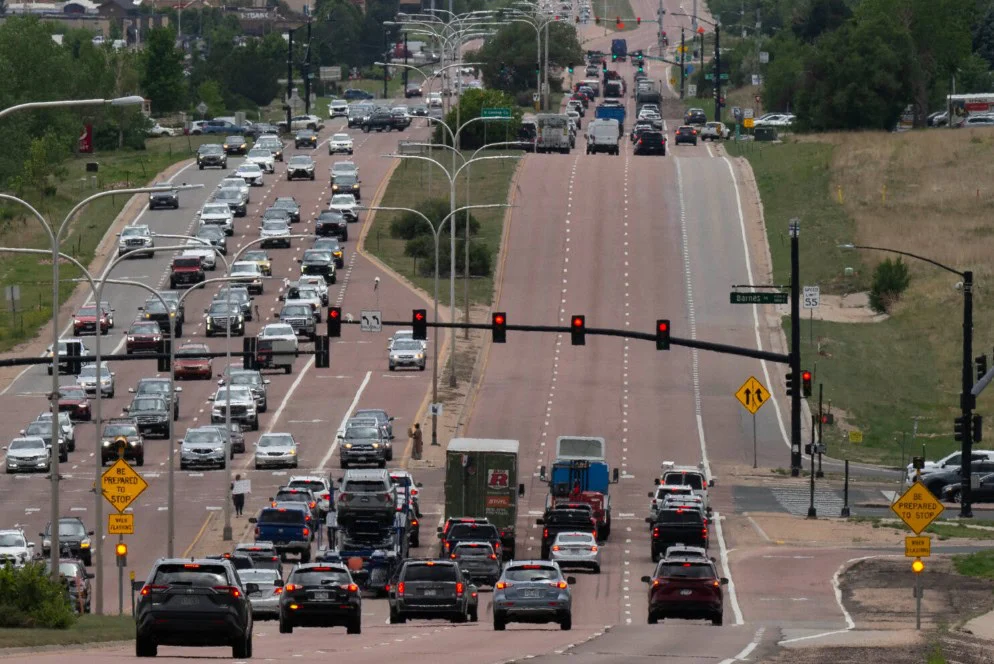
10. Colorado Springs’ Powers Boulevard Commercial Corridor
Category Medium Priority
Does this specific stretch of Dublin Boulevard near Powers Boulevard have its own distinct traffic character within Colorado Springs impacting my cabin air filter?
This store sits near the intersection of Dublin Boulevard and Powers Boulevard, one of northeast Colorado Springs’ busier commercial corridors, lined with retail centers and restaurants that generate their own dense pattern of turning movements and short parking-lot trips distinct from a purely residential street. Vehicles running errands along this corridor make frequent short stops rather than one continuous drive, each one a fresh cold or warm start.
As with any commercial strip, that pattern of repeated short starts and stops concentrates more particulate per mile driven than a longer, uninterrupted trip would, on top of whatever traffic this corridor already carries from the surrounding neighborhoods and nearby UCCS commuters. A vehicle that spends most of its time running errands along Powers and Dublin accumulates this kind of harmful exposure on your cabin air filter at a steady, everyday rate.
If most of your driving happens right in this corridor, that adds up faster than the mileage suggests; check your filter at https://www.greasemonkey.com/locations/co/colorado-springs/1702-dublin-blvd/.
11. The U.S. Olympic and Paralympic Training Center Draws Its Own Steady Visitor Stream
Category Medium Priority
Does hosting a national Olympic and Paralympic training facility add a distinct, ongoing visitor traffic pattern to Colorado Springs add additional dust and debris to my cabin air filter?
Colorado Springs is home to a U.S. Olympic and Paralympic Training Center, where elite athletes train year-round and the public can take guided tours of the facility, adding a steady stream of both athlete transportation and visitor tour traffic that is distinct from the city’s military and university commuter populations covered elsewhere in this guide. Training center traffic tends to run on a consistent, year-round schedule rather than a seasonal or event-driven surge.
This is a modest, steady contributor rather than a major one, a small but real year-round addition to Colorado Springs’ overall visitor and commuter traffic mix that sets it apart from a comparable city without a national training facility. It is included here for completeness rather than as a major driver of local cabin air filter wear on its own.
This store’s technicians factor in the full range of local traffic when they check a filter; visit https://www.greasemonkey.com/locations/co/colorado-springs/1702-dublin-blvd/.
12. The Broadmoor’s Century of Five-Star Status Keeps High-End Tourism Flowing Through the City
Category Medium Priority
Does a single historic luxury resort really add measurable dust and dirt to my cabin air filter in a city the size of Colorado Springs?
The Broadmoor, a 5,000-acre resort founded in 1918, has held Forbes Five-Star status for 61 consecutive years, longer than any other hotel in the world, and continues to draw a steady stream of destination visitors to Colorado Springs specifically because of that reputation [7]. Resort guests of this kind typically arrive from the airport or drive in from out of state, adding a distinct, non-local vehicle population to the city’s overall traffic mix beyond its resident commuters.
Destination resort traffic tends to be spread across the full calendar year rather than concentrated into a single tourist season, since a property of this caliber draws conferences, weddings, and leisure travel across all four seasons… all of which have an impact on your cabin air filter. That gives Colorado Springs a small but consistent layer of out-of-town luxury-travel traffic that a city without a landmark resort of this stature would not have.
Whether you live here year-round or are just visiting, this store handles quick filter checks without an appointment; find hours at https://www.greasemonkey.com/locations/co/colorado-springs/1702-dublin-blvd/.
Lower Priority
13. The Rebuilt Pikes Peak Cog Railway Actually Took Some Traffic Off the Mountain Road
Category Lower Priority
Did the Pikes Peak Cog Railway’s reopening after a massive renovation change how much of the mountain’s tourist traffic drives versus rides the train and is that helping my vehicle’s cabin air filter?
The historic cog railway up Pikes Peak closed in 2018 for a renovation exceeding 100 million dollars and reopened in August 2021 with new trains and upgraded track, giving tourists a rail option that does not require driving the mountain’s descent and its associated brake wear covered elsewhere in this guide. Since reopening, a meaningful share of Pikes Peak visitors now ride the train up and down rather than driving.
Honestly, this is a modest, traffic-reducing effect rather than a filter-related concern on its own; it is included here because a hyper-local guide to this region would be incomplete without acknowledging that not every Pikes Peak visitor’s vehicle makes that demanding descent anymore. The mountain’s brake-dust and descent-traffic effects covered earlier in this guide are real, but they would be somewhat heavier without this rail alternative in operation. The good news is it does somewhat reduce the impact on your cabin air filter.
However you get up the mountain, this store can get your vehicle ready for the trip; visit https://www.greasemonkey.com/locations/co/colorado-springs/1702-dublin-blvd/.
14. Manitou Springs, the Mountain’s Historic Gateway Town, Adds Its Own Small Traffic Layer
Category Lower Priority
Does the small historic town at the base of Pikes Peak add anything meaningful to Colorado Springs’ own traffic picture and does that add additional strain on my cabin air filter?
Manitou Springs, established in the 1870s and 1880s around a set of natural mineral springs, sits at the base of Pikes Peak and has served as the mountain’s gateway resort town since the railroad era, drawing visitors on their way to or from the peak, Garden of the Gods, and the cog railway. Traffic passing through this small historic town adds a brief, low-speed layer to a Pikes Peak day trip, distinct from the mountain drive itself.
This is a minor contributor compared with the mountain descent, the Hill Climb race weekend, or Garden of the Gods’ year-round visitor volume, all covered elsewhere in this guide, but it is a genuine part of the traffic picture for anyone making the full Pikes Peak circuit from Colorado Springs. It is included here mainly for completeness rather than as a significant cabin air filter-wear factor on its own.
For the traffic that actually matters to your filter, this store can build a realistic schedule at https://www.greasemonkey.com/locations/co/colorado-springs/1702-dublin-blvd/.
15. This Store’s Own CARFAX Partnership Can Track When Your Filter Was Last Changed
Category Lower Priority
Given how many vehicles pass through Colorado Springs on military and PCS moves, is there a practical way to keep cabin air filter records straight?
This location partners directly with CARFAX to maintain and provide digital service history records for customers’ vehicles, a practical tool in a region like Colorado Springs where the Academy, Fort Carson, and the area’s Space Force bases bring a steady turnover of vehicles arriving from other climates and states [1]. Rather than relying on memory or a windshield sticker that may have faded or been replaced, a digital record tied to the vehicle itself travels with it regardless of who last serviced it or where.
For a household that has recently relocated to Colorado Springs, or that owns a vehicle bought secondhand from someone who has since moved on, this kind of digital record removes the guesswork of an unknown filter history that this series has covered at other stops. It is a straightforward, practical reason this particular store’s own service records are worth using rather than starting from a guess.
New to the area or unsure of your filter’s history? This store’s CARFAX-backed records can settle it; visit https://www.greasemonkey.com/locations/co/colorado-springs/1702-dublin-blvd/.
About Grease Monkey, 1702 Dublin Blvd, Colorado Springs, CO 80918
This Colorado Springs location is open Monday through Friday from 8:00 a.m. to 6:00 p.m. and Saturday from 8:00 a.m. to 5:00 p.m., closed Sundays [1]. The shop offers oil changes, battery services, brake services, tire services, fluid exchanges, air conditioning service, engine services, transmission services, and pre-purchase inspections, with amenities including cable TV, a coffee station, courtesy fluid top-offs, a customer lobby, a diaper changing station, outdoor seating, refreshments, free WiFi, and a service bay viewing window [1].
The location has built a 4.6-star rating across more than 715 Google reviews under manager Austin Thomason, partners directly with CARFAX to maintain digital service history records for customers, and operates within the FullSpeed Automotive network, which passed 900 franchised and company-owned locations nationwide in the first half of 2026 and had 435 of its centers named CARFAX Top Shop winners in 2025 for verified customer satisfaction [1][9][10].
Author Information
Phillip Gilliam is a veteran journalist and former Editor-in-Chief with 50+ years of publishing experience and thousands of published articles. Specializing in automotive, trucking, and digital publishing, he creates authoritative, search-optimized content built on real-world expertise and editorial excellence. To learn more about Phil, visit http://www.phillipgilliam.com/about.html or contact Phil at [email protected]. He would love to hear from you!
Full Citation List
[1] Grease Monkey. Oil Change & Auto Repair, 1702 Dublin Blvd, Colorado Springs, CO. Grease Monkey. Available at: https://www.greasemonkey.com/locations/co/colorado-springs/1702-dublin-blvd/. (Store address, hours, manager name, services, amenities, CARFAX partnership, and current Google review count and rating.)
[2] Wikipedia contributors. Colorado Springs, Colorado. Wikipedia. Available at: https://en.wikipedia.org/wiki/Colorado_Springs,_Colorado. (Population, elevation, climate, military installations, major employers, and tourist attractions.)
[3] Wikipedia contributors. United States Air Force Academy. Wikipedia. Available at: https://en.wikipedia.org/wiki/United_States_Air_Force_Academy. (Cadet enrollment, campus acreage, and location relative to Colorado Springs.)
[4] Colorado Springs Gazette. AFA Graduation Traffic: Commuters Blast Agencies on Social Media After Biden Motorcade Delays. Gazette.com. Available at: https://gazette.com/news/traffic/afa-graduation-traffic-commuters-blast-agencies-on-social-media-after-biden-motorcade-delays/article_a8fe7de8-0098-11ee-bfb4-2f00f302b542.html. (Roads closed and delay lengths during a presidential Academy graduation visit.)
[5] Wikipedia contributors. Pikes Peak International Hill Climb. Wikipedia. Available at: https://en.wikipedia.org/wiki/Pikes_Peak_International_Hill_Climb. (Race founding year, course length and elevation gain, and paving completion date.)
[6] Wikipedia contributors. University of Colorado Colorado Springs. Wikipedia. Available at: https://en.wikipedia.org/wiki/University_of_Colorado_Colorado_Springs. (Enrollment figures and campus location on Austin Bluffs Parkway.)
[7] CBS News Colorado. The Broadmoor Remains Forbes’ Longest-Running Five-Star Hotel in the World. CBS News. Available at: https://www.cbsnews.com/colorado/news/colorado-springs-the-broadmoor-forbes-five-star-hotel/. (Founding year, resort acreage, and consecutive years of Forbes Five-Star status.)
[8] Wikipedia contributors. Manitou Mineral Springs. Wikipedia. Available at: https://en.wikipedia.org/wiki/Manitou_Mineral_Springs. (History of Manitou Springs as a resort gateway town for Pikes Peak.)
[9] Franchising.com. FullSpeed Automotive Shifts Franchise Growth into High Gear During First Half of 2026. Franchising.com. Available at: https://www.franchising.com/amp/news/20260714_fullspeed_automotive_shifts_franchise_growth_into_high_gear_during_first_half_ha.html. (900-plus FullSpeed Automotive locations nationwide and first-half 2026 expansion activity.)
[10] AutoSuccess. CARFAX Names 435 FullSpeed Automotive Locations 2025 Top Shop Winners. AutoSuccess. Available at: https://www.autosuccessonline.com/fullspeed-automotive-recognized-435-service-centers-carfax-top-shop-wins/. (435 FullSpeed Automotive service centers named CARFAX Top Shop winners for 2025.)
[11] AAA Automotive. The Importance of Cabin Air Filter Replacement for Your Vehicle. AAA. Available at: https://www.aaa.com/autorepair/articles/the-importance-of-cabin-air-filter-replacement-for-your-vehicle. (General cabin air filter replacement guidance, symptoms of a restricted filter, and typical replacement cost range.)
(c) 2026 Copyright Grease Monkey, Written by Phillip Paul Gilliam. All rights reserved. Published in partnership with Grease Monkey, 1702 Dublin Blvd, Colorado Springs, CO 80918. Content is for informational purposes and reflects current industry research and local geographic conditions. Cabin air filter replacement intervals may vary by individual vehicle, usage pattern, and conditions. Consult a certified professional for specific advice about your vehicle’s cabin air filtration system.
Stop by today.
- Grease Monkey Center #685 Address: 1702 Dublin Blvd, Colorado Springs, CO, 80918
- Services: Air Conditioning Services, Battery Services, Brake Services, Engine Services, Filter Services, Fluid Exchange Services, Headlight Services, Oil Changes, Power Steering, State Inspection Services, Transmission Services, Wiper Replacement Services
Your car will thank you. And your wallet will too.

Plan Your Visit
Find a location near you, explore current deals, and get everything you need before you roll in.