15 Reasons West Pocatello's Bench-to-Canyon Geography Never Lets a Transmission Rest
Location: Pocatello, ID Topic: Grease Monkey Center #544 By: Phil Gilliam
An Authoritative Guide for Vehicle Transmission Health and Repair on Pocatello’s West Side
Grease Monkey 710 West Quinn Rd, Pocatello, ID 83202 Has Over 2,224 Google Reviews With A 4.6 Star Rating
A Note on Authority and Expertise: This article was researched and written by Phillip Paul Gilliam, a veteran journalist and former Editor-in-Chief with more than 50 years of publishing experience in automotive, trucking, and safety communications. The transmission guidance presented here is grounded in current SAE fluid-life standards, transportation infrastructure research, and manufacturer engineering research – not generic information.
The Grease Monkey at 710 West Quinn Rd, Pocatello, ID 83202, is part of the FullSpeed Automotive network, which services more than 5.2 million vehicles annually across 700-plus locations nationwide and generated over $542 million in 2026 revenue. In 2025, 435 FullSpeed Automotive locations – including Grease Monkey franchises – were named CARFAX Top Shop Winners for verified customer satisfaction, and in 2026 Grease Monkey was recognized as an Entrepreneur Verified Franchise. Grease Monkey’s ASE-certified technicians bring that national training standard to a second Pocatello location, giving residents on this side of town the same trusted service without the drive across the city.
The Quinn Road location sits in West Pocatello, a residential stretch of Bannock County shaped less by the rail yards and downtown grid covered elsewhere in this series and more by its proximity to the Bannock Highway corridor, the foothills recreation that corridor leads to, and Pocatello Regional Airport out toward Highway 30 [7]. Where the city’s east side is defined by Interstate 15 and the rail lines that built it, West Pocatello’s character comes from Mink Creek Canyon’s unpaved forest roads, more than a thousand miles of surrounding trail network, and a neighborhood fabric that mixes established residential streets with a nearby business park – a genuinely different transmission workload than the rest of the city sees [7].
An Introduction to Transmission Survival on Pocatello’s West Side
Every city has more than one personality, and Pocatello is no exception. The Yellowstone Avenue side of town runs on rail schedules and interstate interchanges. West Pocatello, where Quinn Road sits, runs on something quieter but no less demanding: canyon roads that lead into the Bannock Highway corridor toward Mink Creek and Scout Mountain, a golf course tucked along that same highway, a rail-trail greenway threading through residential streets, and an airport seven miles out that still shapes how a surprising number of local drivers spend their week [7]. It is a side of the city built around recreation access and residential life rather than freight and rail – and that changes what a transmission actually has to survive here.
Most drivers think about their transmission only when it fails – and by then, the fix has usually jumped from a few hundred dollars to several thousand. That gap is not an accident of bad luck. It is math. Automatic transmission fluid follows a well-documented thermal curve: for every 20 degrees Fahrenheit the fluid runs above roughly 175 degrees F, its usable service life is cut in half, according to SAE and Allison Transmission engineering data. Fluid that would last 100,000 miles at 175 degrees F is finished at 25,000 miles by 220 degrees F, and drops to just 5,000 miles at 260 degrees F [1]. West Pocatello adds its own local variables to that curve – unpaved canyon roads leading to some of the best recreation in southeastern Idaho, a shaded highway corridor that holds ice long after the rest of town has thawed, and a neighborhood fabric where a business park sits just down the road from quiet residential streets.
This guide walks through fifteen specific, West Pocatello-grounded reasons your transmission deserves professional attention, organized from the most urgent safety risks to the more preventive, long-view maintenance decisions. Some of these will be familiar to anyone who has lived on this side of town for years. Others – like what towing an off-highway vehicle out to Chinese Peak actually demands, or why the shaded stretch of Bannock Highway stays icy long after everywhere else has cleared – are specific to this particular corner of the city. Each one closes with a specific, useful next step you can take at the Grease Monkey on West Quinn Road.
Most Critical
1. Past the Pavement: What Mink Creek Canyon’s Forest Roads Mean for a Summer Recreation Vehicle
Category Most Critical
Does driving out to Mink Creek Canyon for camping or hiking actually put more strain on a transmission than a normal drive to a city park?
Bannock Highway leads south out of West Pocatello into Mink Creek Canyon, where paved road gives way to unpaved Forest Service roads serving the Mink Creek Group Site Campground and the broader recreation area around Scout Mountain [2]. Unpaved forest roads demand a fundamentally different kind of driving than city streets – washboard sections, loose gravel on grades, and unpredictable ruts that can appear after a single hard rain – all of which force more frequent, harder shifts between gears than a paved drive of the same distance ever would.
A vehicle that spends its weekdays entirely on West Pocatello’s paved streets and its weekends on Mink Creek’s forest roads is really operating in two different driving environments, and the second one deserves its own place in a maintenance conversation.
2. Forty Miles of Trail, One Overloaded Hitch: What Hauling to Chinese Peak Really Costs a Transmission
Category Most Critical
I tow my ATV or dirt bike out to the Chinese Peak/Blackrock trail system – does that kind of regular trailer hauling actually wear a transmission differently than everyday driving?
The Chinese Peak/Blackrock trail system offers roughly 40 miles of designated off-highway vehicle routes near Pocatello, and reaching the trailhead means towing a loaded ATV or dirt bike trailer over a mix of highway miles and rougher access roads – a duty cycle that combines sustained trailer weight with exactly the kind of uneven terrain that makes a transmission work harder than flat highway towing would [3]. Each trip out and back adds a full cycle of loaded acceleration, sustained load-bearing cruise, and loaded deceleration on top of whatever driving the vehicle already does during the week, and a trailer hitch that never gets checked for proper load balance compounds that stress further.
Regular OHV trailer trips deserve their own line item in a maintenance routine – not just an assumption that towing an ATV trailer is easier on a vehicle than towing something larger.
3. The Curve That Never Thaws: What Bannock Highway’s Shaded Stretches Do to Winter Driving
Category Most Critical
Does the shaded section of Bannock Highway actually stay icier than the rest of West Pocatello’s roads, or does that just feel that way, and do these icy conditions impact my transmission?
Shaded road sections – particularly the inside of curves running through canyon terrain like the Bannock Highway corridor – genuinely do retain ice longer than open, sun-exposed pavement, because reduced solar exposure means those sections simply do not warm up at the same rate as the rest of the road, even hours after the sun is up and other streets have cleared [4]. A driver who has grown used to clear, dry pavement on the open stretches of Bannock Highway can hit an unexpectedly icy shaded curve without warning, and the abrupt correction or hard brake that follows is exactly the kind of high-stress event that puts real strain on a transmission and its mounts.
Treating Bannock Highway’s shaded curves as a distinct hazard – separate from your general read on road conditions that day – protects against exactly this kind of surprise.
4. Tee Times and Traffic: What Riverside Golf Course’s Season Means for Bannock Highway Drivers
Category High Priority
Does golf season at Riverside Golf Course actually create a driving hazard and undo wear on my transmission when I am on Bannock Highway?
Riverside Golf Course sits directly along Bannock Highway, and golf season brings a predictable rise in vehicles slowing to turn into the course, along with occasional cart path crossings near the road itself – a seasonal traffic pattern that a driver used to Bannock Highway’s quieter off-season flow can be caught off guard by. A vehicle slowing unexpectedly ahead to make a turn into the course, especially on a stretch of highway where speeds are otherwise consistent, can force a following driver into the kind of sudden, hard braking that puts real stress on a transmission.
Expecting more frequent slow-downs and turning traffic along this stretch during golf season – rather than assuming Bannock Highway behaves the same way year-round – helps a driver react smoothly instead of abruptly.
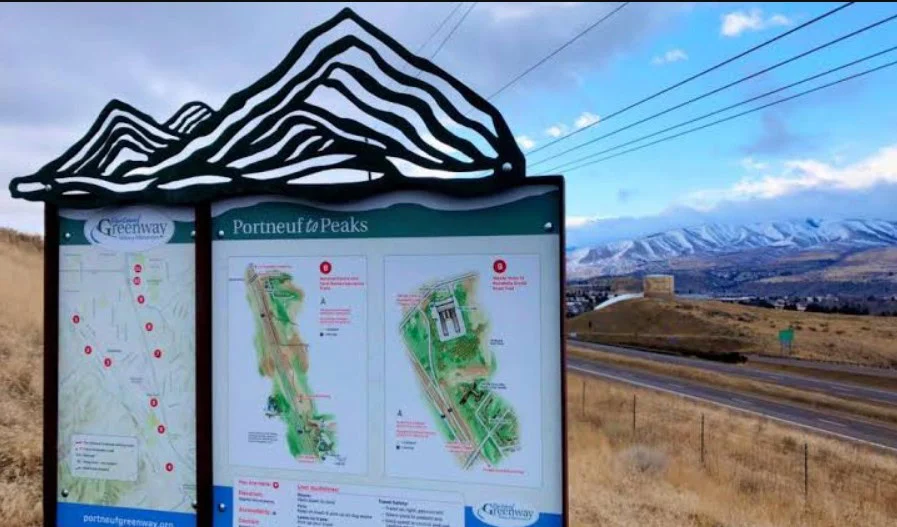
The Portneuf Greenway Trail threading its way through Pocatello and cause hard stops which can strain your transmission
5. Sharing the Crossing: What the Portneuf Greenway Means for Drivers Near Residential Intersections
Category High Priority
Does the Portneuf Greenway trail actually create a driving hazard where it crosses residential streets near West Pocatello and do these driving hazards put additional wear on my transmission?
The Portneuf Greenway is a rail-trail conversion that threads through Pocatello, carrying a steady stream of cyclists, joggers, and increasingly e-bike riders across residential intersections that were not originally built with that volume of trail traffic in mind [6]. A driver approaching one of these greenway crossings without expecting trail traffic can be forced into a sudden stop when a cyclist or group of pedestrians appears – a scenario that repeats often enough along a busy greenway crossing to be a genuine, recurring pattern rather than a rare surprise.
Slowing down and actively watching for trail traffic at known greenway crossings – rather than treating them like an ordinary residential intersection – protects against exactly this kind of unplanned hard stop, which continually stopping and starting hurt a transmission.
6. Seven Miles Out and Back: What Airport Shuttle and Rideshare Runs Really Add Up To
Category High Priority
I make regular airport runs to Pocatello Regional Airport – does that specific trip pattern actually matter for my transmission?
Pocatello Regional Airport sits about seven miles west of the city, meaning anyone doing regular airport drop-offs, pickups, or rideshare runs is making the same round trip repeatedly – a mix of in-town driving, a highway stretch, and then a full reversal back into the city, often on a tight schedule tied to a flight time [7]. Unlike a single daily commute that settles into one steady operating temperature, this back-and-forth pattern means the transmission is frequently transitioning between city driving, highway cruise, and city driving again within a single trip, multiple times a week for a regular airport driver.
If airport runs are a regular part of your driving – whether for work or for family – mentioning that specific back-and-forth pattern at your next service helps a technician account for a duty cycle that a simple mileage count would not capture.
7. The Pickup Line: What Repeated School-Zone Idling Does to a Transmission
Category Important
Does sitting in the school pickup line every day actually add up to meaningful wear, or is idling basically harmless for a transmission?
West Pocatello’s residential streets include school pickup and drop-off routines that repeat twice a day during the school year, and a carpool line means long stretches of sitting in gear – drive or park, repeatedly shifted – punctuated by short, low-speed advances as the line moves forward. That specific pattern, repeated daily for months at a stretch, concentrates a meaningfully different kind of wear into a school year than the same total time spent on a normal commute would.
If your daily routine includes regular carpool line duty, that repeated stop-and-creep pattern is worth mentioning at a service visit, even though the total mileage involved is small.
8. Sixteen Feet Wide, Eighty Feet Long: What Moving a Manufactured Home Through West Pocatello Actually Involves
Category Important
A manufactured home was moved into my neighborhood recently – is that kind of oversized towing actually a bigger deal for a tow vehicle’s transmission than a normal load?
Idaho’s oversize load regulations allow manufactured homes up to 80 feet long and 18 feet wide including eaves, requiring pilot car escorts, a minimum towing speed of 25 miles per hour, and substantial liability insurance specifically because of the scale and handling demands involved [8]. A tow vehicle rated and equipped for this kind of permitted move is operating at the extreme end of what a transmission is designed to handle – sustained maximum load, low sustained speed, and the kind of careful, continuous throttle modulation that differs entirely from ordinary trailer towing.
Anyone involved in this specialized kind of towing – not everyday drivers, but the professional operators who do it – relies on a transmission maintained to a standard well beyond typical passenger vehicle service.
A vehicle used for both family activities as well as for your work causes special stress on your transmisssion
9. Work Truck, Family Vehicle: What Home-Based Businesses in West Pocatello Put on One Set of Wheels
Category Important
I run a small business out of my home in West Pocatello and use the same vehicle for work and family errands – does mixing those two uses actually matter for my transmission?
Home-based contractors, landscapers, and small service businesses are a real part of West Pocatello’s residential character, and a single vehicle serving both business duty – loaded with equipment, making multiple job-site stops – and ordinary family errands the same week is absorbing two genuinely different duty cycles without ever getting a break between them. A transmission working under a loaded truck bed for a landscaping run in the morning and then handling a normal grocery trip that afternoon does not get the luxury of a maintenance schedule built around just one of those patterns.
If your vehicle pulls double duty between home-based business work and everyday family use, describing both sides of that use at your next service visit helps a technician recommend an interval that actually fits.
10. Highway In, Gravel Lot Out: What a Business Park Commute Really Involves
Category Medium Priority
I work at the business park near West Pocatello – does commuting from a highway drive straight into an industrial gravel lot actually matter for my transmission?
Employees working at the business park areas along West Pocatello’s Highway 30 and I-86 corridor often drive a highway-speed commute that ends abruptly in an unpaved or gravel parking area rather than a paved lot – a transition that asks a transmission to shift from sustained highway cruise directly into low-speed, loose-surface maneuvering with essentially no buffer between the two. That abrupt shift in surface and speed, repeated twice daily, is a meaningfully different pattern than either a pure highway commute or a pure in-town commute would produce on its own.
If your daily commute ends this way, mentioning the specific highway-to-gravel-lot transition at your next service helps account for a duty cycle that a standard commute description would miss.
11. Not the Same Machine: Why Golf Cart Maintenance Habits Don’t Transfer to a Real Transmission
Category Medium Priority
I’m used to the simple maintenance routine for my golf cart at Riverside – does that same casual approach work for my car’s transmission?
A golf cart’s simple electric or small gas drivetrain runs on a maintenance routine most owners handle themselves with minimal fuss, and it is an easy habit to unconsciously apply that same “check it once in a while” mindset to a full-size vehicle’s automatic transmission – a fundamentally more complex system generating far more heat, handling far more load, and requiring precisely formulated fluid that a golf cart never has to worry about. That casual mindset, harmless on a golf cart, can mean a transmission’s actual fluid needs go unaddressed simply because a golf cart’s low-maintenance reputation gets mentally transferred to a completely different kind of machine.
Treating your vehicle’s transmission on its own maintenance schedule – not by the standard your golf cart set – protects against a costly assumption.
12. Reading the Driveway: What a Stain Under Your Car Is Actually Telling You
Category Medium Priority
I noticed a reddish stain under my car in my Quinn Road driveway – how do I know if that’s actually a transmission problem or something else?
A reddish or pinkish fluid stain on a driveway is one of the clearest early warning signs a vehicle can give, since automatic transmission fluid is typically dyed red specifically to distinguish it from engine oil, coolant, or brake fluid at a glance – and catching that stain early, before the fluid level drops enough to affect shifting, is one of the cheapest possible interventions in a transmission’s entire service life. Many West Pocatello homeowners park in the same driveway spot daily, which actually works in their favor here: a consistent parking spot makes a new stain easy to notice precisely because it stands out against a familiar, clean patch of concrete.
Checking your regular parking spot periodically – not obsessively, just a glance now and then – is a free habit that can catch a developing leak before it becomes a breakdown.
13. The Warm-Up Habit That Isn’t Helping: What Idling in a Cold Driveway Actually Does
Category Lower Priority
I always let my car idle for several minutes before driving on cold West Pocatello mornings – is that actually protecting my transmission the way I think it is?
Warming up a modern, fuel-injected vehicle by idling in the driveway is a habit left over from older carbureted engines and does less than most drivers assume – while the engine idles, transmission fluid and differential fluid barely circulate at all, since neither one actually moves until the wheels turn, meaning a long driveway idle leaves your transmission just as cold as when you started it [9]. Automotive experts consistently recommend starting the engine, waiting only long enough for oil pressure to build – about 30 to 60 seconds – and then driving gently, since the transmission, engine, and tires all reach a safe operating temperature faster through gentle driving than through idling ever achieves.
If a long driveway warm-up has been part of your cold-morning routine, shifting to a shorter idle followed by gentle early driving actually gets your transmission to a safe temperature faster, not slower.
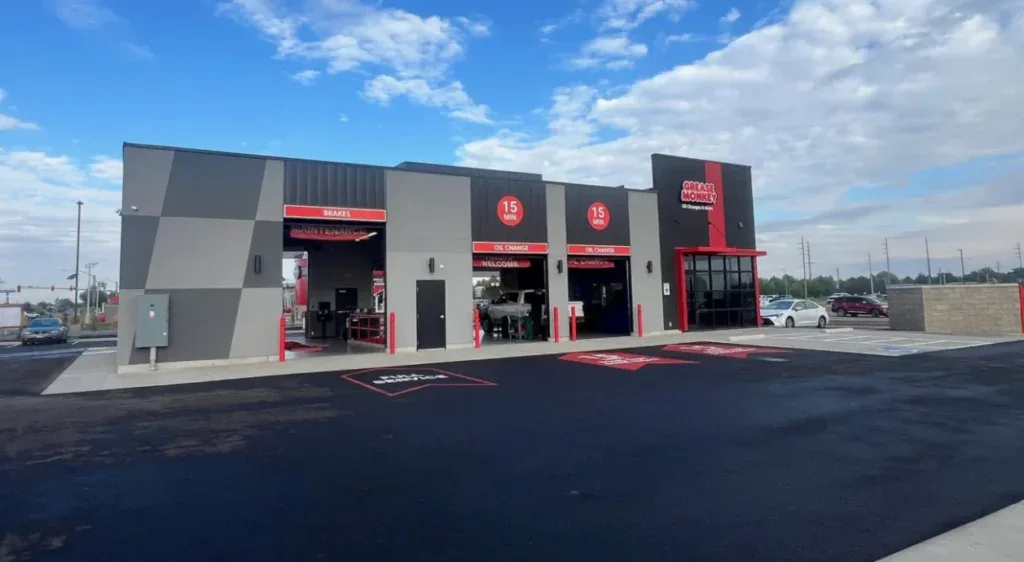
Pocatello is very fortunate in having not just one Grease Monkey, but two to chose from!
14. Two Locations, One City: What Having a Choice of Pocatello Shops Actually Means for You
Category Lower Priority
Grease Monkey has two locations in Pocatello now – does that actually make a practical difference for scheduling service on my vehicle and its transmission, or is it just a convenience talking point?
With locations on both Yellowstone Avenue and West Quinn Road, Pocatello drivers now have a genuine choice about which side of town fits their schedule on a given day – dropping a vehicle off near home before a West Pocatello workday, or near downtown and ISU on the other side of the city – without sacrificing the same ASE-certified technicians and national FullSpeed Automotive training standard at either location. That flexibility matters most on the days scheduling is tightest: a driver who cannot make time to cross town for service has a real, practical reason to put it off, and having a second, closer option removes that specific excuse.
Whichever side of Pocatello your day actually takes you, having two locations means transmission service fits your schedule instead of the other way around.
15. A Few Hundred Feet Makes a Difference: What Pocatello’s Bench-to-Bench Elevation Variance Means for Your Commute
Category Lower Priority
Does the elevation difference between different parts of Pocatello actually create different conditions for a transmission across a single commute?
Pocatello’s terrain rises from the valley floor up through a series of benches toward the surrounding foothills, and a commute that starts on a lower bench and ends on a higher one – or crosses from a sun-exposed stretch into a shaded canyon-adjacent section like Bannock Highway – can involve a real, if modest, temperature and grade variance within a single short trip. That variance is easy to overlook precisely because it happens within one city, on one commute, rather than as an obvious mountain drive – but a transmission still registers the difference in grade and ambient temperature even when a driver does not consciously notice it.
Being aware that your daily commute may cross more elevation and microclimate variance than it feels like helps put occasional unexplained fluid temperature findings at a service visit into context.
About Grease Monkey 710 West Quinn Rd, Pocatello, ID 83202
Grease Monkey’s West Quinn Road location is open Monday through Friday from 7:00 a.m. to 7:00 p.m. and Saturday from 8:00 a.m. to 5:00 p.m., closed Sundays – call (208) 789-2468 to check current bay availability. Beyond transmission fluid exchanges, the shop’s ASE-certified technicians handle the full range of drivetrain-adjacent services this side of Pocatello needs, including checks for forest-road and OHV trailer towing wear, business park commuters, and the shop’s signature 16-point inspection with every visit. The team serves West Pocatello’s residential neighborhoods, Mink Creek Canyon and Chinese Peak recreational drivers, Riverside Golf Course regulars, and everyone making the regular run out to Pocatello Regional Airport – backed by the location’s 4.6-star rating across more than 2,224 Google reviews.
Author Information
Author Bio – Phillip Paul Gilliam
Phillip Gilliam is a veteran journalist and former Editor-in-Chief with 50+ years of publishing experience and thousands of published articles. Specializing in automotive, trucking, and digital publishing, he creates authoritative, search-optimized content built on real-world expertise and editorial excellence. To learn more about Phil, visit http://www.phillipgilliam.com/about.html or contact Phil at [email protected]. He would love to hear from you!
[2] Idaho High Country; Visit Pocatello and Chubbuck. Bannock Highway, Mink Creek Canyon, and Scout Mountain Recreation Access. Available at: https://idahohighcountry.org/pocatello/ and https://visitpocatello.com/things-to-do/trails/. (Bannock Highway is accessed via Mink Creek Canyon south of Pocatello, leading to Mink Creek Group Site Campground and Scout Mountain recreation areas with unpaved Forest Service road access.)
[3] Idaho High Country; Visit Pocatello and Chubbuck. Chinese Peak/Blackrock Off-Highway Vehicle Trail System. Available at: https://idahohighcountry.org/pocatello/ and https://visitpocatello.com/things-to-do/trails/. (The Chinese Peak/Blackrock Trail system offers approximately 40 miles of designated routes for off-highway vehicle riding, mountain biking, and horseback riding near Pocatello.)
[5] Visit Pocatello and Chubbuck. Riverside Golf Course Location on Bannock Highway. Available at: https://visitpocatello.com/. (Riverside Golf Course is located at 3500 Bannock Highway, Pocatello, ID 83204.)
[6] Rails to Trails Conservancy. Idaho’s Portneuf Greenway. Available at: https://www.railstotrails.org/trailblog/idahos-portneuf-greenway. (The Portneuf Greenway is a rail-trail conversion carrying pedestrian, cyclist, and e-bike traffic through Pocatello, including across residential street intersections.)
We use cookies to improve your browsing experience on our website. By closing this banner or interacting with our site, you acknowledge and agree to our privacy policy.