15 Reasons Being Idaho's Gate City Never Lets a Pocatello Transmission Rest
Location: Pocatello, ID Topic: Grease Monkey Center #28 By: Phil Gilliam
An Authoritative Guide for Vehicle Transmission Health and Repair at the Crossroads of Southeastern Idaho
Grease Monkey 1055 Yellowstone Ave, Pocatello, ID 83201 Has Over 1,342 Google Reviews With A 4.7 Star Rating
A Note on Authority and Expertise: This article was researched and written by Phillip Paul Gilliam, a veteran journalist and former Editor-in-Chief with more than 50 years of publishing experience in automotive, trucking, and safety communications. The transmission guidance presented here is grounded in current SAE fluid-life standards, transportation infrastructure research, and manufacturer engineering research – not generic information.
The Grease Monkey at 1055 Yellowstone Ave, Pocatello, ID 83201, is part of the FullSpeed Automotive network, which services more than 5.2 million vehicles annually across 700-plus locations nationwide and generated over $542 million in 2026 revenue [1]. In 2025, 435 FullSpeed Automotive locations – including Grease Monkey franchises – were named CARFAX Top Shop Winners for verified customer satisfaction, and in 2026 Grease Monkey was recognized as an Entrepreneur Verified Franchise. Grease Monkey’s ASE-certified technicians bring that national training standard to a city built, quite literally, on being a crossroads.
Pocatello sits at the western entrance to the Portneuf Canyon, a location that earned it the nickname “Gate City” the moment the Utah and Northern Railroad arrived in the 1880s and turned a rail junction into a real town [2]. That railroad DNA never left – Union Pacific still runs a major crew-change and classification yard here, sitting at the junction of Interstate 15 and Interstate 86, a system interchange the Idaho Transportation Department rebuilt from the ground up as recently as 2025 [3]. Layer in Idaho State University and the Shoshone-Bannock Tribes’ Fort Hall Reservation just north of town, and Pocatello carries a genuinely unusual mix of rail, highway, tribal, and academic traffic patterns for a city of just under 60,000 people.
An Introduction to Transmission Survival in Idaho’s Gate City
Pocatello has never really been a destination in the way Rexburg is built around BYU-Idaho or Twin Falls is built around retail – it is a crossroads, and it has been one since before it was officially a city. The Oregon Short Line’s Montana and Idaho divisions met here, and the settlement that grew up around that junction is still organized the same way: Interstate 15 running north-south, Interstate 86 running west toward the Magic Valley, and Union Pacific’s mainline threading through the middle of it all, still a critical inland gateway connecting the Pacific Northwest to the Mountain West and Midwest [2]. That crossroads identity means Pocatello absorbs long-haul freight, university traffic, tribal land traffic, and a steady flow of skiers heading into the Portneuf Range – often on the same roads, often at the same time.
Most drivers think about their transmission only when it fails – and by then, the fix has usually jumped from a few hundred dollars to several thousand. That gap is not an accident of bad luck. It is math. Automatic transmission fluid follows a well-documented thermal curve: for every 20 degrees Fahrenheit the fluid runs above roughly 175 degrees F, its usable service life is cut in half, according to SAE and Allison Transmission engineering data. Fluid that would last 100,000 miles at 175 degrees F is finished at 25,000 miles by 220 degrees F, and drops to just 5,000 miles at 260 degrees F [4]. Pocatello adds its own local variables to that curve – a freshly rebuilt freeway interchange, a canyon-country ski access road unlike anything in a flatter town, and a rail yard whose crossing gates and crew schedules keep hours no ordinary commuter would recognize.
This guide walks through fifteen specific, Pocatello-grounded reasons your transmission deserves professional attention, organized from the most urgent warning signs to the more preventive, long-view maintenance decisions. Some of these – a car that suddenly won’t shift above a certain gear, one that won’t come out of Park at all, a pause before the car actually moves after you shift – are symptoms drivers everywhere ask about, but they carry their own local flavor here: a long freight train blocking the crossing gates near the rail yard, a switchback drive up to Pebble Creek, an older farm or work truck that has outlived its original vacuum lines. Each one closes with a specific, useful next step you can take at the Grease Monkey on Yellowstone Avenue.
Most Critical
1. Stuck at a Reduced Speed: What “Limp Mode” Actually Means When Your Transmission Won’t Shift Higher
Category Most Critical
My car suddenly won’t shift above a certain gear and feels like it’s holding back power – what’s actually happening, and is it safe to keep driving?
When a transmission control module detects a problem serious enough to risk further damage – a failed speed sensor, a faulty solenoid, dangerously low fluid, or a wiring fault feeding it bad data – many vehicles respond by entering a protective fail-safe state commonly called “limp mode,” locking the transmission in a low gear, capping engine RPM, and cutting available power until the underlying issue is addressed [5]. It is a deliberate design choice, not a random malfunction: the system is trading performance for protection, on the theory that a car limited to 30 or 40 miles per hour is far less likely to suffer a catastrophic transmission failure than one still trying to operate normally with a real problem underneath it.
Merging onto I-15 or I-86 at a fraction of normal power is its own hazard, which is exactly why limp mode should be treated as a “get it looked at now” signal rather than a “get to it eventually” one.
2. Won’t Budge From Park: What a Failed Shift Interlock Actually Locks Up
Category Most Critical
My car’s transmission won’t shift out of Park even with the engine running and my foot firmly on the brake – what would actually cause that?
Nearly every modern automatic transmission includes a shift interlock solenoid, a safety mechanism specifically designed to keep the gear selector locked in Park until the brake pedal is pressed and the ignition is on – and when that system fails, the shifter can stay locked even with the brake held down [6]. The most common single cause, by a wide margin, is not the solenoid itself but a failed brake light switch that never tells the interlock system the brake pedal is actually being pressed; a weak battery or a wiring fault can produce the identical symptom. Being stranded in a parking spot along Yellowstone Avenue or at a rail crossing waiting area with a car that physically will not leave Park is more than an inconvenience – it can leave a driver blocking traffic with no way to move.
A quick check of whether the brake lights actually illuminate when the pedal is pressed is often the fastest way to narrow down whether this is a simple switch problem or something deeper in the transmission’s electronics.
3. The Pause Before You Move: What a Multi-Second Delay Shifting Into Drive Actually Means
Category Most Critical
I waited for a long freight train to clear a crossing near the rail yard, then shifted my transmission into Drive – and there was a noticeable pause before my car actually started moving. Should that concern me?
Delayed engagement – a real, measurable pause between selecting a gear and the transmission actually taking hold – happens when the clutch packs responsible for making the car move do not receive hydraulic pressure quickly enough, most commonly because transmission fluid is low, degraded, or aerated, though a failing shift solenoid or worn internal components can produce the identical symptom [7]. The pattern matters for diagnosis: a delay that only shows up on a cold start often points to fluid draining back into the pan overnight, while a delay that happens both cold and hot – especially one followed by a harsh bang into gear – usually signals a more advanced pressure or internal wear problem. Pocatello’s rail crossings put a lot of local drivers through exactly the sequence that makes this symptom noticeable: a full stop, an extended wait, then an attempt to move promptly once the gates lift.
A delay that happens once might be nothing, but a delay that repeats every time you pull away from a full stop is worth having checked before it progresses to a harder-shifting problem.
4. The Shudder That Only Shows Up at Highway Speed: What’s Different About Cruising I-15 Versus Accelerating
Category High Priority
My car transmission shudders at a steady cruising speed on I-15, not when I’m accelerating or braking – is that a different problem than a shudder right when I start moving?
A shudder that appears specifically during steady highway cruising – typically in the 40 to 55 mile-per-hour range, often described as feeling like driving over rumble strips – points to potential transmission problems and the torque converter’s lock-up clutch failing to hold a clean, steady grip once it engages for cruising efficiency [8]. Instead of locking smoothly, a worn or fluid-glazed clutch slips slightly, grabs, then slips again, producing a rapid buzzing vibration that is distinct from a shudder felt only during the first second of accelerating from a stop – a genuinely different point in the shift cycle, with different components most likely responsible. Degraded or contaminated fluid is the single most common underlying cause, which is why an early, professional fluid exchange often resolves a cruise-speed shudder before it becomes a more expensive clutch problem.
A shudder that only appears at a steady highway speed on a stretch like I-15 or I-86 is worth mentioning specifically as a cruise-speed symptom, since it points a technician toward a different part of the diagnosis than a shudder felt while accelerating.
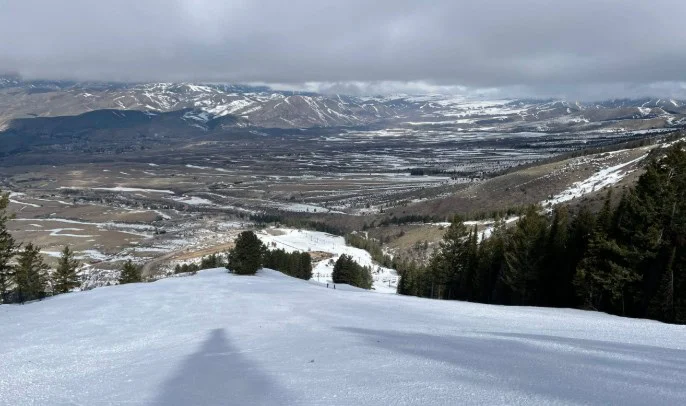
Driving to Pebble Creek to ski definitely puts a strain on your transmission
5. Switchback Season: What Pebble Creek’s Canyon Access Road Does to a Transmission
Category High Priority
Is the drive up to Pebble Creek Ski Area actually harder on a transmission than a normal mountain highway drive would be?
Pebble Creek Ski Area sits in the Portneuf Range near Inkom, offering 1,100 skiable acres and 2,200 feet of lift-served vertical on the slopes of Mount Bonneville – terrain reached by a narrow canyon access road with the tight turns and steady grade typical of a route built into a mountainside rather than over a mountain pass [9]. Unlike a long, sustained highway climb, this kind of narrow switchback route demands frequent low-gear engagement and repeated braking into tight turns, concentrating transmission stress into a shorter, more intense stretch of driving than a gradual highway grade would produce over the same elevation gain.
A vehicle that regularly makes the trip up to Pebble Creek benefits from a fluid check timed to ski season specifically, since the switchback driving pattern wears differently than ordinary in-town or highway miles.
6. The Jolt on Every Merge: What a Failing Transmission Mount Does When You Accelerate Hard Onto the Interstate
Category High Priority
My engine visibly rocks or lurches when I accelerate hard – especially merging onto I-15 or I-86 – is that actually connected to my transmission?
A transmission mount’s job is simple but critical: hold the transmission steady against the torque pulse it generates every time you accelerate, so that pulse transfers cleanly to the wheels instead of into the cabin. When a mount deteriorates, it can no longer absorb that pulse, and the transmission itself rocks excessively under load – producing a noticeable lurch or jerk that’s most pronounced during hard acceleration or merging onto a highway, along with vibration felt through the steering wheel, seat, or gas pedal [10]. A worn mount is a fundamentally different problem than an internal transmission failure, but left unaddressed it allows the whole drivetrain to move more than it was designed to, which accelerates wear on the very components it’s supposed to protect.
Because Pocatello’s crossroads location means most drivers merge onto a freeway on-ramp almost daily, a mount problem tends to announce itself quickly here – which also means it gets caught, and fixed, before it becomes a bigger issue.
7. When the Speedometer Lies: What a Failing Speed Sensor Does to Your Shift Points
Category Important
My speedometer needle jumps around or freezes, and my transmission’s shifts feel off too – could those two things actually be related?
A transmission’s output speed sensor feeds the transmission control module real-time data on how fast the vehicle is actually moving, and that same signal drives your speedometer – so when the sensor starts failing, both systems tend to show it at once: an erratic, frozen, or wildly inaccurate speedometer reading alongside shift timing that no longer makes sense, including delayed shifts, sudden hard downshifts, or a transmission that seems to hunt between gears without a clear reason [11]. Without accurate speed feedback, the transmission cannot optimize when to shift or when to lock the torque converter, which is why this single failed sensor can produce two symptoms that look completely unrelated to a driver but trace back to the exact same root cause.
A speedometer that suddenly stops making sense is worth mentioning at a transmission-focused visit, not just treating as an instrument cluster problem, since the same sensor very often drives both symptoms.
8. More Isn’t Better: Why a Well-Meaning DIY Fluid Top-Off Can Cause the Problem It Was Meant to Prevent
Category Important
I topped off my own transmission fluid because the level looked a little low, and now it shifts rough and there’s a new leak – could adding fluid actually cause that?
Overfilling an automatic transmission lets fluid come into contact with moving gears and shafts that should be running above the fluid line, churning it into a foam full of air bubbles – and because a transmission depends on precise hydraulic pressure to shift correctly, that aerated fluid can produce delayed engagement at startup, harsh or lurching gear changes, gear slippage under load, and even a refusal to complete upshifts at highway speed [12]. The excess pressure inside an overfilled system also has to go somewhere, and it commonly finds its way out through a seal or vent that was never designed to be a relief valve – which is exactly how a fluid top-off meant to fix a problem ends up creating a fresh leak instead.
A dipstick check done cold, on level ground, following the exact procedure in your owner’s manual is worth the extra few minutes it takes compared to guessing at “close enough.”
9. Sitting at the Gates: What Idling in Drive During a Long Freight Train Actually Does to Your Transmission
Category Important
I sit through a lot of long freight trains at crossing gates near Pocatello’s rail yard, engine running and foot on the brake the whole time – does that repeated waiting actually add wear to my transmission?
Keeping an automatic transmission in Drive with your foot on the brake holds the torque converter under constant, low-level pressure the entire time you’re stopped – and while occasional waiting isn’t considered a major concern on a healthy, modern transmission, a Union Pacific freight train blocking a crossing can run considerably longer than an ordinary red light, extending that pressure over several minutes rather than a matter of seconds [13]. What actually causes more measurable wear, according to transmission technicians, isn’t idling in Drive itself but repeatedly shifting between Neutral and Drive to relieve it, since that cycles the shift linkage and engagement components far more than simply holding one gear does. For a longer wait like a lengthy freight train, shifting to Park – rather than sitting in Drive or toggling to Neutral and back – is the setting that puts the least ongoing demand on the transmission.
Given how often a freight train can hold up traffic near the rail yard, knowing which gear to actually sit in during a long wait is a small habit that protects a transmission most drivers never think twice about.
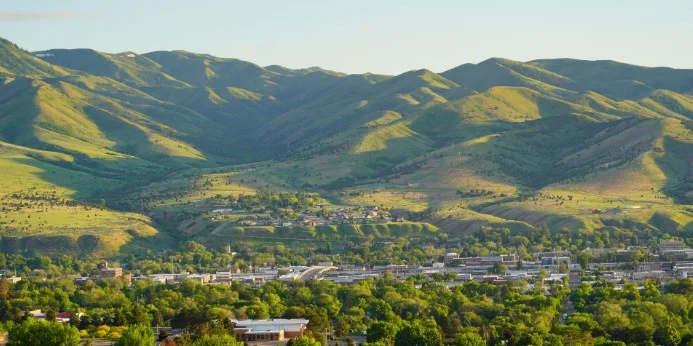
Pocatello is truly beautiful but the Pocatello hills are hard on your transmission
Medium Priority
10. Living on a Hillside: What Pocatello’s In-Town Grades Do to Everyday Driving
Category Medium Priority
I live in one of Pocatello’s hillside neighborhoods – does that kind of everyday in-town grade actually add up to real transmission wear?
Several of Pocatello’s older residential neighborhoods climb directly into the foothills surrounding the valley, meaning a genuine share of city residents face a meaningful grade on their own street every single day – not an occasional mountain drive, but a routine part of pulling out of the driveway and coming home. A transmission working a real incline twice a day, every day, as part of an otherwise ordinary commute accumulates a steady, low-level version of the same heat and load stress that a mountain highway produces in a single dramatic trip, just spread across years of routine driving instead.
If your daily route includes a real hillside grade, mentioning that at your next service – rather than describing your commute as simply “around town” – helps a technician account for wear that a flat-town driving pattern would not produce.
11. “Lifetime Fluid” Doesn’t Mean What It Sounds Like
Category Medium Priority
My owner’s manual describes my transmission fluid as “lifetime” fluid that never needs to be changed – is that actually true, or does it still wear out over time?
“Lifetime transmission fluid” is a genuinely common source of confusion, and the honest answer is that all transmission fluid degrades and eventually needs to be changed, regardless of what the label implies – the “lifetime” language typically traces back to a manufacturer’s warranty period rather than the actual usable life of the vehicle [14]. Some manufacturers do build fluids rated to last well past 100,000 miles under ideal conditions, but towing, mountain grades, extreme temperatures, and stop-and-go traffic all shorten that interval, and even a transmission described as “filled for life” benefits from a fluid change under demanding use. Skipping a change entirely on the assumption that “lifetime” means “never” is one of the more expensive misunderstandings a driver can make, since the eventual consequence is typically slipping gears or a much larger repair.
If your owner’s manual uses “lifetime” language and you’re not sure what interval actually applies to your driving, asking a technician to translate that into an actual mileage recommendation is worth five minutes of conversation.
12. The Vacuum Line You’ve Never Thought About: Why Older Trucks Shift Differently Than New Ones
Category Medium Priority
My older farm or work truck shifts really hard or seems to delay before upshifting – could a vacuum line actually be part of a transmission problem on an older vehicle?
Many older automatic transmissions – common on the kind of well-used farm and work trucks still in daily service around Bannock County – rely on a vacuum modulator valve mounted on the outside of the transmission, using engine vacuum through a rubber line to adjust shift firmness based on how hard the engine is working. When that vacuum line cracks or disconnects, a common failure point on an older vehicle, the transmission can shift unusually hard and late, revving the engine noticeably before finally upshifting, or in the other direction shift too soon and too weakly to handle a real load [15]. Because this component simply doesn’t exist on most modern transmissions – which rely on electronic sensors instead – it’s an easy thing for a shop unfamiliar with older equipment to overlook, even though it’s often a simple and inexpensive fix once correctly identified.
An older truck that shifts noticeably differently than it used to is worth having checked with its actual age and design in mind, rather than assuming every hard-shifting complaint has the same modern cause.
13. Not the Same Light: Why Pocatello Drivers Sometimes Confuse a Transmission Warning With the Overdrive Indicator
Category Lower Priority
My dashboard shows a light I don’t recognize near my gear selector – how do I know if that’s actually a transmission warning or something else entirely?
Many vehicles carry a dedicated transmission temperature or “check trans” warning light that looks similar to, and sits near, an overdrive or tow-haul mode indicator on the same part of the dashboard – and drivers unfamiliar with the distinction sometimes dismiss a genuine transmission warning as simply their overdrive setting toggling, especially on a vehicle they have not owned for long. That mistake matters because a transmission temperature warning is meant to prompt an immediate reduction in speed or load, not a shrug and a continued drive, and treating it as a routine indicator light can turn a manageable overheating event into a much more expensive failure.
Taking five minutes to confirm exactly what each light near your gear selector actually means – using your owner’s manual rather than a guess – is a small step that protects against a genuinely costly misunderstanding.
14. What a Salvage Title Inspection Actually Checks – and What It Doesn’t
Category Lower Priority
I bought a car with a rebuilt salvage title that passed Idaho’s required inspection – does that mean the transmission was specifically verified as sound?
Idaho requires a state-approved inspection before a salvage-titled vehicle can be issued a rebuilt title and legally returned to the road, and that inspection exists specifically to confirm the vehicle has been properly repaired and meets basic safety standards [16]. That inspection is a real and meaningful safety checkpoint, but it is not the same thing as a comprehensive transmission evaluation – a vehicle can pass its required salvage inspection while a transmission issue unrelated to the original damage goes unnoticed, simply because that was never the inspection’s specific focus.
A separate, transmission-focused check on any rebuilt-title vehicle – purchased in Pocatello or brought in from elsewhere – fills a gap that the state’s own safety inspection was never designed to close.
Driving extra miles every day mean that you should let your Grease Monkey tech know your driving habits
15. The Long Way From McCammon: What a Daily Highway Commute Into Pocatello Really Adds Up To
Category Lower Priority
I commute into Pocatello daily from a smaller surrounding town for work at ISU or elsewhere – does that kind of routine, established highway commute matter to my transmission differently than a shorter in-town drive?
Pocatello draws a steady stream of faculty, healthcare workers, and other professionals who live in smaller surrounding communities – McCammon, Inkom, Downey, Chubbuck – and commute in daily via Highway 30, Highway 91, or the interstate, often for years at a stretch. Unlike a short in-town drive that never lets fluid fully reach operating temperature, a longer, sustained highway commute keeps a transmission at a steady, elevated operating temperature for an extended period every working day – a different kind of long-term demand than either pure short-trip city driving or occasional highway use would produce on its own.
If your routine includes a genuine daily highway commute into Pocatello, that steady, sustained duty cycle is worth mentioning at your next service so a technician can weigh it against your vehicle’s actual mileage.
About Grease Monkey 1055 Yellowstone Ave, Pocatello, ID 83201
Grease Monkey’s Yellowstone Avenue location is open Monday through Friday from 7:00 a.m. to 7:00 p.m. and Saturday from 8:00 a.m. to 5:00 p.m., closed Sundays – call (208) 606-3209 to check current bay availability. Beyond transmission fluid exchanges, the shop’s ASE-certified technicians handle the full range of drivetrain-adjacent services Pocatello’s crossroads location demands, including checks for ski-season canyon driving, long-haul trucking equipment based out of the city’s freight terminals, and the shop’s signature 16-point inspection with every visit, alongside state-required salvage title inspection services. The team serves ISU’s students and faculty, Union Pacific and long-haul trucking crews, longtime Gate City residents navigating hillside neighborhoods, and everyone passing through on I-15 or I-86 – backed by the location’s 4.7-star rating across more than 1,342 Google reviews.
Author Information
Author Bio – Phillip Paul Gilliam
Phillip Gilliam is a veteran journalist and former Editor-in-Chief with 50+ years of publishing experience and thousands of published articles. Specializing in automotive, trucking, and digital publishing, he creates authoritative, search-optimized content built on real-world expertise and editorial excellence. To learn more about Phil, visit http://www.phillipgilliam.com/about.html or contact Phil at [email protected]. He would love to hear from you!
[3] Idaho Transportation Department. I-86 and I-15 System Interchange Project – Completion Summer 2025. Available at: https://itd.idaho.gov/project/i-86-and-i-15-system-interchange/. (The I-15/I-86 system interchange in the Pocatello-Chubbuck metropolitan area was rebuilt, replacing aging bridge structures and improving turning movements, with construction completed in summer 2025.)
[5] YouCanic; AutoZone. Vehicle Transmission Stuck in Limp Mode: Causes and Diagnosis. Available at: https://www.youcanic.com/vehicle-stuck-limp-mode-problems-reset/ and https://www.autozone.com/diy/electrical/what-is-limp-mode. (Limp mode is a protective fail-safe state triggered by the transmission control module in response to failed sensors, low or contaminated fluid, solenoid problems, or wiring faults; it caps engine RPM, limits speed, and locks the transmission in a low gear to prevent further damage.)
[13] AOL Lifestyle. Your Transmission Hates These Common Driving Habits. Available at: https://www.aol.com/lifestyle/transmission-hates-common-driving-habits-145646589.html. (Holding an automatic transmission in Drive with the brake applied places continuous low-level pressure on the torque converter; repeatedly shifting between Neutral and Drive to avoid this causes more wear on shift linkage components than simply holding one gear during a stop.)
[16] Idaho Transportation Department. Salvage Vehicle Inspection and Rebuilt Title Requirements. Available at: https://itd.idaho.gov/dmv/registrations-plates-titles/salvage-vehicles/. (Idaho requires a state-approved inspection before a salvage-titled vehicle can be issued a rebuilt title; the inspection confirms proper repair and basic road safety, not a comprehensive component-by-component evaluation.)
We use cookies to improve your browsing experience on our website. By closing this banner or interacting with our site, you acknowledge and agree to our privacy policy.