15 Reasons Elizabeth, Colorado Ranch and Farm Vehicles Fail Their Transmissions Before Their Owners Notice
Location: Elizabeth, CO Topic: Grease Monkey Center #1497 By: Phil Gilliam
An Authoritative Guide for Vehicle Transmission Health and Repair in Elbert County’s Ranching Heartland
Grease Monkey 712 East Kiowa Avenue, Elizabeth, CO 80107 Has Over 116 Google Reviews With A 4.8 Star Rating
A Note on Authority and Expertise: This article was researched and written by Phillip Paul Gilliam, a veteran journalist and former Editor-in-Chief with more than 50 years of publishing experience in automotive, trucking, and safety communications. The transmission guidance presented here is grounded in current SAE fluid-life standards, engineering research on towing and drivetrain stress, and local Elbert County records – not generic information.
The Grease Monkey at 712 East Kiowa Avenue, Elizabeth, CO 80107, is part of the FullSpeed Automotive network, which services more than 5.2 million vehicles annually across 700-plus locations nationwide and generated over $542 million in 2026 revenue. In 2025, 435 FullSpeed Automotive locations – including Grease Monkey franchises – were named CARFAX Top Shop Winners for verified customer satisfaction, and in 2026 Grease Monkey was recognized as an Entrepreneur Verified Franchise. Grease Monkey’s ASE-certified technicians bring that national training standard to a ranching and farming community whose vehicles work harder, and differently, than the average suburban commuter’s.
Elizabeth sits at roughly 6,532 feet of elevation in Elbert County, a town of about 1,675 people built on cattle ranching, horse breeding, and the kind of unpaved county roads that never show up in a standard maintenance schedule. Elbert County raises more than 30,000 head of cattle and ranks among Colorado’s top producers of horses and draft animals, and the Elizabeth Stampede has drawn ranching families into town every June since 1988. That combination of gravel roads, livestock trailers, and long hauls to Denver or Colorado Springs puts a distinctly different kind of strain on a transmission than city driving ever does.
An Introduction to Transmission Survival in Elbert County’s Ranching Country
Elizabeth does not behave like the suburbs pressing in around it from Parker and Castle Rock, and neither does the wear it places on a vehicle’s drivetrain. Incorporated in 1890 along the banks of Running Creek, Elizabeth has grown from a sawmill and cattle-ranching outpost into a town of roughly 1,675 residents that still measures its identity in horses, hay, and open range rather than shopping centers. The Grease Monkey at 712 East Kiowa Avenue sits in the middle of that working landscape – minutes from the Elizabeth School District C-1 campuses that serve about 2,400 students, a short drive from Casey Jones Park and the Elizabeth Stampede rodeo grounds, and surrounded by the long gravel driveways and county roads that define rural Elbert County life.
Most drivers think about their transmission only when it fails – and by then, the fix has usually jumped from a few hundred dollars to several thousand. That gap is not an accident of bad luck. It is math. Automatic transmission fluid follows a well-documented thermal curve: for every 20 degrees Fahrenheit the fluid runs above roughly 175 degrees F, its usable service life is cut in half, according to SAE and Allison Transmission engineering data. Fluid that would last 100,000 miles at 175 degrees F is finished at 25,000 miles by 220 degrees F, and drops to just 5,000 miles at 260 degrees F [1]. Elizabeth’s driving environment – washboard gravel roads, horse and stock trailers, exposed high-plains temperature swings, and a 40-mile haul to Denver with no interstate in between – pushes transmission fluid toward that hot end of the curve in ways a city commute never would.
This guide walks through fifteen specific, Elizabeth-grounded reasons your transmission deserves professional attention, organized from the most urgent safety risks to the more preventive, long-view maintenance decisions. Some of these will sound familiar if you have run cattle or hauled horses out of this town for more than a season. Others – like what a February grassfire evacuation does to a truck that has not moved in months, or why your new truck’s missing dipstick is not actually good news – probably will not. Each one closes with a specific, useful next step you can take at the Grease Monkey on East Kiowa Avenue.
Most Critical
1. The Stampede Haul: How an Overloaded Horse Trailer Cooks a Torque Converter Without a Single Hill
Category Most Critical
Can towing a horse trailer overheat my transmission even on flat ground around Elizabeth?
Flat ground is more forgiving than a mountain grade, but it does not make overloading a horse trailer safe – manufacturer tow ratings are built around sustained performance requirements, and a factory transmission cooler integrated into the radiator can simply be overwhelmed by extra weight regardless of terrain [2]. Horses add a complication flat cargo does not: live animals shift their weight constantly and carry it high, both of which put more sustained demand on a tow vehicle’s engine and transmission than a stationary load of the same total weight. For ranch families hauling to the Elizabeth Stampede grounds at Casey Jones Park, the Elbert County Fairgrounds, or overnight stabling at the Messer Arena in Kiowa, that demand is a routine part of life, not an occasional road trip.
Exceeding a tow rating, even slightly, forces the torque converter to work harder to move the load, generating heat that breaks down transmission fluid faster and accelerates clutch slippage over time [2]. Staying at least 10 to 15 percent below your vehicle’s maximum tow rating, and confirming your cooler setup is adequate for horse trailer duty specifically, is the kind of margin that protects a transmission ranch families depend on every week, not just on Stampede weekend.
2. The Washboard Effect: How Elizabeth’s Gravel Roads Shake Transmission Sensors Loose
Category Most Critical
Could driving my county’s gravel and washboard roads every day actually damage my transmission’s electronics?
Many Elizabeth properties sit at the end of long gravel driveways or unpaved county roads, and the constant, rhythmic jarring of washboard surfaces does real damage over time – not to the transmission’s internal gears directly, but to the electrical connectors and sensors a modern transmission depends on to shift correctly. Vibration gradually loosens electrical connectors, degrades contact surfaces, and can wear through wire insulation at chafe points, producing exactly the kind of intermittent, hard-to-diagnose electrical faults that a transmission control module reads as bad sensor data [3]. A flickering warning light or a transmission that occasionally hesitates or shifts oddly, then seems to fix itself, is a classic sign of a connection that no longer holds firm rather than a mechanical failure.
This is a genuinely different failure pattern than what a city shop sees regularly, and it means a rural vehicle deserves a specific check most standard inspections skip: a visual look at transmission wiring harnesses and connector points for chafing, corrosion, or loosened terminals, not just a fluid level check. If your vehicle has developed an intermittent shifting quirk that seems to come and go with no clear pattern, washboard-road vibration is worth ruling out early.
3. When the Evacuation Order Comes: What a Grass Fire Response Reveals About a Neglected Transmission
Category Most Critical
If I ever needed to evacuate quickly because of a grass fire, could my vehicle’s transmission actually let me down?
Elbert County’s open grassland and cultivated fields are genuinely vulnerable to fast-moving wildfire – in February 2026, a wind-driven blaze along County Road 169 near Matheson grew to an estimated 5,000 to 10,000 acres in wind gusts up to 55 miles per hour, triggering evacuation orders across Elbert and Lincoln counties, and the Elizabeth Fire Protection District covers 111 square miles specifically because this kind of fast grassfire risk is a routine part of life here [4]. An evacuation is exactly the moment a vehicle cannot afford a slow leak, a hesitant shift, or a transmission that has been quietly degrading because it only gets driven occasionally.
A secondary vehicle, an older truck kept mainly for hauling or hunting season, or any vehicle that sits for extended stretches between drives is precisely the kind of transmission most likely to have a problem nobody has noticed – low fluid, a slow leak, or a hardened seal – because it simply is not driven enough to reveal it under normal conditions. Treating every vehicle in the household as a potential evacuation vehicle, checked and ready rather than assumed reliable, is a meaningfully different standard than most drivers apply to a truck that mostly sits in the barn.
4. Dust Country: Why Your Transmission Cooler’s Fins Matter as Much as Your Air Filter
Category High Priority
Does the dust from Elizabeth’s dirt roads actually affect how well my transmission stays cool?
A transmission cooler depends entirely on unobstructed airflow across its fins to shed heat, and the dust and debris that come standard with Elbert County’s gravel roads accumulate on those fins the same way they accumulate on a radiator – gradually, invisibly, and with real consequences. A radiator or cooler with just 50 percent fin blockage can lose up to 40 percent of its cooling capacity, and once dirt and contamination reduce fluid flow through the cooler itself, ATF cooling efficiency deteriorates further on top of the airflow loss [5]. A transmission that is quietly running 20 or 30 degrees hotter than it should because of a dust-clogged cooler is aging on the same accelerated curve as one towing overweight on a mountain grade – it just does not announce itself as dramatically.
Unlike an air filter, a transmission cooler is not something most owners think to inspect at all, let alone clean, which makes it an easy problem to overlook for years on a rural vehicle. A periodic visual check and gentle cleaning of the cooler fins costs little and directly protects fluid life on any vehicle that spends real time on Elizabeth’s unpaved roads.
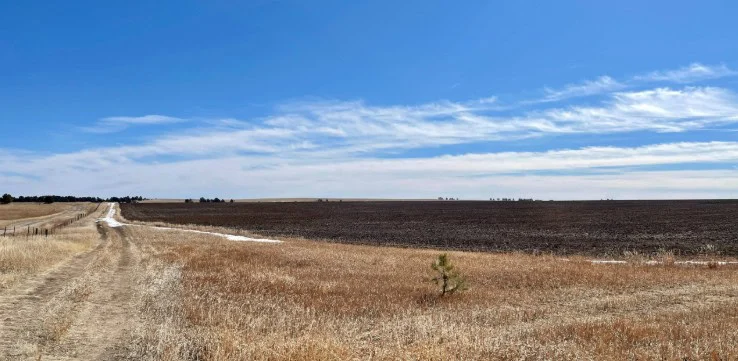
Elizabeth Colorado’s open plains without many trees as a buffer can impact your transmission
5. No Trees, No Buffer: What Elizabeth’s Open-Plains Temperature Swings Do to Transmission Fluid
Category High Priority
Does Elizabeth’s wide-open, exposed terrain actually put extra stress on my transmission compared to a more sheltered area?
Elizabeth’s high-plains setting – open grassland with little tree cover, sitting above 6,500 feet – means vehicles here experience wider and more frequent temperature swings than a sheltered, tree-lined suburb ever would, from summer afternoons well into the 90s to nights that drop sharply once the sun goes down. Every one of those swings puts transmission fluid through an expansion-and-contraction cycle, and fluid degradation research shows the underlying oxidation process depends on cumulative time spent at elevated temperature, not solely on mileage or a single dramatic heat event [6]. A vehicle that spends its life under Elizabeth’s open sky, without windbreaks or urban shade to moderate the swing, is accumulating that oxidation stress every single day, regardless of how far it is actually driven.
This is a slow, cumulative effect rather than a sudden failure, which is exactly why it is easy to miss. A fluid check that accounts for time and exposure, not just an odometer reading, is a more accurate way to judge service needs for a vehicle that lives outdoors on an Elbert County property.
6. The Backyard Fix That Costs More Than the Shop Visit: Wrong Fluid, Wrong Filter
Category High Priority
I like to do my own basic maintenance – is there a real risk to servicing my own transmission at home?
Rural self-reliance is part of Elbert County’s character, and plenty of Elizabeth vehicle owners handle their own oil changes and basic upkeep without issue. Transmission service is a different category of risk, though, because a small mistake is far more expensive than it looks. Using anything other than the exact fluid specification a manufacturer calls for can cause torque converter shudder within days, and installing the wrong filter or an incorrectly seated gasket can produce a slow leak that goes unnoticed for months on a truck already caked in road dust that hides drips [7]. Unlike engine oil, transmission fluid interacts with friction modifiers and clutch materials that are far more sensitive to an incorrect formulation than most owners realize.
None of this means DIY maintenance is off the table – it means transmission-specific service benefits from confirming the exact manufacturer specification before buying fluid off a shelf, something a shop check takes only a few minutes to verify against your specific make, model, and drivetrain configuration.
7. The Driveway Bind: Why Running 4WD on Your Own Gravel Lane Can Damage the Drivetrain
Category Important
I keep my truck in 4WD most of the time on my property – could that actually be hurting my transmission?
Part-time four-wheel-drive systems are built to lock the front and rear axles together, which works exactly as intended on loose, slippery surfaces where the tires can slip slightly to compensate for a turn. On a hard-packed gravel driveway or a dry county road, though, that same locked system creates a real problem: the outer wheels naturally need to travel farther than the inner wheels through any turn, and with no slip available to absorb that difference, the drivetrain binds under load – a condition called driveline windup [8]. Left unaddressed, that repeated binding forces gears, bearings, and internal components in the transfer case and differentials beyond their design tolerances, and can produce hard steering or an unmanageable ride as a warning sign before something actually breaks.
For Elizabeth properties with long, hard-packed driveways or well-maintained gravel lanes, the instinct to leave 4WD engaged “just in case” is understandable but often unnecessary and occasionally costly. Four-wheel drive belongs in genuinely loose or slippery conditions – mud, snow, or deep gravel – not as a default setting for a dry, firm surface.
8. The Truck That Came With the Ranch: Why an Inherited Vehicle’s History Matters More Than Its Mileage
Category Important
I inherited a family truck with no real service records – should I be worried about my transmission?
A vehicle passed down within a ranching family – a grandfather’s work truck, a stock trailer hauler kept “in case” – often comes with genuine sentimental and practical value but little to no documented service history, and that gap matters more for a transmission than almost any other component. Slipping, delayed shifts, shuddering, or hard engagement into drive or reverse are the classic warning signs of a transmission that has gone too long without attention, and without records, there is no way to know whether the previous owner ever addressed a developing issue or simply drove around it for years [9]. Vehicles with documented maintenance schedules and timely servicing consistently prove more reliable than similar vehicles with no paper trail, regardless of how well-built the original truck was.
Establishing a baseline the moment a family vehicle changes hands – even informally, even within the family – is the single most useful thing an inheriting owner can do. It turns an unknown into a known condition, and starts a documented record for whatever comes next, whether that is years more of ranch use or an eventual sale.
9. Running the Baler From the Driveway: What PTO Idle Time Does to a Transmission
Category Important
I run farm equipment off my truck’s power take-off while it idles – does that affect my transmission?
A power take-off system draws power directly from a running engine to operate mounted or towed farm equipment – post-hole augers, hydraulic pumps, wood chippers, irrigation equipment – and using it typically means leaving a truck idling in place, sometimes for extended stretches, while the engine works but the vehicle goes nowhere [10]. An idling engine under load generates heat the same way driving does, but without the airflow a moving vehicle gets across its radiator and transmission cooler, that heat has fewer ways to dissipate. For a truck sitting still with the transmission in park or neutral while a PTO-driven implement runs, that combination – real engine load, minimal cooling airflow – is a heat-soak scenario most owners never connect to transmission health at all.
This is not a reason to avoid PTO use, which is a genuinely practical tool on a working property. It is a reason to treat extended PTO sessions the way a shop treats towing: as added thermal load that is worth factoring into your fluid service interval, particularly on equipment used regularly through haying or harvest season.
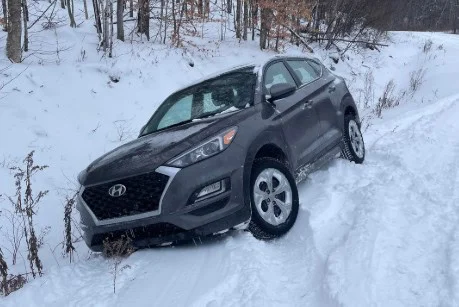
Getting stuck in a snowdrift and trying to spin your tires to get out can damage your transmission if you are not careful
Medium Priority
10. Stuck in the Drift: Why Spinning Your Wheels on an Unplowed County Road Is a Transmission Emergency, Not Just an Inconvenience
Category Medium Priority
When my truck gets stuck in a snowdrift and the wheels spin, could that actually damage my transmission?
Elizabeth’s county roads are not always plowed as quickly as state highways, and getting stuck in a drift is a routine winter experience for plenty of local drivers – but spinning the wheels to try to power out of it is genuinely dangerous for an automatic transmission specifically. Transmission fluid temperature can climb past 260 degrees Fahrenheit within minutes of sustained wheel spin, and once heat becomes severe, seals, gaskets, and clutch material begin to degrade while hard internal parts start to warp [11]. Rocking between drive and reverse to break free compounds the damage, because each gear change engages clutch packs and bands while they are already spinning, generating additional slip and heat with every attempt.
The safer approach is a hard limit: stop trying to power out after 10 to 15 minutes, and treat a sharp or acrid burning smell as an immediate stop signal, not a reason to try harder. A transmission repair from prolonged wheel spin can run well into the thousands of dollars – a genuinely avoidable cost compared to waiting for a tow or traction assistance.
11. The Flatbed Run to the Fairgrounds: When Hauling Equipment Quietly Exceeds Your Tow Rating
Category Medium Priority
I use a flatbed trailer to move a tractor or ATV sometimes – how do I know if I’m actually over my truck’s transmission tow rating?
Farm and ranch equipment adds up fast on a flatbed trailer, and it is easy to underestimate a loaded weight when the cargo is a familiar piece of equipment rather than an unfamiliar number on a sticker. Exceeding a truck’s rated towing capacity forces the transmission to work harder than it is built for, generating extra heat that breaks down fluid and accelerates clutch slippage and torque converter wear, and the damage compounds with every overloaded trip rather than announcing itself on the first one [12]. Brakes, tires, and suspension take on added strain at the same time, but the transmission is often the component that fails first and costs the most to repair.
Before hauling a tractor, side-by-side, or other equipment on a flatbed, a quick weight check against your specific truck’s tow rating – not just a general sense that “it’s always handled it before” – is worth the five minutes it takes, especially on a truck that makes this run regularly.
12. The Truck That Barely Moves: Why Low Mileage Doesn’t Mean Low Risk
Category Medium Priority
My second truck barely gets driven – does it still need transmission service even with so few miles on it?
Transmission fluid breaks down through oxidation, a chemical process driven primarily by cumulative time at elevated temperature rather than mileage alone – meaning a low-mileage vehicle that spends long stretches parked outdoors, exposed to Elizabeth’s wide temperature swings, can still need service on a calendar-based schedule even if the odometer barely moves [6]. Fluid that reaches a certain level of acid buildup is considered functionally at the end of its useful life regardless of how few miles accompanied that degradation, and heat exposure while sitting – not just heat generated while driving – counts toward that clock.
A spare truck, a hunting-season vehicle, or a backup hauler kept mostly parked is exactly the vehicle owners are least likely to think about proactively, precisely because low mileage feels like low risk. Treating a rarely-driven vehicle on a time-based interval, rather than assuming its low odometer reading means it is essentially new, protects it for the day it actually gets called into service.
13. Keeping the Buses Running: What a Small District’s Fleet Can Teach Every Truck Owner
Category Lower Priority
Does Elizabeth School District’s own vehicle fleet actually follow the same transmission maintenance advice given to individual truck owners?
Elizabeth School District C-1 serves roughly 2,400 students across five schools, and like any small district, its bus and support-vehicle fleet depends on a consistent preventive maintenance program to stay reliable and avoid the kind of transmission failure that can cost $6,000 to $8,000 to repair on a single vehicle [13]. Small fleets – the kind run by one fleet manager and a couple of mechanics rather than a large dedicated department – rely on the same principle that protects any individual truck: routine checklist-based inspections that catch a developing problem before it becomes a breakdown, rather than reacting only after a vehicle fails.
The lesson scales down well to a single-vehicle household or ranch operation. A simple, consistent inspection schedule, followed without exception, does more for long-term reliability than an expensive one-time repair ever will – whether the vehicle in question is a 72-passenger bus or a personal truck making the same Kiowa Avenue commute every week.
14. No Dipstick, No Problem? Why Your New Truck’s “Sealed” Transmission Still Needs Attention
Category Lower Priority
My newer truck doesn’t even have a transmission dipstick – does that mean I never have to worry about the fluid?
Ranchers trading in an older truck with a familiar dipstick for a newer model are often surprised to find no way to check transmission fluid themselves at all. Manufacturers market these sealed transmissions as having “lifetime” fluid, but that term typically describes the vehicle’s warranty period – usually around five years or 100,000 miles – not the fluid’s actual working life, and the fluid still oxidizes with heat exactly like any other transmission fluid [14]. The dipstick was removed specifically because these systems use tighter tolerances that are more sensitive to contamination, and checking the level correctly requires a shop lift, a specific fluid temperature, and a check plug accessed from underneath the vehicle – not something to attempt in a driveway.
The absence of a dipstick is easy to mistake for the absence of a maintenance need, and that assumption is exactly backwards. A sealed transmission still benefits from a scheduled professional check; it just requires a shop visit to do it correctly rather than a five-minute driveway glance.
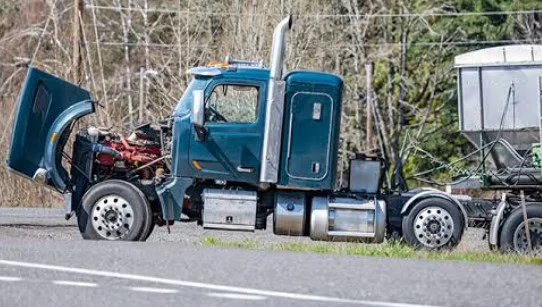
When your farm vehicle’s transmission goes out and you miss your haul, it can really hurt your bottom line.
15. Forty Miles From the Nearest Dealer: Why Elizabeth Drivers Pay More for a Delayed Transmission Problem
Category Lower Priority
Does living farther from a dealership actually make transmission problems more expensive to deal with here?
Rural distance changes the math on a breakdown in ways that suburban drivers rarely have to consider. Towing costs run higher per mile in rural areas simply because fewer tow trucks cover more ground, and a dealership’s towing coverage is often capped at around 15 miles or the nearest qualified shop – whichever is shorter – which can mean a breakdown on a lonely stretch outside Elizabeth drops a vehicle at an unfamiliar shop nowhere near home rather than somewhere trusted [15]. A transmission problem caught early, before it strands a vehicle 40 miles from Denver with no interstate shoulder in between, avoids that entire chain of added cost and inconvenience.
For Elizabeth’s ranching and farming community, where a broken-down vehicle can mean a missed haul, a missed shift, or livestock left waiting, the case for catching a transmission problem at the first symptom rather than waiting for a breakdown is stronger than it is almost anywhere else in the metro area.
About Grease Monkey 712 East Kiowa Avenue, Elizabeth, CO 80107
Grease Monkey’s Elizabeth location on East Kiowa Avenue is open Monday through Friday from 8:00 a.m. to 6:00 p.m. and Saturday from 8:00 a.m. to 5:00 p.m., closed Sundays, with same-day and walk-in service available for most transmission fluid and inspection needs – call (720) 776-1854 to check current bay availability. Beyond transmission fluid exchanges, the shop’s certified technicians handle the full range of drivetrain-adjacent services this ranching and farming community needs, including 4WD and transfer case service for the area’s working trucks, cooling system work that directly supports transmission temperature control on gravel roads and towing routes alike, and the shop’s signature 16-point inspection with every visit. The team serves ranching and farming families throughout Elbert County, students and staff connected to Elizabeth School District C-1, and Stampede-season visitors hauling horses and livestock through town every June – backed by the location’s 4.8-star rating across more than 116 Google reviews, one of the highest-rated shops in the area.
Author Information
Author Bio – Phillip Paul Gilliam
Phillip Gilliam is a veteran journalist and former Editor-in-Chief with 50+ years of publishing experience and thousands of published articles. Specializing in automotive, trucking, and digital publishing, he creates authoritative, search-optimized content built on real-world expertise and editorial excellence. To learn more about Phil, visit http://www.phillipgilliam.com/about.html or contact Phil at [email protected]. He would love to hear from you!
[18] Elizabeth Stampede Rodeo Association. Elizabeth Stampede History and Facilities. Available at: https://www.elizabethstampede.com/. (PRCA-sanctioned rodeo since 1988, held annually each June at Casey Jones Park; stabling available at the Elbert County Fairgrounds and Messer Arena in Kiowa.)
We use cookies to improve your browsing experience on our website. By closing this banner or interacting with our site, you acknowledge and agree to our privacy policy.