Top 15 Reasons to Have Your Vehicle's Brake System Serviced Regularly At Grease Monkey, N. 2nd East, Rexburg, Idaho
An Authoritative Safety Guide for Drivers in the “Athens of Idaho” — Gateway to Yellowstone
Grease Monkey 582 N 2nd E, Rexburg, ID 83440 Has over 2,460 Google Reviews With A 4.7 Star Rating
About This Article — EEAT Statement: This article is researched and written by a veteran automotive journalist and former Editor-in-Chief with more than 50 years of publishing experience, drawing exclusively on peer-reviewed safety research, federal transportation data, and industry-verified technical sources. The content is further supported by the professional expertise of Grease Monkey at 582 North 2nd East, Rexburg, Idaho 83440 — a trusted location of FullSpeed Automotive, one of the nation’s largest franchisors of automotive aftermarket services. FullSpeed Automotive operates more than 930 locations nationwide, generated over $542 million in annual revenue, and serviced more than 5.2 million vehicles in 2025. The Grease Monkey team in Rexburg employs ASE-certified technicians who understand the specific and often extreme demands that eastern Idaho’s climate, terrain, and unique community character place on brake systems throughout the year. Every factual claim in this article is sourced, numbered, and linked to a verifiable external reference. This is trustworthy, authoritative content built for drivers who deserve nothing less.
Introduction
Rexburg, Idaho, sits atop a volcanic plateau at 4,865 feet above sea level on the Snake River Plain — one of the most dramatically exposed locations in the American West. [1] To the east, the Teton Range rises sharply, including Teton Pass at 8,431 feet with grades as steep as 10%. To the north, the St. Anthony Sand Dunes sprawl across 10,600 acres of shifting white quartz sand. To the west, US Highway 20 threads through open agricultural plain toward Island Park, carrying a continuous mix of regional traffic, tourist-bound RVs, and logging trucks toward Yellowstone National Park’s West Entrance. And in the center of it all — bounded by the 400-acre campus of Brigham Young University–Idaho with its fall enrollment of 24,450 students and the steady rhythm of a community growing faster than almost any other in the state — sits the city whose roads, climate, and community character make one truth unavoidable: in Rexburg, your brake system is tested differently than anywhere else in Idaho. [3]
Temperature is the first and most obvious factor. January average low temperatures in Rexburg reach 13°F, with extreme cold snaps regularly pushing well below zero. [1] These temperatures do things to brake fluid, rotor metal, caliper seals, and pad compounds that drivers in warmer climates never encounter — and that many Rexburg drivers, particularly the tens of thousands of BYU-Idaho students who arrive from California, Arizona, and other warm-weather states, may have never experienced before. A vehicle maintained for Phoenix driving is not a vehicle prepared for a Rexburg January. Add to that the agricultural economy of Madison County — with its potato harvest trailers, farm equipment convoys, and seasonal road conditions — and the Yellowstone corridor traffic on US-20 with its mix of speeds, vehicle sizes, and unfamiliar-territory drivers, and the picture of Rexburg’s unique brake demands becomes very clear.
What follows is a rigorously researched, locally specific examination of the top 15 reasons every Rexburg-area driver should schedule regular brake service — ranked from the most urgent to the most long-term, and tied in each case to the actual roads, landmarks, communities, and seasonal rhythms that define life in Madison County. Nearly 22% of all vehicle defect-related crashes in the United States involve defective brakes. [4] In Rexburg’s environment, that statistic is not abstract. It lives on Highway 20 between Rexburg and Ashton, on the approaches to Teton Pass from Driggs, on the flat open county roads north of Sugar City where windblown black ice forms without warning, and on the campus-edge streets where thousands of student drivers navigate daily in vehicles that may never have been professionally inspected. This article was written for those drivers. Read it with your own vehicle in mind — and then visit the Grease Monkey team on North 2nd East, because Rexburg’s roads are no place for a brake system that’s overdue for service.
1. Extreme Cold and Brake Fluid Viscosity: When Sub-Zero Temperatures Slow Your Stopping Power
Category: Most Critical – When it gets really cold, does my brake fluid thicken, and if so, how does that affect my vehicle brakes?
Brake fluid is the hydraulic medium through which your foot’s pressure on the pedal is converted into stopping force at all four wheels. It is engineered to maintain consistent viscosity — the measure of its flow resistance — across a broad temperature range. But that range has limits, and in extreme cold, brake fluid behavior changes in ways that directly affect stopping performance. Research and industry data document that at temperatures approaching -22°C (-8°F), brake fluid begins to thicken significantly, impeding its flow through brake lines and into caliper pistons. [2] For a driver applying brakes in an emergency, the result is a perceptible delay in hydraulic pressure reaching the calipers — a delay that translates directly into extended stopping distance. The problem compounds in modern vehicles equipped with ABS: the anti-lock system’s electronic modulator valves pulse at 10 to 15 times per second, and those rapid-cycling micro-valves depend on fluid that moves freely and instantly. Cold-thickened fluid cannot keep pace. A brake fluid that was installed two or more years ago and has absorbed atmospheric moisture has an elevated freezing point, making it even more vulnerable to cold-temperature viscosity changes. [2]
Rexburg’s January average low temperature is 13°F, with actual overnight cold snaps regularly reaching well below zero across the Snake River Plain. [1] The vehicles that students return to after Christmas break — parked outside apartment complexes along North 2nd East, on the residential streets east of University Boulevard, and in the surface lots near the BYU-Idaho Center — have been sitting in these temperatures for three or four weeks. Their brake fluid has been absorbing moisture from the air throughout the semester and then sitting static through some of the coldest weeks of the year. When a student climbs into that vehicle in early January and pulls out onto a frost-covered street heading toward campus, their first hard brake application is a test of fluid that may be thickened, moisture-saturated, and operating at the edge of its design parameters. For a driver heading from Rexburg toward Sugar City or north on Highway 20 toward Ashton on a sub-zero morning, this is not a theoretical risk — it is a condition that exists every January.Cold-thickened brake fluid doesn’t announce itself with a warning light — it announces itself with a pedal that feels slightly different in January, right when Idaho’s roads demand the most from it. A professional brake fluid test and flush removes moisture-contaminated fluid and replaces it with fresh DOT-rated fluid designed to maintain viscosity at Rexburg’s winter extremes. Let the ASE-certified team at Grease Monkey, 582 North 2nd East, Rexburg, verify your fluid’s condition before the next arctic cold snap reaches Madison County. [Don’t let January redefine your stopping distance — visit https://www.greasemonkey.com/locations/id/rexburg/582-north-2nd-east/ for a brake fluid test and system check today.]
2. Out-of-State Student Vehicles: The Brake Systems That Were Never Winterized
Category: Most Critical – With our cold winters here in Rexburg, if my brake fluid has never been changed or brake calipers have never been cleaned, does that put me at risk?
BYU-Idaho’s fall campus enrollment reached 24,450 students in the most recent semester — a number that represents tens of thousands of vehicles driven to Rexburg from across the United States and beyond. [3] A significant portion of those students arrive from states with mild winters: California, Arizona, Nevada, Utah’s warmer valleys, and other warm-weather climates where brake fluid is never tested at sub-zero temperatures, rotor surfaces never experience winter freeze-thaw cycling, and parking brake cables never bond with ice. These vehicles may be well-maintained by the standards of their home state — but they were not maintained by the standard of an eastern Idaho winter. A vehicle inspected in San Diego in September may arrive in Rexburg in October with brake pads at 5mm, a caliper that has never been cleaned of warm-climate road residue, and brake fluid that has never been changed. By December, that vehicle is operating in conditions its brake system was never assessed for. The National Motor Crash Causation Survey found that approximately 22% of all vehicle defect-related crashes — roughly 10,000 of 44,000 — involve defective brakes. [4] Among out-of-state student vehicles that have never received a professional winter-readiness inspection, the probability of brake deficiency is disproportionately high.
The scale of the issue is visible in Rexburg’s neighborhoods. Drive past the apartment complexes on 2nd East, the residential streets behind the Rexburg Idaho Temple, or the student housing north of Center Street in any semester, and you see vehicles with license plates from California, Florida, Washington, Texas, Oregon, and dozens of other states. Those vehicles travel on the same roads as everyone else: Highway 20 toward Island Park and Yellowstone, US-33 toward Driggs and Teton Pass, and the surface streets of a city with one of Idaho’s most congested campus-area traffic patterns. Many of these students are also first-time independent vehicle owners — responsible for their own maintenance for the first time without a parent managing service schedules. A one-time professional brake inspection upon arriving in Rexburg is not an optional luxury for an out-of-state student vehicle. It is the first step in making that vehicle safe for Idaho’s demands.
If you drove your car to Rexburg from a warm-weather state, your brake system has never been tested by an eastern Idaho winter — and the time to find out if it’s ready is before the first hard freeze, not during it. The Grease Monkey team on North 2nd East in Rexburg specializes in giving out-of-state student vehicles the thorough professional inspection they’ve never had — checking brake fluid condition, pad thickness, caliper movement, and rotor integrity against the demands of a Madison County winter. [New to Rexburg? Start your Idaho driving season with a complete brake inspection — visit https://www.greasemonkey.com/locations/id/rexburg/582-north-2nd-east/ and make sure your out-of-state vehicle is ready for what comes next.]

3. Highway 20 Yellowstone Corridor: Emergency Brake Response in Mixed High-Speed Traffic
Category: Most Critical – What kind of things impact my emergency brake response time in high-speed traffic?
US Highway 20 is one of the most heavily trafficked roads in eastern Idaho and the primary land route to Yellowstone National Park’s West Entrance from the southern United States. The highway runs directly through Rexburg, carrying a mix of regional commuters, agricultural vehicles, semi-trucks serving eastern Idaho’s economy, logging trucks, and a heavy seasonal flow of tourist vehicles — rental cars, out-of-state drivers unfamiliar with Idaho road conditions, and RVs of all sizes piloted by travelers for whom Rexburg is simply a fuel stop on the way to Old Faithful. [5] This combination of vehicle types, speeds, and driver familiarity levels creates an emergency braking environment where a driver must be prepared to respond with full, immediate stopping force at any moment. Federal transportation research establishes that brake system deficiencies — including worn pads, degraded fluid, and asymmetric caliper pressure — directly extend stopping distance in exactly the kind of sudden-hazard scenarios that mixed-traffic highway driving produces. [4] On a road where a 65-mph regional commuter may find themselves behind a farm implement pulling onto the highway from an agricultural access road, full brake system performance is not a preference — it is the mechanism of survival.
The stretch of Highway 20 between Rexburg and Ashton to the north, and between Rexburg and Idaho Falls to the south, passes through the open agricultural flatlands of Madison and Fremont counties. These stretches have limited median barriers, frequent agricultural crossings, and seasonal visibility reductions from blowing snow in winter and harvest dust in fall. A vehicle with worn front brake pads — the primary stopping brakes on any front-wheel-drive vehicle — can extend its stopping distance by 20% or more at highway speeds when those pads are at or below minimum thickness. For a driver approaching an agricultural vehicle turning across the highway at 55 mph, that 20% extension is the difference between a controlled stop and a collision. Drivers who commute between Rexburg and Idaho Falls daily, those making the run north to Island Park for weekend recreation, and the tens of thousands of tourists who transit Highway 20 through Rexburg every summer all share this road — and all share the consequences of any vehicle in that stream whose brakes are not performing at their maximum.
Highway 20 through Rexburg is not a leisurely back road — it is a mixed-use, high-speed corridor where the next vehicle in front of you may be doing 20 mph on a highway access road, and where full brake performance is the only thing that closes the gap safely. The ASE-certified team at Grease Monkey on North 2nd East can verify that your brake system is delivering its designed maximum deceleration capacity — because on Highway 20, good enough isn’t good enough. [Before your next Highway 20 run toward Yellowstone or Idaho Falls, visit https://www.greasemonkey.com/locations/id/rexburg/582-north-2nd-east/ and confirm your brakes are ready for what this road demands.]
4. Potato Harvest Season: Towing Safety and Agricultural Load Management in Madison County
Category: High Priority – When I am towing really heavy loads, what kind of maintenance should I keep up to date with my vehicle’s braking system?
Agricultural towing is one of the most demanding scenarios a brake system encounters, and it is one of the most common scenarios on the roads surrounding Rexburg from August through October. When a vehicle tows a trailer, the total braking demand increases in proportion to the combined vehicle-plus-trailer weight. Idaho state law requires supplemental trailer braking for towed loads over 1,500 pounds, and OSHA guidance recommends following an eight-second following distance rule at highway speeds with towed loads, allowing for the dramatically increased stopping distance that trailer weight creates. [7] Research and industry standards consistently document that a vehicle combination with a loaded trailer requires significantly more distance to stop than the towing vehicle alone — and that the risk of jackknife, brake fade, and loss of directional control all increase with trailer load weight. A properly maintained brake system — with full pad thickness, free-moving calipers applying even pressure across all four wheels, and uncontaminated brake fluid delivering maximum hydraulic force — is the foundation on which all safe towing depends.
Madison County’s agricultural economy is built on Idaho Russet potatoes, grain, and sugar beet production — and the August-through-October harvest season brings the roads surrounding Rexburg to life with exactly the kind of heavy trailer traffic that tests brake systems to their limits. Farm operators hauling potato bin trailers north of Sugar City, grain trucks making runs between field storage and the elevator facilities outside Rexburg, and agricultural equipment transports moving combines and planters between fields on the county roads east of Highway 20 all share these roads with the student vehicles, commuter cars, and tourist traffic that characterizes Rexburg’s daily traffic mix. A family pickup towing a cargo trailer from a farm supply run on North 2nd East, or a rancher who has just loaded a horse trailer outside the fairgrounds, deserves a brake system that was professionally inspected before the season started. Harvest season is not the time to discover that a caliper is sticking or that fluid pressure is asymmetric under load.When the harvest trailers go out, Madison County’s roads become a towing environment that demands every pound of brake performance your vehicle can deliver — and a brake system that passed last year’s casual inspection may not be the same system you need pulling a loaded trailer through a busy county road intersection this October. The Grease Monkey team on North 2nd East can assess your towing brake readiness, check caliper pressure balance under load conditions, and ensure your brake system is rated for the demands of harvest season before you hook up for the first time. [Don’t hook up the trailer before you check the brakes — visit https://www.greasemonkey.com/locations/id/rexburg/582-north-2nd-east/ for a pre-tow brake system inspection today.]
5. Semester Break Storage and Caliper Seizure: What Sub-Zero Cold Does to Parked Brake Systems
Category: High Priority – My vehicle stays parked for long periods during our cold winters. How does that affect my braking system?
When a vehicle sits parked in sub-zero temperatures for an extended period — weeks rather than days — the brake system undergoes changes that most drivers never anticipate. Water vapor trapped between the brake pad and the rotor surface freezes, bonding the pad to the rotor with a force that can resist a normal parking-lot startup entirely. When the driver attempts to move, the rotor tears the pad face partially free, creating uneven pad surfaces and micro-fractures in pad compound. [8] In the caliper itself, moisture that has infiltrated the rubber boots protecting the slide pins freezes and expands, restricting caliper movement. Brake fluid that has absorbed atmospheric moisture over the course of a semester has increased moisture content, which accelerates internal corrosion of the caliper bore and piston — a process that continues silently through weeks of cold storage. Research documents that brake fluid moisture content rises measurably during winter conditions and can cause corrosion-induced caliper piston sticking that does not become apparent until the driver applies moderate braking force under real conditions. [8]
BYU-Idaho’s semester calendar creates a specific and unique version of this problem in Rexburg. The Christmas break between the fall and winter semesters typically runs three to four weeks, during which tens of thousands of students leave Rexburg — leaving their vehicles behind in apartment parking lots, street-side spaces, and campus-area lots — while January temperatures drop to single digits and below. When students return in January, the vehicles that have sat through Rexburg’s coldest consecutive weeks of the year are expected to perform normally from the moment they’re started. Student vehicles parked along Ricks Avenue, in the lots near the BYU-Idaho Manwaring Center, and on the residential streets surrounding the temple face three to four weeks of extreme cold that is unlike anything many of their owners have ever experienced. A brake system service before the break — or immediately upon return — catches the moisture accumulation, the caliper adhesion, and the slide pin corrosion before a January drive on frost-covered streets reveals them in the worst possible way.
Leaving your car in Rexburg over Christmas break is essentially giving your brake system three weeks of unsupervised cold-weather deterioration — and the roads you drive on your first day back in January are no place to discover what that did. The Grease Monkey team on North 2nd East can perform the pre-break or post-break brake inspection that catches freeze-related caliper sticking, pad bonding, and fluid contamination before they become January driving hazards. [Before you leave for break — or the day you return — visit https://www.greasemonkey.com/locations/id/rexburg/582-north-2nd-east/ and let the team make sure your brake system survived the cold.]
6. Windswept Plain Black Ice: Open-Road Exposure and Zero-Warning Hazards
Category: High Priority – What is the primary defense I can have against the hazard of black ice?
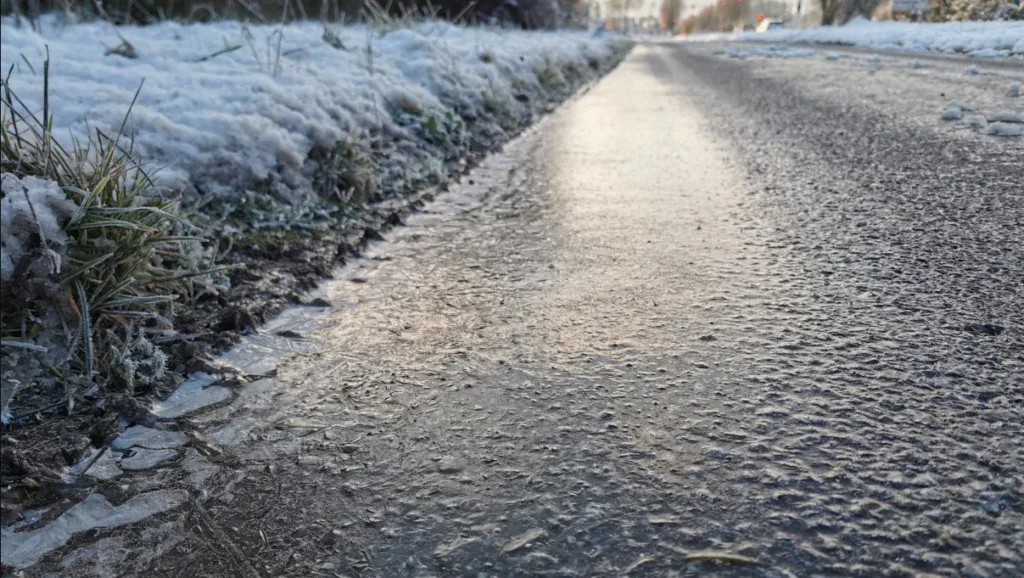
Black ice forms when atmospheric moisture — rain, freezing drizzle, or snowmelt — freezes on pavement at or near the road’s surface temperature, creating a nearly transparent layer of ice that is essentially invisible to a driver until tires make contact with it. Research published in PLOS One documents that wind speed is the single most influential environmental factor in black ice formation, as moving air rapidly chills pavement surfaces below the ambient air temperature. [9] The same research establishes that intermittent icing events — those that occur unpredictably rather than as part of a sustained winter storm — produce significantly higher crash rates than sustained icing, because drivers are caught unprepared during conditions that appear safe. Bridges and road surface transitions freeze first and fastest. On open, flat roads, wind-driven black ice can form across the entire road surface simultaneously, eliminating any safe patch for a driver who has already begun to brake. In all of these scenarios, the vehicle’s brake system performance — and the response of its ABS to rapidly varying traction conditions — is the primary mechanical defense.
Rexburg sits on an exposed volcanic plateau on the Snake River Plain, surrounded by open agricultural fields with few natural windbreaks. The county roads north of Rexburg toward Sugar City and Teton, the open stretches of Highway 20 north of the city toward Ashton and Island Park, and the rural routes connecting Madison County’s farming communities offer none of the protection from wind that a tree-lined urban corridor provides. When temperatures hover near freezing and wind moves across the Snake River Plain — which it does regularly during Rexburg’s fall, winter, and early spring seasons — the conditions for black ice formation on open-country roads exist without any visible warning. A driver heading north from Rexburg toward the St. Anthony Sand Dunes area on a cold November morning, or commuting west on US-20 toward Rigby in Madison County before sunrise, may encounter a road that appeared normal but is in fact sheeted with wind-formed black ice. In that moment, a brake system performing at its designed maximum — with full pad friction, properly pressurized hydraulic lines, and a functioning ABS module — is the only mechanical factor standing between the driver and a loss-of-control event.
On Rexburg’s open Snake River Plain roads, black ice doesn’t arrive with a warning — it arrives with the wind, which means the only preparation is a brake system that’s been professionally serviced and is ready to respond the instant traction disappears. The Grease Monkey team on North 2nd East keeps your ABS, pads, and hydraulic pressure at full performance capacity so that when the plain goes glassy on a November morning, your vehicle responds correctly. [Wind and ice don’t warn you — but your brakes can be ready anyway. Visit https://www.greasemonkey.com/locations/id/rexburg/582-north-2nd-east/ for a complete brake system readiness check today.]
7. Teton Pass Descent: 10% Grade and Idaho’s Most Demanding Mountain Brake Test
Category: Important – If I am driving down a dangerous mountain pass and my brakes are aging, should I stop occasionally to let them cool down?
Teton Pass, at 8,431 feet above sea level on the Wyoming-Idaho border, features grades as steep as 10% — making it one of the steepest paved highways in the continental United States. [10] Mountain pass descents place brake systems under a fundamentally different type of demand than city or highway braking: instead of discrete, controlled stops, the driver must modulate brake force continuously for several miles, managing vehicle speed against gravity on a sustained downgrade. This sustained demand generates cumulative heat that a properly maintained brake system must absorb and dissipate between applications. Rotors that are at minimum thickness have less thermal mass to absorb that heat, reaching critical temperatures sooner and more easily entering brake fade — the condition in which heat-degraded friction material loses its grip coefficient and stopping force drops precipitously. Brake fluid that has absorbed moisture has a lower boiling point, making it vulnerable to vapor lock under the sustained heat of a prolonged mountain descent. Field accounts from drivers on Teton Pass document extreme brake heat events, including cases where passengers could smell brakes burning and feel radiant heat coming from the wheel wells at the bottom of the descent. [10] No driver should approach Teton Pass with a marginal brake system, and frequent stops can help your overworked brakes to cool down.
For Rexburg-area residents, Teton Pass is not a once-a-year adventure — it is a regular route. Employees who work in Victor, Driggs, or Tetonia and commute over the pass from Wyoming regularly navigate this descent. Jackson Hole is a major destination for Rexburg families taking a day trip east on US-33 through Driggs toward the pass. Outdoors enthusiasts making weekend ski trips to Snow King Mountain Resort or Jackson Hole Mountain Resort cross Teton Pass on both the outbound and return leg. And during summer, the pass opens to cyclists, hikers, and a steady stream of tourists who then drive the descent in rental vehicles without any particular concern for brake temperature management. A brake system that is marginal for city driving — worn pads, low fluid, a sticky caliper — becomes a dangerous system on a 10% sustained grade over the Tetons. A brake system that has been professionally serviced, with full pad thickness, fresh fluid with a high boiling point, and free-moving calipers applying symmetrical pressure, makes the Teton Pass descent what it should be: a scenic mountain drive, not a brake emergency.Teton Pass is the steepest highway in the region, and it will find every weakness in your brake system on the way down — the question is whether you find those weaknesses before the pass does or after. The Grease Monkey team on North 2nd East can assess your brake system’s readiness for sustained mountain descent braking, ensuring your rotors, fluid, and pads are equal to the most demanding grade in the area. [Before your next Teton Pass crossing, visit https://www.greasemonkey.com/locations/id/rexburg/582-north-2nd-east/ and confirm your brakes are ready for what the mountain is about to ask of them.]
8. Navigating Rexburg’s Rapid-Growth Construction Zones: Unpredictable Stops in a Changing City
Category: Important – My brakes are getting worn, and I am forced to drive through construction zones, with emergency stops a regular occurrence. Does this pose a high risk for me?
Rexburg is one of the fastest-growing cities in Idaho, having expanded 65.4% in population since 2010 — growing from approximately 25,000 residents to more than 40,000. [11] That growth is visible on almost every major corridor in the city: University Boulevard has seen continuous new retail construction, including a new Home Depot, WinCo, and multiple restaurant chains currently under construction along Tamana Drive. Phase 2 of the University Towne Center commercial development is breaking ground in 2026. Downtown Rexburg’s mixed-use redevelopment includes new construction near Center Street, College Avenue, and Carlson Avenue. [11] For drivers navigating these corridors, rapid construction means lane closures, temporary traffic signals, barriers that appear and move between weeks, and the unpredictable emergence of construction vehicles, flaggers, and pedestrian workers creating sudden, mandatory stops with little or no advance warning. OSHA and transportation safety research consistently identifies construction zone braking events as high-risk precisely because they combine reduced visibility, unexpected stopping demands, and compressed following distances — exactly the conditions that expose a marginal brake system as inadequate.
The North 2nd East corridor — the same street where Grease Monkey serves the Rexburg community — sits at the center of this growth. Drivers turning in or out of new commercial developments, navigating the signal changes created by University Towne Center expansion traffic, and managing the heavy pedestrian presence from BYU-Idaho’s student population on adjacent crosswalks all face the specific braking challenge of an urban corridor in active construction: the need for maximum immediate deceleration on demand, with no margin for a spongy pedal or a caliper that’s slow to engage. A student driver walking across North 2nd East toward the campus has no protection other than the brake system of the driver approaching the crosswalk. A flagger stepping into traffic on University Boulevard relies entirely on the braking responsiveness of the vehicles in that construction zone. These are not theoretical scenarios. They happen every day on Rexburg’s actively developing corridors, and they happen to drivers whose brake systems were last professionally inspected before any of this construction began.
In a city growing as fast as Rexburg, the road you drove yesterday may have a new construction stop sign today — and a brake system that’s been professionally maintained is the difference between a controlled stop and a construction-zone incident that could have been prevented. Grease Monkey on North 2nd East is right in the heart of this growth, servicing the vehicles that navigate Rexburg’s rapidly changing corridors every day. [Growth is good news for Rexburg — but not for brake systems caught unprepared. Visit https://www.greasemonkey.com/locations/id/rexburg/582-north-2nd-east/ and make sure your brakes are ready for whatever the city builds next.]
9. Sand, Silica, and Grit Contamination from St. Anthony Dunes and Harvest Operations
Category: Important – We have a lot of silica, agricultural and gravel dust in our area. How does that impact my vehicle’s braking system?
Brake system contamination from airborne and road-surface particulate is a genuine and often underestimated source of accelerated brake wear. Research published through ResearchGate documents that silica dust — the primary constituent of quartz sand — has a direct and measurable effect on brake pad wear rates. [13] When silica particles infiltrate the gap between brake pad and rotor, they act as an abrasive medium, accelerating pad surface degradation and scoring the rotor surface with microscopic scratches that reduce friction coefficient and create surface irregularities. Beyond the pad-rotor interface, fine particulate that penetrates the caliper dust boots and accumulates on slide pin surfaces creates a grinding paste that restricts caliper movement and causes uneven pad wear. This type of contamination-driven degradation does not produce the dramatic squealing associated with metal-on-metal pad failure — it produces gradual, progressive performance reduction that most drivers never identify until a professional inspection reveals abnormal wear patterns.
Rexburg’s geographic position creates two distinct sources of silica and grit contamination that affect vehicles year-round. The St. Anthony Sand Dunes — 10,600 acres of pure white quartz sand managed by the Bureau of Land Management, located approximately 11 miles north of Rexburg — draw tens of thousands of off-road vehicle enthusiasts annually from across the region. [12] Vehicles returning from a day at the dunes carry silica sand packed into every crevice of the wheel well and brake assembly. And during Madison County’s August-through-October potato and grain harvest, agricultural operations throughout the county generate airborne dust plumes of organic and silica-bearing soil particles that settle on road surfaces and vehicle components throughout the area. A vehicle that has made a weekend run to the St. Anthony Sand Dunes — or that parks along the agricultural roads east of Rexburg during harvest — may be carrying abrasive contamination inside its brake assemblies without the driver’s knowledge. Without periodic inspection and cleaning, that contamination compounds silently, accelerating wear on components that were in otherwise excellent condition.
Sand from the dunes and dust from the harvest don’t stay on the road — they work their way into your brake system, where they grind away components that might otherwise last for years. The Grease Monkey team on North 2nd East inspects brake assemblies for contamination, cleaning caliper slide pins and backing plates as part of complete brake service — so a day at the St. Anthony Sand Dunes doesn’t become a month of accelerated brake wear. [Sand in your wheel wells means sand in your brakes — visit https://www.greasemonkey.com/locations/id/rexburg/582-north-2nd-east/ for a brake inspection and contamination cleanup after your next dunes run.]
10. Emergency Response Distance in Rural Madison County: Your Brakes Are Your First Responder
Category: Medium Priority – I do a lot of rural driving, and my brakes are getting a bit worn. Should I be worried about this or can I continue to drive safely?
Urban drivers often underestimate the role that proximity to emergency services plays in the safety calculus of brake maintenance. In a city with dense hospital coverage and response times measured in minutes, a brake-related accident may result in emergency assistance arriving quickly. Rural drivers in Madison County operate under fundamentally different conditions. Rexburg Regional Medical Center is the primary hospital for a broad service area that extends across multiple Idaho counties, and the roads that connect Madison County’s outer communities — the routes toward Terreton to the west, Roberts to the south, Teton to the north, and the canyon routes east toward Teton Valley — are distances from any emergency medical facility that make the severity of any crash-related injury a direct function of how long the victim must wait for care. [10] Emergency medical response research consistently documents that survival rates in serious trauma events decline measurably with transport time to definitive care. In that context, a brake system that prevents the crash entirely is not merely preferable — it is the intervention with the highest possible impact on outcome.
This is particularly relevant for the drivers who travel Madison County’s rural routes as a matter of daily life. The Idaho Transportation Department designates many Madison County routes as rural collectors — roads with speed limits of 55 mph and limited safety infrastructure, serving the farms, ranches, and scattered communities that make up the county beyond Rexburg’s commercial core. A farm operator returning from fields north of Sugar City, a volunteer fire department member responding from Teton along a rural county road, or a BYU-Idaho student returning from a camping trip on the Henrys Fork River corridor all travel roads where a brake failure does not produce a fender bender in a parking lot — it produces a high-speed event on an unguarded rural highway, miles from the nearest hospital. For these drivers, the cost-benefit analysis of brake service is not a comparison between the service price and the repair price later. It is a comparison between the service price and everything that follows from a brake-related crash on a rural Madison County road.
In rural Madison County, the space between you and emergency care is measured in miles — which means the space between a working brake system and a non-working one is measured in consequences that no one wants to calculate after the fact. The Grease Monkey team on North 2nd East in Rexburg provides the kind of thorough professional brake service that makes a brake failure on a rural county road an event that doesn’t happen — because out here, prevention is the only response that matters. [The nearest trauma center is too far away for brake problems to be a surprise — visit https://www.greasemonkey.com/locations/id/rexburg/582-north-2nd-east/ and make sure your brakes are providing the protection that Idaho’s distances demand.]
11. RV and Motorhome Brake Adequacy for Yellowstone-Bound Visitors on US-20
Category: Medium Priority – I have a Class A motorhome, and it is a bit scary for me to drive. How much space should I keep between me and the vehicles in front of me?
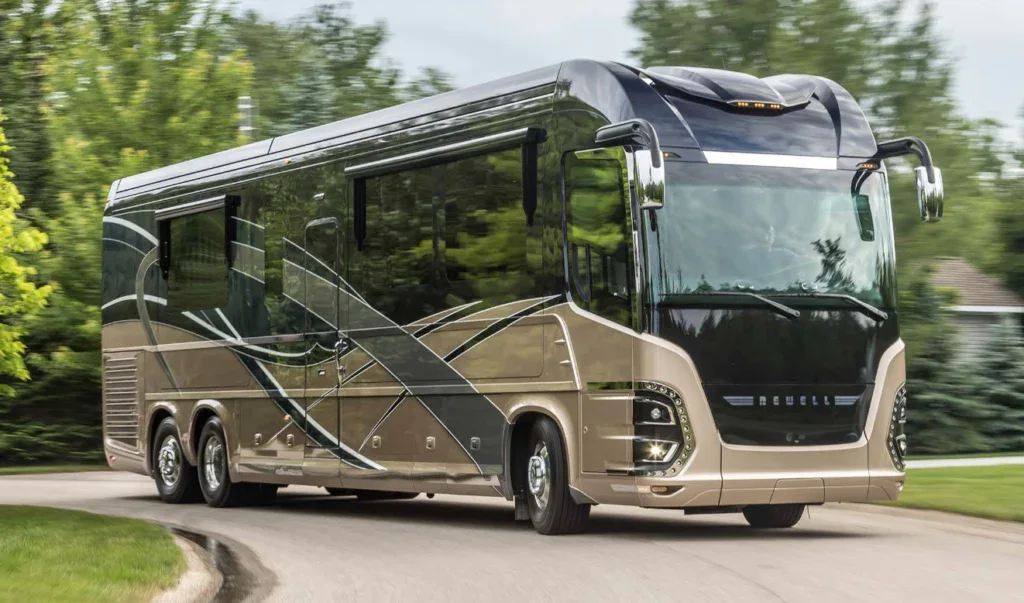
The RV and motorhome traffic that passes through Rexburg on US Highway 20 every summer represents one of the most brake-demanding vehicle categories on the road — and one of the most commonly under-inspected. A study by Roadmaster documented a dramatic and counterintuitive finding: a 34-foot Class A motorhome stopped in 132 feet from 50 mph. When a mid-size towed vehicle was connected without supplemental braking, the stopping distance increased to 209 feet — a 58% increase. With a proper supplemental braking system installed, stopping distance returned to 137 feet. [6] Idaho state law requires supplemental braking systems for towed vehicles exceeding 1,500 pounds gross vehicle weight — a threshold that nearly every towed passenger vehicle exceeds. [6] Despite this, RVs traveling through Rexburg on their way to Yellowstone frequently tow passenger vehicles without properly calibrated supplemental brake systems, or with tow vehicles whose own brake systems have not been professionally inspected before a multi-thousand-mile road trip.
For Rexburg-area service providers and for the RV travelers themselves, this represents a significant and preventable safety risk on US-20’s mixed-traffic corridor. An RV driver who encounters an agricultural vehicle pulling onto the highway north of Rexburg, or who must brake suddenly for a tourist vehicle that stops unexpectedly at a roadside scenic area, needs that 209-foot stopping distance to be as short as possible — and that requires both the motorhome’s brake system and the towed vehicle’s supplemental system to be functioning correctly. Grease Monkey on North 2nd East is positioned directly on the US-20 corridor through Rexburg, making it the natural first stop for RV travelers who want a professional pre-trip brake inspection before heading into Island Park, Ashton, and the Yellowstone approach routes where Idaho’s open-road conditions and wildlife crossing hazards demand maximum stopping performance.Every RV that adds 77 feet to its stopping distance by towing without proper supplemental brakes is an RV that’s gambling with Idaho’s open highways — and US-20 through Rexburg is not a good road to make that bet. The Grease Monkey team on North 2nd East can inspect motorhome brake systems and identify supplemental brake calibration needs before your Yellowstone trip becomes an unplanned stop for the wrong reasons. [Heading to Yellowstone on US-20? Let the team at Grease Monkey make sure your stopping distance is as short as your trip is long — visit https://www.greasemonkey.com/locations/id/rexburg/582-north-2nd-east/ for an RV brake inspection before you roll out.]
12. Sand and Gravel Road Treatment: Idaho’s Anti-Icing Alternative and Its Abrasive Toll
Category: Medium Priority – Our area uses a lot of sand and gravel for anti-icing our winter roads. Does that hurt my brakes?
Idaho’s approach to winter road treatment differs meaningfully from the road salt-heavy strategies used in the upper Midwest and Northeast. The Idaho Transportation Department relies primarily on sand, gravel, and abrasive material spread rather than sodium chloride salt applications for traction management on many eastern Idaho roadways. [5] While this approach reduces the corrosion hazard that road salt creates for brake lines and calipers, it introduces a different type of brake system challenge: abrasive particulate accumulation. Sand and gravel spread on road surfaces during winter weather events becomes airborne as traffic disturbs it, and gets packed into wheel wells, behind brake dust shields, and into the gaps around caliper slide pins and rubber boots. Unlike salt, which attacks metal through electrochemical corrosion, sand and gravel attack brake components through mechanical abrasion — accelerating wear on pad surfaces, scoring rotors in the same way that contamination from the St. Anthony dunes does, and restricting caliper movement as grit accumulates in precision-tolerance components. A vehicle driven throughout a Rexburg winter on sand-treated roads may arrive at spring without the dramatic rust streaks associated with salt exposure, but with brake components that have experienced months of abrasive grit exposure that professional inspection would reveal.
The campus-area streets that receive the heaviest sand treatment — University Boulevard, North 2nd East, and the residential streets between the BYU-Idaho campus and the surrounding apartment complexes — are also the roads that see the highest daily vehicle traffic from student and young-family drivers who are least likely to schedule proactive maintenance. A vehicle that commutes on these sand-treated streets from October through March, making dozens of brake applications per day on surfaces covered in abrasive grit, accumulates a significant contamination load inside its brake assemblies by spring. And unlike the dramatic warning signs of severe brake wear — metal-on-metal grinding, visible pad failure — abrasive contamination-driven degradation presents as gradual performance reduction that only a professional inspection with wheel removal and caliper examination can fully characterize.
Idaho’s sand-treated roads don’t rust your brakes — they grind them, slowly and invisibly, all winter long. A post-winter brake inspection at Grease Monkey on North 2nd East cleans out the season’s grit accumulation, catches sand-accelerated pad and rotor wear, and resets your brake system’s performance baseline for the driving season ahead. [Spring is the right time to undo what Idaho’s sand-treated winter roads did to your brakes — visit https://www.greasemonkey.com/locations/id/rexburg/582-north-2nd-east/ for a post-winter brake cleaning and inspection today.]
13. Wildlife Corridor Surprise Stops on Snake River Plain Routes
Category: Lower Priority – My brake pads are getting a bit worn, and this worries me because we have a lot of wildlife unexpectedly crossing the roads. How does that affect my ability to stop quickly?
The roads radiating outward from Rexburg across the Snake River Plain and into the Teton foothills pass through active wildlife corridors shared by mule deer, elk, antelope, and — at higher elevations on the routes toward Teton Valley — moose. Vehicle-wildlife collisions are a significant and consistent source of crash fatalities and serious injuries on rural Idaho roads, and the mechanism of every avoided collision is emergency braking: the driver sees the animal in the roadway and applies maximum braking force in an attempt to stop before impact. The effectiveness of that emergency brake application is determined entirely by the condition of the vehicle’s brake system at that moment — pad thickness, hydraulic pressure delivery, ABS response — and by the vehicle’s speed relative to available stopping distance. Wildlife can and do appear on the roadway with no advance warning: a deer crossing from an irrigation canal on a US-20 section between Rexburg and Ashton, an elk moving from the Teton foothills toward the Snake River Plain on the Hwy 33 corridor toward Driggs, or a moose in the road on a dawn drive toward Island Park. At highway speeds, a vehicle needs every inch of stopping distance its brake system can deliver. [4]
For Rexburg residents, the wildlife encounter risk is a year-round condition, not a seasonal anomaly. The fall rut brings deer into road crossings throughout the Snake River Plain from September through November. Winter food stress pushes elk toward lower elevations along the Teton mountain front, crossing the county roads between Rexburg and the Teton foothills. Dawn and dusk commute windows — the same windows when university employees and BYU-Idaho staff make their commutes on the rural routes surrounding Rexburg — are also the periods of highest wildlife movement activity. A vehicle heading east from Rexburg toward Sugar City on a foggy November dawn, or returning from a Teton Valley errand on US-33 after sunset, is operating in exactly the wildlife encounter conditions that demand a brake system capable of delivering a maximum emergency stop from 55+ mph with no advance preparation. In those moments, a pad at 4mm vs. a pad at 8mm represents a measurable difference in the distance required to stop before impact — and on a two-lane rural highway, that difference matters in feet.
Rexburg’s roads share their space with deer, elk, and moose that don’t check traffic before crossing — and the only thing between your vehicle and an animal in the road is the stopping distance your brake system can deliver. The Grease Monkey team on North 2nd East ensures your brake system’s maximum stopping performance is available every time you leave the city limits for Idaho’s wildlife-active rural corridors. [Wildlife doesn’t check for approaching headlights — but your brakes can be ready when they appear. Visit https://www.greasemonkey.com/locations/id/rexburg/582-north-2nd-east/ for a complete brake system inspection before your next rural route drive.]
14. Rear Drum Brake Service: The Often-Overlooked System on High-Mileage Student Economy Cars
Category: Lower Priority – I own an older vehicle with drum brakes in the rear. Do they need to be removed for service review, or can I just visually inspect them?
A significant portion of the student vehicle fleet at BYU-Idaho consists of older, higher-mileage economy vehicles — compact sedans and hatchbacks from the 2000s and early 2010s purchased affordably as a student’s first independent vehicle. Many of these vehicles, particularly those manufactured before 2010, use drum brake assemblies on the rear axle rather than the disc brakes that have become standard on newer vehicles. Drum brakes use internally expanding brake shoes that press outward against the inside of a rotating drum to create friction and deceleration. They perform their function effectively when properly maintained, but they present inspection and service challenges that disc brakes do not: the drum must be removed to inspect shoe thickness and the drum’s interior surface, making visual inspection impossible without disassembly. [4] This characteristic means that many drum brake failures — worn shoes, seized wheel cylinders, broken return springs, or seized adjuster mechanisms — are invisible until they produce a dramatic symptom: a vehicle that pulls hard to one side under braking, a grinding noise that only occurs when backing up, or a rear brake lockup that spins the vehicle under hard deceleration. A student who has never owned a vehicle before may not know to ask about rear drum service, and a quick-service facility that only inspects disc brakes visually may miss the drum system entirely.
The scenario is particularly common in Rexburg because the student population turns over continuously and many incoming students are evaluating vehicle condition for the first time. A student who purchased a 2007 Honda Civic or a 2009 Toyota Corolla from a private seller in their home state before driving to Rexburg for school may have no knowledge of the vehicle’s brake service history and may never have heard the term “drum brake adjustment.” That vehicle’s rear drum brake shoes may be at minimum thickness, its wheel cylinders may be leaking brake fluid internally, or its adjuster mechanism may be corroded into a fixed position — and none of this will be visible without a proper drum brake inspection that includes removing the drum. In Rexburg’s winter conditions, a rear brake system that is functioning poorly creates handling instability under braking that is compounded by snow and ice, amplifying a manageable mechanical problem into a genuine loss-of-control risk on campus-area streets.
Rear drum brakes are the invisible half of many student vehicles’ brake systems — and the only way to know what’s inside the drum is to remove it and look. The Grease Monkey team on North 2nd East performs complete drum brake inspections as part of comprehensive brake service, examining shoe thickness, wheel cylinder condition, and drum surface integrity that a visual-only check will never reveal. [Your drum brakes are hiding something — visit https://www.greasemonkey.com/locations/id/rexburg/582-north-2nd-east/ and let the Grease Monkey team take a look at what’s actually inside before winter makes it a problem you can feel.]
15. Academic Calendar Vehicle Reliability: Building a Service Record Through BYU-Idaho’s Year-Round Seasons
Category: Long-Term Value – I am a student driving an older car that I plan to replace when I graduate. How valuable are my service records when I sell my old car to buy a new one?
BYU-Idaho operates on a three-semester academic calendar — fall, winter, and spring/summer — with each semester running approximately 14 weeks. This means that many student vehicles in Rexburg experience not one but two full Idaho winter seasons during a typical four-year degree program, and three or four academic years of the stop-and-go campus driving, rural route recreation travel, and Highway 20 commuting that characterizes Rexburg’s unique vehicle-use profile. A vehicle that arrives in Rexburg for a student’s freshman year and remains through graduation has spent four years being tested by Rexburg’s specific combination of extreme cold, agricultural roads, mountain access routes, and rapid-growth urban driving. The difference between a vehicle that emerges from four Rexburg academic years in reliable, high-value condition and one that emerges with deteriorated brake components, scored rotors, and a service-history gap is not luck — it is the cumulative result of every brake service decision made over those four years. [15] A brake service record from a recognized national-brand facility documents that the vehicle was professionally maintained, which is precisely what a private buyer, dealership, or trade-in appraiser uses to assess value and negotiate price.
The long-term value of consistent brake maintenance in Rexburg extends beyond resale price. It encompasses the reliable daily performance that allows a student to drive without anxiety on Highway 20 in January, the protection of connected components — rotors, wheel bearings, tires — that brake neglect damages indirectly, and the financial protection of avoiding the compounding repair costs that result when a worn pad becomes a scored rotor, or when a seized caliper becomes a master cylinder replacement. For young families in Rexburg who depend on a single reliable vehicle for everything — school runs near the BYU-Idaho Center, trips to Rexburg Regional Medical Center, weekend travel to Teton Valley or Island Park — vehicle longevity is a direct financial interest. A vehicle maintained consistently by the ASE-certified team at Grease Monkey on North 2nd East — with documented brake service at appropriate intervals, using professional-grade components and nationally standardized service procedures — is a vehicle whose owner has invested in both its performance today and its value tomorrow.
Every semester in Rexburg is another chapter in your vehicle’s service history — and the students and families who write that history with consistent professional brake service graduate with a more reliable, more valuable vehicle and a maintenance record that proves it. Let the Grease Monkey team on North 2nd East be your Rexburg brake service partner from your first semester to your last — building the documented service history that protects both the vehicle and its long-term financial value. [Whether you’re a freshman or a graduating senior, your vehicle’s brake service history starts with one visit — visit https://www.greasemonkey.com/locations/id/rexburg/582-north-2nd-east/ and let Grease Monkey be the first entry in your Rexburg maintenance record today.]
About Grease Monkey — North 2nd East, Rexburg, Idaho
Grease Monkey | 582 North 2nd East, Rexburg, ID 83440 https://www.greasemonkey.com/locations/id/rexburg/582-north-2nd-east/
Grease Monkey at 582 North 2nd East serves the BYU-Idaho student community, the agricultural families of Madison County, and every driver who relies on Rexburg’s roads as the gateway to Yellowstone, the Tetons, and eastern Idaho’s recreational landscape — delivering professional brake service, oil changes, tire rotations, and complete vehicle maintenance by ASE-certified technicians who understand what this community’s roads demand. As a trusted brand of FullSpeed Automotive — one of the nation’s largest automotive aftermarket service franchisors, with over 930 locations, $542 million in annual revenue, and 5.2 million vehicles serviced in 2025 — Grease Monkey brings national-level technical standards and training to the heart of Rexburg’s fastest-growing corridor, right where Madison County’s drivers need it most.
Author Information
Author Bio – Phillip Paul Gilliam
Phillip Gilliam is a veteran journalist and former Editor-in-Chief with 50+ years of publishing experience and thousands of published articles. Specializing in automotive, trucking, and digital publishing, he creates authoritative, search-optimized content built on real-world expertise and editorial excellence. To learn more about Phil, visit http://www.phillipgilliam.com/about.html or contact Phil at [email protected]. He would love to hear from you!
Full Citation List
[1] Best Places / US Climate Data / WeatherSpark. Climate Rexburg — Idaho and Weather Averages; Rexburg, ID Climate; Average Weather in Rexburg, Idaho Year-Round. Available at: https://www.bestplaces.net/climate/city/idaho/rexburg; https://usclimatedata.com/climate/rexburg/idaho/united-states/usid0215; https://weatherspark.com/y/2764/Average-Weather-in-Rexburg-Idaho-United-States-Year-Round. (Rexburg elevation: 4,865 feet; January average low temperature: 13°F; typical temperature range 13°F to 86°F; rarely below -4°F; average annual snowfall approximately 42 inches.)
[2] Power-Oils.com / AutoNation Mobile Service. What Type of Brake Fluid Is Best for Cold Climates? and Can Brake Fluid Freeze In Cold Weather? Available at: https://www.power-oils.com/blog/what-type-of-brake-fluid-is-best-for-cold-climates-1296415.html and https://www.autonationmobileservice.com/i/blog/can-brake-fluid-freeze/. (At temperatures approaching -22°C / -8°F, brake fluid thickens significantly; high viscosity impedes flow through brake lines and micro-valves; ABS performance degraded by cold-thickened fluid; moisture contamination raises freezing point and accelerates viscosity effects.)
[3] BYU-Idaho Newsroom / Enrollment Statistics. BYU-Idaho Enrollment Continues to Grow for Spring 2025 and Official Enrollment Statistics. Available at: https://www.byui.edu/newsroom/enrollment-reports/spring-2025 and https://www.byui.edu/executive-strategy-and-planning/institutional-data/official-enrollment-statistics. (BYU-Idaho fall campus enrollment: 24,450 students; spring campus-based enrollment 17,058, a 2.0% increase over prior year; total enrolled across all modalities: 37,133.)
[4] DriveSafe Online / NHTSA. Brake to Safety: An Essential Guide to Vehicle Brake System Maintenance. Available at: https://www.drivesafeonline.org/vehicle-maintenance/brake-system/. (The National Motor Crash Causation Survey found that approximately 22% of vehicle defect-related crashes — roughly 10,000 of 44,000 — involve defective brakes; worn brake pads increase stopping distance by 20% or more; brakes should be professionally inspected at least once a year.)
[5] Idaho Transportation Department (ITD). U.S. 20 in Eastern Idaho (District 6) — Corridor Study. Available at: https://apps.itd.idaho.gov/apps/d6/U.S.%2020%20Corridors.pdf. (US-20 is the primary corridor through eastern Idaho linking Rexburg to Yellowstone’s West Entrance; carries mixed regional, agricultural, and tourist traffic; Idaho uses sand and abrasive materials as primary winter road treatment in eastern Idaho districts.)
[6] National Indoor RV Centers (NIRVC) / NSA RV Products. Supplemental RV Braking Systems and State Towing Laws. Available at: https://www.nirvc.com/blog/supplemental-rv-braking-systems/ and https://nsarvproducts.com/pages/state-towing-laws. (A 34-foot Class A motorhome stopping from 50 mph required 132 ft without a towed vehicle; adding a towed vehicle without supplemental brakes extended stopping distance to 209 ft — a 58% increase; with supplemental braking installed, stopping distance returned to 137 ft; Idaho requires supplemental braking systems for towed vehicles exceeding 1,500 lbs gross vehicle weight.)
[7] Upper Midwest Agricultural Safety and Health Center (UMASH) / American Family Insurance. Farm Safety Check: Towing and Farm Trailer Safety and Maintenance. Available at: https://umash.umn.edu/farm-safety-check-towing/ and https://www.amfam.com/resources/articles/on-the-farm/farm-trailer-safety-and-maintenance. (Agricultural towing braking distance increases with load weight; OSHA recommends eight-second following distance at highway speeds with towed loads; equipment weighing more than 1.5 times towing vehicle weight requires independent trailer brakes; stopping distance increases significantly on grades and with heavy loads.)
[8] NRS Brakes / AllRotors.com / West Can Auto Parts. The Science of “Frozen Brakes”: Why Brake Pads Seize in Freezing Temps and Winter Braking: What Cold Weather Does to Pads, Rotors, and Fluid. Available at: https://nrsbrakes.com/blogs/supporting-articles/the-science-of-frozen-brakes-why-brake-pads-seize-in-freezing-temps-and-how-to-fix-it and https://www.allrotors.com/blog-174-winter-braking-what-cold-weather-does-to-pads-rotors-and-fluid. (Water vapor between pad and rotor freezes during extended sub-zero parking, bonding pad to rotor; moisture infiltrates caliper slide pin boots and freezes; brake fluid moisture content rises measurably during winter conditions; internal caliper corrosion from moisture-contaminated fluid causes piston sticking; vehicles parked for extended periods in cold commonly experience brake seizure.)
[9] PMC / PLOS One. Predicting Black Ice-Related Accidents with Probabilistic Modeling Using GIS-Based Monte Carlo Simulation. Available at: https://pmc.ncbi.nlm.nih.gov/articles/PMC11115309/ and https://journals.plos.org/plosone/article?id=10.1371%2Fjournal.pone.0303605. (Wind speed is the single most influential environmental factor in black ice formation; intermittent icing events produce significantly higher crash rates than sustained icing because drivers are caught unprepared; black ice is nearly transparent and essentially invisible to approaching drivers.)
[10] Wikipedia / Dangerous Roads. Teton Pass and Beautiful Turnouts and Scary Gradients on the Road to Teton Pass. Available at: https://en.wikipedia.org/wiki/Teton_Pass and https://www.dangerousroads.org/north-america/usa/3813-teton-pass.html. (Teton Pass elevation: 8,431 feet / 2,570 m; grades as steep as 10% — among the steepest paved highways in the continental United States; trailers prohibited November 15 through April 1; sustained descent braking events have caused dramatic brake overheating documented by travelers.)
[11] WorldPopulationReview / East Idaho News. Fastest Growing Cities in Idaho (2026) and Rexburg Mayor Highlights Growth, Safety and New Development in Annual State of the City Address. Available at: https://worldpopulationreview.com/us-cities/idaho/fastest-growing and https://www.eastidahonews.com/2026/03/rexburg-mayor-highlights-growth-safety-and-new-development-in-annual-state-of-the-city-address/. (Rexburg population grew 65.4% since 2010, from approximately 25,000 to over 40,000 residents; among fastest-growing small cities in the United States; continuous new commercial construction along University Boulevard and Tamana Drive; Phase 2 of University Towne Center breaking ground 2026; downtown redevelopment underway near Center Street and College Avenue.)
[12] Bureau of Land Management / Visit Idaho. St. Anthony Sand Dunes and Explore St. Anthony Sand Dunes with 10,600 Acres of White Quartz Sand. Available at: https://www.blm.gov/visit/st-anthony-sand-dunes and https://visitidaho.org/things-to-do/natural-attractions/st-anthony-sand-dunes/. (St. Anthony Sand Dunes: 10,600 acres of pure white quartz sand managed by the Bureau of Land Management; located approximately 11 miles north of Rexburg; draws thousands of off-road vehicle enthusiasts annually from across the region.)
[13] ResearchGate. An Evaluation of the Effect of Silica Dust on Brake Pad Wear. Available at: https://www.researchgate.net/publication/371962134_AN_EVALUATION_OF_THE_EFFECT_OF_SILICA_DUST_ON_BRAKEPAD_WEAR. (Silica dust has a direct and measurable effect on brake pad wear rates; silica particles infiltrating the pad-rotor interface act as an abrasive medium, accelerating pad surface degradation and scoring rotor surfaces; contamination inside caliper dust boots creates a grit paste that restricts caliper movement.)
[14] Green Flag / West Can Auto Parts. Expert Advice: Why Cold Weather Is Bad for Brakes and How Cold Weather Affects Your Brake System. Available at: https://blog.greenflag.com/2018/cold-weather-brakes-problems/ and https://westcanauto.com/how-cold-weather-affects-your-brake-system-and-what-you-can-do/. (Brake discs can rust during extended cold storage, causing pads to bond; caliper pistons and slider pins seize from cold-induced corrosion; vehicles left parked for months commonly experience brake seizure, especially when parked outdoors in freezing conditions.)
[15] Clement Pre-Owned / Use Tended. How Regular Car Maintenance Protects Resale Value and How Maintenance Records Increase Your Car’s Resale Value. Available at: https://clementpreowned.com/blog/how-regular-car-maintenance-protects-your-vehicle-s-resale-value and https://app.usetended.com/guides/maintenance-records-increase-resale-value. (Documented service history from a recognized national-brand facility adds measurable value to used vehicle resale and trade-in assessments; consistent brake maintenance prevents cascading component damage; professional service documentation is used by private buyers, dealerships, and trade-in appraisers to assess vehicle value and negotiate price.)
© 2026 Grease Monkey, Written by, Phillip Paul Gilliam. All rights reserved. Published in partnership with Grease Monkey, 582 North 2nd East, Rexburg, Idaho 83440. Content is for informational purposes and reflects current industry research and local geographic conditions. Brake service intervals and recommendations may vary by vehicle make, model, and driving conditions. Consult a certified technician for vehicle-specific recommendations.
Stop by today.
- Grease Monkey Center #658 Address: 582 North 2nd East, Rexburg, ID, 83440
- Services: Air Conditioning Services, Battery Services, Brake Services, Car Wash Services, Engine Services, Filter Services, Fluid Exchange Services, Headlight Services, Oil Changes, Power Steering, Tire Services, Transmission Services
Your car will thank you. And your wallet will too.

Plan Your Visit
Find a location near you, explore current deals, and get everything you need before you roll in.