Top 15 Reasons to Have Your Vehicle's Brake System Serviced Regularly in Kimberly, Idaho
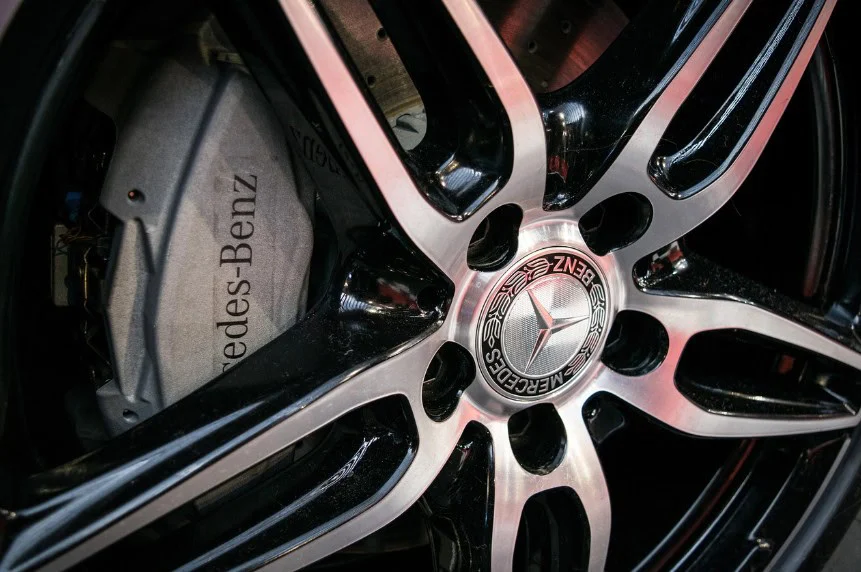
An Authoritative Guide for Drivers and Families in the Heart of Magic Valley
Grease Monkey 1550 Main St N, Kimberly, ID 83341 Has Over 130 Google Reviews With A 4.9 Star Rating
About This Article: This guide was researched and written by Phillip Paul Gilliam, a veteran automotive journalist and former Editor-in-Chief with more than 50 years of professional publishing experience. The brake service and safety information in this article is grounded in federal research from the National Highway Traffic Safety Administration (NHTSA), the Insurance Institute for Highway Safety (IIHS), the AAA Foundation for Traffic Safety, and peer-reviewed engineering literature — then applied directly to the roads, terrain, and community realities of Kimberly and Twin Falls County, Idaho.
The brake services described in this article are provided by Grease Monkey at 1550 Main St N, Kimberly, Idaho 83341, a location backed by FullSpeed Automotive, one of the nation’s most recognized automotive service networks with more than 700 locations nationwide. FullSpeed Automotive was recognized in 2025 when 435 of its service centers were named CARFAX Top Shop Winners — one of the most trusted third-party endorsements in the automotive service industry. Every Grease Monkey location employs ASE-certified technicians trained through FullSpeed Automotive’s national program, ensuring that Kimberly drivers receive the same professional standard of brake care as drivers in any major metro area. Kimberly is a small city with a big agricultural footprint, situated four miles east of Twin Falls at 3,921 feet above sea level. Its roads carry 400-truck-per-day agricultural hauls during sugar beet season, its summers push triple-digit heat on canyon access grades, and its historic irrigation canal system creates dozens of road crossings that wet down brake components throughout the growing season. These are not abstract risk factors — they are conditions that affect every driver on Kimberly Road every week of the year. This article explains why they matter, what they do to your brake system, and what you can do about it.
Introduction
On a quiet morning in Kimberly, Idaho, it’s easy to think of the roads as simple and safe. The town is small — just over 4,600 people — and the scenery along US-30 between the irrigated fields and the distant plateau edge feels more pastoral than hazardous. But the same geographic character that makes Magic Valley beautiful is what makes vehicle brake maintenance here non-negotiable.
Kimberly sits on the Snake River Plain, four miles east of Twin Falls, with the Snake River cutting its canyon about three miles to the north. Shoshone Falls — taller than Niagara at 212 feet — thunders just upstream. The same canyon that gives Kimberly its dramatic northern backdrop also defines access roads that descend to the canyon floor on sustained grades. The fields surrounding Kimberly that feed the “Silicon Valley of Food” economy — home to Chobani’s world-largest yogurt plant and Clif Bar’s production facility — also send hundreds of loaded haul trucks rolling through town during fall sugar beet campaign. And the irrigation canals that have watered this valley since 1905, when the Twin Falls Land and Water Company platted the town, create dozens of road crossings that expose your brake rotors to water, mud, and debris all season long.
According to federal data, an estimated 41% of vehicles on American roads are overdue for critical maintenance — and brake systems are among the most commonly deferred [9]. In Idaho, 12.5% of all fatal traffic crashes involve large trucks [6] — the same trucks that share Kimberly Road with every commuter, parent, and student heading into Twin Falls. When those two facts collide — a compromised brake system following a fully loaded sugar beet semi — the margin for error disappears.
This article presents 15 specific, research-backed reasons why Kimberly drivers should have their vehicle brake systems professionally inspected and serviced on a regular schedule. Each reason is grounded in authoritative safety science and applied directly to the roads, terrain, communities, and seasonal patterns of Kimberly and Twin Falls County. Whether you’re hauling equipment, commuting to CSI, making a run to Shoshone Falls, or navigating the I-84 interchange after dark, your brakes are the last line between an ordinary trip and a life-altering emergency.
1. Shared Road With 400 Agricultural Haul Trucks Per Day: The Stopping Distance Math on Kimberly Road
Category: Most Critical – How critical is my vehicle’s braking system performance when following commercial trucks?
When a fully loaded semi-truck traveling at highway speed needs to stop, physics imposes a brutal tax on every driver behind it. A commercial truck loaded to the federal maximum of 80,000 pounds traveling at 60 mph requires up to 525 feet to stop under ideal conditions — nearly two full football fields [3]. For the passenger car following at normal highway distance, that stop-distance gap means that any unexpected braking by the truck requires the car behind it to match that deceleration instantly and completely. If brake pads are worn, if rotors are warped, or if fluid has degraded, the car does not stop where it needs to. The resulting rear-end collision can be catastrophic for the smaller vehicle.
Kimberly Road — also known as US-30 — sees this scenario play out daily during fall sugar beet campaign. Magic Valley is one of the most productive sugar beet regions in the United States, and approximately 400 haul trucks per day move through the area transporting beets to processing facilities, with Idaho moving roughly 7 million tons of beets per year [2]. These trucks make frequent stops, slow for field access turns, and merge from dirt access roads onto US-30 with unpredictable timing. For drivers commuting toward Twin Falls, heading to the Chobani plant, or running any errand along the US-30 corridor through Kimberly, the ability to execute a sudden, controlled emergency stop is not a hypothetical need — it is a practical daily reality during the six-to-eight-week harvest window.
If your brake pads are below specification, your Kimberly Road commute during beet season is not just inconvenient — it is statistically dangerous. Before the harvest trucks roll, bring your vehicle to Grease Monkey at 1550 Main St N, Kimberly, ID 83341, and let their ASE-certified technicians inspect your entire brake system. Their brake service includes a comprehensive review of pad depth, rotor condition, fluid health, and caliper function. Visit https://www.greasemonkey.com/locations/id/kimberly/1550-main/ to schedule your inspection — because the trucks will not wait, and your brakes should not either.
2. Canyon Rim Approach Grades: The High-Consequence Descent to Shoshone Falls and Dierkes Lake
Category: Most Critical – What is the “wet boiling point” of brake fluid and how does that affect me?
On sustained downhill grades, brakes must absorb the kinetic energy of the entire vehicle — energy that grows with every second of descent. During this sustained application, brake rotors can exceed 600 to 700°F under moderate conditions, and reach 1,000°F or more under heavy use [5]. At these temperatures, DOT 3 brake fluid — already degraded by moisture absorption — can reach its wet boiling point of just 284°F within the calipers, causing vapor bubbles to form in the hydraulic lines [10][11]. The moment that vapor compresses rather than transmits pressure, pedal feel goes soft, stopping power drops dramatically, and the driver has no warning until the emergency is already unfolding. Brake fade on a descent is not a warning — it is a failure.
Kimberly residents and Magic Valley visitors heading to the Snake River Canyon for recreation face these exact conditions on the access roads leading to Shoshone Falls — the 212-foot-tall, 900-foot-wide cascade that draws thousands of visitors annually — and to Dierkes Lake Park, which offers swimming, fishing, climbing, and picnicking on the canyon floor [4]. These access routes descend from the plateau edge into the canyon on grades that require sustained braking. A loaded minivan carrying a Kimberly family down to Dierkes Lake on a 100°F August afternoon, with 30,000 miles of brake wear on the original pads, is using a brake system never intended to meet that thermal load without degradation. The families who live here do not have the luxury of a runaway truck ramp.
When the canyon is calling, your brakes need to be ready to answer. If your brake pedal has felt soft, spongy, or longer than it used to be, have your system checked before your next canyon trip at Grease Monkey, 1550 Main St N, Kimberly, ID 83341. A full brake fluid analysis, pad inspection, and rotor check takes far less time than the emergency that bad brakes can create on a canyon grade. Book now at https://www.greasemonkey.com/locations/id/kimberly/1550-main/ — Shoshone Falls will be more beautiful when you know you can stop on the way down.
3. The US-30/I-84 Interchange: Where Interstate Speed Meets Small-Town Surface Traffic
Category: Most Critical – Why are highway interchange zones such high-risk environments?
Highway interchange zones are among the highest-risk environments in the American road system. Vehicles entering from a surface street must match the speed of freeway traffic while merging, and freeway vehicles must decelerate when exiting to surface-street speeds. The speed differential between a vehicle traveling at 75 mph on I-84 and a vehicle slowing to 35 mph on a ramp is extraordinary — and that differential is exactly where inadequate brakes fail to perform. NHTSA data consistently identifies interchange environments as disproportionately represented in fatal and serious-injury crashes, with speed differential and inadequate deceleration cited as recurring contributing factors [6].
For Kimberly residents, this risk is not abstract. The interchange where Kimberly Road (US-30) and Interstate 84 meet is a daily navigation point for anyone commuting west toward Twin Falls, heading east toward Jerome, or getting on and off the interstate for any purpose. Commercial trucks transitioning from I-84 to US-30 are frequently decelerating from freeway speeds just as local traffic is approaching from Kimberly. Kimberly’s position as a bedroom community to Twin Falls means a significant share of its 4,600-plus residents makes this interchange approach every weekday. A driver with worn pads or low brake fluid pressure entering that corridor does not have a second chance if traffic stacks up ahead of them.
The I-84 connection is what makes Kimberly accessible — and what demands that every car entering that interchange corridor has a brake system operating at full capacity. Don’t treat your interchange approach as an afterthought. At Grease Monkey, 1550 Main St N, Kimberly, ID 83341, a professional brake inspection takes less than an oil change appointment and could be the difference between a near-miss and a tragedy. Get ahead of it at https://www.greasemonkey.com/locations/id/kimberly/1550-main/ — because the interstate does not have room for insufficient stopping power.
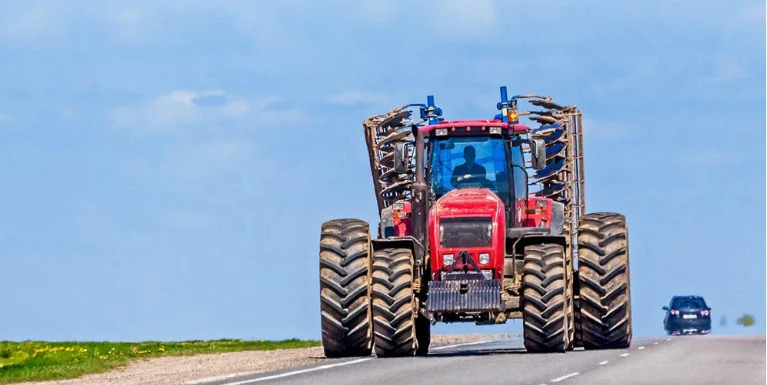
4. Slow-Moving Equipment on US-30: The Speed Differential That Demands Maximum Brake Response
Category: High Priority – How do speed differentials impact my ability to stop safely?
Speed differential is one of the most predictable contributors to rear-end collisions. A passenger vehicle traveling 55 mph overtaking farm equipment moving at 10 mph closes that 45-mph gap in seconds. At 55 mph, a vehicle covers approximately 80 feet per second — and if the driver doesn’t perceive the tractor or combine ahead until they’re within 200 feet, reaction time alone consumes 1.5 seconds and roughly 120 feet, leaving almost nothing for actual braking distance. Under full braking on dry pavement with well-maintained brakes, an average vehicle can stop in approximately 150-200 feet from 55 mph — leaving a razor-thin margin when braking components are anything less than fully functional. Worn pads or degraded fluid add critical feet to that equation [6].
Kimberly is surrounded by actively farmed agricultural land. During planting season in spring and throughout the multi-crop harvest cycle in fall, farm equipment — tractors, combines, beet lifters, irrigation pipe movers, and grain carts — moves between fields, across US-30, and along Kimberly Road’s shoulder at the pace the work demands, not the pace that traffic prefers. These encounters are not rare events — they are woven into the daily rhythm of life in a community that exists specifically because of irrigation agriculture. A Kimberly family driving home from Twin Falls after dark during harvest season may encounter a slow-moving beet piler with minimal warning. The ability to respond with a firm, controlled emergency stop requires every component of the brake system — pads, rotors, fluid, calipers — to be in working order. Farm country demands farm-country readiness. If your vehicle hasn’t had a brake inspection since last planting season, that’s too long — especially on the roads between Kimberly’s fields and Main Street. Visit Grease Monkey at 1550 Main St N, Kimberly, ID 83341 for a complete brake system evaluation before the next equipment-on-road season begins. Schedule online at https://www.greasemonkey.com/locations/id/kimberly/1550-main/ — the difference between 150 feet and 250 feet of stopping distance is exactly the difference between moving safely past a combine and becoming a statistic.
5. Magic Valley Summer Heat and Brake Thermal Stress on the High Desert Floor
Category: High Priority – What does summer heat do to my brakes?
Brake components are engineered to operate within specific thermal ranges. Under moderate daily driving, rotors cycle between ambient temperature and several hundred degrees Fahrenheit. When ambient temperature is already elevated — as it is on Magic Valley summer afternoons — the baseline from which that heat accumulates starts higher, and the ceiling is reached faster. Brake rotors begin experiencing stress-related deformation at temperatures above 600 to 700°F, and caliper seals — made of rubber compounds that harden and crack under sustained heat — lose flexibility progressively with every high-temperature cycle [5]. Brake fluid’s wet boiling point of 284°F for DOT 3 fluid provides a stark reference: on a 105°F afternoon following a canyon descent, fluid temperatures inside the calipers can approach or exceed that threshold with worn or degraded fluid [10].
Twin Falls County is fully capable of delivering those conditions. Summer afternoons in Kimberly and the surrounding Magic Valley regularly push into the high 90s and above 100°F, with the Snake River Plain’s semi-arid climate accelerating heat buildup. Unlike mountain communities that see temperatures moderate by afternoon, the valley floor holds heat through the evening. Families loading up after a day at Dierkes Lake, Shoshone Falls, or the Snake River Canyons Park and then navigating the canyon access road climb back to the rim are cycling through a full thermal event on a summer day. Add in the stop-and-go of US-30 approaching Twin Falls with the kids in the back, and brake components bear significant cumulative heat load over a single summer day. Beat the heat before it beats your brakes. Summer in Magic Valley is no time to be running on degraded fluid or borderline pads. Bring your vehicle to Grease Monkey at 1550 Main St N, Kimberly, ID 83341 for a pre-summer brake check that includes fluid condition testing and full thermal-system evaluation. Book your appointment at https://www.greasemonkey.com/locations/id/kimberly/1550-main/ — the canyon will still be there when you’re ready, and your brakes will be ready when the canyon calls.
6. CSI Student Vehicles: Deferred Brake Maintenance in Kimberly’s Commuter Corridor
Category: High Priority – How critical is it when younger people don’t have their cars serviced?
Research on vehicle maintenance behavior consistently reveals that cost-constrained drivers are the most likely to defer critical safety service — including brake inspections. A national study found that 41% of vehicles are overdue for critical maintenance, and 25.9% of vehicle owners admitted to ignoring brake warning signs for a month or longer before seeking service [9]. Young adult drivers are disproportionately represented in this group: they are more likely to be operating older vehicles, less likely to have received a professional inspection in the prior year, and more likely to delay service due to financial pressure. This demographic correlation is not a judgment — it is a documented safety pattern with real consequences on roads shared by everyone.
College of Southern Idaho in Twin Falls enrolls more than 10,000 students annually, the vast majority of whom commute from off-campus locations across the Magic Valley [8]. Many of those students live in and around Kimberly, Jerome, Twin Falls, and surrounding communities, traveling US-30 and Kimberly Road daily — roads that also carry agricultural haul trucks, industrial fleet traffic from the Chobani and Clif Bar facilities, and interchange-merging vehicles from I-84. A student vehicle with worn pads and degraded fluid on Kimberly Road is not a risk only to that student — it is a risk to every driver sharing that corridor. The connection between deferred maintenance in young adult drivers and the specific roads they use is not theoretical; it is a daily geographic reality in this community. CSI students: there’s no shame in getting a straight answer about your brakes before a problem finds you. Grease Monkey at 1550 Main St N, Kimberly, ID 83341 offers no-appointment-needed brake inspections and straightforward service — no upsell pressure, just facts about your system’s condition. Check their services and schedule online at https://www.greasemonkey.com/locations/id/kimberly/1550-main/ — because Kimberly Road to US-30 to CSI is a daily commute that your brake system deserves to complete safely every single time.
7. Brake Fluid Exchange: The Most Overlooked Scheduled Service in Magic Valley Vehicles
Category: Important – Why do I need to have my brake fluid serviced more frequently in Kimberly, Idaho?
Brake fluid is a hygroscopic substance — it actively absorbs moisture from the air and from the brake system itself over time. This is not a flaw; it is by design, to prevent corrosion within the hydraulic system. But the consequence is that brake fluid’s boiling point drops progressively as moisture content rises. New DOT 3 fluid has a minimum dry boiling point of 401°F — but its wet boiling point (at just 3.7% water absorption) drops to 284°F [10][11]. Industry testing shows that most glycol-ether brake fluids absorb enough moisture to approach this wet threshold within 12 to 24 months of use, even without a single fluid-related warning light. That means the brake fluid in millions of vehicles is operating at a fraction of its rated performance — silently, invisibly, until a hard stop on a hot grade reveals the truth in the worst possible way.
In Kimberly and the wider Magic Valley, vehicles are exposed to elevated moisture sources throughout the growing season. The vast network of irrigation canals, sprinkler pivot irrigation systems, and field drainage that makes the Snake River Plain so agriculturally productive also contributes ambient humidity and road surface moisture that works its way into brake system vents and reservoirs. A vehicle that has been exposed to a full Magic Valley growing season without a fluid exchange has likely absorbed more atmospheric moisture than the same vehicle in a drier inland climate. Kimberly’s elevation of 3,921 feet doesn’t help — the slightly lower atmospheric pressure allows more moisture to enter hydraulic systems at rest. Most drivers don’t know their brake fluid has a service interval — and that’s the problem. The good news: a brake fluid exchange at Grease Monkey, 1550 Main St N, Kimberly, ID 83341 is a straightforward, fast service that restores your hydraulic system to full performance specification. If you can’t remember the last time your brake fluid was changed, it’s overdue. Schedule your fluid service at https://www.greasemonkey.com/locations/id/kimberly/1550-main/ — and stop relying on fluid that’s been silently degrading for seasons.
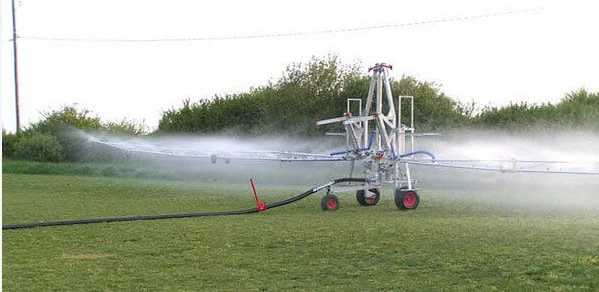
8. Irrigation Canal Road Crossings: Wet Brake Film Recovery and Lost Stopping Power
Category: Important – How does all of Kimberly’s agricultural irrigation possibly hurt my brakes?
When water contacts a brake rotor while the vehicle is in motion, it creates a thin film between the rotor and pad that temporarily reduces friction — the fundamental mechanism of braking. Research and industry testing document that wet rotors can increase stopping distance by 30 to 40% on the first brake application after water exposure, before the friction surface heat has evaporated the film [12]. A vehicle that needs 150 feet to stop on dry pavement may need 200 feet or more after driving through a water crossing. If that vehicle is following closely behind a haul truck, or approaching an intersection with a view obstruction, that 50-foot deficit is not recoverable. The brake system returns to normal performance within one to two firm stops as heat clears the moisture — but the first stop is when it matters most.
Kimberly’s entire existence is rooted in irrigation infrastructure. The Twin Falls Land and Water Company platted the town of Kimberly in 1905 as part of a comprehensive canal system designed to bring Snake River water to the southern Idaho plateau. That system — updated and expanded over the past 120 years — creates dozens of road crossings throughout Kimberly and the surrounding agricultural land where canal water, overflow during irrigation season, field runoff, and mud debris routinely reach road surfaces. Drivers heading out Kimberly Road toward Twin Falls, or moving between properties on farm access routes, encounter these wet crossings regularly from spring through fall. Worn pads with reduced friction coefficient are further compromised by water film — a bad combination made worse on every road crossing in irrigation season.
Don’t let a puddle be the reason your stopping distance doubles. If your pads are thin and your rotors are worn, every canal crossing on the Kimberly Road corridor puts you at risk of a wet-brake emergency stop that goes wrong. Have Grease Monkey at 1550 Main St N, Kimberly, ID 83341 check your pad thickness and rotor surface condition before irrigation season peaks. Schedule at https://www.greasemonkey.com/locations/id/kimberly/1550-main/ — the canal system made Kimberly possible; don’t let it make your brake system dangerous.
9. Wildfire Smoke Visibility Events: Compressed Reaction Distance on Rural Magic Valley Roads
Category: Important – Does the Magic Valley’s frequent wildfires have any consequences on my driving?
Reaction time is the invisible variable in stopping distance calculations. The standard engineering assumption is 1.5 seconds from hazard perception to brake application — during which a vehicle traveling at 55 mph covers 121 feet before deceleration begins. But reaction time is a function of visibility: drivers cannot react to hazards they cannot see. When visibility drops in wildfire smoke conditions, hazard perception distance shrinks dramatically, and the effective reaction-plus-stopping window compresses. At speeds appropriate for clear rural roads but dangerously fast for smoke-impacted visibility, even a vehicle with perfectly maintained brakes cannot stop in time if the driver perceives the hazard at 60 feet instead of 300 [6]. Degraded brakes in reduced-visibility conditions are not a contributing factor — they are a compounding catastrophe.
Magic Valley is regularly affected by wildfire smoke events during the summer months. In July 2024, air quality in the Twin Falls area registered an AQI above 170 from a combination of regional wildfires and local fires including a 4,000-acre fire southwest of Bliss and a 3,000-acre fire near Glenns Ferry — conditions severe enough that Twin Falls canceled its Market on Main event due to health concerns [13]. On the rural roads between Kimberly, Jerome, and Twin Falls, where there are no traffic signals, no street lights, and no medians to separate opposing lanes, smoke-reduced visibility is particularly dangerous. Drivers approaching intersections, farm equipment crossings, or slow-moving vehicles on US-30 in smoke conditions have almost no margin if their brakes are not performing at full capacity. Wildfire season in Idaho is not a question of if — it’s when. Make sure your brakes are ready before the smoke arrives. A comprehensive brake inspection at Grease Monkey, 1550 Main St N, Kimberly, ID 83341 ensures that when visibility drops, your stopping capability is at its maximum. Don’t wait for an air quality advisory to wish you’d scheduled that inspection. Book now at https://www.greasemonkey.com/locations/id/kimberly/1550-main/ — because you can’t control what burns, but you can control how well you stop.
10. Chobani and Clif Bar Industrial Shift Traffic: Navigating Kimberly Road’s Food Processing Corridor
Category: Medium Priority – How does Kimberly’s significant food processing infrastructure impact my driving, and how does that affect my brakes?
Industrial facilities with large workforces generate predictable traffic surge patterns at shift transitions — periods when the number of vehicles entering and exiting a road network spike dramatically over a short window. In urban settings, this creates rush-hour congestion. On rural arterial roads with limited lanes and no traffic management systems, it creates rapid deceleration events: sudden braking as drivers encounter the back of a forming queue, merging from facility exit lanes, or stopping for cross-traffic. Brake system condition becomes critical precisely during these short, intense stop-and-go periods, when pad-to-rotor contact frequency and thermal load both spike. A brake system degraded from months of normal driving can reach its performance limits faster in a high-frequency braking environment than in sustained highway travel [5].
Kimberly is surrounded by some of the most significant food processing infrastructure in the United States. Chobani’s Twin Falls facility is the largest yogurt manufacturing plant in the world — spanning 1 million square feet and employing approximately 1,200 workers, with a planned expansion to 1.6 million square feet currently underway [14]. Adjacent facilities include Clif Bar’s production plant, which employs up to 250 people, along with McCain Foods and other manufacturers in the region that has earned the national designation “Silicon Valley of Food.” These facilities generate shift-change traffic that flows along US-30 and Kimberly Road multiple times daily. For Kimberly residents navigating that corridor at 6 AM, 2 PM, or 10 PM, the industrial traffic pulse is as predictable as the seasons.
Every shift change is a brake event. If your vehicle’s brakes are grinding, squealing, or taking longer than they used to, don’t navigate Kimberly Road’s industrial corridor on borrowed time. Grease Monkey at 1550 Main St N, Kimberly, ID 83341 offers comprehensive brake inspections with no appointment needed — in and out before the next shift change starts. Schedule at https://www.greasemonkey.com/locations/id/kimberly/1550-main/ — because Kimberly’s food economy never stops, and neither do the brakes that keep it moving.
11. Empty vs. Loaded: How Magic Valley Farm Truck Payload Variability Changes Your Brake System’s Job
Category: Medium Priority – What is worse for my farm truck’s brake system? Driving with a full load in my truck or driving empty?
Vehicle weight is the most significant variable in stopping distance physics. A heavier vehicle possesses more kinetic energy at any given speed, requiring more brake force to decelerate at the same rate. However, the relationship between weight and brake performance is not linear — and for truck-format vehicles, it is complicated further by the rear axle’s proportioning requirements. An empty truck bed places less weight over the rear wheels, which reduces rear-axle traction and increases the risk of rear brake lockup during hard stops. A fully loaded truck bed increases the total stopping demand across all four corners. When a farm truck shifts from hauling three tons of seed to running empty to the co-op and back to the field with a pallet of parts, the brake system faces different demands across all three trips — demands that worn pads and fatigued rotors are less equipped to meet with each configuration change [6].
In Kimberly, this is not a niche concern — it is the agricultural routine. Farm trucks in Twin Falls County routinely carry seed, fertilizer, irrigation equipment, harvested crops, and livestock feed. The same pickup truck that ferries the family to Twin Falls on Saturday is hauling equipment on Monday morning and returning with an empty bed by noon. Each configuration change shifts the brake proportioning requirements and the effective stopping distance. A vehicle whose brake pads are at 3mm depth and whose rotors have developed surface glazing from repeated thermal cycles may stop adequately in one configuration and marginally in another — and the driver won’t know which is which until the emergency proves it. Variable loads demand variable-ready brakes. If your farm truck or dual-use vehicle hasn’t had a full brake inspection recently, Grease Monkey at 1550 Main St N, Kimberly, ID 83341 can assess pad thickness, rotor integrity, and proportioning valve function across your entire brake circuit. Stop guessing which configuration is the weak link. Book at https://www.greasemonkey.com/locations/id/kimberly/1550-main/ — because the truck that runs your farm should stop as reliably as it starts.
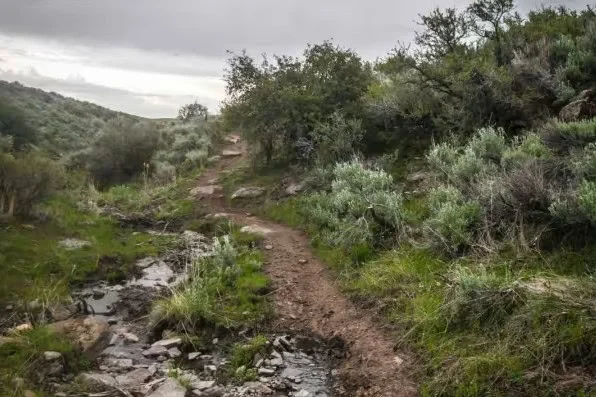
12. Basalt Lava Dust from Snake River Canyons Park: Brake Component Contamination After Off-Road Recreation
Category: Medium Priority – I like doing off-road recreation. How does that affect my brake system?
Mineral dust and debris from off-road terrain can contaminate brake friction surfaces in ways that are invisible from the driver’s seat but measurable in stopping performance. Basalt and silica-based mineral particles, when abraded from lava rock and compressed soil surfaces by tires, become airborne and settle on rotor faces, between pads and rotor surfaces, and into caliper assemblies. These abrasive particles act differently from normal brake dust — they accelerate pad and rotor wear rather than contributing to it, and they can alter the coefficient of friction at the pad-rotor interface, producing inconsistent bite feel and reduced stopping power on the first several brake applications after returning to pavement. Unlike normal brake wear, this contamination is invisible until braking performance fails to match expectations [5].
The Snake River Canyons Park, accessible from Twin Falls and easily reachable for Kimberly residents, offers miles of dirt and lava rock trails across exposed basalt outcroppings north of the canyon rim. Hikers, mountain bikers, and trail drivers who venture through the park’s lava terrain — then load their vehicle and drive home to Kimberly on US-30 — are bringing canyon floor minerology into their brake assemblies. The transition from unpaved lava terrain to 55-mph surface street driving puts those contaminated brakes to work immediately. A vehicle with pre-existing pad wear and basalt-contaminated friction surfaces is not delivering the stopping performance its driver assumes — and the first hard stop on Kimberly Road will reveal that gap at the worst possible moment.
Trail days should not turn into brake days. If you’ve been out on the Snake River Canyons Park trails — or any unpaved terrain in the Magic Valley — have your brakes checked before your next highway drive at Grease Monkey, 1550 Main St N, Kimberly, ID 83341. Their technicians can clean and inspect brake assemblies, identify contamination-related wear, and restore your stopping performance before it costs you. Book at https://www.greasemonkey.com/locations/id/kimberly/1550-main/ — the canyon is worth every visit; just make sure your brakes are ready for the road home.
13. High Desert Diurnal Temperature Cycling: The Hidden Fatigue of Kimberly’s 30-Degree Daily Swings
Category: Lower Priority – The Snake River Valley has huge temperature swings. Does that hurt my brakes?
Rubber is a viscoelastic material: it deforms under load and temperature change, then recovers — but not perfectly, and not indefinitely. Each thermal cycle — warming and cooling — causes microscopic structural changes that accumulate over time. This process, called thermal fatigue, is distinct from UV degradation or ozone cracking and is driven specifically by the frequency and magnitude of temperature change. Engineering research demonstrates that materials undergoing repeated thermal cycling degrade faster than those held at either temperature extreme alone, because each transition produces internal stress that the material must absorb. For brake system rubber components — caliper piston seals, brake hose inner liners, dust boots over ball joints and tie rod ends — this cycling effect is a slow-motion failure mechanism that rarely produces dramatic warnings before it produces a failure [7].
The Snake River Plain is among the most thermally dynamic environments in the American West. Climate data from the WRCC shows that the high desert corridor of southern Idaho — including Twin Falls County and Kimberly — experiences a diurnal temperature range exceeding 30°F through the summer months, with mornings regularly starting in the upper 50s and afternoons reaching into the mid-to-upper 90s [7]. This 30-degree daily swing means that every rubber seal and hose in your brake system expands and contracts by a significant fraction every single day — not seasonally, but daily, for months at a time. Over multiple seasons, the cumulative fatigue effect on caliper seals and brake hoses can produce microscopic cracking, swelling, and internal collapse that are invisible during casual inspection but detectable by a trained technician.
Temperature swings you can’t feel are degrading components you can’t see. An annual brake system inspection at Grease Monkey, 1550 Main St N, Kimberly, ID 83341 includes evaluation of rubber components, brake hose condition, and caliper seal integrity — the checks that catch thermal fatigue before it progresses to hydraulic failure. Schedule before summer’s thermal cycling peaks at https://www.greasemonkey.com/locations/id/kimberly/1550-main/ — because in Magic Valley, every day that passes is another thermal cycle your brake rubber has absorbed.
14. Pre-Harvest Brake Inspection Window: Strategic Service Timing in a Farm-First Community
Category: Lower Priority – What is the best time for me to have my vehicle’s brakes serviced in the Kimberly region?
Vehicle maintenance in agricultural communities follows a different rhythm than in urban environments. During planting and harvest seasons, the demand on local auto service facilities — and on drivers’ schedules — intensifies dramatically. Farmers are managing equipment maintenance, fuel logistics, and time-sensitive field operations simultaneously. Personal vehicle service gets pushed to “after harvest.” But “after harvest” for brake systems often means deferring maintenance through the highest-risk driving season of the year: the period when farm haul truck traffic is heaviest, when days are long and fatigue-driving is most common, when the roads are dirtiest, and when the financial and time cost of a brake failure is most disruptive. The statistics are consistent: vehicles that enter high-demand seasons without recent brake inspection have a measurably higher likelihood of requiring emergency repair during that season rather than scheduled service before it [9].
Kimberly’s annual agricultural calendar is as predictable as the canal water: spring planting runs from April through June, sugar beet and harvest traffic builds through September and October, and the whole cycle repeats. Every Kimberly resident who drives during fall harvest is sharing US-30 with the highest commercial truck volume of the year. That is precisely when worn pads, degraded fluid, and caliper issues are most likely to be called upon in an emergency — and precisely when a shop appointment is hardest to find. Getting a brake inspection in July or August — before the harvest machinery crowd fills the bays — is not just smart maintenance planning; it is strategic risk management for the community’s busiest and most hazardous road season. The harvest season won’t wait, and neither should your brake inspection. Get ahead of the fall rush by scheduling your brake system check now at Grease Monkey, 1550 Main St N, Kimberly, ID 83341 — while appointments are available and before the haul trucks and combines make Kimberly Road a daily emergency. Book your pre-harvest inspection at https://www.greasemonkey.com/locations/id/kimberly/1550-main/ — because the farmers who built this community knew that preparation before the season is what makes the season survivable.
15. The Magic Valley Multiplier: Why Kimberly’s Specific Environment Accelerates Brake Wear Beyond National Service Intervals
Category: Long-Term Value – Does living in the Kimberly area put more stress on my brakes?
Standard vehicle manufacturer brake service intervals are established using modeled driving conditions that represent national averages: a statistical blend of highway miles, city miles, temperature profiles, and road surface types. These averages are useful benchmarks for typical environments. But they systematically underestimate brake wear in communities whose driving environment deviates significantly from that average. Research on component wear acceleration consistently shows that combinations of multiple stressors — elevated temperature, moisture exposure, mineral contamination, frequent heavy braking, and repeated thermal cycling — produce wear rates that are multiplicative rather than additive. A vehicle operated in an environment with two simultaneous stressors doesn’t wear twice as fast; it can wear three or four times as fast, because each stressor compounds the degrading effect of the others [5][7].
Kimberly, Idaho presents precisely this compounding profile. A driver living on Kimberly Road faces: summer temperatures that push brake thermal loads higher than the national average, 30°F-plus daily temperature swings that cycle every rubber component through thermal fatigue daily, irrigation canal crossings that wet brake components throughout the growing season, sugar beet and farm truck traffic that demands more frequent emergency deceleration events than a typical suburban road, lava terrain recreational driving that introduces mineral contamination, and agricultural dust that infiltrates brake assemblies year-round. No single one of these factors is catastrophic in isolation. Together, they create a cumulative wear environment that can bring a brake system to the edge of acceptable performance well before the vehicle’s odometer suggests a service is due. A Kimberly vehicle may need brake attention at 25,000 miles when the manufacturer’s interval suggests 35,000 — and the driver who waits for the mileage trigger will have been driving on degraded brakes for months.
The national service interval was written for average conditions — and Kimberly is not average. Bring your vehicle to Grease Monkey at 1550 Main St N, Kimberly, ID 83341 for a complete brake system assessment that accounts for where you actually drive, not where the average American drives. Their ASE-certified technicians understand local road conditions and will give you an honest read on your system’s actual wear state — not just the calendar. Schedule your Magic Valley brake assessment at https://www.greasemonkey.com/locations/id/kimberly/1550-main/ — because your brakes deserve a service interval built around your roads, not someone else’s.
About Grease Monkey — 1550 Main St N, Kimberly, Idaho 83341
Grease Monkey at 1550 Main St N, Kimberly, Idaho 83341 (Center #1508) is part of the FullSpeed Automotive network — one of the nation’s largest multi-brand automotive service organizations with more than 700 locations nationwide. FullSpeed Automotive earned recognition in 2025 when 435 of its service centers were named CARFAX Top Shop Winners [15], reflecting a national standard of quality that Kimberly drivers access right on Main Street. The Kimberly location holds a 4.9 customer rating, is staffed by ASE-certified technicians, and offers brake inspections and service with no appointment needed, Monday through Saturday. To schedule your brake service or learn more, visit https://www.greasemonkey.com/locations/id/kimberly/1550-main/.
Author Information
Author Bio – Phillip Paul Gilliam
Phillip Gilliam is a veteran journalist and former Editor-in-Chief with 50+ years of publishing experience and thousands of published articles. Specializing in automotive, trucking, and digital publishing, he creates authoritative, search-optimized content built on real-world expertise and editorial excellence. To learn more about Phil, visit http://www.phillipgilliam.com/about.html or contact Phil at [email protected]. He would love to hear from you!
Full Citation List
[1] City of Kimberly, Idaho. Kimberly Statistical Data: Population 3,663, Elevation 3,921 Feet. City of Kimberly Official Website. Available at: http://www.cityofkimberly.org/Archive.aspx?ADID=492. (Kimberly elevation: 3,921 feet; historical population data.)
[2] Magic Valley Times-News. “The Sugar Year: Massive Hauling Effort Gathers Idaho’s Lucrative Sugar Beet Crop.” MagicValley.com. Available at: https://magicvalley.com/business/agriculture/the-sugar-year-massive-hauling-effort-gathers-idahos-lucrative-sugar-beet-crop/article_7f399361-3c64-553a-9746-f3dc40aaa4e0.html. (Approximately 400 haul trucks per day during sugar beet campaign; approximately 7 million tons of beets transported per year in Idaho.)
[3] Federal Motor Carrier Safety Administration (FMCSA). Stopping Distance Comparisons: Commercial Motor Vehicles vs. Passenger Vehicles. U.S. Department of Transportation. Available at: https://www.fmcsa.dot.gov/safety/driver-safety/cmv-driving-tips-stop-safely. (Loaded semi-truck stopping distance at 60 mph: up to 525 feet under ideal conditions, compared to approximately 305 feet for a passenger vehicle.)
[4] City of Twin Falls, Idaho. Shoshone Falls Scenic Attraction. TFID.org. Available at: https://www.tfid.org/309/Shoshone-Falls. (Shoshone Falls: 212 feet tall, 900 feet wide, located in the Snake River Canyon approximately 3 miles upstream from Twin Falls; one of the largest natural waterfalls in the United States by volume, exceeding the height of Niagara Falls.)
[5] TradeCarHub / ASK My Auto. “How Hot Do Brake Rotors Get: Exploring the Temperature Limits of Your Braking System.” TradeCarHub.com. Available at: https://tradecarhub.com/car-safety/how-hot-do-brake-rotors-get-exploring-the-temperature-limits-of-your-braking-system/. (Brake rotors reach stress-related deformation at 600–700°F; emergency braking can produce rotor temperatures of 1,000°F or more.)
[6] Idaho Transportation Department, Office of Highway Safety. Idaho Traffic Crashes 2021. Idaho Transportation Department. Available at: https://apps.itd.idaho.gov/Apps/OHS/Crash/21/Analysis.pdf. (In Idaho, 12.5% of all fatal traffic crashes involve a large truck; Idaho is the ninth most dangerous state for truck-involved fatal crashes.)
[7] Western Regional Climate Center (WRCC). Idaho Climate Narrative. Desert Research Institute / NOAA. Available at: https://wrcc.dri.edu/Climate/narrative_id.php. (The diurnal temperature range in Idaho’s Snake River Plain semi-arid corridor exceeds 30°F during summer months, with temperatures in Twin Falls County regularly reaching the upper 90s to above 100°F during afternoon hours and dropping into the upper 50s overnight.)
[8] College of Southern Idaho, Office of Institutional Effectiveness. Annual Enrollment Data. CSI.edu. Available at: https://www.csi.edu/institutional-effectiveness/institutional-research/data-at-a-glance/annual-enrollment.aspx. (College of Southern Idaho total enrollment: 10,176 students in 2024; 19% enrolled full-time; approximately 58% of students are over the age of 21; the large majority commute from off-campus locations across the Magic Valley.)
[9] The Zebra / Insurance Research Group. “Why So Many Drivers Are Behind on Critical Car Maintenance — and How It Puts Everyone at Risk.” TheZebra.com. Available at: https://www.thezebra.com/resources/car-insurance/deferred-car-maintenance/. (An estimated 41% of vehicles nationwide are overdue for critical maintenance; 25.9% of vehicle owners reported ignoring brake warning signs for a month or more before seeking service.)
[10] National Highway Traffic Safety Administration (NHTSA). Federal Motor Vehicle Safety Standard No. 116: Motor Vehicle Brake Fluids. NHTSA.dot.gov. Available at: https://www.nhtsa.gov/sites/nhtsa.gov/files/tp-116-04.pdf. (FMVSS 116 minimum standards: DOT 3 dry boiling point ≥ 401°F / 205°C; DOT 3 wet boiling point [3.7% water absorption] ≥ 284°F / 140°C; DOT 4 dry boiling point ≥ 446°F / 230°C.)
[11] ADVICS Aftermarket Technical Resources. “Brake Fluid Boiling Points: What Are They and Why Do They Matter?” ADVICSAftermarket.com. Available at: https://www.advicsaftermarket.com/technical-resources/tech-tips/brake-fluid-boiling-points-what-are-they-and-why-do-they-matter/. (Glycol-ether brake fluid is hygroscopic and actively absorbs moisture from the surrounding environment; moisture absorption sufficient to approach the wet boiling point threshold typically occurs within 12–24 months of service under normal driving conditions.)
[12] Direct Brakes Technical Blog. “Wet Weather Braking Dangers: How Rain Affects Your Brakes.” DirectBrakes.com. Available at: https://directbrakes.com/blog/wet-weather-brake-problems. (Water film on brake rotors reduces pad-to-rotor friction on first brake application; stopping distance increases 30–40% in wet conditions, recovering within one to two firm stops as braking heat evaporates residual moisture.)
[13] Idaho Department of Environmental Quality / Magic Valley Times-News. “Air Quality in Magic Valley Prompts DEQ Advisory.” MagicValley.com. Available at: https://magicvalley.com/news/local/deq-haze-air-quality-twin-falls/article_b9ec3a38-4ba0-11ef-82fd-f7b308dc1df4.html. (July 2024: Air Quality Index exceeded 170 in the Twin Falls area from wildfires in Oregon and California combined with a 4,000-acre local fire southwest of Bliss and a 3,000-acre fire near Glenns Ferry; air quality advisories caused cancellation of the Twin Falls Market on Main event.)
[14] BoiseDev News. “Chobani Breaks Ground on $500 Million Twin Falls Plant Expansion.” BoiseDev.com. Available at: https://boisedev.com/news/2025/03/20/food-manufacturer-groundbreaking-magic-valley-march-2025/. (Chobani’s Twin Falls facility: world’s largest yogurt manufacturing plant at 1 million square feet, employing approximately 1,200 workers; planned $500 million expansion to add 500,000 square feet, bringing total to 1.6 million square feet; Clif Bar production facility adjacent, employing up to 250 people; region designated “Silicon Valley of Food.”)
[15] AutoSuccess Online. “FullSpeed Automotive Recognized: 435 Service Centers Earn CARFAX Top Shop Wins.” AutoSuccessOnline.com. Available at: https://www.autosuccessonline.com/fullspeed-automotive-recognized-435-service-centers-carfax-top-shop-wins/. (In 2025, 435 FullSpeed Automotive service centers — including Grease Monkey locations — were named CARFAX Top Shop Winners, representing one of the industry’s most recognized third-party endorsements of automotive service quality.)
© 2026 Grease Monkey, Written by: Phillip Paul Gilliam. All rights reserved. Published in partnership with Grease Monkey, 1550 Main St N, Kimberly, Idaho 83341. Content is for informational purposes and reflects current industry research and local geographic conditions. Brake service intervals and recommendations may vary by individual vehicle, usage pattern, and driving conditions. Consult a certified professional for specific advice about your vehicle’s brake system.
Stop by today.
- Grease Monkey Center #1508 Address: 1550 Main, Kimberly, ID, 83341
- Services: Air Conditioning Services, Battery Services, Car Wash Services, Engine Services, Filter Services, Fluid Exchange Services, Headlight Services, Oil Changes, State Inspection Services, Tire Services, Transmission Services
Your car will thank you. And your wallet will too.

Plan Your Visit
Find a location near you, explore current deals, and get everything you need before you roll in.