15 Reasons Rexburg's Yellowstone Highway Corridor Never Lets a Transmission Rest
Location: Rexburg, ID Topic: Grease Monkey Center # 1533 By: Phil Gilliam
An Authoritative Guide for Vehicle Transmission Health and Repair in Idaho’s Only College Town That Never Empties Its Streets
Grease Monkey 795 South Yellowstone Highway, Rexburg, ID 83440 Has Earned a 5.0 Star Rating From Its First 14 Google Reviews Since Opening in 2026
A Note on Authority and Expertise: This article was researched and written by Phillip Paul Gilliam, a veteran journalist and former Editor-in-Chief with more than 50 years of publishing experience in automotive, trucking, and safety communications. The transmission guidance presented here is grounded in current SAE fluid-life standards, transportation infrastructure research, and manufacturer engineering research – not generic information.
The Grease Monkey at 795 South Yellowstone Highway, Rexburg, ID 83440, is part of the FullSpeed Automotive network, which services more than 5.2 million vehicles annually across 700-plus locations nationwide and generated over $542 million in 2026 revenue. In 2025, 435 FullSpeed Automotive locations – including Grease Monkey franchises – were named CARFAX Top Shop Winners for verified customer satisfaction, and in 2026 Grease Monkey was recognized as an Entrepreneur Verified Franchise. This is the newest Grease Monkey in the FullSpeed Automotive network to open its doors in Rexburg, joining the long-established North 2nd East location that has served this community for years, and it brings that same national ASE-certified training standard – along with the newest equipment on the shop floor – to a town whose population barely resembles what it was even five years ago.
Rexburg is Madison County’s seat and largest city, home to 39,409 residents at the 2020 census, sitting at 4,865 feet of elevation where the Teton River meets the edge of the Snake River Plain [9]. But the number that actually shapes daily driving here is a different one: roughly 21,500 BYU-Idaho students living in a city this size, enrolled through a year-round academic calendar that has no real off-season [3]. Add a well-documented flood history – the catastrophic 1976 Teton Dam failure remains the single most significant event ever to strike this valley, sending floodwaters through two-thirds of Rexburg’s homes in a matter of hours [10] – and a store address that sits directly on the same highway that carries Yellowstone-bound travelers through town every summer, and you have a genuinely unusual mix of transmission stressors packed into one small Idaho city.
An Introduction to Transmission Survival in a Town That Never Really Empties Out
Most college towns breathe in and breathe out with the academic calendar – packed in September, half-empty by July. Rexburg does not work that way. Because BYU-Idaho runs a permanent three-track academic calendar rather than a traditional two-semester year, the university enrolls roughly 50 percent more students than a conventional school its size could ever hold, and it does that by keeping the campus – and the city around it – continuously populated in every season [2]. Winter 2026 enrollment reached 23,708 campus-based students, a 5 percent jump over the year before, with an estimated 21,500 of them living in Rexburg itself [3]. There is no summer lull here the way there is in most college towns; there is only a rotating cast of roughly the same number of drivers, students moving in and moving out three times a year instead of once, sharing the road with longtime Madison County families and a highway system built for a much smaller town.
Most drivers think about their transmission only when it fails – and by then, the fix has usually jumped from a few hundred dollars to several thousand. That gap is not an accident of bad luck. It is math. Automatic transmission fluid follows a well-documented thermal curve: for every 20 degrees Fahrenheit the fluid runs above roughly 175 degrees F, its usable service life is cut in half, according to SAE and Allison Transmission engineering data. Fluid that would last 100,000 miles at 175 degrees F is finished at 25,000 miles by 220 degrees F, and drops to just 5,000 miles at 260 degrees F [1]. Rexburg adds its own local variables to that curve – a highway address that puts a shop directly in the path of both local commuters and Yellowstone-bound travelers, a student population that never fully leaves, and a community still shaped by a flood that reordered this valley fifty years ago.
This guide walks through fifteen specific, Rexburg-grounded reasons your transmission deserves professional attention, organized from the most urgent safety risks to the more preventive, long-view maintenance decisions. Some of these will be familiar to anyone who has lived here for decades. Others – like what living full-time in an RV does to a drivetrain, or why a returning missionary’s first winter behind the wheel deserves a second look – are specific to a city built around a university unlike almost any other in the country. Each one closes with a specific, useful next step you can take at the Grease Monkey on South Yellowstone Highway.
Most Critical
1. Home on Wheels: What Rexburg’s Growing RV Student-Housing Trend Means for a Transmission That Never Stops Relocating
Category Most Critical
Is it actually harder on a vehicle’s transmission to live full-time in an RV while attending BYU-Idaho, compared to renting an apartment?
Rising community-housing costs near campus – typical one- and two-bedroom apartments now run $900 to $1,100 a month – have pushed a genuine and growing number of married BYU-Idaho students toward full-time RV living as a lower-cost alternative, trading apartment rent for the freedom (and financial relief) of parking a travel trailer or motorhome at a local RV park instead [4]. That lifestyle looks appealing on paper, but the tow vehicle or motorhome chassis involved does a kind of work an apartment-dwelling commuter’s car never has to do: repeated hitching and unhitching, low-speed backing into tight RV park spurs, and periodic full relocations between parks or back home for a track break, each one cycling the transmission through exactly the kind of low-speed, high-load maneuvering that concentrates wear far faster than steady highway miles.
A vehicle supporting full-time RV living is effectively working two jobs – daily commuter and periodic moving truck – and the second job rarely shows up on a normal maintenance schedule built around mileage alone.
2. Fresh Off a Mission, Back Behind the Wheel: Why Rexburg’s Newest Returning Drivers Deserve a Second Look at Their Transmission Habits
Category Most Critical
I just got home from an extended time away where I barely drove at all – could that actually affect my transmission?
Rexburg’s student population includes a steady stream of young adults arriving on campus fresh off 18-to-24-month stretches with little or no regular driving experience, and the research on extended driving breaks is consistent: skills that once required no conscious thought – smooth braking, proper following distance, controlled shifting between gears – become things a driver has to actively relearn, and one peer-reviewed study on driving breaks found a measurable increase in traffic violations in the first year back behind the wheel after a gap [5]. That relearning curve matters more here than in most college towns, because it lands directly on top of a first real Rexburg winter – hard braking, abrupt downshifts, and rough gear-selector habits from a rusty driver put concentrated, avoidable stress on a transmission during exactly the season when fluid is already working hardest.
A new or returning driver who has not been behind the wheel regularly in over a year benefits from treating the first few months back as its own adjustment period – both for their own safety and for the vehicle absorbing the learning curve.
3. Three Exits, One Town: What Constant On-and-Off Merging Along Yellowstone Highway Does to a Transmission
Category Most Critical
Does living in a town with several closely spaced highway exits actually wear out a transmission faster than one with a single main interchange?
US-20 – South Yellowstone Highway – runs directly through Rexburg with three separate interchanges packed into just a few miles: South Rexburg at Exit 332, Rexburg at Exit 333, and North Rexburg at Exit 337 [7]. For a town this size, that is an unusually dense cluster of on-ramps and off-ramps, and it means routine local errands – a grocery run, a trip to campus, a stop at the store on South Yellowstone Highway itself – frequently involve merging onto and off of a limited-access highway multiple times in a single short trip, rather than the single sustained highway stretch a driver in a more typically laid-out town would experience.
Each merge cycles a transmission through an acceleration-to-cruise-to-deceleration sequence that, repeated several times a day, adds up to meaningfully more shift events and torque converter engagement cycles than the same total mileage covered on a single uninterrupted road would produce.
4. No Off-Season: Why BYU-Idaho’s Three-Track Calendar Means Rexburg’s Roads Never Get a Break
Category High Priority
Does the fact that BYU-Idaho runs classes year-round actually change how much wear local roads and vehicle transmissions see compared to a normal college town?
Most university towns give their roads a genuine rest each summer as students scatter home. BYU-Idaho’s three-track calendar was specifically designed to avoid that pattern – by dividing the school year into three overlapping semesters and assigning every student to one of three rotating tracks, the university keeps campus facilities in continuous use and serves roughly 50 percent more students than a traditional academic calendar could support in the same buildings [2]. Winter 2026 alone brought 23,708 campus-based students to a city of under 40,000 people, a 5 percent increase over the previous year [3]. The practical result for local infrastructure – and for any vehicle regularly driven on it – is that Rexburg’s commuter traffic volume never meaningfully drops the way it would in a conventional college town; the specific students change from track to track, but the total load on the roads stays high essentially year-round.
For a transmission, this means the “light traffic season” that gives components in most college towns a seasonal breather from stop-and-go stress simply does not exist here in the same way, which is worth factoring into how often fluid and wear components actually need to be checked.
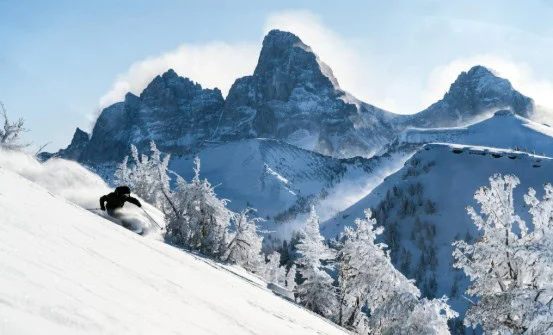
A day of a fun snow-day ski trip over the Teton Pass takes a toll on your transmission. Read what to do.
5. The Targhee Run: What a Snow-Day Ski Trip Over Teton Pass Does to a Transmission That Wasn’t Built for It
Category High Priority
Is driving over to Grand Targhee for a day of skiing actually harder on my transmission than a normal drive around town?
Grand Targhee Resort sits roughly 57 miles from Rexburg, accessible only by driving through Driggs and up over Teton Pass on the western slope of the Teton Range – a genuine mountain-pass drive, not a highway cruise [6]. A day-trip skier making that run gains significant elevation in a short distance, often in winter conditions, which means sustained lower-gear climbing on the way up and extended engine braking on the descent back down – exactly the kind of grade work that raises transmission fluid temperature well beyond what the same vehicle experiences on flat local roads, even without a trailer or heavy cargo involved.
A vehicle that handles Rexburg’s flat local streets without complaint can still show real strain on a Targhee day trip, because grade-driven heat buildup does not require towing to matter – the mountain itself is enough.
6. Priced Out and Driving Further: What Rexburg’s Student Housing Shortage Is Doing to Commute Distances
Category High Priority
Does the local housing shortage actually change how far students end up driving, and does that matter for a transmission?
With community apartment rents in the $900-to-$1,100-a-month range and rising, and campus-adjacent housing consistently in short supply relative to a student body north of 20,000, a meaningful number of BYU-Idaho students and young families end up settling in Sugar City, St. Anthony, Teton, or other outlying Madison County communities rather than in Rexburg proper [8]. That housing-driven relocation quietly turns what would have been a short walk or bike ride to campus into a genuine daily commute, often on two-lane rural roads rather than the highway – a driving pattern shift that a lot of newly displaced students never think to mention to a shop, even though it can meaningfully change how much heat-cycling and mileage their transmission is actually absorbing.
If a housing situation has recently pushed your daily trip to campus or work from a five-minute walk into a real commute, that shift is worth flagging at your next service appointment – not because it is dangerous on its own, but because it changes the math your last service interval was based on.
7. Moving Day, Three Times a Year: What Track Changeover Weekends Do to Local Traffic
Category Important
Does BYU-Idaho’s track system actually create bigger traffic surges than a normal one-time fall move-in weekend would and does this impact my transmission?
Because BYU-Idaho’s three-track calendar rotates a large share of its student body in and out of Rexburg three separate times each year rather than once, the concentrated moving-truck, U-Haul, and loaded-vehicle traffic that most college towns absorb in a single August weekend happens here in three smaller but still significant bursts [3]. Each changeover weekend brings a spike in heavily loaded vehicles making short, repetitive trips – apartment to storage unit, storage unit to a rental truck, rental truck back out of town – which is a fundamentally different (and harder) duty cycle on a transmission than the same vehicle’s normal daily errands.
If your vehicle regularly does moving-day duty during track changeovers – hauling boxes, furniture, or towing a small trailer for a friend – treating those specific weekends as a heavier-than-normal duty cycle, rather than just more of the same driving, helps catch strain before it becomes a bigger problem.
8. Bought in the Parking Lot: Why a Student-to-Student Car Sale Skips the One Step That Protects You Most
Category Important
I bought my car directly from another student before they graduated or moved away – should I actually be worried things like the transmission and about not knowing its full history?
Private-party used car sales are common in any college town, but Rexburg’s constant three-times-a-year turnover makes peer-to-peer sales – one student selling a car directly to another before leaving town – an especially routine way vehicles change hands here. Private sales like this typically happen as-is, with no dealer certification, no warranty, and often no full maintenance history changing hands along with the keys, and the risks that come with skipping a vehicle history check are real: undisclosed prior damage, hidden liens, or simply no record of whether a transmission has ever had its fluid serviced at all [13]. A car that seemed to run fine for the seller heading out of town can arrive with a buyer completely unaware of what maintenance, if any, it actually received.
If you bought a vehicle directly from another student without a full service history attached, getting a baseline transmission inspection now – rather than waiting for a symptom to show up – is the fastest way to close that information gap.
9. Cruise Night at the Museum: What Rexburg’s Classic Car Culture Gets Right About Vintage Transmission Fluid
Category Important
I own a classic or antique car that I only drive occasionally around Rexburg – does it need different transmission fluid than a modern vehicle?
Rexburg’s active vintage vehicle and aviation culture, anchored by the Legacy Flight Museum’s collection of restored World War II-era aircraft and the classic car enthusiasts it draws to town, means a real number of local garages hold onto older automatic transmissions that were never engineered around modern fluid chemistry. Modern synthetic ATF is broadly compatible with older transmissions and typically represents a genuine upgrade in additive quality over older formulations, but older gearboxes can rely on specific fluid types – Type F being a common example – and vintage seals and gaskets are not always compatible with every modern synthetic blend, which means the wrong fluid choice on a classic car can cause leaks or accelerated wear rather than the improvement an owner expects [12].
A classic or antique vehicle deserves the same fluid-specification research as any modern one – arguably more, since getting it wrong on an older, harder-to-source transmission is a costlier mistake to fix.
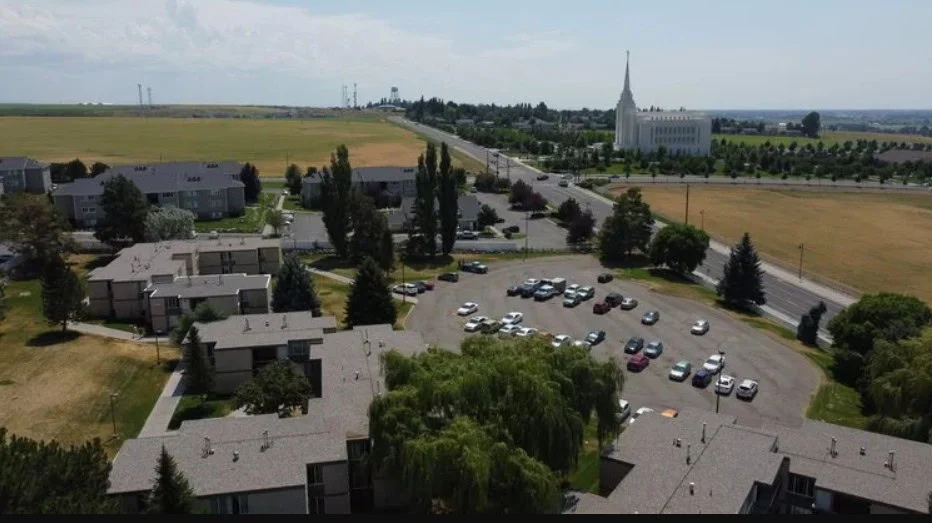
Aspen Village is a great place to live but parking sometimes requires tight-space maneuvering
Medium Priority
10. The Parking Hunt Near Campus: What Constant Tight-Space Maneuvering by Married Student Housing Does to a Transmission
Category Medium Priority
I live in one of the dense married-student housing complexes near campus – does the constant tight parking actually add wear on my transmission beyond normal driving?
Dense married-student housing complexes near BYU-Idaho – places like Aspen Village and Campus Courtyard, along with the community apartment options that have sprung up around them – pack a large number of vehicles into a comparatively small footprint of curb and lot space, and the same rising rents pushing some students toward RV living are pushing others into these tightly packed complexes instead [4]. Finding an open spot in a full lot often means multiple attempts at backing into a tight space, repositioning around a neighbor’s vehicle, or several short forward-reverse corrections – each shift between drive and reverse during that kind of low-speed hunt engages a fresh combination of clutch packs, concentrating transmission wear in a way that a single open-lot pull-through never does.
If your daily routine includes this kind of repeated tight-space maneuvering to find parking, mentioning it at your next service helps a technician evaluate clutch engagement specifically, rather than just checking fluid color and calling it done.
11. All-Wheel Drive Isn’t a Force Field: The Rexburg Winter Myth Worth Retiring
Category Medium Priority
I drive an AWD vehicle – does that actually mean I don’t need to worry as much about winter driving stress on my transmission?
All-wheel drive genuinely helps a vehicle put power down and accelerate on snow and ice, but it does nothing to help that same vehicle stop any faster, and the false confidence AWD creates is a well-documented problem – drivers with AWD are measurably more likely to follow too closely, brake later, and drive faster than conditions warrant, precisely because the vehicle feels more capable than it actually is in a straight-line stop [11]. In real winter testing, an AWD vehicle on all-season tires has taken more than twice the stopping distance of the same vehicle on dedicated winter tires. That overconfidence translates directly into harder, later braking events – exactly the abrupt, high-load stops that put concentrated stress on a transmission and its mounts, regardless of how capable the drivetrain is at getting moving in the first place.
Rexburg’s winters reward a driver who treats AWD as an acceleration advantage, not a stopping advantage – and a transmission benefits from that same mindset every time a hard winter stop is avoided instead of needed.
12. New to Rexburg, New to a Lift: Why Apartment-Lot DIY Fluid Changes Are Riskier Than They Look
Category Medium Priority
I’m trying to save money by doing my own transmission fluid change in my apartment parking lot – is there a real risk to that, beyond it just being inconvenient?
Young married students and budget-conscious residents new to Rexburg often look for ways to cut maintenance costs, and a DIY transmission fluid change is an appealing option on paper – until it happens in an apartment complex parking lot without a lift, the correct fluid on hand, or a reliable way to dispose of the old fluid properly. Working underneath a vehicle on a flat parking lot surface without proper support is a genuine safety risk on its own, and getting the fluid type, fill level, or filter installation wrong on a transmission you are not familiar with can cause more expensive damage than the fluid change was meant to prevent.
For a young family working with a tight budget, a professional fluid service at a fair price is often the more economical choice once the real cost of a mistake – or an ER visit – is factored in against what a shop visit actually costs.
13. From Out of State, Out of the System: What an Out-of-State Title Doesn’t Tell You About a Used Car’s Transmission History
Category Lower Priority
My car was registered in another state before I brought it to Rexburg for school – does that actually create any gaps in what I know about its transmission and drivetrain?
BYU-Idaho draws students from across the country and internationally, and a large share of student vehicles arrive in Rexburg with an out-of-state title and a maintenance history that never fully transferred along with the registration paperwork. Private sellers are not required to disclose full service records, and vehicle history reports can have gaps depending on which state a car came from and how consistently its previous owners had work done at reporting shops – meaning a vehicle that looks clean on paper can still carry unknown transmission service history simply because it changed states, and often owners, along the way [13].
If your vehicle came to Rexburg from out of state and you are not confident about its full transmission service history, a baseline check gives you an actual starting point instead of a guess.
14. Grand Opening Advantage: What Rexburg’s Newest Grease Monkey Location Means for Your First Visit
Category Lower Priority
This Grease Monkey just opened – is there actually an advantage to using a brand-new shop for servicing my transmission over one that’s been around for years?
The Grease Monkey at 795 South Yellowstone Highway opened its doors to Rexburg in 2026, joining the FullSpeed Automotive network’s national standard of ASE-certified technician training with the newest diagnostic equipment and bay technology the company currently offers – the kind of equipment upgrade that an older, longer-running shop typically only receives in stages over time. A brand-new location also means a car put on the lift here is being evaluated by equipment calibrated to current manufacturer specifications from day one, without years of wear on the shop’s own tools working against precision.
For a first-time visitor deciding between a newer and an older shop, a new location’s newest equipment is a genuine, tangible advantage – not just a marketing line.
If most of your driving for the last couple of semesters has been short hops, driving a long distance home can impact your transmission.
15. From Short Hops to the Highway Home: Why Semester-End Road Trips Are a Bigger Jump Than They Feel
Category Lower Priority
My driving all track has basically been short trips around Rexburg – does jumping straight into a long highway drive home actually matter for my transmission?
A semester built around short local trips – to campus, to work, to the store on South Yellowstone Highway – means a transmission and its fluid spend months operating in the cold-start, low-heat driving pattern that never lets fluid fully reach and hold its optimal operating temperature. When track break arrives and that same vehicle suddenly faces a multi-hour or multi-day highway drive out of state, the jump from short local hops to sustained highway heat and mileage is a genuinely different operating condition than anything the fluid has experienced all semester, and a transmission that has quietly been due for service can reveal that fact for the first time exactly when a driver is hundreds of miles from home [1].
A quick fluid check before a long track-break drive – rather than after a warning light appears somewhere on I-80 – is a small step that protects a trip a lot of Rexburg students take several times a year.
About Grease Monkey 795 South Yellowstone Highway, Rexburg, ID 83440
Grease Monkey’s newest Rexburg location, on South Yellowstone Highway, is open Monday through Friday from 8:00 a.m. to 6:00 p.m. and Saturday from 8:00 a.m. to 5:00 p.m., closed Sundays – call (208) 494-9214 to check current bay availability. As the newest addition to the FullSpeed Automotive network in the Rexburg area, this location brings ASE-certified technicians and the company’s newest diagnostic and service equipment to a highway corridor that carries both local commuters and Yellowstone-bound travelers through town. Since opening in 2026, the location has earned a perfect 5.0-star rating from its first 14 Google reviews – a strong early signal backed by the same national training standard and 16-point inspection process that has made Grease Monkey’s longer-established Rexburg location, on North 2nd East, a trusted name in this community for years. The team serves BYU-Idaho’s constantly rotating student population, married student families navigating housing costs and RV living, longtime Madison County residents, and everyone driving the Yellowstone Highway corridor that runs straight past the shop’s front door.
Author Information
Author Bio – Phillip Paul Gilliam
Phillip Gilliam is a veteran journalist and former Editor-in-Chief with 50+ years of publishing experience and thousands of published articles. Specializing in automotive, trucking, and digital publishing, he creates authoritative, search-optimized content built on real-world expertise and editorial excellence. To learn more about Phil, visit http://www.phillipgilliam.com/about.html or contact Phil at [email protected]. He would love to hear from you!
[2] BYU-Idaho. Three Track System. Available at: https://www.byui.edu/admissions/three-track-system. (BYU-Idaho’s year-round three-track academic calendar divides the school year into three overlapping semesters, allowing the university to serve approximately 50% more students than a traditional academic calendar in the same facilities.)
[3] BYU-Idaho Newsroom. BYU-Idaho Continues Momentum as Winter 2026 Enrollment Grows. Available at: https://www.byui.edu/newsroom/announcements/byu-idaho-continues-momentum-as-winter-2026-enrollment-grows. (Winter 2026 campus-based enrollment reached 23,708 students, a 5% increase over Winter 2025; approximately 21,500 students estimated living in Rexburg; 4,710 married students, 20% of the campus-based population.)
[7] Wikipedia. U.S. Route 20 in Idaho. Available at: https://en.wikipedia.org/wiki/U.S._Route_20_in_Idaho. (US-20 passes through Rexburg with three closely spaced interchanges: South Rexburg at Exit 332, Rexburg at Exit 333, and North Rexburg at Exit 337.)
[8] BYU-Idaho. Community and Subsidized Housing. Available at: https://www.byui.edu/housing/community-housing-resources. (Community apartment rents near BYU-Idaho typically range from $900 to $1,100 per month for a one- or two-bedroom unit, contributing to housing pressure that pushes some students and families to outlying Madison County communities.)
We use cookies to improve your browsing experience on our website. By closing this banner or interacting with our site, you acknowledge and agree to our privacy policy.