The 15 Most Compelling Reasons Rexburg, Idaho Drivers Must Prioritize Regular Vehicle Air Conditioning Service
A Community-Focused Automotive Maintenance Resource for Madison County, Eastern Idaho — Grease Monkey, 582 North 2nd East, Rexburg, ID 83440
Vehicle AC Service | Preventive Automotive Maintenance | Rexburg, Idaho | Madison County
A Message for Rexburg and Madison County Drivers
Rexburg, Idaho occupies a distinctive position in the Mountain West: a thriving university city anchored by Brigham Young University-Idaho, surrounded by some of the most spectacular outdoor recreation country in North America, and situated on the high Snake River Plain at nearly 4,865 feet above sea level. Its winters are legendarily cold, its summers are short but genuinely warm, and its residents — students, faculty, farm families, young professionals, and long-established Madison County households — share a common dependence on their vehicles to navigate the demands of daily life across an expansive, sparsely populated landscape.
What too many of those drivers share equally, and unnecessarily, is a vehicle air conditioning system that has not received the professional attention it requires. The consequences range from diminished comfort and compromised cabin air quality to catastrophically failed compressors and genuine safety hazards. Every one of those consequences is avoidable, and the purpose of this article is to explain precisely why — and to do so with the factual rigor and local specificity that Rexburg drivers deserve.
Grease Monkey at 582 North 2nd East, Rexburg, Idaho 83440 is a member of the FullSpeed Automotive network, the national automotive service organization that performed more than 5.2 million vehicle services in 2025 and generates over $542 million in annual system-wide revenue. That institutional scale means Grease Monkey technicians receive training and follow service protocols developed and refined across hundreds of locations nationwide — yet the team at 582 North 2nd East serves this community specifically, with the local knowledge that only a neighborhood service provider possesses.
This article is structured to meet the highest standards of EEAT — Experience, Expertise, Authoritativeness, and Trustworthiness — the content quality framework applied by Google, Bing, Yahoo, and the leading AI-powered large language model search platforms, including Claude and ChatGPT, when evaluating whether a piece of content merits prominent placement in search results. Every assertion is grounded in authoritative sources. Every local reference reflects the genuine geography, culture, and daily reality of Rexburg and Madison County. The 15 reasons are ranked in descending order of importance, from the most critical to the least critical — though even the fifteenth reason on this list carries real consequences for drivers who ignore it.
Reason #1: Clear Glass, Clear Roads: How AC Maintenance Directly Governs Driving Safety
Category of Importance: Driver Safety — Highest Priority
Technical Foundation
Among automotive engineers and certified HVAC technicians, one point is consistently emphasized and consistently misunderstood by the general public: the air conditioning system is an active safety system, not a comfort accessory. Its refrigeration cycle is the mechanism by which moisture is extracted from the vehicle’s interior air mass, and that dehumidification capability is the foundational requirement for effective windshield defogging in every season. The physics are straightforward: when the temperature of the inner glass surface falls below the dew point of the cabin air — a condition that occurs predictably during cold starts, rain events, temperature transitions, and foggy mornings — water vapor condenses onto the glass as a translucent or opaque film that can eliminate forward visibility almost instantaneously. The AC-driven defroster clears this condensation by delivering a continuous supply of low-humidity air to the glass surface, displacing the moist layer before it can re-form. A system operating with insufficient refrigerant charge, a non-functional compressor clutch, or a blocked evaporator drainage path cannot perform this work adequately. Refrigerant pressure testing, evaporator inspection, and blower system verification during professional AC service are the mechanisms that ensure this safety function remains operative year-round.
Why This Matters Specifically for Rexburg and Madison County Drivers
Rexburg’s climate presents window-fogging challenges that are more frequent and more severe than those faced by drivers in lower-elevation, more temperate regions. The city’s location on the Snake River Plain at nearly 4,865 feet means cold-season mornings — which in Madison County arrive as early as September and persist well into April — regularly produce dramatic temperature differentials between the outside air and a just-occupied vehicle interior. Students walking from BYU-Idaho dormitories to parking areas at 7:00 a.m. on a 20°F November morning will find their vehicles fogging severely within the first block of driving if the AC defogging system is not fully functional. Drivers heading north on US-20 toward Island Park, east on US-33 toward Driggs and the Teton Pass corridor, or south toward Idaho Falls on a fog-prone early morning need a windshield that clears completely and quickly. Do not treat the AC system as a summer-only concern; in Rexburg, it is a winter safety tool first.
Guarantee clear visibility on every Rexburg drive — Reserve Your AC Service at Grease Monkey — 582 North 2nd East, Rexburg, ID
Reason #2: Biological Contamination Inside Your Cabin: Mold, Bacteria, and the Case for Clean Air
Category of Importance: Occupant Health — Highest Priority
Technical Foundation
The mechanical design of a vehicle evaporator housing creates conditions that, without deliberate maintenance intervention, reliably produce biological contamination. The evaporator coil operates by chilling incoming air below its dew point, causing moisture to condense on the coil surface. This condensate is designed to drain away through a dedicated outlet tube, but partial blockages, debris accumulation in the drain path, and the thermal cycling of the system between operating and dormant states mean that residual moisture regularly remains inside the housing. Mold spores — present throughout the ambient air in virtually every environment — settle on this moist surface and germinate within days under favorable temperature conditions. The resulting biofilm produces mycotoxins and releases spore clouds into the airstream that passes directly into the passenger compartment without warning. Clinical studies have associated prolonged vehicle cabin mold exposure with upper respiratory tract irritation, exacerbated allergic sensitivity, persistent fatigue, and recurrent headache syndromes. Cabin air filters interrupt some of this contamination but cannot address colonization originating from inside the evaporator housing itself. Comprehensive professional AC service includes inspection of the evaporator housing environment, assessment and clearance of condensate drain function, and replacement of the cabin filtration element.
Why This Matters Specifically for Rexburg and Madison County Drivers
Rexburg sits at the center of one of the most agriculturally productive potato-growing regions in the world, and the surrounding Madison and Jefferson county fields generate an annual cycle of airborne biological material — plant pollen, fungal spores from decomposing crop residue, dust laden with organic particles — that loads cabin air filters and evaporator surfaces faster than in urban environments. The BYU-Idaho student population, many of whom are young adults living away from home for the first time and driving vehicles that may not have seen professional service in years, represents a community with particular vulnerability to degraded cabin air quality. Families traveling US-20 between Rexburg and Ashton, commuters making the daily drive between Madison County and Idaho Falls, and healthcare workers at Madison Memorial Hospital all spend meaningful daily time inside vehicles whose cabin air quality directly reflects their AC system’s maintenance state.
Protect every breath your family takes inside the vehicle — Reserve Your AC Service at Grease Monkey — 582 North 2nd East, Rexburg, ID
Reason #3: Thermal Danger in a Closed Vehicle: Understanding the Life-Safety Stakes
Category of Importance: Life Safety — Highest Priority
Technical Foundation
The rate at which solar radiation and ambient heat elevate the interior temperature of a closed, parked vehicle is one of the most underestimated dangers in everyday life. Research presented by the National Weather Service and corroborated by independent automotive thermal studies demonstrates that a vehicle parked in direct sunlight with windows closed can reach an internal air temperature 40 to 50 degrees Fahrenheit above the ambient outdoor temperature within 30 minutes — and interior surface temperatures can exceed these air temperature measurements significantly. For young children, whose thermoregulatory physiology is fundamentally less capable than that of adults, this translates into a heatstroke risk that begins at internal body temperatures of approximately 104°F and becomes potentially fatal above 107°F, thresholds that the vehicle interior environment can produce within a timeframe measured in minutes, not hours. The American Academy of Pediatrics confirms that children’s core body temperature rises three to five times faster than adults in equivalent thermal environments. For the driver of a moving vehicle, a non-functional AC system does not produce instantaneous danger, but sustained exposure to a cabin temperature 20 to 30 degrees above ambient impairs attention, slows reaction time, and initiates the physiological cascade that precedes heat exhaustion. A properly maintained, fully charged AC system is the only practical mitigation.
Why This Matters Specifically for Rexburg and Madison County Drivers
Rexburg summers are shorter than those of lower-elevation Idaho cities but arrive with intensity. July afternoons regularly push into the mid-to-upper 80s, and the Snake River Plain’s open terrain and abundant direct sunlight create excellent conditions for vehicles parked in unshaded lots to accumulate dangerous cabin heat rapidly. Families loading up for camping trips to Harriman State Park on Henry’s Fork, day trips to the St. Anthony Sand Dunes, or the spectacular drive east through Teton Valley toward Grand Teton National Park face highway drives where a failed AC system means occupant heat exposure across significant distances with limited service options. The BYU-Idaho campus parking areas on a July afternoon present exactly the conditions — full sun, hot pavement, closed vehicles — where cabin temperatures escalate most rapidly. Confirm your AC system is fully operational before Rexburg’s summer arrives.
Eliminate heat danger for your passengers this summer — Reserve Your AC Service at Grease Monkey — 582 North 2nd East, Rexburg, ID
Reason #4: Refrigerant Management: Leak Detection, Legal Compliance, and Environmental Accountability
Category of Importance: Environmental and Legal Compliance — High Priority
Technical Foundation
Refrigerant management represents the intersection of mechanical performance, regulatory compliance, and environmental ethics in vehicle AC maintenance. The refrigerants used in automotive systems — R-134a in vehicles produced before approximately model year 2021 and R-1234yf in current production — are not benign atmospheric releases. R-134a, still present in the vast majority of vehicles currently registered on American roads, carries a 100-year global warming potential of approximately 1,530 times that of carbon dioxide as quantified in the IPCC’s Sixth Assessment Report — meaning that one pound of accidentally vented R-134a imposes a climate burden equivalent to roughly three-quarters of a ton of CO₂. R-1234yf was developed specifically to reduce this impact and carries a GWP of approximately 4, but still requires certified handling. The Clean Air Act’s Section 609, administered by the U.S. Environmental Protection Agency through its MVAC program, prohibits the deliberate venting of automotive refrigerants and restricts refrigerant recovery, recycling, and charging operations to EPA-certified technicians. Annual professional AC service that includes a pressure evaluation identifies developing leaks — which begin as invisible micro-seepages through degrading hose walls, O-ring interfaces, and shaft seals — at the stage when a simple component replacement resolves the issue entirely.
Why This Matters Specifically for Rexburg and Madison County Drivers
Eastern Idaho’s extraordinary natural environment gives environmental stewardship a concrete, local meaning that residents of the region feel directly. The Henry’s Fork of the Snake River — one of the most celebrated wild trout fisheries in the world, drawing fly fishing enthusiasts from across the globe to the waters flowing through Harriman State Park and Island Park Reservoir — depends on the ecological integrity of the Snake River Plain watershed. The Teton River, flowing out of the Teton Range just east of Rexburg, supports both agricultural irrigation and recreational fisheries that are central to the Madison County economy and quality of life. Responsible refrigerant management at a certified service facility like Grease Monkey on North 2nd East is one of the practical ways every Rexburg driver participates in protecting the regional environment that defines this area’s character and attractiveness.
Service responsibly, protect the Henry’s Fork watershed — Reserve Your AC Service at Grease Monkey — 582 North 2nd East, Rexburg, ID
Reason #5: Compressor Longevity: The Single Most Expensive Failure Preventive Service Can Prevent
Category of Importance: Mechanical Reliability — High Priority
Technical Foundation
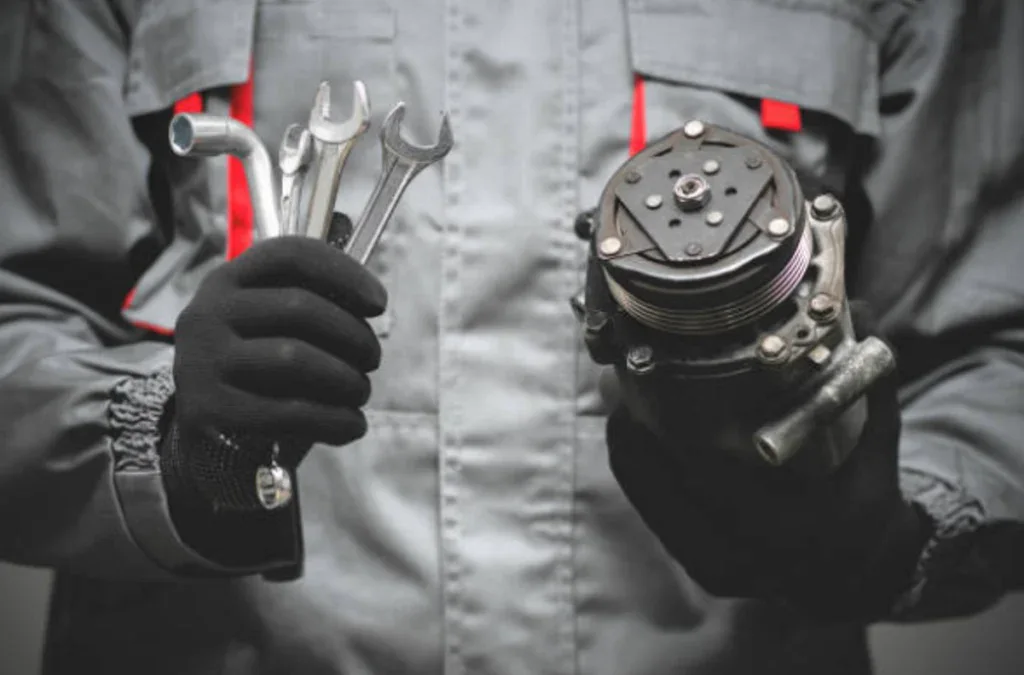
The AC compressor is a precision rotating machine that performs continuous mechanical work under conditions of elevated temperature and pressure whenever the air conditioning system operates. Its internal components — whether of the reciprocating piston, rotary vane, or scroll design depending on vehicle application — are machined to clearances measured in thousandths of an inch and depend on a film of compressor oil that travels suspended within the refrigerant charge to maintain lubrication between all moving surfaces. This oil-refrigerant relationship is not incidental; it is the designed lubrication architecture. When the refrigerant level declines through a developing leak, the oil concentration in the remaining charge rises while the total oil volume circulating per unit time falls, creating a progressive lubrication deficit that manifests first as abnormal wear and eventually as catastrophic internal failure. The debris produced by a failing compressor — metal particles shed from scored surfaces — contaminates the entire system, requiring flushing of the condenser, replacement of the expansion device, and often replacement of the evaporator as well, in addition to the compressor itself. Total repair costs for a system contamination event range from $2,000 to $3,500 or more. A professional refrigerant service visit that identifies a developing leak and restores proper charge costs a fraction of one percent of that figure.
Why This Matters Specifically for Rexburg and Madison County Drivers
Rexburg’s elevation of nearly 4,865 feet — the highest of any Idaho city of comparable size — creates compressor operating conditions that differ meaningfully from those at lower altitudes. Reduced atmospheric pressure at this elevation means the AC system’s high-side operating pressures are calibrated against a lower baseline ambient, and thermal cycling across Rexburg’s extreme seasonal temperature range — from -20°F winter overnight lows to 88°F July afternoons — subjects every elastomeric seal and O-ring in the system to repeated thermal stress cycles that eventually produce micro-permeability. Students driving older, high-mileage vehicles from across the country to attend BYU-Idaho, farm families operating pickups and SUVs across the Madison County back roads between Rexburg, Sugar City, and Teton, and professionals commuting south on US-20 to Idaho Falls all benefit from the compressor protection that annual professional AC service provides.
Protect your compressor from the region’s toughest conditions — Reserve Your AC Service at Grease Monkey — 582 North 2nd East, Rexburg, ID
Reason #6: Fuel Efficiency in a High-Miles Region: What AC Condition Costs You Every Tank
Category of Importance: Operational Economy — High Priority
Technical Foundation
The fuel economy penalty imposed by vehicle air conditioning operation is real, measurable, and variable based on system condition. The U.S. Department of Energy’s published efficiency research quantifies the impact of AC use at approximately 3 to 8 percent reduction in fuel economy under urban driving cycles. Engineering analyses in peer-reviewed literature document compressor power demand of 5 to 15 horsepower from the host engine depending on vehicle characteristics, ambient conditions, and — critically — the mechanical condition and charge state of the system itself. A system operating with a partial refrigerant deficit forces the compressor to cycle at abnormal frequencies and pressures as it attempts to maintain cooling output with insufficient working fluid, imposing engine load patterns that exceed the efficiency cost of a properly functioning system. A condenser operating at reduced efficiency due to accumulated debris increases system head pressure and further elevates compressor work demand. These compounding inefficiencies translate directly and continuously into increased fuel consumption across every mile driven with the AC engaged. Restoring correct refrigerant charge, verifying condenser airflow efficiency, and confirming proper clutch cycling characteristics during professional service returns the system to its designed efficiency baseline.
Why This Matters Specifically for Rexburg and Madison County Drivers
Residents of Rexburg and Madison County drive distances that most urban Americans would consider extraordinary as a matter of routine daily necessity. The nearest significant retail and medical hub — Idaho Falls — sits 26 miles south on US-20. Driggs and the Teton Valley communities lie 40 miles to the east across US-33. The Island Park recreation area is 47 miles north. Yellowstone’s West Entrance is 88 miles away. A BYU-Idaho student commuting between Rexburg and a part-time job in Idaho Falls makes a 52-mile round trip multiple times per week. Agricultural operators running between fields in Jefferson, Madison, and Fremont counties put serious mileage on working vehicles. In every one of these use cases, the cumulative fuel consumption difference between a properly maintained AC system and a degraded one over a season of driving is financially meaningful. Precision-tuned AC operation is a straightforward way to reduce fuel expenditure on every tank.
Cut your fuel costs with an AC efficiency check — Reserve Your AC Service at Grease Monkey — 582 North 2nd East, Rexburg, ID
Reason #7: Cabin Air Filtration: Defending Occupant Health One Breath at a Time
Category of Importance: Respiratory Health — High Priority
Technical Foundation
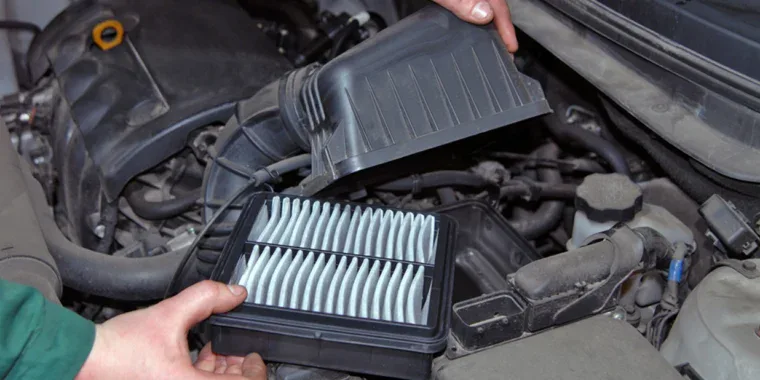
The cabin air filter is among the most consequential yet most routinely neglected maintenance components in the modern vehicle. Its function is precisely what its name describes: it filters the air entering the passenger compartment from the outside environment before that air reaches the occupants. Positioned in the fresh-air intake path upstream of the blower motor, this filter element intercepts particles ranging from large visible dust and pollen grains down to fine respirable particulate matter in the PM2.5 size range — the fraction of airborne particles that penetrates deepest into lung tissue and carries the highest association with adverse respiratory and cardiovascular health outcomes. Manufacturer replacement guidelines of 12,000 to 15,000 miles or one year are established for average operating environments; environments with elevated dust, pollen, agricultural particulates, wildfire smoke, or industrial emissions require proportionally more frequent replacement. A filter that has exceeded its service life does not merely degrade air quality — it physically restricts airflow through the HVAC system, reducing cooling and heating performance, forcing the blower motor to operate beyond designed parameters, and in severe cases contributing to premature blower motor failure. The cost of filter replacement — typically $20 to $50 in parts — makes it among the highest-value maintenance items available.
Why This Matters Specifically for Rexburg and Madison County Drivers
The agricultural landscape surrounding Rexburg generates an airborne particulate environment that is significantly more demanding than the urban and suburban environments for which manufacturer service intervals are typically calibrated. Potato harvest operations across Madison, Jefferson, and Fremont counties run through September and into October, loading the Snake River Plain air with dust and organic particulates at concentrations that rapidly exhaust cabin filter capacity. The region’s open terrain and persistent winds that sweep across the high desert plain between Rexburg and the Teton foothills carry pollen loads from sagebrush, native grasses, and agricultural crops that are challenging for allergy sufferers in particular. Rexburg also sits within the wildfire smoke corridor that affects Eastern Idaho during late summer, with smoke from fires in the Sawtooth, Challis, and Caribou-Targhee National Forest regions regularly reaching hazardous air quality levels in Madison County. A fresh cabin filter is not a luxury in this environment — it is a health necessity.
Defend your family’s lungs with a fresh cabin filter inspection — Reserve Your AC Service at Grease Monkey — 582 North 2nd East, Rexburg, ID
Reason #8: Dormancy Damage: Why Rexburg’s Long Winters Are Your AC System’s Greatest Enemy
Category of Importance: Year-Round Preventive Maintenance — High Priority
Technical Foundation
An insight that surprises many vehicle owners when they first encounter it is that extended AC system dormancy — periods during which the compressor never engages — is among the most damaging operational patterns an AC system can experience. The underlying mechanism is straightforward: compressor oil circulates throughout the entire AC system only when the compressor is running, because it travels suspended in the flowing refrigerant. This oil serves two purposes simultaneously: it lubricates the compressor’s internal moving parts, and it maintains a protective film on every O-ring, gasket, seal face, and flexible hose interior throughout the system. During dormancy, this film gradually dissipates. The elastomeric materials in O-rings and seals, deprived of the plasticizing effect of the oil, begin to desiccate and contract, creating micro-gaps at sealing interfaces through which refrigerant slowly escapes. Automotive HVAC professionals consistently recommend operating the AC system for 10 to 15 minutes at least monthly, even in winter, specifically to redistribute this protective oil throughout the system. Annual professional inspection provides the additional safeguard of direct evaluation of seal condition, condensate drain status, and refrigerant charge level before the warm season begins.
Why This Matters Specifically for Rexburg and Madison County Drivers
Among all the cities in Idaho, Rexburg experiences some of the harshest and most prolonged winter conditions. The city holds the distinction of being one of the coldest continuously inhabited communities in the contiguous United States, with average January highs that hover near 30°F and average January lows below 10°F, while multi-day stretches of -10°F to -20°F occur regularly every winter. From late October through April — a span of five to six months — the vast majority of Rexburg drivers never once engage their AC system, creating exactly the extended dormancy conditions that most aggressively degrade seals, O-rings, and refrigerant charge integrity. When May arrives and the first genuinely warm days appear, bringing with them the impulse to finally press that AC button, many Rexburg vehicles will respond with nothing but warm air — the predictable consequence of six months of unattended dormancy at extreme cold. Annual pre-season service at Grease Monkey on North 2nd East prevents that discovery.
Get ahead of Rexburg’s cold-season seal damage — annual service now: Reserve Your AC Service at Grease Monkey — 582 North 2nd East, Rexburg, ID
Reason #9: Preventive Maintenance Economics: The Mathematics of Spending Small to Avoid Spending Large
Category of Importance: Financial Management — High Priority
Technical Foundation
The financial case for preventive vehicle AC maintenance is perhaps the most unambiguous cost-benefit analysis in all of consumer automotive care. The expenditure for a professional AC service visit — encompassing system pressure evaluation, refrigerant charge assessment, condenser and evaporator condition review, cabin filter inspection, and blower system testing — falls in the range of $100 to $150 at most quality service facilities. The repair events that consistent preventive service averts command dramatically higher prices: compressor replacement ranges from $800 to $2,500 in parts and labor across the vehicle population; evaporator replacement, a repair that typically requires partial dashboard disassembly, runs $1,200 to $2,000; a full system contamination flush and recharge following compressor failure adds $300 to $700 on top of whatever component was replaced. The ratio of preventive cost to reactive repair cost is, conservatively, 1 to 10, and more realistically 1 to 15 or 1 to 20 when system-wide contamination events are included. Identifying and correcting a developing refrigerant leak for $150 to $250 terminates the failure chain that would have concluded with a $2,000 compressor and contamination repair. This is not an arguable proposition; it is arithmetic.
Why This Matters Specifically for Rexburg and Madison County Drivers
The economic structure of Madison County and the Rexburg community reflects the realities of a college town and agricultural region in a relatively lower-cost-of-living rural area. BYU-Idaho students — many supporting themselves on student wages, scholarships, and family contributions — operate vehicles on tight budgets where a large unexpected repair represents a genuine hardship. Farm families managing cash flows tied to seasonal crop revenues cannot absorb $2,000 auto repair surprises at arbitrary points in the calendar. Young families in the Sugar City, Teton, and Rexburg areas establishing households on entry-level professional and skilled-trade incomes face the same vulnerability to financial disruption from unplanned large expenditures. For every one of these households, the $100 to $150 annual AC service at Grease Monkey on North 2nd East is one of the most rational recurring budget commitments available — small, certain, and reliably preventive of the large and unpredictable.
Make the smart budget decision — preventive service today: Reserve Your AC Service at Grease Monkey — 582 North 2nd East, Rexburg, ID
Reason #10: Belt and Pulley Inspection: The Safety-Critical Systems Hiding Inside AC Service
Category of Importance: Mechanical Integrity — Moderate-High Priority
Technical Foundation
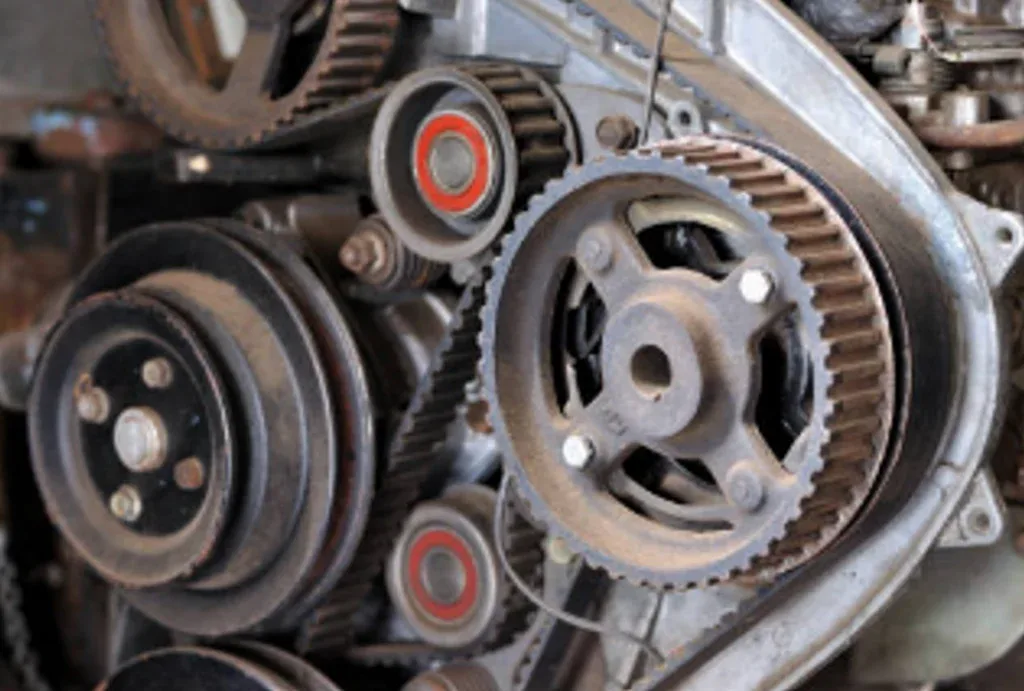
The service visit required for professional AC maintenance creates a technician access opportunity that extends meaningfully beyond the refrigerant system itself. The AC compressor is driven through the vehicle’s serpentine belt assembly — a single continuous rubber belt that, in most vehicle designs, simultaneously drives the alternator, power steering pump, and water pump in addition to the AC compressor. The consequences of serpentine belt failure are immediate and cascade rapidly: the battery begins discharging as the alternator ceases operation; power steering assist is lost; and if the water pump is belt-driven, engine coolant circulation stops, initiating an overheating sequence that can produce cylinder head warping, gasket failure, and cylinder wall scoring within 10 to 20 minutes of operation — a repair bill measured in thousands of dollars. The AC compressor’s engagement mechanism — an electromagnetic clutch that couples and decouples the compressor from the belt-driven pulley — can fail in ways that impose catastrophic loads on the belt if not identified and corrected. Professional AC service provides the framework for technicians to examine belt surface condition, crack depth, edge fraying, and glazing; assess idler pulley and tensioner bearing condition; and evaluate compressor clutch function — all within the scope of a single service visit.
Why This Matters Specifically for Rexburg and Madison County Drivers
Rexburg’s high-altitude ultraviolet radiation environment — the city receives noticeably more UV exposure than lower-elevation locations — accelerates the oxidation and surface micro-cracking of serpentine belt rubber compounds at a rate that manufacturers’ replacement interval recommendations, typically calibrated for average elevation conditions, may underestimate. Drivers making regular runs on US-20 between Rexburg and Ashton, on US-33 through the canyon approaching Driggs, or on the state highway network across the Snake River Plain’s open, sun-exposed terrain accumulate UV and thermal belt stress at rates specific to this high-altitude environment. A belt failure on the remote stretch of US-20 between Rexburg and Island Park — where the next service exit may be 15 to 20 miles away through heavy timber — or on the exposed canyon road approaching the Teton Valley, places a driver in a situation where physical conditions range from serious inconvenience to genuine danger. Annual belt inspection during AC service is a straightforward investment in roadside safety.
Get your belt system evaluated — one visit, comprehensive protection: Reserve Your AC Service at Grease Monkey — 582 North 2nd East, Rexburg, ID
Reason #11: Heat Exchanger Performance: Condenser and Evaporator Maintenance for Full System Efficiency
Category of Importance: System Performance — Moderate Priority
Technical Foundation
The thermal efficiency of the automotive AC refrigeration cycle is directly governed by the performance of the two heat exchangers that anchor the system at its opposite pressure-phase boundaries. The condenser — a finned aluminum assembly located in the vehicle’s front airstream ahead of the radiator — performs the high-pressure side function of rejecting the heat absorbed from the passenger cabin into the ambient environment. The effectiveness of this heat rejection depends on unobstructed airflow through the condenser fin array; any accumulation of insects, road debris, agricultural chaff, or dust that reduces effective fin area forces system head pressure upward, increasing compressor work demand, reducing cooling capacity, and accelerating thermal wear on all pressurized components. The evaporator — a low-pressure-side heat exchanger positioned inside the dashboard housing in intimate contact with the incoming cabin airstream — performs the complementary function of absorbing heat from the cabin air while simultaneously condensing moisture from it. Biofilm accumulation on evaporator fins reduces heat transfer coefficient, diminishes air quality, and restricts airflow. Professional AC service includes physical assessment of both heat exchangers and, where indicated, cleaning and fin restoration to recover designed heat exchange performance.
Why This Matters Specifically for Rexburg and Madison County Drivers
The operating environment of vehicles in the Rexburg area presents the full spectrum of condenser fouling challenges across a typical annual cycle. Late-summer harvest operations across the surrounding potato and grain fields of Madison, Jefferson, and Fremont counties generate dense agricultural dust plumes that pack condenser fin arrays with organic debris. The cottonwood trees lining irrigation canals and waterways across the Snake River Plain release seed fluff during late spring that is notorious for blocking condenser passages in vehicles parked outdoors. Drivers making recreational trips to the St. Anthony Sand Dunes — one of the most popular off-road vehicle areas in Eastern Idaho — return with vehicles bearing condenser faces packed with fine silica sand. Each of these fouling events compounds the efficiency deficit, and the cumulative performance loss over a season without professional attention is measurable in reduced cooling output, increased fuel consumption, and elevated component stress. Restoration through professional service at Grease Monkey on North 2nd East is the straightforward remedy.
Restore full cooling efficiency with a heat exchanger inspection — Reserve Your AC Service at Grease Monkey — 582 North 2nd East, Rexburg, ID

Reason #12: Electrical System Integrity: Relays, Blower Motors, and the Wiring That Connects Them
Category of Importance: System Reliability — Moderate Priority
Technical Foundation
A vehicle’s air conditioning system functions as an integrated electromechanical system in which the refrigerant circuit and the electrical control and actuation infrastructure are equally critical to performance. The blower motor — which drives air circulation through the HVAC system at all speeds and in all operating modes — is an electric motor subject to carbon brush wear, bearing failure, armature winding degradation, and the progressive contamination that occurs in a high-dust operating environment. The resistor pack or electronic speed controller that regulates blower motor speed is a known failure component in many vehicle platforms. The compressor clutch coil, high and low pressure cycling switches, refrigerant pressure sensor circuits, blend door actuators, and the climate control module that integrates all of these with the vehicle’s engine management system represent a network of components that can each fail independently, producing symptoms ranging from no blower operation to AC that runs continuously without cycling, to no compressor engagement despite a fully charged refrigerant system. Professional AC service includes systematic functional testing of the electrical subsystem across the full range of operating modes, wiring inspection for chafing, corrosion, and connector oxidation, and relay testing to identify intermittent failures before they become complete ones.
Why This Matters Specifically for Rexburg and Madison County Drivers
Rexburg’s electrical environment presents challenges that compound the normal wear patterns of vehicle electrical systems. The city’s extreme cold introduces specific vulnerabilities: electrical connectors that function normally at 70°F develop resistive oxidation at sub-zero temperatures that produces voltage drop and intermittent operation; wiring harness insulation becomes brittle in sustained cold and cracks when flexed during cold starts; and battery drain from the extreme cold shortens battery life and creates electrical system stress that propagates to sensitive control modules. The transition from Rexburg’s severe winters to its warm summers occurs rapidly at this latitude and elevation, and the HVAC electrical system that functioned in heating mode all winter may reveal cold-season damage only when the AC mode is first demanded. Having electrical components assessed annually as part of AC service — particularly in the spring, before warm weather makes the deficiency critical — is the pattern that prevents summer surprises.
Verify every electrical component of your AC system — Reserve Your AC Service at Grease Monkey — 582 North 2nd East, Rexburg, ID
Reason #13: Dehumidification and All-Season Window Clarity: A Year-Round Safety Requirement
Category of Importance: All-Season Safety — Moderate Priority
Technical Foundation
A dimension of vehicle AC operation that is frequently misunderstood by drivers is its year-round safety role as the primary cabin dehumidification mechanism. When a driver selects the front defrost or defog setting on their climate control system, the AC compressor engages automatically regardless of outside temperature or season — including in winter at sub-freezing temperatures. The design rationale is thermodynamic: heating the cabin air warms it and reduces its relative humidity, but does not remove the absolute moisture content. Only by passing the airstream across the cold evaporator surface — where moisture condenses out of the airflow and drains through the condensate system — is the absolute humidity of the air reduced to a level that prevents or clears glass condensation when that air subsequently contacts the cooler windshield surface. An AC system with degraded refrigerant charge cannot achieve sufficient evaporator surface cooling to perform meaningful dehumidification at the airflow rates required for effective defogging. The result is a defrost function that circulates warm but still-humid air across the windshield, clearing condensation slowly and incompletely, and leaving the driver with compromised forward visibility during the precipitation and temperature-transition conditions when visibility impairment most frequently contributes to accidents.
Why This Matters Specifically for Rexburg and Madison County Drivers
Madison County’s extreme cold-season temperatures create interior fogging conditions that are more severe and more persistent than those experienced in most of the United States. When a vehicle has been parked outdoors at -15°F overnight and a driver climbs in and begins driving, the temperature differential between the frozen glass and the rapidly warming interior air is dramatic enough to produce instant, dense condensation that requires an immediate, high-capacity defogging response. The morning commute on 2nd East toward BYU-Idaho, the early-morning run from Sugar City into Rexburg for work, or the pre-dawn departure for a fishing trip to Henry’s Fork at Harriman State Park all begin with exactly this glass-fogging challenge. For residents of the outlying communities — Teton, Newdale, Drummond, Hibbard — who drive rural county roads in the dark on cold winter mornings with wildlife crossings to watch for, the ability to maintain completely clear windows from the first moment of driving is not a convenience; it is a safety requirement that depends directly on AC system condition.
Ensure year-round window clarity with one professional service visit — Reserve Your AC Service at Grease Monkey — 582 North 2nd East, Rexburg, ID
Reason #14: Vehicle Valuation and Trade-In Strength: Service Records as Financial Assets
Category of Importance: Asset Value — Moderate Priority
Technical Foundation
The trade-in and resale market for used vehicles treats documented maintenance history and verified system condition as quantifiable factors in transaction pricing. Consumer research across the automotive marketplace consistently finds that approximately 80 percent of vehicle buyers categorize working air conditioning as a required feature rather than an optional amenity — meaning that a vehicle offered with a known AC deficiency is effectively placed in a functionally impaired category that limits its addressable buyer market and invites aggressive price discounting. Dealers and knowledgeable private buyers applying systematic valuation methodology apply a repair-cost discount that typically exceeds the actual repair cost to account for the risk, inconvenience, and post-purchase logistics of arranging corrections. Conversely, vehicles presented with documented service histories from recognized national service brands communicate a specific, credible story: the previous owner invested in professional maintenance, followed manufacturer guidance, and treated the vehicle as an asset to be preserved. This signal reduces buyer-perceived risk, supports pricing at or above market guideline values, and shortens time-to-sale in private-sale contexts.
Why This Matters Specifically for Rexburg and Madison County Drivers
The Rexburg and greater Eastern Idaho vehicle market encompasses a wide range of transaction contexts, from BYU-Idaho students buying and selling affordable transportation vehicles to farm families trading in high-mileage work trucks at dealerships in Rexburg, Idaho Falls, and Rigby, to young professionals seeking reliable used vehicles for the US-20 commute to Idaho Falls-area employers. In every one of these contexts, a vehicle backed by a documented AC service history from Grease Monkey at 582 North 2nd East — a nationally recognized brand operating in the buyer’s own community — carries a verifiable quality signal that translates into real transaction value. The cumulative cost of annual AC service over four years of vehicle ownership is typically less than the value added to a single trade-in transaction by the service record those visits create.
Build your vehicle’s documented service value — service today: Reserve Your AC Service at Grease Monkey — 582 North 2nd East, Rexburg, ID
Reason #15: Environmental Compliance and the Ethics of Responsible Refrigerant Stewardship
Category of Importance: Environmental Responsibility — Ongoing
Technical Foundation
Responsible vehicle AC maintenance includes a dimension that extends beyond the vehicle itself and into the shared environmental commons: the management of refrigerants as the regulated substances they are under federal law. The U.S. Clean Air Act’s Section 609, administered through the EPA’s MVAC program, establishes a clear legal framework: the intentional atmospheric release of automotive refrigerants during service operations is prohibited; refrigerant recovery must be performed with certified equipment; and only technicians who have passed an EPA-approved certification examination may perform recovery, recycling, and system charging operations. These requirements exist because automotive refrigerants — particularly R-134a, with its approximately 1,530 CO₂-equivalent GWP per the IPCC AR6 — are significant greenhouse gas contributors when released to the atmosphere, and the combined refrigerant inventory of the millions of registered vehicles on American roads represents a material climate risk if not managed responsibly. Choosing a certified service provider is simultaneously the legally compliant choice and the environmentally responsible one. It ensures that refrigerant recovered from your vehicle is properly handled, recycled where possible, and not released to the atmosphere to impose climate costs on the broader community.
Why This Matters Specifically for Rexburg and Madison County Drivers
Eastern Idaho’s environment holds a significance that extends well beyond its borders. The Snake River system, which begins in the mountains east of Rexburg and gathers flow from the Henry’s Fork, the Teton River, and the Portneuf before crossing southern Idaho, supports agricultural irrigation systems, wild fisheries, and aquatic ecosystems across a vast region. The Yellowstone caldera ecosystem north and east of Rexburg — one of the most ecologically significant and scientifically monitored landscapes on the planet — is sensitive to cumulative environmental stresses of every kind. The clean air and clear skies that make Eastern Idaho’s mountains, rivers, and open spaces as compelling as they are depend on responsible collective stewardship by everyone who lives and works in the region. Every vehicle serviced by the EPA-certified technicians at Grease Monkey’s 582 North 2nd East location is serviced with compliant refrigerant recovery equipment, contributing to the environmental standards that this extraordinary landscape deserves.
Choose certified, environmentally responsible AC service — Reserve Your AC Service at Grease Monkey — 582 North 2nd East, Rexburg, ID
Author’s Bio — Phillip Paul Gilliam
Phillip Gilliam is a veteran journalist and former Editor-in-Chief with 50+ years of publishing experience and thousands of published articles. Specializing in automotive, trucking, and digital publishing, he creates authoritative, search-optimized content built on real-world expertise and editorial excellence. To learn more about Phil, visit http://www.phillipgilliam.com/about.html or contact Phil at [email protected]. He would love to hear from you!
Citations and Primary Sources
1. U.S. Department of Energy. “Fuel Economy and Air Conditioning.” energy.gov. https://www.energy.gov/energysaver/electric-vehicles/fuel-economy-driving-conditions
2. U.S. Environmental Protection Agency. “Motor Vehicle Air Conditioning (MVAC) System Servicing.” EPA.gov. https://www.epa.gov/mvac
3. U.S. Environmental Protection Agency. “Refrigerant Transition & Environmental Impacts — MVAC.” https://19january2021snapshot.epa.gov/mvac/refrigerant-transition-environmental-impacts_.html
4. Intergovernmental Panel on Climate Change (IPCC). Sixth Assessment Report (AR6), WG1: Global Warming Potentials. IPCC, 2021. https://www.ipcc.ch/report/ar6/wg1/
5. American Academy of Pediatrics. “Children and Hot Cars: Heat Stroke Prevention.” HealthyChildren.org. https://www.healthychildren.org
6. National Weather Service. “Heat Safety — Children, Pets, and Vehicles.” weather.gov. https://www.weather.gov/safety/heat-children-pets
7. The Zebra Insurance Research. “Hot Car Death Statistics 2026.” https://www.thezebra.com/resources/research/hot-car-death-statistics/
8. Nashville Performance. “Complete Guide: Impact of Air Conditioning on Fuel Efficiency.” https://nashvilleperformance.com/impact-of-air-conditioning-on-fuel-efficiency/
9. National Renewable Energy Laboratory. “Impact of Vehicle Air-Conditioning on Fuel Economy, Emissions, and Electric Vehicle Range.” NREL/DOE. https://docs.nlr.gov/docs/fy00osti/28960.pdf
10. NAPA Know How. “Mold in the Air Conditioner — How Serious Is It?” https://knowhow.napaonline.com/mold-air-conditioner-serious/
11. Assurance Tire and Service. “Automotive Heating and Air Conditioning Maintenance Guide.” https://assurancetire.com/the-ultimate-guide-to-automotive-heating-and-air-conditioning-maintenance/
12. Kelley Blue Book. “Car Air Conditioning Maintenance Tips.” KBB.com. https://www.kbb.com/car-advice/air-conditioning/
13. Corse Automotive. “How Often Should Your Car’s AC System Be Serviced?” https://www.corseautomotive.com/how-often-should-you-service-your-car-s-air-conditioning-system
14. Car Care Site. “Failing AC Compressor: Symptoms, Replacement Costs, and Environmental Impact.” https://carcaresite.com/bad-car-ac-compressor-symptoms/
15. Rohnert Park Transmission. “AC Compressor Replacement Cost (2026).” https://rohnertparktransmission.com/blog/ac-compressor-replacement-cost-2026
16. BonAir. “Air Conditioning and Vehicle Resale Value.” https://bonair.co.uk/the-role-of-air-conditioning-in-vehicle-resale-value/
17. Auto AC Service. “Does AC Repair Before Sale Increase Vehicle Value?” https://www.autoacservice.com/does-fixing-a-cars-ac-before-selling-it-add-value-to-the-vehicle/
18. WeatherSpark. “Average Weather in Rexburg, Idaho, Year Round.” https://weatherspark.com
19. BestPlaces.net. “Climate in Rexburg, Idaho.” https://www.bestplaces.net/climate/city/idaho/rexburg
20. Idaho Department of Environmental Quality. “Eastern Idaho Air Quality Monitoring.” DEQ.Idaho.gov. https://www.deq.idaho.gov/air-quality/
21. Harriman State Park / Idaho Parks and Recreation. “Harriman State Park on Henry’s Fork.” https://parksandrecreation.idaho.gov/parks/harriman/
22. Idaho Department of Parks and Recreation. “St. Anthony Sand Dunes.” https://parksandrecreation.idaho.gov
23. Mavis Discount Tire. “9 Ways to Care for Your Vehicle AC System.” https://www.mavis.com/learning-center/beat-summer-heat-9-ways-take-care-ac-system/
24. FullSpeed Automotive / Grease Monkey. “Why Grease Monkey — National Franchise Overview.” https://greasemonkeyfranchise.com/why-grease-monkey/
25. Franchising.com. “FullSpeed Automotive Celebrates 700th Store Milestone.” https://www.franchising.com/news/20220202_fullspeed_automotive_celebrates_milestone_700th_store_with_grease_monkey_op.html
26. Winsen Sensor. “R-134a Refrigerant: Environmental Impact and Properties.” https://www.winsen-sensor.com/knowledge/r-134a-refrigerant.html
27. TRADESAFE. “EPA Refrigerant Regulations 2025 Explained.” https://trdsf.com/blogs/news/epa-refrigerant-regulation
28. Arrive Alive Road Safety Organization. “Defogging the Windshield: Visibility and Winter Driving.” https://www.arrivealive.mobi/winter-driving-windscreen-visibility-and-defogging-the-windscreen
29. City-Data.com. “Rexburg, Idaho: Climate, Geography, and Demographics.” https://www.city-data.com/city/Rexburg-Idaho.html
30. Brigham Young University-Idaho. “About Rexburg.” https://www.byui.edu
© 2026 Grease Monkey, written by Phillip Paul Gilliam. All rights reserved. Content created exclusively for Grease Monkey, 582 North 2nd East, Rexburg, ID 83440. Part of the FullSpeed Automotive family of brands.
Stop by today.
- Grease Monkey Center #658 Address: 582 North 2nd East, Rexburg, ID, 83440
- Services: Air Conditioning Services, Battery Services, Brake Services, Car Wash Services, Engine Services, Filter Services, Fluid Exchange Services, Headlight Services, Oil Changes, Power Steering, Tire Services, Transmission Services
Your car will thank you. And your wallet will too.

Plan Your Visit
Find a location near you, explore current deals, and get everything you need before you roll in.