15 Reasons to Replace Your Cabin Air Filter in Rexburg, Idaho – What Farm Country and Forty-Below Mornings Do to Your Car
Location: Rexburg, ID Topic: Grease Monkey Center #658 By: Phil Gilliam
An Authoritative Guide for Cabin Air Filter Care in Idaho’s Upper Snake River Valley
Grease Monkey, 582 North 2nd East, Rexburg, ID 83440. Has Over 2,560 Google Reviews With A 4.7 Star Rating.
A Note on Authority and Expertise: This article was researched and written by Phillip Paul Gilliam, a veteran journalist and former Editor-in-Chief with more than 50 years of publishing experience in automotive, trucking, and safety communications.
Fifty-plus years in automotive and safety publishing comes down to one habit above all others: check it before it goes to print. The ammonia concentrations cited from dairy operations below, the grain dust exposure limits, and the specific numbers behind Rexburg’s record cold were all verified against current, named sources for this piece specifically, not carried over from research done for this series’ earlier stops in Pocatello.
This Rexburg location, Grease Monkey Center #658, is managed by Alonzo Padilla and operates as a preferred CARFAX service provider within the FullSpeed Automotive network, which has grown past 900 franchised and company-owned locations nationwide as of mid-2026 [11]. In 2025, CARFAX named 435 FullSpeed Automotive locations, including Grease Monkey centers, as CARFAX Top Shop winners for verified customer satisfaction, and the company’s technicians train to ASE-aligned standards network-wide [12]. The Rexburg location has built its own 4.7-star rating across more than 2,560 Google reviews, one of the stronger review volumes in the region [13].
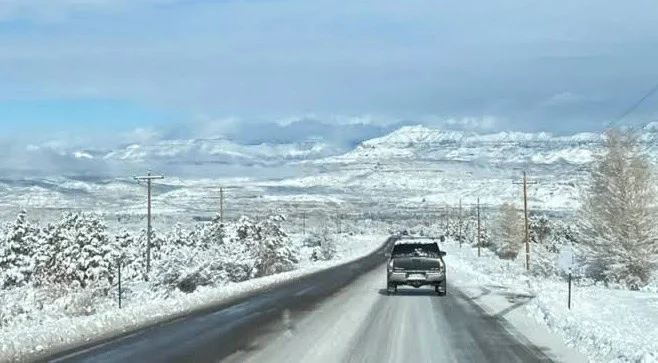
Rexburg sits at 4,862 feet in Idaho’s Upper Snake River Valley, a setting that has recorded a low of minus 36 degrees Fahrenheit and, in December 1983, dropped 43.5 inches of snow in a single month [1]. Surround that climate with the volcanic-soil potato, grain, and dairy operations that define Madison County agriculture, and a college population at Brigham Young University-Idaho that swells the local vehicle count every semester, and Rexburg puts a genuinely different set of demands on a cabin air filter than a more urban Idaho city would [1].
An Introduction to Cabin Air Filters in Idaho’s Upper Snake River Valley
Forty below zero is not hyperbole in Rexburg. The National Weather Service has the record at minus 36 degrees Fahrenheit, and the town once measured 43.5 inches of snow in a single December [1]. On a morning that cold, a lot of Madison County residents have their engine block heaters plugged in overnight, a routine so common in Idaho’s Upper Snake River Valley that local shops recommend using one any night the forecast dips below 20 degrees Fahrenheit for gas engines, and closer to 32 degrees for diesel trucks [2]. Long before a driver ever turns the key, the vehicle has already spent hours warming up next to a household outlet.
What that same vehicle breathes in the rest of the year is just as distinctly local. Madison County’s volcanic soil grows some of the country’s best-known potatoes, and the surrounding farms and dairies bring their own particular air quality signature: grain dust with health effects studied closely enough that NIOSH set a specific occupational exposure limit for it, and dairy operations that can put ambient ammonia into the air at concentrations capable of irritating eyes and airways at fairly low levels [4][5]. Add Idaho’s regulated crop-residue burning program, which permits growers to burn fields, pasture, and hay bales on a rolling, DEQ-approved schedule after harvest, and Rexburg’s air carries a mix no cabin air filter built for a generic city commute is really designed around [3].
This guide walks through fifteen reasons Rexburg drivers, from BYU-Idaho students to lifelong Madison County farm families, should treat their cabin air filter as a real piece of safety and health equipment rather than a line item on an oil-change ticket. Every reason here is grounded in a genuine technical fact about how this filter works, not local color wearing a filter-shaped costume. Several of these angles are new to this series, because Rexburg’s cold, its agriculture, and its unique block-heater winter routine put different stress on a cabin filter than either of the two Pocatello locations this series has already covered.
Grease Monkey’s Rexburg location, managed by Alonzo Padilla and recognized as a CARFAX preferred service provider, has built a 4.7-star reputation across more than 2,560 Google reviews handling exactly this kind of service for Upper Valley drivers [13]. What follows is the technical and local case for getting your cabin air filter checked before the next cold snap or harvest season hits.
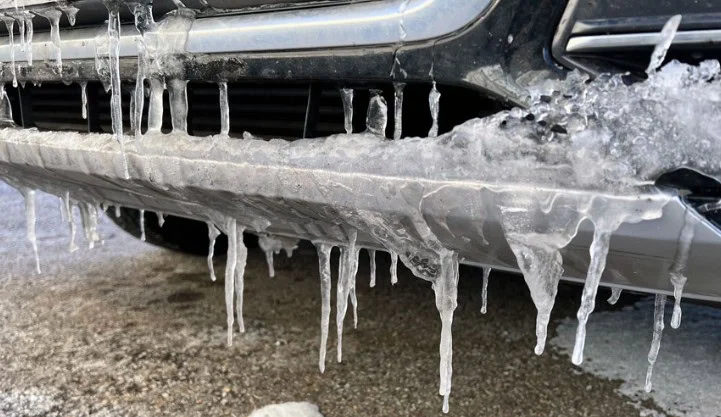
Extremely cold weather has a definite effect on your cabin air filter
Most Critical
1. Why Won’t Your Heater Blow Right Away on a Minus-Thirty Rexburg Morning?
Category Most Critical
Can moisture inside a cabin air filter actually freeze solid during a Rexburg cold snap, blocking airflow the moment you start the car?
It can, and it is a distinct problem from a simple cold engine. A cabin air filter that has absorbed moisture from melted snow, condensation, or a prior humid stretch can have that moisture freeze solid once temperatures drop into the range Rexburg regularly sees, including the recorded minus 36 degree Fahrenheit low [1]. A filter with ice crystals lodged in its pleats presents much more resistance to airflow than a merely dirty one, which means the blower has to work harder, and less heated air reaches the vents, right at the moment a driver needs it most.
This is one reason a block heater’s benefit extends beyond just the engine. Idaho auto shops recommend plugging one in whenever the overnight forecast falls below 20 degrees Fahrenheit for gas engines, warming the engine bay and, incidentally, keeping nearby components including the cabin filter housing somewhat warmer than the ambient air outside [2]. A filter that stays above freezing overnight is far less likely to have ice blocking it the moment the heater switch gets flipped on a genuinely cold Rexburg morning.
2. Musty or Sweet: Does Your Cabin Air Filter or Your Heater Core Need Attention?
Category Most Critical
How can you tell whether a bad smell coming from your vents is a cabin air filter problem or a more serious heater core coolant leak?
The distinction matters because one is a routine maintenance item and the other is a genuine safety concern. A neglected cabin air filter typically produces a musty, mildewy smell tied to trapped moisture and organic debris in the filter media itself, an odor that tends to be strongest right when the blower first kicks on and fades somewhat afterward. A sweet, syrupy smell is a very different signal: it usually points to coolant leaking into the heater core and evaporating into the cabin airstream, a problem that can lead to engine overheating and, in some cases, breathing in vaporized coolant.
Because both symptoms show up at the vents, a driver noticing an odd smell in a Rexburg winter, exactly when the heater runs hardest and longest, benefits from knowing which one they are dealing with before assuming a simple filter swap will fix it. A quick professional check can tell a musty cabin air filter from a coolant leak in a few minutes, and catching the coolant scenario early is meaningfully more urgent than a filter that is merely overdue.
3. Can Your Cabin Air Filter Actually Block Dairy-Country Ammonia Near Rexburg?
Category Most Critical
Driving past Madison County dairy operations, can a cabin air filter meaningfully reduce the ammonia odor and irritation drivers are exposed to?
A standard particulate cabin air filter does very little against ammonia specifically, because ammonia is a gas, not a particle, and particulate media is built to strain out solids rather than adsorb gas molecules. Research on livestock operations measures ammonia concentrations in the range of 3 to 8 parts per million around open dairy barns, with irritation to eyes, nose, and throat documented starting around 50 ppm on a two-hour exposure basis, meaning drivers passing close to a facility on a still day can encounter genuinely irritating conditions, not just an unpleasant smell [4].
An activated-carbon layer is the component that actually addresses this, chemically adsorbing ammonia and other gas-phase odors rather than physically filtering them the way particulate media handles dust. For Madison County drivers whose regular routes pass dairy operations, a carbon-combination cabin air filter, not a basic particulate-only filter, is the meaningful upgrade for this specific exposure.
4. Does Harvest-Season Grain Dust Around Rexburg Overload Your Cabin Air Filter?
Category High Priority
During Madison County’s grain harvest, does airborne grain dust actually load up a cabin air filter faster than ordinary road dust would?
It can, and grain dust is a genuinely distinct particulate from typical road dust. NIOSH characterizes grain dust as a complex mixture of husk particles, cellulose fibers, starch granules, fungal spores, insect debris, and pollen, with a mean particle size under 5 micrometers, fine enough to load deep into filter media rather than staying on the surface [5]. The same research found worker health effects, including wheezing, chest tightness, and cough, showing up at grain dust concentrations below the 10 milligram per cubic meter federal exposure limit, underscoring how biologically active this particular dust is even at modest concentrations [5].
Driving near active grain elevators, combines working a field close to the road, or grain trucks during Madison County’s harvest season exposes a cabin air filter to this fine, organic dust load on top of whatever ordinary road grit it is already handling. A filter due for its scheduled swap right before harvest season starts is better positioned to handle that seasonal spike than one already near capacity.
Your cabin air filter is important in shielding you from the contaminants that come from diesel equipment driving on the roadway. Learn how below.
5. How Much More Diesel Soot Does Your Cabin Air Filter Handle Behind a Tractor?
Category High Priority
Does driving near farm diesel equipment expose a vehicle’s cabin air filter to meaningfully more particulate matter than a normal commute would?
Measurably more, according to direct field research on farming activities. A study measuring black carbon, a proxy for diesel soot, found that proximity to diesel equipment increased a person’s particulate exposure by 68 percent compared to working farther from the source, and that being in a vehicle with an open cabin nearly doubled exposure, at 44 percent higher, compared to a sealed one [6]. Farmers in that same study spent over 42 percent of their working time near diesel-powered equipment across 61 of 63 sampled days, meaning this exposure is routine, not occasional, in agricultural regions like Madison County [6].
For a Rexburg driver following a tractor, grain truck, or other diesel farm equipment on a two-lane county road, an enclosed cabin with a properly sealed, capable cabin air filter is doing real work reducing that soot exposure compared to riding with windows down or a compromised filter seal.
6. Is Your Cabin Air Filter Protecting the Car Seat, Not Just the Driver’s Seat?
Category High Priority
Does a working cabin air filter matter more for an infant or young child riding in a car seat than it does for an adult driver?
It matters more, for reasons rooted in basic child physiology. Children breathe more rapidly than adults relative to their body weight, taking in proportionally more of whatever is in the cabin air, and their lungs, brains, and other organs are still developing, making them more physiologically vulnerable to particulate exposure than a fully grown adult in the same vehicle [8]. Global health researchers note that particulate matter is a leading contributor to lower respiratory infections in children under five, underscoring that this is not a marginal concern [8].
For BYU-Idaho student families and longtime Rexburg residents alike driving with an infant or toddler in a car seat, a cabin air filter that is doing its job matters more for that smallest passenger than it does for the driver, simply because a child’s developing respiratory system has less margin for handling whatever particulate gets through a saturated or bypassing filter.
7. Does Your Cabin Air Filter Handle Post-Harvest Field Burning Around Rexburg?
Category Important
When Madison County farmers conduct regulated post-harvest field burning, can a cabin air filter meaningfully reduce the smoke exposure inside your vehicle?
Idaho’s Crop Residue Burning program lets growers burn fields, pasture, broken bales, and hay residue after harvest under a permit system administered by the Department of Environmental Quality, with daily burn-decision updates meant to limit impact on nearby sensitive populations [3]. That is a different smoke source than a wildfire, more localized and shorter in duration, but the fine particulate it produces still passes through the same cabin air filter as any other smoke exposure, and a filter’s ability to handle it depends on the same particle-size performance covered elsewhere in this guide.
A HEPA-grade or HEPA-carbon combination cabin air filter is built to capture the fine particulate in agricultural smoke, while a basic particulate filter offers more limited protection. Drivers who know when nearby fields are scheduled to burn, information the DEQ’s daily burn-decision system tracks, can plan around the heaviest smoke hours, but a capable filter matters on the days that planning is not possible.
8. Does Rexburg’s High-Elevation Sun Make Your Cabin Air Filter Housing More Brittle?
Category Important
At Rexburg’s elevation, does stronger sunlight actually degrade the plastic cabin air filter housing over time, separate from the filter media itself?
It can, though the effect is on the housing and surrounding trim rather than the filter media itself, which usually sits shielded from direct sun. UV exposure breaks down polymer chains in unprotected plastics over time, a process that accelerates with stronger, more sustained ultraviolet exposure, and higher elevations receive more intense UV radiation because there is less atmosphere to filter it out. At 4,862 feet, Rexburg gets meaningfully more UV exposure over a vehicle’s lifetime than a sea-level city would, particularly on the plastic clips, tabs, and housing pieces near the glove box or under-hood filter compartment.
The practical result shows up as brittleness: housing tabs and retaining clips that were fine for years can become more prone to cracking during a routine cabin air filter swap once years of elevated UV exposure have made the plastic more fragile, even if the vehicle itself is otherwise well maintained. This is worth knowing before attempting a DIY filter change on an older vehicle that has spent its life at altitude.
9. Does Plugging in a Block Heater Overnight Affect Your Cabin Air Filter?
Category Important
When a Rexburg driver plugs in an engine block heater overnight, does the extra warmth near the engine bay have any effect on the cabin air filter’s condition?
The effect is modest but real. A block heater is designed to warm engine coolant and oil for two to four hours before a cold start, not to run all night, and shops specifically advise against leaving one plugged in continuously since it offers no added benefit and simply wastes electricity [2]. During that warming window, a cabin air filter housed near the engine bay or firewall experiences a milder temperature swing than it would on a purely cold overnight soak, which can reduce the odds of the frost-buildup scenario covered earlier in this guide.
Drivers using a timer to start their block heater a few hours before their morning departure, the pattern Idaho auto shops recommend, get this modest cabin air filter benefit as a side effect of standard cold-weather engine care, on top of the smoother starts and reduced engine wear a block heater is actually intended for [2].
Rexburg’s dry winter air actually helps your cabin air filter… DEPENDING on which air filter you have in your vehicle
Medium Priority
10. Does Rexburg’s Dry Winter Air Actually Help Your Cabin Air Filter Work Better?
Category Medium Priority
Since Rexburg’s winter air is so dry, does that dryness actually improve how well a cabin air filter’s electrostatic media captures particles?
For most cabin air filters, no, and the reason comes down to which kind of electrostatic technology is inside. Cabin air filters typically use electret media, fibers manufactured with a permanent electrostatic charge that is built in during production rather than generated by the surrounding air. Electret media performs consistently across a wide range of humidity and temperature conditions, meaning Rexburg’s dry winter air does not meaningfully improve, or hurt, how well the media captures particles.
That consistency is actually good news: a cabin air filter’s capture performance in Rexburg’s cold, dry January air should be about the same as it is during a damp spring thaw, so replacement timing can be based on mileage, calendar time, and visible loading rather than worrying about seasonal humidity swings changing the filter’s effectiveness.
11. Is That Interior Windshield Haze in Your Car a Cabin Air Filter Problem?
Category Medium Priority
Can a cabin air filter without activated carbon actually contribute to the greasy interior windshield haze that builds up over time?
Indirectly, yes. That thin, greasy film that builds up on the inside of a windshield comes primarily from volatile organic compounds released by interior plastics, adhesives, and vinyl off-gassing over time, compounds that condense onto the coolest nearby surface, typically the glass. A particulate-only cabin air filter does nothing to adsorb these gas-phase VOCs, since particulate media is built to strain solids, not capture gas molecules, so those compounds circulate freely through the cabin air system and onto the windshield regardless of how clean the filter is on the particulate side.
A carbon-combination cabin air filter, which adds a gas-adsorbing layer alongside standard particulate media, can meaningfully reduce the VOC load circulating through the cabin, slowing how quickly that interior haze reappears after a windshield cleaning. For anyone who has cleaned the same haze off their glass every few weeks, the filter is one piece of that puzzle worth checking.
12. Could a Clogged Cabin Air Filter Confuse Your Car’s Automatic Climate Sensor?
Category Medium Priority
In vehicles with automatic air-quality sensors that switch between fresh air and recirculation, can a clogged cabin air filter throw off how that system behaves?
It can, indirectly. Automatic climate systems that switch between fresh-air and recirculation modes typically rely on sensors measuring outside air quality or cabin conditions to decide when to seal the cabin off from outside pollutants. A severely restricted cabin air filter changes the actual airflow and pressure the HVAC system experiences even when the sensor’s read on outside air quality has not changed, which can produce climate behavior, weak fresh-air intake or a system that seems to favor recirculation more than expected, that looks like a sensor malfunction but actually traces back to the filter.
Before assuming an automatic climate control fault on a vehicle equipped with this kind of sensor system, ruling out a simply overdue cabin air filter is a faster and cheaper first step than diagnosing the sensor itself.
13. Do Madison County’s Farm Trucks Need a Different Cabin Air Filter Standard?
Category Lower Priority
Do heavy-duty diesel farm and work trucks common around Rexburg actually need a different cabin air filter specification than a standard passenger car?
In many cases, yes, simply because heavy-duty trucks often have larger cabin air filter housings sized for higher-volume HVAC systems designed to condition a bigger cabin, and their filters are sized and rated accordingly rather than being interchangeable with a compact car’s filter. A truck regularly working farm fields, hauling grain, or towing near diesel equipment is also exposed to a heavier and more varied particulate load, road dust, grain dust, and diesel soot together, than a typical passenger car commuting in town.
For Madison County’s farm and work truck owners, matching cabin air filter specifications to the actual vehicle and its actual duty cycle, not just grabbing a generically sized aftermarket filter, matters more than it would for a commuter sedan doing highway miles.
14. Is a DIY Cabin Air Filter Swap Actually Worth It for Rexburg Drivers on a Budget?
Category Lower Priority
For a budget-conscious BYU-Idaho student or Madison County family, does doing a cabin air filter swap yourself actually save meaningful money over having a shop do it?
Cabin air filters themselves typically run in the twenty to fifty dollar range regardless of who installs them, and for a vehicle where the filter sits behind an easily accessed glove box, the labor cost a shop adds is often modest since the job usually takes well under fifteen minutes for a technician who does it routinely. The savings from doing it yourself are real but usually fairly small once the cost of the filter itself is factored in, and that gap narrows further on vehicles where the filter is harder to reach, since a shop’s efficiency advantage grows with the job’s complexity.
For a student or family budgeting carefully, the honest comparison is less about a dramatic cost difference and more about convenience and confidence: a five-minute swap during an already-scheduled oil change costs little extra time or money, while sourcing the correct filter and finding the release mechanism solo can, for some vehicles, take longer than the savings justify.
15. Does Remote-Starting Your Car on a Cold Rexburg Morning Stress Your Cabin Air Filter?
Category Lower Priority
When a remote-start system warms up a car before anyone gets in, does that idling period pull cold, unfiltered-feeling outside air through the cabin air filter unnecessarily?
It runs the HVAC system through its normal cycle, cabin air filter included, whether or not the system happens to be set to recirculation during that idle period. A remote-started vehicle sitting in a driveway or parking lot on a frigid Rexburg morning, common practice before a genuinely cold commute, draws outside air through the cabin air filter exactly as it would with a driver aboard, meaning a filter already near the end of its service life is working through that warm-up period too, not just during the actual drive.
This is not a reason to avoid remote-starting on a cold morning, which offers real comfort and defrosting benefits, but it is one more reason a filter nearing its replacement interval does not get a break just because a vehicle spends part of its runtime idling rather than moving.
About Grease Monkey, 582 North 2nd East, Rexburg, ID 83440
Grease Monkey’s Rexburg location, Center #658, is managed by Alonzo Padilla and sits at 582 North 2nd East, Rexburg, ID 83440, open Monday through Friday from 7:00 AM to 7:00 PM and Saturday from 8:00 AM to 5:00 PM, closed Sundays [13]. The location’s service menu includes conventional, synthetic-blend, and full-synthetic oil changes, battery service, fluid exchanges, filter replacement, brake service, air conditioning service, tire service, engine service, headlight service, power steering service, transmission service, car wash, windshield replacement and rock chip repair, and fleet services, and the shop holds status as a preferred CARFAX service provider [13].
The location has built a 4.7-star rating across more than 2,560 Google reviews, serving a driver base that spans longtime Madison County farm families, BYU-Idaho students and staff whose vehicles turn over every semester, and the fleets that keep the Upper Snake River Valley’s agricultural operations running [13]. As part of the FullSpeed Automotive network recognized with 435 CARFAX Top Shop honors in 2025, the Rexburg team draws on brand-wide training standards while understanding exactly what Madison County’s cold winters and working farms demand from a vehicle’s cabin air system [12].
Author Information
Author Bio – Phillip Paul Gilliam
Phillip Gilliam is a veteran journalist and former Editor-in-Chief with 50+ years of publishing experience and thousands of published articles. Specializing in automotive, trucking, and digital publishing, he creates authoritative, search-optimized content built on real-world expertise and editorial excellence. To learn more about Phil, visit http://www.phillipgilliam.com/about.html or contact Phil at [email protected]. He would love to hear from you!
Full Citation List
[1] Wikipedia contributors. Rexburg, Idaho. Wikipedia. Available at: https://en.wikipedia.org/wiki/Rexburg,_Idaho. (Elevation of 4,862 feet, record low of minus 36 degrees Fahrenheit, and 43.5 inches of snowfall in December 1983.)
[3] Idaho Department of Environmental Quality. Crop Residue Burning. Idaho DEQ. Available at: https://www.deq.idaho.gov/air-quality/smoke-and-burning/crop-residue-burning/. (Permit system for post-harvest field, pasture, and bale burning; daily burn-decision program intended to protect sensitive populations.)
[4] Ohio State University Extension. Ammonia Emission from Animal Feeding Operations and Its Impacts. Ohioline. Available at: https://ohioline.osu.edu/factsheet/AEX-723.1. (Ammonia concentrations of 3-8 ppm in open dairy barns; eye, nose, and throat irritation documented starting around 50 ppm on a two-hour exposure basis.)
[5] National Institute for Occupational Safety and Health (NIOSH). 1988 OSHA PEL Project – Grain Dust. CDC. Available at: https://www.cdc.gov/niosh/chemicals/pel88/pell-pages/graindst.html. (10 mg/m3 8-hour exposure limit for grain dust; mean particle size under 5 micrometers; respiratory symptoms documented below the exposure limit.)
[6] National Institutes of Health (PMC). Diesel Exhaust Exposure during Farming Activities: Statistical Modeling of Continuous Black Carbon Concentrations. PMC. Available at: https://pmc.ncbi.nlm.nih.gov/articles/PMC7313260/. (68 percent higher particulate exposure near diesel equipment; 44 percent higher exposure in open versus enclosed cabins; farmers near diesel equipment 42.5 percent of sampled time.)
[7] Filterbuy. Scientifically Proven: What Is an Electret and Electrostatic Filter? Filterbuy. Available at: https://filterbuy.com/resources/air-filter-basics/what-is-an-electret-an-electrostatic-filter/. (Electret filter media maintains consistent electrostatic performance across humidity and temperature, unlike active electrostatic filters, which lose efficiency in humid conditions.)
[8] UNICEF. Air Pollution. Children’s Environmental Health Collaborative. Available at: https://ceh.unicef.org/spotlight-risk/air-pollution. (Children’s faster breathing rate relative to body weight and ongoing organ development increase vulnerability to particulate matter; particulate matter as a leading contributor to child lower respiratory infections.)
[13] Grease Monkey. Oil Change & Auto Repair, 582 North 2nd East, Rexburg, ID. Grease Monkey. Available at: https://www.greasemonkey.com/locations/id/rexburg/582-north-2nd-east/. (Store address, hours, service menu, manager name, CARFAX preferred provider status, and current Google review count and rating.)
We use cookies to improve your browsing experience on our website. By closing this banner or interacting with our site, you acknowledge and agree to our privacy policy.