Top 15 Reasons to Get Your Brakes Inspected and Serviced in Colorado Springs, Colorado
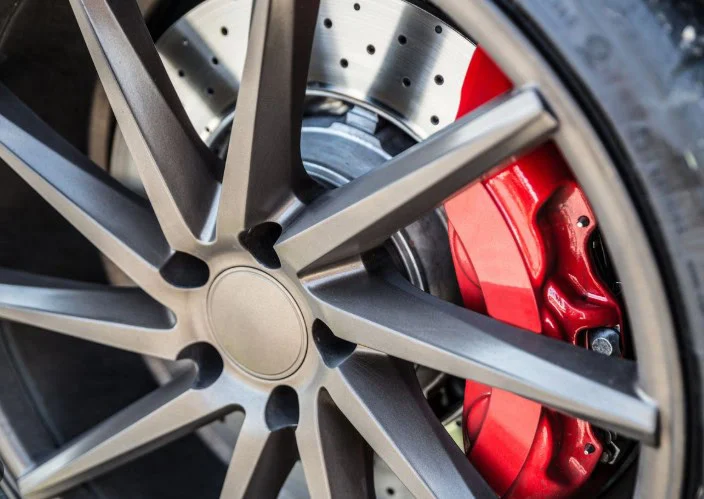
An Authoritative Guide for Vehicle Brake Safety and Maintenance in “America’s Mountain City”
Grease Monkey, Colorado Springs Has Over 675 Google Reviews With A 4.6 Star Rating
A Note on Authority and Expertise: This article was researched and written by Phillip Paul Gilliam, a veteran journalist and former Editor-in-Chief with more than 50 years of publishing experience in automotive, trucking, and safety communications. Every safety claim is supported by federal research, CDOT crash data, and peer-reviewed automotive science. The Grease Monkey at 1702 Dublin Boulevard, Colorado Springs, CO 80918, is part of the FullSpeed Automotive network of more than 900 service centers nationwide. In 2025, 435 FullSpeed Automotive locations were named CARFAX Top Shop Winners for verified customer satisfaction and service excellence. Grease Monkey’s ASE-certified technicians bring nationally benchmarked training to a city with brake demands unlike any other in Colorado. Colorado Springs sits at 6,035 feet of elevation, serves as the gateway to Pikes Peak — the 14,115-foot summit where mandatory brake inspection stations exist for a reason — and is home to five major military installations whose combined population of more than 125,000 shapes the traffic environment every Grease Monkey customer navigates daily. Brake performance here is not a routine maintenance item. It is a survival variable.
Introduction
No city in Colorado — and perhaps no city in America — makes a stronger case for disciplined brake maintenance than Colorado Springs. It is simultaneously a mountain-gateway city, a military hub, a rapidly growing commercial metropolis, and a recreation destination that draws millions of tourists onto steep, narrow, switchback roads every year. At 6,035 feet of elevation, it sits higher than Denver by nearly 1,000 feet — and that extra altitude has measurable consequences for brake thermal physics that most drivers never consider. Pikes Peak, rising 8,080 feet above the city to its 14,115-foot summit, casts its shadow over every vehicle that dares its descent; mandatory brake temperature checks at the Glen Cove station exist because overheated brakes are not a theoretical concern on America’s Mountain — they are a documented and recurring emergency.
The road environment surrounding the Grease Monkey at 1702 Dublin Boulevard is among the most demanding in Colorado’s front range urban corridor. Dublin Boulevard feeds directly into Powers Boulevard — Colorado Highway 21 — which carries more than 52,000 vehicles per day through the fastest-growing commercial corridor in El Paso County [5]. To the south, Interstate 25 climbs the Palmer Divide and drops into Colorado Springs through a stretch that witnessed a 36-car pileup as recently as March 2026 [2]. To the west, Garden of the Gods draws an estimated 6 million visitors annually — many of them out-of-state tourists in rental vehicles with no knowledge of their brake condition — through a park road network flanked by sandstone formations and steep approach grades [4]. And throughout the city, Fountain Creek and Monument Creek can rise 6 to 10 feet in minutes during a summer thunderstorm, turning familiar streets into flood channels without warning [9].
Colorado Springs is also defined by its extraordinary military presence. Fort Carson, home of the 4th Infantry Division, fields 26,530 active-duty soldiers — and 57 percent of them live off-post, adding their vehicles, their work schedules, and their convoy-route roads to the civilian traffic mix every day [3]. The U.S. Air Force Academy draws 1 million visitors per year to its North Gate Boulevard corridor [8]. Peterson Space Force Base, Schriever Space Force Base, and NORAD/Cheyenne Mountain Complex complete a constellation of installations that makes El Paso County home to a military population rate more than twice the Colorado state average [10]. Colorado ranks seventh nationwide for brake failure complaints submitted to NHTSA [1] — and this city’s combination of elevation, mountain terrain, military infrastructure, and explosive commercial growth explains exactly why.
This guide presents 15 specific, research-grounded reasons why Colorado Springs drivers should prioritize brake inspection and service. Each reason is drawn from the real geography, real roads, real landmarks, and real community character of this city. From Pikes Peak’s mandatory brake checks to Dublin Boulevard’s commercial growth corridor, from the Waldo Canyon burn scar’s ongoing flash flood threat to the unique brake cooling physics of thin Front Range air — this is a brake service article written for Colorado Springs specifically, not for any other place on earth. Your brakes deserve the same respect this city’s terrain commands.
1. Pikes Peak Highway and the 14,115-Foot Descent: Mandatory Brake Check Stations Reveal the Reality of America’s Mountain
Category: Most Critical – What Is Brake Fade?
Brake fade — the progressive loss of stopping power caused by rotor and pad overheating — can double or triple stopping distances in as little as a few minutes of sustained mountain descent [1]. When rotor temperatures exceed 400°F, standard brake pad compounds begin to gasify and lose friction coefficient. Above 600°F, hydraulic fluid in calipers near the rotor can reach vapor lock temperatures, causing the brake pedal to suddenly feel soft or go partially to the floor. These failures do not announce themselves with a warning light. They announce themselves when the pedal response that was working at the top of the mountain is no longer present halfway down — at speed, on a narrow switchback, with a 2,000-foot drop to one side. Colorado ranks seventh in the nation for brake failure complaints submitted to the National Highway Traffic Safety Administration [1], and the state’s mountain terrain is the primary reason.
Pikes Peak Highway is a 19-mile toll road that climbs from approximately 9,390 feet at the gate to 14,115 feet at the summit, gaining nearly 5,000 feet in elevation across more than 150 turns [6]. The Colorado Springs Parks, Recreation and Cultural Services department — which manages the highway as part of the City of Colorado Springs — operates a mandatory brake check station at Glen Cove, approximately halfway up the route, where rangers use infrared thermometers to measure brake rotor temperatures on descending vehicles. Vehicles with excessively hot brakes are required to stop and cool before continuing. This is not a courtesy warning system — it is an operational safety intervention on a public road. For residents of Mountain Shadows, Broadmoor, and the western Colorado Springs neighborhoods who use Pikes Peak Highway recreationally, this reality is familiar. For drivers whose brake systems are already compromised before they reach the toll gate, it is a critical warning they may never receive in time.
Before your next trip up Pikes Peak — or before you take on any descent in the Pikes Peak region — confirm your brake system is thermally ready for the job. The ASE-certified technicians at Grease Monkey, 1702 Dublin Blvd, Colorado Springs, CO 80918 will inspect pad thickness, rotor surface condition, and brake fluid boiling point to ensure your system can survive sustained high-temperature descent. Don’t wait for a ranger at Glen Cove to tell you what an inspection on Dublin Boulevard could have revealed weeks earlier. Schedule your pre-mountain brake inspection today.
2. I-25 at Monument Hill: Emergency Stopping Physics Where the Palmer Divide Drops Into Colorado Springs
Category: Most Critical – What happens when I have an emergency stopping situation?
Interstate highway grades create a compounding brake demand that many drivers underestimate because the change feels gradual from inside the vehicle. A 6-percent grade — typical of significant interstate sections in the southern Colorado Front Range — increases the effective weight pushing a vehicle forward during braking by an amount equal to 6 percent of its total mass. At 4,000 pounds, that is an additional 240 pounds of downhill force that the brake system must overcome on every stop. In wet or icy conditions, where tire traction is simultaneously reduced, the combined effect on stopping distance is dramatic. NHTSA documents that brake-related issues contribute to approximately 22 percent of crash-causation factors in rear-end collisions on high-speed roadways [1], and steep-grade interstate sections are over-represented in that statistic.
The descent from Monument Hill into Colorado Springs on I-25 is one of the most consequential highway approaches on Colorado’s entire north-south corridor. The Palmer Divide — the topographic ridge separating the South Platte River basin from the Arkansas River basin — drops steeply into Colorado Springs from the Monument area, and the I-25 corridor through this transition sees severe weather with greater frequency than the urban sections of the highway to the south. In March 2026, a 36-vehicle pileup on I-25 near this corridor drew statewide attention to the road’s hazard profile [2]. More than half of the top-15 most dangerous intersections in Colorado Springs are located directly off I-25 interchanges [2]. Commuters from Monument, Palmer Lake, and Castle Rock use this approach daily — and winter conditions on the Palmer Divide can deteriorate from dry pavement to packed ice within a single commute.
The Palmer Divide drop does not forgive compromised brake systems. If you commute southbound from Monument or use I-25 as your primary corridor into Colorado Springs, your brake system needs to be verified against the actual demands of that grade — not estimated by mileage intervals. The team at Grease Monkey, 1702 Dublin Blvd, Colorado Springs, CO 80918 will give you real pad measurements, actual rotor condition data, and a hydraulic system assessment that tells you exactly what your brakes can do on Monument Hill. Book your I-25 corridor brake inspection here.
3. Fort Carson’s 26,530 Active-Duty Soldiers: Military Convoy Routes, Road Stress, and the Civilian Brake Environment on Colorado Springs’ Southern Arterials
Category: Most Critical – How Do Rough Roads And Pavement Deformation Impact My Brakes
Heavy military vehicles — wheeled transport trucks, armored personnel carriers, and tracked equipment transported on lowboys — create road damage that directly affects civilian vehicle brake performance in ways that standard road maintenance cannot fully address in real time. Tracked vehicles cause pavement deformation, edge cracking, and subsurface compaction that creates irregular surface profiles. These irregular surfaces translate to unpredictable tire contact and variable braking coefficient — meaning a driver applying steady brake pressure will experience uneven deceleration across the vehicle’s axles. FMCSA research documents that pavement deterioration from overweight vehicles contributes measurably to civilian vehicle crash risk in corridors shared by military and commercial traffic [1]. When road surface variability compounds a brake system that is already partially degraded, the outcome is a braking event that behaves less predictably than either factor alone would suggest.
Fort Carson — the Army installation home to the 4th Infantry Division and the 10th Special Forces Group — sits directly south of Colorado Springs in El Paso County with a total associated population approaching 125,000, including 26,530 active-duty soldiers, family members, retirees, and civilian employees [3]. Critically, 57 percent of Fort Carson’s soldiers live off-post, integrating fully into the Colorado Springs civilian traffic network [3]. Primary convoy and heavy vehicle routes include Fountain Boulevard, Highway 115 (Nevada Avenue) south of Pueblo Boulevard, and sections of Academy Boulevard — corridors that Colorado Springs residents share on a daily basis. Gate traffic at the Carson Gate on South Academy Boulevard and the other installation entry points creates predictable surge patterns that generate rapid stop-and-go demands on every vehicle in proximity.
Living or commuting on Fountain Boulevard, South Academy Boulevard, or Highway 115 means sharing your road every day with one of the largest military installations in the United States. Your brake system needs to perform on surfaces that have been subjected to vehicle loads far beyond civilian design parameters. The ASE-certified team at Grease Monkey, 1702 Dublin Blvd, Colorado Springs, CO 80918 understands the El Paso County road environment — including the pavement stress corridors that most service shops never think about. Schedule your Fort Carson-corridor brake inspection today.
4. Garden of the Gods and 6 Million Annual Visitors: Tourist Traffic Brake Demands at Colorado’s Most-Visited Free Park
Category: High Priority – Do High-Volume Tourist Destinations Create Additional Brake Hazards?
High-volume tourist destinations create a specific and underappreciated brake hazard: the sudden stop. Unfamiliar drivers slow abruptly to read signs, turn unexpectedly into parking areas, and brake sharply for photo opportunities — behaviors that are entirely unpredictable from a following driver’s perspective. NHTSA research consistently identifies “unexpected deceleration of lead vehicle” as a primary contributing factor in tourist-corridor rear-end crashes [1]. The problem is compounded when vehicles have differing brake performance: a well-maintained local vehicle stopping in 150 feet behind a slow-reacting tourist vehicle requires the following vehicle to close from normal following distance to zero in less time than the system was designed for. Worn pads, glazed rotors, and soft pedals eliminate whatever safety margin remains.
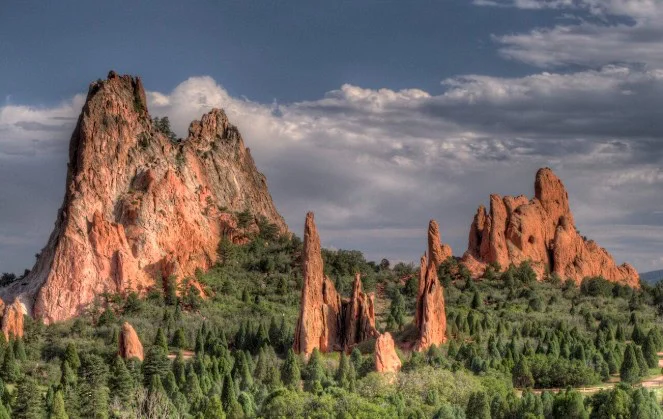
Garden of the Gods, located at 1805 North 30th Street in Colorado Springs, is one of the most visited natural landmarks in the United States, drawing an estimated 6 million visitors annually to its 1,341 acres of dramatic red sandstone formations [4]. The park is free to enter, which removes any barrier to mass visitation — and mass visitation is exactly what it receives. The main entrance off 30th Street and the south entrance off Ridge Road from Manitou Springs both funnel vehicle traffic through approach roads where abrupt stops, pedestrian crossings, and roadway congestion are the norm during peak season. Out-of-state visitors in rental vehicles — with maintenance histories unknown and brake systems uninspected since leaving a fleet lot — mix with Colorado Springs residents in a park road environment that rewards only attentive, fully-capable brake systems. Gateway Road and Juniper Way Loop inside the park add additional low-speed, high-pedestrian-density demand to every entry and exit.
Before heading to Garden of the Gods this season — whether you’re a local who visits weekly or a visitor planning a Colorado Springs itinerary — ensure your vehicle can handle the sudden-stop demands that 6 million annual visitors generate on those approach roads. The ASE-certified technicians at Grease Monkey, 1702 Dublin Blvd, Colorado Springs, CO 80918 will tell you exactly what your brake system can do before the car ahead of you decides it cannot. Book your pre-tourist-season brake inspection now.
5. Cheyenne Mountain’s 32 Switchbacks and America’s Highest Zoo: Daily Brake Demands on Colorado Springs’ Most Dramatic Recreation Grade
Category: High Priority – Are “Switchback Decent” With Sharp Turns Put Additional Stress On Braking?
Sustained switchback descents compress the full physics of brake fade into a short distance and a short time window. On a road with 32 consecutive turns, each turn requires a braking event — and unlike a long straight descent where speed bleeds off gradually, switchbacks demand repeated, full brake engagement at the apex of each curve. Rotor temperatures rise with each application; the brief straightaway between turns provides limited cooling time at low speeds with reduced airflow. Automotive engineers studying switchback road brake thermodynamics document that brake pad temperatures can reach functional fade threshold in as few as 10 to 15 rapid-succession downhill turns on a 10-percent grade when the system is near the end of its service life [1]. The experience of fade on a switchback does not give the driver a straight-line margin of error to recover — the next turn is already there.
Cheyenne Mountain Zoo sits at 6,714 feet in elevation on the slopes of Cheyenne Mountain in southwest Colorado Springs, making it the highest zoo in the United States [7]. The road accessing the zoo — Cheyenne Mountain Highway — ascends nearly 3,000 feet via 32 switchback turns with a maximum grade of 10 percent [7]. The Broadmoor resort area and the residential neighborhoods of Mountain Shadows, Flying W Ranch, and upper Cheyenne Boulevard occupy the same mountain corridor, meaning that residents of these communities descend this grade as part of their daily commute to downtown Colorado Springs and the Powers Boulevard commercial corridor. The 2012 Waldo Canyon Fire burned terrain directly adjacent to this road network, and the resulting erosion-prone hillsides have added debris and surface irregularity to an already demanding driving environment. Every descent on this road is a brake performance test.
Cheyenne Mountain’s switchbacks are not a seasonal adventure — they are a daily reality for thousands of Colorado Springs residents in the Mountain Shadows and Broadmoor communities. If that commute is yours, your brake system deserves more than a mileage-interval guess. The professionals at Grease Monkey, 1702 Dublin Blvd, Colorado Springs, CO 80918 will measure your rotor thickness, assess your pad compound’s thermal capacity, and verify your brake fluid boiling point — the three variables that determine whether your switchback descent ends safely or in an overheated system’s failure. Schedule your Cheyenne Mountain brake check today.
6. Waldo Canyon Watershed Flash Flooding: Post-Wildfire Runoff and Brake Traction Loss on Colorado Springs’ Western Road Corridors
Category: High Priority – Does Flash Flooding Create Dangerous Braking Conditions?
Post-wildfire watershed conditions create a flash flood hazard that is qualitatively different from standard urban flooding. When fire burns away the vegetative cover and biological soil crust that normally absorb rainfall, the burn scar becomes a near-impermeable surface. Precipitation that once soaked into the ground instead runs off immediately, generating flood pulses that travel downstream faster and with greater debris loading than unburned watershed events. A USGS study of post-fire hydrology documents that peak flood discharge from severely burned catchments can be 10 to 40 times greater than pre-fire levels for the same precipitation event [9]. Road flooding from post-wildfire runoff arrives with debris — soil, rock, organic material — that can cover pavement with a layer that suppresses tire traction below what water alone would create.
The Waldo Canyon Fire of June and July 2012 burned 18,247 acres in the Pike National Forest immediately west of Colorado Springs, destroying 346 homes and killing two people [6]. The fire burned across five major watersheds, including the headwaters of Fountain Creek, West Monument Creek, and the Garden of the Gods drainage — and the burn scar’s flooding threat was documented as elevated for years after the fire [6]. The City of Colorado Springs and Colorado Springs Utilities spent more than $13 million on remediation efforts, including sediment catchment basins at Flying W Ranch and Glen Eyrie [6]. Despite these efforts, the denuded hillsides west of Colorado Springs remain more vulnerable to rapid runoff than they were before 2012. Garden of the Gods Road, 30th Street, and the western approach roads of Colorado Springs all pass through or near the affected watershed. When summer thunderstorms hit these corridors, road flooding can be sudden, debris-laden, and present with no warning.
After any significant rainfall event that puts water across Colorado Springs’ western arterials — especially in July and August, when monsoon moisture collides with the Waldo Canyon burn scar’s compromised absorption — make brake system health a follow-up priority. The ASE-certified team at Grease Monkey, 1702 Dublin Blvd, Colorado Springs, CO 80918 can inspect rotors and pads for debris contamination, verify ABS sensor function, and ensure your hydraulic system is sealed against the moisture intrusion that post-flood brake cycling can introduce. Schedule your post-storm brake inspection at Grease Monkey Colorado Springs.
7. Powers Boulevard’s 52,000 Daily Vehicles: El Paso County’s Fastest-Growing Commercial Corridor and Its Dublin Blvd Brake Wear Multiplier
Category: Important – Is Urban Commercial Stop-And-Go Driving Hard On My Brakes?
Urban commercial corridor stop-and-go driving is among the most mechanically demanding patterns a brake system encounters in daily use. Each braking cycle generates friction heat; at low-to-moderate speeds and high frequency, this heat does not fully dissipate between applications. Research on urban brake wear patterns documents that drivers on commercial arterials can expect brake pad life shortened by 30 to 50 percent compared to primarily highway-driving vehicles of equivalent mileage [1]. The compounding effect is invisible to the driver — pads don’t feel shorter — but it means that a vehicle used primarily for commercial corridor commuting may reach minimum pad thickness significantly earlier than the mileage-based service interval suggested by the manufacturer.
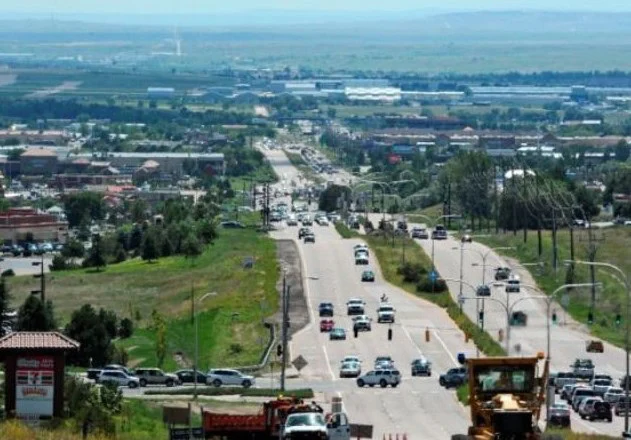
Powers Boulevard — Colorado Highway 21 — carries more than 52,000 vehicles per day through northeast Colorado Springs and ranks as the second-worst congestion corridor in the city [5]. Dublin Boulevard, where Grease Monkey’s Colorado Springs location sits at 1702, feeds directly into the Powers corridor via Briargate Parkway and the Research Parkway interchange — putting Dublin Blvd commuters squarely into the highest-volume stop-and-go environment in El Paso County. The Briargate Crossing retail district, the Children’s Hospital Colorado Spring campus, Memorial Hospital North, and Lifetime Fitness at the Promenade Shops at Briargate are all located within a short drive of the Powers/Dublin intersection, creating the precise mix of commercial access parking-lot cycling and arterial stop-and-go that accelerates brake wear faster than mileage-interval estimates account for. This growth corridor has transformed from a rural road to a major urban arterial in less than two decades — and the vehicle brake systems using it daily have not been recalibrated to match.
If Dublin Boulevard and Powers Boulevard are part of your daily commute or shopping route — and for most Briargate and north Colorado Springs residents, they are — your brake pads may be aging faster than your odometer suggests. The team at Grease Monkey, 1702 Dublin Blvd, Colorado Springs, CO 80918 will give you an actual measurement of where your brake system stands today, not where the calendar says it should be. Get your Dublin-corridor brake check scheduled here.
8. U.S. Air Force Academy’s 1 Million Annual Visitors: North Gate Boulevard Congestion and Brake Demands on Colorado Springs’ Most Recognized Military Institution Corridor
Category: Important – What Is A Brake Cycling Pattern And How Does That Impact My Vehicle’s Brakes?
Military installation visitor traffic creates a distinctive brake cycling pattern: high-volume surges at predictable gate-open times, compounded by visitor unfamiliarity with the road network, pedestrian-heavy visitor center corridors, and the abrupt speed transitions between off-base highway speeds and on-base or approach-road posted limits. NHTSA research identifies speed-differential conflicts — where slower vehicles entering gate zones mix with higher-speed through-traffic — as a disproportionate contributor to rear-end crash risk on institutional access corridors [1]. Every driver behind a slowing visitor vehicle who has degraded brake performance is operating with a reduced safety margin that their speedometer gives no indication of.
The United States Air Force Academy sits in northern Colorado Springs, accessed primarily via North Gate Boulevard from I-25 and via Academy Drive from the south. In May 2026, the Academy opened its new $120 million Hosmer Visitor Center just outside the Academy gates — a facility designed to funnel the institution’s approximately 1 million annual visitors per year through a consolidated entry corridor [8]. The Academy’s Cadet Chapel, the Barry Goldwater Visitor Center’s replacement, and athletic facilities continue to draw visitors year-round, while the Academy’s 4,400 cadets add their own vehicles to the North Gate and South Gate approach roads daily. Dublin Boulevard, just minutes south of the Academy’s northern approach via I-25, places Grease Monkey’s Colorado Springs location at the center of this traffic network. Colorado Springs residents who use I-25 between Monument and the Academy exits interact with this visitor surge traffic every weekday.
Your daily drive past the Academy gates — or your trip to one of the most visited attractions in Colorado — deserves brake systems that respond precisely when a tour bus stops unexpectedly at the visitor center entrance. The ASE-certified professionals at Grease Monkey, 1702 Dublin Blvd, Colorado Springs, CO 80918 perform the full brake inspection that ensures your vehicle’s performance matches the Academy corridor’s demands. Schedule your North Gate corridor brake check today.
9. Fountain Creek and Monument Creek Flash Flooding: When Colorado Springs’ Urban Drainage Network Puts Water on the Road in Minutes
Category: Important – What Is The Danger Of Sudden Drainage Water Put On The Road In Minutes?
Urban flash flooding creates brake traction conditions that combine the worst elements of wet pavement and debris contamination simultaneously. A flood wave carrying sediment and debris covers road surfaces with a layer that behaves differently from clean water — the debris component can pack into pavement irregularities and create a near-frictionless surface for tire contact even after visible water has receded. Studies of urban drainage flood events document that braking distances on debris-contaminated flood residue can exceed those on clean wet pavement by 30 to 50 percent, and that the effect persists until the debris layer is swept or washed from the surface [1]. A driver who successfully navigated a flooded section may face a contaminated surface on the far side that delivers a braking coefficient surprise.
Fountain Creek and Monument Creek are the two primary drainage channels serving Colorado Springs, running through the heart of the city before converging at Fountain south of the urban core. During intense summer thunderstorms — and Colorado Springs experiences more than 300 thunderstorm days per year at its Front Range location — both creeks can rise 6 to 10 feet in minutes [9]. The 2012 Waldo Canyon Fire and 2013 Black Forest Fire dramatically worsened both watersheds’ flood characteristics by removing vegetation from upstream areas, resulting in near-catastrophic flash flooding in the years immediately following the fires [9]. A major waterway restoration project covering Monument and Fountain Creeks was launched in June 2026, acknowledging the persistent flood risk these channels pose [9]. Platte Avenue, Fountain Boulevard, and 8th Street are among the Colorado Springs arterials most frequently affected by creek-adjacent flooding — roads that tens of thousands of drivers use daily.
After any summer thunderstorm that puts water across Platte Avenue, Fountain Boulevard, or the Monument Creek parkway corridor, treat brake system condition as an immediate follow-up item. Flood-residue contamination on rotors and debris accumulation near brake assemblies can compromise performance for hundreds of miles after the water recedes. The team at Grease Monkey, 1702 Dublin Blvd, Colorado Springs, CO 80918 offers a rapid post-flood brake inspection that checks the components most vulnerable to debris and moisture exposure. Schedule your post-storm inspection at Grease Monkey Colorado Springs.
10. Colorado Springs’ Military Retiree Community: Older Vehicle Fleets, Fixed Incomes, and the Brake Service Gap in El Paso County’s Veteran Population
Category: Medium Priority – Do Older Vehicles Have Higher Defect Risks In Their Braking Systems?
Vehicle age is a direct correlate of brake system wear risk. NHTSA research documents that vehicles between 10 and 15 years old have brake-related defect rates significantly higher than newer vehicles, and that the gap widens as mileage and age increase without corresponding service investment [1]. Older brake hoses are more prone to internal collapse; aging rubber seals and caliper boots crack and allow moisture and road debris to compromise the hydraulic circuit; rotors on high-mileage vehicles may be operating near or below minimum thickness without a driver having ever been informed. For vehicle owners on fixed incomes who defer maintenance decisions, these compounding degradation factors can reach a critical threshold before any visible symptom appears.
El Paso County has the highest concentration of military veterans and active-duty households in Colorado — more than twice the state average, according to census data [10]. Colorado Springs’ large community of military retirees is drawn and retained by the presence of five military installations, Tricare healthcare availability, and the established veterans’ community that has built around Fort Carson, Peterson Space Force Base, and the Air Force Academy over decades. Many military retiree households operate older, higher-mileage vehicles purchased on government retirement income — vehicles that may have served through multiple PCS moves, deployed-family-member periods of limited use, and years of mountain-terrain driving. The combination of vehicle age, mileage, and the specific driving demands of Colorado Springs roads creates a brake service gap that disproportionately affects this community.
Grease Monkey recognizes the service Colorado Springs’ veteran and retiree community has given, and FullSpeed Automotive’s national training program prepares its ASE-certified technicians to provide accurate, honest brake assessments for vehicles of any age or mileage. If your family vehicle is more than eight years old and has not had a documented brake inspection in the past 18 months, visit Grease Monkey, 1702 Dublin Blvd, Colorado Springs, CO 80918 for a full system check. Service excellence — verified by 435 CARFAX Top Shop Awards in 2025 — is what this community deserves. Book your veteran-family vehicle brake check today.
11. Black Forest and Falcon Rural Commuter Corridor: Dublin Blvd’s Eastern Extension, Wildlife Crossings, and Grade Brake Demands on Colorado Springs’ Rural Fringe
Category: Medium Priority – What Is Most Critical When Wildlife Jump Out In Front Of Your Car When You Are Driving, And What Should You Do To Compensate For This Possible Problem?
Wildlife-vehicle collision events create a specific and severe brake emergency: the appearance of a large animal in the roadway at night gives an average driver less than two seconds of reaction time before impact at 55 mph. At that speed, a vehicle with fully functional brakes requires approximately 270 feet to stop from the moment of perception — a distance that virtually no night-driving scenario provides sufficient clearance for a deer or elk crossing mid-roadway. What functional brakes can do is reduce the impact speed significantly, which is the variable that most directly determines injury severity in wildlife-vehicle collisions. NHTSA documents that even a 10 mph reduction in impact speed — from 55 to 45 mph — reduces serious injury probability by approximately 40 percent [1]. Worn brakes that add 40 to 60 feet to stopping distance eliminate much of that survivable speed reduction.
Dublin Boulevard extends eastward from the Powers/CO-21 corridor through the Banning Lewis Ranch development zone toward Falcon — a rural corridor that transitions rapidly from dense suburban grid to open grassland and Ponderosa Pine forest. Black Forest, located northeast of Colorado Springs, is home to the 2013 Black Forest Fire, which burned 14,280 acres and destroyed 511 homes in the most destructive wildfire in Colorado history [11]. The post-fire landscape in Black Forest has experienced the same post-burn flooding and erosion patterns as the Waldo Canyon burn scar to the west, adding variable road surface conditions to a corridor already characterized by long sightline gaps, deer and elk crossings, and elevated speeds on its rural two-lane sections. Dublin Boulevard commuters from Falcon and Peyton who drive west through Black Forest and into the Dublin/Powers commercial corridor daily navigate this transition twice every workday.
If your morning commute begins in Falcon, Peyton, or Black Forest and ends near Dublin Boulevard and Powers — and if that route takes you through any portion of the rural Black Forest corridor — your brake system is the primary technology between you and a wildlife collision outcome. The ASE-certified team at Grease Monkey, 1702 Dublin Blvd, Colorado Springs, CO 80918 can verify your stopping performance before another Black Forest morning tests it. Schedule your rural-corridor brake inspection today.
12. Colorado Springs Airport and Powers Boulevard: Regional Aviation Gateway Brake Exposure on the City’s Eastern Commercial Spine
Category: Medium Priority – What Risk Do Fleet Vehicles Pose To My Driving?
Rental vehicles represent one of the highest-risk brake maintenance gaps on any urban road system. Fleet turnover cycles, multi-driver use patterns, and the difficulty of tracking brake wear across a vehicle that may be driven by 50 different people in a calendar year create maintenance visibility problems that rental operations acknowledge but cannot fully solve. NHTSA consumer complaint data documents that rental and fleet vehicles are disproportionately represented in brake-related complaint filings relative to their share of vehicle-miles traveled [1]. A driver who picks up a rental at an airport and immediately enters a congested, high-speed commercial corridor is operating a vehicle whose brake condition is unknown — and doing so in a traffic environment where full brake performance is assumed by every driver around them.
Colorado Springs Airport (COS) sits on the east side of Colorado Springs, accessed from Powers Boulevard — the same CO-21 arterial corridor that runs past Dublin Boulevard — via Airport Road. The airport serves as the primary commercial aviation gateway for a metro area of more than 750,000 people and the gateway for travelers connecting to Pikes Peak, the U.S. Air Force Academy, and the city’s growing convention and event industry. Rental vehicles departing the airport join Powers Boulevard at Airport Road and immediately enter one of the highest-traffic commercial corridors in El Paso County, sharing lanes with local commuters who are traveling at significantly higher speeds than airport-corridor speeds. The Research Parkway, Dublin Boulevard, and Briargate Parkway interchanges on Powers are all located within the rental vehicle’s first 10 minutes of travel from the airport — a stretch where brake condition matters most.
Local drivers on the Powers/Dublin corridor cannot control the brake maintenance history of the rental vehicles around them — but they can ensure that their own vehicle performs at full specification. The ASE-certified professionals at Grease Monkey, 1702 Dublin Blvd, Colorado Springs, CO 80918 verify every measurable component of your brake system so that when a rental vehicle makes an unexpected stop on Powers, your car is ready to answer. Schedule your Powers corridor brake check today.
13. Brake Cooling Physics at 6,035 Feet: How Colorado Springs’ Thin Air Reduces Convective Cooling Between Every Stop
Category: Lower Priority – How Do My Vehicle’s Brakes Cool Down And What Impacts This Process?
Convective cooling — the transfer of heat from hot brake rotors to the surrounding air — is the primary mechanism by which brakes recover thermal capacity between applications. The efficiency of this process depends directly on air density: the more air molecules per cubic foot moving across a rotor surface, the faster heat transfers away from the metal. At sea level, standard atmospheric air density is approximately 1.225 kilograms per cubic meter. At 6,035 feet, the elevation of Colorado Springs, atmospheric pressure is roughly 80 percent of sea level pressure — meaning air density is approximately 20 percent lower [12]. This 20-percent reduction in cooling medium means that Colorado Springs brakes require proportionally more time and distance to cool between applications compared to brakes at sea level performing the same duty cycle. In stop-and-go urban traffic, where cool-down intervals between stops are already short, this cooling deficit compounds across a commute.
This effect is not dramatic on a single stop in city traffic — it is cumulative across an entire drive. A commute that involves 30 stop-and-go cycles on Dublin Boulevard and Powers Boulevard ends with rotors that are marginally warmer than they would be at sea level after the same drive. Over weeks and months of daily commuting, this sustained elevated thermal baseline contributes to accelerated pad glazing, rotor metallurgy fatigue, and brake fluid heat absorption. Colorado drivers who move from lower-elevation cities — Denver is nearly 1,000 feet lower, and many Colorado Springs residents have relocated from Texas, Florida, or the Mountain West — rarely account for this change in their brake service intervals. They apply the same service calendar they used at sea level to a vehicle operating in meaningfully different thermal conditions.
The thin air of Colorado Springs is a physical fact that operates on your brake system whether or not you’re driving toward Pikes Peak. At Grease Monkey, 1702 Dublin Blvd, Colorado Springs, CO 80918, ASE-certified technicians understand the altitude-specific demands of El Paso County driving and can assess whether your pad compound and rotor condition are appropriate for Colorado Springs’ ambient thermal environment — not the sea-level calendar your owner’s manual was calibrated for. Book your altitude-aware brake inspection at Grease Monkey Colorado Springs.
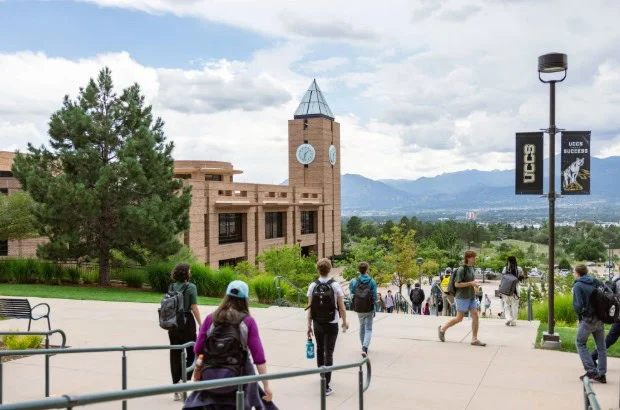
14. UCCS and Colorado College: Deferred Brake Maintenance in Colorado Springs’ Growing University Vehicle Community
Category: Lower Priority – How Does Deferred Brake Service On Someone Else’s Car Impact Me?
College student vehicles carry some of the highest brake service deferral rates in any demographic group. Studies of young driver vehicle maintenance patterns document that drivers under 25 are significantly less likely than older drivers to proactively schedule brake inspections, more likely to dismiss early warning signs such as squealing or extended pedal travel, and more likely to operate a vehicle until a failure-level symptom — grinding, pulling, or dramatic stopping distance changes — forces the issue [1]. When this demographic is concentrated in a city where routine driving includes mountain grades, altitude-affected brake performance, and high-speed interstate commutes, the consequence of deferred maintenance is amplified well beyond what it would be in a flat, low-elevation urban environment.
The University of Colorado Colorado Springs (UCCS) occupies a campus at 1420 Austin Bluffs Parkway, on the north side of Colorado Springs, with an enrollment of approximately 13,000 students. Colorado College, the city’s prestigious liberal arts institution at 14 East Cache La Poudre Street, enrolls approximately 2,100 students. Together, these institutions add a significant young-driver vehicle population to Colorado Springs road network — a population that commutes on I-25 from Monument and Castle Rock, drives US-24 toward Woodland Park and Manitou Springs, and navigates the Powers/Dublin commercial corridor for shopping and work. Many of these students are driving their first vehicle in a mountain environment and have never received brake service guidance for Colorado Springs’ altitude and terrain demands. Vehicles purchased in-state or brought from lower-elevation states arrive with service histories calibrated to conditions that do not apply here.
If you are a UCCS or Colorado College student — or if a student in your household is driving a vehicle in Colorado Springs — make a brake inspection at Grease Monkey, 1702 Dublin Blvd, Colorado Springs, CO 80918 part of the back-to-school checklist this fall. FullSpeed Automotive’s ASE-certified technicians will measure pads, check rotors, and verify brake fluid health in under an hour — giving you documented peace of mind before the first I-25 snowstorm of the season. Schedule your student vehicle brake inspection today.
15. Building Your Brake Service Record in Colorado Springs: Long-Term Value in Colorado’s Second-Largest and Most Militarily Distinct City
Category: Long-Term Value – How Valuable Is A Brake Maintenance Record For My Car?
A documented brake service record at a nationally recognized, CARFAX-participating service provider creates permanent, independently verifiable data points in a vehicle’s history that transfer value through every ownership transition. Used vehicle appraisals, private sales, and insurance evaluations all weight documented service records — particularly from named, credentialed providers — as positive indicators of vehicle condition and owner diligence [13]. NHTSA research on vehicle lifecycle safety also documents that vehicles with consistent documented brake service records have demonstrably lower rates of brake-related mechanical failures in the years following that service [1]. The record is not just a receipt; it is evidence of a safety management practice that compounds in value over time.
Colorado Springs’ population has grown to more than 480,000 residents, making it Colorado’s second-largest city and one of the fastest-growing large cities on the Front Range [12]. The city’s unique combination of military stability — where assignment-based residency creates multi-year residents with predictable service relationships — and civilian growth from Denver spillover and in-migration creates a vehicle market with unusually high demand for documented maintenance history. Military households preparing for a PCS move, civilians selling a vehicle before relocating, and families assessing a used vehicle for a new driver all benefit from a service record that shows brake inspections were performed at a named, verifiable provider. The Grease Monkey on Dublin Boulevard, backed by FullSpeed Automotive’s 900-plus-location national network and 435 CARFAX Top Shop recognitions in 2025 alone, is exactly that provider [13].
Every brake inspection you schedule at Grease Monkey, 1702 Dublin Blvd, Colorado Springs, CO 80918 adds a verifiable entry to your vehicle’s service history — an entry that future buyers, appraisers, and insurers can confirm independently through CARFAX. In a city where vehicle resale is shaped by military transfer timelines and a growing civilian market, that documentation is a financial asset as much as a safety practice. Start or continue your brake service record in Colorado Springs’ most trusted national service network. Schedule your next inspection at Grease Monkey Dublin Blvd today.
About the Business
Grease Monkey at 1702 Dublin Boulevard, Colorado Springs, CO 80918 (greasemonkey.com/locations/co/colorado-springs/1702-dublin-blvd/) is part of the FullSpeed Automotive network of more than 900 service centers, serving drivers for over 40 years with ASE-certified technicians and nationally benchmarked training standards. In 2025, 435 FullSpeed Automotive locations — including Grease Monkey franchises — were named CARFAX Top Shop Winners, recognizing verified customer satisfaction and service transparency that Colorado Springs drivers can confirm independently. Whether you live in Briargate, drive the Dublin/Powers commercial corridor daily, or are preparing your vehicle for a mountain adventure on Pikes Peak, this Dublin Boulevard location is the local link to a national brake service standard built for every road El Paso County puts in front of you.
About the Author
Author’s Bio – Phillip Paul Gilliam
Phillip Gilliam is a veteran journalist and former Editor-in-Chief with 50+ years of publishing experience and thousands of published articles. Specializing in automotive, trucking, and digital publishing, he creates authoritative, search-optimized content built on real-world expertise and editorial excellence. To learn more about Phil, visit http://www.phillipgilliam.com/about.html or contact Phil at [email protected]. He would love to hear from you!
Full Citation List
[1] National Highway Traffic Safety Administration (NHTSA). Traffic Safety Facts and Brake System Research. U.S. Department of Transportation. Available at: https://www.nhtsa.gov. (Brake fade can double or triple stopping distances on mountain descents; Colorado ranks 7th nationally for brake failure complaints; brake-related issues contribute to approximately 22% of rear-end crash causation factors; standard pad compounds begin losing friction above 400°F; FMCSA pavement deterioration data; older vehicle brake defect rates; wildlife collision speed-injury data; rental vehicle brake complaint rates; young driver brake deferral patterns; documented service history and reduced brake failure rates; urban corridor brake pad wear shortened 30–50% vs. highway driving.)
[2] The Colorado Springs Gazette / FOX21 News Colorado. 36-Car Pileup on I-25 Near Colorado Springs; Fatal Crashes at Palmer Divide. Available at: https://gazette.com/2026/03/06/colorado-state-patrol-releases-more-details-on-fatal-36-car-pileup-along-i-25/ and https://www.cghlawfirm.com/blog/most-dangerous-roads-and-intersections-in-colorado-springs-co/. (36-car pileup on I-25 near Colorado Springs in March 2026; more than half of the 15 most dangerous intersections in Colorado Springs are located off I-25; fatal crash at Palmer Divide documented.)
[3] U.S. Army / Fort Carson Public Affairs. Fort Carson Fact Sheet — February 2025. United States Army. Available at: https://home.army.mil/carson/4717/4057/7951/stat-card.pdf. (Fort Carson active-duty population: 26,530; total associated population approaching 125,000; 57% of soldiers live off-post; home of 4th Infantry Division and 10th Special Forces Group.)
[4] City of Colorado Springs / Visit Colorado Springs. Garden of the Gods Park. Available at: https://coloradosprings.gov/gog and https://www.visitcos.com/things-to-do/garden-of-the-gods-park/. (Garden of the Gods draws an estimated 6 million visitors annually; free public park deeded to Colorado Springs in 1909; main entrance at 1805 N. 30th Street; south entrance via Ridge Road from Manitou Springs.)
[5] City of Colorado Springs / CDOT. Powers Boulevard (CO-21) Traffic and Commercial Corridor Data. Available at: https://coloradosprings.gov/PowersExtension and https://thebaconpartners.com/powers-boulevard-extension-highway-83-voyager-2026/. (Powers Boulevard carries 52,000+ vehicles per day; second-worst congestion corridor in Colorado Springs; serves 100,000+ residents in east Colorado Springs; Dublin Blvd feeds directly into Powers via Research Parkway interchange.)
[6] Colorado Encyclopedia / City of Colorado Springs After Action Report. Waldo Canyon Fire — June–July 2012. Available at: https://coloradoencyclopedia.org/article/waldo-canyon-fire and https://cdpsdocs.state.co.us/coe/Website/Data_Repository/Waldo%20Canyon%20Fire%20Final%20After%20Action%20Report_City%20of%20Colorado%20Springs.pdf. (Waldo Canyon Fire burned 18,247 acres; destroyed 346 homes; killed 2 people; burned across 5 major watersheds including Fountain Creek headwaters and West Monument Creek; flooding threat elevated for years post-fire; remediation cost exceeded $13 million.)
[7] Cheyenne Mountain Zoo / Wikipedia. Cheyenne Mountain Zoo and Cheyenne Mountain Highway. Available at: https://en.wikipedia.org/wiki/Cheyenne_Mountain_Zoo and https://en.wikipedia.org/wiki/Cheyenne_Mountain_Highway. (Cheyenne Mountain Zoo at 6,714 feet — highest zoo in the United States; Cheyenne Mountain Highway features 32 switchback turns, maximum 10% grade, nearly 3,000 feet of elevation gain.)
[8] U.S. Air Force Academy / SoCo Digest. USAFA Hosmer Visitor Center Opens May 2026; Academy Draws 1 Million Annual Visitors. Available at: https://socodigest.com/2026/06/11/air-force-academy-hosmer-visitor-center-colorado-springs-2026/ and https://www.usafa.edu/visitors/. (USAFA receives approximately 1 million visitors per year; new $120 million Hosmer Visitor Center opened May 16, 2026, as part of City for Champions project; Academy access via North Gate Boulevard and Academy Drive.)
[9] Colorado Public Radio / Fountain Creek Watershed District. Monument and Fountain Creek Flooding — Colorado Springs. Available at: https://www.cpr.org/2026/06/24/colorado-springs-waterway-creek-plan/ and https://www.fountain-crk.org/watershed-health. (Fountain Creek and Monument Creek can rise 6–10 feet in minutes during heavy storms; 2012 Waldo Canyon and 2013 Black Forest fires caused near-catastrophic downstream flooding; new waterway restoration project covering 12 miles of both creeks launched June 2026.)
[10] U.S. Census Bureau / Wikipedia. El Paso County, Colorado Demographics and Military Population. Available at: https://en.wikipedia.org/wiki/El_Paso_County,_Colorado and https://www.census.gov/quickfacts/fact/table/elpasocountycolorado/PST045222. (El Paso County military household rate is more than twice the Colorado state average; Colorado Springs is home to five major military installations; county is the most populous in Colorado outside the Denver metro.)
[11] Colorado State Patrol / Colorado Encyclopedia. Black Forest Fire — June 2013. Available at: https://www.cspm.org/cos-150-story/waldo-canyon-and-black-forest-fires/. (Black Forest Fire burned 14,280 acres in June 2013; destroyed 511 homes — the most destructive wildfire in Colorado history at the time; located northeast of Colorado Springs in the Dublin Blvd eastern commuter corridor.)
[12] Wikipedia / World Population Review. Colorado Springs, Colorado — Elevation, Population, and Geography. Available at: https://en.wikipedia.org/wiki/Colorado_Springs,_Colorado and https://worldpopulationreview.com/us-cities/colorado/colorado-springs. (Colorado Springs elevation: 6,035 feet above sea level; population 480,000+; Colorado’s second-largest city; air density at 6,035 feet is approximately 80% of sea level atmospheric pressure, reducing convective brake cooling by roughly 20%.)
[13] AutoSuccess Online. CARFAX Names 435 FullSpeed Automotive Locations 2025 Top Shop Winners. AutoSuccess Online. Available at: https://www.autosuccessonline.com/fullspeed-automotive-recognized-435-service-centers-carfax-top-shop-wins/. (435 FullSpeed Automotive locations named 2025 CARFAX Top Shop Winners; FullSpeed operates more than 900 service centers; ASE-certified technicians; CARFAX participation creates verifiable, transferable service records attached to vehicle history for appraisals, resale, and insurance purposes.)
[14] City of Colorado Springs Parks, Recreation and Cultural Services / Pikes Peak Highway. Mountain Driving Tips and Glen Cove Brake Check Station. Available at: https://coloradosprings.gov/pikes-peak-americas-mountain/page/mountain-driving-tips and https://en.wikipedia.org/wiki/Pikes_Peak_Highway. (Pikes Peak Highway: 19 miles, 150+ turns, climbs nearly 5,000 feet to 14,115-foot summit; mandatory brake check station operated at Glen Cove; rangers use infrared thermometers to measure brake rotor temperatures; vehicles with overheated brakes required to stop before continuing descent.)
© 2026 Grease Monkey, Written By: Phillip Paul Gilliam. All rights reserved. Published in partnership with Grease Monkey, 1702 Dublin Blvd, Colorado Springs, CO 80918. Content is for informational purposes and reflects current industry research and local geographic conditions. Brake service intervals and recommendations may vary by individual vehicle, usage pattern, and driving conditions. Consult a certified professional for specific advice about your vehicle’s brake system.
Stop by today.
- Grease Monkey Center #685 Address: 1702 Dublin Blvd, Colorado Springs, CO, 80918
- Services: Air Conditioning Services, Battery Services, Brake Services, Engine Services, Filter Services, Fluid Exchange Services, Headlight Services, Oil Changes, Power Steering, State Inspection Services, Transmission Services, Wiper Replacement Services
Your car will thank you. And your wallet will too.

Plan Your Visit
Find a location near you, explore current deals, and get everything you need before you roll in.