Top 15 Reasons to Have Your Vehicle's Brake System Serviced Regularly in Aurora, Colorado
An Authoritative Guide for Drivers, Commuters, and Families in “Colorado’s Most Diverse City”
Our Aurora, Colorado Grease Monkey has over 2,800 Google Reviews with an Average Rating of 4.7 Stars
This article was researched and written by Phillip Paul Gilliam, a veteran journalist and former Editor-in-Chief with more than 50 years of experience in automotive, trucking, and digital publishing.
The brake recommendations in this guide are grounded in data from the National Highway Traffic Safety Administration (NHTSA), the National Oceanic and Atmospheric Administration (NOAA), the Colorado Department of Transportation (CDOT), the Environmental Protection Agency (EPA), the American College of Surgeons, and other named federal and industry sources.
Grease Monkey in Aurora operates under the FullSpeed Automotive umbrella — a 700-plus-location national network of ASE-certified service centers whose technicians have serviced more than 5.2 million vehicles. In 2025, 435 FullSpeed Automotive locations were named CARFAX Top Shop Winners [1].
Aurora’s unique position as a military installation gateway, a regional trauma hub, and one of the nation’s most diverse urban communities creates a brake service environment unlike anything Idaho’s smaller cities or even Colorado’s mountain communities demand — and this guide documents exactly why.
Introduction
From the western edge of Aurora, on a clear winter morning, the snow-capped peaks of the Front Range rise like a painted backdrop over a city that most people simply drive through on the way somewhere else. That is their mistake. Aurora, Colorado, is one of the most dynamically demanding driving environments in the American West — a city of 405,255 residents [2] spread across three counties, serving as the eastern anchor of the Denver metro area, the gateway to Denver International Airport, and the home of Buckley Space Force Base. South Buckley Road, where this Grease Monkey is located, bisects one of the most traffic-intensive corridors in Arapahoe County — military personnel entering and exiting the base, commercial traffic on the adjacent industrial corridor, and daily commuters fighting their way onto I-225 just two miles to the west.
Aurora sits at 5,471 feet of official elevation [2] — higher than Idaho Falls, higher than most of the communities in this series — and spans nearly 1,000 feet of elevation change across its geographic footprint. Winters bring magnesium chloride pre-treatment on roads before every storm. Summer afternoons bring convective thunderstorms that drop hail and trigger flash flooding on the same arterials where morning commuters drove in sunshine. I-225 carries 145,000 to 149,000 vehicles per day through Aurora’s core [3], and E-470 connects the eastern corridor to DIA at speeds reaching 75 mph. RTD’s R Line crosses a dozen at-grade intersections through the city, with 10 light rail stations and trains running at transit speeds that demand immediate vehicle stops at crossing signals. This is a city where every drive is a brake system stress test.
NHTSA data consistently shows that brake-related issues contribute to approximately 22 percent of crashes involving mechanical failure [4]. Worn pads at 3 mm add 20 to 30 percent to stopping distance versus new pads [5]. In a metro environment where Colorado averages three to four catastrophic hailstorms per year — each causing at least $25 million in insured damage [6] — where DIA generates tens of millions of visitor vehicle trips annually, and where the Anschutz Medical Campus operates the Rocky Mountain region’s highest-designation trauma center at the convergence of I-225 and Colfax Avenue, those extra stopping feet are not abstractions.
They are the margin between a controlled stop and a catastrophic outcome. This guide presents 15 genuinely distinct reasons why Aurora drivers should prioritize regular brake service. Each reason is tied to specific Aurora geography, institutions, weather patterns, or community characteristics — and each is grounded in current research from named authoritative sources. Whether you commute on I-225, queue at Buckley Space Force Base’s main gate, or navigate the RTD R Line’s at-grade crossings on your way to work, your brake system is working harder than you think.
1. Buckley Space Force Base Security Gate Traffic: Military Checkpoint Brake Patterns on South Buckley Road
Category: Most Critical
Security checkpoint stop-and-go is among the most disciplined and high-frequency brake patterns in any driving environment. Vehicles approaching a military installation gate must execute full, controlled stops with no ambiguity — there is no rolling slowly or splitting the difference at a security checkpoint. NHTSA’s stopping distance research documents that at 25 mph, a vehicle with healthy brakes stops in approximately 85 feet from the moment of hazard perception [4]. With worn pads adding 20 to 30 percent to that distance, the gap between a clean stop at a guard post and a vehicle entering the inspection lane under insufficient control is real, measurable, and avoidable [5]. Military installations have specific and serious consequences for vehicles that fail to stop precisely on command.
Buckley Space Force Base is located in Aurora at the intersection of its mission and South Buckley Road, and the Grease Monkey at 1790 South Buckley Rd sits directly on the same road that thousands of military personnel, government contractors, civilian employees, and authorized visitors travel every day [7]. The Mississippi Gate on the base is open 24 hours a day, seven days a week. The 6th Avenue Gate operates Monday through Friday. The Telluride Gate serves weekday personnel. All three access points generate vehicle queuing, deceleration, complete stops for credential verification, vehicle searches, and controlled release — a brake cycle sequence that repeats daily for every person who works or does business on the installation. On South Buckley Road, this creates a corridor of high-frequency precision brake application that begins at the gate and extends back through the approach lanes.
Your brake system should be as mission-ready as the installation it serves. If you live, work, or commute on the South Buckley Road corridor, Grease Monkey at 1790 South Buckley Rd, Aurora, CO 80017, https://www.greasemonkey.com/locations/co/aurora/1790-south-buckley-rd/ is right where you need it — on the same road as the base, with ASE-certified technicians who understand what reliable brake performance actually means for daily gate-approach driving.
2. Colorado’s Hail Alley: Catastrophic Storm Frequency, Drain Blockage, and Undercarriage Brake Exposure in Aurora
Category: Most Critical
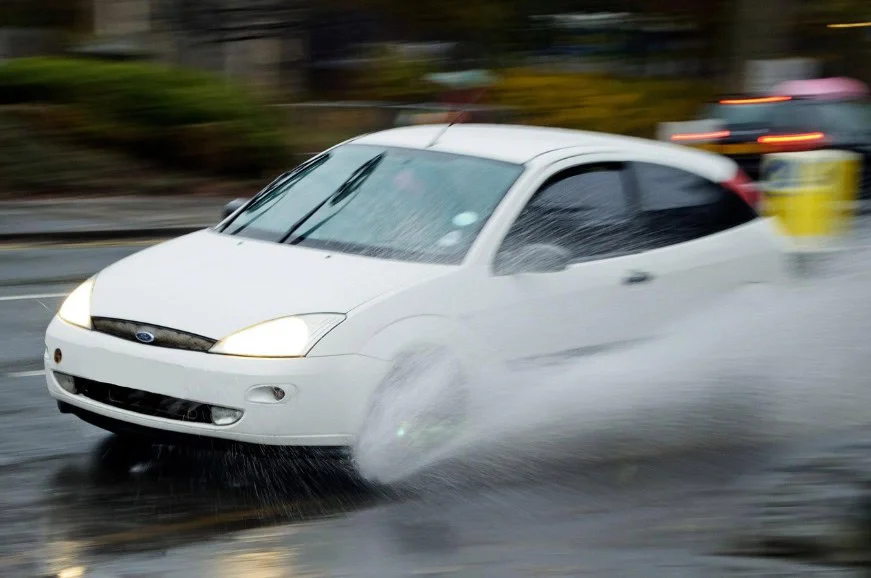
Colorado’s Front Range sits at the center of one of the most severe hail corridors in North America. The region averages seven to nine hail days per year, with three to four catastrophic events annually — each producing more than $25 million in insured losses [6]. Over the past decade, hailstorms have generated more than $5 billion in insured losses across Colorado [6]. The specific brake system hazards from hailstorms are threefold and distinct: large hail accumulating on roadways creates an immediate wet-film brake response deficit as vehicles drive over fresh hail that melts into instant standing water; hail pellets physically block storm drain inlets, converting a normal rainfall event into an urban flash flood within minutes; and softball-sized hail — reports of which have tripled in recent years according to NOAA’s National Weather Service Denver office [6] — physically impacts exposed undercarriage components including brake hose assemblies, rubber dust shields, and ABS sensor wiring on vehicles caught in the open.
In Aurora, the clay-heavy soil composition already impedes normal drainage [8], meaning that hailstorms do not need to be catastrophic to create dangerous road conditions. The combination of clay soil’s poor absorption rate and hail-blocked storm grates on Buckley Road, Quincy Avenue, Hampden Avenue, and the commercial corridors near this Grease Monkey location creates sudden standing water events mid-storm — often appearing with no visible warning to drivers approaching from a dry zone. The 2017 catastrophic Front Range hailstorm caused $2.3 billion in damage and generated more than 300,000 insurance claims across the Denver metro area [6]. Aurora’s position in that damage footprint means that hail is not a distant risk — it is a recurring annual event that touches vehicles on this specific corridor.
Aurora hailstorms do not announce their arrival on your brake system maintenance schedule. Grease Monkey at 1790 South Buckley Rd, Aurora, CO 80017, https://www.greasemonkey.com/locations/co/aurora/1790-south-buckley-rd/ inspects brake hoses, ABS sensor integrity, and full hydraulic system condition before the next catastrophic storm season arrives. Don’t let a Colorado hailstorm be the thing that finds the weak point in your brake system.
3. I-225 at 145,000 Daily Vehicles: The Physics of Emergency Stops on Aurora’s Most-Traveled Freeway
Category: Most Critical
At 65 miles per hour, a vehicle travels approximately 95 feet per second. NHTSA data establishes that the full stopping distance from hazard perception to complete vehicle stop — including the 1.5-second average human reaction time — is approximately 316 feet for a vehicle in ideal brake condition on dry pavement at that speed [4]. Worn brake pads, measuring at or below 3 mm, add 20 to 30 percent to that distance — meaning an additional 63 to 95 feet before the vehicle stops [5]. In highway driving at 65 mph, that additional distance is often the precise gap between the rear of a stopped vehicle and the front of the vehicle behind it. There is no physical margin for worn brakes in a highway emergency stop.
Interstate 225 carries between 145,000 and 149,000 vehicles per day through Aurora’s core, making it one of the highest-volume urban freeways in Colorado [3]. It connects I-70 to I-25 while bisecting Aurora from north to south, passing directly through the Anschutz Medical Campus interchange at Colfax Avenue, the 6th Avenue interchange serving Buckley Space Force Base, and the Hampden interchange linking to the commercial zone near this Grease Monkey location. The I-225 and I-25 interchange is documented by CDOT as one of the most congestion-generating points in the Denver metro commute system [3]. When traffic on a 145,000-vehicle-per-day freeway encounters an incident, the emergency brake application cascade happens at 65 mph with no time to compensate for a system that is operating below design capacity.
Every commute on I-225 is a real-time test of your brake system at highway speed. Grease Monkey at 1790 South Buckley Rd, Aurora, CO 80017, https://www.greasemonkey.com/locations/co/aurora/1790-south-buckley-rd/ is minutes from the Hampden Avenue interchange — stop in before the next commute and verify that your brake system meets the physics demand of Aurora’s busiest freeway. At 145,000 vehicles a day, I-225 does not forgive a system running on worn margins.
4. UCHealth’s Level I Trauma Center at Anschutz: Aurora as the Rocky Mountain Region’s Highest-Designation Emergency Medical Hub
Category: High Priority
The American College of Surgeons classifies trauma centers on a five-level scale. Level I is the highest designation — requiring 24-hour immediate surgical capability, complete specialty coverage, a minimum annual trauma patient volume, and verification by a national review process [9]. A Level I Trauma Center does not just accept emergency patients; it functions as the regional resource for cases too severe or complex for lower-designation facilities. The emergency access corridors to a Level I Trauma Center carry not only local patients but transfers from hospitals across the region, ambulances from multiple counties, and private vehicles transporting critical patients when ambulance response time is the critical variable.
UCHealth University of Colorado Hospital at the Anschutz Medical Campus — located at 13001 E 17th Place in Aurora, at the intersection of I-225 and Colfax Avenue — is a Level I Trauma Center verified by the American College of Surgeons [9]. The campus also houses Children’s Hospital Colorado at 13123 East 16th Avenue [9], a Level I pediatric trauma center serving the Rocky Mountain region’s youngest and most critically injured patients. The corridors approaching Anschutz from I-225, from Colfax, and from Peoria Street carry the combined weight of ambulances, law enforcement escorts, and private vehicles making emergency trips to both facilities. These are not roads where a brake system failure can be accommodated by slowing down and pulling over.
If you drive the I-225/Colfax corridor to reach Anschutz or Children’s Hospital in an emergency — or if you share the road with those who do — your brake system is a factor in that emergency’s outcome. Grease Monkey at 1790 South Buckley Rd, Aurora, CO 80017, https://www.greasemonkey.com/locations/co/aurora/1790-south-buckley-rd/ provides full brake system inspection that verifies your vehicle can make that drive at its best when it matters most. The Level I Trauma Center is ready 24/7 — your brake system should be too.
5. Aurora’s Summer Afternoon Thunderstorm Pattern: When Storm Cells Hit Peak Commute Hours on Buckley Road and Hampden Avenue
Category: High Priority
Colorado’s Front Range experiences a well-documented convective weather pattern during summer months: storm cells develop along the mountains in the early afternoon and track eastward, arriving over the Denver metro area — and Aurora specifically — predominantly between 3 PM and 8 PM [6][8]. This timing places the Front Range’s most severe weather directly over Aurora’s roads during the peak evening commute. Drivers who left home in clear skies encounter storms moving in from the west while they are already committed to Buckley Road, Hampden Avenue, Parker Road, or the I-225 on-ramps. The transition from dry morning roads to hail-covered, rain-soaked evening arterials occurs while vehicles are in motion and drivers are not mentally or physically prepared for the change. Research from NHTSA documents that wet-pavement braking requires 45 to 70 percent more stopping distance than identical dry-pavement conditions [4], making the sudden transition from dry to wet surface the highest-risk variable in the commute cycle.
For Aurora drivers who commute home from Denver or from I-225’s commercial zones along the Buckley Road corridor, the summer afternoon thunderstorm pattern means that the evening commute is statistically more dangerous than the morning commute — every weekday from May through August. The commercial stretch of South Buckley Road, Quincy Avenue, and Hampden Avenue in the vicinity of this Grease Monkey location falls directly in the path of eastward-tracking storm cells. When those storms carry hail — and Aurora’s location in Colorado’s Hail Alley means that a significant percentage do [6] — the road surface transitions from dry to hail-covered to flooded within a single southbound mile. Do not let the morning’s clear skies set your assumption about tonight’s commute. Grease Monkey at 1790 South Buckley Rd, Aurora, CO 80017, https://www.greasemonkey.com/locations/co/aurora/1790-south-buckley-rd/ can verify that your brake system is calibrated for the wet-road reality of Aurora’s afternoon storm season — not just the dry-road optimism of a Colorado morning.
6. E-470 Toll Road at 75 mph: Emergency Braking Physics on Aurora’s Denver International Airport Corridor
Category: High Priority
The physics of high-speed emergency braking are not linear. At 45 mph, a vehicle with ideal brakes stops in approximately 150 feet from initial hazard perception. At 75 mph — the posted limit on sections of E-470 — that distance extends to approximately 400 feet on dry pavement with a fully functional brake system [4]. Worn pads at the 3 mm replacement threshold add 20 to 30 percent to that figure: 80 to 120 additional feet before the vehicle stops [5]. At 75 mph, 120 extra feet represents approximately one additional second of travel — time during which a lane departure, a construction zone barrier, or a disabled vehicle in the roadway becomes the difference between an emergency stop and an impact. No other variable in daily Aurora driving creates this level of speed-distance amplification.
E-470 is the primary Aurora corridor linking the city’s eastern residential and commercial zones to Denver International Airport via Peña Boulevard [3]. Business travelers, DIA shuttle vehicles, rideshare drivers, long-haul commercial carriers, and commuters from eastern Aurora suburbs all use E-470 daily. The toll road’s merge points — particularly at the Parker Road entrance, the Quincy Avenue interchange, and the Peña Boulevard connection — are where high-speed traffic converges with vehicles entering from lower-speed surface streets. These merge zones are precisely the locations where an emergency brake application can be required with no warning, at the worst possible speed for a degraded brake system.
At 75 mph, there is no room in your stopping distance for a worn brake system. Grease Monkey at 1790 South Buckley Rd, Aurora, CO 80017, https://www.greasemonkey.com/locations/co/aurora/1790-south-buckley-rd/ is conveniently positioned between Buckley Road and the E-470 access points. A complete brake inspection before your next DIA run or E-470 commute is the single most efficient safety investment you can make for high-speed Aurora driving.
7. RTD R Line At-Grade Rail Crossings: Brake Response at 12 Active Light Rail Intersections in Aurora
Category: Important
Light rail crossings impose a uniquely unforgiving brake demand on road vehicles. A light rail train at transit speeds cannot stop quickly — a 225-foot light rail consist traveling at 55 mph requires far more stopping distance than any road vehicle. The obligation to stop is entirely on the road vehicle, and the warning window — from signal activation to train arrival — is measured in seconds, not in the comfortable cushion that a traffic signal’s yellow phase provides. NHTSA data on grade crossing incidents indicates that driver inattention and insufficient brake response are leading contributing factors in road-vehicle versus rail collisions [4]. When the crossing signal activates and a driver initiates emergency braking, the brake system must perform at full specification — immediately, with no warm-up period and no margin for worn pads or low fluid pressure.
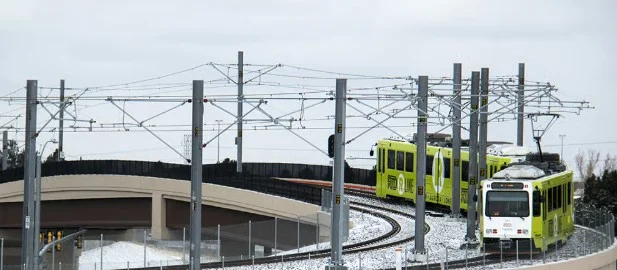
RTD’s R Line brings light rail service through 10.5 miles of Aurora on 10 active stations [10], connecting the city’s commercial zones and residential neighborhoods to the Anschutz Medical Campus, the Aurora City Center, and the DIA A Line at Peoria Station. The City of Aurora has documented 12 at-grade crossings on the R Line that required traffic signal upgrades due to safety and operational concerns, including a 2023 incident at East 17th Place and North Potomac Street near the Anschutz Medical Campus [10]. RTD’s A Line — which runs from DIA through Aurora — has also experienced collisions with commercial vehicles at grade crossings in the Aurora corridor [10]. These are not isolated incidents; they reflect the ongoing brake-demand reality of driving in a city with an active at-grade light rail network.
Aurora’s light rail crossings are not optional stops — they are legal, immediate, non-negotiable brake demands. Grease Monkey at 1790 South Buckley Rd, Aurora, CO 80017, https://www.greasemonkey.com/locations/co/aurora/1790-south-buckley-rd/ can verify that your brake system responds at full capacity when the R Line’s crossing signals activate — because between the signal and the train, there is no second chance.
8. Aurora Flash Flooding Compounded by Hail-Clogged Storm Drains: Sudden Standing Water on Major Arterials With No Warning
Category: Important
Flash flooding on urban roads creates a specific and dangerous brake scenario: a vehicle traveling at normal speed encounters standing water that was not visible when braking was initiated. The hydroplaning threshold — where tire contact with the road is lost entirely — begins at water depths as shallow as one-tenth of an inch at highway speeds, according to research from the Federal Highway Administration [4]. But the flash flood scenario is distinct from standard wet-road driving because the water accumulation is sudden, deep, and concentrated in road depressions and underpasses that drivers approach at full speed before the standing water becomes visible. Aurora police have documented incidents of commuters stranded in hail-covered floodwaters during summer storm events, requiring active rescue from flooding road corridors [8].
Aurora’s susceptibility to this specific hazard is amplified by two locally specific factors. First, the city’s clay-heavy soil composition absorbs water at an extremely slow rate, dramatically increasing surface runoff during heavy rain events [8]. Second, when storms also deliver hail — which is common given Aurora’s location in Colorado’s Hail Alley — hail pellets physically block storm drain grates, eliminating the drainage capacity of the road surface entirely and converting a minor rain event into an immediate flash flood [8]. Historical events have documented Hampden Avenue between Interstate 25 and Havana Street flooding to the point of lane closure, with two to three inches of rain creating impassable conditions in eastern and southern Aurora [8]. The Quincy Avenue and Buckley Road drainage basins in the vicinity of this Grease Monkey location are subject to this same vulnerability. Knowing your brakes work before you drive into standing water is not paranoia — it is physics. Grease Monkey at 1790 South Buckley Rd, Aurora, CO 80017, https://www.greasemonkey.com/locations/co/aurora/1790-south-buckley-rd/ provides full brake system inspection — including ABS function and hydraulic integrity — so that when Aurora’s drainage fails during the next summer storm, your brake system does not.
9. Magnesium Chloride Winter Road Treatment: Why Aurora’s Deicing Chemical Is More Corrosive Than Standard Road Salt
Category: Important
Colorado’s Department of Transportation uses magnesium chloride (MgCl₂) as a primary anti-icing and pre-treatment agent on Front Range roads, including Aurora’s major arterials. Magnesium chloride is more chemically aggressive than sodium chloride (standard road salt) for several specific reasons: it remains in liquid form at temperatures as low as -13°F (compared to NaCl’s threshold of approximately +20°F), meaning it adheres to metal surfaces as a liquid film rather than a dry crystal; this liquid contact dramatically prolongs the time brake lines, caliper bodies, rotor hat sections, and ABS sensor housings are in contact with corrosive chemistry; and the hygroscopic nature of MgCl₂ means it actively draws moisture from the environment, keeping metal surfaces wet even after the road appears dry [11]. Automotive engineers and transportation researchers have documented that magnesium chloride application accelerates metal corrosion rates on vehicle undercarriages compared to sodium chloride equivalents at the same concentration.
Aurora’s winter road treatment program applies MgCl₂ before and during every significant precipitation event, which in the Denver metro area means pre-treatment of Buckley Road, Hampden Avenue, Havana Street, Quincy Avenue, and the commercial arterials in the South Buckley Road corridor throughout a winter season that can extend from October through April. For Aurora drivers who move between pre-treated dry roads (where no visible chemical is apparent) and snow-covered wet roads, the corrosion exposure accumulates invisibly — on brake hoses, steel brake lines, caliper slide pins, and rotor surfaces — over months and years. Drivers who relocated to Aurora from states that use traditional road salt may not anticipate this more aggressive chemistry and may not recognize that their existing brake inspection intervals are calibrated for a less corrosive environment.
Colorado’s winter road treatment is more effective than road salt — and more aggressive on your undercarriage. Grease Monkey at 1790 South Buckley Rd, Aurora, CO 80017, https://www.greasemonkey.com/locations/co/aurora/1790-south-buckley-rd/ inspects brake hoses, steel lines, caliper hardware, and ABS sensor assemblies for MgCl₂ corrosion damage — the kind of wear that a visual inspection from above the vehicle will never catch.
10. Denver Metro Rush Hour Convergence: Brake Thermal Cycling at Metropolitan Scale on Aurora’s I-70/I-225/Colfax Corridors
Category: Medium Priority
Stop-and-go commuting in a major metropolitan area produces brake system wear at a rate qualitatively different from rural or small-city driving. Every deceleration from 65 mph to a stop converts kinetic energy into thermal energy in the brake system — and on a metro-scale freeway during rush hour, those decelerations are frequent, severe, and concentrated into a two-hour window twice daily. Research from the Society of Automotive Engineers has documented that urban metro commuting produces brake temperatures significantly higher than highway or rural driving, and that the twice-daily thermal cycling pattern of commuter freeway driving accelerates pad wear and fluid moisture absorption faster than equivalent mileage in lighter-demand conditions [5]. The mileage-based service interval was never calculated for metro-scale stop-and-go commuting in a city of 400,000 people.
Aurora’s position at the eastern edge of the Denver metro places it at the convergence of three major commuter corridors. I-225 — at 145,000 to 149,000 vehicles per day — is documented by CDOT and commute-guide services as one of the most congested freeways in the metro area, with the I-225 and I-25 interchange generating the most significant delays for southern commuters [3]. I-70 runs along Aurora’s northern boundary, feeding traffic east and west. Colfax Avenue bisects the city at grade, with traffic signals at nearly every block through the Anschutz Medical Campus zone and the commercial zones stretching toward Buckley Road. Aurora’s commuters navigate this convergence twice daily, cycling their brake systems through conditions that a vehicle owner’s manual service interval simply cannot anticipate.
Your commute is wearing your brakes faster than the odometer suggests. Grease Monkey at 1790 South Buckley Rd, Aurora, CO 80017, https://www.greasemonkey.com/locations/co/aurora/1790-south-buckley-rd/ delivers measurement-based inspection that accounts for actual Aurora commuting conditions — not an average mileage formula designed for drivers in less demanding metropolitan environments.
11. Denver International Airport Rental and Visitor Vehicles: Unknown Maintenance Histories at E-470 and Peña Boulevard Highway Speeds
Category: Medium Priority
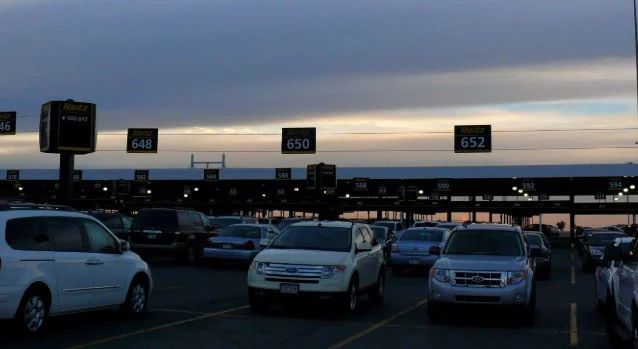
Rental vehicles are maintained to meet minimum legal and fleet management standards — not preventive safety standards. National rental companies typically cycle vehicles at approximately 30,000-mile intervals, but specific brake pad wear measurement is not routinely performed between customer rentals. The result is that any given rental vehicle may carry brake pads at varying stages of wear, without the rental agency or the renter having any reliable information about the current brake system condition. The AAA Foundation for Traffic Safety has documented that rental and unfamiliar vehicles are associated with elevated crash involvement compared to personally owned and maintained vehicles, particularly in unfamiliar high-speed driving environments [12]. With Denver International Airport consistently ranking among the nation’s busiest airports, the volume of rental vehicles entering Aurora’s road system daily is substantial.
Denver International Airport serves tens of millions of passengers annually [13], with a significant share renting vehicles to access Aurora, the Denver Tech Center, and metro destinations via Peña Boulevard and E-470. These vehicles enter the toll road system directly from the airport rental facility and merge onto E-470 at 75 mph within minutes of leaving the parking structure — before the driver has any sense of how the vehicle handles, and certainly without knowledge of the brake system’s condition. The merge points where Peña Boulevard feeds into E-470, and where E-470 connects to Parker Road and the Quincy Avenue interchange near this Grease Monkey location, place these unknown-maintenance-history vehicles into the same emergency-stop corridors that Aurora residents navigate daily. Aurora residents cannot control the maintenance history of the rental vehicles around them on E-470. They can control their own. Grease Monkey at 1790 South Buckley Rd, Aurora, CO 80017, https://www.greasemonkey.com/locations/co/aurora/1790-south-buckley-rd/ ensures that your stopping margin is fully calibrated for the E-470 corridor — so that when the rental car in front of you makes an unexpected move, your brake system has the capacity to respond.
12. Aurora’s Foreign-Born Community: Language Barriers, Older Vehicle Fleets, and Equal Access to Preventive Brake Safety
Category: Medium Priority
Vehicle maintenance research consistently demonstrates that preventive brake service rates are lower in communities with constrained income, limited English proficiency, and reduced access to trusted service providers. Approximately one in five Aurora residents is foreign-born, and the city is home to a refugee and immigrant population representing more than 30 countries of origin — with community languages including Nepali, Karen, Swahili, Burmese, Pulaar, Wolof, Spanish, and Rohingya [14]. Brake warning lights, service recommendation notices, and shop-counter explanations of worn pads and brake fluid moisture levels are almost exclusively communicated in English — and a warning that is not understood is functionally the same as a warning that was never given. Additionally, the economic realities of refugee resettlement and recent immigration mean that older, higher-mileage vehicles — whose brake systems are statistically more likely to require service — are more prevalent in these communities.
Aurora has received national recognition for its commitment to immigrant and refugee inclusion, ranking first in Colorado for immigrant support infrastructure [14]. The Rocky Mountain Welcome Center and Aurora’s Immigrant and Refugee Commission are models of urban integration policy. But a city’s commitment to its newest residents is ultimately tested by whether those residents’ vehicles are safe on Buckley Road, Hampden Avenue, and the Colfax Avenue corridor that connects their neighborhoods to employment, education at the Community College of Aurora, and medical care at the Anschutz campus. Equal brake safety is not a demographic category — it is a physics requirement that applies identically to every vehicle on Aurora’s roads regardless of the owner’s country of origin.
Grease Monkey at 1790 South Buckley Rd, Aurora, CO 80017 is committed to the full Aurora community. https://www.greasemonkey.com/locations/co/aurora/1790-south-buckley-rd/ — FullSpeed Automotive’s ASE-certified technicians serve every Aurora driver with the same professional inspection standard, because a worn brake pad poses the same risk to every vehicle, in every neighborhood, in every language.
13. Colorado’s Emissions Testing Program and the Brake Safety Gap: What Annual Compliance Inspection Does NOT Check
Category: Lower Priority
Colorado requires annual emissions testing for most vehicles registered in the Denver metro area, including Aurora. The program — administered through the Air Care Colorado (formerly AIRS) testing network — measures exhaust emissions, catalytic converter function, and onboard diagnostic system status [15]. It is a mandatory annual inspection that creates a documented compliance record and generates a specific vehicle certification. Many Aurora drivers who complete this annual test feel a legitimate sense of vehicle compliance — a feeling that the state has checked their car and found it roadworthy. That feeling is accurate, but it is partial. The emissions inspection program does not evaluate brake pad thickness, rotor wear, brake fluid condition, brake hose integrity, ABS function, caliper performance, or parking brake tension — any of the components whose failure has direct, immediate safety consequences.
In Aurora, where vehicles must comply with the state emissions program, the annual inspection creates a natural but potentially misleading anchor for “vehicle checkup” thinking. A driver who passed emissions last month may not recognize that their brake pads, which were near the 3 mm replacement threshold then, have now crossed it — because no state agency measured them. The gap between emissions compliance and brake safety is not theoretical. NHTSA data consistently identifies brake failure as a contributing factor in approximately 22 percent of crashes involving mechanical failure [4], yet no state in the nation includes brake performance in mandatory vehicle inspection requirements that also cover emissions. Colorado is no exception. The emissions sticker on your windshield says your exhaust is clean. It says nothing about whether you can stop.
Your annual emissions pass is not a brake inspection. Grease Monkey at 1790 South Buckley Rd, Aurora, CO 80017, https://www.greasemonkey.com/locations/co/aurora/1790-south-buckley-rd/ fills the gap the state inspection leaves open — with measurement-based pad assessment, rotor thickness verification, and full hydraulic system review. Schedule your brake check around your annual emissions inspection and cover everything Colorado doesn’t.
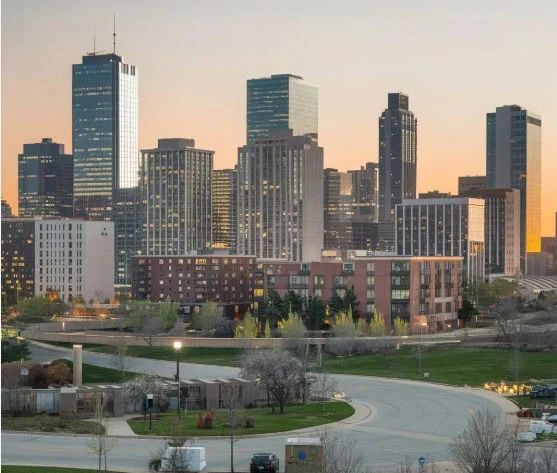
14. Urban Heat Island Effect on Aurora’s Commercial Zone Brake Thermal Baseline: Hotter Ambient Temperatures Where You Drive Most
Category: Lower Priority
The EPA has documented that urban heat island effect raises surface and ambient temperatures in dense commercial and industrial zones by 5 to 10°F above surrounding suburban and rural areas [16]. This occurs because asphalt and concrete absorb and retain heat, vehicle exhaust and air conditioning discharge add thermal load, and reduced vegetation eliminates evaporative cooling. For vehicle brake systems, this ambient temperature elevation is not a trivial factor. Brake pad compounds are engineered to operate effectively within a specified temperature range; as ambient temperatures rise, the baseline from which brake heat accumulates during use rises with them. A system that reaches brake fade threshold after ten hard stops in a 75°F environment may reach the same threshold after eight stops in an 85°F environment — a 20 percent reduction in effective high-demand capacity before any pad wear is factored in.
Aurora’s South Buckley Road commercial corridor — including the retail, automotive service, and light industrial zone surrounding this Grease Monkey location — exhibits classic urban heat island characteristics: wide asphalt surfaces, dense commercial building footprints, high vehicle traffic volumes, and limited green space. At Aurora’s 5,471-foot elevation, the thinner atmosphere provides slightly less convective cooling than sea-level environments, compounding the urban heat island effect on brake component temperature management [2]. For Aurora drivers who spend their daily driving time primarily in the commercial zones along Buckley Road, Havana Street, Quincy Avenue, and Parker Road, the ambient brake thermal baseline is measurably higher than it would be for a driver in a suburban or rural setting — even with identical mileage, identical pads, and identical driving patterns.
Your brake system’s thermal reserve is smaller than the manual suggests if you drive Aurora’s commercial zones. Grease Monkey at 1790 South Buckley Rd, Aurora, CO 80017, https://www.greasemonkey.com/locations/co/aurora/1790-south-buckley-rd/ accounts for real-world Aurora driving conditions in its service recommendations — not a national average that was never tested in a Front Range urban heat corridor at 5,471 feet.
15. Aurora as a Denver Metro Brake Service Hub: The Long-Term Value of a Consistent Service Record in Colorado’s Third-Largest City
Category: Long-Term Value
A brake service history maintained at a consistent, verifiable location accumulates in value with every entry. For Aurora drivers, establishing that record at a FullSpeed Automotive location means that every pad measurement, rotor thickness check, fluid exchange, and caliper inspection becomes part of a digitally accessible service history that can be reviewed by a future buyer, verified by an insurance company, or referenced by a technician at any point in the vehicle’s service life. In an active vehicle market — and Aurora’s market, serving a city of 405,255 people [2] growing within the nation’s sixth-largest metropolitan area, is one of the most active in Colorado — that documentation is a tangible financial asset. Studies of used vehicle transactions consistently show that documented preventive brake service accelerates sales and supports better transaction prices compared to vehicles with undocumented maintenance histories [17].
Aurora is also the eastern anchor of a metro area whose vehicle service infrastructure is among the most mature and competitive in the Mountain West. Choosing a national-network shop with CARFAX integration, ASE-certified technicians, and a 700-plus-location service footprint means that a service record started in Aurora travels with the vehicle regardless of where the next owner or the next repair occurs. For the military families rotating through Buckley Space Force Base who know their vehicles will follow them to the next installation, for the DIA-corridor commuters who may eventually relocate within the metro, and for the long-term Aurora residents who plan to sell in an active market — the brake service record started today is the maintenance asset that pays dividends at the transaction table tomorrow.
Start your Aurora brake service record with the shop that will maintain it for the long run. Grease Monkey at 1790 South Buckley Rd, Aurora, CO 80017, https://www.greasemonkey.com/locations/co/aurora/1790-south-buckley-rd/ — backed by FullSpeed Automotive’s national infrastructure and CARFAX service integration — is the right place to build a brake maintenance record that holds its value through every mile, every hailstorm, and every Colorado winter Aurora delivers.
About Grease Monkey — Aurora, Colorado
Grease Monkey at 1790 South Buckley Rd, Aurora, Colorado 80017, operates under the FullSpeed Automotive umbrella — a national network of 700-plus service centers whose ASE-certified technicians have serviced more than 5.2 million vehicles and whose locations earned 435 CARFAX Top Shop awards in 2025 [1]. Positioned on the South Buckley Road corridor between Buckley Space Force Base and Aurora’s I-225 commercial zone, this location serves military families, metro commuters, DIA-corridor travelers, and Aurora’s full community of daily drivers with the diagnostic depth and service transparency of a national-standard operation. Visit online at https://www.greasemonkey.com/locations/co/aurora/1790-south-buckley-rd/.
Author’s Bio – Phillip Paul Gilliam
Phillip Gilliam is a veteran journalist and former Editor-in-Chief with 50+ years of publishing experience and thousands of published articles. Specializing in automotive, trucking, and digital publishing, he creates authoritative, search-optimized content built on real-world expertise and editorial excellence. To learn more about Phil, visit http://www.phillipgilliam.com/about.html or contact Phil at [email protected]. He would love to hear from you!
Citations
[1] AutoSuccess Online. FullSpeed Automotive Recognized as 435 Service Centers Earn CARFAX Top Shop Wins. AutoSuccess Online. Available at: https://www.autosuccessonline.com/fullspeed-automotive-recognized-435-service-centers-carfax-top-shop-wins/. (435 FullSpeed Automotive locations named 2025 CARFAX Top Shop Winners; 700-plus locations nationwide; ASE-certified technicians; 5.2 million vehicles serviced.)
[2] U.S. Census Bureau / World Population Review. Aurora, Colorado Population 2026; Aurora, Colorado Demographics. U.S. Census Bureau. Available at: https://worldpopulationreview.com/us-cities/colorado/aurora and https://www.census.gov/quickfacts/fact/table/auroracitycolorado/PST045224. (Aurora population approximately 405,255 in 2026, up from 386,261 at 2020 Census; third-most-populous city in Colorado; 50th most populous in the United States; official elevation 5,471 feet; city spans nearly 1,000 feet of elevation variation.)
[3] Colorado Department of Transportation (CDOT) / AARoads / Commute Data Sources. Interstate 225 Colorado Traffic Volume; Commuting & Transportation in Aurora, CO. CDOT Traffic Data Explorer. Available at: https://dtdapps.codot.gov/otis/trafficdata and https://corken.co/blog/commuting-and-transportation-in-aurora-co-what-to-expect. (I-225 carries 145,000–149,000 vehicles per day through Aurora’s core; I-225/I-25 interchange documented as most congestion-generating point for southern commuters in Denver metro; E-470 connects Aurora to DIA via Peña Boulevard.)
[4] National Highway Traffic Safety Administration (NHTSA). Traffic Safety Facts: Stopping Distance, Brake Failure in Crashes, Grade Crossing Safety, Wet Pavement Braking. U.S. Department of Transportation. Available at: https://www.nhtsa.gov/. (Brake-related issues contributing factor in approximately 22% of crashes involving mechanical failure; average human perception-reaction time 1.5 seconds; at 65 mph a vehicle travels approximately 95 feet per second; full stopping distance at 65 mph approximately 316 feet with ideal brakes on dry pavement; wet pavement requires 45–70% more stopping distance than dry pavement; grade crossing incidents linked to driver inattention and insufficient brake response.)
[5] Brake Manufacturers Council / Automotive Aftermarket Industry Association. Brake Pad and Rotor Service Standards. AAIA. (New brake pads approximately 10–12 mm; replacement recommended at 3 mm; worn pads at 3 mm increase stopping distance 20–30% versus new pads; metro-scale stop-and-go commuting accelerates pad wear beyond mileage-based service interval estimates.)
[6] NOAA National Weather Service Denver / Elite Roofing / Metro City Roofing. Colorado Hail Statistics and Front Range Hail Alley Data. NWS Denver. Available at: https://elite-roofs.com/colorado-hail-damage/ and https://metrocityroofing.com/blog/everything-you-need-to-know-about-hail-in-colorado/. (Colorado Front Range averages 7–9 hail days per year; 3–4 catastrophic hailstorms per year causing $25M+ in insured damage each; $5 billion in Colorado hail insured losses over past decade; 2017 storm caused $2.3 billion in damage and 300,000 insurance claims; softball-sized hail reports tripled in 2023 per NWS Denver; afternoon convective storms peak 3 PM–8 PM May through August on the Front Range.)
[7] Buckley Space Force Base / MilitaryINSTALLATIONS / Military OneSource. Buckley Space Force Base Gate Hours and Access Routes. U.S. Space Force. Available at: https://installations.militaryonesource.mil/in-depth-overview/buckley-afb. (Buckley SFB located in Aurora, Colorado on Buckley Road corridor; Mississippi Gate open 24/7; 6th Avenue Gate open Monday–Friday 6:00 AM–6:00 PM; Telluride Gate Monday–Friday 5:00 AM–5:00 PM; main gate on Mississippi Avenue east of Chambers Road and Buckley Road.)
[8] City of Aurora Office of Emergency Management / Fox Weather / Lightspeed Restoration. Aurora Flood Resources; Aurora Flash Flooding and Drainage. City of Aurora. Available at: https://www.auroragov.org/residents/public_safety/office_of_emergency_management/flood_resources and https://www.foxweather.com/lifestyle/watch-aurora-police-carry-stranded-commuter-from-hail-covered-colorado-floodwaters. (Aurora clay-heavy soil absorbs water slowly, increasing surface runoff; hail pellets block storm drain inlets, eliminating drainage capacity; historical flooding on Hampden Avenue between I-25 and Havana Street; 2–3 inches of rain causes impassable conditions in eastern/southern Aurora; Aurora police rescued stranded commuter from hail-covered floodwaters during summer storm event.)
[9] American College of Surgeons / UCHealth / Children’s Hospital Colorado. UCHealth University of Colorado Hospital Level I Trauma Center; Anschutz Medical Campus. ACS. Available at: https://www.uchealth.org/locations/uchealth-university-of-colorado-hospital-trauma-center/ and https://www.childrenscolorado.org/locations/anschutz-medical-campus-aurora/. (UCHealth University of Colorado Hospital at Anschutz Medical Campus, Aurora, Colorado: Level I Trauma Center, verified by the American College of Surgeons; 678-bed quaternary care hospital; located at 13001 E 17th Place at I-225 and Colfax; Children’s Hospital Colorado at 13123 East 16th Avenue on same campus.)
[10] Greater Denver Transit / RTD-Denver / CBS Colorado. RTD R Line Aurora Light Rail; At-Grade Crossings; A Line Collision. RTD. Available at: https://www.greaterdenvertransit.com/lightrailsafety/ and https://www.cbsnews.com/colorado/news/rtd-train-collides-semi-truck-aurora-a-line/. (RTD R Line: 10.5 miles of light rail through Aurora; 10 stations; connects Nine Mile Station to Peoria Station via Aurora City Center and Anschutz Medical Campus; 12 at-grade crossings on R Line in City of Aurora undergoing traffic signal upgrades; 2023 incident at East 17th Place and North Potomac Street documented safety concern; RTD A Line collision with semi-truck in northwestern Aurora.)
[11] Colorado Department of Transportation (CDOT) / Federal Highway Administration. Magnesium Chloride Road Treatment and Vehicle Corrosion. FHWA. Available at: https://www.fhwa.dot.gov/. (Colorado uses magnesium chloride (MgCl₂) as primary anti-icing and pre-treatment agent; MgCl₂ remains liquid at temperatures as low as -13°F vs. NaCl threshold of approximately +20°F; MgCl₂ clings to metal surfaces as liquid film; hygroscopic nature draws environmental moisture; accelerates corrosion of brake lines, caliper hardware, ABS sensor housings, and rotor hat sections compared to equivalent NaCl application.)
[12] AAA Foundation for Traffic Safety. Rental Vehicle Safety and Unknown Maintenance Histories. AAA Foundation. Available at: https://aaafoundation.org/. (Rental and unfamiliar vehicles associated with elevated crash involvement; brake pad wear not routinely measured between rental customers; national rental fleets typically cycled at approximately 30,000-mile intervals without specific brake system assessment between rentals.)
[13] Denver International Airport (DIA). Airport Statistics and Passenger Volume. DEN. Available at: https://www.flydenver.com/. (Denver International Airport ranks among the nation’s busiest airports, serving tens of millions of passengers annually; significant share access Aurora and Denver metro via E-470 toll road from Peña Boulevard rental car facility.)
[14] City of Aurora International and Immigrant Affairs / Denver Westword / American Immigration Council. Aurora Immigrant and Refugee Demographics. City of Aurora. Available at: https://www.auroragov.org/city_hall/international___immigrant_affairs and https://www.westword.com/news/refugees-help-make-aurora-colorado-most-diverse-city-17884980/. (Approximately 1 in 5 Aurora residents is foreign-born; approximately 1,600 refugees resettled in Aurora; community languages include Nepali, Karen, Swahili, Burmese, Pulaar, Wolof, Spanish, and Rohingya; Aurora ranks first in Colorado for immigrant support infrastructure.)
[15] Colorado Department of Public Health and Environment / Air Care Colorado. Vehicle Emissions Testing Program Requirements. CDPHE. Available at: https://www.colorado.gov/pacific/cdphe/vehicle-emissions-testing. (Colorado requires annual emissions testing for most vehicles in the Denver metro area including Aurora; program evaluates exhaust emissions, catalytic converter function, and OBD diagnostic status; program does not evaluate brake pad thickness, rotor wear, brake fluid condition, brake hose integrity, ABS function, caliper performance, or parking brake tension.)
[16] U.S. Environmental Protection Agency (EPA). Heat Island Effect: Urban Temperature Elevation in Commercial and Industrial Zones. EPA. Available at: https://www.epa.gov/heat-islands. (Urban heat island effect raises surface and ambient temperatures in dense commercial and industrial zones 5–10°F above surrounding suburban and rural areas; caused by asphalt/concrete heat retention, vehicle exhaust, air conditioning discharge, and reduced vegetation; raises baseline thermal load on vehicle brake systems operating in stop-and-go conditions in commercial zones.)
[17] Autotrader / CARFAX. Impact of Service Documentation on Used Vehicle Resale Value. Autotrader. Available at: https://www.autotrader.com/. (Documented preventive brake service history accelerates used vehicle sales and supports better transaction prices; service records maintained at national-network shops with CARFAX integration are verifiable by future buyers and insurers; maintenance documentation functions as long-term financial asset in active vehicle markets.)
© 2026 Grease Monkey – Written by Phillip Paul Gilliam. All rights reserved. Published in partnership with Grease Monkey, 1790 South Buckley Rd, Aurora, Colorado 80017. Content is for informational purposes and reflects current industry research and local geographic conditions. Brake service intervals and recommendations may vary by individual vehicle, usage pattern, and driving conditions. Consult a certified professional for specific advice about your vehicle’s brake system.
Stop by today.
- Grease Monkey Center #48 Address: 1790 South Buckley Rd, Aurora, CO, 80017
- Services: Brake Services, Fluid Exchange Services, Headlight Services, Oil Changes, Power Steering
Your car will thank you. And your wallet will too.


Plan Your Visit
Find a location near you, explore current deals, and get everything you need before you roll in.