6 Reasons Farm Country Is Hard on Your Engine Air Filter Along South Yellowstone Highway in Rexburg, Idaho – Harvest Dust, Dune Sand, Winter Nests, and the Warranty Question Nobody Asks
Location: Rexburg, ID Topic: Grease Monkey Center # 1533 By: Phil Gilliam
An Authoritative Guide for Engine Air Filter Care Where the Upper Snake River Valley Farms Meet Highway 20
Grease Monkey, 795 South Yellowstone Highway, Rexburg, ID 83440. Has Over 35 Google Reviews With A 4.7 Star Rating.
A Note on Authority and Expertise: This article was researched and written by Phillip Paul Gilliam, a veteran journalist and former Editor-in-Chief with more than 50 years of publishing experience in automotive, trucking, and safety communications.
Decades of reporting on trucks, farm equipment, and the people who keep them running leave a writer suspicious of easy answers and fond of primary sources. That is the standard here. The guidance in this article is built on the Federal Trade Commission's warranty enforcement, oil-analysis research on how dust wears engines, federal mine-safety research on how road dust behaves, U.S. Bureau of Land Management data on the St. Anthony Sand Dunes, Idaho crop statistics, heavy-duty filtration data, and public-health guidance on rodent-infested vehicles. When the evidence is limited, this guide says so.
The shop at 795 South Yellowstone Highway is Grease Monkey Center #1533, operated by Threshold Automotive as part of the FullSpeed Automotive family [1]. Grease Monkey has been servicing vehicles since 1978 and is headquartered in Denver [2]. FullSpeed counted more than 900 franchised and company-owned locations in January 2026, with Grease Monkey alone operating more than 460 centers in five countries, and the brand made Entrepreneur's Franchise 500 in 2025 for the ninth straight year [3]. CARFAX recognized 435 FullSpeed Automotive centers as 2025 Top Shop winners [4]. Its fleet program connects local customers to more than 700 FullSpeed locations [1].
South Yellowstone Highway is where Rexburg meets the farm country around it. Winters here bring about 55 inches of snow a year [5] and cold snaps the store itself describes as approaching 20 below zero [1]. The city sits at 4,865 feet, and grain, hay, and potatoes are the chief crops on the fertile ground around it [6]. Farm trucks, ranch pickups, rigs hauling side-by-sides to the dunes, and commuters on Highway 20 all share these roads, and each of them puts its engine air filter through a different kind of test.
An Introduction to Engine Air Filters on South Yellowstone Highway and the Farm Roads Beyond
Stand at the edge of a potato field during fall harvest and watch what follows the digger: a long, low cloud of soil drifting over the farm lane, the trucks lined up to haul, and every pickup that drives through it. Drive north in summer and the trailers headed for the St. Anthony Sand Dunes are stacked with machines that will spend the weekend throwing sand into the air. Come back in March and plenty of the trucks that worked those fields are sitting in sheds where mice spent the winter.
Each of those scenes is an engine air filter story. Farm country does not just make an engine air filter dirty. It loads it with different materials, on a different calendar, at different heights and distances, and sometimes with things that are not dust at all. And when something goes wrong with an engine that breathed that air, the paperwork matters as much as the parts.
This guide answers six questions drivers around South Yellowstone Highway ask about the engine air filter, starting with the one that can cost the most – what happens to a warranty when dust gets into an engine – and moving through harvest season, inlet height, dune sand, pre-cleaners, and the winter mouse problem. Each answer opens with a short, direct reply, then explains the engineering and the evidence and what it means on the farm roads and highways around Rexburg.
The team at Grease Monkey on South Yellowstone Highway replaces engine and cabin air filters, offers diesel oil changes, and keeps maintenance records for fleet customers [1]. Here is what to know before the next harvest, the next dune weekend, or the first start after a long winter.
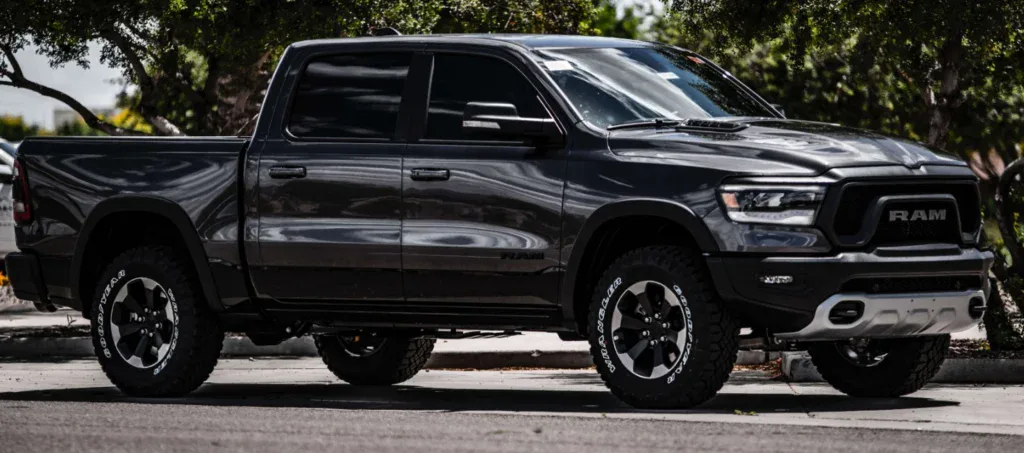
There is nothing more exciting than seeing your new pickup truck. Now the trick is keep everything cared for to keep in under warranty!
1. Could Dust Cost You Your Warranty? What Rexburg Truck Owners Should Know Before an Engine Claim
Can a dirty, missing, or aftermarket engine air filter void my vehicle’s warranty?
Quick Answer: Using an aftermarket engine air filter or an independent shop cannot void your warranty by itself under federal law. But if dust gets past a missing, damaged, or poorly installed engine air filter and wears the engine, the manufacturer can deny that repair. Keep engine air filter service records.
A lot of farm and ranch families around Rexburg buy new pickups and work them hard from day one. That raises a fair question: if the engine air filter is changed somewhere other than the dealer, or replaced with a non-factory brand, is the warranty at risk? The short answer is no, with one important exception.
The rule comes from the Magnuson-Moss Warranty Act. In a 2022 consumer alert, the Federal Trade Commission explained that a company generally cannot void a warranty just because the owner used another company’s parts or an independent repair shop. The same alert also spells out the exception: a company may refuse warranty coverage for defects or damage caused by third-party parts or services [7]. When Kia once advised owners to stick with dealer-sourced filters, aftermarket trade groups pushed back and pointed to the FTC’s position that a manufacturer must show an aftermarket part actually caused the damage, not merely that it was installed, before denying coverage [8].
So the engine air filter itself is not the problem. Dust is. If an engine fails and the evidence shows it ate dirt, the cause is what gets investigated. Oil analysis is one way that evidence surfaces. WearCheck, an oil-analysis laboratory, describes silicon as the main indicator of dust entry, and explains that a defective air cleaner or damaged intake system lets airborne dust past the piston rings and accelerates top-end wear [9]. If a torn, missing, or wrongly installed engine air filter is found on an engine that shows those signs, that installation becomes the cause, whoever did the work.
That is where records earn their keep. A receipt showing when the engine air filter was inspected or replaced, what part number went in, and who installed it is the simplest proof that the engine was maintained. For businesses, this location’s fleet program keeps maintenance records for tax and trade-in purposes [1], which doubles as a warranty file. For private owners, a folder in the glove box works.
WearCheck also describes a leak test that technicians use on the engines it monitors: with the engine idling, the air intake is blocked, and the engine should stall within about three seconds; if it keeps running, air is getting in somewhere it should not [9]. On a working farm truck, a technician who confirms the engine air filter seals and the intake is tight is protecting the warranty as much as the engine.
2. Potato Harvest Can Age an Engine Air Filter Faster Than a Whole Summer on Pavement
How does harvest season around Rexburg affect my engine air filter?
Quick Answer: It loads the engine air filter fast. Digging, hauling, and field traffic during harvest put fine, dry soil into the air on farm lanes and field edges, and every pickup that drives through it pulls that soil into its engine air filter. Check the engine air filter before harvest and again when it ends.
Idaho is a farm state on a scale most drivers never stop to picture. The state was projected to plant about 315,000 acres of potatoes in 2025, along with about 1.2 million acres of wheat, 540,000 acres of barley, and 1.17 million acres of hay [10]. Around Rexburg, grain, hay, and potatoes are the chief crops, and three potato processing plants run most of the year [6]. That adds up to a lot of ground being worked, dug, and driven across, especially in the weeks of fall harvest.
Harvest dust is different from the road dust of an ordinary commute. It is generated right at ground level by machines digging and lifting dry soil, it hangs over farm lanes where pickups and haul trucks idle and creep along, and it often sits in the air for hours on still afternoons. A vehicle working beside the field is not passing through a dust cloud for a few seconds. It is living in one.
Engines move an astonishing volume of air to do that work. WearCheck notes that an engine may need up to 2,000 liters of air to burn a single liter of fuel [9]. Every one of those liters passes through the engine air filter, and in harvest conditions each one carries more soil than usual. The store on South Yellowstone Highway calls out farm dust from the surrounding fields and harvest-season wind as local conditions it sees every year [1].
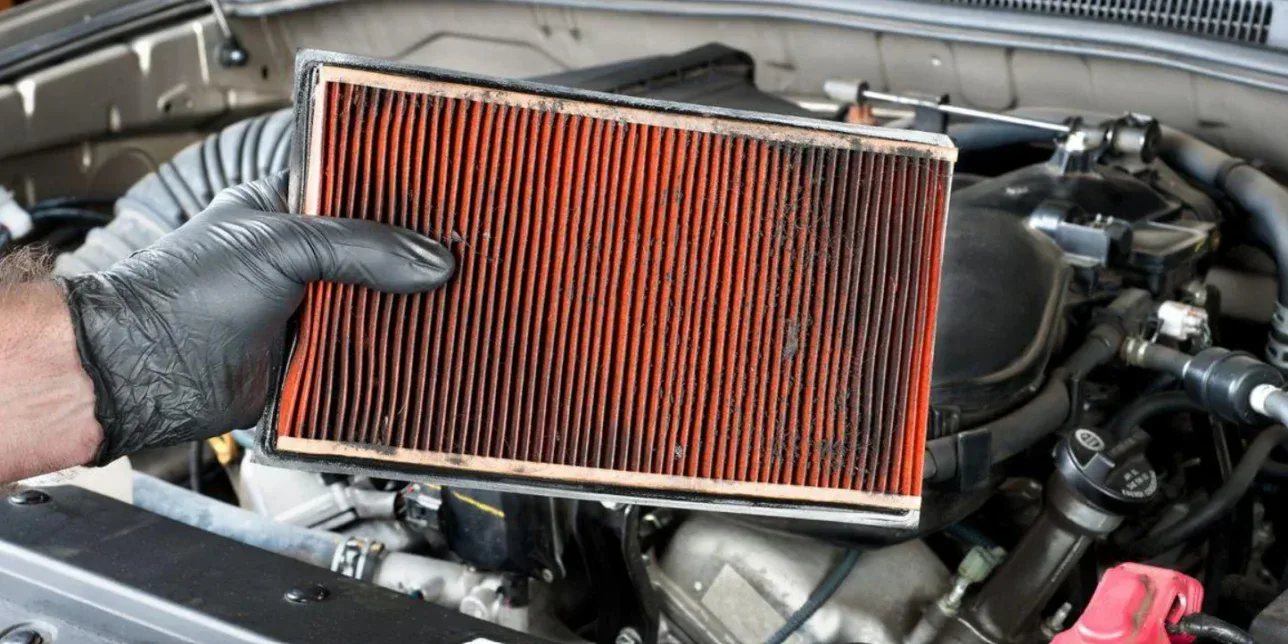
The good news is that a loading engine air filter is doing its job. Dust caught in the media is dust that did not reach the engine. The risk is timing. An engine air filter that went into harvest already half loaded can reach its restriction limit partway through, right when the truck is working hardest, and a filter that was handled roughly or fitted poorly during a rushed field-side change can open a path for dust to bypass it entirely.
The simplest farm-country routine is to treat harvest like a season, not a mileage number. Have the engine air filter inspected before harvest begins, so the truck starts the season with capacity to spare. Check it again when harvest ends, because a filter that survived the fields may be too loaded for winter driving and towing. Farm operations with several trucks can line those checks up with the oil changes they already schedule around the farm calendar.
3. Where Does Your Truck Breathe? Inlet Height and Following Distance on Dusty Farm Lanes
Does where my engine air filter draws its air, and how closely I follow other vehicles on dirt roads, change how fast it gets dirty?
Quick Answer: Yes. Road dust is thickest close to the ground and close to whatever is kicking it up, so a low air inlet and a tight following distance on a dirt road can load an engine air filter much faster. Hanging back from the vehicle ahead and, on dedicated off-road rigs, a higher inlet both help.
Every vehicle’s engine air filter sits at the end of an intake path, and where that path begins makes a real difference. Many cars and pickups draw air from behind the grille or from inside a front fender, often only a couple of feet off the ground. On pavement that hardly matters. On a dirt farm lane, where the dust is churned up by tires and drifts at bumper height, it can matter a great deal.
Federal mine-safety researchers have measured how road dust behaves. In a study of unpaved haul roads, NIOSH engineers found that at least 80 percent of the airborne dust thrown up by haul trucks was larger than 10 micrometers, and that concentrations of all dust sizes fell toward background levels within about 100 feet of the road [11]. In other words, the heaviest dust stays low and close. A pickup tailgating a grain truck down a gravel lane is driving its air intake straight through the thickest part of the plume.
Automakers have started to design around this. Toyota equips its Trailhunter off-road models with what it calls a high-mount air intake, a raised inlet that lets the engine draw cleaner air with fewer dust particles on dusty trails [12]. It is worth knowing what it is not, though. Reporting on the design notes that the intake is not water-tight and is not meant to let the truck cross deeper water [12]. A raised inlet is a tool for keeping dust away from the engine air filter, not a snorkel for wading.
Most drivers will never add a raised intake, and they do not need to. The biggest gain is free: following distance. Dropping back from the truck ahead on a dirt road, or waiting a moment for the cloud to settle before pulling onto a farm lane, keeps the inlet, and the engine air filter behind it, out of the densest dust. Rolling the windows up and keeping the climate system on recirculate helps the people inside, but the engine breathes outside air no matter what, so distance is what protects the engine air filter.
If you do modify an intake, whether with a raised inlet, an aftermarket cold air intake, or a relocated filter, confirm the new path seals completely and that the engine air filter is still fully enclosed. An inlet that reaches cleaner air but leaks at a joint can do more harm than the stock setup.
St. Anthony is beautiful and fun to visit, but you need to know the impact it has on your vehicle’s engine air filter and system.
4. Dune Sand or Field Silt: Which Is Harder on Your Engine Air Filter After a Weekend at St. Anthony?
Is sand from the dunes or fine farm dust worse for my engine air filter and engine?
Quick Answer: They cause different problems. Coarse dune sand is easy for an engine air filter to catch but can pile up quickly and choke airflow, while fine soil dust is what slips through tiny gaps and wears engine parts. After a sandy or dusty trip, have the engine air filter and air box checked.
A short drive north of Rexburg, the St. Anthony Sand Dunes cover about 10,600 acres of clear, white quartz sand, with dunes rising as high as 400 feet, and riders come from across the western United States to run them [13]. Plenty of the trucks that tow those machines get serviced on South Yellowstone Highway, and plenty of them come home with sand in places their owners did not expect, including the air box.
Particle size explains why sand and farm dust behave so differently. Dune sand grains are relatively large and heavy. An engine air filter catches them easily, but in a sandy campsite or behind a line of trailers, they can arrive in volume, collect in the bottom of the housing, and coat the face of the engine air filter until airflow drops. That is mostly a restriction problem: lost power and an engine air filter that needs replacing early.
Fine dust is the wear problem. WearCheck explains that a good air filter removes about 99 percent of the dust an engine ingests, and that the remaining fraction runs from submicron particles up to about 10 microns. The most damaging particles are the ones whose size is close to the clearances between moving parts, because they wedge into the oil film instead of passing through it [9]. A 2022 review of engine wear research put the most abrasive range at about 5 to 20 micrometers, made up largely of hard minerals such as silica [14]. Dune sand is quartz, which is silica, so the fine fraction that breaks off it and drifts with the wind is exactly the kind of particle an engine should never see.
That is why a dune weekend calls for two checks, not one. First, the engine air filter itself: a face packed with sand should be replaced even if the truck has not lost power yet. Second, the air box and the clean side of the intake: sand on the engine side of the filter means grit found a way around it, through a gap at the seal, a lid that was not latched, or a crack in a duct.
Farm silt is the opposite story. It rarely builds up as visibly as sand does, but the fine fraction of a dry potato field is the kind of particle that slips through small gaps. An engine air filter that looks only lightly dusted after harvest can still be hiding a seal problem. Either way, the answer is to look, not to guess.
5. Pre-Cleaners and Pre-Filter Wraps: Smart Armor or Extra Restriction for Your Engine Air Filter?
Should I add a pre-cleaner or pre-filter wrap to protect the engine air filter on my farm truck or equipment?
Quick Answer: On heavy equipment working in very dusty conditions, a properly sized pre-cleaner can protect the engine air filter by removing coarse dirt before it arrives. Universal pre-filter wraps on everyday pickups are less proven and add restriction. Choose parts designed for your specific air intake.
Farm equipment has been fighting dust longer than any pickup. Tractors, loaders, and combines often carry a pre-cleaner on top of the air intake, a separate device whose only job is to remove the heaviest dirt before it ever reaches the engine air filter. The engine air filter then handles a lighter, finer load and lasts longer.
The best pre-cleaners do real work. Donaldson’s TopSpin pre-cleaners, built for equipment such as crawler and farm tractors and skid steer loaders, are rated by the company to separate up to 99 percent of large debris and 85 percent of coarse air contaminants before air reaches the primary filter [15]. On a machine that spends long days in a cloud of field dust, that can stretch engine air filter life and reduce how often the housing has to be opened in dirty conditions.
Pre-filter wraps are a different product. These are foam or fabric sleeves sold to slip over an exposed engine air filter, most often on aftermarket open-element intakes. They can catch coarse debris, but they are not engineered as part of the vehicle’s intake system, and published, independent testing of how they perform on everyday pickups is limited. Every added layer also adds airflow restriction, and a wrap that is not designed for wet conditions can soak up rain or snowmelt.
That is why the decision should follow the intake, not the catalog. Filtration engineers judge an engine air filter by the restriction it builds up, not by how it looks, and recommend replacing it when restriction reaches the engine maker’s limit [16]. Anything added in front of the engine air filter should be judged the same way: does it reduce the dust that reaches the filter more than it raises restriction? For purpose-built pre-cleaners on equipment, the answer is often yes. For a universal wrap on a stock pickup airbox, it is often unclear.
Whatever is added, it does not replace inspection. A pre-cleaner that is cracked, packed with chaff, or mounted loosely can let dirt in around it, and the engine air filter behind it still needs to be checked on schedule.
6. Parked Since Last Harvest? Check the Engine Air Filter Before You Fire Up a Stored Truck or Camper
What should I check on the engine air filter before starting a truck, camper, or tow rig that sat all winter?
Quick Answer: Open the air box first. Mice often nest in the engine air filter housings of parked vehicles, and a nest or chewed engine air filter can block airflow or let debris into the engine. If you find nesting, clean it up safely, replace the engine air filter, and look for chewed wiring and hoses.
A lot of Rexburg’s working vehicles take the winter off. Farm trucks that hauled all fall sit in the shed. Campers and motorhomes are parked until the roads to Island Park open up. Tow rigs for the dunes wait for spring. And winters here are long and cold, with about 55 inches of snow [5] and cold snaps the store describes as nearing 20 below [1]. To a mouse, a quiet engine bay is the best shelter in the county.
Pest professionals see it every year. When temperatures drop, small rodents move into unused, parked vehicles, gathering insulation, paper, leaves, and upholstery into nests, and engine bays are a common spot [17]. They chew wiring and hoses, and nesting material left in place is a fire hazard once the engine runs [17]. Public health officials in King County, Washington, list air filters specifically among the places rodents nest in vehicles that are not driven often [18].
For the engine air filter, a nest causes two kinds of trouble. A housing stuffed with bedding can starve the engine of air or pull loose material against the filter face. And mice that chew through the filter media or the housing open a path for debris to reach the intake and the airflow sensor. That is why King County’s guidance says that before starting a vehicle that has sat idle for a long time, owners should air it out and check the air intake and filters [18].
Cleaning a nest needs care, because some rodents, including deer mice, can carry hantavirus in their nests, droppings, and urine [18]. Public health guidance is to open the hood and doors and let the vehicle air out for about 20 minutes, wear gloves, soak nesting material and droppings with a disinfectant or a 1-to-9 bleach-and-water mix for about 5 minutes, and pick it up with paper towels rather than sweeping or vacuuming it dry [18]. The nest and the engine air filter should both be discarded and a new engine air filter installed, and extensive damage should go to a mechanic who is told about the hantavirus risk [18].
Even without mice, a season of sitting is worth a look. Moisture, temperature swings, and age can harden the rubber seal on an engine air filter, and an engine air filter that was dirty when the truck was parked is still dirty when it comes out of storage. A spring check before the first long drive catches all of it.
About Grease Monkey, 795 South Yellowstone Highway, Rexburg, ID 83440
Grease Monkey Center #1533 is open Monday through Friday from 8:00 AM to 6:00 PM and Saturday from 8:00 AM to 5:00 PM, and is closed Sunday. No appointment is necessary, and the shop can be reached at (208) 494-9214 [1].
Its menu covers conventional, synthetic blend, full synthetic, and premium synthetic oil changes, diesel oil changes, engine and cabin air filter replacement, batteries, brakes, cooling system and radiator service, tires and wheel balancing, transmission and power steering fluid exchanges, serpentine belts, headlights, wipers, tune-ups, EV maintenance, and pre-purchase inspections. Services and products carry a limited warranty of three months or 3,000 miles [1].
For farms and businesses, the fleet program offers centralized billing, monthly invoices, and maintenance records for tax and trade-in needs across the FullSpeed network. Discounts are available for military, first responders, law enforcement, seniors, students, and rideshare drivers, and the lobby offers free Wi-Fi, cable TV, and a coffee station. Customers have given this South Yellowstone Highway location a 4.7-star rating on Google [1].
Author Information
Author Bio – Phillip Paul Gilliam
Phillip Gilliam is a veteran journalist and former Editor-in-Chief with 50+ years of publishing experience and thousands of published articles. Specializing in automotive, trucking, and digital publishing, he creates authoritative, search-optimized content built on real-world expertise and editorial excellence. To learn more about Phil, visit http://www.phillipgilliam.com/about.html or contact Phil at [email protected]. He would love to hear from you!
Full Citation List
[1] Grease Monkey. Oil Change & Auto Repair, 795 South Yellowstone Highway, Rexburg, ID. Grease Monkey. Available at: https://www.greasemonkey.com/locations/id/rexburg/795-south-yellowstone-highway/. (Center #1533; operated by Threshold Automotive dba Grease Monkey, part of the FullSpeed Automotive family; address, phone, hours; engine and cabin air filter replacement, diesel oil change, fleet program with maintenance records across 700+ FullSpeed locations; local references to farm dust, harvest-season wind, Highway 20, and winters near -20 degrees F; 3-month/3,000-mile limited warranty; current Google rating of 4.7 stars from 37 reviews, checked October 10, 2026.)
[6] Rexburg Area Chamber of Commerce. Rexburg City Information. Available at: https://rexburgchamber.org/rexburg-city-information/. (Elevation of 4,865 feet; grain, hay, and potatoes are the chief crops; three potato processing plants operate nine to ten months a year.)
[7] Federal Trade Commission. FTC Says Companies' Warranty Restrictions Were Illegal. FTC Consumer Alert, July 7, 2022. Available at: https://consumer.ftc.gov/consumer-alerts/2022/07/ftc-says-companies-warranty-restrictions-were-illegal. (Under the Magnuson-Moss Warranty Act, a company generally cannot void a warranty because the owner used another company's parts or an independent shop, but may refuse coverage for defects or damage caused by third-party parts or services.)
[9] Blevins, B., WearCheck Africa. Silicon… Enemy Number One. WearCheck Technical Bulletin. Available at: https://wearcheck.com/virtual_directories/Literature/Techdoc/WZA003.htm. (Silicon is the main indicator of dust entry; air filters remove about 99 percent of ingested dust, with the remainder ranging from submicron to about 10 microns; the most damaging particles are close to component clearances; an engine may need up to 2,000 liters of air per liter of fuel; a defective air cleaner or damaged induction system pushes dust past the rings; blocking the intake at idle should stall the engine within three seconds.)
[10] Ellis, S., Idaho Farm Bureau Federation. A Look at Idaho Crop Acres in 2025. July 1, 2025. Available at: https://www.idahofb.org/news-room/posts/a-look-at-idaho-crop-acres-in-2025/. (USDA projections for Idaho in 2025: about 315,000 acres of potatoes, 1.2 million acres of wheat, 540,000 acres of barley, and 1.17 million acres of hay.)
[11] Organiscak, J.A., and Reed, W.R., NIOSH. Characteristics of Fugitive Dust Generated from Unpaved Mine Haulage Roads. International Journal of Surface Mining, Reclamation and Environment 18(4), 2004. Available at: https://www.cdc.gov/Niosh/mining/works/coversheet360.html. (At least 80 percent of airborne dust from haul trucks was larger than 10 micrometers; respirable, thoracic, and total dust concentrations dropped toward background levels within 30.5 m (100 ft) of the road.)
[12] Feder, J. The Toyota 4Runner Trailhunter's Snorkel Isn't Even a Snorkel, So Be Careful. The Drive, February 23, 2026. Available at: https://www.thedrive.com/news/the-toyota-4runner-trailhunters-snorkel-isnt-even-a-snorkel-so-be-careful. (Toyota calls the part a high-mount air intake; raising the intake lets the engine draw cleaner air with fewer dust particles on dusty trails; the intake is not water-tight and is not for deep water crossings.)
[13] U.S. Bureau of Land Management. St. Anthony Sand Dunes. BLM Idaho. Available at: https://www.blm.gov/visit/st-anthony-sand-dunes. (About 10,600 acres of clear, white quartz sand dunes up to 400 feet high, 8 miles west of St. Anthony, popular with riders from across the western U.S.)
[14] Dziubak, T., and Dziubak, S.D. A Study on the Effect of Inlet Air Pollution on the Engine Component Wear and Operation. Energies 15(3), 1182, 2022. Available at: https://www.mdpi.com/1996-1073/15/3/1182. (Hard mineral dust, chiefly silica and alumina, is the main abrasive; grains of about 5-20 micrometers most often cause abrasive wear.)
[15] Fleet Equipment. Donaldson Broadens TopSpin Pre-Cleaner Line. Fleet Equipment Magazine. Available at: https://www.fleetequipmentmag.com/?p=64368. (TopSpin self-cleaning pre-cleaners separate up to 99 percent of large debris and 85 percent of coarse air contaminants before air reaches the primary filter; applications include crawler and farm tractors and skid steer loaders.)
[16] Donaldson Company. How Well Does an Engine Air Filter Clean Incoming Dirty Air? Air Filter Efficiency Explained. Donaldson technical article. Available at: https://www.donaldson.com/en/resources/technical-articles/air-filter-efficiency-explained/. (Restriction, not appearance, should determine filter replacement, using the engine maker's restriction limit.)
[17] Pest Control Technology. Rodents Can Find Refuge From the Cold in Unused Vehicles. PCT Online, 2026. Available at: https://www.pctonline.com/news/rodents-can-find-refuge-from-the-cold-in-unused-vehicles. (As temperatures drop, rodents shelter in unused parked vehicles, building nests from insulation, paper, leaves, and upholstery; engine bays are common sites; they chew wiring and hoses, and nesting material is a fire hazard.)
[18] Public Health – Seattle & King County. Cleaning Infested Vehicles. King County. Available at: https://cd.kingcounty.gov/en/dept/dph/health-safety/environmental-health/getting-rid-of-rats-mice/cleaning-infested-vehicles. (Rodents nest in engine compartments and air filters of vehicles not driven often; deer mice can carry hantavirus; ventilate about 20 minutes, wear gloves, soak nests with disinfectant or 1:9 bleach solution for 5 minutes, do not sweep or vacuum dry; discard nest and filter and install a new filter; check the air intake and filters before starting a long-idle vehicle.)
We use cookies to improve your browsing experience on our website. By closing this banner or interacting with our site, you acknowledge and agree to our privacy policy.