15 Reasons to Replace Your Cabin Air Filter Near North Holmes in Idaho Falls, Idaho – What the Airport, Cottonwood Fluff, and Yellowstone Traffic Do to Your Car
Location: Idaho Falls, ID Topic: Grease Monkey Center #1060 By: Phil Gilliam
An Authoritative Guide for Cabin Air Filter Care Near Idaho Falls Regional Airport
Grease Monkey, 2255 N Holmes, Idaho Falls, ID 83401. Has Over 738 Google Reviews With A 4.5 Star Rating.
A Note on Authority and Expertise: This article was researched and written by Phillip Paul Gilliam, a veteran journalist and former Editor-in-Chief with more than 50 years of publishing experience in automotive, trucking, and safety communications.
Fifty-plus years in automotive and safety publishing comes down to one habit above all others: check it before it goes to print. The aircraft operations breakdown behind the airport figures cited below, the actual timing of cottonwood pollen versus the fluff everyone blames, and the federal warranty law cited in this piece were all verified against current, named sources specifically for this location, not carried over from research done for this series’ earlier Idaho Falls stop on Channing Way or its Pocatello and Rexburg locations.
This Idaho Falls location, Grease Monkey Center #1060 at 2255 N Holmes, is managed by Brian Gidley and operates as a preferred CARFAX service provider within the FullSpeed Automotive network, which has grown past 900 franchised and company-owned locations nationwide as of mid-2026 [8]. In 2025, CARFAX named 435 FullSpeed Automotive locations, including Grease Monkey centers, as CARFAX Top Shop winners for verified customer satisfaction [9]. Built around a no-appointment, fifteen-to-twenty-minute service model with a 16-point inspection on every visit, the North Holmes location has built its own 4.5-star rating across more than 738 Google reviews [1].
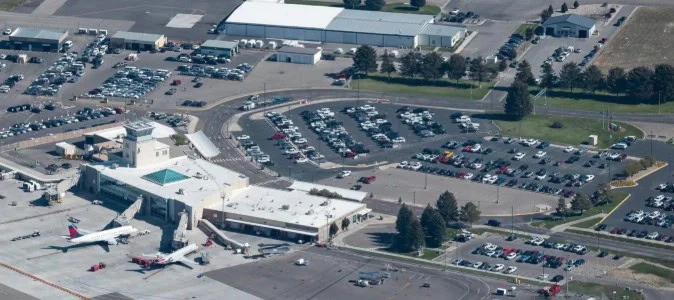
This North Holmes location sits within a couple of miles of Idaho Falls Regional Airport, known locally as Fanning Field, a busy general aviation facility that handled over 610,000 passengers in 2024 alongside roughly 33,000 annual aircraft operations, the large majority general aviation traffic [3]. Add a city that serves as a summer gateway to Yellowstone and Grand Teton along US-20, and a cottonwood-lined stretch of the Snake River Valley that blankets the area in fluff every June, and this Grease Monkey location puts a genuinely different set of demands on a cabin air filter than either this series’ first Idaho Falls stop or its Pocatello and Rexburg locations [2][7].
An Introduction to Cabin Air Filters Near Idaho Falls Regional Airport
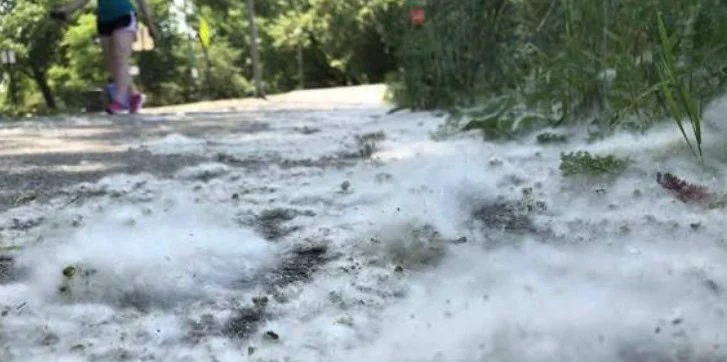
Every June, Idaho Falls fills with white fluff drifting off the cottonwood trees along the Snake River Valley, and nearly everyone blames it for their sniffles. Allergy specialists say that’s actually the wrong culprit: the fluff is a seedpod, not pollen, and cottonwood’s real allergenic pollen was released weeks earlier, during the tree’s bloom back in early April [5]. What the fluff does do, reliably, is drift into open intakes and vents, a genuinely different problem for a cabin air filter than the allergens most drivers assume it’s fighting.
This North Holmes location sits close enough to Idaho Falls Regional Airport to put general aviation traffic, and the well-documented question of lead emissions from piston-engine aircraft still burning leaded aviation fuel, into the daily picture for nearby drivers [3][4]. Layer in Idaho Falls’ role as a summer gateway to Yellowstone and Grand Teton along US-20, drawing a seasonal wave of diesel motorhomes and towed trailers through the area, and the air a North Holmes-area cabin air filter handles looks different, month to month, than a purely local commute would suggest [7].
This guide walks through fifteen reasons drivers near North Holmes, from airport-area commuters to summer Yellowstone travelers, should treat their cabin air filter as a genuine piece of safety and health equipment rather than a line item on an oil-change ticket. Every reason here is grounded in a real technical fact about how the filter works, not local color wearing a filter-shaped costume, and every one of these fifteen topics is new to this series, distinct from the dust storms, inversions, and INL commute angles already covered at this series’ other Idaho Falls stop.
Grease Monkey’s North Holmes location, managed by Brian Gidley and recognized as a CARFAX preferred service provider, has built a 4.5-star reputation across more than 738 Google reviews on a fast, no-appointment service model built for exactly this kind of routine care [1]. What follows is the technical and local case for getting your cabin air filter checked before cottonwood season, before the next flight overhead, or before your next drive toward Yellowstone.
Cottonwood fluff effects your cabin air filter in a way different than you would think!
Most Critical
1. Does Idaho Falls’ June Cottonwood Fluff Physically Clog Your Cabin Air Filter Intake?
Category Most Critical
When cottonwood fluff blankets Idaho Falls every June, does that fluff actually clog a cabin air filter or its intake screen, separate from any allergy concern?
It can, though not in the way most drivers assume. The white fluff drifting through Idaho Falls each June is the cottonwood tree’s seedpod, not its pollen, and allergy specialists are clear that it isn’t the allergenic part of the tree at all; the tree’s actual pollen release happened weeks earlier, during its April bloom [5]. What the fluff does do, reliably enough that it’s specifically called out as a nuisance, is clog HVAC systems, and a cabin air filter’s intake is exactly that kind of system [5].
Because the fluff is bulk fibrous debris rather than fine particulate, it can mat across an intake screen or filter face in a way that restricts airflow through sheer physical volume, not through the fine-particle loading the filter media is actually designed to strain out. Clearing visible fluff from the cowl intake area at the base of the windshield during Idaho Falls’ cottonwood season each June is a simple mechanical check worth doing on top of, not instead of, the filter’s normal service schedule.
2. Living Near Idaho Falls Regional Airport, Does Your Cabin Air Filter Handle Leaded Aviation Fuel Exhaust?
Category Most Critical
For homes and vehicles near Idaho Falls Regional Airport, does exhaust from small piston-engine aircraft still burning leaded aviation fuel actually add lead particulate to the air a cabin air filter has to handle?
It’s a real and well-documented exposure. Idaho Falls Regional Airport, known locally as Fanning Field, sits about two miles north-northwest of downtown, and general aviation traffic makes up roughly 65 percent of its approximately 33,000 annual aircraft operations, the large majority flown by small piston-engine planes [3]. In 2023, the EPA formally determined that lead emissions from piston-engine aircraft burning leaded aviation fuel cause or contribute to air pollution that endangers public health, citing irreversible reduced IQ and cognitive effects in children with no safe exposure threshold, and noting that communities near general aviation airports see disproportionately higher lead exposure than communities farther away [4].
A standard particulate cabin air filter does capture some lead-bearing particulate the way it captures any other fine solid, but it isn’t purpose-built or rated specifically for it, and no cabin air filter substitutes for reducing the underlying exposure at its source. For anyone living or working close enough to hear Fanning Field’s traffic pattern overhead, keeping a fresh, properly rated cabin air filter is one small, genuine piece of managing routine exposure to a pollutant regulators have now formally recognized.
3. Does Idaho Falls’ Winter Road Brine Leave a Different Kind of Residue on Your Cabin Air Filter Than Salt Does?
Category Most Critical
When Idaho streets get treated with liquid magnesium chloride brine instead of dry road salt, does that leave a meaningfully different kind of residue for a cabin air filter to deal with?
It does, and the difference is worth knowing. Magnesium chloride, whether applied as a liquid brine spray or in granular form, is documented to adhere directly to a vehicle’s tires and body, and is extremely corrosive, accelerating damage to metal components; independent trucking-industry testing has found that manufacturer corrosion-inhibitor claims don’t fully hold up in practice [6]. Sprayed brine behaves differently from dry road salt grit: rather than settling as loose particles a filter can simply strain out, it tends to coat surfaces, including the cowl area and intake screen just ahead of the windshield where cabin air is drawn in, as a thin chemical film.
That film-forming residue is a different filtration challenge than the dry particulate this series has covered at Idaho’s other winter-road locations. A filter and intake screen exposed to repeated brine spray benefit from an occasional physical wipe-down of the intake area itself, not just a scheduled cabin air filter swap, since residue building up on the screen upstream of the filter can restrict airflow before the filter media is even involved.
4. Does Sitting Under Idaho Falls Regional Airport’s Flight Pattern Add Exhaust Particulate to Your Commute?
Category High Priority
For anyone driving or parked under Idaho Falls Regional Airport’s active traffic pattern, does exhaust from aircraft taking off and landing actually settle into vehicle cabin air filters at street level nearby?
To a modest but real degree, yes. The airport runs an average of roughly 91 aircraft operations a day, the large majority general aviation traffic using its main 9,002-foot runway [3]. Piston-engine exhaust disperses as an aircraft climbs, but the low-altitude portion of a landing approach or the initial climb right after takeoff puts an aircraft’s exhaust plume closer to ground level directly beneath its flight path than it would be at cruise altitude, meaning the immediate approach and departure corridors see a brief, concentrated pass of exhaust that areas farther from the pattern simply don’t.
This is an intermittent exposure rather than a constant one, tied to how often a particular spot sits directly under an active approach or departure path. For anyone regularly driving, parking, or waiting under the pattern near Fanning Field, it’s one more genuine source layered onto ordinary road exhaust that a cabin air filter is asked to handle, even though it isn’t the dominant contributor to daily particulate exposure for most of the area.
Your cabin air filter can help with certain allergies but not all.
5. If Your Allergies Flare in June, Is Cottonwood Fluff Actually the Culprit for Your Cabin Air Filter to Catch?
Category High Priority
When Idaho Falls residents get sniffly every June as cottonwood fluff fills the air, is the fluff itself actually what a cabin air filter needs to catch, or is something else responsible?
Allergy specialists say it’s something else. The visible white fluff floating around Idaho Falls each June is the cottonwood seedpod, not pollen, and it isn’t the allergenic part of the tree; cottonwood’s actual pollen release happens weeks earlier, during the tree’s bloom in early April [5]. The real culprit behind June sniffles is grass pollen, which happens to peak around the same time the fluff becomes visible, leading many residents to blame the wrong source entirely.
That distinction matters for filtration because grass pollen and cottonwood fluff are physically different problems: pollen grains are fine particulate that a standard cabin air filter’s media is specifically built to strain out, while fluff is bulk fibrous debris, covered elsewhere in this guide, that’s more of a mechanical clogging nuisance than an allergen. A driver whose June symptoms persist despite a recently changed cabin air filter is very likely dealing with grass pollen getting through, not a fluff problem, and knowing which one is actually happening changes what’s worth checking first.
6. Does Idaho Falls’ Summer Yellowstone Traffic Add Extra Diesel Exhaust to Your Cabin Air Filter’s Workload?
Category High Priority
As a gateway city on the route to Yellowstone and Grand Teton, does Idaho Falls’ summer surge of RVs and diesel motorhomes actually add a meaningful exhaust load for a local commuter’s cabin air filter?
It does during the peak travel months. Idaho Falls and the US-20 corridor function as a gateway route toward Yellowstone National Park, carrying vacation traffic, including RVs and towed trailers, through the summer travel season on the way to the park [7]. Large diesel motorhomes and vehicles towing trailers generally produce more particulate matter per vehicle than a typical passenger car, and a summer surge in that vehicle type on roads local commuters also use means a heavier mix of that exhaust during peak tourist months than in the off-season.
For Idaho Falls drivers whose regular commute overlaps with the routes tourist traffic funnels through each summer, a cabin air filter that was handling a light spring load can face a noticeably heavier one once vacation-season traffic picks up, making a pre-summer filter check a reasonable seasonal habit rather than an arbitrary one.
7. While You Wait for Your Oil Change, Is Your Own Cabin Air Filter Pulling in the Shop’s Exhaust?
Category Important
During a fifteen-to-twenty-minute oil change where a car stays running or gets started and stopped repeatedly in a service bay, is a vehicle’s own cabin air filter drawing in the concentrated exhaust of that shop environment?
It can, depending on one simple setting. Quick-lube service, including Grease Monkey’s own no-appointment model, is built around a fast, roughly fifteen-to-twenty-minute visit, and that visit typically involves a vehicle being started, moved, and sometimes briefly idled in and around a service bay alongside other customers’ vehicles doing the same [1]. If a cabin air system is left in fresh-air mode rather than recirculation during that brief window, it can draw in a more concentrated mix of several idling engines’ exhaust than the same vehicle would encounter cruising on an open street.
Switching to recirculation mode for the few minutes a vehicle is stopped in or near a service bay, at any shop, is a small, practical habit that limits how much of that concentrated, low-speed exhaust actually reaches the cabin, complementing rather than replacing a properly maintained cabin air filter.
8. Do Airport Rental Cars Near Idaho Falls Get Their Cabin Air Filter Checked Between Renters?
Category Important
For travelers picking up a rental car near Idaho Falls Regional Airport, does a rental fleet vehicle typically get its cabin air filter inspected between one renter and the next?
Not necessarily, and it’s a fair question to ask. The airport handled over 610,000 passengers in 2024, a meaningful share likely picking up a rental vehicle for onward travel toward Yellowstone or Grand Teton [3]. Rental fleet maintenance programs are generally built around mileage and safety-critical service intervals, oil, tires, brakes, and a comfort item like a cabin air filter isn’t always part of the standard turnaround checklist between renters the way a car wash or fuel top-off is.
A traveler with allergies or asthma renting a vehicle near the Idaho Falls airport has a reasonable, practical option: asking the rental counter directly about cabin air filter condition, since it’s a fair question a standard rental turnaround doesn’t automatically answer, and one a local driver wouldn’t think to ask about their own car but a renter reasonably might.
9. Does a Second Vehicle That Sits for Weeks Need Its Cabin Air Filter Checked Differently Than a Daily Driver?
Category Important
For an Idaho Falls household with a second vehicle, a truck, a boat-towing rig, or a car that mostly sits in the driveway, does an infrequently driven cabin air filter develop different problems than one in daily use?
It can develop a genuinely different problem. A cabin air filter in a vehicle that sits unused for weeks at a time isn’t accumulating road dust or pollen the way a daily driver’s filter is, but a stationary filter inside a closed, occasionally humid cabin can become a place where trapped moisture and organic debris already present in the media sit undisturbed long enough to develop musty odor or, in some cases, mold growth, without any of the mileage that would normally prompt a routine swap.
For a household running a second vehicle mainly for towing, hauling, or occasional trips, calendar time rather than mileage is the more reliable signal for that vehicle’s cabin air filter, since an infrequently driven car can go a year or more without racking up enough miles to trigger a mileage-based reminder while the filter itself quietly ages in place.
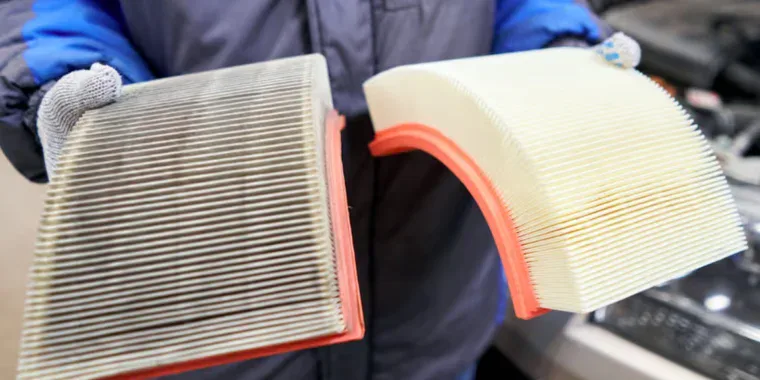
A dirty cabin air filter does need replaced… the question is do you need OEM or can you use an aftermarket cabin air filter?
Medium Priority
10. Does Installing an Aftermarket Cabin Air Filter Actually Void Your Car’s Warranty?
Category Medium Priority
Is it true that using a non-OEM, aftermarket cabin air filter instead of the dealer’s brand can void a vehicle’s manufacturer warranty?
Federal law says otherwise. The Magnuson-Moss Warranty Act, in place since 1975, specifically prohibits a manufacturer from conditioning warranty coverage on a consumer using a particular branded part or service, unless that part or service is provided free of charge, a provision aimed directly at this kind of tie-in claim [6]. A manufacturer or dealer can only deny a warranty claim by showing that the aftermarket part itself actually caused the specific defect being claimed, not simply because a non-OEM part was used somewhere on the vehicle.
Despite the law being nearly fifty years old, dealers have continued telling customers that aftermarket parts void coverage, prompting the Federal Trade Commission to send warning letters to major automakers about the practice [6]. A quality aftermarket cabin air filter, chosen to fit a specific vehicle correctly, does not put a manufacturer’s warranty at risk under federal law.
11. Does Towing a Boat to the Snake River Change the Airflow Pressure Through Your Cabin Air Filter?
Category Medium Priority
For Idaho Falls drivers towing a boat or trailer to the Snake River or a nearby reservoir, does the added drag and weight of towing actually change the air pressure or airflow reaching the cabin air filter?
Not meaningfully. Towing does change a vehicle’s aerodynamics and engine load in real ways, but the cabin air intake and HVAC blower operate on a separate air path from the engine’s own intake and cooling system, drawing cabin air through the vehicle’s exterior vents and blower motor regardless of what’s happening at the hitch. The added drag and weight from a trailer doesn’t meaningfully change the pressure or volume of air reaching the cabin air filter itself.
What does matter while towing to a Snake River boat launch or a nearby reservoir is the same variable that matters without a trailer: road speed and following distance from dust or exhaust ahead. A heavier, towing vehicle often travels a bit slower and with more following distance in traffic, which can modestly reduce, not increase, the air volume and particulate reaching the cabin air filter compared to normal open-road driving.
12. Are Idaho Falls Drivers Skipping a Free Allergy Defense by Never Touching the Recirculation Button?
Category Medium Priority
During grass pollen season, does manually switching a car’s HVAC to recirculation mode actually reduce how much pollen reaches the cabin, or does the cabin air filter handle that regardless of the button’s setting?
It makes a real difference. In fresh-air mode, the system continuously draws new outside air, pollen included, through the cabin air filter; in recirculation mode, the system mostly re-circulates air already inside the cabin instead of pulling in a constant new supply from outside, meaning less outside pollen enters the cabin air stream in the first place, regardless of how capable the filter itself is.
Many drivers never touch the recirculation button at all, leaving the system on whatever default fresh-air setting it came with, which means they get the cabin air filter’s full capability but none of the additional benefit that manually engaging recirculation provides during a known high-pollen stretch like Idaho Falls’ grass pollen season. Using recirculation deliberately on the worst pollen days, then switching back to fresh air the rest of the time to avoid excess humidity buildup, gets more out of a filter that’s already doing its job well.
13. Does Installing Your Cabin Air Filter Backwards Still Let It Fit, Just Work Worse?
Category Lower Priority
If a cabin air filter has a printed airflow-direction arrow, does installing it backwards still let it physically fit in the housing while quietly reducing how well it filters?
On many cabin air filters, yes. Pleated cabin air filters with a printed directional arrow are often built with a coarser pre-filter layer meant to face incoming airflow first, and installing the filter backwards can still let it fit into a housing that isn’t shaped to physically prevent the reversal, since the outer dimensions are typically the same either way.
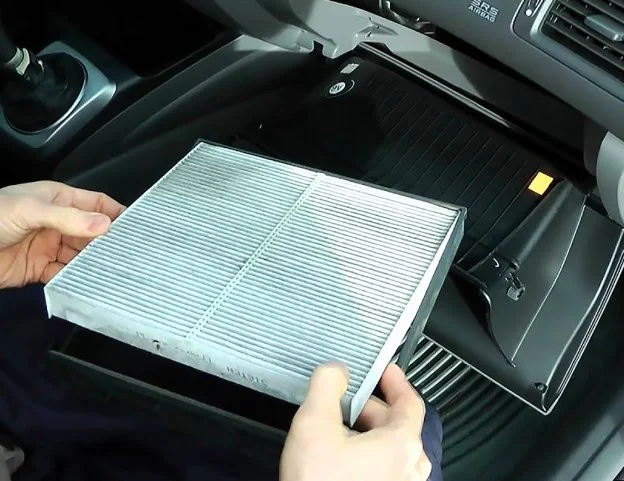
A backwards-installed filter of this kind generally still filters to some degree, since the media itself hasn’t changed, but it isn’t performing at its full designed capacity and can load with dust differently than intended. Checking for a printed arrow and matching it to the marked airflow direction inside the housing during any DIY swap is a small step a shop technician does automatically but a first-time DIY installer can easily miss.
14. Does What You Keep in Your Glove Box Actually Affect Your Cabin Air Filter’s Smell?
Category Lower Priority
With the cabin air filter housing often located right behind the glove box, can items stored there, food wrappers, air fresheners, spilled liquids, actually transfer odor into the filter itself?
It can, fairly directly. On many vehicles, the cabin air filter housing sits immediately behind or beside the glove box, sharing that same enclosed compartment’s air, and a strong-smelling item left there, a fast-food bag, a leaking travel mug, an overpowering air freshener, sits in close proximity to filter media that’s specifically porous and absorbent to whatever passes through it, including nearby odors, not just outside air.
A cabin air filter that smells like old fast food or an overpowering air freshener isn’t malfunctioning; it’s simply picked up what’s been stored right next to it. Clearing lingering food, trash, or leaking containers out of the glove box is a simple, no-cost step that can resolve an odor complaint that looks like a filter problem but isn’t really about filtration performance at all.
15. Do Electric and Hybrid Vehicles Around Idaho Falls Need Their Cabin Air Filter Serviced Differently?
Category Lower Priority
For the growing number of electric and hybrid vehicles on Idaho Falls roads, does the lack of a traditional engine bay change how a cabin air filter needs to be serviced compared to a gas vehicle?
The cabin air filter itself works the same way regardless of powertrain, straining particulate out of air pulled into the HVAC system, but its housing location can differ meaningfully. Many EVs and hybrids relocate the cabin air filter to a spot without a conventional engine taking up under-hood space, sometimes making it more accessible than on a comparable gas vehicle, and in some models placing it somewhere exposed to different temperature swings than a filter nestled next to a warm gas engine.
Because EV and hybrid HVAC systems also tend to run the cabin air blower for battery thermal management even when the vehicle isn’t actively being driven, a cabin air filter in one of these vehicles can accumulate real service hours during periods a gas-vehicle owner would think of as the car simply being parked, meaning mileage alone is an even less reliable signal for EV and hybrid owners than it already is for everyone else in this series.
About Grease Monkey, 2255 N Holmes, Idaho Falls, ID 83401
Grease Monkey Center #1060 is managed by Brian Gidley and sits at 2255 N Holmes, Idaho Falls, ID 83401, open Monday through Friday from 7:00 AM to 6:00 PM and Saturday from 8:00 AM to 5:00 PM, closed Sundays [1]. Built on a no-appointment-necessary model with typical fifteen-to-twenty-minute visits, the location performs a 16-point inspection with every oil change and offers conventional, synthetic-blend, and full-synthetic oil changes, fluid exchanges, air conditioning service, battery service, brake service, engine service, filter replacement, headlight service, power steering service, state inspections, tire service, transmission service, wiper replacement, windshield repair, and fleet maintenance, with complimentary WiFi and a customer lobby [1].
The location has built a 4.5-star rating across more than 738 Google reviews and holds status as a preferred CARFAX service provider, serving airport-area commuters, Yellowstone-bound summer travelers, and North Holmes neighborhood drivers alike [1]. As part of the FullSpeed Automotive network recognized with 435 CARFAX Top Shop honors in 2025, the North Holmes team draws on brand-wide training standards while understanding exactly what airport proximity, cottonwood season, and Yellowstone-gateway traffic demand from a vehicle’s cabin air system [9].
Author Information
Author Bio – Phillip Paul Gilliam
Phillip Gilliam is a veteran journalist and former Editor-in-Chief with 50+ years of publishing experience and thousands of published articles. Specializing in automotive, trucking, and digital publishing, he creates authoritative, search-optimized content built on real-world expertise and editorial excellence. To learn more about Phil, visit http://www.phillipgilliam.com/about.html or contact Phil at [email protected]. He would love to hear from you!
Full Citation List
[1] Grease Monkey. Oil Change & Auto Repair, 2255 N Holmes, Idaho Falls, ID. Grease Monkey. Available at: https://www.greasemonkey.com/locations/id/idaho-falls/2255-n-holmes/. (Store address, hours, manager name, no-appointment service model, 16-point inspection, service menu, CARFAX preferred provider status, and current Google review count and rating.)
[3] Wikipedia contributors. Idaho Falls Regional Airport. Wikipedia. Available at: https://en.wikipedia.org/wiki/Idaho_Falls_Regional_Airport. (Airport located two miles north-northwest of downtown Idaho Falls; roughly 33,152 annual aircraft operations, 65 percent general aviation; 171 based aircraft; 610,641 passengers in 2024.)
[4] U.S. Environmental Protection Agency. EPA Determines that Lead Emissions from Aircraft Engines Cause or Contribute to Air Pollution. EPA.gov. Available at: https://www.epa.gov/newsreleases/epa-determines-lead-emissions-aircraft-engines-cause-or-contribute-air-pollution. (2023 endangerment finding on leaded aviation gasoline; irreversible reduced IQ and cognitive effects in children with no safe threshold; disproportionate lead exposure in communities near general aviation airports.)
[5] East Idaho News. Cottonwood Causing Sniffles? Experts Say It’s Not the Fluff. EastIdahoNews.com. Available at: https://www.eastidahonews.com/2026/06/cottonwood-causing-sniffles-experts-say-its-not-the-fluff/. (Cottonwood fluff is a non-allergenic seedpod appearing in June; actual cottonwood pollen releases during April bloom; grass pollen is the real cause of June allergy symptoms; fluff noted to clog HVAC systems.)
[6] AutoCare.org. Magnuson-Moss Warranty Act. AutoCare Association. Available at: https://www.autocare.org/government-relations/current-issues/Magnuson-Moss-Warranty-Act. (Federal law since 1975 prohibiting manufacturers from voiding warranties over aftermarket parts absent proof the part caused the defect; FTC warning letters to automakers over deceptive dealer claims.)
[12] Peters Chemical Company. Magnesium Chloride As A Road Deicer: A Critical Review. PetersChemical.com. Available at: https://www.peterschemical.com/magnesium-chloride-as-a-road-deicer-a-critical-review/. (Magnesium chloride brine adheres to vehicle tires and bodies; corrosive effects on metal components; corrosion-inhibitor claims not fully borne out in independent testing.)
We use cookies to improve your browsing experience on our website. By closing this banner or interacting with our site, you acknowledge and agree to our privacy policy.