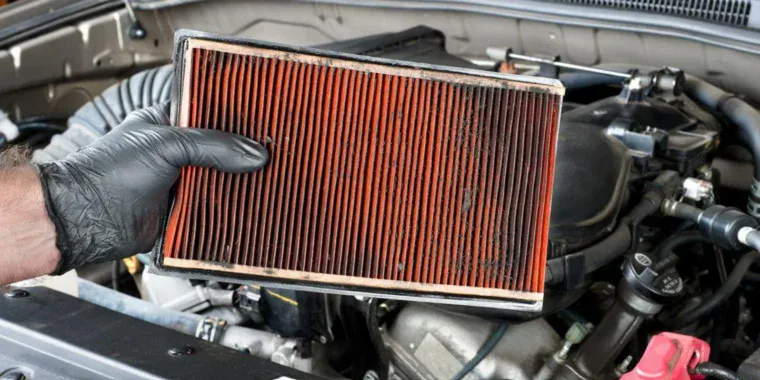
15 Reasons to Replace Your Cabin Air Filter in Rexburg, Idaho – What the Highway, the Campus, and the Temple Construction Do to Your Car
Location: Rexburg, ID Topic: Grease Monkey Center # 1533 By: Phil Gilliam
An Authoritative Guide for Cabin Air Filter Care Along the Yellowstone Highway Corridor
Grease Monkey, 795 South Yellowstone Highway, Rexburg, ID 83440. Has Over 27 Google Reviews With A 4.9 Star Rating.
A Note on Authority and Expertise: This article was researched and written by Phillip Paul Gilliam, a veteran journalist and former Editor-in-Chief with more than 50 years of publishing experience in automotive, trucking, and safety communications.
Fifty-plus years in automotive and safety publishing comes down to one habit above all others: check it before it goes to print. The BYU-Idaho enrollment figures, the Teton River Temple construction numbers, and the Rexburg climate records cited below were all verified against current, named sources specifically for this Yellowstone Highway location, not carried over from research done for this series’ other Rexburg store across town on 2nd East, even though both sit inside the same city limits.
This Rexburg location, Grease Monkey Center #1533 at 795 South Yellowstone Highway, is managed by Alonso Padilla and has built a 4.9-star rating across more than 27 Google reviews [1]. It operates as part of the FullSpeed Automotive network, which has grown past 900 franchised and company-owned locations nationwide as of mid-2026, and was recognized alongside 435 other FullSpeed Automotive centers as a 2025 CARFAX Top Shop winner for verified customer satisfaction [8][9].
Rexburg sits at 4,862 feet in Madison County, built on top of a shield volcano whose ash-enriched, starch-rich soil made the surrounding potato fields famous, with a 2020 population of 39,409 that grew 54.6 percent in a single decade [2]. The city is anchored by BYU-Idaho, a second operating LDS temple now under construction, and the Yellowstone Highway itself, the same U.S. Route 20 that carries summer traffic on toward the west entrance of Yellowstone National Park, putting a genuinely different set of demands on a cabin air filter than this series’ other Rexburg stop across town [2][6].
An Introduction to Cabin Air Filters Along the Yellowstone Highway in Rexburg
Most college towns empty out every summer, but Rexburg does not, at least not by much. BYU-Idaho runs a three-track calendar that assigns each of its roughly 20,173 on-campus students to two of three year-round semesters, so about a third of the student body is enrolled and driving through town in any given month, including July [3][4]. That single scheduling detail changes something practical about this store’s specific traffic pattern compared to almost any other campus town in this series.
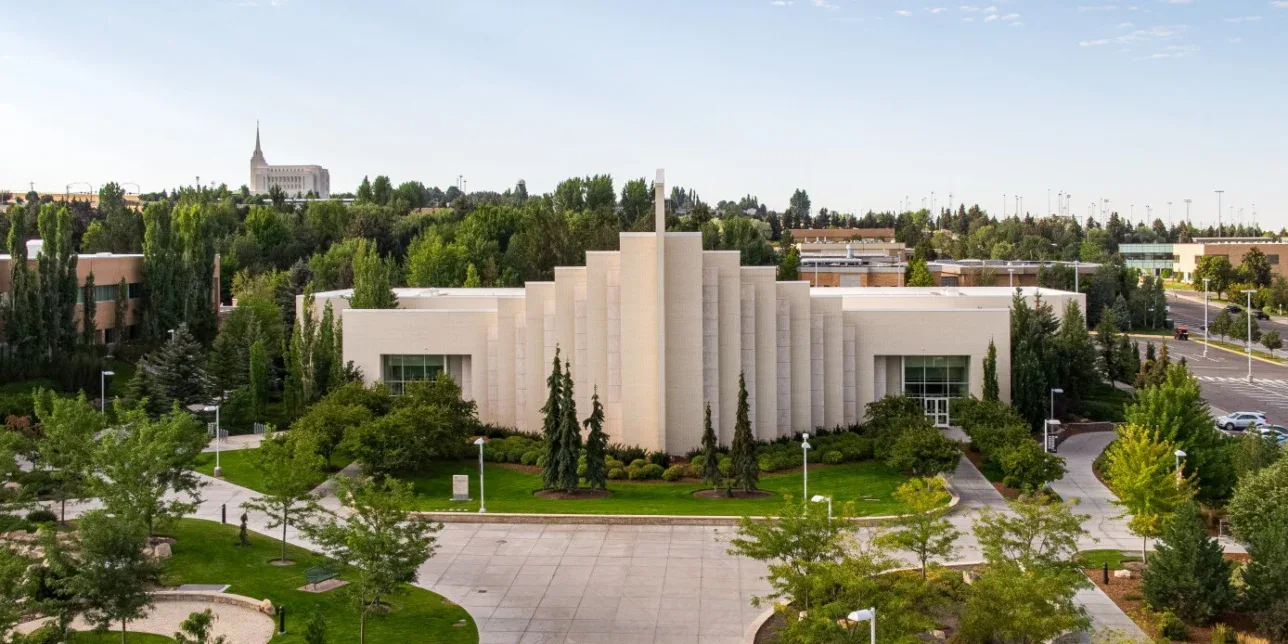
A couple of miles from downtown, on the same highway this store fronts, work continues on the Teton River Idaho Temple, a 100,000 square foot building that will make Rexburg just the sixth city in the world with more than one operating temple once it is finished, and roughly 130 construction workers are currently commuting to that site every day [5]. Add the existing 57,500 square foot Rexburg Idaho Temple’s own steady visitor traffic, the Yellowstone Highway’s role as the main summer route toward the park’s west entrance, and Madison County’s volcanic-soil potato fields, and Rexburg puts a genuinely varied set of demands on a cabin air filter [2][5][6].
This guide walks through fifteen reasons Rexburg drivers, from BYU-Idaho commuters to Yellowstone-bound travelers, should treat their cabin air filter as a genuine piece of safety and health equipment rather than a line item on an oil-change ticket. Every reason here is grounded in a real technical fact about how the filter works, not local color and geography alone.
This store, Grease Monkey at 795 South Yellowstone Highway, sits directly on that corridor and replaces cabin air filters as part of its standard service menu [1].
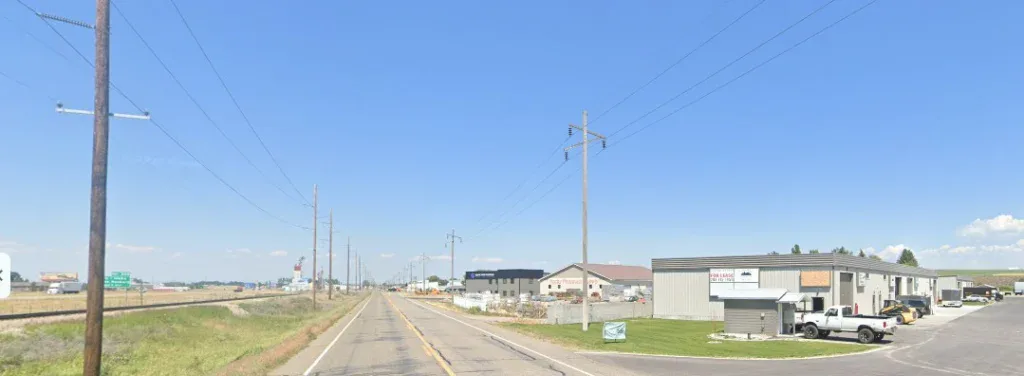
A store sitting on a busy road like south Yellowstone experiences more dust contamination to vehicle cabin air filters
Most Critical
1. When A Store Sits Directly on the Summer Route to Yellowstone’s West Entrance
Category Most Critical
Does fronting the Yellowstone Highway itself mean a different exhaust and brake-dust contamination load on a cabin air filter than a store on a side street would see?
U.S. Route 20 runs through Rexburg as the Yellowstone Highway, climbing on through St. Anthony, Ashton, and Island Park before crossing the Continental Divide at Targhee Pass and reaching the park’s west entrance near West Yellowstone, Montana [6]. From roughly Memorial Day through Labor Day, that corridor carries a heavier mix of loaded travel trailers, diesel pusher motorhomes, and rental SUVs than the rest of the year, all working harder on the grade east of town and braking more often through Rexburg’s stoplights on their way out.
That mix matters to a cabin air filter because heavier vehicles under load produce coarser soot and more brake-dust particulate than typical commuter traffic, and a filter positioned directly on that route absorbs more of it per mile driven than one a few blocks off the highway. As the cabin air filter media loads with this coarser debris, airflow through the HVAC system drops, which can show up first as weaker defrost performance on the windshield rather than an obvious smell.
2. BYU-Idaho’s Three-Track Calendar Means There Is No Real Summer Lull
Category Most Critical
Does a college town’s usual summer drop in student traffic actually apply to Rexburg impacting a cabin air filter?
At most university towns, cabin air filter exposure from student commuter traffic eases off every summer as campus empties out. BYU-Idaho does not follow that pattern. Its three-track system assigns each of its roughly 20,173 on-campus students to two of three year-round 14-week semesters, so at any given time close to a third of that student body, along with the rest continuing through internships, block classes, or online coursework during their off track, is still living in or commuting through Rexburg [3][4].
For a cabin air filter, that means the volume of daily short trips, cold starts, and stop-and-go traffic around campus and the surrounding retail corridors stays closer to constant across all twelve months than in a typical college town, rather than concentrating into two long semesters with a clear break. A filter serving a vehicle that runs this kind of steady, non-seasonal in-town driving pattern accumulates particulate on a more even year-round schedule, which argues for checking it on a fixed calendar interval rather than waiting for an obvious seasonal cue.
3. A 138-Degree Temperature Range Stresses the Filter Housing Itself
Category Most Critical
Beyond the cabin air filter media, can Rexburg’s extreme temperature swing damage the plastic housing and seals around it?
Rexburg’s official climate record spans a low of minus 36 degrees Fahrenheit in February to a high of 102 degrees in June and July, a range of 138 degrees across the calendar year [2]. That is a wider annual swing than most of this series’ other Idaho stops, and it matters for a part of the cabin air filter system that gets less attention than the media itself: the plastic housing, its retaining clips, and the rubber or foam gasket that seals the filter door.
Repeated expansion and contraction across that kind of range, winter deep-freeze to summer heat and back again, year after year, gradually fatigues plastic clips and can cause a gasket to lose its original shape, leaving small gaps around the filter edge. Unfiltered air slipping past those gaps carries dust straight into the cabin ductwork regardless of how clean the filter media itself still looks, which is a separate failure mode from simple media clogging and one a visual media check alone will not catch.
4. About 130 Construction Workers Are Commuting to a Job Site Down This Highway Right Now
Category High Priority
Does an active temple construction project add measurable traffic and vehicle cabin air filter dust to this specific corridor?
Rexburg is currently building its second operating LDS temple, the Teton River Idaho Temple, a project announced in October 2021 that broke ground in June 2024 and is now under active construction at 100,000 square feet, nearly double the size of the existing 57,500 square foot Rexburg Idaho Temple [5]. Roughly 130 construction workers are commuting to that site from across the region every working day, adding a steady stream of pickup trucks and equipment vehicles to the surrounding roads well outside normal commuter rush hours.
Active construction sites of that scale generate their own localized dust from graded earth, staged materials, and heavy-equipment traffic, and vehicles commuting past or through that zone daily pick up a finer, more persistent dust exposure than a driver who only passes it occasionally. For anyone whose regular route in Rexburg runs anywhere near the project, that adds a genuine, currently temporary but real, source of cabin air filter loading that this series has not had reason to cover at any other stop.
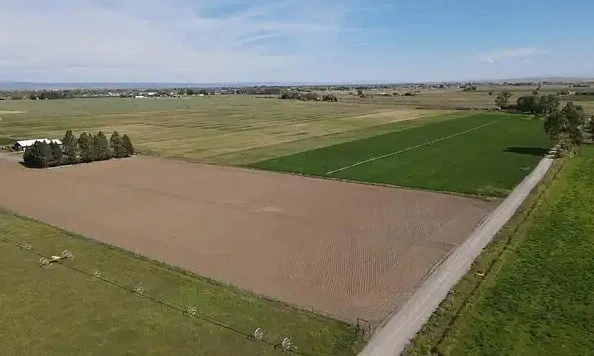
Rexburg Idaho soil is not ordinary dirt with its unique makeup of volcanic ash.
5. Rexburg’s Soil Is Volcanic Ash, Not Ordinary Farmland Dirt
Category High Priority
Does soil formed by an ancient shield volcano behave differently in a cabin air filter than typical Idaho farmland dust?
Rexburg sits on top of a shield volcano just north of Rigby, with lava fields dating back roughly two thousand years, and the ash-enriched sediment left behind is exactly what made the surrounding ground famous for large, starch-rich potatoes [2]. That volcanic origin gives Madison County’s tilled potato-field soil a finer, harder mineral composition than the organic-heavy farm dust common to ordinary cropland, since it carries more ground volcanic mineral content and less plant and root material.
A finer, harder mineral particle is more abrasive against filter media fibers than a softer organic particle of the same size, and it tends to pack into the media’s pores more densely rather than sitting loosely on the surface. That combination can reduce a cabin air filter’s effective airflow life somewhat faster than an equivalent exposure to ordinary farm dust would, which is worth knowing if you are timing filter changes off a schedule built around a different region’s soil.
6. When A Store Sits on Rexburg’s Commercial Strip, Not Its Downtown Core
Category High Priority
Does a highway-frontage commercial strip location expose a vehicle’s cabin air filter to different traffic than a downtown or campus-adjacent store would?
South Yellowstone Highway is Rexburg’s retail and commercial corridor, home to drive-thru restaurants, an auto dealership, and other highway-frontage businesses, a distinctly different traffic environment than the downtown blocks and campus-adjacent streets this series’ other Rexburg store serves [2]. Vehicles on this stretch spend more time in stop-and-go idle at drive-thru lanes, dealership entrances, and signalized highway intersections than they do on the quieter side streets near campus.
Extended idling in queued traffic concentrates a vehicle’s own exhaust and nearby vehicles’ exhaust right at the cabin air intake for longer stretches than free-flowing driving does, since there is no forward airflow to disperse it. A cabin air filter serving a vehicle that regularly idles through this commercial strip is filtering a more concentrated, longer-duration dose of exhaust particulate per trip than one that mostly drives through with fewer stops.
7. Seed Potato Storage Cellars Add Their Own Loading-Dock Dust
Category Important
Does the region’s potato storage infrastructure, separate from the fields themselves, expose vehicle’s cabin air filters to a distinct kind of dust?
Idaho’s potato economy runs on large storage cellars and warehouses where the harvest is held before shipping, and Madison County’s volcanic-soil ground makes it one of the state’s seed potato production areas. Loading docks at these facilities handle bulk potatoes by conveyor and forklift, which kicks up a mix of dried soil residue and organic potato dust each time a truck is loaded, a different exposure than field dust generated during planting or tilling.
This dust settles on parking areas and access roads around storage facilities and clings to tires and undercarriages, getting stirred back into the air on nearby roads well after the original loading event. A vehicle that regularly passes near this kind of ag-storage infrastructure, rather than the open fields themselves, is picking up a secondary, delayed dust exposure that a cabin air filter change schedule built only around harvest season might miss.
8. The Existing Rexburg Temple Already Draws Its Own Visitor Traffic
Category Important
Separate from the new construction project, does Rexburg’s existing operating temple’s own ongoing traffic pattern impact a cabin air filter?
Rexburg’s existing LDS temple, a 57,500 square foot building already in regular operation, draws a steady flow of visitors for weddings, sealings, and worship, independent of the construction traffic generated by its future sister temple down the road [5]. Unlike the daily commuter pattern from BYU-Idaho or the highway’s summer tourist surge, temple visitor traffic tends to cluster around weekends and specific ceremony times, producing short bursts of unfamiliar out-of-town vehicles converging on the same few streets.
Out-of-town vehicles making an infrequent trip to a specific destination are statistically more likely to be carrying a cabin air filter that has not been checked recently, simply because their owners are not on a local service provider’s regular reminder schedule. For Rexburg residents, this mostly matters as background context: it is one more layer of the town’s traffic mix, on top of highway tourism and campus commuting, that a filter here has to handle compared with a similarly sized town without this kind of destination traffic.
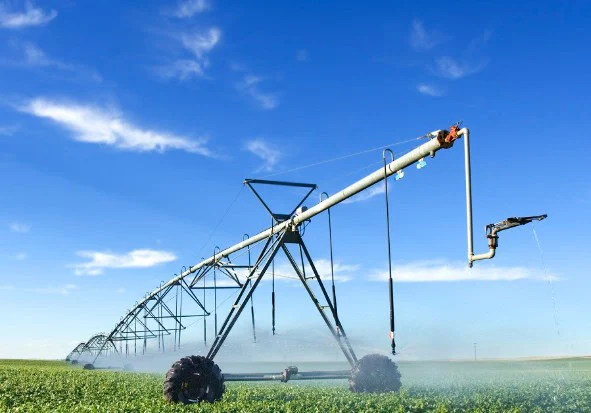
Center Pivot Irrigation leaves mineral scale that can get into your cabin air filters
9. Center-Pivot Irrigation Spray Drift Leaves Mineral Scale, Not Just Dust
Category Important
Does irrigation water drifting off nearby center-pivot systems affect a cabin air filter differently than dry field dust does?
Madison County’s potato and grain fields rely heavily on center-pivot irrigation drawing from local groundwater, and on breezy days fine mist from these systems can drift across adjacent roads well beyond the field boundary. Unlike dry windblown dust, this mist carries dissolved minerals from the groundwater itself, and when it evaporates on a filter’s surface it leaves behind a thin mineral scale rather than loose particulate.
That scale residue behaves differently in filter media than ordinary dust: instead of sitting on the surface where airflow can partially dislodge it, it bonds to the fibers as the water evaporates, gradually stiffening the media and reducing airflow in a way that is not always visible on a quick inspection. Drivers who regularly pass irrigated fields during the growing season are dealing with this mineral-scale mechanism alongside ordinary dust exposure, which is a distinct reason to physically test airflow rather than just glance at a cabin air filter’s color.
10. This Strip’s Wide Asphalt Lots Push Your AC System Harder in Summer
Category Medium Priority
Does parking and driving across a commercial strip’s large paved lots add extra summer heat load to a cabin air filter beyond the ambient air temperature?
Large retail and dealership parking lots along South Yellowstone Highway create a localized heat-island effect: dark asphalt absorbs and re-radiates heat well beyond the surrounding air temperature, which on a 95-plus degree Rexburg summer day can push the air just above a parking lot noticeably hotter than the air a block away on a tree-lined street. A vehicle parked or idling across this kind of surface starts its next drive with a hotter cabin and a hotter intake stream than one parked on quieter ground.
A hotter intake stream means the air conditioning compressor and blower motor both work harder and longer to bring cabin temperature down, and that extended high-load blower runtime pulls a larger volume of air, and whatever particulate is in it, through the cabin air filter over the same trip. A filter already partially loaded has less capacity to handle that added summer airflow demand without a further drop in output at the vents.
11. Nearly 55 Inches of Average Annual Snowfall Means a Long Recirculation Season
Category Medium Priority
Does Rexburg’s snow total change how long drivers here typically run their HVAC system in recirculation mode through the cabin air filter each year?
Rexburg averages 54.9 inches of snowfall a year, with a single December once bringing 43.5 inches, and the region’s winter commonly runs from October well into April [2]. Through that stretch, many drivers default to the recirculation setting to keep cold outside air and road salt smell out of the cabin, which is a reasonable habit but one with a real filter consequence: recirculation mode pulls cabin air back through the same filter repeatedly rather than drawing in fresh outside air.
Over a snow season that runs five or six months, that repeated recirculation cycling loads the filter with cabin-generated particulate, dust tracked in on boots, deicing residue off shoes and floor mats, at a steadier rate than outside-air mode would, even though the vehicle spends less time exposed to open road dust. A cabin air filter due for replacement at winter’s start is working through nearly half a year of concentrated recirculated air by the time spring arrives.
12. A Highway-Frontage Dealership Means More Short Test-Drive Trips Nearby
Category Medium Priority
Do the repeated short test-drive loops common near a highway dealership add a distinct kind of cold-start exposure impacting a cabin air filter?
An auto dealership on this same commercial strip means a steady stream of short test-drive loops looping out onto the highway and back, each one a cold start followed by a brief drive and a return to idle in the dealership lot. Cold starts are when a combustion engine runs its richest and least efficient, producing more particulate per mile than a warmed-up engine does, and a car that spends its day doing repeated short loops accumulates disproportionately more cold-start exposure than one doing fewer, longer trips covering the same total mileage.
For anyone whose own daily driving in this corridor looks similar, several short trips to run errands along the strip rather than one longer drive, the same math applies: more cold starts per mile driven means more particulate reaching the cabin air filter per mile than a commuter making one sustained trip to Idaho Falls or elsewhere would see.
13. The Legacy Flight Museum’s Biennial Airshow Draws a Brief Regional Crowd
Category Lower Priority
Does a vintage-aircraft museum a couple of miles from this store add any real cabin air filter consideration?
The Legacy Flight Museum, housed in an 18,000 square foot hangar at Rexburg-Madison County Airport northwest of downtown, displays vintage World War II era aircraft including P-51D Mustangs, a Bell P-63C Kingcobra, and a Douglas A-4 Skyhawk, and holds a biennial airshow that draws visitors from across the region. On the days that show runs, the additional traffic converging toward the airport, and the exhaust from piston-engine vintage aircraft themselves during flight demonstrations, add a small and genuinely occasional bump to the area’s air quality.
Honestly, this is a minor factor compared with the highway’s daily summer tourist traffic or BYU-Idaho’s year-round commuting pattern, and it will not move the needle on when your cabin air filter needs replacing. It is included here because a hyper-local guide to Rexburg would be incomplete without acknowledging what does, and does not, actually affect a cabin air filter in this specific area.
14. Fall Potato Harvest Trucks Create Brief Dust Flurries on This Highway
Category Lower Priority
Does following a loaded potato truck during harvest season expose a following vehicle’s cabin air filter to a short, specific dust event?
Idaho’s potato harvest generally runs from September into October, and during that window loaded trucks moving freshly dug potatoes from the fields to storage cellars use this highway corridor regularly, sometimes trailing loose soil that shakes free from the truck bed or undercarriage. A vehicle following one of these trucks for even a few hundred yards during harvest season can drive through a brief, visible flurry of that dislodged soil.
This is a short, seasonal, and fairly minor event compared with the steady dust load from nearby field work or storage-cellar loading docks covered elsewhere in this guide, but it is a real and specific one worth knowing about if you notice a sudden puff of dust crossing your windshield behind a farm truck some September afternoon. It is not a reason on its own to change a cabin air filter early, just one more small contributor during a six-week fall window.
15. Trading Into a Hybrid at the Local Toyota Dealership Changes Your Filter’s Job
Category Lower Priority
Does moving from a conventional vehicle to a hybrid, change what a cabin air filter needs to do?
Rexburg’s highway-frontage Toyota dealership sells a meaningful share of hybrid models, and drivers trading a conventional vehicle in for one take on a genuinely different cabin air system. Many hybrids run their air conditioning compressor off a separate electric motor rather than a belt driven directly by the combustion engine, which lets the AC continue operating during the brief periods the gas engine shuts off at idle, something a conventional vehicle’s filter and blower system never has to handle.
That means a hybrid’s blower motor can be cycling and pulling air through the cabin filter even while the engine itself is silent at a stoplight, adding total running time to the blower across a given trip compared with a conventional vehicle doing the same drive. It is a modest difference, not a dramatic one, but it is a real reason a new hybrid owner in Rexburg should not assume their old vehicle’s filter-change interval still applies unchanged.
About Grease Monkey, 795 South Yellowstone Highway, Rexburg, ID 83440
This Rexburg location is open Monday through Friday from 8:00 a.m. to 6:00 p.m. and Saturday from 8:00 a.m. to 5:00 p.m., closed Sundays [1]. The shop offers conventional, synthetic blend, and full synthetic oil changes alongside battery services, fluid exchanges, cabin and engine air filter replacement, brake service, tire rotation, engine diagnostics, cooling system inspection, and wiper blade replacement, with amenities including cable TV, a coffee station, free WiFi, indoor and outdoor lobby seating, a public restroom, courtesy fluid top-off, and fleet service accounts for local businesses [1].
The location has built a 4.9-star rating across more than 27 Google reviews under manager Alonso Padilla, and operates within the FullSpeed Automotive network, which passed 900 franchised and company-owned locations nationwide in the first half of 2026 and had 435 of its centers named CARFAX Top Shop winners in 2025 for verified customer satisfaction [1][8][9].
Author Information
Author Bio – Phillip Paul Gilliam
Phillip Gilliam is a veteran journalist and former Editor-in-Chief with 50+ years of publishing experience and thousands of published articles. Specializing in automotive, trucking, and digital publishing, he creates authoritative, search-optimized content built on real-world expertise and editorial excellence. To learn more about Phil, visit http://www.phillipgilliam.com/about.html or contact Phil at [email protected]. He would love to hear from you!
[2] Wikipedia contributors. Rexburg, Idaho. Wikipedia. Available at: https://en.wikipedia.org/wiki/Rexburg,_Idaho. (Population, elevation, shield volcano geography, climate records, and potato-farming soil.)
[3] Brigham Young University-Idaho. Facts. BYU-Idaho. Available at: https://www.byui.edu/about/facts. (Winter Semester 2026 on-campus and online enrollment figures.)
[4] Brigham Young University-Idaho. Three Track System. BYU-Idaho Admissions. Available at: https://www.byui.edu/admissions/three-track-system. (Explanation of the three-track, year-round academic calendar.)
[6] Wikipedia contributors. U.S. Route 20. Wikipedia. Available at: https://en.wikipedia.org/wiki/U.S._Route_20. (Route through Rexburg and role as an access route to Yellowstone National Park’s west entrance.)
(c) 2026 Copyright Grease Monkey, Written by Phillip Paul Gilliam. All rights reserved. Published in partnership with Grease Monkey, 795 South Yellowstone Highway, Rexburg, ID 83440. Content is for informational purposes and reflects current industry research and local geographic conditions. Cabin air filter replacement intervals may vary by individual vehicle, usage pattern, and conditions. Consult a certified professional for specific advice about your vehicle’s cabin air filtration system.
Stop by today.
Grease Monkey Center # 1533 Address: 795 South Yellowstone Highway, Rexburg, ID, 83440
Services: Battery Services, Brake Services, Cooling System Repair, Engine Services, EV Maintenance Services, Fluid Exchange Services, Headlight Services, Oil Changes, Power Steering, Tire Services, Transmission Services, Wiper Replacement Services
Your car will thank you. And your wallet will too.
We use cookies to improve your browsing experience on our website. By closing this banner or interacting with our site, you acknowledge and agree to our privacy policy.