15 Reasons North Idaho Falls Drivers From Melaleuca to Kelly Canyon Can't Overlook Their Transmission
Location: Idaho Falls, ID Topic: Grease Monkey Center #1060 By: Phil Gilliam
An Authoritative Guide for Vehicle Transmission Health and Repair on Idaho Falls’ Growing North Side
Grease Monkey 2255 N Holmes, Idaho Falls, ID 83401 Has Over 730 Google Reviews With A 4.6 Star Rating
A Note on Authority and Expertise: This article was researched and written by Phillip Paul Gilliam, a veteran journalist and former Editor-in-Chief with more than 50 years of publishing experience in automotive, trucking, and safety communications. The transmission guidance presented here is grounded in current SAE fluid-life standards, USGS volcanic geology data, and manufacturer engineering research – not generic information.
The Grease Monkey at 2255 N Holmes, Idaho Falls, ID 83401, operating as Center #1060, is part of the FullSpeed Automotive network, which services more than 5.2 million vehicles annually across 700-plus locations nationwide and generated over $542 million in 2026 revenue. In 2025, 435 FullSpeed Automotive locations – including Grease Monkey franchises – were named CARFAX Top Shop Winners for verified customer satisfaction, and in 2026 Grease Monkey was recognized as an Entrepreneur Verified Franchise. Grease Monkey’s ASE-certified technicians bring that national training standard to a north Idaho Falls community built around a global wellness company’s headquarters, a booming suburb, and some of the sharpest volcanic terrain in the Mountain West.
North Idaho Falls sits minutes from Melaleuca’s global headquarters, a wellness company that employs more than 5,000 people and manufactures and ships products worldwide directly from this community, and just east of Ammon, one of Idaho’s fastest-growing suburbs with a population that has climbed past 20,600. Add Idaho Falls Regional Airport three miles to the northwest, Hell’s Half Acre Lava Field 25 miles west, and Kelly Canyon Ski Resort 25 miles northeast, and this stretch of the city faces a genuinely different mix of transmission stressors than the rest of Idaho Falls – corporate fleet traffic, rapid new construction, sharp volcanic terrain, and a mountain ski corridor all within a short drive of the same shop.
An Introduction to Transmission Survival on Idaho Falls’ North Side
North Idaho Falls does not behave like the rest of the city, and neither does the wear it places on a vehicle’s drivetrain. This is the part of town anchored by Melaleuca’s manufacturing and distribution headquarters, bordered by the fast-growing suburb of Ammon to the east, and positioned along North Holmes Avenue within a few miles of Idaho Falls Regional Airport. The Grease Monkey at 2255 N Holmes sits in the middle of all of it – a corridor that carries corporate delivery traffic, new-construction contractor trucks, airport rental fleets, and weekend traffic headed toward Kelly Canyon Ski Resort in winter and the Hell’s Half Acre lava trails in summer, often on the same day.
Most drivers think about their transmission only when it fails – and by then, the fix has usually jumped from a few hundred dollars to several thousand. That gap is not an accident of bad luck. It is math. Automatic transmission fluid follows a well-documented thermal curve: for every 20 degrees Fahrenheit the fluid runs above roughly 175 degrees F, its usable service life is cut in half, according to SAE and Allison Transmission engineering data. Fluid that would last 100,000 miles at 175 degrees F is finished at 25,000 miles by 220 degrees F, and drops to just 5,000 miles at 260 degrees F [1]. North Idaho Falls adds its own local variables to that curve – sharp volcanic rock that can puncture a cooler line outright, a suburb growing fast enough to outpace routine maintenance habits, and a ski canyon that combines cold-thickened fluid with sustained towing grades in the same afternoon.
This guide walks through fifteen specific, north Idaho Falls-grounded reasons your transmission deserves professional attention, organized from the most urgent safety risks to the more preventive, long-view maintenance decisions. Some of these will sound familiar if you commute past Melaleuca or have watched Ammon’s rooftops multiply along your drive home. Others – like what Hell’s Half Acre’s lava rock can do to a transmission pan, or why your studded tires might be quietly stressing your all-wheel-drive system – probably will not. Each one closes with a specific, useful next step you can take at the Grease Monkey on N Holmes.
Most Critical
1. Hell’s Half Acre and the Transmission Pan-Puncturing Truth About Volcanic Rock
Category Most Critical
Is it actually hard on my transmission to drive out toward Hell’s Half Acre’s lava trails, or is that just an exaggeration?
Hell’s Half Acre Lava Field sits about 25 miles west of Idaho Falls, and the BLM’s own trail system there runs directly across sharp, jagged volcanic rock that behaves very differently from ordinary gravel or dirt. Lava rock is genuinely sharp, with loose, broken edges that chip away at undercarriage components and, in documented cases, can puncture a vehicle’s oil pan or transmission housing outright rather than just chipping paint or denting sheet metal [2]. Unlike rounded river rock or packed dirt, volcanic terrain does not forgive an underestimated ground clearance or a slow approach angle – a single sharp outcrop caught wrong can turn into an immediate fluid leak miles from pavement.
Drivers who explore Hell’s Half Acre for hiking, photography, or off-road recreation should treat a transmission pan and cooler line inspection as standard practice before and after the trip, not an afterthought reserved for when a leak is already dripping in the driveway. A skid plate or transmission guard is inexpensive insurance against a very expensive repair on this specific terrain.
2. When Every Minute Counts: Why EIRMC’s Ambulance Fleet Can’t Afford a Transmission Surprise
Category Most Critical
Does transmission maintenance actually matter more for emergency vehicles than for a regular car?
Ambulance and EMS fleets operate under a standard almost no personal vehicle faces: a single mechanical failure during a call can delay life-saving care, and industry data shows that even one hour of ambulance downtime can exceed $1,000 in direct and indirect costs on top of the response-time impact on patients [3]. Emergency vehicles serving Eastern Idaho Regional Medical Center and the surrounding north Idaho Falls area experience frequent stops, heavy electrical loads from onboard equipment, and long hours in every kind of weather the region produces – exactly the driving pattern that accelerates transmission wear fastest, and exactly the fleet that has zero tolerance for a breakdown mid-response [3].
This standard is not limited to ambulances. Any vehicle used for time-critical, safety-relevant driving – a personal vehicle used for on-call work, a volunteer responder’s truck, a courier route – benefits from treating transmission reliability as a genuine safety issue rather than a routine maintenance line item.
3. Ammon’s Growth Spurt: What New Subdivision Roads Are Doing to Transmission Fluid Lines
Category Most Critical
Ammon has so much new construction right now – could driving through it actually be damaging my transmission?
Ammon has grown from 17,694 residents at the 2020 census to more than 20,600 today, a pace that keeps contractor trucks, unfinished subdivision roads, and construction debris a constant presence on routes many north Idaho Falls drivers use daily [4]. Construction sites are a well-documented source of road debris – nails, screws, loose gravel, and scrap metal – and while tires are the most common casualty, sharp debris caught at the wrong angle can also reach fluid-carrying components mounted low on a vehicle’s underside, including transmission cooler lines [5]. A punctured line does not always fail catastrophically on the spot; a slow leak picked up on a construction-adjacent street can drain enough fluid to cause real damage days later, far from where the actual puncture happened.
Driving Ammon’s newer subdivisions regularly is worth a periodic visual check underneath the vehicle, particularly after noticing fresh gravel, exposed rebar, or debris piles along a regular route.
4. The Melaleuca Loading Dock Pattern: How Constant Forward-Reverse Shifting Wears a Transmission Differently
Category High Priority
I do a lot of loading-dock and warehouse driving for work near Melaleuca – is that harder on my transmission than regular commuting?
Melaleuca’s Idaho Falls headquarters and distribution operations mean a meaningful number of local drivers spend real time maneuvering in and out of loading docks and warehouse yards – work that involves far more forward-to-reverse gear changes per mile than ordinary street driving ever produces. Every shift between forward and reverse engages a fresh clutch pack combination inside an automatic transmission, and frequent, repeated garage shifts concentrate wear on those specific clutch packs and bands in a way that steady highway or even stop-and-go city driving does not replicate [6]. Low or degraded transmission fluid makes this pattern worse, since adequate hydraulic pressure is what allows those clutch packs to engage cleanly rather than slip with each direction change.
If your work routinely involves this kind of tight-quarters, frequent-direction-change driving, mentioning it specifically at your next service appointment helps a technician evaluate clutch pack condition rather than just checking fluid level and color.
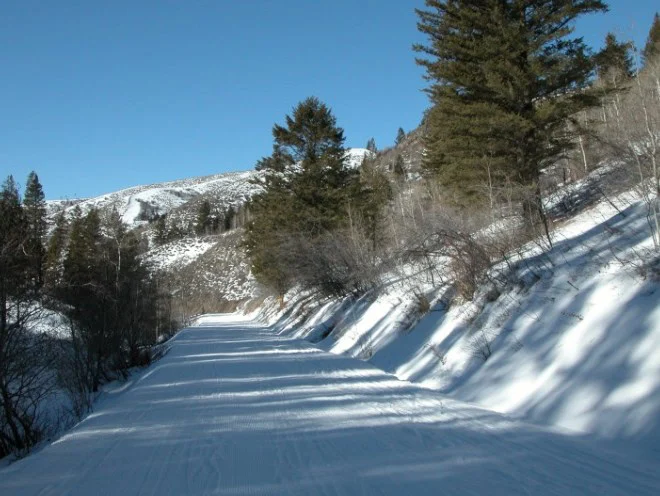
Kelly Canyon is beautiful and a wonderful place to visit in January, but you need to know the impact of uphill towing and cold transmission fluid.
5. Kelly Canyon in January: Why Towing Uphill and Cold Fluid Are a Bad Combination
Category High Priority
I tow a snowmobile or ski trailer up to Kelly Canyon in the winter – does the cold make that more dangerous for my transmission?
Kelly Canyon Ski Resort sits about 25 miles northeast of Idaho Falls, a roughly 30-minute drive that gains real elevation on the way, and towing a loaded trailer up that grade in winter stacks two separate transmission stressors on top of each other. Conventional transmission fluid begins gelling between minus 30 and minus 40 degrees Fahrenheit, thickening enough to delay shifting and reduce lubrication even before a grade is factored in [7]; add the sustained load of towing a snowmobile or ski trailer uphill, and a transmission that is already struggling to circulate cold, thick fluid is simultaneously being asked to generate and dissipate extra heat from towing. That combination – cold-impaired lubrication plus towing heat – is a genuinely different risk than either factor alone.
A pre-winter fluid check, and confirming your vehicle’s cooler setup can handle towing in cold conditions specifically, matters more for a regular Kelly Canyon trip than it would for towing on a mild summer day.
6. Fresh Off the Rental Lot: Why an Airport Rental Car’s Transmission History Is a Bigger Gamble Than You’d Think
Category High Priority
I rented a car from the airport near Idaho Falls – should I actually be worried about its transmission condition?
Idaho Falls Regional Airport sits just three miles northwest of downtown along North Skyline Drive, and the rental fleet vehicles that move through it face a maintenance reality most renters never think about. In a Consumer Reports member survey, one in four respondents said they had received a rental car with mechanical issues or other problems connected to poor maintenance, and rental fleet maintenance is frequently described as being done in volume, sometimes deferred, with diagnostic codes occasionally cleared before a vehicle heads to auction rather than fully resolved [8]. High turnover between renters means no single driver has ownership-level insight into a specific vehicle’s transmission history, and inconsistent driving habits from renter to renter accelerate wear that never gets fully tracked.
If your work or travel routinely involves rental vehicles through the Idaho Falls airport, paying attention to any hesitation, shudder, or unusual noise in the first few miles – and reporting it immediately rather than assuming it is normal for a rental – is a reasonable, low-effort safeguard.
7. The Parking Garage Tap: Why a “Nothing” Fender Bender Near Melaleuca Deserves a Second Look
Category Important
I got tapped in a parking lot near work and there’s barely a mark – is there any real chance of transmission damage?
A low-speed parking lot or garage impact rarely looks serious, and that is exactly why it gets dismissed most often. Even minor collisions can crack a transmission mount bracket or dislodge it entirely, since impact force travels through a vehicle’s frame regardless of how slow the collision speed was, and hidden damage from a low-speed impact frequently is not visible without a technician physically inspecting the mount and surrounding hardware [9]. With Melaleuca’s campus and the retail and office density growing around it drawing steady parking lot traffic throughout the north side, low-speed taps are a routine part of driving in this part of town – and routine does not mean harmless.
A new rattle, a clunk when shifting from park into gear, or a vibration under acceleration that started right around the time of a minor fender bender is worth connecting to that incident rather than treated as an unrelated coincidence.
8. New to Idaho Winters: What Transplants to Ammon and North Idaho Falls Often Miss
Category Important
We just moved here from a warmer state – is there anything specific we should do to prepare our vehicle’s transmission for winters here?
Ammon’s rapid growth has drawn a steady stream of new residents relocating from milder climates, and a vehicle that has spent its life somewhere warm often arrives in Idaho with fluids that were never built for this kind of cold. Coolant is the most commonly cited concern – vehicles from warm climates sometimes run straight water or a weak antifreeze mixture that needs to become a proper 50/50 antifreeze blend before the first real cold snap – but transmission fluid deserves the same scrutiny, since a fluid that performed fine in a mild climate can thicken well beyond its intended range here without ever having been swapped for a cold-weather-appropriate formulation [10]. New arrivals rarely think to ask about transmission fluid specifically when winterizing a vehicle, focusing instead on coolant, oil weight, and tires.
If you or your vehicle are new to eastern Idaho winters, a full fluid review – not just an antifreeze check – is worth requesting by name during your first cold-season service.
9. Driving for the Business: What High Personal Mileage for Direct Sales Really Costs Your Transmission
Category Important
I use my personal vehicle heavily for my direct-sales business – does that put more strain on my transmission than a normal commute?
North Idaho Falls, with Melaleuca’s direct-sales model headquartered right in the community, is home to a real population of independent business owners who log significant personal-vehicle mileage for work – client visits, deliveries, and errands that add up well beyond a typical commute. The IRS’s own standard mileage deduction framework exists specifically because business-use miles create measurable vehicle wear and depreciation distinct from personal driving, and that wear applies to a transmission exactly the way it applies to tires, brakes, and the engine – accumulated mileage and duty cycle both matter [11]. A vehicle logging heavy business mileage is simply putting more total cycles on its transmission per calendar year than a typical commuter vehicle, even if the individual trips look unremarkable.
Tracking business mileage for tax purposes is already a habit for many direct-sales professionals; treating that same mileage total as a cue for a shorter transmission service interval is a natural, low-effort extension of a habit already in place.
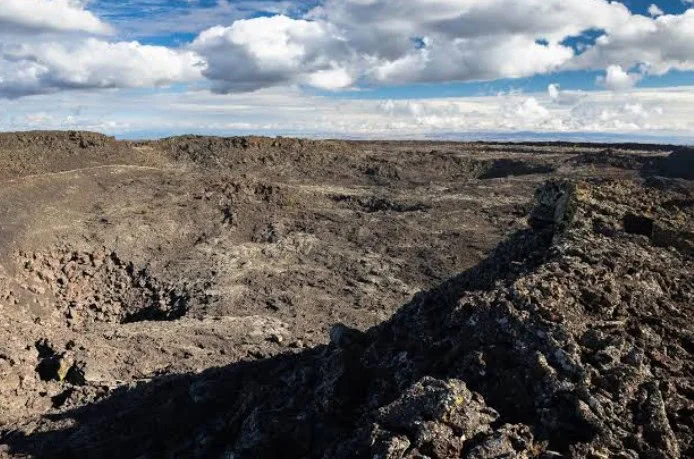
Hell’s Half Acre volcano dust is horrible for your transmission
Medium Priority
10. Fine, Sharp, and Everywhere: What Volcanic Dust From Hell’s Half Acre Does Inside a Transmission
Category Medium Priority
Does the volcanic dust and pumice out near Hell’s Half Acre actually get into my vehicle’s transmission system, or is that overstated?
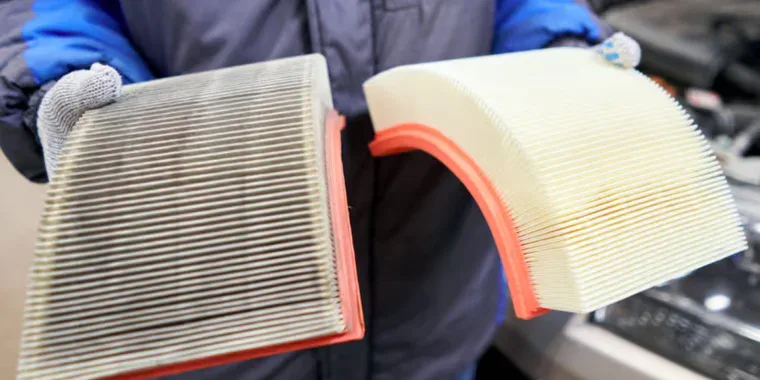
Volcanic material behaves differently from ordinary dirt or road dust because of its texture: it has been described as similar to ground glass mixed with ground spark plug insulator, fine enough to become airborne yet hard and abrasive enough to cause real damage if it works its way into moving components [12]. Documented ashfall experience shows this material clogs air intake filters far faster than normal dust and, if it reaches an engine’s moving parts, causes severe abrasive transmission wear quickly – the same abrasive quality applies to any exposed mechanical system, including a transmission’s external vents and breather components, when a vehicle spends significant time in a volcanic dust environment like the terrain around Hell’s Half Acre [12].
This is not a reason to avoid the area, but it is a reason to treat a vehicle that regularly visits volcanic terrain the way you would treat one used regularly in genuinely dusty desert conditions – with more frequent filter and vent inspections than a typical in-town vehicle needs.
11. The Weekend Bike Hauler: How a Loaded Hitch Rack Amplifies Gravel-Road Vibration
Category Medium Priority
I haul mountain bikes on a hitch rack out to forest service roads near Kelly Canyon – could that be adding extra stress to my vehicle’s transmission?
A hitch-mounted bike rack loaded with mountain bikes adds real weight hanging off the back of a vehicle, and that weight changes how gravel-road vibration travels through the frame. Some vertical movement is built into most hitch rack designs to absorb road shock, but a rack that fits loosely in the receiver – a common issue without an anti-wobble accessory – transmits more of that vibration directly into the hitch receiver and rear frame rather than absorbing it, and washboard or rough forest service roads amplify the effect with every mile [13]. That additional vibration load travels through the same rear structure that supports the transmission crossmember and mount, adding a cumulative stress that a bike-free trip over the same road would not produce.
A properly stabilized rack – snug in the receiver, secured with an anti-wobble pin or strap – reduces this transmitted vibration considerably, which protects both your bikes and the vehicle underneath them on a regular Kelly Canyon or forest service road run.
12. Racing the Clock: Why Medical Supply Drivers Serving EIRMC Can’t Treat Transmission Service as Optional
Category Medium Priority
I drive for a medical courier or supply route serving local clinics and EIRMC – how does that change my transmission maintenance priorities?
Modern healthcare logistics runs on just-in-time delivery, and a lapse in that chain – a courier vehicle that breaks down en route – can mean delayed lab specimens, late pharmaceutical deliveries, or disrupted care at a facility the size of Eastern Idaho Regional Medical Center [14]. Medical courier work typically means frequent stops, tight scheduling windows, and routes repeated daily regardless of weather, a duty cycle that puts steady, predictable demand on a transmission over months and years of service. Unlike a personal vehicle where a missed day for repairs is an inconvenience, a courier vehicle’s downtime has a direct, measurable impact on the people waiting on the other end of that delivery.
Building transmission service into a fixed schedule – not waiting for a symptom to appear – is the same standard emergency fleets hold themselves to, and it applies just as directly to the supply chain that keeps a hospital running.
13. Growing Faster Than the Waitlist: What Ammon’s Boom Means for Getting Service When You Need It
Category Lower Priority
Ammon is growing so fast – does that actually make it harder to get timely vehicle transmission service around here?
Ammon’s population has grown by nearly 16 percent since the 2020 census alone, climbing past 20,600 residents and continuing to add residents at close to 3 percent a year – a pace that outstrips a lot of local service infrastructure, including auto repair capacity, even as more residents arrive with more vehicles [4]. In a fast-growing area, waiting until a transmission problem becomes urgent means competing for appointment slots with an expanding population of neighbors doing the same thing, often during the exact same seasonal windows – pre-winter and post-winter being the two busiest.
Scheduling routine transmission service proactively, before a problem forces an urgent appointment, is a more reliable way to get seen quickly in a community that is still catching up to its own growth.
14. The Company Car Question: Why Fleet-Owned Vehicles Need Their Own Documentation Habit
Category Lower Priority
My employer provides a company vehicle – does documented transmission service actually matter if I’m not the one who will eventually sell it?
Company-owned and corporate fleet vehicles eventually get resold or reassigned, and a documented service history follows that vehicle exactly the way it would for a personally owned one – a CARFAX-verifiable maintenance record consistently supports stronger resale value and buyer confidence, whether the seller is an individual or a corporate fleet department. Drivers who treat a company vehicle’s maintenance as someone else’s problem are missing that every service visit, or every skipped one, becomes part of a permanent record that affects the vehicle’s value down the line, even if that value never directly touches the driver’s own paycheck.
For north Idaho Falls’ concentration of corporate and business-fleet vehicles tied to Melaleuca and the broader business community here, building a consistent, documented service habit protects the asset regardless of who technically owns it.
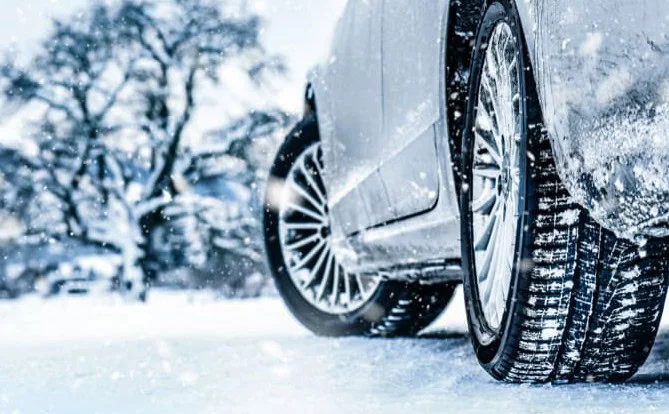
April 30th is the deadline to remove your studded tires from your car. It is not only good for your tires but also for your transmission.
15. The April 30 Deadline: What Your Studded Tire Switchover Has to Do With Your Drivetrain
Category Lower Priority
Idaho requires studded tires off by April 30 – does that seasonal switch actually matter for anything like my transmission beyond just the tires themselves?
Idaho law requires studded snow tires removed by April 30 each year, with drivers facing a fine for missing the deadline, and the switchover is framed almost entirely as a tire and road-wear issue – studded tires dig into ice effectively but perform worse in dry and wet conditions and accelerate wear on bare pavement [15]. What gets less attention is that mismatched tire condition or tread depth across a vehicle’s four corners, which is common when studded and non-studded sets are swapped seasonally without careful rotation, can create uneven rolling diameters that put additional strain on all-wheel-drive and four-wheel-drive systems designed to expect closely matched wheel speeds at all four corners.
A seasonal tire swap is a good moment to confirm all four tires match in size, tread depth, and type – not just to comply with the April 30 deadline, but to keep your transmission drivetrain working the way it was designed to.
About Grease Monkey 2255 N Holmes, Idaho Falls, ID 83401
Grease Monkey’s north Idaho Falls location on N Holmes, known internally as Center #1060, is open Monday through Friday from 7:00 a.m. to 7:00 p.m. and Saturday from 8:00 a.m. to 5:00 p.m., closed Sundays, with same-day and walk-in service available for most transmission fluid and inspection needs – call (208) 289-0662 to check current bay availability. Beyond transmission fluid exchanges, the shop’s certified technicians handle the full range of drivetrain-adjacent services this community needs, including undercarriage and cooler-line inspections for drivers who explore Hell’s Half Acre’s volcanic terrain, cold-weather towing checks for the Kelly Canyon ski crowd, and the shop’s signature 16-point inspection with every visit. The team serves Melaleuca employees and independent business owners, Ammon’s fast-growing population of new residents, travelers moving through Idaho Falls Regional Airport, and EIRMC-area medical and emergency service drivers – backed by the location’s 4.6-star rating across more than 730 Google reviews.
Author Information
Author Bio – Phillip Paul Gilliam
Phillip Gilliam is a veteran journalist and former Editor-in-Chief with 50+ years of publishing experience and thousands of published articles. Specializing in automotive, trucking, and digital publishing, he creates authoritative, search-optimized content built on real-world expertise and editorial excellence. To learn more about Phil, visit http://www.phillipgilliam.com/about.html or contact Phil at [email protected]. He would love to hear from you!
[10] NAPA Blog. Car Maintenance Considerations When Moving to a Different Climate. Available at: https://knowhow.napaonline.com/car-maintenance-climate-need-know-move/. (Vehicles relocating from warmer climates often require a proper 50/50 antifreeze mixture and climate-appropriate fluid review before winter; a 50/50 antifreeze mix protects to approximately -34 degrees F.)
[14] carGO Health. Medical Courier Reliability and Time-Critical Healthcare Logistics. Available at: https://www.cargo.health/why-reliable-medical-couriers-save-lives/. (Reliable medical courier delivery is essential to hospital supply chains; delivery lapses can result in delayed treatment and disrupted patient care.)
We use cookies to improve your browsing experience on our website. By closing this banner or interacting with our site, you acknowledge and agree to our privacy policy.