15 Reasons Aurora, Colorado Drivers Are One Shudder Away From a Transmission Emergency on I-225
Location: Aurora, CO Topic: Grease Monkey Center #48 By: Phil Gilliam
An Authoritative Guide for Vehicle Transmission Health and Repair in Colorado’s Gateway to Denver International Airport
Grease Monkey 1790 South Buckley Rd, Aurora, CO 80017 Has Over 2,871 Google Reviews With A 4.7 Star Rating
A Note on Authority and Expertise: This article was researched and written by Phillip Paul Gilliam, a veteran journalist and former Editor-in-Chief with more than 50 years of publishing experience in automotive, trucking, and safety communications. The transmission guidance presented here is grounded in current SAE fluid-life standards, USGS and NOAA hydrology data, NHTSA recall records, and manufacturer engineering research – not generic information.
The Grease Monkey at 1790 South Buckley Rd, Aurora, CO 80017, operating as Center #48 under local manager Julian Armijo, is part of the FullSpeed Automotive network, which services more than 5.2 million vehicles annually across 700-plus locations nationwide and generated over $542 million in 2026 revenue. In 2025, 435 FullSpeed Automotive locations – including Grease Monkey franchises – were named CARFAX Top Shop Winners for verified customer satisfaction, and in 2026 Grease Monkey was recognized as an Entrepreneur Verified Franchise. Grease Monkey’s ASE-certified technicians bring that national training standard to a local community with genuinely unusual transmission demands.
Aurora sits at 5,404 feet of elevation, spans three counties, and funnels well over 145,000 vehicles a day through the I-225 corridor that runs past this very shop. Those factors, combined with Aurora’s severe hail-season storms and its role as the primary approach corridor to Denver International Airport, make transmission health a far bigger local issue than most drivers realize.
An Introduction to Transmission Survival in Colorado’s Third-Largest City
Aurora, Colorado does not behave like a typical Denver suburb, and neither does the stress it places on a vehicle’s drivetrain. Stretching across Arapahoe, Adams, and Douglas counties with a population north of 414,000, Aurora is the third-largest city in the state – a sprawling, high-elevation community that serves simultaneously as a bedroom community for Denver, a gateway to Denver International Airport via Pena Boulevard and E-470, and home to Buckley Space Force Base. The Grease Monkey at 1790 South Buckley Rd sits inside this exact intersection of pressures: a commercial corridor just blocks from Rangeview High School and the Sterling Hills and Seven Hills neighborhoods, minutes from the Town Center at Aurora, and a short merge from the I-225 beltway that carries between 145,000 and 149,000 vehicles a day past the Cherry Creek Dam interchange alone [6].
Most drivers think about their transmission only when it fails – and by then, the fix has usually jumped from a few hundred dollars to several thousand. That gap is not an accident of bad luck. It is math. Automatic transmission fluid follows a well-documented thermal curve: for every 20 degrees Fahrenheit the fluid runs above roughly 175 degrees F, its usable service life is cut in half, according to SAE and Allison Transmission engineering data. Fluid that would last 100,000 miles at 175 degrees F is finished at 25,000 miles by 220 degrees F, and drops to just 5,000 miles at 260 degrees F [2]. Aurora’s driving environment – thin air at 5,404 feet, brutal stop-and-go congestion near the Town Center and Buckley corridors, and a towing culture built around Cherry Creek State Park and Aurora Reservoir – pushes transmission fluid toward that hot end of the curve constantly.
This guide walks through fifteen specific, Aurora-grounded reasons your transmission deserves professional attention, organized from the most urgent safety risks to the more preventive, long-view maintenance decisions. Some of these will sound familiar if you have lived here more than a winter. Others – like what Aurora’s own flood records say about your transmission’s vent tube, or why Toll Gate Creek matters to your drivetrain – probably will not. Each one closes with a specific, useful next step you can take at the Grease Monkey on South Buckley Road.
Most Critical
1. The I-225 Merge Test: What Happens When a Transmission Fails at 65 Miles Per Hour
Category Most Critical
What actually happens to my car if the transmission fails while I’m merging onto I-225?
A transmission failure at highway speed is not like a flat tire – there is often no gradual warning, just a sudden loss of forward power, a flare in RPM as the engine revs without engaging the wheels, or a hard clunk into limp mode that caps your speed at 30 or 35 miles per hour. On a corridor like I-225, which carries roughly 145,000 to 149,000 vehicles per day through the Aurora stretch near Cherry Creek Dam, that kind of sudden deceleration in a live merge lane is a genuine collision risk, not just an inconvenience [6]. A worn or failing torque converter is frequently the root cause, producing clutch slippage that shows up first as shuddering under light acceleration – exactly the acceleration profile drivers use every time they merge from the Buckley Road on-ramps onto I-225 southbound.
Torque converter failures are not rare or exotic. NHTSA recall records include cases like a 2019 Toyota Corolla Hatchback campaign covering 3,424 vehicles with a 100 percent estimated defect rate tied directly to torque converter damage – meaning every recalled vehicle in that population was expected to exhibit the problem, not just a fraction [8]. If you have felt a hesitation, a shudder, or a flare in RPM anywhere on your commute along Buckley Road or I-225, that is not a quirk to monitor casually; it is a transmission asking for a diagnostic before it asks in a much more dangerous way. Don’t let your next I-225 merge become a physics lesson you didn’t sign up for.
2. Descending E-470 With a Loaded Trailer: When “Stuck in Gear” Becomes a Runaway Risk
Category Most Critical
Why does my transmission feel like it won’t downshift when I’m towing down a grade toward the E-470 toll plaza?
Towing amplifies every weakness already present in a transmission, and Aurora drivers tow constantly – to Cherry Creek State Park, to Aurora Reservoir, and along E-470’s grades toward the mountains or back from them. A transmission under towing load generates dramatically more heat than one under normal driving, and if the torque converter or valve body is already compromised, that heat can cause a failure to downshift appropriately on a descent – the transmission effectively “hunting” for a gear it can no longer reliably hold. The result is a vehicle that either freewheels dangerously or lurches unpredictably between gears while descending, precisely when a driver needs the most control.
The fix that most towing-related transmission failures share is preventable neglect: towing without a dedicated transmission cooler, or towing on a fluid-change interval built for ordinary commuting. Industry guidance is consistent on this point – anytime you regularly tow a trailer, camper, or boat, cutting your manufacturer’s recommended ATF change interval in half is the standard recommendation, because the added thermal load degrades fluid roughly twice as fast as normal use [4]. If your trips to Aurora Reservoir or Cherry Creek State Park involve a loaded trailer, your transmission fluid is aging faster than your odometer suggests.
Before your next tow down toward E-470, let the ASE-certified team at Grease Monkey, 1790 South Buckley Rd, Aurora, CO 80017, verify your cooler setup and fluid condition – visit https://www.greasemonkey.com/locations/co/aurora/1790-south-buckley-rd/ to schedule before you hook up the trailer.
3. The 6 A.M. Buckley Space Force Base Commute: Cold-Start Fluid Leaks and Total Failure Risk
Category Most Critical
Why did my transmission fail completely on a cold morning drive toward Buckley Space Force Base?
A slow transmission fluid leak is one of the most survivable problems in a vehicle – right up until it isn’t. Fluid loss reduces the hydraulic pressure a transmission needs to shift and to keep internal clutches from slipping, and on a freezing Aurora morning, thickened, already-low fluid struggles even more to reach critical components during the first few minutes of driving. Personnel and contractors heading toward Buckley Space Force Base on an early shift, often departing before sunrise in winter, are exactly the population most exposed to this scenario: a cold start, a leak nobody noticed because the driveway is dry by the time the sun comes up, and a transmission that finally gives out mid-commute with no warning beyond a dashboard light most drivers have learned to ignore.
This is precisely the failure mode that documented fluid-life data warns about. A transmission running low on fluid experiences elevated internal temperature and friction even before hitting the higher end of the 20-degree rule’s damage curve, meaning what looks like a minor drip today is quietly accelerating toward the point where fluid life drops to just a few thousand miles [2]. If you’ve noticed a reddish or brownish spot under your car, or a dashboard warning that comes and goes, don’t wait for a cold Aurora morning to make the decision for you.
4. Thin Air, Hard Work: How Aurora’s 5,404-Foot Elevation Overworks Every Transmission
Category High Priority
Does Aurora’s high elevation actually put more strain on my transmission?
Aurora sits at 5,404 feet, and that elevation is not just a fun fact – it measurably changes how hard your engine and transmission work together. Thinner air contains fewer oxygen molecules per breath the engine takes, and naturally aspirated engines in particular can lose roughly 3 percent of their horsepower for every 1,000 feet of elevation gained, which translates to a 15 to 20 percent power loss for vehicles calibrated at sea level and driven consistently at Denver-metro altitude [5]. To compensate, a modern automatic transmission shifts more frequently, holds lower gears longer, and allows the torque converter to work harder to deliver usable power to the wheels – all of which generates additional heat in exactly the component most sensitive to it.
This is not a problem unique to any one neighborhood, but it compounds every other item on this list. A transmission that is already running warmer because of Aurora’s elevation has less thermal margin left before a Town Center traffic jam or an E-470 tow pushes it into the danger zone described by the 20-degree fluid-life rule [2]. Drivers who relocate to Aurora from lower elevations are often the most surprised by this – their vehicle simply behaves differently here than it did at sea level. If you moved to the Aurora Highlands, Murphy Creek, or Tallyn’s Reach area from out of state, a transmission fluid and filter check is a smart first-year move, not an overreaction.
Driving in hail and ice can impact more than just your paint job.
5. Aurora’s Hail Alley Reputation and What Rapid Temperature Swings Do to Transmission Seals
Category High Priority
How does Aurora’s severe hail and storm weather affect my transmission, not just my paint?
Aurora’s reputation for severe weather is well earned – the area has logged 369 storm reports over a recent 12-month span, including hail up to 2.75 inches in diameter, wind gusts over 100 miles per hour, and 43 separate days with severe weather activity [14]. Most of the conversation around Aurora hailstorms focuses on paint and windshields, but the same storm systems that hammer body panels also put a vehicle through rapid, extreme temperature swings – a 90-degree afternoon dropping 30 or 40 degrees in the span of an hour as a supercell rolls through. That kind of thermal whiplash is hard on rubber and synthetic seals throughout a transmission, causing them to expand and contract repeatedly in ways that accelerate hardening and micro-cracking over time.
A transmission that develops a slow seep from a hardened seal after a few Colorado storm seasons is a textbook example of a “someday” problem that Aurora’s climate turns into a “this year” problem. It is also one of the more affordable fixes on this list if caught early – a reseal is a fraction of the cost of the fluid loss and internal wear it prevents. If your vehicle has weathered more than two or three Aurora hail seasons, a visual seal inspection during your next service is worth requesting specifically.
6. Town Center Gridlock: Why Stop-and-Go Traffic Near Buckley Road Ages a Transmission Faster Than Highway Miles
Category High Priority
Is stop-and-go traffic near the Town Center at Aurora actually worse for my transmission than highway driving?
Mile for mile, stop-and-go traffic is measurably harder on an automatic transmission than steady highway cruising, because every full stop and re-acceleration cycle forces the torque converter to re-engage from a dead stop – the single most heat-intensive moment in a transmission’s operating cycle. The retail corridor around the Town Center at Aurora and the commercial stretch of South Buckley Road near this Grease Monkey location produce exactly that driving pattern throughout the day: frequent lights, parking lot merges, and congestion that never lets a transmission settle into an efficient cruising gear. Documented service bulletins on stop-and-go-prone transmission platforms, including reports of certain 8-speed transmissions running hot and “gear hunting” in heavy urban traffic, specifically recommend tightening fluid change intervals to 30,000-50,000 miles in hot climates or stop-start conditions – a meaningfully shorter window than the mileage many owners assume is standard [7].
If your daily driving is dominated by errands along Buckley Road, school pickup near Rangeview High School or Side Creek Elementary, or short trips through the Aurora Highlands Shopping Center, you are logging “severe service” miles even if your commute distance looks modest on paper. That distinction matters because it changes your correct fluid-change interval, and most owners are never told to ask about it.
The next time you’re in for an oil change at Grease Monkey, 1790 South Buckley Rd, Aurora, CO 80017, ask specifically whether your driving pattern qualifies for the shorter, severe-service transmission interval – schedule at https://www.greasemonkey.com/locations/co/aurora/1790-south-buckley-rd/.
Important
7. The CVT Question: Why Aurora’s Commuter Fleet to Anschutz Medical Campus Faces a Different Kind of Transmission Risk
Category Important
I drive a car with a CVT. Is it really less reliable than a normal automatic transmission?
Continuously variable transmissions have become common on the exact kind of commuter vehicles that fill Aurora’s roads every morning heading toward the Anschutz Medical Campus, Denver, and the broader metro job market – and the reliability data on CVTs is genuinely different from traditional automatics. Independent analysis of owner-reported failures finds CVT failure rates running somewhere between 15 and 20 percent within the first 100,000 miles, compared with roughly 8 percent for traditional automatic transmissions over the same mileage window, with belt wear and overheating cited as the dominant failure modes and some individual models showing failure rates as high as 20 percent [3].
This does not mean a CVT-equipped vehicle is a bad choice for Aurora’s commuting distances – it means CVT owners specifically need to take fluid service intervals more seriously than automatic-transmission owners might be used to, since CVT belts and pulleys have far less tolerance for degraded or overheated fluid than a conventional torque-converter design. If your daily drive to the medical campus, downtown Denver, or DIA is logged in a CVT-equipped vehicle, that is worth mentioning specifically at your next service appointment rather than assuming “transmission service” means the same thing across every vehicle type.
8. Plains Dust and the Vent Tube: A Quietly Common Aurora Transmission Contaminant
Category Important
Can dust and dirt from Aurora’s windy days actually get inside my transmission?
Every automatic transmission has a small vent, sometimes called a breather tube, designed to equalize internal air pressure as fluid heats and cools. It is a simple, necessary design feature – and on Aurora’s windy, dust-prone days, when grit blows off the surrounding plains and settles over everything from windshields to driveways, that same vent becomes a potential entry point for fine particulate contamination. Once dust or fine sand works its way past the vent and into the fluid, it behaves the way any abrasive contaminant does inside a precision hydraulic system: accelerating wear on seals, valve bodies, and clutch surfaces far faster than clean fluid would allow.
This is a slow, cumulative problem rather than a dramatic one, which is exactly why it goes unnoticed until a routine fluid change reveals fluid that looks far dirtier than the mileage would suggest. Vehicles that spend significant time parked outdoors near open lots or construction areas around Aurora’s growing residential developments are more exposed to this than garage-kept vehicles. A fluid color and condition check during a routine service is the simplest way to catch this early, well before it shows up as a shift quality complaint.
9. What Aurora’s Own Flood Records Say About Your Transmission’s Vent Tube
Category Important
Aurora has a real flash flood history – could driving through standing water actually damage my transmission?
Aurora’s relationship with flash flooding is not hypothetical – it is documented in federal hydrology records. Toll Gate Creek, a tributary of Sand Creek that runs directly through the Aurora area, has produced serious flood events across multiple decades: a 1957 storm that dropped four inches of rain in five hours and killed three people in a vehicle caught in the flooding, and a 2013 event where roughly 15 inches of rain fell and Toll Gate Creek’s streamflow peaked at 5,470 cubic feet per second [12]. Those are extreme cases, but Aurora’s summer storm pattern regularly produces enough sudden runoff to create standing water on underpasses and low-lying stretches of road, particularly near drainages connected to Sand Creek and Toll Gate Creek.
The transmission risk in a flooded roadway is the same vent tube discussed above, in a much more acute form: if that vent is submerged, water – not air – gets pulled into the transmission case as the fluid cools, contaminating the entire fluid volume almost immediately and setting up a failure that can appear suddenly, sometimes within days of the water crossing. If you have driven through standing water anywhere near an Aurora drainage this storm season, even briefly, a fluid inspection is worth doing proactively rather than waiting for a shift problem to appear.
If you tow your boat you should read this listicle carefully
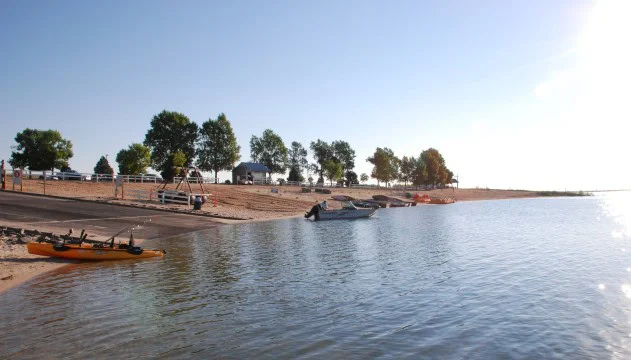
10. Boat Ramps at Aurora Reservoir: The Towing Cooler Most Owners Skip
Category Medium Priority
Do I really need a separate transmission cooler if I only tow my boat to Aurora Reservoir occasionally?
Aurora Reservoir is one of the most popular local boating destinations for southeast Aurora residents, and the drive there – often a stop-and-go trip through neighborhood streets followed by a slower haul down to the launch ramps with a loaded trailer – is a near-perfect recipe for transmission heat buildup even on a short outing. Manufacturer and industry guidance is direct on this point: anytime a vehicle is used to tow a trailer, camper, or boat with any regularity, an auxiliary transmission cooler is strongly recommended, and if the vehicle’s owner’s manual specifies one for towing, that guidance should be followed rather than treated as optional [4].
The mistake many occasional-use owners make is assuming that because they only tow “a few times a summer,” the added cooler and adjusted fluid interval do not apply to them. But transmission heat damage is cumulative – a handful of hot, loaded trips to Aurora Reservoir each year can do as much long-term damage as more frequent towing with proper cooling in place, simply because the fluid never gets a chance to fully recover between uses. If your boat, jet skis, or trailer make regular trips down to the reservoir, ask about cooler options and towing-specific fluid intervals at your next visit.
11. The Pena Boulevard Freight Run: Why Aurora’s Delivery and Fleet Vehicles Need Tighter Transmission Intervals
Category Medium Priority
I run a small delivery or contractor fleet based in Aurora – do fleet vehicles really need different transmission service schedules?
Aurora’s position as the primary approach corridor to Denver International Airport via Pena Boulevard and I-70 makes it a natural hub for delivery vans, contractor trucks, and commercial fleets logging heavy daily mileage between the airport, the eastern metro, and destinations across Arapahoe, Adams, and Douglas counties. Fleet vehicles making this run repeatedly combine two of the hardest conditions a transmission faces: sustained highway heat on I-70 and Pena Boulevard, followed immediately by stop-and-go loading and unloading stops back in the city. Industry guidance consistently points fleet operators toward more frequent transmission inspections specifically because higher operating temperatures from heavy-duty and repetitive-cycle use place greater demand on the cooling system than typical personal-vehicle use [4].
For a fleet owner, the math on preventive transmission service is straightforward: a scheduled fluid and filter service during planned downtime costs a fraction of an unplanned transmission failure that pulls a delivery vehicle off the road entirely, often for weeks rather than hours. If your business runs vehicles regularly between Aurora and DIA, or across the wider metro on tight schedules, a fleet-specific transmission service plan is worth setting up rather than reacting to problems one vehicle at a time.
12. The $200 Decision That Prevents a $3,000 One: Understanding the 20-Degree Rule
Category Medium Priority
Is it really worth paying for transmission fluid service now if my car seems to be shifting fine?
The single most useful number in this entire guide is the one fewest drivers have ever heard: for every 20 degrees Fahrenheit that transmission fluid runs above roughly 175 degrees F, its usable service life is cut in half. At 195 degrees F, expect about 50,000 miles of healthy fluid life; at 220 degrees F, that drops to roughly 25,000 miles; and by 240 degrees F to 260 degrees F – temperatures easily reached by towing, mountain driving, or Aurora’s combination of altitude and stop-and-go heat – usable fluid life can fall to just 5,000 to 10,000 miles [2]. A vehicle “shifting fine” today can still be running fluid that has already chemically broken down well past its protective capacity, because degraded fluid does not announce itself with a warning light until the damage it was supposed to prevent has already started.
This is why routine transmission fluid service, typically in the $100 to $290 range depending on vehicle and fluid type, is one of the highest-value maintenance dollars a driver can spend – it is directly preventing the $1,500 to $8,000 range of rebuild or replacement costs that follow when degraded fluid is left in service too long [1]. Given how many of Aurora’s specific driving conditions – elevation, Town Center traffic, towing to the reservoir, commuter heat cycling – push fluid toward the hot end of that curve, a proactive fluid service schedule matters more here than it would for a driver in a milder, flatter climate.
If you drive an EV vehicle, you really need to read the information below.
13. The EV and Hybrid Question: What DIA-Commuting Tesla and Hybrid Owners Still Need to Know
Category Lower Priority
I drive an EV. Does any of this transmission advice even apply to me?
Colorado’s EV adoption has grown quickly, and Aurora’s role as a commuter corridor to Denver and DIA means a growing share of the vehicles on Buckley Road and I-225 are electric or hybrid. Most electric vehicles use a single-speed gearbox rather than a traditional multi-gear automatic transmission, because electric motors deliver usable power across a far wider RPM range than a combustion engine – some EV motors spin as high as 20,000 RPM, compared with roughly 1,500 to 7,000 RPM for a typical gas engine’s operating band – which eliminates the need for multiple gear ratios entirely [9]. With dramatically fewer moving parts than a conventional transmission, some EV drivetrains have on the order of 80 percent fewer components than a comparable gas vehicle’s powertrain, and EV owners genuinely can skip the oil changes and much of the routine maintenance gas vehicles require [9].
That said, “fewer moving parts” is not the same as “zero maintenance.” Depending on make and model, some EV single-speed gearboxes still use a small volume of specialized gear oil that manufacturers specify for periodic replacement, and hybrid vehicles that pair an electric motor with a traditional or CVT-style transmission still carry all the fluid-service considerations described throughout this guide. If you are unsure what, if anything, your specific EV or hybrid needs in this category, that is a quick and worthwhile question to ask rather than assume.
14. The High-Mileage Flush Myth: Why “More Service” Isn’t Always the Safe Choice
Category Lower Priority
My transmission has over 100,000 miles and has never been serviced – isn’t a full flush the responsible thing to do now?
This is where real expertise matters more than good intentions. On a transmission with high mileage and no documented service history, a full-pressure fluid flush can occasionally trigger a failure within a few hundred miles – not because the flush itself is harmful, but because microscopic debris from years of normal clutch wear has often been quietly helping worn clutch surfaces maintain grip. A high-pressure flush strips that debris away all at once, and can also dislodge accumulated sludge that then clogs the hair-thin hydraulic passages and solenoids inside the valve body, exposing a problem that was already there rather than causing a new one [10].
The safer, more conservative approach for a high-mileage, never-serviced transmission is typically a Triple Drain and Fill – replacing roughly a third of the fluid volume at a time across multiple shorter services, rather than one aggressive full-system flush. This is exactly the kind of nuanced, experience-based judgment call that separates a shop that simply upsells every available service from one that evaluates each vehicle’s actual history and condition first. If your transmission has significant mileage and an unclear service history, don’t assume the most aggressive service option is automatically the safest one.
15. PCS Season and Resale Value: Why Documented Transmission Service Matters More in a Military Community
Category Lower Priority
I might be relocating because of Buckley Space Force Base – does my transmission service history actually affect what I can sell my car for?
Aurora’s proximity to Buckley Space Force Base means a meaningful share of local vehicle owners face a permanent change of station or relocation on a timeline they don’t fully control, often needing to sell a vehicle quickly rather than on their own schedule. In that situation, a documented service history becomes a direct financial asset rather than a paperwork formality. A transmission service record from a CARFAX-participating shop creates a permanent, independently verifiable entry in a vehicle’s history – the kind of documentation that buyers and dealers increasingly expect before offering top value, and its absence is one of the more common reasons a otherwise well-maintained vehicle sells for less than a comparable, documented one [15].
For Aurora’s military and contractor community specifically, this turns routine transmission maintenance into part of a relocation strategy rather than just a mechanical one: every documented fluid service, every recorded inspection, adds to a paper trail that speeds up a sale and supports a stronger price when time is tight. Grease Monkey’s participation in CARFAX’s service-record network means every visit to the South Buckley Road location becomes part of that permanent, transferable history automatically. If a PCS or relocation is on your horizon, start or continue that documented record now rather than waiting.
About Grease Monkey 1790 South Buckley Rd, Aurora, CO 80017
Grease Monkey’s Aurora location on South Buckley Road, known internally as Center #48, is open Monday through Friday from 8:00 a.m. to 6:00 p.m. and Saturday from 8:00 a.m. to 5:00 p.m., closed Sundays, with same-day and walk-in service available for most transmission fluid and inspection needs – call (720) 856-4911 to check current bay availability. Beyond transmission fluid exchanges, the shop’s certified technicians handle the full range of drivetrain-adjacent services Aurora vehicles need, including transfer case service for the area’s many all-wheel-drive and four-wheel-drive commuter and recreation vehicles, radiator and cooling system work that directly supports transmission temperature control, and the shop’s signature 16-point inspection with every visit. Local manager Julian Armijo and his team serve neighbors from Sterling Hills to Seven Hills, families near Rangeview High School and Side Creek Elementary, and commuters heading toward Buckley Space Force Base or Denver International Airport every day – backed by the location’s 4.7-star rating across more than 2,871 Google reviews, one of the more heavily reviewed and highly rated shops along the Buckley Road corridor.
Author Information
Author Bio – Phillip Paul Gilliam
Phillip Gilliam is a veteran journalist and former Editor-in-Chief with 50+ years of publishing experience and thousands of published articles. Specializing in automotive, trucking, and digital publishing, he creates authoritative, search-optimized content built on real-world expertise and editorial excellence. To learn more about Phil, visit http://www.phillipgilliam.com/about.html or contact Phil at [email protected]. He would love to hear from you!
[3] CVT Expert; CVT Mechanic (citing Consumer Reports analysis). CVT vs. Automatic Transmission Reliability. Available at: https://cvtexpert.com/dct-vs-cvt-vs-tc-reliability-and-issues-explained/. (CVT failure rates of approximately 15-20% within the first 100,000 miles versus approximately 8% for traditional automatics; some individual models as high as 20%.)
[6] AARoads. Interstate 225 Colorado Guide. Available at: https://www.aaroads.com/guides/i-225-co. (I-225 traffic volumes of approximately 145,000-149,000 vehicles per day near the Cherry Creek Dam interchange through Aurora.)
[7] For the People Law. GM Transmission Recalls and Issues: What Drivers Need to Know. Available at: https://www.forthepeople.com/blog/gm-transmission-recalls-and-issues-what-drivers-need-know/. (Reports of certain 8-speed transmission platforms running hot and gear-hunting in stop-and-go traffic; industry recommendation of 30,000-50,000-mile fluid changes in hot climates or stop-start driving.)
[11] NYADI College of Transportation Technology; Virginia Automotive Service. The Importance of ASE Certification. Available at: https://nyadi.edu/blog/what-ase-certification-and-why-it-important/. (ASE A2 Automatic Transmission/Transaxle certification standard; five-year renewal cycle for certified technicians.)
[14] RoofFlowPro. Aurora, Colorado Storm Reports – Hail, Wind & Tornado Tracker. Available at: https://roofflowpro.com/storms/colorado/aurora. (369 storm reports over a recent 12-month period; maximum hail of 2.75 inches; maximum wind gusts of 112 mph; 43 severe weather days.)
We use cookies to improve your browsing experience on our website. By closing this banner or interacting with our site, you acknowledge and agree to our privacy policy.