15 Excellent Reasons You Need Your Vehicle's Brake System Repaired Frequently in Idaho Falls, Idaho
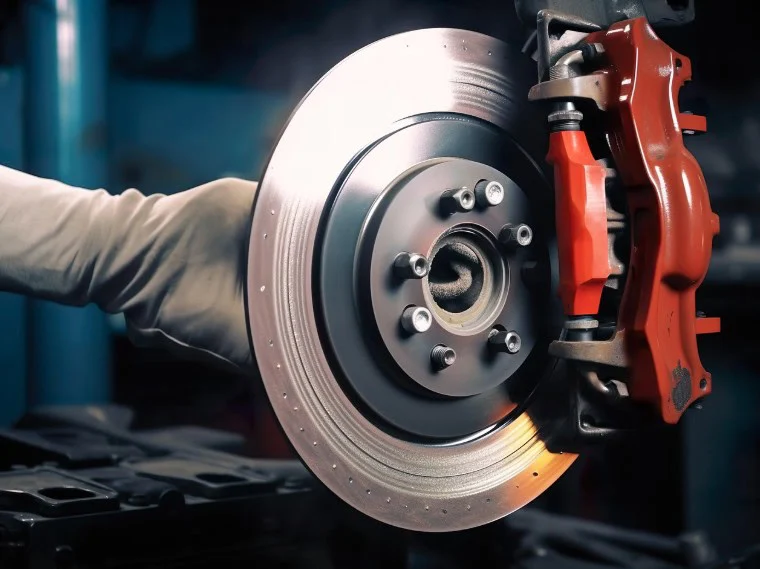
An Authoritative Guide for Idahoans That Drive In And Around Idaho Falls, Idaho
EEAT Authority Statement
Our Grease Monkey located at 2255 N Holmes Ave, Idaho Falls, Idaho 83401 has over 700 Google Reviews with a Star Rating of 4.6
This article is researched and written by Phillip Paul Gilliam, a veteran journalist with 50+ years of publishing experience specializing in automotive safety, digital publishing, and regional content strategy. All technical claims are grounded in current research from the National Highway Traffic Safety Administration (NHTSA), the Insurance Institute for Highway Safety (IIHS), the Federal Highway Administration (FHWA), AAA, the National Safety Council, and the Idaho Transportation Department. The business featured in this article — Grease Monkey at 2255 N Holmes Ave, Idaho Falls, ID 83401 — is part of the FullSpeed Automotive network of 700+ locations across the United States, with 435 FullSpeed Automotive locations recognized as 2025 CARFAX Top Shop Winners. Grease Monkey technicians hold ASE certifications and are trained to nationally standardized brake inspection and service protocols. Located on the high-traffic Holmes Avenue commercial corridor serving north Idaho Falls, Ammon, and the surrounding Bonneville County communities, this Grease Monkey location is ideally positioned to serve the diverse and growing population of drivers whose vehicles face the specific demands of Idaho’s high-altitude, four-season driving environment.
Introduction
North Holmes Avenue tells the story of Idaho Falls’s growth in the language of traffic, concrete, and commerce. From the big-box anchors at Orchard Park — Home Depot, Albertsons, Sam’s Club — to the automotive, RV, and marine dealers clustered around the Highway 20 interchange, to the light manufacturing and warehousing operations filling the corridor toward Anderson Street, Holmes Avenue is one of the highest-volume arterials in eastern Idaho. It is the kind of road that invites speed when traffic thins and demands sudden stops when it doesn’t. The vehicles using it range from half-ton pickups hauling construction materials to family minivans navigating big-box parking lots to commercial delivery vans making the rounds of the industrial north end — and every one of them is depending on a brake system that may not have been professionally inspected in months or years.
Idaho Falls sits at 4,744 feet on the eastern Snake River Plain, where a semi-arid climate produces dramatic seasonal extremes: summer temperatures that push brake fluid toward its thermal limits, winters that drop below 0°F and test every rubber seal and hydraulic component in the system, and a spring-to-fall swing of 100°F or more that subjects brake materials to the kind of thermal cycling that accelerates degradation. The rapidly growing city of Ammon, which borders Idaho Falls to the east and recently surpassed 20,000 residents, feeds additional traffic into the Holmes Avenue corridor every day — new residents, new vehicles, and new demands on a road network that city planners are actively working to expand. The City of Idaho Falls has even funded Holmes Avenue infrastructure improvements through impact fees to keep pace with that growth, a recognition that this corridor is under pressure it was not originally built to absorb.
According to the National Highway Traffic Safety Administration, brake system deficiencies are among the most significant mechanical contributors to vehicle accidents in the United States. For Idaho Falls drivers specifically, the combination of high-altitude physics, extreme seasonal temperature swings, heavy commercial traffic mixing with residential flow, and a growing population of vehicles in all states of maintenance creates a brake safety environment that demands more than occasional attention. Regular, professional brake system inspection is not a luxury in this environment — it is a baseline safety requirement.
This article presents 15 specific, research-backed, locally grounded reasons why every driver on the Holmes Avenue corridor — and throughout Idaho Falls and Ammon — should make brake service a consistent, scheduled priority. Each reason reflects a distinct risk or opportunity that experienced automotive professionals encounter regularly. And each one can be addressed with a single appointment at Grease Monkey, 2255 N Holmes Ave, Idaho Falls, ID 83401.
1. Hydroplaning Recovery: When ABS and Brake Condition Are All You Have
Category: Most Critical – What Happens To My Car When It Starts To Hydroplane, And What Do I Need To Know About My Braking System Before I Experience Hydroplaning?
Hydroplaning occurs when a vehicle’s tires lose direct contact with the road surface and begin riding on a thin film of water, eliminating the friction that steering and braking depend on. At speeds above 50 mph on wet pavement, the risk of hydroplaning increases sharply as water pressure in front of the tire exceeds the tire’s ability to channel it away. The critical moment is not the hydroplane itself but the recovery: when the tire re-contacts the road, the ABS and brake system must modulate braking force precisely — applying enough pressure to decelerate without triggering a lock-up on the newly-regained, potentially still-wet friction surface. NHTSA testing has confirmed that ABS performance on wet roads differs substantially from dry conditions, with much greater torque fluctuation and lower system stability during the recovery phase [6]. A brake system with corroded ABS wheel speed sensors, degraded hydraulic modulator performance, or worn pad compound is less capable of executing that recovery correctly — and a driver who doesn’t know the difference may not understand why the car didn’t respond the way they expected.
The Holmes Avenue corridor in Idaho Falls sees wet pavement conditions through all four seasons: summer irrigation runoff crossing the road from agricultural operations east of the city, fall rain systems that deposit standing water in the low-lying stretches near the Highway 20 interchange, and spring snowmelt that turns parking lot aprons into shallow lakes. The heavy commercial vehicles entering and exiting the Orchard Park retail center, the automotive and marine dealers along the north corridor, and the warehousing operations off Anderson and Holmes create tire-track water channels across the pavement that passenger vehicles encounter unexpectedly. A family SUV hitting one of those channels at 45 mph while transitioning from Highway 20 onto Holmes has a fraction of a second to recover — and that recovery lives or dies on the ABS system’s ability to accurately read wheel speed and modulate force through a brake system that is fully functional.
Hydroplaning doesn’t wait for a storm — it waits for the wrong combination of speed, water, and a brake system that isn’t ready. Don’t let the recovery be the failure point. Schedule a comprehensive brake and ABS system inspection at Grease Monkey, 2255 N Holmes Ave, Idaho Falls, ID 83401 before the next wet season puts your system to the test.
2. Vacuum Brake Booster at 4,744 Feet: Altitude Physics and Pedal Feel
Category: Most Critical – I Hear People Talk About A Brake Boosters On My Car. What Is A Brake Booster And How Important Is It?
The vacuum brake booster — the component that multiplies a driver’s foot pressure into the hydraulic force that actuates the calipers — operates on a pressure differential between engine intake manifold vacuum and atmospheric pressure. At sea level, that differential is maximized, providing the full amplification the booster was designed to deliver. As altitude increases, atmospheric pressure decreases, reducing the pressure differential across the booster diaphragm and proportionally reducing the assist the system provides. Automotive service engineers have documented that brake booster efficiency is reduced by approximately 17% at one mile of elevation — the same altitude as Denver, Colorado [2]. Idaho Falls sits at 4,744 feet, nearly identical to Denver, meaning every vacuum-assisted brake booster in every vehicle in Idaho Falls is operating at a measurable efficiency deficit compared to sea level performance. For a booster in good condition, that deficit is engineered into the vehicle’s brake system design. For a booster with a weakening diaphragm, a slow vacuum leak, or age-related seal degradation, the altitude-induced efficiency loss combines with the mechanical deficiency — and the driver begins experiencing a notably harder pedal, longer pedal travel, and reduced stopping force without any single obvious cause.
On the Holmes Avenue corridor, this matters most during the kind of rapid, full-pressure stops that high-traffic commercial arterials demand. The high-volume parking lot exits at the Orchard Park Retail Center, the merge points at the Highway 20 interchange, the sudden stops required when a delivery truck pulls out from a warehouse access road on the north industrial section of Holmes — all of these require the brake booster to perform at demand. A marginally functioning booster at sea level may still stop the car adequately in most situations. The same booster at 4,744 feet, compounding its mechanical degradation with the altitude deficit, may leave a driver pressing harder on the pedal than they’ve ever needed to before — in a moment when they needed less pedal travel, not more.
Your brake booster is working harder than it was designed to at Idaho Falls’s elevation — make sure it’s healthy enough to handle that. The ASE-certified technicians at Grease Monkey, 2255 N Holmes Ave, Idaho Falls, ID 83401 inspect vacuum brake boosters as part of a complete brake system evaluation. Don’t let altitude be the hidden variable in an emergency stop.
3. Automatic Emergency Braking Cannot Override a Failing Brake System
Category: Most Critical – Why Can’t My Automatic Brake System Help Me If My Car Brake System Is Failing?
Automatic Emergency Braking (AEB) is one of the most significant active safety advances in modern vehicle design. NHTSA’s landmark 2024 final rule establishing AEB as a mandatory safety standard for all new U.S. light vehicles — requiring systems capable of stopping to avoid contact with a lead vehicle at speeds up to 62 mph and detecting pedestrians in both daylight and darkness — is projected to prevent at least 360 fatalities and 24,000 injuries annually once fully implemented [3]. The technology works by using radar, cameras, or lidar sensors to detect imminent collisions and automatically apply the vehicle’s brakes if the driver fails to respond. It is, in every sense, a last-resort intervention. But a critical and frequently overlooked limitation applies universally: AEB applies braking force through the vehicle’s existing brake system. If that system has worn pads with insufficient friction coefficient, degraded rotors that cannot absorb the thermal load of a full-force automatic stop, or hydraulic components that limit the pressure the system can generate, AEB will still engage — but it cannot stop the vehicle in a shorter distance than the brake system’s physical condition allows. The sensor can be perfect; the algorithm can be flawless; if the brakes are marginal, the outcome is marginal.
The Holmes Avenue corridor is precisely the environment where AEB earns its value: high-volume commercial traffic, frequent parking lot entries and exits, pedestrian crossings near the big-box retail anchors, and unpredictable merge behavior from the Highway 20 ramps. Newer vehicles owned by Idaho Falls and Ammon residents increasingly include AEB as standard equipment, and drivers of those vehicles may feel a false sense of security — confident that the car will stop itself if needed. What the AEB warning light in the dashboard cannot tell that driver is that the brake system behind the technology is operating below specification. The sensor will trigger. The algorithm will fire. And the result will be determined entirely by the condition of the brake pads, rotors, calipers, and hydraulic lines that were last professionally inspected — when, exactly?
AEB is a remarkable safety system. It still needs remarkable brakes behind it. Make sure your modern vehicle’s active safety technology has the stopping power to back up what it promises. Visit Grease Monkey, 2255 N Holmes Ave, Idaho Falls, ID 83401 for a complete brake system inspection, and let the technology do its job on a foundation built to support it.
4. Aftermarket Brake Components and the Quality Gap That Compounds Over Time
Category: High Priority – Why Aren’t Budget Brake Components As Good As OEM Specific Components?
Not all brake pads and rotors are created equal — and the quality gap between premium and budget aftermarket components is not always visible at installation. The brake parts market includes a broad spectrum of suppliers, from those producing friction materials that meet or exceed OEM specifications in both compound consistency and thermal performance, to manufacturers whose cost reductions come at the expense of friction coefficient stability, rotor metallurgy, and dimensional precision. Automotive service research has documented that many budget aftermarket brake pads are formulated with abrasive compounds that wear rotors faster than OEM materials, and that aftermarket manufacturers rarely match their friction materials precisely to OEM specs — meaning the interaction between a mismatched aftermarket pad and an original rotor (or vice versa) can produce unpredictable stopping distances, brake noise, and accelerated wear on both surfaces [4]. A brake pad that stops the car acceptably for the first 5,000 miles after installation may degrade more rapidly than the driver expects in months 6 through 12 — particularly under the thermal cycling demands of Idaho’s seasonal extremes.
In Idaho Falls, a significant proportion of vehicles have had brake work performed by the vehicle’s previous owner, a private mechanic, or a discount service operation where part quality was not the primary selection criterion. Trucks changing hands between construction workers, service vehicles sold from small businesses, and used vehicles acquired by new Ammon and Idaho Falls residents from private sellers may carry aftermarket brake components whose provenance — and remaining service life — are completely unknown. When a vehicle shows up at a professional inspection with squealing brakes after only 15,000 miles on a recent “brake job,” or with rotors visibly worn below minimum thickness despite relatively recent service, aftermarket quality is frequently the culprit. A professional technician who inspects not just wear level but friction material type, rotor metallurgy, and caliper hardware condition can catch this pattern before it becomes a stopping-distance deficiency on Holmes Avenue at 45 mph.
Not all brake jobs are the same — and neither are all brake parts. If you don’t know what’s on your vehicle, a professional inspection at Grease Monkey, 2255 N Holmes Ave, Idaho Falls, ID 83401 can answer that question and replace substandard components with materials that meet the stopping demands of Idaho Falls driving. What’s in your brake system matters as much as whether anyone looked at it.
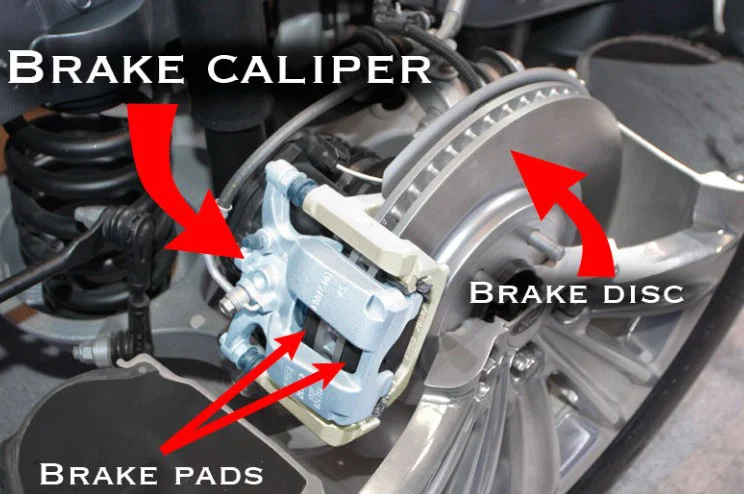
5. Brake Caliper Drag and the Hidden Drivetrain Wear Chain
Category: High Priority – What Happens To My Brake System And The Rest Of My Vehicle When The Brake Caliper Fails To Full Release After A Stop?
When a brake caliper fails to fully release after a stop — a condition caused by corroded slide pins, a sticking piston, or a kinked brake hose that maintains residual pressure — it creates a condition called brake drag. The consequences of brake drag extend well beyond brake pad and rotor wear. A dragging caliper maintains constant friction force against the rotor while the wheel is trying to turn freely, and that resistance is transmitted backward through the driveshaft to the differential, the transmission output shaft, the CV joints, and ultimately the wheel bearing on the affected side. Over time, this sustained load accelerates wear in every component downstream of the stuck caliper, creating a cascade of drivetrain damage that a driver may experience as vibration, noise, differential wear, or premature CV axle failure — symptoms they are unlikely to connect to a brake issue because the brake pedal still feels relatively normal. The dragging caliper also generates heat continuously, causing rotor hot spots, pad glazing, and potential brake fluid overheating in the affected corner — all without the dramatic warning signs that acute brake failure produces. By the time the vehicle owner notices, they may be looking at not just a caliper rebuild but a rotor replacement, new pads, and drivetrain repairs that could have been prevented by catching the slide pin corrosion at a routine inspection.
The Holmes Avenue driving environment accelerates the conditions that cause caliper drag. The north Idaho Falls industrial corridor subjects vehicles to the dust, grit, and vibration of commercial environments — conditions that work particulate contamination into caliper slide pin boots and accelerate the corrosion that causes pins to seize. The freeze-thaw cycling of Idaho Falls winters drives road chemical residue into the tight tolerances of caliper mounting hardware. And the constant low-speed maneuvering of big-box retail traffic — entering and exiting the Home Depot, Albertsons, and Sam’s Club lots that anchor the Orchard Park Retail Center at Holmes and 25th Street — means that calipers are applying and releasing repeatedly throughout each shopping run, wearing boot seals and depleting slide pin lubricant at a rate that exceeds what open-highway driving would produce. The truck driver who spends half his afternoon idling through the Holmes industrial corridor and the other half at highway speed on the Lewisville Highway is subjecting his caliper slide pins to exactly the cycling pattern that makes them fail early.
Brake drag is a quiet destroyer that starts in the caliper and ends in the drivetrain. Catch it before it spreads. The ASE-certified technicians at Grease Monkey, 2255 N Holmes Ave, Idaho Falls, ID 83401 inspect caliper slide pin condition, piston retraction, and brake drag as part of every comprehensive brake service. A seized slide pin is a $50 problem when it’s caught — and a $1,500 problem when it isn’t.
6. Rideshare and Food Delivery Vehicles: Extreme Brake Cycles in Urban Idaho Falls
Category: High Priority – Why Does Rideshare And App-Based Food Delivery Impact My Brake System Differently Than Just Normal Use Of My Vehicle?
The economics of rideshare and app-based food delivery driving create a brake wear profile that no standard vehicle maintenance schedule was designed to anticipate. A traditional commuter vehicle might make 20 to 30 brake applications on a one-hour round trip — once in the morning, once in the afternoon. A rideshare driver working a 6-hour evening shift in a commercial corridor makes that many brake applications per mile, repeated across dozens of miles. Industry practitioners working with rideshare drivers have concluded that vehicles in full-time rideshare service need brake inspections at least every six months — roughly twice the interval most vehicle manufacturers recommend for typical passenger use [7]. For food delivery drivers navigating stop signs, parking lot exits, double-parked obstacles, and pedestrian crossings at a pace that may produce 100 or more brake applications per hour, pad and rotor wear accumulates at a rate that leaves drivers — who are simultaneously managing app navigation, order timing, and customer communication — with little attention to spare for early brake warning signs.
Idaho Falls has grown sufficiently in population and commercial density to support an active rideshare and delivery ecosystem across its major commercial corridors. Holmes Avenue, with its concentration of restaurants, retailers, and residential neighborhoods accessible from the Highway 20 interchange, is a primary delivery zone. DoorDash, Uber Eats, and rideshare drivers working the north Idaho Falls area make dozens of runs through the Holmes, Woodruff, and Anderson Avenue grid each evening — stopping, starting, double-parking, re-routing, and braking in the compressed, unpredictable manner that urban delivery demands. These vehicles are driven by individuals whose income depends on maximizing hours on the road, which creates structural pressure against taking time off for brake maintenance. They often drive high-mileage vehicles acquired specifically for delivery work, with brake system histories that may include significant wear from prior ownership, and they may not connect the gradual extension of their stopping distances to a brake system condition they haven’t had checked since they started driving for the app.
If you’re driving for a delivery app in Idaho Falls, your brakes are working harder than your manufacturer ever planned for. Protect your vehicle, your passengers, and the people crossing Holmes Avenue in front of you. Stop in at Grease Monkey, 2255 N Holmes Ave, Idaho Falls, ID 83401 for a professional brake inspection — it’s the maintenance your income depends on.
7. Steel Brake Line Corrosion and the Hydraulic Rupture Ticking Clock
Category: Important – What Is The Hidden Danger In My Brake System?
The steel hydraulic brake lines that carry pressurized brake fluid from the master cylinder to each wheel caliper or cylinder are among the most safety-critical components in any vehicle — and among the most neglected. Unlike brake pads, which produce noise and vibration as they wear, corroding brake lines give no audible warning before failure. Automotive engineers at the Society of Automotive Engineers (SAE) have documented that steel brake tubing performance becomes “highly erratic” after four to six years in service, with age proving more significant than mileage as a predictor of corrosion-related failure [8]. The failure mechanism is insidious: road chemical exposure creates exterior rust that slowly perforates the tubing wall, beginning with pinhole leaks that a driver may mistake for a slightly spongy pedal before the line blows out completely under the hydraulic pressure of a hard stop. When a brake line ruptures under full braking force, the hydraulic pressure to one or more wheels drops instantly to zero — producing a pedal that goes to the floor and a vehicle with dramatically reduced, asymmetric braking capability at exactly the worst possible moment.
In Idaho Falls, steel brake line corrosion is accelerated by factors that compound the national baseline. Road de-icing chemicals — applied generously across Holmes Avenue and the Lewisville Highway interchange throughout the winter season — coat the underside of every vehicle that uses these roads with chloride residue that penetrates brake line routing channels, frame cavities, and the protected sections of tubing nearest to heat sources. The freeze-thaw cycling of an Idaho Falls winter drives that moisture-laden chemical residue deeper into metal-to-metal contact points where brake lines pass through clips, brackets, and frame grommets. Idaho Falls’s elevation produces lower relative humidity in summer, but the dramatic summer-to-winter swing creates condensation on cold metal surfaces as the seasons change — a moisture cycle that attacks brake line exteriors from the inside of the vehicle’s undercarriage as reliably as the road does from below. A vehicle that has spent four or more winters in the Bonneville County snow belt has brake lines that deserve a professional corrosion assessment regardless of mileage.A corroded brake line doesn’t announce itself — it waits for the hardest stop you’ll make all year. Don’t let four-to-six-year-old lines be a ticking clock under your vehicle. The team at Grease Monkey, 2255 N Holmes Ave, Idaho Falls, ID 83401 inspects brake line integrity as part of a comprehensive brake system service. Catch the corrosion before it catches you.

8. Passenger Load and the Braking Distance Gap No Driver Thinks About
Category: Important – As I Carry More Passengers And Baggage, How Does That Impact My Brakes?
Vehicle braking systems are engineered and calibrated for a load range that includes the driver and a representative passenger load — but the physics of kinetic energy means that every additional pound in the vehicle increases the stopping distance measurably, even on a perfectly maintained brake system. The relationship is not linear: kinetic energy equals one-half times mass times velocity squared (KE = ½mv²), meaning that doubling the vehicle’s mass doubles the kinetic energy the brake system must absorb to stop the vehicle from a given speed [9]. A family vehicle carrying seven passengers and a cargo load — common in Idaho Falls’s large-family culture, where 28.7% of Bonneville County’s population is under 18 years old — may be carrying 500 to 800 pounds more than it carries on a typical solo commute. The manufacturer’s brake system handles this within its design specification when the pads, rotors, and hydraulics are in good condition. When the system is at 60% pad life with a caliper that doesn’t release quite cleanly on one side, that same load demands more from a system already operating below its optimal range — extending stopping distances in ways the driver has no dashboard indicator to warn them about.
On the Holmes Avenue corridor, the load variable is particularly acute. The Orchard Park Retail Center area draws families for major shopping runs — loaded carts, bulky home goods, multiple children in the vehicle, and often a cargo trailer or rooftop carrier adding weight above the vehicle’s curb spec. The north corridor’s automotive and marine dealers attract buyers who test-drive and take delivery of trucks and SUVs loaded with accessories, hitches, and aftermarket equipment. The residential neighborhoods that radiate east into Ammon from the Holmes Avenue spine send minivans and three-row SUVs onto Holmes at school pickup time — fully loaded, at peak traffic hours, merging into an arterial where vehicles ahead of them may stop without warning. The same brake system that felt adequate in a solo grocery run in January may behave noticeably differently on a full-family August shopping haul — and the difference is not the brakes failing. It is the brakes being asked to do more than their current condition can reliably deliver.Your brakes feel different with six people in the car than they do with just you — and there’s physics behind that feeling. Make sure your system is healthy enough for your full load at Grease Monkey, 2255 N Holmes Ave, Idaho Falls, ID 83401. A vehicle that carries your whole family deserves brakes inspected for the weight it actually carries.
9. Drowsy and Shift-Fatigued Driving on Idaho Falls’s Commercial Arterials
Category: Important – What Is The Impact On Braking If I Am Driving Drowsy?
Drowsy driving is one of the most severely underreported contributing factors to traffic collisions, and its effects on braking response are specific and devastating. Research by the AAA Foundation for Traffic Safety estimated that 17.6% of all fatal crashes from 2017 to 2021 — representing approximately 30,000 fatalities over five years — involved a drowsy driver, a figure ten times higher than official crash report tallies [10]. NHTSA data further establishes that driving after 20 or more consecutive hours without sleep produces impairment equivalent to a blood-alcohol content of 0.08% — the legal limit for intoxication. The braking-specific consequences are measurable: reaction time — the interval between perceiving a hazard and beginning to apply the brake pedal — increases substantially with fatigue, and most fatigue-related crashes show no evidence of attempted braking or evasive action at all. The driver who is drowsy behind the wheel is not responding to hazards with slow brakes; they are often not responding at all. But a driver who is merely fatigued rather than asleep will respond with reaction times 20 to 40% longer than an alert driver — and even a 20% increase in reaction time, at 45 mph on Holmes Avenue, adds more than 20 feet to total stopping distance before the pedal is even touched.
Idaho Falls’s north commercial corridor is heavily traveled by shift workers whose schedules create predictable fatigue exposure. The warehouse and light manufacturing operations along the north Holmes industrial zone operate multiple shifts, with employees arriving and departing at hours when circadian alertness is at its lowest — between midnight and 6 a.m. and in the mid-afternoon hours. Healthcare shift workers from the Bonneville County medical community traverse Holmes Avenue at shift change, often after eight to twelve hours on their feet. Construction and extraction industry workers tied to Idaho’s agricultural and INL-support economy work early starts and long days that regularly push them behind the wheel in states of significant fatigue. Each of these driver categories is on Holmes Avenue, in vehicles with varying brake condition, with reaction times that are meaningfully longer than the alert-driver baseline against which stopping distances are calculated. A fully maintained brake system does not eliminate the stopping distance added by reaction time — but it reduces the distance that the brake application itself requires, giving a fatigued driver the smallest possible window to catch a hazard they noticed late.When your reaction time is working against you, your brakes need to make up the difference. Keep them sharp. Visit Grease Monkey, 2255 N Holmes Ave, Idaho Falls, ID 83401 for a brake system inspection, and give every mile of your commute — whatever hour it starts — a full-spec stopping system behind it.
10. Electronic Brake Wear Sensor Failure and the Silent Pad Wear Problem
Category: Medium Priority – What Is The New Method For Drivers To Know If Their Brakes Are Going Bad?
Modern vehicles increasingly replace the traditional mechanical wear indicator — the metal tab that contacts the rotor and produces a squealing sound when pads reach minimum thickness — with electronic brake wear sensors. These sensors consist of a small probe embedded in the brake pad compound that completes an electrical circuit when the friction material wears down to a predetermined minimum, triggering a dashboard warning light. The electronic system appears to offer an advantage over mechanical indicators: it warns before the audible squeal begins, giving drivers earlier notice to schedule service. But the electronic sensor introduces a failure mode that the mechanical indicator does not: sensor corrosion, wiring harness damage, or probe detachment can disable the warning function entirely, leaving the driver with a pad that is reaching minimum thickness with no indication whatsoever — not even the squeal they would have heard with a mechanical indicator. In climates with road chemical exposure and temperature cycling, sensor connector corrosion is a common failure mode that goes undetected until a technician physically inspects the pad and discovers it is at or below specification.
In Idaho Falls, the combination of road de-icer chemical exposure on Holmes Avenue through the winter months and the temperature swings of an eastern Idaho climate creates the exact conditions under which electronic wear sensor connectors corrode and fail. Vehicles that use the northern Holmes commercial corridor regularly — making the winter run from the Orchard Park retail cluster south on Holmes, north on Woodruff, and back through the Lewisville Highway interchange — are accumulating road chemical exposure across the wheel well areas where sensor wiring connects to the vehicle harness. A truck owner who drives this route year-round, has never seen a brake warning light, and last had the brakes physically inspected two years ago may be operating with pads at minimum thickness and an electronic sensor that failed at the first frost of last winter. The dashboard is silent. The brakes feel fine. And the rotor is one emergency stop from scoring damage that turns a $200 pad replacement into a $600 rotor service.
A silent warning light doesn’t mean your brakes are fine — it may mean your warning system failed. The only way to know is a physical inspection by a certified technician. Stop in at Grease Monkey, 2255 N Holmes Ave, Idaho Falls, ID 83401 and find out what your warning system may have missed. Brake pad thickness is not a mystery — it’s a measurement.
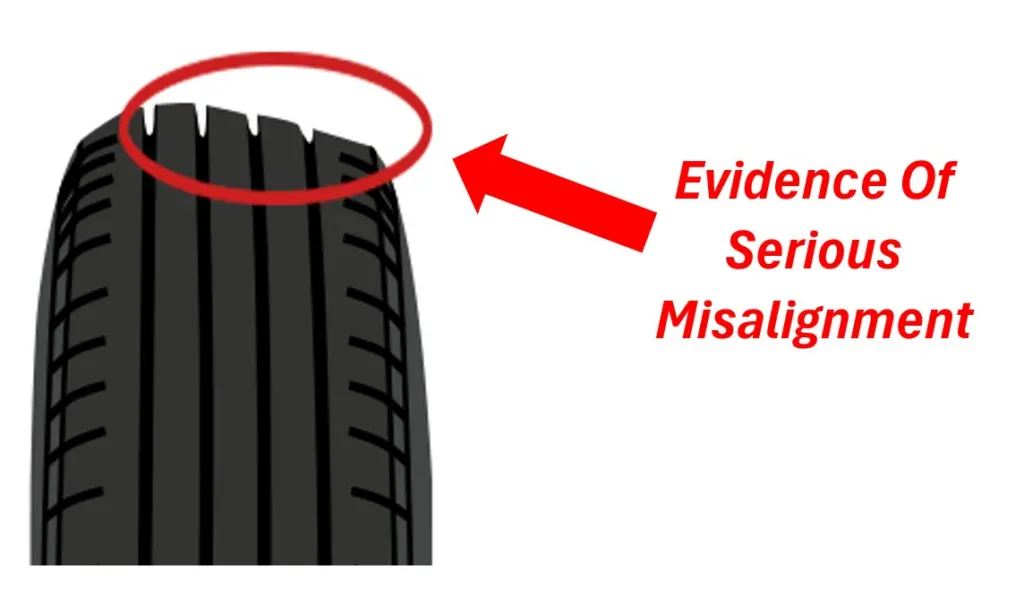
11. — Suspension and Alignment Changes That Upset Brake System Geometry
Category: Medium Priority – How Does Misalignment And Improper Suspension Impact My Brakes?
A vehicle’s brake system is calibrated to work in concert with a specific suspension geometry: the camber, caster, and toe angles that determine how the tire contacts the road, how weight transfers under braking, and how braking force is distributed between front and rear axles. When suspension components are replaced — control arms, ball joints, struts, tie rods, or bushings — or when a significant alignment adjustment is made to correct pull or uneven tire wear, the geometry of the entire corner changes. Those geometry changes alter the dynamic weight distribution under braking, which in turn changes the effective brake bias — the proportion of braking force carried by the front versus the rear axle during deceleration. Research on suspension dynamics confirms that changes to suspension height, geometry, or tire specifications shift weight distribution between axles and can result in unfavorable brake bias — in the worst case, causing the rear wheels to lock before the fronts under heavy braking, inducing oversteer or spinout [11]. Drivers who have had struts replaced, a lift kit installed, or significant alignment work performed often notice that the vehicle feels different but attribute the change to the suspension work itself, not recognizing that the brake system’s effective behavior has also shifted.
Idaho Falls is truck country in a real sense — the Holmes Avenue corridor is surrounded by pickup trucks, work vehicles, and SUVs that regularly receive suspension modifications, lift kits for off-road use on the desert tracks east of the city, and aftermarket wheel and tire packages that change the rolling radius and the dynamic load the suspension sees at speed. The RV and marine dealers clustered near the Holmes Avenue and Highway 20 intersection regularly prep vehicles with trailer hitches, weight distribution hitches, and suspension leveling systems — each of which alters the effective brake geometry of the tow vehicle. Ammon’s growing population of newer residents attracted to the eastern Idaho outdoor lifestyle brings a steady stream of trucks with recent suspension modifications seeking alignment and service in the Holmes Avenue corridor. When those same vehicles arrive at Grease Monkey for an oil change, a comprehensive brake inspection that accounts for the suspension history — not just the current pad thickness — can identify brake bias issues that pad-only inspection would miss entirely.
If your suspension changed, your brakes changed too — even if nobody told you. Before your next lift kit, wheel swap, or post-alignment drive on Holmes Avenue, have your brake system re-evaluated in the context of your current suspension geometry at Grease Monkey, 2255 N Holmes Ave, Idaho Falls, ID 83401. The brakes you set up for a stock truck may not be the brakes your modified one needs.
12. Distracted Driving Saturation and the Case for Maximum Brake Margin
Category: Medium Priority – What Is The Impact Of Distracted Driving On The Demands Made On My Braking System?
Distracted driving has fundamentally changed the environment in which every vehicle’s brake system must perform. A driver paying full attention to the road begins perceiving a hazard and initiating braking within approximately 1.5 seconds of the hazard appearing — a reaction time that, at 35 mph, adds 77 feet of travel before the brake pedal is touched. A driver who glances at a phone or navigation screen for just two seconds travels an additional 102 feet before their eyes return to the road and hazard perception begins [12]. NHTSA data attributes nearly 10% of all fatal crashes in the United States to driver distraction, representing thousands of preventable deaths annually. The critical implication for every other driver on the road is this: the vehicle in front of you, behind you, or merging beside you may be operated by someone whose effective perception-to-brake-application distance is 100 to 200 feet longer than it would be for an alert driver. You cannot control their reaction time. You can control whether your own brake system delivers maximum stopping performance in the distance remaining after someone else’s distraction creates the emergency.
The Holmes Avenue commercial corridor is a particularly high-distraction environment. The dense retail clusters at Orchard Park — where navigating a parking lot while checking a phone for a shopping list, or watching for a pedestrian while waiting for a gap in traffic — produce the stop-and-go, attention-divided conditions that maximize distracted driving risk. The Highway 20 interchange brings drivers who have been navigating at highway speed transitioning abruptly to stop-and-go arterial conditions — a transition that happens in seconds and demands immediate, full-attention braking response at a moment when many drivers are simultaneously reorienting from highway to local navigation. The delivery traffic that concentrates on the north Holmes industrial stretch adds vehicles whose drivers are actively managing apps, confirming addresses, and communicating with dispatch — all while operating in a stop-heavy, pedestrian-present environment. In all of these scenarios, the brake system of an aware, well-maintained vehicle is the last line of defense against the inattention of every other driver in the vicinity.
You can’t make the driver behind you put down their phone — but you can make sure your brakes are ready for what they might do. Full-spec brakes are your best insurance against someone else’s distraction. Get yours inspected at Grease Monkey, 2255 N Holmes Ave, Idaho Falls, ID 83401, and put maximum stopping margin between you and whatever’s coming.
13. Dual-Use Pickup Truck Brake Stress: Work Week Hauling and Weekend Recreation
Category: Lower Priority – How Does Having Multiple Drivers Impact Vehicle Braking Demands?
The pickup truck that serves as a work vehicle Monday through Friday and a recreation vehicle on Saturday and Sunday is, in brake terms, being driven by two entirely different owners with two entirely different load and driving profiles. During the work week, it hauls tools, materials, or equipment — adding weight, creating low-speed stop-and-go brake cycling, and potentially towing a trailer or equipment skid that multiplies the load on the brake system at every stop. On the weekend, it takes the family to Kelly Canyon, pulls a boat trailer to the South Fork Snake River, or tows an ATV to the desert trails east of Ammon — a different kind of brake demand involving downhill grades, higher speeds, and the sustained heat load of hauling recreational weight. The brake system sees two distinct wear patterns in a single week, neither of which is reflected in the standard mileage-based service interval the manufacturer designed for a single, typical use case. Over time, the combined stress of dual-use operation accelerates pad wear, rotor heat cycling, and caliper hardware fatigue in ways that neither use pattern alone would produce at the same rate.
The Holmes Avenue corridor sits at the intersection of Idaho Falls’s commercial and recreational economies in a very literal sense. The north Holmes industrial zone is where work trucks load and unload during the week. The RV, marine, and outdoor equipment dealers clustered near the Highway 20 interchange are where those same trucks pick up trailers, ATVs, and boat packages on the weekend. A contractor’s pickup that spent Monday through Friday delivering materials to construction sites south of Ammon, then hitched up a loaded boat trailer on Saturday morning for a Henry’s Fork fishing run, has put its brake system through a genuinely demanding week — and those cumulatively stressed components may not reflect their true wear state in how the vehicle feels or stops under the light loads of a solo grocery run on the following Monday. A technician who understands dual-use wear patterns can identify the cumulative stress that mileage-based inspection intervals miss.
Your truck works hard all week and plays hard all weekend — your brakes do both with it. Make sure they’re ready for every role at Grease Monkey, 2255 N Holmes Ave, Idaho Falls, ID 83401. A brake inspection that accounts for both your work life and your weekend is the kind of service a dual-use truck deserves.

14. Pre-Purchase Brake Inspection for Used Vehicle Buyers in Idaho Falls
Category: Lower Priority – How Can I Know If The Used Car I Am Purchasing Has Good Brakes?
Private-party vehicle sales routinely transfer brake problems from seller to buyer without either party’s full knowledge. A seller may genuinely not know the condition of their brake pads, rotor thickness, or caliper operation — particularly if they have been driving the vehicle under conditions where brake degradation was gradual and imperceptible. A buyer test-driving a vehicle at 20 mph in a quiet neighborhood will not experience the brake fade that occurs at highway speed, the pull that appears under hard braking, or the ABS pulsation that activates on slick pavement. Vehicle history reports track mileage and title events but do not include brake service records in most cases — meaning a buyer who sees a clean Carfax has no data at all on the brake system’s actual condition. Independent pre-purchase inspection is industry best practice for any significant used vehicle transaction, and brake system assessment is one of the highest-value components of that inspection — because brake deficiencies found before purchase are negotiating points that can reduce the purchase price by the cost of repair, while brake deficiencies found after the check clears are simply the new owner’s problem.
Idaho Falls has a robust used vehicle market that reflects its truck-centric, outdoor-recreation-oriented culture. Pickup trucks, SUVs, and work vehicles change hands regularly between agricultural workers, construction tradespeople, and outdoor enthusiasts — often through informal private sales, Facebook Marketplace listings, and word-of-mouth transactions rather than dealership transfers. The rapid growth of Ammon and the surrounding Bonneville County communities brings new residents from out of state who are buying Idaho vehicles for the first time, unfamiliar with the specific wear patterns that an eastern Idaho winter, a Snake River Plain agricultural season, and an INL desert commute impose on brake systems. A vehicle that “feels fine” to a buyer from a milder climate may be carrying brake components that are at the threshold of their service life — and within 10,000 Idaho Falls miles, the new owner is at a full brake replacement rather than the negotiated reduction they would have received had they known before signing.If you’re buying a used vehicle in Idaho Falls, a brake inspection before the deal closes is the best money you’ll spend on that car. Schedule a pre-purchase brake assessment at Grease Monkey, 2255 N Holmes Ave, Idaho Falls, ID 83401. Know what you’re buying before you’re driving it on Holmes Avenue at 45 mph.
15. The Multi-Vehicle Household Brake Audit: Closing the Family Fleet Gap
Category: Long-Term Value – What Is The Value Of Having A Brake Audit If I Own More Than One Vehicle?
Multi-vehicle households — common in Idaho Falls, where families tend to be large and independent transportation is a practical necessity in a spread-out city — face a brake safety vulnerability that single-vehicle households do not: it is very rare for all vehicles in a household fleet to receive brake inspections at the same time. Instead, service happens reactively, vehicle by vehicle, when a particular car’s brake noise or pedal feel prompts a service visit. This pattern virtually guarantees that at any given moment, at least one vehicle in a multi-car household is carrying brake components that have not been professionally evaluated in over a year — and in a household where the vehicles rotate between family members based on need and availability, that uninspected vehicle may be the one the teenager drives to school, the spouse uses for a long-distance road trip, or the parent loads with the entire family for a Saturday outing. The statistical reality is straightforward: in a three-vehicle household where each vehicle averages a brake inspection every 18 months, there is always one vehicle in its second year without a professional brake assessment.
Bonneville County’s demographic profile makes the multi-vehicle household norm particularly relevant: with 28.7% of the population under 18 years old — significantly above the national average of 21.6% — Idaho Falls and Ammon are communities where large households with multiple drivers and multiple vehicles are not the exception but the pattern. Families with teen drivers, elderly parents sharing vehicles, and households running a work truck alongside a family SUV are the everyday reality of the Channing Way and Holmes Avenue communities. Establishing a coordinated household brake inspection schedule — bringing all vehicles in for evaluation on a consistent annual or semi-annual rotation — closes the gap that reactive, single-vehicle service leaves open. A service provider like Grease Monkey, with rapid turnaround and no-appointment-needed service philosophy, makes household-fleet coordination practical rather than aspirational. The family that audits all its vehicles’ brake systems together creates the kind of comprehensive safety baseline that protects every member of the household, not just the one whose car happened to squeal first.Every car in your driveway is carrying someone you care about — and they all deserve the same brake inspection. Bring your household fleet to Grease Monkey, 2255 N Holmes Ave, Idaho Falls, ID 83401 for a coordinated brake assessment and stop leaving any vehicle — or any family member — in the gap between the last inspection and the next warning sign.
About Grease Monkey — 2255 N Holmes Ave, Idaho Falls, Idaho 83401
Grease Monkey at 2255 N Holmes Ave, Idaho Falls, ID 83401 is part of the FullSpeed Automotive network of 700+ locations across the United States, with 435 FullSpeed Automotive locations recognized as 2025 CARFAX Top Shop Winners — an award reflecting consistently high standards of service quality, technician expertise, and customer satisfaction across the network. Grease Monkey technicians are ASE-certified and trained in comprehensive brake system inspection and service, including pad and rotor assessment, hydraulic system evaluation, ABS component inspection, and caliper hardware service. Conveniently located on the high-traffic Holmes Avenue commercial corridor serving north Idaho Falls, Ammon, and Bonneville County, this location provides fast, professional brake service to the diverse community of commuters, families, business operators, and outdoor enthusiasts who depend on reliable vehicle performance in eastern Idaho’s demanding four-season driving environment.
Author Information
Author’s Bio – Phillip Paul Gilliam
Phillip Gilliam is a veteran journalist and former Editor-in-Chief with 50+ years of publishing experience and thousands of published articles. Specializing in automotive, trucking, and digital publishing, he creates authoritative, search-optimized content built on real-world expertise and editorial excellence. To learn more about Phil, visit http://www.phillipgilliam.com/about.html or contact Phil at [email protected]. He would love to hear from you!
Citations
[1] Tire Review Magazine. Brake Booster and the Barometer. Available at: https://www.tirereview.com/brake-booster-and-the-barometer/. (Vacuum brake booster efficiency is reduced by approximately 17% at one mile of elevation; Idaho Falls at 4,744 feet operates at a nearly identical pressure deficit to Denver, Colorado.)
[2] Wikipedia / Bosch Mobility. Vacuum Brake Booster. Available at: https://www.bosch-mobility.com/en/solutions/driving-safety/vacuum-brake-booster/. (Vacuum brake boosters rely on atmospheric pressure differential across a diaphragm; at high altitude, reduced atmospheric pressure reduces available assist force.)
[3] National Highway Traffic Safety Administration (NHTSA). NHTSA Finalizes Rule on Automatic Emergency Braking. U.S. Department of Transportation, 2024. Available at: https://www.nhtsa.gov/press-releases/nhtsa-fmvss-127-automatic-emergency-braking-reduce-crashes. (NHTSA’s 2024 final rule mandates AEB on all new U.S. light vehicles by 2029, projected to prevent 360 fatalities and 24,000 injuries annually; systems must detect pedestrians at up to 45 mph and lead vehicles at up to 90 mph.)
[4] GEO Brakes / AutoZone. OEM vs. Aftermarket Brake Pads. Available at: https://geobrakes.com/blogs/oem-vs-aftermarket-brakes/. (Many budget aftermarket brake pads use abrasive compounds not matched to OEM rotor specifications, accelerating rotor wear and producing inconsistent friction coefficients.)
[5] Counterman Magazine. Brake Maintenance in the Ride-Sharing Age. Available at: https://www.counterman.com/brake-maintenance-in-the-ride-sharing-age/. (Full-time rideshare and delivery drivers are advised to schedule brake inspections every six months due to dramatically elevated brake application cycles compared to typical passenger use.)
[6] NHTSA. Light Vehicle Antilock Brake System Research Program. U.S. Department of Transportation. Available at: https://www.nhtsa.gov/sites/nhtsa.gov/files/nhtsalvabs5.2-5.3final.pdf. (ABS performance on wet roads shows substantially greater torque fluctuation and lower braking stability than dry conditions; hydroplaning recovery demands optimal ABS system function.)
[7] NRS Brakes / 4LifetimeLines. The Hidden Danger: Identifying and Replacing Damaged or Corroded Brake Lines. Available at: https://nrsbrakes.com/blogs/supporting-articles/the-hidden-danger-identifying-and-replacing-damaged-or-corroded-brake-lines. (SAE research documents that steel brake line performance becomes highly erratic after four to six years in service; age is more predictive of failure than mileage; rust-weakened lines can rupture under braking force without advance warning.)
[8] Society of Automotive Engineers (SAE). Hydraulic Brake Line Corrosion: An Initial Investigation of the Problem. SAE Technical Paper 690530. Available at: https://www.sae.org/publications/technical-papers/content/690530/. (Foundational SAE study on corrosive deterioration of steel hydraulic brake tubing establishing the four-to-six year performance degradation timeline.)
[9] DriveSafe Online / StarR Risk Group. How Vehicle Weight Affects Braking Distance. Available at: https://starrrg.com/blog/understanding-the-impact-of-vehicle-weight-on-braking-distance. (Kinetic energy equals ½mv²; doubling vehicle mass doubles kinetic energy and braking demand; heavy passenger loads significantly increase stopping distances on marginal brake systems.)
[10] AAA Foundation for Traffic Safety / The Zebra. Drowsy Driving Statistics 2026. Available at: https://www.thezebra.com/resources/research/drowsy-driving-statistics/. (AAA Foundation estimated 17.6% of fatal crashes 2017–2021 involved drowsy drivers, approximately 30,000 fatalities over five years; driving after 20+ hours without sleep equals 0.08% BAC impairment; 19% of respondents admitted to driving “very drowsy” in the previous 30 days.)
[11] AutoTrainingCentre / Mevotech. Brake Bias and How It Affects Braking Performance. Available at: https://www.autotrainingcentre.com/blog/auto-mechanic-school-brake-bias-affects-braking-performance/. (Suspension geometry changes — including lifts, strut replacement, and alignment corrections — alter dynamic weight distribution and brake bias, potentially causing rear wheel lockup under heavy braking if bias shifts unfavorably.)
[12] National Highway Traffic Safety Administration (NHTSA). Driver Distraction Program / Stopping Distance Reference. U.S. Department of Transportation. Available at: https://www.nhtsa.gov/document/driver-distraction-program. (NHTSA attributes nearly 10% of fatal U.S. crashes to driver distraction; a 2-second phone distraction at 35 mph adds 102 feet of travel before hazard perception begins, extending total stopping distance to approximately 215 feet.)
[13] U.S. Census Bureau QuickFacts. Bonneville County, Idaho. Available at: https://www.census.gov/quickfacts/fact/table/bonnevillecountyidaho/PST045224. (28.7% of Bonneville County residents are under 18 years of age, significantly above the national average of 21.6%, reflecting the large-family culture of the Idaho Falls and Ammon communities.)
[14] FullSpeed Automotive / AutoSuccess Online. CARFAX Names 435 FullSpeed Automotive Locations 2025 Top Shop Winners. Available at: https://www.autosuccessonline.com/fullspeed-automotive-recognized-435-service-centers-carfax-top-shop-wins/. (435 FullSpeed Automotive locations, including Grease Monkey locations, were named 2025 CARFAX Top Shop Winners; FullSpeed Automotive network comprises 700+ locations nationwide with ASE-certified technicians.)
© 2026 Grease Monkey, Written By: Phillip Paul Gilliam. All rights reserved. Published in partnership with Grease Monkey, 2255 N Holmes Ave, Idaho Falls, ID 83401. Content is for informational purposes and reflects current industry research and local geographic conditions. Brake service intervals and recommendations may vary by individual vehicle, usage pattern, and driving conditions. Consult a certified professional for specific advice about your vehicle’s brake system.
Stop by today.
- Grease Monkey Center #1060 Address: 2255 N Holmes, Idaho Falls, ID, 83401
- Services: Air Conditioning Services, Battery Services, Brake Services, Engine Services, Filter Services, Fluid Exchange Services, Headlight Services, Oil Changes, Power Steering, State Inspection Services, Tire Services, Transmission Services, Wiper Replacement Services
Your car will thank you. And your wallet will too.

Plan Your Visit
Find a location near you, explore current deals, and get everything you need before you roll in.