
Transmission Services and Repairs
Your transmission’s the unsung hero under the hood—shifting gears, keeping things smooth, and taking on every stop, go, and long haul. But it can’t do it alone. Transmission fluid keeps it cool and running right, and when that fluid breaks down, trouble isn’t far behind. A quick service now keeps you cruising later—no clunks, no costly repairs.
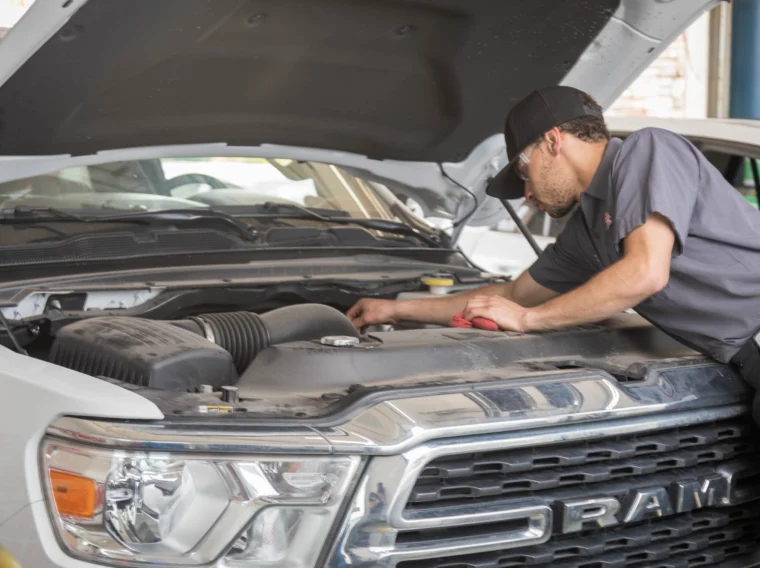
What We Do
Smooth Shifts, No Slips
At Grease Monkey, we ditch the guesswork and keep your gears in the clear. Whether you drive stick or automatic, our crew swaps out that tired old transmission fluid for the fresh stuff your car actually needs. Got a filter? We’ll handle that too. The result? Smoother shifts, happier drives, and one less thing to stress about under the hood.
Step by Step
How We Service Your Transmission
We check your transmission type and service requirements based on your owner’s manual and driving habits.
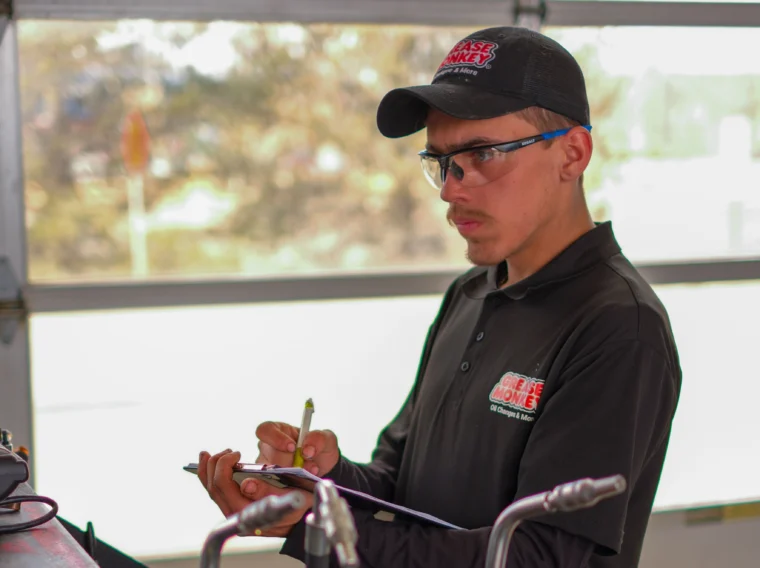
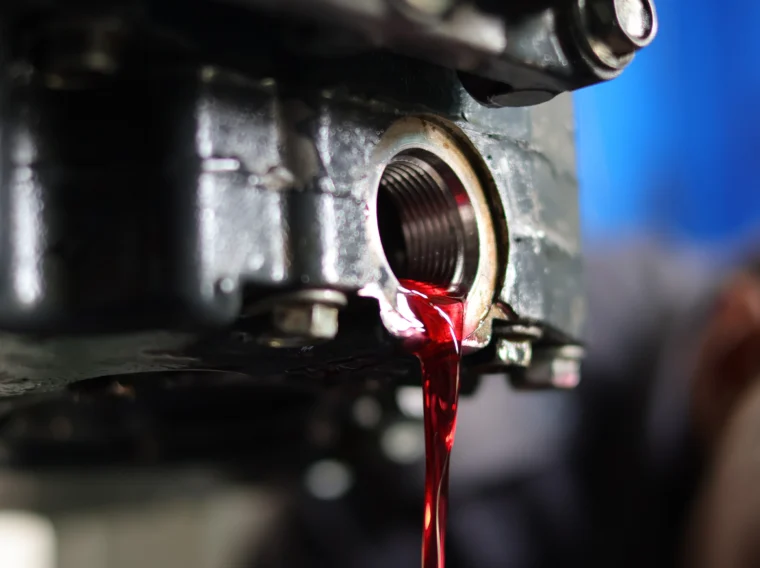
We remove the old fluid, either through a drain plug or fluid exchange system, depending on your vehicle.
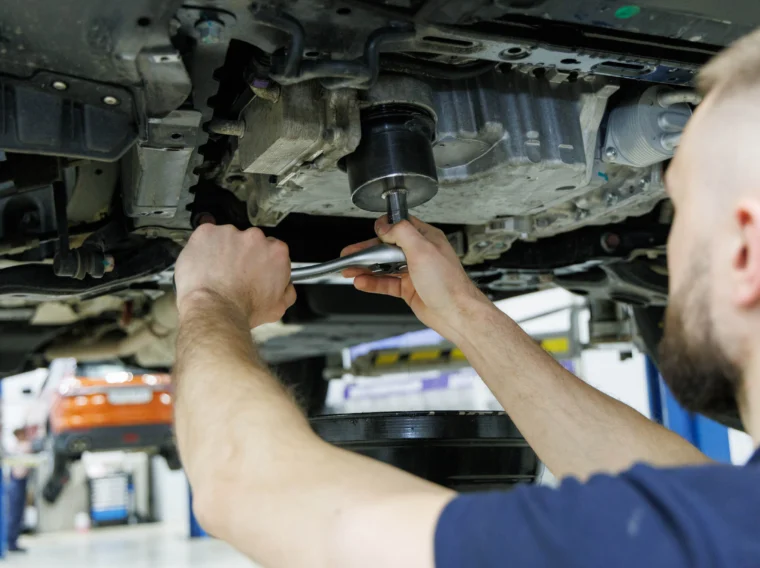
If your transmission uses a filter, we’ll swap it out to keep the new fluid clean and the system running efficiently.
We fill your transmission with high-quality fluid that meets your vehicle’s specific standards.
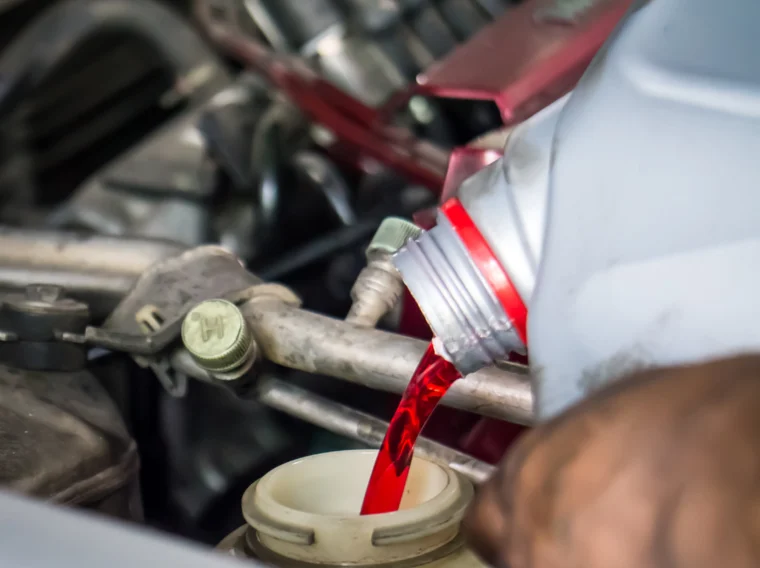
Before you go, we check your vehicle’s shifting and fluid levels to ensure everything’s running right.
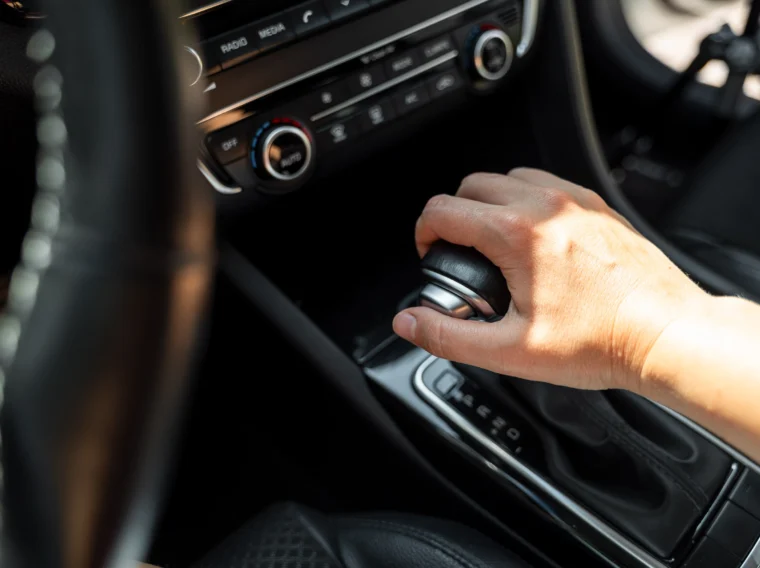
The Fundamentals of Transmission Care
Simple Tips to Help You Stay Ahead of Transmission Trouble
Manufacturer recommendations range from 30,000 to 150,000 miles, but if you tow heavy loads or drive in harsh conditions, you may need service sooner. When in doubt, we have you covered.

Trouble switching gears? Slipping, slow acceleration, or burning smells could mean your transmission fluid is worn out. A red puddle under your vehicle or a dashboard warning light is your cue to get checked ASAP.
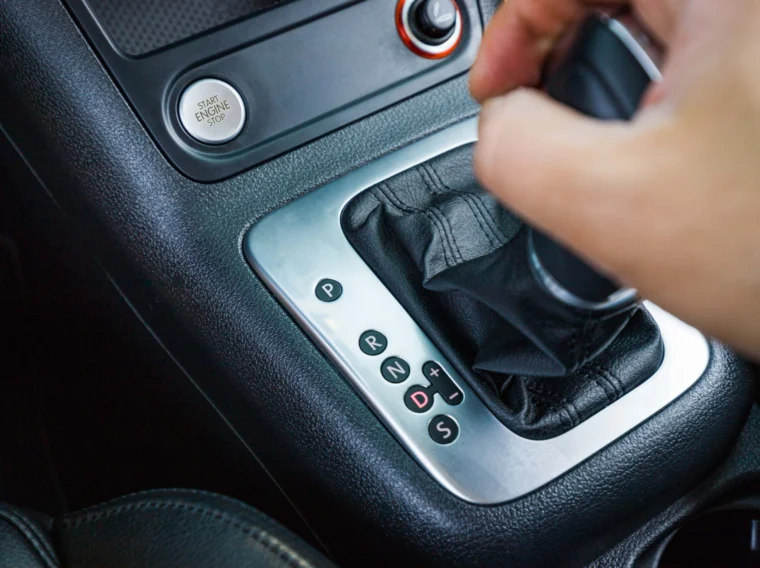
Automatic transmissions run hot, which breaks down fluid faster. Regular service helps your transmission stay cool, responsive, and protected.
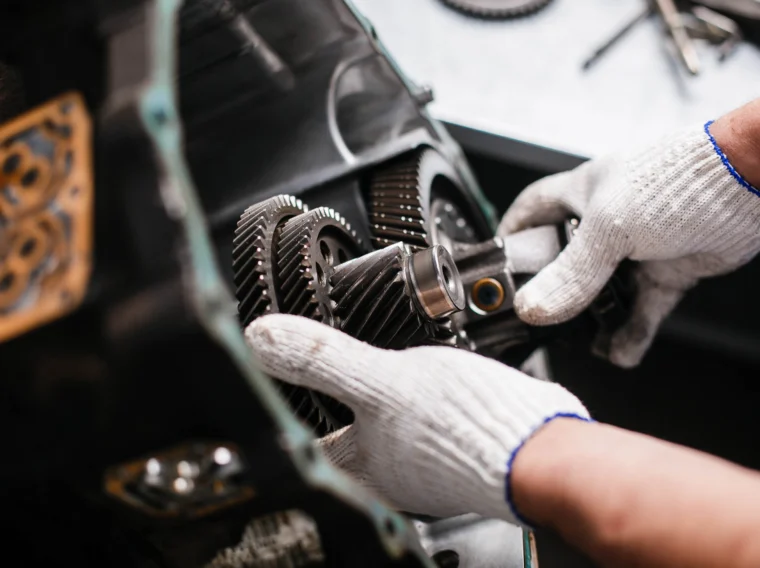
People often confuse these services. The differential uses separate fluid—so both systems need attention. We’ll help you sort it out.
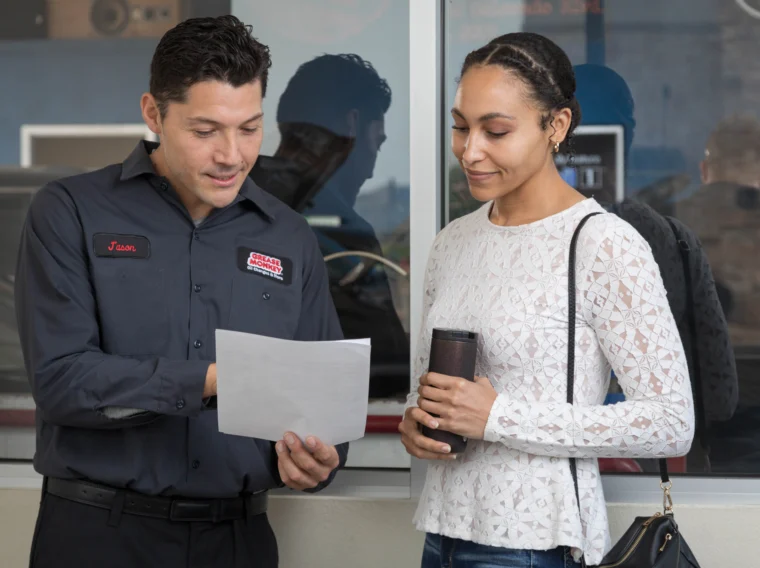
For front, all-wheel, and 4-wheel drives, transmission, axle, and differential are combined into one unit. We service transaxles too, draining or flushing the fluid per your vehicle’s needs.
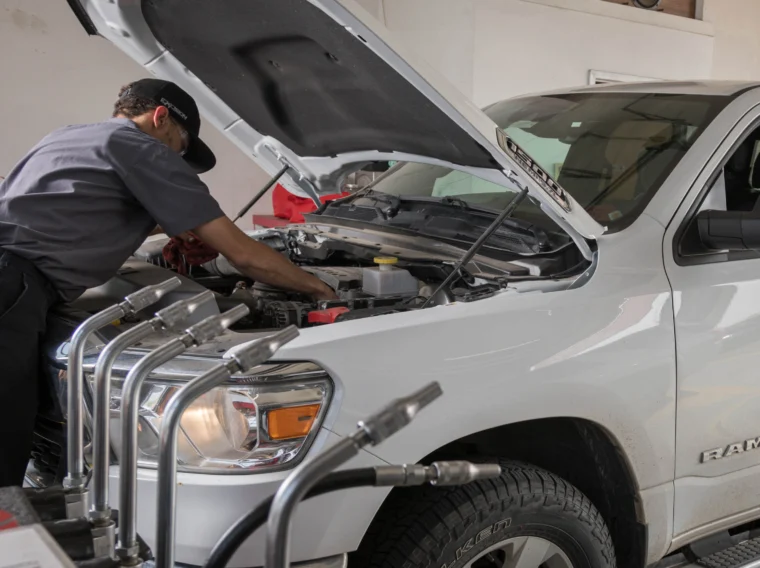
Frequently Asked Questions About Transmissions
Checking your transmission fluid is simple once you know where to look—but the exact steps depend on whether your vehicle has a dipstick-equipped automatic transmission, a sealed automatic transmission, or a manual transmission.
Below are the typical methods for each.
How to Check Automatic Transmission Fluid (Dipstick Type)
Note: Many newer cars no longer have a transmission dipstick. If you don’t see one, skip down to “Sealed Transmissions.”
What you need:
- A clean rag or paper towel
- Flat, level ground
- Engine fully warmed up (most cars require this)
Steps:
- Park on a level surface
Keep the engine idling and the parking brake on. - Warm up the transmission
Drive for 5–10 minutes beforehand. Fluid expands when hot, and most manufacturers require a hot reading. - Locate the transmission dipstick
Usually toward the back of the engine bay; often has a red, yellow, or orange handle. Labeled “TRANS,” “ATF,” or similar. - Pull out the dipstick
Wipe it clean with your rag. - Reinsert and remove again
Now check the level: It should be between “HOT – MIN” and “HOT – MAX.” - Add fluid if needed
Use a funnel and only the exact ATF type listed in your owner’s manual. Add small amounts—ATF is easy to overfill.
How to Check a Sealed Automatic Transmission:
Many modern vehicles (Toyota, Honda, Mercedes, Hyundai, etc.) use a sealed transmission with no dipstick.
These typically require:
- Vehicle raised and level
- Checking a fill plug or inspection plug underneath
- Specific fluid temperature ranges (checked via scan tool)
How to Check Manual Transmission Fluid:
Manual transmissions use gear oil, not ATF, and don’t have dipsticks.
Steps:
- Safely raise the vehicle and support it with jack stands.
- Locate the fill plug on the side of the transmission.
- Remove it with the appropriate socket or hex key.
- Check the level: fluid should be right at the edge of the fill hole.
- Add more gear oil if it’s low (using the correct type).
A CVT transmission stands for Continuously Variable Transmission. It’s a type of automatic transmission that doesn’t use traditional fixed gears like a standard automatic or manual. Instead, it uses a system of pulleys and a belt (or chain) to provide an infinite number of gear ratios within a range.
Key Features of a CVT:
- Smooth Acceleration: Instead of shifting through gears, the CVT adjusts seamlessly, keeping the engine in its optimal power range.
- Better Fuel Efficiency: Because it can maintain the most efficient RPM, CVTs often improve gas mileage.
- No Gear “Shift Feel”: You won’t feel the typical gear changes—some drivers find this odd at first.
How It Works:
- Two variable-diameter pulleys connected by a belt:
- Drive Pulley: Connected to the engine.
- Driven Pulley: Connected to the wheels.
- By changing the pulley diameters, the CVT continuously varies the gear ratio.
Pros:
- Improved fuel economy.
- Smooth driving experience.
- Keeps engine in optimal power band.
Cons:
- Can feel less engaging for performance drivers.
- Higher repair costs if it fails.
- Some drivers dislike the “rubber band” feel during acceleration.
The interval for changing transmission fluid depends on your vehicle type, transmission type, and driving conditions–always follow manufacturer mileage recommendations. Here’s a general guideline:
Automatic Transmission Fluid Change Interval:
- Typical Range: Every 30,000 to 60,000 miles.
- Some newer vehicles with “lifetime” fluid claim up to 100,000 miles, but it’s still wise to check regularly.
- Severe driving conditions (towing, stop-and-go traffic, extreme heat) may require changes closer to 30,000 miles.
Manual Transmission Fluid Change Interval:
- Usually, every 30,000 to 60,000 miles, but check your owner’s manual for specifics.
- Manual gearboxes often use gear oil, which can degrade faster under heavy use.
Signs It’s Time to Change Your Vehicle’s Transmission Fluid:
- Slipping gears or delayed shifting.
- Unusual noises from the transmission.
- Leaking fluid under the car.
A slipping transmission means the transmission isn’t properly engaging gears, which can lead to serious damage if ignored. Here are the common signs to watch for:
Signs Your Transmission Is Slipping:
- Delayed or Harsh Gear Shifts
You press the accelerator, but the car hesitates before moving or suddenly jerks into gear. - High RPM Without Speed Increase
The engine revs unusually high, but the vehicle doesn’t accelerate as expected. - Unusual Noises
Whining, grinding, or humming sounds during gear changes. - Burning Smell
Often caused by overheated transmission fluid. - Gear Changes on Its Own
Transmission shifts without driver input or slips back into neutral. - Dashboard Warning Light
“Check Engine” or a specific transmission warning light may appear. - Poor Acceleration
Feels like the car is struggling to gain speed even when you press the gas.
What Causes Slipping?
- Broken down fluid
- Worn clutch (manual) or bands (automatic)
- Faulty solenoids or torque converter
- Internal wear and tear
If you notice these symptoms, check your transmission fluid first—low or broken down fluid is the most common culprit. If fluid is fine, you may need to contact a local automotive service department for diagnostics.
A failing transmission often gives warning signs before it completely fails. Here are the key indicators your transmission may be going out:
Major Signs of Transmission Failure:
- Frequent Slipping
Gears disengage or shift unpredictably, causing loss of power. - Delayed or Rough Shifting
Hesitation when changing gears, or harsh, jerky transitions. - Grinding or Shaking
Noticeable vibrations or grinding noises during gear changes. - Burning Smell
Often due to overheated or burnt transmission fluid. - Fluid Leaks
Broken down fluid can be a warning sign. - Unusual Noises
Whining, clunking, or humming sounds from the transmission area. - Dashboard Warning Light
“Check Engine” or a transmission-specific light may illuminate. - Poor Acceleration or Loss of Power
Engine revs but the car barely moves.
What to Do If You Notice These Signs:
- Check fluid level and condition first (low or burnt fluid is common).
- If fluid is fine, get a diagnostic scan—could be solenoids, torque converter, or internal damage.
- Don’t ignore symptoms—driving with a failing transmission can cause catastrophic damage and higher repair costs.
Special Offers and Coupons

$5 Off

Any Additional Service
$10 OFF
Full Service Synthetic Blend Oil Change
$15 OFF
Full Service Full Synthetic Oil Change
Related Services

Oil Changes
Fast oil changes with oil options for everyone, done in under 15 minutes.

Air Conditioning Services
From recharges to full repairs, we fix A/C issues to keep your ride cool.

Battery Services
Quick car battery tests, replacement, and jump-starts—no appointment needed.

Filter Services
Regular engine, cabin, and fuel filter replacements will keep your vehicle performing at its best while ensuring cleaner air for passengers.

Starting & Charging Services
From check engine lights to tune-ups—catch problems early and avoid downtime.


Plan Your Visit
Your next oil change just got easier—find a Grease Monkey location near you, grab a deal, and stop in today.
Services may vary by location. Please contact your neighborhood Grease Monkey for specific services offered.